The recent claims made by Elon Musk on X, alleging that FEMA is blocking shipments and seizing goods intended for hurricane victims, has stirred up a storm of controversy. Musk shared that a SpaceX engineer on the ground in Asheville, NC reported that FEMA is not only failing to adequately assist those in need, but is actively obstructing efforts by citizens trying to help. The engineer explained that FEMA had been blocking shipments and locking away goods and services, claiming them as their own. In one instance, the engineer mentioned that Starlink shipments were being held up unless they received an escort from the fire department. This kind of bureaucratic red tape, whether intentional or due to sheer incompetence, is having real, deadly consequences.
Just received this note from a SpaceX engineer helping on the ground in North Carolina. @FEMA is not merely failing to adequately help people in trouble, but is actively blocking citizens who try to help!
“Hey Elon, update here on site of Asheville, NC. We have powered up two…
Hurricane Helene, which made landfall a week ago, has already claimed the lives of at least 215 people, with over half of the fatalities occurring in North Carolina. Entire communities have been washed away by fast-moving water, leaving hundreds of people missing and local officials struggling to identify the dead. While the Biden administration has deployed 1,000 active-duty soldiers to support the National Guard in relief efforts, survivors in the hardest-hit areas still find themselves cut off from food, water, and essential services.
Is This About Politics?
Many are questioning the Biden administration’s response, especially in states like North Carolina, which lean conservative. The notion that the government might be intentionally withholding life-saving support to “punish” a red state ahead of the upcoming election is gaining traction. Is this just more political theater, or is something more nefarious at play? For those living in disaster zones, it doesn’t really matter whether it’s incompetence or something worse. The result is the same: people are left to fend for themselves in the face of unimaginable destruction.
Tim Kennedy, founder of the Save Our Allies foundation and a former Special Forces operator, has come forward with a scathing rebuke of the government’s response to disaster relief. He has exposed how bureaucratic red tape and outright incompetence have put countless lives at risk. Kennedy, who has spent years on the front lines of global humanitarian missions, isn’t holding back. He’s seen firsthand how government agencies have failed time and time again to deliver aid when it’s needed most, actively hindering civilian efforts to rescue and provide for those in desperate situations. His foundation has stepped up where the government has failed, cutting through the bullshit and getting aid directly into the hands of those who need it. According to Kennedy, these failures are not just incompetence—they are criminal, leaving people to die while the government plays politics with their lives.
Why You Must Be Prepared
This situation highlights a brutal truth: the government is not here to help you. Whether it’s incompetence, malice, or bureaucratic chaos, waiting on FEMA or other agencies during a disaster can be a death sentence. When disaster strikes, you are on your own, and you need to be ready to handle it.
This is why prepping isn’t some fringe, paranoid activity—it’s common sense. Help isn’t coming, at least not fast enough. You must be prepared to take care of yourself and your family when things go south. That means having an emergency action plan, food, water, medical supplies, and communication tools like ham radios ready to go.
The lesson here is clear: you cannot rely on the government. We’ve seen it time and time again, from Hurricane Katrina to Hurricane Sandy, and now with Hurricane Helene—officials are slow to respond, red tape ties up resources, and in some cases, relief efforts are outright obstructed.
What You Can Do Right Now
Stockpile essential supplies: Don’t wait for disaster to strike. Start stockpiling food, water, and medical supplies to last at least two weeks, if not more.
Get a Communication Plan in Place: Cell towers often fail during disasters, and FEMA won’t be there to fix them quickly. Equip yourself with alternatives like ham radios or satellite phones to stay connected. Learning how to use a ham radio is a critical skill in any survival situation. You can check out Prepper Radio: The No-BS Ham Radio Technician Exam Prep Guide for a step-by-step plan to get your ham radio license and start building your communication network.
Develop self-reliance skills: Whether it’s learning how to purify water, defend your home, or create shelter, the more skills you have, the better equipped you’ll be to survive on your own.
The current crisis shows us just how fragile the system is, and if you’re not ready to take care of yourself, you’re putting your survival in someone else’s hands—hands that might be too busy filling out paperwork to help you when you need it most. Whether it’s incompetence or pure evil, you must be prepared, because when the storm comes, you’re on your own.
In ‘Green Hills of Africa,’ Ernest Hemingway wrote, “I remembered the old saying of the Indian in camp, “One shot, meat. Two shots, maybe.”” Holding out for a perfect shot is a lesson that’s been passed down through generations of hunters and sharpshooters, and nowhere is this age-old wisdom more applicable than when fielding a single shot rifle.
Find the finest classic and modern single shot rifles for sale at RIAC this October.
From the earliest breechloaders to modern classics like the Ruger No. 1, the single shot rifle has served as a reliable companion for hunters and target shooters. Most of the single shot rifles featured below are offered in Rock Island Auction Company’s October 4 -6 Sporting & Collector Auctionin Bedford, Texas, and you can click on the images to learn more about each model.
Early Single Shot Rifles
Until the mid-19th century, most firearms were single shot muzzleloaders. The invention of rifling offered greater accuracy and range compared to smoothbore barrels, and specialized models like America’s Kentucky rifle earned a reputation as proficient hunting tools as well as a specialized weapon that could be employed by marksmen on the battlefield.
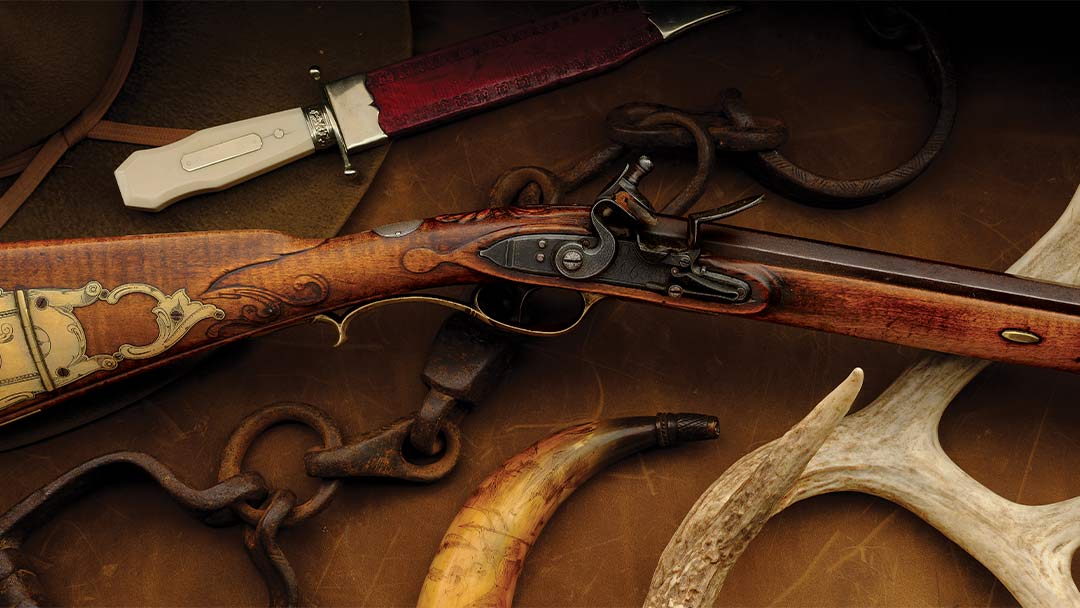
An extraordinary John Armstrong Maryland Golden Age Kentucky Flintlock American long rifle with a raised relief carved stock. Available this December.
The introduction of the percussion cap improved reliability and modestly increased loading speed, though the single shot rifle truly came into its own with the innovation of the breechloading action. Gunmakers had experimented with breechloaders for centuries, but advances in metallurgy and manufacturing techniques laid the groundwork for some truly revolutionary designs, including the Sharps falling block.
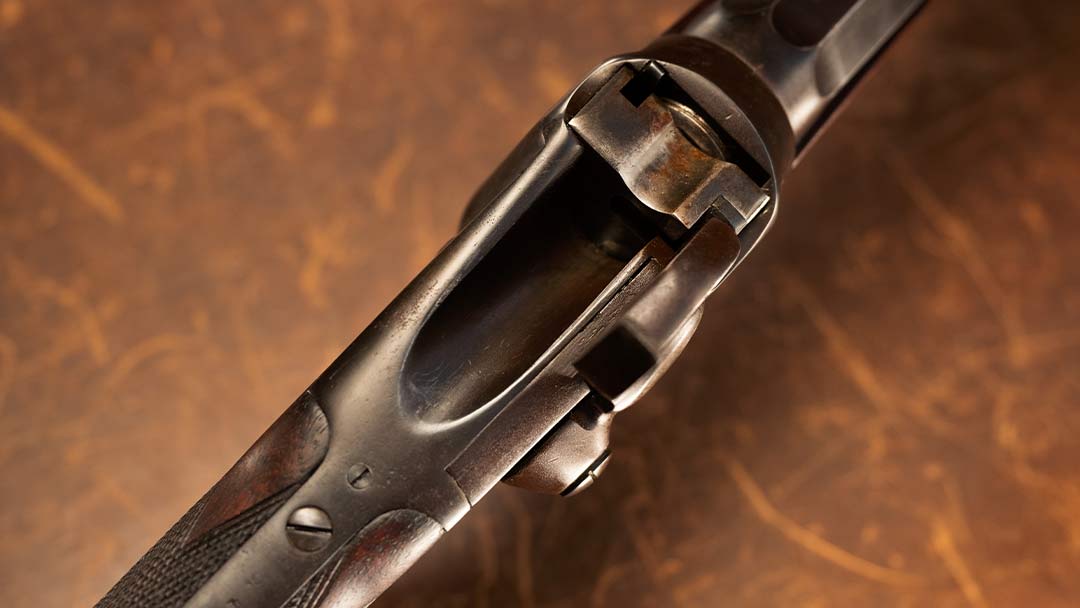
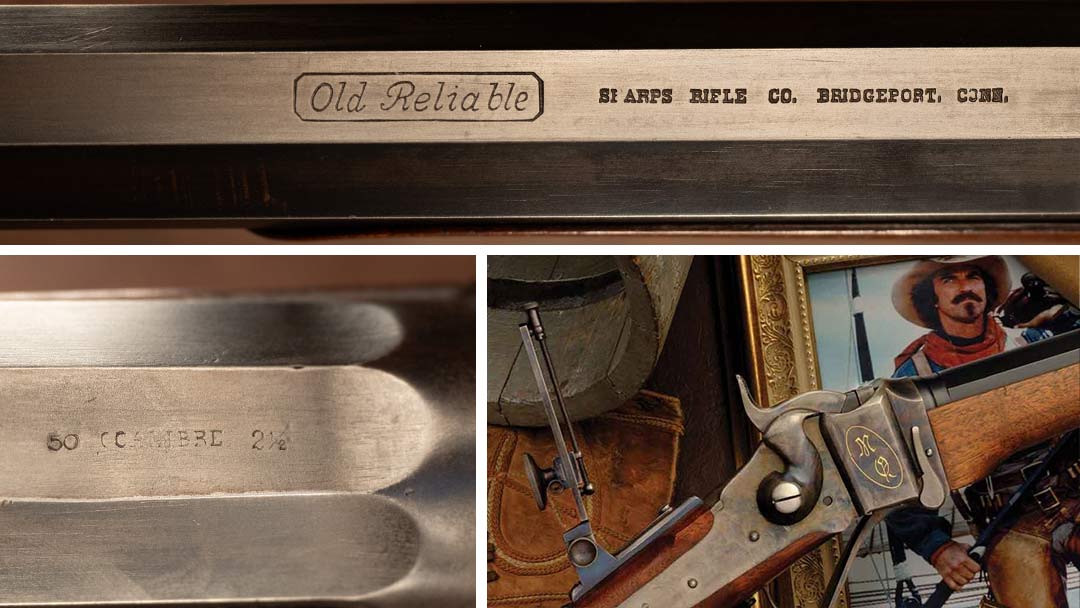
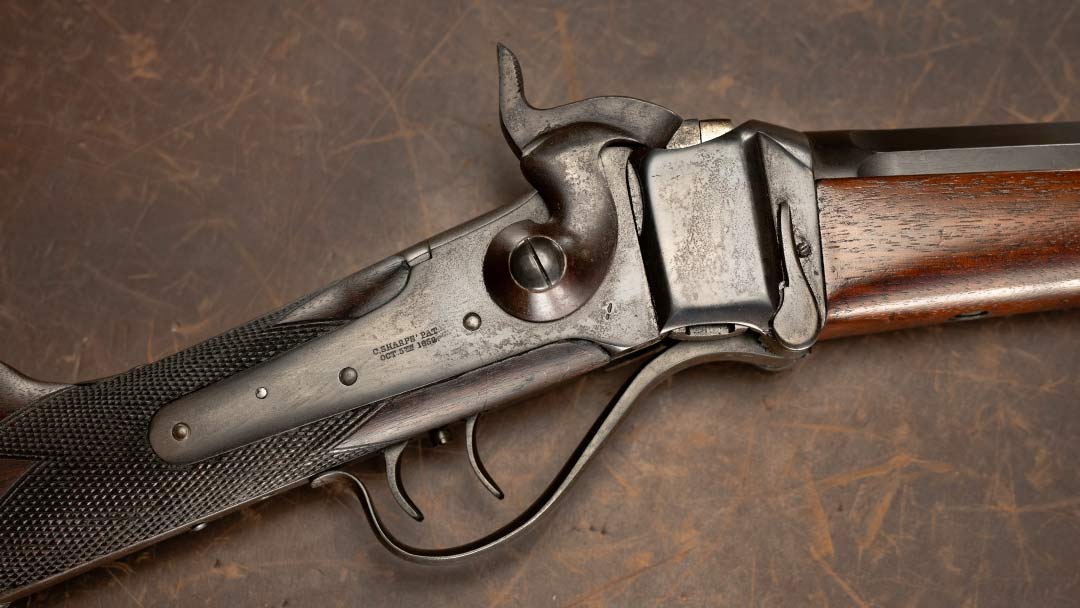
A view of the breech of a Sharps New Model 1863 percussion carbine rebuilt into a .50-90 (.50 2 1/2″ Sharps) sporting rifle. Available this October.
Sharps Single Shot Rifles
Christian Sharps’ 1848 patent employed a “sliding breech-pin” (breechblock) riding the frame. By pressing the lever down and forward, the breechblock lowered to allow the shooter to load into the breech end of the barrel. When the lever was pulled backward and up, the breechblock moved upwards to seal the breech.
The Sharps reduced gas leakage issues that had plagued prior breechloading designs like the Hall rifle. Though initial Sharps models were designed for powder and ball, the platform proved well-suited for chambering some of the strongest metallic cartridges of the 1860s and 70s.
Produced from the Antebellum Era through the late-19th century, the various models of Sharps single shot rifles and carbines became famous for their roles in Bleeding Kansas and the Civil War. The Sharps found a welcoming home on the Western frontier and was carried by everyone from Texas Rangers to Native Americans. The Sharps Model 1874 became a particularly notable Old West firearm and gained fame in popular culture thanks to films like ‘Quigley Down Under’ and ‘True Grit.’
From antique examples to modern reproductions, the Sharps single shot rifle is available in numerous variants.
Single Shot Rifles Around the Globe
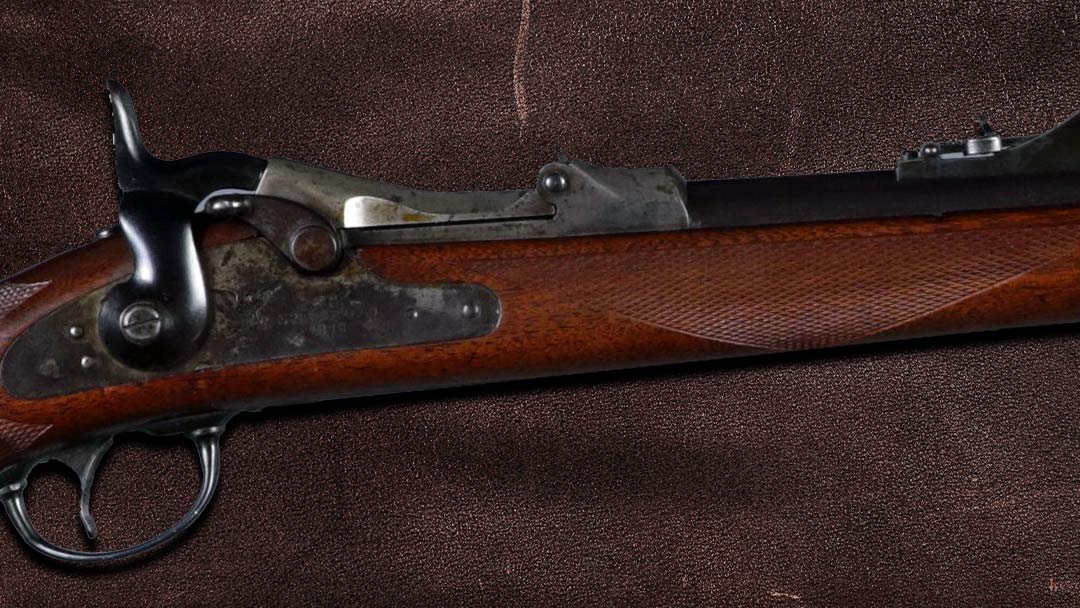
Numerous breechloading single shot rifle models arrived in the years following the Civil War. One of the most prolific, the U.S. Springfield Trapdoor, served as America’s primary infantry rifle for over two decades. Springfield Master Armorer Erskine S. Allin developed a cost-efficient method of converting hundreds of thousands of surplus muzzleloading rifles into breechloaders by replacing a portion of the barrel with a hinged breech block, or “trap door.”
A J.P. Gemmer Marked Springfield Model 1879 Officer’s pattern Trapdoor single shot rifle for sale this October.
Another famous design was the Remington Rolling Block action. Developed from the Remington “Split Breech” carbine of the Civil War, this improved action employed a breech block that would roll back when pulled. The Remington Rolling Block became the world’s most widely used single shot military breechloader of the 19th century.
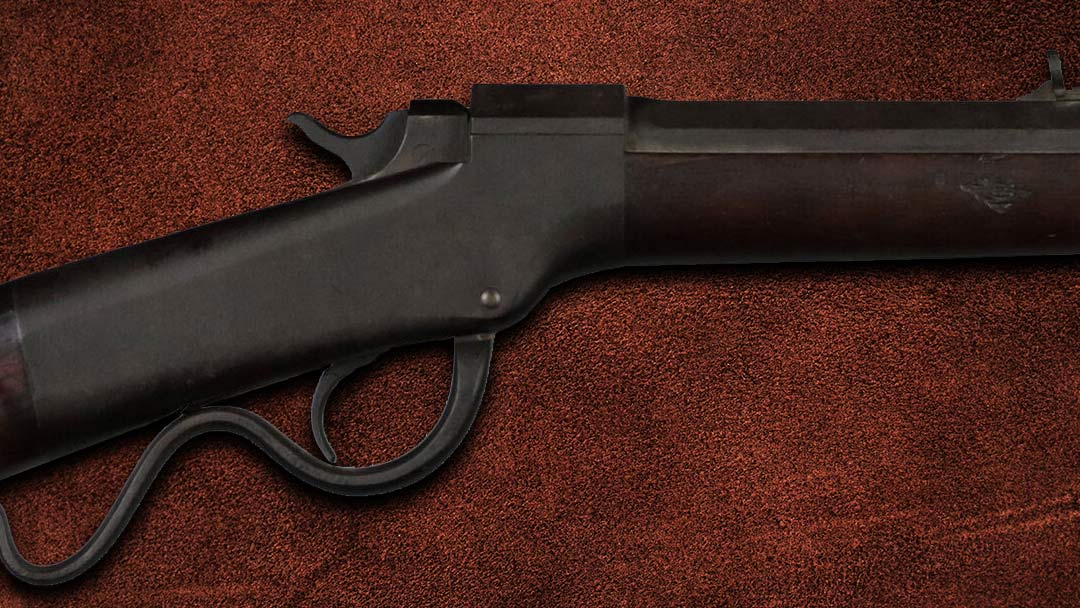
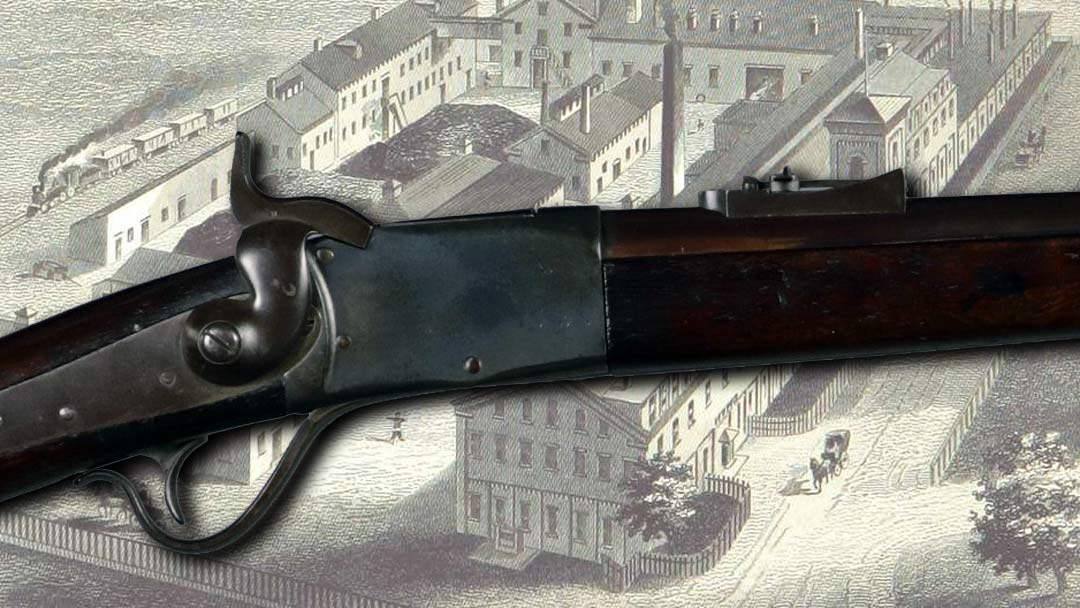
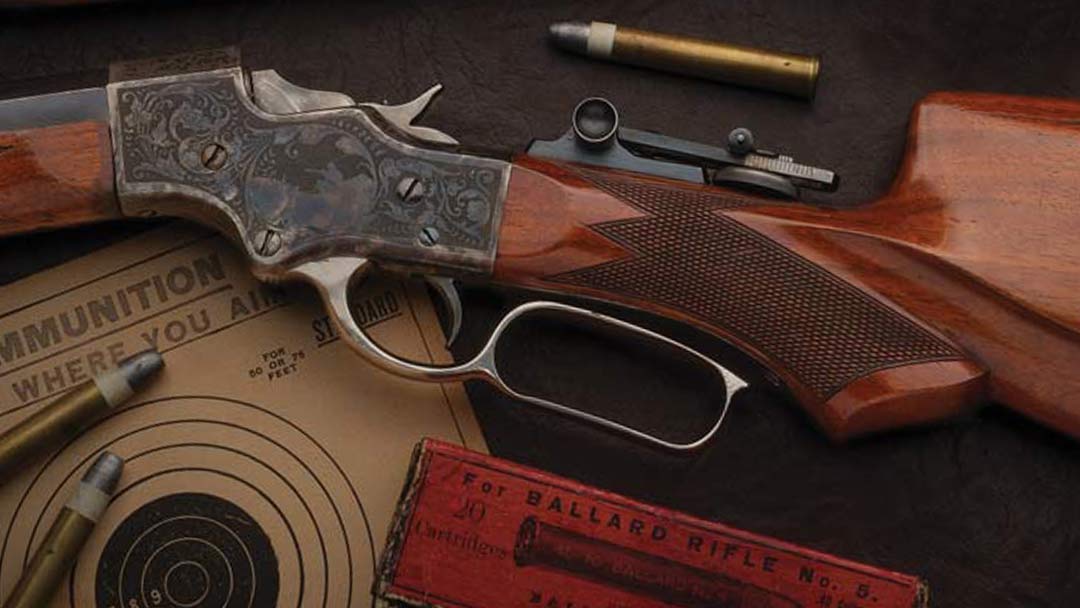
Other American classic single shot rifle models included the Peabody and its rear-pivoting breechblock, the Stevens falling block, and the Ballard falling block. John Marlin and the Marlin Firearms Co. produced the Ballard in a wide range of variations.
Across the pond, the Martini-Henry, the Alexander Henry hammerless falling block, and the Gibbs-Metford-Farquharson, which served as inspiration for the Ruger No. 1, flourished in the United Kingdom. The Martini-Henry was adopted by the British Army in 1871 and remained an infantry standard for nearly two decades.
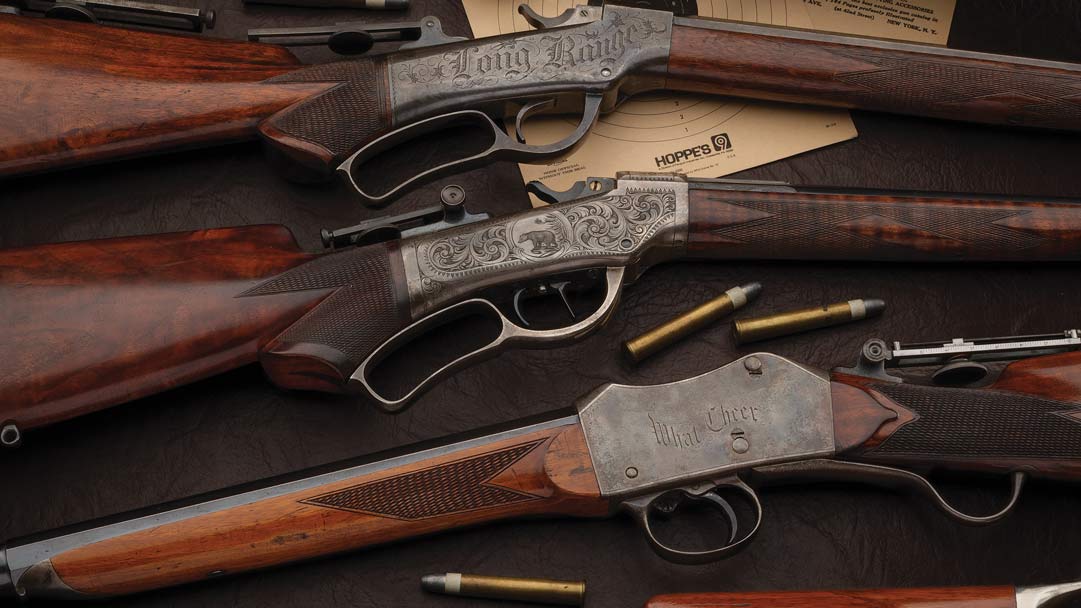
The late 19th century was a Golden Age for the single shot rifles. These fantastic examples are available this December.
The Single Shot Rifle in America
East of the Mississippi, the single shot rifle was popular for recreational and competitive target shooting. Out West, hunting situations were often longer range and involved larger game, and the big bore single shot offered the perfect platform to take on moose, elk, bear, and bison. Professional bison hunters favored the most powerful centerfire cartridges of the era like the .45-70 Govt., .50-70 Govt., and .50-90 Sharps.
A Connecticut Militia Providence Tool Co. Peabody single shot rifle for sale this October.
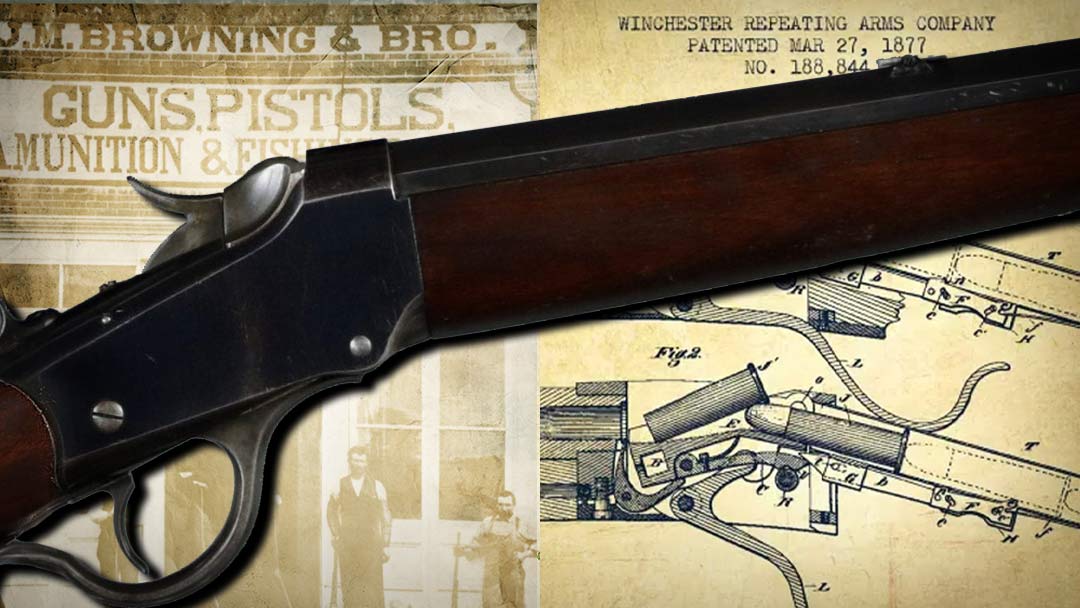
In 1879, John Moses Browning received his first firearm patent for a falling block single shot rifle, manufacturing the gun from the Browning Bros. shop in Ogden, Utah. Browning’s rifle offered an ideal hunting platform for the frontier. In 1883, Winchester’s Vice President Thomas G. Bennett purchased the design, and the classic Winchester Model 1885 rifle was born. This partnership would also lead to a Winchester lever action that could finally compete with the single shot rifle in the big game market.
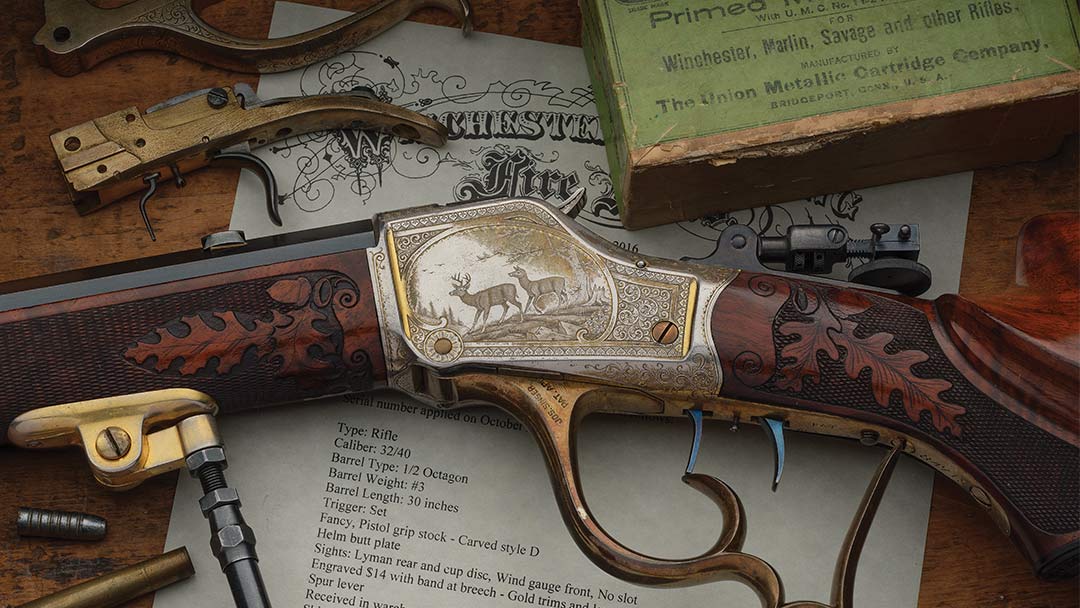
A special order Winchester Model 1885 Low Wall single shot short rifle manufactured in 1900. Available this October.
Single Shot vs Lever Action Rifles
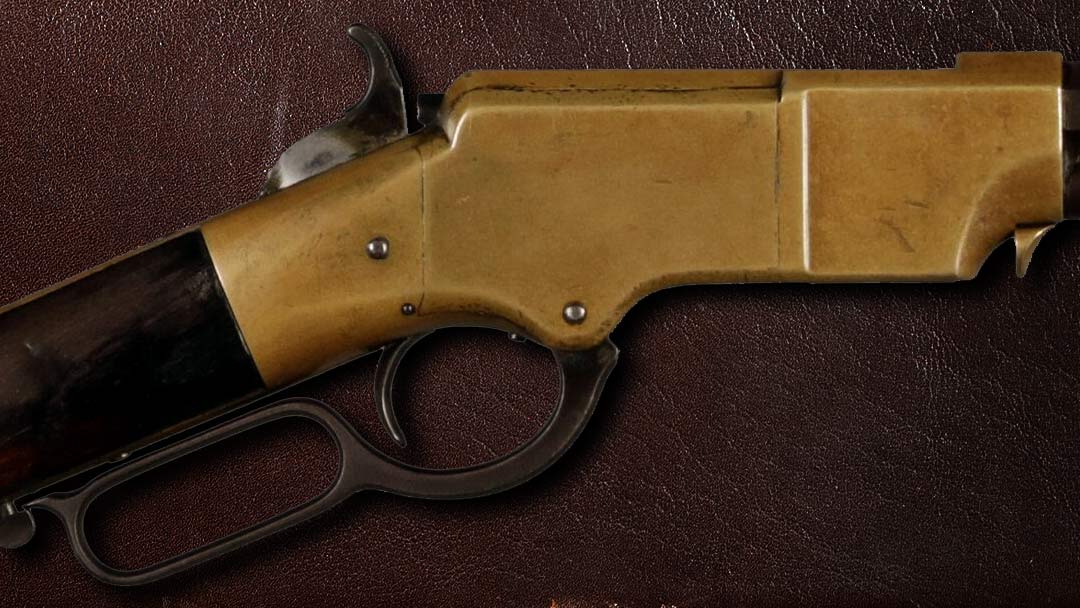
Arriving in the 1860s, the lever action rifle gained popularity in numerous roles, including law enforcement, homesteading, and as a hunting standard for small and medium game. Unfortunately, the toggle-link system employed by the Henry and early Winchester models wasn’t large enough or sturdy enough to handle the most powerful cartridges of the era.
Pistol-sized rounds like the .44 Henry RF and its .44-40 WCF successor couldn’t reliably bring down big game like the bullets chambered by big bore single shot rifles. While the Winchester Model 1876 provided a notable lever action upgrade, its .45-75 WCF and .50-95 Express cartridges were still no match for the likes of the .45-70 Govt. or the .50-90 Sharps.
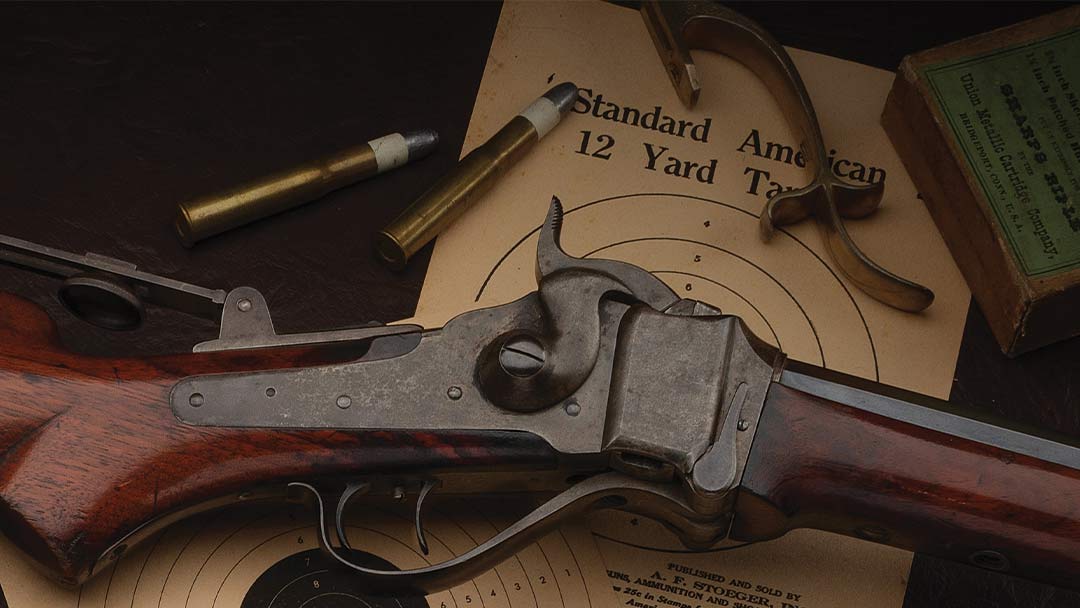
A Sharps New Model 1863 cartridge conversion rifle chambered in .50-90 Sharps. Available this October.
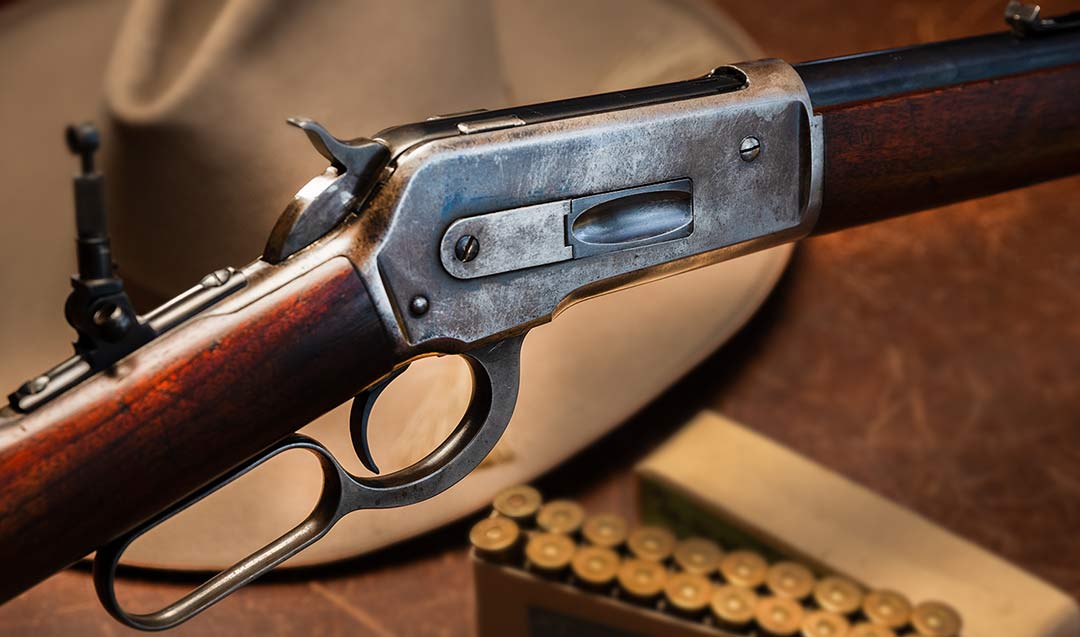
The first true big game lever action rifle wouldn’t hit the scene until Marlin’s Model 1881. Five years later, Winchester would respond with the Model 1886, a John Browning design that employed dual vertically sliding locking lugs to seal the breech bolt against the chamber, similar to the single shot falling block system it would compete against.
While impressive firearms, both the Marlin Model 1881 and Winchester Model 1886 were significantly more expensive than single shot rifles, and the latter continued to dominate America’s hunting market for years to come. Single shot rifles were also generally more accurate than lever actions when firing at long range, and with fewer working parts, they were reliable and comparatively simple to maintain.
Sharps rifle advertisements highlight these advantages, touting the platform’s durability, simplicity, ease of cleaning and upkeep, accuracy, and safety, qualities that applied to many of the popular single shot rifles of the era.
A Stevens J A&T Co Model 49 single shot rifle with Schuetzen stock and target sights. Available this December.
The Single Shot Schuetzen
The single shot rifle flourished as a target shooting standard in the United States thanks to the popularity of Schuetzen clubs and festivals. Schuetzen-style shooting events date back over four hundred years and were brought to America by Germanic immigrants. The sport became immensely popular in the 1890s, with Schuezten parks and shooting clubs springing up across America.
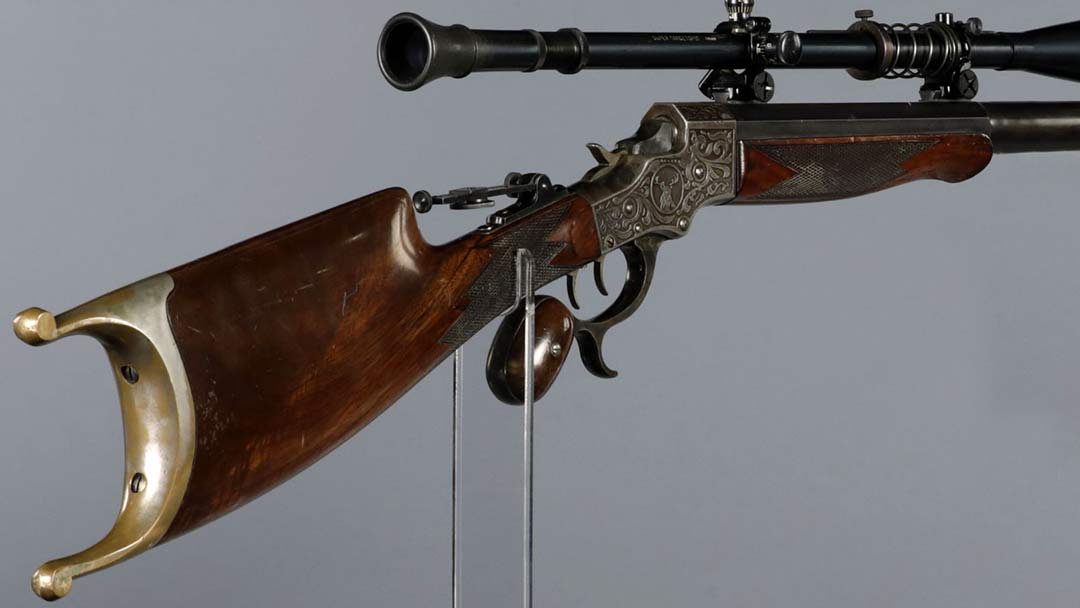
An etched Stevens Ideal No. 51 single shot Schuetzen rifle with a Lyman Super Targetspot scope. Available this October.
Schuetzen rifles were often heavily customized to their owner, though antique and curio examples designed for American competitions shared a number of common traits like heavy barrels, curved or hooked buttplates, set triggers, intricate trigger guards, and palm rests.
The January 1929 issue of ‘American Rifleman’ described the Schuetzen events as follows: “The principal outdoor range is 200 yards. The sights are free; anything, including telescopes, are permitted. So far only one position is allowed in tournaments—the one in which you stand up and shoot like a man.”
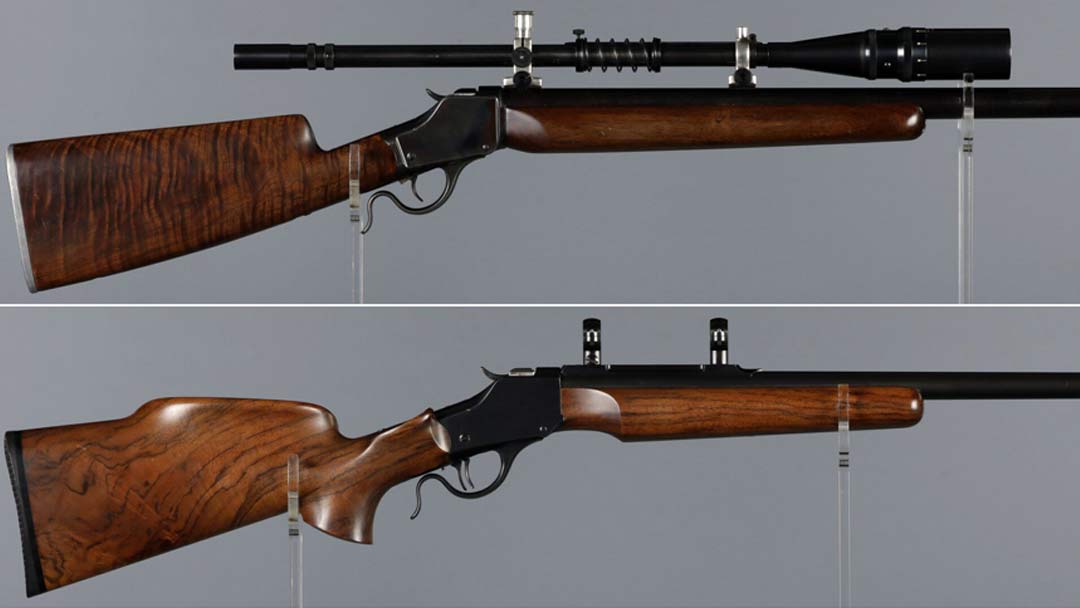
A George Schoyen barreled Winchester Model 1885 High Wall Schuetzen single shot rifle with an Unertl 14 power scope. Available this October.
Single Shot vs Bolt Action Rifles
Many single shot rifle designs made a smooth transition to the smokeless powder cartridges hitting the market in the late 1890s, since their actions were often sturdy enough to accommodate the increased pressure. In Europe, the bolt action repeater began to supplant the single shot in the military arena, and America would follow in 1892 with the Krag-Jorgensten.
A U.S. Springfield Model 1903 NRA Sporter rifle in .30-06. Manufactured in 1932, this example includes a hooded blade front and Lyman peep rear sights. Available this October.
While bolt action rifles like the Model 1903 gained a steady following in the United States, the platform’s popularity skyrocketed after WW1 thanks to an abundance of cheap surplus rifles. New designs like the Winchester Model 70 offered a bolt action repeater that could be chambered in nearly any game cartridge imaginable, including rounds capable of tackling the largest North American game from a distance.
A Belgian Browning Safari Grade High-Power bolt action magazine rifle in .308 Norma Magnum with a Bausch & Lomb scope. Available this October.
After WW2, the availably of bolt action repeaters surged and the platform became more affordable than ever, further narrowing the cost advantage single shot rifles had previously enjoyed.
The bolt action platform had started as a single shot system. Most any bolt action can be converted to a single shot firearm by excluding the magazine. Bolt action single shots were produced as military training rifles, and models like the Winchester Model 02 were offered for target and varmint shooting. Many modern bolt action single shot options are available today, ranging from the diminutive .22 Cricket to the mighty AR-50 in .50 BMG.
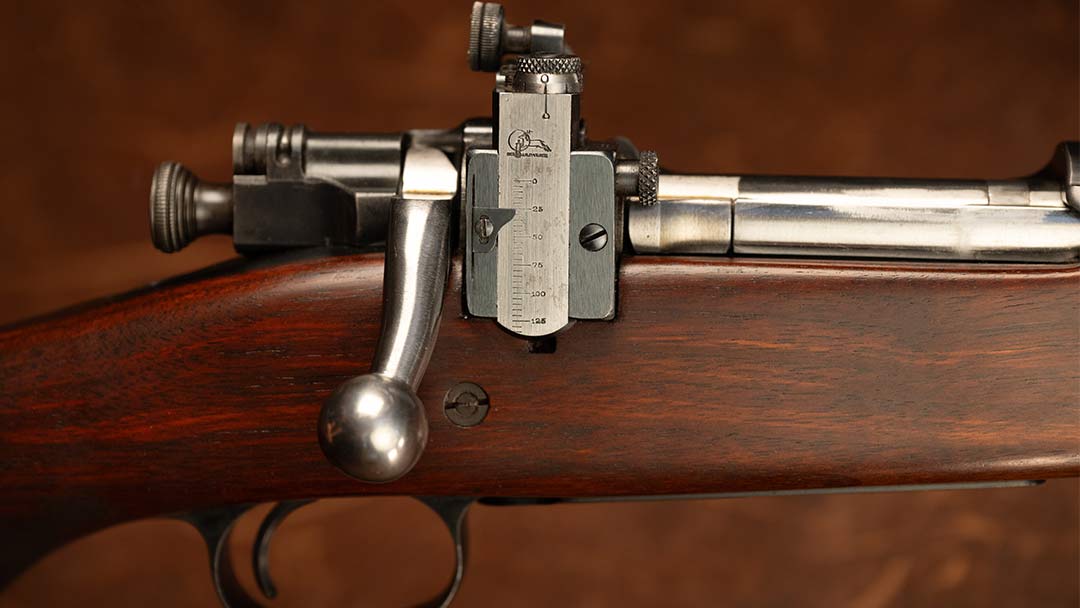
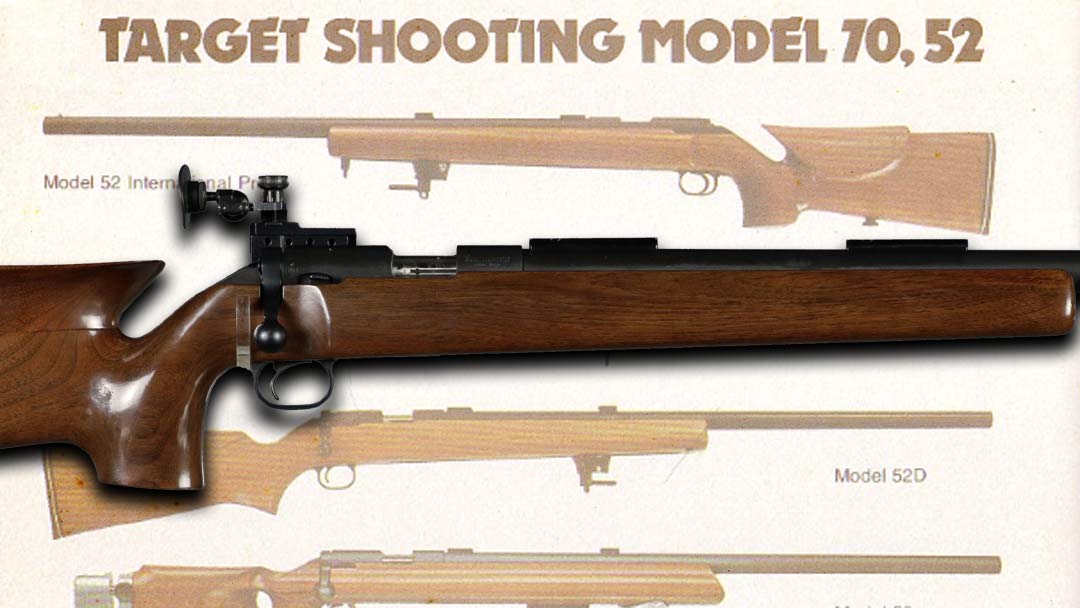
A Winchester Model 52E bolt action single shot Target International prone stock rifle chambered in .22LR. Available this October.
Modern Single Shot Rifles
Throughout the 20th century, single shot rifles in smaller calibers, mainly .22 Long Rifle, remained popular guns. The break action single shot became a common truck gun, varmint rifle, and an affordable, safe option for young shooters. Today, this sturdy action can be found in the T/C Contender series, the H&R Handi-Rifle, and the Rossi Wizard.
One of the most famous post-WW2 single shot rifles, the Ruger No. 1, was released in 1967. Based on the Farquharson falling-block action from the 1870s, Bill Ruger’s design moved the hammer and spring inside the receiver. Compact, balanced, and accurate, the Ruger No. 1 can chamber dozens of cartridges suited to any purpose, with sleek, elegant lines that make it a joy to field.
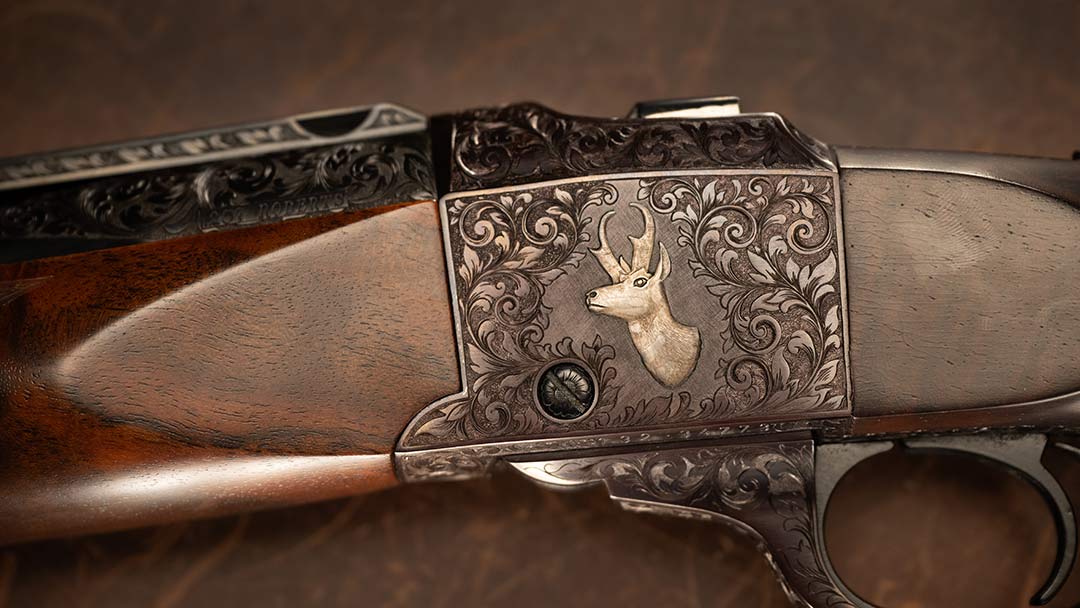
A “J.K.G.” signed, engraved, and silver inlaid Ruger No. 1, a fantastic single shot rifle. Available this October.
Single shot rifles like the Ruger No. 1 offer a classic hunting experience, where success hinges on careful stalking, timing, and marksmanship. In some areas, single shots can open the door to additional opportunities as well. In recent years, Midwestern states like Ohio, Indiana, and Michigan, which had previously restricted deer hunting to bows, shotguns, muzzleloaders, and handguns, began to allow single shot rifles and select straight wall centerfire cartridges. In January 2023, Illinois joined their ranks.
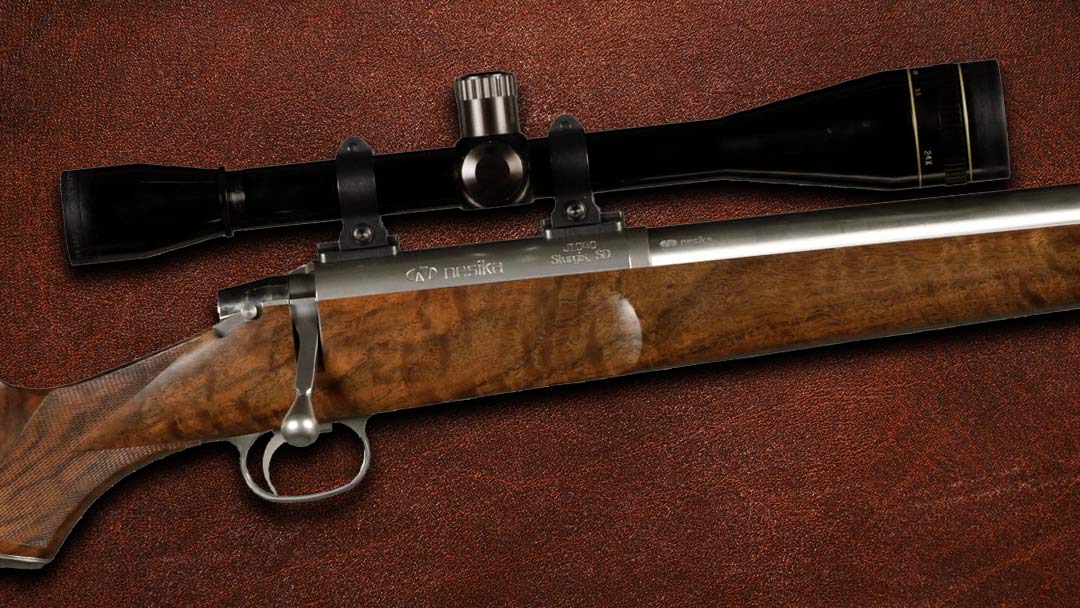
A Nesika Bay Precision Model J single shot bolt action rifle with a Leupold 24x scope. Available this October.
In terms of single shot target shooting, many American Schuetzen clubs were closed in the wake of WW1 anti-German hysteria. The sport has since seen a steady resurgence in popularity, along with a number of other recent shooting events centered around the single shot rifle.
Organized in 1985, The Black Powder Cartridge Rifle Silhouette (BPCRS) competition uses original and reproduction pre-1896 single shot rifles that shoot cartridges loaded with black powder or Pyrodex. No scopes are permitted.
Another example, the Quigley Buffalo Rifle Match, is an annual competition that employs “long range rifle competition using original or replica period firearms from the glory days of buffalo hide trade.” This event is billed as ‘The largest rifle shooting event in Eastern Montana since the Custer Massacre.’
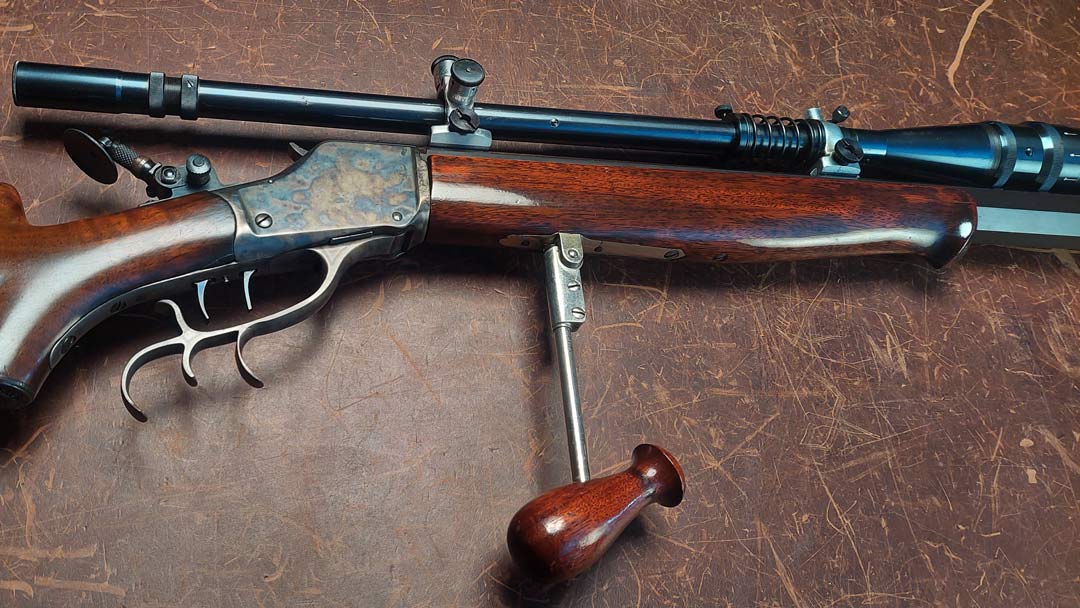
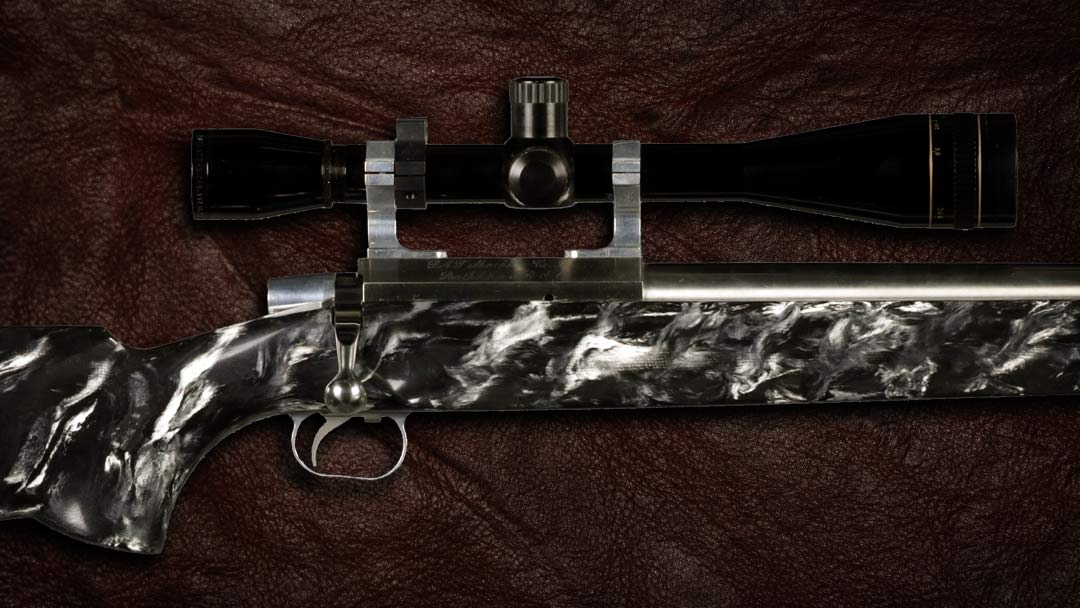
The single shot rifle continues to flourish in benchrest shooting competitions as well. In 2001, the World Benchrest Shooting Federation (WBSF) was founded, and the sport has enjoyed popularity around the globe. In a contest where victory is decided by the thinnest of margins, benchrest shooters often turn to customizable bolt action single shot rifles with synthetic stocks like the example below.
A Bat Machine Co. benchrest single shot bolt action rifle with a Leupold 36x scope. Available this October.
Sing Shot Rifles for Sale
For hunters and target shooters, the single shot rifle provides an accurate, affordable, easy-to-upkeep platform that can be chambered in nearly every cartridge available. Whether a greenhorn or a seasoned marksman, single shots promise a unique challenge and a traditional shooting experience. Antique and curio single shots tend to hold up well and can often still be fielded confidently, and high-end examples of the genre make valuable additions to any arms collection.
Find single shot rifles for sale and more at Rock Island Auction Company.
Considered by many to be the finest 1885 extant, this special order, Deluxe, factory engraved, Deluxe Winchester Model 1885 High Wall Schuetzen rifle includes a Pope barrel, telescopic sight, spare set trigger, shooting case, factory letter, and a bill of sale documenting the rifle as once owned by legendary barrel maker Harry Pope. Available this December.
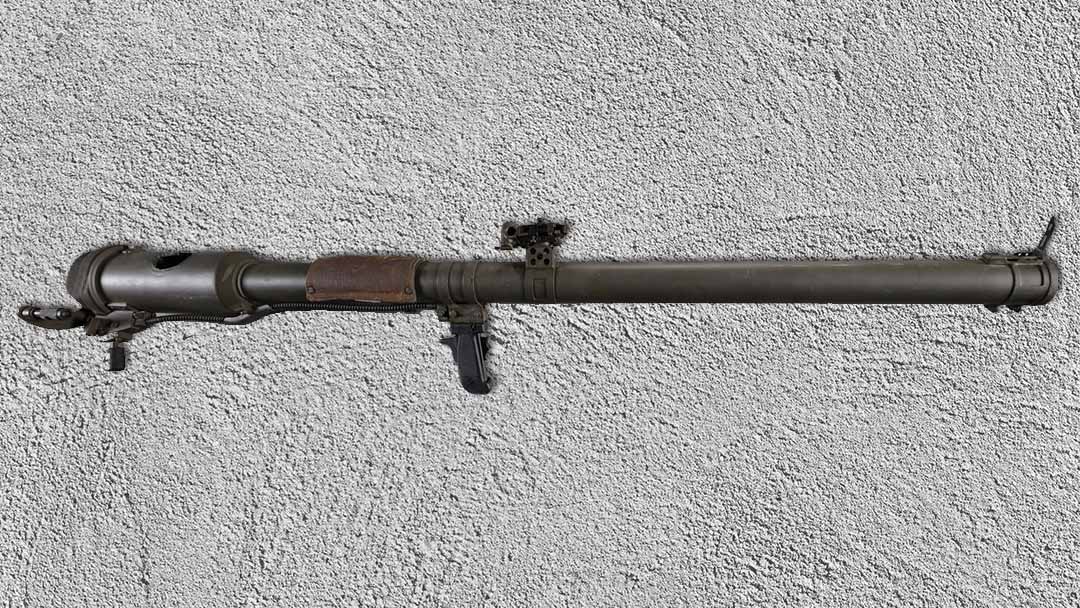
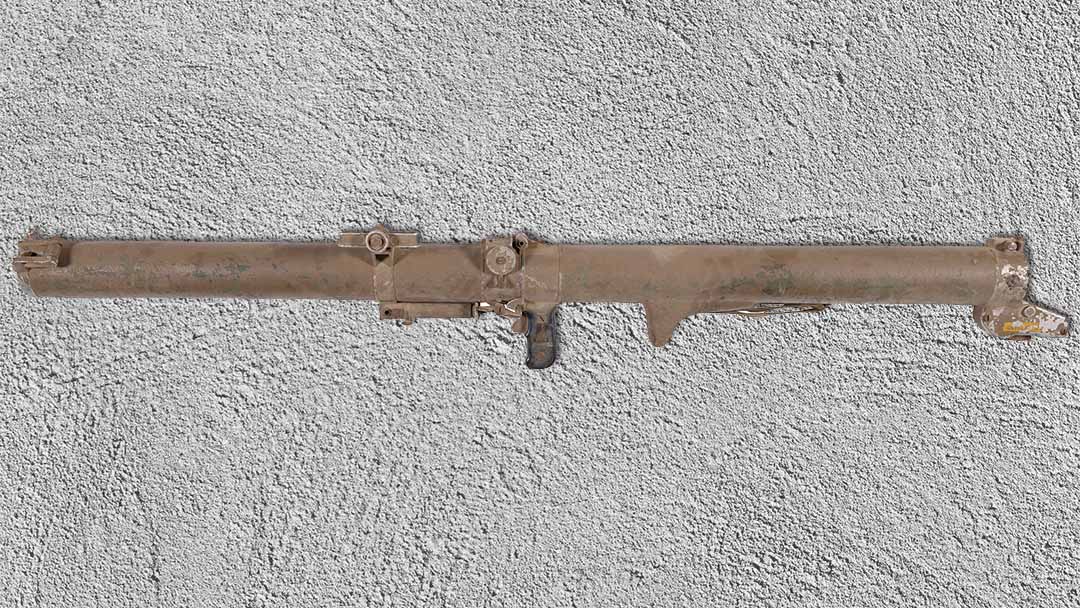
When someone really had a problem, they sent in the big guns to fix it. That might mean a recoilless rifle to fight off a tank, a bolt action rifle that can take down charging dangerous game or oversized cutaway guns to train thousands and thousands of troops during World War 2.
Collectors looking for big guns will find them at Rock Island Auction Company’s Oct. 4-6 Sporting & Collector Auction.
A World War 1 Problem Required Big Guns
Tanks! The British unleashed its first tanks in September of 1916. They were slow and unreliable but a shock to German troops. The Germans started attacking the lumbering behemoths with steel-cored armor-piercing bullets that were used against pillboxes and armored bullet shields.
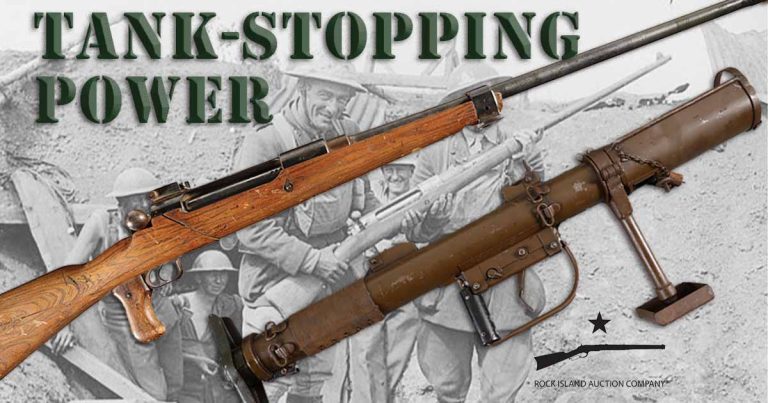
The German military approached Mauser about making an anti-tank weapon when resources were strained. The decision was made to upscale the Mauser 98 to take a 13.2mm shell that was capable of penetrating 15mm armor. An additional locking lug was added. The Mauser Tankgewehr Model 1918 was the first purpose built, large-caliber weapon for fighting tanks. A pistol grip was added from the Mauser 98 design since the anti-tank rifle would be fired differently than the 98.
“You could fire the tankgewehr twice per man – one for each shoulder.”
In full production by May 1918 they were issued to regiments where troops were most likely to encounter tanks. A two-man crew would carry 132 rounds and wait until the tank was within 300 meters before engaging. Even if the shells didn’t penetrate the armor they created spalling and damage inside the tank. The gun itself had heavy recoil that left users complaining of headaches, temporary deafness, nausea, bruising and dislocated shoulders.
Mauser made 14,700 before the armistice. After the war, Germany was forbidden by the Treaty of Versailles to possess anti-tank weapons so thousands of them were destroyed, but some were sent to other nations as reparations.
This Mauser Tankgewehr Model 1918 bolt action anti-tank rifle is 66.6 inches long and weighs more than 40 lbs. The World War 1 13.2mm ammunition is a rarity and would make the Tankgewehr a registered destructive device, so this weapon was converted to .50 BMG.
Cutaways of Big Guns
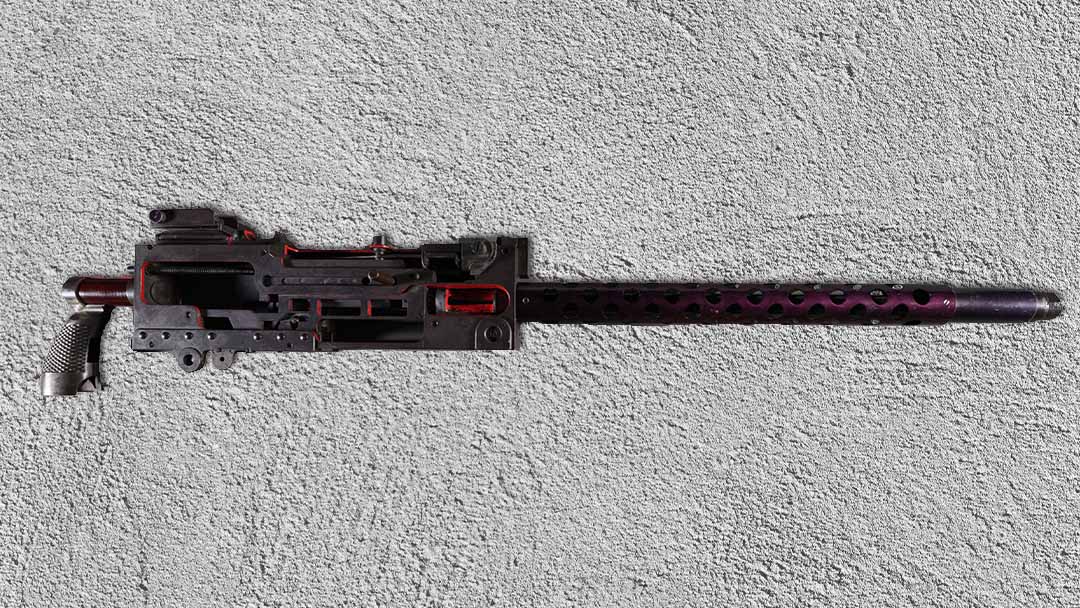
During World War 2, the Army had to train its soldiers quickly on the guns that would protect them. An arsenal of training aids was created that included posters, training films and over-sized versions of the guns they would be firing like the Browning Automatic Rifle, M1 Garand and M2 Carbine.
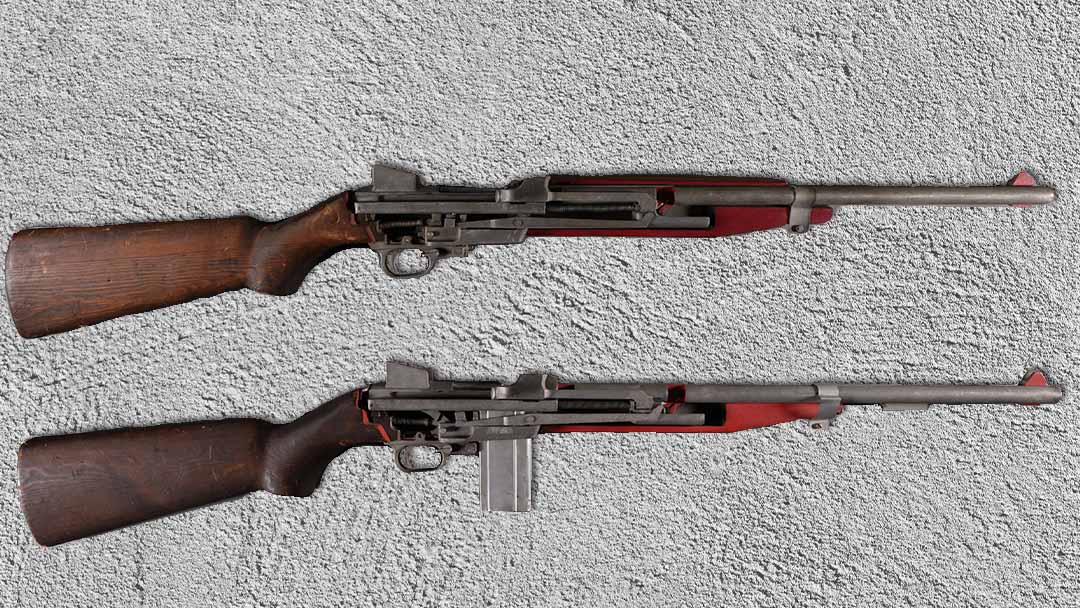
Two separate lots are available for the M2 Carbine cutaway trainer. They measure 71 inches in length and show the right side of the stock and the mechanical parts cut away to show their inner workings. They both have hardwood stands.
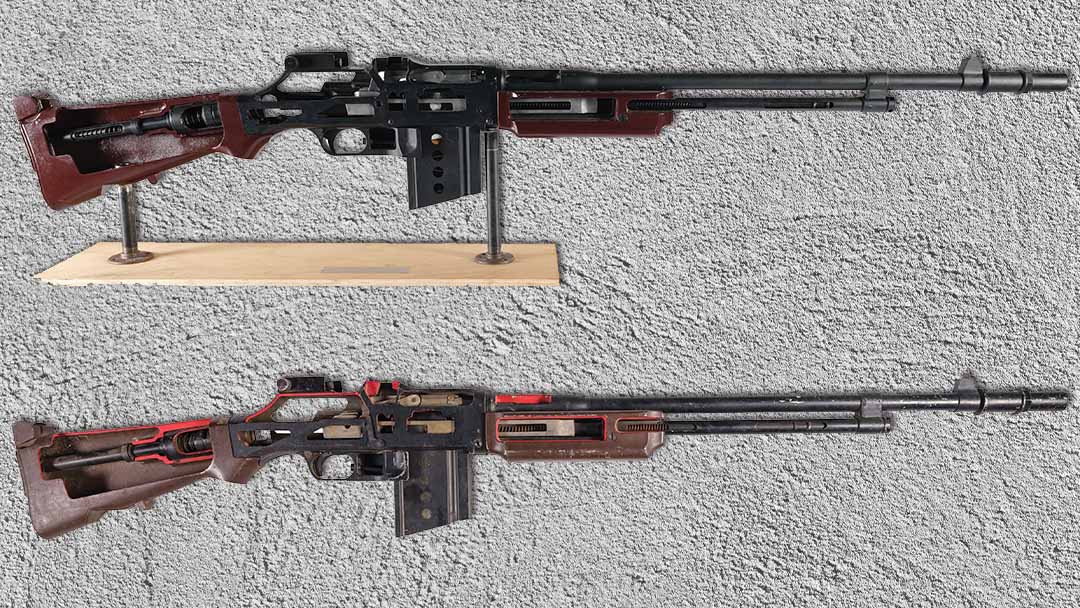
A training manual about the BAR cutaway – designated the Device 3-F-3 – stated, “Device 3-F-3 demonstrates the complete cycle of performance of the operational piece. This includes loading and unloading, extraction and ejection of simulated cartridges, action of hammer, trigger, safety, clip latch, change lever and sear, movement of gas piston, and operation of the buffer spring.”
These big guns were given official designations. The training aid for the M2 Carbine was designated the M21, the M1919 machine gun was the M22, the BAR eventually became the M23 and the M1 Garand trainer was the M24.
Two separate lots are available for Model 1918 Browning Automatic Rifle classroom cutaways. The training aid is 95 inches in length, made of alloy with brown painted “wood components” and red highlighted areas cut away to show the inner workings.
The training aids allowed soldiers to see the inside of the weapon and how the system operated with the cutaway areas on these big guns were marked in red. These big guns were designed in 1943 by the Army and Naval Research Special Devices Center. Manufacture of the oversized cutaways went to J.H. Keeney & Company of Chicago. Following the war, they were made by Dellenbarger Machine Company of New York City.
This cutaway training model of the U.S. Model 1919 Browning machine gun is made of alloy with cutaway areas marked in red.
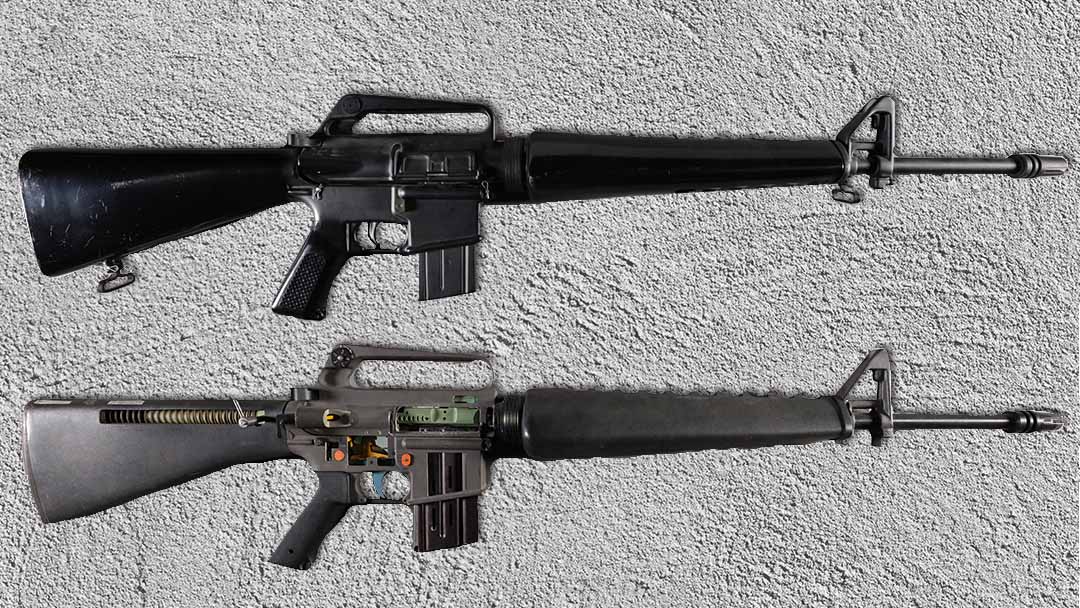
Similar to the World War 2 these big guns were made during the Vietnam War for the M14, M16 and M60 machine guns. The problem was they were delicate and easy to damage with no spare parts available. Training aids for the Garand and BAR became obsolete after World War 2 so they became surplus and found their way into Army/Navy surplus stores and gun stores.
These cutaway training models of the M16 are about 78 inches long and are made of construction with cutaway areas to show the inner workings of the rifle.
Big Guns Are Serious Anti-Tank Weapons
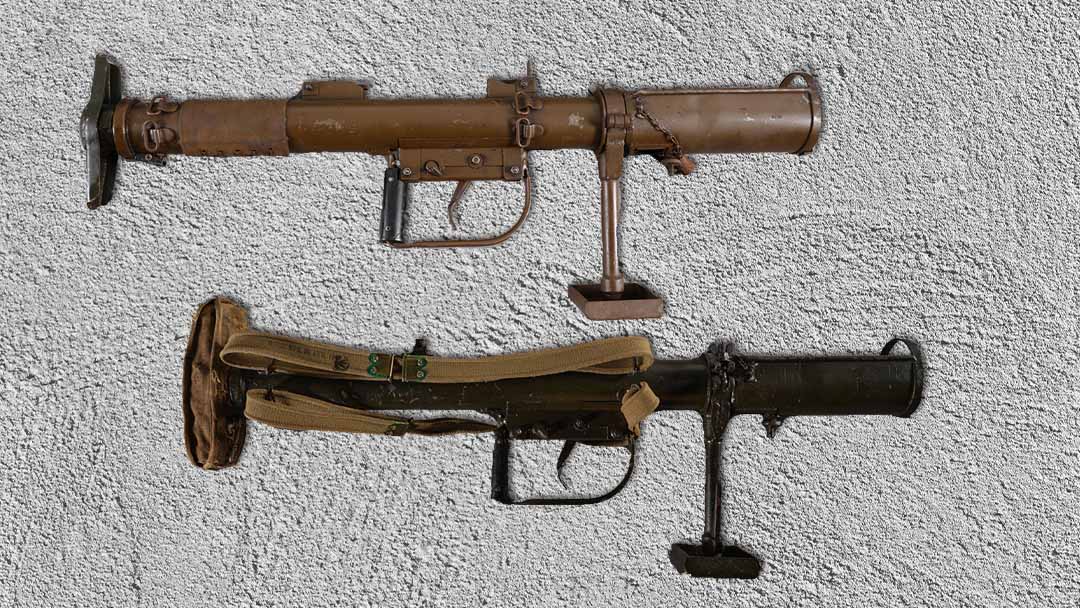
England started World War 2 with the Boys rifle and the No. 68 rifle grenade for anti-tank weapons. They could defeat light tanks but were ineffective against medium tanks. An early version of the PIAT (Projector, Infantry Anti-Tank) grenade launcher was large, firing a 9 kg projectile, but it required a crew of at least three so the decision was made to size it down. The PIAT had a self-cocking design except for the first round, however, the firing spring was so stiff that crews were trained to carry it cocked but unloaded.
Introduced in the Tunisia campaign in North Africa, the PIAT also saw action on D-Day and Market Garden. Six Victoria Crosses were awarded for PIAT actions including Major Robert Cain who destroyed six tanks during Operation Market Garden and Ganju Lama of the Gurkha Rifles who defeated several Japanese tanks at the Battle of Imphal. It was used by the Poles in the Warsaw Uprising.
The British PIAT (Projector, Infantry, Anti-Tank) grenade launcher has a plastic pistol grip, canvas cheek rest and steel buttplate.
The PIAT was more complicated than the Bazooka or Panzerschreck. The PIAT fired by a spigot driven by the heavy spring that ignited the propellent as well as guided the projectile for a split second. About 115,000 were made by 1944 and they were issued for the Allied invasion of Sicily. Standard operating procedure was to fire from short range when possible since its maximum direct fire range was only 115 yards compared to the Bazooka’s 275-yard range. Early complaints were about its lack of precision and reliability.
More Big Guns for Fighting Tanks
Anti-tank weapon design deservedly received a lot of attention during World War 2 as the metal monsters supported infantry. Germany’s Raketenpanzerbüchse 54 (Rocket Tank Rifle) is better known as the Panzerschrek (“tank terror”). Depending on the source, its design was either cribbed from Bazookas captured in North Africa or on the Eastern Front where it was sent to the Soviet Union as a Lend-Lease weapon.
The Panzerschreck increased the projectile size from the American 2.36 inches to 3.46 inches (88mm) for more penetrating power. It was a bit unwieldy at about 5 feet long 20 lbs. It also had a shield to protect the user from the rocket blast when fired. The German shoulder-fired weapon found its way into a number of World War 2 video games like Medal of Honor and Call of Duty.
This Panzerschreck is in modern “Afrika” style tan paint finish. Included in the lot is U.S. M18 recoilless rifle and Spanish Instalaza-style shoulder fired rocket launcher. All three have been deactived.
The U.S. M18 recoilless rifle was a 57mm shoulder-fired anti-tank weapon used in World War 2 and Korea. Designed to be carried by two soldiers, it was 44 lbs. firing shells that weighed 5.3 lbs. each. It fired a number of different charges, from high explosive to anti-tank, smoke and training rounds. It was effective at 490 yards.
Sent to Europe in March 1945 then to the Pacific Theater, the M18’s first action was with the 17th Airborne near Essen, Germany as well as Italy’s Po Valley. Used in the Battle of Okinawa it was effective against the well dug-in Japanese troops. In the Korean War it was too weak to stop Soviet-built T-34 tanks but was effective against the machine gun emplacements.
The U.S. M18 recoilless rifle It is part of a lot that includes the aforementioned Panzerschreck and the Spanish Instalaza-style shoulder fired rocket launcher. All three have been deactivated.
Modern Military Big Guns
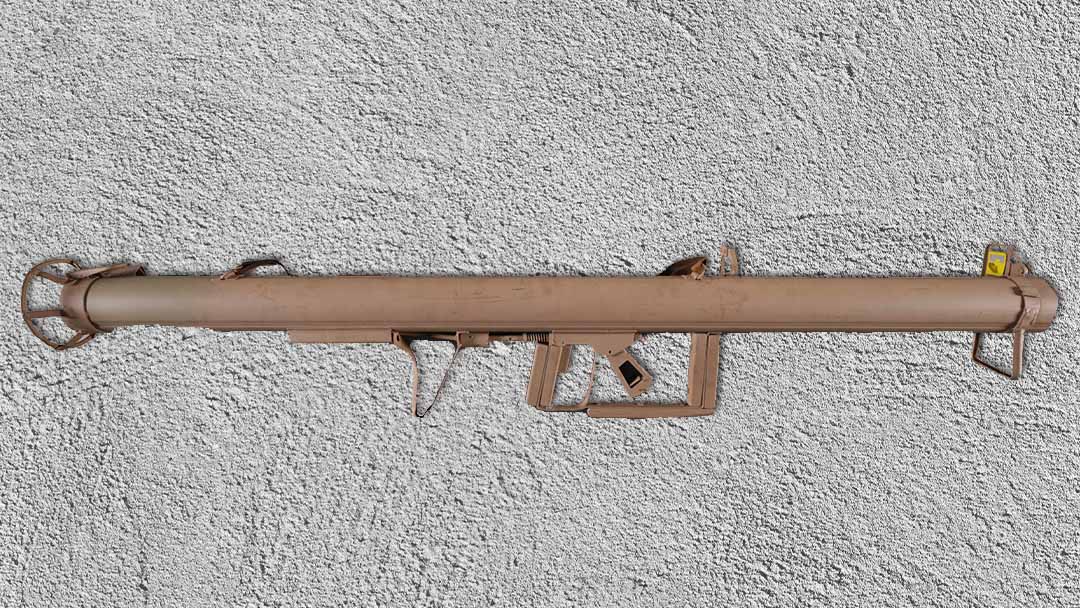
Mecar SA of Belgium designed the RL-83 “Blindicide” rocket launcher that found use in the Congo in the early 1960s and by Israeli Defense Forces in the Six-Day War of 1967 and the Yom Kippur War in 1973. The name is a French mashup of the words for “armored car” and “kill.”
An improved design of the Super Bazooka, the Blindicide has an aluminum barrel and detachable shield to protect the user. It has an effective range of about 400 meters.
This pair of RL-83 “Blindicide” rocket launchers have tan paint finish with Israeli-style nomenclature tags and hardwood case. They are deactivated.
Big Guns for a Last Resort
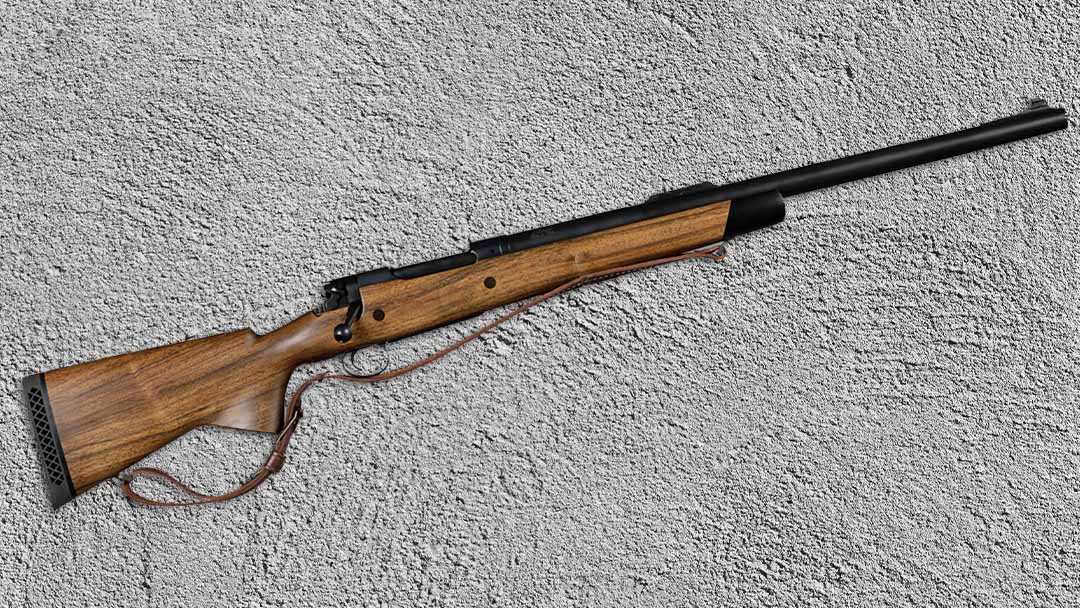
A-Square Company founder Arthur Alphin, whose company manufactured the Hannibal bolt action rifle, was approached in 1993 by a Namibian professional hunter who wanted a bigger, badder rifle after a near-death experience with an elephant. Alphin designed the monstrous .577 Tyrannosaur cartridge, and the Hannibal, with an Enfield action, to fire it. The big and bulky rifle has a larger stock, recoil pad and three Mercury recoil reducers to ease the toll on the shooter’s shoulder. Alphin said in a video interview with Field & Stream the gun’s recoil was than a Weatherby Mark V in .460 Weatherby, equating it to a big shove.
Scott from Kentucky Ballistics on YouTube reported that A-Square made 24 Hannibal rifles, and 12 went to Africa and 12 stayed in the United States. When asked in the interview with Field & Stream if he’d received any testimonials about the gun and the .577 Tyrannasaur, Alphin said one hunter told him, “You could see the look of surprise on the buffalo’s face before it fell over.”
This stout bolt action rifle, the Hannibal from A-Square Company fires one of the largest cartridges made, the .577 Tyrannasaur, as an insurance policy against charging dangerous game.
Big Guns for Sale
One thinks of artillery as the big guns, but even infantry soldiers and hunters occasionally use them, too, to train, to destroy enemy armor and for protection for charging game. Take a look at these big guns and the rest of Rock Island Auction Company’s Oct. 4-6 Sporting & Collector catalog and ask yourself how big can you go?
Sources:
“The Arsenal of Democracy’s Oversized Training Guns,” by Tom Laemlein, The Armory Life
The first antique guns illustrated in English manuscripts date back to 1326 and the first mention of “hand gonnes” dates to 1380, and in China they appear even earlier. Handfired weapons are some of the oldest gunpowder based arms in recorded history.
Through their centuries of use, technology has changed drastically, but for nearly 200 years innovation slowed to a trickle and the flintlock reigned supreme. The flintlock, that followed the matchlock and wheellock, does exactly what it says, using a piece of flint to strike against hardened steel to create a shower of sparks that ignites the gunpowder and fires the gun.
This new technology was adopted by the French Army in 1648 and proved to be the leading firearm platform until the rise of percussion guns in the early 19th century, used in antique pistols, muskets, blunderbusses and fowling pieces.
Flintlocks became an English specialty by the likes of craftsmen like John and Joseph Manton, Henry Nock, but interest was international in the reliable and relatively simple to manufacture mechanism, and continued even after the dawn of the percussion ignition. English-made antique pistols as well as French, Scottish and American pistols will be on offer in Rock Island Auction Company’s Oct. 4-6 Sporting & Collector Auction.
English Antique Pistols
Going on a journey of antique pistols, start with the Georgian Period of the 18th century and early 19th century that was the flintlock’s hay day before British gunmakers Robert Adams and William Tranter were offering their double action revolvers and firms like Purdey and Boss weren’t yet on the scene.
John Bennett was not among the roster of well-known London gunmakers, but this handsome pair of dueling pistols has “RHCS” inscribed silver escutcheons along with its case and a number of accessories.
Henry Nock was widely recognized for his guns being able to be taken apart without tools, using removable pins rather than screws. He served as one of the main suppliers of flintlocks during the American Revolution and Napoleonic Wars. His business eventually became Wilkerson Sword that made officer swords for the British Army but today is known primarily for making shaving equipment.
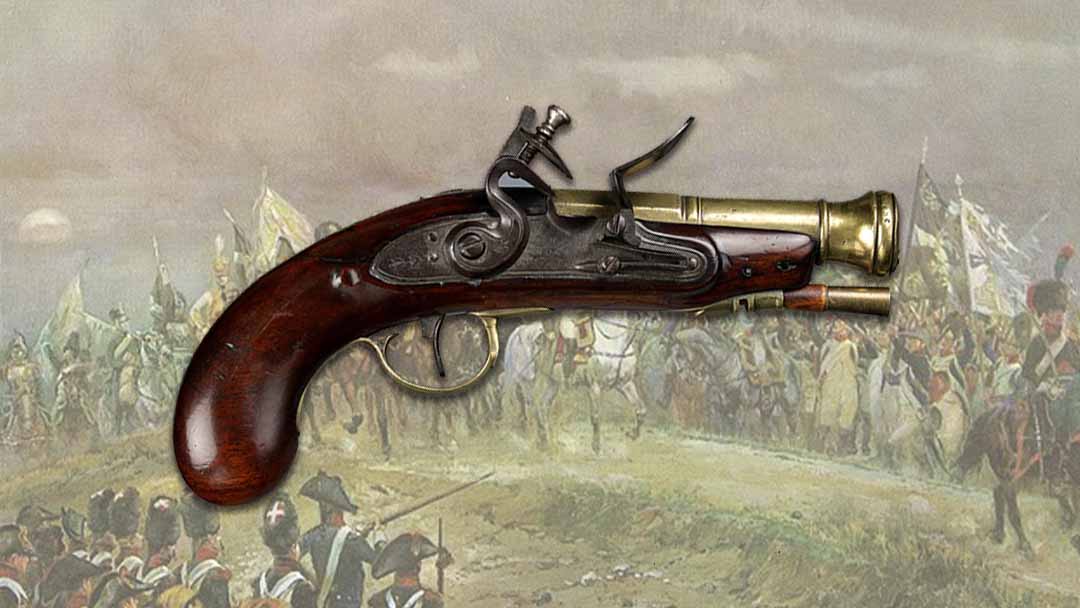
This brass barrel flintlock blunderbuss pistol by Henry Nock is marked with his name. Included in the lot is a Deringer medium-sized pocket percussion pistol.
English gunmaking would soon be dominated by Joseph Manton and the parade of legendary gunmakers who worked under him: James Purdey, Thomas Boss, William Greener and Charles Lancaster to name a few. Manton started working for himself in 1789 at the age of 23 and recorded twice as many patents than any other gunmaker in his lifetime. Among them was the tube lock that used small tubes of percussion compound to ignite the powder. It would soon be overpowered by the percussion cap that would dominate 19th century firearms until the metallic cartridge.
Though he was Swiss-born, Durs Egg was another of the London gunmaking royalty, apprenticing in Switzerland and Paris before putting out his shingle in London in 1772 after working for Henry Nock for a short time. He became “gun maker to his majesty the Prince of Wales and the Duke of York” in 1799, famous for his double barrel shotguns and dueling pistols, according to John F. Hayward in his book, The Art of the Old Gunsmiths.” Sadly his eyesight began to fail and he fell blind in 1822, dying nine years later.
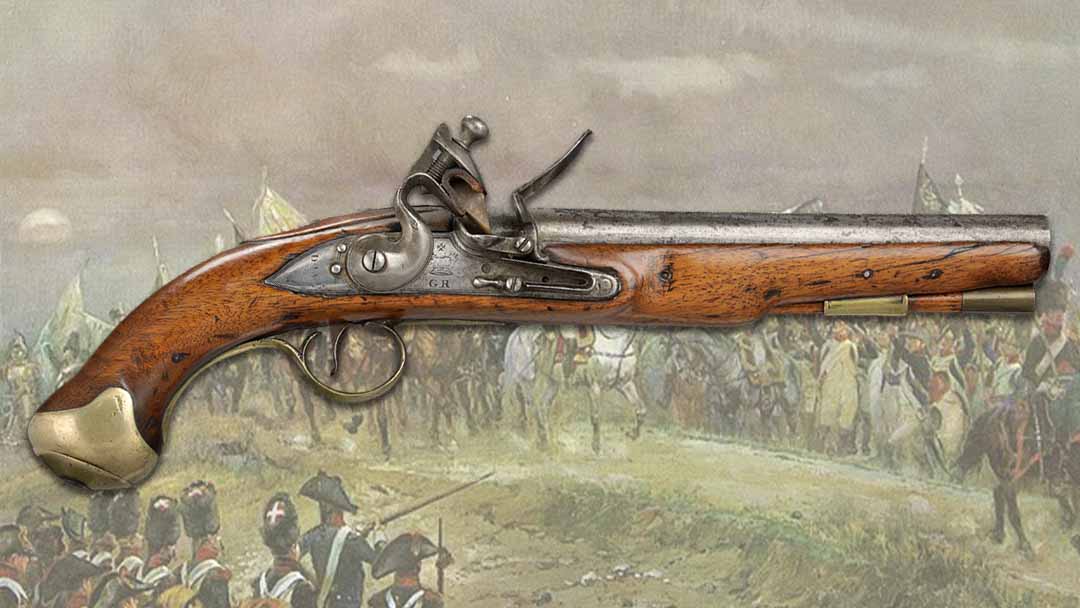
This D. Egg British Light Dragoon pistol was manufactured about 1770-1790.
Departing London, Birmingham, in the Midlands, was also a well-known firearms manufacturing hub in England, most notably where Westley Richards got his start. The Richards were a family of gunsmiths and Westley was the third to take up the business, but not joining his family immediately. He opened his gunshop in 1812 in Birmingham, then in London three years later. The company is still in business, known as one of the finest makers of bespoke sporting arms in the world.
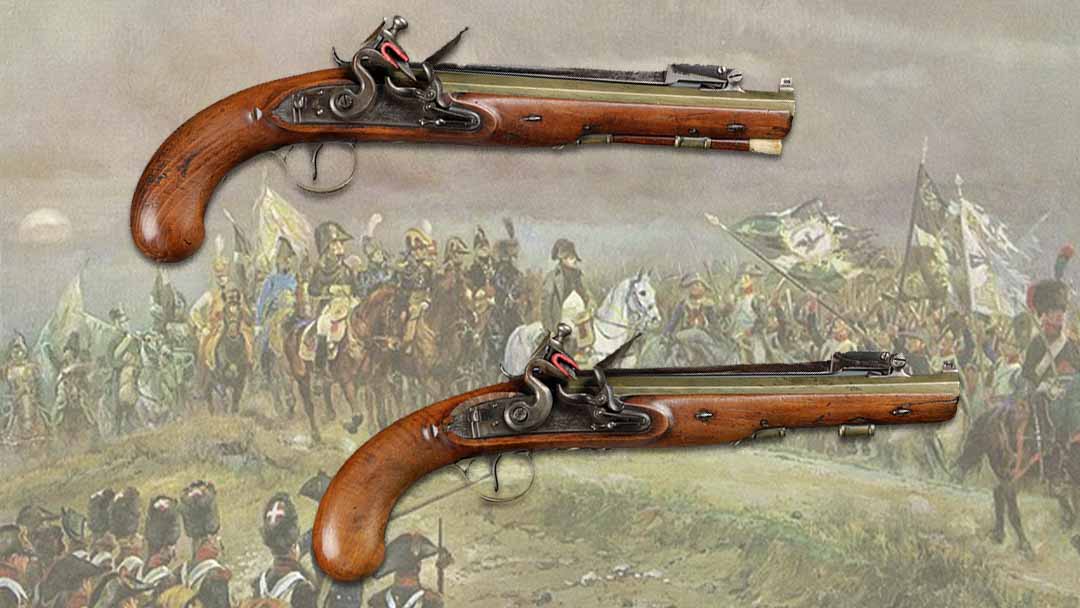
This pair of Richards brass barrel flintlock pistols with snap bayonets bear pre-1813 Birmingham private proofs.
Liverpool, at the mouth of the Mersey, is better known for its soccer team, the Beatles and as a port city, but it too also had gunmakers. Among them were the Patrick family of father Jeremiah, son Edward and – interestingly – Ann. Newspaper advertisements of the time described the Patrick guns as “capital” and “excellent.” A. Merwyn Carey in his book “English, Irish and Scottish Firearms Makers,” wrote that Patrick made double barrel over/under flintlock pocket pistols as well as “cased, saw-handled dueling pistols of fine workmanship.”
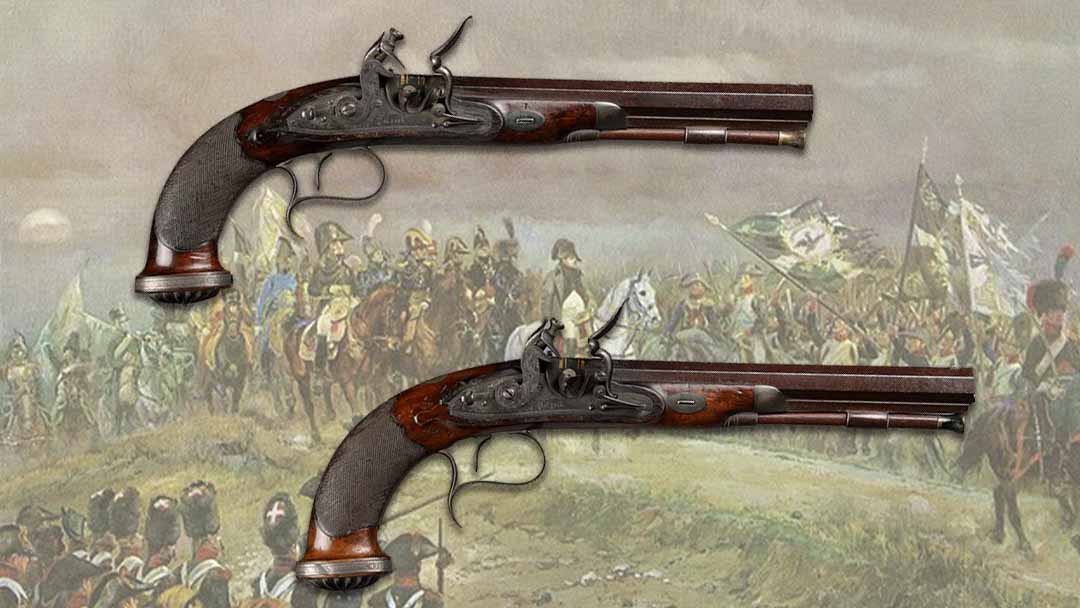
This pair of engraved Edward Patrick flintlock dueling pistols are marked “Patrick” on the locks and bear “Liverpool” on the barrels. They have gold band inlaid patent breeches, waterproof pans, set triggers, silver end caps, wedge escutcheons and bands around the pommels.
Scottish Antique Pistols
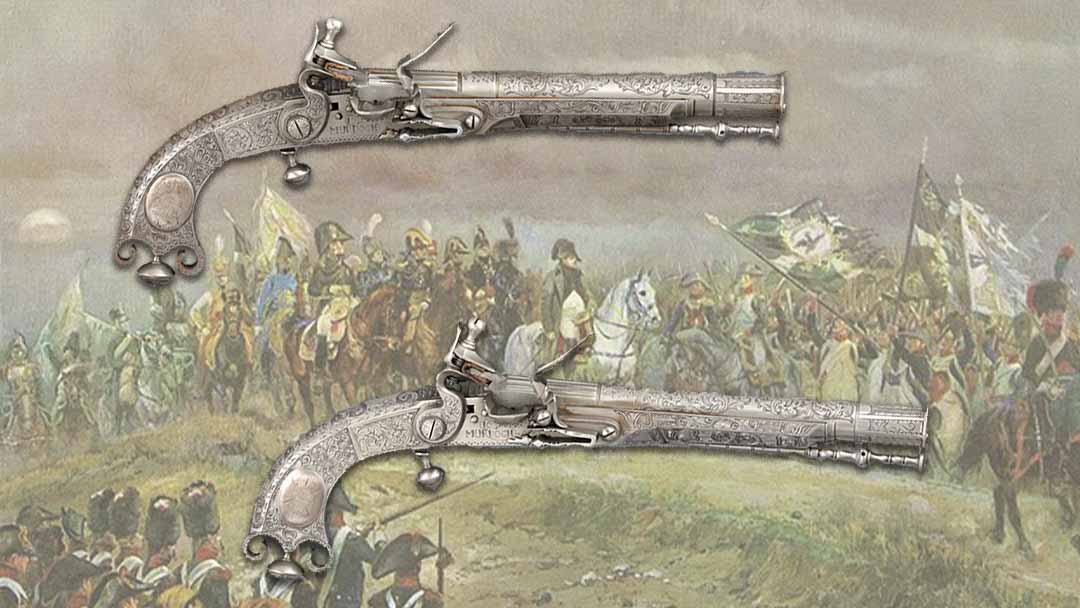
Highland pistols are easily recognizable by their “ram’s horn butt.” They came about in 1680 when Scotland faced a hardwood shortage so gunmakers used metal stocks for the guns. The renowned gunmaker John Murdoch, of Doune, was one of the finest artisans of this style so that this pistols are also known as Doune or Murdoch pistols. These guns were often engraved with thistle and floral designs.
These guns were carried by the Highland Regiments during the 18th century when officers would often tuck their pistol under their left arm.
This pair of engraved Murdoch-marked flintlock Highland pistols have near full coverage floral scroll engraving with scattered silver inlays and silver escutcheons on the grips with the right side engraved with a snake and swords and belt hooks on the left.
French Antique Pistols
For French gunmakers, the pinnacle of their craft was to make firearms for royalty, whether it was the House of Bourbon or the Bonapartes and Rock Island Auction Company has offered these ornate antique pistols in the past. Louis-Julien Gastinne Renette was one of those gunmakers, producing firearms that are as much art as they are weaponry. Gastinne-Renette was founded in 1812 and served as the official gunsmith to Napoleon III.
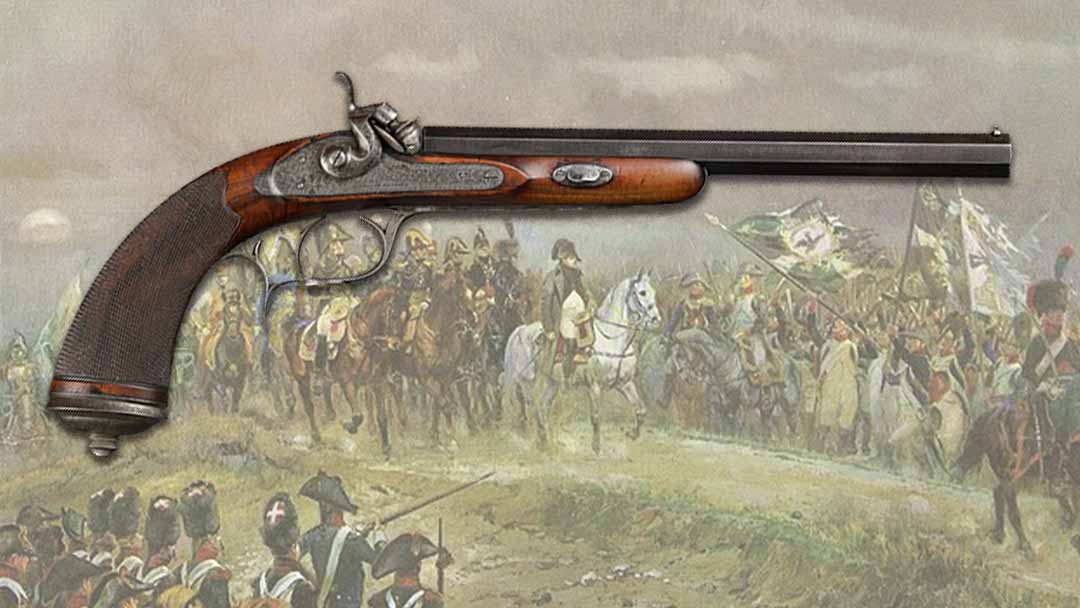
This handsome Gastinne Renette breech-loading target pistol was manufactured in the last quarter of the 19th century and has a “CM” gold monogram on the trigger guard/lever. Its barrel slides forward for breechloading. It is paired in its lot with an engraved Belgian percussion pistol likely made between 1830 and 1870.
Another French gunmaker who served Napoleon III was F.P Caron who worked in Paris from 1852 to 1874 when he retired. Like Gastinne-Renette, a pair of Caron pistols are among the firearms collection of the New York Metropolitan Museum of Art.
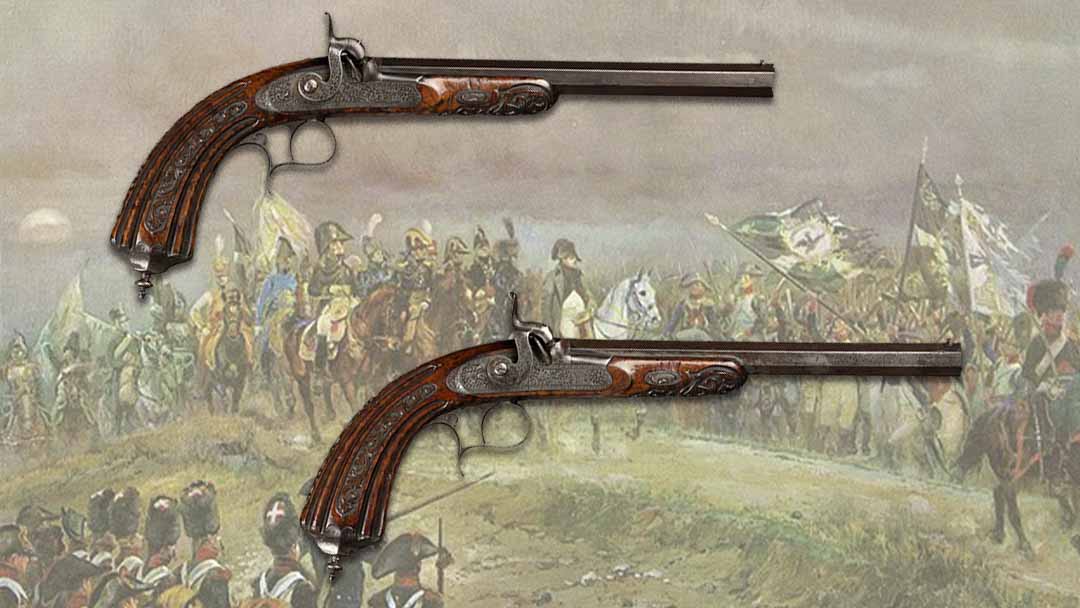
This pair of F.P. Caron dueling pistols are ornately engraved with carved tocks and grips. The guns have extensive floral scroll engraving.
Western France along the Bay of Biscay and the city of La Rochelle was widely fought over for centuries, having been occupied by the Romans and English before the French recaptured it in 1224. La Rochelle served as the Knight Templar’s largest base on the Atlantic Ocean.
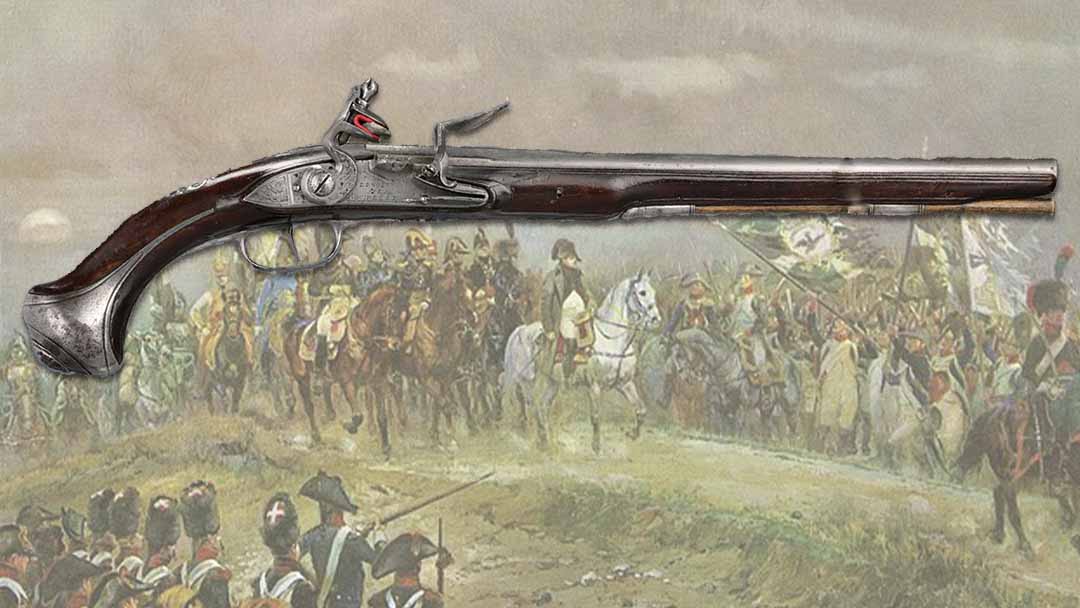
This Ternois flintlock holster pistol with a 14 5/8-inch barrel was manufactured in La Rochelle in the early 18th century.
American Antique Pistols
On the cusp of the 19th century, firearms technology would soon take a huge leap forward propelled by the land wars in Europe and upheaval in the United States, first fighting Mexico, and then the Civil War. The difficulty with 1808 flintlock muskets would demonstrate the growing pains of the U.S. military.
The U.S. Army was woefully inadequate at the start of the 19th century so the federal government ordered its size doubled and to procure muskets with bayonets for the soldiers. A call was put out to manufacturers and 19 gunmakers were awarded contracts to produce 85,000 muskets over a five-year period while armories were approved for Springfield, Mass., and Harpers Ferry, Va.
This flintlock pistol is marked “B. HOMER” on the lock. Benjamin Homer and his son Benjamin Perrott Homer were merchants in Boston Benjamin Homer was listed as an active gunmaker between 1771 and 1806.
Joshua Barstow, of Exeter, N.H., was one of those gunmakers who contracted to make 500 muskets per year. Once the contract was signed he awaited arrival of a pattern musket for following the design. It took five months. Once manufacturing started Barstow waited months to get an inspector to proof barrels and then proof completed guns, falling behind on the order. Once guns were received, the government sent a check, but it bounced. Barstow wasn’t the only manufacturer experiencing this. Despite the headaches, Barstow completed the order and the federal government hired a second inspector.
This War of 1812 Virginia Manufactory Second Model flintlock was made between 1812 and 1815 and resembles Harpers Ferry U.S. Model 1805 flintlock pistols. About 4,252 were made at the Virginia Manufactory for the state militia.
Samuel Colt’s percussion revolvers were revolutionary because of their stopping power and rate of fire. They were important to the Texas Rangers as they fought against Mexican invasion, desperados and Native Americans. Antique pistols had evolved from flintlocks to percussion firearms, and the next step would soon be self-contained ammunition.
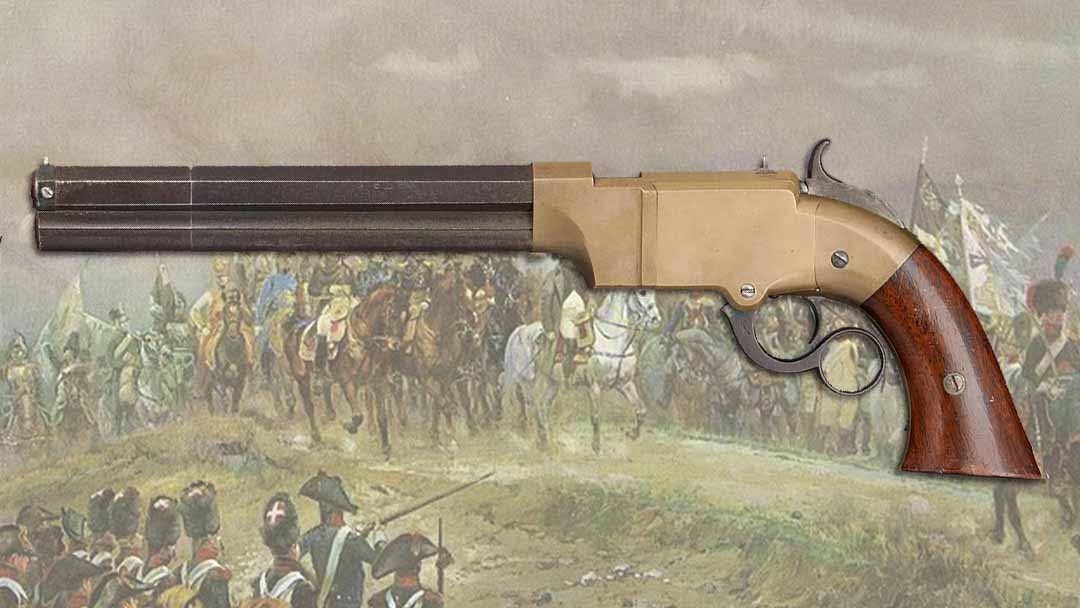
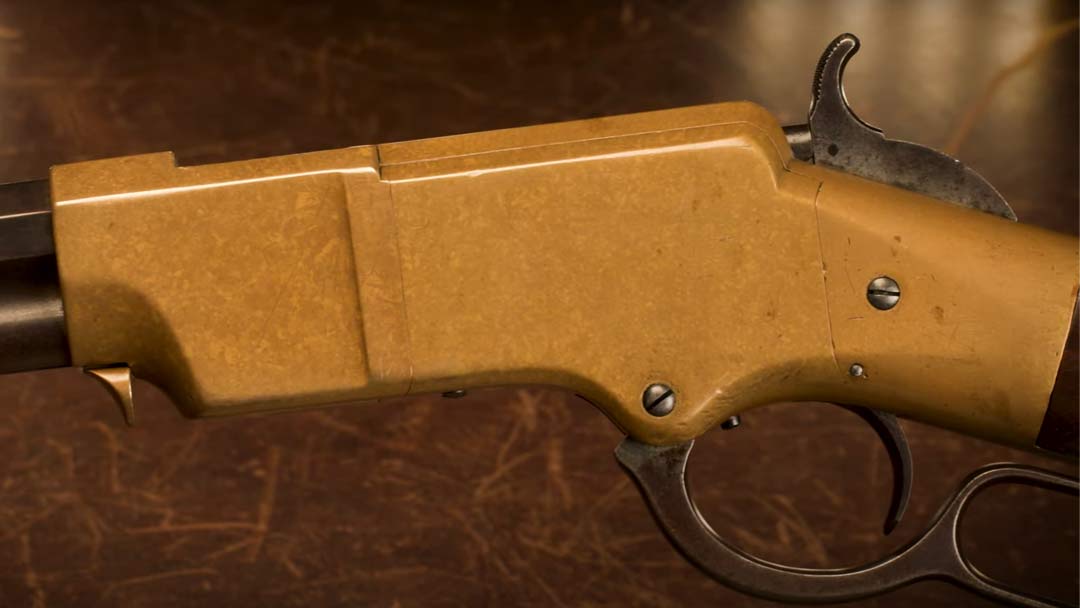
Volcanic Repeating Arms Company had its own quick-firing action in a pistol, the lever action Volcanic Navy pistol. The lever action of the pistol, manufactured from 1855-1857, would be applied to rifles and create a name change, starting with the New Haven Arms Co. Henry Rifle, followed by the Winchester Model 1866 and Model 1873, “the gun that won the West.”
This Volcanic Repeating Arms Company lever action Navy pistol was one of 1,500 made from 1855 to 1857 with 8-inch barrels. Another Volcanic Navy pistol is also available in Lot 2323.
Antique Guns for Sale
Flintlock guns were the main firearms platform for nearly 200 years until the rise of the percussion cap and eventually the metallic cartridges. These fascinating antique pistols show off the craftsmanship of their makers before the industrial revolution brought the assembly line and mass production, and they are available in Rock Island Auction Company’s Oct. 4-6 Sporting & Collector Auction.
The introduction of conical bullets and self-contained ammunition set the stage for a ballistic revolution. Developing faster bullets often went hand-in-hand with refining accuracy, extending range, and improving penetration potential, and the arms race rocketed into overdrive with the arrival of smokeless powder in the late 19th century.
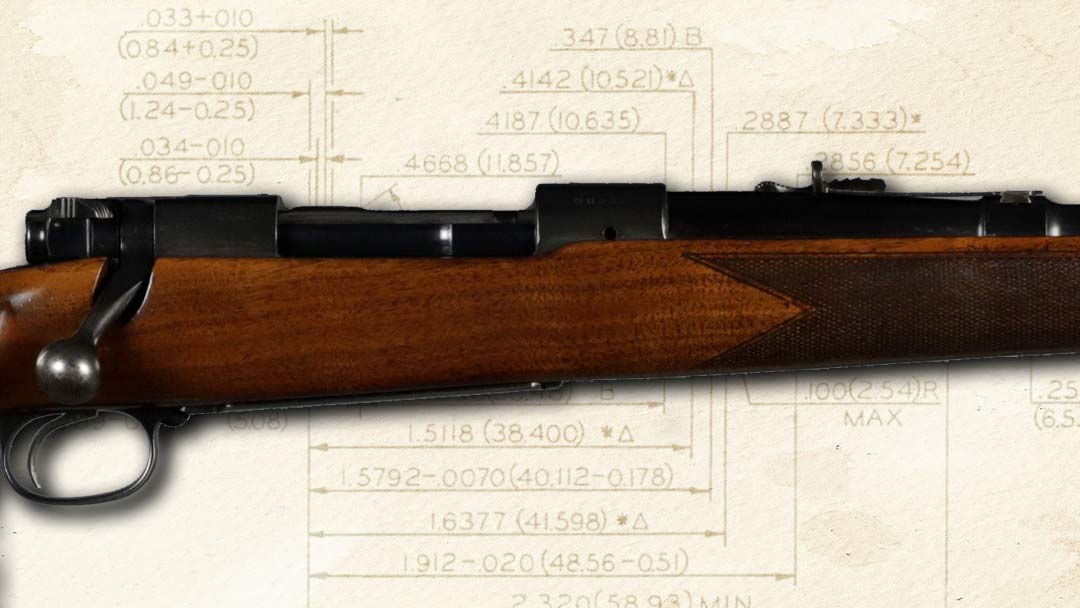
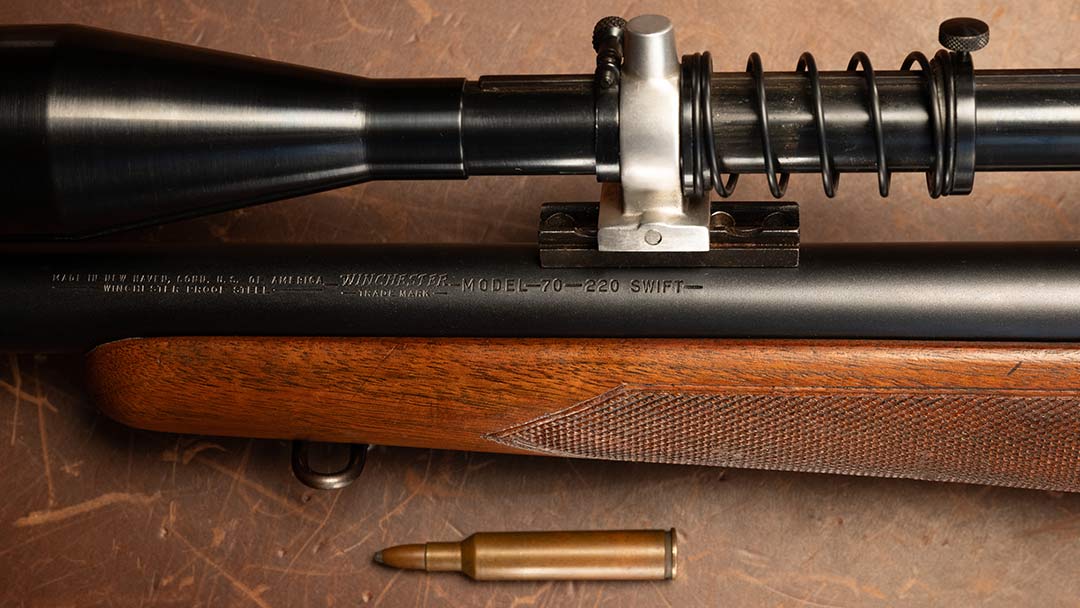
The Winchester Model 70 and the .220 Swift, two prominent players in the 20th century ballistics arms race.
The earliest self-contained rounds were anemic. Introduced in 1856, the .41 caliber Volcanic cartridge was barely able to reach a muzzle velocity of 260 feet per second. Six years later, the Henry .44 rimfire quadrupled that number with 1,125 fps. Winchester introduced a notable upgrade in 1873 with the .44-40 centerfire cartridge, reaching over 1,200 fps.
A Civil War U.S. martially inspected, 1863 production New Haven Arms Co. Henry rifle chambered in .44 Henry RF. Available this October
Perhaps the fastest bullet of the early rimfire era was the 10.4x38mmR Swiss, or .41 Swiss. Introduced in 1869, this Swiss military round could reach a muzzle velocity of 1,350 fps. Five years later, a French centerfire round, the 11mm Gras, would set a new military benchmark with 1,500 fps.
A Swiss Vetterli Cadet bolt action rifle chambered in .41 Swiss, one of the fastest bullets of its age.
In America, the big bore ruled in the decades following the Civil War. The mighty .45-70 Government cartridge was able to reach muzzle velocities of 1,350 fps, and Winchester’s .45-90 WCF could match and exceed these speeds. Both rounds were well-suited for bison and other large North American game, with the .45-70 continuing to find popularity today in its higher velocity smokeless variants.
In the final years of the 19th century, the advent of smokeless powder was a key factor in the development of faster bullets. Introduced in 1886, the 8mm Lebel was the first smallbore smokeless powder rifle adopted by a major military. Based on a necked down variant of the 11mm Gras, the 8mm Lebel decisively broke the 2,000 fps barrier with muzzle velocities exceeding 2,350 fps.
A WW1 Remington Model 1907-15 Berthier bolt action rifle with bayonet chambered in 11mm Gras, attributed to Medal of Honor recipient “Black Death” Henry Johnson of the “Harlem Hellfighters” 369th Infantry Regiment. Available this December.
In 1892, Paul Mauser developed the 7x57mm from his previously designed Patrone 88 cartridge. The Spanish took particular interest in the 7x57mm Mauser and the Mauser Model 1893 bolt action rifle. Reaching muzzle velocities of 2,300 fps, this revolutionary cartridge outclassed America’s .30-40 Krag during the Spanish American War and the UK’s .303 British during the Second Boer War.
Another early round to break the 2,000 fps barrier, the 7x57mm Mauser was one of the fastest bullets of its era. This highly customized Model 98 bolt action rifle is available this October.
Another famous early smokeless cartridge, the 6.5mm Swedish Mauser was developed as a collaboration between Sweden and Norway. One of the fastest bullets of its era, the 6.5×55mm exceeded the speed of the 7x57mm upon its introduction in 1894. According to ‘Rifles and Machine Guns’ by Colonel Melvin M. Johnson Jr., latter variants of the cartridge pushed speeds of 2,900 fps and beyond.
A Swedish Carl Gustaf Ljungman AG-42B semi-automatic rifle chambered in 6.5mm Swedish. In addition to its popularity as a military and hunting round, the 6.5mm Swedish has earned numerous Olympic medals. Available this October.
Reaching 3,000 FPS
In addition to high-pressure smokeless powder and stronger casings, pointed Spitzer bullets like the 7x57mm Mauser provided a significant advancement in range and accuracy. America scrambled to play catchup, first with the .30-03, then with an upgraded version of the round with a shorter case neck, increased powder capacity, and a 150 grain Spitzer tipped bullet.
“The cartridge, ball, caliber .30, Model of 1906” could achieve a muzzle velocity of 2,700 fps, a nearly 400 fps advantage over its .30-03 predecessor and a highly respectable velocity for its day.
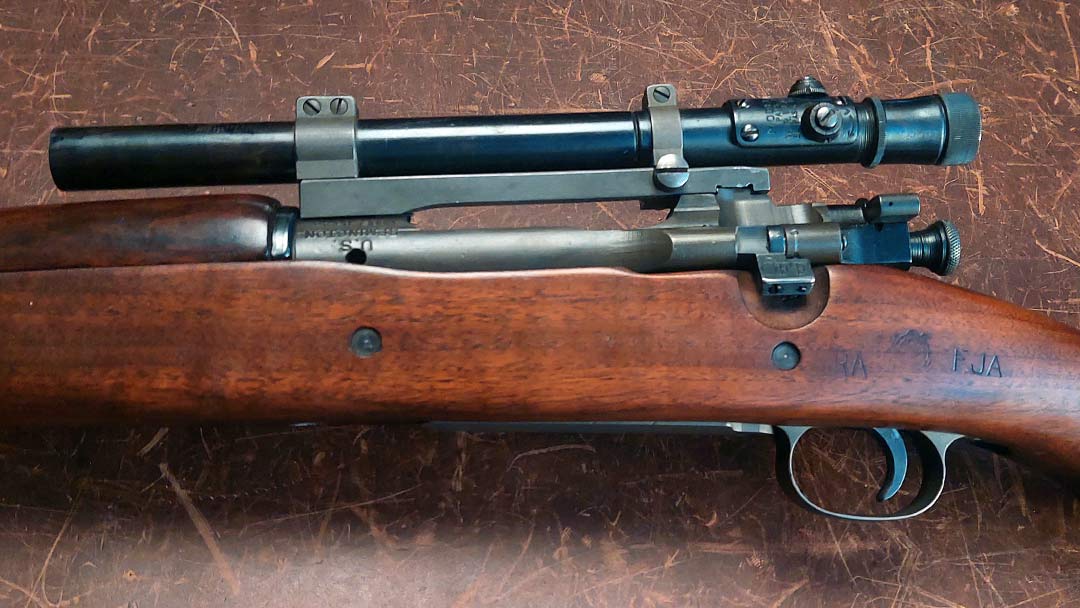
A U.S. Remington 1903-A4 sniper rifle with a Weaver 330 scope, chambered in .30-06. Available this October.
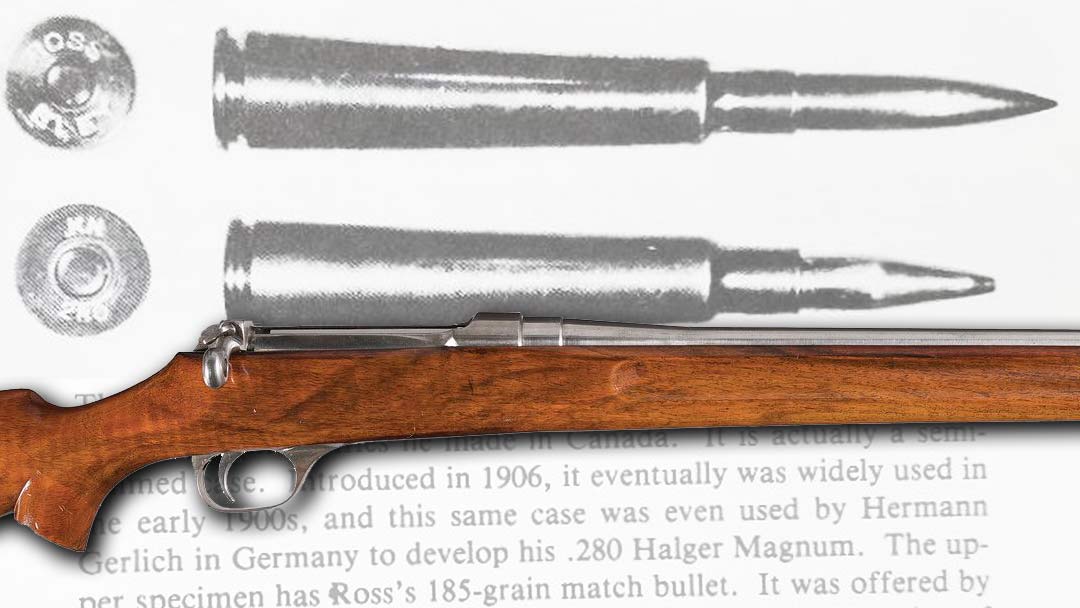
Developed by wealthy Scotsman Sir Charles Henry Augustus Frederick Lockhart Ross, the .280 Ross was the first practical factory cartridge to break the 3,000 fps milestone. The new round’s 2.6 inch case was designed for the Ross straight-pull rifle, which was employed by Canadian armed forces and eventually found a home in the sporting market.
A rare Canadian Ross Model 1905-1910 Match Target straight pull bolt action rifle chambered in .280 Ross, a candidate for the fastest bullet of its day.
Hitting the market in 1915, the .250-3000 Savage earned its name from its ability to break the 3,000 fps barrier. The cartridge was derived from a shortened .30-06 case and was first designed for the Savage Model 99 lever action. More popularly known as .250 Savage, the round was touted as one of the fastest factory bullets available.
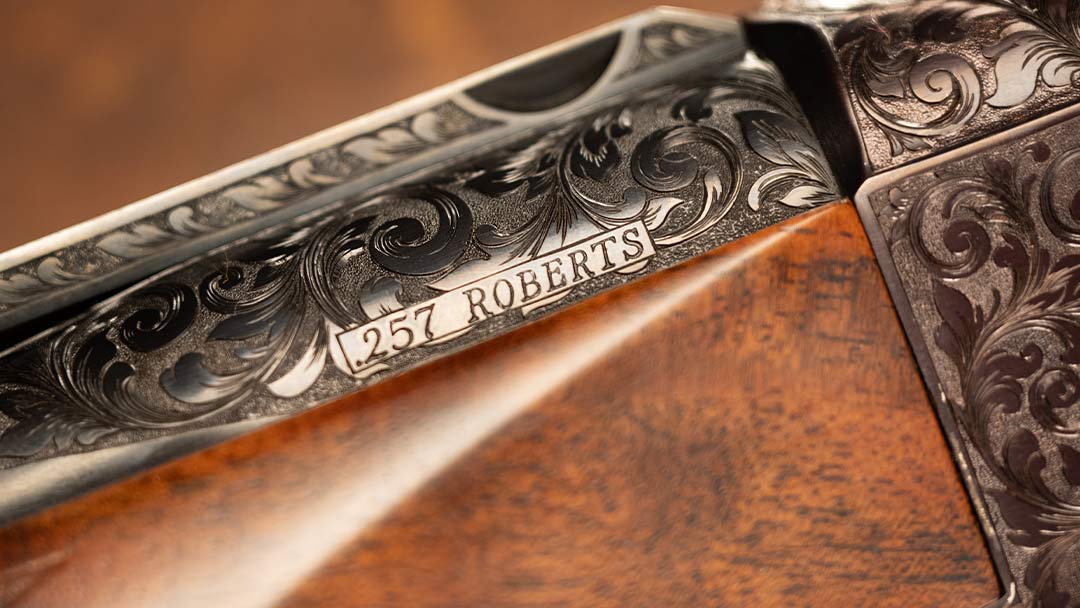
In the 1920s, gunsmith and wildcatter Ned Roberts developed a 25 caliber cartridge from a necked down 7mm Mauser case. Remington modified the design slightly for commercial production and released it in 1934 as the .257 Roberts. An ideal medium game hunting round, the bullet became known for its flat trajectory and ability to reach muzzle velocities of 3,000 fps with lighter loads.
A “J.K.G.” signed, engraved, and silver inlaid Ruger No. 1 chambered in .257 Roberts, one of the fastest bullets of its era. Available this October.
Fastest Factory Bullets
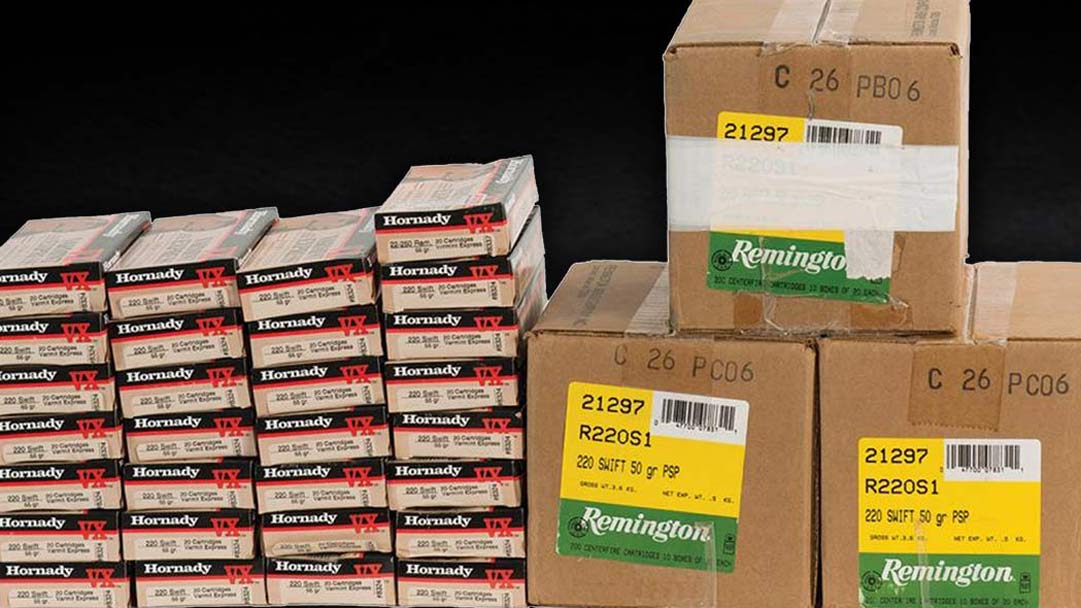
In 1935, Winchester’s experiments with high powder volume, small caliber bullets gave birth to the .220 Swift, .219 Zipper, and .218 Bee. With a muzzle velocity exceeding 4,160 fps, .220 Swift became the fastest bullet by a substantial margin, offering 50% greater muzzle velocity than .22 Hornet and every other factory-loaded varmint cartridge up to that point.
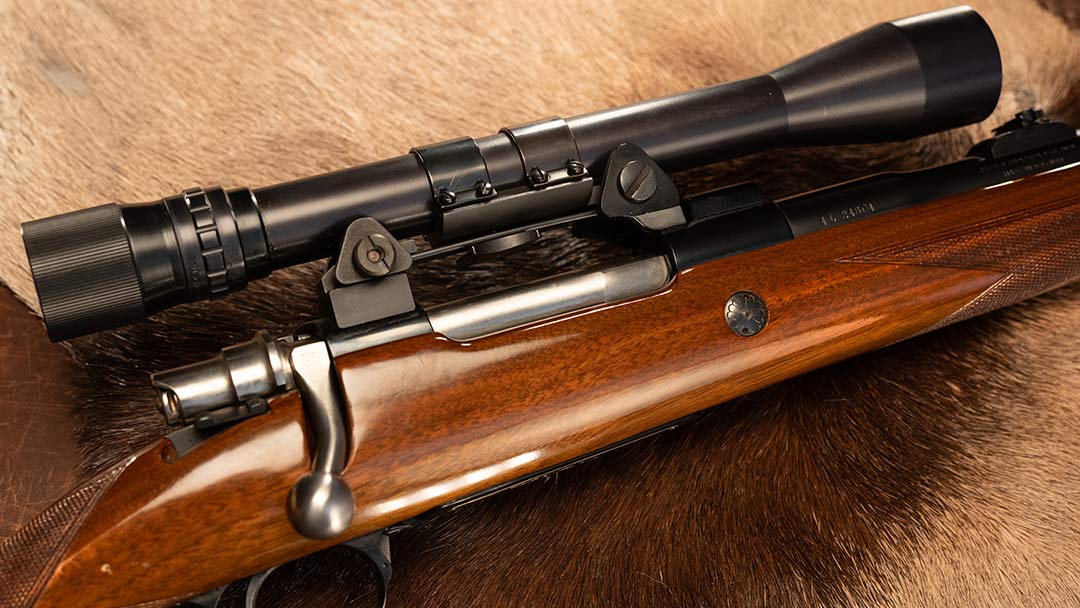
A pre-64 Winchester Model 70 in .220 Swift with a J.W. Fecker scope. Available this October.
P.O. Ackley’s 1962 ‘Handbook for Shooters and Reloaders (Volume 1)’ recounts a ranger working in Grand Canyon National Park employing .220 Swift in his efforts to cull a destructive population of feral burros. The ranger concluded that “the Swift made more clean, one shot kills than any other caliber used. Range seemed to make little difference… up to 600 yards.”
Complaints of throat burning and barrel erosion hampered the round’s popularity, but today’s modern barrel steels help mitigate these issues, and the .220 Swift remains the .22 speed king.
.220 Swift claims the title for fastest bullet in the commercial market.
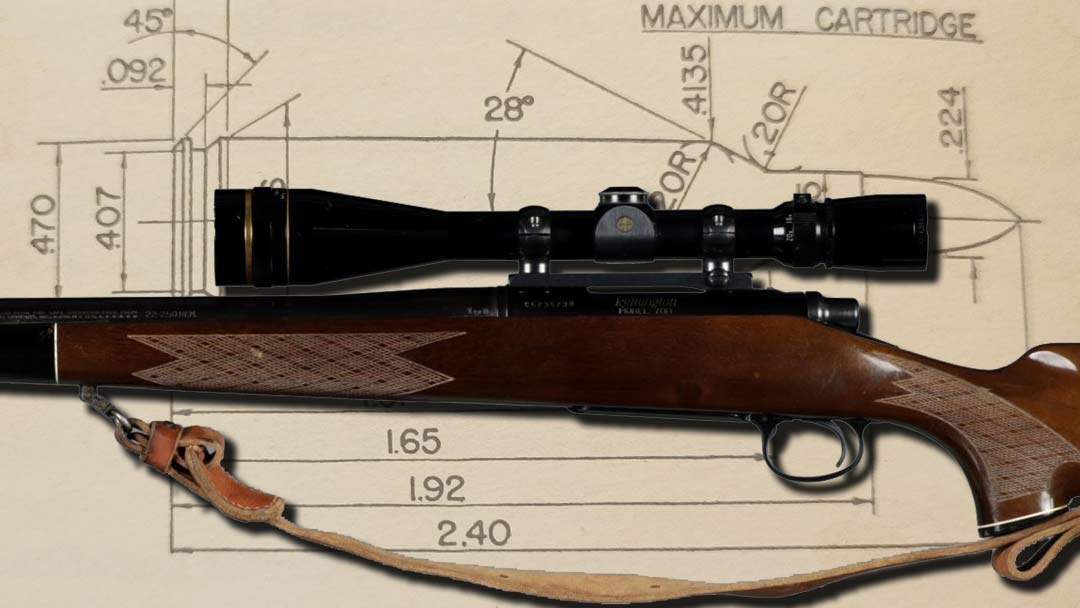
Before the .220 Swift, the .250-3000 Savage round became a popular blueprint for wildcatters looking to crack 4,000 fps. Remington introduced the cartridge as a commercial round in 1965 as the .22-250 Remington and chambered their Model 700 rifle series for the speedy varmint round. Remington’s bullet offered nearly comparable speeds to the .220 Swift and was seen as easier on older gun barrels.
A Remington Model 700 with a Leupold Vari-X III 6.5-20x scope chambered in .22-250 REM, one of history’s fastest factory bullets. Available this October.
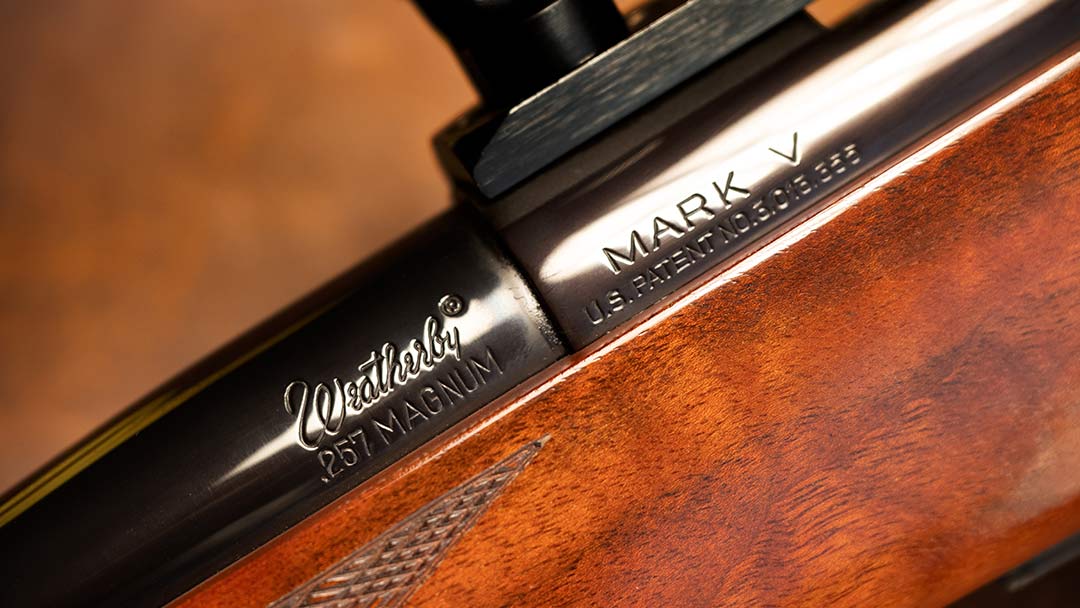
Developed from the H&H Super 30, the .257 Weatherby Magnum became inventor Roy Weatherby’s favorite high velocity cartridge. The flat shooting, long range hunting round was the world’s fastest .25 caliber factory bullet when it hit the market in 1944. Today, a light load of .257 WBY Magnum can reach muzzle velocities as high as 3,825 fps.
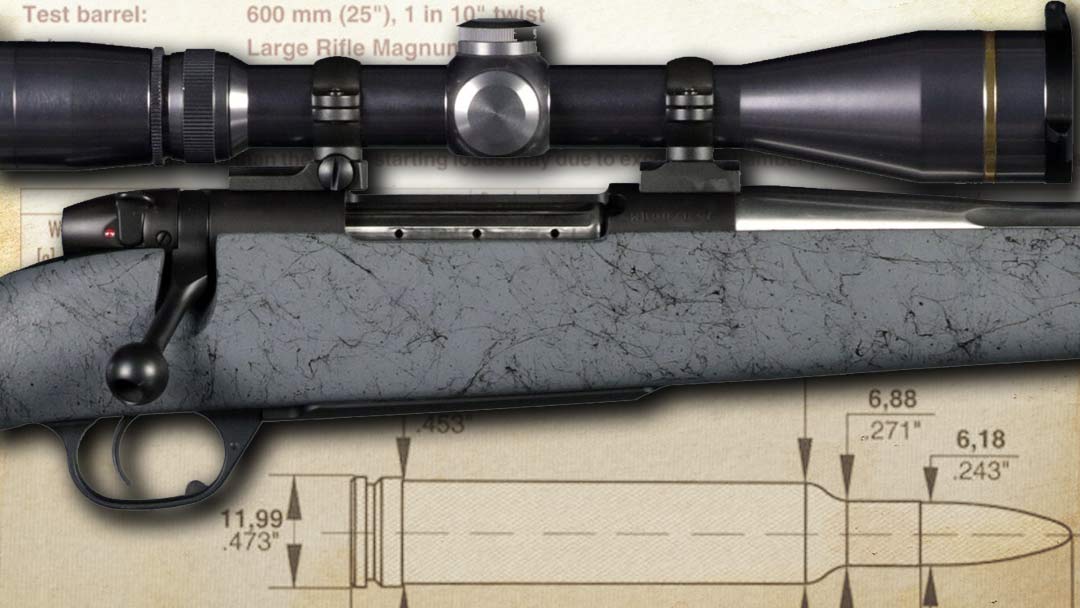
In 1968, Roy Weatherby developed his final cartridge, the .240 WBY Magnum. Based on a .30-06 case necked down to 6mm, the cartridge debuted as the fastest commercial bullet in the 6mm niche, with an 80 grain load reaching 3,500 fps. The .240 Weatherby Magnum is a proprietary round and only used in Weatherby rifles like the Mark V example featured below.
A Weatherby Mark V rifle with a Leupold VX-III 4.5-14x40mm scope, chambered in .240 WBY Magnum. Available this October.
Fastest Recent Bullets
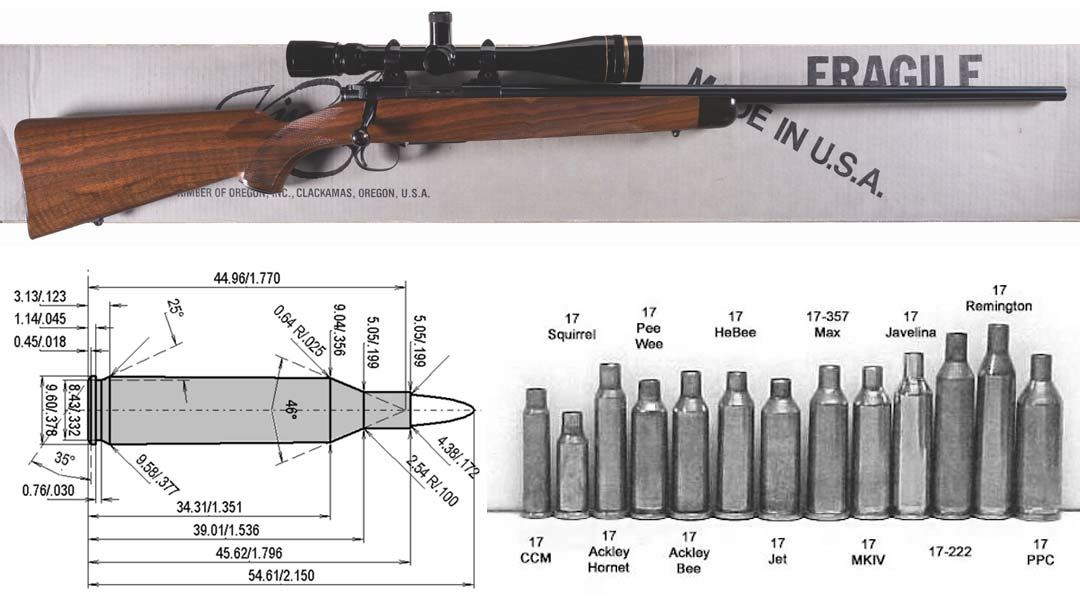
The popularity of the .17 Mach IV wildcat varminting cartridge inspired Remington to develop the .17 Remington Fireball in 2007, one of the fastest bullets today. Over three decades earlier, the company had developed the .17 Remington, another ultra-light, high velocity round that can exceed muzzle velocities of 4,000 fps.
(Top) A Kimber Model 84 Custom Classic chambered in .17 Rem. (Bottom) The .17 Remington compared to other .17 caliber catridges.
In the .30 caliber space, Weatherby developed the .30-378 for the U.S. Army in 1959, designed to be the fastest bullet of its niche. According to Weatherby, “Loads were to be developed to exceed 4000 FPS and as close to 5000 FPS.”
The cartridge was released commercially in 1996 as the .30-378 WBY Magnum and touted as “the fastest production .30 Caliber available on the market” with “its greatest strength found at ranges exceeding 1,000 yards.” Advertising slogans aside, the .30-378 offers an accurate and effective .30 caliber round that can exceed 3,500 fps.
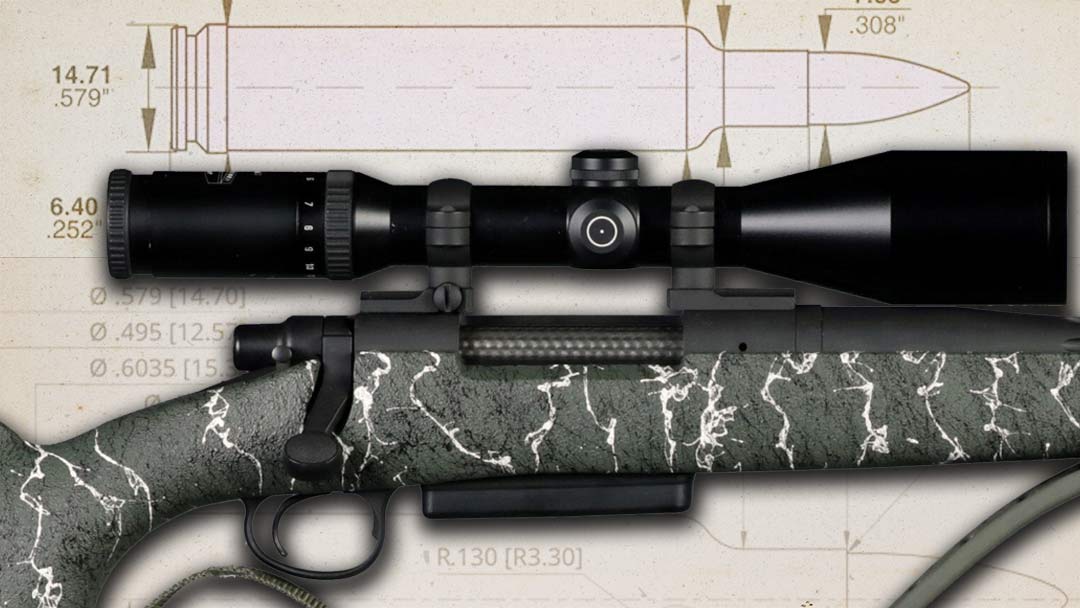
A Mike Palazzo Upgraded Remington 700 with a Schmidt & Bender scope, chambered in .30-378 WBY Magnum. Available this October.
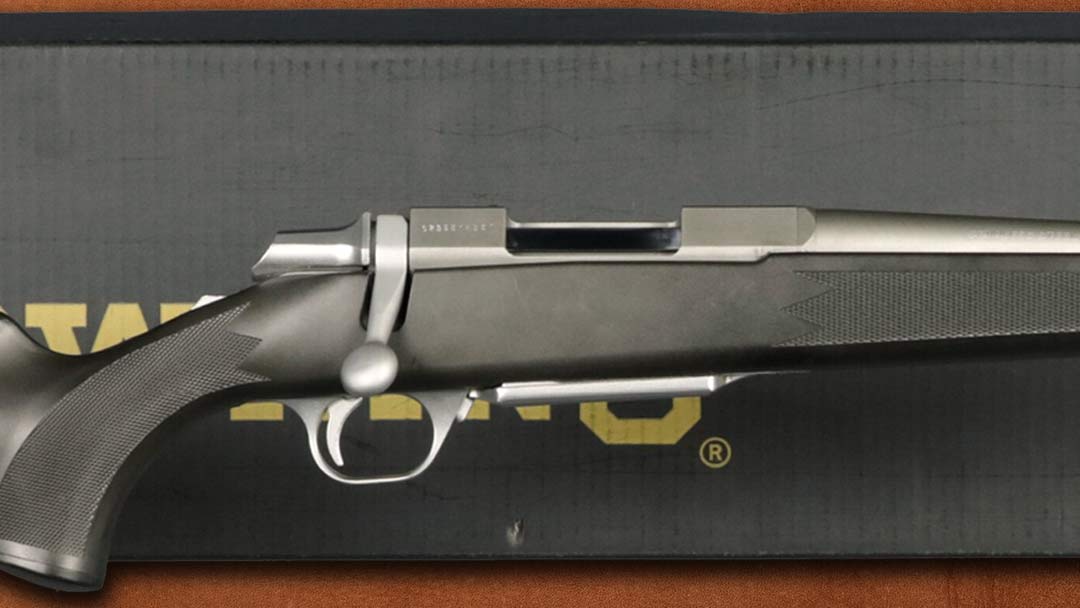
The .243 Winchester Super Short Magnum, or .243 WSSM, was inspired by the .300 Winchester Short Magnum, the round that started the short magnum craze of the early 2000s. A lightweight bullet was paired with a short, high-volume case to reach impressive muzzle velocities. In the case of the .243 WSSM, over 4,000 fps can be achieved with a 55 grain load.
A Browning A-Bolt II Stainless Stalker rifle with box, chambered in .243 WSSM. Available this October.
In 2004, Ruger and Hornady teamed up to develop the .204 Ruger, the first commercial .20 caliber cartridge. Based off the .222 Remington Magnum case, the .204 Ruger offers a slim, light recoiling, fur friendly round that will push 40 grain bullets 3,900 fps.
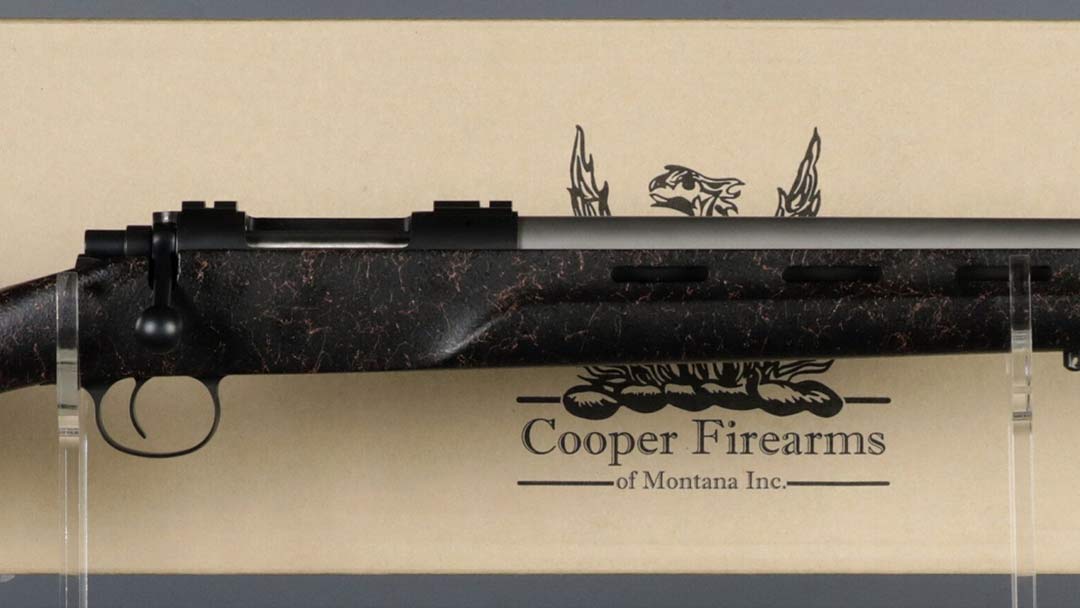
A Cooper Arms Model 21 Phoenix single shot rifle with box, chambered in .204 Ruger, one of the fastest bullets today. Available this October.
In the 1950s, P.O. Ackley necked down a .22 Hornet case to develop the .17 Hornet. Popularized by Ackley’s writings, the round remained a wildcat favorite for decades. Hornady offered a commercial version in 2011 that went on to win the Shooting Trade Award for best rifle cartridge of 2013. Hornady boasts that the .17 Hornet 15.5 grain NTX round can achieve a muzzle velocity of 3,870 fps.
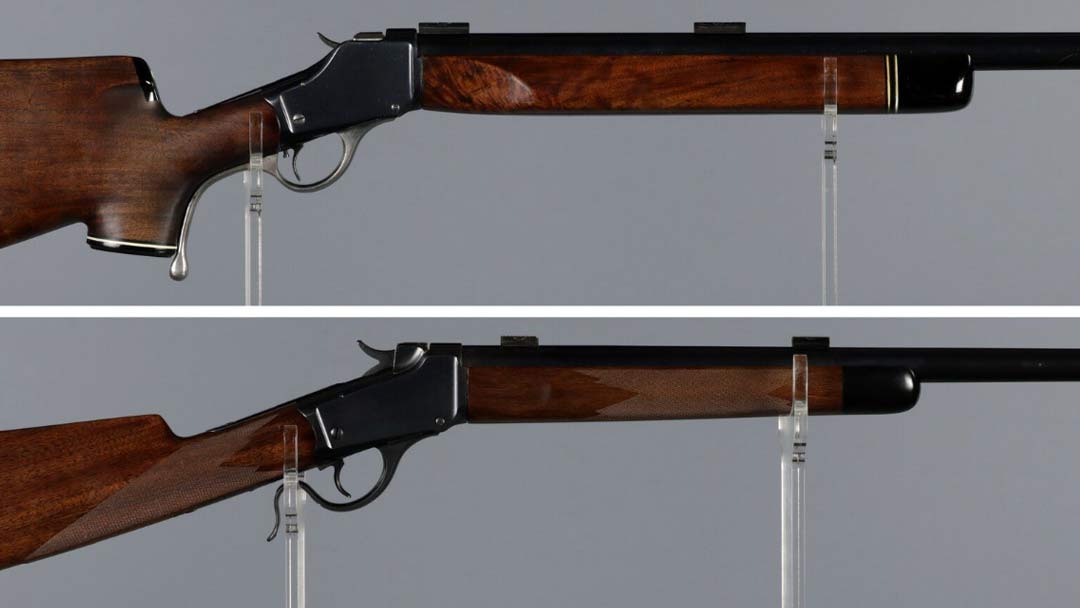
Two upgraded Winchester Model 1885 rifles. (Top) A Winchester 1885 High Wall chambered in .219 IMP ZIPA. (Bottom) A Winchester Model 1885 Low Wall rifle chambered in .17 Hornet, one of the most balanced cartridges of all time according to P.O. Ackley. Available this October.
What is the Fastest Bullet?
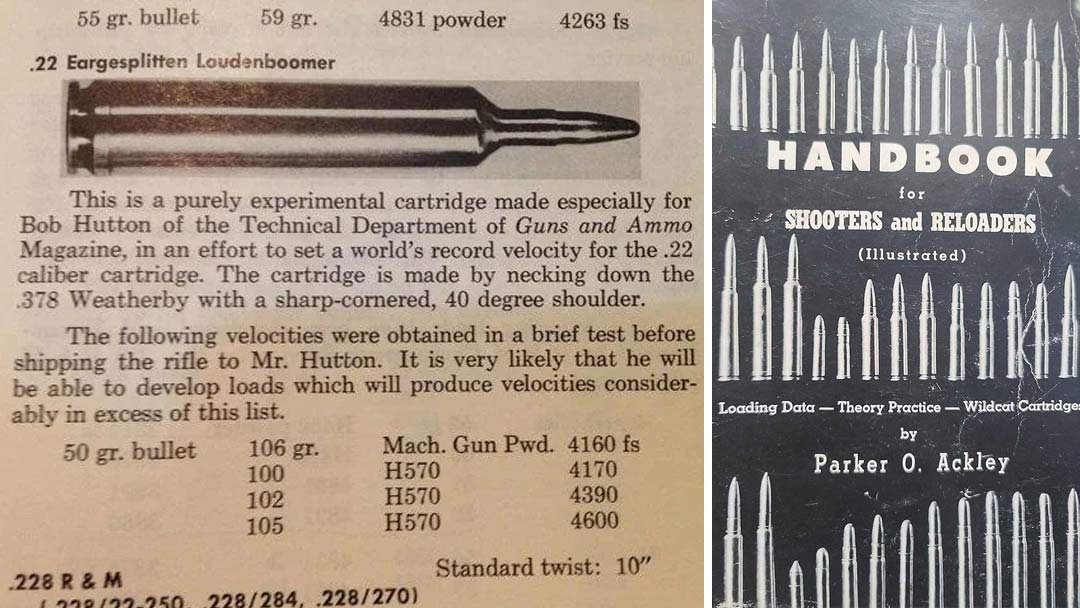
While a multitude of wildcat loads like .22 Cheetah and .257 STW have been developed that reach impressive speeds, and P.O. Ackley’s humorously named .22 Eargesplitten Loudenboomer was able to exceed 4,600 fps, few factory bullets can compare to the muzzle velocity of the .220 Swift.
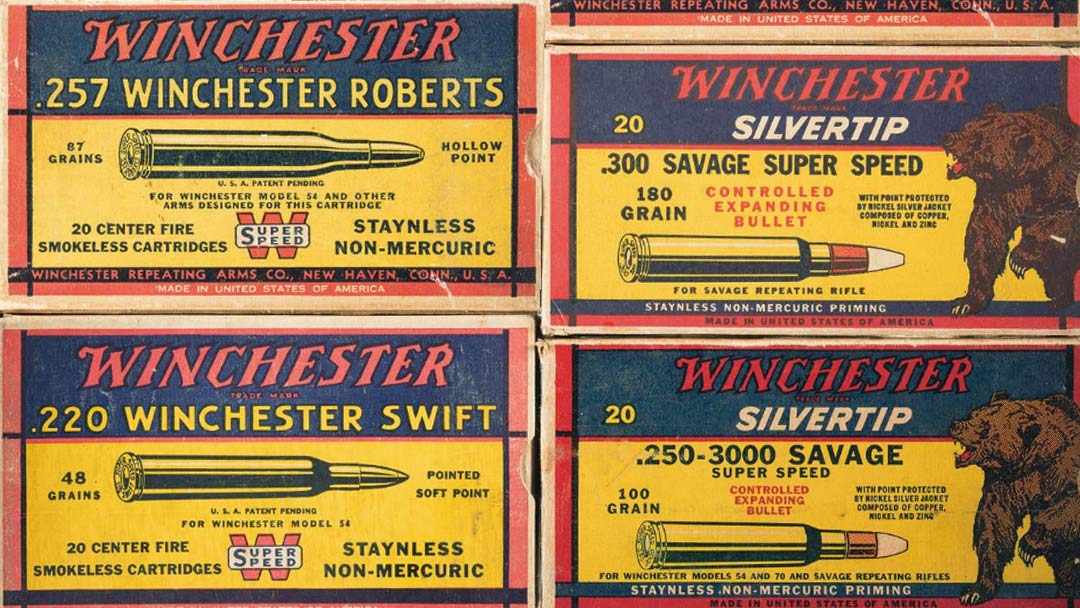
Four boxes of vintage Winchester ammunition, including .257 Roberts, .300 Savage Super Speed, .220 Swift, and .250-3000 Savage.
In August 1964, Guns & Ammo published a cover story by technical editor Bob Hutton titled “6000fps World’s Hottest .22!” Using a Winchester .284 case necked down to .22, their engineers launched a 15 grain bullet 6,040 fps multiple times, with one shot clocking in at a staggering 6,585 fps, setting a potential record as the fastest bullet fired from a small arm with any appreciable accuracy. The article cautioned its readers not to try these experiments on their own.
From the .17 Hornet to the .22 Eargesplitten Loudenboomer, P.O. Ackley developed some of the fastest bullets.
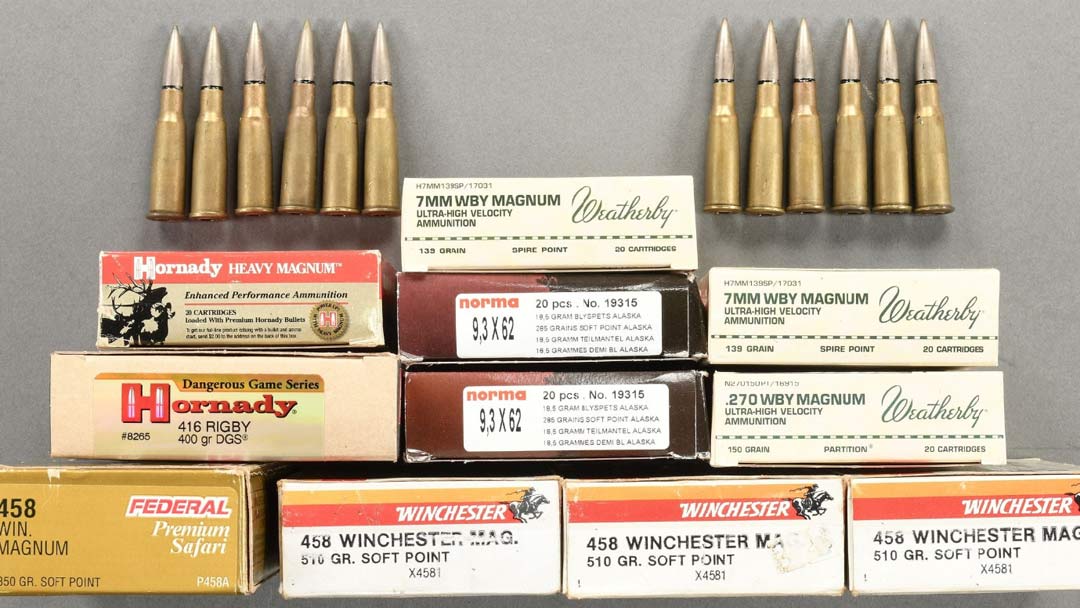
Lot includes 19 rounds of 8MM Lebel, 79 rounds of 458 Win, 20 rounds of 416 Rigby, 40 rounds of 9.3×62, 40 rounds of 7mm WBY Magnum, and 20 rounds of 270 WBY Magnum. Available this October.
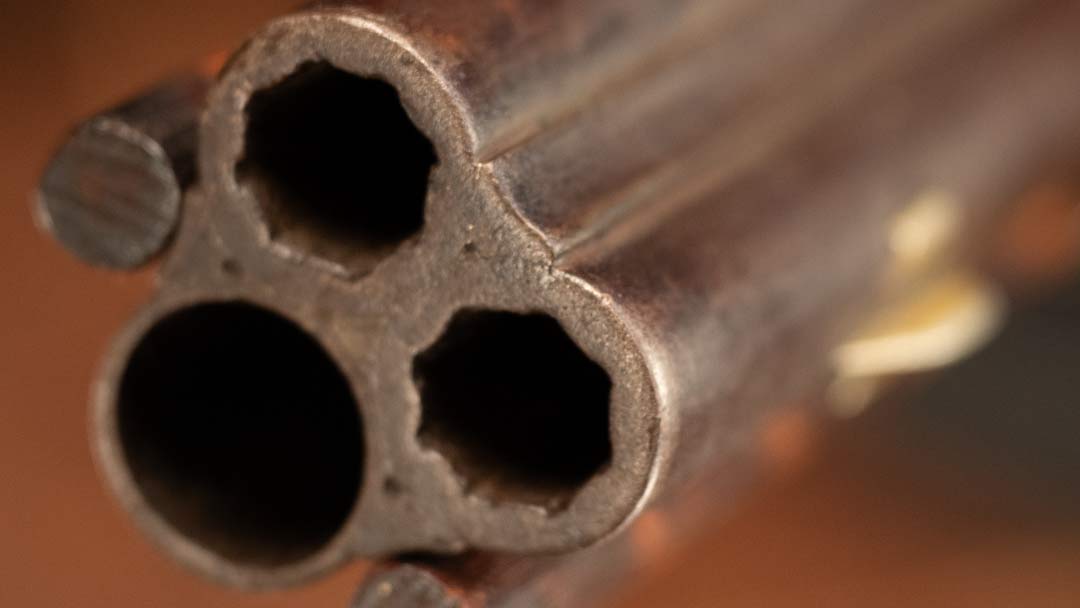
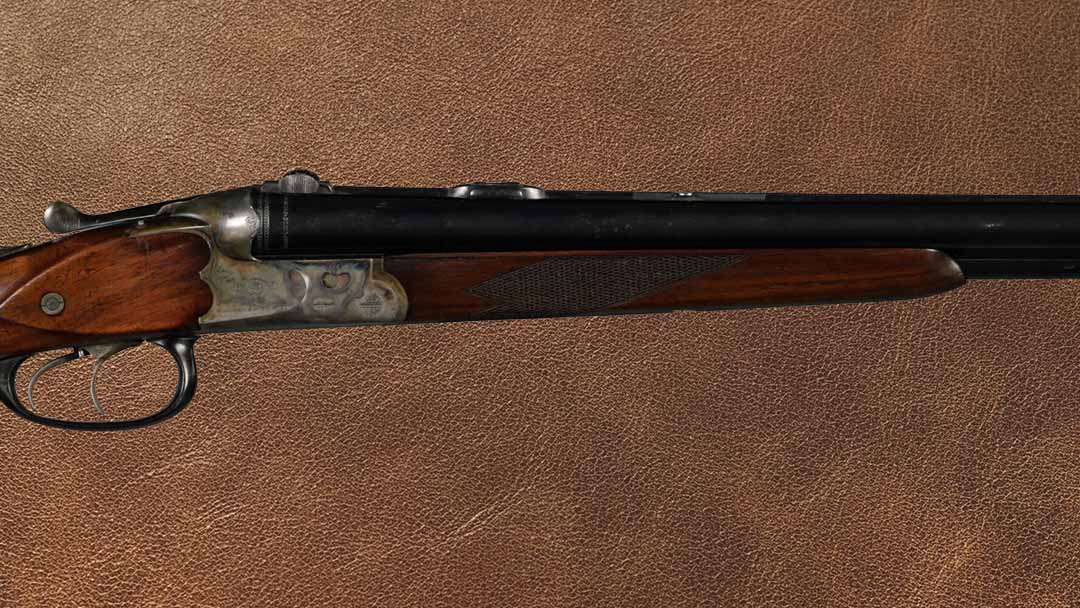
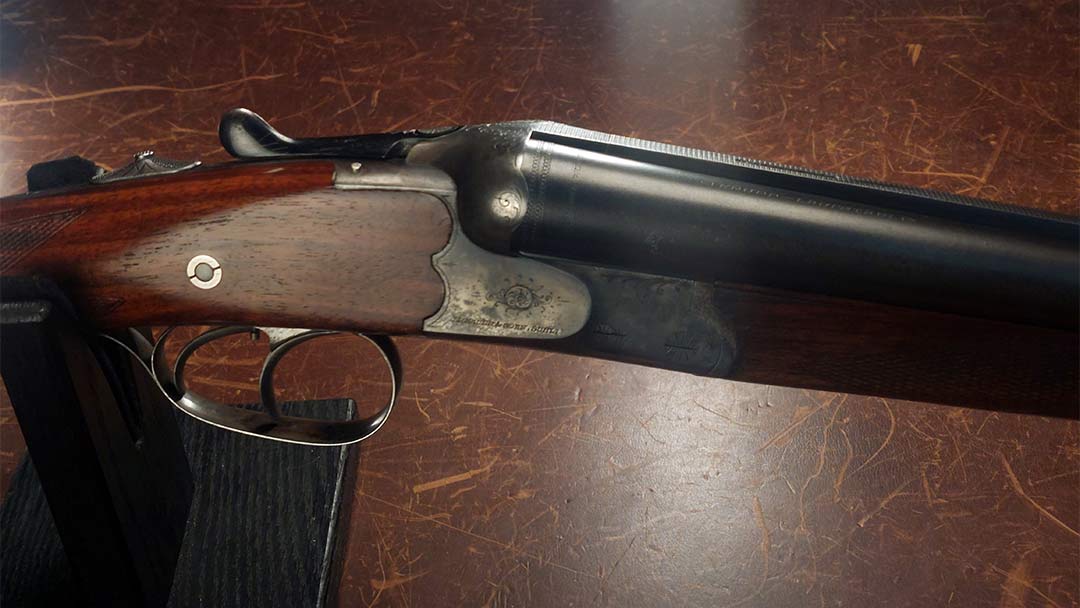
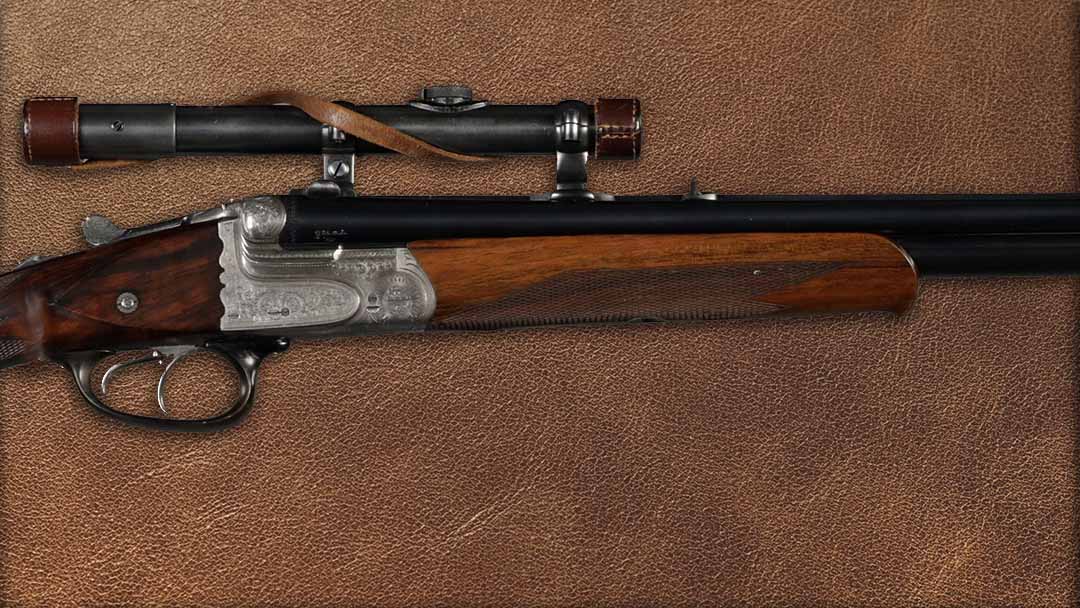
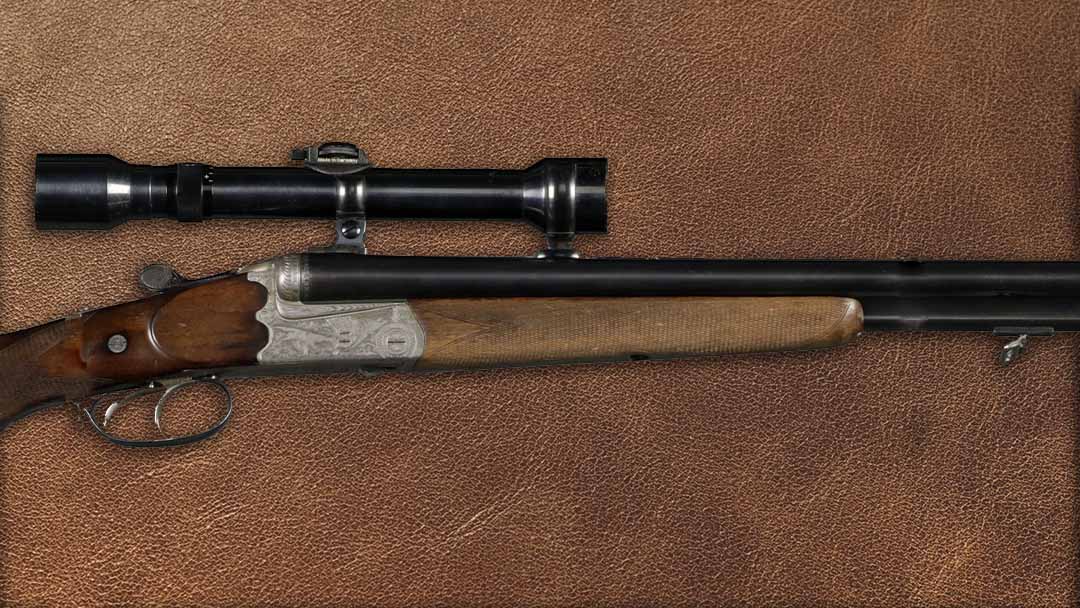
Is it a rifle? Yes. Is it a shotgun? Yes. Does it have a third barrel for good measure? Yes. The Germans, who embraced this type of gun called it a “drilling,” or triplet.
Double-barreled guns with a shotgun barrel on one side and a rifled barrel on the other goes back to flintlock and muzzle loading guns, like the Cape gun. The Germans, too, had a name for it, “büchsflinten,” combining the word for rifle, “büchse,” with the word shotgun, “flinte.”
When industrialization caught up to gun making, giving hunters the ability to load their guns from the breech, a third barrel was added and the drilling was born. Several examples of this uniquely German firearm will be available in Rock Island Auction Company’s Oct. 4-6 Sporting and Collector Auction in Bedford, Texas.
Why a Drilling?
Germany has a diverse offering of game species, from the populous but small roe deer, larger red deer and fallow deer as well as wild boar that experienced a population explosion in the 1980s. German hunters also take small game like weasel, ermine and badger. Winged game ranges from partridge, dove, swan, duck and seagull. With a number of game options, a gun with multiple barrels in different chamberings is a good idea for a day of hunting.
One German hunting writer called the drilling, “the optimal gun for the woods-walker, forester and gamekeeper.” The drilling is not as popular as it once was but Germans still value older models for the tradition and their affordability. Pre-World War 2 drillings were primarily 16 gauge shotguns but more modern ones are now found with two rifle barrels over a shotgun barrel, called a doppelbuechsdrilling. Krieghoff makes a dangerous game drilling with two rifle barrels on top that shoot a cartridge similar to .416 Rigby but is rimmed over a 20 gauge shotgun barrel.
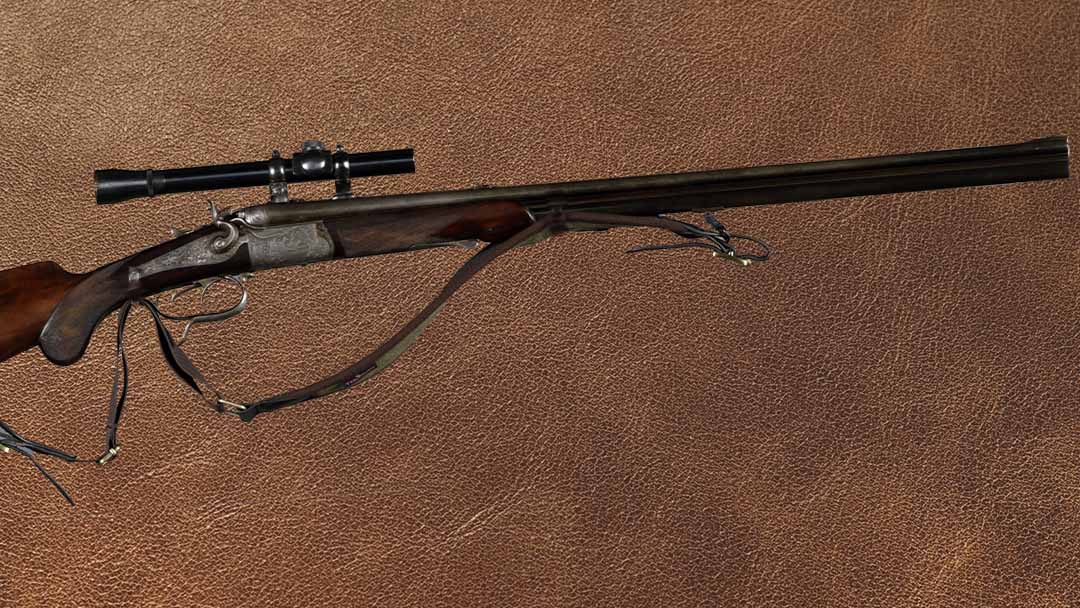
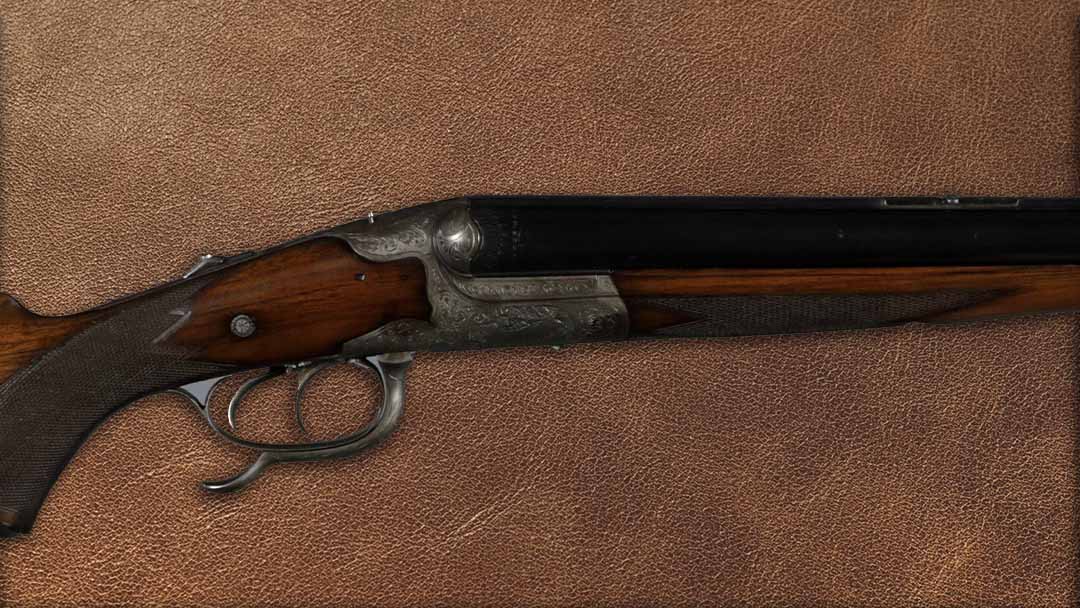
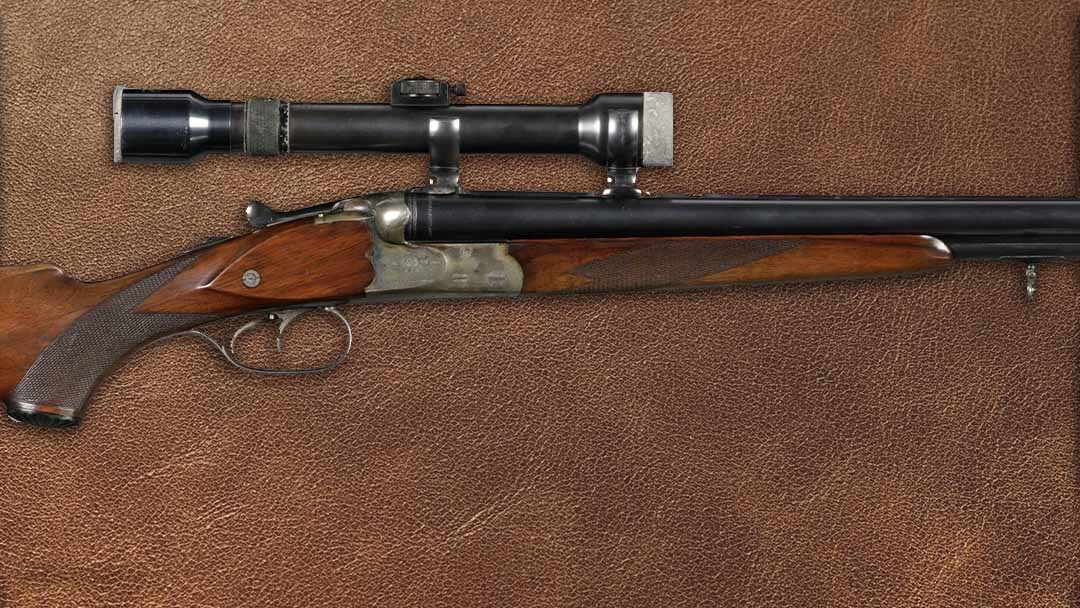
This factory engraved German hammer drilling has a Lyman Alaskan 2 1/2x scope chambered in 16/9.3.
The Origin of the Drilling
A third barrel is always handy for hunters. After a day of birding, spotting some four-footed game and having that third barrel in a rifle chambering was welcome to German hunters. One German firearms writer believes that drillings are second in popularity only to the Mauser 98 bolt action rifle for hunters.
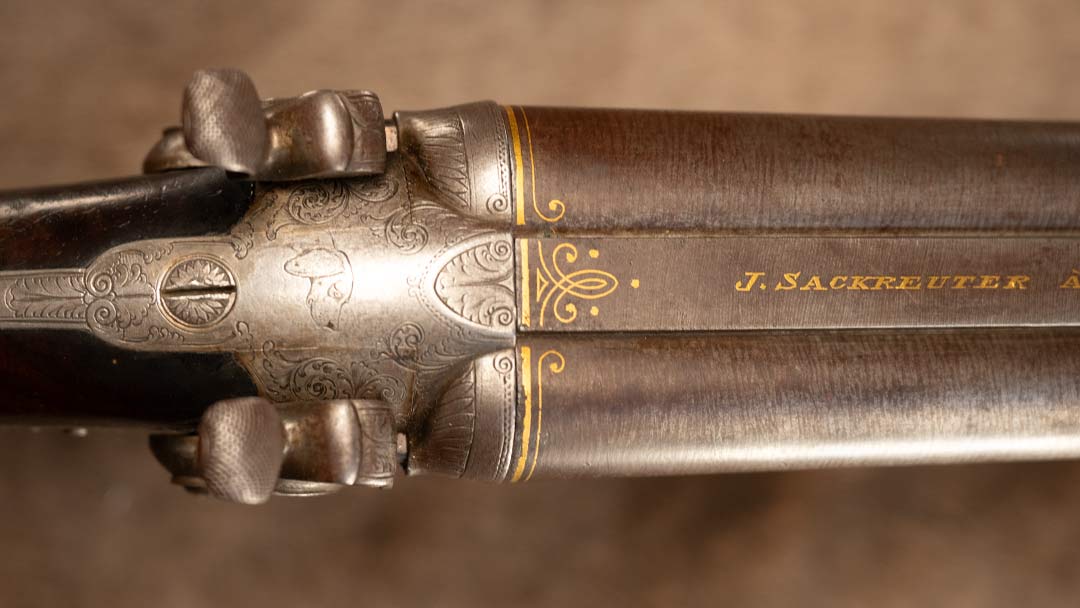
A cased game scene J. Sackreuter combination Gun with three barrel sets.
The challenge to the gun makers was finding a way to fire three barrels with two locks and where to locate the third barrel. Innovations like the hammerless boxlock, sidelock and metallic cartridge were important in the development of combination guns but the introduction of breech-loading actions made the drilling possible.
The traditional drilling has two shotgun barrels on top and a rifle barrel below because German hunters leaned toward shotgun hunting in the late 19th century, but trends change.
This factory engraved Karl Gebert drilling has German proofs dated 1923, chambered in 16 gauge and 8×57 with a blue finish to the barrel and casehardening to the receiver.
J.P. Sauer & Sohn Drilling
Sauer was a long family line of gun makers in Suhl, a gun manufacturing hub in east central Germany, with the first Sauer gunmaking business registered in 1751. By 1811, Sauer was making military rifles along with hunting and sporting guns. Twenty five years later, Johann Paul Sauer opened his workshop and in 1873, J.P. Sauer and sons is founded. Demand is growing for high-quality hunting rifles by the 1880s when more markets outside of Europe are opening by railroads and steamships. The company’s patents for its drilling won a gold medal at the 1881 World Exhibition.
This factory engraved J.P. Sauer & Sohn boxlock drilling has a M.S.W. Wetzlar 4x scope and German proofs dated 1942. The gun is chambered in 16 gauge/7x57R.
Sauer & Sohn introduced its Drilling Model 30 in 1930, followed by the Model 31 Cape gun in 1931 and the Model 32, a simpler drilling, in 1932. In 1933, with the rise of the National Socialists, Sauer & Sohn received an order for 10,000 Model 98K rifles.
The Luftwaffe Drilling M30 that will be discussed later went into production in 1941. In April 1945, American troops occupied Suhl, and the commander allowed the production of hunting rifles, but when the Soviets took control the equipment was dismantled for use elsewhere and Sauer & Sohn was removed from the commercial register.
The company name was sold by Rolf Sauer for use in West Germany in 1950 and J.P. Sauer & Sohn was reborn in northern Germany in 1951 while East Germany’s VEB Ernst Thalmann Works used the Sauer brand. In 1972, Sauer & Sohn partnered with SIG (Schweizer Industriegesellschaft) to bring that country’s P220 and P230 pistols into production before SIG took over J.P. Sauer & Sohn in the 1980s.
This J.P. Sauer & Sohn boxlock drilling bears German proofs dated 1940. It is chambered for 16/8x57JR.
Luftwaffe M30 Drilling
While many countries in World War 2 embraced austerity and high production, the Germans were still allowing some luxuries like equipping Luftwaffe Aces with elegant sporting arms like the M30 drilling. The M30 was intended as a survival gun for pilots flying in North Africa and Sauer & Sohn received a contract for 4,000, bearing the Luftwaffe flying eagle stamped on the barrel and stock of each gun.
Herman Göring, a World War 1 fighter ace and head of the Luftwaffe, was an avid outdoorsman and hunter and so the M30 may not have been routinely issued to Luftwaffe pilots, but ordered through the German air force by Göring to offer as gifts to guests at his hunting lodge, Carinhall, northeast of Berlin in the Schorfheide Forest.
Given that the M30 was of commercial quality and issued in a heavy aluminum case disassembled with a sling, cleaning kit and 20 rounds of 9.3x74mm ammunition, 20 12-gauge slug shells and 25 12-gauge birdshot shells, it didn’t seem like a Spartan survival gun. However, a Luftwaffe general did say the drilling was used for trap shooting by pilots to sharpen their eyes and reflexes.
This World War 2 J.P. Sauer & Sohn has 12 gauge upper barrels and 9.3x74R lower barrel are marked “KRUPP-LAUFSTAHL on the pupper and lower barrels. A Luftwaffe “stick eagle” proof is on the underside of the rear lug and the Luftwaffe eagle on the right barrel.
Factory Engraved Otto Seelig Drilling
Based in Weisbaden from the end of the 19th century until World War 2, Seelig was a gun dealer and gun supplier specializing in target rifles whose clients included the Danish royal court. His guns were likely made by other craftsmen while serving as a dealer for gunmakers from Suhl and elsewhere. Guns bearing his name range from well-built workman-like arms to beautiful exhibition grade pieces.
This factory engraved Otto Seelig drilling has a period Zeiss scope and is chambered in 10.75×53 and 16 gauge.
Austrian Drilling
Franz Sodia was a gunmaker who plied his trade in Ferlach, in southern Austria. The region is similar to Suhl with abundant natural resources like iron ore, wood and waterpower for gunmaking. In 1558, Kaiser Ferdinand brought 100 Dutch and Belgian gunsmiths to the region, settling in Ferlach. Sodia arrived in 1910, producing guns from pre-machined parts. His 1914 catalog shows a pinfire side-by-side shotgun, hammer guns and early hammerless guns. After World War 2, the British commander of the occupying forces was a hunter who allowed local gunmakers to make shotguns. Despite expansions, Sodia’s company eventually closed in 1988.
This factory game scene engraved Franz Sodia box lock drilling has a Hensoldt-Wetzlar Dialytan 4x scope. With Austrian proof marks dated 1952, it is chambered in 16/8x57IRS.
American Drilling
Jacob Harder was a prolific rifle maker from 1840 to 1888, making over/under and multibarrel rifles. He started by serving a six-year apprenticeship to a gunmaker in Binghamton, New York before opening his first shop in Athens, Penn. He was known for his over/under guns that utilized one hammer so that the barrels swiveled. Much of Harder’s career was in Lock Haven, Penn., with eight men working for him during peak production.
Drillings for Sale
The drilling is an unusual gun to solve a pleasant problem: wanting to hunt fowl and larger game on the same trip. These guns are often well made and beautiful but expensive because of the skilled craftsmanship required to make the complex firing systems. Several of these fascinating and traditional German hunting guns are available in Rock Island Auction Company’s Oct. 4-6 Sporting & Collector Auction at the company’s sales venue in Bedford, Texas.
The 19th century saw a surge in arms innovation, including the introduction and development of the single action and double action revolver. Both platforms competed head-to-head in the civilian and military markets, with Europe and America taking two different directions early on.
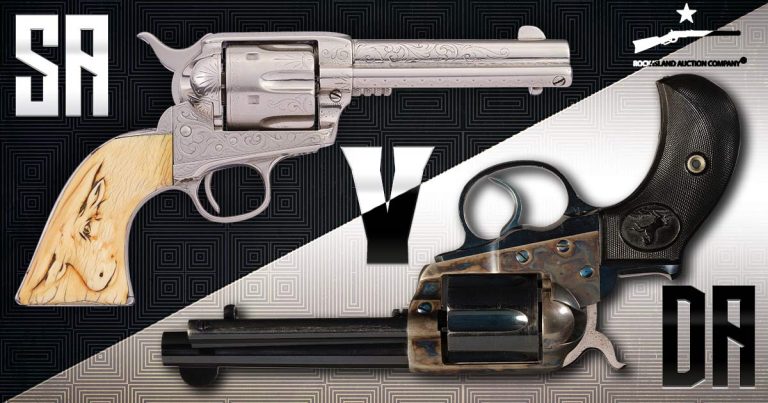
It’s a single action vs double action shodown this October at RIAC! (Top) A James M. Stanley signed and game scene engraved S&W Model 629 with case. (Bottom) A factory engraved Colt SAA with a relief carved ox head grip.
Single action systems require two steps. The action must be manually cocked and pulling the trigger fires the weapon. In a double action system, both functions are accomplished in a single step, allowing a shooter to put lead downrange as fast as they can pull the trigger.
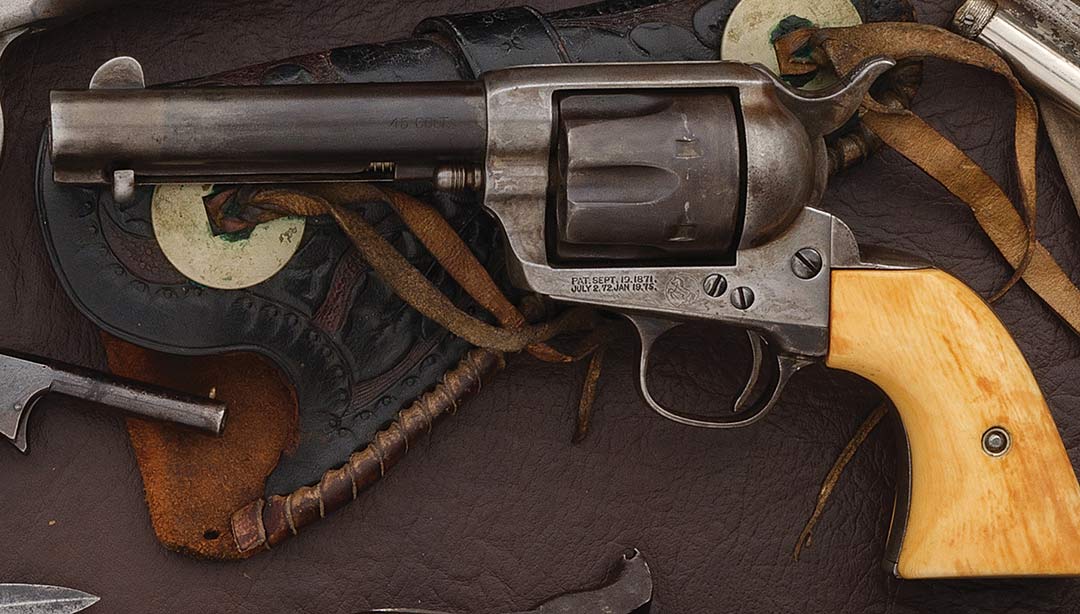
An antique black powder frame Colt SAA, an example of the most famous single action model in history. Available this October.
In the single action vs double action showdown, the double action platform carries a number of key advantages. Double action offers a more rapid firing rate. The heavier double action trigger pull also reduces the chance of an accidental discharge, an important safety consideration in an everyday carry sidearm meant for self-defense.
Fewer motions are needed to operate a double action, a useful feature for those with movement restrictions or anyone in a high stress scenario. Not being required to cock the hammer before each shot also allows a double action revolver to be fired from a coat pocket with less manipulation. Without the need for a spurred hammer, the double action also offers less risk of snagging clothing when drawn.
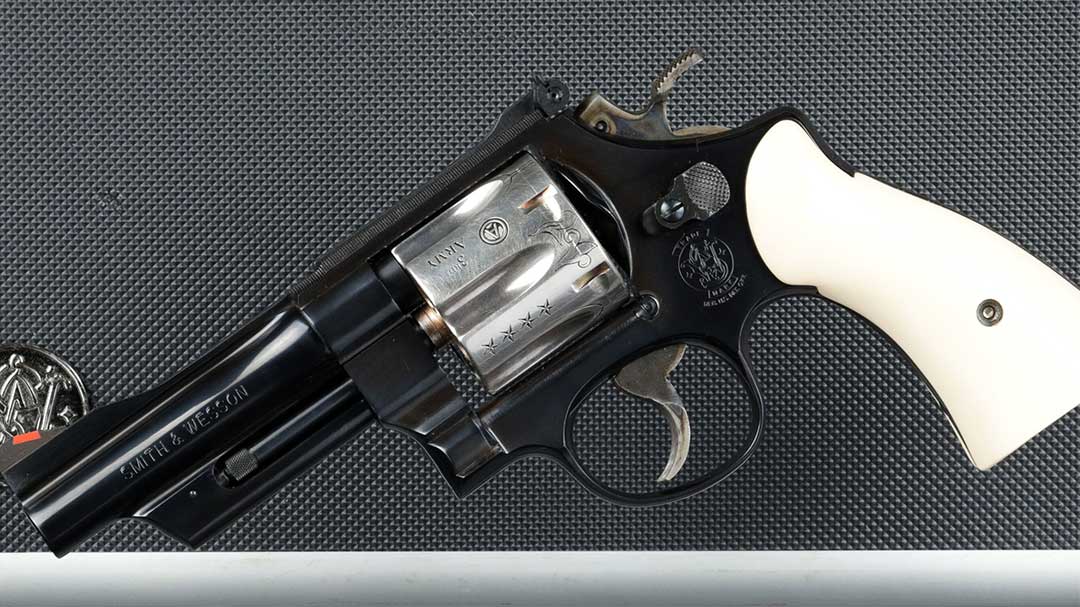
A cased Smith & Wesson Model 27-5 double action revolver with an engraved silver plated cylinder. Available this October.
In the single action’s favor, the system usually offer a lighter trigger pull. Single action firearms typically employ simpler internals, which sometimes translates to lower production costs. Less bulky internals also make single action mechanisms ideal for small derringers and novelty weapons like pen guns, knife guns, and credit card guns.
Single action revolvers offer a unique shooting experience and for some shooters have a more natural point and feel. And few firearm fans would deny that classic single action wheelguns like the Colt SAA have fantastic lines and curves.
A Colt Model 1871-1872 Open Top single action revolver, an example of the first non-conversion Colt cartridge wheelgun. Available this October.
The double action/single action system found on many curio and modern revolvers combines some of the advantages of both platforms: the rapidity of the double action and the light trigger and precision of the single action.
Revolving firearms have been around since the 16th century, with most matchlock and flintlock designs requiring the shooter to manually rotate the cylinder after each shot. In 1836, Samuel Colt was the first to patent a system that accurately synced a rotating cylinder to a fixed barrel.
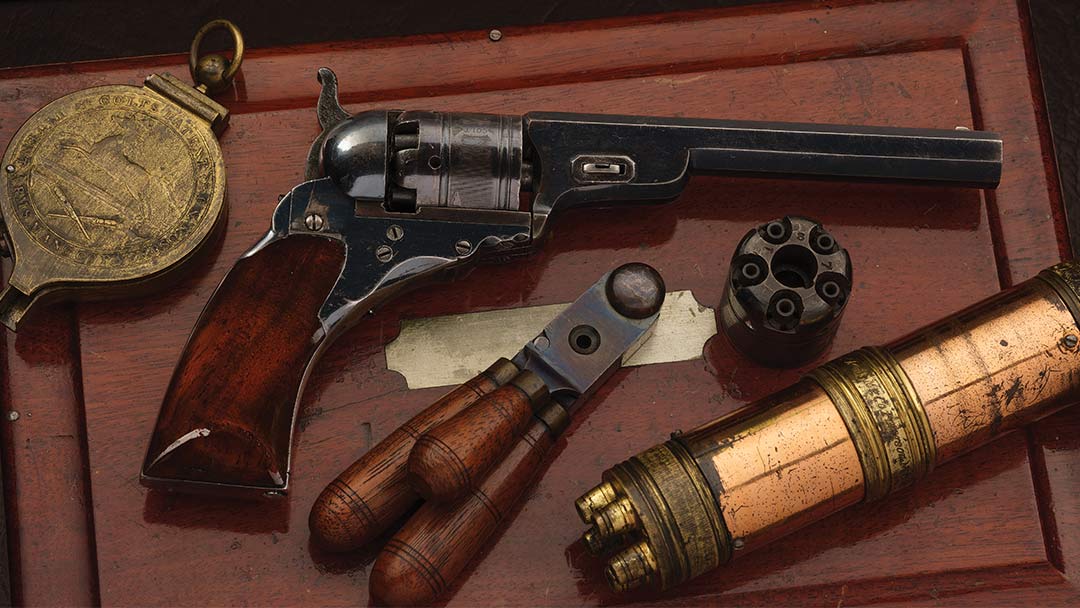
A cased Patent Arms Manufacturing Company “Colt Baby Paterson” No.1 Pocket model percussion revolver with a full set of accessories. Available this December.
The Paterson set the stage for Colt single action revolvers to dominate the American market. A host of revolver designs were developed by competitors hoping to circumvent Samuel Colt’s patents, but the Connecticut gun mogul’s most serious early competitor would arise across the pond in the form of a double action design.
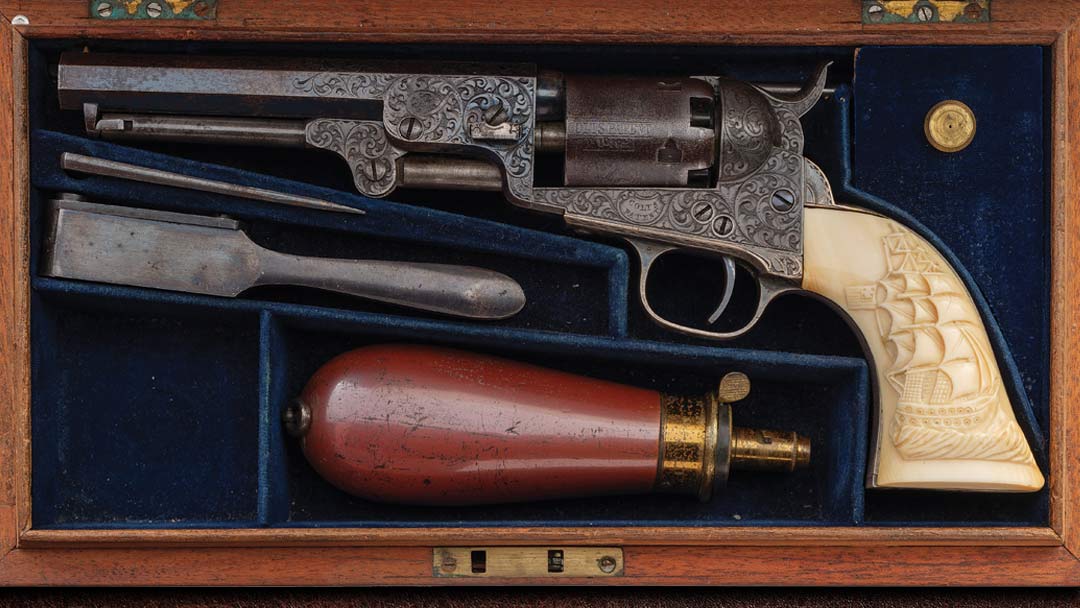
A cased, deluxe, factory engraved Colt Model 1849 pocket percussion revolver with a naval themed relief carved grip. Available this October.
Birth of the Double Action Percussion Revolver
In 1851, Robert Adams patented a double action revolver system that could index the cylinder as well as cock and drop the hammer with a single trigger pull. Adams’ initial design, dubbed a “self-cocking revolver,” was a double action only with the hammer spur removed so it could not be manually cocked.
A cased London Armoury Co. Beaumont-Adams double action percussion revolver. Available this October.
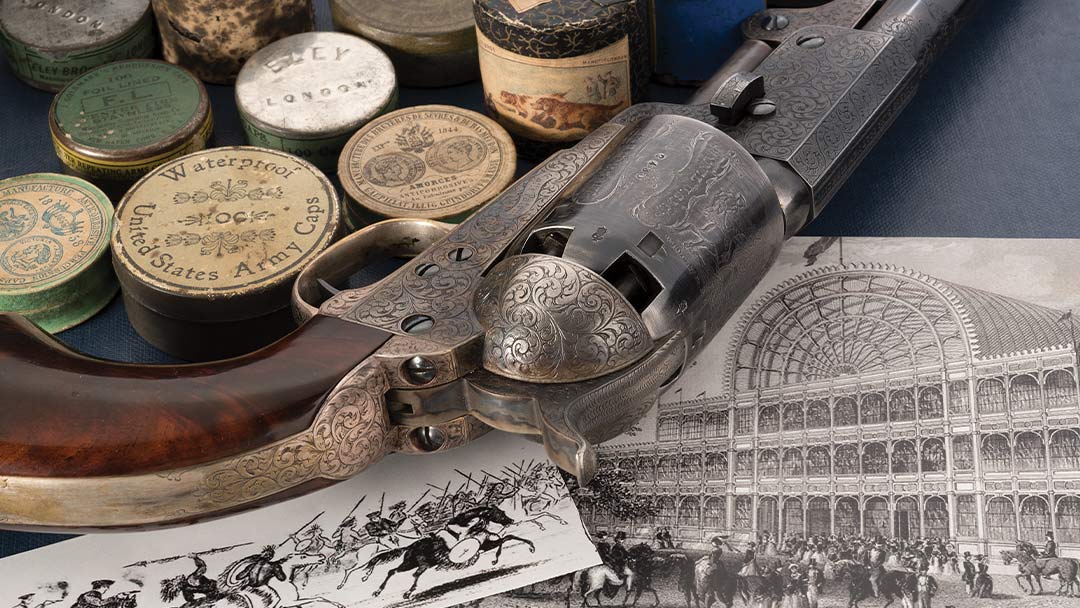
Adams and Colt both displayed their guns in London at the Crystal Palace Exhibition of 1851, the first time the single action and double action revolvers were compared head-to-head on the world stage. The exhibition immediately popularized the Adams design and set off a spirited debate in the British media about which revolver mechanism was superior.
A rare factory engraved Colt Hartford English Dragoon percussion revolver, one of only approximately 700 manufactured in London between 1853 and 1857. Available this October.
Single vs Double Action Percussion Revolvers in the Field
The single action vs double action design competed head-to-head in October of 1851, when the British Committee on Small Arms tested the Adams revolver and the Colt Model 1851 Navy at Woolwich. In the two hour trials, the Adams fired 25 times with no misfires, while the Colt suffered four. The Adams was chambered for a larger .44 cartridge, offered a smooth and robust action, and could fire more rapidly.
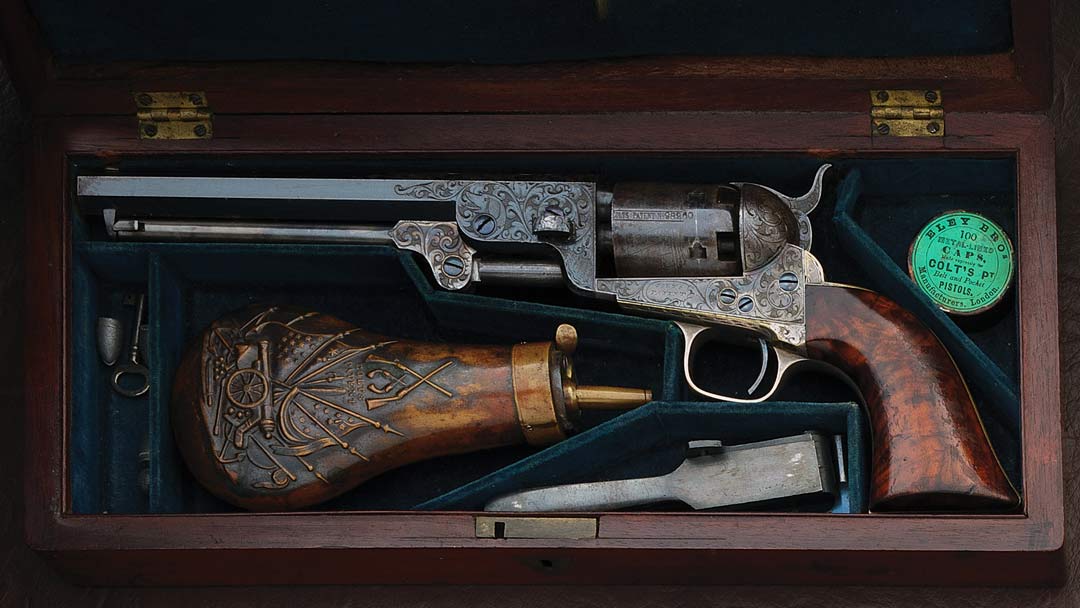
A historic presentation cased Gustave Young factory engraved Colt Model 1851 Navy percussion revolver with Civil War Philadelphia National Guard Officer’s inscription. Available this October.
Noted drawbacks for the Adams included its lack of loading lever and its longer double action only trigger pull hindering the gun’s accuracy. The Adams had more parts than the Colt single action designs and relied more on hand craftsmanship than the machine assisted manufacturing processes Colt had pioneered, which resulted in a higher price point and slower production time.
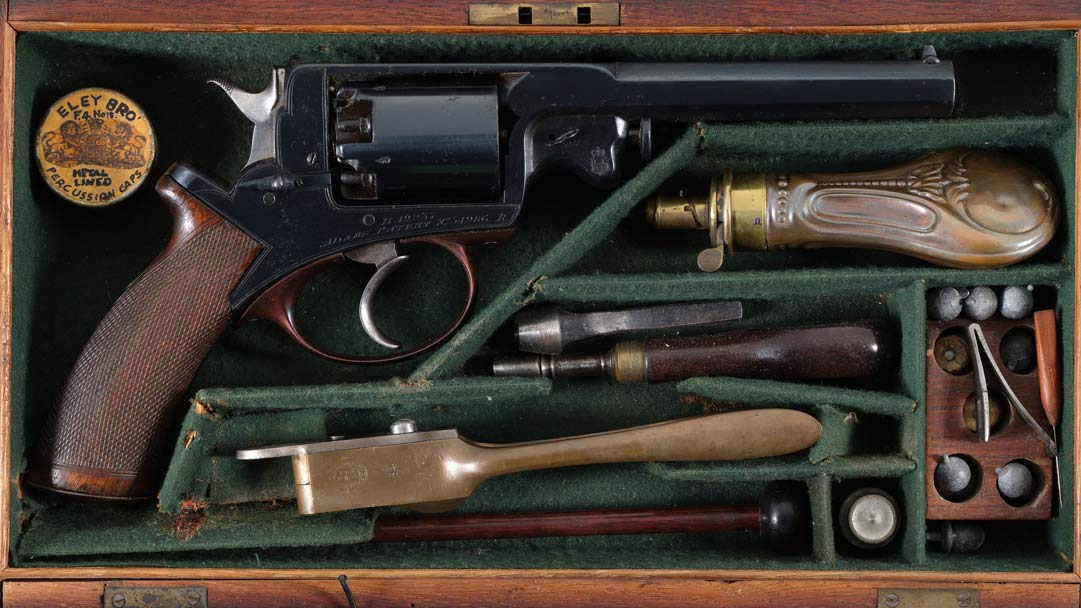
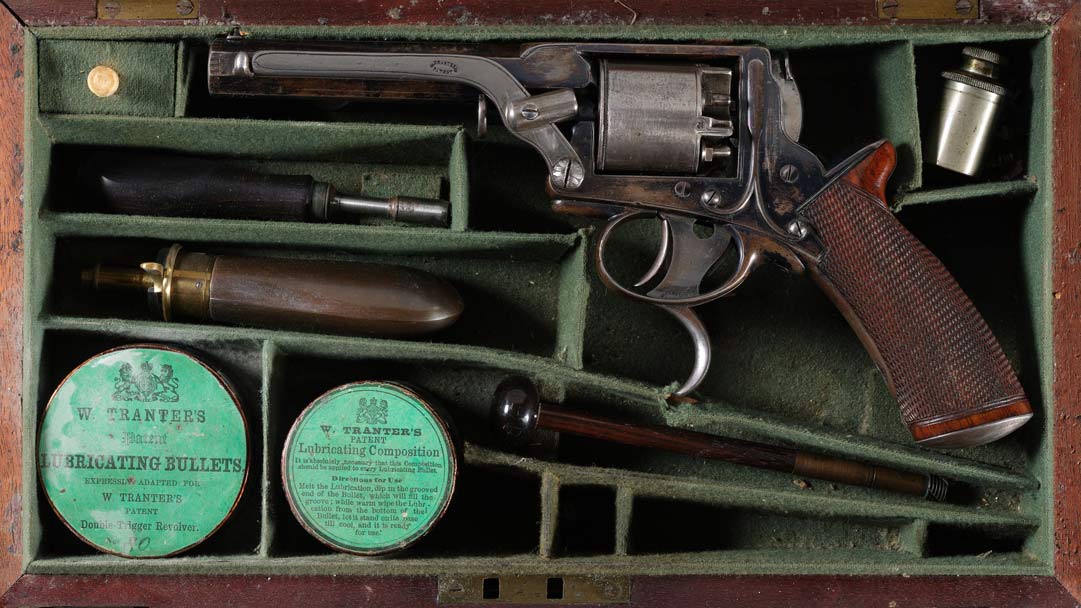
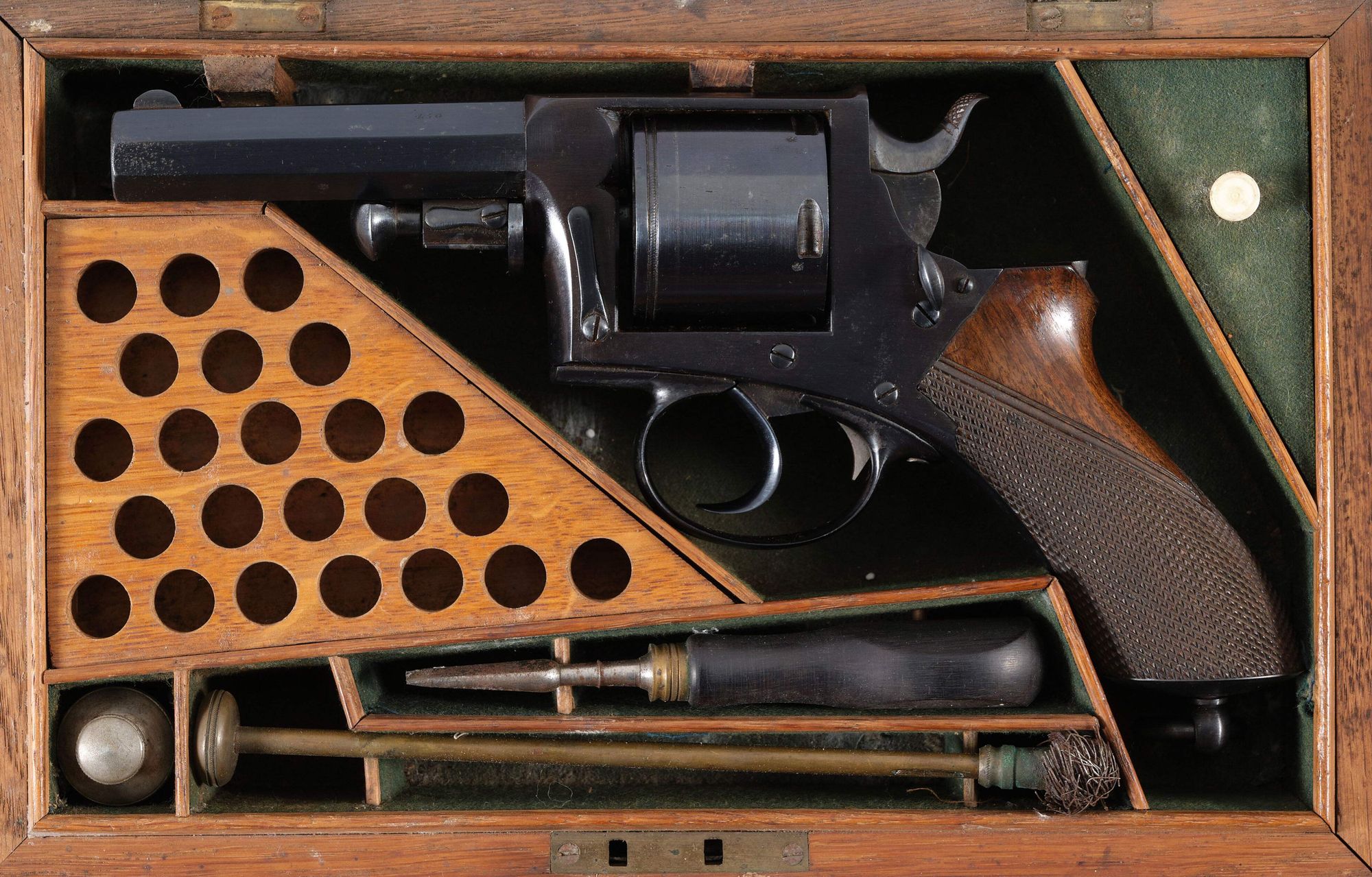
A cased Tranter Patent double action revolver, an evolution of the Adams design. Available this October.
Robert Adams and his partners immediately worked to improve the design, including the addition of a bullet rammer similar to one in use by W. & J. Rigby. Pocket, holster, and belt models were offered in a variety of chamberings. Commercial sales were promising, and the Deane, Adams & Deane double action revolver became a popular option for British officers during the Crimean War of 1853 and the Indian Rebellion of 1857.
The Crimean War became the first major military proving ground in the single action vs double action arms race. A letter from Crimean War soldier J. G. Crosse from the 88th Regiment of Foot to Robert Adams illustrates a growing sentiment among the British military.
“I had one of your largest sized Revolver Pistols at the bloody battle of Inkermann, and by some chance got surrounded by the Russians. I then found the advantages of your pistol over that of Colonel Colt’s, for had I to cock before each shot I should have lost my life. I should not have had time to cock, as they were too close to me, being only a few yards from me; so close that I was bayoneted through the thigh immediately after shooting the fourth man.”
An Adams Patent Tipping & Lawden Hammer Safety double action revolver with case. Available this October.
An improved bullet rammer designed by Adam’s cousin James Kerr was incorporated, and after the Crimean War the Adams revolver added a hammer spur and a single action/double action lock that had been patented by Lieutenant Frederick E. B. Beaumont. The Beaumont-Adams revolvers became a British army standard for the next 24 years. The platform saw numerous variants and clones and steered the European market toward double action revolvers over their single action competitors.
Single Action vs Double Action in America
Though European competition forced Samuel Colt to close his London factory in 1856, his single action revolvers continued to rule the American market. Meanwhile, numerous double action revolvers were produced by American manufacturers in the 1850s, including examples by Cooper Firearms, Starr Arms, and Rodgers & Spencer & Co. The latter company manufactured the Pettengill, the Civil War’s only hammerless revolver model. In 1863, the Remington-Rider revolver was introduced.
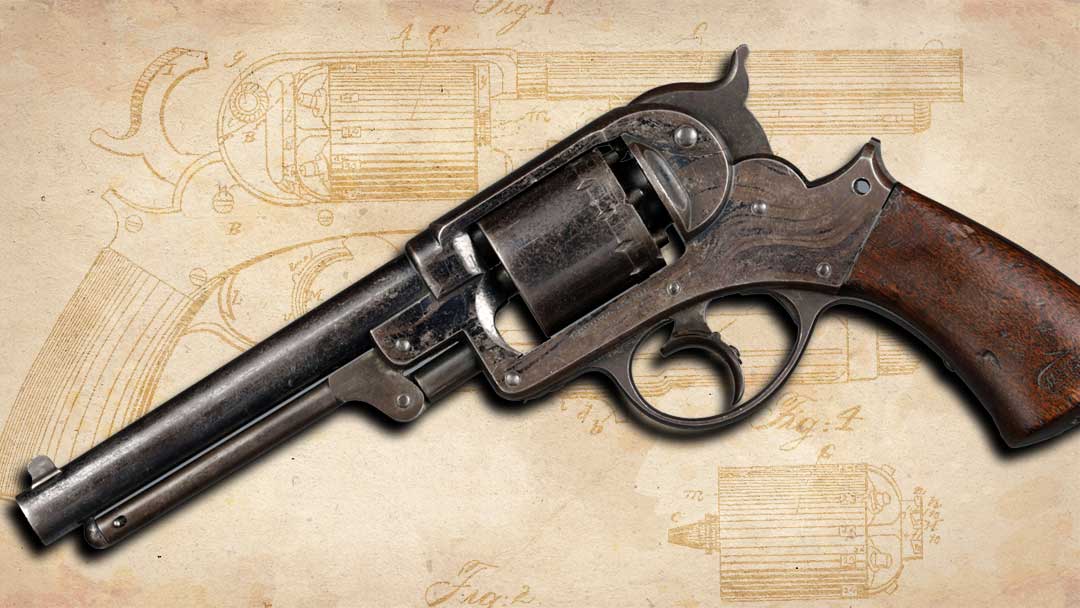
A Civil War U.S. contract Starr Arms Co. Model 1858 Army double action revolver. Available this October.
In the midst of Colt’s dominance, Smith & Wesson’s evolving line of single action revolvers gained popularity with civilians, law enforcement, and militia, and eventually the company garnered some lucrative military contracts as well. To the American military, durability in the field became the most important factor when adopting a metallic cartridge revolver, and the Colt Single Action Army was viewed as an ideal frontier sidearm.
On the double action revolver, Col. James Gilchrist Benton, Springfield Armory commander from 1866 to 1881, wrote, “The only advantage this system possesses is, that the arm can be fired rapidly without disturbing the aim. The disadvantages are, liability to accidental discharge, and failure to explode the cartridge.”
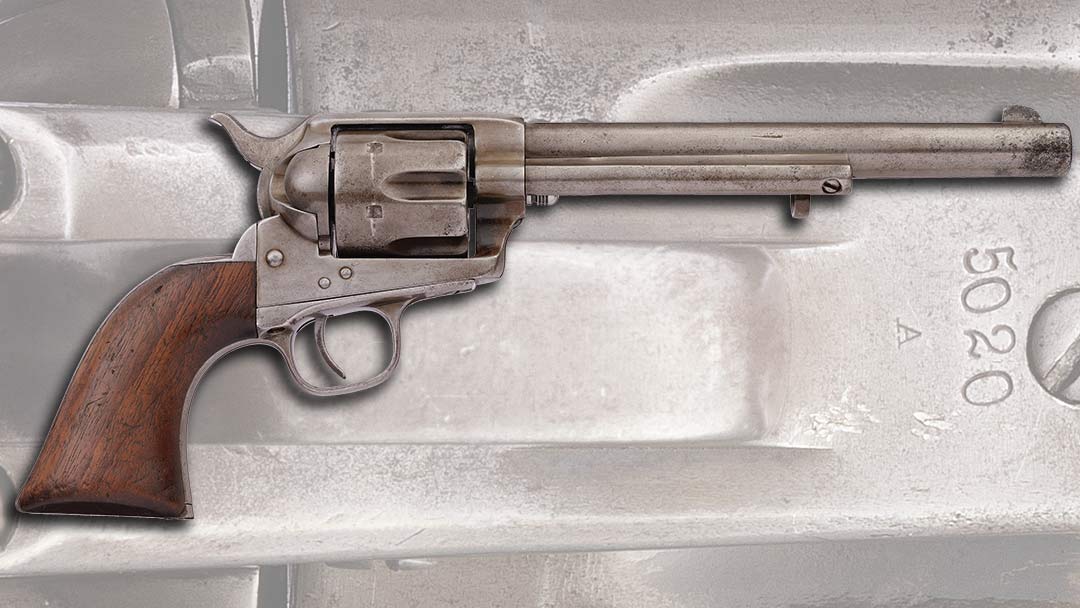
A U.S. Ainsworth inspected Lot 5 Colt Cavalry Model Single Action Army revolver with a John Kopec Letter. Available this October.
Samuel Colt had a strong opinion on the single action vs double action debate, believing the double action platform was less accurate, more prone to mechanical failure, and wasted ammunition. This philosophy would continue to guide the company for years after Colt’s passing.
In 1874, Frederick van Oppen, manager of Colt’s London Agency, sent examples of the latest Adams, Webley, and Tranter double action revolvers to his higher ups in Connecticut, writing, “All gunmakers abroad and at home, within British Dominions especially, state they can scarcely sell anything now in revolvers but double action central fire .450 bore pistols, with short to medium length barrels in preference.”
Colt was slow to respond, but finally directed superintendent William Mason to develop a double action design in 1876. The Colt “Double Action, Self-Cocking Central Fire Revolving Pistol” hit the market in 1877 and became an immediate hit. Nicknames emerged for each chambering, including the “Lightning” for the .38 caliber, “Thunderer,” for the .41, and “Rainmaker” for the .32 variant. The .45 caliber Model 1878, Colt’s first large frame double action revolver, was dubbed the “Omnipotent.”
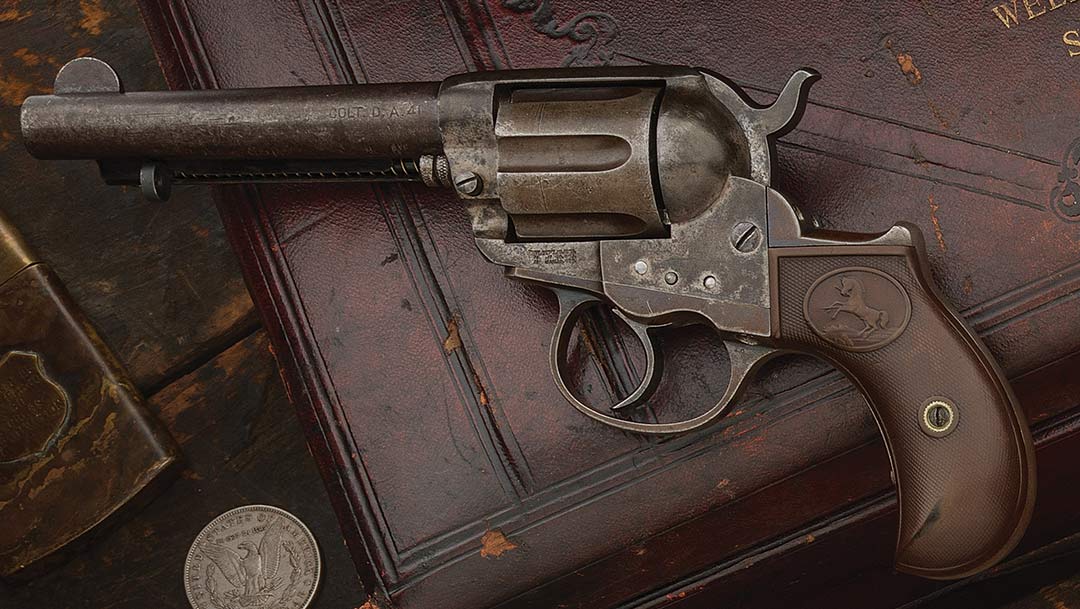
A Pinkerton Agency marked antique Colt Model 1877 Thunderer double action revolver with a factory letter, badge, and memorabilia from actor Dale Robertson. Available this October.
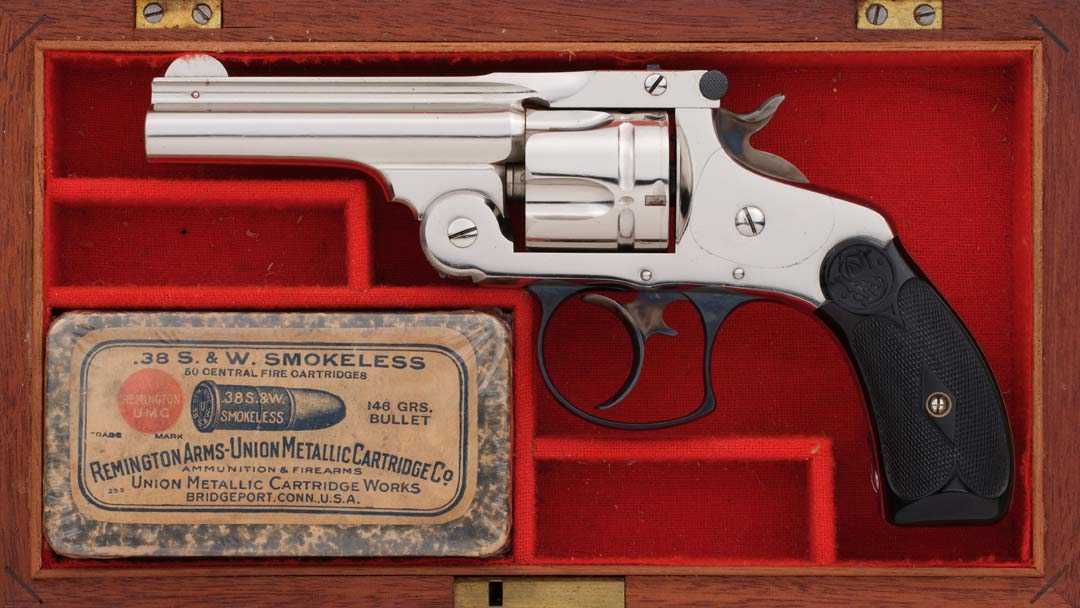
Smith & Wesson wouldn’t produce a double action revolver until early 1880. Released alongside a single action counterpart, the Smith & Wesson Model 2 double action included a number of modifications that allowed the revolver to function as a single action/double action system. The double action version outsold its single action sibling over four to one and saw nearly a million units produced across five variations between1880 and 1913.
A cased Smith & Wesson .38 Model 2 double action Third Model revolver. Available this October.
Single Action vs Double Action Arms Race
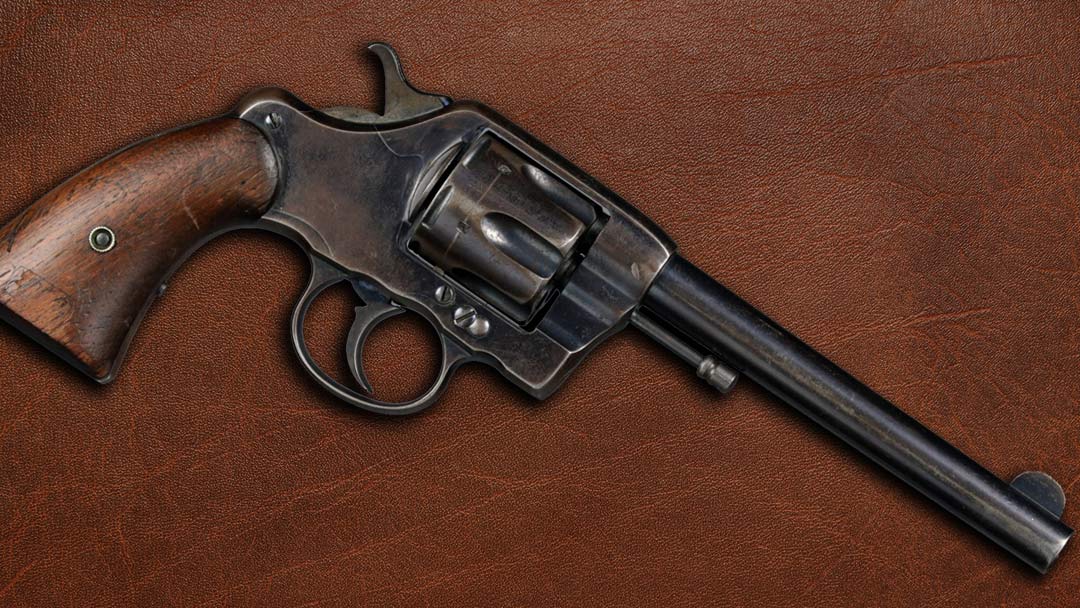
The Single Action Army remained the standard sidearm of the U.S. military for nearly two decades. The Colt SAA was finally replaced by the Colt M1892, the first widely issued double action revolver to serve America’s armed forces. The platform saw numerous updates and variants during its nearly 16 year production life and served in conflicts like the Spanish American War and the Philippine Insurrection.
An antique first year production U.S. Colt Model 1892 New Army & Navy double action revolver with holster rig. Available this October.
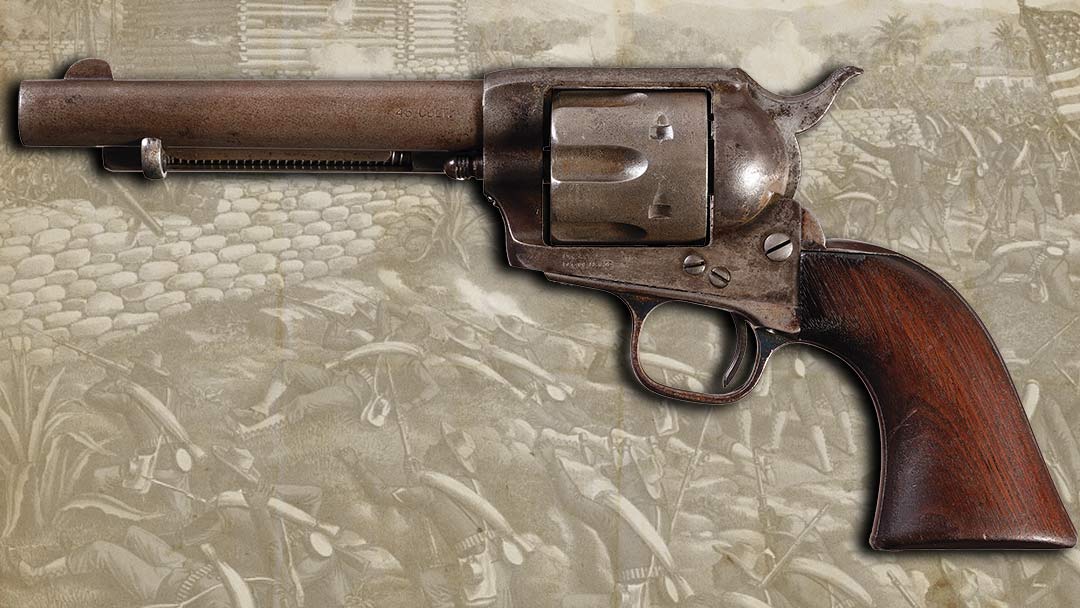
As the 20th century approached, the single action vs double action showdown was far from over. The reliable and plentiful Peacemaker continued to serve on the battlefield alongside its double action counterparts, like the Colt SAA revolver pictured below documented to a member of the Rough Riders Volunteer Cavalry.
The Moro Rebellion followed the War in the Philippines, a prolonged conflict with a local tribe that lived in the southern islands who General John Pershing described as “absolutely fearless, and once committed to combat they count death as a mere incident.”
The Colt M1892 .38 caliber double action revolver proved unpowered against the zealous guerilla fighters, and the U.S. military reissued the .45 caliber Colt Single Action Army. The conflict with the Moro directly influenced America’s Ordnance Department to adopt the .45 caliber New Service double action revolver and development the .45 ACPM1911 pistol.
A U.S. Colt Artillery Model Single Action Army revolver with a John Kopec letter, documented to George Thompson of the Rough Riders 1st U.S. Volunteer Cavalry. Available this October.
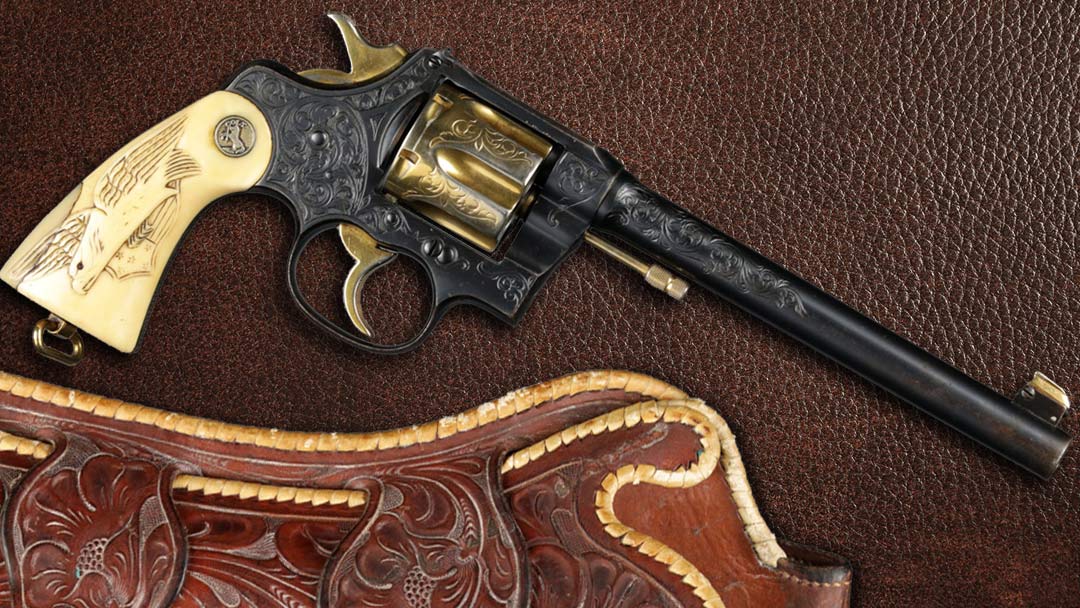
Colt’s hefty New Service revolver enjoyed widespread success in military, law enforcement, and civilian roles. The model became popular with British officers and was fielded by Canadian troops as well, and the platform laid the groundwork for the .45 ACP M1917 double action revolver, which supplemented the M1911 pistol throughout WW1.
An engraved Colt New Service Target double action revolver in .44 Russian/S&W Special with carved eagle grips, holster, and factory letter. Available this October.
UK forces relied on double action revolvers like the Webley and the Enfield well into the 20th century. Though long-retired as a standard issue sidearm, the Colt Single Action Army continued to serve secondary units and was carried by a few officers in WW2, including General Wainwright in the Pacific and General Patton in the European theater.
The Colt SAA pictured below is one of 163 ordered by the British Purchasing Commission as an emergency replacement for small arms lost by the British Expeditionary Force during the evacuation from Dunkirk in May 1940. These “Battle of Britain” revolvers were the last Colt Single Action Army revolvers ordered under military contract.
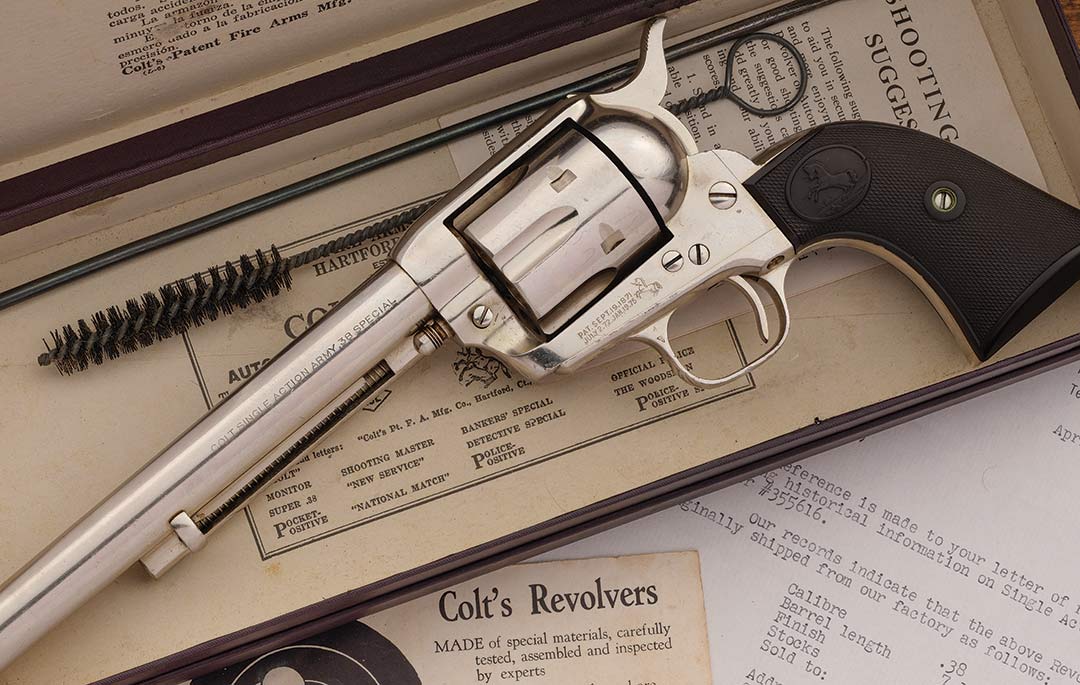
A documented WW2 “Battle of Britain” Colt First Generation SAA revolver, one of only 63 from the order with nickel finish and one of only 36 chambered in .38 Special. Available this December.
Single Action vs Double Action By the Numbers
The double action revolver came to dominate in the 20th century, and the proof is in the production numbers. According to Smith & Wesson “over six million” Model 10 revolvers have been produced since 1899, making the platform the most popular revolver line ever produced.
A distant second for double action revolvers, over 2 million Russian Nagant M1895s were built. The Police Positive Special double action revolver become Colt’s best selling wheelgun line with over 750,000 manufactured. The Police Positive Special’s popular snub nose spinoff, the Colt Detective Special, saw a production run of over 350,000.
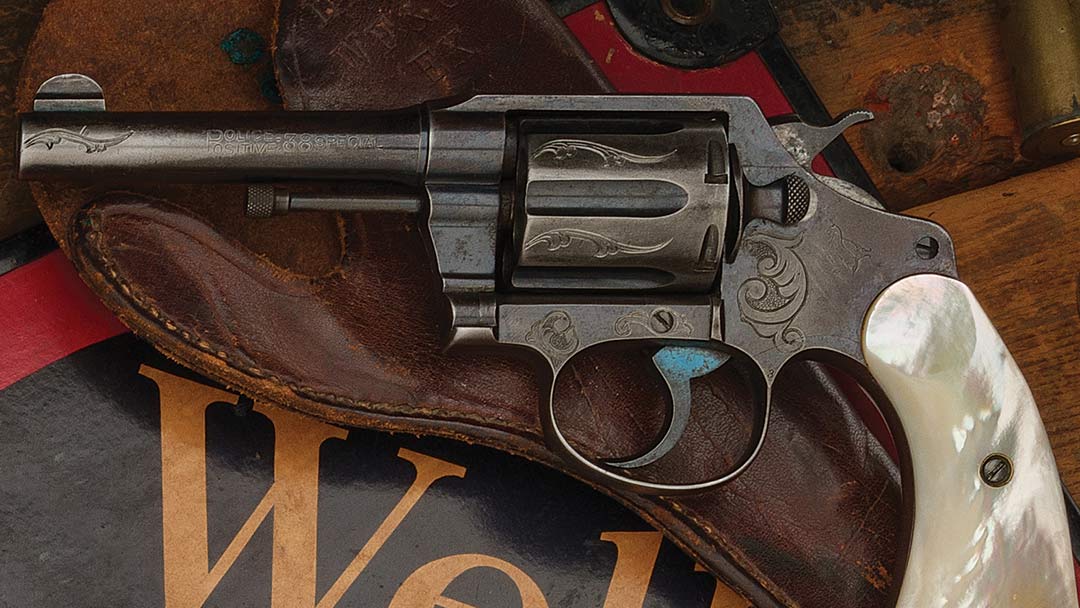
An engraved “W.F. & Co.” marked Colt Police Positive double action revolver with pearl grips and “WF & CO EX” marked holster. Available this October.
Smith & Wesson’s double action N-frame revolvers became one of the most popular handgun platforms, with over 1.3 million produced including the Model 27, Model 28, and Model 29. Combined numbers for S&W I-Frame revolvers like the Model 30, 31, 32, 33, 34, and 35 aren’t far behind. Colt’s medium frame Official Police model, previously known as the Colt Army Special saw a production run of over 1 million units across all variations.
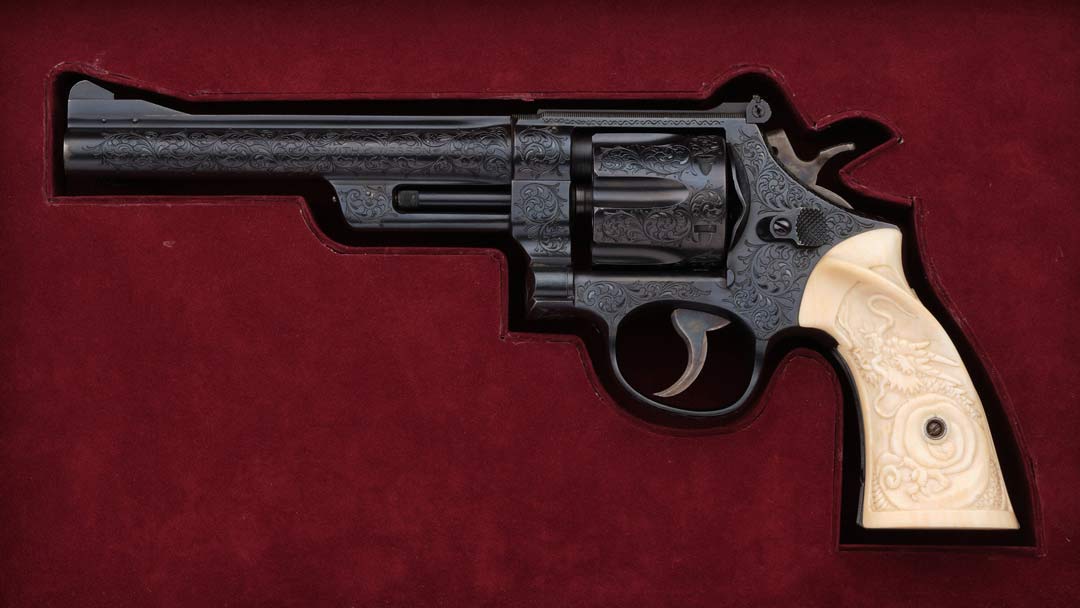
An engraved Smith & Wesson Pre-Model 27 .357 Magnum double action revolver with relief carved dragon grips, its case, and a factory letter. Available this October.
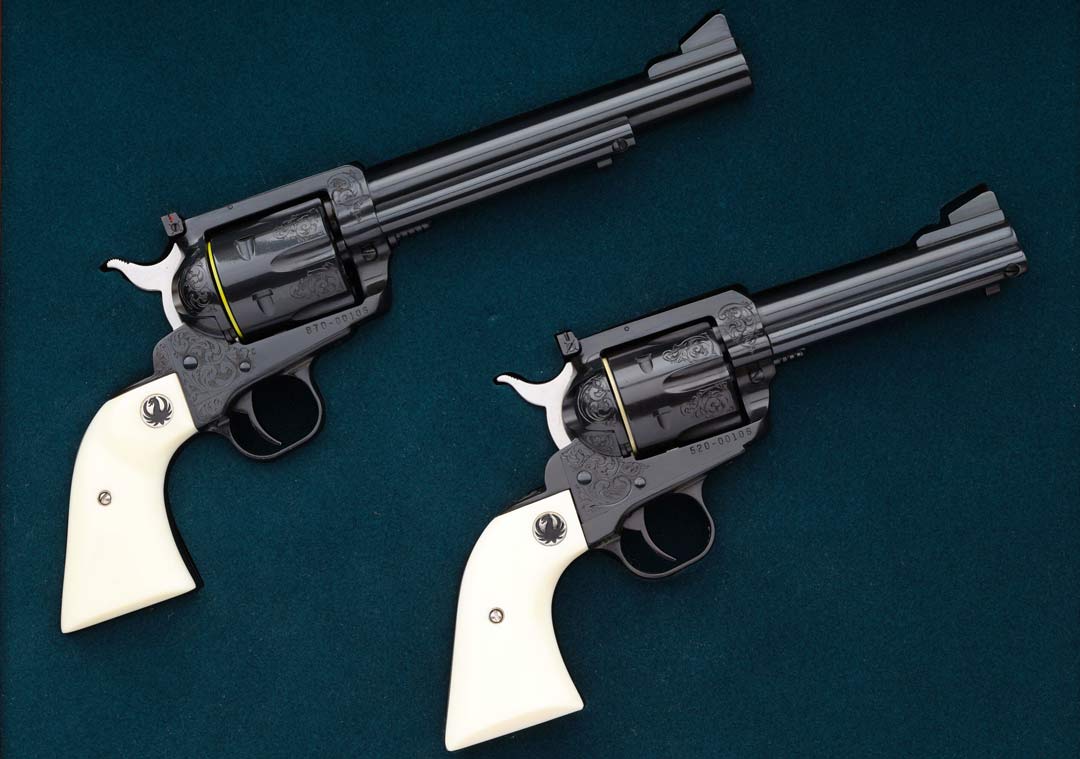
The single action vs double action popularity contest is far from one-sided, however, and one of the biggest reasons for the continued success of the classic SA revolver has been Ruger Firearms. Introduced in 1955, the Ruger Blackhawk has become the most produced single action revolver line in history with over 2 million sold.
The Blackhawk’s smaller sibling, the Single Six, holds second place among single action revolvers with over 1.5 million produced since it hit the market in 1953. The Ruger Vaquero, released in 1993, earns the third spot with over 650,000 manufactured and counting.
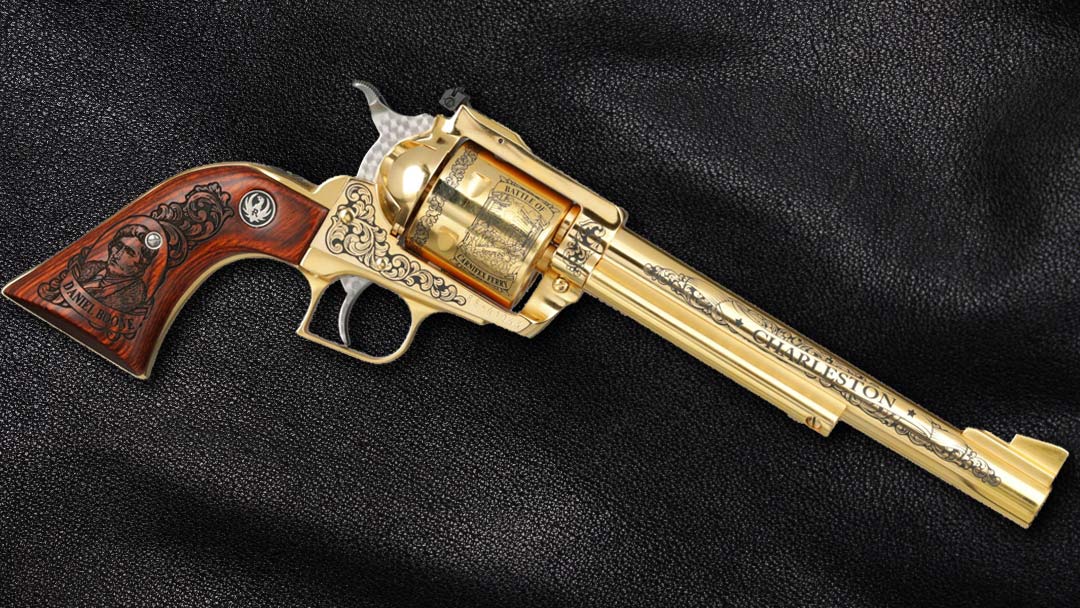
An engraved Ruger New Model Super Blackhawk Charleston West Virginia Commemorative single action revolver with case, one of 100 manufactured in 2014. Available this October.
Single Action vs Double Action Today
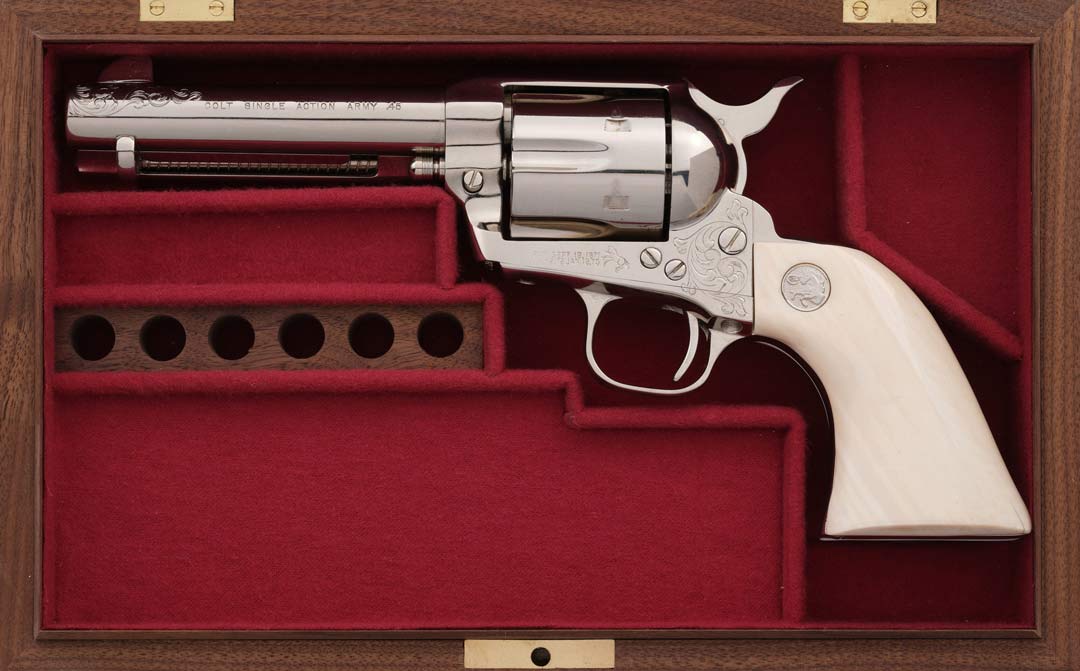
The SA/DA revolver has come to fill nearly every role, particularly everyday carry and self defense, but as Ruger sales numbers demonstrate, single action continues to enjoy widespread popularity. A decade after WW2, Colt resumed production of their Single Action Army with their Second Generation run. The Golden Age of Westerns was at its height, spurring nostalgia for the Wild West and the frontier firearms featured onscreen.
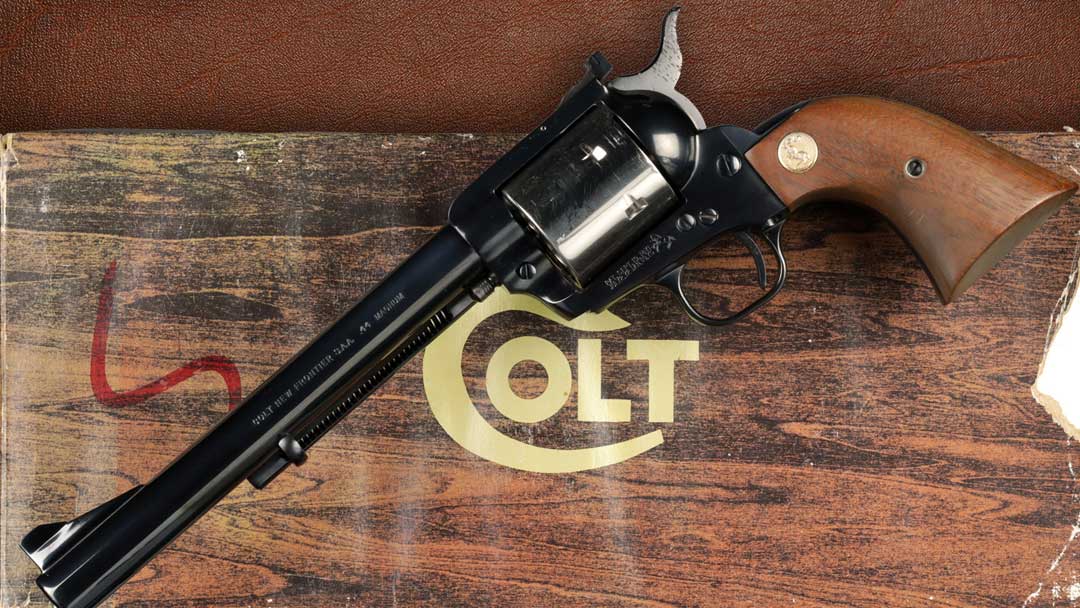
An experimental prototype Colt New Frontier single action revolver in .44 Magnum, one of only 25 produced. Available this October.
Ruger’s Blackhawk took inspiration from a generation of custom Colt SAAs and paired the design with Remington’s new .44 Magnum cartridge. In his 1955 book, ‘Sixgun,’ outdoor legend Elmer Keith was impressed with the Blackhawk, noting, “For the shooter, be he plinker, peace officer, cow-poke or hunter, this new Ruger is a good, well-made arm. Colt collectors may prefer the original old Peacemaker but any shooter who wants to have first class target sights combined in a really modern arm with all improvements including the rebounding separate firing pin will find the new Ruger Blackhawk the finest single action revolver manufactured to date.”
A cased matching set of Heidi Roos engraved Ruger 50th Anniversary New Model Blackhawk single action revolvers. Available this October.
Colt’s Third Generation Single Action Army was initially offered as a limited run starting in 1976, but renewed interest in the platform prompted Colt to resume production of the classic in 1994. Thanks to firearm focused online communities, Cowboy Action Shooting, depictions in popular media, and the mainstream appeal of gun collecting, the single action revolver continues to appeal to a wide audience.
A factory engraved Colt Third Generation Single Action Army revolver with box and case. Available this October.
Single Action vs Double Action Collecting
The single action vs double action debate is ultimately going to come down to individual preference and the intended role being filled. Most arms enthusiasts enjoy owning numerous guns that offer distinct and memorable shooting experiences. For handgun hunting, single action only and SA/DA revolvers are available today in almost every chambering. For the sportsman, shooter, and collector, rare and historic examples of each style can be found this October at Rock Island Auction Company.
From Prussia to Florida and New Mexico Territory to the trenches of World War 1, knives serve both deadly and survival purposes in the west, the east, in war and in space.
Knives, whether they bear historic legacies or are beautifully conditioned, are fascinating pieces that don’t get the recognition of their counterparts often worn on the other hip. Take a look at this sampling of the historic fighting knife and survival knife options in Rock Island Auction Company’s Oct. 4-6 Sporting & Collector Auction.
Fighting Knife: O.S.S. Stiletto with Pancake Flipper Sheath
A conventional fighting weapon combined with a slightly peculiar twist is very appropriate for the Office of Strategic Services (OSS). The precursor to the Central Intelligence Agency, the World War 2 organization worked to disrupt the Axis war efforts from behind enemy lines and gather intelligence.
Spy weapons also seem to be imaginative, weird and fantastical, like the Liberator, pen gun and even “bat bombs,” but this stiletto is none of that. The no-nonsense knife is made of high grade steel in the style of a Fairbairn-Sykes double-edged fighting knife developed by the British and issued to its special forces.
The knife, with its course knurling, had been in production for about 18 months and by mid-1942 was considered the ideal knife for espionage activities and close combat encounters. Housewares company Landers, Frary & Clark landed the contract and in June 1942 began production on the initial order of 10,000 knives.
As a wartime austerity measure, the company used its same stamping process for the stiletto’s scabbard as it did with its household spatula. The pancake flipper scabbard can be worn high or low on the belt depending on how the user strung it through the slits. It could even be angled.
Similar to the British Fairbairn-Sykes Commando knife, this OSS pattern Stiletto has a 6 3/4-inch double-edged spearpoint blade and an overall length of 11 1/2-inches. It is accompanied by its “pancake flipper” sheath.
Fighting Knife: Civil War Era Stag-Handled Knife
Hand-to-hand fighting, when the musket has been fired and the enemy is closing in required a bayonet or a knife, ready for close quarters action. Though it wasn’t completely uncommon during the Civil War, hand-to-hand combat wasn’t the regular occurrence any number of films and television programs try to portray. While two-thirds of the Civil War’s dead came from disease, bayonets were responsible for less than 1 percent of casualties.
This fighting knife with stag handles features a 12 1/2-inch blade. These types of knives were popular for soldiers during the Civil War, particularly those from the Confederacy.
Fighting Knife: Silver-Mounted bone-handle Bowie Knife with foreboding Inscription
The Battle of Glorieta Pass was fought in New Mexico Territory in March 1862 and prevented the Confederacy from pushing into the West, especially California. Considered “The Gettysburg of the West,” Union and Confederate Forces met at this location on the Santa Fe Trail, fighting at elevations over 7,000 feet above sea level on rocky, forested terrain.
Confederate troops moved into New Mexico from Texas, and after failing to take a Union fort, pushed toward another fort but encountered Union troops along the trail. On the first day, March 26, the Union fended off the rebels taking about 70 prisoners. Both sides fell back sending for reinforcements that didn’t arrive until late in the afternoon of the following day. On March 28, while Confederate troops made a frontal assault on the Northerners, Union troops were flanking the rebels and reached their lightly guarded supply train, destroying it and running off or killing the horses and mules. Without supplies, the Confederates were forced to withdraw back to Texas and the threat to California was neutralized.
This Silver-mounted bone handle Bowie knife has an 8 1/2-inch blade and the primitive inscription “TOKE FROM DEAD REB/GLORIETA, MARCH 1862” on the right side of the grip. The cross guard and ferrule are silver and the pommel has an inset silver half dollar that appears to be a Capped Bust from about 1807-1839.
Survival Knife: Knives of Alexander McSween and James Dolan
Staying in the New Mexico Territory, Alexander McSween and James Dolan were among the main instigators of the Lincoln County War that made Billy the Kid, the Regulators and Pat Garrett famous. Dolan with partner Lawrence Murphy enjoyed a monopoly with the only store in Lincoln County, while McSween was an attorney who became business partners with John Tunstall and cattleman John Chisum to open their own store in Lincoln County.
This knife with a 5 1/2-inch blade is mounted in a wood display case. The knife has a silver plaque stamped “JAMES J. DOLAN” on the left side, one of the leading figures of the famous Lincoln County War.
Over several months in 1878, accusations by Murphy and Dolan of embezzlement by McSween led to escalation of cattle rustling and the murder of Tunstall that grew into revenge killings and eventually a shootout between the Regulators and Dolan and Murphy’s men. Known as the days-long Battle of Lincoln that culminated on July 19, 1878, McSween was killed, ending the feud. Garrett became county sheriff two years later, killing two Regulators before hunting down Billy the Kid.
This lot includes several documents related to the New Mexico Territory including a Bowie knife with a 9 1/2-inch clip blade with Alexander McSween on the left side. And has a silver-gilt hilt with a bone handle.
Fighting Knife: World War 1 Era Trench Knife
Made for close-in fighting during World War 1, trench knives could be used to strike, stab and slash enemies and were useless for general purpose use. The Model 1919 trench knife was also referred to as “knuckle dusters” for the brass knuckle grips incorporated into the knife’s hand guards. The U.S.-issued knives were made by the same company that would make the stilettos for the O.S.S., Landers, Frary & Clark, of New Britain, Conn.
The M1918 trench knife marked “L.F.&C./1918” has full brass knuckles as a handguard but a shorter blade than the M1917 with a triangular spike blade that is also in this lot.
Inspired by the Fairbairn-Sykes fighting knife used by the British commandos that trained at Achnacarry, Scotland in World War 2, the Marines’ knife, designed by Lt. Col. Clifford H. Shuey, avoid using high priority materials but that would lead to durability issues. The hilt was made of zinc aluminum alloy that, over time, the zinc leached out making the knife brittle.
The 14,370 knives were given priority to elite units like the 1st Marine Division and the 1st and Second Marine Raider Battalions that island-hopped through the Pacific Theater. The knife served capably as a silent killer but proved to be far too fragile for general use purposes so that it was eventually replaced in 1943 by the knife that became the legendary KA-BAR.
*This Camillus Cutlery U.S.M.C. Raider Stiletto was made for the 1st Marine Division and the 1st and Second Marine Raider Battalions with a 7 1/8-inch double-edged blade that is 12 1/2-inches long, nearly an inch longer than the OSS version.
Fighting Knife? Luftwaffe Dress Daggers
Located near plentiful iron ore deposits, the Prussian city of Solingen, known for centuries as “the city of Swords” for its sword and dagger making, but after World War 1 its economy cratered. By the 1930s, with the rise of the Nazi Party, city leaders saw an opportunity. They took their pitch to German leaders – making presentation swords and daggers for Reich leaders.
Hitler and others liked the idea and the industry of Nazi presentation blades began with the first adopted in 1934 for members of the SA – Storm troopers. Other parts of the Nazi machine expressed interest and fell in line, including Herman Göring’s Luftwaffe that adopted its first model that same year.
It had a grip and scabbard of blue leather and the pommel. Crossguard and scabbard fittings were silver plated until later in the war when certain metals were scarce. The pommels and crossguards bore brass-colored swastikas on both sides; its blade length is 12 ¼-inches. The second model, adopted in 1937, was mandatory for commissioned officers and optional for other Luftwaffe personnel. The pommel and crossguard were cast in aluminum with a swastika on the pommel and the German eagle on the crossguard. This model’s blade was 10 1/4-inches.
This lot contains a First Model Luftwaffe presentation dagger with an overall length of 17 7/8-inches and the Second Model presentation dagger has an overall length of 15 ¼-inches.
Fighting Knife: Randall Knives Model 2 Fighting Stilleto
W.D. “Bo” Randall first started making knives prior to WW2 to sell at his father-in-law’s clothing store in Orlando, Fla. The knives were popular and as the war broke out, he started getting requests for knives for hand-to-hand combat. His Model 1 was an “All-Purpose Fighter,” while the Model 2 was described as a “Fighting Stiletto.” He would receive order letters from GIs simply addressed to “Knife Man, Orlando.” He made about 1,000 knives for servicemen in World War 2.
The Model 2 comes in blade lengths of 6, 7 and 8 inches shaped along the lines of the Fairbairn-Sykes knife. This knife has a 6-inch blade with a nickel silver double hilt and collar with a smooth grip and nickel silver buttcap. A Randall-made leather sheath, honing stone and soft case are included.
Survival Knife: Randall Knives Model 11 Alaska Skinner
Randall hired his first full-time employee shortly before the end of World War 2. Orders exploded following a feature on the company in “True” magazine and the backlog began. The company’s website states that demand is so high a new order will take six years to fill.
Alaskan guide Tommy Thompson designed the Model 11 Alaska Skinner Randall Knife in 1952 for skinning big game. The blade point is dropped below the top of the blade to prevent cutting too deeply when used point first.
This Model 11 Alaska Skinner Randall Knife has a 4 1/2-inch drop point blade with a brass single hilt and red, white and blue spacers, a smooth grip and duralumin buttcap. It is accompanied by a Randall made leather sheath, honing stone and soft case.
Survival Knife: Randal Knives Model 17 Astro
In the early 1960s, NASA contacted Randall about making survival knives for the seven Mercury astronauts. Randall designed the blade to cut through the spacesuit material and a large handguard to allow its use while wearing gloves. The knives were aboard each Mercury Mission, including Gus Grissom’s Liberty Bell 7 that sank in the Atlantic Ocean, nearly sending him with it. When the capsule was recovered in 1999, Grissom’s knife was inside and still serviceable after a good cleaning.
This Model 17 Astro Knife has a 5 ½-inch drop point stainless steel bladem a stainless steel double hilt and micarta grip scales and wrist thong. A Randall leather sheath, honing stone and soft case are included.
Survival Knife: Randall Knives Model 22 Outdoorsman
About 8,000 Randall knives are produced each year through its 17-step process that includes heating the blade to 1,950 degrees to shape and harden it and then refining the blade, shaping and smoothing it, fitting the handle and polishing it and sharpening it multiple times.
(pic) This Outdoorsman knife has a 4 5/8-inch trailing point stainless steel blade, a nickel silver single hilt, stag grip and duralumin crow’s beak wrist thong buttcap. A Randall leather sheath, honing stone and soft case are included.
Fighting Knife: Gerber Mk. II
In Vietnam, like other wars, soldiers carried knives that often gave them a reminder of home, personal identity or individuality. That is how Randall Knives, folding knives and other blades made their way to the front lines along with military issued knives like the Gerber Mk. II. Based on the Scottish dirk with a stiletto-type blade, the Mk. II was popular in Vietnam, but military PXs stopped carrying them in the 1970s because of their brutal looks.
This Gerber Mk. II Fighting knife, at top, was manufactured in 1968 and has a Gerber-marked leather sheath and sharpener. It is accompanied by an unmarked knife with an eagle head-shaped horn grip light carved with “101st ABN. RECONDOS/VIET-NAM 67-68” on one side and “SGT.DAVEY THE PIRATE,” “DEATH DELIVERY” with a winged skull and “CLAIRTON PA.” on the other side.
Fighting and Survival Knives for Sale
Guns may get the glory, but through history, knives have served as important tools, whether it was waging war, forging life on the frontier or rocketing into space. Knives that have served a number of purposes can range from rugged to refined, and Rock Island Auction Company has a range of offerings in its Oct. 4-6 Sporting & Collector Auction.
It’s an epic debate: if faced with a choice, what would be the only firearm to own for the rest of your life? The answer may depend on the intended use. Is it only for defending hearth and home? Is its sole purpose for putting food on the table? In this debate it is shotgun vs rifle.
Historically, settlers turned farmers kept both at hand, a shotgun for predators – four-footed or two-footed, and a rifle chambered in .22 for small game or varmints that were both likely inexpensive and considered tools.
Shotguns are called scatter guns for a reason, offering shorter range power that can punch holes. The word shotgun was first used in 1776 when James Fennimore Cooper mentioned it in his book, “Frontier Language of the West,” but the use of shotguns long predates this common vernacular back to the 16th century when they were referred to as “fowling pieces” or “haile shotte peics” depending on what country was using them.
Rifles, so named because of the barrel rifling that provides greater accuracy and range, was first developed in the late 15th century and used militarily as early as the 17th century. It continued to grow in popularity and by the American Revolution colonists used their Kentucky long rifles to deadly effect against the British smoothbore muskets.
Take a look at a few of the purposes for ownership in the argument of shotgun vs rifle, with examples of each type available in Rock Island Auction Company’s Oct. 4-6 Sporting & Collector Auction.
This Belgian Browning High-Power rifle with scope is chambered in .308 Norma Magnum that could be used for big game hunting or target shooting.
Shotgun vs Rifle: Home Defense
Home defense can’t be overlooked in this debate, and a semi-automatic rifle with multiple shots, especially with the benefit of a standard 30-round magazine, has the upper hand when it comes to volume of firepower. Should the debate of defense continue outdoors, the rifle also offers a range the shotgun simply can’t match. In rebuttal, shotguns offer the ability to spray shot with tremendous muzzle energy, requiring less accuracy to fire effectively in a high stress situation.
The shotgun has been marketed at times for home defense, like the Ladies Home Companion or the Ithaca Auto & Burglar, and was once a law enforcement staple. While a cumbersome SPAS-12 might be fine for trying to fend off velociraptors, a riot shotgun like the Winchester 1897 Model 12 or the Benelli M4 that are maneuverable, fire multiple shots and have plenty of stopping power are the best option.
This pre-ban Chinese Poly Technologies AKS-762 is chambered in 7.62mm with an 18-inch barrel and collapsible stock that makes it maneuverable in close quarters.
This U.S. marked Remington Model 11 riot shotgun has a 20-inch barrel and holds multiple shells, making it a good option for home defense. This pair of Ithaca 37 Featherlight shotguns would also be good for home defense or a backup gun on a big game hunt.
Shotgun vs Rifle: Birding
A shotgun can spray a ball of shot over a wider area rather than relying on a single bullet so a bullseye is not necessary to knock down small, moving targets, like quail, grouse or pheasant, especially within a range of 50 yards. Before it was called the shotgun, it was called a “fowling piece.”
This Beretta Model 682 over/under chambered in 12 gauge comes with three extra barrels — 20 gauge, 28 gauge and .410 — providing options for various fowl.
A rifle with a scope may offer precision to hit a stationary target at a distance like wild turkey that won’t take flight, but taking out a bird on the wing is another story. A hunter with a rifle wants to use the proper caliber to take down large game birds like turkey. That said, a shotgun offers the best weapon for taking winged game.
This Winchester Model 61 slide action rifle is chambered in .22 Winchester Magnum to provide good stopping power for large fowl like wild turkey.
Shotgun vs Rifle: Deer Hunting
Terrain is a significant consideration when selecting a gun for deer hunting. Open terrain in the mountains and open range of the Rocky Mountain states like Montana or Wyoming where a deer might be taken at a distance is where a rifle is optimal. A rifle offers precision, higher muzzle velocity and flatter trajectory in open spaces. An optic mounted on the gun also offers greater accuracy and the ability to identify a target.
Sure, this Steyr Mannlicher Luxus bolt action rifle is from Austria, but it is chambered in .30-06, a classic American hunting round, championed by Ernest Hemingway and Townsend Whelen.
A shotgun might be a better option at closer range with a moving target, especially in thick brush or where population density is a consideration, like the Midwest. A shotgun helps when aim might be slightly off but still have the stopping power needed. Hunters can choose what kind of load to use from slugs to buckshot. Ultimately, terrain is the key factor for what sporting arm is best, but here at Rock Island Auction, in the upper Midwest where there’s plenty of brush and trees, a shotgun is best.
This Winchester Model 12 slide action shotgun may stand out in the forest but it’s a robust shotgun that allows the hunter to get off multiple shots if necessary.
Shotgun vs Rifle: North American Big Game Hunting
This is largely the same argument as deer hunting. Each should be considered, but the best choice is clear. A shotgun can take out large game, even a bear, but might not be the top option. A shotgun loaded with slugs could serve as a backup gun by a guide.
This Belgian Browning Auto 5 is chambered in 12 gauge and gives a hunter multiple shots.
A hunter with a scoped rifle can hone in on their big game from a distance and make an ethical kill with the proper ammunition, whether the target is elk, American bison, moose, elk, bear or mule deer. There are plenty of rifle rounds offering a greater velocity and range to the hunter. On a big game hunt, the rifle is the preferred piece.
This Dakota Arms Model 76 bolt action rifle is chambered in 300 Weatherby, a versatile cartridge for a hunter wanting to hunt in North America and abroad.
Shotgun vs Rifle: On Safari
This is a short argument. A shotgun might serve as a backup gun for leopard by a professional hunter guiding a party, but a rifle is the best tool all day long. A scoped rifle can offer a precision shot at long range against skittish or shy game like a greater kudu. Some hunters prefer using iron sights when taking on closer targets allowing them greater awareness of what is around them.
This Ruger M77 Magnum bolt action rifle is chambered in .416 Rigby, capable of taking down anything a hunter may cross paths with on the savanna, except for perhaps a bull elephant.
A shotgun might be fine for some game, but a hunter looking at taking a thick-skinned trophy or a dangerous game animal is required by law across most of Africa to use at least .375 caliber, but a caliber starting with a four provides the greatest stopping power for the hunter to anchor their prey. A gun chambered in .416 is recommended to handle most big game, though with something like an elephant, the hunter is going to want real stopping power, like .458 Winchester Magnum. No doubt a rifle is the choice here.
It’s right there in the name of this gun — a Pre-64 Winchester Model 70 African Super Grade bolt action rifle manufactured in 1957 and chambered in .458 Winchester Magnum, introduced in 1956, a year before the rifle was made.
Shotguns and Rifles for Sale
A shotgun is best for birding, while either a rifle or shotgun works for home defense and deer hunting depending on the circumstances, while a rifle is best if big game is in the crosshairs. The right gun for the right purpose is available in Rock Island Auction Company’s Oct. 4-6 Sporting and Collector Auction whether it’s for upland hunting, going on safari or the gentleman who just wants to shoot clays on a pleasant weekend afternoon.
Medal of Honor recipient or anonymous dogface, they all carried a gun in the military. They all faced harrowing and compelling situations, knowing they may have to depend on the firearm they held.
These are some of the stories of the fighting men and weapons they carried that will be available in Rock Island Auction Company’s Oct. 4-6 Sporting & Collector Auction.
Shotguns of Gen. Joe Foss
Growing up in South Dakota in the interwar period, Joe Foss fell in love with airplanes, even seeing legendary aviator Charles Lindbergh and the Spirit of St. Louis on a tour in 1927 at the age of 12. A demonstration by a U.S. Marine Corps aerial team inspired him to become an aviator for the Corps.
By 1940, with a pilot certificate in his pocket, Foss hitchhiked to Minneapolis, Minn., to enlist in the Marine Corps to join the Naval Aviation Cadet program. He earned his wings in March 1941, and after the United States’ entry into World War 2, was made executive officer of a fighter squadron that was soon deployed to Guadalcanal.
In October, 1942, flying out of Henderson Field on Guadalcanal, Foss was in the fight daily. In his first 12 days he shot down 16 enemy aircraft with his F4F Wildcat fighter. On Oct. 25, he became the Marine Corps’ first “ace in a day,” shooting down five fighters on two missions. By January 1943, Foss shot down 26 enemy planes, tying Eddie Rickenbacker who downed 26 aircraft during World War 1.
Manufactured in 1965, this Browning Lightning Superposed shotgun is attributed to Medal of Honor recipient Gen. Joe Foss, whose name is inlaid in silver on the left side of the receiver. Foss shot down 26 enemy planes in World War 2 for which he was awarded the Medal of Honor, served as the governor of South Dakota, first commissioner of the American Football League, appeared on the ABC program “American Sportsman” and served as president of the National Rifle Association.
Foss contracted malaria and returned to the United States in March 1943 to recuperate. He received the Medal of Honor in May. Not wanting to be left on the sidelines, Foss returned to the Pacific in February 1944 as a fighter squadron commander. Though he didn’t add to his tally of kills he got the opportunity to meet Lindbergh, his childhood hero. His second tour ended after he contracted malaria for a second time.
Following the war, he served in the South Dakota National Guard, achieving the rank of brigadier general while running a flying service and automobile dealership. He returned to active duty during the Korean War but didn’t have a flying role. The people of South Dakota elected Foss governor for two terms, from 1955 to 1959.
Appointed as the first commissioner of the American Football League in 1959, under Foss’s guidance, the league expanded and he negotiated lucrative television contracts before stepping aside in 1966. Foss took to the television airwaves in the program “American Sportsman” from 1967 to 1974. He served two one-year terms as president of the National Rifle Association starting in 1988. As a sportsman and firearms advocate, it is appropriate that he owned the Winchester Model 42 and Browning Lightning Superposed shotguns available in the auction.
This Winchester Model 42 slide action shotgun attributed to Gen. Joe Foss has his name, “Joe Foss” inlaid in silver script on the left side of the action. Foss received the Medal of Honor for shooting down 26 enemy aircraft as a U.S. Marine aviator in World War 2.
Colt 1851 Navy Revolver of a 19th Pennsylvania Volunteer Infantry Officer
The 19th Pennsylvania Volunteer Infantry was a three-month unit that mustered in Philadelphia at the opening of the Civil War. Serving in the unit was such an honor that its ranks filled quickly. Among them was Lt. James B. Smith of Company D, whose Colt 1851 Navy revolver is engraved with “Lieut Jas B. Smith/Co D National Guards 2nd Regt Philada” with a Masonic square and compass emblem on the backstrap.
Assigned to police and guard duty in Baltimore, the unit didn’t participate in any battles before the unit mustered out in August 1861. The 19th Pennsylvania was tasked with arresting George Proctor Kane, marshal of the Baltimore Police during the Baltimore riot of April 1861 that killed four soldiers and 12 civilians. A known southern sympathizer, he was arrested and imprisoned at Fort McHenry without the benefit of habeas corpus.
This presentation cased Colt 1851 Navy revolver features deluxe Germanic scroll engraving on a punch-dot background by Master Engraver Gustave Young. A hound’s head partially concealed in the scrollwork is engraved on the left side of the barrel lug in front of the wedge slot. A wolf head, Young’s trademark is engraved on both sides of the hammer. “Lieut Jas B. Smith/Co D National Guards 2nd Regt Philada” is engraved in two lines on the backstrap with a Masonic square and a compass emblem at the end. The one-piece grip is highly figured fancy grain walnut with a high polish finish.
Sterling Mark III Submachine Gun
A blow-back submachine gun, the Sterling Mark III was designed in 1944 to replace the Sten submachine gun. It was made of stamped steel components with a tubular design and a distinctive perforated barrel sleeve. Military specifications were that it should weigh no more than 6 lbs. The Mark III weighed in at 6 lbs.
Though it wasn’t adopted by the British Army until 1953 because of the simplicity and efficiency of the Sten, the Mark III was successful in combat trials at the end of the World War 2, likely used during the Battle of Arnhem. It was carried by an officer during Operation Infatuate in November, 1944 in an attempt to open the port of Antwerp to Allied troops. Once adopted, the Mark III stayed in service until 1988.
This pair of Sterling Mark III submachine guns are consecutively numbered. One has its original protective storage wrap on the muzzle, bayonet lug and endcap. They are each accompanied by their shipping boxes.
U.S. Marked Winchester Model 1894 “Spruce Gun” Saddle Ring Carbine
As the United States entered World War 1, its timber resources in the Pacific Northwest were in high demand. Sitka Spruce was the finest wood for the new fighting machine, the airplane. The wood, used in wing spars and fuselage frames, was wanted not just by United States aircraft manufacturers, but also France, England and Italy. It was strong, resilient and wouldn’t splinter when hit by a bullet. Fir trees were also wanted for ships.
The trouble was the labor issues around the loggers and the mill owners. The tree cutters went on strike numerous times, backed by the Industrial Workers of the World, while mill owners withheld their product for higher prices. The U.S. Army stepped in and the Signal Corps went to work as the Spruce Production Division, assigned to tree cutting and protecting lumber mills.
The U.S. military purchased 1,800 Winchester Model 1894 saddle ring carbines for defensive purposes for the 30,000-strong Army unit. During its 15 months, the Spruce Production Division produced 53,718,592 board feet of aircraft grade lumber.
This U.S. Winchester Model 1894 “Spruce Gun” saddle ring carbine is marked by a flaming bomb of the Ordnance Department on top of the receiver.
Spencer Model 1860 Saddle Ring Carbine
Native Americans fought back against settlers moving into the Great Plains following the Civil War, attacking settlers, railroad crews and travelers so the 18th Kansas Cavalry Regiment was mustered into service for four months. Among the soldiers was Elmer A. Green.
In mid-August 1867, the 18th faced 700-800 Kiowa and Cheyenne warriors at the three-day Battle of Prairie Dog Creek. Outmanned, the troopers weren’t out-gunned, armed with Spencer Model 1860 saddle ring carbines. The soldiers, with their repeaters, managed to hold the combined Kiowa and Cheyenne attackers at bay in a running battle until they reached Fort Hayes, losing only three men.
This Spencer Model 1860 saddle ring carbine is documented as being issued to Elmer A. Green, a soldier in the 18th Kansas Cavalry, a four-month unit raised to combat attacks by Native Americans.
Colt Model 1911
The Colt Model 1911 fought in both world wars, and so did Charles F. Bassett of Flint, Mich. He was listed with B Company of the 529th Engineers of the American Expeditionary Forces of World War 1, and was also active during World War 2.
This Colt Model 1911 manufactured in 1917 includes a 1917 dated W.E.H. inspected “US” embossed Warren Leather Goods Co. brown leather M1916 holster with the faint name “CHAS F BASSETT” handwritten on the interior of the flap.
Bring Back Guns
Soldiers want souvenirs of their time in the service and during wartime that might be an enemy gun, uniform or medals. Often they are documented with capture papers that identify the gun, other times they might’ve just made it home in a soldier’s duffle bag or foot locker.
Some guns are gorgeous presentation pieces like engraved Walther pistols intended for Nazi leaders but discovered in the captured factory, or even taken off German leaders at the time of their surrender, like the Walther PPK of Herman Goering. Otherwise they are the unadorned weapons of war, whether a Luger or Nambu pistols.
The Japanese Type 14 Nambu pistol was adopted by the Imperial Japanese Army in 1925 followed by the Navy in 1927. About 280,000 were manufactured from 1926 to 1945, with its trigger guard expanded in 1939. The Type 14 was easy to disassemble and had a light trigger, was accurate and had mild recoil. It was used by the Japanese Coast Guard into the 1960s.
This Nambu Type 14 pistol was manufactured in May 1944 and was reported by the consignor as purchased out of the estate of the veteran who captured it.
The legendary AK-47 was the most common firearm on earth, with millions in service by the late 1970s. The Chinese manufactured a version recognized as the Type 56 and was made with a stamped thickness of 1.5mm rather than the 1mm thickness of Soviet original, making it stronger. It was likely encountered by American troops in Vietnam where this semi-automatic one was reportedly brought back. The Type 56 is often used in movie-making as a stand-in for the rarer Russian AK.
This Type 56 SKS carbine with bayonet has a capture attributed plaque screwed into the right side of the stock inscribed “CAPTURED/REPUBLIC OF VIETNAM/NOV. 1968/CPT W.P. DEILE.”
Military Firearms for Sale
The character of soldiers are forged in war and these guns embody the courage, resilience and readiness of the men who carried them in war, on the homefront and even in peacetime. These firearms, some brought back as trophies, are available in Rock Island Auction’s Oct. 4-6 Sporting & Collector Auction.