
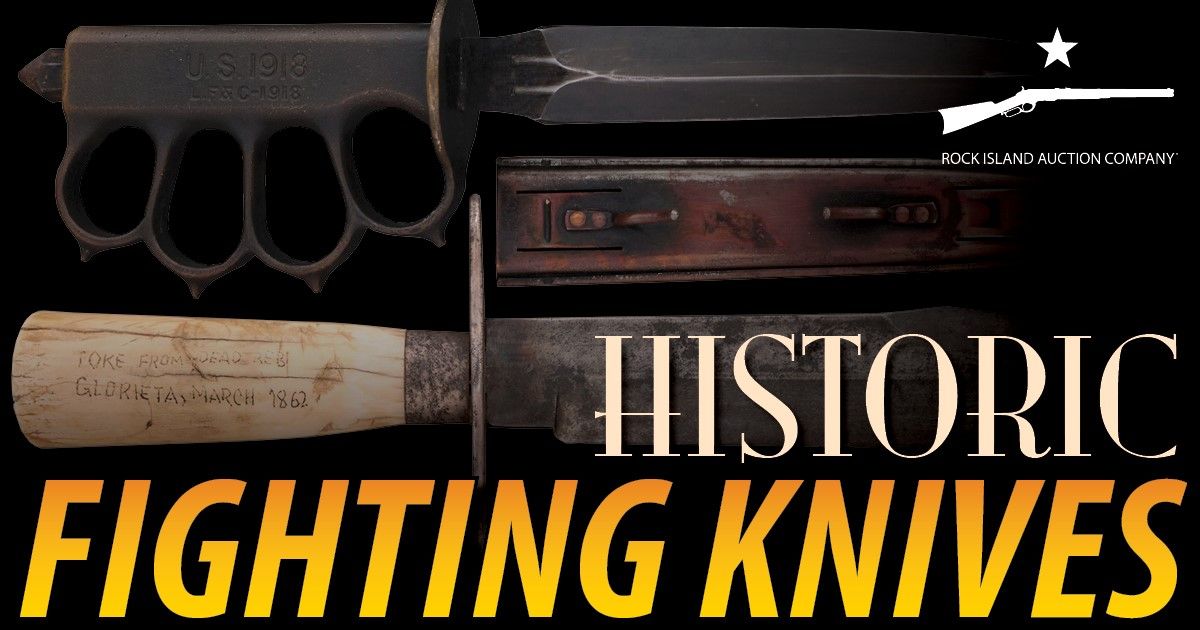
From Prussia to Florida and New Mexico Territory to the trenches of World War 1, knives serve both deadly and survival purposes in the west, the east, in war and in space.
Knives, whether they bear historic legacies or are beautifully conditioned, are fascinating pieces that don’t get the recognition of their counterparts often worn on the other hip. Take a look at this sampling of the historic fighting knife and survival knife options in Rock Island Auction Company’s Oct. 4-6 Sporting & Collector Auction.
Fighting Knife: O.S.S. Stiletto with Pancake Flipper Sheath
A conventional fighting weapon combined with a slightly peculiar twist is very appropriate for the Office of Strategic Services (OSS). The precursor to the Central Intelligence Agency, the World War 2 organization worked to disrupt the Axis war efforts from behind enemy lines and gather intelligence.
Spy weapons also seem to be imaginative, weird and fantastical, like the Liberator, pen gun and even “bat bombs,” but this stiletto is none of that. The no-nonsense knife is made of high grade steel in the style of a Fairbairn-Sykes double-edged fighting knife developed by the British and issued to its special forces.
The knife, with its course knurling, had been in production for about 18 months and by mid-1942 was considered the ideal knife for espionage activities and close combat encounters. Housewares company Landers, Frary & Clark landed the contract and in June 1942 began production on the initial order of 10,000 knives.
As a wartime austerity measure, the company used its same stamping process for the stiletto’s scabbard as it did with its household spatula. The pancake flipper scabbard can be worn high or low on the belt depending on how the user strung it through the slits. It could even be angled.
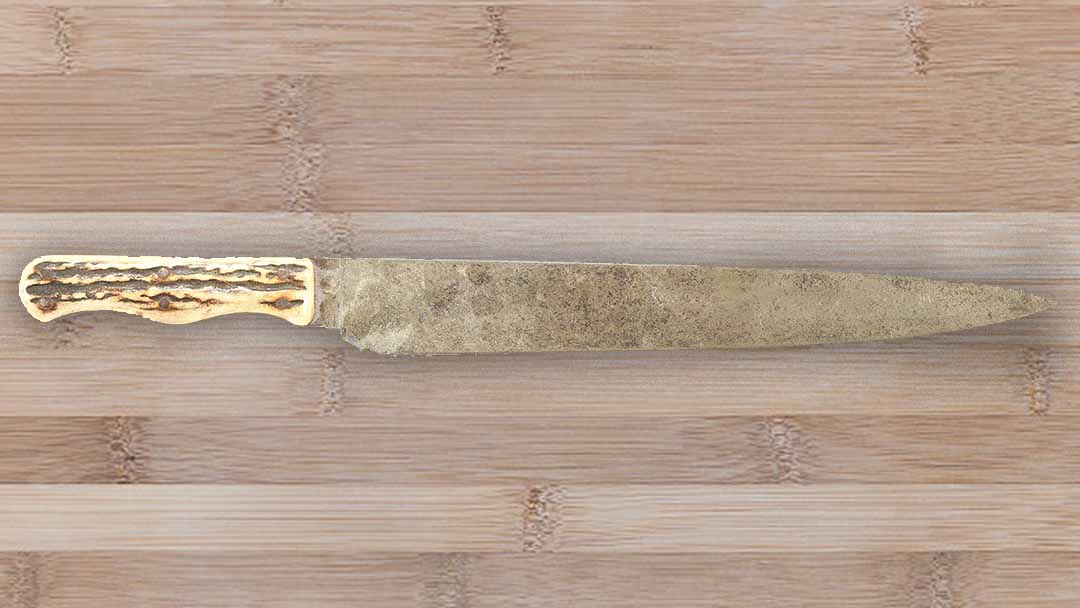
Fighting Knife: Civil War Era Stag-Handled Knife
Hand-to-hand fighting, when the musket has been fired and the enemy is closing in required a bayonet or a knife, ready for close quarters action. Though it wasn’t completely uncommon during the Civil War, hand-to-hand combat wasn’t the regular occurrence any number of films and television programs try to portray. While two-thirds of the Civil War’s dead came from disease, bayonets were responsible for less than 1 percent of casualties.
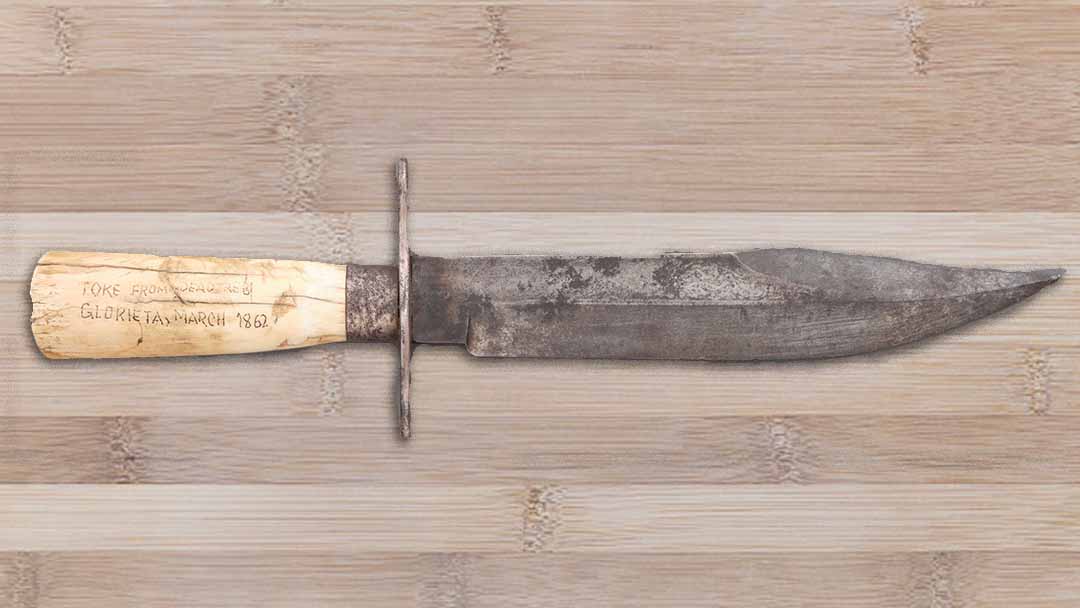
Fighting Knife: Silver-Mounted bone-handle Bowie Knife with foreboding Inscription
The Battle of Glorieta Pass was fought in New Mexico Territory in March 1862 and prevented the Confederacy from pushing into the West, especially California. Considered “The Gettysburg of the West,” Union and Confederate Forces met at this location on the Santa Fe Trail, fighting at elevations over 7,000 feet above sea level on rocky, forested terrain.
Confederate troops moved into New Mexico from Texas, and after failing to take a Union fort, pushed toward another fort but encountered Union troops along the trail. On the first day, March 26, the Union fended off the rebels taking about 70 prisoners. Both sides fell back sending for reinforcements that didn’t arrive until late in the afternoon of the following day. On March 28, while Confederate troops made a frontal assault on the Northerners, Union troops were flanking the rebels and reached their lightly guarded supply train, destroying it and running off or killing the horses and mules. Without supplies, the Confederates were forced to withdraw back to Texas and the threat to California was neutralized.
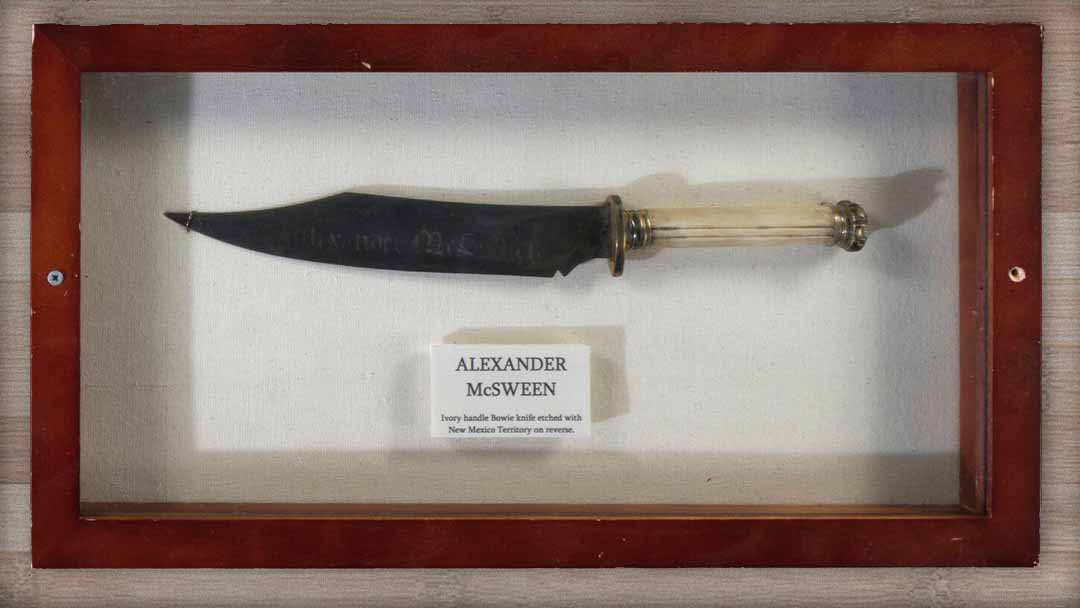
Survival Knife: Knives of Alexander McSween and James Dolan
Staying in the New Mexico Territory, Alexander McSween and James Dolan were among the main instigators of the Lincoln County War that made Billy the Kid, the Regulators and Pat Garrett famous. Dolan with partner Lawrence Murphy enjoyed a monopoly with the only store in Lincoln County, while McSween was an attorney who became business partners with John Tunstall and cattleman John Chisum to open their own store in Lincoln County.
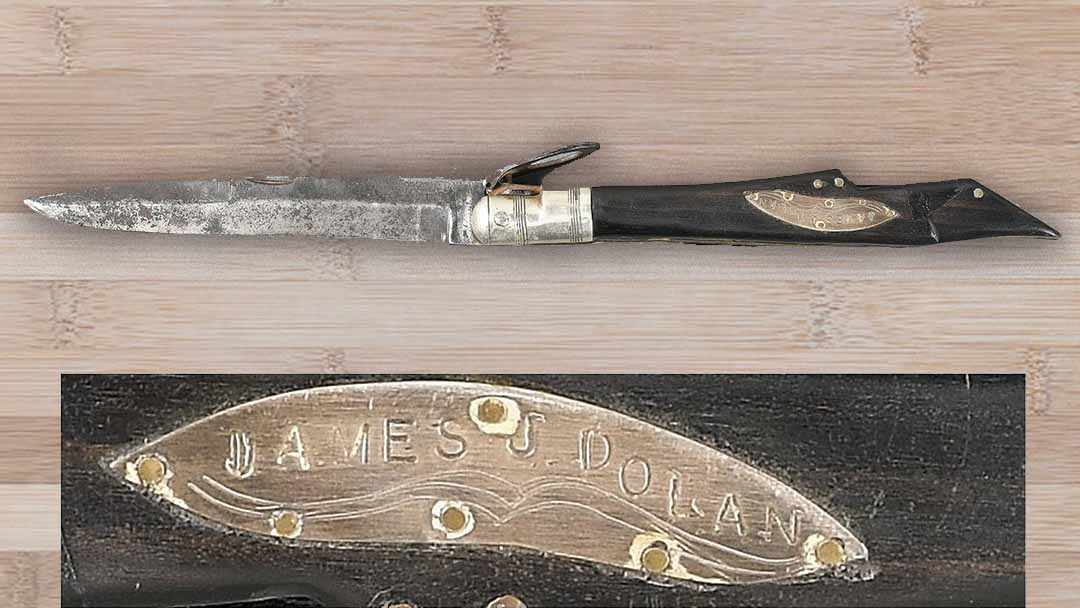
Over several months in 1878, accusations by Murphy and Dolan of embezzlement by McSween led to escalation of cattle rustling and the murder of Tunstall that grew into revenge killings and eventually a shootout between the Regulators and Dolan and Murphy’s men. Known as the days-long Battle of Lincoln that culminated on July 19, 1878, McSween was killed, ending the feud. Garrett became county sheriff two years later, killing two Regulators before hunting down Billy the Kid.
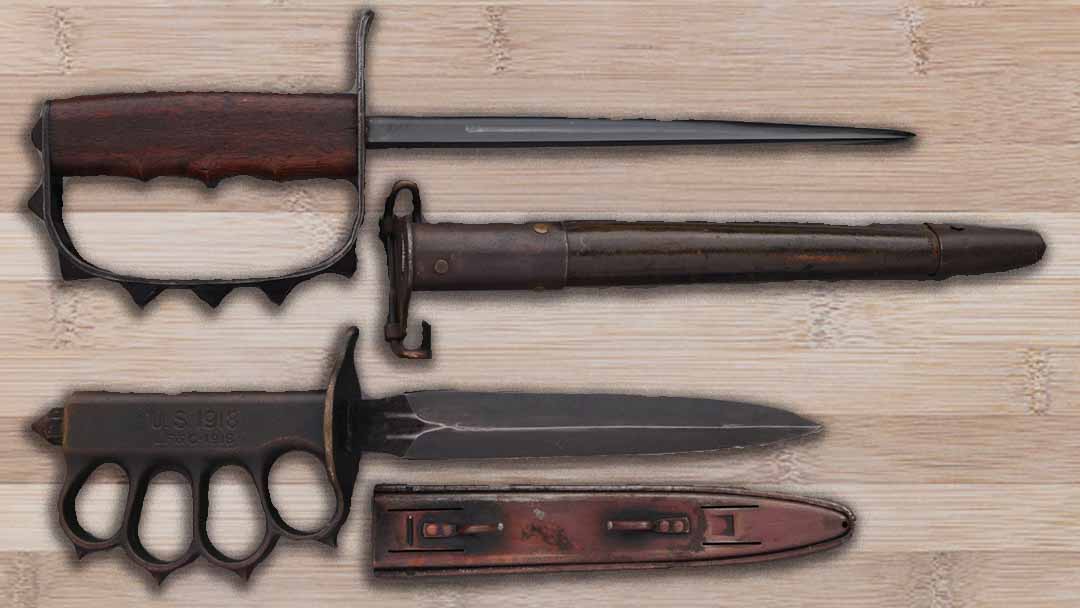
Fighting Knife: World War 1 Era Trench Knife
Made for close-in fighting during World War 1, trench knives could be used to strike, stab and slash enemies and were useless for general purpose use. The Model 1919 trench knife was also referred to as “knuckle dusters” for the brass knuckle grips incorporated into the knife’s hand guards. The U.S.-issued knives were made by the same company that would make the stilettos for the O.S.S., Landers, Frary & Clark, of New Britain, Conn.
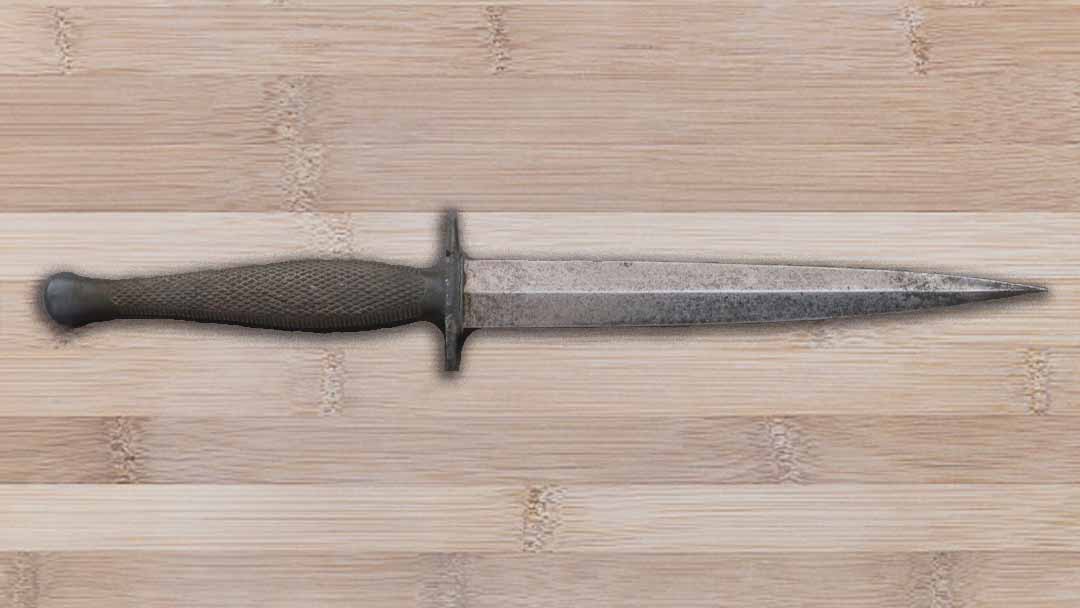
Fighting Knife: Camillus Cutlery U.S.M.C Raider Stiletto
Inspired by the Fairbairn-Sykes fighting knife used by the British commandos that trained at Achnacarry, Scotland in World War 2, the Marines’ knife, designed by Lt. Col. Clifford H. Shuey, avoid using high priority materials but that would lead to durability issues. The hilt was made of zinc aluminum alloy that, over time, the zinc leached out making the knife brittle.
The 14,370 knives were given priority to elite units like the 1st Marine Division and the 1st and Second Marine Raider Battalions that island-hopped through the Pacific Theater. The knife served capably as a silent killer but proved to be far too fragile for general use purposes so that it was eventually replaced in 1943 by the knife that became the legendary KA-BAR.
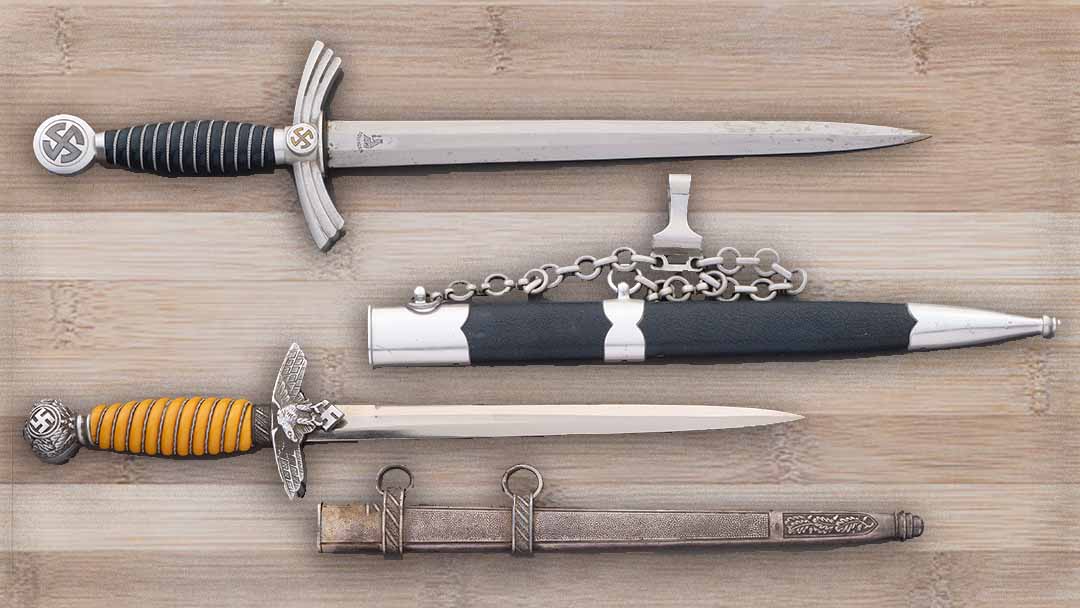
Fighting Knife? Luftwaffe Dress Daggers
Located near plentiful iron ore deposits, the Prussian city of Solingen, known for centuries as “the city of Swords” for its sword and dagger making, but after World War 1 its economy cratered. By the 1930s, with the rise of the Nazi Party, city leaders saw an opportunity. They took their pitch to German leaders – making presentation swords and daggers for Reich leaders.
Hitler and others liked the idea and the industry of Nazi presentation blades began with the first adopted in 1934 for members of the SA – Storm troopers. Other parts of the Nazi machine expressed interest and fell in line, including Herman Göring’s Luftwaffe that adopted its first model that same year.
It had a grip and scabbard of blue leather and the pommel. Crossguard and scabbard fittings were silver plated until later in the war when certain metals were scarce. The pommels and crossguards bore brass-colored swastikas on both sides; its blade length is 12 ¼-inches. The second model, adopted in 1937, was mandatory for commissioned officers and optional for other Luftwaffe personnel. The pommel and crossguard were cast in aluminum with a swastika on the pommel and the German eagle on the crossguard. This model’s blade was 10 1/4-inches.
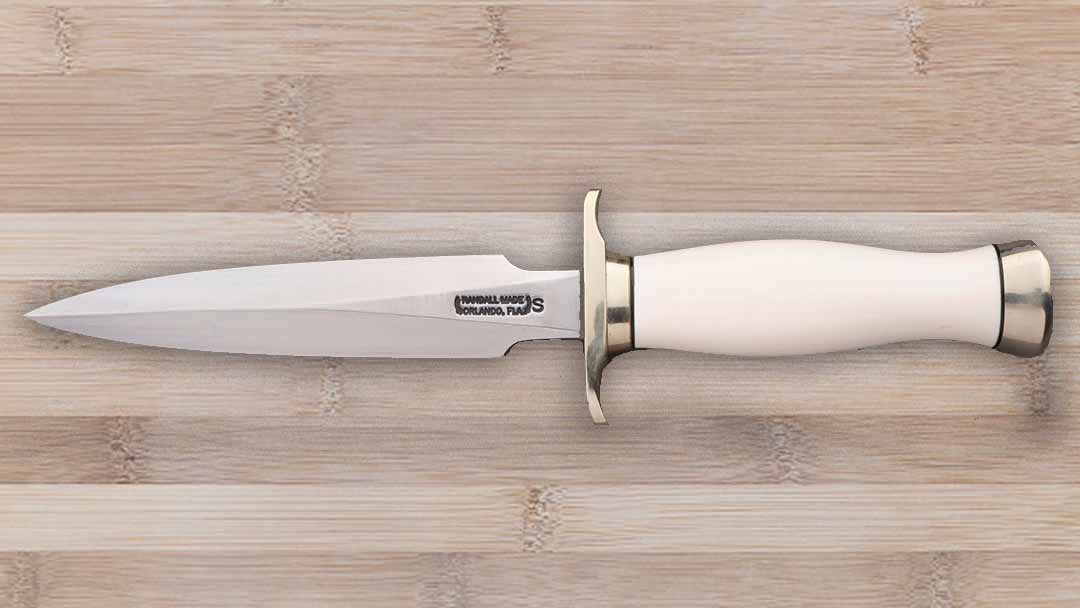
Fighting Knife: Randall Knives Model 2 Fighting Stilleto
W.D. “Bo” Randall first started making knives prior to WW2 to sell at his father-in-law’s clothing store in Orlando, Fla. The knives were popular and as the war broke out, he started getting requests for knives for hand-to-hand combat. His Model 1 was an “All-Purpose Fighter,” while the Model 2 was described as a “Fighting Stiletto.” He would receive order letters from GIs simply addressed to “Knife Man, Orlando.” He made about 1,000 knives for servicemen in World War 2.
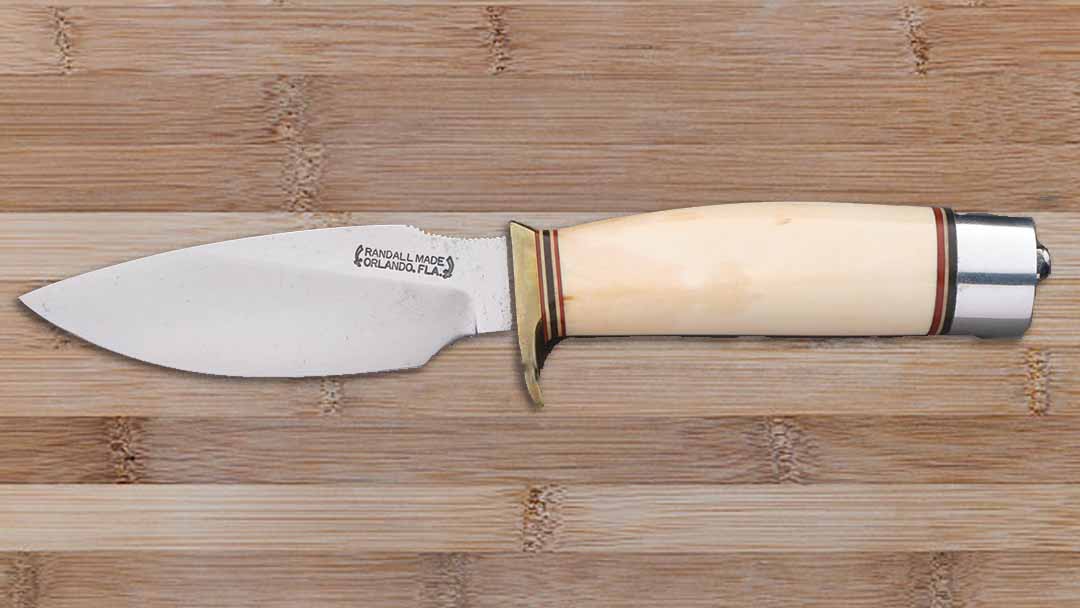
Survival Knife: Randall Knives Model 11 Alaska Skinner
Randall hired his first full-time employee shortly before the end of World War 2. Orders exploded following a feature on the company in “True” magazine and the backlog began. The company’s website states that demand is so high a new order will take six years to fill.
Alaskan guide Tommy Thompson designed the Model 11 Alaska Skinner Randall Knife in 1952 for skinning big game. The blade point is dropped below the top of the blade to prevent cutting too deeply when used point first.
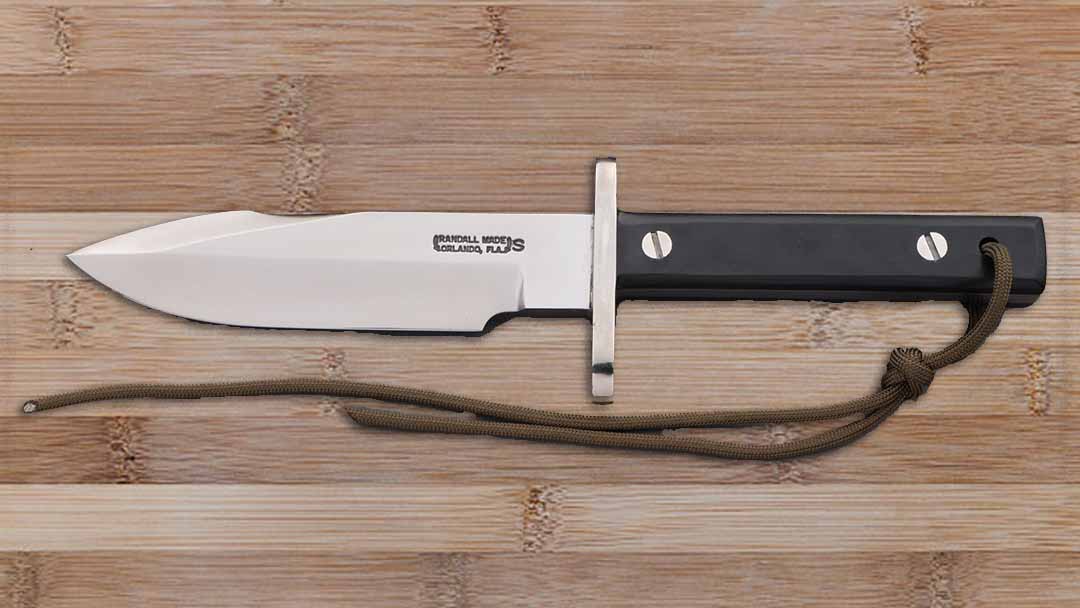
Survival Knife: Randal Knives Model 17 Astro
In the early 1960s, NASA contacted Randall about making survival knives for the seven Mercury astronauts. Randall designed the blade to cut through the spacesuit material and a large handguard to allow its use while wearing gloves. The knives were aboard each Mercury Mission, including Gus Grissom’s Liberty Bell 7 that sank in the Atlantic Ocean, nearly sending him with it. When the capsule was recovered in 1999, Grissom’s knife was inside and still serviceable after a good cleaning.
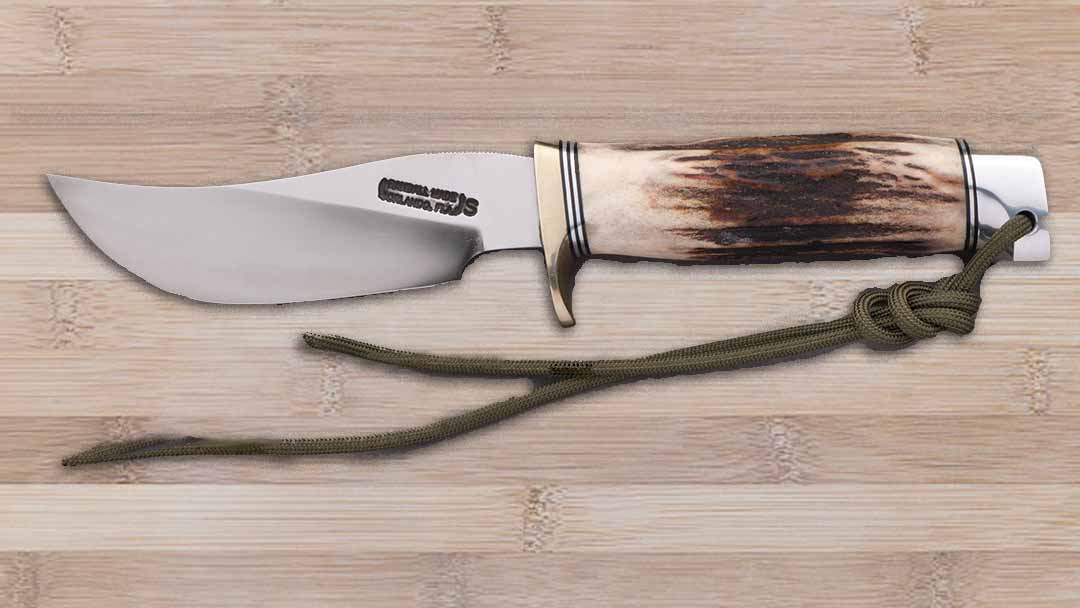
Survival Knife: Randall Knives Model 22 Outdoorsman
About 8,000 Randall knives are produced each year through its 17-step process that includes heating the blade to 1,950 degrees to shape and harden it and then refining the blade, shaping and smoothing it, fitting the handle and polishing it and sharpening it multiple times.
Fighting Knife: Gerber Mk. II
In Vietnam, like other wars, soldiers carried knives that often gave them a reminder of home, personal identity or individuality. That is how Randall Knives, folding knives and other blades made their way to the front lines along with military issued knives like the Gerber Mk. II. Based on the Scottish dirk with a stiletto-type blade, the Mk. II was popular in Vietnam, but military PXs stopped carrying them in the 1970s because of their brutal looks.
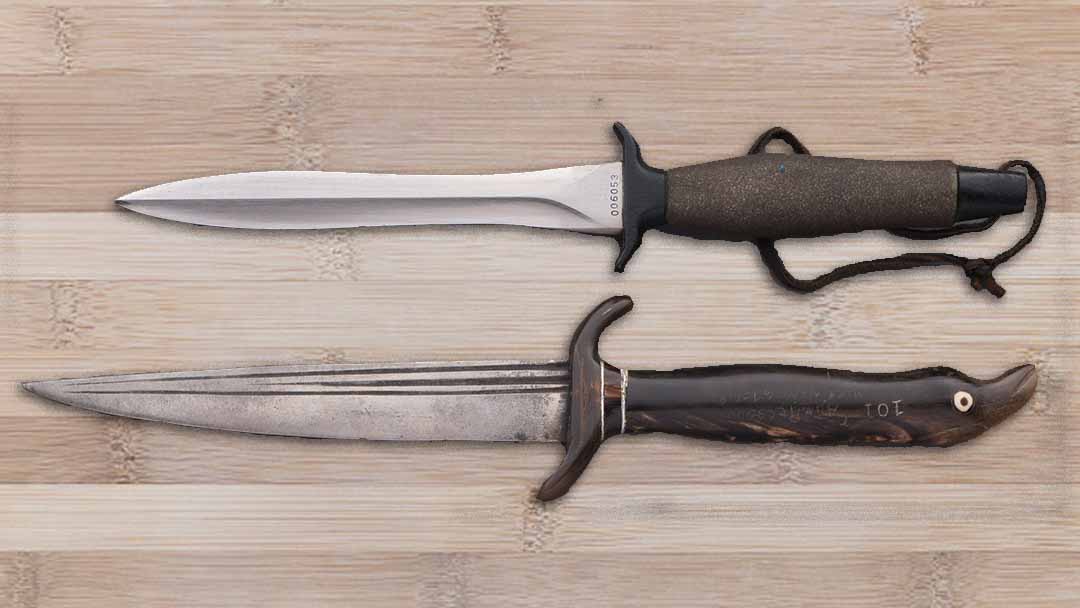
Fighting and Survival Knives for Sale
Guns may get the glory, but through history, knives have served as important tools, whether it was waging war, forging life on the frontier or rocketing into space. Knives that have served a number of purposes can range from rugged to refined, and Rock Island Auction Company has a range of offerings in its Oct. 4-6 Sporting & Collector Auction.