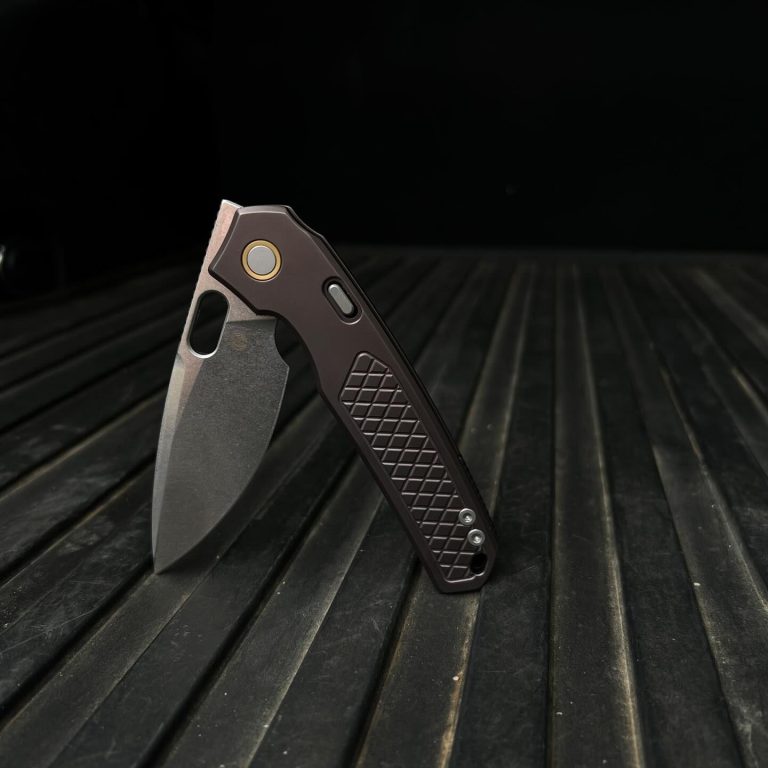
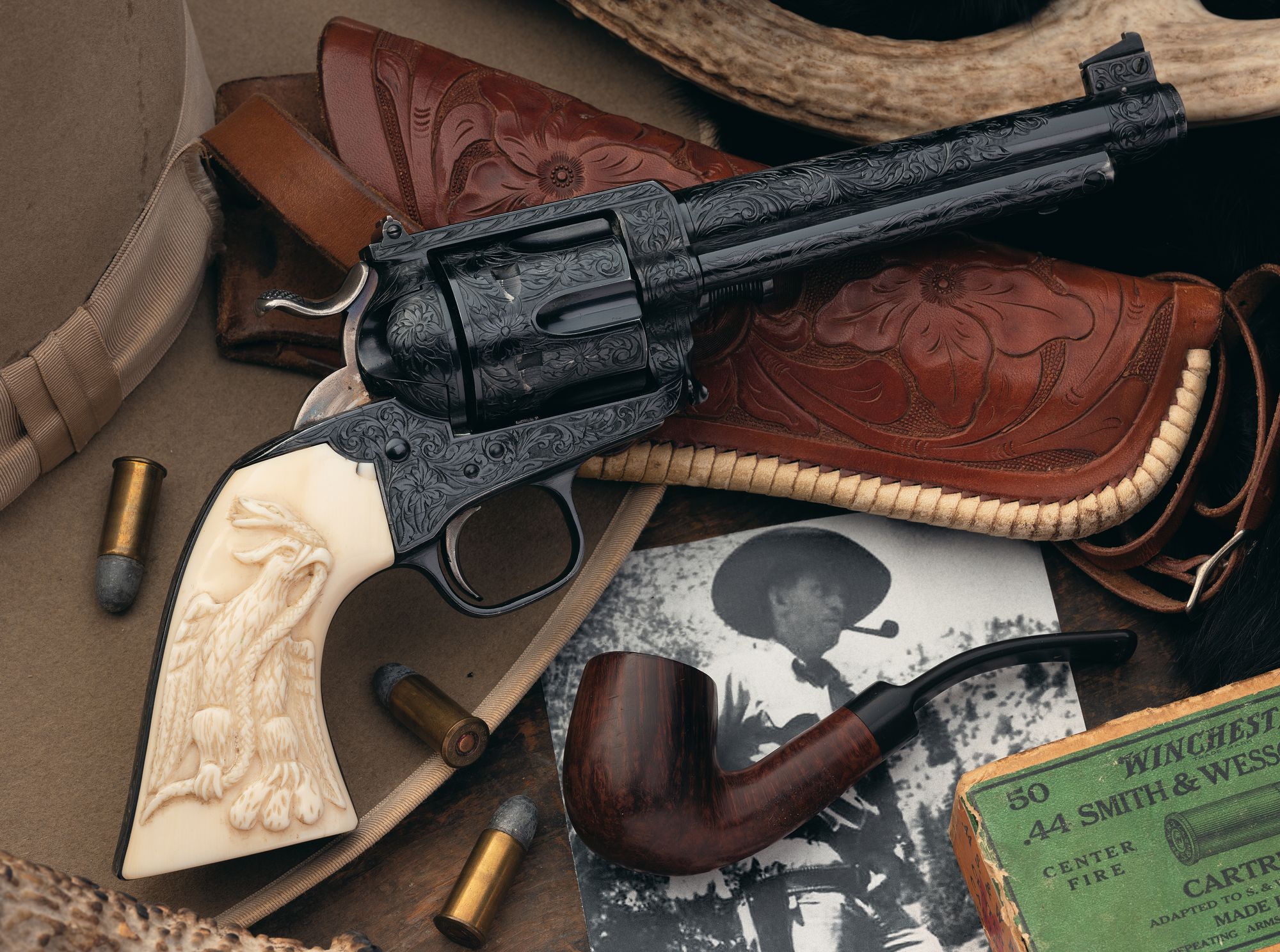
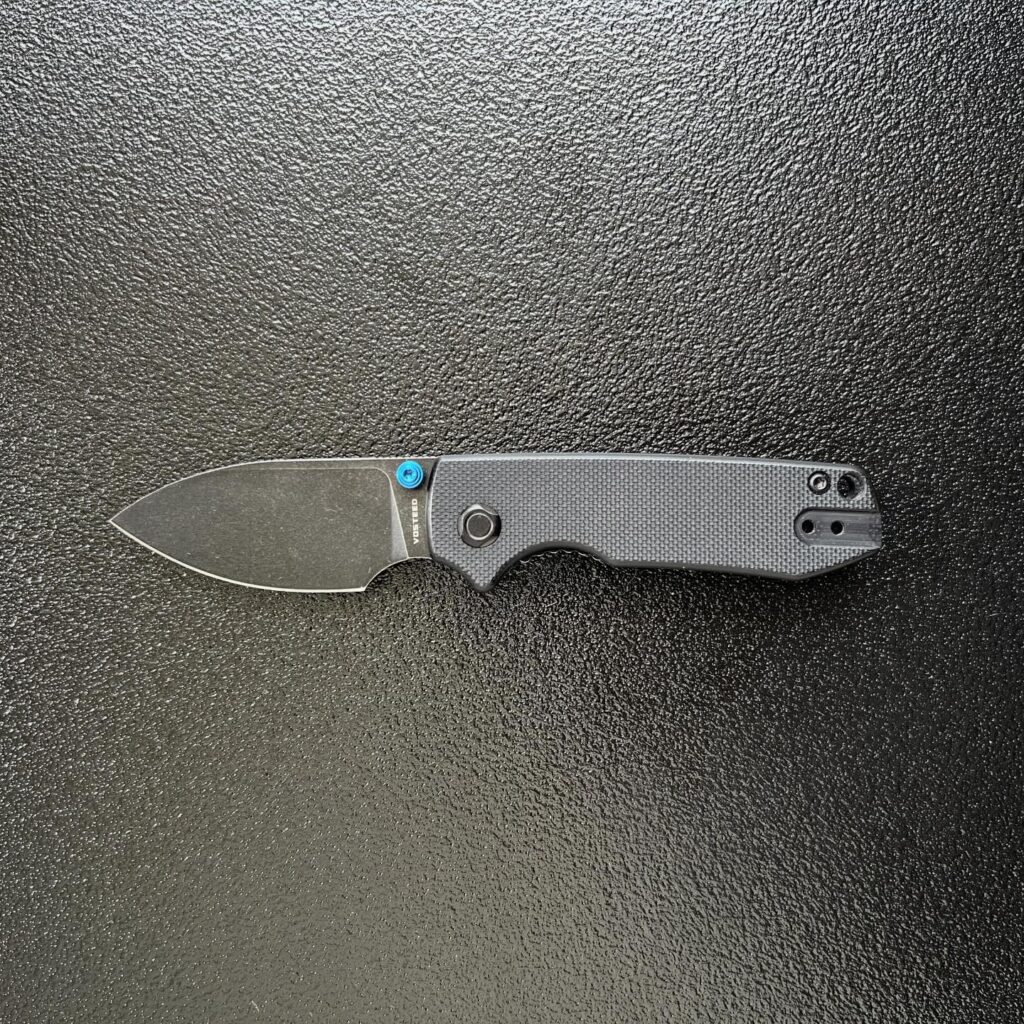
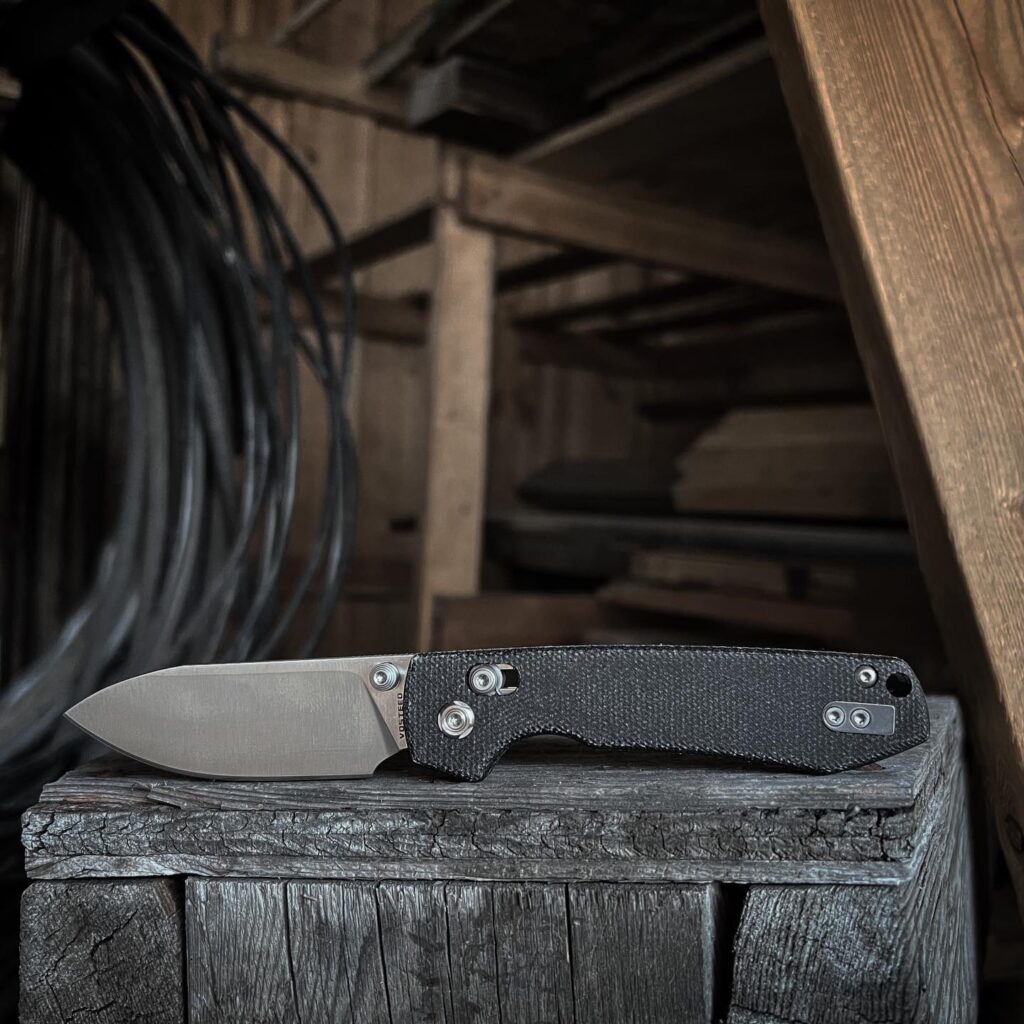
The Vosteed Psyop is a design collaboration between Vosteed and Tuffknives. It sits at the premium end of the Vosteed lineup and, to me, is their flagship knife. Its a showcase of the kind of design, materials, and cache that Vosteed can bring at very competitive price.
Specs
Blade Length:3.32″ | 84.40 mm
Overall Length:8.01″ | 203.50mm
Blade Width:1.22″ | 31.00 mm
Blade Thickness:0.138″ | 3.50 mm
Blade Material:Elmax
Blade Grind:Flat
Blade Style:Drop Point
Blade Finish:Stonewash
Hardness:HRC 60±1
Handle Length:4.70″ | 119.40 mm
Handle Width:0.94″ | 24.00 mm
Handle Thickness:0.500″ | 12.70 mm
Handle Material:Titanium
Weight:4.66 oz | 132.00 g
Opener:Thumb Hole | Front Flipper
Lock Type:Top Liner Lock
Pivot Assembly:Caged Ceramic Ball Bearing
Pocket Clip:Non-reversible Titanium
Carry Position:Tip-up
Knife Type:Manual Folding
Backspacer Material:Titanium
Designer:Geoff Blauvelt (Tuffknives)
Observations from Use
If you are familiar with Tuffknives’ work, you can’t miss his influence here. There are also some distinctly Vosteed touches like the well-executed, multiple opening methods and large finger-choil. I think it’s a great-looking knife.
Vosteed’s Top Liner Lock is a great choice here. One, it’s more than strong enough to be a stout knife like this. Two, it has a small footprint that keeps it out of the way of the design. If you haven’t tried one of these locks yet, you need to. It has the crisp detent of something like a liner lock but the ease of use of a button lock. It’s my favorite knife lock right now.
The blade shape that Tuffknives designed for this offering is great. It plenty pointy thanks to a gradual drop at the spine and long swedge grind. The primary flat grind is very tall and renders the sweeping, curved edge very thin behind the secondary grind. Vosteed has a handle on cutting geometry and it shows here.
The titanium handles on the Psyop offer solid grip thanks to their machined checkering pattern. The finish Vosteed uses also has a subtle tacky feel. Speaking of the finish, my review sample has their new subtle purple color that looks amazing. It’s a subdued, almost bronze color that reminds me a little of the Russian plumb furniture found on AKMs.
I’m pretty impressed with the value proposition of this knife. If you are the type who will never spend more than $20 on a knife, skip ahead a bit. For everyone else, check the spec sheet including Ti scales, Elmax steel, and a very well-known design collaboration. It is a very competitively priced knife at $250 if you can find it in stock.
So who won’t like this knife? Well, it isn’t a very light or compact knife so if you wear slacks daily it may not be your first choice. If you don’t like large finger choils, you probably won’t like this.
Wrap Up
The Psyop is a flagship knife for Vosteed and, while it is not cheap, it is an excellent value. It’s comfortable to use, bull-strong, and dripping with premium features. If you are looking for the slimmest, lightest, most compact EDC… it ain’t this. If you are looking for a premium knife with some gravity, the Psyop has to be in contention.
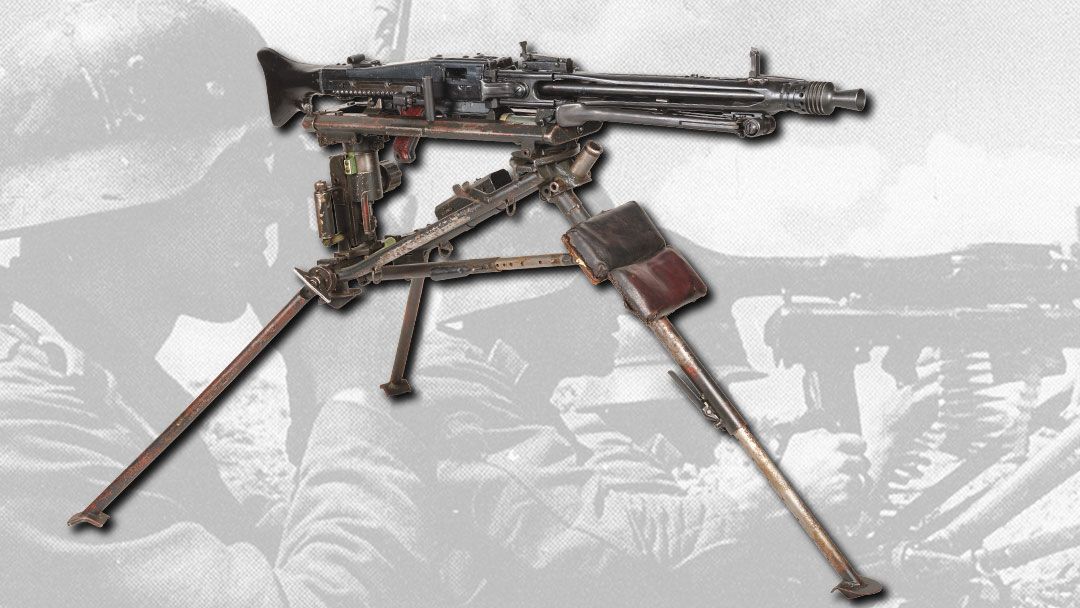
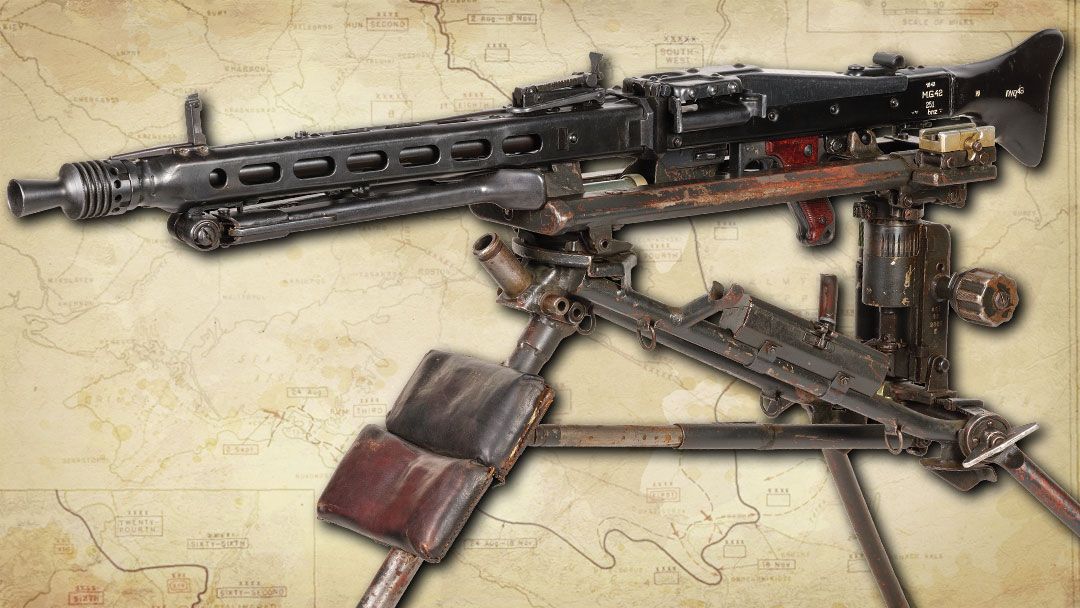
One of the signature weapons of WW2, the MG42 machine gun combined portability with a devastating rate of fire. The infamous German machine gun dominated the battlefield, proved immensely influential on post-war machine gun design, and has become one of the most coveted arms for today’s military collectors.
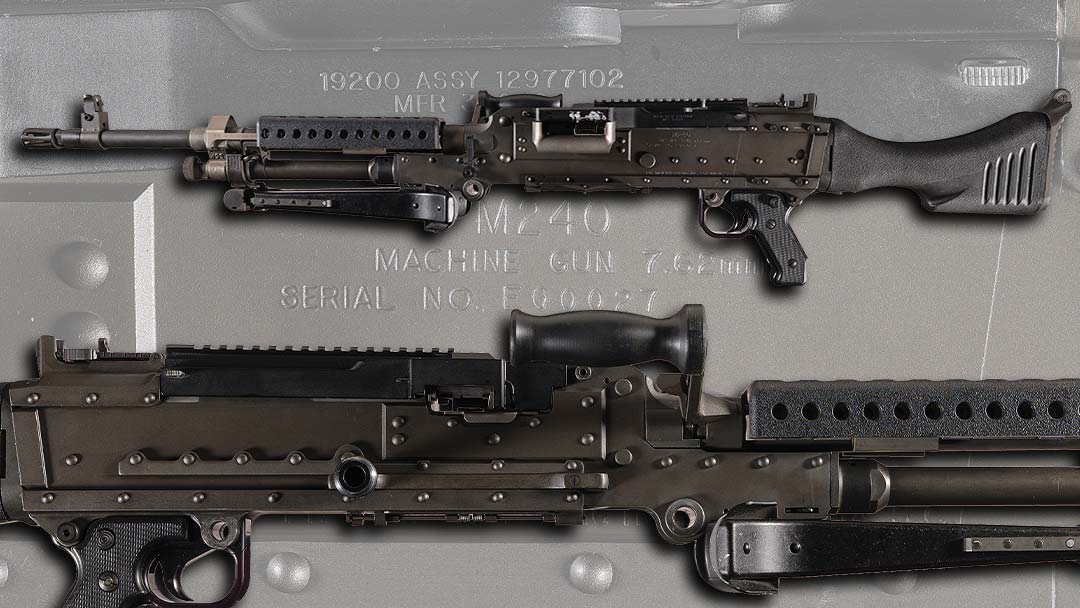
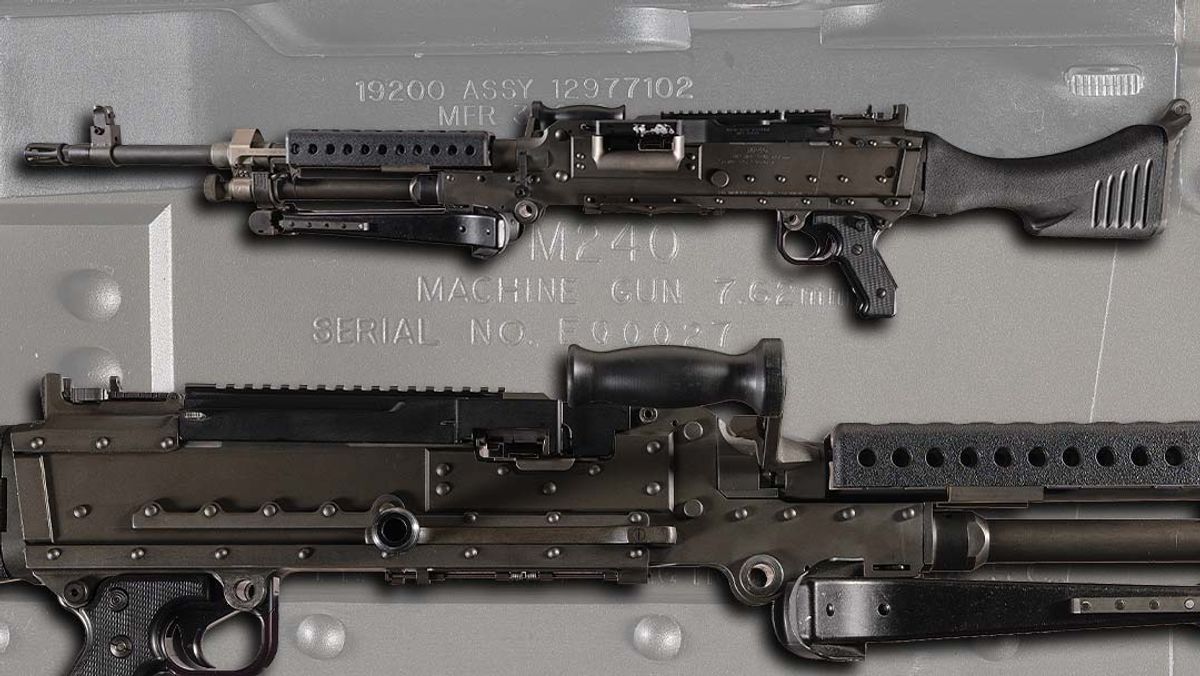
Whether you’re in the market for an MG42, an StG44, a Stoner 63, or a crown jewel rarity like the M240, machine gun lovers will find a treasure trove of Class III collectibles at RIAC’s December 6 – 8 Premier Firearms Auction inBedford, Texas. Click on the images throughout the article to learn more about each model.
An M240 general purpose medium machine gun, a crown jewel of arms collecting. Available this December.
The MG34 Universal Machine Gun
Introduced prior to WW2, the Maschinengewehr 34 was developed from the earlier MG30 light machine gun. The German Ministry of the Reichswehr desired a universal machine gun that could fill numerous roles, from LMG, HMG, vehicle gun, and anti-aircraft gun. The MG34’s design was refined by noted arms engineer Heinrich Vollmer of Mauser, and the machine gun went into production in 1936.
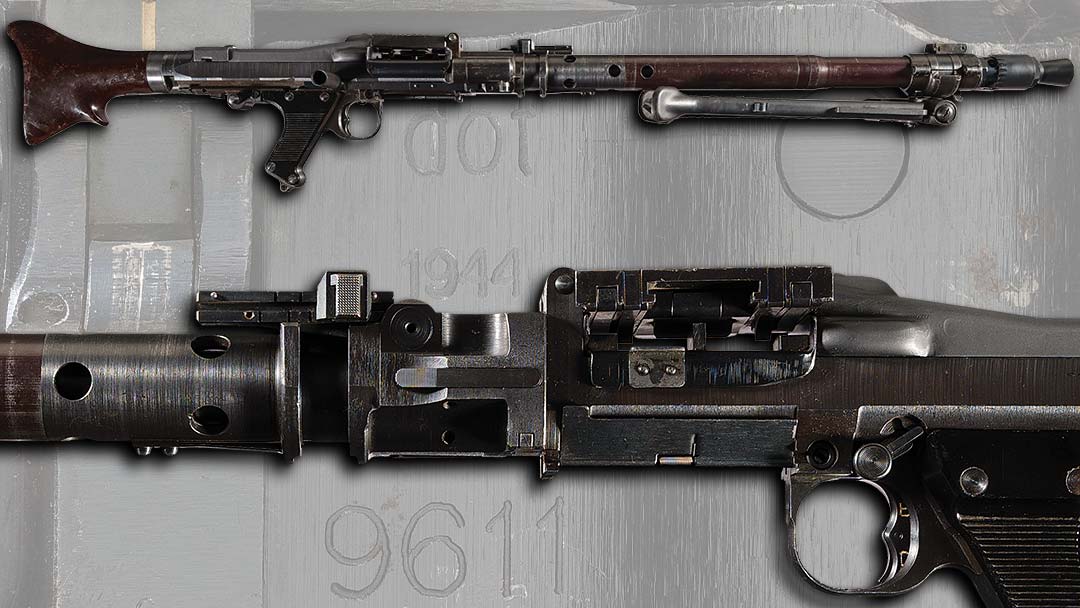
An MG34 machine gun for sale this December. The installed barrel housing is marked “dot/1941/9611/a” with matching numbers on multiple components.
The MG34, chambered in 7.92x57mm Mauser, became the backbone of the German infantry squad early in the war and the go-to weapon for defending fortifications and armored vehicles. Crafted of high-grade milled steel and engineered with tight tolerances, the machine gun proved slow to manufacture and required extensive upkeep to maintain. The German Wehrmacht sought out a successor that could be produced more quickly and was better equipped to endure the elements and the rigors of combat.
This MG34 includes two extra barrels, a barrel case, an ammo can with Finnish Army “SA” stenciling, and lengths of non-disintegrating metal link belts. Available this December.
Who Invented the MG42?
In early 1937, the German Army Weapons Agency sought proposals from manufacturers for a stamped steel universal machine gun. The Johannes Großfuß Metal and Lacquerware Factory, experienced with sheet metal production, assigned engineer Werner Gruner to develop a prototype.
Though the company had no prior background in small arms, their expertise in mass production combined with Dr. Gruner’s ability to quickly familiarize himself with machine gun mechanics added up to a winning design.
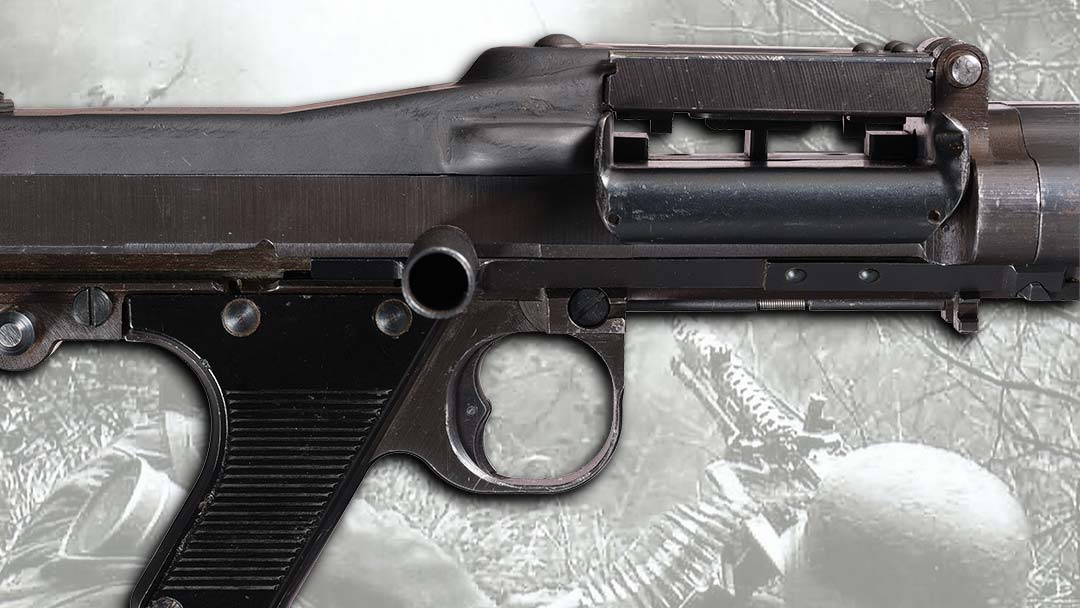
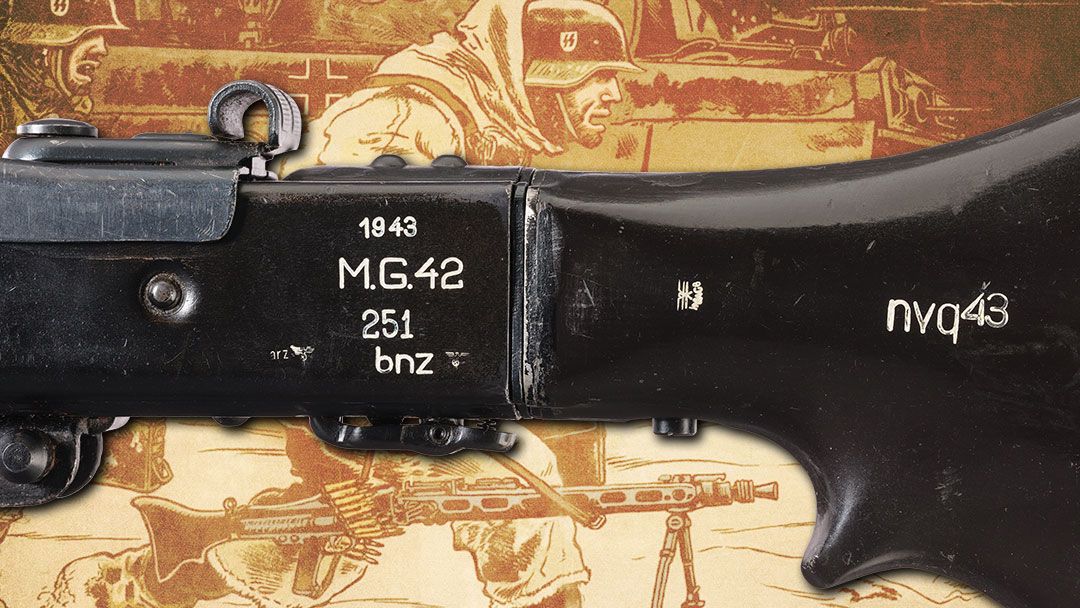
The MG42 was invented by German engineer Werner Gruner. This Steyr manufactured example is available this December.
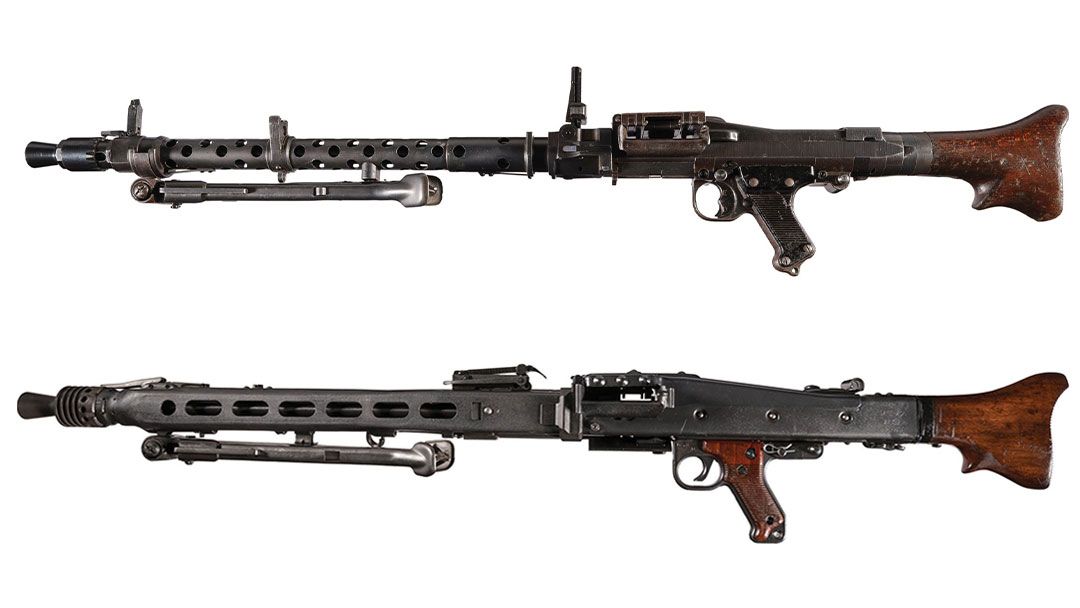
MG34 vs MG42
The Maschinengewehr 42 employed stamped hardened carbon steel metal for its main components that could be welded or riveted together, lessening the time and amount of high skilled labor and hand fitting required for machining and assembly. The design also minimized the use of expensive alloyed steels that were scarce in wartime Germany.
Where the MG34 required up to 150 man hours to assemble, the MG42 could be produced in nearly half the time. The resulting machine gun was slightly longer and lighter than its predecessor, weighing 25 1/2 pounds unloaded.
The MG34 (top) and the MG42 (bottom).
When was the MG42 Made?
The MG42 entered production in 1942, with the German Africa Corps being issued the weapon in May. By years end, over 17,000 MG42 machine guns had been produced, and the weapon was deployed to every German battlefront.
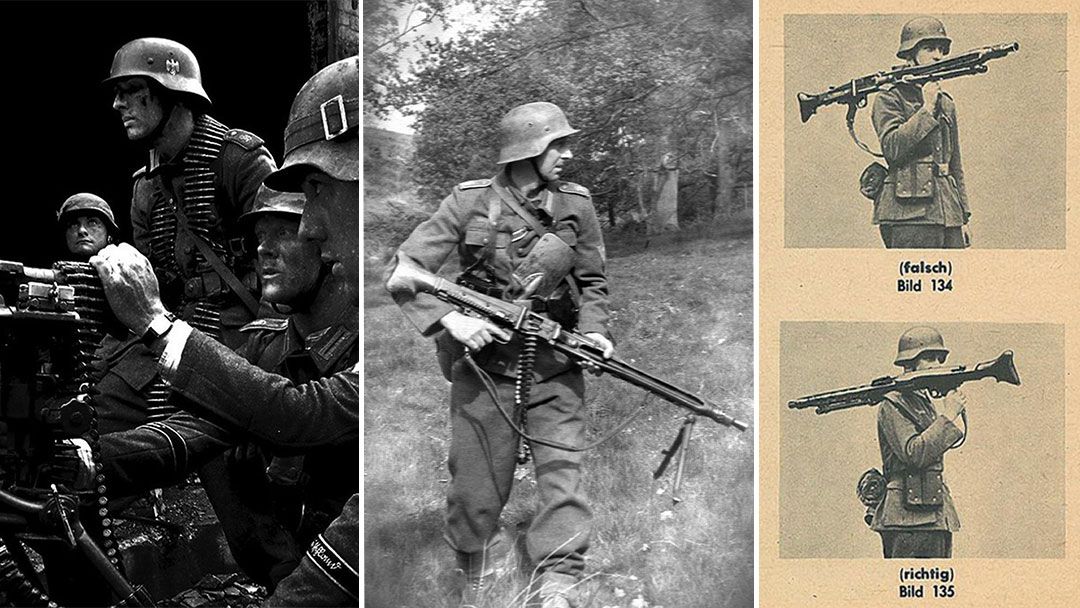
Like the MG34, the MG42 filled numerous roles, allowing for rapid tactical movement from a bipod or mounted on a sturdy folding tripod to providing support fire. Though intended to be operated from a fixed position, the weapon was maneuverable enough to be shoulder fired or fired from the hip in rare defensive situations. The MG42’s compact design also made the platform an ideal option for gun emplacements and vehicle use such as a coaxial weapon in German tank turrets.
Though the MG42 was a squad machine gun, some German machine gunners were trained in the Sturmfeuer technique, or “storm fire,” a triangle stance where the body weight is shifted to the front leg.
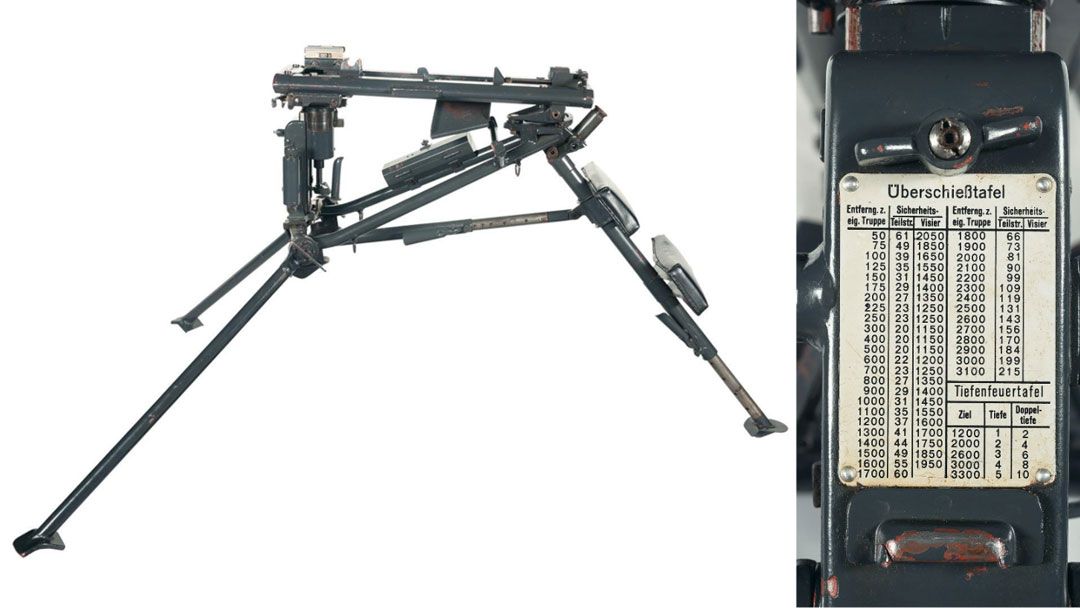
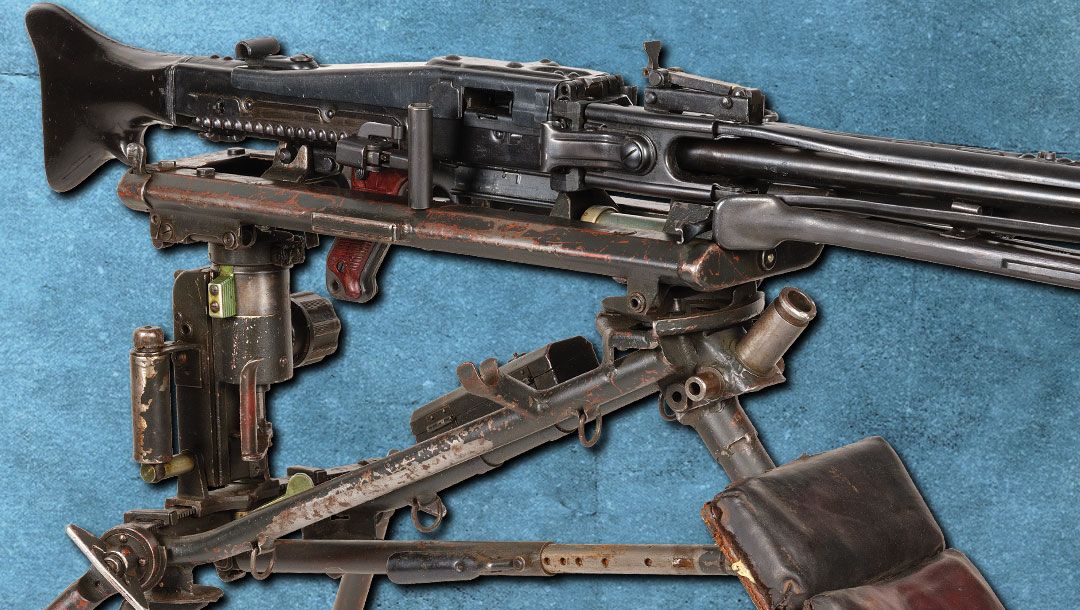
The MG42 tripod weighed over 50 pounds and was typically carried by an assistant gunner, while other squad members carried spare barrels and ammunition. The tripod included an optics mount, sighting equipment, and an advanced T&E mechanism. A telescopic base and extending legs provided increased ground clearance for sustained fire, and an integral recoil buffer aided in accuracy. The tripod could be adapted to accommodate a pintle mount that allowed the MG42 to serve in an anti-aircraft role.
This WW2-era MG42 tripod includes a range chart on the rear of the base and a pair of leather pads on the front leg.
MG42 Fire Rate
The air-cooled, short-recoil-operated MG42 quickly earned a fearsome reputation on the battlefield thanks to Dr. Gruner’s delayed roller-block bolt locking system, which enabled a firing rate of more than 1,200 rounds per minute. This left the American M1919A4 Browning and British Vickers in the dust, which struggled to achieve 600 rounds per minute. Launching such a high volume of 7.92x57mm Mauser rounds at a muzzle velocity of nearly 2,500 feet per second created a formidable presence on the battlefield, though this blistering cyclic rate came at a cost.
The MG42 barrel change system was swift and simple, keeping the machine gun in the fight for the long haul. Available this December.
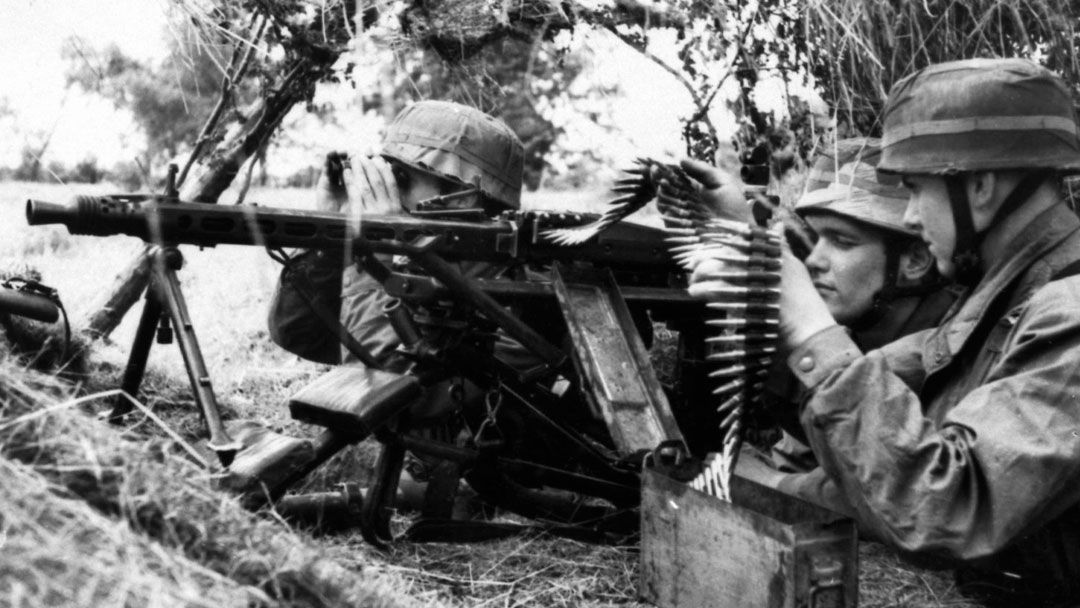
This belt-fed beast burned through ammo and tended to overheat quickly. An MG42 barrel was typically swapped out after 250 rounds to avoid warping and prevent cook-offs. German machine gun squads carried up to six spare barrels and were trained to switch them out in under 7 seconds without any tools apart from hot mitts, one of the fastest barrel-change systems of the period. Gunners were trained to use short burst fire rather than hosepiping to maximize combat efficiency during prolonged engagements.
What was the Nickname for the MG42?
The MG42’s high cyclic rate gave it a distinct and intimidating sound, very alien to allied troops trained around slower-firing weapons. The German machine gun’s scorching speed meant that individual shots were replaced with a steady, disturbing roar. Some British soldiers called the MG42 “Calico-tearer.” Russian troops dubbed the gun “the Linoleum Ripper.”
Fighting alongside the Allies, the Brazilian Expeditionary Forces, “The Smoking Snakes,” dubbed the MG42 “Lourdinha.” The nickname was inspired by the fiancé of one of the soldiers, as the sound of the gun reminded him of her sewing machine.
The most popular nickname for the MG42 among American GIs was likely derived from one of the weapon’s German monikers, the “Knochensäge”, or “bone saw.” In the December 20, 1943 issue of ‘The Kansas City Star,’ a story titled ‘ALLIED SOLDIERS USE CAPTURED BUZZ-SAW MACHINE GUNS’ described the MG42 as “a high-speed machine gun which fires 1,100 rounds per minute and sounds like a super buzz-saw,” later adding, “It’s fire power is so terrific that it has been known to cut men in two.”
“Hitler’s Buzzsaw” was such a terror in the field that the United States War Department produced a training film to combat the machine gun’s psychological effect on soldiers titled ‘Automatic Weapons: American vs. German.’
The film’s narrator downplayed the MG42’s lethality while calling the weapon inaccurate, assuring his naïve audience that “The German gun is good, but ours is better.” The narrator claims that the Americans have opted for guns that shoot slower but more accurately, asserting that the MG42 eats up ammunition almost three times as fast and requires more troopers to carry ammo. The film concludes, “Their automatic weapons may fire fast, but if you know your stuff you can stop ’em cold. Remember, their bark is worse than their bite.”
Troops who faced the MG42 quickly learned to respect the deadly German machine gun and wait for their enemies to change barrels, to run out of ammo, or for artillery or tank support to deal with the dreaded menace.
The MG42 was a terror on the European battlefield.
In his memoir, ‘Not All of Us Were Brave,’ Private Stanley Scislowski of the Canadian Unit D Company, Perth Regiment, describes the reputation the MG42 developed with his 11th Infantry Brigade. As Scislowski recounts, “Brens could only push out a maximum 540 rounds per minute, while the MG 34 delivered eight to nine hundred, 42 could spit out twelve hundred. Someone somewhere on the battlefield came up with the term “rubber gun” for the Jerry MGs – an apt name, but nonetheless that’s what we came to know them until the more descriptive term “cheese-cutter” took over. By whatever name we called it, the Jerry machine-gun was a weapon to be feared.
MG42 in the Field
Mass production techniques allowed German factories to produce well over 400,000 MG42 machine guns by war’s end, 50,000 more than its MG34 predecessor. The MG42 was primarily manufactured by Mauser, Maget of Berlin, Gustloff-Werkes, and Steyr.
Allied infantry doctrine often centered on the rifleman spearheading assaults, with support fire provided by the machine gun. The mobility and overwhelming firepower of the MG42 allowed the German Wehrmacht to instead place the machine gun at the heart of their assault tactics. Six-man machine gun crews were dispatched where manpower allowed, with multiple riflemen in supporting roles. The MG42 could be effectively operated with three men when necessary: a gunner, a loader, and a spotter.
The Allies faced the MG42 on every major European battlefield after its introduction in 1942. In ‘Machine Guns: An Illustrated History of Their Impact,’ author James H. Willbanks notes how the MG42 served even more effectively as defensive platform. The gun’s highest year of production was in 1944, when Germany was defending on all fronts.
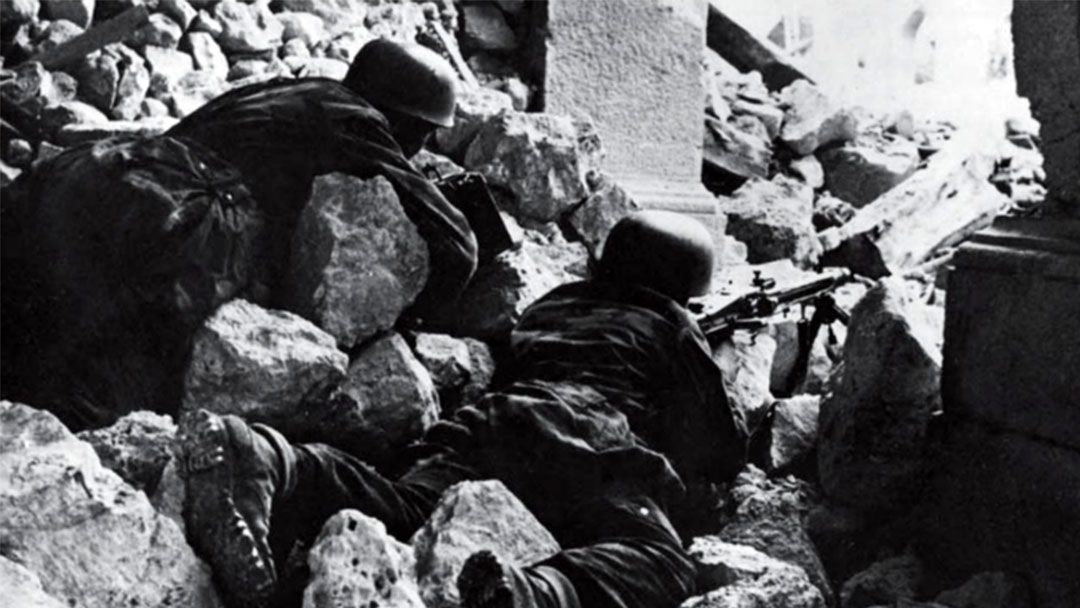
The Fallschimjager deploy their MG42 in the rubble of Monte Cassino
During Operation Avalanche, the Allied invasion of Italy, the Germans held Monte Cassino for about four months using the MG42 to repel assaults. The MG42 presented an equally terrifying opponent to the Allies on D-Day. In his memoir, ‘WN 62: A German Soldier’s Memories of the Defense of Omaha Beach, Normandy, June 6, 1944,’ Private Heinrich Severloh claims to have fired 13,500 rounds with his MG42, earning the title ‘The Beast of Omaha’.
Is the MG42 Still In Service?
In the post war years, the MG42 influenced numerous next generation firearms. Its direct successor was introduced in 1958 with the MG1, an MG42 chambered in 7.62mm NATO. The MG1 saw several upgrades, notably the MG3 in 1966, which has become one of the most produced machine guns in history.
In the late 1940s, the U.S. Army tested the MG42 and incorporated several design elements into the T44 machine gun prototype, including a quick barrel release the MG42’s ammunition belt-fed mechanism. The prototype’s firing action was inspired by the German FG42 paratrooper rifle.
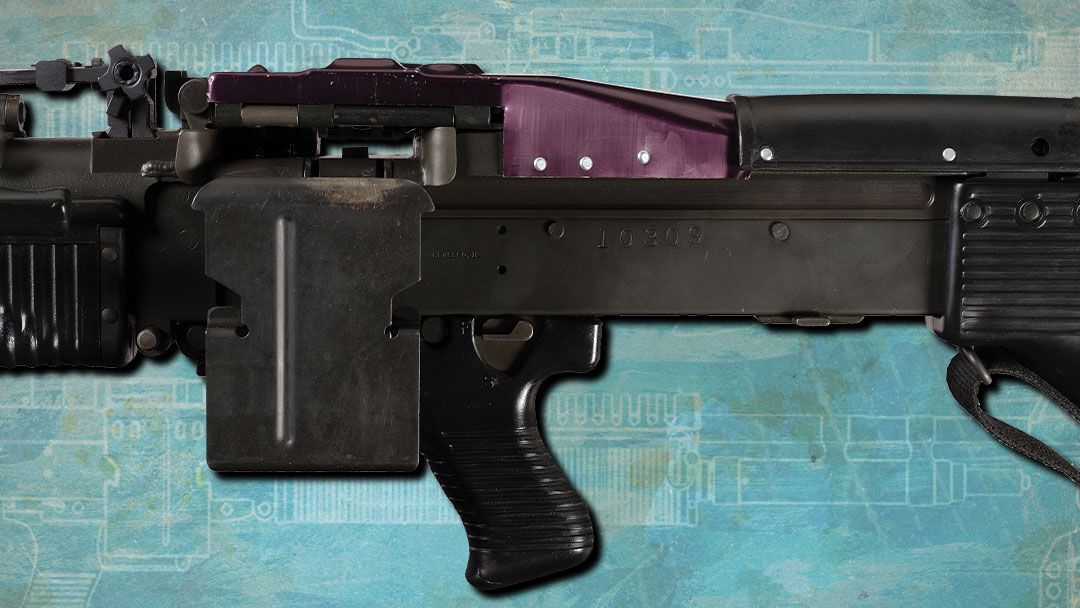
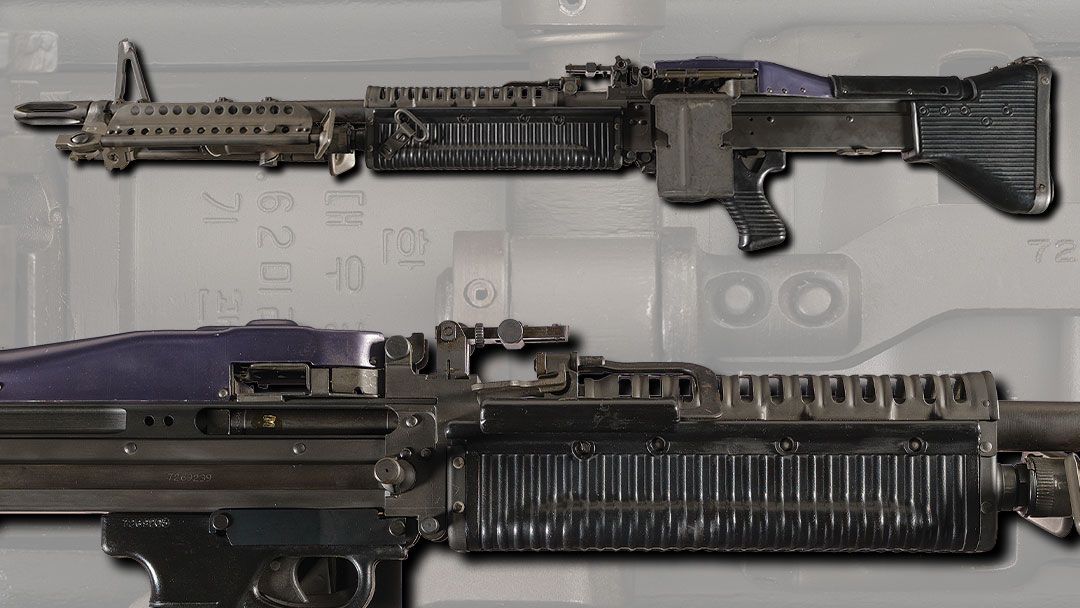
Some elements of the M60 were inspired by the MG42. This Rock Island Armory M60 is available this December.
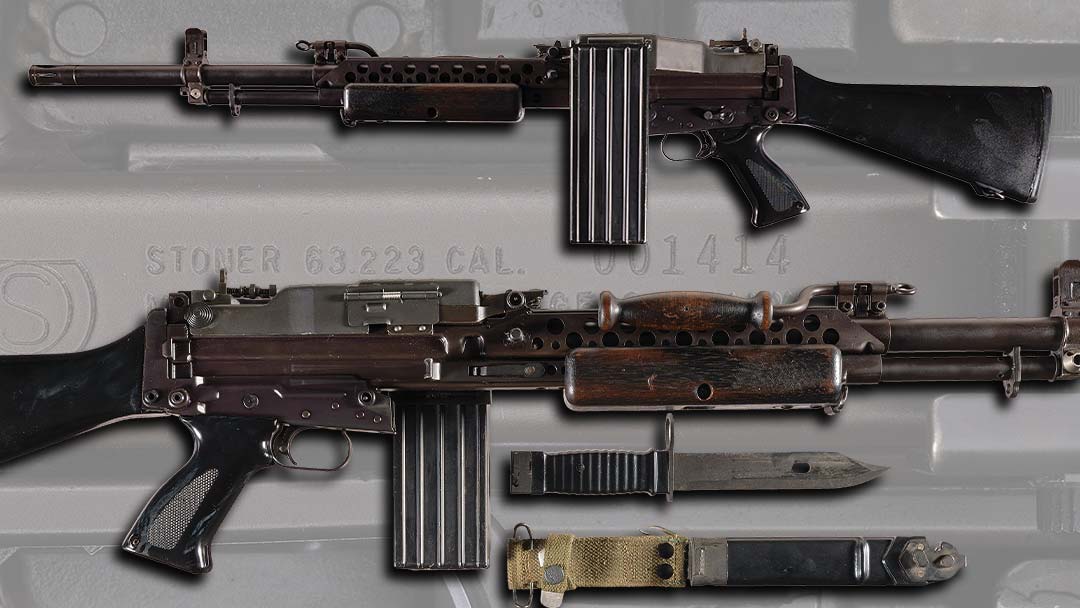
The T161E3, or what would become the M60 machine gun, was America’s attempt to develop its own squad automatic weapon and replace the aging BAR and 1919A6 Browning. Many other firearms have taken cues from the MG42, including the Stoner 63 with its quick change barrel system, feed tray, and top cover.
A Cadillac-Gage Stoner 63 modular belt-fed light machine gun, previously registered to the Gross Pointe Shores, Michigan Police Department. Includes a bayonet, two extra barrels, a magazine loader, and accessories. Available this December.
How Much is an MG42?
Machine gun prices have been trending strong at Rock Island Auction Company. With a limited number of fully transferable MG42 machine guns available, it’s no surprise that this German stalwart is highly sought after by military collectors. Looking at some recent examples sold in RIAC auctions, MG42 values have been making impressive gains.
In 2023, the two MG42 machine guns sold at Rock Island Auction Company achieved $47,000 and $52,875. Last August, an MG42 produced by Gustloff Werke earned an outstanding price of $76,375, exceeding its high estimate by nearly 80%. In May of 2022, the company sold an MG42 that tripled its high estimate and realized a staggering $129,250, demonstrating the rising value and investment potential of this iconic machine gun platform, particularly examples with period accessories.
In May of 2022, this MG42 with extra parts and a belt loading tool shot past its estimate at Rock Island Auction Company and sold for $129,250.
MG42 Legacy
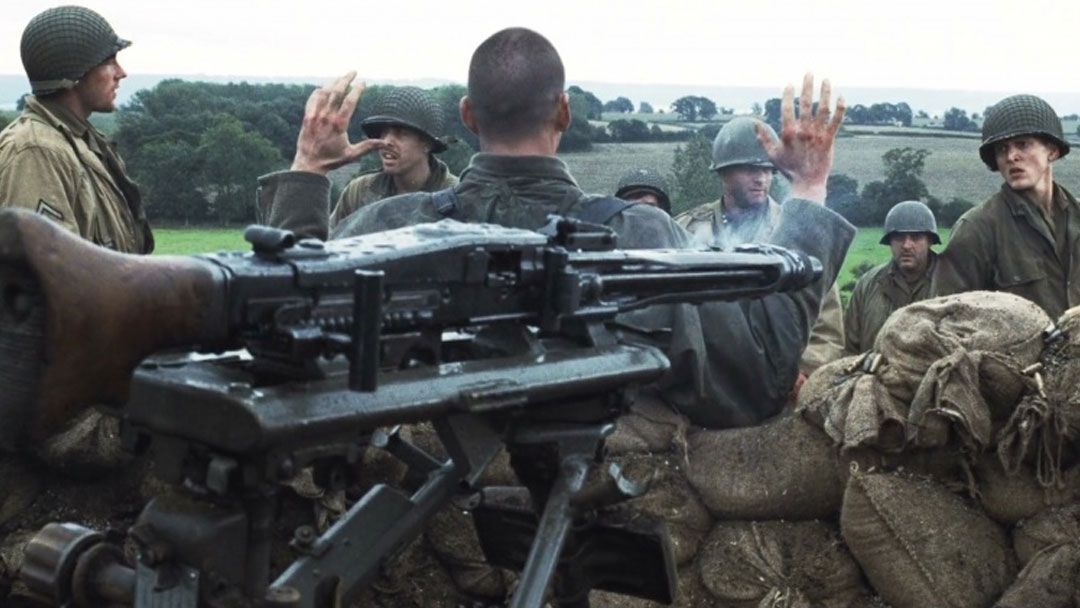
Where the elegant Luger and Walther frequently represent the WW2 German pistol in film and media, and the MP40 is used to depict the Reich’s advanced handheld firepower, the terror of the German war machine is often embodied by the MG42. The fearsome machine gun is featured in countless classic films like ‘The Longest Day,’ ‘The Great Escape,’ and ‘The Dirty Dozen’ and makes notable appearances in modern blockbusters like ‘Saving Private Ryan,’ ‘Fury’, and HBO’s ‘Band of Brothers’ miniseries.
Over the last two decades, the MG42 has been introduced to millions of video game fans in popular series like ‘Medal of Honor,’ ‘Battlefield,’ ‘Call of Duty,’ ‘Wolfenstein,’ ‘Brothers in Arms,’ ‘Company of Heroes,’ ‘Far Cry,’ and many more. The MG42 chambered in .308 has become a rather infamous weapon in ‘Fallout 76’ and is known for its impressive rate of fire.
The MG42, has left its mark on the big and small screen.
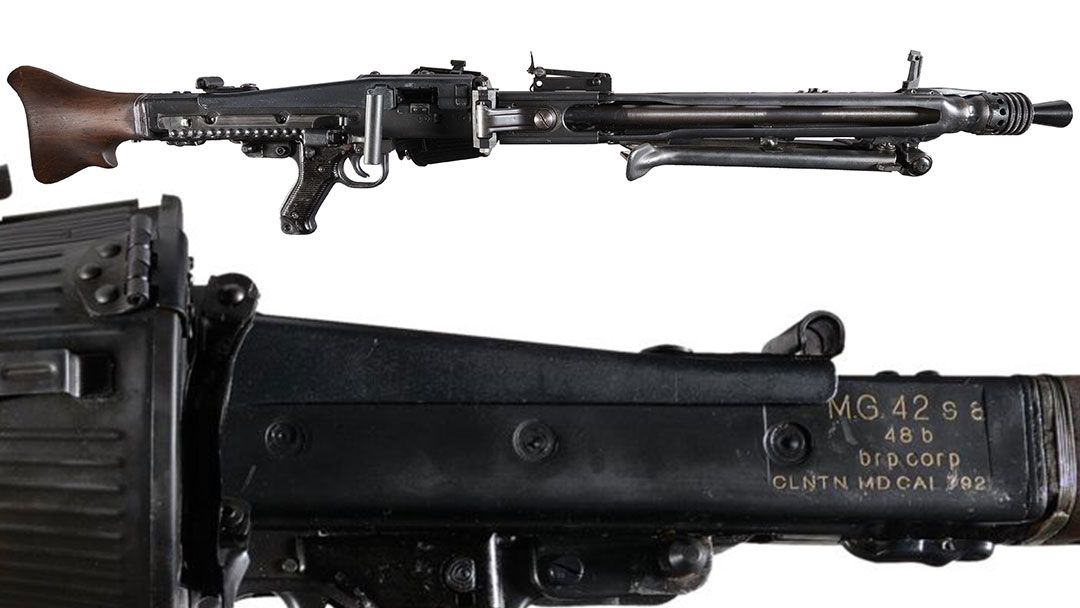
Some original examples of the MG42 machine gun remain in stock with numerous militaries and irregular forces, with the most common examples being the M2 variant. Semi automatic versions of the MG42 are available, including examples produced by Georgia-based BRP Corp and Neanderthal Armory out of Lehi, Utah. These firearms are typically produced from a combination of original parts and a modern production semi-automatic only receiver and trigger group.
A semiautomatic MG42 from BRP Corp sold at RIAC in May 2023 for $7,638.
MG42 For Sale
Renowned for its reliability, portability, power, and ease of production, the MG42 set a new standard for machine gun design, influencing firearms development for decades to come. Today, this legendary weapon has transcended its wartime origins to become a coveted collector’s piece, prized for its rarity, engineering brilliance, and its legacy as the most dominant German machine gun of WW2. A determined military collector can find the MG42 for sale at Rock Island Auction Company.
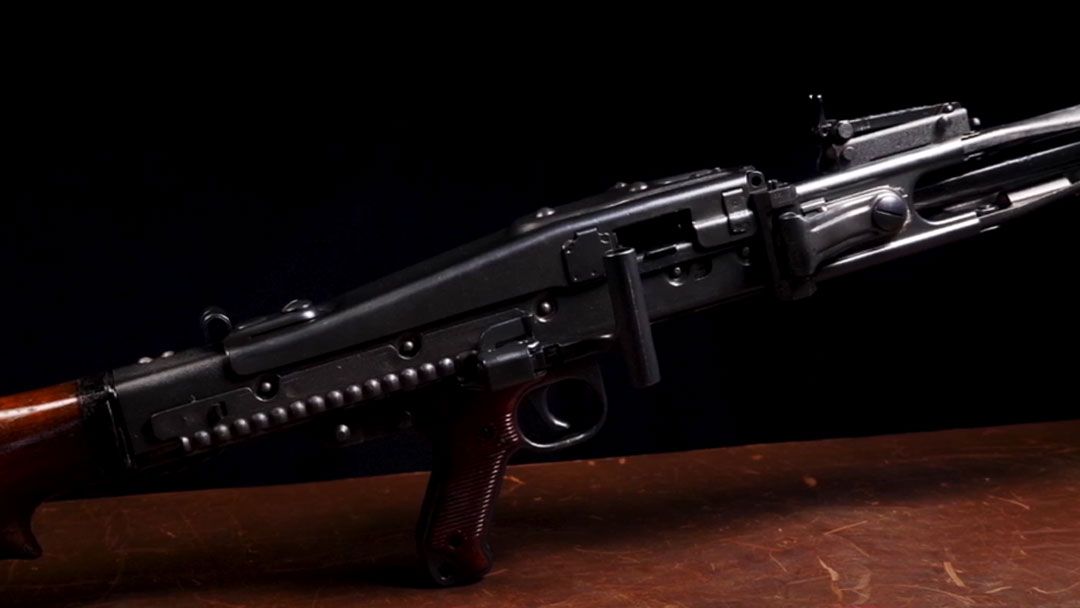
An MG42, Germany’s stamped-steel “Einheitsmaschinengewehr,” or universal machine gun. Available this December.
When it comes to doing just about anything, there is the right way and there is the janky way that still works. My Meshtastic N+1 Theory could be either one depending on the context.
What I mean is, this simple idea would work for setting up permanent coverage around your home but it wouldn’t necessarily be the right way if done the jankiest way possible. However, if you are setting up an ad-hoc mesh on the side of a mountain, this might be pretty close to the right way.
Alright, I know I have some explaining to do and I’ll start by saying that if you don’t know what Meshtastic is, check out Part 1 of this series. Now, onto the N+1 Theory…
What is the N+1 Theory?
The N+1 Theory is a simple, practical framework for smoothing out some hiccups with Meshtastic. Here’s how it works:
N represents the number of people in your group who need to communicate.
You add 1 extra device—the “+1” node—to improve mesh performance and reliability.
For instance:
If it is just you, N would be 1 and you would need N (1) + 1 = 2 devices.
For a team of 7, you’d need N (7) + 1 = 8 devices.
The “+1” node isn’t just a spare; it’s a strategic addition. By placing this device in a location that optimizes coverage—such as on a hill, at a central point, or in an area with poor connectivity—it strengthens the entire mesh. This ensures that everyone in the group remains connected, even in challenging environments.
This node is just attached to the end of an extendable paint roller pole and lashed to a fence post. Don’t judge me. It works.
Why Refer to This as Janky?
The beauty of this idea is that it can be done in a pretty quick and dirty way. It could be as simple as pulling a node up into a tree on a rope, running a node up an extendable painter’s pole, or even using a magnet to slap it on the side of a metal building… all of which I do on the regular. They all work.
Of course, for a more permanent situation, you may want to install a powered unit outdoors like which I have also done. That unit then serves as your +1 node – your first “hop” into the mesh.
This works because Meshtastic is a mesh network where every node functions as a repeater. The messages are intelligently routed across the mesh and therefore as long as any one node can hit another, there is a great chance that the messages will end up where you want them. So, by ensuring that at least one node is strategically placed, you help the entire mesh.
Meshtastic even expressly supports this kind of scenario with their “Client” and “Client_Mute” roles. I highly recommend you read up on roles when you are setting up your nodes.
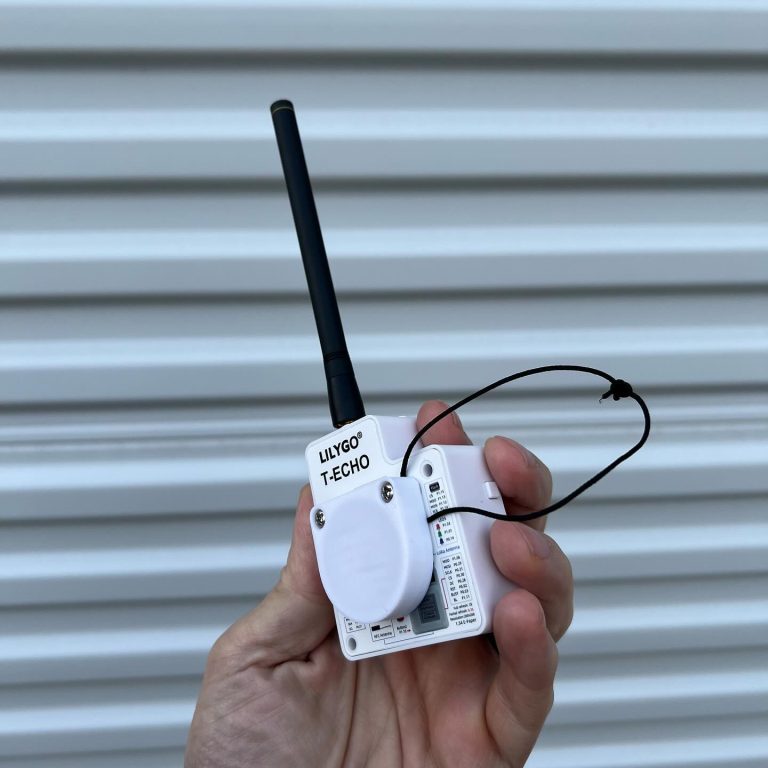
The magnet and lanyard I added to this Lilygo T-Echo make it especially useful as a +1 node.
Wrap Up
I know this isn’t especially ground-breaking or even that smart. It’s just something I had to learn by trial and error. So… I gave it a name and now I’ll be rich and famous for it… probably.
I will note that I am working with a new type of node, credit card sized radios from Seeed Studio called the SenseCap T1000-E that makes this concept especially convenient and easy to do the janky way. Stay tuned for more info on those devices.
Whether you are doing it the janky way or the right way, I highly recommend having that +1 node in a strategic location to improve your Meshtastic experience.
There was a time in the not too distant past, when adult and child alike would wait with enthusiasm for the mailman to bring the next installment of their favorite gun magazine.
Publications like Field and Stream, Guns and Ammo, Sports Afield and of course the Shooting Times were the top of the heap, their stories and information of vast importance in a pre-internet world. Readers would pour over each page for the long-range revolver exploits of Elmer Keith or the intercontinental hunting adventures of Jack O’Conner. These men influenced and inspired generations, and whether hunting squirrel or Cape buffalo, the adventure in those pages stoked the flames of ambition for outdoorsmen to get outside, test their hand and make their mark. When speaking of the gun-writing legends, possibly the most influential over the last 60 years is Charles Allan “Skeeter” Skelton.
Gun writer Skeeter Skelton’s Ruger Blackhawk chambered in .44 Magnum.
Skeeter Skelton
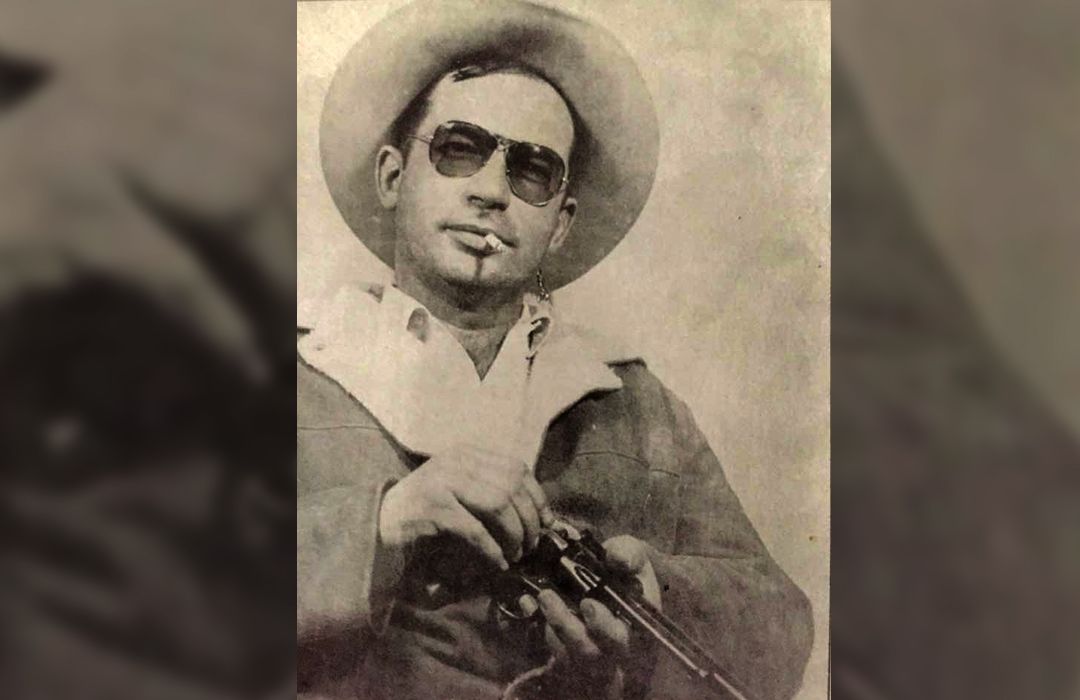
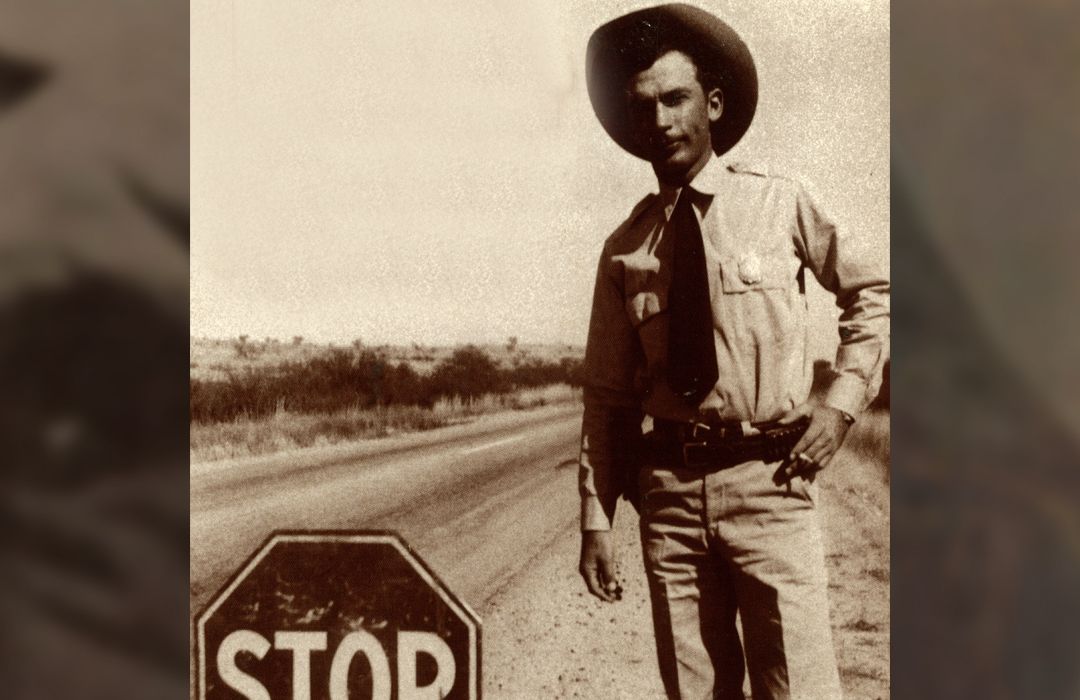
Born amidst the great depression, Skeeter was one of the very last vestiges and voices of the rough and tumble West. As a child of Texas, he learned to love the outdoors and became skilled with firearms at an early age. He served his country in the United States Marine Corps and in 1949 would start his career wearing a badge. He would go on to be a key player on the border for various law enforcement agencies including the U.S Border Patrol, the U.S. Customs Service, the DEA and was the sheriff of Deaf Smith County in the Texas panhandle. These experiences would shape his voice and generate stories for decades to come.
An avid hunter, Skeeter wrote part-time for a variety of outdoor publications. The work eventually allowed him to leave law enforcement and by 1967 he became the handgun editor for The Shooting Times. Skeeter held that position for the next twenty years.
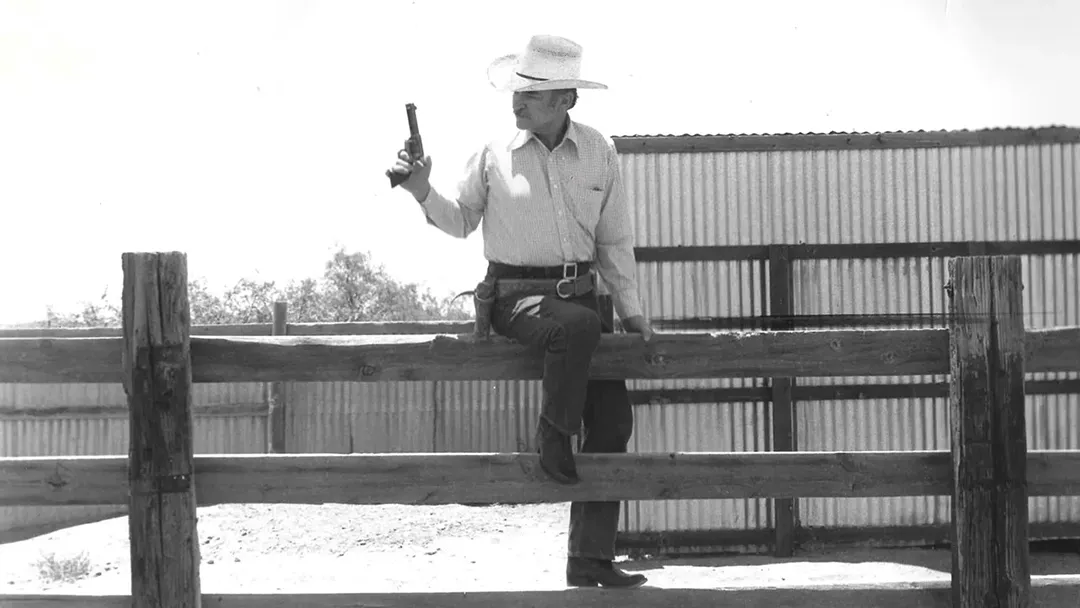
Skeeter Skelton at his ranch in Texas.
Those outdoorsmen, hunters, and shooters yet to read Skelton’s work, have a true prize waiting for them. Skeeter didn’t simply write gun articles, but painted elegant narratives for his readers with a familiarity that read like campfire tales from a bygone era.
His stories about Dobe Grant introduced readers to a man many would’ve wished as a mentor or friend in their real lives. The Depression-era childhood anecdotes of the Me and Joe series recalled simpler times, and the adventures and mischief of youth. While the humorous questions of fictionalized reader Jug Johnson gave glimpse of a wit that Skelton no doubt carried with him throughout his life. These and stories like If You Could Have Only One still hold fast today and can be discussed time and time again over a glass of Henry McKenna.
Gun writer Skeeter Skelton holds his Ruger Blackhawk.
While Skeeter included many guns and calibers in his stories, the 5” Smith & Wesson Model 27 is closely associated with him, as is his custom load for his beloved .44 Special. Developed in part by famed fellow handgunner Elmer Keith, it consisted of 7.5 grains of Unique over a 250 gr. hardcast bullet from the Lyman 429421 mold. It is known affectionately today as the “Skeeter Load.”
But the gun Skeeter Skelton is best known for is his 7 ½-inch Ruger Blackhawk flattop chambered in .44 Magnum. He wrote frequently and endearingly of his many exploits with the gun and was photographed using it more than any other.
Elmer Keith‘s famed Number 5 revolver and George Lawrence Co. 5 1/2 russet leather holster tooled with floral patterns, sold by Rock Island Auction for $253,000 in September 2021.
Skeeter Skelton’s Ruger Blackhawk
The Ruger Blackhawk “flattop” was initially offered in 1955 coming in .357 Magnum and the following year in .44 Magnum, the larger of which was offered in three barrel lengths: 6 ½-inch (25,660 made), 7 ½-inch (2,700) and 10-inch (1,500) totaling 29,860 made between 1956-1962.
7 ½-inch was Skeeter’s favorite barrel length in a single-action but finding a Ruger with one and in .44 Mag was no easy task. So when he walked into a Bud Maffet’s gunshop in Clovis, NM in 1960, he was only too glad to fork over all of $50 dollars for the near new flattop.
He liked the Blackhawk because it was lighter than the Super Blackhawk (introduced in 1959), had the Colt style grip, and rounded trigger guard instead of the SBH’s dragoon style. Skelton wasted no time customizing the gun, quickly stripping and polishing the aluminum grip frame and fitting it with his own self-made stocks he pulled from a Ruger .357 Blackhawk he already owned. Notably, said grips are quite slim, as was Skeeter’s preference, and helped tame the sharp recoil of a .44 Magnum. Though he was best known for the .44 Special “Skeeter Loads,” he shot stout Alliant 2400 magnum loads through this pistol when hunting, having corresponded and consulted with Elmer Keith on the specific load.
He owned multiple .44 Magnum revolvers throughout his life, but this Ruger Blackhawk became Skeeter’s favorite and a trusted hunting companion, taking many animals across the west until his untimely death in 1988.
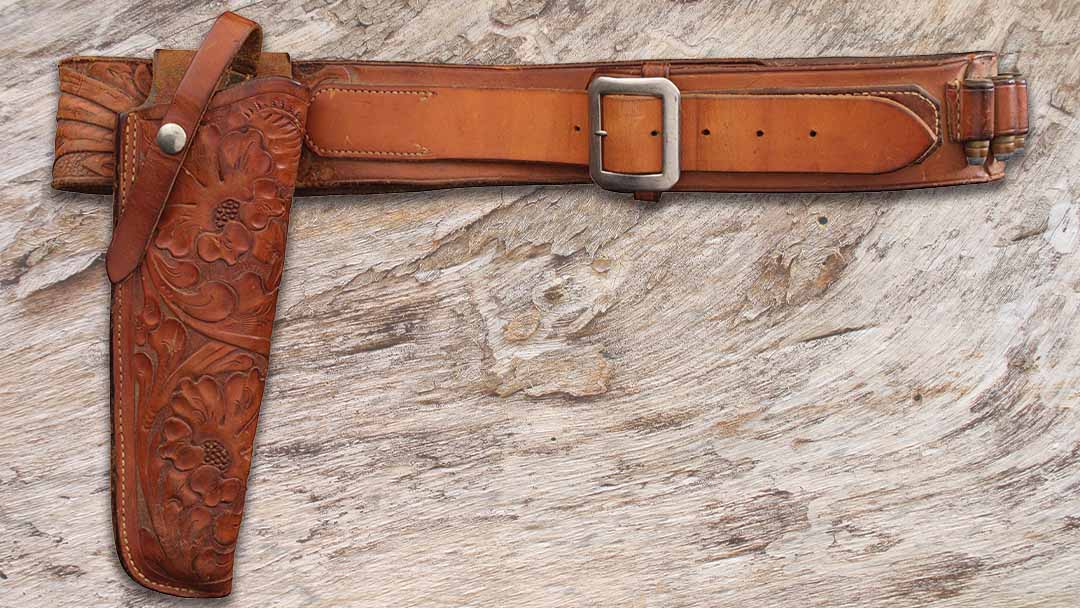
Included with Skeeter Skelton’s .44 Magnum Ruger Blackhawk is this tooled leather, early production, Lawrence 120F holster and a matching tooled leather cartridge belt.
Accoutrements and Provenance
The accompanying holster is an early, full floral carved, unlined George Lawrence 120. Lawrence was one of the greatest holster makers of his time, and another carved Lawrence 120 housed Elmer Keith’s famed number 5. This exact holster is still replicated today by some of the finest holster makers ever to stitch cowhide. Skeeter slipped his 120 on a belt he later had made and carved by a good friend.
The gun’s provenance is impeccable. After Skeeter’s death, the gun went to his only son, Bart Skelton, a celebrated Federal Law Enforcement Officer and writer in his own right. Bart wrote for Shooting Illustrated and American Hunter as well as penned his own book, Down on the Border, in 2003. He kept the gun the rest of his life, only selling it prior to his own death in 2022.
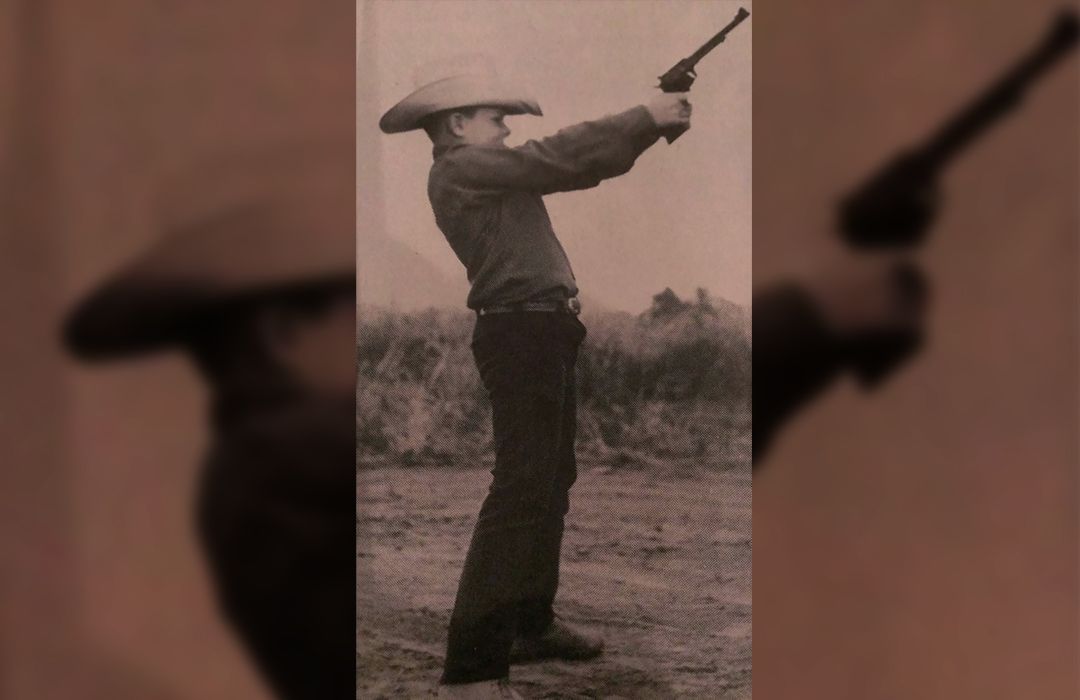
Skeeter Skelton’s son, Bart Skelton learned to shoot with his father’s Ruger Blackhawk.
It’s bold to say, but this 7 ½-inch Ruger Blackhawk may be the most important and influential Ruger ever made. It helped to usher in the golden era of handgun hunting inspiring generations to try their skill in the field and to explore the grandeur of the Western landscape. Skelton’s favorite hunting companion is now available publicly for the first time in the Rock Island Auction Company’s December 2024 Premier Auction, and it’s just waiting to be admired and to create new stories at the range and in the field.
A working man’s gun that launched a thousand dreams, Skeeter’s stories will always live in our hearts and memories, but his prized sixgun can now live in your collection.
Skeeter Skelton in his law enforcement days in Texas.
Let’s call it like it is: divorce isn’t just a breakup—it’s a battlefield. And if you’ve dealt with a lying, cheating, manipulative partner, you know exactly what I mean. But here’s the good news: you’re free. Sure, family court is a shit show—designed to bleed you dry and keep a corrupt system bringing in the cash for your local government—but at the end of the day, you’re out. No more drama. No more lies. Just a fresh start without the dead weight dragging you down.
So yeah, the system sucks. And if you are a man, it’s designed to crush you if you’re not careful. But now’s the time to focus on your next move: reclaiming your life, your rights, and your sanity. She’s gone. You win. Keep it that way.
The System Is Rigged, But You Can Fight Back
The System Is Rigged, But You Can Fight Back
Let’s not sugarcoat it—the family court system is a joke, and the punchline is almost always at dad’s expense. Statistics don’t lie: in most custody battles, the courts overwhelmingly side with mothers, even when it’s painfully obvious that dad’s the better choice. If you’re a father walking into this fight, you need to know the deck is stacked against you.
But this isn’t just about navigating the bullshit legal system; it’s about keeping your head straight when everything—and everyone—seems to be working to break you. The person you once trusted will pull every dirty trick in the book to discredit you, and the system is designed to let it happen and let her lie, cheat and steal with zero consequences. You’re in for a battle, but that doesn’t mean you have to lose.
Here’s how to stay strong, fight back, and beat the rigged system at its own game:
1. Arm Yourself with Knowledge
The first step in fighting a rigged system is understanding it. Family court isn’t just about who’s the better parent; it’s about navigating a complex legal landscape that’s often more concerned with procedure, politics, and kickbacks than fairness. Learn everything you can about the laws in your state, the judges in your jurisdiction, and the tactics that work in court. Knowledge is your first line of defense and will help you make informed decisions throughout the process.
2. Prepare for the Worst from the Person You Thought You Knew
Divorce has a way of bringing out the absolute worst in people. Your ex can quickly become your worst enemy, willing to do anything to undermine you and paint you in the worst possible light. Expect this, and brace yourself for the possibility that they will do whatever it takes to win—whether it’s twisting the truth, manipulating the system, or trying to turn your children against you. Recognizing this early on will help you stay vigilant and responsive rather than reactive.
But don’t be fooled into thinking that emotional manipulation is where it ends. When push comes to shove—and again statistics don’t —most women won’t hesitate to use the nuclear option: false allegations of abuse. These accusations are devastating and designed to cripple you in court, putting your reputation, your rights, and your relationship with your children at risk.
But it goes deeper than just dealing with false allegations—divorce is a full-scale battle, and you need to be prepared for every dirty trick in the book.
Think I’m exaggerating? Well take a look at When Divorce Gets Dirty: Women’s False Allegations and the Impact on Fathers the article covers the most common tactics that are being used against men in family courts today. With up to 70% of abuse allegations during custody disputes deemed unnecessary or outright false, it’s clear that the system is stacked against you.
But by being prepared, you can level the playing field.
Divorce is never easy and can leave you feeling bruised, battered, and questioning everything you thought you knew about justice—and about the person you once trusted. The system is often rigged, biased against fathers, and heavily favors so-called mothers in custody battles. It’s a hard truth that many men have to face.
This isn’t just about getting through the legal battles; it’s about surviving mentally, emotionally, and physically. The person you thought you knew WILL do everything they can to undermine you. Expect lies, deceit, parental alienation tactics, and manipulation. The key is to stay strong, stay informed, and keep fighting.
3. Choose and Manage Your Legal Representation Carefully
Your lawyer is supposed to be your advocate, but even they can have biases or may not always act in your best interest. Some attorneys might encourage you to settle quickly to avoid a lengthy court battle, even if it means compromising your rights. Others may not fully understand or believe in your position, leading to half-hearted representation.
Tips to Ensure Effective Legal Support:
Do Your Research: Don’t just hire the first lawyer you come across. Look for someone with a strong track record in representing fathers in custody disputes and who understands the specific challenges you face.
Ask Tough Questions: During consultations, ask potential lawyers about their experience, strategy, and how they plan to overcome the biases inherent in the system. Gauge their commitment to fighting for your rights.
Stay Involved: Don’t leave everything in your lawyer’s hands. Stay informed about every aspect of your case, review all documents thoroughly, and don’t be afraid to voice your concerns or disagreements.
Hold Them Accountable: Remember, you’re the client. If your lawyer isn’t meeting your expectations, address the issue promptly. If necessary, consider finding new representation that’s more aligned with your goals.
Seek Second Opinions: If something doesn’t feel right, consult with another legal professional. A fresh perspective can provide valuable insights and help you make better decisions.
By actively managing your legal team, you reduce the risk of being blindsided by poor representation and increase your chances of a fair outcome.
4. Build a Support Network
Divorce can feel like you’re on an island, especially when the system and your ex seem hell-bent on taking you down. That’s exactly why you need a solid support network. This isn’t about venting to just anyone—it’s about surrounding yourself with people who get it.
Friends and family who have your back are invaluable, but don’t stop there. Seek out men who’ve been through the same shit storm. These are the guys who’ve seen the dirty tactics, fought through the same biased system, and come out on the other side. They can give you advice you won’t find in any courtroom, keep you grounded when the stress piles up, and remind you that you’re not alone in this battle.
A strong support network isn’t just a safety net; it’s your lifeline. Use it.
5. Stay Healthy, Stay Strong
Let’s be real: divorce can beat you down if you let it. The stress, anxiety, and sleepless nights can mess with your head and your body—but here’s the thing: this is your chance to flip the script. With the right mindset, you don’t just survive this—you dominate it.
Start by taking care of yourself like a damn warrior. Hit the gym, lift heavy, run hard—whatever gets you sweating and feeling alive. Not only will it help burn off the stress, but it’ll also remind you that you’re stronger than the bullshit life’s throwing at you. Eat clean, drink water like it’s your job, and take care of the machine that keeps you in the fight: your body.
And don’t forget the mental game. Yeah, this whole process sucks, but it’s also the perfect time to level up. If you’re struggling to stay focused, look into mindfulness, meditation, and working out—tools aren’t weaknesses; they’re weapons. A clear head is how you stay one step ahead, and how you make sure her manipulative games don’t mess with your momentum.
Here’s the secret: the right attitude can turn this disaster into your ultimate comeback story. Use every insult, every low blow, every courtroom battle as fuel. You’re not just surviving this—you’re rebuilding yourself into something better, stronger, and damn near bulletproof. And when it’s all said and done, you’ll look back, flex, and laugh at the thought of what you used to put up with.
Fuck her drama. This is your life now. Own it.
6. Document Everything
When you’re up against a system that’s stacked against you, documentation isn’t just important—it’s your damn lifeline. Women can be ruthless in a divorce, and let’s face it, some will lose their minds and stoop to levels you never thought possible. Lies, manipulations, exaggerated accusations—they’ll throw it all at you in an attempt to paint you as the villain. That’s why you need to be ready.
Keep meticulous records of everything. Track every interaction with your ex, your time with your kids, incidents that raise red flags, and all communications with your legal team. Save every email and text message, and log phone calls with notes about what was said. Maintain records of your financial contributions and parenting efforts. This isn’t just about staying organized—it’s about building an ironclad case.
When she starts twisting the truth or making false claims, your documentation will crush her lies. It’ll prove you’re the involved, responsible father that the court needs to see. You’re not just defending yourself; you’re showing that no amount of drama or deceit will bring you down.
Stay one step ahead, keep your receipts, and watch her lies crumble under the weight of cold, hard facts. If she wants to play dirty, let her—but you’ll be ready to fight back with the truth.
7. Don’t Be Afraid to Push Back
The court system might be biased, but that doesn’t mean you should roll over and accept it. If you believe the court’s decision is unfair, don’t hesitate to push back. Appeal the decision, seek a modification, or request a different judge if necessary. Stand firm against unfounded accusations and unjust rulings. It’s your right to fight for what’s best for your children—and for yourself. Persistence and resilience can make a significant difference in the long run.
8. Connect with Others Who’ve Been There
There’s power in numbers, and that’s never more true than when you’re up against a system that feels stacked against you. Connecting with other fathers who’ve been through the same experience can give you insight, strategies, and the emotional support you need to keep going. There are groups out there—brotherhoods of men who’ve had enough of the lies and the bias, who are ready to stand shoulder to shoulder with you in this fight. Sharing stories and advice can empower you and provide practical tools to navigate your own situation more effectively.
9. YOUR LIFE HAS JUST BEGUN! The Dating Buffet Is Open—Don’t Settle for Leftovers
Divorce isn’t the end; it’s the beginning of the feast. Dating after divorce isn’t hard—it’s easier than ever. The dating world is an endless buffet, filled with options just waiting for you. The best part? You’re the one holding the plate now. Women outnumber you, and they’re craving a man who has his act together.
But here’s the rule: enjoy the buffet, but don’t fall for the same trap twice. Marriage is a raw deal—a one-way ticket back to the circus you just escaped. Keep it casual, play the field, and never tie yourself down again. Why settle for one meal when the buffet never closes?
The road through divorce and the family court system is long and often lonely, but it doesn’t have to be. There are others out there who see the truth, who know the fight you’re in, and who are ready to help. If you’re looking for more than just sympathy—if you’re ready to take action and reclaim your rights as a father—there’s a place for you. And for those who see this as the end, trust me it is only the beginning – there is an endless buffet of life waiting on the other side! Everyday is like waking up and being in your own “write you adventure” book!
Stay strong, stay informed, and know that you’re not alone in this battle. There’s a movement of men out there, tired of the system’s injustices, and ready to stand together. The time to fight back is now. You’ve got allies, you’ve got resources, and you’ve got a chance to make your voice heard.
For those looking to connect with others who understand the fight and are ready to stand up against the machine, there’s a place where you can find the brotherhood you need. The system might be rigged, but together, we can push back and take back what’s ours.
Stay Vigilant, Stay Strong, and Fight Like Hell
Divorce isn’t just a battle—it’s a war. And in a system stacked against you, the only way to come out on top is to stay sharp, stay relentless, and never back down. You’ve got this. Remember, you’re not alone in this fight. There’s a whole community of men who’ve walked this path and come out stronger for it.
For more no-nonsense advice and support, check out our buddy Unapologetic Dad over atDads Against the Machine. His articles cut through the noise and give you the tools you need to face the bullshit head-on.
You’ve probably noticed that I have reviewed a lot of Vosteed knives over the last couple of years. I have been provided several for review, purchased several, and I have given them as gifts. I like them. So, when Vosteed asked me if I would consider writing a gift guide, I agreed.
I am not being paid for this but some of the links below may be affiliate links which means I receive a small commission from sales (there is no additional cost to you).
I intend to break this down into categories and highlight one knife per category. That knife will be what I consider to be the pick of the litter in Vosteed’s line and in some cases, the best in category regardless of brand. I should also point out that all of these are knives that I have owned personally.
Budget Pick – Acorn
The Vosteed Acorn retails at $49 but is frequently on sale for less. What I like about it as the budget pick is that it large enough and has the style to make an impression as a gift. It is also VERY ergonomic so the gift receiver is likely to immediately connect with it.
This is the kind of knife that will resonate with knife guys or knife newbs equally. It’s easy to carry, it performs, and looks like a million bucks while doing it.
The Raccoon Cub could very well be the Budget Pick as well as it is priced similarly to the Acorn. Not only is it the best “Fifth Pocket” knife on the market in my opinion, it’s also one of the most affordable.
The Raccoon Cub works as a gift because almost anyone can carry it regardless of their jurisdiction or work setting. It’s a small knife that feels big in the hand. It fits a wide variety of hand sizes despite its compact size thanks to some ergonomic design wizardry.
Vosteed doesn’t have a ton of fixed-blade options but the Mink, is another that is best in class in my opinion. It is small enough to carry but large enough to be useful for a variety of tasks. If the gift recipient wants to carry it for EDC, they can. If they need a new knife for the outdoors, they can use it for that too.
The Mink comes with a very high quality sheath that will ensure the gift recipient can use it right away.
The Raccoon, the full size predecessor the previously mentioned Raccoon Mini, is the kind of knife that anyone can use and everyone will like. This is probably their best known knife for good reason. It is Vosteed’s do-all, EDC model. It ticks all the boxes – pocket friendly, stylish, all-around useful, and tons of variations that can tailored to the recipient.
The Raccoon is available with a number of different locks but I would choose either the crossbar lock (Vosteed does these very well) or the top liner lock which is currently my favorite lock.
If you want to give a knife but aren’t sure which one, the Raccoon is a solid choice.
When you absolutely, positively need to wow someone with a high-end Vosteed… Psyop is the answer. This knife is stylish and premium in a way that newbs and knife guys will recognize immediately. It’s a large impressive knife that snaps open in a refined way and slams shut with a satisfying “thunk”.
It isn’t inexpensive but it is a great value for the kinds of premium features being delivered – titanium scales and machined pocket clip, Elmax steel blade with a striking and useful shape, a design collaboration, and overall size and shape that impresses. It has gravity as a gift that nothing else on this list can quite keep up with.
Vosteed is already offering sales on their website and Amazon including their Black Friday deals. This is a great time to start checking prices for Christmas gifts.
The December Premier Auction is mere days away, so this primer highlights the outstanding offerings beyond the flagships riding a true tidal wave of amazing Colts from seven fantastic collections that make this a once in a generation sale.
The Dec. 6-8 Premier Auction has 1,807 lots and kicks off at 9 a.m. each day, with a full-day preview on Dec. 5 at Rock Island Auction Company’s world-class Bedford, Texas venue.
Elvis Presley Presentation Smith & Wesson
Rock Island Auction has had the immense privilege to previously offer guns of Elvis Presley, the King of Rock and Roll, selling an exhibition quality engraved Bicentennial-themed Smith & Wesson Model 53 in August, 2023 and highly embellished Colt Python and Smith & Wesson Model 19-2 in May 2017.
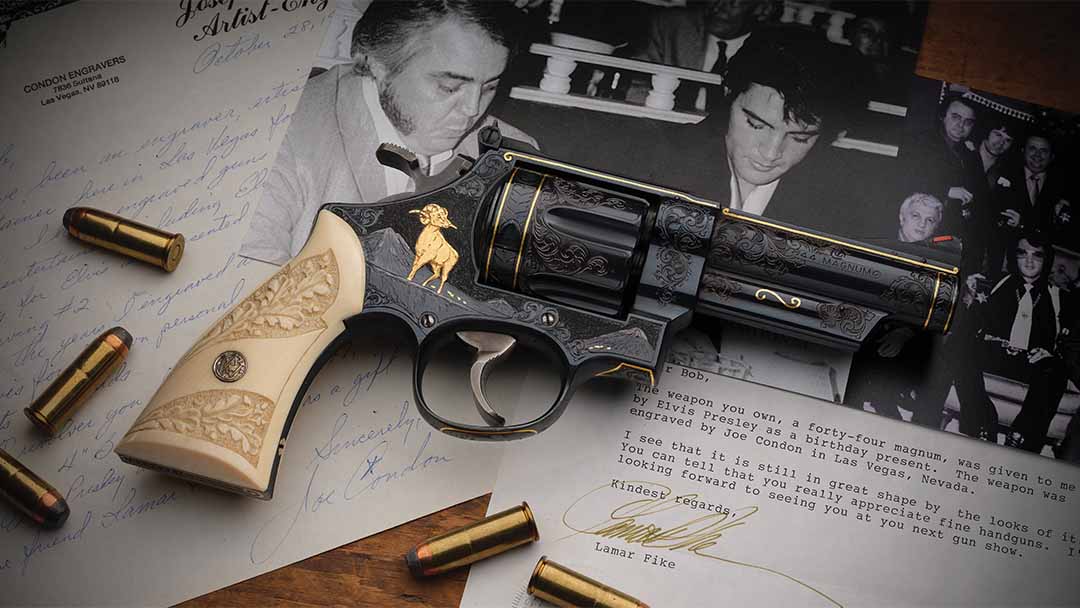
Now available is a Smith & Wesson Model 29-2 adorned by “engraver of the stars” Joseph Condon, of Las Vegas. The gun was a gift to Elvis’s life-long friend and Memphis Mafia member, Lamar Fike. Condon’s engraving on this .44 Magnum revolver pops off the blued finish, with inlaid gold accents at the muzzle, on the cylinder and along the top of the frame and barrel. Fike was likely mesmerized by the beautiful scrollwork and stippled background and delighted by his inlaid gold initials to go along with a bighorn sheep in a mountain scene in relief gold inlay. The flamboyant rock and roller made sure there was plenty of gold on this gift gun. The ejector rod and cylinder latch screw are also gold-plated. The extravagance spilled over to the carved grips and their oak leafs and acorns on a stippled background.
This Elvis Presley-presented engraved Smith & Wesson Model 29-2 retains 99 percent of its original blued finish with minimal handling marks and crisp engraving and carving and is a fantastic piece linked to one of the greatest and most extravagant entertainers of the 20th century.
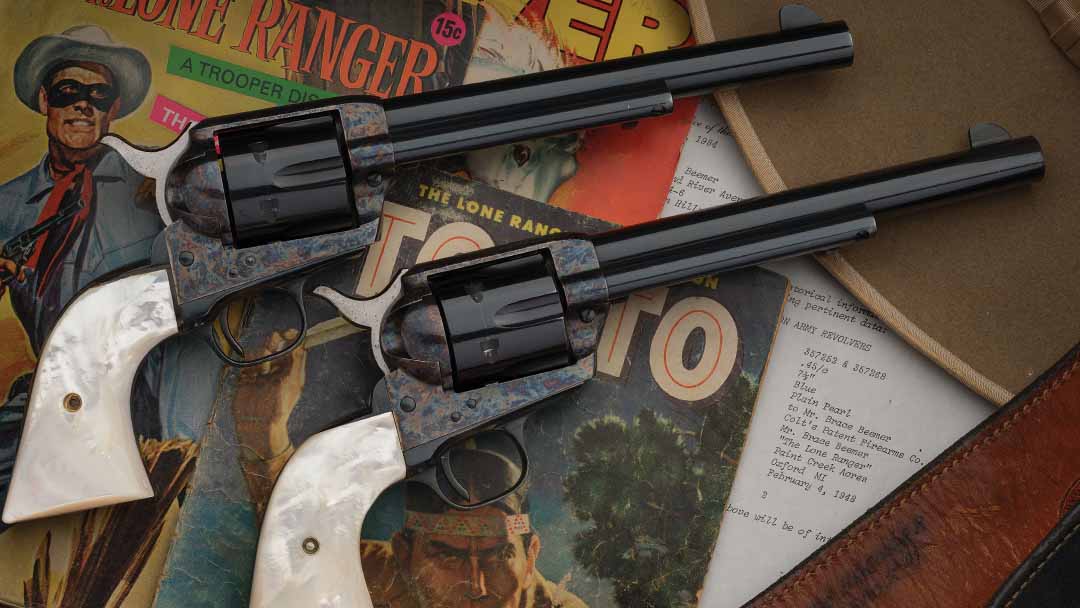
Elvis’s revolver isn’t the lone celebrity firearm in the auction. From the days of radio, are this amazing pair of Colt Single Action Army revolvers with blued barrel and cylinder and casehardened frame presented to Brace Beemer, the radio voice of the Lone Ranger. An outstanding pair of Colt Single Action Army revolvers owned by actor and comedian Red Skelton were featured in the 1961 episode “Dead Eye & the Gun Slinger,” of the “Red Skelton Show” are available in this auction. Actor and stuntman Ray “Crash” Corrigan’s unique Single Action Army revolvers along with his silver mounted leather holster rig by Edward Bohlin will be on offer. These guns have Corrigan’s name in raised relief on both sides of the grips along with a bronco rider on one side and a steer head on the other. Corrigan, whose career spanned the 1930s to 1950s also owned a ranch where several silver screen cowboys, including John Wayne, shot films. Speaking of Wayne, the film legend’s Colt Model 1860 Army and cavalry saber documented to his collection and with a display case is available. The revolver and saber are previously attributed to being used by Wayne in “She Wore a Yellow Ribbon.”
This brilliant pair of pre-war post-war Colt Single Action Army revolvers owned by Brace Beemer, the radio voice of the Lone Ranger, retains 95 percent of its blued and casehardened finish. These guns are accompanied by a dual holster Hollywood-style belt rig made by famous Hollywood maker Arvo Ojala.
Fabrique Nationale M240 Machine Gun
Sitting at the pinnacle of Class III firearms collecting is the Fabrique Nationale M240 general purpose machine gun, an iconic military machine gun in widespread U.S. military service today. Reportedly, as few as 11 fully-transferable M240 machine guns exist along with less than 20 limited pre-86 dealer samples making this firearm incredibly rare. This rugged and reliable machine gun is mechanically excellent and a can’t-miss opportunity for the military arms collector. Rock Island Auction offered an M240 in its May 2024 auction that realized $470,000.
This Fabrique Nationale M240 general purpose machine gun is the crown jewel of Class III collecting.
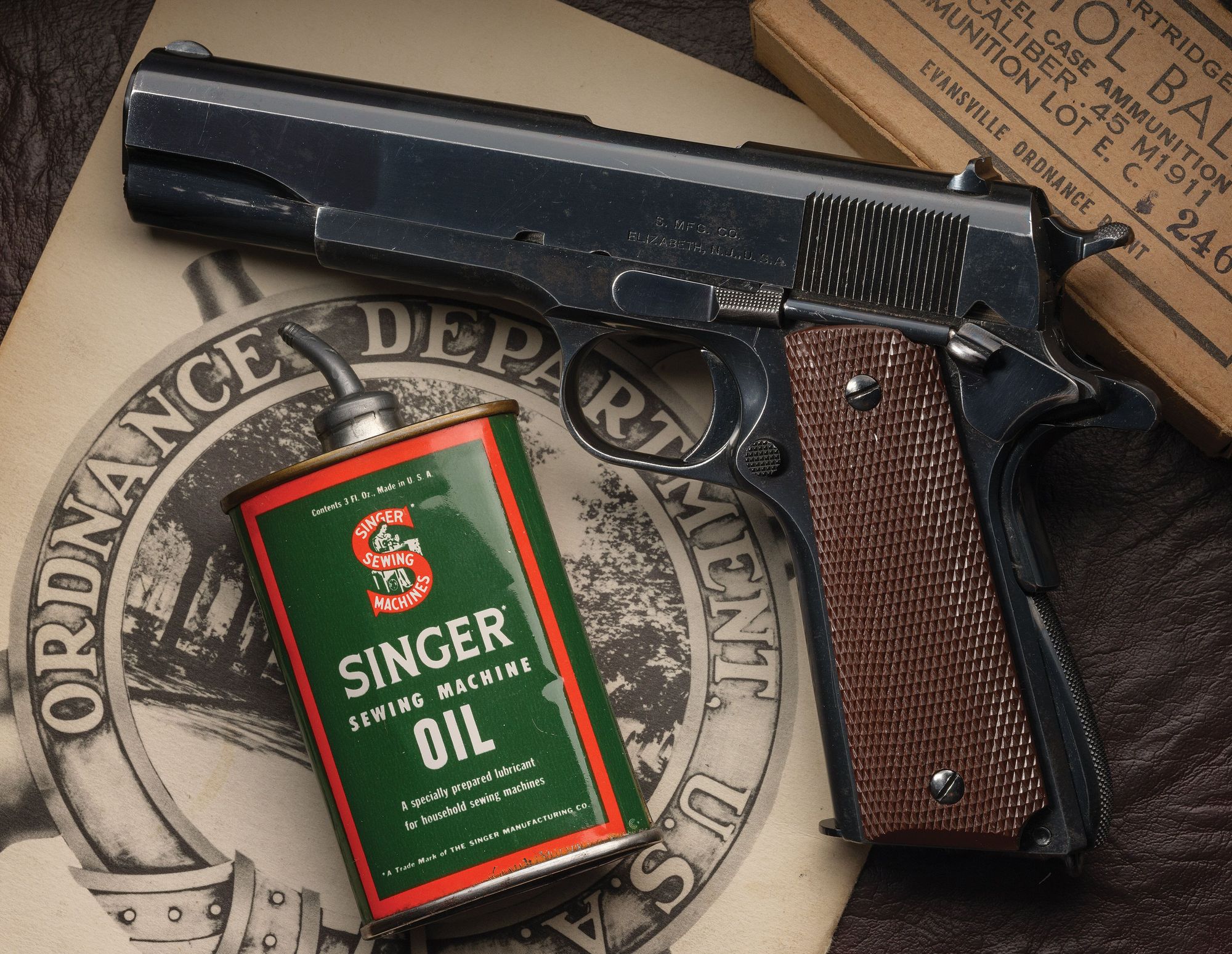
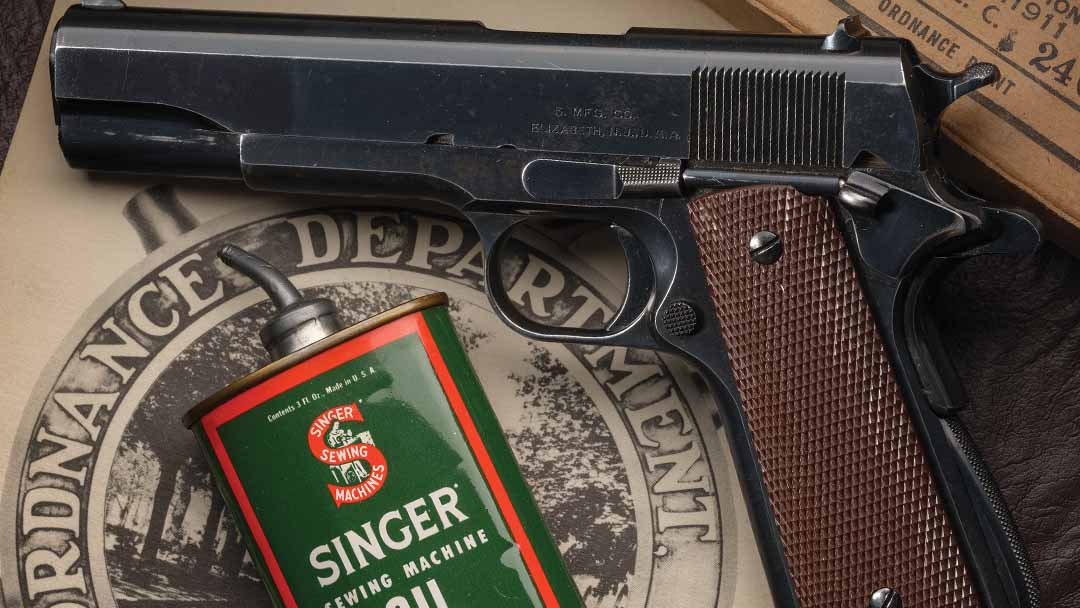
Unserialized Singer M1911A1
Rock Island Auction has proudly offered some of the finest Singer Model 1911A1 pistols and this rare unserialized World War 2 prototype/presentation model is another outstanding example that will cross the podium in Bedford, Texas. As part of an educational contract, Singer manufactured 500 pistols but was unable to meet the 100 pistols per day that was wanted. Singer declined further gun production and the equipment was sent off to other companies. This pistol has no serial number nor inspector marks and appears to have been earmarked as a presentation piece near the end of the production process.
This unserialized Singer model 1911A1 retains 90 percent of its original high polish, blue finish.
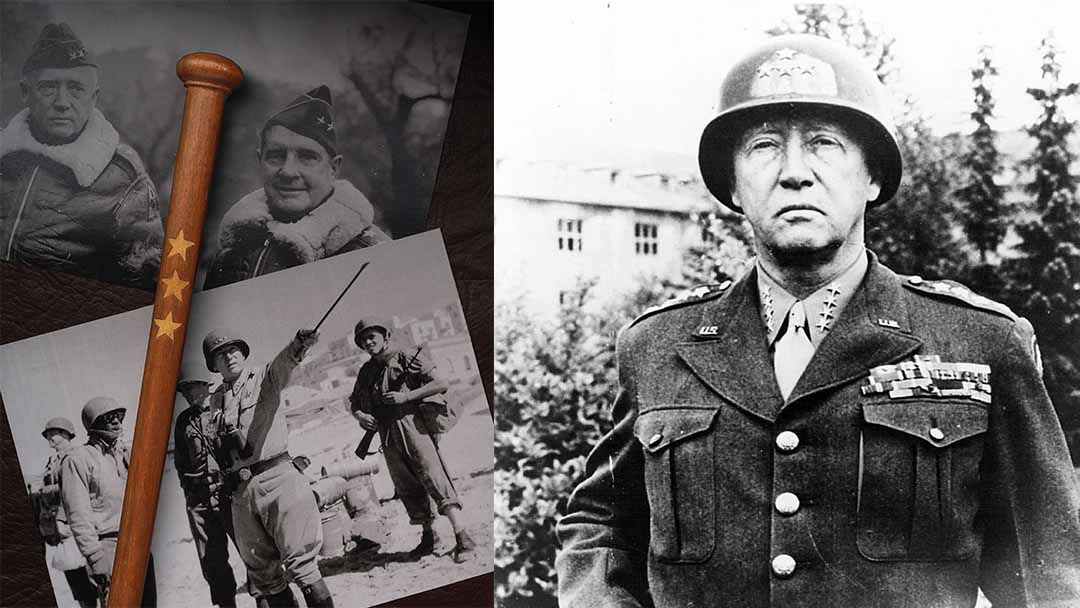
An interesting piece of World War 2 memorabilia is an historic swagger stick of Gen. George S. Patton from when he was a lieutenant general. He passed on the stick to a friend after being promoted to full general. This fantastic pistol and swagger stick stand among the amazing World War 2-related items in the auction.
Bearing the three stars of a lieutenant general, this swagger stick, a symbol of authority, belonged to Gen. George S. Patton who passed it along to his friend General Geoffrey Keyes after Patton received his fourth star and made a full general. A photo of Gen. George S. Patton on right.
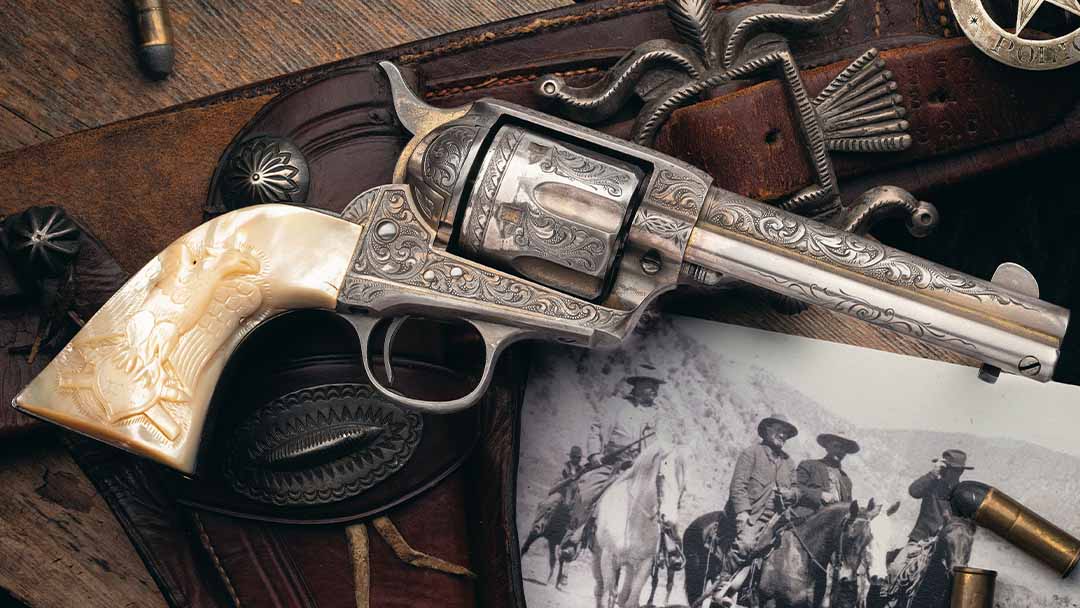
Colt Single Action Army Presented by Theodore Roosevelt
The high-conditioned and the highly embellished guns of the Brig and Louise Pemberton Collection have received quite a bit of attention, but this Theodore Roosevelt presentation SAA deserves the spotlight, too. The revolver was presented by Roosevelt, long a favorite of Rock Island Auction Company, to James R. Gregory, Chief of Colorado Springs Police.
The revolver, finished in gold and silver, features scroll engraving with beaded backgrounds, a decorative border at the rear of the cylinder, as well as scrollwork the length of the barrel. The pearl grips have a carved eagle perched on a shield. This is a terrific revolver with 90 percent of its original silver that has attribution to Theodore Roosevelt as a presentation piece, an excellent opportunity for a collector of historic six guns.
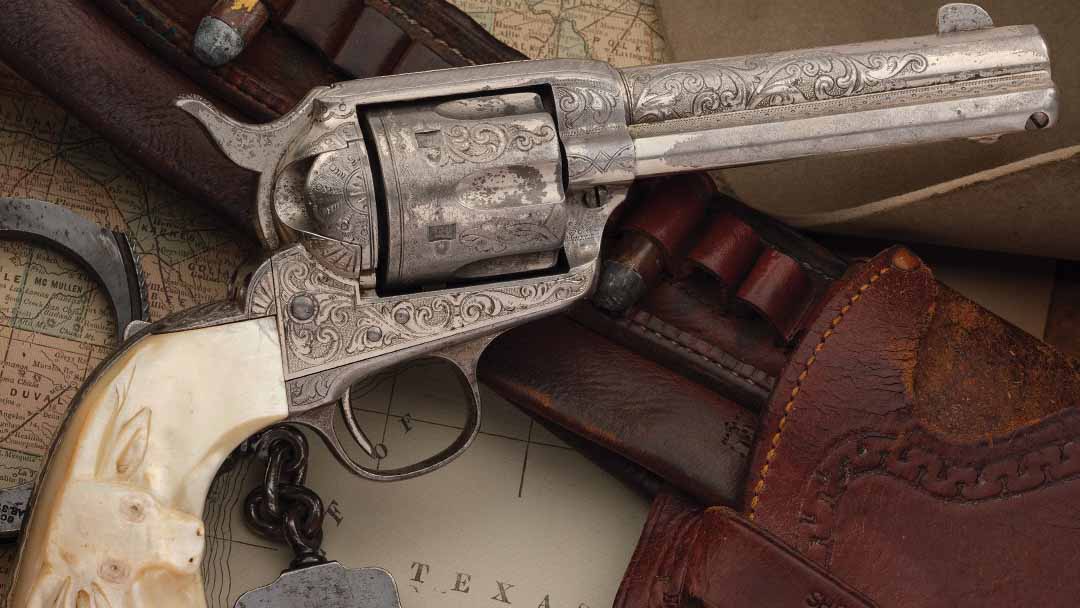
Speaking of law enforcement firearms, the outstanding Colt Single Action Army carried by Texas ranger and U.S. Marshal Jack Dean is available in the auction. Dean, who arrested Charles Harrelson, father of actor Woody Harrelson, for the assassination of a federal judge, carried the Cuno Helfricht-engraved revolver on duty.
The Colt Single Action Army of Texas Ranger and U.S. Marshal Jack Dean.
Colts! Colts! Colts!
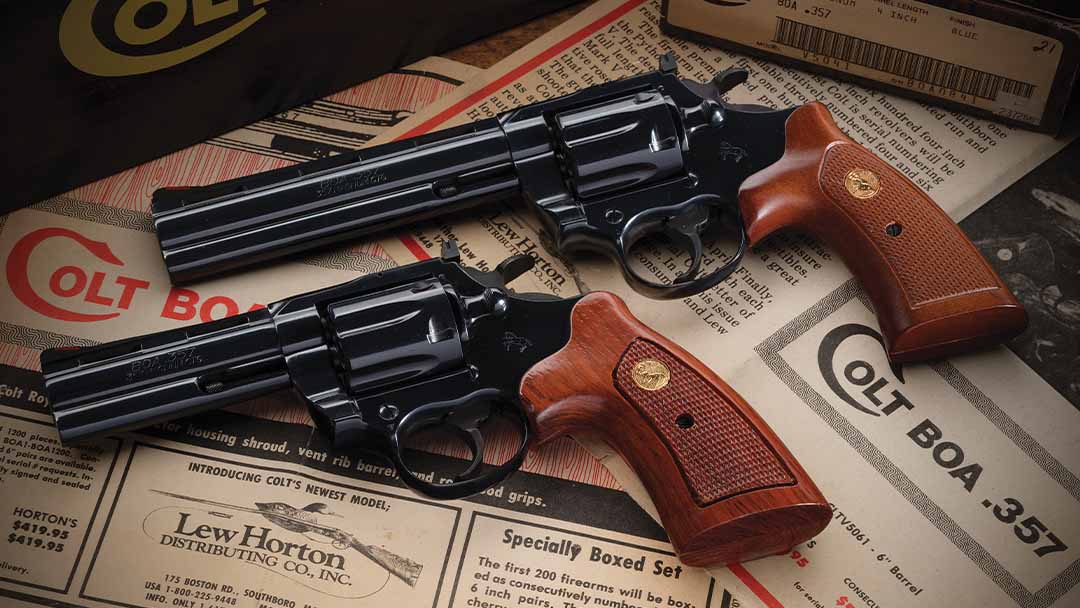
Colt fans should be able to find anything their heart desires in this auction through the classic collections already mentioned but those lean toward the 19th century legends, including deluxe double actions, but there is so much more. Someone looking for a Colt snake gun, or looking for one of those “must-haves” from Colt, can find them in this auction along with an immensely diverse range of Colt semi-automatic pistols from the Model 1900 to the M45A1, including an early production, serial number 15 Colt M1911. Just remember, with all these Colts, the .45 ACP versus 9mm argument has already been resolved.
Sporting Gun Excitement
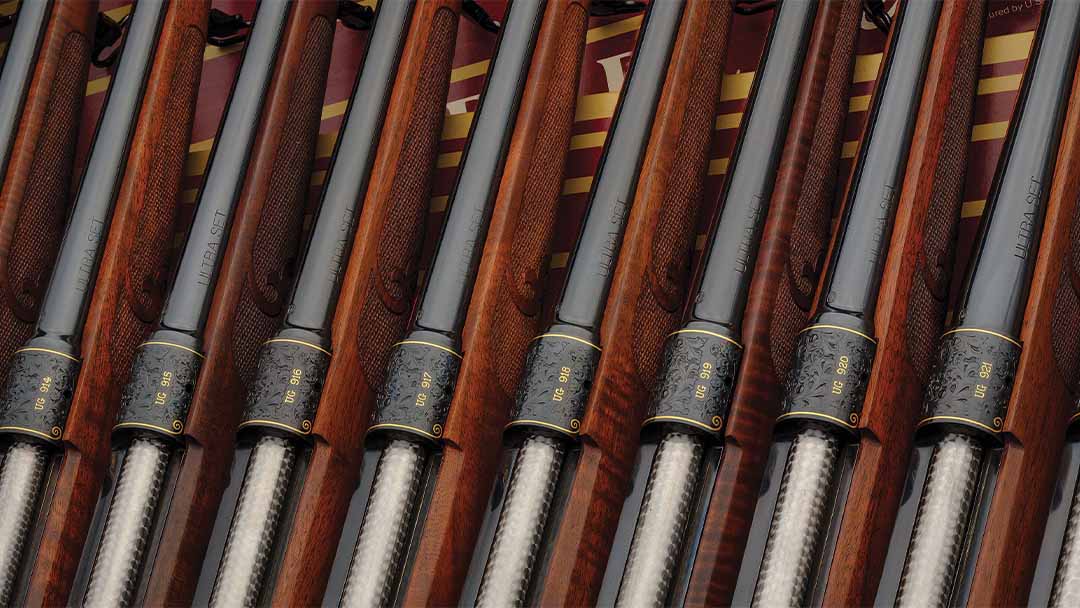
A set of 11 Winchester Model 70 Ultra Grade Featherweight rifles, each chambered for a different caliber, offers subtlety in its refinement with finely figured black walnut stocks, scroll engraving and gold accents that pop off the deeply blued finish of each. The guns are chambered in .222 Remington, .223 Remington, .22-250 Remington, .243 Winchester, .257 Roberts, .25-06 Remington, 7mm Mauser, .30-06, .308 Winchester, .300 Winchester Magnum and .270 Winchester. This is a fantastic opportunity to own one of only eight complete sets of the Winchester Model 70 “Ultra Sets.”
This set of 11 Winchester Model 70 Ultra Grade Featherweight rifles are consecutively serial numbered with special “UG” serial numbers.
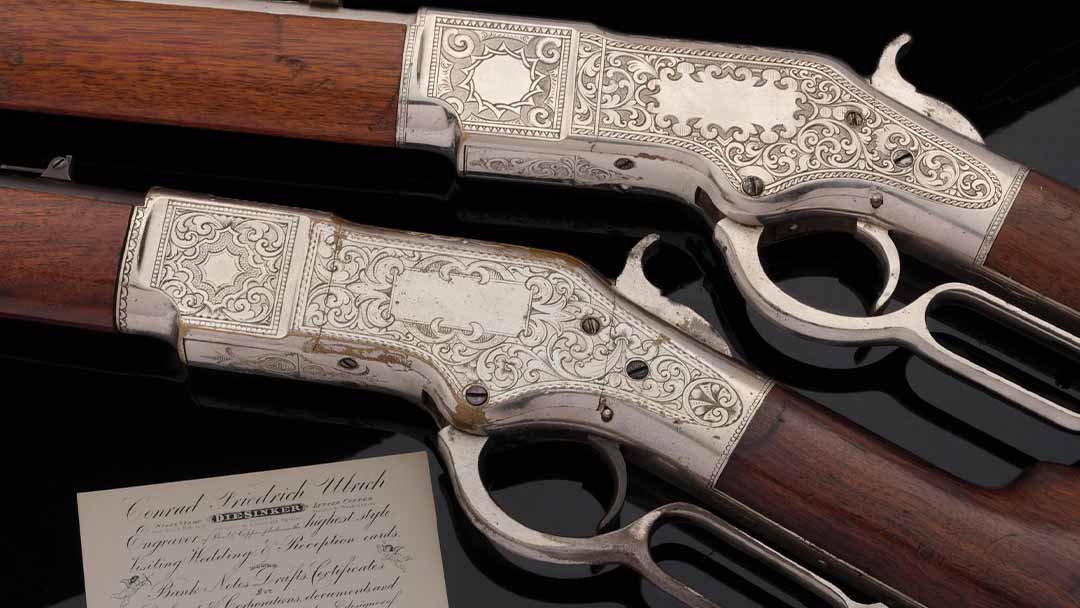
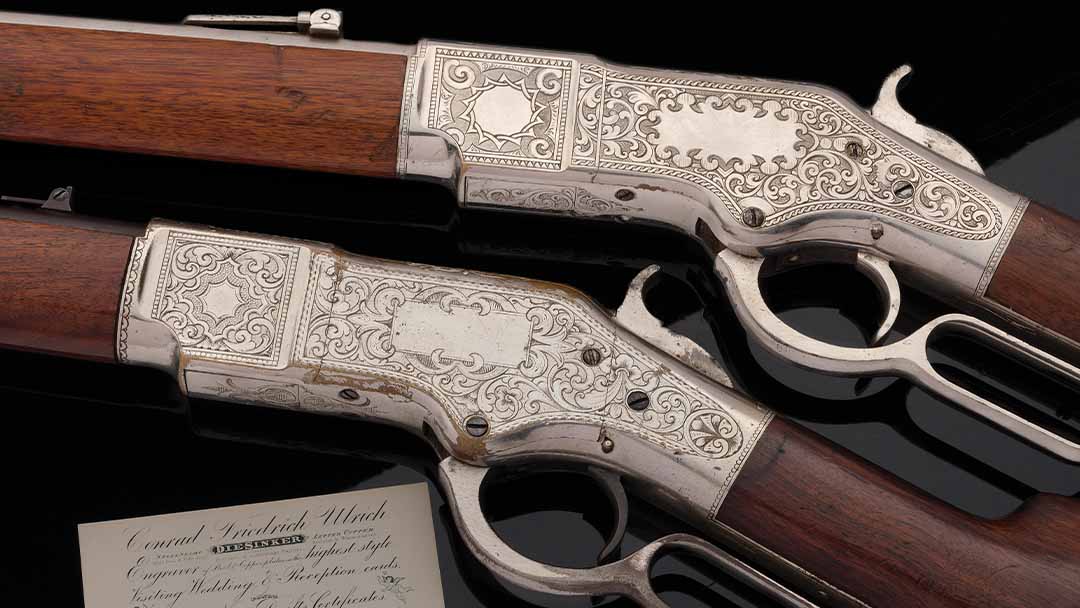
The auction offers a fantastic lineup of long guns from sub-gauges to lever actions, like these consecutively serial numbered Winchester Model 1866 nickel-finished musket (serial number 61216) at top, and Winchester 1866 nickel-finished carbine (serial number 61217), below, both engraved by C.F. Ulrich and offered in consecutive lots on the auction’s opening day.
Very Fine Flintlocks
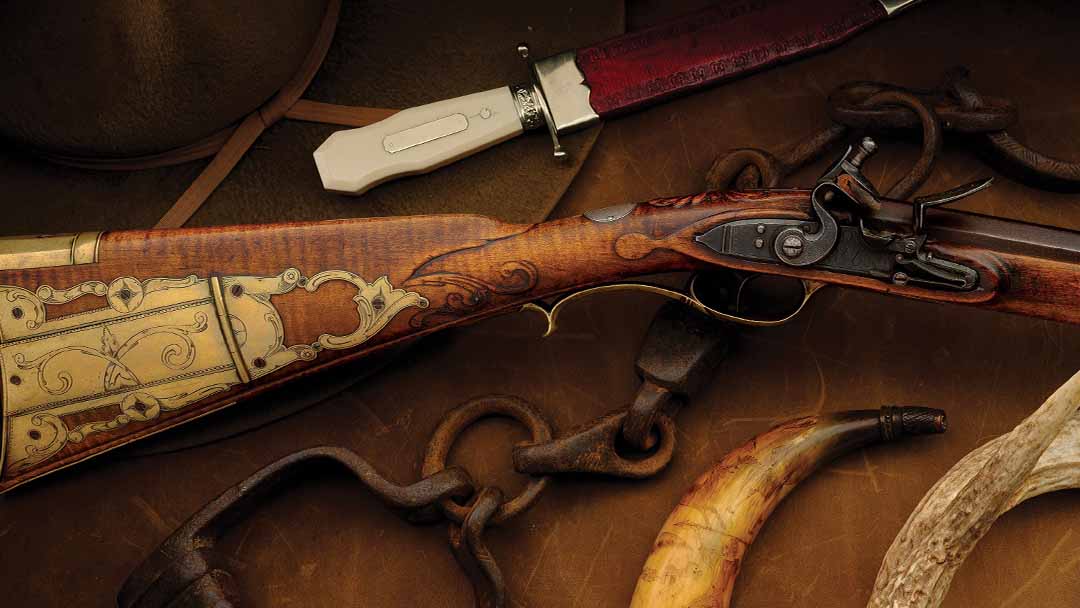
The regal antique firearms from the Norman R. Blank Collection have drawn plenty of interest in previous auctions. Utilitarian but no less extraordinary is a John Armstrong-made flintlock American long rifle. It has a full-length maple stock with raised relief floral and scroll carving in classic Armstrong patterns. The silver cheekpiece plate is engraved with a federal eagle and shield design along with a distinctive four-piece, finely-engraved patchbox.
John Armstrong, who made this beautiful American Long rifle, was an active gunmaker in Maryland during the early 20th century.
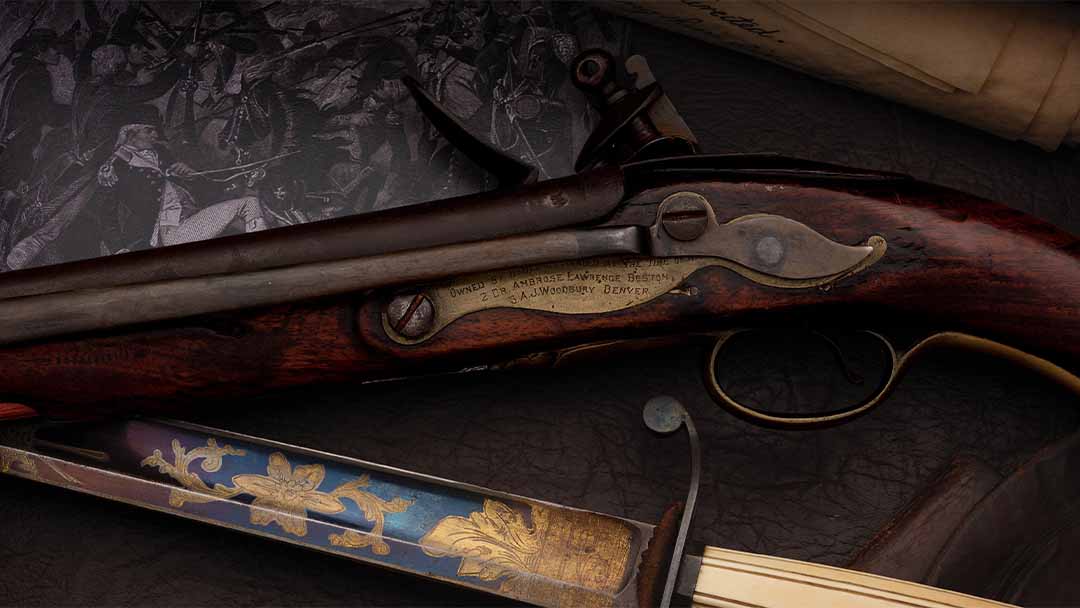
Among the antique firearms is a flintlock pistol owned by notorious American Revolutionary War traitor Benedict Arnold. The pistol is one of a pair owned by Arnold when he betrayed the fledgling United States and joined the British. The auction also has a number of outstanding blunderbusses that have long drawn the interest of collectors.
This iconic British Long Sea Service pistol was one of a pair owned by traitor Benedict Arnold at the time of his treason.
Classic Class III Firearms
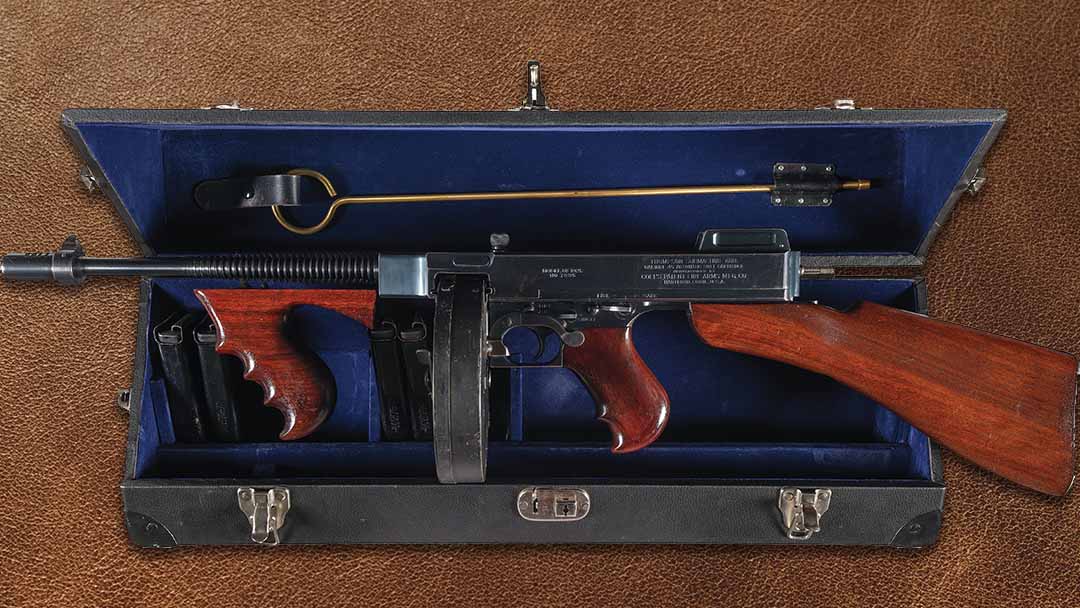
Among the roster of Class III offerings in the auction are classics from World War 2, but this Thompson Submachine gun is documented as shipped to the Mattoon, Ill., Police Department in 1930. This Tommy gun, with several accessories and a case, is one of 12 Thompson Submachine guns in the auction. They are joined by Along with World War 2 throwbacks like the M2 Carbine, a 1945 StG44 Sturmgewher, and a German MP40 are modern examples like the M60 and the Cadillac Gage Stoner 63, stalwarts of the Vietnam War, along with the M16and AK-47.
This Colt Thompson 1921 Submachine Gun, once in the armory of the Mattoon, Ill. Police Department, comes with a carrying case and several accessories.
Collections! Collections! Collections!
Did someone mention Colts? This auction offers the most complete and historic offerings of Colt firearms amassed over 250 years of combined collecting. The finest and rarest examples offered from the collections of Brig and Louise Pemberton, Charles Marx, Robert M. Lee, Greg Lampe, George S. Lewis Jr., TTTand Andrew Singer will awe collectors.
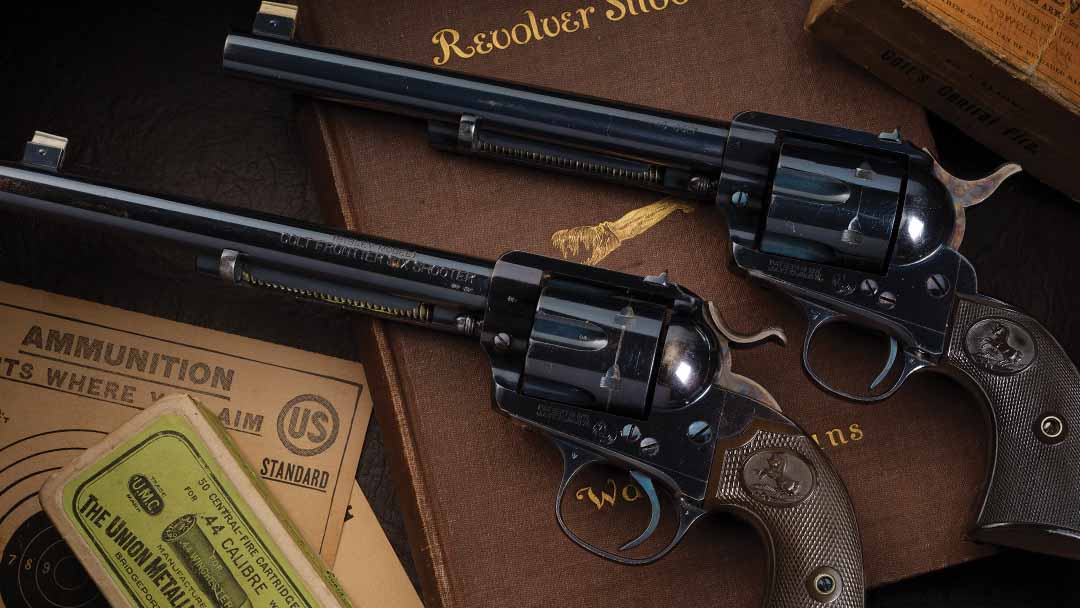
A Colt Single Action Army flat top target model at top and a Single Action Army Bisley Model below it from the Charles Marx Collection.
Fine Firearms for Sale
The Dec. 6-8 Premier Auction is an amazing cascade of Colt firearms, from the legendary Single Action Army to beautifully engraved double actions and historic Patersons and a Walker revolver to standout semi-auto pistols. The three-day sale presents amazing breadth, from flintlocks to full auto firepower, guns from the Civil War, Wild West and two worlds wars will have collectors clamoring.
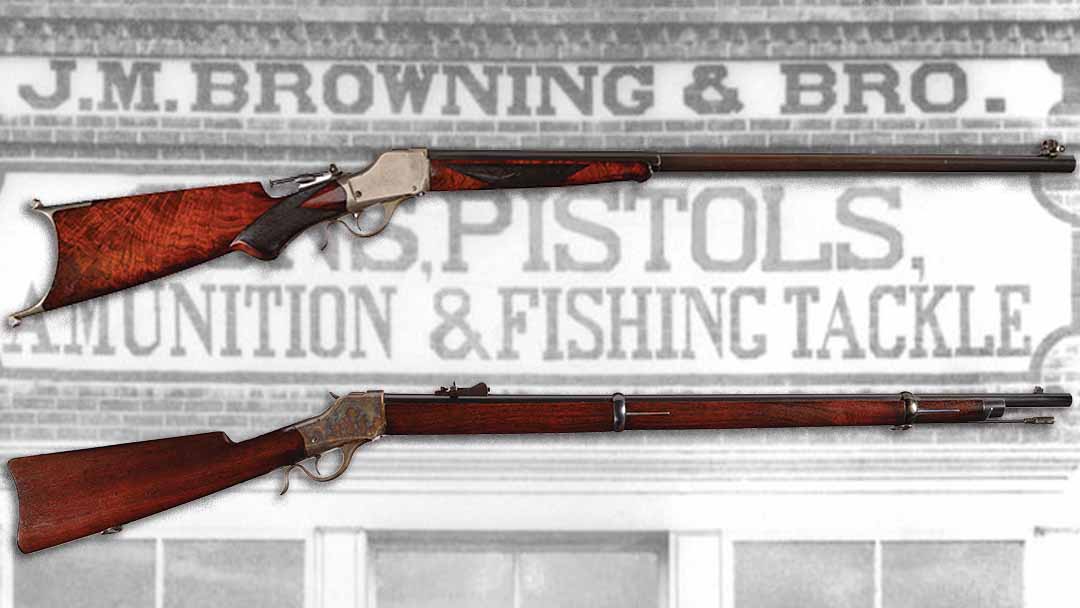
The Winchester Model 1885 remains among the most iconic single shot rifles. Designed by the legendary firearms innovator John Moses Browning, these classic rifles mark the beginning of his rise to become one of the most influential firearms designers in history. Manufactured by Winchester from September 1885 to June of 1920, nearly 140,000 of the versatile single shot Model 1885 were produced, offered in a wide variety of calibers and configurations making the model a rich field for dedicated collectors, competitive marksmen, and hunters alike. Browning’s classic single shot is still popular to this day.
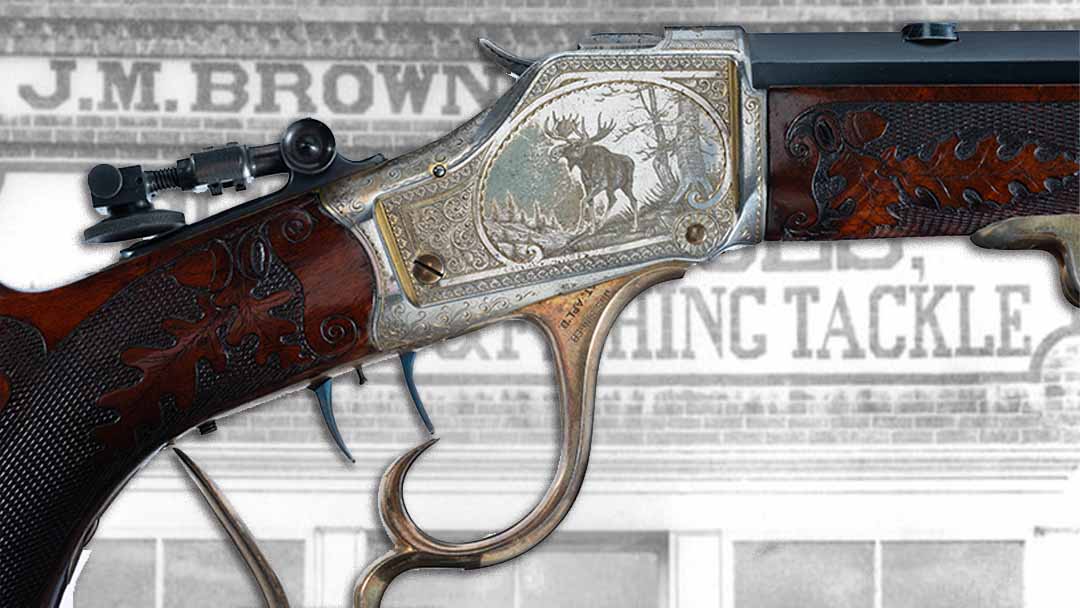
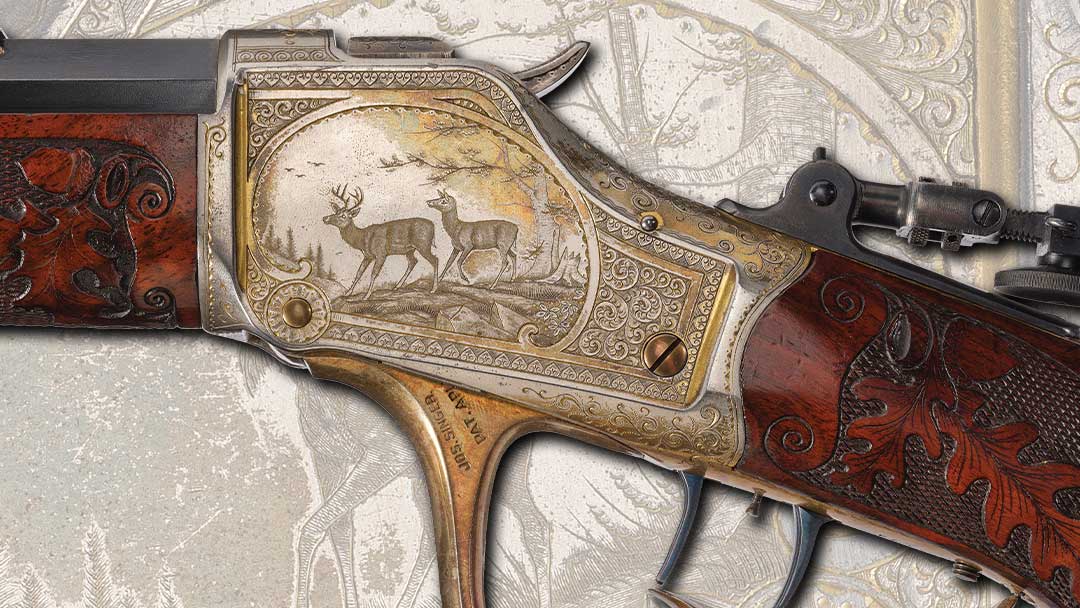
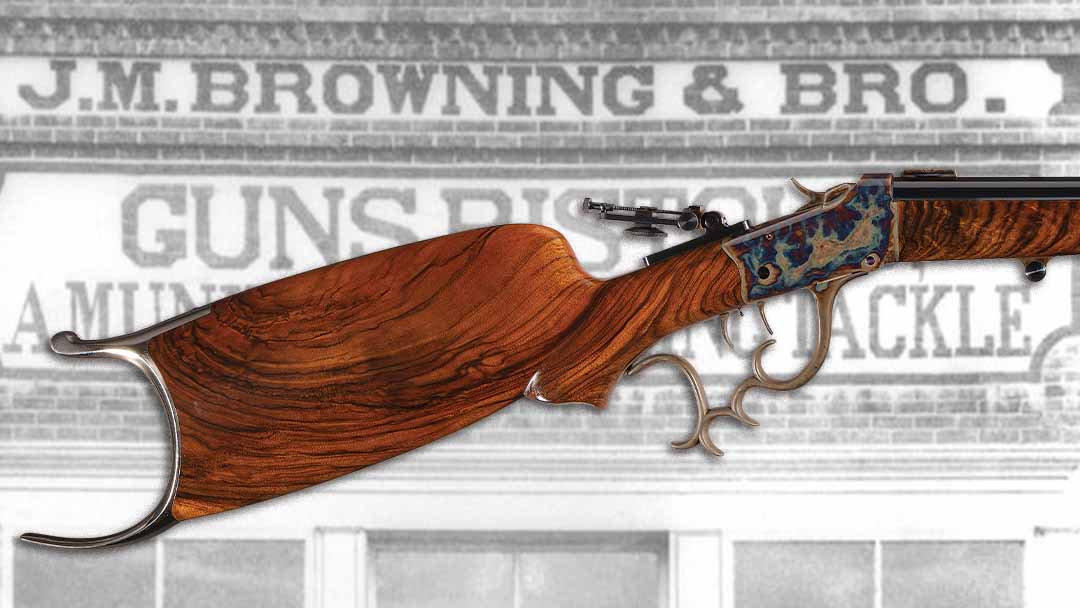
This exceptional Winchester 1885 High Wall with Schuetzen stock has a factory engraved receiver that is gold plated with casehardened breechblock and hammer. The receiver is fitted with Pope wind gauge and elevation rear sights, double set-trigger and a Pope style, three finger lever stamped “JOS. SINGER/PAT. APL’D.” on both sides. The single shot rifle stock and forearm are deluxe, highly figured, fancy grade walnut with a high polish piano finish with Winchester “Style D” checkering and relief carved accents. The engraving, probably executed by John Ulrich, features a highly detailed game scene on either side of the receiver surrounded by arabesque scrolls and fancy border and line work.
Though known as the Winchester 1885, the design for Winchester’s single shot rifle originated in the late 1870s over 2,000 miles from the Winchester factory in New Haven, Conn., in a small frontier gun shop in the Utah Territory. A young John Moses Browning submitted his “improvement in breech-loading fire-arms” on May 12, 1879, and was granted U.S. Patent No. 220,271 on October 7, 1879. Browning’s design used a breechblock sliding vertically within a metal frame operated by a lever similar to the Sharps rifles. Outwardly, Browning’s rifle is fairly similar to Charles H. Ballard’s rifle design patented in November 1861 and used during the American Civil War alongside the Sharps. The Browning design features a centrally mounted hammer like Ballard’s, but differed in other aspects, particularly that the trigger group is stationary in the lower tang.
The Model 1885 and its single shot predecessor drew Winchester’s interest and launched John Moses Browning onto a legendary career as a gun designer. Three Browning Brothers 1879 single shot rifles and a spectacularly engraved Winchester 1885 High Wall Scheutzen rifle will be available in Rock Island Auction Company’s Dec. 6-8 Premier Auction.
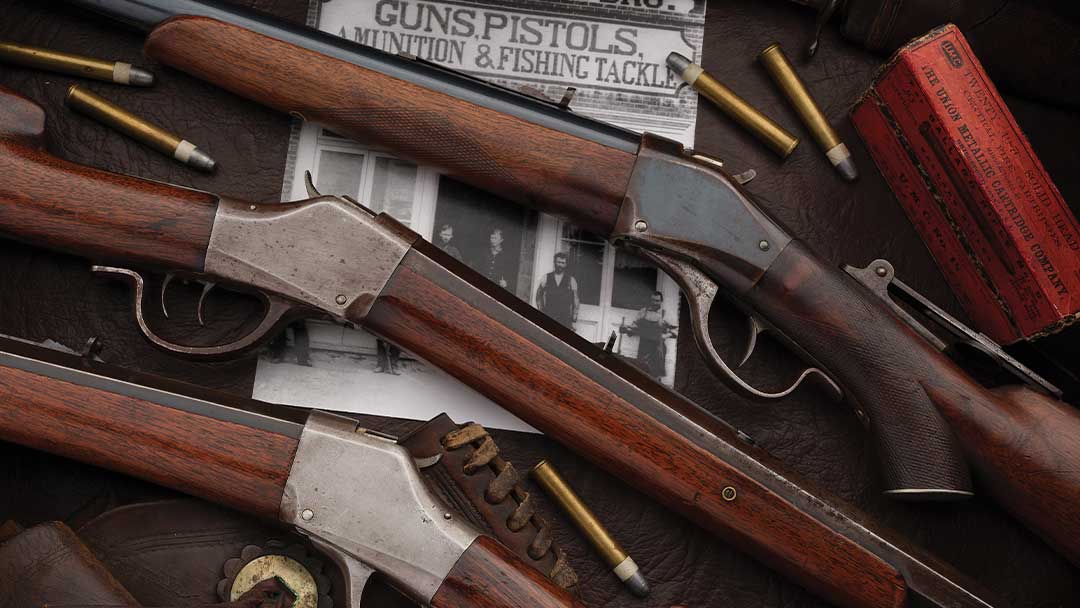
A trio of John Moses Browning patent 1879 single shot rifles all are chambered in .45-70 Government. The Browning brothers made about 600 of these in their Ogden, Utah shop and drew Winchester’s interest. The company purchased Browning’s patent for its Model 1885 single shot rifle.
John Moses Browning’s Single Shot Rifle Design
This is the tale of the gun’s design and Winchester Repeating Arms Company purchase of the rights to the gun’s design. In June of 1879, while he was waiting for his patent to be approved, Browning’s father, Jonathan Browning, died. His father had been an innovative gunsmith in his own right and is particularly known for his harmonica rifle designed in his early shop in Quincy, Illinois. His father had been one of the Mormon pioneers who made the perilous trek across the West to settle in Utah to escape persecution. He established his gun shop in Ogden in 1852. John Moses Browning learned the art of gunsmithing in that shop and began working on the designs that became the Winchester Model 1885.
Browning and his brother Matthew established the partnership John Moses and Matthew Sandefur Browning Company. Mainly known as J.M. Browning & Bro., it evolved into Browning Brothers by the early 1880s, and also employed many of their half-siblings. On December 30, 1882, The Ogden Standard Examiner featured an article about the Browning Brothers noting John and Matthew Browning had a “knack” for gunmaking and “have for their life-time been devoting all intellectual ingenuity and muscular strength to the production of a breech-loading rifle which will answer all the purposes which can be expected of such an arm: ease, durability, etc.” Their brick shop on Ogden’s Main Street was 20 by 50 feet with the front half constituting the retail shop and the rear the gunsmithing shop for making and repairing firearms. Their total monthly revenue was listed at $5,000 at the time.
Browning’s single shot rifle design at first glance resembles this Ballard carbines and rifles, such as this extraordinary Ball & Williams Ballard carbine from the Civil War. Both designs feature a sliding breechblock with a centrally mounted hammer riding in a frame and raised and lowered by a lever. This Ballard carbine will be available in the Dec. 6-8 Premier Auction.
Together, they produced Browning’s distinctive single shot rifles from 1878 prior to applying for the patent until selling the rights in 1883. Only around 600 of these handmade single shot rifles were made. As handmade rifles, there were variations in design and caliber from the very beginning, including what formed the basis for the later “high wall” and “low wall” frames. A hundred or less of these Browning Brothers produced single shot rifles are believed to still exist and Rock Island Auction Company’s Dec. 6-8 Premier Auction will have three examples available.
Winchester Repeating Arms Co. Comes A-Knocking
By the early 1880s, the Winchester Repeating Arms Co. stood as one of the primary sporting arms manufacturers in the country. From the very beginning, their primary products were repeating rifles, but many hunters and target shooters in the late 19th century continued to demand powerful long range single shot rifles that offered more range and stopping power than Winchester’s lever actions could provide. They needed a rugged single shot rifle design that could handle powerful cartridges like the .45-70 Government and long range cartridges like those used in the Sharps Model 1874 and Remington rolling block rifles for long range competitive target shooting.
The Winchester 1885 at top was a special order manufactured in 1893 in .32-40 and features the high wall frame with a wind gauge front sight, a folding Vernier tang sight, single set trigger, style H checkering and a casehardened receiver and schuetzen buttplate. Below is a Winchester 1885 musket with a casehardened frame chambered in .45-70.
In 1883, Winchester Vice President Thomas Bennett traveled to Ogden to visit the Browning Bros. shop to see their rifles and how they were made. During the visit he also admonished them to stop making a reloading tool covered by a Winchester patent. Bennett secured the rights to produce rifles based on Browning’s 1879 patent for $8,000, marking the start of a relationship between Browning and Winchester that lasted until 1902. In 1883, Browning was already designing what would be the Winchester Model 1886, followed by the Model 1892, the Model 1894 and the Model 1895. Browning also designed slide action long guns starting with the Model 1890 rifle and Model 1893 shotgun.
In the early 20th century, the relationship between Browning and Winchester fell apart over pay for Browning’s designs. Rather than a one-time fee as had been the case since 1883, Browning sought royalties. Winchester declined. Instead, Browning designs were manufactured by Fabrique Nationale, Colt, Ithaca, Remington, and Savage. Browning’s Model 1911 semi-automatic pistol and his machine gun designs, especially the M2, remain among the most popular firearms today and are still in use by the U.S. military and numerous other countries to this day.
Considered by many to be the finest Winchester Model 1885 extant, legendary marksman and gunsmith Harry Pope’s well-documented High Wall Schuetzen single shot rifle features factory engraving, a Pope barrel, telescopic sight, a spare set trigger and a case.
Winchester 1885
Though Winchester purchased the rights to Browning’s single shot rifle design in 1883, it did not enter into full production until 1885 after being refined for mass production. Winchester offered the “high wall” frame which covered the sides of the breechblock and hammer as well as a “low wall” frame which had shorter frame walls which left much of the breechblock exposed. The “high wall” was also available with a thicker “flat side” frame or a lighter and thinner “thin wall” frame. Beyond these basic variations, there were also changes to the receiver ring from octagonal to round and numerous variations in terms of calibers, barrels, sights, forearms, stocks, embellishments, deluxe features and various mounts and accessories to serve just about any shooting style or need.
Given the wide variety of options, collectors will find opportunities to acquire examples of the Model 1885 in a shockingly wide variety of configurations and condition. Some are plain and saw hard use in the American West in the late 19th century while others are highly refined rifles designed for serious target shooting competitions and remain in incredibly high condition. The latter rifles were used in rifle matches across the country in the late 19th century and early 20th century at the height of single shot rifle match competition.
The detailed game scene on this Winchester 1885 receiver is remarkable factory engraving likely by John Ulrich.
While customers could special order just about any combination they wanted, Winchester also offered several stock variations of the Winchester 1885 over the years. Including:
● Plain sporting rifle: open sights, plain Schnabel tip forearm and rifle buttstock with crescent buttplate or shotgun buttplate.
● Special sporting rifle: a sporting rifle but with upgraded wood.
● Special single shot rifle: a special target rifle version designed for off-hand matches with a part-octagon barrel, wind gauge front sight, tang mounted mid-range Vernier peep sight, fancy grade walnut checkered pistol grip stock with Swiss cheek piece and buttplate.
● Schuetzen rifle: In addition to the features of the special single shot rifle, this variation featured a palm rest, modified spurred lever, double set triggers, and higher comb stock with more pronounced hooks on the buttplate. Some of these rifles are incredibly ornate.
● Lightweight single shot carbine aka “baby” carbine: This variation was built on the low wall frame with a saddle ring on the left, a short 15-inch round barrel in .44, .32, or .38 W.C.F.; plain trigger, plain forearm and straight grip stock with a carbine buttplate.
● Musket: The musket was offered in a few different variations over the years as a military training rifle primarily in .22 caliber rimfire with a long forend, military style sights, and plain buttstock with military buttplate. This variation was purchased by the U.S. military and is chambered for more powerful calibers such as .45-70 Government making it particularly rare.
The design was so versatile that it could be set up for everything from short range target practice with .22 Short up to some of the most powerful cartridges of the day for big game hunting. In addition, t he platform was so simple and rugged that Winchester continued to use Model 1885 actions to test cartridges even after newer designs were introduced.
Winchester 1885 Today
Discontinued by Winchester in 1920, the Model 1885 design has remained among the most popular single shot rifles in America. It was reintroduced and continues to be an excellent choice for hunters looking for a simple, strong, and reliable single shot rifle. Browning offered the 1885 as the B-78 from 1973 to 1982, as the Model 1885 starting in 1985 and the Browning Black Powder Cartridge Rifle (BPCR). They have been offered under the Winchester brand and remain available today.
Other companies such as Uberti and Pedersoli in Italy as well as multiple American companies such as C. Sharps Firearms in Montana and Wyoming Armory also produce copies of the Model 1885 in various configurations. The 1885 in .45-70 remains a popular choice for black powder cartridge shooters, and Browning’s classic single shot, offered in a variety of calibers, certainly remains an excellent option for deer hunters in states that only allow single shot rifles.
This stunning Model 1885 Schuetzen Rifle was not built in New Haven, Connecticut, but out west in Cody, Wyoming, by the Ballard Rifle & Cartridge Co. Several companies continue to produce excellent traditional Model 1885 rifles based on Browning’s single shot rifle to this day.
Winchester 1885 and Other Browning Designs
You will not find a single sale at Rock Island Auction Company that does not demonstrate the long lasting influence of John Moses Browning. From his simple but rugged and reliable Winchester 1885 single shot rifle to several of Winchester’s most popular lever action designs including the Model 1894 to semi-automatic pistols like the Colt Model 1911 and machine guns like the BAR and M2.
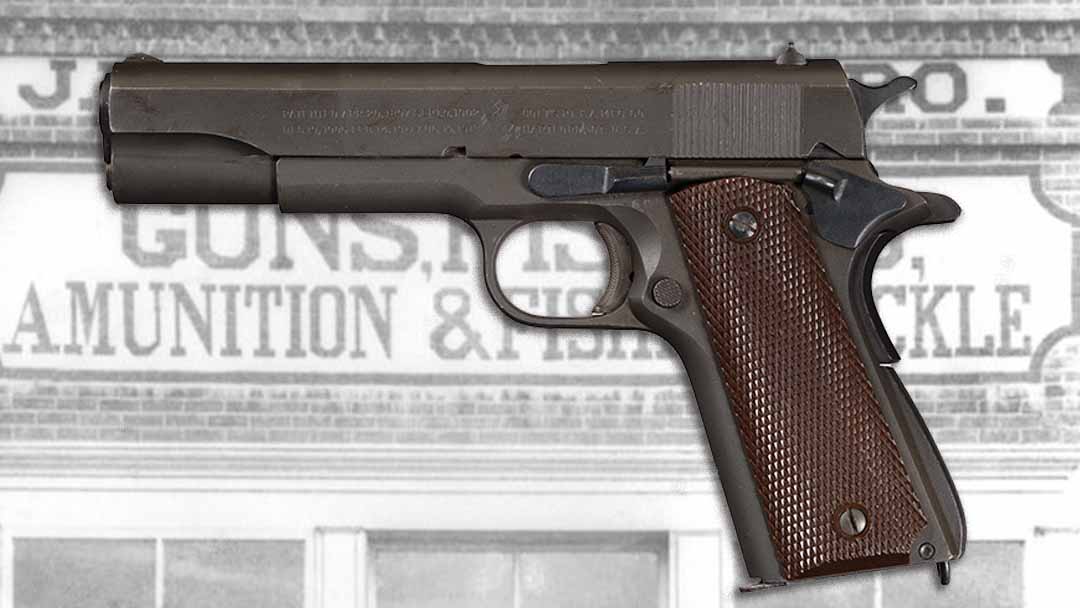
This exceptional Colt Model 1911A1 is a World War II production U.S. contract Colt Model 1911A1, arguably Browning’s most famous and most popular handgun design. Model 1911 and 1911A1 pistols have been produced by numerous companies over more than a century and remain very popular. You’ll find examples in all of Rock Island Auction’s various auction types.
There are literally thousands of Browning-based firearms to choose from every year available at price points for collectors of all levels, from the best historic examples to affordable handguns and rifles for shooters.
Colt has produced some beautiful guns through a roster of master engravers whose works embellish classic 19th century firearms on into the 20th century.
Cuno Helfricht and Wilbur Glahn are just two of the engravers whose relief engraving and inlays have graced Colt handguns and marveled collectors for years, and their influence is obvious on the Colt double action revolvers discussed here. Not all of these revolvers are engraved but they are definitely deluxe – and they will be available in Rock Island Auction Company’s Dec. 6-8 Premier Auction in Bedford, Texas.
Deluxe Double Actions and Cuno Helfricht
Cuno Helfricht served the Colt Firearms Company from 1871 to 1921, starting as an engraver the company sent to Germany to study the art, then becoming chief engraver about 1876 and serving in that role until he retired. During that time, Colt’s percussion era ended and the Single Action Army rose to prominence. The company produced double action revolvers, dabbled in long guns and added semi-automatic pistols.
Helfricht’s style, passed on to his craftsmen, was of American scrolls and border motifs that displayed German influences. He led the engraving shop at a time when Colt’s revolvers were put on display at events like the Philadelphia Centennial Exhibition of 1876 where 18 Single Action Army revolvers were displayed. As demand for engraved guns faded at the turn of the 20th century, Helfricht did much of the Colt work.
Engravers didn’t tend to sign their work until well into the 20th century, but this Colt Model 1877 “Lightning” double action revolver was likely finished by Helfricht given the time frame. The revolver has stunning factory scrolling “Nimschke star” accents as well as beaded backgrounds and shell accents. The engraving extends to the back of the hammer and offers interlacing designs to the frame, trigger guard and backstrap.
This Colt Model 1877 Lightning double action revolver is chambered in .38 caliber and along with its brilliant engraving is inscribed “W.G. Mathews.” Mathews is likely Sergeant-Major William George Mathews who was riding master of the 3rd Hussars and served on the staff in India. Mathews (or Matthews) is credited with producing the first of the Royal Canadian Mounted Police’s musical rides in 1887. The revolver has smooth pearl grips, a nickel finish and nitre blued hammer and trigger.
Deluxe Double Actions: A Colt Model 1877 Lightning sent to Wyoming
The Model 1877 was Colt’s first double action revolver and the nickname – “Lightning” – was handed down by Benjamin Kittredge, a large Colt distributor who already named the commercially available Single Action Army as the Peacemaker. The Lightning was chambered in .38 caliber, while the 1877 in .32 was dubbed the Rainmaker and the .41 caliber revolver was the Thunderer.
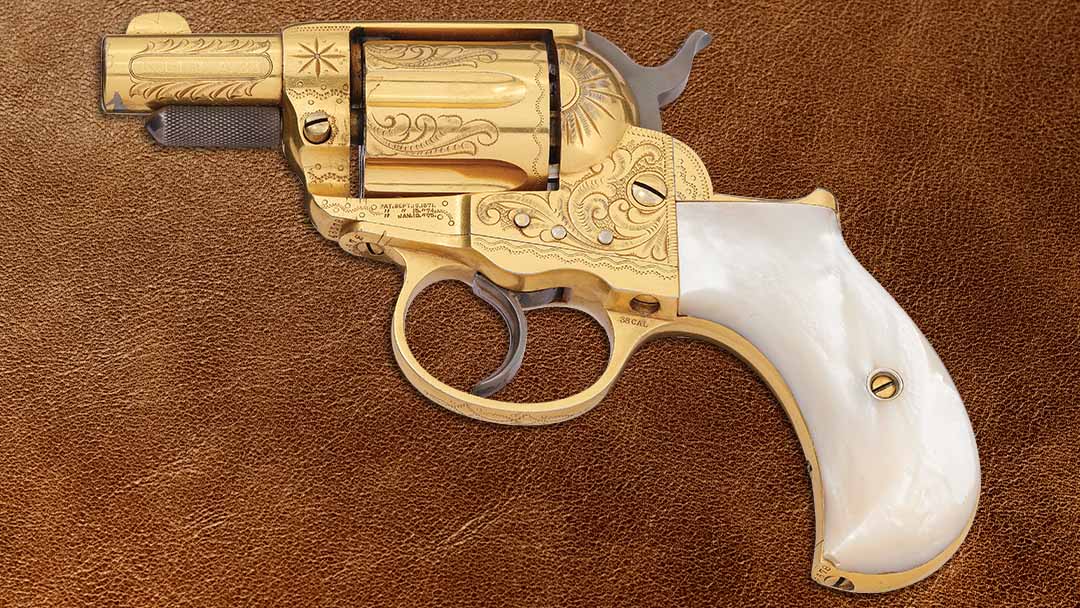
This revolver pictured below was shipped to Cheyenne, Wyoming on Dec. 12, 1883 to Peter Bergenson, likely a misspelling of noted Cheyenne gunsmith and competition shooter Peter Bergerson, who lived in Cheyenne from 1853 to 1930. It has floral scrolling on both sides of the frame, starbursts on the recoil shield and loading gate, likely executed by Cuno Helfricht or under his watchful eye.
This attractive factory engraved and gold finished Sheriff’s Model 1877 Lightning, manufactured in 1877, has a two-inch barrel and chambered in .38 shipped. The factory letter states it was shipped to Cheyenne, Wy., in December, 1883.
Deluxe Double Actions: Factory Engraving
Colt offered three levels of factory engraving: “A” was the minimum level of engraving, followed by “B” which provided more coverage and “C” is “the most ornamental” according to the company’s 1932 catalog. Engraving styles changed with shop leadership. Taking over for Gustave Young, Helfricht’s patterns were strongly Germanic but evolving so a more American-style scrolling was added as well as border designs and rare panel scenes for the guns produced by Colt from 1871 to 1921.
“We have always taken special pride and given the greatest attention to such ornamanented Arms,” Colt states in a catalog of the day. “Silver and gold mountings, inlays, engravings and etching of special designs that delight fastidious sportsmen are done in a separate department by skilled artisans whose work recalls the celebrated armorers of old.”
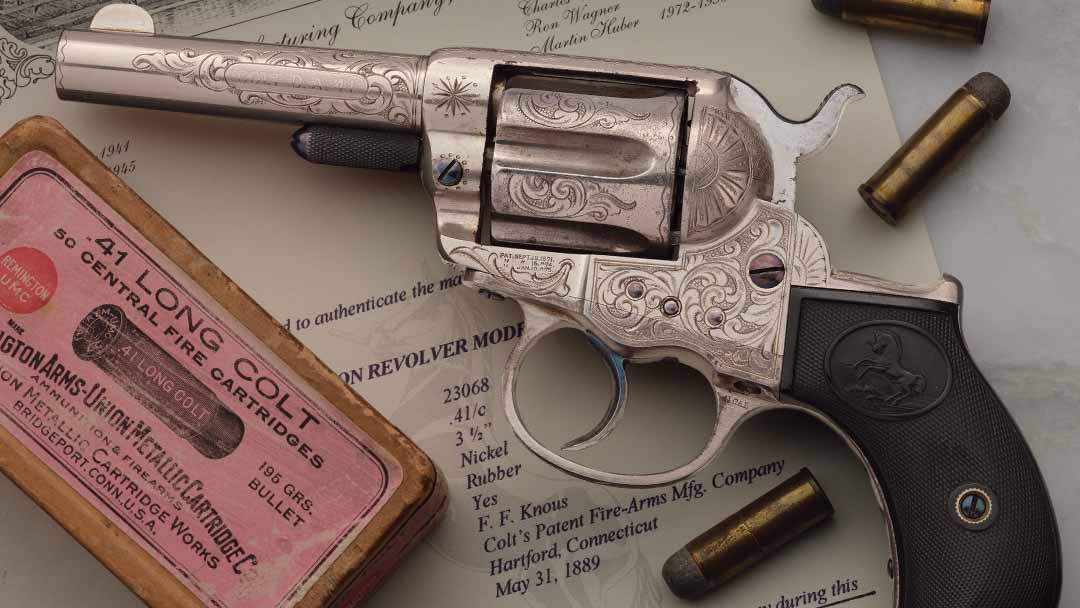
This Colt Model 1877 Thunderer manufactured in 1889 is an example of “B” level or “Style 2” engraving with Germanic scrollwork on a punch dot background with double line borders. Demand for engraved firearms declined in the late 1890s. Helfricht’s staff went from six regular craftsmen from 1875 to 1885 to fewer than two. By 1900 guns were only engraved by special order.
This Colt Model 1877 Thunderer shipped on May 31, 1889 with factory engraving and rubber stocks to F.F. Knous, Colt’s Patent Fire Arms Company on May 1889. Knous was the company’s superintendent at the time. It has Germanic scrollwork on a punch dot background with double line borders likely done by Helfricht or his staff.
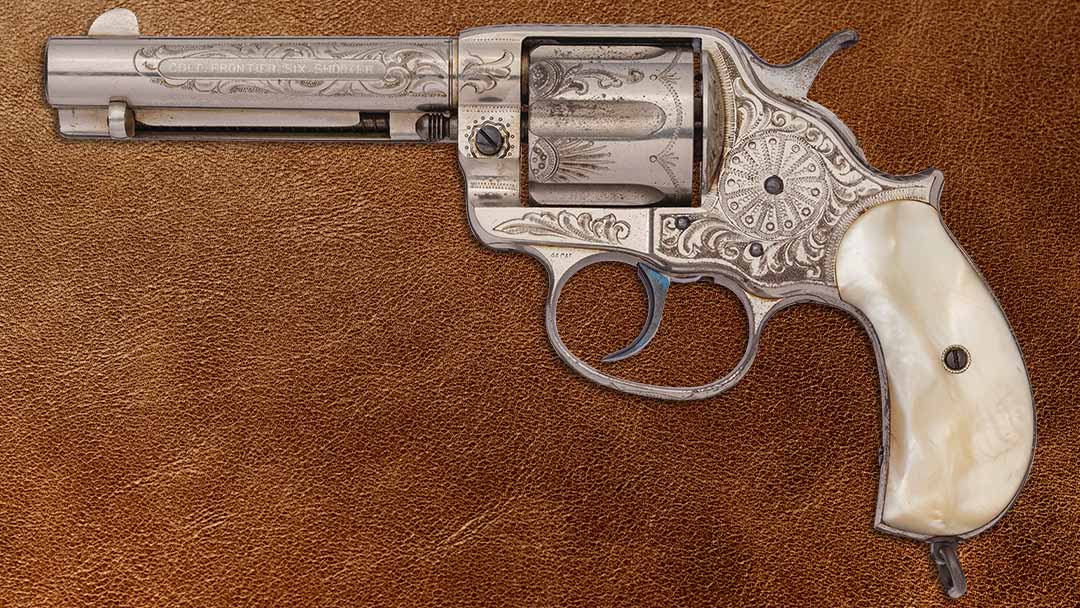
The following Colt Frontier Six Shooter Model 1878 also has factory engraving but is much more ornamental, produced two years earlier than the Thunderer when it was shipped in July 1887 in .44 caliber to E.C. Meacham Arms Co. in St. Louis.
This exceptional factory engraved etched panel Colt Frontier Six Shooter Model 1878 has elaborate scroll, geometric and wavy line engraving has smooth pearl grips and a lanyard ring on the butt.
Deluxe Double Actions: Surprisingly, Matthew Quigley’s Frontier Six Shooter
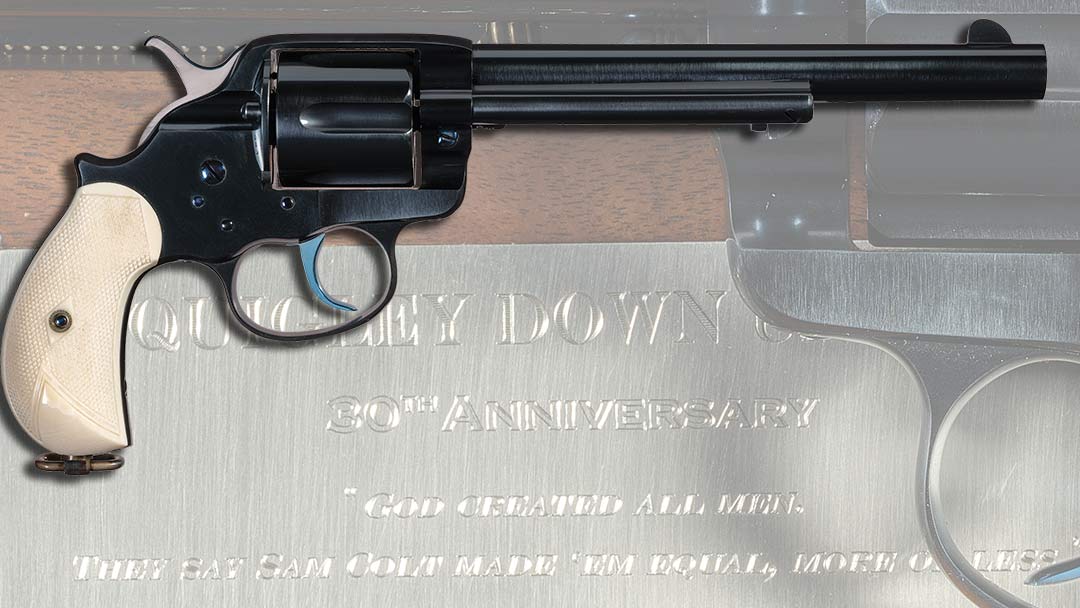
Along with television private eye Thomas Magnum, Matthew Quigley might be one of actor Tom Selleck’s most iconic characters, known for his dead eye with a Sharps Model 1874 rifle. To celebrate the 30th anniversary of the film “Quigley Down Under,” Selleck commissioned Doug Turnbull to restore a Model 1878 Frontier Six Shooter, thinking it would be the sidearm Quigley would carry in the Australian outback. The gun is beautifully blued with only light floral scrolling surrounding “M. QUIGLEY” on the back strap.
“While Matthew Quigley clearly had handled many revolvers of the period he was rightfully partial to Colts. Having walked in his boots and knowing this Sharps was a state-of-the-art prototype of the 1874 model, I felt over time he would have settled on the Colt 1878 Double Action,” Selleck wrote in a letter that accompanies the cased revolver.
The case accompanying the Model 1878 Frontier Six Shooter commissioned by Tom Selleck for the 30th anniversary of his movie “Quigley Down Under” has a plaque on the lid marked “QUIGLEY DOWN UNDER/30th ANNIVERSARY/GOD CREATED ALL MEN. THEY SAY SAM COLT MADE ‘EM EQUAL, MORE OR LESS.” Another plaque on the inside of the lid has another Quigley quote from the movie, “SAID I NEVER HAD MUCH USE FOR ONE. NEVER SAID I DIDN’T KNOW HOW TO USE IT.”
Deluxe Double Actions: Wilbur Glahn
Wilbur Glahn’s family arrived in the United States in 1829 and Wilbur was born in 1888. He worked for Remington from 1905 to 1919 before joining Colt where he worked in the factory until 1923 when he set up a home workshop but engraved primarily for Colt. Among his work were revolvers for the King and Queen of Siam and the Prince of Wales. He also engraved pieces for cowboy actor Tom Mix, stripper Sally Rand, as well as for Texas Rangers including Frank Hamer. For Auto Ordnance he engraved a silver plaque mounted on a Thompson submachine gun that was presented to Soviet dictator Joseph Stalin. His death in 1951 was the end of the Germanic engraving family dynasties.
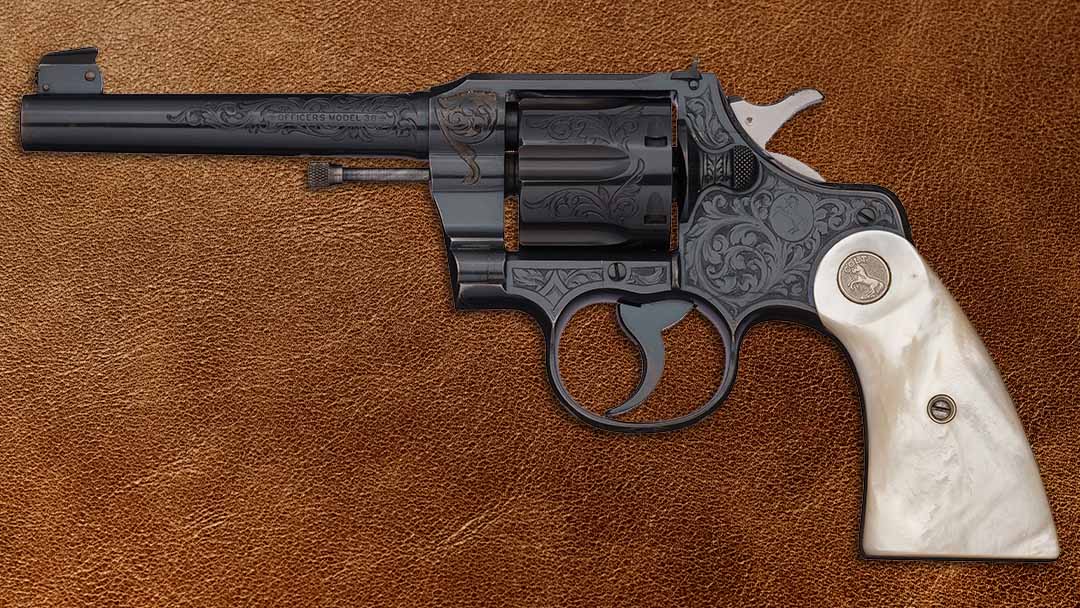
This Colt Officers Model was factory engraved by Wilbur Glahn with deeply cut scroll designs on a punch dot background at the Class “B” level and was shipped on March 30, 1928 to Chicago.
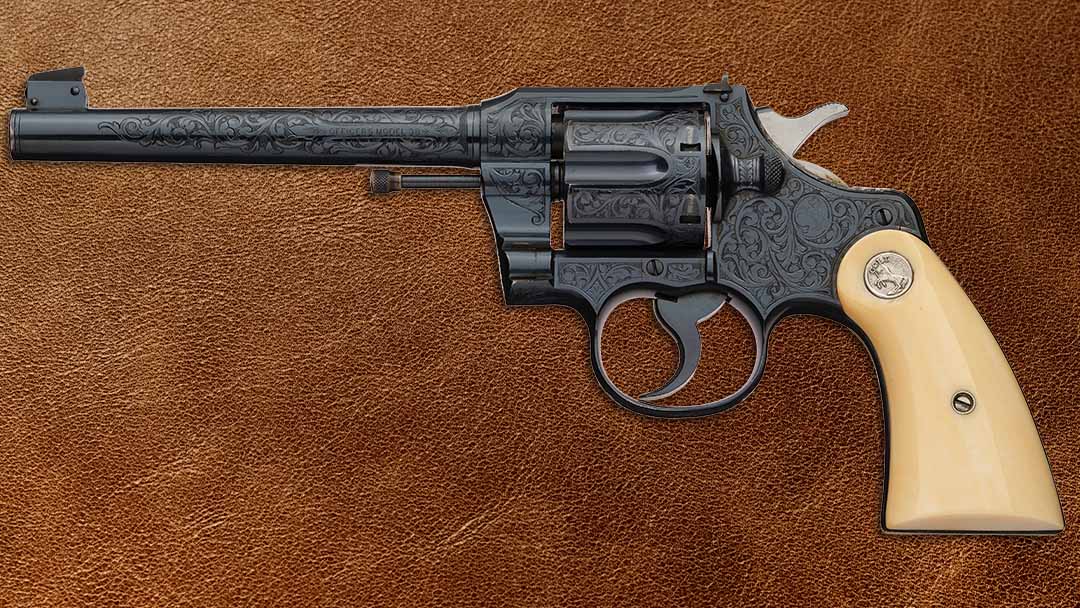
The Officer’s Model introduced in 1904 was a medium frame double action target revolver and served as Colt’s premium revolver until the Python came out in 1955. The second issue had an improved action based on the Army Special of 1908. The revolver was produced until 1972. The following revolver was part of the “The Colt Officers Model Revolver 1904-1971” display at the 2014 Colt Collectors Association show.
This Colt Officer’s Model served as a fantastic canvas for pre-World War 2 artistry, covered with factory class “C” engraving of scrollwork on a stippled background while leaf patterns decorate the underside of the frame and butt. The engraving covers nearly all of the frame accept the knurled back strap and smooth front strap. Double bands are engraved at the muzzle and floral patterns flanking the Colt address and patent dates and “OFFICERS MODEL 38.” The hammer spur and trigger are checkered. It has Colt silver medallion grips featuring a relief carved steer head. This revolver was included in “The Colt Officers Model Revolver 1904-1971” display at the 2014 annual Colt Collectors Association in Concord that earned Best of Show, First Place/Double Action Revolvers and Best Educational awards.
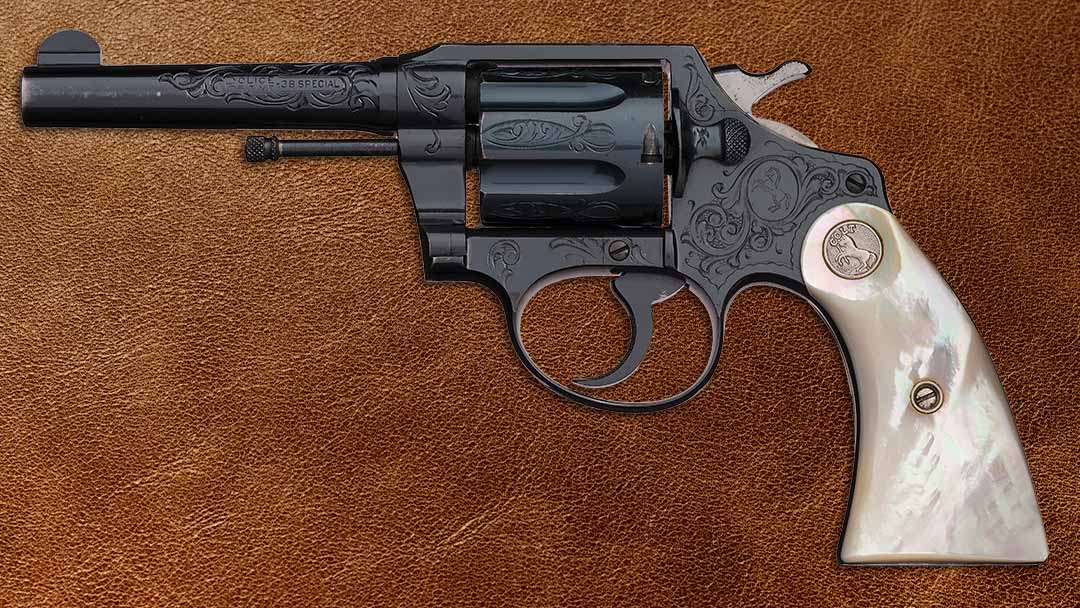
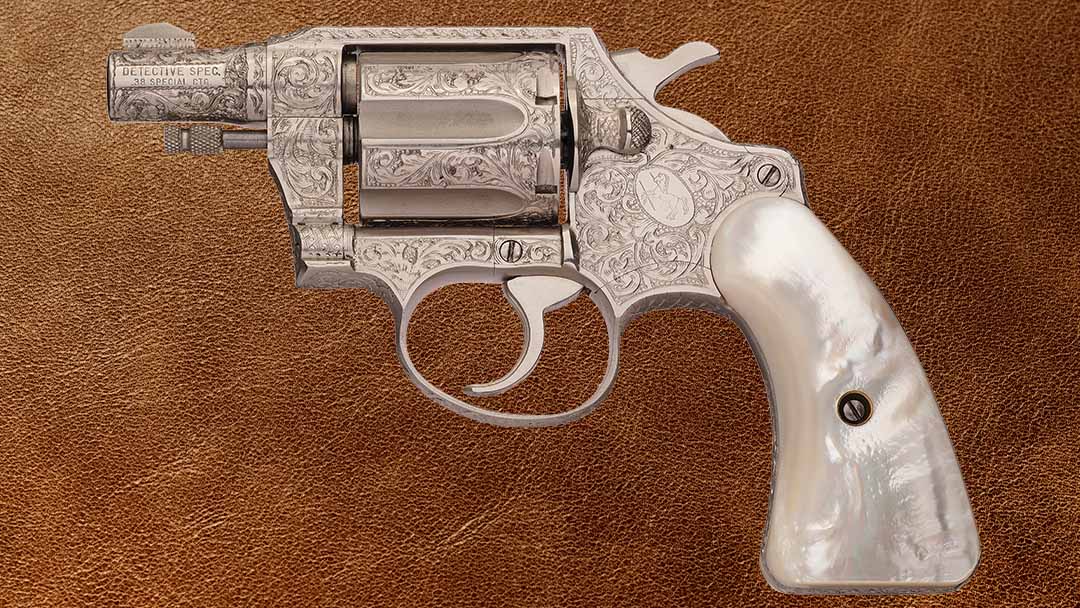
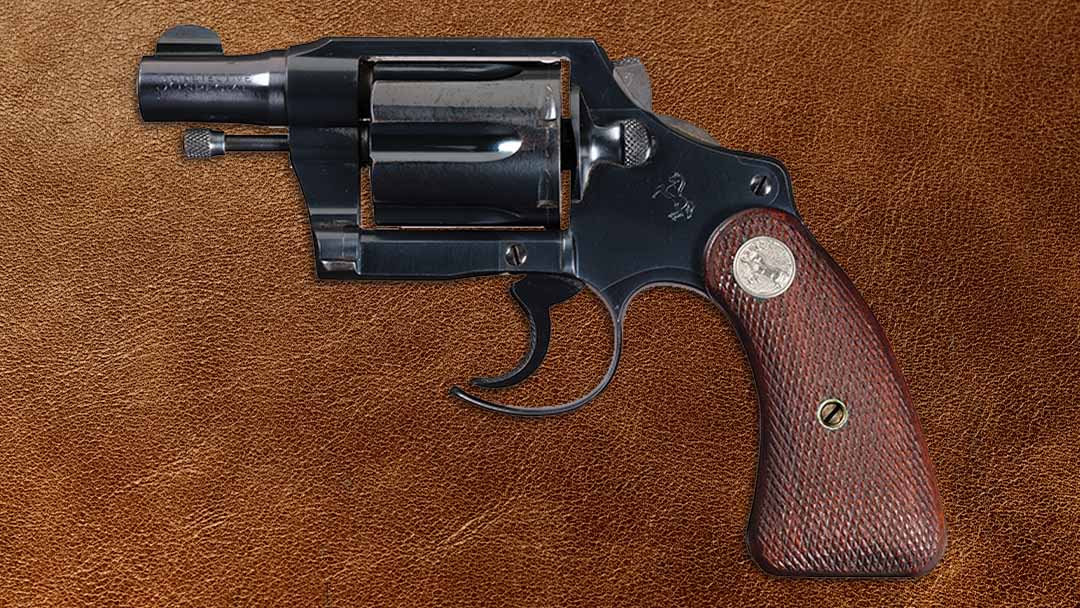
Deluxe Double Actions: Colt Police Positive
The Police Positive arrived in 1907 and was produced until 1973. This gun had an internal hammer block safety that Colt called the “positive” lock. The cylinder rotated clockwise and Colt marketed that as a difference with Smith & Wesson that rotated the opposite direction, advertising “All Colt cylinders TURN TO THE RIGHT.” The advertising implied the cylinder locked up tighter with the frame for better barrel alignment. The positive lock prevented the firing pin from striking the primer of the cartridge unless the trigger was deliberately pulled, preventing accidental discharge. This allowed all six chambers to be loaded.
This factory engraved Colt Police Positive has factory carved steer head pearl grips sent to the commanding officer of the Pennsylvania State Police in Reading, Penn., on Dec. 19, 1928. The gun has floral scroll and punch dot engraving on the barrel sides, the frame sides and trigger guard with a floral scroll pattern on the cylinder chambers and butt and has pearl grips.
Deluxe Double Actions: Detective Special
The Detective Special is a small frame revolver with a two-inch barrel and swing-out cylinder based on the Police Positive that was introduced in 1927. The first modern “snubnose” revolver, its pocket size made it a preferred revolver for police detectives, undercover officers and as an off-duty carry. Because of its intended use as a working gun, it is rare to encounter a factory engraved Detective Special. Smith & Wesson didn’t have anything to compete with the Detective Special until 1950 when the company released the Model 36, or Chief Special.
This Colt rare factory engraved Detective Special shipped to Springfield, Ill., Police Chief Ben Little in 1952 is fully covered with masterful floral scroll engraving along with a blank inscription banner on the back strap and fitted with smooth pearl grips,
Deluxe Double Action: Fitz Special
John Henry Fitzgerald, or “Fitz,” was a bare-knuckle boxer and champion pistol shooter who worked for Colt in a number of roles from 1918 to 1944. He published a book on shooting and developed the concept of a gun that would be the prototype of the Detective Special in the 1920s. His gun had a 2-inch barrel with a shortened ejector rod, the front half of the trigger guard was cut away, the hammer spur was bobbed and the butt was also rounded to prevent snagging when pulling from a pocket. Fewer than 200 were made and were only done at special request for law enforcement officers or FBI agents.
Tom Selleck’s character on “Blue Bloods,” Frank Reagan, carries a Fitz Special, the third generation of police officer to do so since it was given to him by his father who, in turn, had received it from his father.
The gun shown below was shipped to Col. Lynn G. Adams, with the Pennsylvania State Police who bought it for his friend, Col. William G. Fisher. The factory letter reports that it was shipped as a “Fitzgerald cutaway special” when it was sent to Adams in 1939.
This “Fitz Special” Detective Special has a blued finish and all the hallmarks of the specially made gun, with a 2-inch barrel and shortened ejector rod, bobbed hammer spur, cut away trigger guard and rounded butt.
Deluxe Double Actions for Sale
Deluxe means sumptuous or luxurious and the previously mentioned Colt double action revolvers certainly meet that definition, whether it is through engraving, restoration, or special orders. Nicely embellished Wild West guns, an improbably engraved 20th century wheelgun, a super special order and one from a Hollywood star’s collection, are among the deluxe double action Colt revolvers in Rock Island Auction Company’s Dec. 6-8 Premier Auction.
Sources:
“Steel Canvas, The Art of American Arms,” by R.L. Wilson
“What’s a Fitz Special? Yesterday’s Cutting-Edge Gun Designs of Tomorrow,” by T. Logan Metesh, American Handgunner
High conditioned Colts. Historic Colts. Beautiful Colts. Backed by more than two centuries of collecting experience, Rock Island Auction Company’s Dec. 6-8 Premier Auction in Bedford, Texas will be led by a fantastic lineup of Colts from truly elite collections.
Represented in the Auction will be firearms from the Brig and Louise Pemberton Collection, the Charles Marx Collection, the Robert M. Lee Collection, the Greg Lampe Collection, the George Lewis Collection, the Andrew Singer Collection and the TTT Collection, assembled over the course of more than 250 years of collecting.
A sampling of the impressive Colts on offer in Rock Island Auction Company’s Dec. 6-8 Premier Auction.
One of the elites of Colt collecting is the rare and historic Paterson, and the December Premier is honored to offer several rare examples of the gun that launched Samuel Colt to success, like an outstanding Colt Baby Paterson No. 1 to a Model 1839 revolving carbine to a rare two-digit serial number Texas Paterson No. 5 Holster Model.
This outstanding Colt Baby Paterson No. 1 Pocket Model will be available in Rock Island Auction Company’s Dec. 6-8 Premier Auction.
To stop at these exemplary Patersons is to dip a toe in the ocean and then head back to the beach blanket. There are Colts both of legend and legendary to be found in Bedford on the first weekend of December. An extremely rare “pinched frame” Single Action Army, a Single Action Army in .44 Russian presented to U.S. Sub-Inspector John T. Cleveland, a Lot 5 Colt of the 7th Cavalry Custer era and a cased Model 1860 Army revolver with a factory presentation inscription to Union surgeon Dr. John J. Milhau will be on offer. Dotting the roster will be rarities like the 1872-73 Open Top, the double action Model 1878 Omnipotent and Model 1877 Rainmaker. Not to be left out are is the soft-shipped black powder frame Sheriff Model engraved by Master Engraver L.D. Nimschke. The 19th century master is not alone as Colts engraved by Cuno Helfricht, Wilbur Glahn and others are represented as well.
This L.D. Nimschke master engraved ejectorless Sheriff Model Colt Single Action Army revolver dates to 1882 and is one of just 600 made. This rarity, available in the Dec. 6-8 Premier Auction, is also documented as being owned by Texas Ranger Benjamin Franklin Finn.
Not to be outdone, an array of Winchesters, ranging from the legendary 19th century lever guns to modern sporting arms are topped by a fantastic assortment of Model 1866 rifles that include a factory engraved and gold-plated Second Model with Henry Patent marked-barrel and an ultra-rare exhibition grade engraved and signed Model 1866 musket and its consecutively-numbered factory engraved and C.F. Ulrich-signed Model 1866 Saddle Ring Carbine Also, what is considered by many to be the finest factory engraved Winchester 1885 High Wall Schuetzen rifle and an outstanding and documented early production special order Winchester Deluxe Model 1894 with scarce casehardened receiver will be available.
This Winchester Model 1866 musket at top and the Model 1866 Saddle Ring Carbine below are consecutively numbered and each signed by Master Engraver C.F. Ulrich. They will be offered in consecutive lots in the Dec. 6-8 Premier Auction.
Fine Winchesters spill over into an abundance of beautiful sporting arms and a spectacular “Ultra Set” of 11 boxed engraved and gold inlaid and consecutively serial numbered Winchester Model 70 Ultra Grade Featherweight rifles. Among the bespoke sporting arms are a stunning trio of J. Purdey and Sons 28 gauge shotguns signed and engraved by Master Engravers Giancarlo and Stefano Pedretti, a pair of stunning, factory engraved Westley Richards rifles as well as the first ever factory engraved Boss & Co. .410 bore assisted-opening sidelock over/under ejector shotgun from the collection of Coca-Cola chairman R.W. Woodruff.
Available in the Dec. 6-8 Premier Auction, this magnificent trio of Purdey & Sons 28 gauge shotguns are engraved and signed by Master Engravers Giancarlo and Stefano Pedretti.
Smith & Wesson has some beautiful and intriguing pieces among the offerings like an Elvis Presley-commissioned Model 29-2 revolver with oak carved grips, engraving and gold inlays for his friend, Lamar Fike along with an outstanding First Model Schofield and a Tiffany & Co. marked exhibition quality silver-plated engraved .32 Safety Hammerless 1st Model.
“King of Rock and Roll” Elvis Presley commissioned this engraved and gold inlaid Smith & Wesson Model 29-2 with oak carved grips for his friend Lamar Fike. This beautiful revolver is available in the Dec. 6-8 Premier Auction.
Among the historic guns available will be a documented British Long Sea Service flintlock pistol inscribed as owned by Revolutionary War traitor Benedict Arnold, a documented Battle of the Little Bighorn era U.S. Springfield Model 1873 Trapdoor recovered from the 7th Cavalry in 1877 and a Colt Single Action Army with eagle carved grips presented as a gift by President Theodore Roosevelt to friend James R. Gregory. Also in the auction are a John Armstrong Maryland Golden Age American long rifle with a raised relief carved stock and a rare and historic early production serial number 19 Ludwig Loewe Model 1893 with matching shoulder stock and inscribed to the founder of Floral Park, New York.
This extremely rare first day production serial number 2 Winchester Model 1912 slide action shotgun is available in the Dec. 6-8 Premier Auction.
Modern firearms range from desirable variants of the Colt Model 1911 including a 1907 U.S. Army trials pistol, an early production two-digit serial number Model 1911 and a non-serial numbered Singer, Lugers from the Jan Still Collection and a Savage pistol in .45 ACP for the 1907 pistol trials. A SIG Mondragon Model 1908 semi-automatic rifle with ultra-rare drum magazine and a fine sampling of World War 2 era weapons ranging from pistols like the Mauser P.38 and rifles like the M1 Garand.
Offered in the Dec. 6-8 Premier Auction is this unserialized Singer Model 1911A1.
An extremely rare FN M240 general purpose belt-fed machine gun and a highly desirable Cadillac-Gage Stoner 63 propels a fierce lineup of Class III firearms that also includes World War 2 submachine guns, Thompson submachine guns, a pair of M60 machine guns and a pair of M2 heavy machine guns.
This pair is one of 100 made consecutively Colt Boa double action revolvers that come with their boxes. They will be available in the Dec. 6-8 Premier Auction.
Returning to the fantastic offerings of Colts and their variations, there is a rare one of 100 consecutively made set of Boa double action revolvers with boxes, Woodsman pistols, Python revolvers and rare bear guns, the Grizzly and Kodiak double action revolvers.
Collectors looking to fill out their Colt collections or simply searching for that beautiful or historical piece to display will find a cornucopia of opportunities in Rock Island Auction Company’s Dec. 6-8 Premier Auction in Bedford, Texas.
A final glimpse from Rock Island Auction Company’s Dec. 6-8 Premier Auction is this incredible first-ever factory engraved Boss & Co. .410 Bore Assisted-Opening Sidelock Over/Under Ejector shotgun from the collection of Coca-Cola Chairman R.W. Woodruff.