The M1941 Johnson Rifle Goes to War

0

How did a prototype rifle designed by a lawyer with a gun hobby become a serious contender against the mighty M1 Garand? The M1941 Johnson carries a story as colorful as its talented inventor, and these scarce WW2 semi-automatic rifles have become some of the most sought-after firearms in today’s collecting landscape.

A WW2 U.S. Johnson Automatics Model 1941 rifle with an extra barrel, two bayonets, and a U.S.M.C. cartridge belt. Available this June.

Rock Island Auction Company’s June 21-23 Sporting & Collectors Auction in Bedford, Texas features four M1941 Johnson rifles for sale, as well as hundreds of additional rare and desirable military arms for enthusiasts looking to expand their collections.
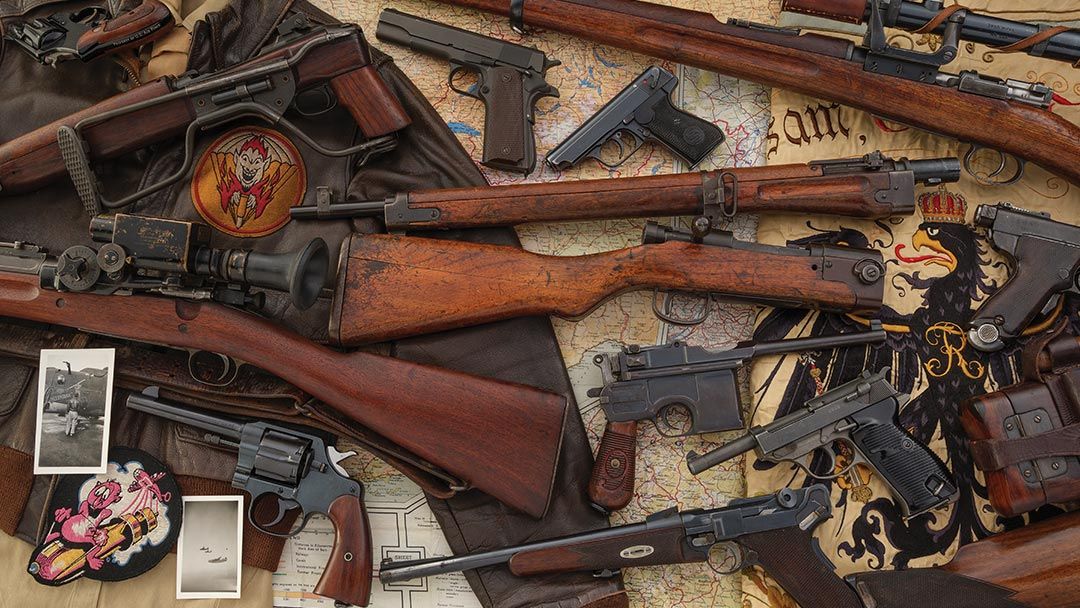
Find the M1941 Johnson rifle and a wealthy of other collectible military arms in RIAC’s June S&C Auction.

Melvin Johnson’s Rifle

Boston attorney and law professor Melvin Maynard Johnson, Jr. had an interest in firearms from an early age. After being commissioned into the Marine Corps Reserve in 1933, Johnson was posted at Springfield Armory as an observer and tasked with reporting on the two semiautomatic rifles being tested by the Service Rifle Selection Board, the T1 Pedersen and the T3 Garand.
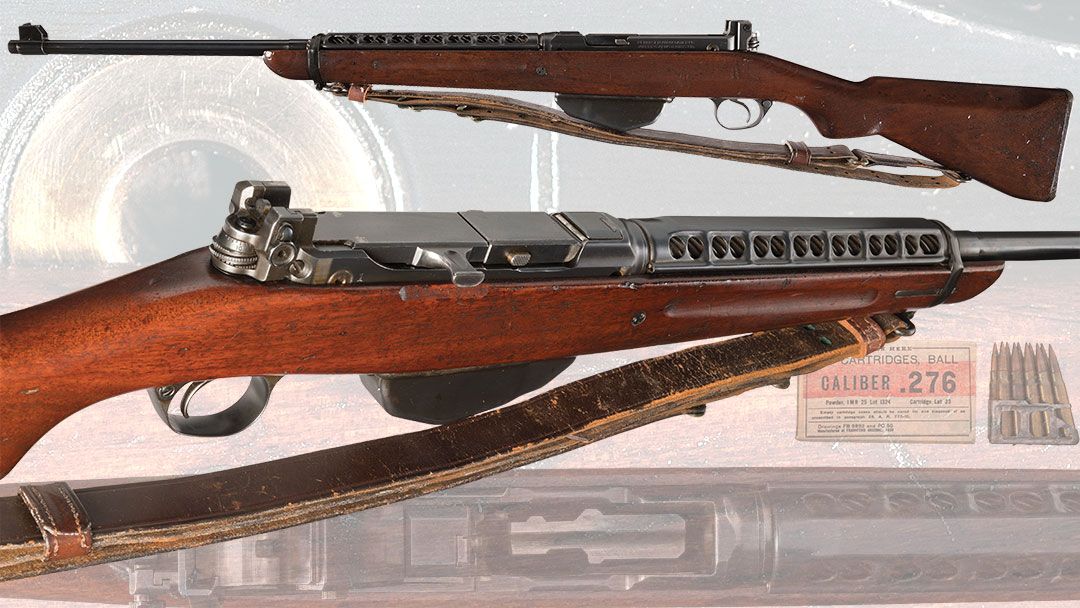
This extremely rare Pedersen “T” series test carbine sold for $37,457 in RIAC’s September 2021 Premier Auction. John Pedersen’s retarded blow-back, toggle-jointed mechanism competed with the M1 Garand in the 1930s.

Johnson found both designs lacking, particularly John Garand’s gas-operated system, which he thought would be too reliant on ammunition consistency that might be lacking during a wartime scenario where multiple factories scrambled to meet production quotas. In 1935, Johnson began developing a recoil-operated system with a rotating bolt. He filed his first U.S. patent in April 1936 and produced a prototype by August.
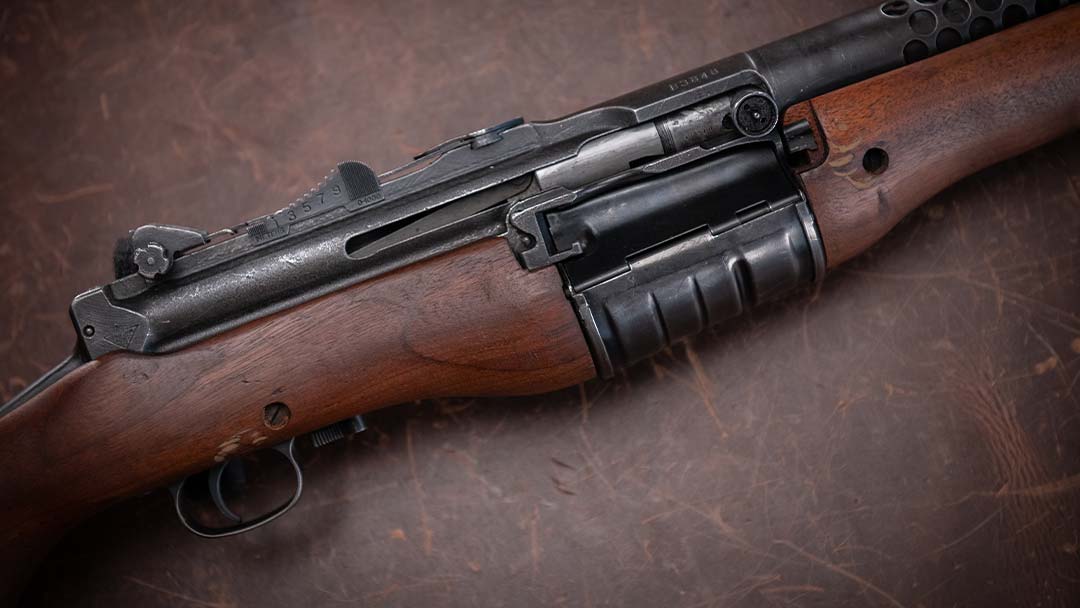
An M1941 Johnson rifle for sale this June.

Johnson Rifle Testing

Melvin Johnson established Johnson Automatics Trust in Boston, which would later become Johnson Automatics Inc. In 1938, Johnson partnered with Marlin Firearms to manufacture prototypes of his semiautomatic rifle for the Army Ordnance Board. Evaluations took place that August at the Aberdeen Proving Grounds.
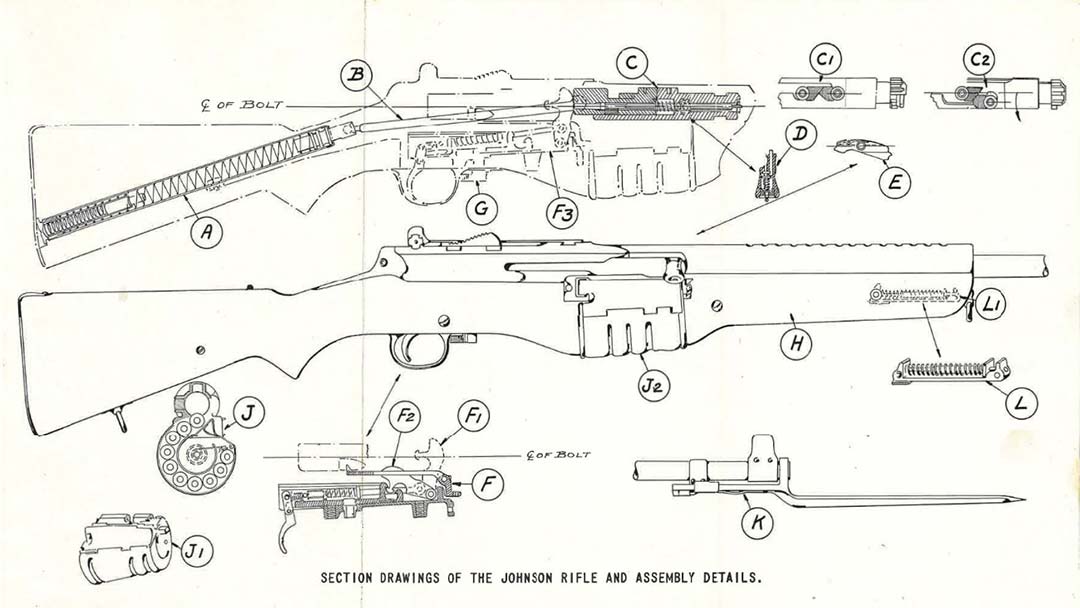
Section drawings of the M1941 Johnson rifle.

Trials were promising, though several flaws were noted, including the rifle’s poorly performing vertical box magazine, which were based on modified BAR magazines. Johnson updated his design with a modified bolt and extraction system, an improved cocking handle, and a new rotary magazine inspired by the Krag rifle was introduced that could be topped off at any time. Johnson also incorporated some of these concepts into a light machine gun design.
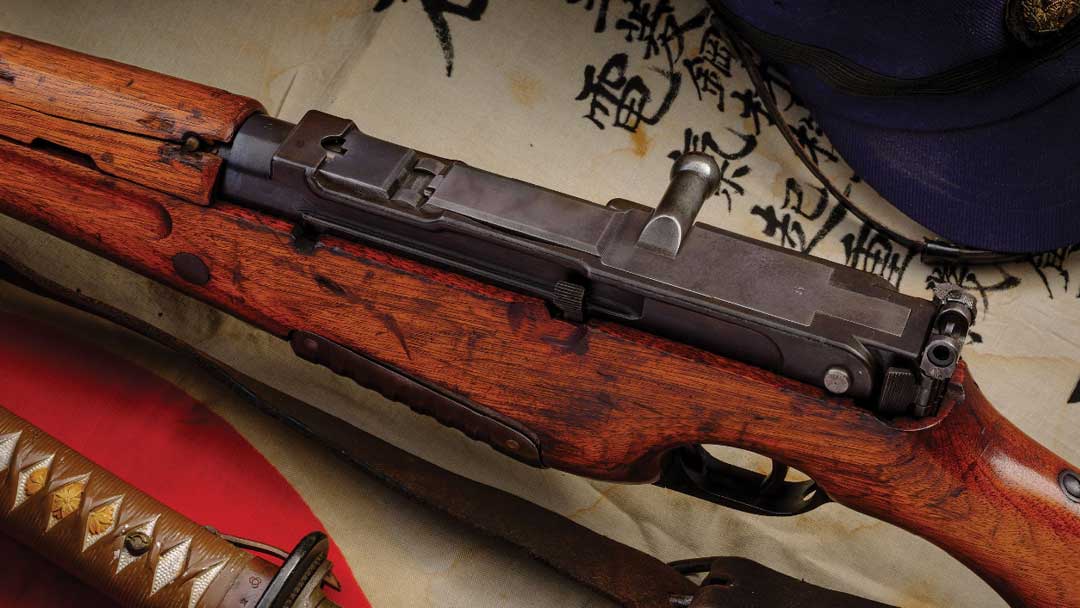
The experimental Japanese Pedersen trials rifle was developed with a rotary box magazine very similar in design to the Johnson rifle. This exceptionally scarce Japanese Pedersen trials rifle sold for $94,000 in RIAC’s December 2023 Premier Auction.

Johnson partnered with the Taft-Peirce Company of Woonsocket, Rhode Island to produce his updated rifle for the next round of U.S. Army trials in December 1939. Though the Ordnance Board applauded the Johnson rifle’s workmanship, they were concerned about its length, weight, and inability to fit a conventional bayonet. These weaknesses resulted in another rejection.

The M1941 Johnson

Undeterred, Melvin Johnson drew on his family’s political connections to persuade the U.S. Congress to hold hearings on the merits of his rifle design. In May 1940, he took his gun to the Marine Corps for evaluation, where the Johnson rifle earned an 81.2% accuracy rating versus the M1 Garand’s score of 71.3%.

In addition to the rifle’s accuracy, the Marines were impressed by the Johnson’s easy-to-remove barrel, an advantageous quality for parachute drops. In his summary opinion, Captain George Van Orden stated, “The Johnson Semi-Automatic Rifle, Rotary Magazine Type, is materially superior to the U.S. Rifle, cal. 30, M1 in accuracy and potential combat efficiency.”
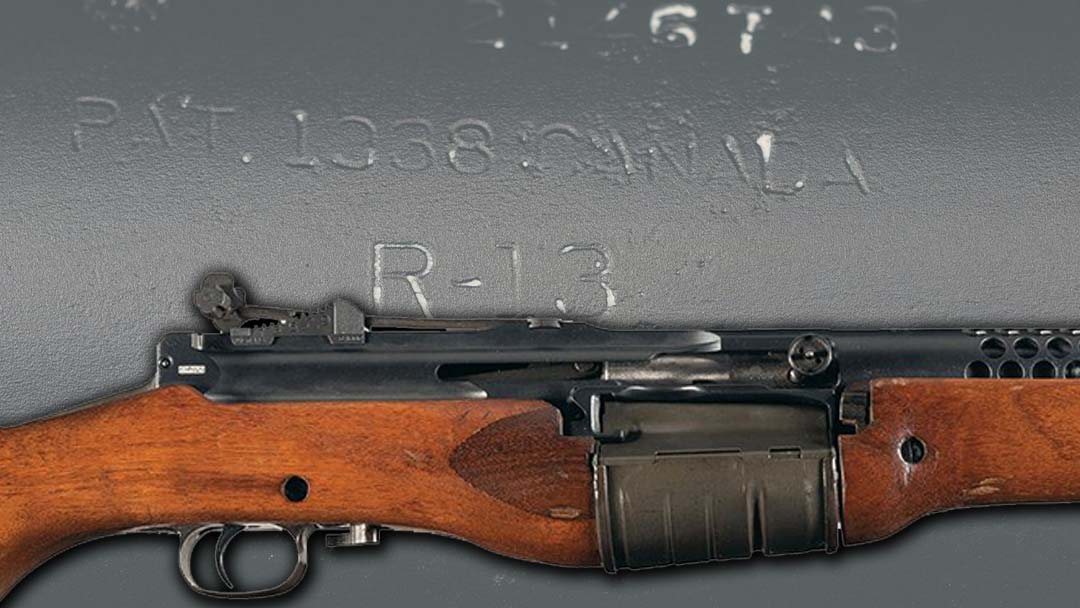
This Johnson rifle contains a Taft-Peirce manufactured receiver, serial number “R-13,” from one of the three Johnson rifles tested by the U.S. Marine Corps in May of 1940.

The example pictured above, sold by Rock Island Auction Company in August 2022 for $16,450, is one of only 7 rotary magazine Johnson prototype rifles made for military testing with a ten-round internal rotary magazine and one of the three rifles used during the U.S. Marine Corps trials at Quantico in May 1940.

Additional tests in November saw the Garand slightly edge out the Johnson rifle. Given the indecisive results, combined with the fact that the M1 Garand was now in full production and far more available, the Marines declined to adopt the Johnson rifle.

Though his prospects with the American military seemed all but lost, Johnson had been shopping his rifle to other nations as well. The Dutch government-in-exile showed particular interest, and with his first big contract on the horizon, Melvin Johnson assigned his rifle the more military-friendly designation “Model of 1941,” or “M1941.”
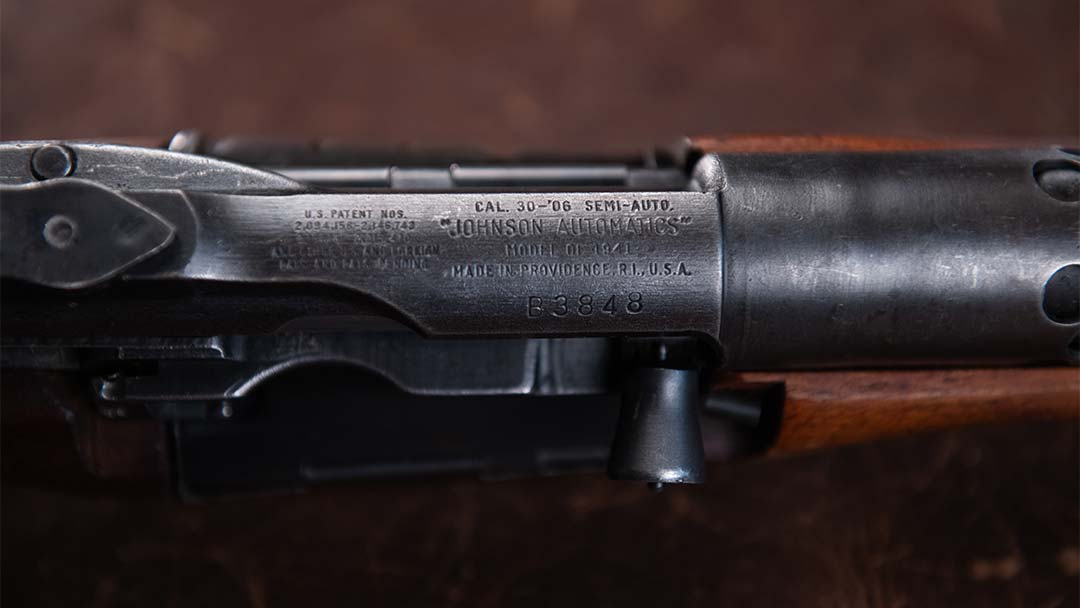
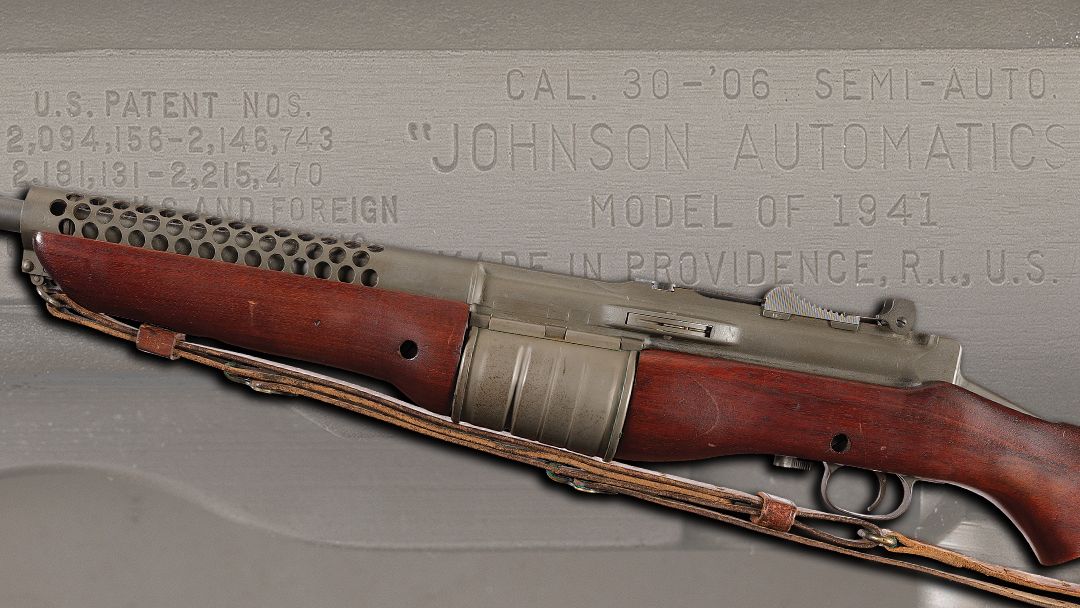
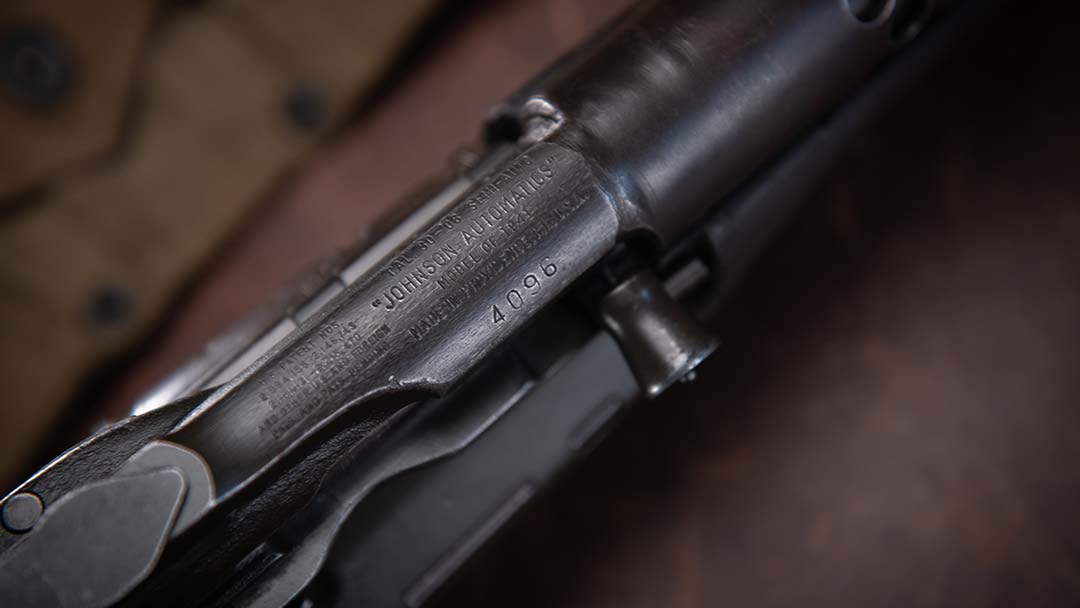
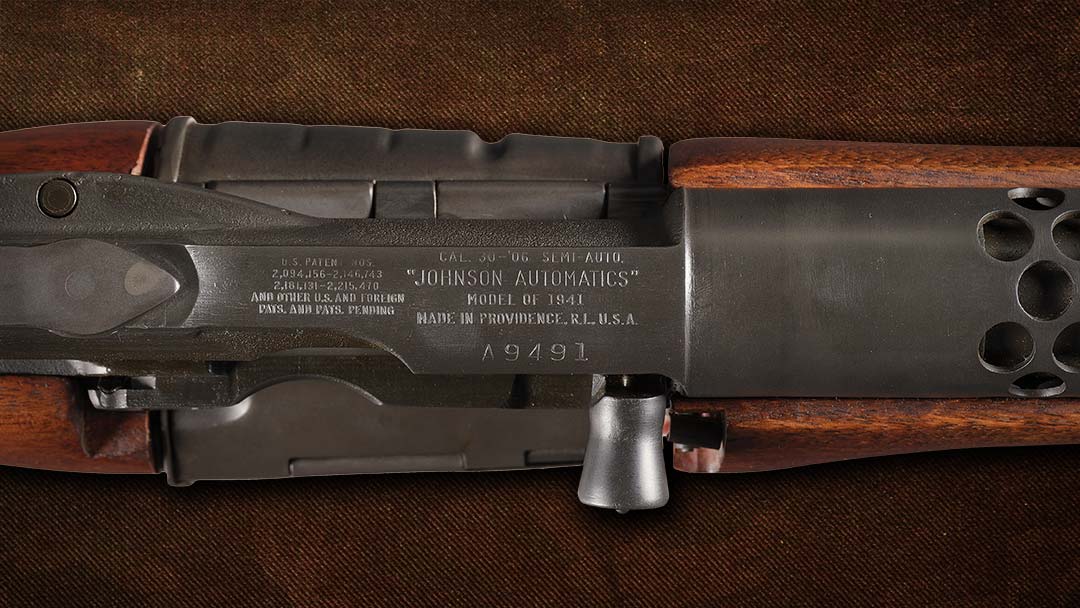
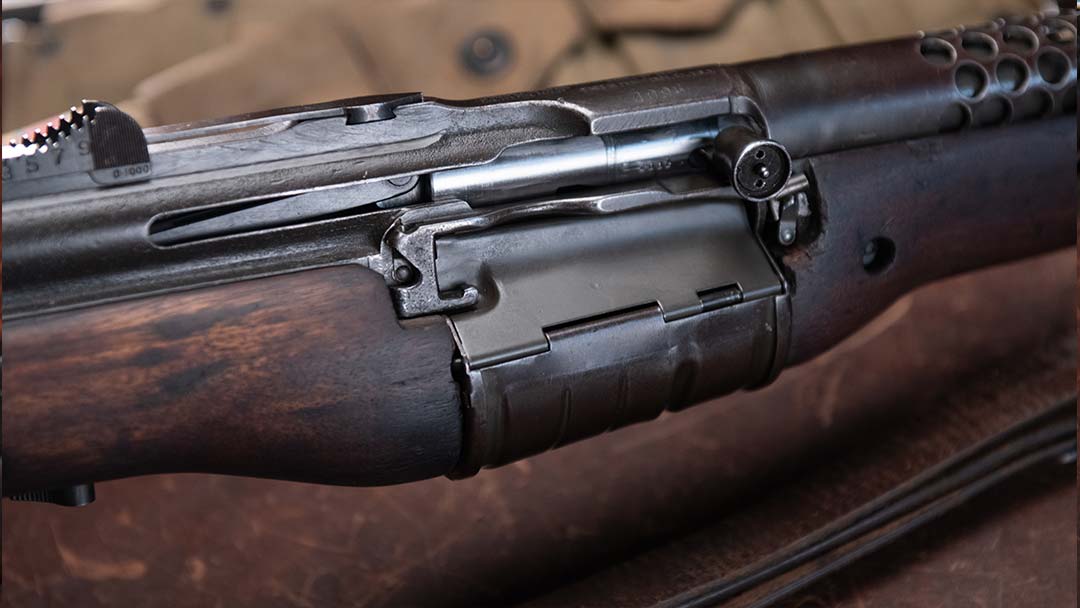
An M1941 Johnson rifle for sale this June. The top of the receiver is roll-stamped: “CAL. 30-’06 SEMI-AUTO./”JOHNSON AUTOMATICS”/MODEL OF 1941/MADE IN PROVIDENCE, R.I., U.S.A.” in four lines above the serial number.

The M1941 Johnson Rifle and Johnson Light Machine Gun

Melvin Johnson had been in contact with the Netherlands Purchasing Commission since 1940, who were determined to upgrade the antiquated arsenal employed by their troops in the Dutch East Indies. In August 1940, the Dutch ordered an initial 10,200 M1941 Johnson rifles and 515 Johnson light machine guns. Another order of 10,200 rifles soon followed.

To meet this lucrative contract, Johnson Automatics leased part of a factory in Cranston, Rhode Island, called Universal Windings. In only five months, Johnson was able to staff the factory and start production during a period where skilled labor, tooling, and raw materials were extremely scarce. The M1941 Johnson rifle and light machine gun were subsequently manufactured under the name “Cranston Arms Company Inc.”
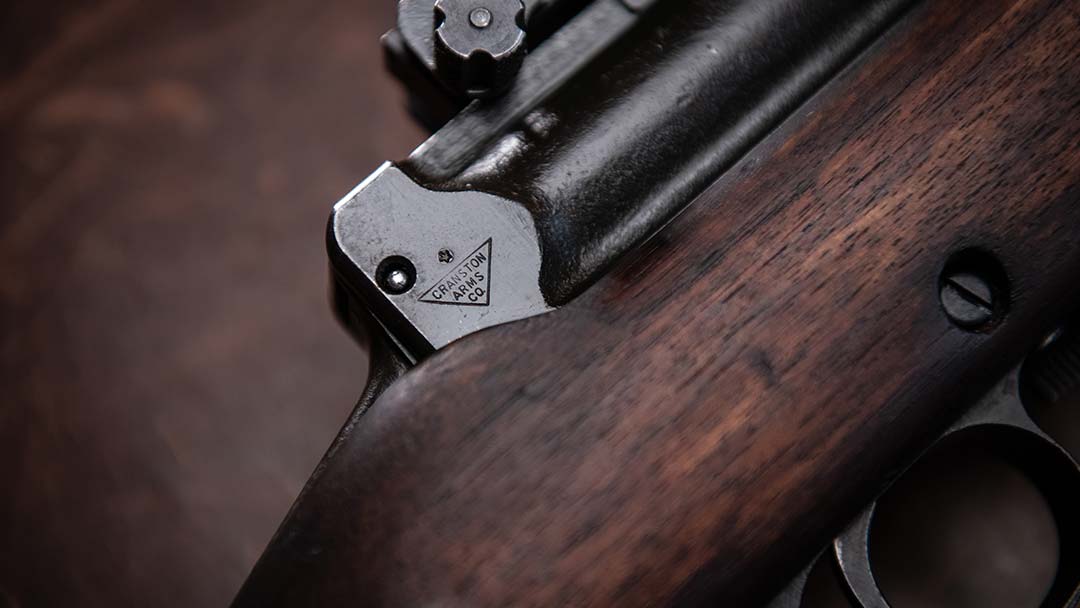
The small five-pointed star above the “CRAnSTON/ARMS/CO.” stamp indicates that this M1941 Johnson rifle was inspected by the Dutch Netherlands Purchasing Commission circa August 1940. Available this June.

While the Johnson rifle was pitched as a semiautomatic infantry option, the M1941 Johnson LMG was designed as a squad automatic rifle that could serve in numerous battlefield roles, including being fired from the shoulder when necessary like the German FG42. Both the M1941 Johnson rifle and Johnson LMG were chambered in .30-06.

Like the FG42, the Johnson LMG employed a front-mounted bipod and a side-mounted horizontal box magazine, used an open-bolt system when set to automatic and a closed-bolt when switched to semi-automatic mode, and employed a full-power rifle cartridge. The Johnson LMG was tested by the U.S. Marines in September 1941 and later adopted as a substitute weapon due to shortages of the BAR in the early days of WW2.
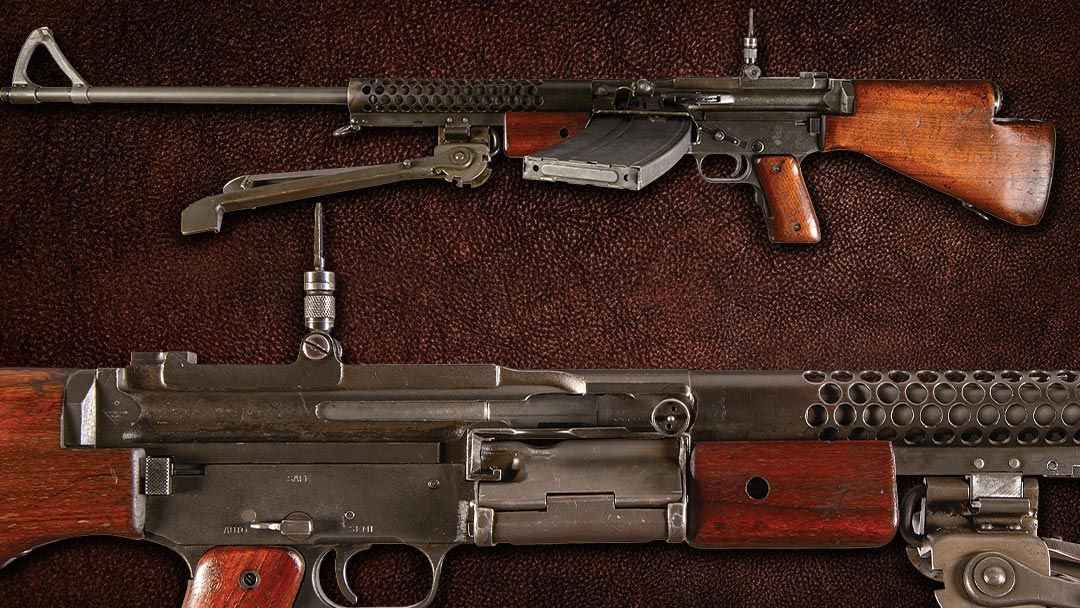
This M1941 Johnson LMG sold for $141,000 in RIAC’s December 2023 Premier Auction.

The M1941 Johnson Rifle Goes to War

Few M1941 Johnson rifles or light machine guns reached the Dutch East Indies before the Japanese invasion in early 1942. The remaining inventory stayed in the United States under embargo.

With the outbreak of war and M1 Garand production scrambling to meet demand, Melvin Johnson sensed another opportunity with the U.S. Marines. Johnson Automatics “unofficially donated” 23 rifles to the Marine parachute regiment training at New River, North Carolina for evaluation. These rifles arrived on March 26th, 1942.

As Melvin Johnson later explained, the 23 rifles were meant as “more or less lend-lease which developed into a gift.” One of these historic and unfathomably rare Johnson rifles is pictured below and offered this August by Rock Island Auction Company.
A holy grail in WW2 collecting, this M1941 rifle is documented as one of the first 23 Johnson rifles acquired by the U.S. Marines from Melvin Johnson’s “donation.” Available this August.

Table #3 on page 249 of Bruce Canfield’s book, “Johnson’s Rifles and Machine Guns” lists the rifle pictured above, 7246, by serial number as part of the first U.S. Marine Corps acquisition of 23 rifles, based on Johnson factory transfer ledgers. Canfield also lists another 16 M1941 Johnson rifles subsequently acquired by the Marines. As Canfield states, “These twenty-three rifles were undoubtedly used by the Marine paratroopers in the initial Solomons campaign (Guadalcanal/Gavutu).”

The exploits of the M1941 Johnson in combat were impressive. During the Battle of Tulagi and Gavutu–Tanambogo, Platoon Sgt. Harry M. Tully killed 42 Japanese soldiers with his Johnson rifle, shooting from distances up to 800 yards, earning himself the Silver Star.

1st Parachute Battalion executive officer Capt. Harry Torgerson, who played a key role in acquiring both the M1941 Johnson rifle and the Johnson LMG for his battalion, confirmed the reach of the mighty rifle, noting that they were used by “select scout-snipers” during the Guadalcanal campaign.

Captain Harry Torgerson carried an experimental Johnson Auto-Carbine during the Bougainville campaign, a weapon that employed features from both the M1941 rifle and Johnson LMG.

The Johnson Rifle Holds its Own

The success of the M1941 Johnson rifle spurred calls for additional supply from the Marine Corps 2nd Parachute Battalion. After an agreement was made with the Netherlands Purchasing Commission, 650 M1941 Johnson rifles were delivered to the United States Fleet Marine Force in San Diego on Oct. 7, 1942.

The M1941 Johnson rifle pictured below, serial number 1729, is from the first of three separate production blocks. The latter two production blocks were noted with an “A” and a “B” prefix.
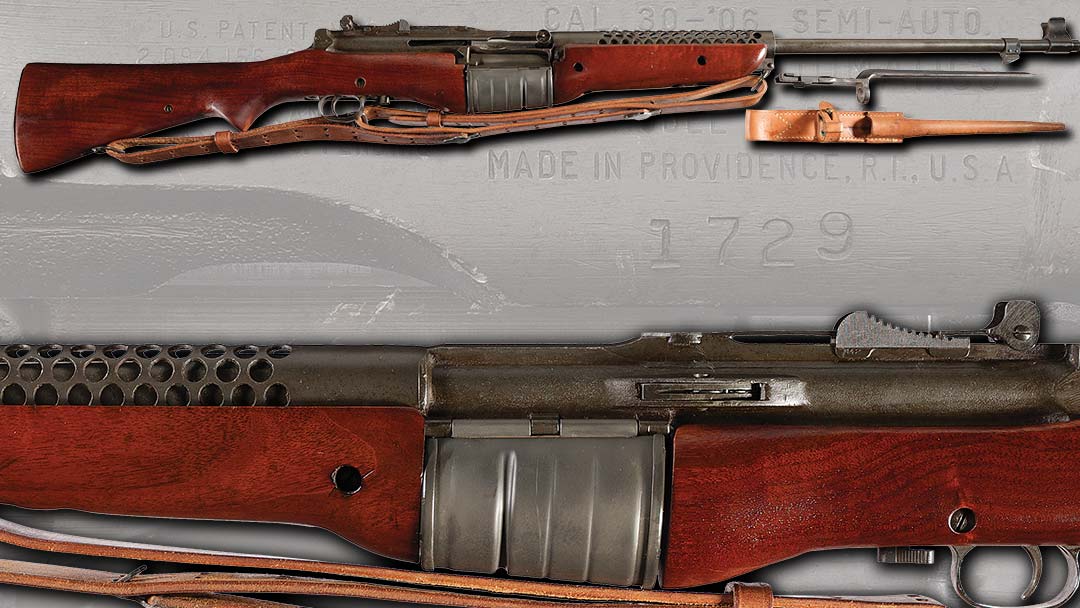
A first production block M1941 rifle with a bayonet, leather scabbard, and a “1944” dated MILSCO M1907 brown leather sling. Available this August.

Most, if not all, of the Marine-issued Johnson rifles would have seen hard use in the Pacific Theater, lending to their extremely low survival rate today. In addition to Tulagi and Guadalcanal, the M1941 Johnson saw action in the Bougainville campaign, the Tasimboko Raid, the Battle of Edson’s Ridge, and other grueling battles across the South Pacific.

After the Raid on Choiseul during the Bougainville campaign, Lt. Col. Victor Krulak reported to the commandant of the Marine Corps on the weapons used. Krulak noted: “Johnson Rifle, caliber .30. Performed similarly with the M-1. Found little difference between the two.”
An M1941 Johnson rifle for sale this June with a bayonet and accessories.

M1941 Johnson vs M1 Garand

Many Marine paratroopers expressed favorable opinions of the M1941 Johnson rifle. Compared to the M1 Garand, the Johnson offered about a third less recoil. The Johnson’s takedown barrel could be easily stored and swapped. The ability to top off a Johnson magazine with either single rounds or five-round stripper clips was viewed as an advantage over the M1 and its proprietary en-bloc clip, and the M1941 Johnson offered a 10-shot capacity.
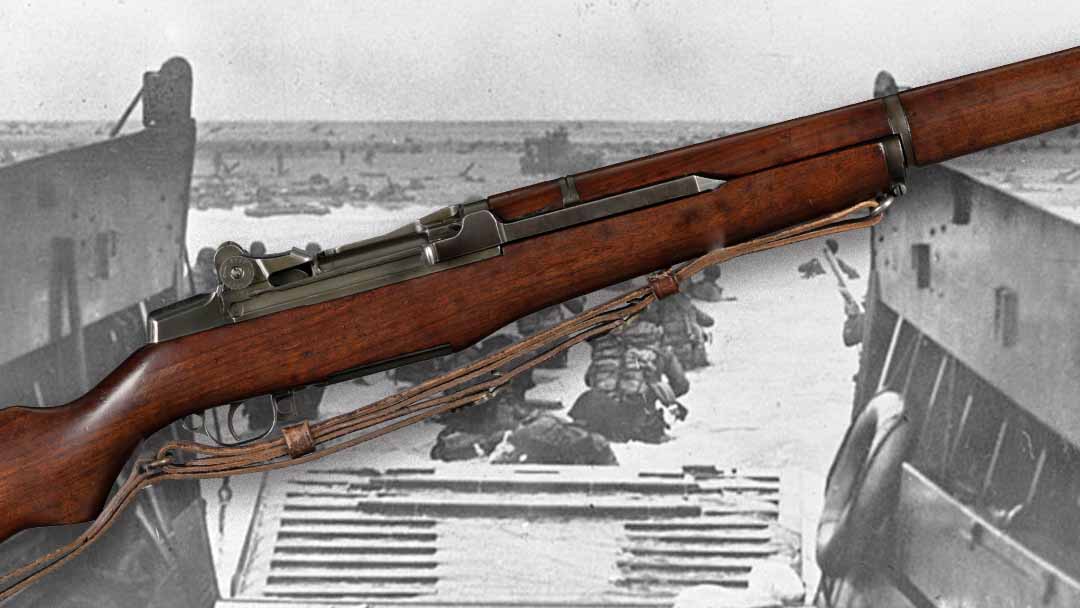
A July 1941 manufactured M1 Garand with a bayonet with scabbard. Available this June.

In the Garand’s favor, the M1 could be loaded and reloaded faster than the Johnson. The two rifles were of equal weight, though the Garand was more than four inches shorter. The Garand was also viewed as more durable against the harsh conditions of the South Pacific, with spare parts being far easier to obtain thanks to the rifle’s abundance. And unlike the Garand, the Johnson rifle’s recoil-operated firing system was hindered by the weight of a standard bayonet. The Johnson’s lighter triangular-spike bayonet was widely viewed as an inferior substitute.
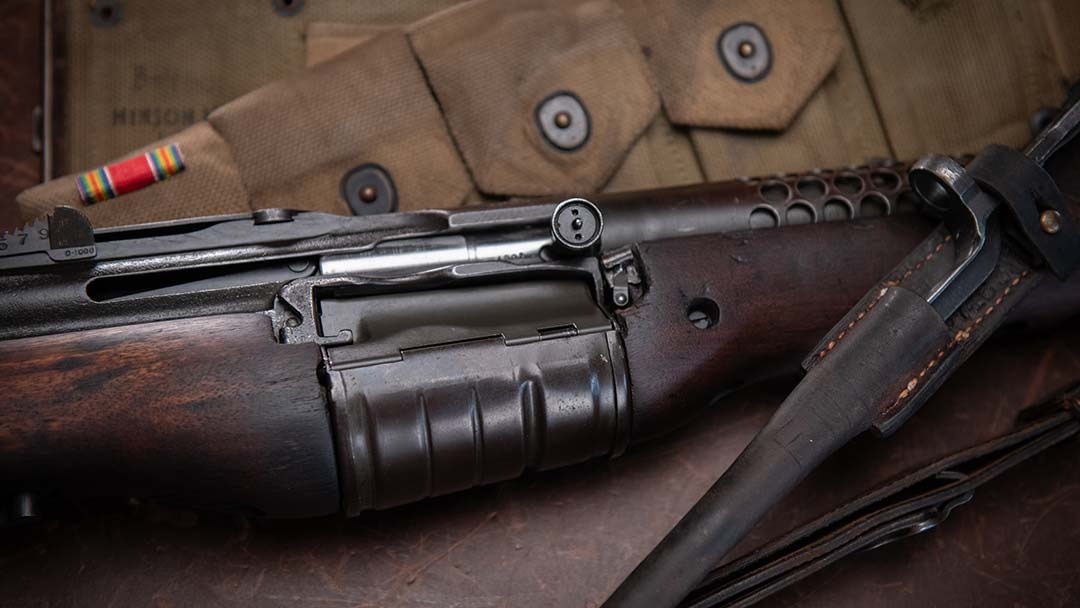
The M1941 Johnson’s lighter triangular bayonet was designed to allow the rifle to cycle properly. This example is for sale this June.

Fate of the M1941 Johnson

In the end, the M1’s five year head start proved too great to overcome. With production of John Garand’s rifle in full swing, and the M1 Carbine pouring off the assembly lines, no further Johnson rifles were officially acquired by the Marines or any other branch of the U.S. Military.
An M1941 Johnson rifle for sale this August.

When the 1st Parachute Regiment was disbanded, surviving Johnson rifles were ordered to be destroyed or sent back to the Marine Corps Quartermaster Depot in San Diego, California, where they were returned to the Netherlands Purchasing Commission. The Dutch Army and Navy employed both the M1941 Johnson rifle and Johnson LMG for years to come.

In 1953, Winfield Arms Co. purchased a large quantity of M1941 Johnson rifles from the Dutch, eventually importing these rifles to the United States and selling them in various refurbished, upgraded, and sporting models.

Melvin Johnson’s Legacy

Melvin Johnson continued to work in the arms industry in various roles. Johnson published eight books and more than 80 magazine articles on arms and ammunition. In 1951, he was appointed as a weapons consultant to the Secretary of Defense. A few years later, Johnson convinced Winchester’s Chairman John Olin to purchase his company and Johnson himself briefly worked for Winchester as a designer.
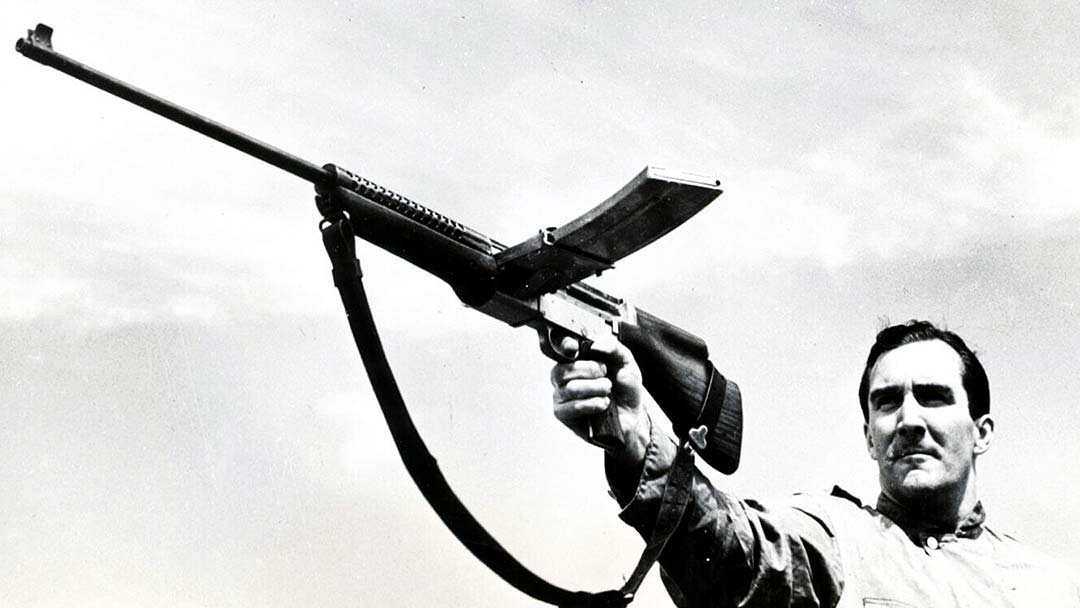
Melvin Johnson demonstrates his light machine gun.

Among his many other accomplishments, Johnson designed the “Indoor Target Gun” in the late 1940s, a catapult BB gun for youth target practice, and he developed the .22 Spitfire cartridge, a necked-down variant of the .30 Carbine round. This helped inspire the U.S. Army to test the .22 Remington and develop 5.56mm for the AR-15. Finally, ArmaLite drew on the M1941 Johnson rifle’s bolt design when developing the AR-10 and AR-15 and hired Melvin Johnson as a consultant.

M1941 Johnson Rifle for Sale

Few of the 21,500 M1941 Johnson rifles produced remain in unaltered condition today. Some were lost in combat. Thousands were altered or sporterized after the war. For collectors, shooters, and WW2 enthusiasts, high-condition Johnson rifles are a rare find, and Rock Island Auction offers multiple examples its upcoming June S&C Auction and August Premier Auction.
Four M1941 Johnson rifles are for sale in RIAC’s June S&C Auction.

Subscribe to the Rock Island Auction weekly newsletter for more gun blogs and gun videos on 20th century military arms. We cover everything from early semiautomatic pistols like the 1911, Luger, and C96, bolt action icons like the M1903, Mosin Nagant, and Winchester Model 70, semi automatic WW2 workhorses like the SKS and SVT 40, and the full auto glory of weapons like the MP40, the PPSh 41, and Stoner 63.
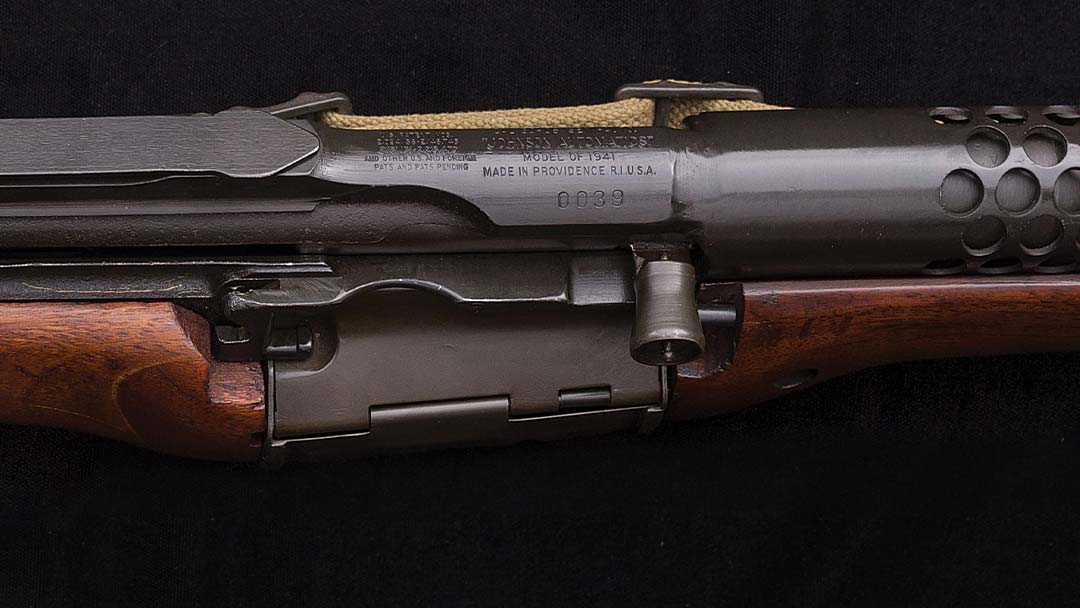
An outstanding early WW2 M1941 Johnson rifle, serial number ‘0039’ with the original bayonet and leather scabbard sold in RIAC’s August 2019 Premier Auction for $9,665.

Review: Kizer Beleiter XL | Jerking the Trigger

0

Lots and lots of blade in a super slim, easy-to-carry package… That’s what has always drawn me to the Begleiter series. That is also what drew me to the Begleiter XL, the subject of this review. I’ve owned 3 knives in this series and I keep coming back.

Specs

View the full specs at KizerKnives.com. The highlights are listed below:

  • Overall Length: 9″/229mm
  • Opener: Thumb Stud & Flipper
  • Blade Style: Drop Point
  • Blade Length: 3.91″/99mm
  • Blade Thickness: 0.13″/3.2mm
  • Blade Material: 154CM
  • Handle Length: 5.12″/130mm
  • Handle Material: Micarta
  • Pocket Clip: Tip-Up, Right or Left
  • Weight: 5.06oz./144g

Observations from Use

As I mentioned earlier, the Begleiter series is characterized by designs that minimize width and maximize blade length. That is what I have always appreciated about the series and why I have owned several. The Begleiter XL leans into that design ethos even more aggressively. It packs a nearly 4″ blade into package that is very slim and therefore very pocketable. So, the bottom line is that if need a larger blade for EDC that is still easy to carry, check out the Begleiter XL or the rest of the series.

All my other Begleiters have been liner locks. This review sample Begleiter XL has a button lock which is a welcomed finger-safe locking option and very fidgety. In my experience, Kizer is doing button locks better than most. Their button locks lock up strong (passed multiple spine whacks out of the box and after a few weeks of carry) and have a slightly sticky/clicky feel that I like in a button lock.

As long as we are talking about what Kizer does well, it has been my experience that Kizer has some of the best micartas in the game. The lined micarta used on this Begleiter XL looks amazing and feels amazing which is what I have come to expect from Kizer. The finishes on their micartas are top notch.

The action on the Begleiter XL is great. The long blade definitely helps, but this knife swings open like a rocket and falls shut the moment the lock is depressed. Kizer manages to get achieve a very strong and crisp detent from their button locks. As a result, both the flipper tab and thumb stud actions are tuned very, very well.

The blade on the Begleiter XL has everything I like in a blade. The tall, primary flat grind tapers down to a very thin edge. The drop point is strong, precise, and usable thanks to the swedge grind. It also has a long, subtle distal taper that ensures that the belly part of the blade slices extremely aggressively.

There are two things I would change if I had my way. First, I would love to see some texture on the button lock for no other reason than I just like that texture as a tactile index point. Second, it would be nice if the flipper tab was just a little more compact. It is shaped well enough that you can actually grip the knife over it, which I like, but it would be great if it was just a bit more compact.

Wrap Up

I am going to repeat it, if you like big, easy-to-carry blades, the Begleiter series and the Begleiter XL will be right up your alley. The materials are great, the action is top-notch, and I really like the cutting performance.

Begleiter Series at KizerKnives.com

Begleiter XL at Amazon.com (35% off as of the time of this writing)

The Best Hunting Rifles | Rock Island Auction

0

With so many options to choose from, selecting a new long gun for the field or range can be a challenge. We asked some of Rock Island Auction Company’s most passionate sportsmen and shooters their opinions on the best hunting rifle platforms and calibers of the past and present, and which combinations can give you the edge on your next hunting adventure.

A factory game scene engraved Blaser Model K95 Luxus Stutzen rifle with Schmidt & Bender scope, chambered in .308 Win Mag. Available this June.

Rock Island Auction Company’s June 21-23 Sporting & Collectors Auction in Bedford, Texas features some of the best hunting rifles of every genre, from the finest bolt action models, classic lever guns, single shot mainstays, and traditional muzzleloaders. You can learn more about each model by clicking on the images throughout this article.

Whether hunting the African savanna or the whitetail woods, finding the right rifle model and chambering can make all the difference.

The Blaser Straight Pull

The straight-pull bolt action developed by German arms maker Blaser has made a big impression with sportsmen around the globe since its introduction in 1993 and is widely hailed as one of the best hunting rifle platforms available. Acclaimed writer Rick Jamison praised the design in his ‘Shooting Times’ article, “The Bolt-Action Rifle of the Century,” where he commended the Blaser’s speed, innovation, and functionality.

A Blaser R93 straight pull bolt action rifle with a Swarovski 1.5-6×42 scope, Blaser case, leather sling, tools, and an illuminating scope turret, one of the best hunting rifles for sale this August.

About 200,000 Blaser R93 rifles were manufactured before the model was discontinued in 2017, but its legacy lives on in the Blaser R8.

“The Blaser R8 is maybe the most versatile and efficient rifle for hunting anywhere and everywhere,” says Matthew Peake, Rock Island Auction Company’s Digital Marketing Director. “Their ability to transform one rifle into different calibers makes it the Swiss army knife of rifles. It’s fantastically accurate and the straight pull bolt makes it extraordinarily fast to get a follow-up shot if needed.”

Matthew Peake carries a Blaser R8 in the Western Highlands of Scotland. Many seasoned sportsmen regard this model as one of the best bolt action rifles available today.

In addition to their straight pull rifles, Blaser produces quality combination guns like the D99 and BD14, as well as single shot rifles like the K95. A light and portable design, the K95 offers a reliable and accurate single shot platform that’s easy to clean, transport, and swap quickly in the field.

Among the best hunting rifles available this June, this factory engraved Blaser Model K95 Luxus Stutzen rifle with Schmidt & Bender Scope is chambered in the classic 7x57mm.

The Ruger No. 1

Speaking of single shot platforms, Matthew Peake makes a case for the Ruger No. 1 as one of the best hunting rifles in its class. “The Ruger No. 1 is a true classic. Based on the Farquharson-style hammerless falling-block action, it is as relevant today as it was when George Gibbs was building a similar gun way back in the late 1870s.”

Matthew Peake hails the Ruger No. 1 as his favorite stalking rifle, adding, “When it’s chambered in an absolutely classic caliber, like the .275 Rigby, it is hard to improve on.”

“The Ruger No. 1 is maybe the perfect single shot,” Peake continues. “It is a very strong action, and being a single shot allows the reloader to use longer bullets. “

Classic stock maker and gunsmith Lenard Brownell, who lent his talents to the Ruger No. 1’s stock design, recalled, “There was never any question about the strength of the action. I remember, in testing it, how much trouble I had trying to tear it up. In fact, I never did manage to blow one apart.”

The Ruger No. 1 ranks high on our list of best hunting rifles. This 1977 manufactured example has been rebarreled in .375 Renner by gunsmith R. J. Renner and includes a Leupold VX-3 1.5-5x20mm scope. Available this June.

Like its British Farquharson forerunner, the Ruger No. 1 is built like a vault, and this strength and reliability has led to the model being chambered in a bevy of cartridges over the years, including some truly heavy hitters. The example below, chambered in the mammoth 450/400 Nitro Express 3″, a cartridge famed for taking the largest game in India and Africa.

The Ruger No. 1, one of the best hunting rifles on the market today. This 2007 manufactured example, chambered in the hefty 450/400 N.E. 3″, includes an Al Lind stock and a Swarovski Habicht 1.25-4x25mm scope. Available this June.

The Weatherby Mark V

Back to bolt actions, we have the famous Weatherby line. Introduced in 1957, the Mark V has developed a reputation as one of the best hunting rifles as production models go, with an action that lives up to Weatherby’s motto. “Nothing shoots flatter, hits harder or is more accurate. Guaranteed.”

A Weatherby Mark V with a Swarovski Habicht 3-10x42mm A scope, chambered in 257 WBY magnum. Available this June.

Though Weatherby has continuously updated the platform with options for synthetic stocks and more affordable iterations like the recent Mark V Hunter, classic versions of Roy Weatherby’s famed rifle appeal to the collector and the gentleman sportsman alike. The 1978 manufactured example below, embellished with scroll engraving and gold inlay, demonstrates the elegant luxury that can be found in this exceptional rifle line.

An engraved and gold inlaid Weatherby custom Mark V chambered in 300 WBY Magnum, one of the best hunting rifles for sale this August.

While the Mark V personifies the Weatherby brand, the Vanguard line introduced in the 1970s expanded the company’s foothold in the market. Joel Kolander, Rock Island Auction Company’s Interactive Production Manager, offers a firsthand account of the Mark V’s more attainable sibling.

“A lot of Weatherby fans out there don’t care for the Vanguard, because it only has 2 locking lugs instead of the nine on the Mark V (or six, depending on chambering), and other small changes like a 90° bolt throw instead of the traditional 54°. That said, it has many of the same safety features that the Mark V does, the same sub-MOA accuracy guarantee, and uses the extremely reliable and accurate Howa 1500 action. Plus, the trigger on the Series 2 is perfection.”

“If I had the trophy of a lifetime on the other end of my scope, I’d want one rifle in my hands – and it’s this one,” Joel says of his Weatherby Vanguard Series 2 Deluxe.

The Winchester Model 70 and .308 Win

It’s no surprise that the pre-64 Winchester Model 70 earns a nod as one of the best bolt action rifles of all time. In his book on the gun, author Roger Rule dubbed the Model 70 “The Rifleman’s Rifle,” and perhaps the platform’s most famous pairing is with the .308 Winchester cartridge. The versatile round was commercially introduced in 1952, the same year the popular Winchester Model 70 Featherweight hit the market.

One of the best hunting rifles for sale this June, this Winchester Model 70 Featherweight chambered in .308 Win includes a Redfield 3-9x scope.

“The .308 is a perfect round for African plains game,” Joel Kolander attests. “Sure, you could go with something slightly larger for some of South Africa’s tougher animals, but a .308 will get the job done on kudu and gemsbuck, and still isn’t too much for smaller targets like springbuck and impala. It also has adequate range so you can get shots even on the spookiest game.”

“I used Hornady ELD-X 178 gr and took more than one critter at 450+ yards,” Joel says.

While the modern Winchester Model 70 is a fine hunting platform, the hand craftsmanship of the pre-64 action is particularly revered. From the .375 H&H to the .270 Winchester, the pre-64 Model 70 can be found in a multitude of chamberings suited for nearly any role in the woods, mountains, or savanna. When it comes to classic American bolt action rifles, the Model 70 is a must-have for every hunter and collector.

Two pre-64 Winchester Model 70s, some of the best hunting rifles for sale this June.

The Model 1903 and .30-06

Another classic pairing that’s often included in any discussion of best bolt action rifles, the Springfield Model 1903 and the 30-06 cartridge were both developed initially for military use and became one of America’s most effective infantry rifles.

“Those same capabilities also found favor with the American sportsman,” says Hayden Foster, a Firearms Describer at Rock Island Auction Company. “The platform proved capable of tackling a wide range of medium-sized game, including larger and more dangerous animals like moose and bear, with a retained power at range and accuracy potential that has allowed many a marksman to drop his quarry well out of range of their senses.”

Is there such a thing as the perfect gun for every game? Hayden Foster fires the Springfield Model 1903 in .30-06.

Possibly the first sporterized Springfield Model 1903 was received by President Theodore Roosevelt in February of 1904. Teddy’s Model 1903 rifle, serial number 6000, was fitted with a custom sporter stock, a short fore-end, and Lyman sporting sights. These types of changes became common with hunters eager to lighten the platform and make it more adaptable for carrying around the woods. In its sporterized form, the Model 1903 platform and the .30-06 flourished.

Philadelphia gunsmith Reginald F. Sedgley customized some of the best hunting rifles of his day, including this mechanically excellent U.S. Springfield Model 1903. Available this June.
“The cartridges’ popularity and continual improvement by both military and civilian circles have resulted in a wide range of loadings from lighter 110 grain to heavier 220 grain options, tailored for a variety of ranges and animal sizes,” Foster notes. “Even as more contemporary cartridges with higher ballistic efficiencies fill the niches within the role of the .30-06 Springfield, it still remains a capable and quintessential, unquestionably American, .30 caliber centerfire cartridge that is as storied and tested as the people of the nation that crafted it.”

Nearly every rifle maker continues to offer options chambered in .30-06, including elite pieces like this factory signed and engraved Sauer 202 “The Oaks” bolt action rifle. Manufactured in 2009, one of the best hunting rifles for sale this August.

The Winchester Model 1894 and 30-30

Before the Springfield Model 1903 in .30-06 became one of the kings of the whitetail woods, there was the Winchester Model 1894 in .30-30. For 130 years, John Moses Browning’s classic design has remained a contender for the best lever action deer rifle.

One of the best hunting rifles for sale this June, this historic, 1895 manufactured, Winchester Deluxe Model 1894 rifle with a matted barrel is the first of its configuration shipped.

“The Winchester Model 1894 and .30-30 W.C.F. are forever linked and together hold an important place in firearms history as the first sporting rifle chambered for the first American high velocity, smokeless powder sporting cartridge,” says Seth Isaacson, Rock Island Auction Company’s Lead Historian. “The combination quickly won over American sportsmen, and old and new Model 1894s in .30-30 still remain popular today with deer hunters.”

Seth Isaacson fires a Ted Williams Model 100, a ‘house brand’ version of the John Browning designed Winchester Model 1894 that was manufactured for Sears, Roebuck & Co. in the 1950s-1970s.

In terms of tried-and-tested hunting arms, the Winchester Model 1894 and its modern iterations earn a nod as one of the best rifles of all time. The classic lever gun continues to populate countless gun racks, deer camps, truck beds, and saddle scabbards across the country. From antique and curio examples, numerous commemorative issues, and the current production from Miroku Corporation of Japan, the platform can be attained by hunters and collectors of all aspirations.

A stunning example of one of America’s best lever action deer rifles, this M. Defourny signed and engraved Winchester Model 94 carbine chambered in 30-30, manufactured in 1981, is available this June.

Best Hunting Rifles for Muzzleloader Season

All 50 states in America offer a special muzzleloader hunting season, a boon for hunters hoping to get a few more days in the field each year. Though modern inline muzzleloaders offer an affordable, reliable means to participate, many hunters enjoy the authentic experience of taking game with a traditional flintlock or percussion rifle.

One of the best hunting rifles for a muzzleloading enthusiast looking for a traditional feeling from a modern-made gun, this .52 caliber flintlock rifle was manufactured around 1960 by the late gunmaker Louis Smith of Jonesboro, Tennessee. Available this June.

“As both a hunter and a historical reenactor, hunting is a bit of a spiritual experience for me,” says Rock Island Auction Company Firearms Describer Brian Beck. “Appreciating nature, respecting the game, embracing the tradition, and feeling the echoes of the past. This approach led me to archery and flintlock hunting, which I find far more fulfilling than hunting with modern firearms.”

Brian Beck carries a flintlock rifle on his first muzzleloader deer hunt.

“I enjoy the challenges that these types of hunting bring,” Beck explains, “Whether it’s struggling to keep the powder in the pan dry or determining how a stiff November crosswind will affect the flight of my arrow. I feel that they both give me a sense of unrivaled achievement when I’m successful and allow me to take a short walk in the footsteps of those from the past.”

A contemporary A T. Dawson copy of Jim Clyman’s J. & .S. Hawken percussion rifle, one of the best hunting rifle options for those who want a more “Jeremiah Johnson” experience this season. Available this June.

The Best Hunting Rifles for Sale

From classic to modern, from specialized pieces to do-it-all generalists, Rock Island Auction Company’s June 21-23 Sporting & Collectors Auction offers some of the best hunting rifles in the industry. Sportsmen, shooters, and collectors of all aspirations are invited to stop by RIAC’s new state-of-the-art venue at 3600 Harwood Rd., Bedford, Texas for Preview Day on June 20th, the day prior to auction, where any of the over 4,400 firearms can be examined, handled, and shouldered firsthand.

Find the best hunting rifles at Rock Island Auction Company this June.

To receive more gun blogs and gun videos covering modern and classic sporting arms, subscribe to the Rock Island Auction newsletter, where we explore topics like the bench rest rifle, the Savage 99, the Winchester Model 42, the most popular sporting guns, the straight wall cartridge, the centerfire vs rimfire arms race, the evolution of handgun hunting, and more.

Whether you’re looking for a sterling condition example or a gun with touches of wear that speak to its experience, RIAC’s June S&C Auction offers a wide range of sporting options.

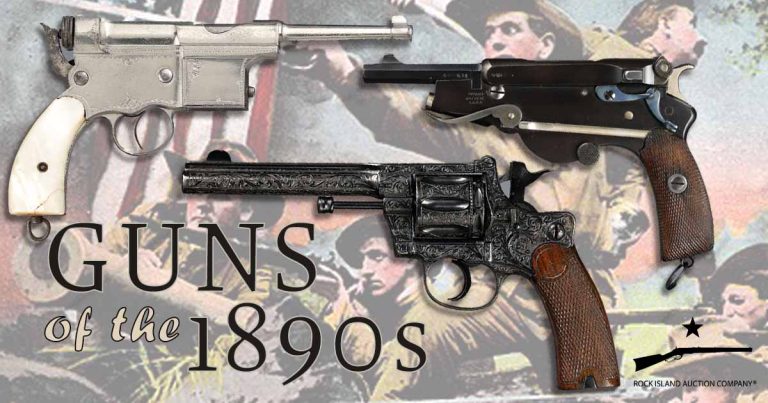
End of the Century Innovation: Guns of the 1890s

0

The United States in the 1890s was contorted by growing pains of an emerging world power. Industrialization and modernization came amid ensuing labor upheaval. It brought the first modern Olympic Games in 1896 and war between the United States and Spain two years later. Innovation and industrialization was seen in the firearms of the time, with the rise of self-loading pistols, machine guns, and smokeless gunpowder.

Some well-known guns came of age in the last decade of the 19th century alongside lesser-known firearms that faded from history. Here are some fascinating moments from the decade along with examples of firearms of that era, either well known to collectors or ones that might not be as well-known, available in Rock Island Auction Company’s June 21-23 Sporting & Collector Auction with a Preview Day on June 20.

Guns of the 1890s: Remington Model 1890

Army and Navy played their first football game in their storied rivalry on Nov. 29, 1890. As the Midshipmen shut out the Cadets 24-0, out west, the Army was endeavoring to corral the Native American population.

With the Ghost Dance movement – believing in the return of the dead and the removal of white men from the earth – gaining momentum among western Native Americans, Indian Bureau Police attempted to arrest Sitting Bull in mid-December. A shootout between the famed chief’s supporters and Indian Bureau officers killed Sitting Bull and 13 others, setting into motion tragic events that would lead to the massacre at Wounded Knee on Dec. 29.

When the shooting ended at least 150 were dead, with some historians estimating as many as 300 killed. Twenty men of the 7th Cavalry received the Medal of Honor for the action, despite Gen. Nelson Miles calling it “the most abominable criminal military blunder and a horrible massacre of women and children.

The same year, Remington introduced its Model 1890 revolver as a successor to its Model 1875 revolver and to serve as another competitor to the Colt Single Action Army. The gun had a short production life, manufactured from 1891 to 1894. “Flayderman’s Guide to Antique Firearms and Their Values” calls the gun scarce and highly sought after since only about 2,000 were made.

The Remington Model 1890 is the company’s Model 1875 but with the distinctive under-barrel web cut away. It was available in two barrel lengths, 5 1/2 inches and 7 1/2 inches, and only chambered in .44-40.

Guns of the 1890s: William Powell & Son Sidelock Double Barrel Shotgun

In 1892, the Dalton Gang terrorized the plains with murder and train robbery. Wanting to earn enough to avoid arrest for a while, Bob Dalton decided they should commit a pair of bank robberies simultaneously. Their targets were in Coffeyville, Kansas where the Daltons had resided for a time.

On Oct. 5, the five outlaws rode into town. They couldn’t leave their horses where they originally planned for a quick getaway. The bandits were tricked and trapped by a clever clerk and townsfolk who quickly armed themselves. Following a 12-minute gunfight, four of the robbers – Bob and Grat Dalton, Bill Powers and Dick Broadwell were killed and Emmet Dalton was shot 23 times but survived, serving 14 years of a life sentence.

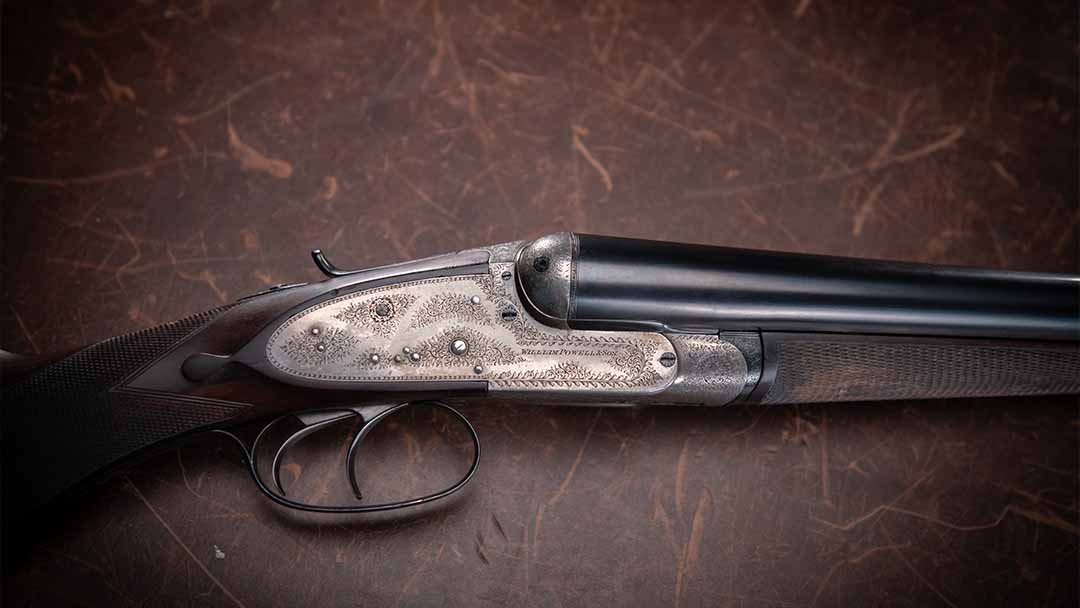
Far from the Wild West, that same year in Birmingham, England, William Powell and Son had been producing fine sporting arms since 1802. Known more for its fit and finish, Powell and Son has been referred to the “Purdey of Birmingham.” The company manufactured the sidelock double barrel shotgun featured here in 1892, utilizing the lift-up lever to open the lock that the company patented in 1864.

This engraved William Powell & Son sidelock double barrel shotgun was manufactured in 1892 Nigel Brown’s “British Gunmakers Volume Two: Birmingham, Scotland & the Regions.” The casehardened receiver has foliate and scroll engraving.

Guns of the 1890s: H. Pieper Patent Model 1893 Gas Seal Double Action Revolver

At Chicago’s 1893 Columbian Exposition, a number of items were introduced, including Juicy Fruit gum, Crackerjack and Shredded Wheat. The Ferris Wheel debuted and the grounds were electrified with alternating current. Beer baron Frederick Pabst introduced his Pabst Best Select beer, already an award winner.

The beer earned its legendary name from the ribbon earned at the Exposition. Pabst began to adorn his beer bottles with blue ribbons and saloon patrons would ask for the beer with the blue ribbon. By the turn of the century, Pabst was going through more than 1 million feet of blue ribbon per year. The ribbon became an official part of the label at the end of prohibition when the beer was first distributed in cans.

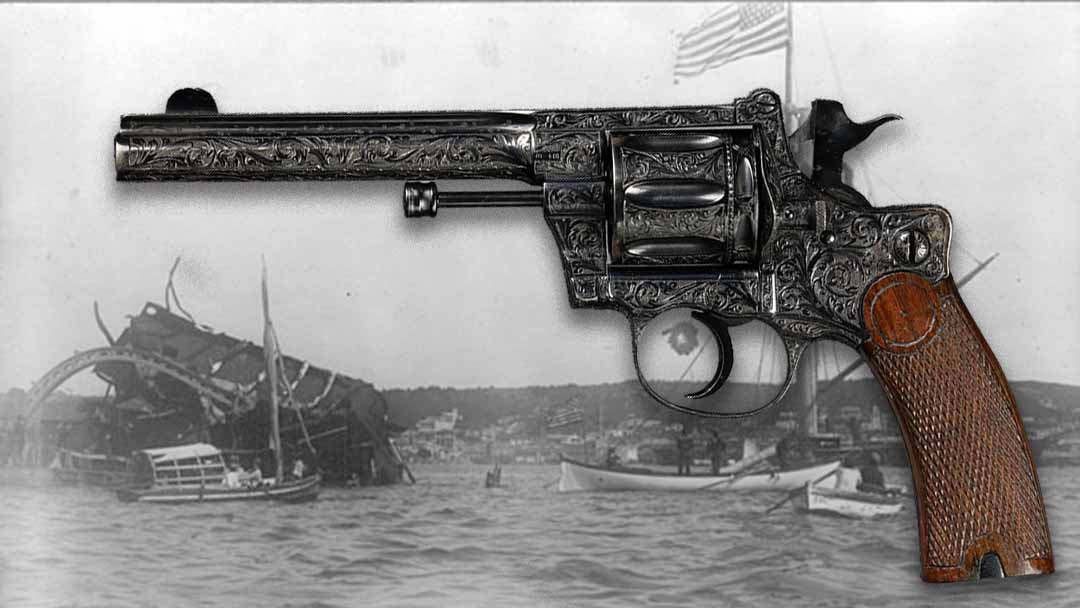
Henri Pieper, a respected Belgian gunmaker released his Model 1893 revolver that cammed the cylinder forward when firing to give it a better seal to the barrel, nearly eliminating the cylinder gap. Two years later, Leon Nagant’s similar pistol would be adopted by the Imperial Russian Army that would replace the Smith & Wesson Model 3.

Mexico ordered 5,000 of the H. Pieper Model 1893 gas seal revolvers and carbines. By pushing the cylinder forward when firing less gas escapes and improves shooting performance. Chambered for 8mm cartridges, the double action wheelgun has a swing-out cylinder and hand ejector system. This revolver has scroll and punch dot engraving over nearly its entire surface.

Guns of the 1890s: Winchester Model 1894 and Marlin Model 1894 Trappers Carbine

Faced with economic depression, Pullman Palace Car Company cut its workers’ already low wages by about 25 percent despite keeping rents and other costs the same in the town near Chicago where most of the workers lived. Employees wanted to present their grievances over the low wages, living conditions and the 16-hour workday. Company president George Pullman refused and ordered the workers fired. The workers walked off the job in a wildcat strike in April.

The action spawned a number of railroad strikes across mostly the Midwest, which led to violence after National Guard troops were called in and the arrested union leaders. The Pullman workers lost public sympathy and returned to work without any gains.

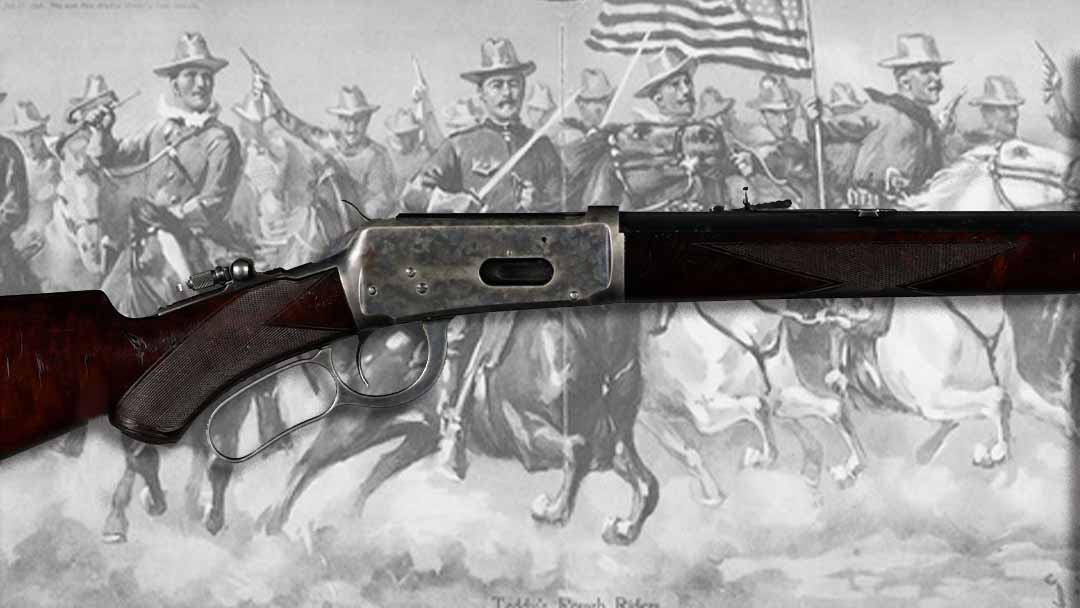
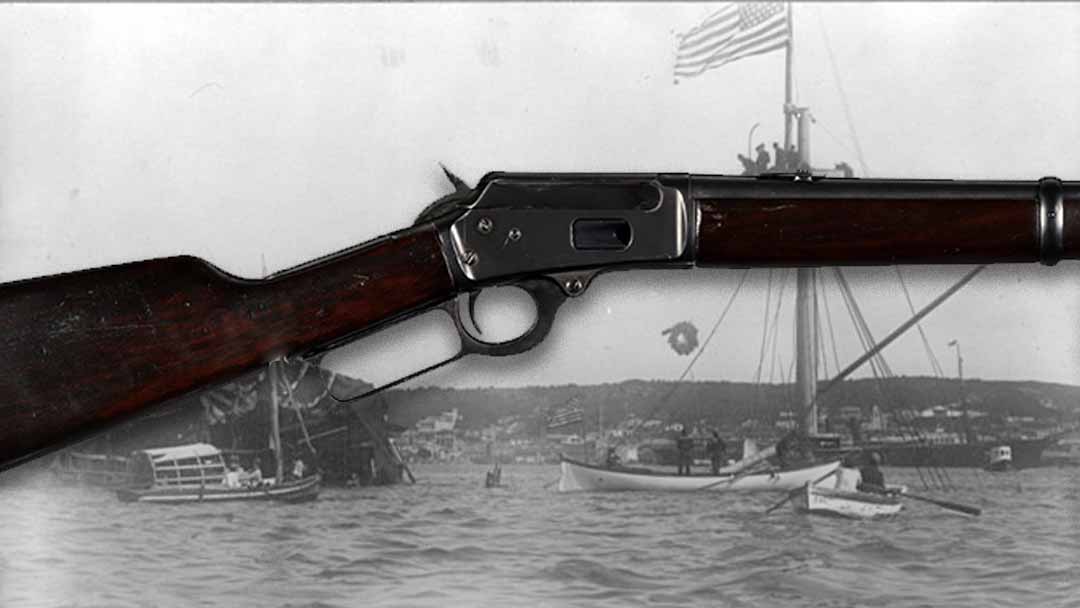
Two years after Winchester released its Model 1892 came the Model 1894, chambered for longer and more powerful rifle cartridges and able to handle smokeless powder cartridges. This Model 1894 was the first to ship from Winchester in .30 caliber, with a plain trigger, checkered pistol grip stock, a hard rubber shotgun buttplate, a half-magazine holding four rounds, a casehardened frame, oil finished stock and matted barrel.

As a conciliatory gesture after the Pullman strike and mining strikes the same year President Grover Cleveland signed legislation making Labor Day a national holiday. Official recognition of the holiday came more than 10 years after workingmen and tradesmen marched through New York City in 1882.

The year 1894 also brought a pair of lever gun legends to market, the Winchester Model 1894 and Marlin 1894. The Winchester was the first commercial American lever action rifle made to use smokeless powder cartridges and more than 7.5 million have been made. The Marlin 1894 simplified and strengthened the internal mechanism while maintaining side ejection.

Nearly endless versions of the Winchester 1894 have been made and the company stopped making it for a short time before it returned in 2011. Marlin’s 1894 has also gone through a number of variations but it has never been out of production.

While Winchester’s 1894 was made to handle rifle rounds, Marlin’s Model 1894 was the exact opposite, made to take pistol cartridges. This Marlin Model 1894 is a trapper’s carbine with a 15-inch round barrel and comes with an ATF exemption letter.

Guns of the 1890s: V.C. Schilling Model 1896 No. 2 Bergmann and Mauser C96 “Red 9”

A massive tornado tore through downtown St. Louis on May 27, 1896, hopped the Mississippi River and hit East St. Louis just after 5 p.m. The twister arrived in a sky turned a greenish hue and its 10-mile rampage destroyed 311 buildings, heavily damaged 7,200 more and killed more than 255.

Just over two months later, an August heat wave killed 1,500 people from Chicago to Boston with temperatures hovering over 90 degrees and 90 percent humidity for 10 days. The number killed by the heat was more than the New York draft riots of the Civil War and the Great Chicago Fire of 1871 combined.

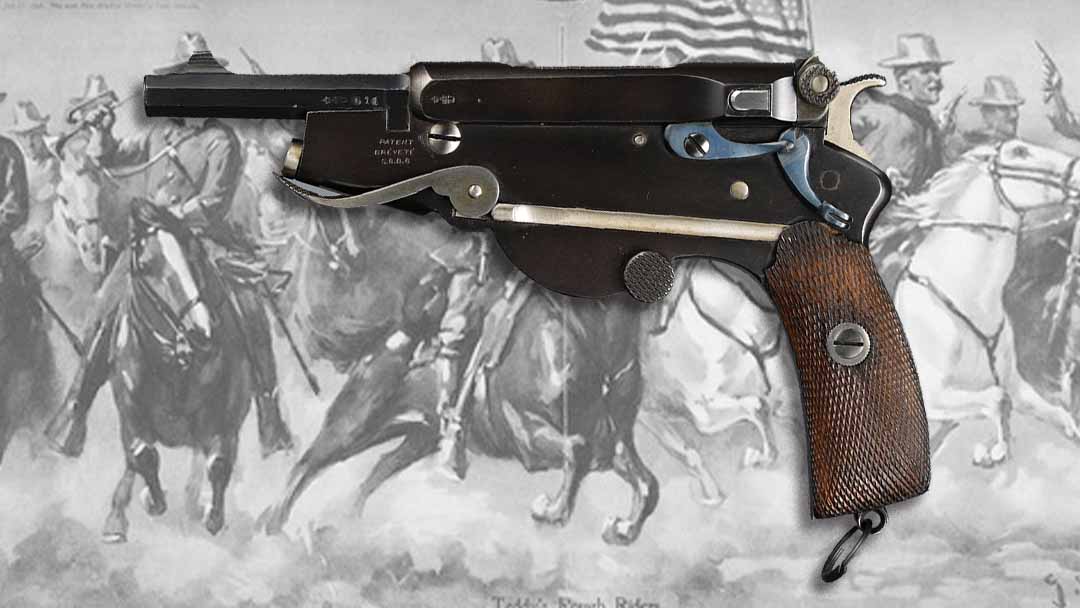
About 2,000 of this small pocket-type pistol were made by Charles V. Schilling of Suhl, chambered for the 5mm cartridge Bergmann. Utilizing a single action blowback system with an external hammer, early examples had a pocket-friendly folding trigger seem here. The folding trigger was discarded about serial no. 500 for a conventional trigger that made the later pistols slightly longer. This pistol is serial number 375.

Earlier in the year, Swedish scientist Svante Arrhenius presented his paper quantifying the effect on global climate by carbon dioxide, calculating that the earth would warm 5-6 degrees with the doubling of CO2 in the atmosphere. In 1901, it would be referred to as the greenhouse effect for the first time.

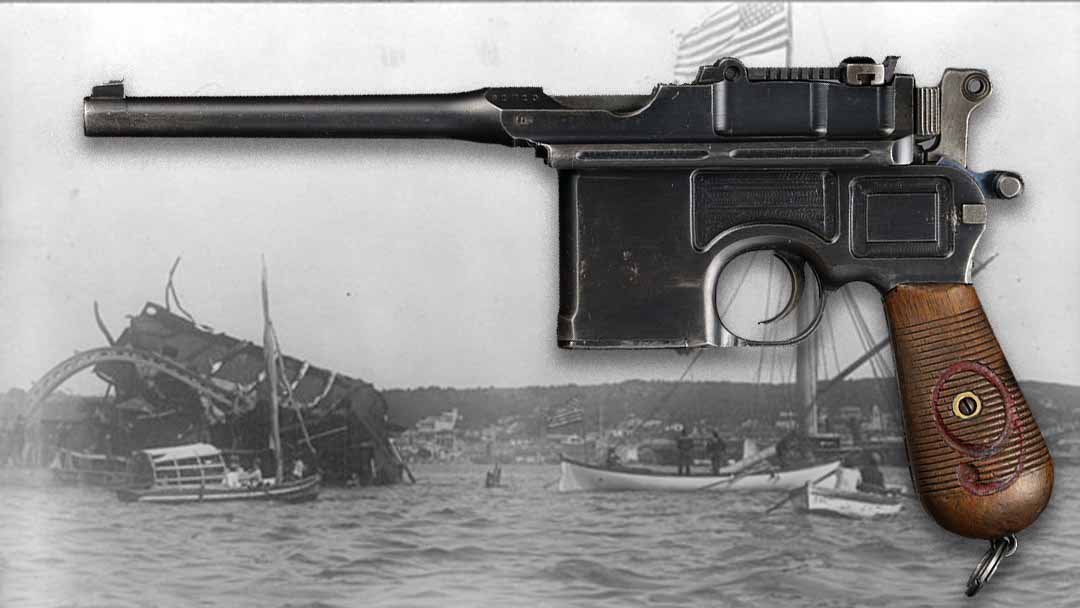
The year 1896 brought pistol innovation with the V.C. Schilling-made Bergmann Model 1896 and the Mauser C96. The pocket-sized Bergmann design and the instantly recognizable Mauser were both semi-automatic, following on the heels of the Borchardt C-93. The Bergmann pistol had a folding trigger before a conventional trigger was added to the design. The Mauser has a box magazine in front of the trigger.

The Mauser Model 96 or C96 is easily recognizable with its slender barrel, box magazine and broom handle-shaped grip. Though the Luger was chosen over the Broomhandle by the German military, production of the Luger couldn’t keep up with demand during World War 1, so the German government contracted with Mauser to manufacture 150,000 of the C96 but chambered in 9mm Parabellum like the Luger. To distinguish the military Broomhandle, a large “9” was carved into the grip and painted red or orange to denote it was not chambered in its regular 7.65mm.

Guns of the 1890s: Winchester Model 1897 Riot Shotgun

After receiving a letter from 8-year-old Virginia O’Hanlon, The Sun, a New York newspaper, published an editorial Sept. 21, 1897 headlined “Yes, Virginia, there is a Santa Claus.” Handed the assignment, veteran writer Francis Pharcellus Church at first scoffed at the assignment before penning a masterpiece of fewer than 500 words that reaffirmed childhood and would go on to be translated into more than 20 languages.

“Yes, Virginia, there is a Santa Claus. He exists as certain as love and generosity and devotion exist, and you know that they abound and give your life its highest beauty and joy. Alas! How dreary would be the world if there were no Santa Claus. It would be as dreary as if there were no Virginias. There would be no childlike faith then, no poetry, no romance to make tolerable this existence.”

As was The Sun’s policy, the editorial was published without a byline and Church wasn’t identified as the author until his death in 1906. The Sun published it annually at Christmas in 1920, a tradition that would continue until 1950 when the paper went into bankruptcy.

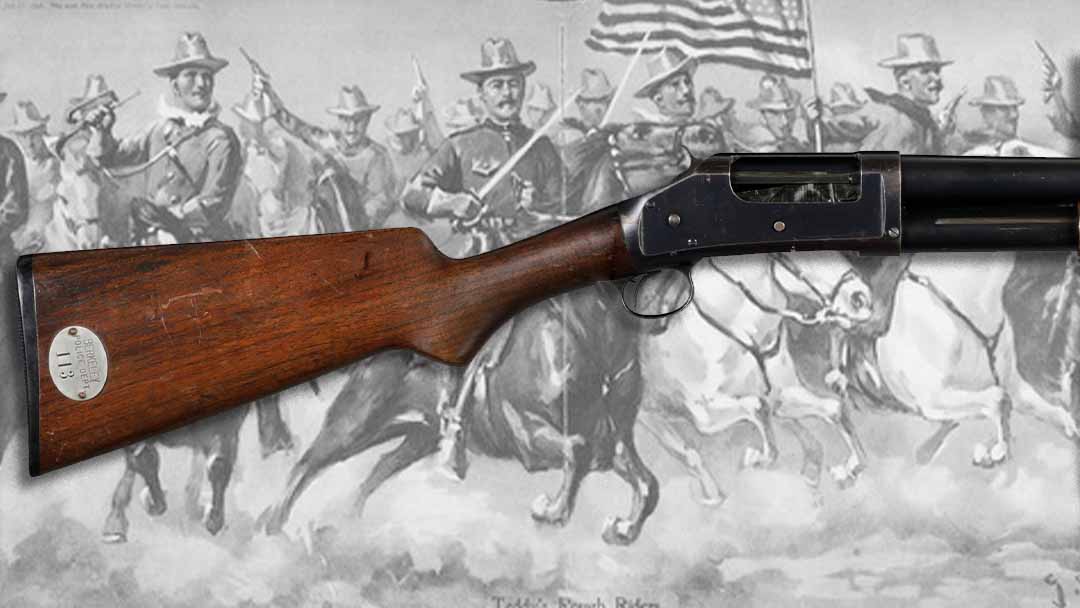
John Moses Browning’s latest shotgun design was another memorable event in 1897 and despite starting its life as a sporting gun, would prove its worth in the jungles of the Philippines and 20 years later in the trenches of World War 1. Design-wise, the gun was stronger than the Winchester 1893 with a thicker receiver for using smokeless powder cartridges. The model would remain in production for 60 years.

The Winchester Model 1897 shotgun improved the slide lock to reduce jamming and featured a barrel that could be quickly removed. The Model 1897 lacked a trigger disconnector could be slam-fired, holding the trigger while working the slide. Soldiers and duck hunters alike could empty the gun in seconds. This shotgun has an oval inventory plaque attached to the right side of the stock marked “BERKELEY/POLICE DEPT./113.”

Guns of the 1890s: Engraved Spanish Charola y Anitua Model 1898

After the simmering tensions between the United States and Spain came to a boil with the sinking of the USS Maine in Havana Harbor in February, 1898, Wild West sharpshooter Annie Oakley wrote a letter to President William McKinley offering her services. Three weeks before the declaration of war on April 25, Oakley proposed to raise a regiment of “fifty lady sharpshooters” who would supply their own ammunition and arms. The request, forwarded by McKinley to the War Department, was denied because women weren’t allowed to serve. Women didn’t receive permanent status in the armed forces until 1948.

During the war, the United States handed Spain naval defeats, invaded Puerto Rico and Cuba and future president Theodore Roosevelt’s Rough Riders charged up San Juan Hill. The war ended Aug. 13 after four months. A treaty officially ending the conflict was signed in Paris on Dec. 10.

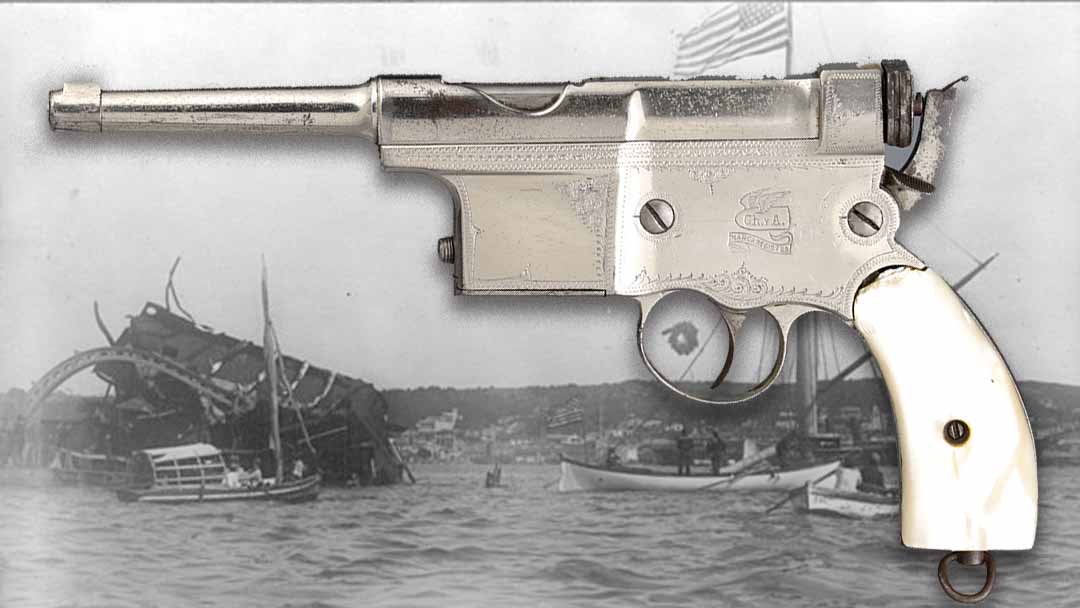
In 1898, Spaniards Ignacio Charola Achucarro and Miguel Anitua Echeverria patented their pistol design chambered in 5mm cartridge. Their company Charola y Anitua in Eibar Spain started producing the pistol in 1899. The gun was loaded from the top using stripper clips, and was submitted to the Spanish military for trial but quickly dismissed as expensive and complicated to assemble. With no contract, only about 8,400 were produced from 1897-1095. After Anitua left the company, the pistol was made in a slightly larger caliber than its initial 5mm chambering.

Developed prior to the Spanish-American War, but not produced until after, this engraved Charola y Anitua Model 1898 is similar to a scaled down Mauser C96. The gun’s subtle engraving highlights the contours of the gun.

Guns of the 1890s for Sale

The 1890s was marked by the United States flexing its military strength, the continued rise of industrialization and the resulting labor unrest. Amid the events that showed a new, modern era to come were the guns of the 1890s, some well-known and some less so that will be available at Rock Island Auction Company’s June 21-23 Sporting & Collector Auction in Bedford, Texas. Visitors can examine these amazing firearms on the June 20 Preview Day.

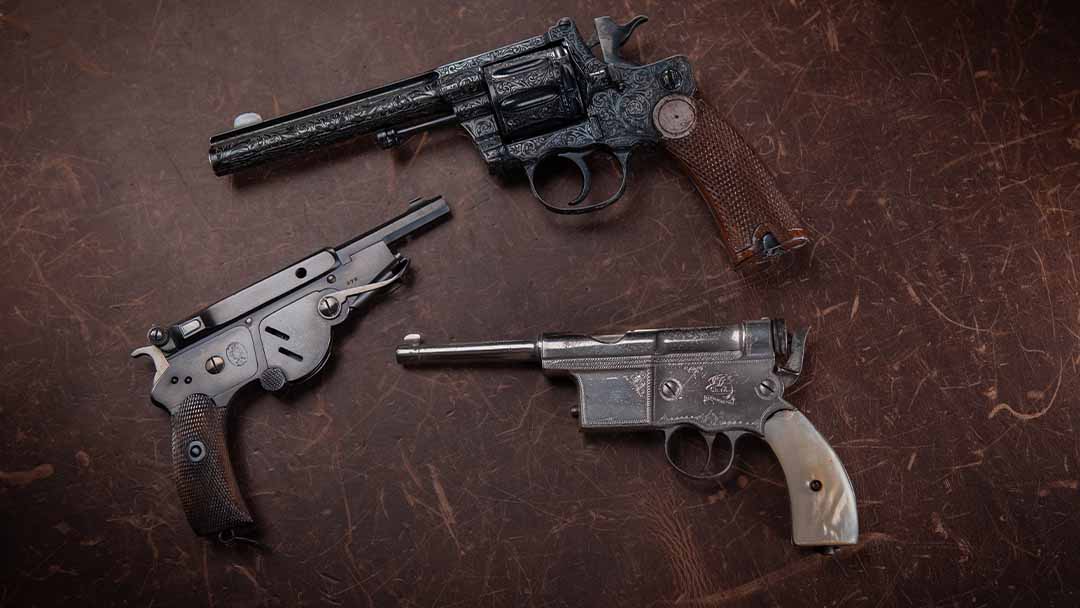
The 1890s introduced guns that showed longevity or innovation and others that faded into history. Clockwise from top is an H. Pieper Model 1893 revolver, a Charola y Anitua Model 1898 and a V.C. Schilling No. 2 Bergmann.

How to Start Your Dispersed Camping Journey

0

Let’s talk about boondocking, also known as dispersed camping or dry camping. If you’ve never heard of it, it’s basically camping without all the usual amenities you get at traditional campgrounds. Think of it as setting up camp in the middle of nowhere, often in some pretty remote or undeveloped areas.

Boondocking is an awesome way to experience the great outdoors with a real sense of freedom and connection to nature. But, as cool as it sounds, it does come with its own set of challenges. So, let’s break down the pros and cons of boondocking and give you some tips on how to get started.

The Pros of Boondocking

Boondocking is your ticket to breaking free from the usual campground restrictions and really getting into nature. It’s super budget-friendly because a lot of the spots are on public lands and don’t cost a dime. Plus, you get a level of privacy and solitude you just can’t find in crowded campgrounds. Imagine having the peace and quiet of the wilderness all to yourself. You also get the freedom to pick your own spot, whether you’re into desert views or mountain landscapes. It’s pretty amazing!

As one couple who we interviewed a while back told us, “We boondock in beautiful wilderness areas where the quiet makes it easy to relax and slow down. The nomad lifestyle requires you to get more deeply in touch with your own survival, which has been a wonderful experience for us.”

  1. Cost-Effective: One of the biggest advantages of boondocking is that it’s typically free. By camping on public lands like National Forests or Bureau of Land Management (BLM) areas, you can save a significant amount of money compared to staying in RV parks or campgrounds.
  2. Privacy and Solitude: Boondocking allows you to escape the crowds and enjoy a more private camping experience. You can find secluded spots where you won’t be disturbed by other campers.
  3. Unmatched Scenery: Many boondocking sites offer stunning views and a closer connection to nature. From desert landscapes to mountain vistas, the beauty of these remote locations is often unrivaled.
  4. Flexibility and Freedom: You aren’t bound by campground rules and can choose your spot based on your preferences. This flexibility allows for a more spontaneous and customizable camping experience.
  5. Self-Reliance: Boondocking encourages you to develop self-sufficiency skills. You’ll learn how to manage your resources, such as water and power, and how to handle unexpected situations.

The Cons of Boondocking

Despite all the great things about boondocking, it’s not without its challenges. One biggie is managing your resources because there are no hookups for water, electricity, or sewage. You’ve got to be really prepared and self-sufficient, which can be a bit overwhelming if you’re just starting out. Getting to some of the best boondocking spots can be tricky too, as they’re often down rough roads that aren’t friendly to all types of RVs.

Safety is another concern. You’re out there in the wild, so you have to think about wildlife and even the possibility of running into some sketchy people. And don’t forget about the legal stuff—you’ve got to make sure you’re camping in designated areas and following all the local rules. Here at OFFGRID Survival, we always stress the importance of doing your homework and being prepared for whatever comes your way.

  1. Resource Management: Without hookups for water, electricity, or sewage, you must carefully manage your supplies. This means conserving water, using solar panels or generators for power, and finding places to dump waste responsibly.
  2. Accessibility Issues: Some boondocking spots can be difficult to access, especially with larger RVs or trailers. Rough roads, tight corners, and steep grades can make getting to your desired location a challenge.
  3. Safety Concerns: Being in remote areas can pose safety risks. It’s important to be prepared for wildlife encounters, have a means of self-defense, and ensure you have a way to start your vehicle if the battery dies.
  4. Legal and Ethical Considerations: It’s crucial to ensure you’re camping legally and ethically. Always check the regulations for the area you’re in, practice Leave No Trace principles, and be mindful of private property boundaries.
  5. Connectivity Issues: If you rely on internet connectivity for work or communication, remote locations can be a drawback. Cell signal may be weak or nonexistent, requiring you to invest in boosters or satellite internet solutions.

How to Get Started with Boondocking

Boondocking can feel a bit overwhelming at first, but with the right preparation, it can turn into an awesome and rewarding experience. Start by researching potential boondocking spots using resources like Campendium, FreeCampsites.net, and various apps that help you find good places. National Forests and BLM lands are great places to start. If you’re new to this, it’s a good idea to scout out locations beforehand. This way, you can avoid rough roads and make sure the spot works for you.

  1. Research Locations: Use resources like Campendium, FreeCampsites.net, and apps like RV Parky and Sekr to find reliable boondocking spots. National Forests and BLM lands are prime areas for dispersed camping.
  2. Scout Ahead: If possible, scout your potential campsites ahead of time. This will help you avoid unsuitable roads and ensure the spot meets your needs.
  3. Prepare Your Vehicle: Make sure your RV or trailer is ready for off-grid camping. This includes having a full tank of fuel, a charged jump pack, and enough water and propane for your stay.
  4. Manage Your Power: Invest in solar panels, a good battery bank, and a reliable generator. These will help you stay powered up without needing hookups.
  5. Safety Precautions: Bring bear spray, a firearm if you’re comfortable with it, and ensure you have a way to call for help if needed. Motion-sensitive lights can deter wildlife and unwanted visitors.
  6. Check Regulations: Always check the rules for the area where you plan to camp. Some places have specific regulations about campfires, waste disposal, and length of stay.

Tips from Experienced Boondockers

Experienced boondockers, especially our OFFGRID Survival readers, have a ton of invaluable advice to share. Many stress the importance of being prepared and always having a backup plan. They often highlight the need for privacy and safety, offering tips on how to secure your campsite and stay aware of your surroundings. Resource management comes up a lot too, with plenty of suggestions on how to make the most of your supplies. For those of you working remotely, staying connected is a big deal, and there are various solutions to keep your internet access up and running.

Privacy and Safety: “We’ve boondocked in very remote places for years without any problems. Just use common sense, keep your valuables secure, and enjoy the peace and quiet. One of the best things about boondocking is the seclusion, but it also means you need to be extra vigilant. We always make sure our campsite is well-lit at night and keep a close eye on our surroundings. Motion sensor lights and even some basic security cameras can go a long way in giving you peace of mind. And don’t forget about wildlife—keeping food secured and away from your sleeping area is crucial to avoid unwanted animal visitors.”

Resource Management: “We boondock between RV sites to decrease costs and then really boondock for special events. Use RV parks to dump, refill water, and charge batteries. This routine helps us stretch our resources and stay off-grid longer. For water, we’ve invested in a good filtration system so we can use natural water sources when needed. Our solar setup is paired with a reliable generator for those cloudy days. We also carry a few extra propane tanks to ensure we can cook and stay warm if the weather turns cold. It’s all about planning and making sure you have what you need to be comfortable.”

Scouting and Planning: “I highly recommend scouting out spots on a day trip in your 4WD ahead of time. Pick 2-3 potential sites to avoid the frustration of searching for hours. This approach has saved us so much time and hassle. We usually use online maps and apps to identify a few promising locations, then check them out in person. When scouting, look for level ground, access to natural water sources, and places that offer some natural protection from the elements. It’s also a good idea to have a backup plan in case your first choice is taken or inaccessible. Knowing the terrain and what to expect can make a huge difference.”

Connectivity for Remote Work: “If you’re working remote, consider a good solar setup and backup generator. For internet, hotspots work if you’re near populated areas; otherwise, consider satellite options. Staying connected while boondocking can be a bit tricky, but it’s definitely doable. We invested in a cellular signal booster which has been a game-changer in areas with spotty reception. For more remote spots, Starlink has been a reliable option, providing fast internet even in the middle of nowhere. Just make sure you have a clear view of the sky for the best signal. Having these setups allows us to work efficiently without worrying about losing connection.”

Embrace the Boondocking Lifestyle

Boondocking is an awesome way to really get in touch with nature, enjoy some serious freedom, and camp without breaking the bank. Sure, it comes with its challenges, but being well-prepared can turn those challenges into rewarding experiences. Do your homework on locations, scout ahead, and take advice from seasoned boondockers to make sure you have a safe and enjoyable trip.

At OFFGRID Survival, we’re all about helping you get ready for whatever comes your way, whether it’s living off the grid, boosting your self-reliance, or finding the best camping spots. Don’t forget to sign up for our newsletter to get regular updates and exclusive content. And check out our books to dive even deeper into survival strategies and tips.

Resources for Your Boondocking Journey

Here are some helpful resources to get you started and keep you going on your boondocking adventures. Whether you’re living full-time in your RV, looking for the best off-grid power solutions, or just need some tips on the nomadic lifestyle, these guides from OFFGRID Survival have you covered:

  • Sign Up for Our Newsletter: Subscribe Here
  • Check Out Our Books:
    • The Ultimate Situational Survival Guide: Self-Reliance Strategies for a Dangerous World: Buy Now
    • Prepper Radio: The No-BS Ham Radio Technician Exam Prep Guide: Buy Now

Review: Eberlestock Bando Bag XL

0

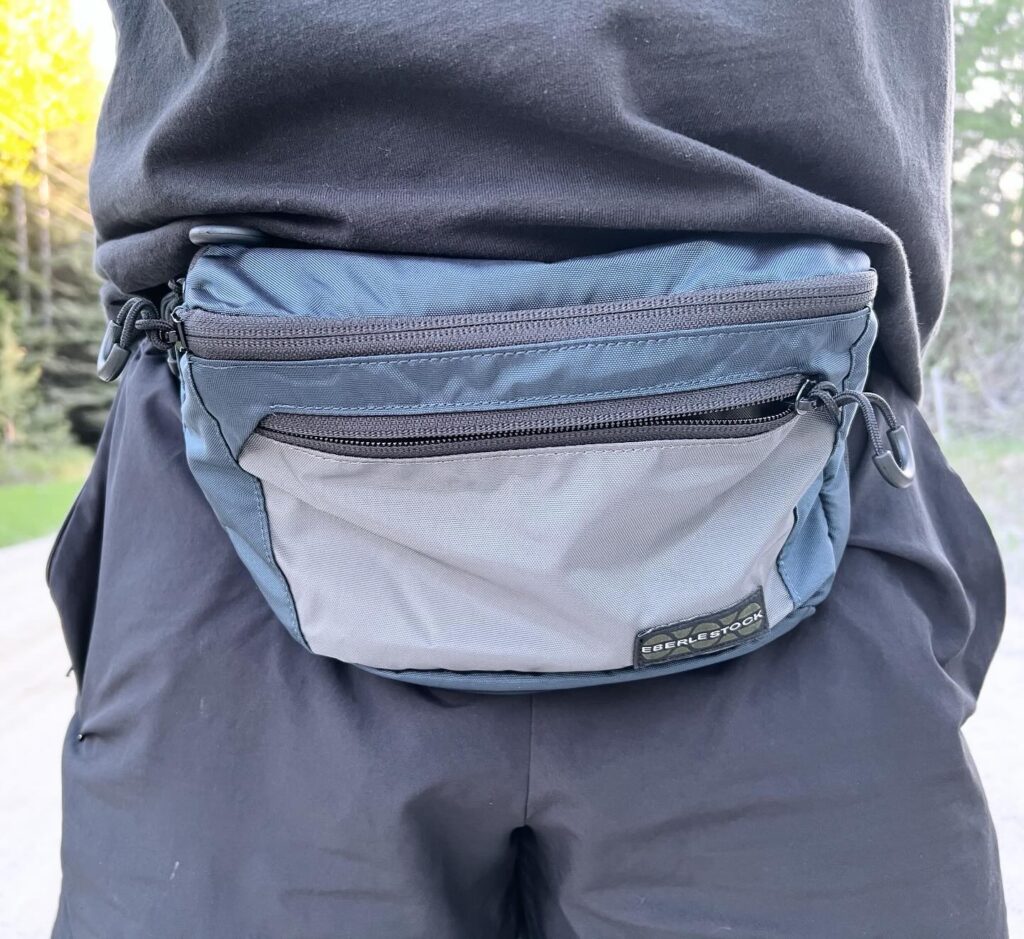
I recently reviewed the Eberlestock Bando Bag after using it for several months. In that review, I mentioned that I liked it so much that I was looking forward to purchasing the newer Bando Bag XL and spending time with that. Well, I’m glad to say the new Bando Bag XL has been great. In fact, I think this is the one I would recommend for most people.

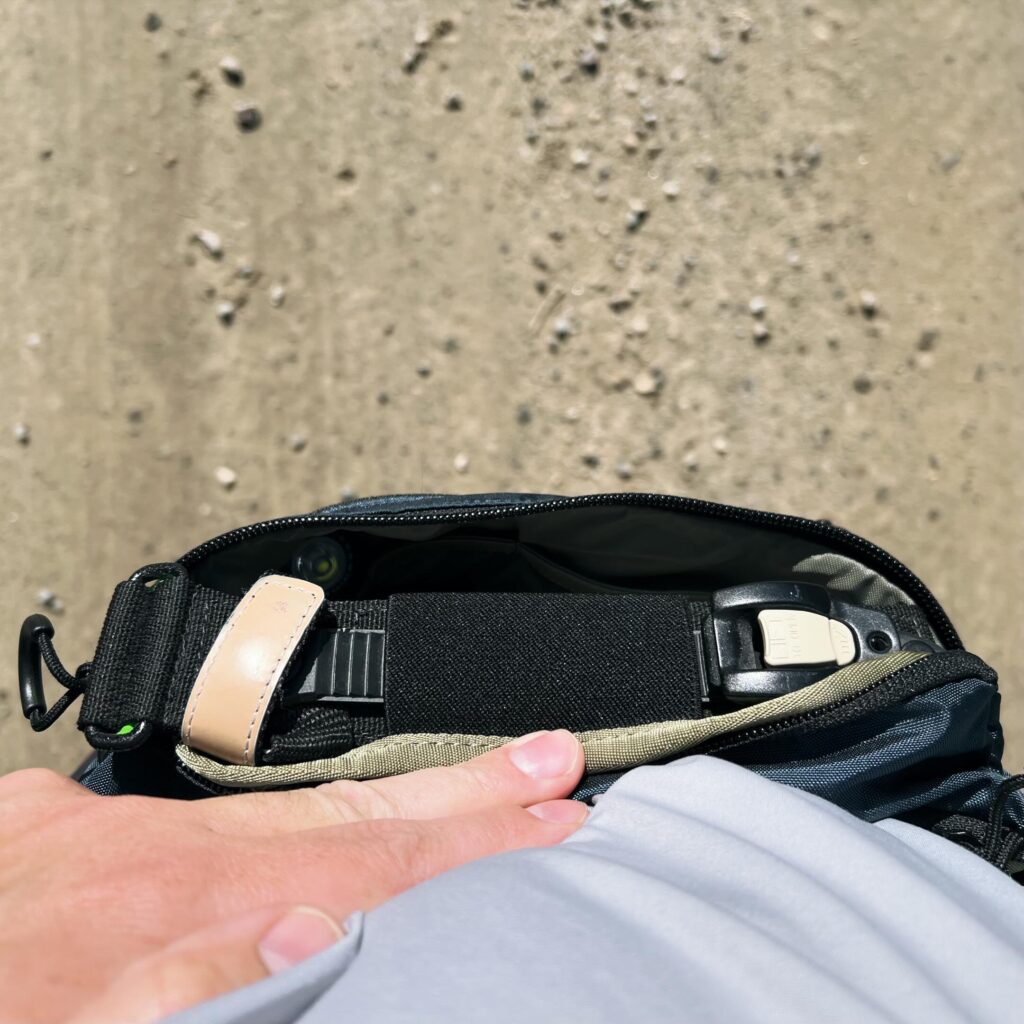
The Bando Bag XL has basically all the features of the original Bando Bag with the addition of a tourniquet holder (more on this later) and more room. Both of those additions make the XL more useful to me. The layout and organization features are similar otherwise. There is a front slot pocket with zipper closure, a main compartment with zipper closure that also includes an internal mesh organization pocket and two internal slot pockets, and finally the loop-lined quick-access compartment for carrying a firearm.

Every compartment in the Bando Bag XL is larger. The slot pocket can now fit a full size smart phone in a case which is a game changer because it frees up even more space in the main compartment. The main compartment is cavernous enough to carry my packable windshirt/light rain shell. The quick-access compartment can fit a full size handgun including some full size handguns with a light and RDS installed. Eberlestock sized and shaped this bag very well because, as much as it fits, it still does not look like an overly large bag. They nailed it.

The tourniquet (TQ) holder surprised me with how clever it is. It is located directly inside the main compartment and consists of a simple elastic loop affixed to the “top” flap. I have tested it with CATs and my preferred RMT with no issues. It should fit just about anything. The genius of this location is threefold. First, it is straightforward to access – just pull the main zipper. Second, when you lift the top flap, it naturally gets out of the way of everything else you have in the main compartment. Third and finally, the TQ acts like a structural rib that helps the main compartment hold its shape making the bag carry better with a TQ in place.

So, should you go with the Bando Bag or Bando XL? Both are hard to beat in terms of price, especially when they go on sale. The Bando Bag is more affordable and well-suited to carrying subcompact handguns. If your use case is limited to exercise or you will only be carrying something like a G43 or small-frame wheelgun, this could be good for you. However, I think most people would be better served just going with the Bando Bag XL. The size makes everything easier without being too big and the addition of the TQ holder is very handy.

These are currently on sale AND they have an additional coupon savings as of the time of this writing. The result is that they cost less than they did when I wrote the Bando Bag review and a lot less than I paid for both of mine (note: check all the color options, some cost less right now). Check them out: Bando Bag and Bando Bag XL on Amazon.com

More Proof of Big Economic Trouble Ahead

0

This morning, I read an article from the AP that confirms what we’ve been warning about for years: the rise of ‘zombie’ companies is a clear signal of big trouble ahead. Known as “zombie companies,” these businesses are drowning in debt, barely surviving, and struggling to cover even the interest on their loans.

A recent Associated Press analysis has found that the number of these financially crippled companies has skyrocketed to nearly 7,000 worldwide, with 2,000 in the United States alone. This trend underscores the potential for widespread economic disruption and serves as yet another sign of big trouble ahead.

The Rise of Zombie Companies and the Retail Apocalypse!

Zombie companies are defined as businesses that haven’t generated enough revenue to cover their interest payments over the past three years. This surge can be attributed to a decade of cheap debt, followed by stubbornly high inflation that has driven borrowing costs to levels not seen in years. The analysis reveals that the number of these financially distressed firms has increased by over 30% in several major economies, including the U.S., Australia, Canada, Japan, South Korea, and the United Kingdom.

Retail stores are being shut down at a staggering rate all over the country. If we stay on the pace that we are on, the total number of stores closed in 2024 will be nearly 40 percent higher than the total number of stores closed in 2023. That is what you call a crisis! Meanwhile, banks are shuttering hundreds of branches from coast to coast, and a “restaurant apocalypse” is sweeping across the nation. Everywhere around us, “space available” signs are going up on buildings that were once considered to be prime commercial real estate. If someone tries to convince you that the U.S. economy is in good shape, just show them this article and ask them why so many once prosperous businesses are closing. Needless to say, they will not be able to win the argument after that.

According to the Daily Mail, nearly 2,600 store closings were announced during the first four months of 2024. Big names including Macy’s, Walmart, Walgreens, Foot Locker, and 7-Eleven have all said they are closing shops. But discount stores like Family Dollar and the bankrupt 99 Cents Only have been worst hit, as have drugstores like CVS and Rite Aid.

If this pace remains constant throughout the rest of this year, we could hit approximately 7,800 store closing announcements by the end of 2024. This is not just a blip on the radar; it’s a clear indicator that our economy is in serious trouble.

A Financial Reckoning on the Horizon?

Many of these zombie companies are on the brink of a financial reckoning. Hundreds of billions of dollars in loans are coming due, and these companies may not have the means to repay them. Robert Spivey, Managing Director of Valens Securities, warns that the weakest of these companies are likely to be “crushed” under the weight of their debt.

The number of U.S. companies filing for bankruptcy has hit a 14-year high, a surge typically seen during a recession, not an economic expansion. The situation is similarly dire in other countries, with corporate bankruptcies reaching near-decade highs in Canada, the U.K., France, and Spain.

The Real Cost to You and Me…

The potential collapse of these zombie companies is not just a financial issue—it has real-world implications for hard working people. These companies employ around 130 million people across a dozen countries. A wave of bankruptcies could lead to massive layoffs, further straining already struggling economies. It’s not just a financial issue—it’s a looming economic disaster that could lead to widespread layoffs and social unrest.

Communities will also suffer as local businesses dependent on these companies’ employees see a decline in customers and revenue. The ripple effect of these closures can lead to further bankruptcies and a reduction in essential public services funded by local taxes. The psychological toll on people and families, combined with potential increases in crime and social unrest, highlights the urgent need for preparedness. At OFFGRID Survival, we emphasize staying informed and taking proactive steps to protect yourself and your loved ones from the looming economic disaster.

Wall Street’s Dangerous Gamble

Despite the glaring red flags, Wall Street investors are recklessly throwing money at zombie companies, snapping up their stocks and “junk bonds” like there’s no tomorrow. “”These motherfuckers are playing with fire, gambling with massive risks, and turning a blind eye to the ticking time bombs they’re fueling,” one stock market insider told u

This influx of cash might give these failing businesses a temporary lifeline, but it’s just a band-aid on a gaping wound. The insider at a big investment research group, slams this unprecedented level of public market gambling as sheer madness. These reckless actions ignore the deep-rooted financial instability of zombie companies, setting us all up for an inevitable and catastrophic collapse.

Central Banks’ Role in Creating Zombies

The roots of this zombie epidemic can be traced back to the actions of central banks during the 2009 financial crisis and the 2020-21 pandemic. In an effort to push off economic collapse, central banks slashed interest rates to near zero, encouraging a borrowing binge. While this strategy may have averted a global depression, it also created a credit bubble that has now spread far beyond just zombie companies. Governments, consumers, and even healthier companies have all piled on debt.

Rising Interest Rates: A Death Blow

The biggest problem facing zombie companies today is rising interest rates. Unlike more robust companies, zombies often lack deep cash reserves, and many of their loans have variable interest rates. As rates increase, so do their interest payments, exacerbating their financial struggles. Much of the debt accumulated by zombies was not used for growth or innovation but for stock buybacks, which have drained their cash reserves and left them vulnerable.

Bed Bath & Beyond: A Cautionary Tale

One example is Bed Bath & Beyond. The retail chain, once a thriving business with 1,500 stores, spent a decade accumulating debt and $7 billion on stock buybacks, even as it struggled to transition to digital sales. This strategy, combined with generous executive pay packages, ultimately led to its downfall and the loss of tens of thousands of jobs.

JetBlue and Manchester United: Industry Struggles

The airline industry has also been hit hard. JetBlue, for instance, doubled its debt over the past decade and spent hundreds of millions on stock buybacks. As a result, it has not made enough in pre-tax earnings to cover its $717 million in interest payments over the past four years. Meanwhile, in the UK, Manchester United’s financial woes provide another cautionary tale. The Glazer family, who own the Premier League team, loaded it with debt in 2005 and have since extracted hundreds of millions in dividends, while the club’s stadium has fallen into disrepair.

The Broader Economic Impact

The collapse of zombie companies could have far-reaching effects, especially if multiple companies fail simultaneously. This scenario could trigger a domino effect, dragging down more stable businesses and leading to broader economic instability. With governments, consumers, and even healthier companies also heavily indebted, the potential for a widespread financial crisis looms large.

The Shoplifting Tsunami: A National Crisis

We’re in the middle of a shoplifting tsunami that’s forcing major retailers to shut down locations in cities across the country. What used to shock us—videos of brazen looters—has become so common that we hardly notice anymore. It’s a sad sign of the times, and even our politicians seem indifferent, maybe thinking the big retailers can absorb the losses. But they’re wrong. CEOs are sounding the alarm.

Over the past year, executives from Walmart, Target, and Home Depot have been vocal about the rampant theft plaguing their stores. Walmart’s CEO warned that it could lead to store closures and higher prices. Target’s CEO said theft is costing them over a billion dollars. Home Depot’s finance chief called it a “consistent pressure” they deal with every day. This “shrink,” or inventory loss, is now costing retailers more than $100 billion a year. In New York City alone, over 21,000 shoplifting complaints have been filed this year, a 5% increase from last year. The numbers have been steadily climbing, with a 35% increase since 2021. This isn’t just an annoyance—it’s a full-blown crisis affecting businesses and communities across the nation.

The real kicker? Our politicians are doing next to nothing to stop this crime wave. Instead of cracking down on shoplifting, many seem to turn a blind eye, thinking it’s not a big deal. This indifference is only compounding the problem. As long as the criminals know they can get away with it, the thefts will continue. Businesses can’t survive in an environment where crime is rampant, and the authorities do nothing to protect them. This lack of action from politicians sends a dangerous message: it’s open season on retail stores. The longer this goes on, the more stores will close, jobs will be lost, and real hardworking people will suffer.

Preparing for the Worst

Given the current economic landscape, it’s crucial to be prepared for the possibility of a large-scale financial crisis. At OFFGRID Survival, we believe in taking proactive steps to safeguard your future. Here are some essential tips to help you navigate these uncertain times:

  1. Stockpile Essentials: Ensure you have a sufficient supply of non-perishable food, clean water, and essential medications. Aim for at least a three-month supply.
  2. Secure Your Home: Increase home security to protect against potential crime surges during economic instability.
  3. Diversify Your Assets: Convert some of your savings into physical assets like gold, silver, or other tangible goods that retain value during economic downturns.
  4. Learn Self-Sufficiency Skills: Essential skills like gardening, hunting, and basic medical care can reduce your reliance on external systems.
  5. Build a Community Network: Establish strong relationships with neighbors and local community members for mutual support and resources.

The rise of zombie companies is a clear sign of the financial instability lurking beneath the surface of the economy. As these companies face their day of reckoning, the potential for widespread economic disruption grows. At OFFGRID Survival, we believe in being prepared for any possibility. By taking proactive steps now, you can protect yourself and your loved ones from the looming financial crisis. Stay informed, stay prepared, and stay safe.

Miniature Guns | Rock Island Auction

0

As a collectibles class, miniature guns share much of the same appeal as their full-sized counterparts. The handcraftsmanship, scarcity, and remarkable artistry exhibited by the finest functional miniatures place them in high demand with enthusiasts, and miniature guns make fantastic companion pieces to the firearms they’re modeled after.

Tiny guns compared to their full-sized siblings. RIAC’s June 21-23 S&C auction includes a wealth of can’t miss miniatures.

Rock Island Auction Company’s June 21-23 Sporting and Collectors Auction in Bedford, Texas features over four dozen examples of miniature guns, many from the exceptional Cranford Dalby Collection. Click on the images throughout the article to learn more about this fascinating collecting genre.

The Miniature Firearms Field

Crafting and collecting miniature guns dates back to the 1700s. In European craft guilds, journeymen were required to produce an exemplary item, or “masterpiece” to earn the rank of master. In some disciplines, this involved creating a fully functional scale miniature. Miniature cannon, armor, swords, rifles, and pistols remained popular collectibles over the centuries, like the European miniature pistol produced in the mid-1800s pictured below.

A tiny gun that can shoot, this fully functional miniature European pistol appears to have been manufactured in the mid 1800s by a skilled maker. Available this June.

Some modern miniature guns have been produced by firms like Uberti and Imperial Miniature Armory, though the vocation continues to be led by the individual artisan. RIAC’s June S&C Auction features works from some of the most regarded names in the field, including Tom Weston, David L. Bradbury, Dave Kucer, Alex Baez, Herschel Kopp, Stanley Blashak, and Robin Armstrong.

A cased pair of Stan Blashak 1/3 scale miniature 18th century officer’s style flintlock pistols with accessories. Available this June.

Tiny Long Guns

Stanley Blashak and Robin Armstrong, two craftsmen prominently featured by the Miniature Arms Society, produced some of the most exceptional miniature guns in the field. Specializing in miniature muzzleloaders, an exceptional example from each artisan is featured below, including a miniature Brown Bess from Armstrong and a set of three tiny guns from Blashak that contains a Kentucky rifle miniature.

(Top) A Robin Armstrong 1/3 scale miniature British Long Land Pattern Brown Bess. (Bottom) A Stan Blashak rare cased silver mounted 1/3 scale miniature set with a Kentucky Flintlock rifle and a pair of flintlock pistols. Both miniature guns are available this June.

The finest miniature guns exhibit accurate detail on a smaller scale. Our next two muzzleloading examples feature functional locks and patchboxes, with precisely scaled markings and proofs to match their full-sized counterparts. The miniature U.S. Model 1803 flintlock rifle exhibits Harpers Ferry and American eagle/shield markings, and the tiny Type I British Baker displays the correct “crown/GR” royal cipher and “TOWER” markings demonstrating a remarkable commitment to authenticity.

Two of the finest miniature guns for sale this June. (Top) As few as four “000 Harpers Ferrys” were produced by Robin Armstrong. (Bottom) A near perfect 1/3 scale replica of a Type I British Baker flintlock by Stan Blashak.

Mini Pistols: Muzzleloaders

Robin Armstrong crafted a variety of miniature pistols and our next four examples highlight some of his finest workmanship. Cased dueling pistols are particularly desirable to antique collectors, and the miniature Wogdon dueling pistols below are part of an entire boxed set scaled down by 1/3, including a tiny ball mold, powder flask, multi-tool, cleaning rod, key, and a few balls.

An exceptional cased pair of Robin Armstrong 1/3 scale miniature Wogdon flintlock dueling pistols with accessories, one of the most collectible miniature gun examples for sale this June.

Surviving examples of the British Long Sea Service flintlock are collecting rarities, and quality miniatures of this model are even more scarce. In the 18th century, the British Royal Navy began to standardize its firearms. The barrel markings on such pieces became far more uniform compared to British firearms of the past, and the tiny gun pictured below faithfully recreates every feature on a full-sized Sea Service pistol down to its “crown/GR” royal cipher and “crown/broad arrow” marked at the center of the lock.

Another excellent miniature gun from Robin Armstrong, this 1/3 scale cased British Long Sea Service flintlock pistol is available this June.

After the Revolutionary War, America’s young military started to develop more of its own weapons, including the U.S. North & Cheney Model 1799 flintlock pistol. Robin Armstrong crafted an impressive miniature version of this historic model complete with accurate proof markings and the North & Cheney marking correctly displayed on the bottom of the frame near the trigger guard.

Another tiny gun highlight from June’s exceptional lineup, this cased Robin Armstrong 1/3 scale miniature U.S. North & Cheney Model 1799 flintlock pistol exhibits all the detail of its full-sized counterpart.

More than a half-century later, the U.S. military issued the Springfield Model 1855 pistol-carbine, a weapon that could be utilized as a pistol on horseback and a carbine for dismounted action. Armstrong’s miniature version of the gun includes the correct proofs and “1855” date markings, as well as a shoulder stock, an accessory few surviving historic Model 1855 pistol-carbines retain.

One of the rarest miniature guns for sale this June, this detailed cased Robin Armstrong 1/3 scale U.S. Springfield Model 1855 percussion pistol-carbine includes a shoulder stock and leatherette wrapped case.

Tiny Revolvers

Even in its tiny gun form, the Colt Walker makes a big impression. The 40% scale recreation of Colt’s famous Model 1847 Walker pictured below was handmade by Tom Weston, a well-known producer of miniatures in Mexico City in the 1950s and 1960s. The historic Walker was issued to the Mounted Texas Rifle Regiment during the Mexican-American War. Westson’s scale version is marked “A COMPANY NO 20” and is fitted with a finely carved grip featuring a Mexican eagle and snake on the left and a Phrygian cap with “LIBERTAD” on the right.

A Tom Weston miniature gun, this Colt Model 1847 Walker includes a fine case and accessories. Available this June.

Crafting accurate miniature guns is an exceptional talent, and creating sized-down versions of a model’s accessories to match the scale of a tiny gun is even more impressive. The 1/3 scale miniature Colt 2nd Model Dragoon featured below was handmade by David L. Bradbury and includes a hardwood case with the interior fitted in the English style for the tiny revolver as well as the included miniature ball mold, powder flask, oiler, cap tin, turnscrew, and some lead balls.

A tiny revolver complete with accurately sized down accessories, this attractive D.L. Bradbury 1/3 scale miniature Colt 2nd Model Dragoon revolver is available this June.

If you thought 1/3 scale was small, our next tiny gun pair is bound to impress. These outstanding 1/5 scale Colt Single Action Army revolvers were made by the well-known miniatures gun makers Alex Baez and Herschel Kopp. Both miniature revolvers feature full gold plated finishes, correct Colt style markings, a pair of smooth pearl grips, and a leather case.

A pair of truly miniature guns for sale this June, these gold plated Alex Baez/Herschel Kopp Colt SAA revolvers were crafted at 1/5 scale.

Another literal micro revolver, the breathtaking 1/5 scale miniature model of the Colt Bisley highlighted below is yet another standout example from Baez and Kopp. The revolver has a full gold plated finish and the correct Colt style markings are seen throughout, and its case includes a cartridge head style inset and six miniature dummy cartridges that demonstrate the diminutive scale of this exceptional tiny gun.

Another miniature gun treasure from Alex Baez and Herschel Kopp, a 1/5 scale, gold plated Colt Bisley Model SAA revolver with a case. Available this June.

Dave Kucer earned a reputation in the miniatures community for his complex and detailed reproductions. The tiny gun below is an impressive example of Kucer’s work, a 1/3 scale miniature of a World War 2 era U.S. Navy contract Smith & Wesson Victory Model revolver that includes a full wartime parkerized finish, accurate markings, and a miniature “US” marked leather holster.

A cased Dave Kucer 1/3 scale U.S. Navy contract Smith & Wesson Victory Model revolver with holster, one of the most detailed miniature guns for sale this June.

Mini Pistols

Our next tiny gun example, a 1/5 scale 1911A1 pistol, demonstrates the variety found within the miniature guns collecting field. This reproduction of America’s iconic World War 2 service sidearm was handmade by Tom Weston and faithfully captures the correct functionality and details of Old Slabside. Most of the pistol’s gold plated finish remains in very fine condition.

A functional mini pistol, this attractive gold plated Tom Weston Colt Model 1911A1 includes a glass topped display case with some scale dummy cartridges. Available this June.

Joel Morrow’s Imperial Miniature Armory firm produced some exceptional mini pistols, including the cased trio of 1/2 scale World War 1 Luger variants below. The Artillery model, Navy, and P.08 Luger are reproduced in exceptional detail, featuring all the typical functionality and markings of their full-sized counterparts.

Three tiny gun models in one exceptional set, these Joel Morrow/Imperial Miniature Armory 1/2 scale miniature guns are modeled after three variations of the famous Luger pistol. Available this June.

The Luger is a gun collecting cornerstone, and rare gold plated variants of this famous handgun are particularly sought after. At 1/5 scale, the mini pistol pictured below is one of the most impressive miniature guns offered this June and demonstrates the high-level craftsmanship that Alex Baez and Herschel Kopp are renowned for. The tiny gun includes a leatherette wrapped case with an exterior Iron Cross medallion and a fitted interior with a cartridge head style inset and six miniature dummy cartridges.

An attractive gold plated Alex Baez/Herschel Kopp 1/5 scale Luger pistol with case, one of the most appealing miniature guns for sale this June.

Miniature guns cover every era and genre imaginable, including modern classics like the Beretta Model 92FS. Another standout example of Dave Kucer’s talent, the 1/3 scale mini pistol shows all the correct features and markings of a full sized Model 92FS, including single and double action functionality, a working magazine release, safety, and slide stop.

A tiny gun for the modern pistol collector, this incredibly detailed Dave Kucer 1/3 scale miniature Beretta Model 92FS is available this June.

Mini Shotguns

For the sporting arms lover, June’s selection includes several mini shotguns displaying impeccable craftsmanship. Pictured below, this 1/2 scale reproduction of a Perazzi shotgun was created by Italian gunmakers Lucchini & Visini and measures 22 3/4″ overall. The engraved tiny gun is marked “SCO” in gold and “MADE IN ITALY” under the forend and includes a matching scaled-down wood and canvas case, six brass shells, wood snap caps, and a miniature duck call.

A mini shotgun for the sporting arms enthusiast, this 1/2 scale, cased Perazzi SCO is engraved by master Carlo Pasotti is available this June.

In addition to being a valued collectible in their own right, miniature guns can also serve as attractive companion pieces to their full-sized siblings. This especially holds true with popular models like the Browning Auto-5. The mini shotgun example below, another highlight from Lucchini & Visini, is a 1/2 scale Auto-5 engraved by master Engraver Carlo Pasotti that perfectly captures every detail of John Browning’s classic “Humpback.”

A tiny gun compared to its full-sized counterpart. (Top) A Carlo Pasotti master engraved 1/2 scale miniature Browning Auto-5 shotgun with case. (Bottom) An engraved Browning Auto-5 Ducks Unlimited Sweet Sixteen shotgun. Both items are available this June.

Going back a few centuries, the mighty blunderbuss served as the predecessor to the shotgun and was often employed for defending ships and carriages. The two miniature guns below, each by Stan Blashak, represent different variations of the classic 18th century brass British blunderbuss design, with the top example, a 1/4 scale blunderbuss with a short barrel, and the bottom piece, a 1/3 scale miniature, demonstrating the variation in bore size and barrel length found within this historic weapon class.

Two tiny guns produced by Stan Blashak. (Top) A 1/3 scale miniature British blunderbuss and silvered powder horn. (Bottom) A 1/4 scale miniature Harrison, London marked blunderbuss. Available this June.

Tiny Guns for Sale

The pursuit of miniature gun collecting has endured for centuries and continues to flourish today. In addition to their exceptional artistry and workmanship, miniature guns are ideal complements to their full-sized firearm counterparts and can be easily displayed and exhibited due to their diminutive size. From blunderbuss to Beretta, fans of every firearm genre will find a tiny gun that catches their eye in RIAC’s auction lineup.

A Colt Classic Edition miniature Colt SAA manufactured by Uberti for the U.S. Historical Society, this Colt Classic Edition miniature SAA is a highly detailed, 47% scale, reproduction of serial number 1. Available this June.

Subscribe to the weekly Rock Island Auction newsletter for new gun blogs and gun videos that cover the big and small in the arms collecting landscape. From pieces on giants like the 10 gauge shotgun, the .700 Nitro Express, the 4 bore, the 2 bore, the punt gun, and the mammoth JDJ to tiny gun models like the pen pistol, the watch gun, the ring gun, the palm gun, and the Pfannl Kolibri, the world’s smallest pistol.

An engraved Pfannl Kolibri pistol, touted as the world’s smallest pistol in terms of centerfire cartridge handguns.

D-Day Guns on the Beaches at Normandy

0

Amid the withering fire and chaos of the early hours of the D-Day invasion, Col. George A. Taylor, 16th Infantry Regiment commander exhorted the soldiers on Omaha Beach, “There are two kinds of people who are staying on this beach: those who are dead and those who are going to die. Now let’s get the hell out of here.”

Operation Overlord, a huge gamble that if it failed, would push back a renewed invasion and allow Germany to refocus its defense on the Soviet Union. British Prime Minister Winston Churchill called the Normandy invasion “the greatest thing we have ever attempted.”

Three million fighting men were amassed in Britain, training and waiting. General Dwight D. Eisenhower, Supreme Allied Commander, looked toward  June 5-7, 1944 when the landing site would be at low tide and a late moon would protect airborne operations. The weather was lousy on June 5, but the order went out on June 6. Eisenhower’s order of the day message to soldiers, sailors and airmen read in part:  “You are about to embark upon the Great Crusade, toward which we have striven these many months. The eyes of the world are upon you. The hopes and prayers of liberty-loving people everywhere march with you. In company with our brave Allies and brothers-in-arms on other Fronts, you will bring about the destruction of the German war machine, the elimination of Nazi tyranny over the oppressed peoples of Europe, and security for ourselves in a free world.”

Supreme Allied Commander Dwight Eisenhower, British Prime Minister Winston Churchill and U.S. Gen. Omar Bradley take a turn with M1 Carbines on a pre-invasion inspection.

Because of the expected poor weather a number of German officers in the high command were on leave at the start of the invasion. Hitler at Berchtesgaden went to bed shortly before the invasion began with orders not to be disturbed until mid-afternoon. The landing on the five beaches of Normandy — Utah, Omaha, Juno, Sword and Gold — was initially considered a feint, with the real invasion expected near the Pas de Calais, the closest point in France to England. The Allies had a strategic surprise.

The 80th anniversary of the D-Day invasion, when the sacrifices of what has become known as “the Greatest Generation” and the Allied military might started to push back the Germans from tenuous beachheads, through the hedgerows, back across the Rhine and finally to victory. Rock Island Auction’s June 21-23 Sporting & Collector Auction has guns that reflect the firepower of both sides in that conflict as well as others that have a connection to this legendary military feat.

General Erwin Rommel, charged by Adolph Hitler to fortify defenses on the French coast, once said of an Allied invasion of Europe, “The first 24 hours of the invasion will be decisive … for the Allies, as well as Germany, it will be the longest day,”

D-Day Guns: Colt M1911A1

John Moses Browning’s legendary pistol was made by five different companies during World War 2: Remington Rand, Colt, Ithaca, Union Switch & Signal, and Singer. Singer produced about 500 before halting further production. Remington Rand, the gunmaking company’s typewriter manufacturing subsidiary produced the most, slightly less than 878,000.

Small refinements to the pistol were made after World War 1 that included a shortened trigger, extended hammer spurs, simplified checkered grips, arched mainspring housing, a thicker front sight and angled clearance cutouts to earn it the M1911A1 designation.

Manufactured in late 1944, this M1911 A1 pistol was issued to Capt. Eugene M. Long as his backup pistol. Long served with the 4th Infantry Division’s 20th Artillery, landing at Utah Beach, one of the first units ashore on D-Day. Utah Beach, the furthest west of the five landing zones, was part of the operation because it put the U.S. Army within 60 km of Cherbourg, a deep water port. Slowed by German resistance, flooded fields and difficult terrain, it took the Allies until July 1 to capture the city. Long remained in continuous combat until the end of the war, earning the Purple Heart, Bronze Star and the Croix de Guerre.

The M1911A1 is seen with several officers in “The Longest Day,” and carried by NCOs as well Tom Hanks’ Captain Miller in “Saving Private Ryan.”

One of nearly 878,000 M1911A1 pistols manufactured by Remington Rand, this pistol was produced in late 1944 and made it into the war in January 1945, carried by D-Day veteran Capt. Eugene M. Long. He died in 1999 at the age of 84.

D-Day Guns: Luger

First adopted by the German military in 1908, the Luger is one of the most recognizable handguns in the world. By World War 2, it was no longer standard issue for the German military after the adoption of the Walther P38 shortly before the start of the conflict. Nevertheless, the Luger remained popular with German troops.

The Germans used code to identify the manufacturer and the year so foreign intelligence wouldn’t be able to determine how many guns were being made. About 3 million were made between 1900 and 1945. Lugers were popular war trophies for GIs, and could be booby trapped. A February 1945 U.S. Intelligence bulletin warned: “Charges Concealed in Weapons. The Germans sometimes conceal a small charge in the mechanism of a rifle or Luger pistol that they plan to leave behind in a fairly obvious place, to attract the attention of Allied soldiers. The charge, which is sufficiently powerful to injure a man severely, is detonated if the trigger of the weapon is pressed.”

Mauser took over Luger manufacturing in 1934. This gun bears the code “byf 41.” It also has the acceptance stamp and Army test proof marks on the barrel and receiver.

D-Day Guns: M1 Garand

After World War 1, the United States military wanted a self-loading rifle to replace the bolt action Springfield 1903. John Garand submitted an entry through Springfield Armory where he designed firearms. After honing his design for several years to design a semi-automatic platform robust enough to handle the .30-06 cartridge, the Army finally adopted the M1 Garand as its service rifle in 1936. It proved to be rugged and reliable and still worked well in terrible conditions. In the civilian world, the Garand’s accuracy made it popular with match shooters.

The Garand went into full production in 1939, and by the end of World War 2 Springfield Armory and Winchester combined to manufacture just over 4 million. Production resumed during the Korean War when about 1.5 million were made from 1952 to 1957 before the M14 was introduced.

As GIs prepared for the invasion, one of the things some did was to put condoms over the muzzles of their rifles to protect them from seawater and sand. They didn’t have to be removed before firing, according to Stephen E. Ambrose in “D-Day, The Climactic Battle of World War 2.”

Several actors, including John Wayne carried the M1 Garand in “The Longest Day,” as did several actors in “Saving Private Ryan,” including Vin Diesel, Tom Hanks, and Matt Damon. Dick Winters, portrayed by Damian Lewis, carried one in “Band of Brothers.”

This M1 Garand was manufactured in July 1941 and has a set of early pattern adjustment drums marked “BATTLE RANGE” windage and “LEFT/LEFT” elevation with closed arrows. It also is accompanied by a bayonet with scabbard.

D-Day Guns: M1 Carbine

The M1 Carbine was designed in fast turnaround on the eve of World War 2. The U.S. military, seeing the fluidity of frontlines wanted a weapon that was shorter and lighter than the M1 Garand that could be issued to officers, crew-served weapons teams, ammunition bearers and forward artillery observers. The weapon was required to fire semi-auto, weigh less than 5 lbs. and be effective to up to 300 yards.

Nine designs were initially received. Winchester was encouraged to participate with a prototype based on David “Carbine” Williams’ short stroke gas piston. Also among those who submitted designs were John Garand from Springfield Armory. The final two designs were between Garand and Winchester, and Winchester’s model, weighing in at just over 5 lbs., was adopted with six requested modifications.

This U.S. Inland M1A1 Carbine is fitted with a folding paratrooper stock.

Inland Manufacturing of General Motors was one of the first – along with Winchester – to receive a contract, producing 2.63 million carbines by the time the contract ended in 1945. Of the approximately 6 million M1 Carbines produced by 10 contractors, Inland produced about 43 percent of total production. The carbine used .30 caliber ammunition, smaller than the .30-06 fired by the Garand.

Famously, during a pre-invasion inspection tour, Churchill, Eisenhower and U.S. Gen. Omar Bradley took time for target practice using the M1. Tom Sizemore’s Sgt. Horvath carried an M1 carbine in “Saving Private Ryan,” as did Roddy McDowell’s Pvt. Morris, a paratrooper, in “The Longest Day.”

Based on the M1 semi-automatic carbine, Inland also produced the M2 Carbine, a full-auto version. The M2, capable of 750-770 rounds, didn’t get issued until mid-1945 and saw more action in the Pacific theatre and the Korean War.

D-Day Guns: German Walther Gewehr 43 Rifle

The Gewehr 43 was a German semi-automatic rifle based on the Soviet SVT-40. The Germans developed a semi-automatic rifle, the Gewehr 41, in 1941 without gas ports drilled into the barrels but found the gun was unreliable in combat.

During the invasion of the Soviet Union, the Germans captured some of the Russian SVT-40 rifles with their simple gas mechanism powered by a port cut into the barrel and a modern box magazine. Walther, utilizing the G41 design developed the G43 using the Soviet gas mechanism. The G43 served as a lighter, sturdier and easier to make gun.

The G43 was better received than its predecessor but still had reliability issues. Just over 400,000 were made, including 53,000 sniper rifles after going into production in 1943. The rifle didn’t get widely issued to troops because of the Allied invasions of the European continent, with the Allies landing in Italy in September, 1943 and the Normandy landing the following June.

Walther’s Gewehr 43, chambered in 7.92mm, would be renamed the K43 in 1944 after recognizing the rifle’s barrel was 2 centimeters shorter than the K98 German carbine.

D-Day Guns: MP40

Another German gun that evolved from an earlier model is the MP40 maschinenpistole, a full-auto mainstay of the Axis forces during World War 2. The gun was a simplification of the MP38, using stamped metal rather than machined parts.

The Germans sub-contracted out parts manufacture for the MP40 of which about 1.1. million were made between 1940 and 1945. The gun was mostly reliable but feed issues could occur with the magazine.

The MP40 utilized 32-round magazines for a rate of fire of 500 to 550 rounds per minute. This example is a MP40 pattern barreled receiver installed on an “MP.38” marked frame/trigger housing.

German “Deckungszielgerӓt” Indirect Fire Trench Device

This descendent of the “periscope sniper” weapon of the World War 1 trenches was likely not used at D-Day, but is unusual enough to share. This deckungszielgerat is a simplified version because it utilizes semi-automatic rifles rather than the bolt action rifles of World War 1. The shooter used a telescope to aim the device that clamped to a gun’s buttstock.

This German deckungszielgerat could adjust to a gun’s length of pull by adjusting a chain connected to the trigger. Not very accurate, it was best at likely providing harassing fire. It is unclear how many were manufactured or even made it to the front lines during World War 2, but a manual was published in 1943.

D-Day Guns Available

One of the greatest accomplishments in the annals of modern warfare is the D-Day invasion of France that launched the Allies on their way to European victory a year later. The guns of D-Day were concentrated on the beaches of Normandy that day and serve as a reminder to the heroics of the Allied invaders and what they faced as they fought for a toehold on the Atlantic Wall. These firearms are available in Rock Island Auction Company’s June 21-32 Sporting & Collector, with a Preview Day on June 20.

Review: Vosteed Talarurus | Jerking the Trigger

0

Vosteed’s new Talarurus shows off their ambitious design chops in a big way. They have had other knives with unique, compelling designs like the Corgi line or Thunderbird line but this Talarurus has a new level of cohesiveness that is very cool to see.

Specs

See the full specs at Vosteed.com. The highlights are below:

Blade Length: 3.03″ | 76.96 mm

Overall Length: 7.18″ | 182.37 mm

Blade Thickness: 0.138″ | 3.50 mm

Blade Material: 14C28N

Blade Grind: Flat

Blade Style: Modified Sheepsfoot

Handle Material: Micarta

Weight: 3.42 oz | 97.00 g

Opener: Thumb Disk

Lock Type: Crossbar Lock

Pivot Assembly: Caged Ceramic Ball Bearing

Carry Position: Tip-up

Observations from Use

If you have seen other Vosteed reviews or own one of their other knives yourself, you already know this is a functional knife with good, thin cutting geometry. I made a big deal about the design of the knife earlier (and will expand on that more later) but this is still a knife after all. It has to cut and be comfortable to use or it sucks.

The Talarurus’ modified sheepsfoot shape has a great point that is easy to access and a subtle belly coupled with a tall flat grind that makes this knife a deceptively good slicer. The choice of a thumb disk coupled with a ramped harpoon shape makes for a very comfortable thumb rest. This would be a solid choice for everyday carry or even a work knife. This knife has some “go” to back up all that “show”.

This design stands out to me even above previous Vosteed knives for a few reasons. The most notable (and subtle) is the cohesiveness of it. Vosteed is absolutely flexing their chops here with the way that various angles of the blade shape meld into, or mirror angles in the handle. They even went so far as to run a long chamfer down the length of the micarta handle slabs that perfectly matches the height of the primary grind on the blade. That is very intentional, very precise, and very visually interesting design.

The design elements above aren’t just for decoration. They serve a functional purpose. The chamfers on the handle that match the grind of the blade… those provide additional grip or contouring to the handle so it feels better in hand. The aggressive blade shape that matches the closed shape of the handle… those angles bring the blade to a sharp, useable point.

Finally, there is some fun built into the design. Each of the color ways of the Talarus has at least one small pop of color. Most models have a contrasting, anodized thumb disk for opening the blade. In the case of the blacked-out version that I have, the thumb disk is olive green which makes for a more subtle contrast.

Wrap Up

The Talarurus would make a stylish EDC knife or even a stout work knife thanks to the blade shape and strong lock. It is a visually striking knife with intentional details bringing the whole design together. If you are interested in a classic EDC like the Vosteed Raccoon, you owe it to yourself to give the Talarusus a long look as well.

Vosteed Talarurus at Vosteed.com