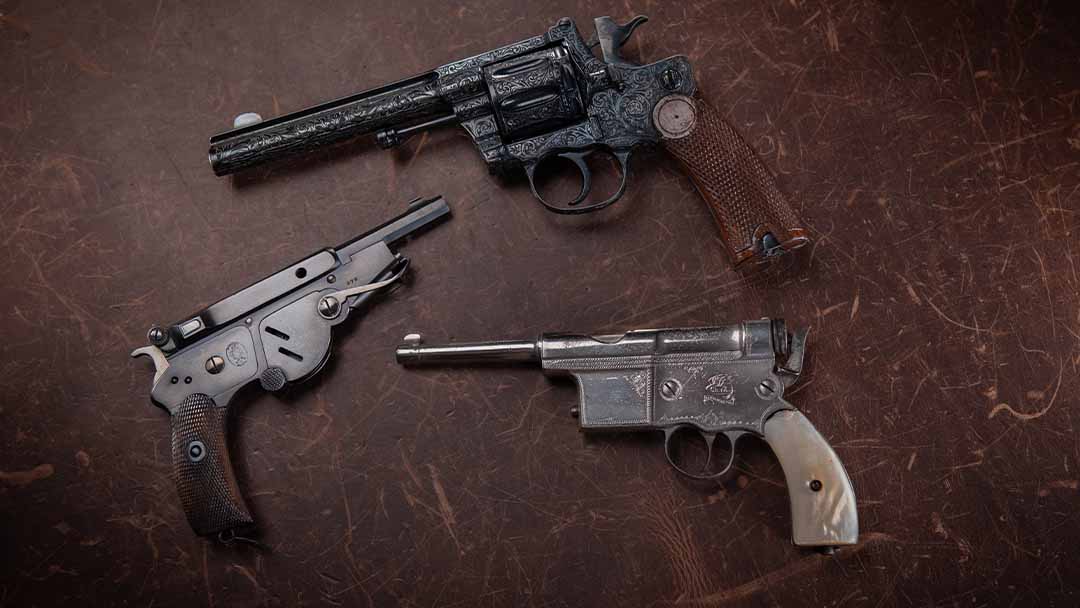
The United States in the 1890s was contorted by growing pains of an emerging world power. Industrialization and modernization came amid ensuing labor upheaval. It brought the first modern Olympic Games in 1896 and war between the United States and Spain two years later. Innovation and industrialization was seen in the firearms of the time, with the rise of self-loading pistols, machine guns, and smokeless gunpowder.
Some well-known guns came of age in the last decade of the 19th century alongside lesser-known firearms that faded from history. Here are some fascinating moments from the decade along with examples of firearms of that era, either well known to collectors or ones that might not be as well-known, available in Rock Island Auction Company’s June 21-23 Sporting & Collector Auction with a Preview Day on June 20.
Guns of the 1890s: Remington Model 1890
Army and Navy played their first football game in their storied rivalry on Nov. 29, 1890. As the Midshipmen shut out the Cadets 24-0, out west, the Army was endeavoring to corral the Native American population.
With the Ghost Dance movement – believing in the return of the dead and the removal of white men from the earth – gaining momentum among western Native Americans, Indian Bureau Police attempted to arrest Sitting Bull in mid-December. A shootout between the famed chief’s supporters and Indian Bureau officers killed Sitting Bull and 13 others, setting into motion tragic events that would lead to the massacre at Wounded Knee on Dec. 29.
When the shooting ended at least 150 were dead, with some historians estimating as many as 300 killed. Twenty men of the 7th Cavalry received the Medal of Honor for the action, despite Gen. Nelson Miles calling it “the most abominable criminal military blunder and a horrible massacre of women and children.
The same year, Remington introduced its Model 1890 revolver as a successor to its Model 1875 revolver and to serve as another competitor to the Colt Single Action Army. The gun had a short production life, manufactured from 1891 to 1894. “Flayderman’s Guide to Antique Firearms and Their Values” calls the gun scarce and highly sought after since only about 2,000 were made.
Guns of the 1890s: William Powell & Son Sidelock Double Barrel Shotgun
In 1892, the Dalton Gang terrorized the plains with murder and train robbery. Wanting to earn enough to avoid arrest for a while, Bob Dalton decided they should commit a pair of bank robberies simultaneously. Their targets were in Coffeyville, Kansas where the Daltons had resided for a time.
On Oct. 5, the five outlaws rode into town. They couldn’t leave their horses where they originally planned for a quick getaway. The bandits were tricked and trapped by a clever clerk and townsfolk who quickly armed themselves. Following a 12-minute gunfight, four of the robbers – Bob and Grat Dalton, Bill Powers and Dick Broadwell were killed and Emmet Dalton was shot 23 times but survived, serving 14 years of a life sentence.
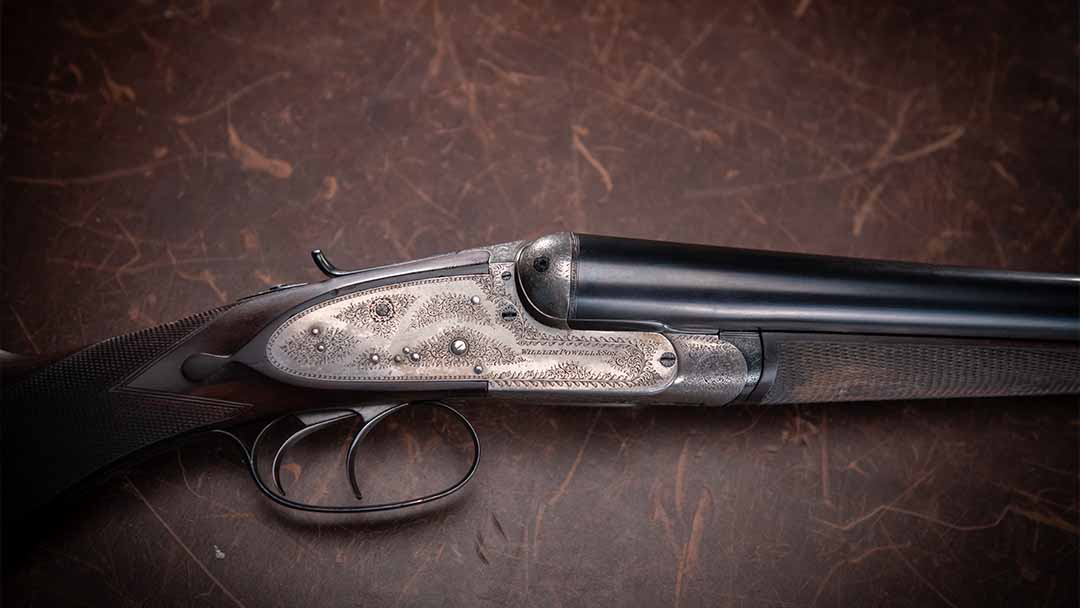
Far from the Wild West, that same year in Birmingham, England, William Powell and Son had been producing fine sporting arms since 1802. Known more for its fit and finish, Powell and Son has been referred to the “Purdey of Birmingham.” The company manufactured the sidelock double barrel shotgun featured here in 1892, utilizing the lift-up lever to open the lock that the company patented in 1864.
Guns of the 1890s: H. Pieper Patent Model 1893 Gas Seal Double Action Revolver
At Chicago’s 1893 Columbian Exposition, a number of items were introduced, including Juicy Fruit gum, Crackerjack and Shredded Wheat. The Ferris Wheel debuted and the grounds were electrified with alternating current. Beer baron Frederick Pabst introduced his Pabst Best Select beer, already an award winner.
The beer earned its legendary name from the ribbon earned at the Exposition. Pabst began to adorn his beer bottles with blue ribbons and saloon patrons would ask for the beer with the blue ribbon. By the turn of the century, Pabst was going through more than 1 million feet of blue ribbon per year. The ribbon became an official part of the label at the end of prohibition when the beer was first distributed in cans.
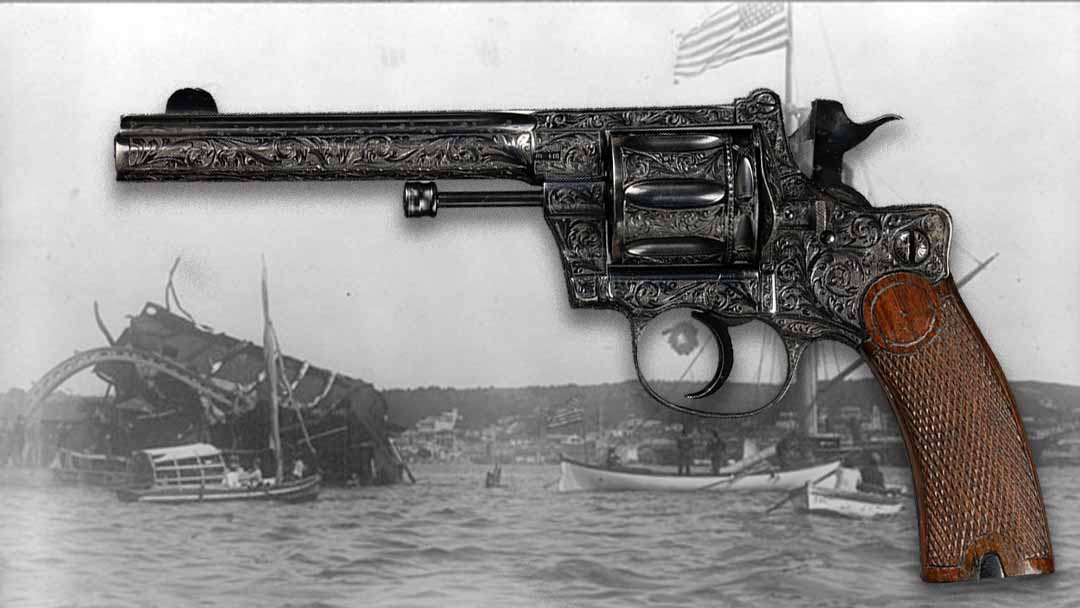
Henri Pieper, a respected Belgian gunmaker released his Model 1893 revolver that cammed the cylinder forward when firing to give it a better seal to the barrel, nearly eliminating the cylinder gap. Two years later, Leon Nagant’s similar pistol would be adopted by the Imperial Russian Army that would replace the Smith & Wesson Model 3.
Guns of the 1890s: Winchester Model 1894 and Marlin Model 1894 Trappers Carbine
Faced with economic depression, Pullman Palace Car Company cut its workers’ already low wages by about 25 percent despite keeping rents and other costs the same in the town near Chicago where most of the workers lived. Employees wanted to present their grievances over the low wages, living conditions and the 16-hour workday. Company president George Pullman refused and ordered the workers fired. The workers walked off the job in a wildcat strike in April.
The action spawned a number of railroad strikes across mostly the Midwest, which led to violence after National Guard troops were called in and the arrested union leaders. The Pullman workers lost public sympathy and returned to work without any gains.
As a conciliatory gesture after the Pullman strike and mining strikes the same year President Grover Cleveland signed legislation making Labor Day a national holiday. Official recognition of the holiday came more than 10 years after workingmen and tradesmen marched through New York City in 1882.
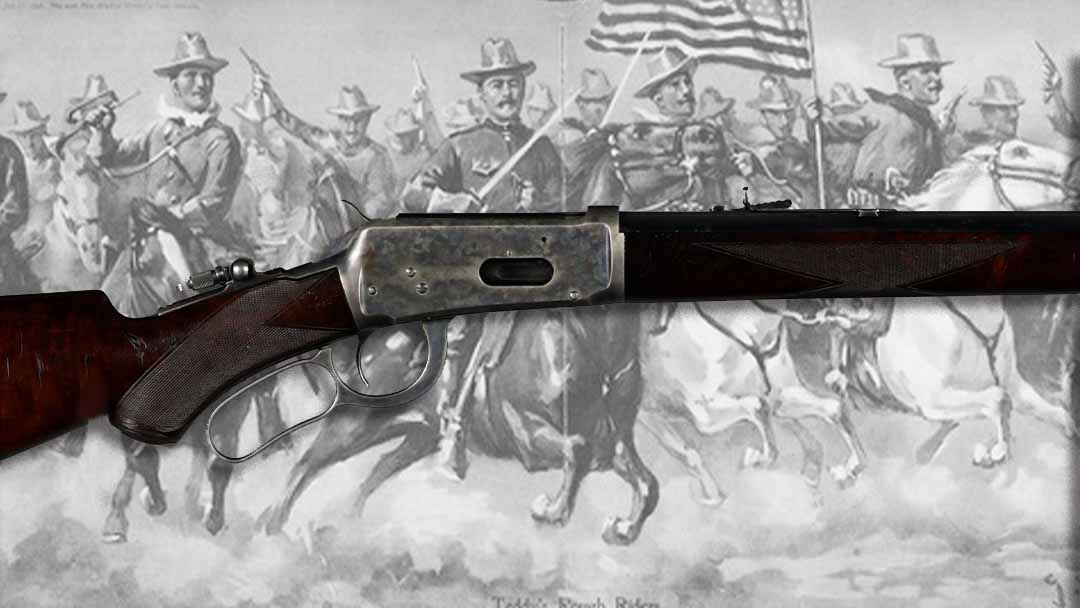
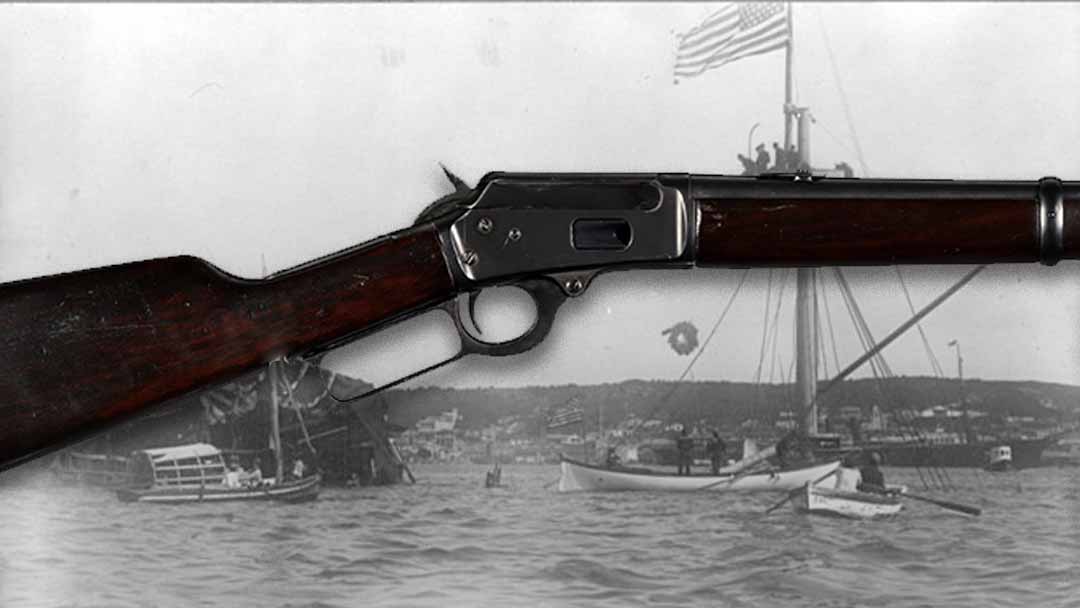
The year 1894 also brought a pair of lever gun legends to market, the Winchester Model 1894 and Marlin 1894. The Winchester was the first commercial American lever action rifle made to use smokeless powder cartridges and more than 7.5 million have been made. The Marlin 1894 simplified and strengthened the internal mechanism while maintaining side ejection.
Nearly endless versions of the Winchester 1894 have been made and the company stopped making it for a short time before it returned in 2011. Marlin’s 1894 has also gone through a number of variations but it has never been out of production.
Guns of the 1890s: V.C. Schilling Model 1896 No. 2 Bergmann and Mauser C96 “Red 9”
A massive tornado tore through downtown St. Louis on May 27, 1896, hopped the Mississippi River and hit East St. Louis just after 5 p.m. The twister arrived in a sky turned a greenish hue and its 10-mile rampage destroyed 311 buildings, heavily damaged 7,200 more and killed more than 255.
Just over two months later, an August heat wave killed 1,500 people from Chicago to Boston with temperatures hovering over 90 degrees and 90 percent humidity for 10 days. The number killed by the heat was more than the New York draft riots of the Civil War and the Great Chicago Fire of 1871 combined.
Earlier in the year, Swedish scientist Svante Arrhenius presented his paper quantifying the effect on global climate by carbon dioxide, calculating that the earth would warm 5-6 degrees with the doubling of CO2 in the atmosphere. In 1901, it would be referred to as the greenhouse effect for the first time.
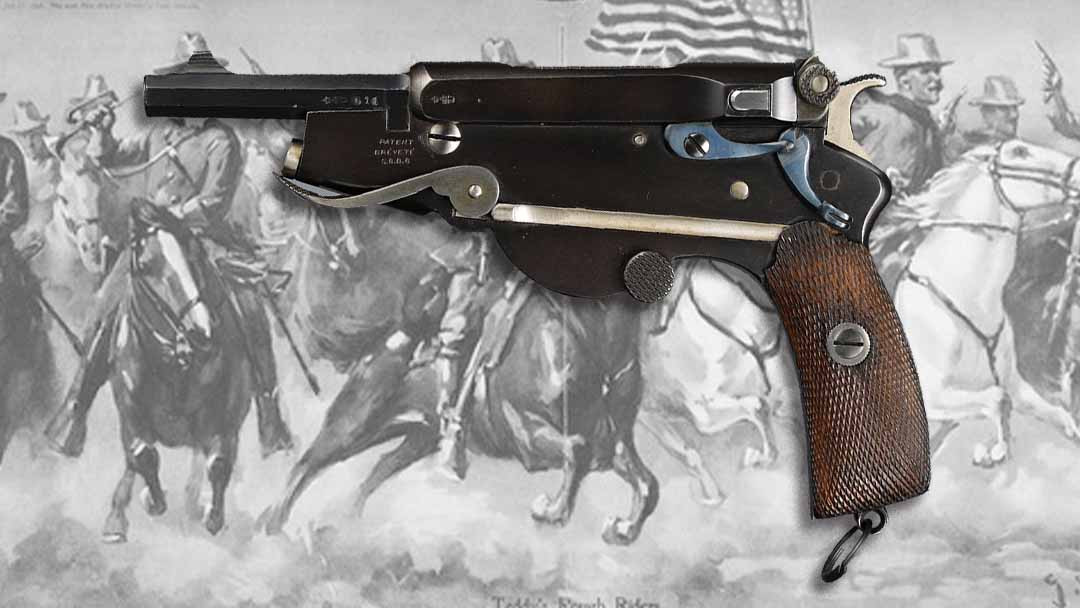
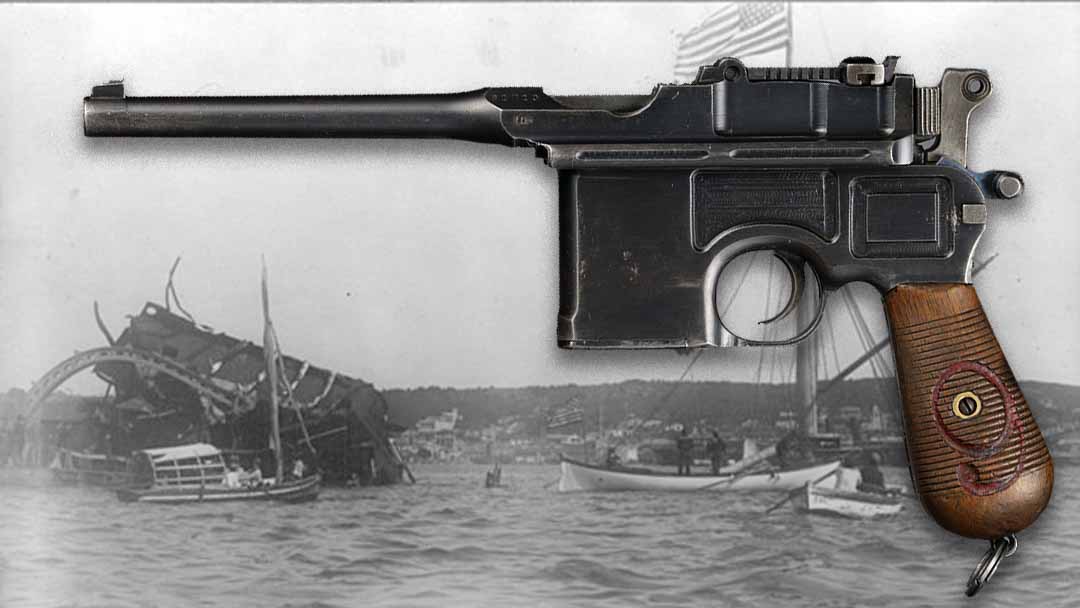
The year 1896 brought pistol innovation with the V.C. Schilling-made Bergmann Model 1896 and the Mauser C96. The pocket-sized Bergmann design and the instantly recognizable Mauser were both semi-automatic, following on the heels of the Borchardt C-93. The Bergmann pistol had a folding trigger before a conventional trigger was added to the design. The Mauser has a box magazine in front of the trigger.
Guns of the 1890s: Winchester Model 1897 Riot Shotgun
After receiving a letter from 8-year-old Virginia O’Hanlon, The Sun, a New York newspaper, published an editorial Sept. 21, 1897 headlined “Yes, Virginia, there is a Santa Claus.” Handed the assignment, veteran writer Francis Pharcellus Church at first scoffed at the assignment before penning a masterpiece of fewer than 500 words that reaffirmed childhood and would go on to be translated into more than 20 languages.
“Yes, Virginia, there is a Santa Claus. He exists as certain as love and generosity and devotion exist, and you know that they abound and give your life its highest beauty and joy. Alas! How dreary would be the world if there were no Santa Claus. It would be as dreary as if there were no Virginias. There would be no childlike faith then, no poetry, no romance to make tolerable this existence.”
As was The Sun’s policy, the editorial was published without a byline and Church wasn’t identified as the author until his death in 1906. The Sun published it annually at Christmas in 1920, a tradition that would continue until 1950 when the paper went into bankruptcy.
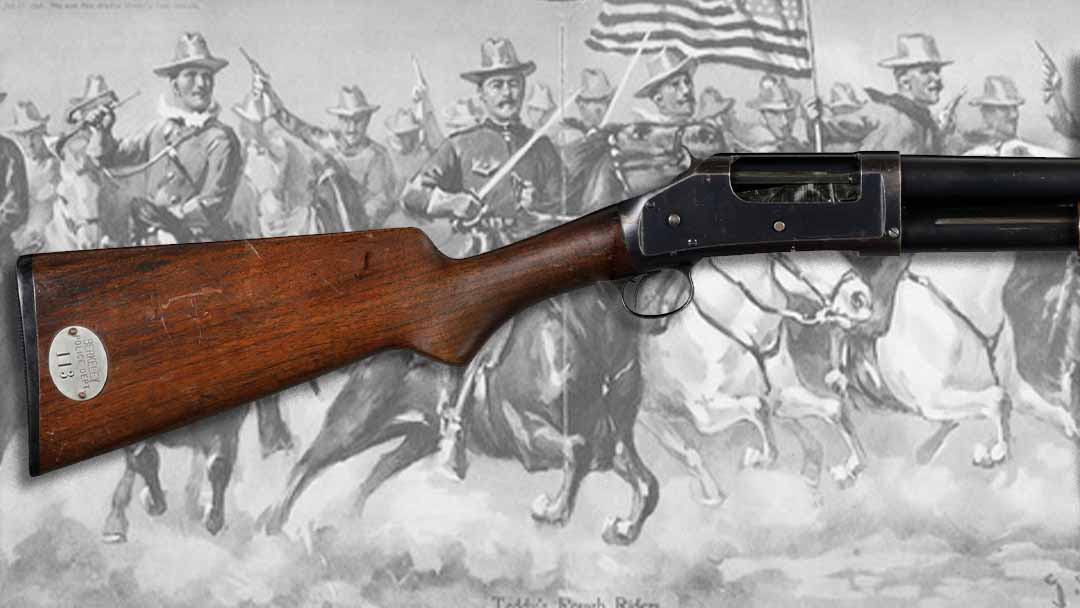
John Moses Browning’s latest shotgun design was another memorable event in 1897 and despite starting its life as a sporting gun, would prove its worth in the jungles of the Philippines and 20 years later in the trenches of World War 1. Design-wise, the gun was stronger than the Winchester 1893 with a thicker receiver for using smokeless powder cartridges. The model would remain in production for 60 years.
Guns of the 1890s: Engraved Spanish Charola y Anitua Model 1898
After the simmering tensions between the United States and Spain came to a boil with the sinking of the USS Maine in Havana Harbor in February, 1898, Wild West sharpshooter Annie Oakley wrote a letter to President William McKinley offering her services. Three weeks before the declaration of war on April 25, Oakley proposed to raise a regiment of “fifty lady sharpshooters” who would supply their own ammunition and arms. The request, forwarded by McKinley to the War Department, was denied because women weren’t allowed to serve. Women didn’t receive permanent status in the armed forces until 1948.
During the war, the United States handed Spain naval defeats, invaded Puerto Rico and Cuba and future president Theodore Roosevelt’s Rough Riders charged up San Juan Hill. The war ended Aug. 13 after four months. A treaty officially ending the conflict was signed in Paris on Dec. 10.
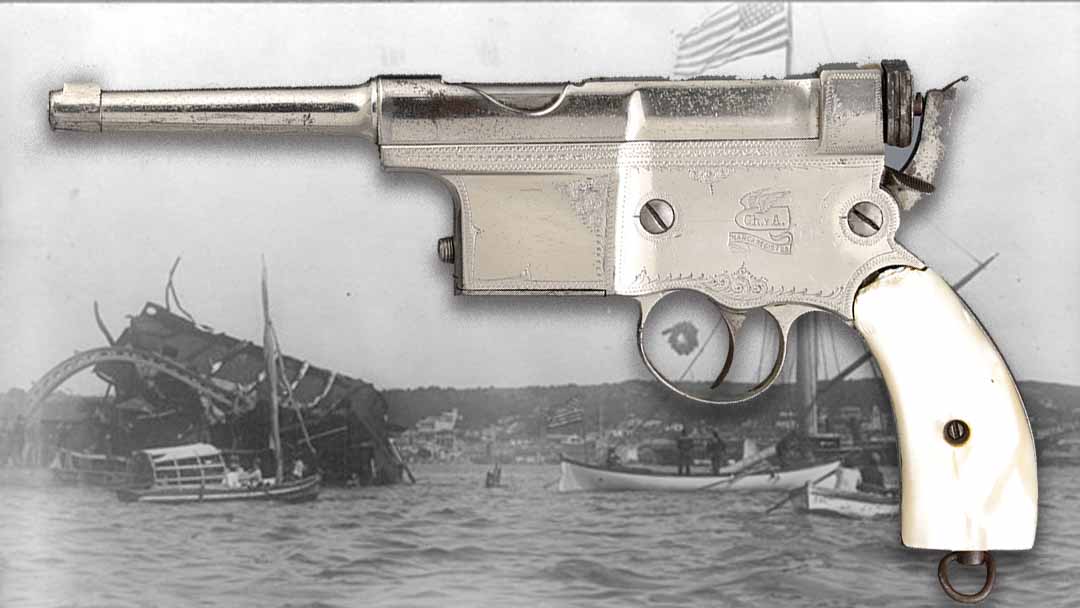
In 1898, Spaniards Ignacio Charola Achucarro and Miguel Anitua Echeverria patented their pistol design chambered in 5mm cartridge. Their company Charola y Anitua in Eibar Spain started producing the pistol in 1899. The gun was loaded from the top using stripper clips, and was submitted to the Spanish military for trial but quickly dismissed as expensive and complicated to assemble. With no contract, only about 8,400 were produced from 1897-1095. After Anitua left the company, the pistol was made in a slightly larger caliber than its initial 5mm chambering.
Guns of the 1890s for Sale
The 1890s was marked by the United States flexing its military strength, the continued rise of industrialization and the resulting labor unrest. Amid the events that showed a new, modern era to come were the guns of the 1890s, some well-known and some less so that will be available at Rock Island Auction Company’s June 21-23 Sporting & Collector Auction in Bedford, Texas. Visitors can examine these amazing firearms on the June 20 Preview Day.