101 Ranch’s Frontier Six Shooters

0

The sprawling 101 Ranch, spread across four Oklahoma counties, was a place of innovation for farming, livestock and the film industry in the early 20th century, but its fascinating history was cut short through tragedy and financial difficulties.

Among the hundreds of thousands of visitors to the ranch were the wealthy, presidents and celebrities. Workers on the ranch included future Hollywood cowboys and rodeo stars.

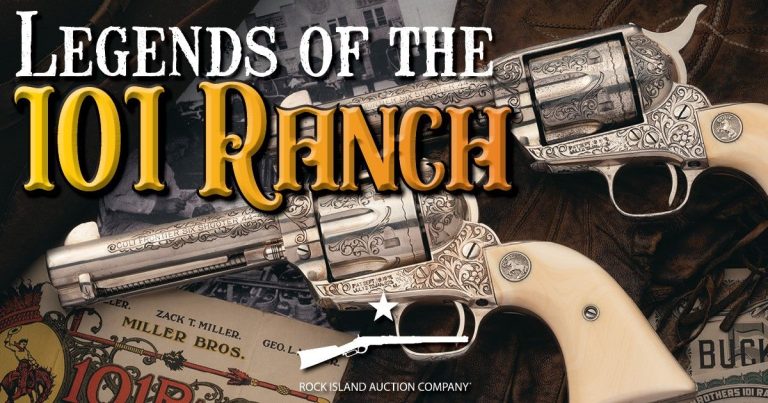
A pair of factory engraved and silver-plated first generation Colt Single Action Frontier Six Shooters from the 101 Ranch will be available in Rock Island Auction Company’s Aug. 21-23 Premier Auction in Bedford, Texas. What brought them to the 101 Ranch?

This pair of Colt Single Action Army Frontier Six Shooters were shipped on October 18, 1926 to Richards & Conover Hardware Co.’s Oklahoma City location. A factory letter confirms the revolvers 4 3/4 -inch barrels in .44-40 caliber, silver plating, grip material, carved steer head motif on the grip and level 2 factory engraving.

Meet the Millers of the 101 Ranch

George Washington Miller was a native of Kentucky who after the Civil War couldn’t afford to operate his grandfather’s plantation without slaves. Seeing his fortune in the West, in 1870, he sold out his part of the plantation with plans to go to California, but instead found his opportunity in Missouri. With an eye for livestock and his business acumen, he traded for hogs and in the winter slaughtered them for ham and bacon.

Bacon was a valuable commodity in Texas, so in the spring he set out for cattle country. He traded 10 wagonloads of bacon for cattle and headed back to Missouri with 400 heads. He established his first ranch near Baxter Spring, Kan., in the southeast corner of the state. He received permission to graze cattle on the Quapaw tribe’s reservation.

This close-up of the underside of the revolvers show the serial numbers for the Frontier Six Shooters, confirming the factory letter that states they were sent to an Oklahoma City hardware store as the only guns in a two-gun shipment before going to the 101 Ranch.

He learned the trick of cattle trading: That Texas cattlemen had no interest in paper money. Those that fought for the Confederacy during the Civil War were paid in worthless Confederate money. Cash wasn’t king. Gold was. Miller started carrying gold with him on the trips to Texas knowing he could get a $6 steer for $3 if he traded in gold.

In 1879, Miller leased 60,000 acres in the Cherokee Strip from the Ponca tribe and moved his family to a town nearby.  George Washington Miller and his wife, Molly, had three sons, George Jr., Joseph and Zach, and a daughter, Alma.

The 101 Ranch

The 101 brand was born in 1881. One reason given was that the ranch had 101,000 acres, but that wasn’t true. Joe Miller claimed the name came from a San Antonio hotel at 101 Second Street that was called the 101 and was where Miller’s cowboys stayed before a drive. One of those cowboys stole the sign from the saloon and when they returned to the ranch, the sign was mounted on the cook shack, giving the ranch its name.

George Washington Miller wanted a mansion like the plantations of his youth, but had to settle for a dugout house in 1892 because he couldn’t buy the land until the Ponca tribe received ownership documentation. Eventually, the ranch expanded to 110,000 acres at its peak and a ranch house was built.

The house erected in 1903 had a waterworks plant in the basement. George Washington Miller never lived in the house. He died in April 1903, only a matter of months before the family shared Christmas dinner. It was their first meal in the new home. This original ranch house burned down in 1909.

One of the relief carved steer head grips from the pair of Frontier Sharp Six Shooters of the 101 Ranch. Inside the grips are marked “101” and the initials “JM” are for Jack Webb, a trick shooter employed by the 101 Ranch.

The ranch had a dairy that could support 500 cows, a meat plant that could dress 500 head of cattle and 1,000 hogs a month, an ice plant that produced 10 tons of ice a day and a rodeo arena that could seat 12,000. It had a school, general store and café, newspaper, blacksmith shop, leather shop, oil refinery and even its own money, including $10 and $5 Examples are included with the revolvers.

After the financial crisis of 1893, the ranch diversified from cattle and started growing wheat, cotton, corn sorghum, alfalfa and had fruit orchards, too. Along with cattle, the stock included bison, hogs, poultry and horses. A menagerie of exotic animals — ostriches, zebra and camels, inhabited the ranch. A bear named Tony that came from Mississippi that drank soda pop purchased by visitors at the general store lived on the ranch until 1931.

At the time of George Washington Miller’s death, he paid the Ponca and Otoe tribes $32,500 for land rental and other expenses totaling $75,000 while the ranch earned income of $400,000 to $500,000. The year before his death, the ranch planted 13,000 acres of wheat, 3,000 acres of corn and 3,000 in forage crops while melons, cucumbers and pumpkins were also raised. The ranch employed 200 men, and 200 ponies were kept for cattle herding. Rather than divide up the ranch after her husband’s death, Mollie Miller put it in a trust created by Mollie Miller.

The undersides of the Colt Frontier Six Shooters sent to the 101 Ranch in Oklahoma show the intricate factory engraving.

The Miller Brothers of the 101 Ranch

While Alma went off and got an East Coast education, graduating from Vassar in 1889, the brothers worked on the ranch. Joe Miller had been his father’s right hand man and took over general management of the ranch. Zach Miller was a true cattleman and managed the ranch’s livestock. George Jr., the youngest son, was a financial genius and took over managing the ranch’s finances. All three were each made an honorary “colonel” by governors of Oklahoma.

None of the brothers drew a salary from the ranch, but shared a checkbook for personal expenses. When the house burned down in 1909, all the occupants escaped safely but the house and all the Millers’ contents, including clothing, were lost.  Almost immediately, construction of a new, fireproof house – to be called “The White House” — was started, built with steel and concrete. Completed, the three-story, 17-room house with a view of the Salt River valley had electric lights, hot and cold running water and steam heat, modern conveniences that were luxurious on the Oklahoma prairie.

The 101 Ranch’s three-story house was built after the original burned down. It was constructed with steel and concrete making it fireproof, had 17 rooms and many modern amenities not normally seen on the prairie.

In 1918, Mollie Miller, the family matriarch died at age 72. She had been active in ranch life and made visits to the Wild West show on the road, but now the 101 Ranch was left to the sons to run. The brothers diversified crops and brought in shorthorn cattle rather than the stringier longhorns. They built modern farm buildings wired for electricity and brought in power machinery and put up hundreds of miles of fences.

The ranch was the home of the largest privately-owned American Bison herd in the world because of the Miller’s devotion to maintaining and preserving the nearly extinct animal.

The 101 Ranch Roundup

The Millers liked to celebrate the end of the summer with a roundup that was occasionally used as a fundraiser for a local cause. In 1904, Joe Miller and others from Oklahoma traveled to convince the leadership of the National Editorial Association to host their convention in Guthrie, Oklahoma. Joe Miller promised a large Wild West exhibition if they would attend.

The NEA accepted and the Millers put on a spectacular show that included a parade with cowboys and Native Americans in their finery, exhibitions of sports and ranch tasks like roping and trick riding. The elderly Apache Geronimo, considered a prisoner of war, was brought from Fort Sill to ride in a car during the entrance parade. The event brought in thousands of people.

Apache warrior Geronimo, a prisoner of war at Fort Sill in southwest Oklahoma, was brought to the 101 Ranch in 1905 when it hosted the National Editorial Association and put on one of its roundup Wild West style shows. Here he is seen riding in an automobile before the show’s entrance parade.

The roundup and the Millers’ hospitality attracted people from all over and all ways of life. Theodore Roosevelt, William Jennings Bryant, John Ringling, Jack Dempsey, Warren G. Harding William Randolph Hearst and John Philip Souza were among the 100,000 people who visited the ranch annually. The success of the NEA roundup convinced Roosevelt to invite the ranch to represent the cattle business at the 1907 Jamestown Exposition. So well received, the Millers sent the show to New York City for several weeks.

Among one of the novelties of the roundup didn’t start until 1924 when the multi-day event featured a “terrapin derby,” or turtle race. The first event drew 114 turtles at $2 per entrant with a first prize of $68. The second race drew 1,679 entrants and the third 2,379.

Turtles are penned up and ready to start the “Terrapin Derby” a turtle race held during the 101 Ranch’s annual roundup. Wagering was allowed. The winner was the first to cross over a large drawn circle.

The 101 Ranch Wild West Show

By 1908, the 101 Wild West Show was touring the United States and Europe. It performed for the King and Queen of England. The stars of the show were the ranch hands and Native Americans that lived on and around the ranch as were the ranch’s American Bison since they were so rare at the time.

Many of the ranch hands went on to be rodeo champions and entertainers. Tex Ritter and Hoot Gibson were among the performers as was Bill Pickett who invented “bulldogging” or steer wrestling. Zach Miller called Pickett “…the greatest sweat-and-dirt cowhand that ever lived – bar none.” At the high point of the show, the 101 Ranch employed 2,000 to 3,000 seasonal employees. After selling his Wild West show, Buffalo Bill Cody was a performer for one season.

A poster for the Miller Brothers’ 101 Ranch Wild West Show.

While touring England in 1914, the show’s stock and vehicles were confiscated for war use, leaving the show stranded before the Millers could get their performers back to the United States. The show wouldn’t perform again until 1924 and by then, films had supplanted Wild West shows and they were no longer profitable.

The 101 Ranch in the Movies

The Millers saw an opportunity to draw on the talent at their disposal and started making films on the ranch. That brought to the silver screen Tex Ritter, Hoot Gibson and a ranch hand named Tom Mix who would go on to be the highest paid actor in Hollywood and earn the nickname “King of the Cowboys.”

The Millers formed a production company in 1911 and produced silent films like “Setting up the Strip,” “On with the Show” and “The Big Show,” shot in 1926 that was a backstage melodrama of the Wild West show.

In 1912, the New York Motion Picture Company ventured to make “Bison-101 Ranch” western films near Santa Monica, Calif. For authentic Oklahoma location companies visited to the 101 Ranch where Paramount’s “North of 36” and Pathe’s “Wild West” were shot in 1924 and 1925 respectively.

A closeup of the barrel of one of the pair of Colt Single Action Army Frontier Six Shooters from the famed 101 Ranch in Oklahoma.

The Demise of the 101 Ranch

In 1927, Joe Miller, the heart and soul of the 101 Ranch, died of an accidental carbon dioxide poisoning in his garage. Two years later, George Miller, the ranch’s financial mastermind, died in a car accident as the Great Depression loomed.

As the Great Depression deepened, oil prices bottomed out and livestock prices sank. The Millers announced the end of the Wild West show in 1931. The family took on a $500,000 mortgage with the belief the financial downturn would be short-lived, only to get worse. By the end of 1930, the ranch was losing money and had no cash reserves. Creditors started coming for assets.

Zach Miller tried to fix the ranch’s financial position but wrote it was like “piloting a ship across an uncharted sea.” The ranch went into receivership in September, 1931, and the last of the ranch property was sold in 1936. All that remains of the ranch headquarters are the foundation of the glorious ranch house and historical markers, remnants of a remarkable undertaking at the close of the Wild West.

A view of the right side of the pair of silver-plated factory engraved Colt Single Action Army Frontier Six Shooters that were sent to the famed 101 Ranch in Oklahoma. Only 4,500 pre-war Colt SAAs were factory engraved.

101 Ranch Revolvers

The incredible 101 Ranch and its ranch house are gone, but the memories, photos and this gorgeous pair of factory engraved first generation Colt Single Action Army revolvers remain. The revolvers, with relief carved steer grips, shipped to Richards & Conover Hardware Co. where the Miller brothers were customers. The back of the grips is handwritten letters “JW” and the number “101.” The number was commonly used to identify 101 Ranch property while the initials correspond to Jack Webb, a trick shooter employed at the ranch at the time the revolvers were ordered. At the time of his death in 1956, Webb was known as one of the world’s greatest trick shot artists with either pistol or rifle.

These revolvers show the work of Colt Master Engraver Wilbur Glahn through his deeply cut floral scrolling as well as a “V” shape design behind the hammer that has been seen on other examples of his work. Only 4,500 pre-war Colt SAAs are factory engraved and the silver plating and rare steer head grips are rare factory special order features making this a truly elite pair of revolvers.

These guns, shipped as a pair on Oct. 18, 1926 were likely separated when 101 Ranch assets were sold off when the ranch succumbed to bankruptcy. The pair were reunited in 2018, so these spectacular and  rare revolvers will be offered as a pair at public auction for the first time in six years during Rock Island Auction Company’s Aug. 23-25 Premier Auction in Bedford, Texas.

Sources:

“The 101 Ranch,” by Ellsworth Colling in collaboration with Alma Miller England

One last look at these historical Colt Single Action Army silver-plated and factory engraved Colt Single Action Army Frontier Six Shooters of the famed 101 Ranch.

Review: Vosteed Mink | Jerking the Trigger

0

The Mink is Vosteed’s first fixed blade but, based on the attention to detail, you would think they have been making them for years. Let’s dive in.

Specs

Blade Length: 3.33″ | 83.90 mm

Overall Length: 7.13″ | 181.00 mm

Blade Width: 1.10″ | 27.92 mm

Blade Thickness: 0.118″ | 3.00 mm

Blade Material: Nitro-V

Blade Grind: Flat

Blade Style: Clip Point

Hardness: HRC 60±2

Handle Length: 3.82″ | 97.10 mm

Handle Width: 0.85″ | 21.63 mm

Handle Thickness: 0.46″ | 11.60 mm

Handle Material: Micarta

Weight: 5.12 oz | 145.10 g (Sheath included)

Carry Position: Adjustable Belt Clip

Knife Type: Fixed Blade

Sheath: Kydex

Designer: Yue

Observations from Use

I have been using the Mink as an EDC fixed blade and it excels in that role. Vosteed designed and sized this knife to be well suited to a number of roles from EDC to outdoors. The shallow clip point renders a splinter-pickingly sharp point. The thin blade stock and tall flat grind terminates at a very thin, slicey edge. The handle provides plenty of grip. It has everything you want from an all-around tool.

The pancake-style kydex sheath comes with a small Tek-lok-like clip that works well for basic belt carry or for attaching to a backpack strap. However, I swapped that clip almost immediately for a Ulti-clip Slim 3.3 which allowed me to clip the sheath into my pocket. This setup worked very well. I also tried the Mink in an older leather pocket sheath that I already own and found that to be a VERY comfortable way to carry this knife.

There are three very subtle design elements on the Mink that I think take it to another level and really showcase the attention to detail that went into this design. First, the handle features a choil that works as a guard but does nothing to hinder a variety of grips or impede the user from getting their grip right behind the edge. Second, there is a very slight swedge grind that makes the tip of this knife even more useful. Finally, the addition of a second section of jimping out near the tip of the knife helps give the user tremendous control of that useful tip. It’s very cool to see how Vosteed uses the ergonomics of this knife to enhance the cutting performance.

The use of Nitro-V steel is a great option here. It is plenty tough enough to support the aggressive cutting geometry on this knife, corrosion-resistant enough to shrug off any conditions this knife might find itself in, and also affordable enough to ensure that the Mink is a great value.

There is one thing I would change. I was a little annoyed with the width of the sheath. Vosteed designed a slim, EDC-friendly fixed blade but then saddled it with a wide sheath. I want to be clear, this sheath is not the throw-away garbage that many makers provide with their fixed-blades. It will work for most people. The sheath’s quality is great… it’s just wide. I would love to see them switch to a slimmer, fold-over style sheath for future runs of this knife.

Wrap Up

The Mink is a lot of things. It is an impressive performer with great cutting geometry and the ergonomics to help you get the most out of that cutting geometry. It is a flexible design that can fill various roles from EDC to outdoors. It is an incredible value for these materials and this level of attention to detail.

The Mink is so good that I am very excited to see what Vosteed’s next fixed blade release will be… a fixed blade in the Nightshade line, perhaps? We can dream.

Vosteed.com

Vosteed Store on Amazon.com

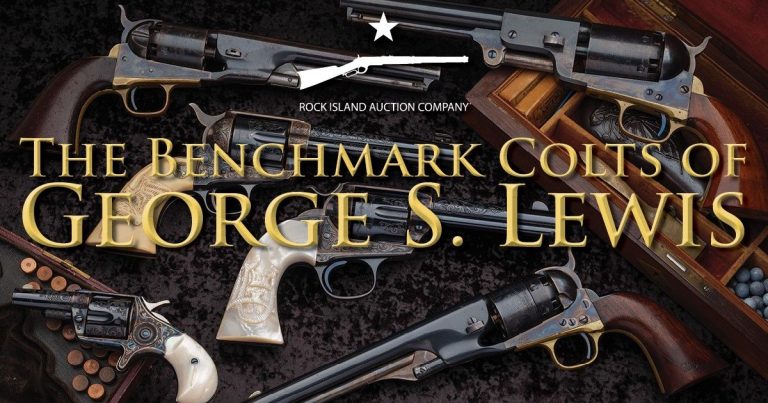
The Benchmark Colts of George S. Lewis

0

At Rock Island Auction Company, we like to note “benchmark” examples of firearms when we see them. Guns that have earned this moniker of respect are generally considered SO good, so high condition, or so historic that they serve as a standard by which we can judge other collector arms.

I’ve had the privilege of covering some of the George S. Lewis Jr. collection in recent videos, and it’s been a true pleasure. Not only because the man had exceptional taste in arms (I flatter myself to think we shared similar tastes), but because of the inordinate number of “benchmarks” in his collection.

However, to me Mr. Lewis’ collection is more than just benchmarks, it’s a guidepost. Looking at a collection like this, especially as it unfolds over several auctions, really gives collectors direction for how a collection should look. Not only is it motivating, but the level of excellence he attained in a wide variety of models, even those that aren’t the most popular, is impressive. He found beauty and excellence in atypical places and his collection is a clear reflection of a keen eye that he put to work over decades.

Gun collectors, especially those fond of Colts or wheelguns, should take note of the dozen of Mr. Lewis’ items in RIAC’s August 2024 Premier Auction.  They are a guidepost, not only for what a collection should aspire to, but how to assemble a supremely impressive collection that includes not only the most popular models, but those elite examples from unexpected places.

Without further ado, here are five of my personal favorites from Mr. Lewis’ offerings this August.

A Benchmark Colt Bisley

This is quite possibly my favorite gun in the entire auction. The lines of a Bisley hold great appeal and this one is an absolute screamer, easily one of the very finest examples in existence today. The original bluing is 97%, the case hardening is remarkably vibrant, the nitre blue accents gleam, the carved pearl grips lend their luster, with master engraving attributed to Cuno Helfricht.

They don’t get better looking than this pearl/blued/casehardened combination Bisley in phenomenal condition.

Engraved First Generation Colt Single Actions are tough to find, and factory engraved Bisleys drastically moreso. It comes with numerous factory letters, documentation, and even invoices from its 1910 shipment to Chicago retailer Hibbard, Spencer, Bartlett & Co.

The pearl grips are monogrammed “FGF” and while no corresponding name appears on the invoice nor shipping records, it was not the only Bisley ordered for FGF. The serial number being offered this August is 314626, but it has a partner out there somewhere, serial number 313622. Both are chambered in .45 Colt, have 4 3/4-inch barrels, blue finish, and FGF monogrammed, carved pearl grips. I think most collectors today would express a strong desire to see them reunited.

Classic Colt Single Action Army

What an absolutely classic Colt. The everybody-wants-one combination of mellowed steer head grips, case hardening, and rich Colt bluing is as universally revered and desired as a ‘57 Chevy. This SAA was also shipped to Chicago, but to the firm of Von Lengerke and Antoine in 1926.  While the Bisley is attributed to the great Cuno Helfricht, this benchmark sixgun was cut by another of the 20thcentury’s great master engravers, Wilbur Glahn.

A classic American revolver in a beautiful combination, cut by one of America’s top 19th century engravers.

The Colt is in undeniably excellent condition, accompanied by an original Colt factory box, bore brush, pamphlets, and other documents from the famed Chicago retailer, but it also comes with two unique twists.

The first is the engraving of the “H.O.M.” initials on the butt. Those belong to the gun’s original purchaser Harry O. Marietta of Des Plaines, IL. Knowing a gun’s original owner is a seldom experienced treat! His name is even hand marked in ink on each of the grip panels, and one of Mr. Marietta’s business cards is included with the Colt.

The handcut “H.O.M.” initials on the butt of this picture perfect Colt Single Action.

The second twist to this revolver is that despite being chambered in .45 Colt, the ejector housing is engraved with the words “Colt Frontier Six Shooter.” A letter accompanying the revolver tells the tale.

“In 1928, a Kansas City, MO businessman brought this Colt revolver to me. He said that he had ordered it, as he wanted to have a Colt just like his father had. The barrel on the left side is of course stamped “45 COLT” but on the ejector housing is ‘COLT FRONTIER SIX SHOOTER.’ I explained that ‘Colt Frontier Six Shooter’ designated 44/40 calibre, and asked why he ordered this put on the ejector housing. He explained that the Colt his father had said ‘Colt Frontier Six Shooter’ on the barrel, and so when ordering, as he thought it was a .45, he had the Colt factory put the same lettering as was on his father’s Colt on the ejector housing.”

An unusual marking for a Colt SAA, but one that originates in reverence for a beloved father.

While the author didn’t buy that revolver in 1928, he encountered the revolver again in 1961, still in its ridiculously high condition, and purchased it for the tidy sum of $500; somewhat lower than its current day auction estimate of $65,000 – $95,000.

A stunning Colt, in a beautiful configuration, with documentation and an identified original owner – what else could a Colt collector ask for?

Finest Known Cased 8-inch Colt Third Model Dragoon

Any time the words “finest known” appear in our headline, you can be assured that item is going to attract its fair share of attention. Given Mr. Lewis’ penchant for superb condition items, it’s no surprise the phrase is used for an item from his collection.

This Colt Dragoon 3rd Model is a one-gun wishlist for collectors, but its most important attribute is in two simple words: Finest. Known.

Third Model Dragoons are often overshadowed by their Walker and earlier model counterparts, but this is a Colt that demands to be noticed. First, it points an 8-inch barrel instead of the typical 7-1/2 inch, one of few known in its serial number range that can make that claim. Its scarce rosewood case, is made even rarer because it was created especially for that barrel length.

Second, this revolver shipped in April 1861, the exact month Confederate troops fired on Fort Sumter, plunging the country into its Civil War. Based on its current condition and 90% plus original blue finish, clearly this Dragoon was not pressed into service. In a fascinating contrast, while it was shipped at the very advent of the Civil War, it was manufactured at the very end of the production run.  Many sources cite a final serial number for Colt Dragoons to be approximately 19,600, and this high condition example bears serial number 19,462.

It was shipped in 1861 to J.C. Grubb & Co. in Philadelphia. Joseph Grubb was a notable arms dealer prior to the Civil War, and rose to the occasion during the conflict. The Quaker businessman became wealthy selling arms, tobacco, and other valuable wartime goods. This Dragoon was one in a shipment of 24, thought to be intended for a Philadelphia Home Guard, but having never seen issuance, SN 19462 may have been a presentation for a high ranking member of the unit.

Near-new Colt New Line

Talk about a perfect companion piece for the Bisley mentioned first in this article. This is a near-mint gun, plain and simple. Manufactured in 1875, few guns tell the tale of “what did it look like right off the assembly line” as well as this Colt New Line.

It’s the concealable revolver that demands to be shown off.

While its condition is wonderfully surprising, the fact that it found a home in Mr. Lewis’ collection should not be. In our previous offerings of his collection, we have shown off several outstanding Colt New Lines that have served as virtual checklists for what collectors ought to seek in these little wheelguns. Also not surprising is that this Colt once belonged to another well-known Lewis in the firearms community, collecting icon Mr. Tom Lewis (no relation).

This 2 ¼-inch round barrel beauty brings about 75% coverage of master engraving across its flabbergastingly rich casehardening and deep blued finishes. Normally that level of engraving was reserved for plated finishes, which hindsight and this revolver reveal to be a gross oversight. Glinting with nitre blue highlights and ending in smooth pearl grips, the gun is a fantastic mix of textures, materials, and color.

Its leatherette wrapped case is an understated home for the treasure that awaits inside. The fitted velvet interior is chocolate brown, containing the Colt as well as 25 rounds of .41 RF ammunition and an appropriately diminutive cleaning rod.

You don’t see guns in this condition every day. Readers are highly encouraged to view additional photos on the RIAC website so you can share in the author’s disbelief.

Distinguished Colt Derringer

The guns on the list might be getting smaller, but they’re certainly not getting less impressive. Here we examine a great example of a Colt Third Model derringer. Typically, these small pistols can be found inexpensively and can be a great foothold for a burgeoning collector. However, prices can escalate exponentially when examples approach the top of the genre, as this one does.

Big collector piece in a small package.

Before we examine the pistol, the case is especially worth noting. A cigar-type case, its interior is a rich, navy velvet with a blue silk lined lid – a plush setting for a fine Colt and its accompanying 21 rounds of .41 RF ammunition – but it’s the outside that should draw our attention. The leather bound case has a tooled border on the lid, and on the lid’s center is the letter P embossed in gold in an old English font with a crown/coronet above it. Technically, a coronet is a type of crown reserved for lower ranks of nobility, e.g., dukes, dutchesses, barons, earls, etc. Future research may reveal a wonderful history behind this little Colt.

And what a Colt it is! Small in size, but large in presence, this Third Model derringer is an elegant piece: bright nickel, factory engraved by Cuno Helfricht, with nitre blue accents, and polished horn bird’s head grips so dark and rich, it would not be out of place among fine ebony. Helfricht’s work is always impressive and is especially so on this small canvas, where his scrolls densely fill the tiny spaces, yet still feel flowing. They extend the length of the barrel with a fine flourish at the muzzle, surrounding the front sight.

Just when you think you’ve appreciated all you can of this Colt on its right side, you flip it over and the left is even more impressive. On the right side Helfricht had to accommodate for the ejector housing (a patent from Alexander Thuer, who lends his name to these “Thuer” derringers), but he had no such limitations on the left, allowing the master engraver space for larger, visually impressive scrolls.

This Colt “Thuer” derringer has so much for colelctors to appreciate.

The cherry on top is the derringer’s low serial number of 5047. Colt’s online serial number lookup does not give the year of manufacture for this gun, but knowing that they were produced from 1875 – 1912, and with a  serial number range from 1 – 45,000, one can safely presume it was made in the first several years of production.

It’s difficult for words to do this Colt justice. Thankfully, it has a pedigree that helps convey its importance. Before this Thuer Model was part of the George S. Lewis Jr. Collection, it was housed in the esteemed Robert “The Bear” Bretherton Collection, in addition to other collections and appearances in at least two books.

A fantastic Colt Third Model derringer is special coming from the Lewis Collection knowing they were the model on which he cut his teeth as a collector. In his own words,

“In my early years of gun collecting, like so many of us, I had no direction or particular feel for a way to go or specialize. As time went on, I found that I was drawn to the little Colt derringer, not because it had an interesting history or because it was beautiful or because there are many variations and models to obtain, but mainly because my pocketbook could afford the derringer, and I could compete with the best of the collectors.”

Certainly, with examples like this in his collection, Mr. Lewis never lost his fire for the Colt derringers, choosing to continue to collect better and better specimens, even after his collection became far more advanced.

The engraved nickel against the deep navy velvet is a supremely attractive combination.

It’s a physical example of a collection that has come full circle; from the humble beginnings to some of the very best examples in the genre, demonstrating the type of lifelong dedication that earns a tip of the hat from fellow collectors for providing such a clear guidepost to follow.

The dozen lots available from the George S. Lewis Jr. Collection in the August 23-25 Premier Firearms Auction are all impressive and collectors would do well do add one of his intelligently curated items to their own collection.

One of the Finest Known Colt First Generation Single Action Army in .41 Colt, with rare long flutes, original box, and factory letter.

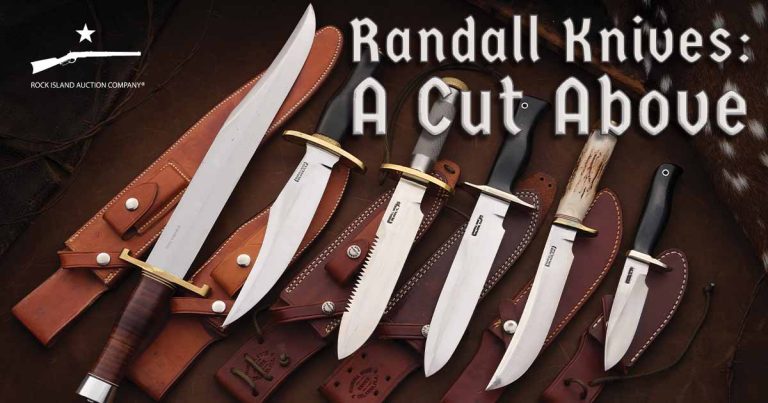
Randall Knives’ Practical Beauty | Rock Island Auction

0

As the story goes – and it’s posted on the Randall Made Knives’ website – W.D. “Bo” Randall was walking along the shore of Michigan’s Walloon Lake in 1936 when he encountered a man who was scraping the hull of a boat with what turned out to be a handmade knife, an indelicate task for such an instrument. Randall, unimpressed with how the man was using it but impressed with the knife’s toughness, offered to buy it from the man.

That knife, by Michigan knife maker Bill Scagel, inspired Randall to try his hand at making one. A successful citrus grower and cattleman in Florida at the time, he considered the exercise as simply a hobby. However, Randall founded his eponymous knife-making company, Randall Made Knives, in 1938.

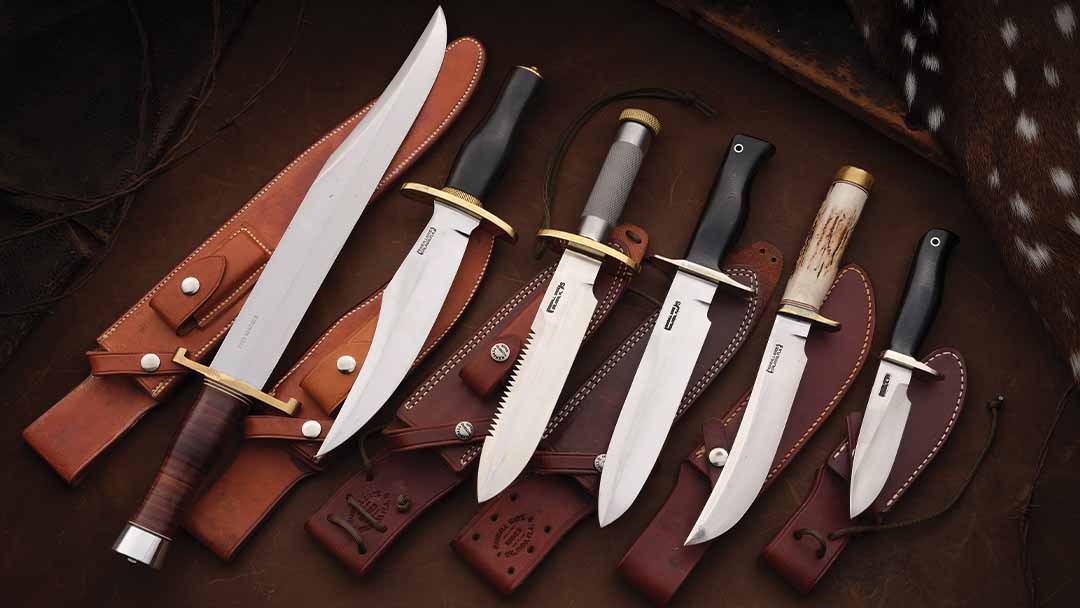
For those wanting a Randall knife but faced with the company’s six-year backlog on new orders, Rock Island Auction has an opportunity for knife collectors, offering a dozen of the fine, American-made blades in the upcoming Aug. 23-25 Premier Auction.

Randall Knives, American Knives

The story of American knives starts on a sandbar north of Natchez, Miss. in 1827.

Jim Bowie, then a planter and not yet a Texas hero, was on hand for a duel that turned into a brawl. Bowie, shot once in the hip and bludgeoned, managed to stab another man to death with his large knife that he would eventually become synonymous with, the Bowie knife.

Randall offers a variety of Bowie knives among its products. The Raymond Thorpe Bowie Knife’s 13-inch blade is the longest in the Randall catalog while the Bear Bowie Knife has an 8-inch blade. Randall also offers models with blade lengths that fall in between. Thorpe is author of “The Bowie Knife” and an expert on 19th century Bowie knives.

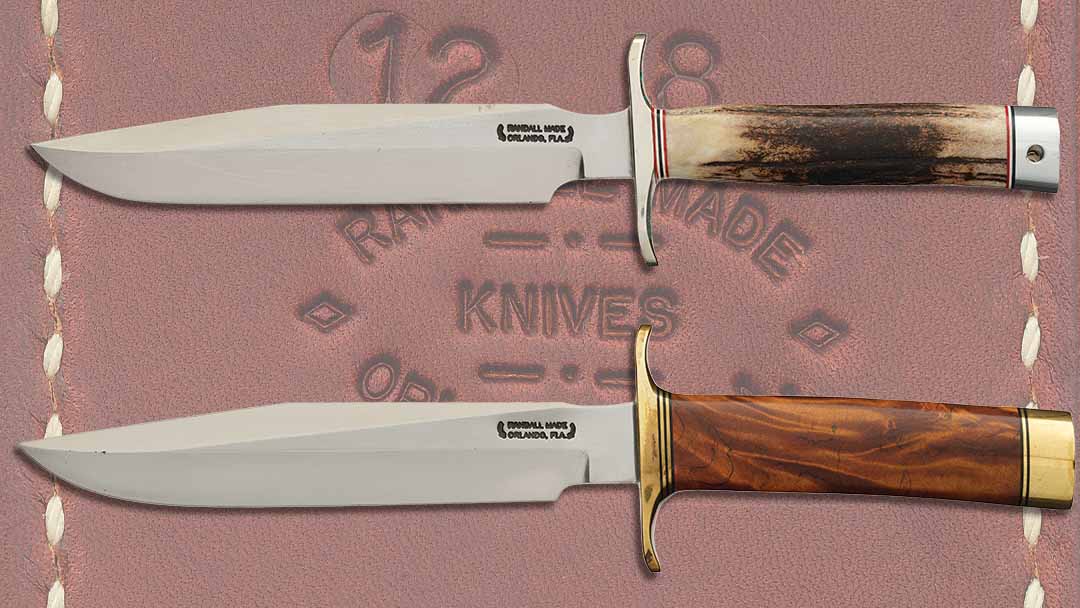
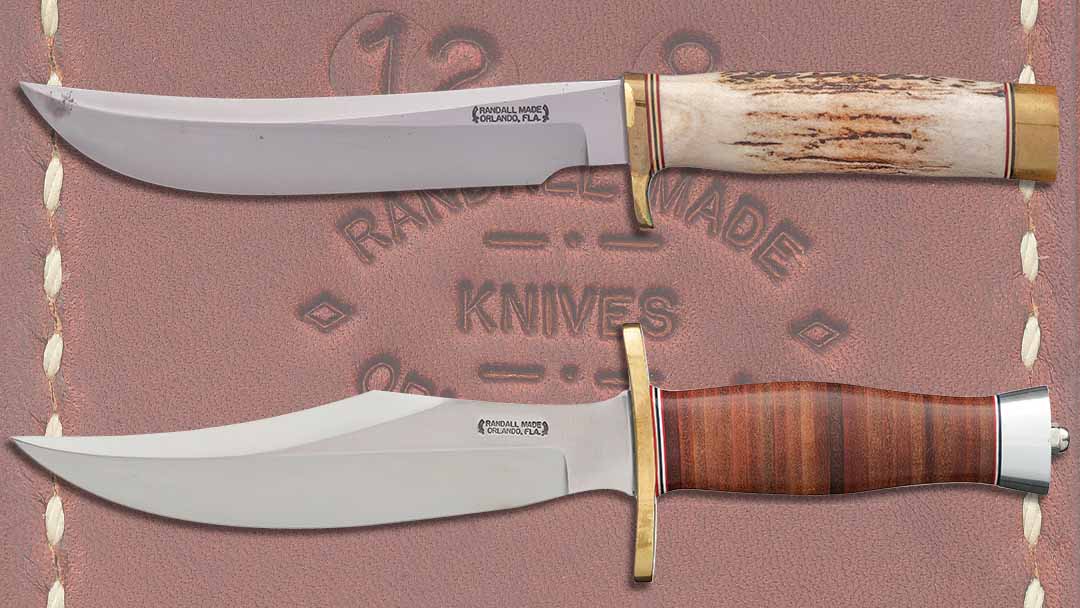
Here is a pair of Randall knives that are Bowie knife-style. A Randall Model 12 Raymond Thorpe Bowie Knife, top, is inscribed Fred Camfield and has a brass lugged hilt and leather commando grip. Below is a Model 12 Bear Bowie Knife with a clip point blade with a brass forward curved double hilt and brass fluted collar with black Micarta commando grip. (Knives are not proportional to each other.)

Randall Knives Go to War

Randall started selling his knives out of his father-in-law’s clothing store in Orlando, Fla., priced at $16.50 for a simple and functional design. They quickly sold out. At the start of World War 2, a sailor asked him to make him a knife for hand-to-hand combat. Once the sailor’s friends saw the knife they wanted Randall Made Knives, too.

A reporter wrote an article about Randall’s knives and their popularity soared. He offered the Model 1 as an “All Purpose Fighter,” the Model 2 billed as a “Fighting Stiletto” and a Model 3 “Hunter.” Randall would receive order letters from GIs simply addressed to “Knife Man, Orlando.” Randall estimated that with a couple of assistants he made about 1,000 knives for servicemen during the war.

Randall’s distinct two-line stamp found on the blade, “Randall Made/Orlando, Fla.” And bookended with two knife images was trademarked in 1939. At top is a Model 1 All Purpose Fighting Knife with a 7-inch clip point blade, nickel silver double hilt, stag grip and nickel silver wrist thong buttcap. Below is a Model 1 All Purpose Fighting Knife with a 7-inch clip point blade, a brass double hilt, figured wood grip and brass buttcap.

One customer wrote:

“It was a terrible thing at close range. (Your knife) would cut a man’s head nearly off with a quick swing… I also used that knife to open cans, cut wood, dress water buffalo… and it stayed sharp. I was offered all kinds of trades, but I wouldn’t part with it.”

The Randall Knife was briefly considered as a replacement for the U.S. Marine Corps’ Ka-Bar knife in the 1950s but was rejected over the fears of how long the manufacturing process took, as well as the costs.

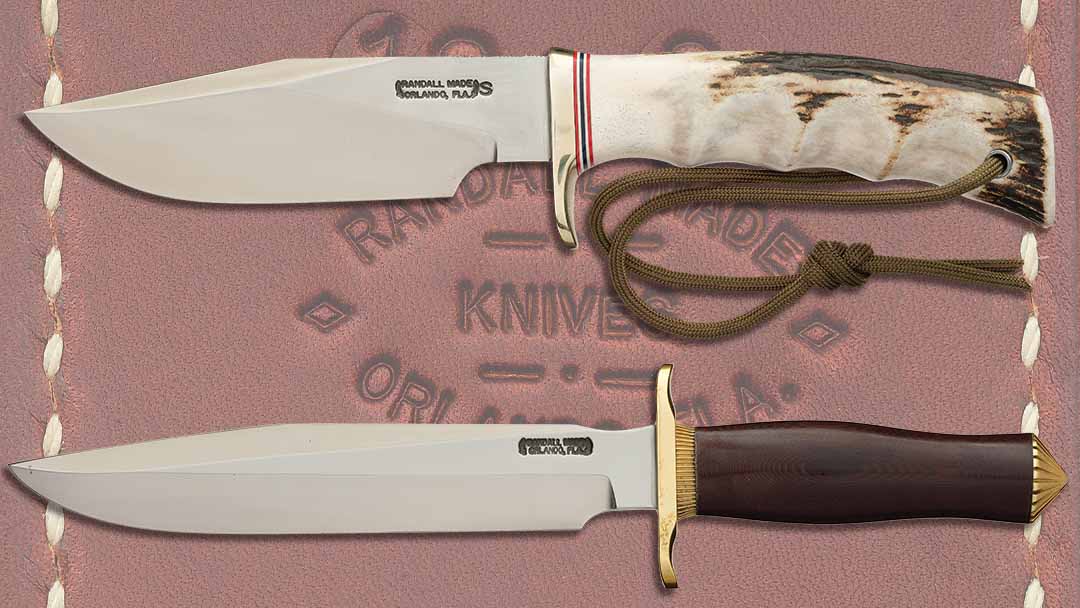
This Randall Sergeant’s Model Knife (top) has a 5-inch clip point blade with a nickel silver single hilt and stag grip is at top, and below is a Model 1 All Purpose Fighting Knife with an 8-inch clip point blade, a brass double hilt, scalloped collar and maroon Micarta grip and scalloped brass coolie cap. (Knives are not proportional to each other.)

Randall Made Knives Business Booms

Shortly before the end of World War 2, Randall hired a full-time employee who served as shop manager for the next 35 years. As orders from the war wound down, Randall Made Knives started offering new designs for outdoorsmen, with names like “Big Game and Skinner,” “Camper,” “Fisherman,” “Trout and Bird Knife” and “Salt Fisherman.”

In 1953, following a feature on Randall’s company in “True” magazine, orders exploded and the company’s backlog began. The company’s website states that demand is such that an order will likely take six years to fulfill.

This Big Game and Skinner Knife, top, has a 7-inch trailing point blade and stag grip with brass buttcap, and below it is a Model 12 Bear Bowie Knife with an 8-inch clip point blade with a brass forward curved double hilt and leather grip. (Knives are not proportional to each other.)

The release of the film “The Iron Mistress,” starring Alan Ladd as Jim Bowie and Virginia Mayo as his love interest boosted the profile of the Bowie knife. Randall started offering the “Arkansas Toothpick,” a 12-inch stiletto-style dagger. The company also offers a small Arkansas Toothpick with a 6-inch blade among the nine Bowie knife-styled blades.

In the early 1960s, NASA reached out to Randall about making survival knives. Bo Randall worked closely with Gordon Cooper, one of the Mercury Seven astronauts. On its website, Randall Made Knives offers the Model 17 Astro and the Model 18 Attack Survival knives. The Astro was specifically designed for the Mercury astronauts and has a blade designed for cutting through spacesuit material and a large guard to use while wearing gloves. An example of the Astro Model is in the Smithsonian Institution collection while an Attack Survival Knife is part of the Modern Museum of Art.

Astronaut survival knives were aboard every Mercury Mission, including Gus Grissom’s Liberty Bell 7 when it sank in the Atlantic Ocean, nearly taking him with it. When the Mercury astronaut’s capsule was recovered in 1999, Grissom’s knife was still inside and was serviceable after a good cleaning.

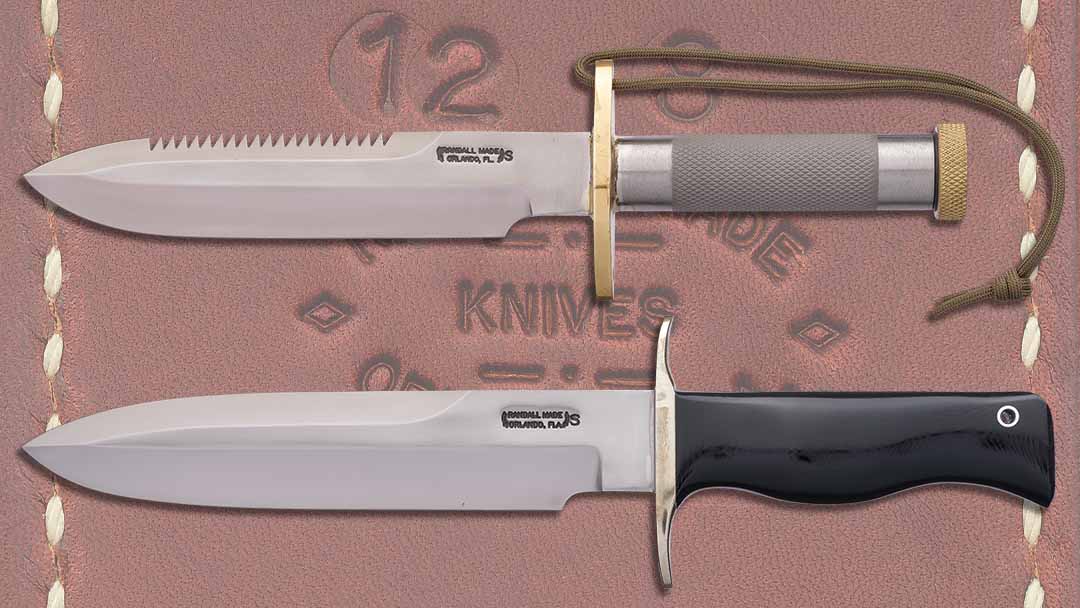
At top is a Model 18 Attack Survival Knife with a 7 3/4-inch drop point sawback stainless steel blade with a brass double hilt and knurled hollow metal grip with a screw-on buttcap with inlaid compass on the interior. The Model 16 Diver knife is described as being an “almost indestructible all-purpose knife designed for heavy-duty saltwater use.” The Diver, at bottom, has a 7-inch drop point stainless steel blade with a double nickel silver double hilt and Micarta border patrol grip. (Knives are not proportional to each other.)

Randall Knives Return to War

Orders for Randall Made Knives increased in the 1960s because of the Vietnam War, and the Survival model was added as well as the “Bushmaster,” “Bear Bowie” and “Little Game” models. Gen. William Westmoreland, commander of U.S. forces in Vietnam, carried a Randall knife, as did Gary Powers, whose Trout and Bird knife was taken off him after his U-2 was shot down over the Soviet Union.

Randall often talked and corresponded with customers. When speaking with reporter and author Carl Hiaasen for Florida Today in December, 1975, he shared a letter dated Feb. 11, 1944 from an Army Air Force captain named Ronald Reagan who praised his Randall knife, writing “P.S. Hope you don’t mind my showing off your handiwork, but it really attracts an audience.”

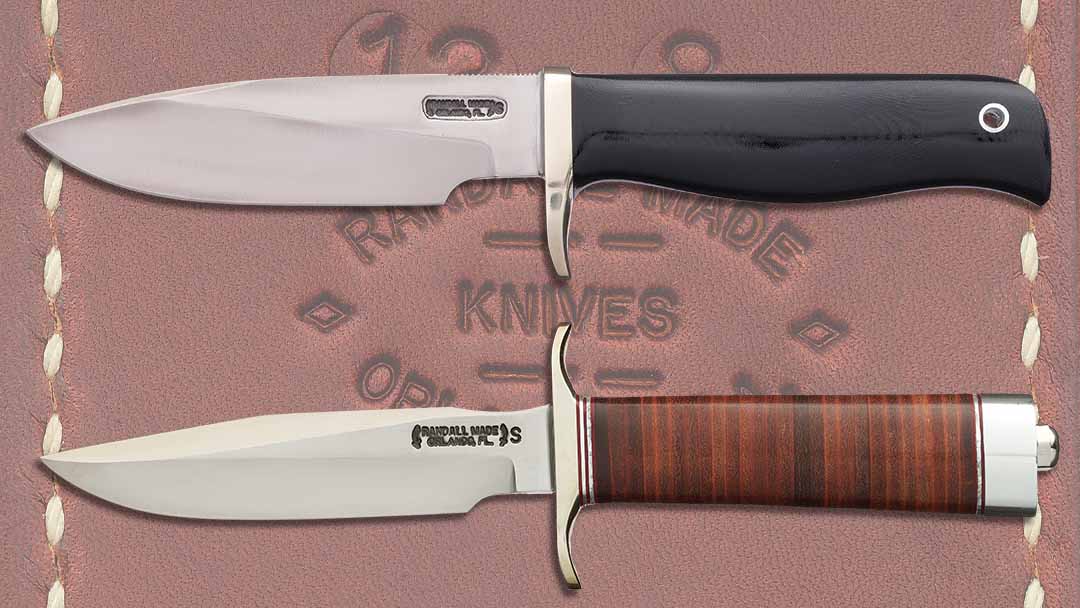
Here are a pair of outdoorsman Randall knives. At top is a Woodsman Knife, excellent for skinning and outdoor use with a 4 1/2-inch blade with a nickel silver single hilt and Micarta grip. Below it is a Model 5 Camp and Trail Knife with a 5-inch clip point stainless steel blade with a nickel silver double hilt and duralurmin buttcap. (Knives are not proportional to each other.)

Making a Randall knife

The time-consuming process of making Randall knives involves 17 steps that include heating the blade to 1,950 degrees to shape and harden it and then the more intricate work of refining the blade, shaping the contours, smoothing it, making and fitting the handle, multiple polishings and sharpenings and fitting it with a sheath.

Randall Made Knives produces about 8,000 each year. The company has a museum at its production facility with more than 7,000 knives and other edged weapons. Bo Randall died in 1989, a year after the company celebrated its 50th anniversary.

In that 1975 interview, Randall said of his company’s knives, “I’m glad we make a lot of knives and don’t try to make that one best knife in the world. I’m glad there are that many in the hands of people who use them and appreciate them.”

Randall Made Knives in the August 23-25 Premier Auction offer an opportunity for one of these hard-to-get blades and avoid a six-year wait.

Bowie Knives Precede the Randall Knife

Despite its very American origin story, English cutlery makers dominated the market for Bowie knives in the 19th century. Sheffield’s top knife manufacturers often had representatives in the United States since American industrial capacity was still rising up to that of the British. Also, the English cutlery companies paid their craftsmen low wages so they could offer their knives at less expensive prices.

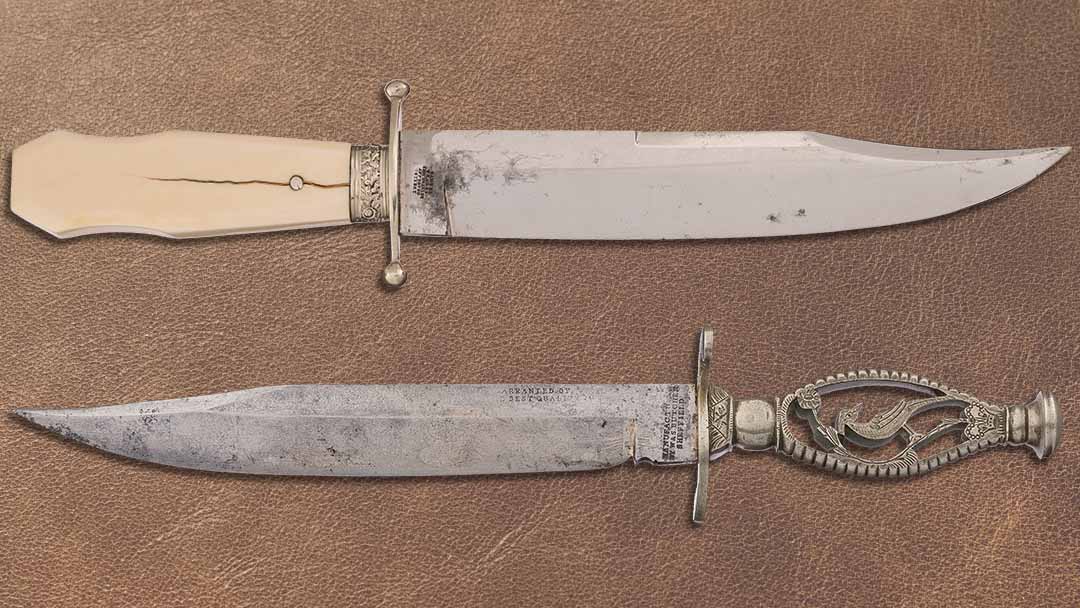
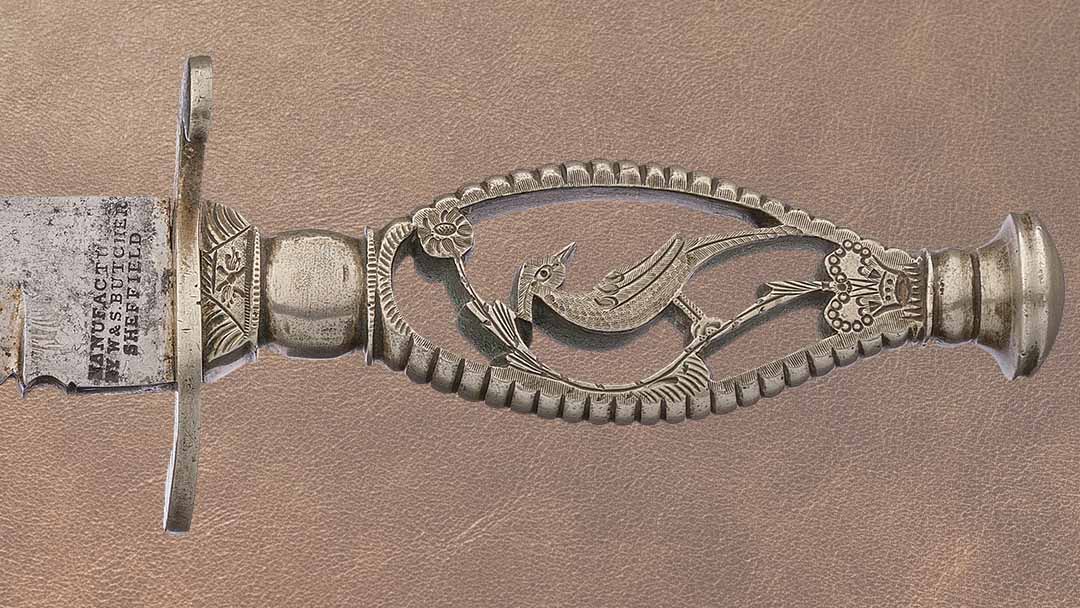
In Bowie knife history, Jim Bowie’s name didn’t attach itself to long-bladed knives until 10 years after the legendary sandbar fight. By then, they were more commonly called Bowie knives in advertisements and articles about such knives. At top, is a Bowie knife by Samuel C. Wragg of Sheffield, England with a 7 7/8-inch blade, a coffin-shaped hilt and an elliptical German silver guard with ball-shaped finials. Below, is a W&S Butcher of Sheffield Bowie knife with an intricately carved and engraved metal grip. The 9-inch clip point blade has floral motifs etched at the top and bottom of the grind as well as a patriotic eagle and stars on both sides. It is documented on pages 292 and 293 of “The Antique Bowie Knife Book,” by Bill Adams, J. Bruce Voyles and Terry Moss.
Randall Knives for Sale

Randall Made Knives are handmade in a variety of models with numerous ways to upgrade them so they are truly one of a kind. Always wanted a Randall knife but don’t want to wait several years to get it? Rock Island Auction Company has 12 opportunities to acquire one in the Aug. 23-25 Premier Auction in Bedford Texas.

The intricately carved metal grip of this W&S Butcher Bowie knife deserves a second look.

Sources:

“Randall Military Models,” by Robert E. Hunt

“The Bowie Knife, Unsheathing an American Legend,” by Norm Flayderman

“It’s More Than a Knife,” by Carl Hiaasen, Florida Today

“Handmade-Knife Company Keeps Tradition Sharp,” by Jay Hamburg, The Orlando Sentinel

Review: Kizer Sheepdog with Clutch Lock

0

Kizer’s Sheepdog series, one of their best-known knife lines, is characterized by bold and functional sheepsfoot-shaped blades. There are several great knives in that series but I think their Clutch Lock models are the real standouts. You could say they are standout knives in a standout series.

Specs

  • Overall Length: 7.60″/193mm
  • Opener: Thumb Stud/Thumb Hole
  • Blade Style: Sheepfoot
  • Blade Length: 3.15″/80mm
  • Blade Thickness: 0.11″/2.8mm
  • Blade Material: 154CM
  • Handle Length: 4.45″/113mm
  • Handle Material: Aluminium
  • Pocket Clip: Reversible Deep Carry
  • Weight: 4.76oz./135g
  • Lock Type: Clutch Lock

Observations from Use

If you like big, bold knives, you’ll like the Sheepdog. I happen to think it is a great-looking design that makes a statement (especially with the purple scales). However, the Sheepdog series isn’t just wild for the sake of being wild. This is actually a practical and useful knife. The blade stock is thinner than you would expect, though still plenty stout given the height, at .11″ thick. This coupled with a very tall flat grind, a useful point, and slight belly to the edge means these knives excel at utility work and cut aggressively.

I haven’t tried every crossbar-style lock but I think, in general, Kizer is doing them best of what I have put hands on. For one, their Clutch Lock is adjustable which is a meaningful feature for this knife. The blade has a lot of mass so being able to set a stiffer detent is great. They also seem to get great action from their Clutch Lock knives, taking the time to polish bearing surfaces. This VERY strong lock with fidget potential is very fitting for this design.

Most, if not all, of the Sheepdog series have multiple opening methods. I particularly like the setup on this version of the full-size Sheepdog. It has color-matched thumb studs, a large opening hole, and a fuller. Some models of the Sheepdog have a flipper tab but this one does not, which I prefer. It is already a wide knife in pocket so it is nice to forgo the extra width of the tab.

If you have never tried a Sheepdog in hand, you need to. They generally have flat scales but deeply curved handle shapes that are very comfortable to hard use. The handle is large enough that it should be very well suited to those with larger hands. I also want to call out the finish that Kizer uses on their aluminum scales. It feels great in hand.

If I could change a few things, I might make the fuller just a bit wider which I think would make flipping it open off the fuller even easier than it already is. The deep carry pocket clip is secure and stable but seems like it could be trimmed down a bit. These are clearly nitpicks on a great knife.

Wrap Up

Maybe you want a large, hard-working knife that is well suited to utility tasks. Maybe you just want an EDC that makes a statement. Maybe you just like sheepdogs. If any of those apply, you ought to check out something from Kizer’s Sheepdog lineup and, as I said, I happen to think these Clutch Lock models are the pick of the litter.

The Clutch Lock Sheepdog models are available at a host of price points with various blade steels and handle materials. You can view the whole range at Kizer.com.

Watch the Kizer Store on Amazon for sales: Kizer Sheepdog C01C at Amazon.com

250 Years of the American Infantry Rifle

0

Next year, the U.S. Army celebrates its 250th anniversary. In those two and a half centuries, the American infantry rifle has evolved countless times. From the slopes of Bunker Hill to the streets of Fallujah, we’ll look at some of the U.S. Army’s most historically significant service rifle models.

A scarce Remington Rolling Block conversion of a U.S. rifle-musket chambered in .58 CF, one of the first centerfire U.S. military service rifle models. Available this August.

Most of the examples featured here are available in Rock Island Auction Company’s August 23 – 25 Premier Auction in Bedford, Texas, along with hundreds of other collectible military arms. While dozens of American infantry rifle models were briefly considered, tested, fielded in more specialized roles, or manufactured in limited numbers, like the Remington Rolling Block conversion rifle-musket pictured above, our final selections were chosen for their longevity, production numbers, or for achieving important milestones in military arms innovation.

The Brown Bess and Charleville Muskets

On 14 June 1775, the Continental Congress authorized “six companies of expert riflemen, be immediately raised in Pennsylvania, two in Maryland, and two in Virginia…that each company, as soon as completed, shall march and join the Army near Boston, to be there employed as light infantry, under the command of the chief Officer in that army.”

During the Revolutionary War, the French Charleville and British Brown Bess smoothbore musket models served as the primary American infantry arms, with small groups of specialized marksmen armed with Kentucky rifles deployed to harass the British from outside effective musket range.

This 1743 dated British Long Land Pattern Brown Bess musket pictured below was owned by Revolutionary War soldier Beriah Holcomb, who served in the 2nd New York Regiment.

This historic British Long Land Pattern flintlock musket with a “BH” carved stock is identified as owned by Revolutionary War soldier Beriah Holcomb and passed down through his family for generations. Available this August.

Springfield Model 1795

Numerous smoothbore musket models, including the Model 1795, Model 1816, Model 1840, and Model 1842 served as America’s primary infantry weapons into the mid-19th century. The Model 1795 Musket represents many firsts in U.S. martial arms including the first standardized and official model of musket manufactured for the United States Military.

Based on the French Charleville Model 1766, this model saw heavy use during the War of 1812. The “Model 1808” musket pictured below is patterned on the Springfield Model 1795 and exhibits several “US” and State of New York contract markings.

A New York Marked Bartlett U.S. 1808 contract flintlock musket with a bayonet. Available this August.

Harpers Ferry Model 1803

The U.S. Model 1803 was the first true infantry rifle issued by the U.S. government and was fielded during the War of 1812. Prior American service rifles were primarily civilian purchases, but the Model 1803 was designed and manufactured at the Harpers Ferry Arsenal. The Model 1803 is also distinct from American infantry rifles that followed thanks to its half-stock configuration and under-rib on the barrel.

The Model 1803, the U.S. Military’s first true infantry rifle. This exceptional U.S. Harpers Ferry Model 1803 sold for $29,375 in RIAC’s May 2023 Premier Auction.

Model 1814/1817 “Common Rifle”

Henry Deringer of Philadelphia and Robert Johnson of Middletown, CT were each commissioned to produce 2,000 Model 1814 flintlock rifles for the U.S. military. The success of the design led to a much larger production run of the highly similar Model 1817, which saw a total of 38,200 rifles manufactured across multiple contractors through the early 1840s. Successors to the 1803, the Model 1814 and 1817 are among the earliest standardized U.S. service rifles and saw use in the Seminole Wars, Mexican-American War, and Civil War.

Despite their “common rifle” moniker, these service rifles were still rare compared to their smoothbore cousins. The common rifle term came to differentiate regular muzzleloading rifles from the various experimental technologies emerging during this period in arms development, including swivel breech rifles, revolving rifles, and breechloaders such as the Model 1819 Hall rifle.

Two Henry Deringer U.S. flintlock “common rifles”, a Model 1814 (top) and a Model 1817 (bottom), among the first widely issued American infantry rifle models. Each example is available this August.

Model 1819 Hall Breechloader

Maine gunsmith John Hancock Hall’s Model 1819 rifle achieved several U.S. military milestones, including becoming the first nationally adopted breechloading service rifle. Breechloading rifles offered a higher rate of fire as well as the ability to load while advancing and while taking cover in the prone position, all important attributes for an infantry rifle.

To achieve higher production numbers, Hall employed the “uniformity principle,” a reliance on machinery to produce interchangeable parts that would become known as the American system of manufacturing. Approximately 19,680 Model 1819 Hall rifles were produced between 1819 and 1840, including the example below manufactured in 1837.  

A Model 1819 Hall rifle, the first breechloading service rifle widely adopted by the U.S. Military. Available this August.

Model 1841 “Mississippi Rifle”

The Model 1841 was the first official percussion rifle adopted by the U.S. Military. Harpers Ferry Armory manufactured 25,296 examples of this impressive service rifle between 1846 and 1855. Considered one of the best military rifle models of its era, the Model 1841 was initially issued to light infantry and the Mississippi Regiment of Mounted Rifles, where the weapon played a key role in U.S. victories at Buena Vista and Monterrey during the Mexican-American War.

Both the Union and Confederate armies fielded the Model 1841 rifle during the Civil War, where many were rebarreled for .58 caliber, altered to accept saber bayonets, and often fitted with experimental long-range sights. Unaltered Model 1841 rifles in their original configuration are scarce, like the exceptional 1852 manufactured example pictured below.

America’s first widely issued percussion infantry rifle, the Model 1841. This U.S. contract Model 1841 example was manufactured at the Whitneyville Armory in New Haven, Connecticut and maintains its original chambering and configuration. Available this June.

Springfield Model 1855 and 1861

In 1855, the United States Army adopted the minié ball, which offered a notable increase in range and accuracy. Thousands of smoothbore muskets and prior infantry rifle models like the Mississippi rifle were rebarreled for the new .58 caliber cartridge, and the Springfield Model 1855 became the first U.S. service rifle designed specifically for the minié ball. The rifle first saw action with the U.S. Army during the Coeur d’Alene War in 1858.

Between 1857-1861, 47,115 Model 1855 rifle-muskets were manufactured at Springfield Armory, while another 12,158 were manufactured at Harpers Ferry. Though a fine platform, the Model 1855 employed the expensive and somewhat unreliable Maynard primer. This feature was omitted from the rifle’s next iteration, the Springfield Model 1861. Countless musket, rifle, and carbine models were fielded during the Civil War, but the dependable Model 1861 effectively became the Union’s standard issue infantry rifle and saw heavy use in virtually every major battle.

An exceptional U.S. Harpers Ferry Model 1855 rifle-musket with a long-range sight (top) and an outstanding U.S. Springfield Model 1861 rifle-musket with bayonet (bottom). The Model 1855 and its successors became America’s most widely issued infantry rifle platform yet, and each example pictured above is available this August.

Sharps Rifle

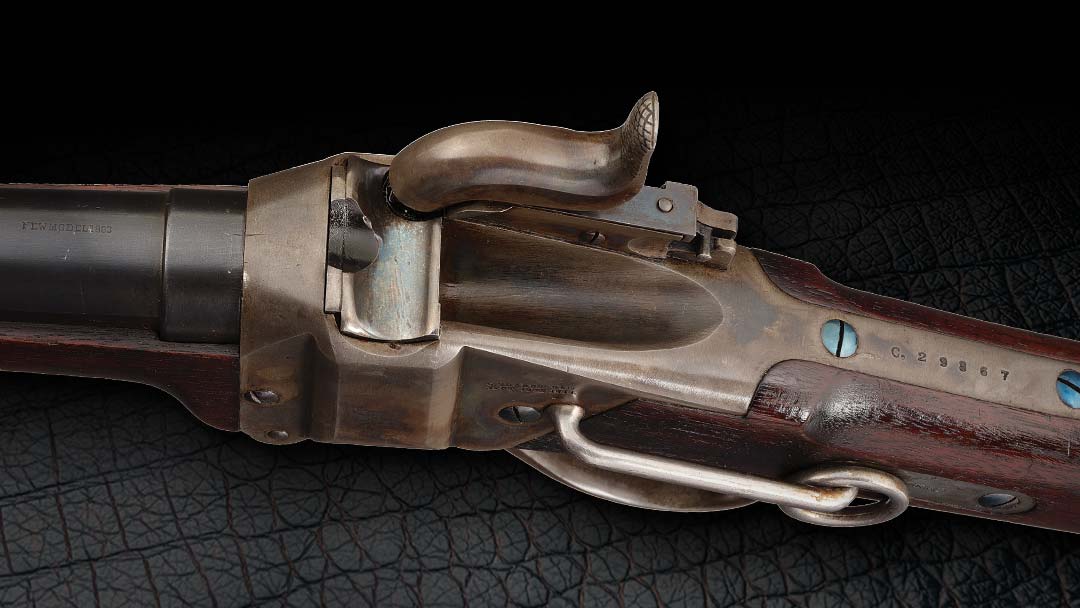
According to the National Park Service, nearly 2.7 million soldiers enlisted with the Union Army during the Civil War, and the U.S. Ordnance Department scrambled to arm them however they could. The breechloading Sharps carbine was issued to 80 cavalry regiments, with the U.S. Sharps New Model 1863 carbine the most widely fielded variant.

Though the Sharps rifle was only issued in a fraction of the quantity of its carbine sibling, the platform proved its battlefield worth with the U.S. Sharpshooter Regiments led by Hiram Berdan, who considered the Sharps the most accurate service rifle of its age. The Berdan Sharpshooters and their New Model 1859 Sharps left a lasting legacy on U.S. Army small unit tactics, employing their rifles from a distance to test an enemy’s strength, slow advances, pick off officers, and harass retreating foes.

A U.S. Sharps New Model 1863 percussion rifle, one of the best military rifle platforms of the Civil War. Available this August.

Spencer Rifle

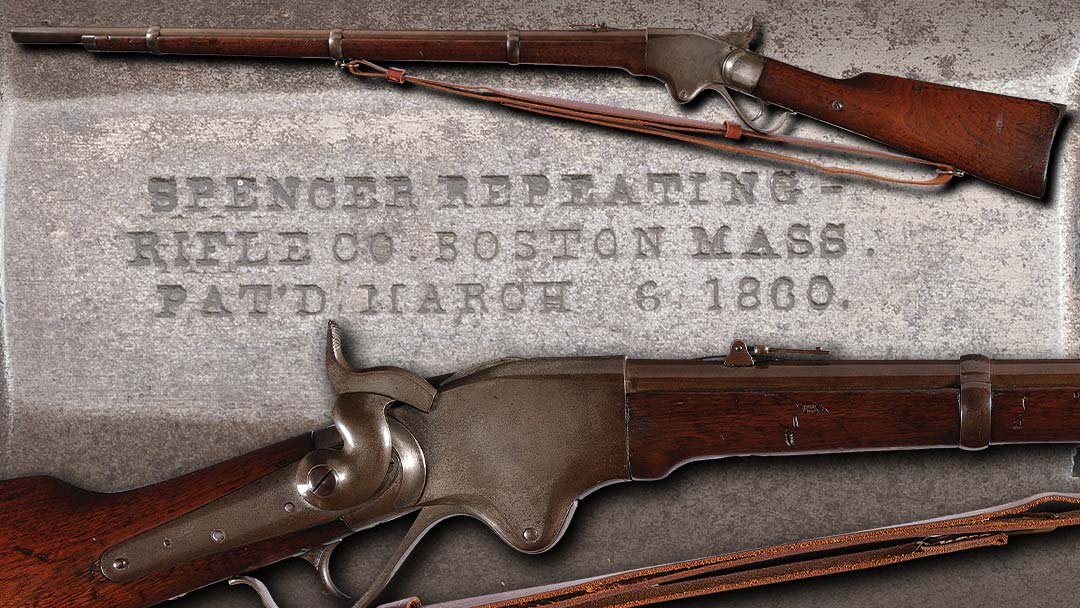
The Spencer repeating rifle gained fame in 1863 in the hands of Union volunteer units like the 5th Cavalry Regiment of Michigan “Wolverines” and Colonel John T. Wilder’s “Lightning Brigade.” Wilder considered the Spencer the best military rifle of the war, stating the weapons gave his men immense confidence and “fully quadruples the effectiveness of my command.”

After inventor Christopher Spencer impressed President Lincoln with a personal demonstration of his repeater, Lincoln pressured the U.S. War Department to adopt the rifle. The Spencer became the first military-issued metallic cartridge repeating service rifle, edging out the famous Henry by nearly two years. During the Civil War, the Ordnance Department ordered 11,470 Spencer Model 1860 Army rifles and 1,000 Navy rifles. The military embraced the Spencer carbine variant even more due to its lesser price point, with 94,196 produced by the end of the conflict.

The Spencer rifle served as a U.S. Army standard during the Civil War. The example pictured above is one of the rare Model 1860 Army style rifles that was shipped to the U.S. Navy in 1863. Available this August.

Springfield Trapdoor

Noting the clear advantages of metallic cartridges and breechloading firearms, the U.S. War Department searched for a standard issue rifle platform that incorporated both technologies. The Civil War had left the military with hundreds of thousands of surplus muzzleloaders. Springfield Master Armorer Erskine S. Allin developed a cost-efficient method of converting these firearms to breechloaders by replacing a portion of the barrel with a hinged breech block, or “trap door.”

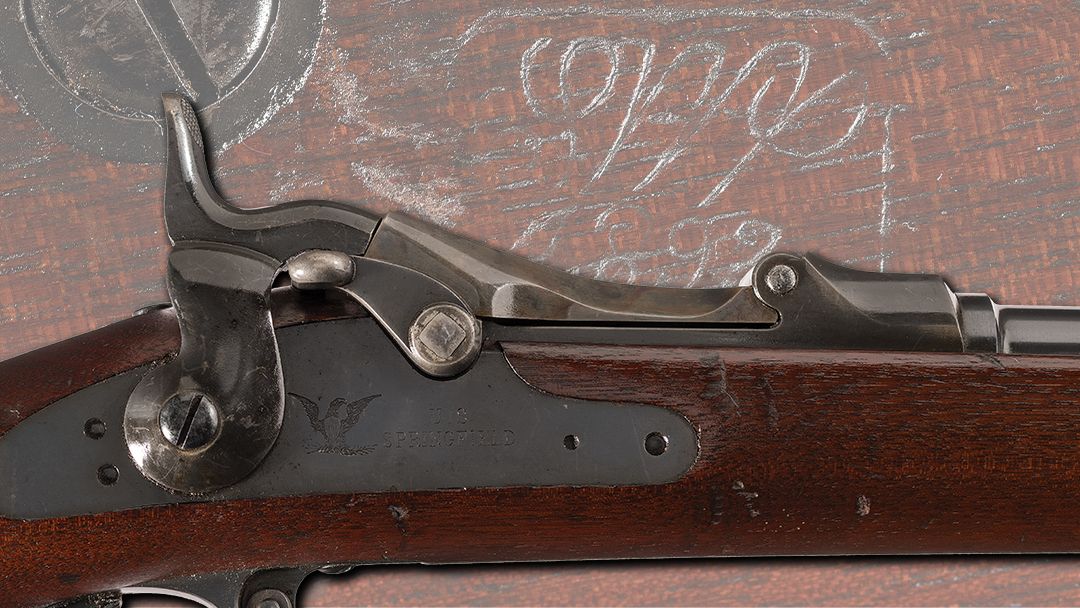
The Springfield Trapdoor provided an infantry rifle with power, range, accuracy, and a firing rate of up to 15 rounds per minute for experienced soldiers. The platform served as the primary U.S. infantry rifle for over two decades and experienced a steady series of modifications and improvements. The extremely rare U.S. Springfield .30 caliber Trapdoor rifle pictured below illustrates one of the final variants of the platform manufactured by Springfield Armory, created to experiment with various smokeless powders, test velocities, study ballistics, and perform pressure tests in the development of a new .30 caliber (.30 Army) smokeless powder cartridge.

A rare U.S. Springfield .30 caliber experimental Trapdoor rifle, letter “H” one of less than 20 manufactured by Springfield Armory between 1890 and 1892 for testing smokeless powder cartridges. Available this August.

Krag-Jorgensen

Military bolt action rifles had become a common sight in Europe by the late 19th century. While the U.S. Army began testing bolt action designs in the 1870s and 1880s, the first American bolt action infantry rifle wasn’t adopted until 1892 in the form of the Norwegan-designed Krag-Jorgensen. The Krag, or “Model 1892,” was also the first American standard issue rifle chambered for a smokeless cartridge, the .30 Army, or .30-40 Krag.

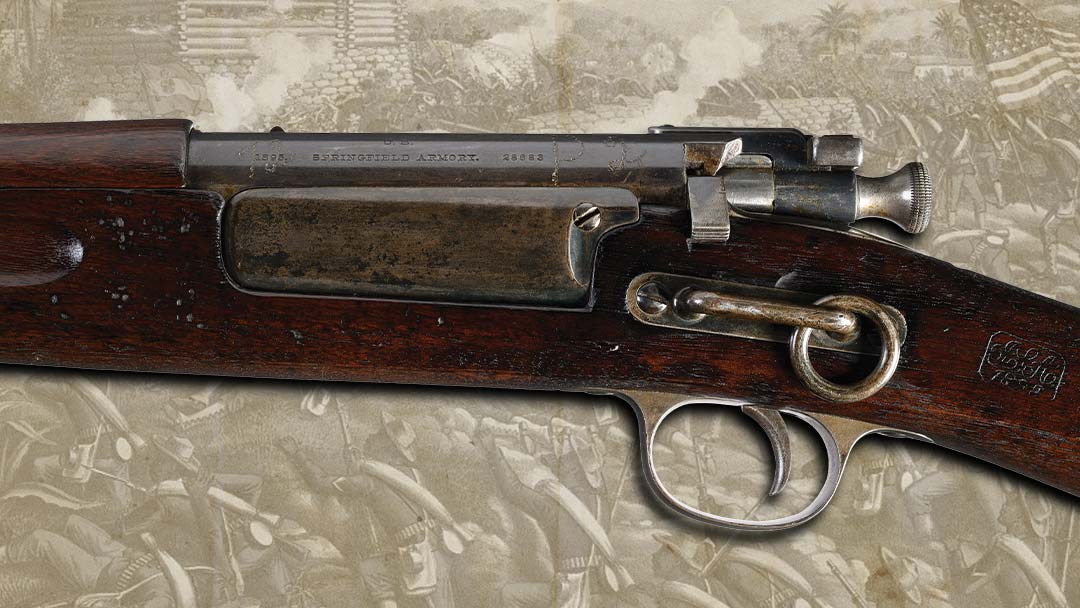
Krag production started in 1894, and over 477,000 rifles and carbines were manufactured by Springfield Armory over the next decade. The Krag was the U.S.  Army’s primary service rifle during the Spanish-American War, with rifles and carbines fielded during the conflict considered valuable collector items today.

The U.S. Springfield Model 1895/96 Krag-Jorgensen saddle ring carbine pictured below is identified by serial number as issued to the 9th Cavalry Regiment, who famously charged the hill during the Battle of San Juan Hill in Cuba on July 1st, 1898 alongside future President Theodore Roosevelt’s 1st Volunteer Cavalry “Rough Riders.”

A Spanish-American War U.S. Springfield Model 1895/96 Krag-Jorgensen saddle ring carbine identified by serial number to the U.S. 9th Cavalry Colored Regiment. Available this August.

M1903

The Springfield Model 1903 earns a clear nod in any discussion of America’s best military rifle platforms. Serving as a U.S. Army standard issue infantry rifle for over three decades, the Model 1903 emerged from a Mauser-based bolt action design. The Model 1903 was originally developed to chamber the .30-03 Springfield, the American military’s first rimless centerfire smokeless cartridge, which evolved into the superior .30-06.

The Model 1903 excelled as a service rifle and filled numerous specialized roles as well, including offering an effective sharpshooting platform. The Model 1903A1 USMC sniper rifles replaced the original straight stock with a more accuracy-friendly pistol grip stock, and during WW2, the M1903A4 variant produced by Remington excluded iron sights in favor of a Redfield scope mount and scope.

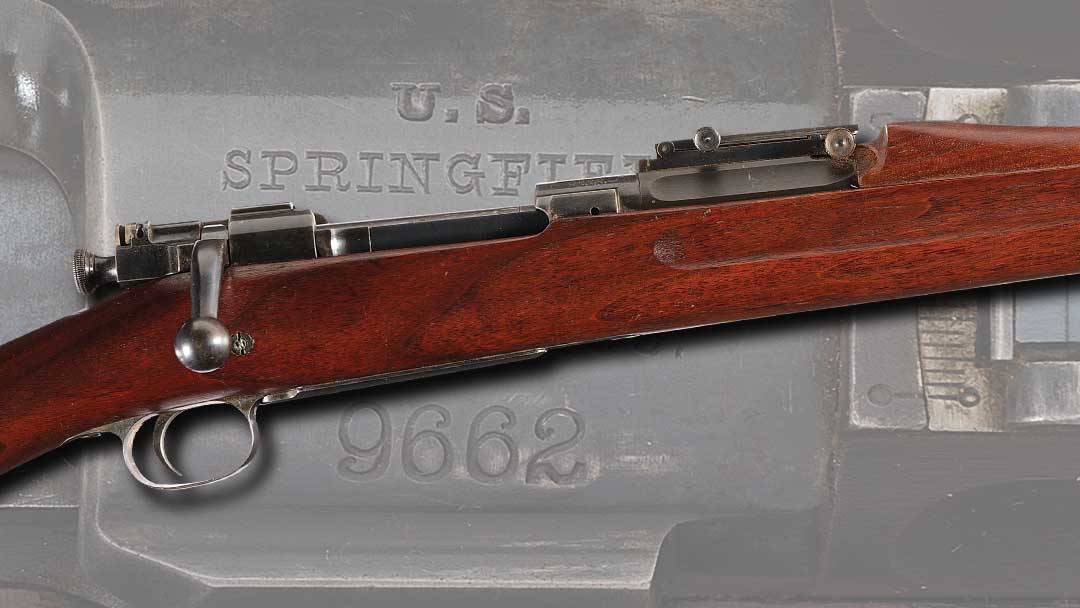
A first year production U.S. Springfield Model 1903 rifle with a 1905 style blade bayonet conversion, serial number 9662, a desirable example of one of America’s top military bolt action rifles. Available this August.

M1917 Enfield

With the outbreak of WW1, the American military faced a weapons shortfall in nearly every arena, including their stock of service rifles. A solution presented itself in the British P-14, a bolt action British Enfield that was able to be rechambered for the .30-06 round. Adopted as the M1917, the Enfield served alongside the M1903 and became the most common infantry rifle carried by the American Expeditionary Forces throughout the Great War.

The M1917 Enfield, one of WW1’s most prolific military bolt action rifles. This rare two digit serialized U.S. Winchester Model 1917 sold for $11,500 in RIAC’s June 2020 Premier Auction.

M1 Garand

General George S. Patton not only considered the M1 Garand to be the best military rifle of WW2, but praised the weapon as “the greatest battle implement ever devised.” America’s quest to develop a semi-automatic infantry rifle saw numerous contenders, including designs from John Pederson, John Thompson, and Melvin Johnson. But John Cantius Garand’s rifle would ultimately prevail.

The M1 Garand became the first semi-automatic service rifle widely adopted by a major military. With its 8-round capacity, the M1 provided American troops with a significant firepower advantage over their bolt-action adversaries and helped pave the way for Allied victory across Europe and the South Pacific. Fielded by millions of American GIs, the M1 Garand served as America’s standard issue rifle from 1936 to 1957 and it continued to see use as late as the Vietnam War.

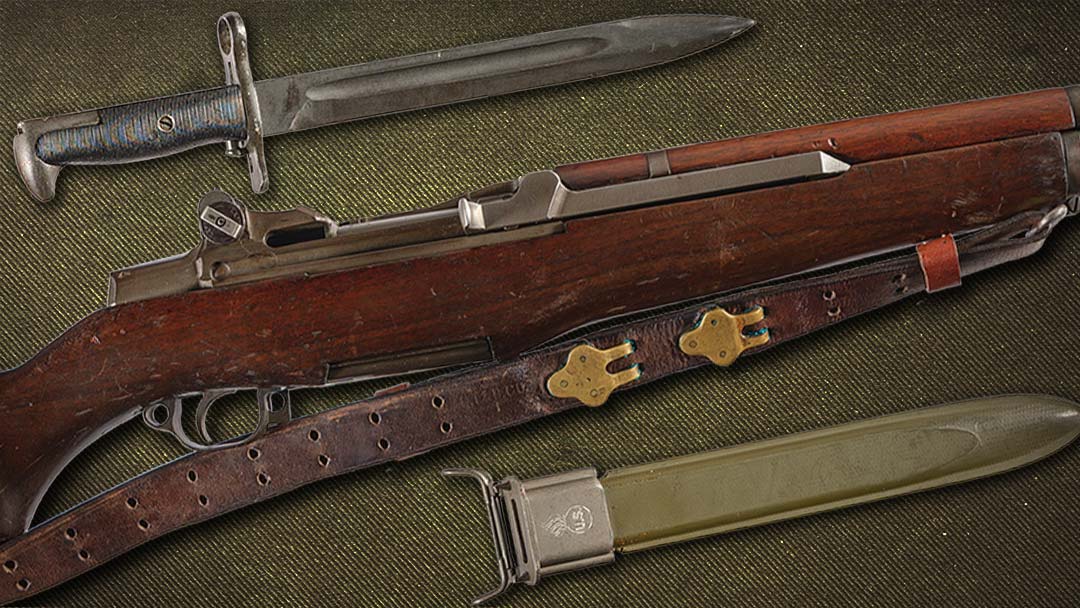
The M1 Garand, one of the best battle rifles of its era. This exceptional WW2 U.S. Winchester “WIN-13” M1 Garand is available this August.

M14

The M14 was conceived as a successor to the M1 Garand and became the U.S. Army’s first standard issue rifle with select-fire capability. Chambered in 7.62mm, the M14 was an attempt by the U.S. Army to produce an infantry rifle that could also offer the support fire of the BAR and fill the role of an SMG for close-quarters fighting.

While a fine battle rifle, the M14 was pulled in too many directions at once, being too bulky to act as an SMG or carbine in tight areas, but too light to serve as a proper squad automatic weapon. Production would end in the 1960s in favor of the M16, but the M14 continued to serve America in specialized roles, including finding an audience with special forces units and snipers, as well as being adopted by the Border Patrol and National Park Service.

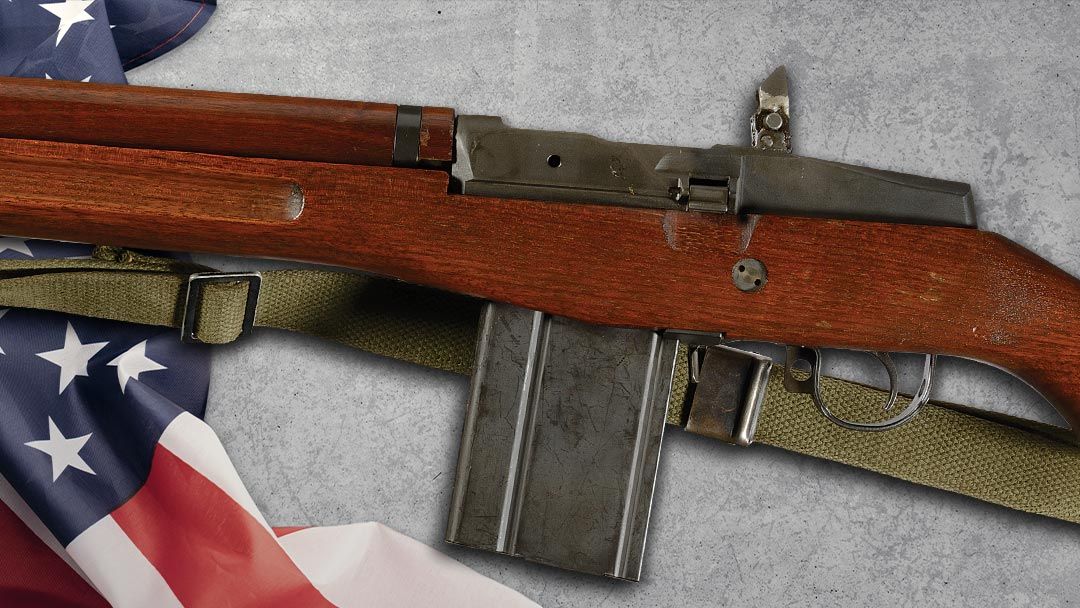
The M14 was America’s primary service rifle from 1957 to 1964. This Harrington & Richardson M14 in “Guerrilla Gun” configuration sold for $32,313 in RIAC’s December 2023 Premier Auction.

M16

One of the best military rifle platforms in terms of versatility, the M16 had a rocky start upon its adoption in 1963. Initial ammunition issues and a lack of cleaning kits and chrome-lined barrels resulted in malfunctions, but these problems were largely addressed with the M16A1 in 1967, during the height of the Vietnam War. The M16’s 5.56mm chambering meant a soldier could carry more ammunition, and the model’s steel-aluminum receiver and polymer stock resulted in a lighter service rifle than its M14 predecessor.

Finally, the U.S. Army had its multi-purpose infantry rifle. The M16A2, introduced in the mid-1980s, featured an updated handguard, a case deflector, adjustable rear sights, and a heavier barrel. The M16A3 and A4 introduced more modularity, bringing the platform into the modern age and contributing to M16’s status as the longest-serving standard issue rifle in U.S. military history.

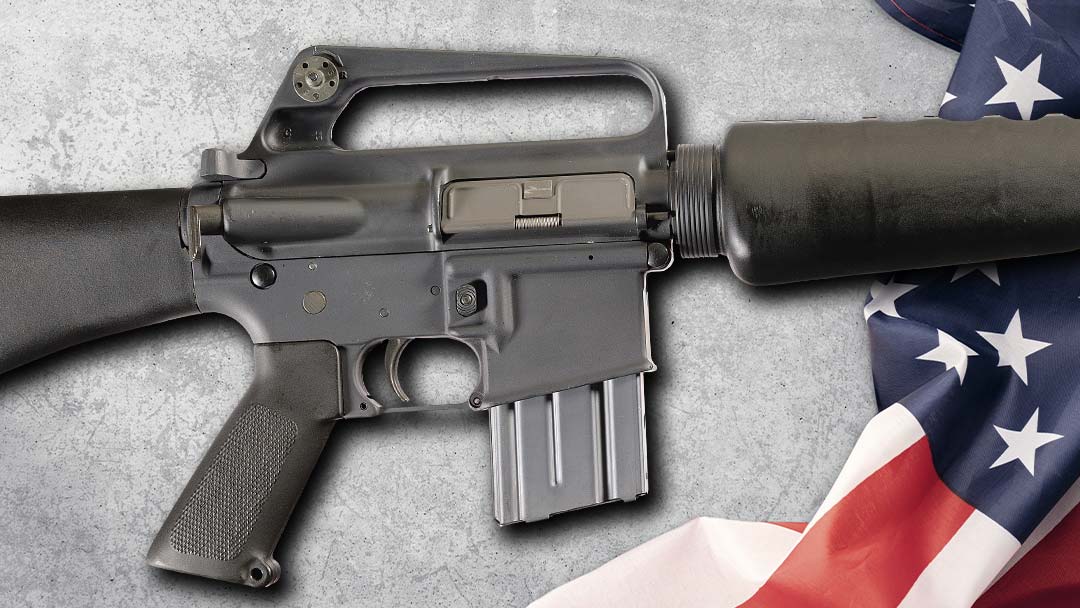
The M16, one of the best military rifle platforms in U.S. history. This Colt M16A1 selective fire rifle is available this August.

M4 Carbine

The M4 borrowed heavily from the design theory of the Vietnam-war era Colt CAR-15 carbine. Where the CAR-15 barrel lengths were 10 and 11.5 inches, U.S. Army testing found that 14.5 inches resulted in improved reliability, and updates to the M16’s gas system improved effectiveness further still. The M4 carbine was conceived for use by Special Forces, but by 2005 had become a U.S. Army infantry standard. The Marines followed ten years later.

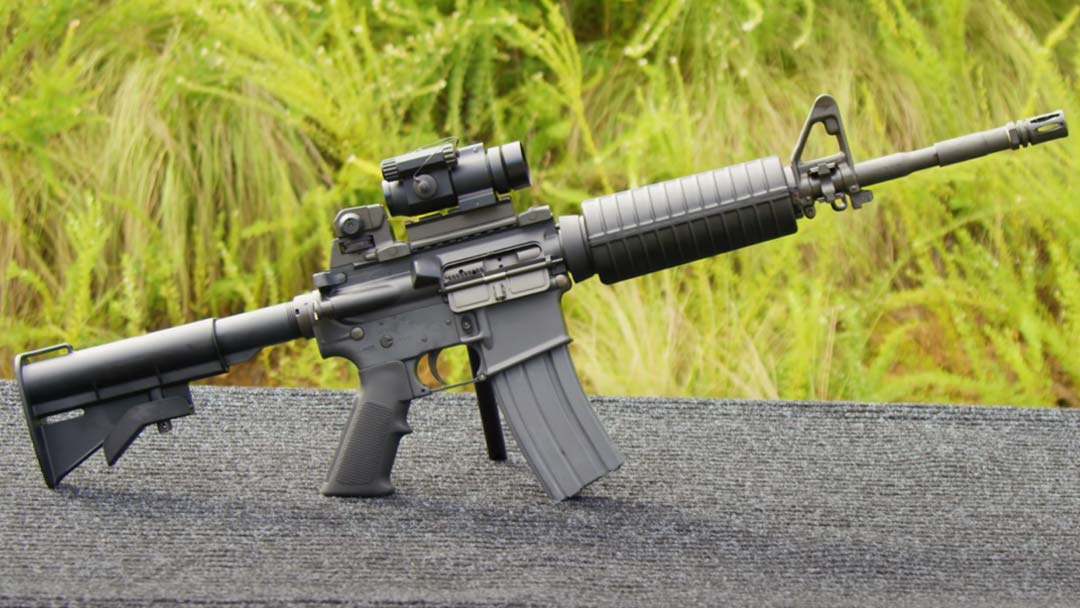
The M4 carbine, one of the most well-fielded variants of the M16 service rifle platform.

XM7

On March 28, 2024, soldiers from the 101st Airborne Division at Fort Campbell, Kentucky became the first U.S. Army unit equipped with the SIG Sauer XM7. The XM7 had been tested as part of the Army’s Next Generation Squad Weapon program designed to replace the M4 carbine and the M249 SAW light machine gun. SIG Sauer was awarded a 10-year contract in 2022, and time will tell if the 6.8mm chambered XM7 will become America’s next great infantry rifle.

The XM7 could become America’s next-generation service rifle, though years of testing likely await.

250 Years of the American Infantry Rifle

From the Revolutionary War muzzleloaders to the mighty M16, the infantry rifle has served as the backbone of America’s Army for 250 years. For collectors, shooters, and military enthusiasts, there’s nothing like owning a genuine service rifle from your favorite era of American history, and Rock Island Auction Company’s August Premier Auction offers examples that cover every chapter in U.S. military arms development.

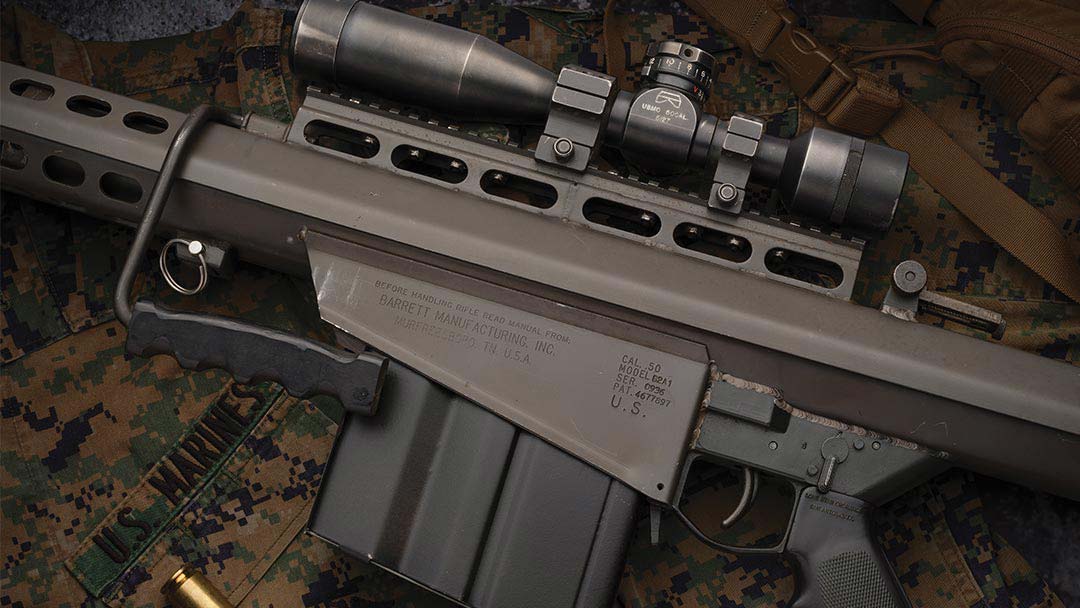
A documented Gulf War U.S. Barrett M82A1 .50 BMG sniper rifle with an Unertl scope, one of the first 100 rifles delivered to the U.S. Marine Corps for use in Operation Desert Storm. Available this August.

Subscribe to the Rock Island Auction weekly newsletter for more gun blogs and gun videos on U.S. Military weapons from across the centuries. From famous service rifles like the M1941 Johnson, Winchester Model 70, and Barrett M82, to a host of U.S. Military weapons in other genres like the M1 carbine, the Tommy gun, the M1911 pistol, the M1897 shotgun, the Colt SAA revolver, the Bowie knife, the Gatling gun, and more, we cover American military arms from every category.

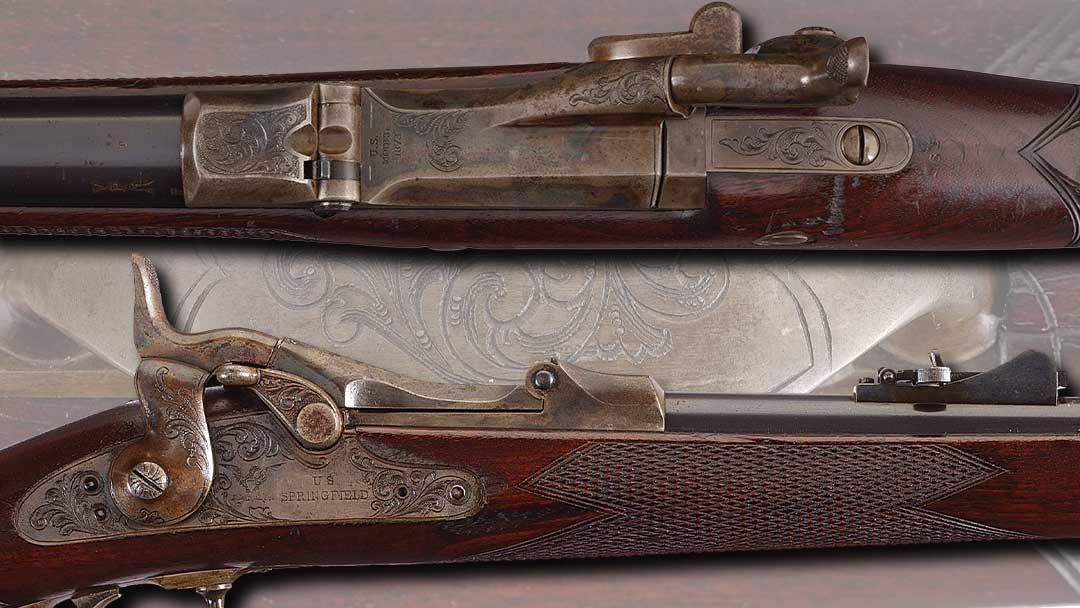
An outstanding example of a Type II U.S. Springfield Model 1875 Trapdoor Officer’s Model rifle, one of 252 estimated to have been manufactured in this configuration from 1877 to 1881. Available this August.

Review: Vosteed Raccoon Cub | Jerking the Trigger

0

One of the more exciting new knives to be shown at this year’s Blade Show was the Vosteed Raccoon Cub. The design was instantly recognizable as a scaled-down Raccoon (the model that Vosteed may be most known for) but it was also clear that this knife was going to take on established designs in the fifth pocket or little-big-knife space.

Now that I have spent time with a review sample and pricing has been released, I can say it delivers. In fact, I’ll say that I think this is best-in-class.

Specs

Blade Length: 2.34″ | 59.50 mm

Overall Length: 5.57″ | 141.60 mm

Blade Width: 0.98″ | 25.00 mm

Blade Thickness: 0.098″ | 2.50 mm

Blade Material: 14C28N

Blade Grind: Flat

Blade Style: Drop Point

Hardness: HRC 60±2

Handle Length: 3.23″ | 82.10 mm

Handle Width: 1.00″ | 25.50 mm

Handle Thickness: 0.41″ | 10.50 mm

Handle Material: G10

Weight: 2.04 oz | 58.00 g

Opener: Thumb Stud | Front Flipper

Lock Type: Liner Lock

Pivot Assembly: Caged Ceramic Ball Bearing

Pocket Clip: Reversible | Stainless Steel

Carry Position: Tip-up

Knife Type: Manual Folding

Thumbstud Material: Aluminum

Designer: Yue

Observations from Use

I am a big fan of this type of knife. I usually carry a fixed blade knife so it is nice to have a compact folding knife that is small enough not to be burdensome but large enough to be useful. This little-big-knife or fifth pocket knife segment is growing and competitive. That is good for me because I am fully on board.

The Raccoon Cub has exactly the sort of ergonomics you want in a knife like this. It has a large, useable finger choil in the blade to allow a full and comfortable four-finger grip if you choke up while also remaining very compact when it is folded. It is a well-established formula that is well executed in this design.

The Raccoon Cub will inevitably draw comparisons to the Civivi Baby Banter – a knife that I own and that really stands out in this segment. The two knives are similar in many ways but differ in some key ways:

  • I prefer the blade shape of the Raccoon Cub with its more acute tip, something I find especially useful on a small knife.
  • The Racoon Cub also offers jumping on the spine out near that point to make it even easier to control for fine tasks.
  • The Raccoon Cub is VERY SLIGHTLY heavier but, for that weight, you get skeletonized and nested steel liners which is nice.
  • The Raccoon Cub’s handle is a little less cramped thanks to the taper at the butt and it is also easier to open thanks to better action and the addition of a front flipper.
  • The Raccoon Cub is a full $10-12 cheaper than the base Baby Banter options.

Speaking of the front flipper. I just want to mention that I normally don’t really care about them and rarely use them. However, in the case of the Raccoon Cub, it is so well executed, snappy, and easy to use that I find that it is actually useful instead of just fidgety. Some users with larger hands, may even prefer it.

The action on my review sample is extremely smooth with a very crispy detent. In fact, I can deploy the blade with just pressure from the pad of my middle finger. The detent holds rock steady until you apply enough pressure to overcome it and then the blade rockets open. It’s very satisfying.

Wrap Up

When this knife was shown at Blade Show, I recognized the potential. When I spent time with it, I fell in love. When it finally went up for sale and I saw the price, I became convinced that the Raccoon Cub is best-in-class.

This is now the best fifth pocket knife available. The value is great. The ergonomics are great. The cutting performance is great. It’s just a stellar knife.

The Raccoon Cub is initially only available Amazon: Vosteed Raccoon Cub at Amazon.com

It will be available direct from Vosteed at a later date: Vosteed.com

The 7 Most American Guns

0

Baseball, hot dogs, apple pie, and M16s. Firearms are an undeniable part of the American identity thanks to the Second Amendment and the nation’s spirit of independence and self-sufficiency. The United States was forged in steel and gunpowder, and from the Colonial Era onward the history of America has been tied to the history of the gun.

An American gun connected to a frontier legend, this historic Winchester Deluxe Model 1895 saddle ring carbine was presented by Buffalo Bill to Deadwood businessman and friend M.R. “Gold Nugget Mike/Deadwood Mike” Russell. Available this August.

Which guns are most American? Sure, that’s a big question to tackle, but Independence Day is all about celebrating the grand sweep of the American story, so let’s take a look at seven firearms that decisively shaped America and shaped the perception of the United States around the world.

If your favorites weren’t included, let us know in the comments, and be sure to check out our previous article on the 25 most iconic American guns.

The Kentucky Rifle

The first uniquely American gun was born in the backcountry of 18th century Pennsylvania. Popularly known as the Kentucky Rifle, or Pennsylvania Rifle, the American Long Rifle became a symbol of frontier self-reliance and rugged American individualism, and the gun went on to be a decisive force-multiplier in the Revolutionary War. Wielded by famed frontiersmen like Daniel Boone and Davy Crocket, the Kentucky Rifle was the original defender of Old Glory.

A documented Peter Berry signed, engraved, and relief carved Golden Age flintlock American long rifle, available this August.

Pioneered by German and Swiss gunsmiths who immigrated to the Colonies, the American Long Rifle combined numerous features from the Germanic Jäger rifle and English hunting designs that dramatically increased accuracy, including full rifling, greater barrel length, and a snug-fitting, smaller caliber ball.

The first firearm to be regularly fitted with an open rear sight, these elegant flintlocks were favored by American frontiersmen who required the ability to shoot accurately up to 200 yards when hunting in the Virginia wilderness. It turned out that range also worked well for picking off British officers, and General George Washington was quick to take advantage.

Kentucky rifles are one of the first truly American guns. This George Schreyer Sr. attributed relief carved flintlock is available this August.

Most Yankee soldiers during the War of Independence carried smoothbore long arms like their British counterparts, but small groups of riflemen were deployed to harass the British from outside effective musket range. Washington recruited as many long rifle hunters as he could, and the 1,400 or so patriots who answered his call were a deciding factor in winning the Revolution and ensuring the spirit of ’76 lived on. The Kentucky Rifle went on to repel the Red Coats again in 1812, in grand American fashion.

A relief carved and silver accented Reading School Golden Age flintlock American long rifle, a fine example of these innovative American guns. Available this August.

“But Jackson he was wide awake, and wasn’t scared at trifles, for well he knew what aim we take with our Kentucky rifles.”   – from “The Hunters of Kentucky”, a song celebrating Jackson’s 1815 victory at New Orleans.

The Colt Single Action Army

When it comes to famous American guns, the Colt SAA, the steel embodiment of the Old West, takes the crown. Dime novels and newspapers of the period helped popularize the iconic revolver, and Hollywood made it a legend. “Judge Colt and His Jury of Six” became a symbol of justice and lawlessness on the American frontier, adopted by cowboys, gamblers, lawmen, and desperados as the Land of Stars and Stripes pushed ever westward.

The Colt Single Action Army revolver is one of history’s top American guns. The documented, Ainsworth inspected, Lot Five 7th Cavalry Custer battle era SAA pictured above is attributed as captured at the Little Bighorn. Available this August.

The Peacemaker. The six shooter. “The great equalizer.” The American Army adopted the Colt SAA in July 1873, and a few months later it was offered to the public. The revolver was relatively light, durable, easy to shoot and maintain, and the new .45 caliber brass cartridges made loading faster than ever. It’s no wonder that the Single Action Army was the official sidearm for the U.S Cavalry for 20 years, and even saw limited service well into the 20th century, including serving as General George S. Patton’s favored handgun.

An American gun favored by Old West lawmen, the SAA was offered in numerous variants, like this 1899 manufactured, New Orleans shipped, ejectorless Sheriff’s Model with a factory documented 3 1/2 inch barrel. Available this August.

The lore surrounding the Colt SAA grew along with the legend of the American West, and the famous six shooter has been featured in nearly every Hollywood Western film. Presidents like Teddy Roosevelt and Ronald Reagan carried it. Wyatt Earp, Bat Masterson, and Doc Holliday forged their reputations with it. The Single Action Army has remained in production for over 150 years, with only a brief interruption during WW2 and the decade to follow. Now that’s the definition of an American success story.

Two fantastic examples of the Colt SAA Frontier Six Shooter, a popular American gun out West. The documented pair of factory engraved, silver plated revolvers pictured above are connected to the historic 101 Ranch. Available this August.

The Winchester 1873

While the Colt revolver ruled the frontier streets, the Winchester rifle was king of the open range. Dubbed “the gun that won the West”, the Winchester ’73 is the essence of American made, and the rugged rifle is prominently featured in many Westerns alongside the Colt SAA. The Model 1873’s tough frame, stronger chambering, and wide-scale availability as the railroad brought a new wave of settlers out west seeking the American dream helped transform the rifle into the legend it is today.

Life, liberty, and the pursuit of happiness. The Winchester ’73 came to embody all three out on the frontier. The Special Order Winchester Deluxe Model 1873 pictured above is available this August.

Oliver Winchester’s steel framed 1873 was a distinct improvement over the Model 1866 and the 1860 Henry and their bronze receivers. The Model 1873 was also chambered in .44-40, a hefty upgrade for the era and the same ammo chambered a decade later by the Colt Frontier Six Shooter. Carrying only one type of bullet in the saddlebag was a huge advantage out on the frontier, and the sturdy lever action rifle became one of the bestselling guns of the era.

Rock Island Auction Company offers some of the finest publically available Winchester rifles, like this John Ulrich signed, master factory panel scene engraved, special order full nickel plated Winchester Model 1873 saddle ring carbine available this August.

A well-armed frontiersman carried a Colt on his hip and a Winchester over his shoulder. Hollywood seized on that image with movies like Winchester ’73 starring Jimmy Stewart and Rock Hudson, and today the rifle is one of the most popular American guns in the collecting community. From movie sets to modern-day Cowboy action shooting competitions, the Model 1873 has stood the test of time like few other firearms and represents the enduring spirit of the American West.

The Winchester 1873 became a symbol of Americanism in the Wild West. This hand engraved, early production First Model 1873, serial number 730, features a raised thumbprint dust cover and is available this August.

The Colt 1911

Speaking of timeless American guns, the Colt Model 1911 is one of the most popular pistols in history. The M1911 was the brainchild of John Moses Browning, a brilliant gun inventor in an era of unprecedented American invention, and his .45-caliber semi-automatic pistol set a new design standard that is still emulated today. It’s no surprise that the greatest fighting force on Earth carried the world’s greatest handgun.

The Colt M1911 was a gun that changed the world. The example pictured above was part of the second shipment of 1,250 M1911 pistols on 9 July 1913 shipped to the United States Marine Corps Depot Quartermaster in Philadelphia, Pennsylvania. Available this August.

Often called “Old Slab Sides,” or sometimes just “Forty-Five” for its .45 ACP cartridge, Browning’s magazine-fed design was simple and reliable. Faster to load and carrying a higher capacity than the standard revolver, this legendary handgun was eventually adopted by the U.S. Army and has gone on to be the longest-serving sidearm in American military history, only being replaced a few decades ago by the 9mm Beretta. Even still, the M1911 is carried by numerous American officers to this day.

As one of the most popular American guns, rare 1911s are frequently offered at Rock Island Auction Company. This U.S. Colt “Transitional” Model 1911/1911A1 attributed to U.S. Navy Rear Admiral (Ret.) Robert H. Solier is available this August.

Created by one of America’s greatest inventors and carried on the hips of thousands of G.I.s throughout both World Wars, the M1911 not only deserves a leading spot on any list of greatest American guns, but is a top contender for the definitive firearm of the 20th century. The features that made Browning’s pistol popular over one hundred years ago are what still attract collectors and shooters today, and the design continues to be produced by dozens of manufacturers across the globe.

One of the rarest examples of this WW2 American gun, the Singer Model 1911A1 pistol. “The Invictus Singer” pictured above was the personal sidearm of Lieutenant Colonel Thomas R. Moss, pilot of B-24 No. 27 “Invictus” of the 765th Bombardment Squadron, 461st Bombardment Group, 15th Air Force. Available this August.

“The 1911 was the design given by God to us through John M. Browning that represents the epitome of what a killing tool needs to be.”   – Col. Robert J. Coates, USMC

The Thompson Submachine Gun

Recognized around the world for its portrayal in gangster films and its service in WW2, the Thompson submachine gun is one of the most defining weapons in American history. Designed by John Thompson, the Tommy Gun was originally conceived as a WW1 trench sweeper, but was completed too late to see service in France. As it turned out, the Thompson’s function as a close-quarters shock weapon with knock-down firepower was also well suited for the streets of Prohibition Era America.

Hollywood’s favorite gangster gun, and an American gun to remember. This cased Model 1921/1928 U.S. Navy Overstamp Tommy gun is documented as shipped to the Sheriff’s Office of Beaver County, Pennsylvania and is available this August.

The United States is another name for opportunity, and John Thompson left no stone unturned as he marketed his fully automatic Model 1921A to everyone from law enforcement to ranchers to everyday homeowners, but the deadly submachinegun found an unexpected niche with organized crime. “The Chicago Typewriter”. “The Street Sweeper”. “The rat-tat-tat”. The Thompson gained dozens of colorful nicknames as it earned its reputation in the Melting Pot of South Side Chicago, carried by motorized bandits and the lawmen on their tail.

An exceptional example of one of the most famous American guns, this documented law enforcement shipped Colt Model 1921/1928 with a U.S. Navy overstamp is available this August.

In 1938, as America braced for war, the Thompson submachine gun was adopted by the U.S. Military and employed by the British as well. The 50 and 100 round drums favored by gangsters were largely dropped for a 20 round stick mag, and over 1.5 million of the new military M1928A1, M1, and M1A1 were produced. From mafia to military to Hollywood, few firearms are more widely recognized than the Thompson, and few guns have impacted America more dramatically both at home and abroad.

The U.S. M1 Thompson, a streamlined version of the platform developed during WW2, offered American officers and NCOs in the European and Pacific theaters a devastating close-quarters combat option. Available this August.

The M1 Garand

Another member of the iconic American guns club, the M1 Garand rifle was dubbed by General George S. Patton as “the greatest battle implement ever devised.” Americans have a knack for engineering, especially when it comes to firearms, and the M1’s signature power, speed, “ping,” and spectacular service history have made the Garand a clear contender for the quintessential U.S. military long arm.

The M1 Garand is a clear candidate for one of the most American guns of all time. This exceptional WW2 Winchester M1 example was manufactured in May of 1944. Available this August.

Designed by John Garand, the .30-caliber M1 replaced the 1903 Springfield in 1936 as the standard infantry rifle of the U.S. Army and the U.S. Marine Corps. War loomed on the horizon, and Uncle Sam answered the call. The semi-automatic M1 Garand is a red-blooded American gun, delivering high-volume fire that helped lead the United States to victory on the battlefields of Europe and the Islands of the South Pacific by eclipsing Axis bolt-action rifles like the German 98k and the Japanese Arisaka. When it came to defending the freedom, safety, and security that the nation celebrates every July 4th, few American guns were more instrumental than the M1 Garand.

A consecutively serialized pair of U.S. Springfield M1C Garand sniper rifles with Lyman Alaskan scopes and matching numbered brackets. Available this August.

From Saving Private Ryan and Band of Brothers to the Call of Duty video game series, few weapons can symbolize America’s valor in WW2 better than the M1 Garand. The durable rifle remained in service through the end of the Korean War and became known as the U.S. military’s most successful infantry weapon. While not the first semi-automatic battle rifle issued as a major military standard, the M1 Garand was by far one of the most influential.

One of the most important American guns of the 20th century, the M1 Garand was a U.S. infantry mainstay through WW2 and beyond. This WW2 Springfield M1 Garand is available this August.

The M16

What’s more American than the M16? The longest-serving infantry rifle in U.S. military history, the M16 was an answer to the need for a versatile weapon that could excel at both distance combat and the close-quarter fighting frequently encountered during the Korean War. In short, an all-in-one infantry rifle. Though the refinement of the M16 was not without its hurdles, it certainly stepped up to the new challenges of modern warfare.

The M16, a modern defender of Lady Liberty. This commercial Colt M16 selective fire rifle in the 9 Million serial range is available this August.

The first M16 variant was adapted from the famous ArmaLite AR-15, which needs no introduction here. If the 1911 is America’s pistol, then the AR-15 is America’s rifle, and its M16 sibling represents the 20th century American infantry post Korean War. The M16’s 5.56x45mm cartridge allowed for higher ammo loads and faster rounds, not to mention a lighter rifle that’s easily modded and can be equipped with a 40mm grenade launcher for the ultimate 4th of July fireworks.

The M16 served as America’s signature infantry gun through the end of the Cold War and up to the War on Terror. The Colt M16A2 pictured here, in the “Grenadier” configuration, includes an enlarged handguard acting as the mounting point for a M203 grenade launcher and a flip-up ladder sight graduated to 250 meters. available this August.

With more than 8 million produced and counting, the M16 is a strong candidate for one of the most prolific American guns. The M16A1 corrected some of the rifle’s shortcomings that surfaced in the harsh jungles of Vietnam, and the M16A2’s greater customization options brought the platform into the modern age. The platform’s successor, the M4 carbine, has carried the M16’s design legacy into the 21st century and continues to serve as America’s military standard.

The AR-15, one of the most American guns of all time. This early production pre-ban Colt AR-15 SP1 semi-automatic rifle with its original box is available this August.

American Guns for Sale

Each gun has its own story to tell, its own connection not just to the past, but the American spirit.   – Chris Kyle

The seven guns featured here, while undeniably American icons, have only just scratched the surface when it comes to firearms that helped thirteen separate colonies defeat the greatest empire on Earth, form one nation, span a continent, and defend Western Civilization in the 20th century’s two greatest wars.

An American gun from an American lawman, this historic Colt Model 1877 Thunderer was presented to the legendary Pat Garrett after he was appointed United States Collector of Customs by President Theodore Roosevelt. Available this August.

Subscribe to the Rock Island Auction newsletter for new weekly gun blogs and gun videos on the countless firearms that shaped the American story. From the classic Colt Paterson and Colt Walker, Civil War innovations like the Sharps and Spencer, lever action legends like the Winchester 94 and Marlin 1895, bolt action rifles like the Krag, Model 1903, and Winchester Model 70, WW2 mainstays like the M1 carbine, BAR, and Johnson rifle, and heavy hitters like the M2 and M60, we cover the most historic American guns.

American guns from every era will be featured in Rock Island Auction Company’s August Premier, including this newly discovered Winchester Model 1886 .45-90 WCF rifle with its original shipping crate containing a scabbard, five boxes of ammunition, and its factory letter, a 19th century time capsule unlike anything ever offered to the collecting public. Available this August.

Louis XIII’s Luxury Propels August Premier

0

From the opulence of French King Louis XIII to the carnage of World War 2, Rock Island Auction Company’s Aug. 23-25 Premier Auction offers a wonderfully diverse lineup of collectable fine firearms.

Rock Island Auction’s Premiers always provide stellar offerings of Wild West guns, from Colt revolvers and Winchester lever actions, as well as fine sporting arms from Purdey and Holland & Holland, and this event is no different with guns attributed to Buffalo Bill, Pat Garrett and the Battle of Little Bighorn set to cross the podium this summer. These guns can be experienced up close at the auction’s Preview Day on Aug. 22 in Bedford, Texas.

Louis XIII’s gold and silver ornamented royal presentation wheellock from his Cabinet d´Armes leads the roster of offerings. An avid collector, Louis’s assemblage of guns has become legendary, and this breathtaking wheellock deserved a place in it. Scrolling, mythical beasts and classical nudes are among the decorative embellishments that makes this gun a pinnacle of collecting.

French King Louis XIII’s opulent sporting arm tops Rock Island Auction’s August Premier lineup. The gun, a gold and silver ornamental and bejeweled royal presentation wheellock, is from the king’s fabulous Cabinet d’Armes.

A pair of firearms dating from World War 2 are also part of the phenomenal depth of offerings in this auction. “The Invictus Singer,” a U.S. Singer Manufacturing Model 1911A1 that served as the personal sidearm for the pilot of the B-24 “Invictus” of the 765th Bombardment Squadron, 461st Bombardment Group of the 15th Air Force will be available. Only 500 Singer M1911A1s were made and to get a documented combat carried example marks a phenomenal opportunity.

A rare German C.G. Haenel Mkb42(h) with sniper scope is the grandfather of German Assault rifles and its rarity makes it one of the most desirable of the World War 2 Axis firearms, and generally of Class III weapons, that can be found.

One of 500 U.S. Singer Manufacturing Model 1911A1, this example was the personal sidearm for the pilot of the B-24 “Invictus” of the 765th Bombardment Squadron, 461st Bombardment Group of the 15th Air Force.

The Wheellock of Louis XIII is from the Norman R. Blank Collection along with more than 25 fine firearms featured in this auction, from dueling pistols, to flintlocks to sporting arms. The documented award winning exhibition “Champ-Leve” engraved and relief chiseled Purdey .450 Black Powder Express double rifle is just one of them. This double rifle was displayed at the 1878 Exposition Universelle in Paris and the following year at the Sydney International Exhibition.

A Winchester Model 1895 lever action presented by Buffalo Bill Cody to Deadwood businessman “Gold Nugget Mike” Russell, and a presentation engraved Colt Model 1877 Thunderer presented to lawman Pat Garrett are fantastic offerings from the Wild West, but a Colt Single Action Army used by Lee Marvin in “The Man Who Shot Liberty Valance” will cross over with serious wheelgun collectors and Hollywood memorabilia aficionados alike.

Buffalo Bill hunted with a Winchester 1895 and often presented to them to friends. This Model 1895 to Deadwood, S.D., businessman “Gold Nugget Mike” Russell and it bears a presentation oval plaque on the stock that reads “Presented to M. R. Russel by his friend Col. W. F. Cody – Buffalo Bill.”

A fantastic assembly of classic engraved rifles includes a Winchester Deluxe Model 1894, a Marlin Deluxe Model 27S, a John Ulrich-signed Winchester Model 1885 High Wall Schuetzen rifle with platinum inlays, as well as an exhibition quality Savage Rival Grade Model 1899. Not engraved, but definitely timeless is “The Marshfield Find,” a near-new Winchester Model 1886 discovered in its original shipping crate containing packing paper, a scabbard and five boxes of ammunition.

The fantastic selection of Colt revolvers isn’t limited to Pat Garrett’s Thunderer nor the “Liberty Valance” SAA, but also outstanding examples of Colt Model 1860 Armies, Dragoons and two Paterson revolvers. And not to worry, an outstanding field of high condition Single Action Armies will be in the auction, particularly one captured at the Little Bighorn.

This Colt Single Action Army, inspected by Orville W. Ainsworth, is from Lot 5 that was issued to the 7th Cavalry ahead of the Battle of the Little Bighorn and was attributed as captured on the battlefield.

Along with the Singer, other U.S. military items up for auction include an issued U.S. Marine Corps Johnson Model 1941, early variations of John Moses Browning’s M1911, a Civil War martially inspected Starr Model 1863 revolver, and a number of fine Civil War carbines. The auction will have several opportunities to obtain foreign military weapons, ranging from Walther and Luger pistols to a J.P. Sauer M30 Drilling, and a World War 2 BSA No. 4 Mk I (T) Enfield bolt action sniper rifle and a very scarce Irish contract Winchester Pattern 14 No. 3 Mk I with a scope.

All kinds of Class III firearms are available, from an M2 by Buffalo Arms, to the Maremont/New England Group M60 to a Heckler & Koch HK53, a MP43 Sturmgewehr and several impressive examples of Thompson Submachine Guns. Scarce or rare Class III items include an Armalite AR-18 select fire rifle in “shorty/combine” configuration, a World War 2 Erma MP38 and a Chinese Type 56 selective fire assault rifle.
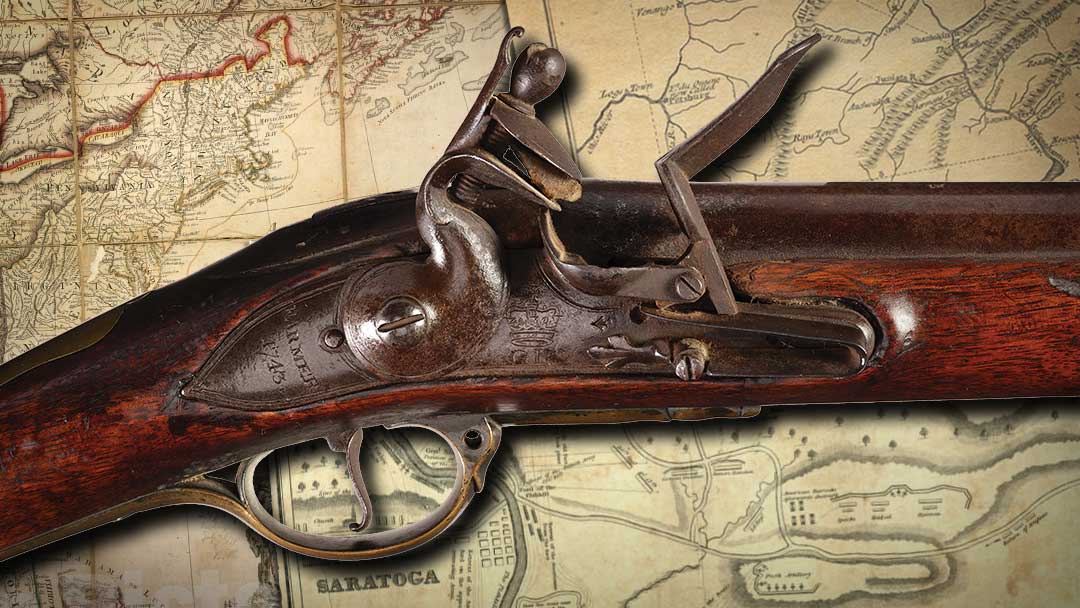
Sportsmen looking for beautifully adorned shotguns or rifles won’t have to look far in this auction, with a number of fine field pieces on offer. Among shotguns, a pair of J. Purdey & Sons sidelock double barrel guns, a factory engraved and gold inlaid Winchester Model 21 Grand American with a two barrel set and a factory engraved Ivo Fabbri self-opening sidelock double barrel gun by Master Engraver Claudio Tomasoni are part of the auction lineup along with an Alden George Ulrich factory engraved and gold inlaid Winchester Model 70 Pre-64 bolt action rifle with scope.

This brilliantly embellished Parker Brothers AAHE Pigeon Gun double barrel shotgun has a gold grip cap inscribed to whiskey distiller R.D. Clarke of Peoria, Illinois and is part of a fantastic roster of sporting arms in the August 23-25 Premier Auction.

Antique firearms in the auction include a number of cased offerings. They are an exhibition grade pair of engraved and gold inlaid relief chiseled silver mounted and relief carved pistols by Goeliner of Suhl, along with a relief carved and chiseled 17th century Austrian Wheelock sporting rifle by the anonymous gun stocker known only as the “renowned master of the animal-head scroll,” and a fine cased pair of engraved gold inlaid and “hair rifled” John Manton flintlock dueling pistols.

Looking for something other than guns to adorn the gun room? Bullet boards from Union Metallic Cartridge Company and a Winchester “Double W” are in the auction along with firearms advertisements and a glass Winchester store display gun cabinet. A number of World War 2 insignia and memorabilia can also be found in the auction.

King Louis XIII’s sporting arm, legendary 19th century guns and military pieces that drip with history will be offered alongside fantastically engraved sporting arms and bespoke percussion pieces. The amazing finds up and down the catalog point to the incredible depth of the high conditioned and fine firearms that will be available in the Aug. 23-25 Premier Firearms Auction in Bedford, Texas.

A fabulous lineup of legendary revolvers will be available in Rock Island Auction Company’s Aug. 23-25 Premier Auction.
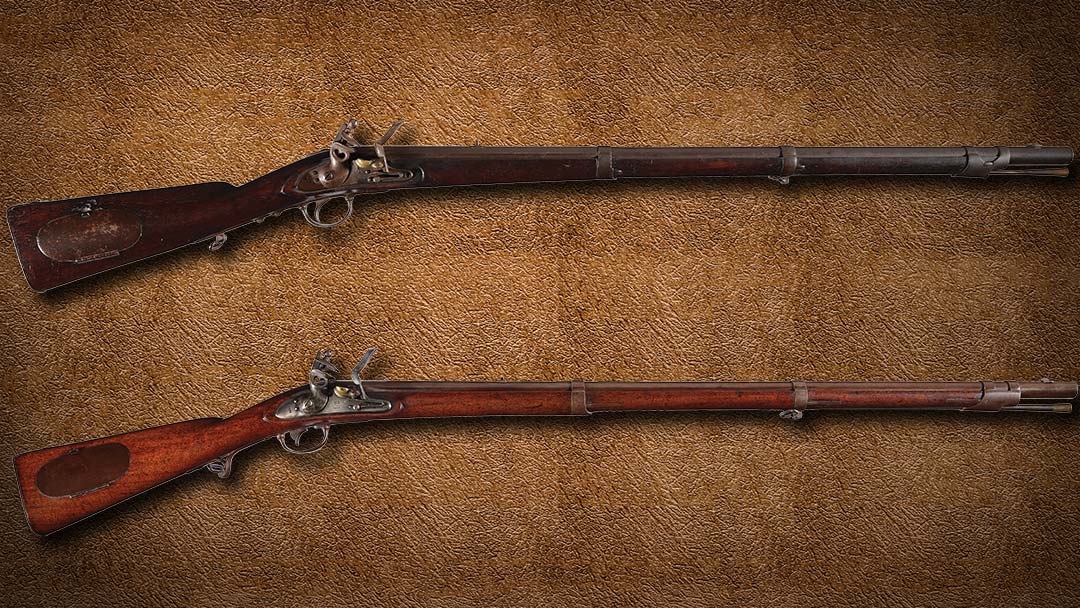
Review: Streamlight TLR-7X USB | Jerking the Trigger

0

My experience with Streamlight’s TLR-7 light of lights goes back to the original version with teeny-tiny lever-style switches. In some ways, the TLR-7 line has changed a lot and in some ways it hasn’t changed much at all since then. Today, I’ll be taking a look at one of the newest entries into the line, the TLR-7X USB.
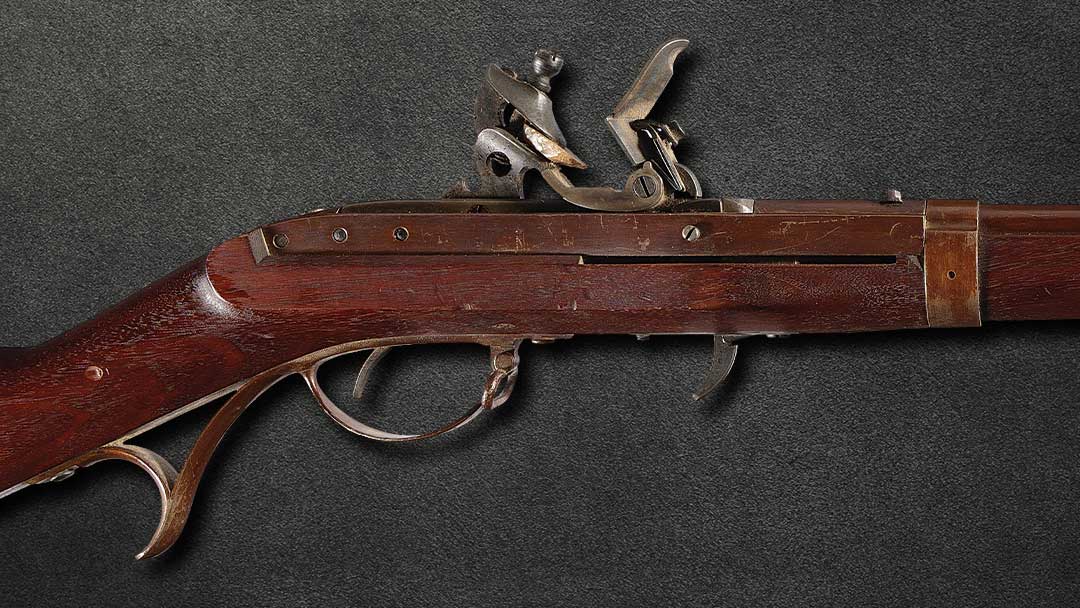
Specs

  • Multi-fuel: Uses one (1) Streamlight SL-B9™ protected Li-Ion USB-C rechargeable battery pack or one (1) CR123A lithium battery
  • 500 lumens; 5,000 candela; 140m beam; runs 1.5 hours (CR123A), runs 1 hour (SL-B9™)
  • 2.48 ounces (70.31 grams) – 2.64 ounces (74.84 grams) depending on battery

Observations from Use

A lot of my observations of the TLR-7 X USB will be framed by my experiences with the original TLR-7 – a light that I have used a lot and continue to use for the specific use case of carrying in Hill People Gear Kitbag where I found the small switches unlikely to activate accidentally. The original TLR-7 is a light I use often and will continue to use. On paper, the TLR-7 X USB seems similar but in use, there is almost no comparison.
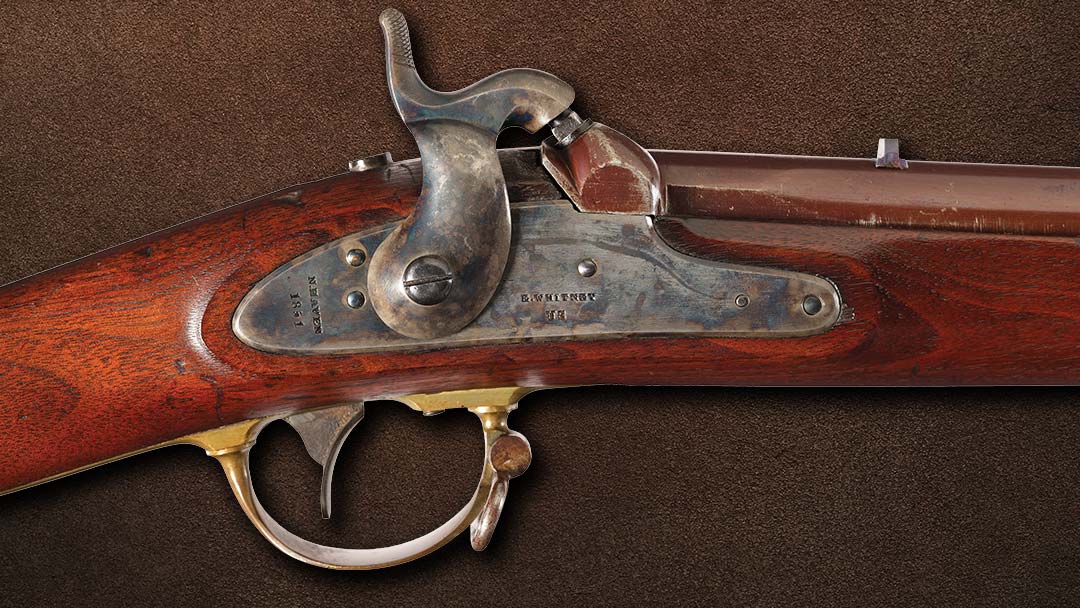
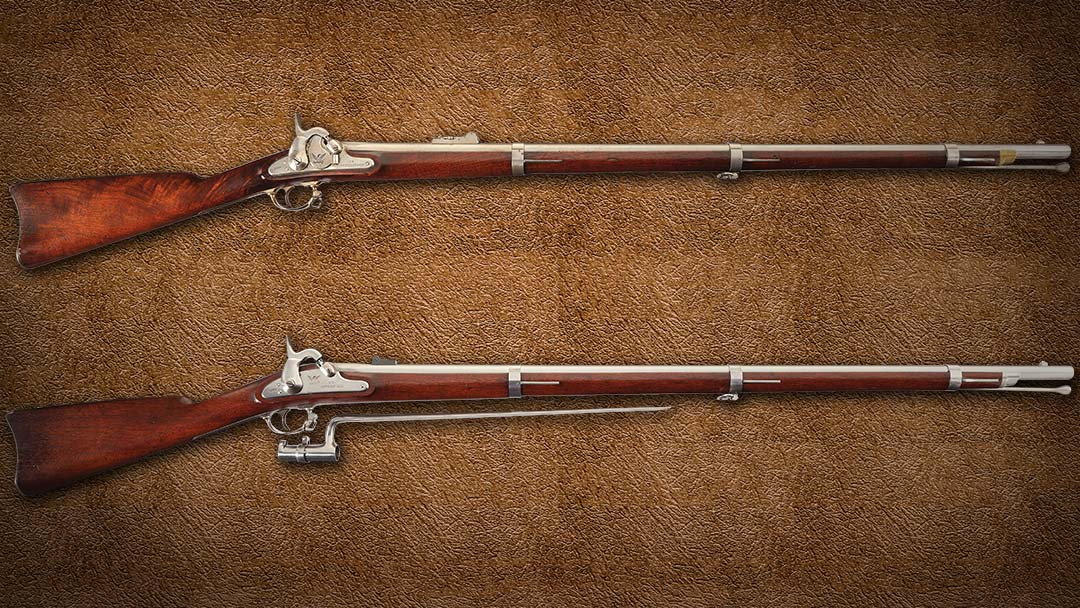
Just reading the spec sheet, the original TLR-7 and TLR-7 X USB should have similar output. I can confirm that the beam shape is similar (if not identical) – a nicely balanced hotspot and spill beam with reasonable throw for an EDC-focused light. However, my new TLR-7 X USB is noticeably whiter and brighter than my original TLR-7 despite the same 500-lumen output on paper.

The new TLR-7 X USB is basically the same compact size and shape except for the longer switches (more on this later). It should fit most holsters intended for almost any iteration of the TLR-7. This is a strong positive because the economical size and Streamlight’s commitment to holster compatibility is one of the things I love about this series and Streamlight in general.

If you are familiar with the TLR-7 A that this light replaces, you will already be familiar with the switches. The original TLR-7 had switches that were almost universally hated (though as mentioned earlier, I have a use case for them). The switches introduced on the TLR-7 A and now used on the TLR-7 X and TLR-7 X USB are universally loved for good reason. They are compact but useable, perfectly shaped, and easy to operate. Switches this good are a luxury on a light this small.

Streamlight’s SL-B9 USB rechargeable battery is included with the TLR-7 X USB (the TLR-7 X is compatible with it but it does not come with one) and this battery is pretty easy to live with. The battery has a USB-C port that allows the user to recharge it without the need for a separate charger. It must be removed from the light to charge but that can be accomplished without removing the light from the host handgun. Both the TLR-7 X USB and TLR-7 X are also compatible with standard CR123A primary batteries.

Wrap Up

If you have been away from the TLR-7 line for a while, you’ll find a ton of worthwhile updates in the TLR-7 X – improved switches, improved output, and multiple battery options. If you are coming from the TLR-7 A, you’ll have to decide if the rechargeable battery options is reason enough for you to switch to the TLR-7 X.

If you have never used a TLR-7 series light, now is a great time to try. These lights are compact, bright, reliable, and easy to use.

View all the TLR-7 X USB specs and documentation: Streamlight.com

Link to purchase: TLR-7 X USB at Amazon.com