As history’s largest conflict, the Second World War left an immeasurable impact on nearly every corner of the globe. For collectors, the arms and artifacts from the conflict’s numerous theaters offer a tangible connection to the stories of heroism, sacrifice, and resilience that defined the most pivotal era in modern history.
The demand for WW2 artifacts has been on the rise in recent years, with interest in the era continuing to grow thanks to popular films, documentaries, podcasts, video games, and social media groups connecting fellow enthusiasts. Collectors, investors, and historians can find an impressive selection of period firearms, jackets, badges, flags, letters, accessories, and countless other items from the conflict at Rock Island Auction Company.
RIAC’s August 23 – 25 Premier Auction in Bedford, Texas demonstrates the wealth of WW2 artifacts and armaments available to collectors of all aspirations and interests. Click on the images throughout this article to learn more about each model.
WW2 Captures
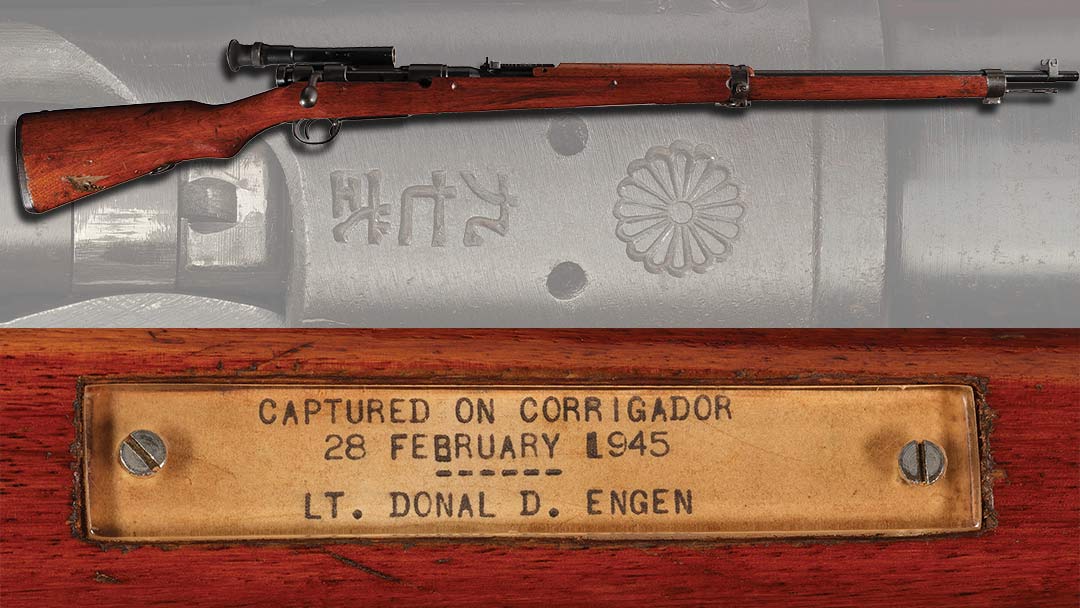
War trophies are as old as war itself, and documented captured firearms are some of the most sought after WW2 artifacts in the collecting field. The example below, a Japanese Nagoya Arsenal Type 97 sniper rifle, includes a plaque on the bottom of the forend that reads “CAPTURED ON CORRIGADOR/28 FEBRUARY 1945/LT. DONAL D. ENGEN”.
Donal D. Engen was an American commander aboard the B-24 Bomber “Deanna’s Dreamboat” starting in January of 1945. The Battle for the Recapture of Corregidor, where Lt. Donal D. Engen captured this exceptional Japanese rifle, occurred between February 16 and February 26 of 1945.
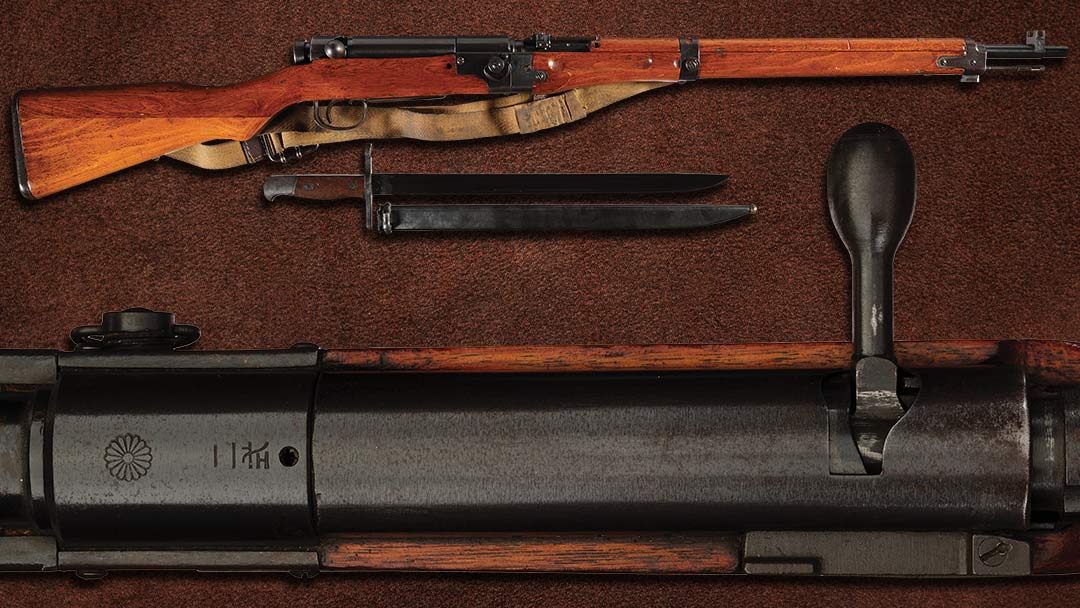
Our next example, a Nagoya Type 2 Paratrooper rifle, was captured days before Japan officially surrendered. An included document signed by the consignor states, “My brother gave this Arisaka Type 2 Paratrooper rifle S/N 6754 to me in 1946 when the LST-1083 [Landing Ship, Tank] came back to the U.S. at the end of World War 2. He was an officer on the 1083, part of TF31 and the first LST to drop anchor in Japanese water on 27 Aug 1945 after the atom bomb was dropped. At 0930, 30 Aug 1945 the second LST by mere minutes to be beached at Yokosuka Navy base home of the Japanese Marine Paratrooper ‘Rikusentai’ Special Naval Landing Force with the US Marines of the 1st and 3rd Battalions of the 4th Marine division. That is where he captured the rifle.”
WW2 Issued Pistols
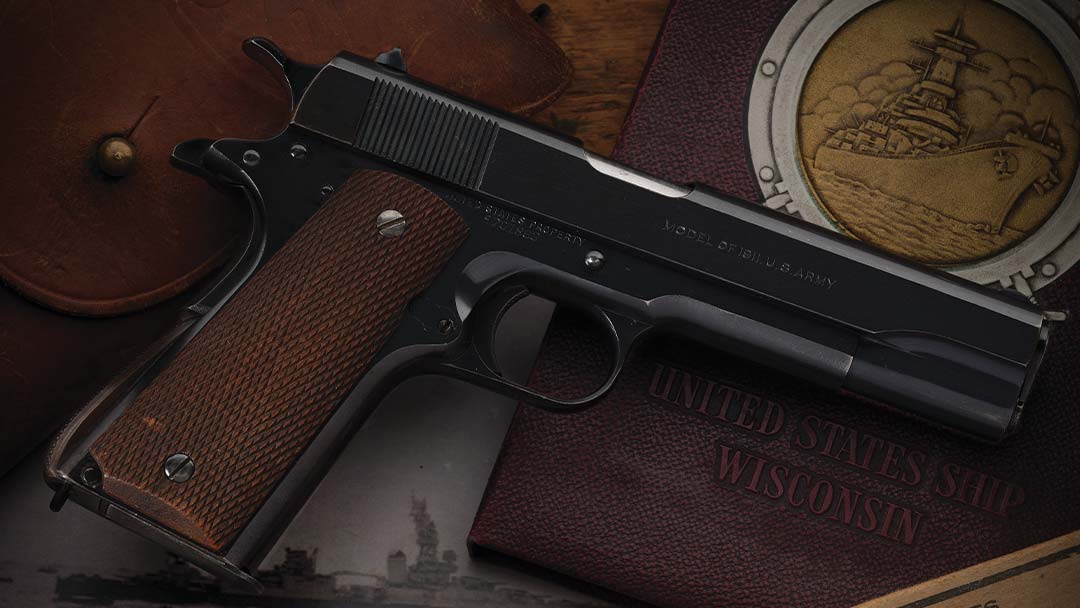
A wide range of sidearms were manufactured during WW2, with pistols carried by soldiers, police officers, and political leaders among the most collectible. The U.S. Colt “Transitional” Model 1911/1911A1 highlighted below includes a fascinating history to go along with its rarity.
Author Charles W. Pate lists this pistol by serial number as sold by the Benicia Arsenal in California to Robert H. Solier on January 19, 1939. Lt. Comdr. Solier was on the commander’s staff of the Western Task Force during the D-Day landings, earning a Bronze Star and the French Croix de Guerre. In August 1944, Lt. Comdr. Solier was transferred to the USS Wisconsin where he served as Gunnery Officer for the remainder of the war.
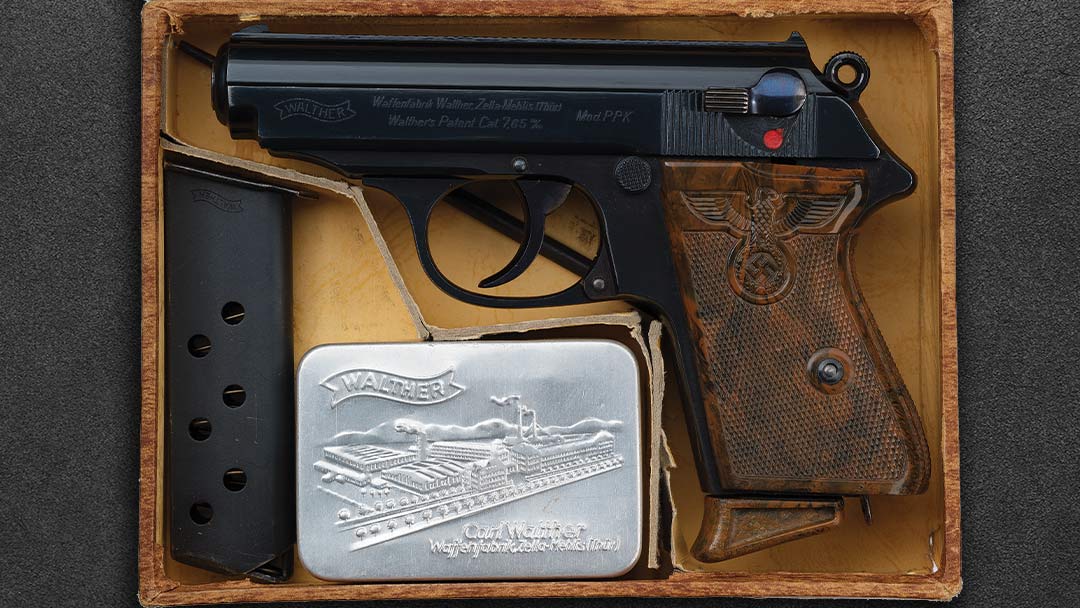
Our next example, a Walther Model PPK “Party Leader” pistol manufactured in 1939, is one of the most coveted WW2 artifacts in its genre thanks to the platform’s official status as the “Honor Weapon of the Political Leaders” for the Nazi party. The one-piece wraparound “Party Leader” grip displays at the top on both sides a large eagle clutching a swastika encircled by a wreath.
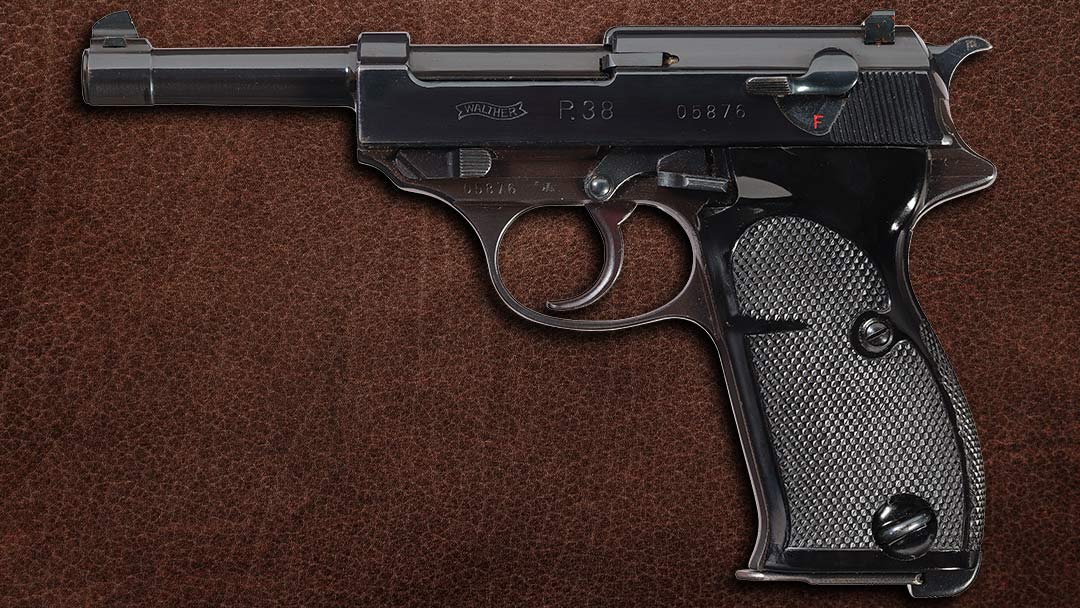
The Walther P38, among the first successful semi-automatic pistol models to use a double action/single action trigger, was introduced in 1939 with the Walther “concealed extractor” Zero Series of test pistols for the German Army. The example below is a “third issue” in the Zero Series and features a round profile firing pin as opposed to the rectangular profile firing pin found in the previous iterations and represents a fine opportunity for collectors of WW2 artifacts to own one of the earliest Walther P38 pistols.
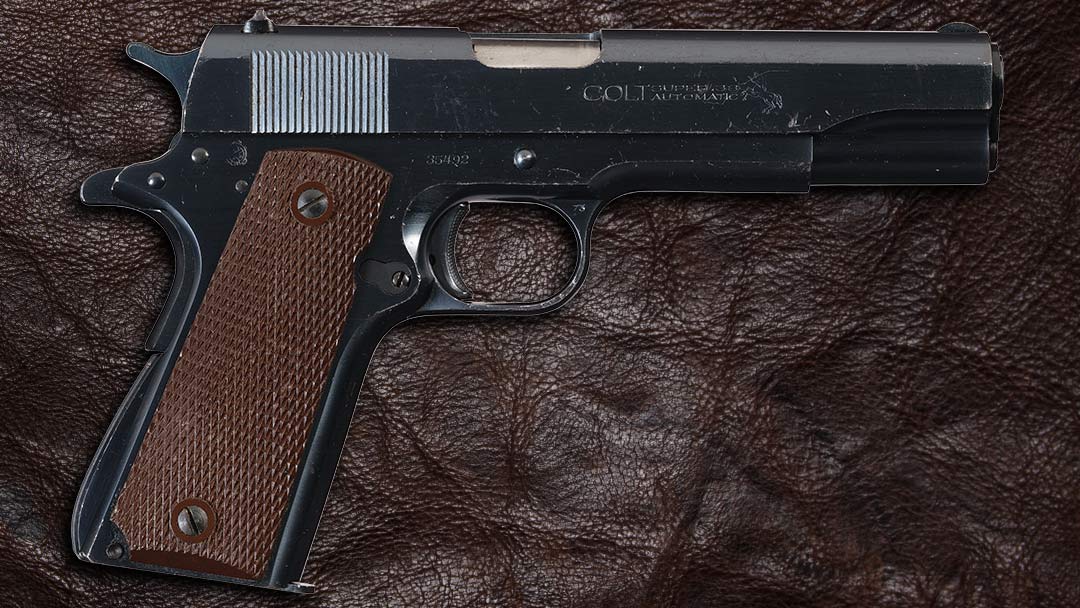
Our next pistol, a U.S. inspected Colt Super .38, was part of a 376 gun shipment to the warehouse and property officer at the Fowler building in Rosslyn, Virginia on 20 July 1945. The facility was a known warehouse for Office of Strategic Services (O.S.S.) equipment. The left side of the pistol frame exhibits a “G.H.D.” inspection mark while the right features a crossed-cannons ordnance marking.
Guns of the Airmen
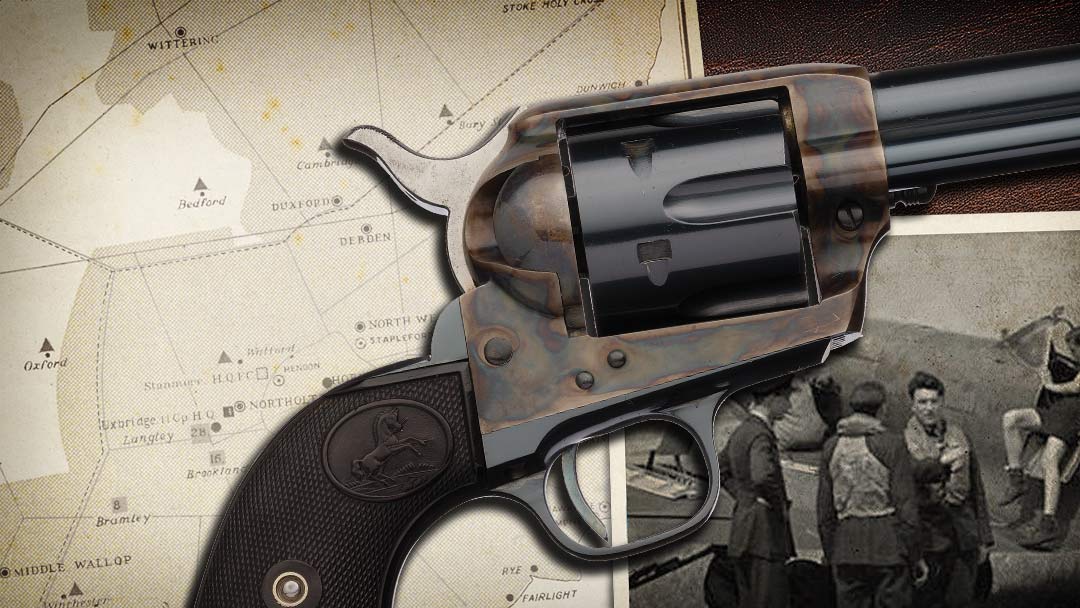
For collectors of WW2 artifacts, handguns carried into combat hold immense prestige. The revolver below was part of an order for 163 Colt Single Action Armies by the British Purchasing Commission that was shipped from Colt on June 18, 1940. The revolvers were ordered by the British as an emergency replacement for small arms lost by the British Expeditionary Force during the evacuation from Dunkirk in May 1940. The “Battle of Britain” revolvers were the last Colt SAAs ordered under a military contract.
Only 500 Singer M1911A1 pistols were ever manufactured, with few retaining both the condition or the immense provenance of “The Invictus Singer.” The personal sidearm of Lt. Col. Thomas R. Moss, WW2 bomber pilot and recipient of the Distinguished Flying Cross, Moss carried the Singer M1911A1 pistol on every one of his 35 missions over war-torn Europe in the B-24 Liberator nicknamed “Invictus” by her crew.
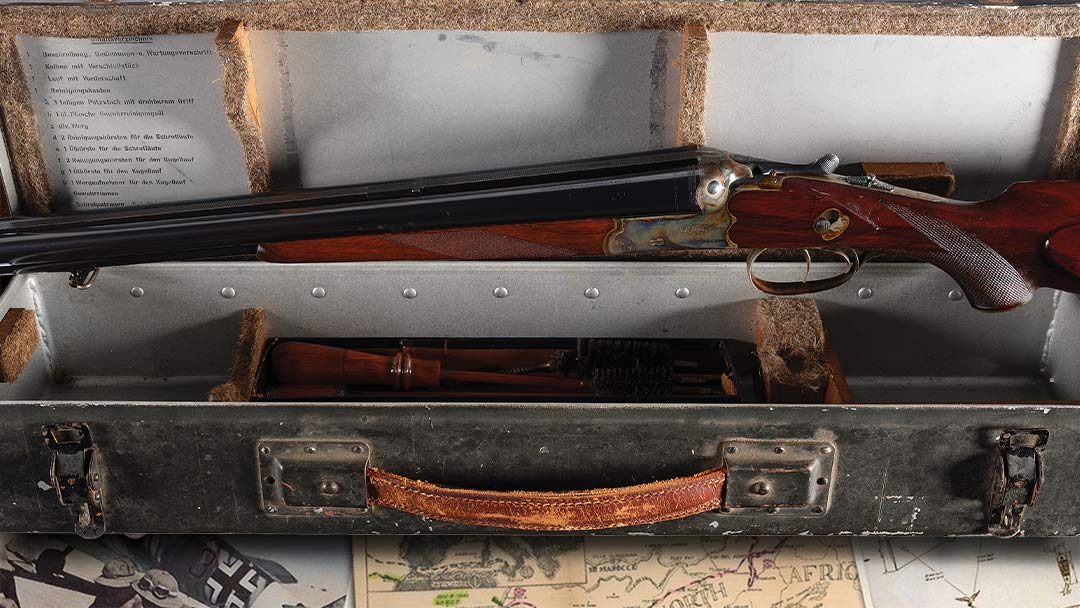
The German Luftwaffe equipped their pilots with luxurious firearms, including the Merkel O/U shotgun and the M30 drilling. The latter was issued to elite German pilots operating in North Africa between 1942 and 1943. In addition to serving as a survival weapon, Luftwaffe General Adolf Josef Ferdinand Gallan stated that the M30 drilling was also used by fighter pilots for trap shooting exercises intended to sharpen the eyes and reflexes. Today, the M30 drilling is one of the rarest WW2 artifacts in the field, particularly examples that include an original Luftwaffe storage case and accessories.
WW2 Flight Jackets
The A-2 flight jacket, introduced as standard issue for U.S. Army flyers in 1931, has become one of the most sought-after WW2 artifacts. They were often customized and decorated with everything from the names and images of girlfriends, their plane, unit insignias, references to their home states, or other creative identifiers. Two of the three WW2 flight jackets pictured below feature blood chits intended to identify their wearer and help them obtain local assistance and safe passage if their planes have been downed.
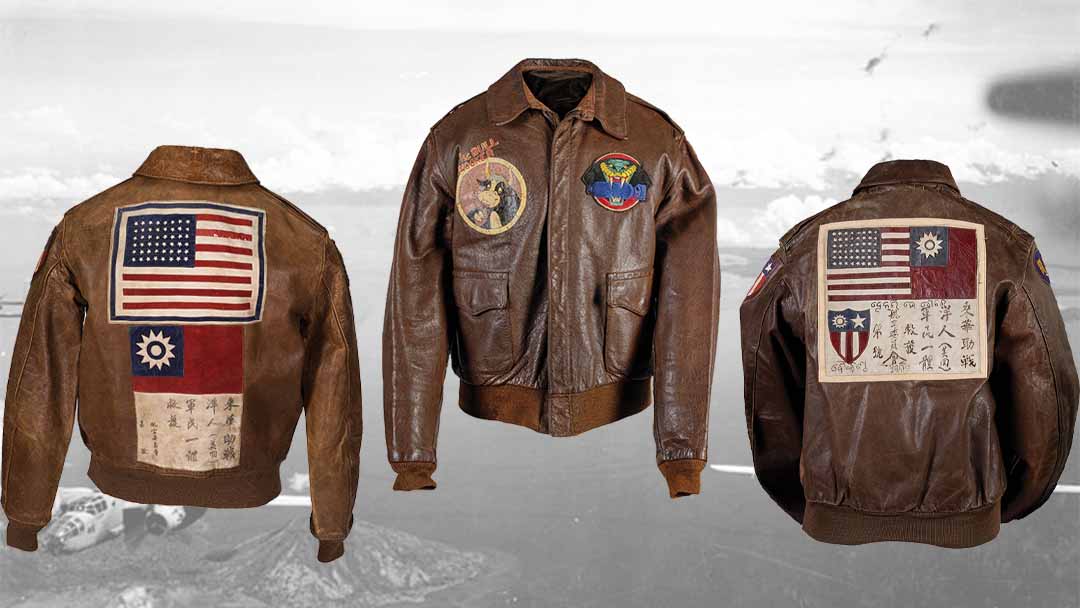
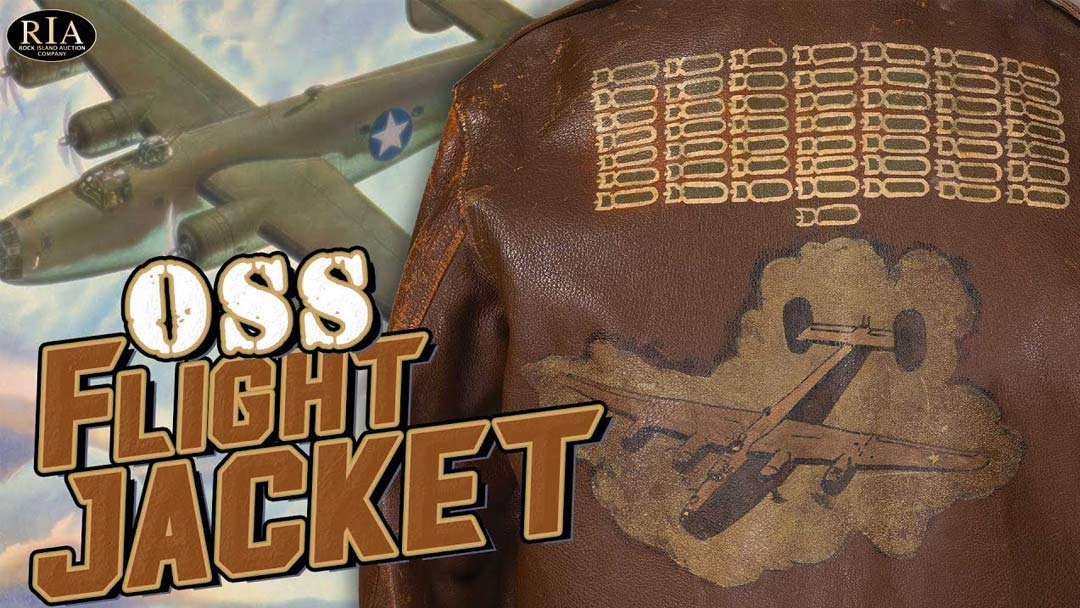
The flight jacket below, owned by SSGT Clarence E. Craver, is pictured and identified on page 274 of ‘American Flight Jackets.’ The publication states that Craver was “a radio gunner who took part in “Operation Carpet Bagger.” He flew combat missions into France, Denmark, Italy, and Yugoslavia from July 30, 1944, to April 24, 1945. He was assigned to the 15th Provisional Special Group, 859th Bomber Squadron. Originally, he was assigned to the 492nd Bomber Group then to the 15th Provisional Group, and later to the 261st Special Group. Craver and his unit were top secret.”
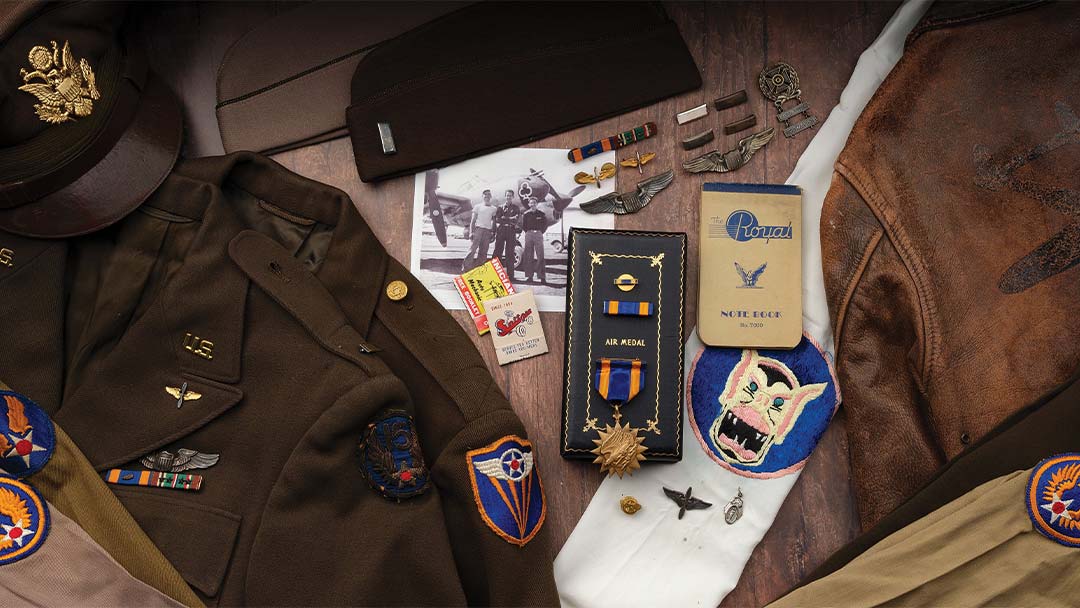
A painted A-2 flight jacket belonging to Lockheed P-38 Lightning pilot Joseph Scherer of the 97th Fighter Squadron, 82nd Fighter Group, is one of numerous WW2 artifacts comprising in the grouping below. Other items include an Italian made white silk scarf embroidered with the 97th FS emblem, the devil cat, a photograph of Scherer taken in front of his P-38, a dress uniform jacket featuring USAAF officer lapel insignia, a pilot wing badge, two ribbon bars, and a bullion 15th AF patch.
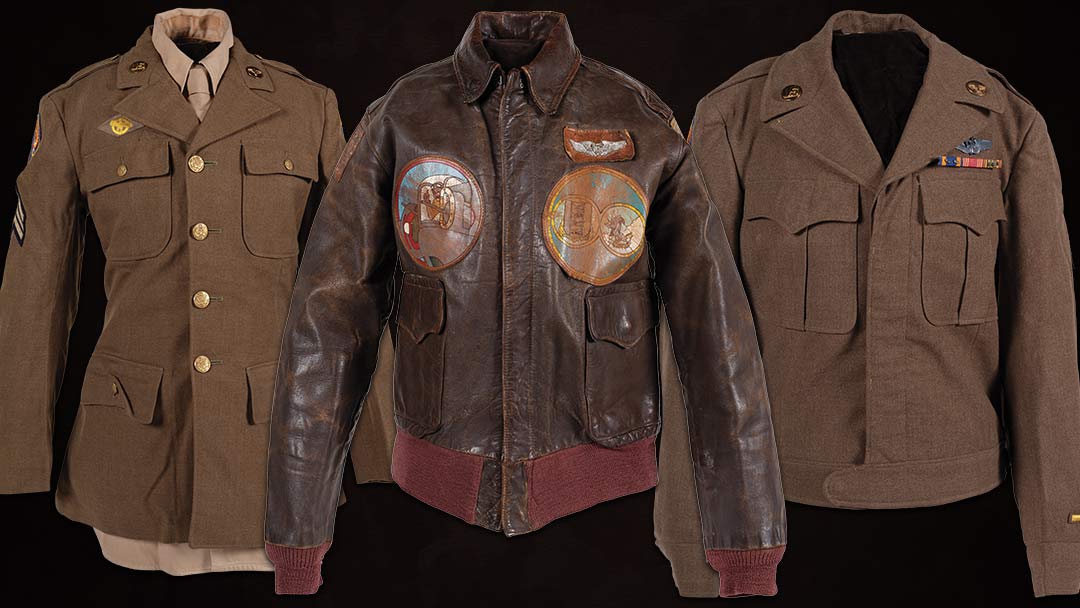
Another fantastic USAAF grouping from WW2 offered this August includes a painted A-2 flight jacket, two uniform jackets, and other personal effects of Sergeant Phillip L. Fritz, who was assigned to the 827th Bomb Squadron, 484th Bombardment Group, 15th Air Force. The flight jacket features Fritz’s leather name tag and numerous painted patches and images, including a painted B-24 with 484th BG markings flying above eight flak bursts. Six of the flak bursts expose the names of European countries: Italy, Germany, Austria, Yugoslavia, Czechoslovakia, and Hungary.
WW2 Flags
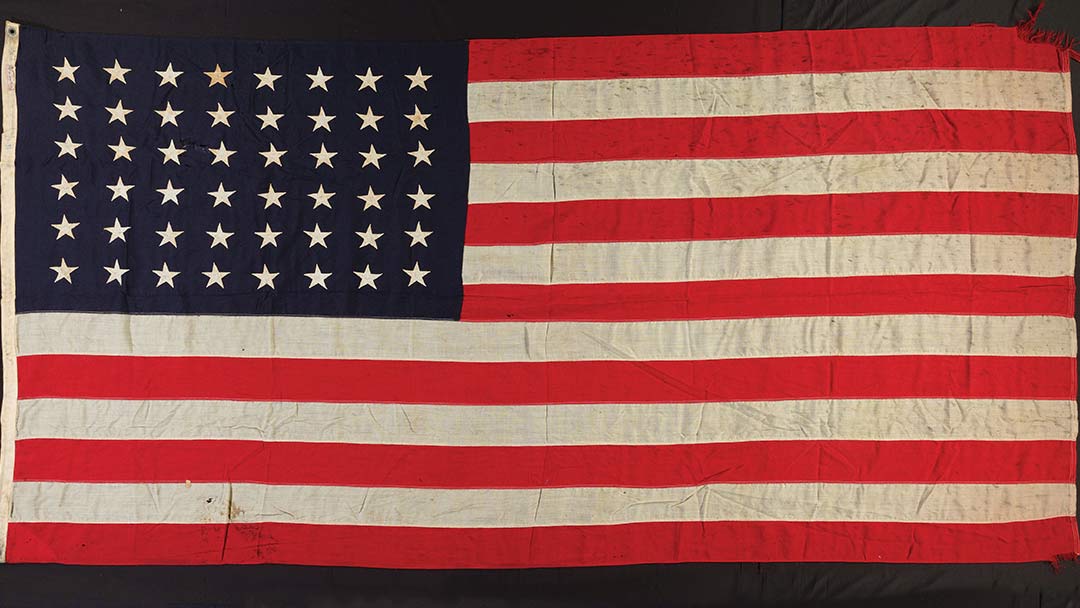
Flags from the conflict are another sought after genre of WW2 artifacts. The example below is a massive U.S. 48-star ensign that was flown from U.S. Navy cruiser USS Tuscaloosa during its service. The Tuscaloosa took part in Operation Torch in 1942 and was part of Task Force 125 during the D-Day invasion in 1944.
In February 1945, Tuscaloosa was part of the bombardment group supporting the invasion of Iwo Jima and was on station for the entire campaign, taking only six days to refit and resupply for the Okinawa campaign. The Tuscaloosa supported nearly the entire Okinawa campaign with target fire from her main guns while also dealing with heavy attacks by Japanese kamikaze aircraft, managing to come out unscathed.
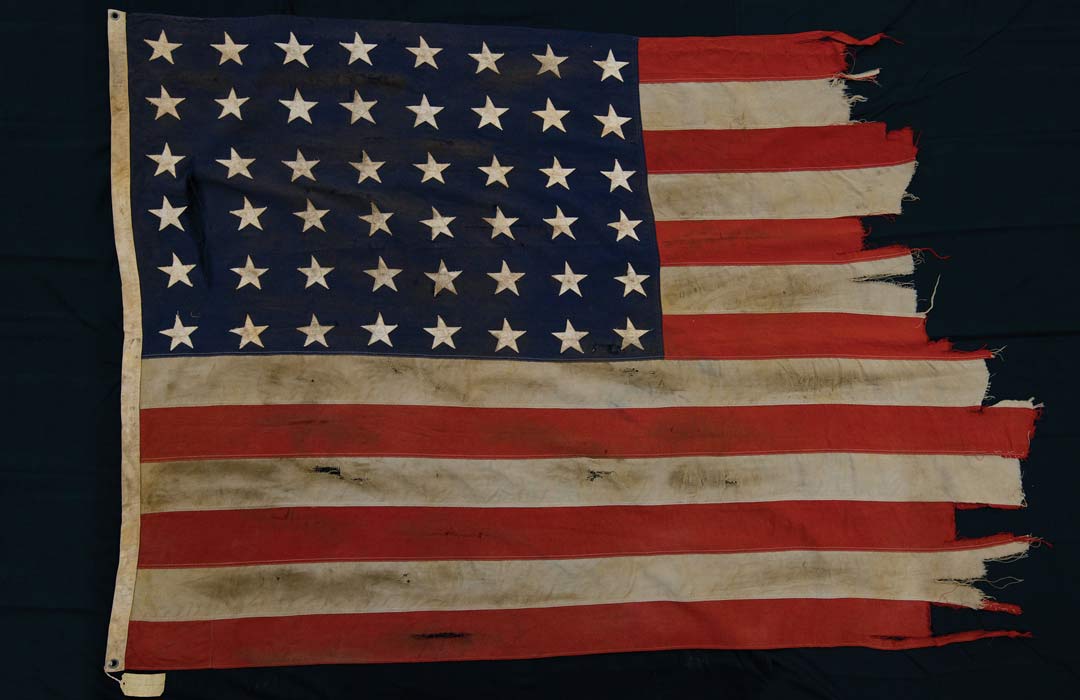
The flag offered below was recovered from the city of Heilbronn, the site of a battle that raged from April 4th to April 12th in 1945, as the U.S. 100th Infantry Division engaged the remnants of the 17th SS Panzergrenadier Division. Measuring 55 inches by 71 inches, the 48-star flag shows heavy wear, with several inches lost off the fly, splitting of the stripes, and tears near the hoist, suggestive of a flag that saw extremely harsh field use and may have been abandoned as the front advanced.
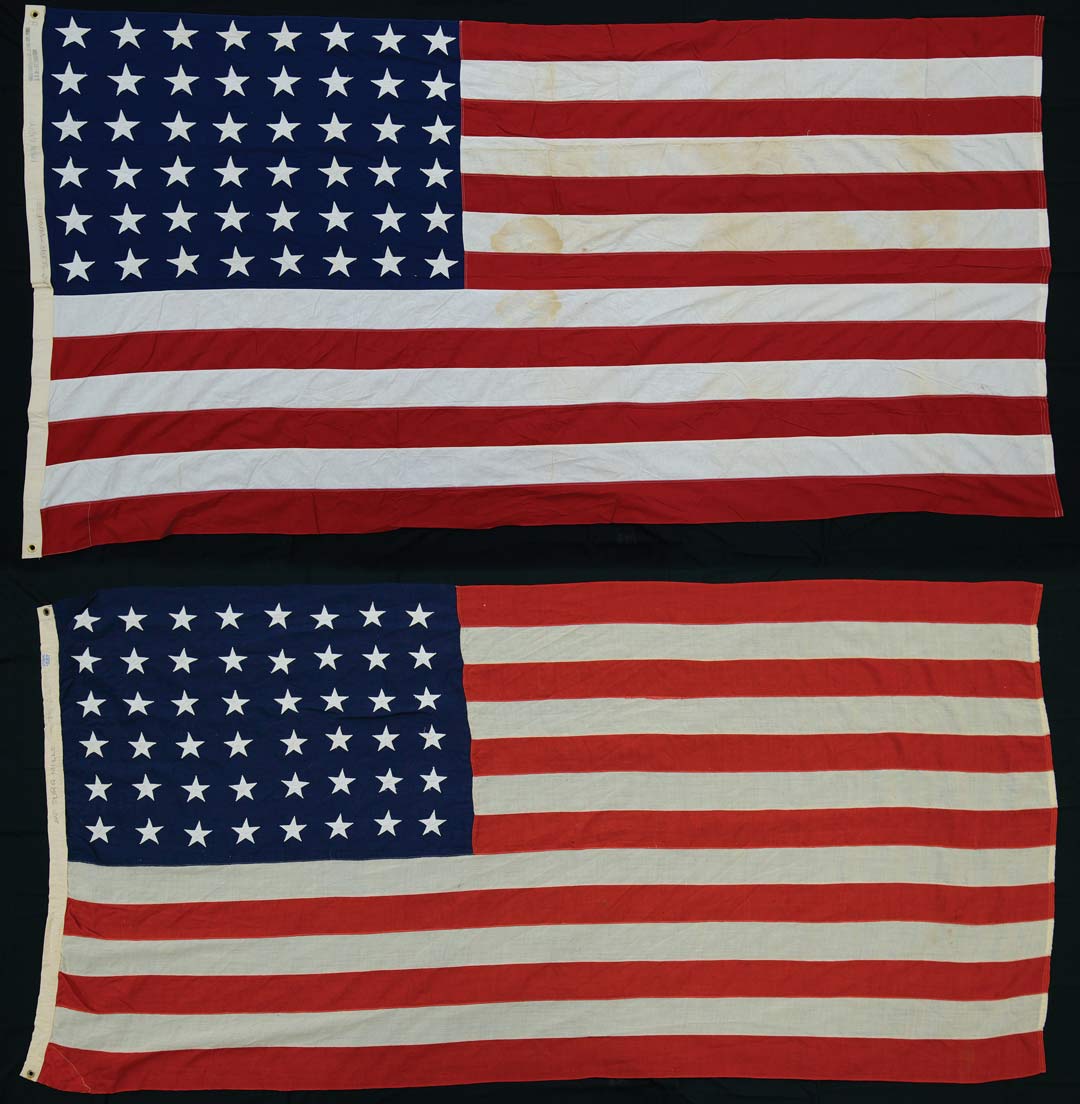
Our next pair of WW2 artifacts, two flags originally part of the inventory of the Cannon-class destroyer USS Levy (DE-162), saw their share of history in the South Pacific. The Levy participated in bombardment in the Marshall Islands in 1944. In August of 1945, Captain H.D. Grow of the Levy personally negotiated the Japanese surrender of Mili Atoll. On September 4th, the Levy transported USMC Brigadier General Sanderson to successfully negotiate the surrender of Wake Island.
WW2 Patches and Memorabilia
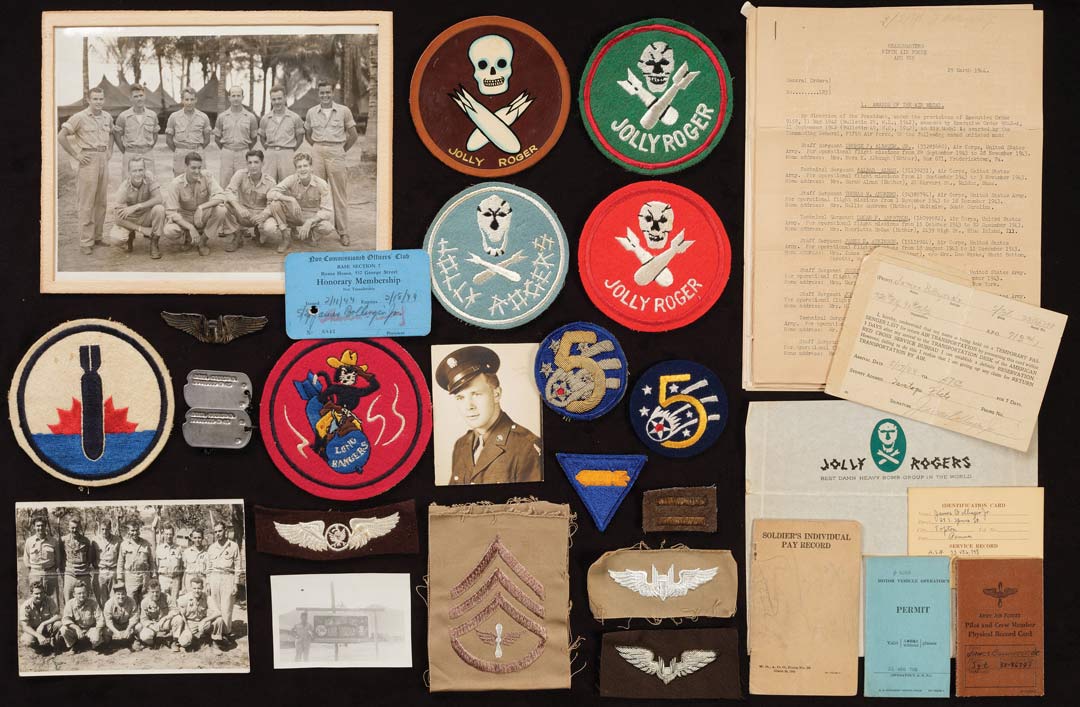
Our next series of examples highlights a range of collectible WW2 patches and memorabilia. Below’s grouping includes numerous U.S. bomber crew patches, dog tags, aviator wings, military documents, and other items linked to Corporal George Dean of the 424th Bomb Squadron, 307th Bomb Group and Sergeant James Bollinger of the 90th Bomb Group.
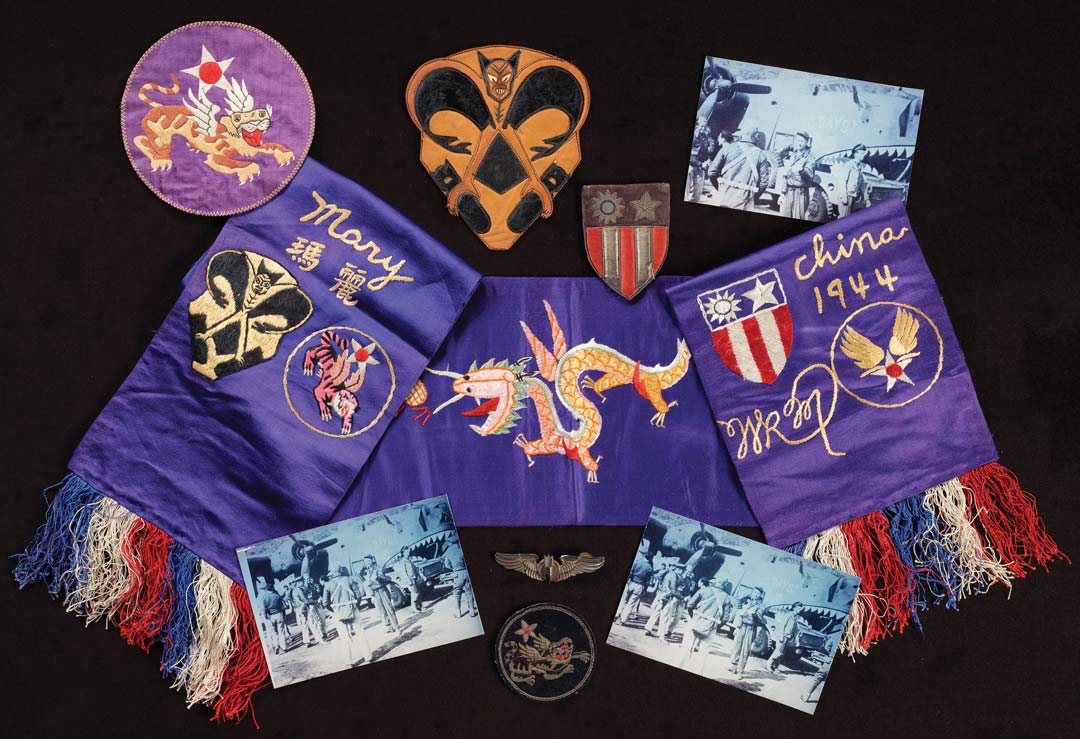
Another grouping of fascinating bomber memorabilia, the items below are tied to the 374th Bomb Squadron, who deployed to China in 1943 and performed actions against Japanese ground and water assets. Among the WW2 artifacts included with the lot are two “flying tiger” patches, one China-Burma-India patch, an Amico-brand sterling silver bomber wings, a patch for the 374th Bomb Squadron, and a silk drape/banner with the 374th BS and Flying Tiger motifs, U.S. Army Air Force and CBI emblems, and an embroidered dragon.
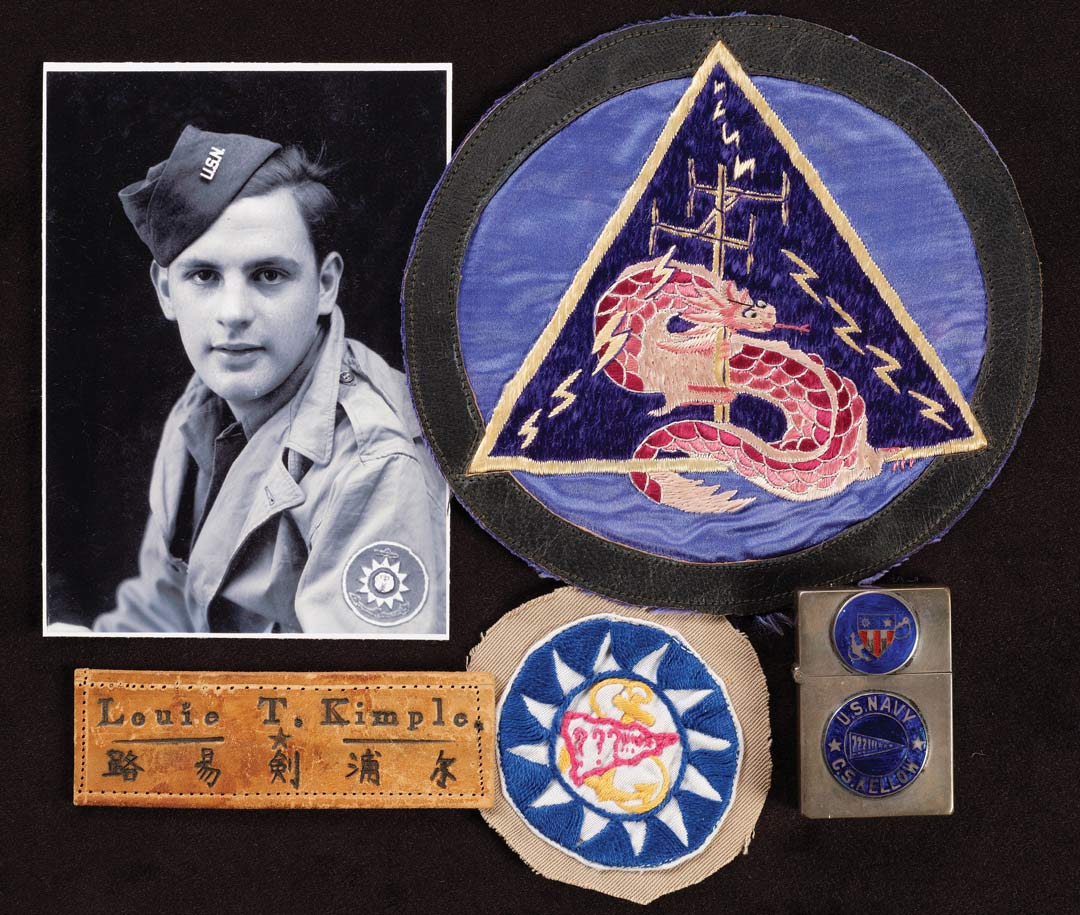
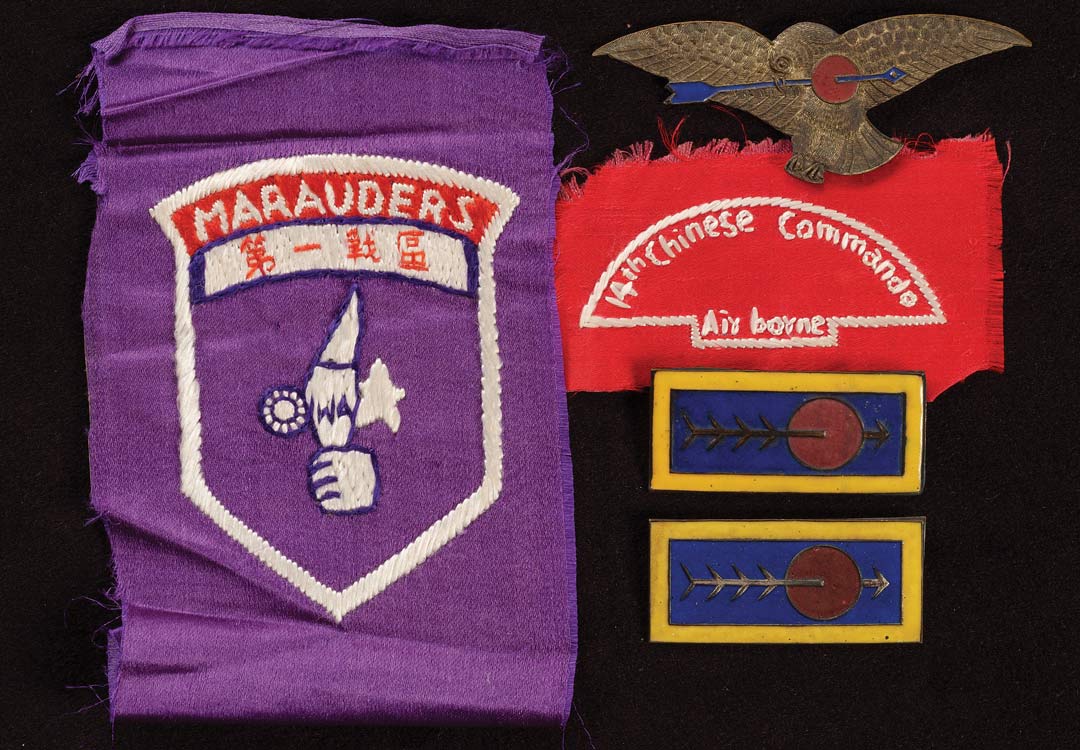
WW2 artifacts from the China-Burma-India Theater are collecting rarities, and our next grouping offers items related to SACO, the Sino-American Cooperation Organization. Established in 1943, SACO served as a joint Nationalist/American operation headed up in tandem by the chief of Chiang Kai-Shek’s secret police and the commander of the U.S. Navy’s intelligence outfit in China. The organization coordinated intelligence gathering as well as training Chinese guerrilla forces operating in Japanese occupied territory.
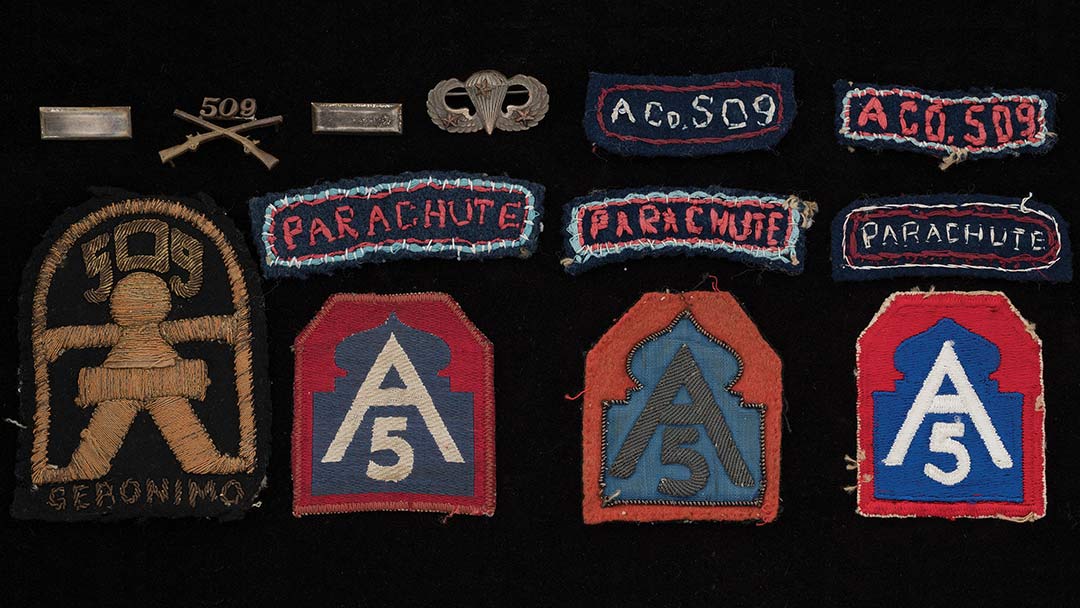
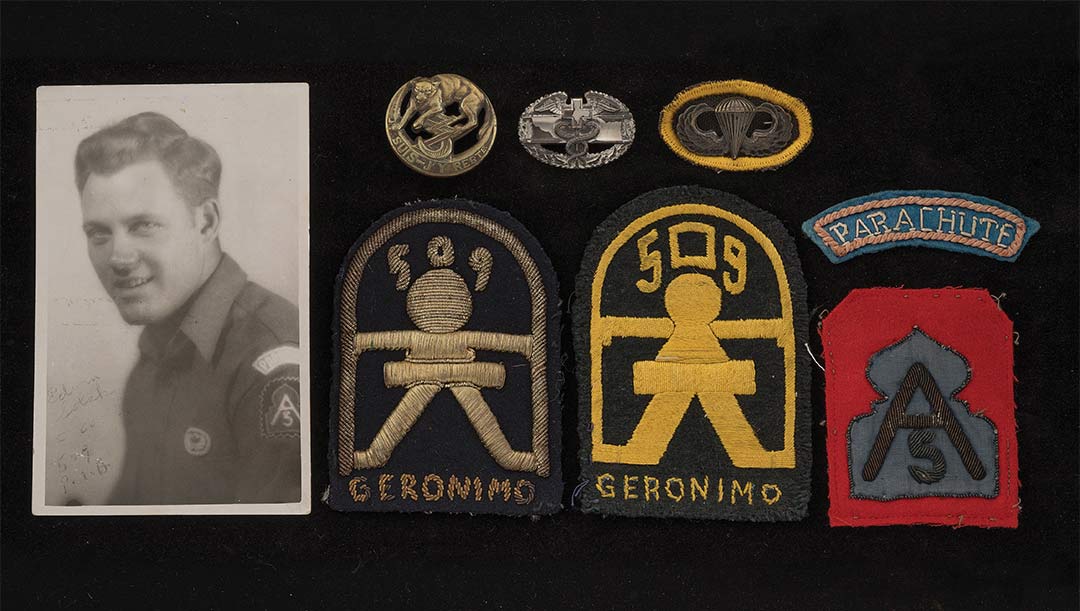
Established in 1941, the 509th Parachute Infantry Battalion would gain the distinction of being the first American paratrooper unit to perform a live combat jump, dropping into North Africa as part of the joint U.S./British opening of Operation Torch. Later, the 509th would deploy for the invasions of Italy and Southern France, and the unit saw combat in Sadzot, Belgium during the Battle of the Bulge.
The grouping below includes eight WW2 artifacts attributed as the wartime property of a Private Edwin Solak, a Combat Medic who served with Company C and the Headquarters Company of the 509th. The grouping features a vintage picture postcard of Solak in uniform displaying the parachute tab and Fifth Army patch on his shoulder that are part of the lot. Also included is a nickel plated Combat Medic badge, a silver-finished set of jump wings, a brass badge for the French 3rd Zouave Regiment, and two versions of the unofficial but authorized “Man in the Door”/”Gingerbread Man” insignia of the 509th.
The Depth of WW2 Collecting
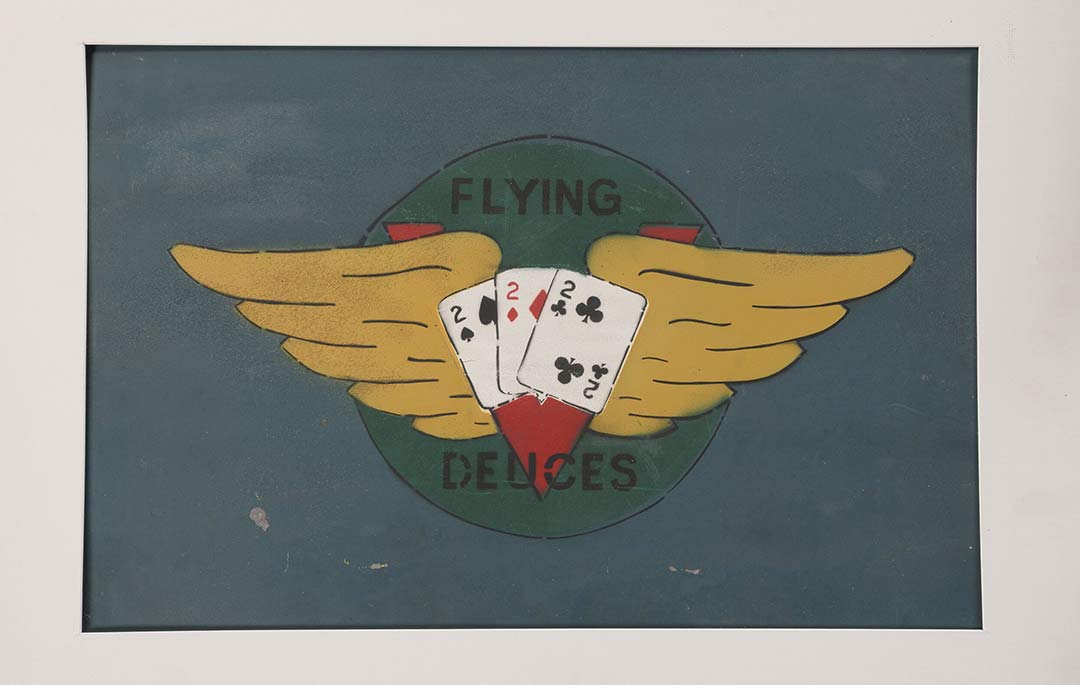
Valuable and historic WW2 artifacts are found in all shapes and sizes, including painted metal artwork obtained from the aircrafts themselves. The example below is a 27 1/2 inch by 19 inch sheet of blue painted aluminum that depicts the original insignia of Marine Fighter Squadron VMF-222, the “Flying Deuces.” The squadron saw extensive action across the Pacific, including the Philippines campaign and the Battle of Okinawa.
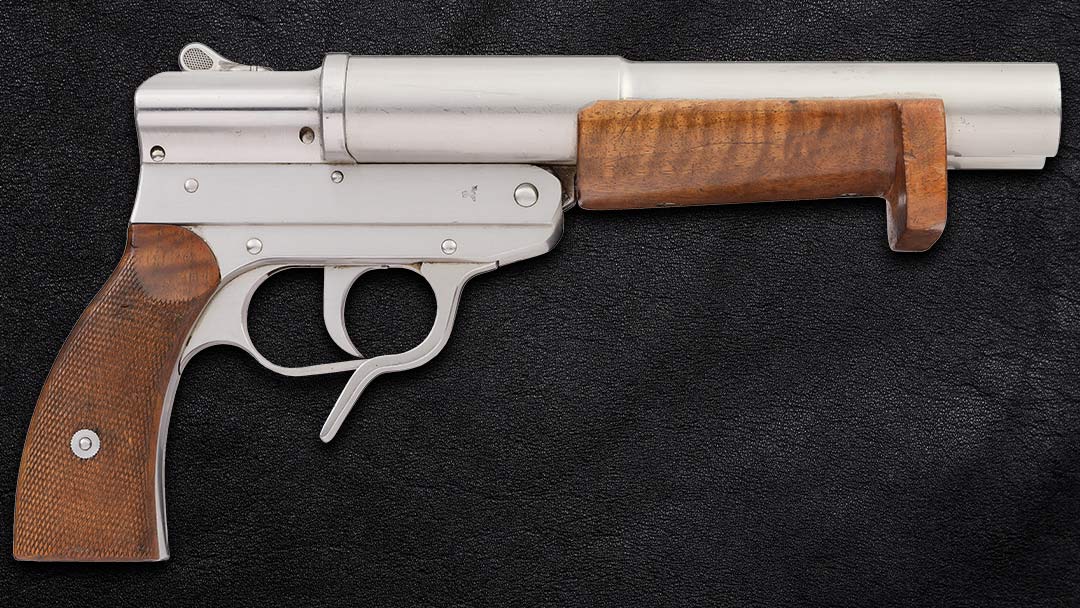
Rare items like the stainless steel Walther Kreigsmarine contract Germany Navy double barrel flare pistol also illustrate the depth found within the WW2 collecting field. The flare pistol was adopted in 1936 by the German Navy and accepted 25mm flares used for signaling and illumination. Many of these fascinating flare guns went down with their ships in the North Sea, and finding surviving examples in high condition is a true rarity.
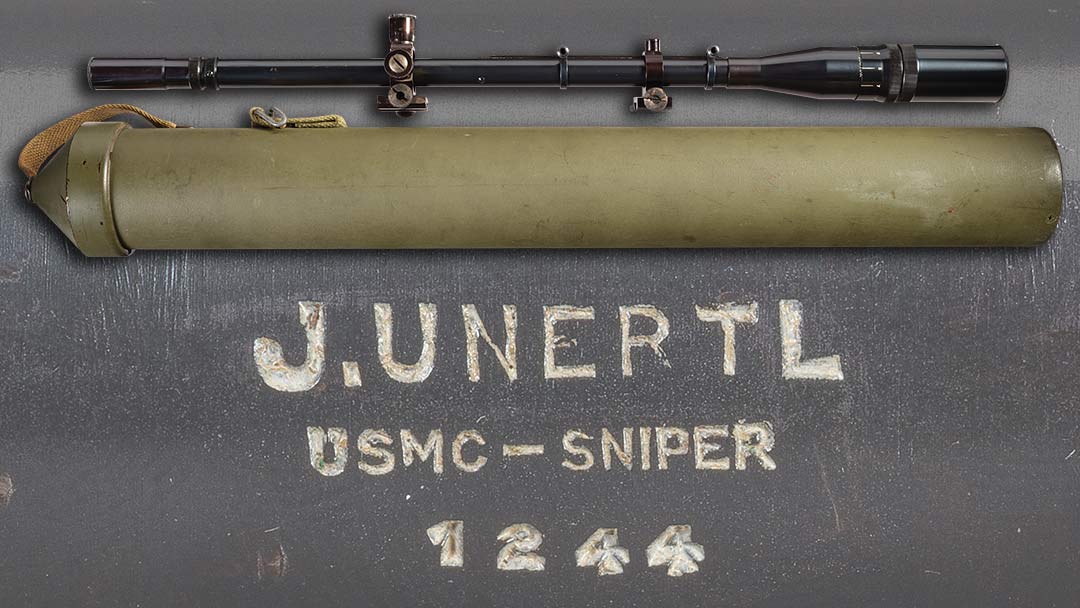
Sniper scopes are another collectible class of WW2 artifacts that appeal to any collector interested in the evolution of arms technology. The USMC Unertl 8 Power sniper scope featured below is one of the approximately 2,800 scopes developed and manufactured in 1940 for the U.S. Marine Corps to be installed on 1903 National Match rifles by USMC/Navy armorers. Many of the surviving scopes were kept in inventory after WW2 and saw re-issue as late as Vietnam.
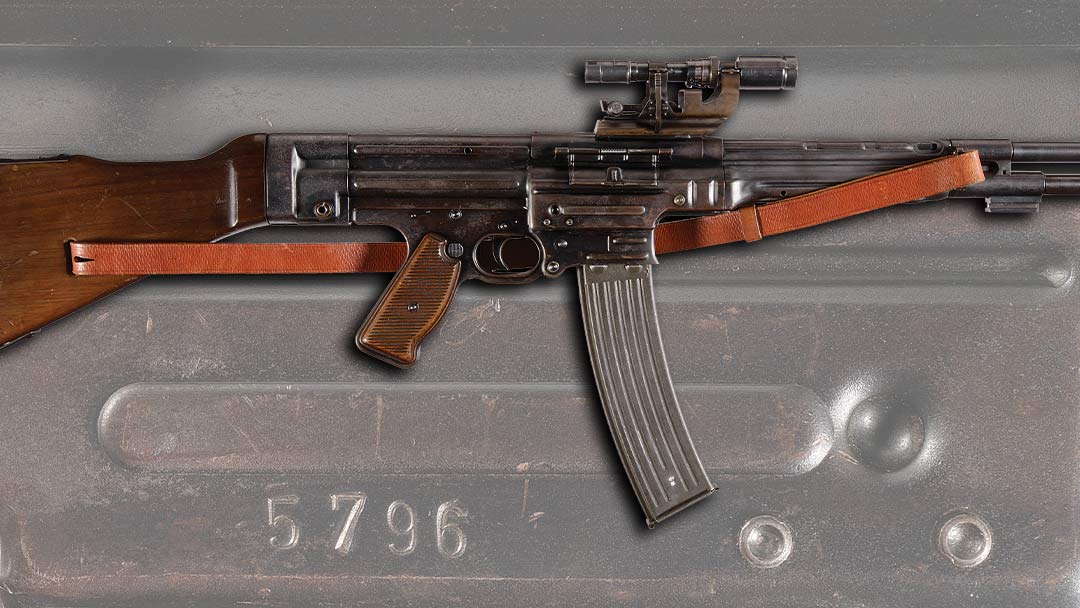
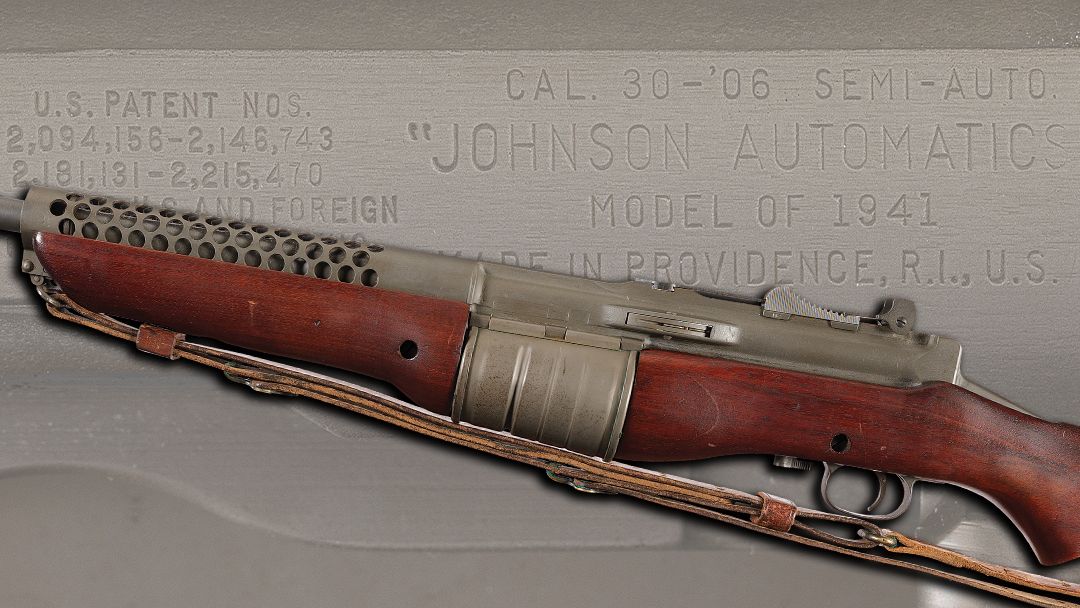
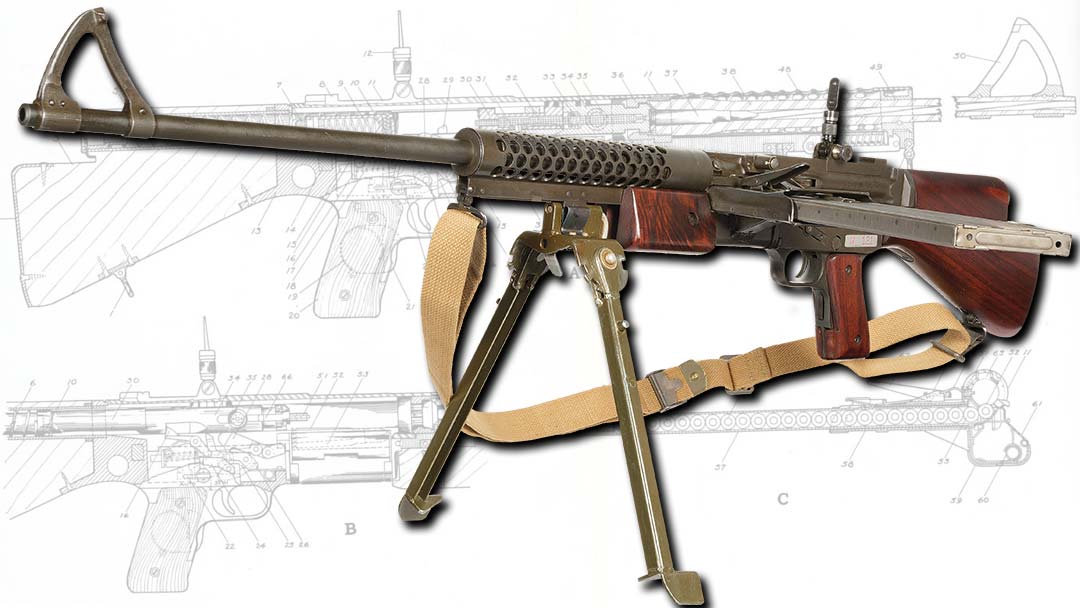
WW2 saw an explosion of arms innovation, particularly in the machine gun genre. The machine guns developed during the conflict complemented the offensive tactics and rapid mobility of the era, with lightweight, adaptable platforms like the Johnson LMG and FG42 designed to serve in numerous battlefield roles. For arms collectors, military historians, and any fan of hard-hitting heavy metal, WW2 machine guns represent one of the pinnacles of the field.
WW2 Artifacts for Sale
From pistols, rifles, and machine guns to flags, badges, jackets, and more, the extensive range of WW2 artifacts for sale at Rock Island Auction Company caters to every corner of the collecting field. For those interested in preserving the past and owning a part of this defining era, August’s 23 – 25 auction provides a rich and varied lineup of WW2 offerings.
Subscribe to the weekly Rock Island Auction newsletter to receive new gun blogs and gun videos that cover the most collectible WW2 artifacts and weaponry. From pieces on the the M1 Garand, the M1 Carbine, the Tommy gun, the MP40, and the PPSh-40 and 41, to unusual arms and curio like the Sedgley Fist Gun, the FP-45 Liberator, escape barter kits, aerial gunnery trainers, the Norden Bombsight, and more, we cover the Second World War in detail.