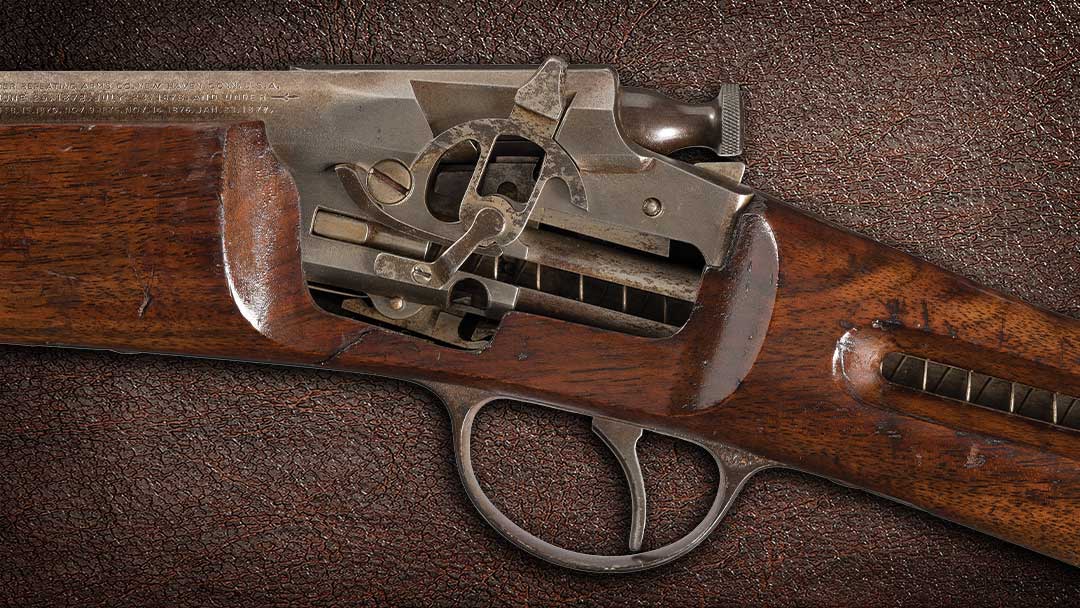
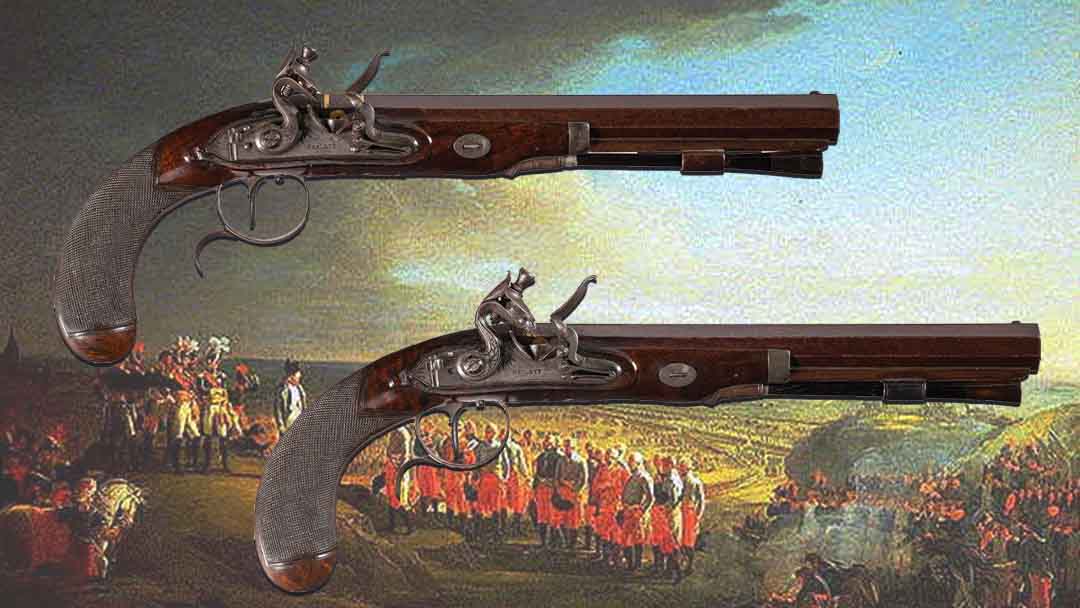
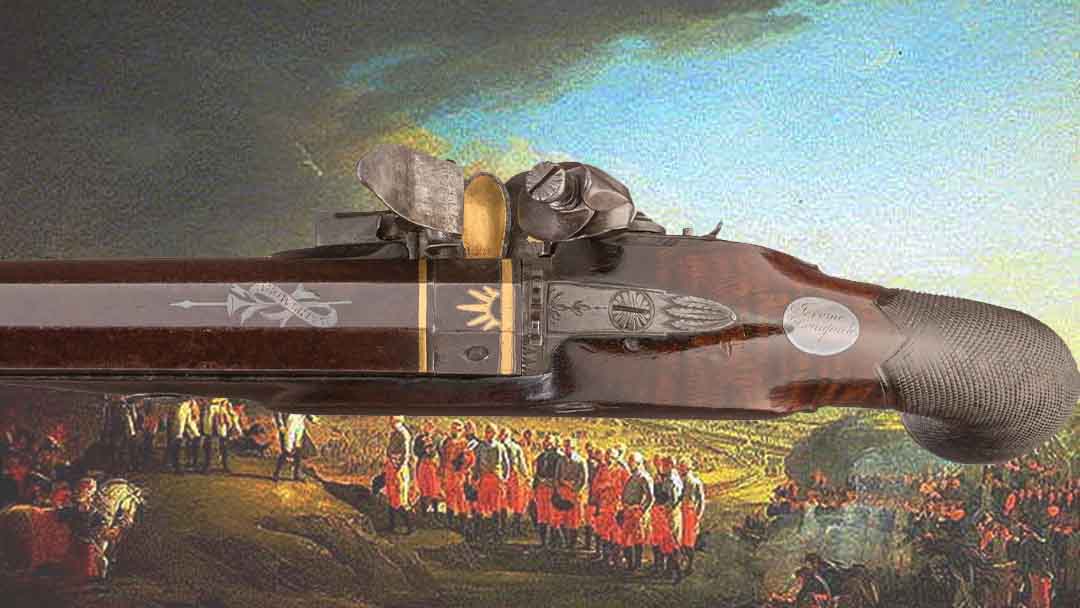
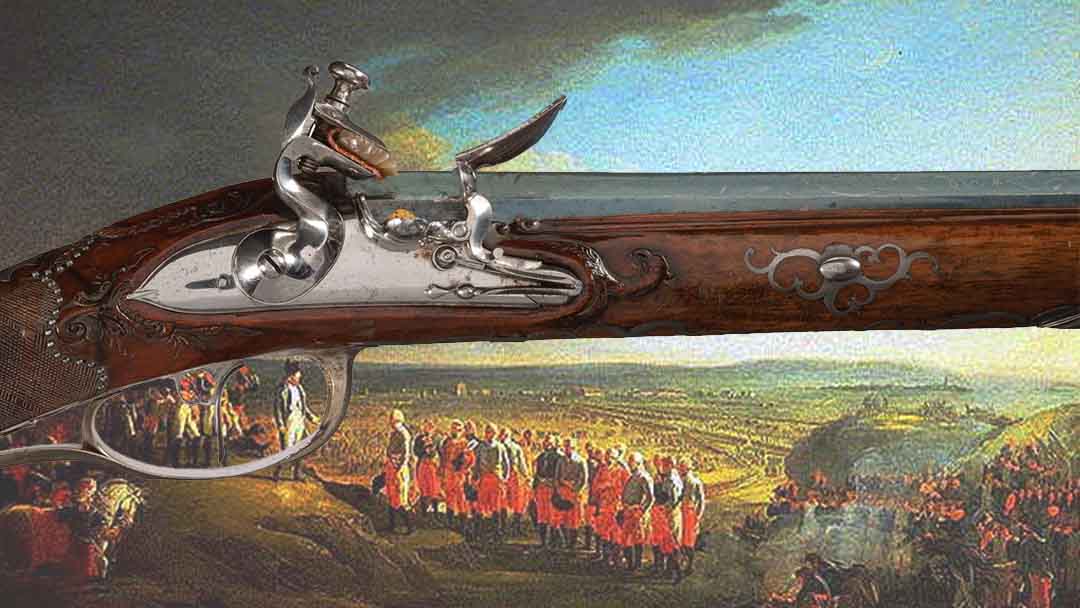
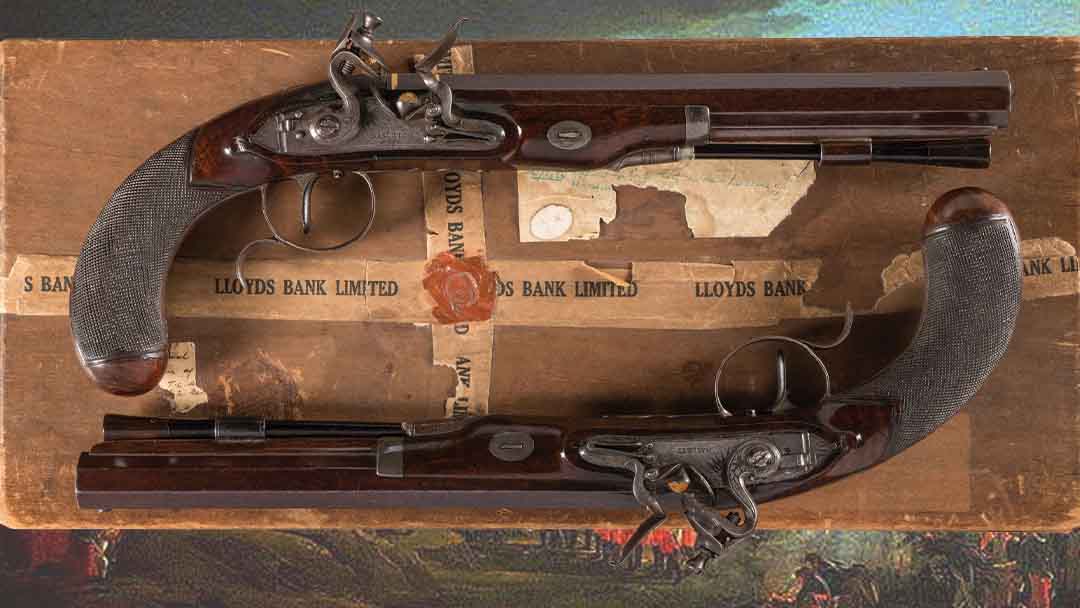
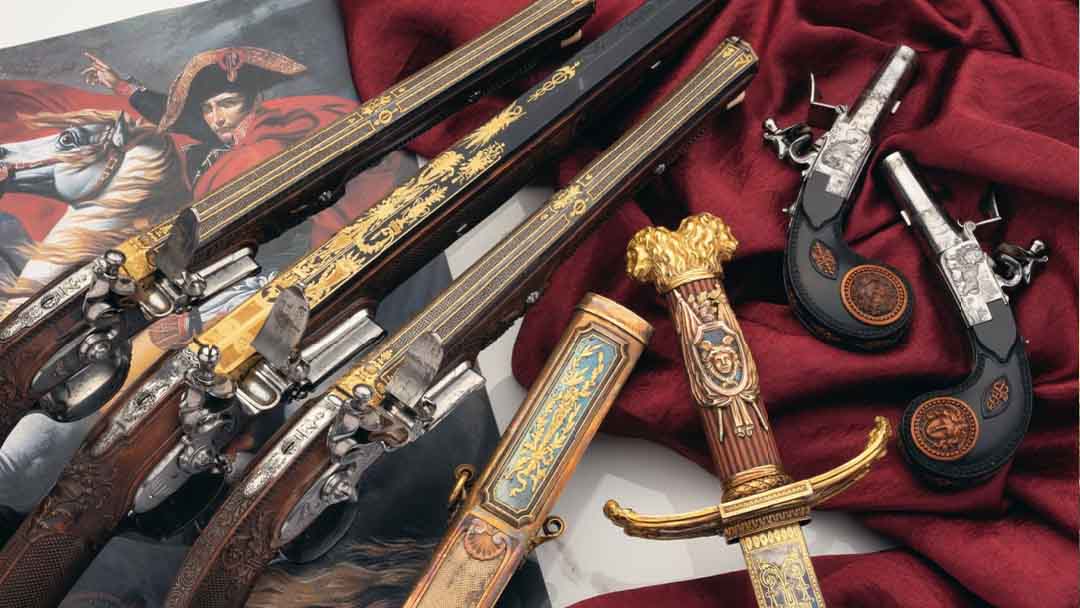
As the song goes, “everything’s better in Texas,” and Rock Island Auction Company is leaning into that notion this week as operations in our Bedford facility get into full swing, and – most importantly – we host our first Premier Auction this Friday through Sunday.
And what an auction it will be. Everything is bigger in Texas, too, and this will be the biggest firearms auction the Lone Star State has ever seen. We get to proudly show off our new facility that has been in the works for nearly two years, and share our Texas-sized hospitality.
Be among the first to visit our spacious new preview hall on Dec. 7 to explore and examine over 2,250 historic and high conditioned items from matchlocks to machine guns that will be available in the Dec. 8-10 Premier Auction. Let’s take a look at just a smidgeon of what will be on offer.
Phenomenal Firearms
What better way to launch an auction in Texas than by offering the historic Colt Single Action Army of the man who caused so much trouble along the border that the U.S. briefly invaded Mexico ahead of World War 1? Pancho Villa’s gold-plated and engraved sixgun would truly be the star of any auction but his SAA is an immense offering for the biggest firearms auction in Texas history.
The historic and high conditioned definitely meet in this inaugural Premier auction. The epic scope of the Civil War and the American West can be found in items from the Greg Lampe Collection, including guns offered in friendship from Theodore Roosevelt and his family to a long-time friend.
Smith & Wesson guns were Dave Ballantyne’s primary interest and offerings from his collection include amazing wheelguns, especially Registered Magnum revolvers. Only a handful of guns from the Mac McCroskie Collection are in the auction, but they are preeminent lever actions, from Thomas Stuart’s One of One Thousand to a factory engraved Henry Rifle, and a Volcanic Repeating Arms Company Navy lever action pistol.
Another amazing collection with pieces at auction is the Joe Marlin Hilliard Collection with exceptional Winchester rifles and a World War 2 bring-back Walther Model PPK, while the Norm Vegely Collection provides numerous opportunities for cased Colt revolvers.
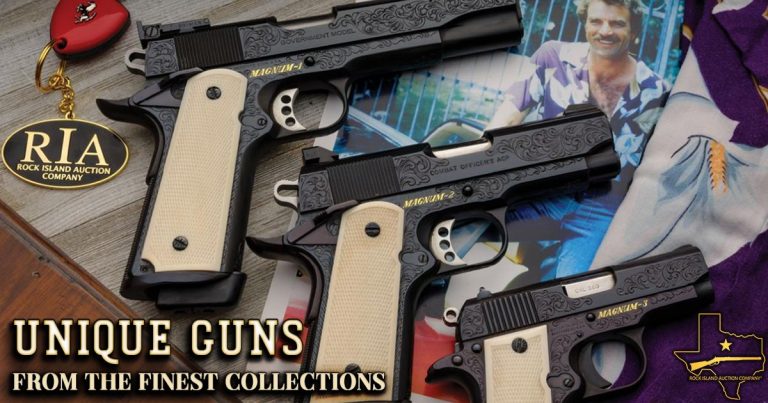
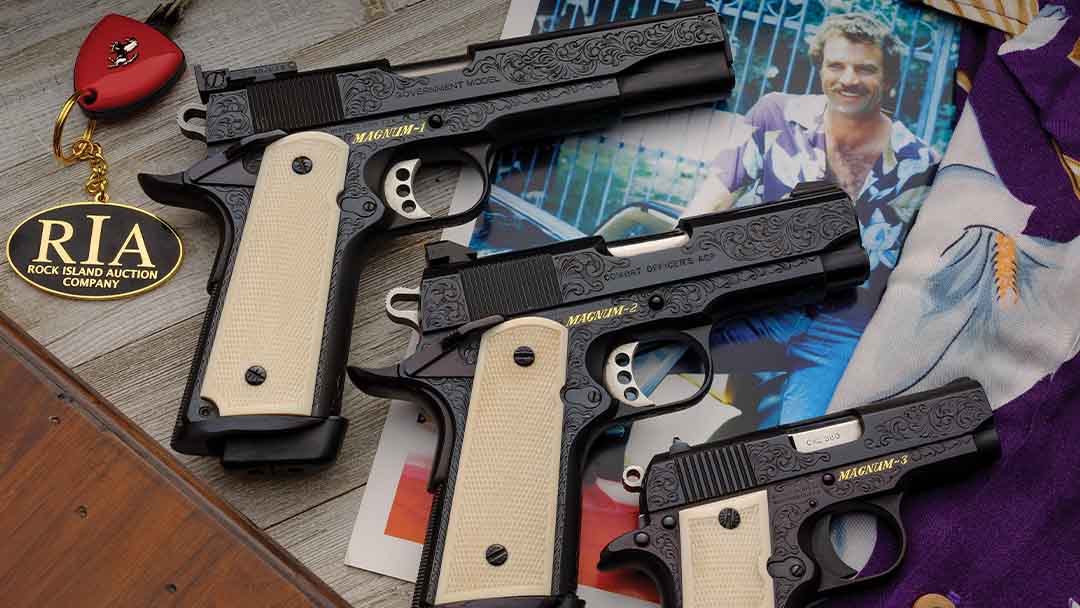
Several guns from actor Tom Selleck are available in this auction, ranging from Oscar winner Gary Cooper’s Griffin & Howe to stellar Marlin and Winchester rifles to fascinating pistols attributed to the FBI and Theodore Roosevelt. A set of Colt pistols commemorating Selleck’s Magnum, P.I., show are also available from his collection.
In additional offerings of heavy firepower, four Gatling guns are available in the auction as well as a single-barrel Gardner Gun with serial number 1, and a number of volley guns like a Nordenfelt 10-barrel gun will also be up for sale.
December is shaping up for a great month that will be remembered here at RIAC for years to come and the Dec. 8-10 Premier Auction is one of the reasons why. The auction catalog is jam-packed with fabulous revolvers and pistols, rifles and shotguns. Come out to Preview Day on Dec. 7 and stay for the auction. We hope to see you in Bedford!
Every year, I wax on and on about why the OC Tactical Christmas Stocking isn’t like other bloated “tactical” stockings. This year is no different.
Their stocking eschews the PALS webbing, drag handles, zippers, and D-rings found on many so-called “tactical stockings”. Instead, it offers a simple design made from a rare or historically significant (or both) camo material – often selecting materials we mere mortals couldn’t even dream of getting our hands on. These have become a Christmas tradition for my family.
This year’s stocking is a certified banger. Here’s what OC Tactical had to say:
Feliz Navidad! The 2023 run of custom Christmas Stocking is ready. This year we headed south and sourced some extremely rare Mexican Marine woodland camo fabric. Adopted in 2008 and replaced in 2015 this pattern was tightly controlled and never released for civilian use or reproduction. The inside is fully lined with Litelok fabric and there is loop on both sides for attaching a name tapes or patches.
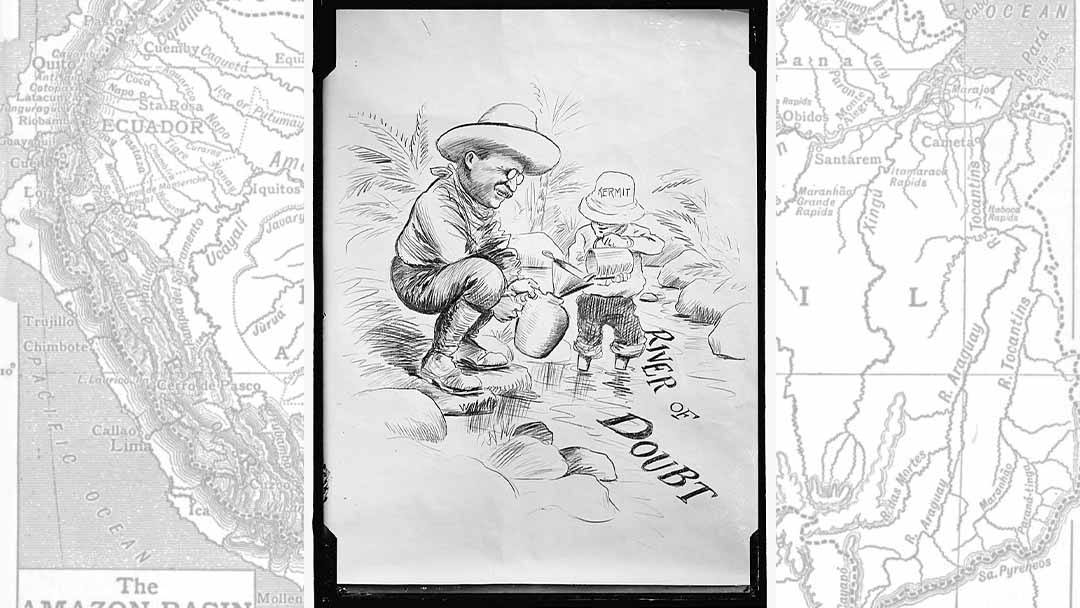
Following his stinging defeat in the 1912 election, President Theodore Roosevelt planned a trip to South America with a lecture tour and river expedition in the works.
On the trip he exchanged one river expedition meant as an enjoyable excursion for another that was far more dangerous. That trip, on the River of Doubt, veered into a fight to stay alive.
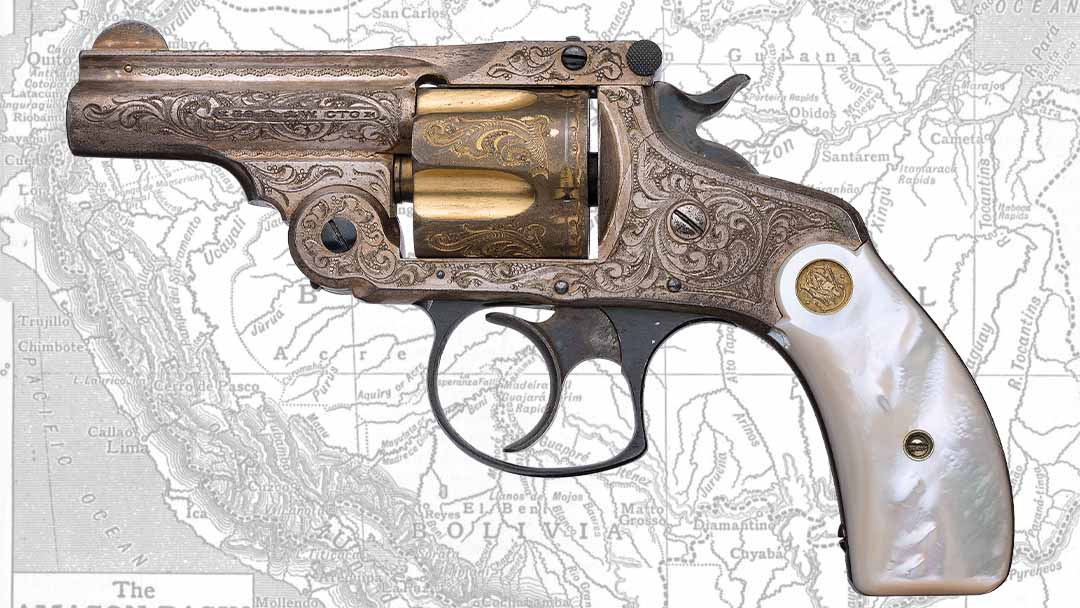
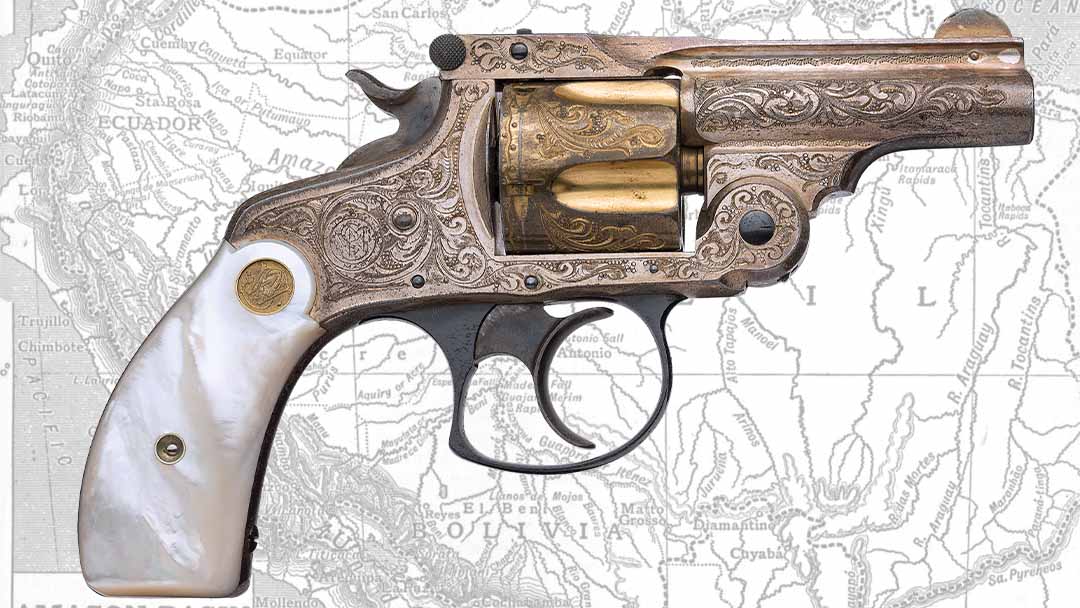
An engraved nickel and gold plated Smith & Wesson .38 Double Action 4th Model Bicycle revolver Roosevelt carried with him to South America and bestowed as a gift to an Argentine university president on his speaking tour is available in Rock Island Auction Company’s first-ever Premier Auction at its Bedford, Texas location Dec. 8-10. Engraving on the short-barreled gun was done by master engraver L.D. Nimschke or his shop.
Lot 98: This engraved nickel and gold plated Smith & Wesson .38 Double Action 4th Model Bicycle revolver is an extreme rarity as well as the gift of Theodore Roosevelt to a former Argentine university president on a trip to South America in 1913.
South America Tour
As one who enjoyed “the strenuous life,” Roosevelt, who was 55, wasn’t one to sit around and let his defeat to Woodrow Wilson gnaw at him. He accepted an invitation to South America for a series of lectures as well as a river tour to collect flora and fauna samples.
A friend, Rev. John Zahm, a Roman Catholic Priest who had traveled extensively in South America, invited Roosevelt on the expedition. An off-hand comment by a Brazilian official suggested an expedition of the unmapped River of Doubt that feeds into the Aripuanã River. The Aripuanã meets the Madeira River, the Amazon River’s largest tributary. The River of Doubt hadn’t been officially named since it had yet to be explored.
“I thought of making the trip a zoological one only, but in Rio de Janeiro I learned there was a chance of our doing a work of geographical importance,” Roosevelt later wrote.
This extremely rare .38 caliber Smith & Wesson Double Action 4th Model Bicycle revolver has some amazing engraving from the shop of L.D. Nimschke or by the master engraver himself. This revolver is from the Tom Selleck Collection.
Roosevelt, despite the risks, wanted to take on the River of Doubt. The director of the American Museum of Natural History, a sponsor of the original expedition, warned against the danger.
“If it is necessary for me to leave my bones in South America, I am quite ready to do so,” Roosevelt wrote.
Theodore Roosevelt – The River of Doubt, Part 1
Expedition Begins
Col. Candido Rondon was a veteran of the Amazon forest, a former military officer who led the effort to install telegraph lines through the jungle served as co-leader of the party. He was aware of the dangers faced by the expedition.
He and Roosevelt discussed what to expect, the former president wrote, “such as poisonous insects and the fevers they cause, dysentery, accidents in the rapids, and starvation!”
The expedition party traveled upriver by steamboat to a remote town where it began an overland trek to the River of Doubt. Several men fell ill and half of the pack animals died of exhaustion. Further complicating matters, it was discovered that the provisions were more for a cruise like Zahm had in mind than a tough river adventure. There was olive oil, tea, sweets and Rhine wine, but not enough necessities like dried food and salted meat.
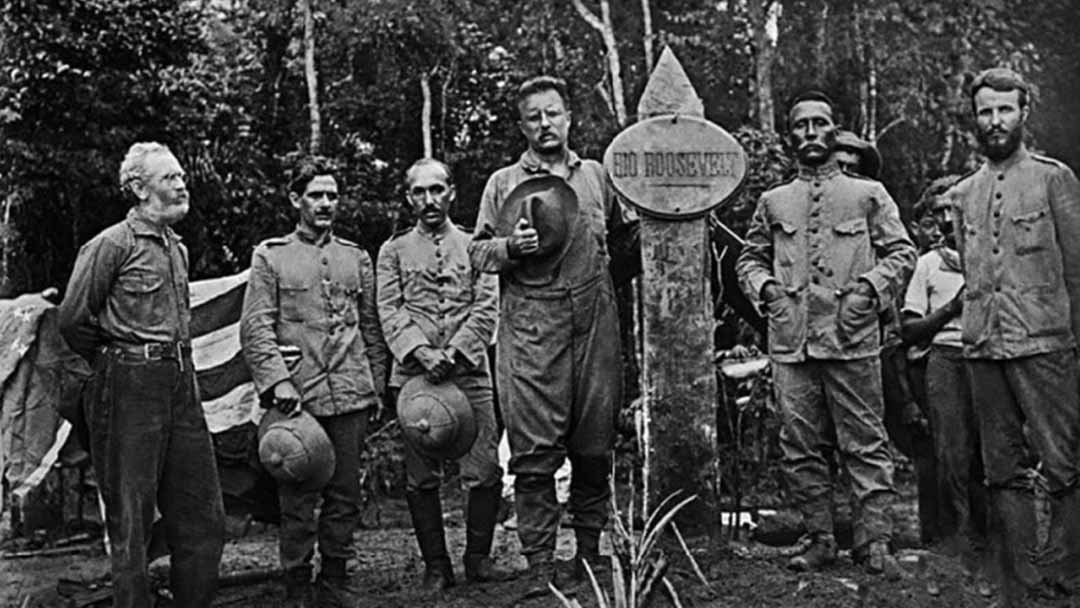
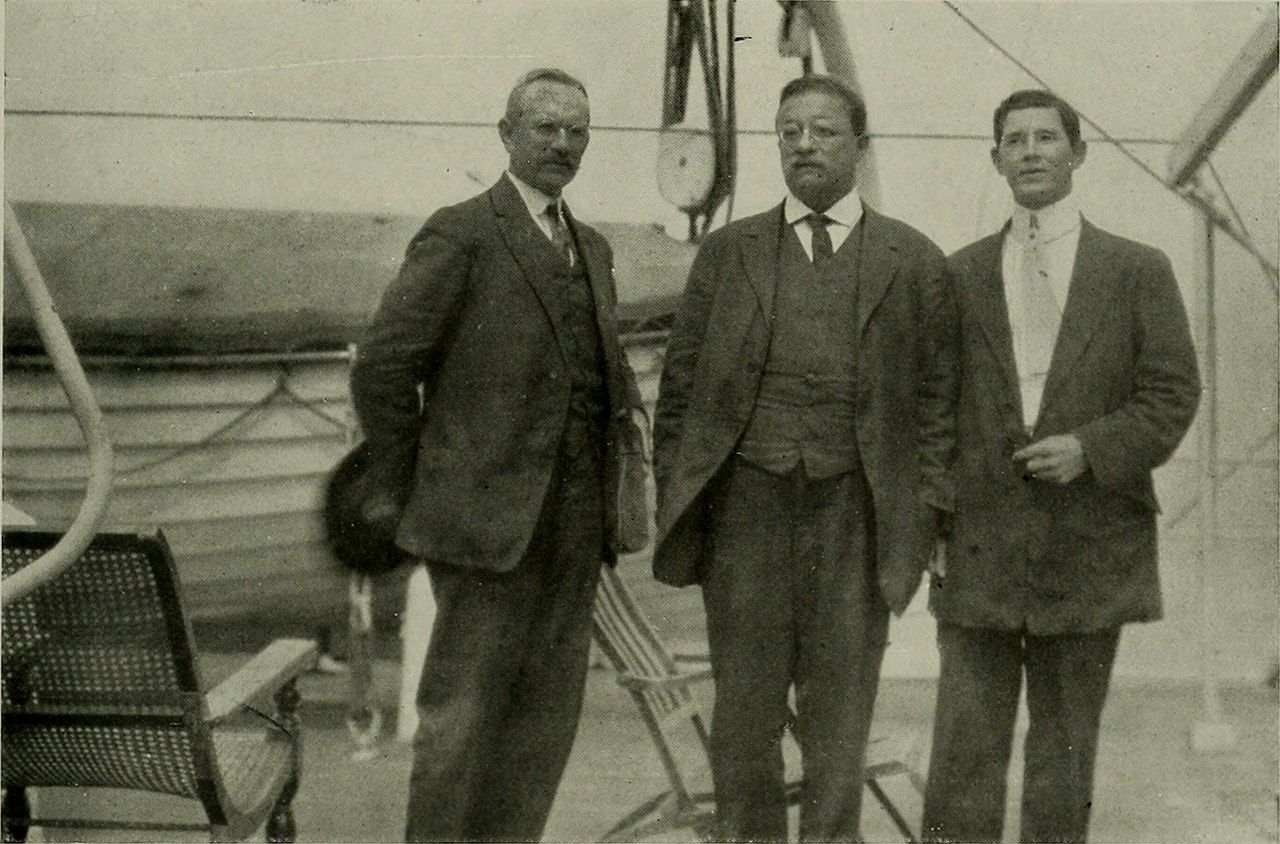
President Theodore Roosevelt stands next to a marker with the new name of the River of Doubt, Rio Roosevelt, or Roosevelt River. Naturalist George Cherrie is on far left. To the right of the marker is Col. Candido Rondon, who co-led the expedition, and Kermit Roosevelt, the president’s son.
Before setting off on the River of Doubt, the expeditionary team downsized due to the lack of proper supplies. In February, 1914, the party started out with the former president, his son, Kermit, Rondon and his assistant, a doctor, naturalist George Cherrie, and several porters. The number was 22.
Dangers of the Amazon
From the start, the expedition faced the threat of alligators, piranhas, and hostile natives. Roosevelt wrote of being overwhelmed by “torment and menace” from mosquitos and stinging flies.
A venomous coral snake nearly bit the former president who was saved by the thick leather of his boot. Still Roosevelt was captivated.
“It was interesting work, for no civilized man, no white man, had ever gone down or up this river or seen the country through which we were passing,” Roosevelt later wrote. “The lofty and matted forest rose like a green wall on either hand.”
Indigenous people, later learned to be hostile to outsiders and cannibalistic, were stalking the party. Rondon, the Brazilian, forbid anyone to go deep into the jungle after discovering his hunting dog shot with arrows.
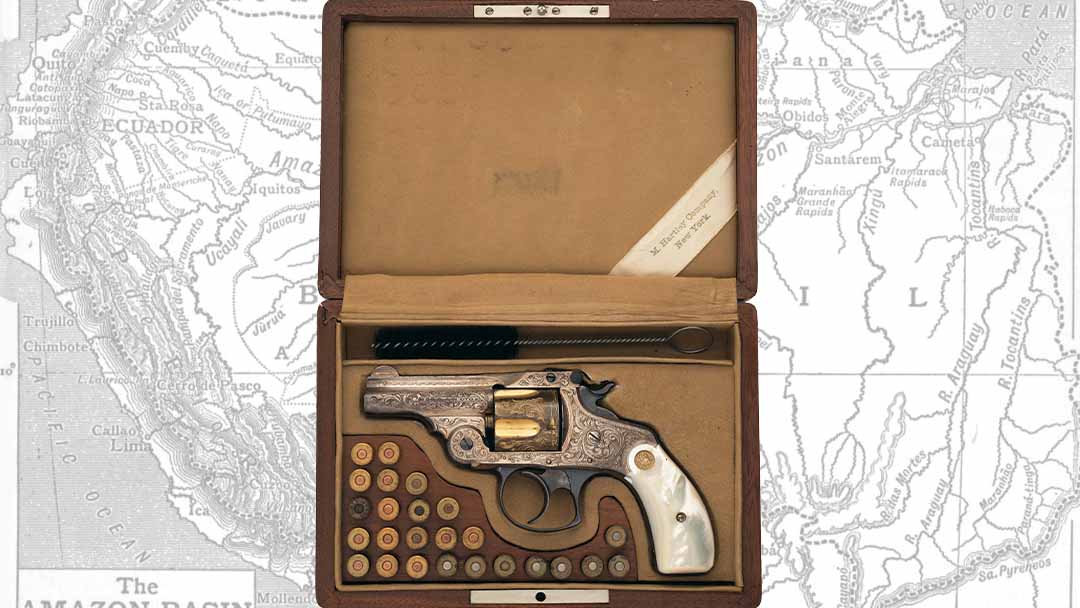
The impossibly rare engraved, gold and nickel plated Smith & Wesson Double Action 4th Model Bicycle revolver that was presented as a gift by Theodore Roosevelt.This revolver comes from the Tom Selleck Collection.
River Rapids
By March the expedition faced treacherous rapids and had to decide whether to shoot through them or portage through the jungle. Several canoes were destroyed, causing delays as new ones had to be made. They were making about seven miles per day.
On one occasion, daring the rapids turned fatal. A canoe carrying Kermit Roosevelt and two other men was sucked into a whirlpool then sent over a 30-foot waterfall. Kermit and one of the men escaped. The third, a Brazilian, drowned.
Malaria and Murder
Men were overtaken by malaria, dysentery, and suffering as supplies ran low.
Roosevelt, attempting to rescue a canoe in a series of rapids, suffered a nasty gash on his leg. Easily treated in civilization, the wound quickly got infected, leaving the Rough Rider delirious from fever as high as 105 degrees and begging to be left behind. His son wouldn’t hear of it.
“There were a good many days, a good many mornings when I looked at Colonel Roosevelt and said to myself, he won’t be with us tonight,” naturalist George Cherrie later remembered. “And I would say the same in the evening, he can’t possibly live until morning.”
Former president Theodore Roosevelt with naturalist George Cherrie to his right. The men explored the River of Doubt in South America in 1914.
Cherrie would eventually be a veteran of 40 expeditions in his career and have several species, including a lizard, birds, and a pocket gopher named after him.
Eventually, on a muddy riverbank, the expedition’s doctor was forced to operate without any type of pain reliever for the former president. No matter, the doctor cut away the dead flesh and Roosevelt, who lost nearly 60 lbs. began to improve.
One night, a Brazilian porter was caught stealing food. He fatally shot the man who caught him and fled into the jungle. The party couldn’t find the fugitive and left him to his fate.
River Rescue
In April, the expedition started seeing signs of civilization. They recognized rubber trees tapped for their sap by Brazilian pioneers who had pushed into the jungle. Some of the pioneers were generous to the ragtag expedition and provided new canoes and food.
A relief party was spotted on April 26 at the confluence of the River of Doubt and Aripuanã River. The expedition had trekked more than 400 miles on the River of Doubt.
At his first opportunity, Roosevelt sent off a telegram to the Brazilian government declaring the expedition, “a hard and somewhat dangerous, but very successful trip.”
By the time Roosevelt returned to New York in May, 1914 he was strong enough to walk down the gangplank to meet well-wishers.
Theodore Roosevelt – The River of Doubt, Part 2
Addressing Naysayers
Roosevelt was met by critics about the extent of his role with the expedition, but a lecture tour of the United States and Europe quickly silenced them. The party brought back 2,000 species of birds and 500 mammals for the American Museum of Natural History.
Theodore Roosevelt was met with naysayers who didn’t believe the events of the expedition. He proved them wrong on a lecture tour of the U.S. and Europe.
The expedition took its toll on Roosevelt who suffered from recurring malaria for the rest of his life that he called “old Brazilian trouble.” He died in 1919 at the age of 60.
An expedition launched on the renamed River of Doubt, now Roosevelt River, in 1926 confirmed nearly everything the earlier expedition did. Rondon, as the leader of the first expedition, was responsible for naming the river and chose to name it after the 26th president.
Roosevelt and a Merwin Hulbert
Before he became a force in American politics, Roosevelt, who lost his wife and his mother within hours in 1884, went west to the Dakota Territory to ranch. It was there he met Arthur William Merrifield, a rancher and hunting guide. The men became life-long friends and business partners.
The Merwin Hulbert revolver and gold watch from Theodore Roosevelt are Lot 1092, while a Colt Model 1903 and a badge from Merrifield’s time as a U.S. Marshal are Lot 1093 and a Winchester Model 1894 presented to Merrifield by Roosevelt’s nephews is Lot 1094.
Teddy Roosevelt Revolver
The engraved short-barrel Smith & Wesson .38 Double Action 4th Model Bicycle revolver, with its silver barrel and frame and gold-plated cylinder is an extreme rarity in Smith & Wesson collecting. The engraving is from the workshop of famed engraver L.D. Nimschke. These double action revolvers are rarer than their Safety Hammerless cousins, especially special order short-barrel versions so this is a nearly impossible to find Smith & Wesson model.
Lot 98: An extreme rarity, this engraved short-barrel Smith & Wesson .38 Double Action 4th Model Bicycle revolver was a gift given by President Theodore Roosevelt on a South American tour before departing for an expedition that turned out to be a fight for his life.
Heap on it being a gift from one of America’s most beloved presidents and the revolver’s value increases even further. The gun is accompanied by a statement of provenance in Spanish by the great-grandson of the original owner, Dr. Figueroa Alcorta. The statement says the revolver “was given to my great-grandfather Dr. Figueroa Alcorta when the ex-President of the United States of America, Theodore Roosevelt, visited the country in 1913.” Argentina is the country referred to in the statement, and in the statement the revolver is identified by serial number and short description of gold and silver plating and pearl grips as well as a description of the accompanying retailer box. Alcorta is a past president of the University of La Plata in Argentina so likely met the former president on his lecture tour ahead of the expedition. The history, rarity and provenance of this Smith & Wesson makes this an amazing and highly desirable piece of gun memorabilia available in Rock Island Auction Company’s inaugural Premier Auction at its Bedford, Texas location, Dec. 8-10.
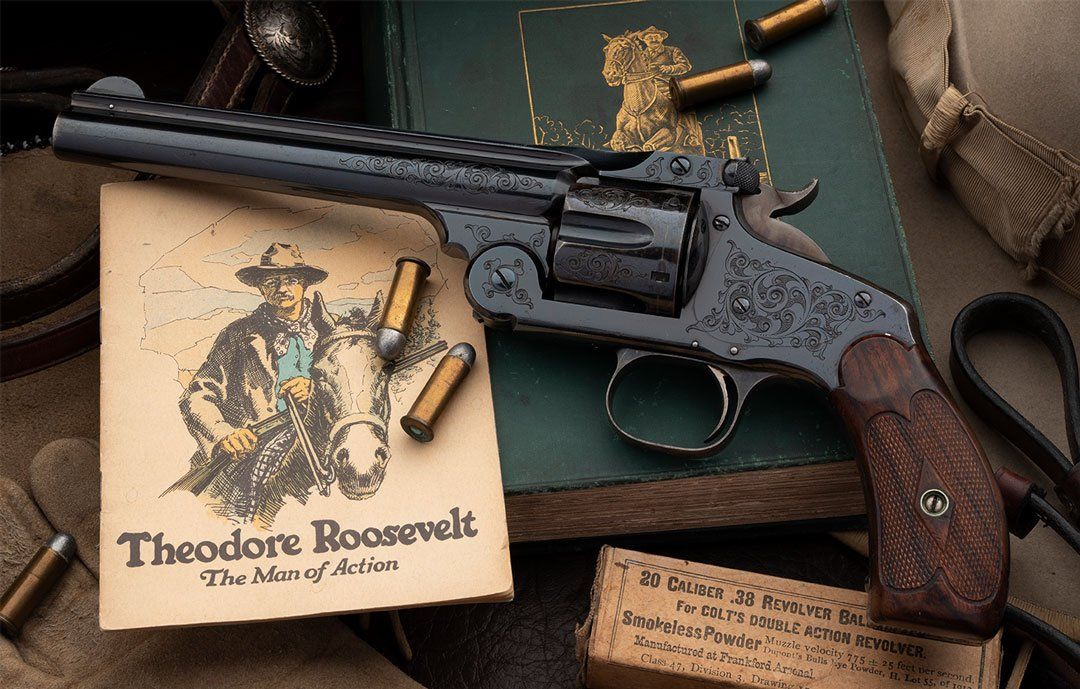
An American gun from one of the most American legends of all time, an engraved Smith & Wesson New Model No 3 revolver documented to the future 26th president of the United States, Theodore Roosevelt. The revolver’s engraving is believed to be the work of Gustave Young, and Roosevelt picked up the gun the summer of 1898 on his way to train the Rough Riders in San Antonio, Texas. Available December, 2022 at Rock Island Auction Company.
Firearms development is filled with scarcely produced designs, rare prototypes, experimental arms, and an assortment of fascinating curiosa. When it comes to finding the most unique guns in the collecting pursuit, Rock Island Auction Company’s December 8 – 10 Premier Firearms Auction features some of the rarest and most desirable firearms models ever assembled under one roof.
Often a famous firearm model overshadows its evolutionary predecessors, but in the collecting world these important cornerstones can be as rare as they are valuable. The Jennings repeater, based on Walter Hunt’s Rocket Ball cartridge patent in 1848 and Lewis Jenning’s movable ammunition carrier patent in 1849, is a seldom-seen model today and one of the most unique guns in arms collecting. The Jennings repeater became the first commercially produced lever action long arm in a lineage that would give rise to the Volcanic pistol, the Henry rifle, and the Winchester Repeating rifle family to follow.
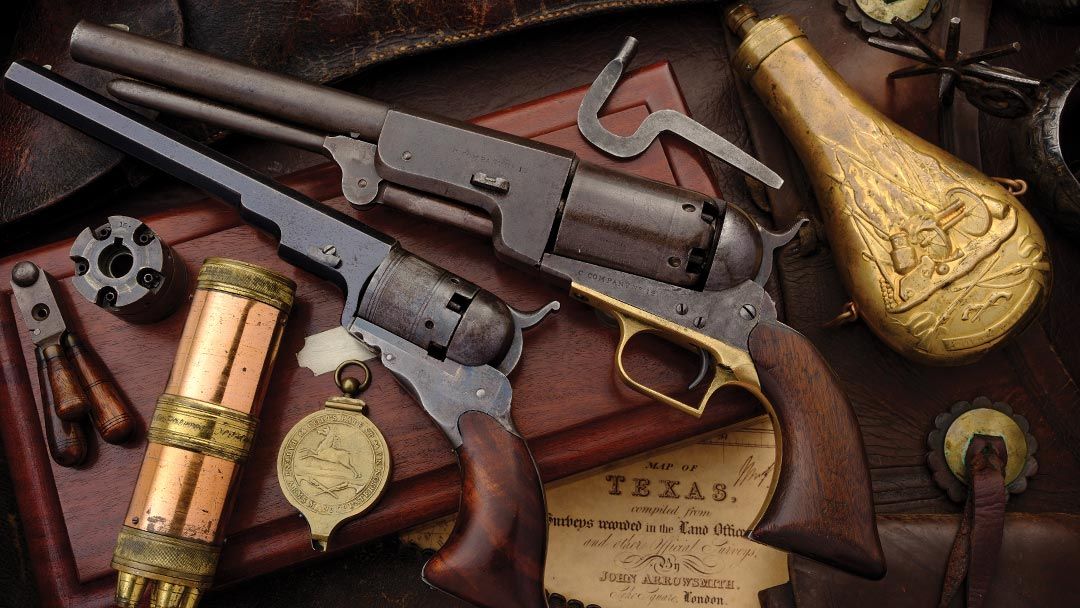
If the Paterson was the gun that put Samuel Colt on the map, the Walker revolver was the model that saved his business and helped launch an American giant. Both the Paterson and Walker are pantheons of fine and historic collecting, and the two headline-worthy examples pictured below represent some of the rarest of the rare when it comes to historic early Colts.
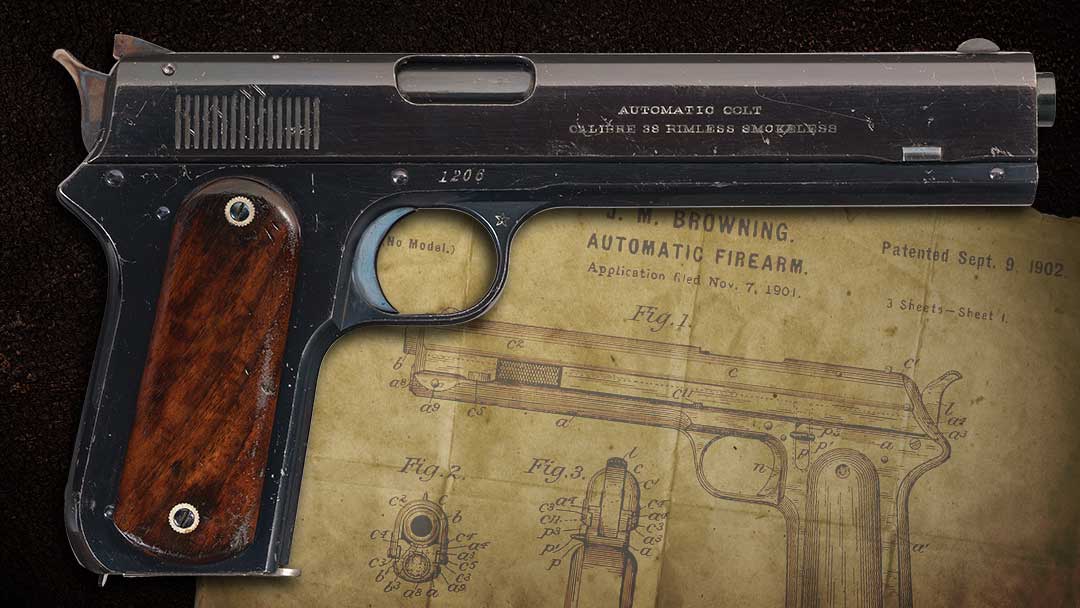
If we’re talking about unique guns that gave rise to an icon in their field, the Colt Sight Safety fits the bill, especially one of the 250 original examples procured by the U.S. Navy. What became known as the first production Colt Model 1900, these historic handguns represented one of John Browning’s earliest attempts to develop a reliable semiautomatic military pistol that could overcome a slew of competing designs. Though the M1911 went on to become the longest-serving sidearmin American military history, it all started with its .38 caliber predecessor, the Model 1900.
An extraordinary U.S. Navy contract Colt Model 1900 “Sight Safety” pistol with its factory letter, perhaps the finest known of its kind. Available this December.
Antique Firepower
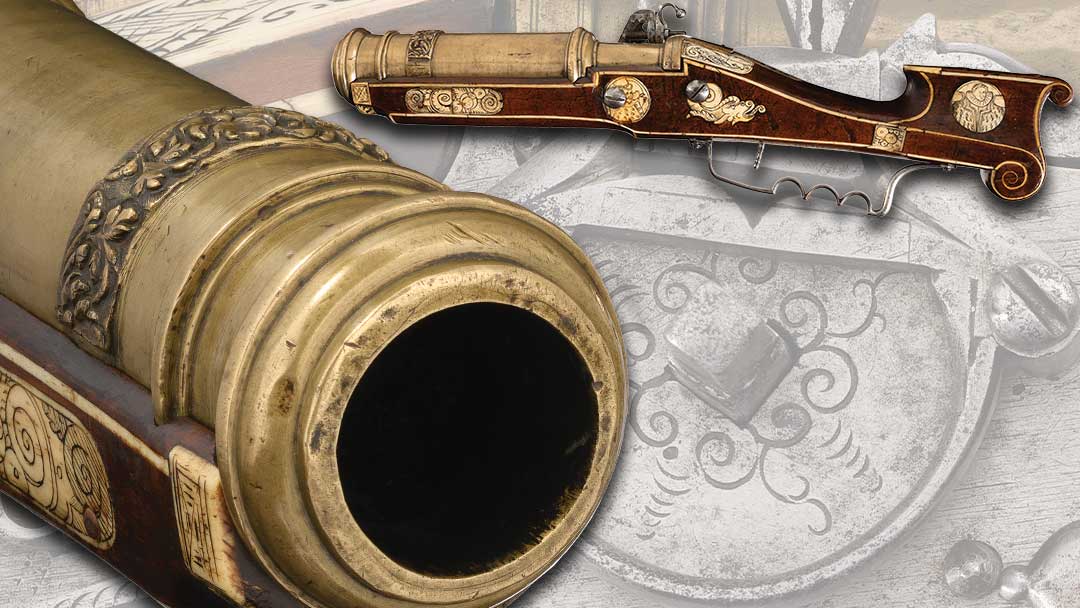
Arms technology has been evolving since the invention of black powder, and one of the most unique guns to come out of the late 16th century was the hand mortar. Capable of launching fused grenades, fireworks, and grappling hooks, the ornamental wheellock hand mortar below represents an especially rare example of this fascinating antique arms genre.
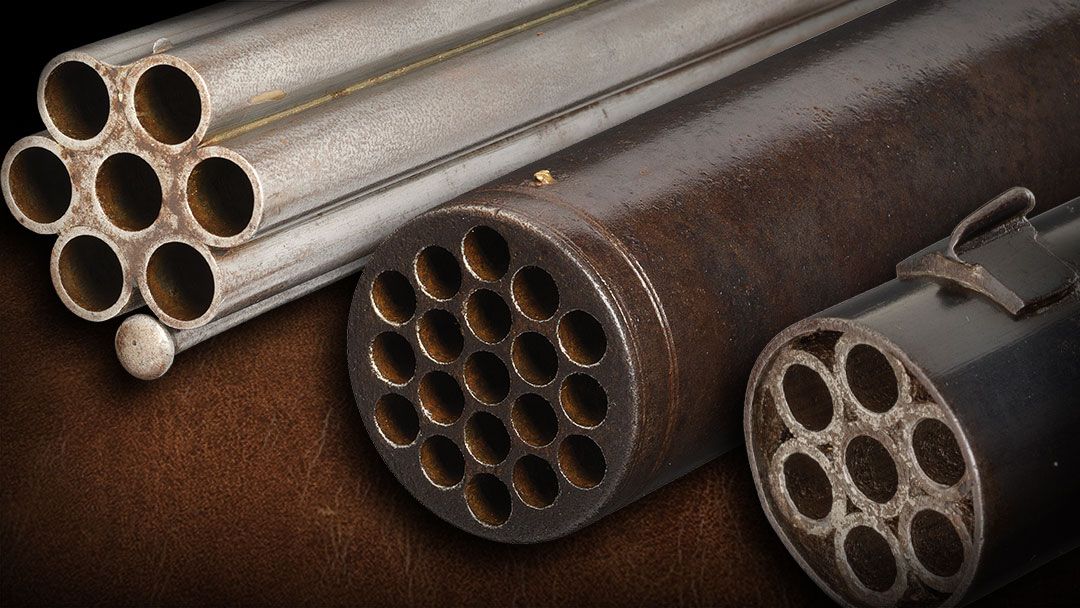
The volley gun, or a weapon with multiple barrels, was one early answer to upping the volume of firepower on the battlefield. Where the duck foot pistol employed splayed barrels, the Nock volley gun used circled clusters of welded barrels. Surviving examples of the Nock volley gun are seldom encountered today on the public market, and its spiritual successors like the Henry Harrington Patent percussion volley gun and the H. Pieper rolling block volley rifle are even more scarce.
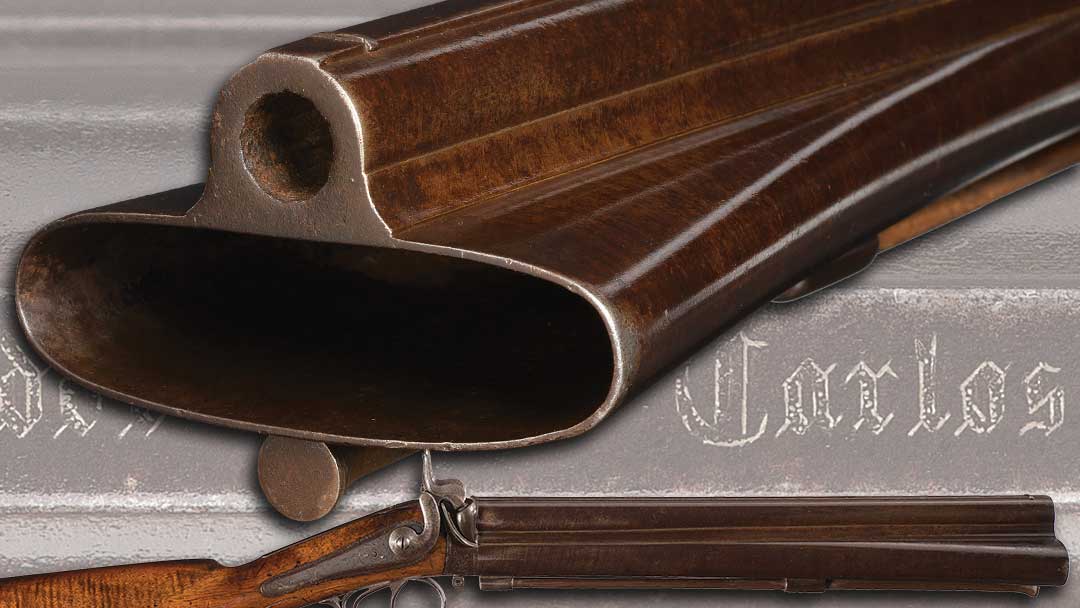
What do you get when you combine a .54 caliber rifle with a 14 gauge “duck bill” shotgun? One exceptionally unique gun that would be the bane of any 19th century highwayman unfortunate enough to find himself in its line of fire. The idea of the combination gun appeared in many forms throughout the centuries and has filled nearly every role imaginable, but this rifle atop a duck bill blunderbuss coach gun might be the most distinctive example of this already intriguing genre.
A very rare engraved percussion combination rifle and “duck bill” blunderbuss coach gun. Available this December.
Fascinating Flintlocks
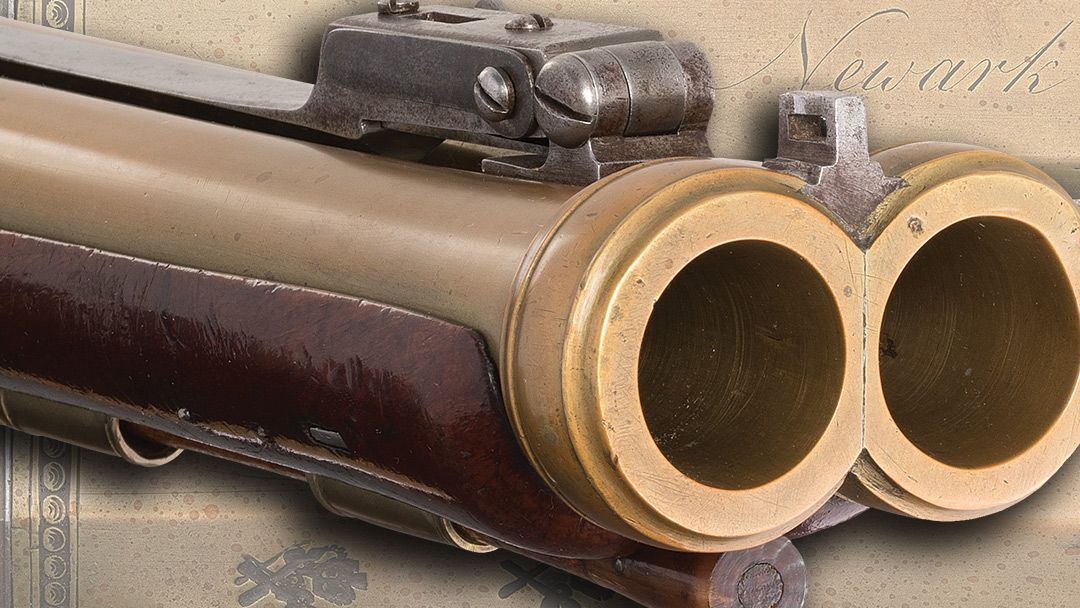
Most firearms fans are familiar with the blunderbuss, a smoothbore short-barreled long gun with a flared muzzle. Drawing its nickname from the Dutch word ‘donderbus’, or thunder pipe, the blunderbuss was ideal for repelling boarding parties, defending carriages, and sometimes even equipped by cavalry. The exceptionally rare double-barreled example below represents a transition of sorts between the blunderbuss and the double-barreled shotgun that would fill many of the same roles during the percussion era.
A barber brass double barrel flintlock blunderbuss with snap bayonet, one of the most unique guns available this December.
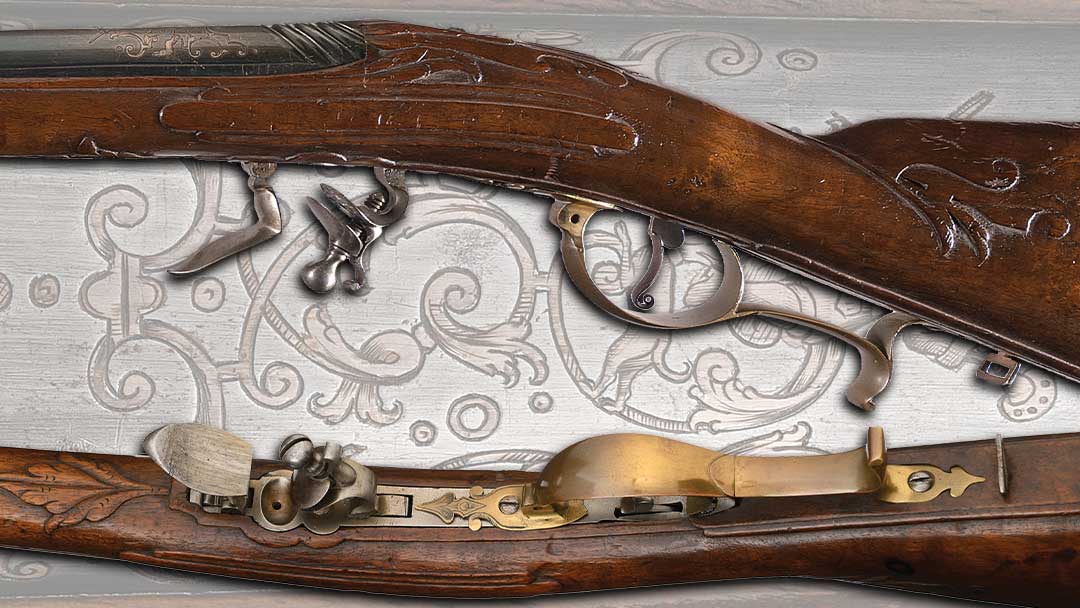
Inverted flintlocks are scarce, and this next example was sold out of the noted collection of the Grand Dukes of Saxe-Weimar from Schloss Ettersburg. The engraved and silver inlaid straight rifled long barrel sporting gun is pictured in Howard L. Blackmore’s “Guns and Rifles of the World” and is also featured in “Underhammer Guns” by Herschel C. Logan. Logan notes the gun as “One of earliest, if not the first, known arm to employ the unique principle of an underhammer.”
An incredibly rare inverted flintlock sporting rifle from the collection of the Grand Dukes of Saxe-Weimar and formerly the collection of well-respected antique firearms expert and collector W. Keith Neal. Available this December.
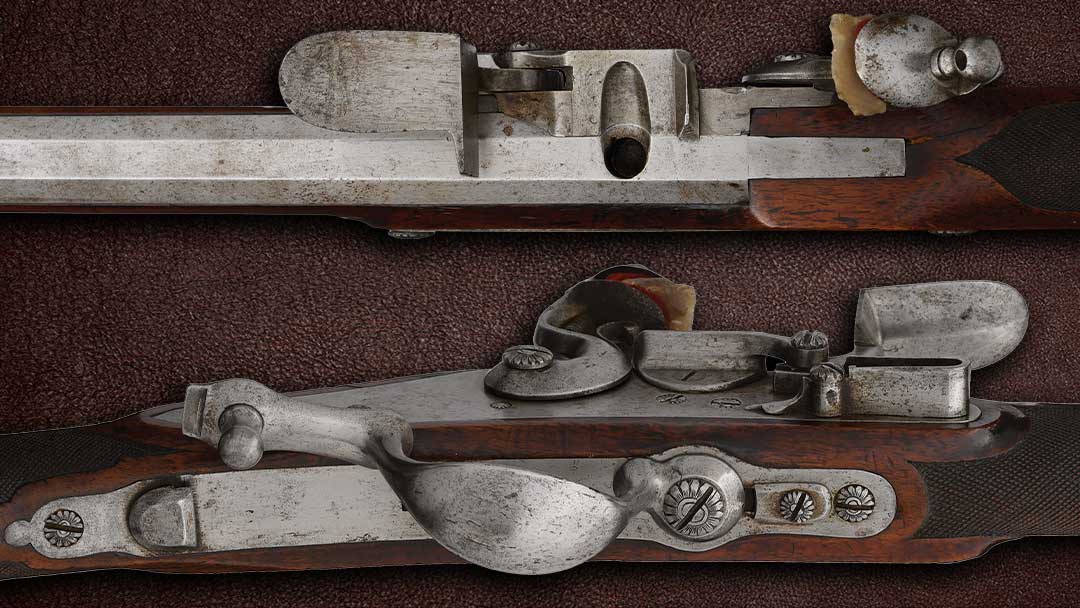
Breechloading flintlocks are some of the most unique guns in antique collecting, especially early 18th century examples like this scarce Chaumette and Ferguson pattern small bore long rifle. Utilizing a system similar to Isaac de la Chaumette’s screw-in breech plug design connected to the trigger guard, the pan on this example is partially grooved into the breechblock and the top of the barrel, and the flash is communicated through a small channel at the edge of the breechblock.
An incredibly scarce small bore breechloading flintlock rifle based on the Chaumette system. Available this December.
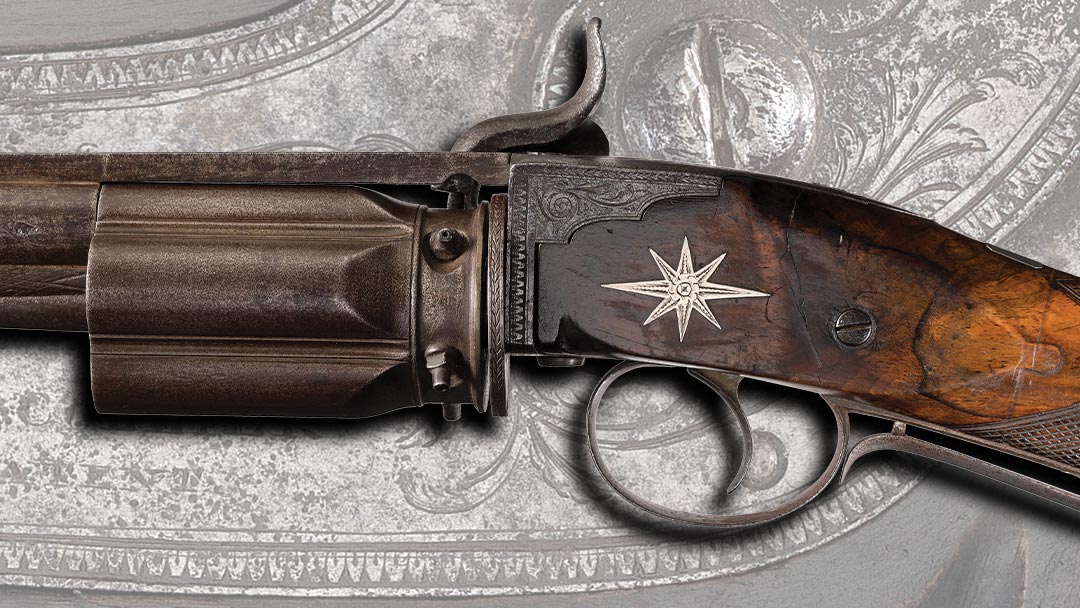
Before Colt, there was Collier. Elisha Haydon Collier operated in London from 1818 to 1827 and sold revolving pistols, rifles, carbines, and shotguns. Fewer than 250 Collier revolvers were produced in total across all models, with seldom-seen examples like the “Third Model” Collier patent revolving shotgun featured below ranking as one of the rarest of an already scarce and desirable line of flintlock revolvers.
A unique gun from an incredibly rare family of Colt predecessors, this “Third Model” Collier patent revolving shotgun with the Wyatt Patent grip safety is available this December.
Rare Revolvers
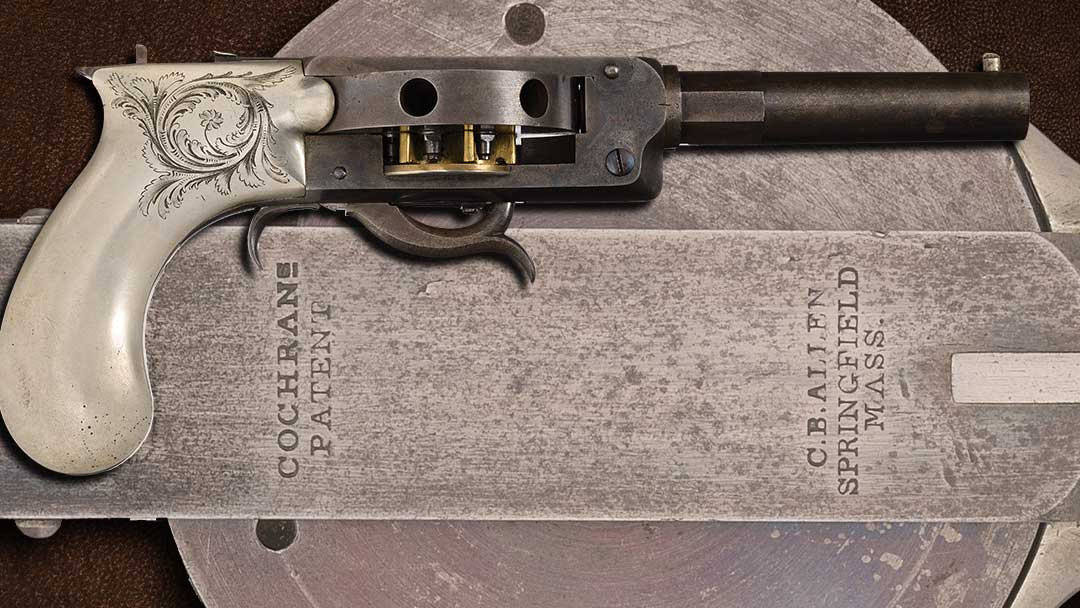
Samuel Colt aggressively defended his revolver patent, and a number of inventors went to great lengths to legally evade Colt’s monopoly. Some of the most unique guns designed to circumvent Colt’s patent were the Cochran and Porter turret revolvers. These fascinating firearms employed horizontally rotating disk-shaped cylinders with outward-facing chambers and fewer than 150 were manufactured in all.
Serial number 2 C.B. Allen Cochran patent under hammer percussion turret revolver with a factory engraved German silver grip Available this December.
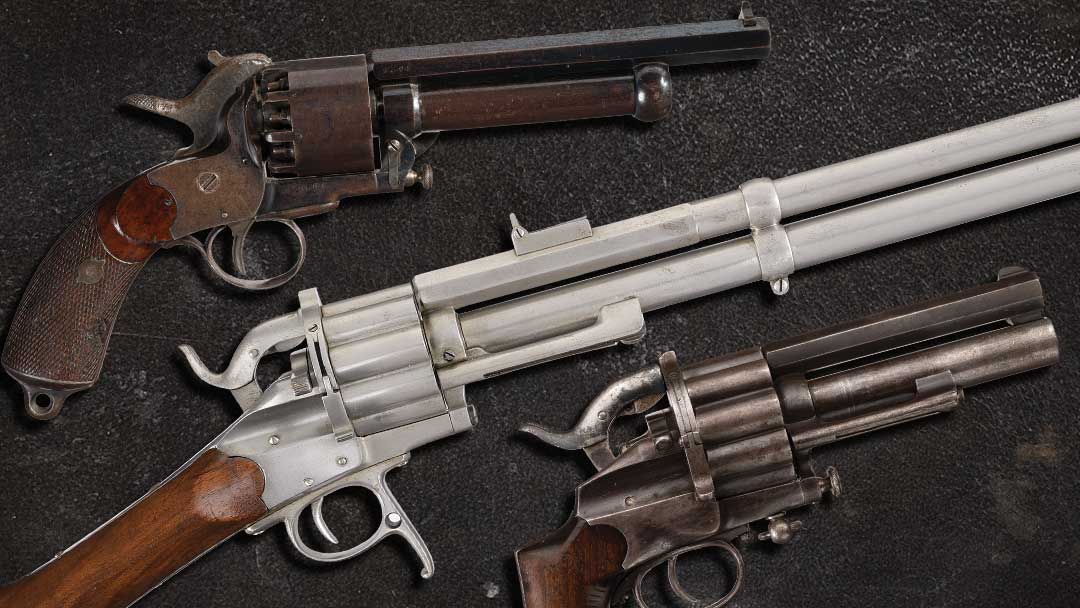
For their rarity, distinctive design, pop culture appeal, and connection to famed Confederate officers like General J.E.B. Stuart, the “LeMat’s Grape Shot Revolver” line is a favorite with arms collectors today. Dr. Alexandre LeMat’s unique combination guns provided its users with a comparatively high-capacity revolver with an additional shotgun barrel that could be devastating at close range. Multiple examples of the scarce LeMat platform can be found in December’s auction.
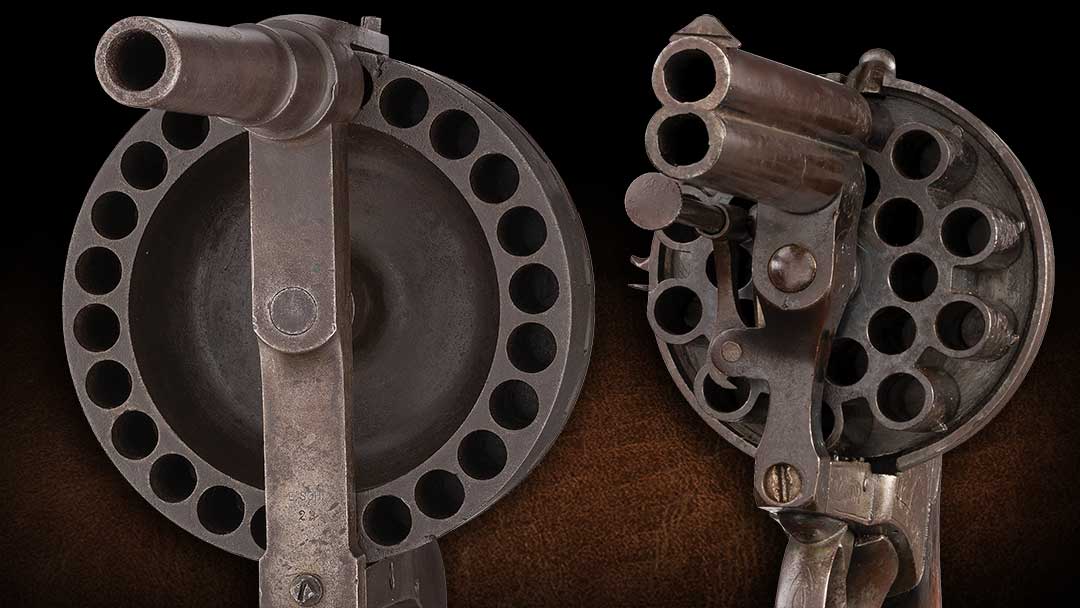
The concept of adding more shots to the revolver mechanism was pushed to the extreme in the mid-19th century. The two examples pictured below, a 24-shot single action boat revolver and a 20-shot double barrel pinfire revolver similar to the Lefaucheux patent design, illustrate the experiments with high-capacity guns both big and small during this extraordinary era of arms development.
Two unique guns that offered 19th century users plenty of firepower. (Left) A massive 24-shot revolving trap gun. (Right) An engraved European 20-shot DA pinfire revolver. Both guns available this December.
Scarce Civil War Carbines
Due to a desperate need for arms thanks to a strangling Union blockade, the Confederate States turned to a variety of local manufacturers to compete with the industrialized North. Scarcity of materials, rapid production, and smaller-scale manufacturing practices resulted in slight mechanical differences found within many Confederate arms models, including cannons, making Confederate-produced weapons some of the most unique guns in Civil War collecting.
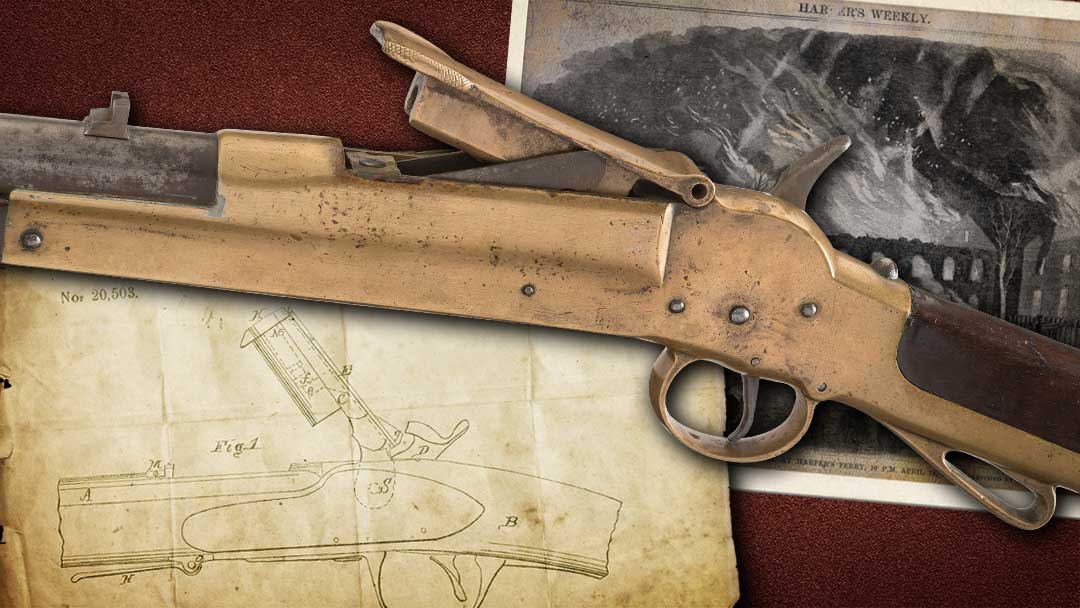
The rare Civil War Confederate Morse First Type carbine below not only features the distinctive brass framed look observed on many southern-produced arms, but is also an example of an advanced early breech-loading system chambered for a cased centerfire cartridge.
A desirable Civil War Confederate Morse First Type breech loading centerfire carbine. Available this December.
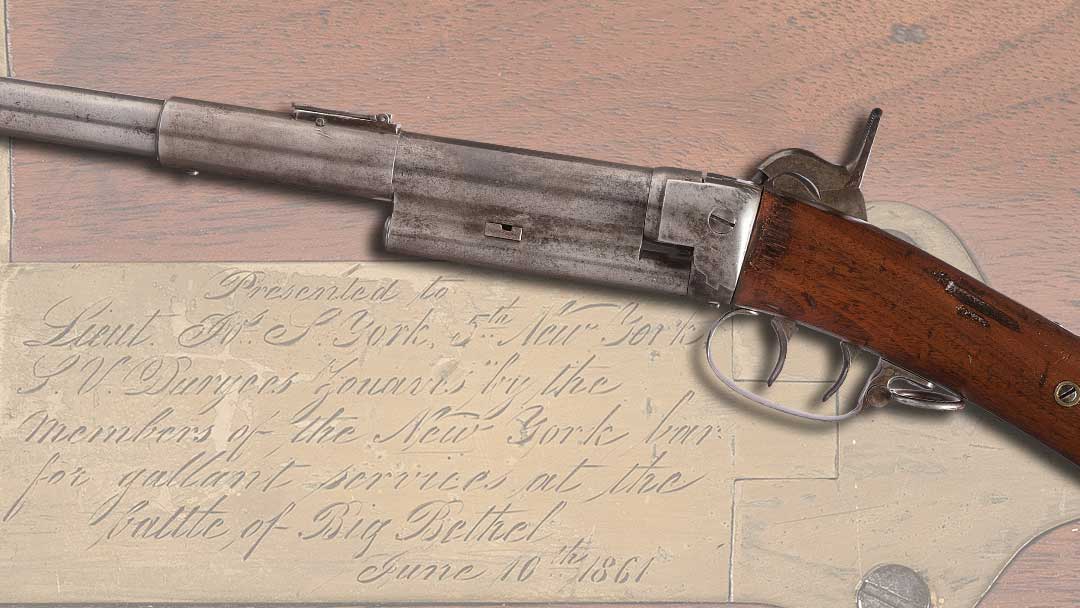
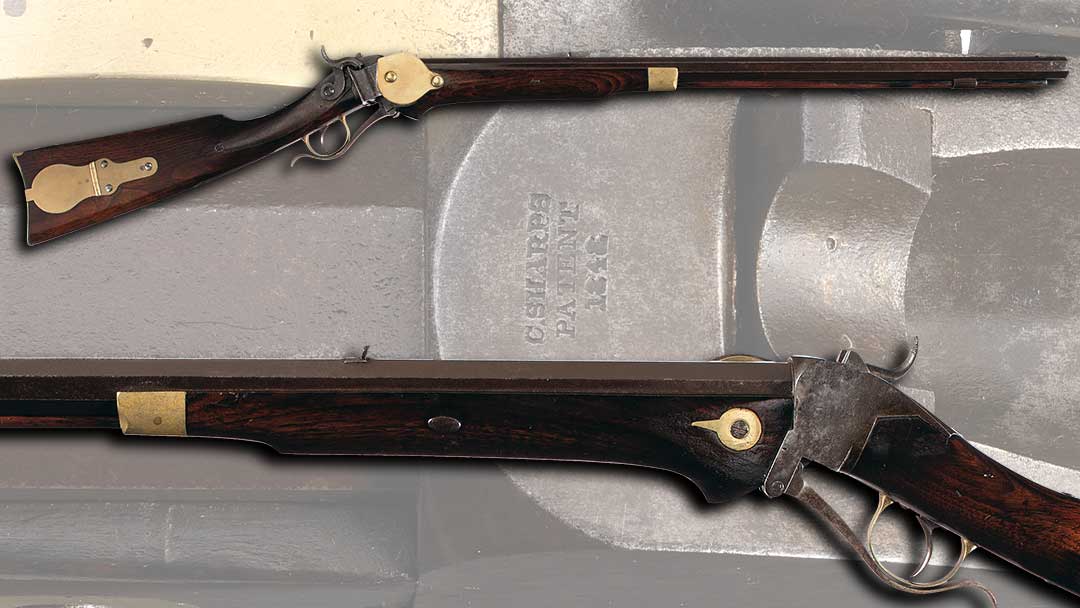
One of the rarest Union long armsto see Civil War service, the U.S. Type Greene Massachusetts breech loading percussion carbine is a prominent collector’s piece on its own. The example below is also a historic presentation piece to Lieutenant Colonel Joseph S. York, 5th New York Infantry, for his gallantry at the Battle of Big Bethel, one of the earliest land battles of the Civil War. The inscription on the patch box reads, “Presented to/Lieut. Jos. S. York, 5th New York,/S.V. Duryees Zouaves by the/members of the New York bar/for gallant services at the/battle of Big Bethel/June 10th 1861.”
One of the most unique guns the Union fielded during the Civil War, this historic U.S. Type Massachusetts Arms Company Greene carbine is an inscribed presentation piece to Lieutenant Colonel Joseph S. York for his bravery in the Battle of Big Bethel. Available this December.
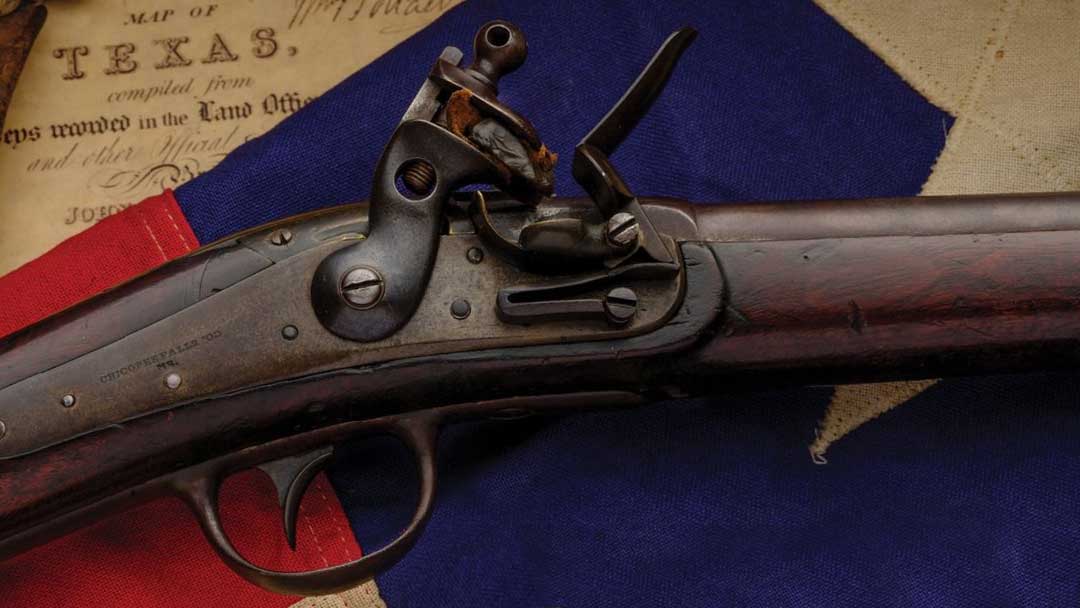
Invented by William Jenks of the Massachusetts-based Chicopee Falls Co., the Jenks musketoon is the only breech loading flintlock besides the famed Hall rifle to be procured by the federal government. Of the 100 U.S. Ordnance musketoons delivered, 25 were sent to the 1st Dragoons for shooting trials, and 25 to the 2nd Dragoons for field trials during the Second Seminole War in Florida where they were exposed to harsh conditions. Only a few surviving examples of these rare guns are known today as a result.
An incredibly rare U.S. Trials Jenks breech loading flintlock musketoon. Available this December.
All Winchester cutaway/skeleton rifles are extremely scarce, with the examples used in trials testing even more so. The documented Winchester Model 1881 Hotchkiss “Cutaway” bolt action rifle featured below is an original factory skeleton model with a rare full nickel plated finish and was received in the Winchester warehouse on January 19, 1881.
The rifle became part of the collection of Lieutenant George Emerson Albee, a Civil War veteran and a Medal of Honor recipient for his service during the Indian Wars. Albee worked as a professional exhibition shooter and designer for Winchester and acquired a number of extremely rare and unique guns from the Winchester Repeating Arms Company. Albee was also close friends with Captain Henry Ware Lawton, who played an important role in capturing Geronimo in September of 1886. To honor his friend’s efforts, Albee presented Lawton with Winchester Model 1886, serial number 1, one of the most expensive guns to ever cross the podium at Rock Island Auction Company.
An extremely fine, all original condition, and fully documented Winchester Model Hotchkiss 1881 factory cutaway rifle formerly in the historic George E. Albee Collection. Available this December.
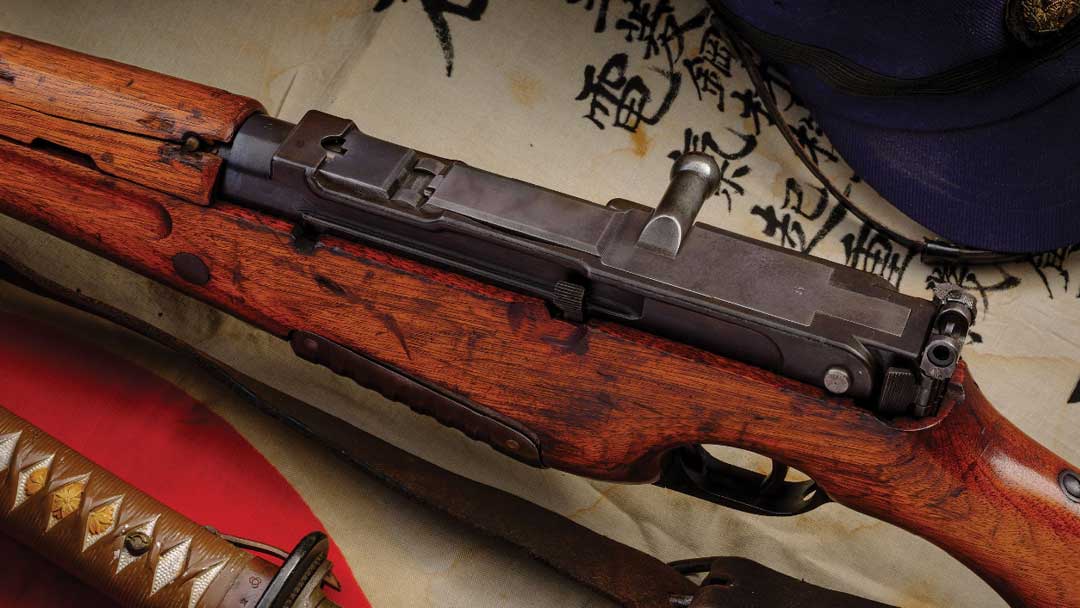
In 1935, 12 Pedersen semi-automatic carbines and 12 rifle variants were manufactured by the Koishikawa Arsenal for the Japanese Test Trials. The carbines and rifles were each numbered in their own separate serial ranges, with the experimental Pedersen Test/Trails rifle example below marked as serial number 5. These rare guns were based on the self-loading rifles J. D. Pedersen had developed in the previous decade to compete with John Garand’s designs in the test trials held by the U.S. Army after WW1 to replace the M1903 rifle.
The experimental Japanese Pedersen trials rifles are some of the most unique guns in military collecting. Available this December.
Incredible Pistol Prototypes
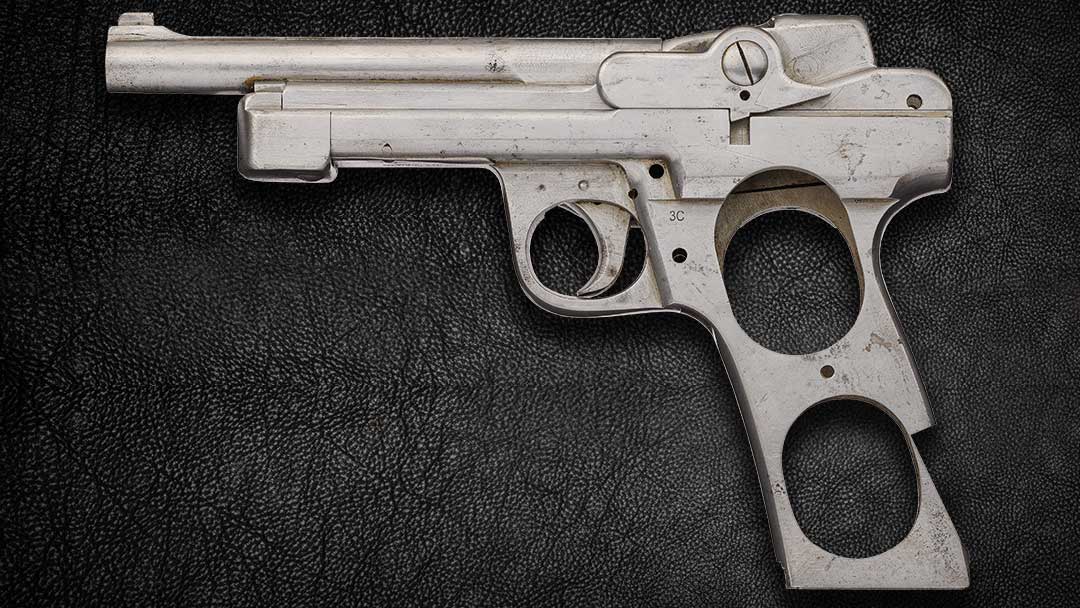
This British Webley Model 1903 semi-automatic striker fired pistol is the definition of a unique gun and likely a one-of-a-kind prototype. Designed by prolific inventor William J. Whiting, this exact pistol is featured in “Webley & Scott Automatic Pistols” by Gordon Bruce, where the author suggests the prototype was manufactured for British army evaluation shortly after the .455 Webley Fosbery automatic revolver had failed to make an impression with military testers.
A documented British William J. Whiting experimental prototype Webley Model 1903 striker fired pistol that would make a fine addition to any advanced firearms collection. Available this December.
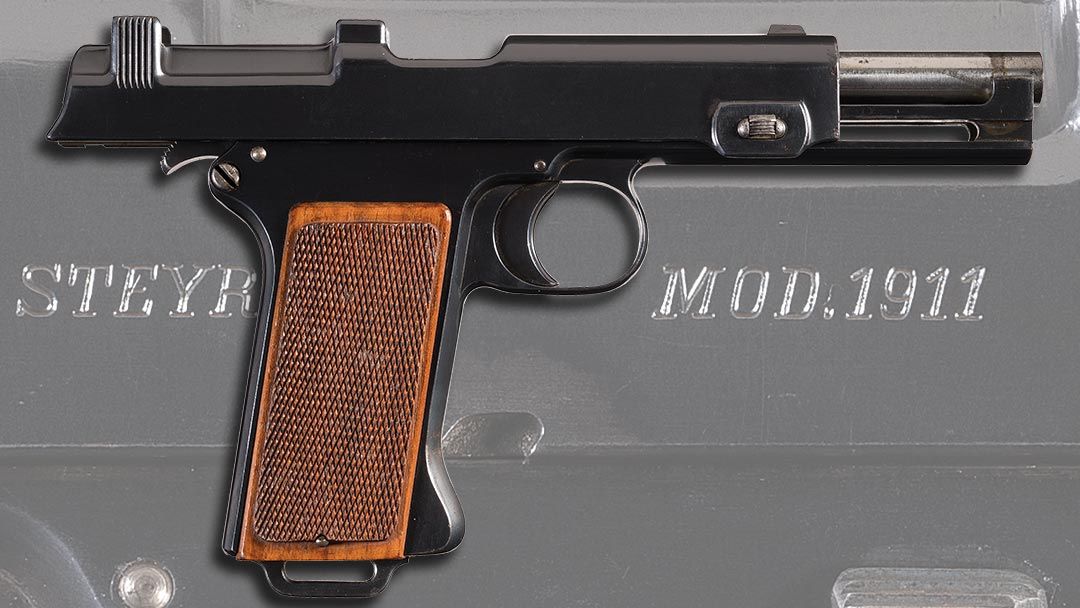
Another early semi-automatic prototype, the serial number 1 Steyr-Hahn Model 1911 pistol pictured below set the stage for a line of unique guns that were adopted by the Austro-Hungarian, Chilean, and Romanian militaries. The blow-back operated pistol design included several standout features for the era such as a rotating barrel and a solid milled frame with an internal non-detachable magazine loaded via stripper clips through the top of the gun.
An extremely rare prototype Steyr-Hahn Model 1911 serial number “1” semi-automatic pistol. Available this December.
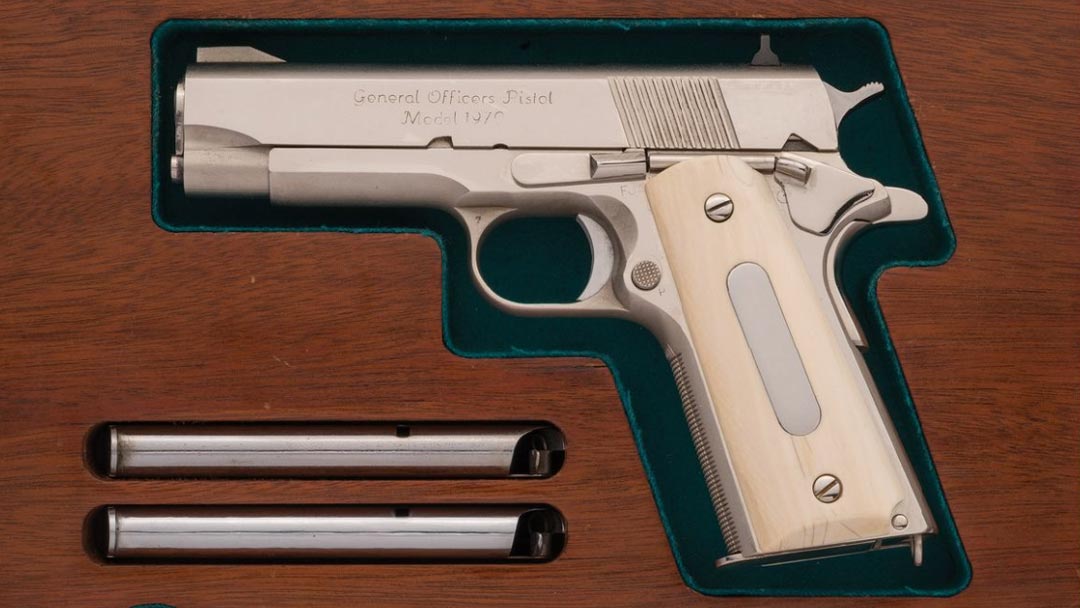
The historic U.S. Rock Island Arsenal/Remington-Rand Model 1970/M15 General Officers semi-automatic pistol below was one of three procured by inventor Dale Hoffman to become the prototypes for the “Model 1970 General Officers Pistol.” Colt had stopped producing the M1903 in 1927 and the M1908 in 1944, and by 1972 the U.S. Army’s stock of general officers sidearms had been growing dangerously thin.
Hoffman’s concept was a shortened 1911A1 pistol that could be produced using the Army’s existing stock of parts and frames, as well as sharing the same ammunition, magazines, and manual of arms as the 1911A1. The total issue from 1972 to 1982 was 1,004.
All general officers pistols are unique guns, and this U.S. Rock Island Arsenal/Remington-Rand Model 1970/M15 with its case and belt rig is one of three documented prototypes. Available this December.
Unique WW2 Weapons
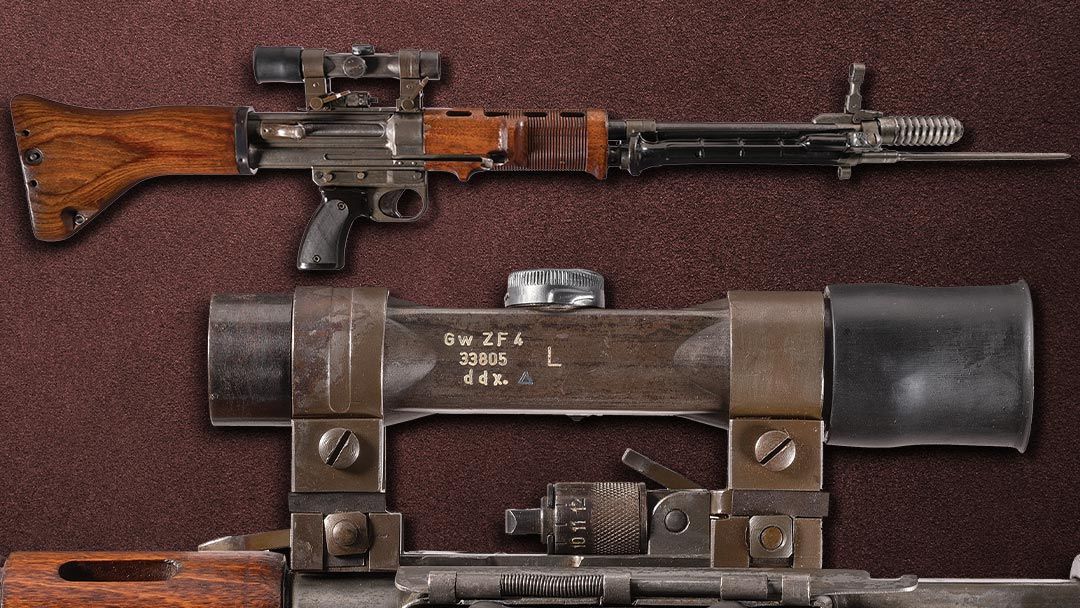
The Second World War was filled with unique guns, with the German FG42 ranking among the most distinctive arms of the era. Designed for the Luftwaffe’s paratrooper division, the Fallschirmjaegergewehr 42 was intended as a “universal weapon” with the range of a rifle, the maneuverability of an SMG, and the full auto firepower of a machine gun. The advanced German rifle would go on to inspire the T44 prototype and the M60 machine gun. Today, surviving FG42 examples rank among the most expensive machine guns in all of collecting.
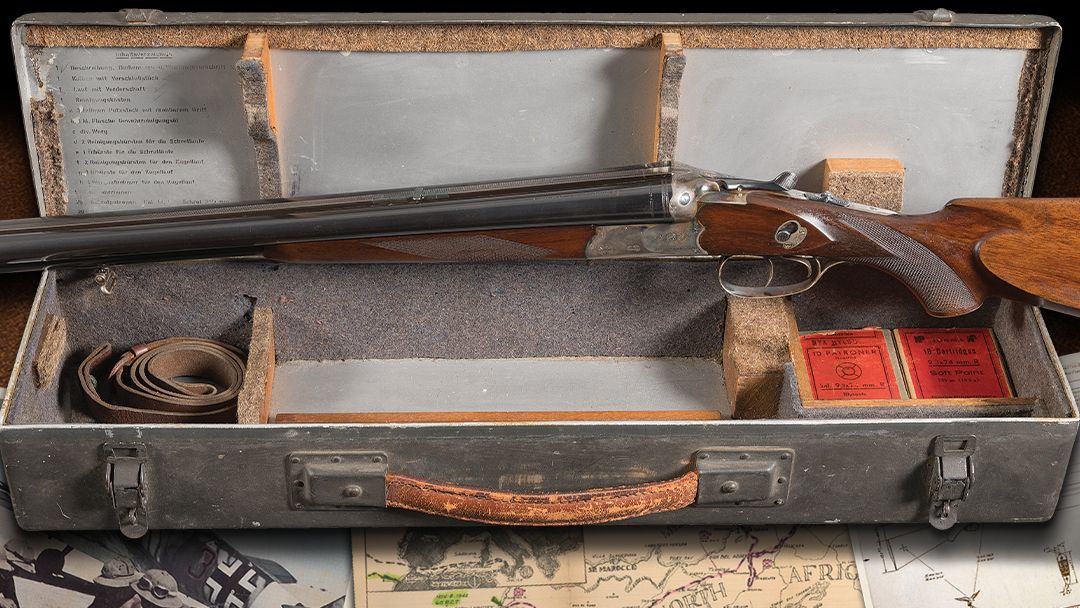
While other countries emphasized austerity and high production rates during the Second World War, Germany often opted for quality and refinement. Nowhere is that philosophy better illustrated than the M30 drilling, an elegant combination gun issued to some of the Luftwaffe’s top aces during the North African Campaign. Though the M30’s practicality as a survival weapon is questionable, there’s no question that these J.P. Sauer-made beauties are one of the most unique and valuable guns to come out of WW2.
A WW2 J.P. Sauer & Sohn M30 Luftwaffe survival drilling with its case and accessories. Available this December
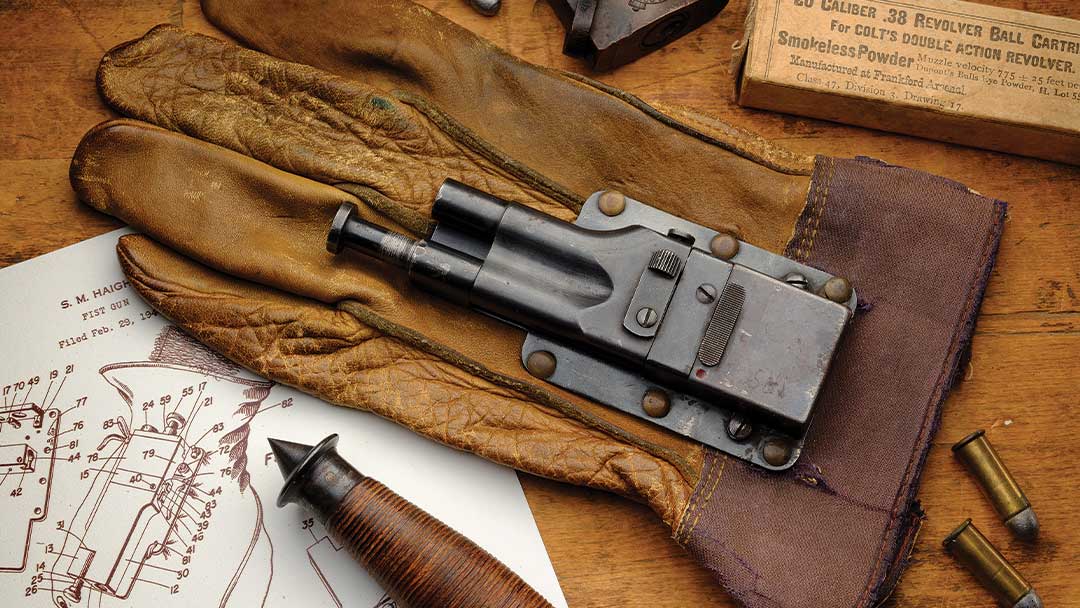
Officially known as the Sedgley Mark Two “Fist Gun” Hand Firing Device with Fitted Glove, these unique guns were developed by Stanley M. Haight in 1944 and produced for the U.S. Navy. Riveted to a leather glove with a plunger-like trigger that extended above the knuckles, the Sedgley Mark Two was fired with a punch and chambered for a single .38 caliber Smith & Wesson cartridge. Only 50 to 200 were manufactured, making these WW2 curiosities an appealing collectible today.
A rare documented Sedgley Mark Two “Fist Gun” hand firing device with fitted glove. Available this December.
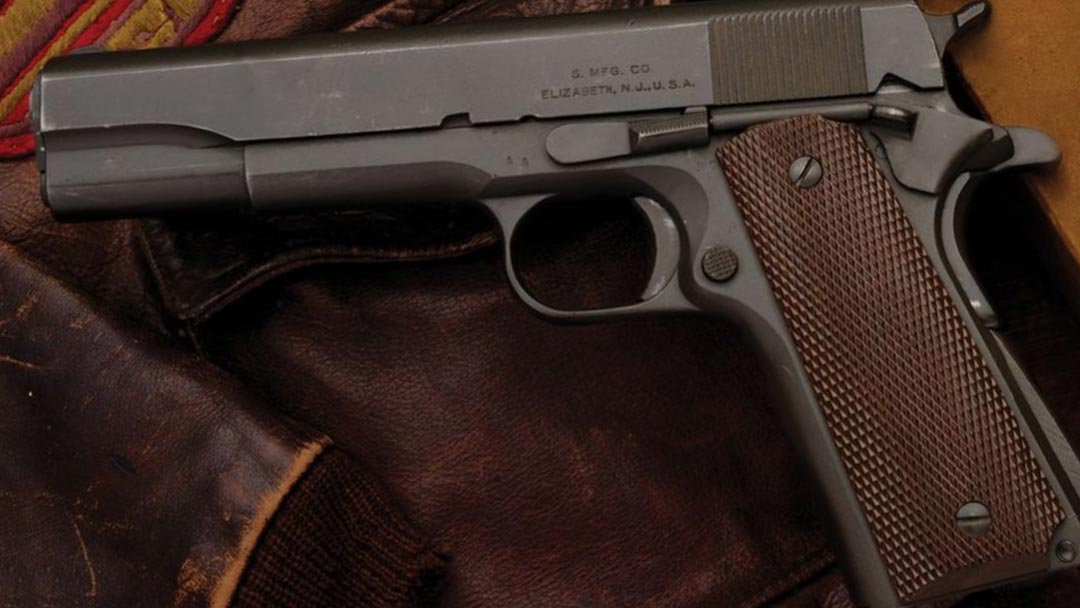
In April of 1940, the Singer Sewing Machine Company produced 500 1911A1 pistols as part of Ordnance Educational Order No. W-ORD-396. Today, the Singer 1911 has become one of the holy grails in arms collecting. December’s auction features a Singer pistol that was parkerized by Augusta Arsenal (with their left sides bearing the correct “AA” mark) very early after WW2.
A rare Augusta Arsenal refurbished WW2 U.S. Singer Model 1911A1 pistol. Available this December.
Ammunition Oddities
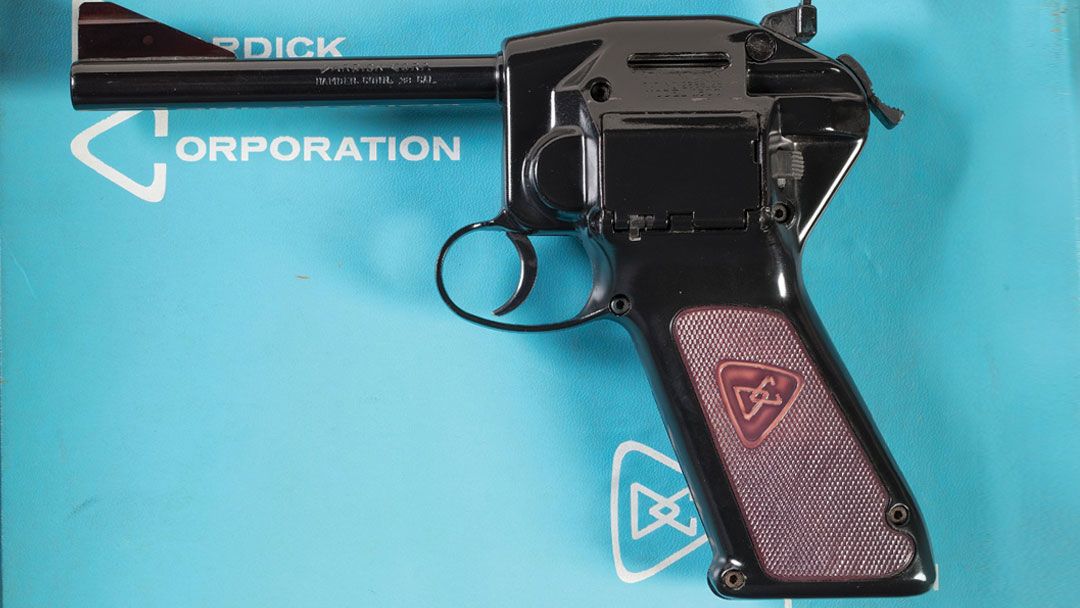
Produced in 1958, the Dardick Model 1500 attempted tobridge the gap between the revolver and semiautomatic pistol and combine the two into one of the most unique guns of its era. Though David Dardick’s designoffered someadvantageous features such as the ability to rapidly change calibers and quickly convert a pistol into a stocked carbine, the weapon’s unconventional ammunition, the triangle-shaped “tround,” was confusing to the public and had feeding issues. Ultimately, only 50 to 100 of the unusual Dardick revolvers were manufactured.
A Dardick Model 1500 auto-loading revolver with its box and two boxes of trounds. Available this December.
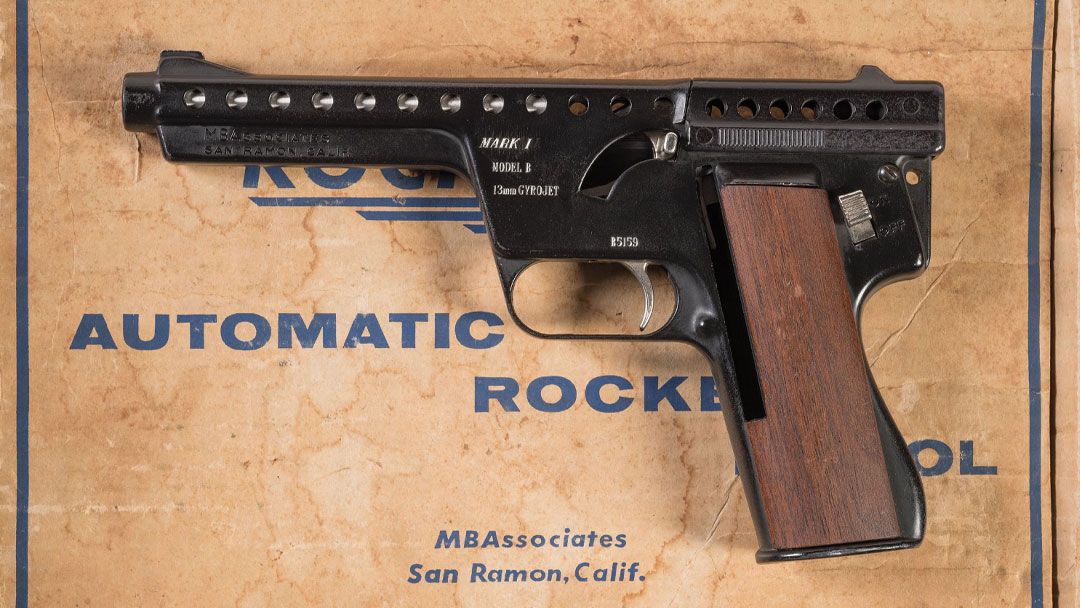
Where the Dardrick was designed around conventional cartridges wrapped in triangular casings, the Gyrojet pistol bullets discarded gunpowder in favor of rocket fuel. Developed by Robert Mainhardt and Art Biehl in the 1960s, the Gyrojet’s self-contained 13mm rocket ammunition allowed the pistol to be lightweight and mechanically simple.
Unfortunately, the Gyrojet’s shortcomings were notable, including a low initial muzzle velocity, unreliable ignition, and ammunition that costs nearly $3.00 per round. While the M.B. Associates company folded in 1969, these unique guns are highly desirable today within the collecting community.
A product of the 1960s, the Gyrojets are unique guns designed for a truly type of unique ammunition. This rare MBAssociates Mark I Model B Gyrojet pistol includes its original box. Available this December.
Covert Collectibles
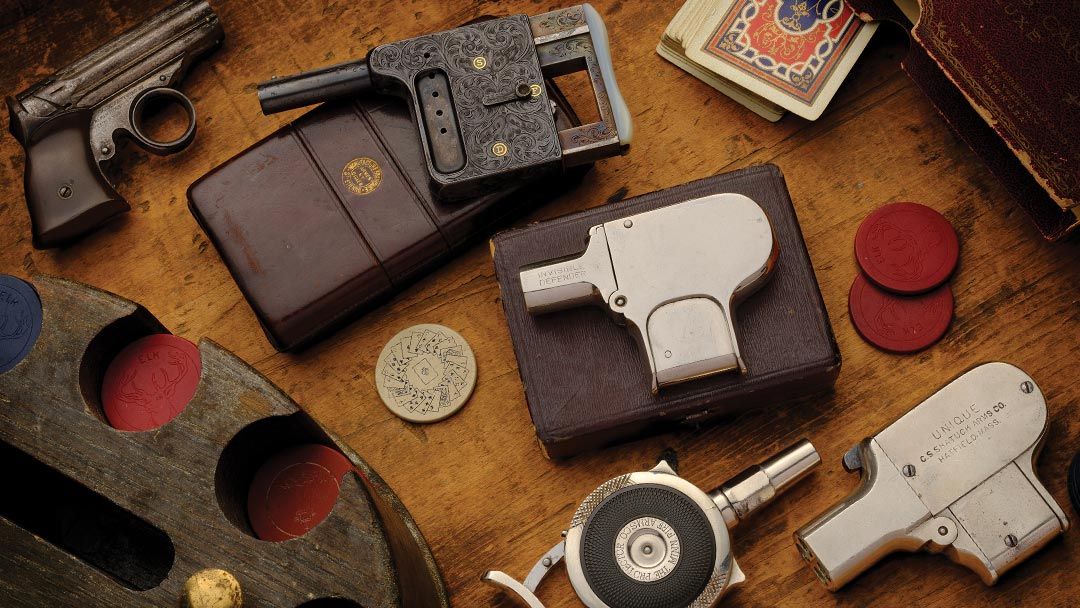
The palm pistols of the late 19th century took the concept of the handgun to its most literal extreme. Intended for concealed self-defense, the Le Protector palm pistol and its successors and competitors were offered in numerous variations, finishes, grips, calibers, and even presentation styles.
Rock Island Auction Company’s December 8 – 10 Premier Firearms Auction features some of the most unique guns from every genre and era of arms design, including numerous variations of the late 19th century palm pistol.
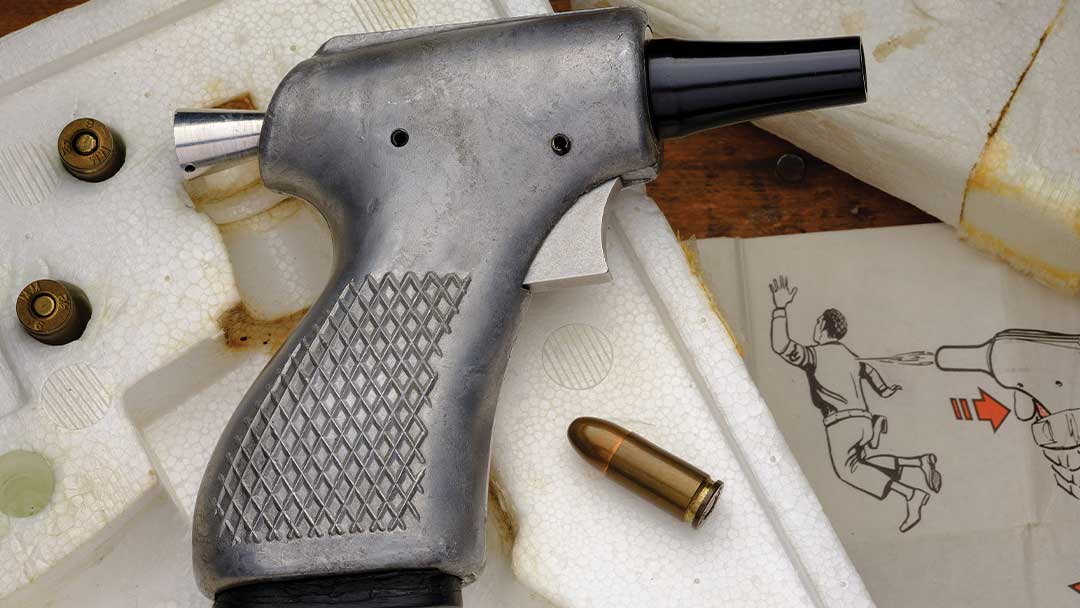
Our next gun is so rare the Central Intelligence Agency doesn’t acknowledge it exists. The 9mm Deer Gun, speculated by some to stand for “DEnied ARea pistol,” was developed in the early 1960s as a clandestine weapon to drop to Cold War allies. This incredibly unique gun took inspiration from the single shot Liberator produced for resistance fighters during WW2 and offers today’s collectors a chance to own a true piece of spycraft technology.
Similar to the Liberator single shot pistol of World War 2, the Deer Gun is lighter, simpler with only 12 components to the Liberator’s 23, and fires 9mm ammunition. Available this December.
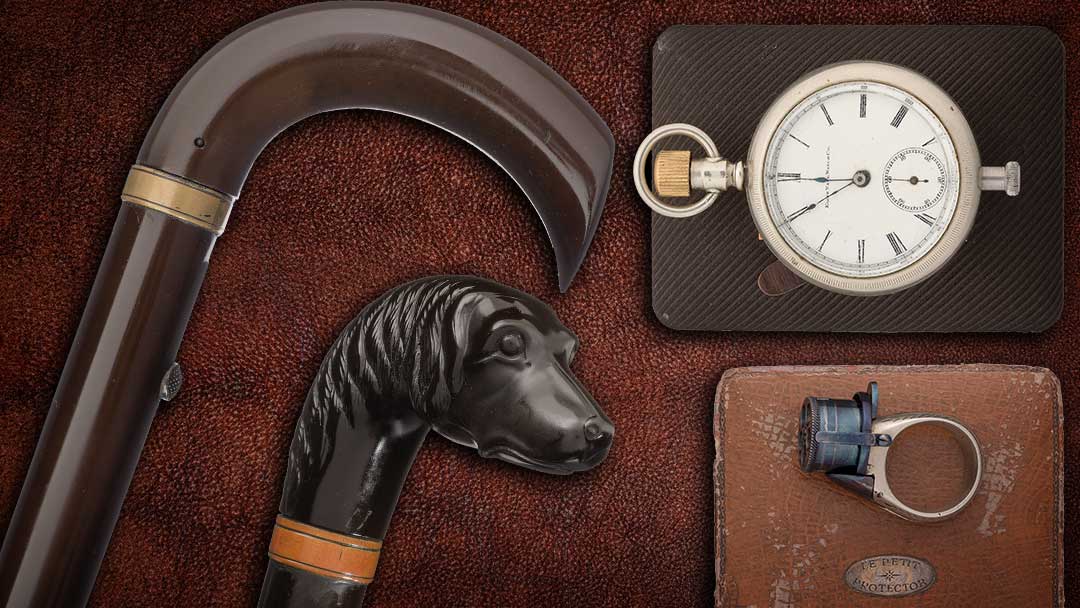
History is filled with examples of unique guns concealed inside everyday objects. The E. Remington & Sons cane guns were marketed to 19th century gentlemen who sought both self-defense and accessorization. The same concept is found in the ring gun and watch gun as well, two weapons that can be hidden in plain sight and deliver a low-caliber surprise to any would-be attacker.
The ultimate in Wild West concealed carry. From right to left: An E. Remington & Sons percussion cane gun, an E. Remington & Sons rimfire dog’s head cane gun, a Lebeda Engineering LLC pocket watch percussion pistol, and a cased Le Petit Protector Ring.
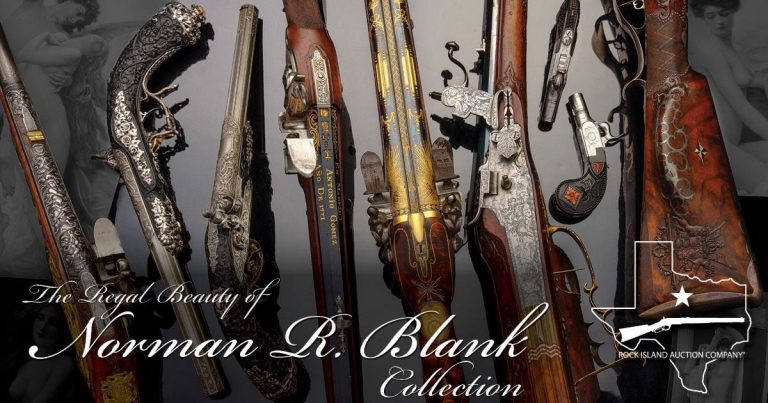
The arms of emperors and nobility from the European mainland bring their artistry, history, and craftsmanship to our December 8-10 Premier Auction. Such high art antique arms come courtesy of the Norman R. Blank Collection. Uncharted and largely forgotten, his collection is the last of the great European arms collections in private hands, from the last of the great students.
Three unique guns from The Tom Selleck Collection in a single lot: a Special Combat Government Model (MAGNUM-1 serial number), a Special Combat Officers’ Model (MAGNUM-2), and an MkV Series 80 Mustang (MAGNUM-3), all from the Colt Custom Shop with special serial numbers. Available this December.
When working or playing in the great outdoors, whether for a day hike, a camping trip, or working out in the fields, one piece of gear stands as an absolute necessity: a good pair of boots. They are not just footwear; they are the foundation upon which all outdoor adventures are built.
The right boots offer more than just protection from the elements and rough terrain. They provide critical support to your feet and ankles, reduce fatigue, enhance your grip and stability, and can even affect your overall energy levels and mood during a long day of activity. In essence, selecting the right boots is not just a matter of comfort—it’s a crucial step in ensuring safety, performance, and enjoyment in the wild.
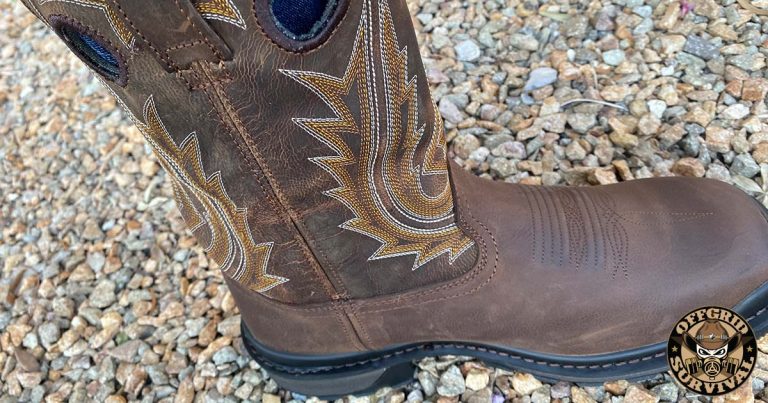
Right out of the box, these boots impressed me. You know that stiff, new-boot feel? Not here. The Rocky Legacy 32 felt like an old friend from the first wear. Super light, super flexible – it’s like they knew exactly what my feet needed.
Comfort: The square toe isn’t just a style statement; it’s like a luxury suite for your toes. And the expansion fit seam? Genius. Slipping these boots on and off is a breeze, no tugging or squeezing required.
Sturdy and Safe: The fiberglass shank adds a solid feel underfoot, great for those uneven trails. Plus, they meet the ASTM F2892 electrical hazard standard. I didn’t test this feature, but hey, it’s good to know it’s there.
Waterproofing: Full-grain leather that’s waterproof? Check. I trudged through some wet conditions, and my feet stayed as dry as a bone.
Hiking in them: The Vibram® outsole and EVA midsole combo is a dream. It’s slip-resistant, which came in handy on a recent hike. And the Rocky Rebound Footbed? It’s like walking on clouds, seriously.
They’re rugged yet comfortable – a tough combo to nail.
Instant Comfort: Just like the Legacy 32, the Rams Horn boots felt great right off the bat. No break-in blues here.
Support Meets Flexibility: The fiberglass shank and direct-attached PU midsole give you that sturdy feel without feeling like you’re lugging around cinder blocks.
Grip for Days: The oil and slip-resisting rubber outsole keeps you upright in slippery situations. I tested them on some slick rocks, and they held up like champs.
Feet feel great even after a long day: The Rocky Rebound Comfort technology is not just marketing speak. You can actually feel a bit of bounce in your step, which is a game-changer on longer treks or after a long day at work.
So, what’s the verdict? Rocky’s got something special going on with these boots. They nailed the balance between ruggedness and comfort. I’ve worn a lot of boots, and it’s rare to find pairs that feel broken in from the get-go. Whether you’re trekking through the backwoods or just need a reliable pair for for work, these boots won’t let you down.
John Mahlon Marlin started with single shot pistols before jumping into lever action rifles that have proved to be some of the most popular ever.
Marlin, who worked for a time at the Colt factory in Connecticut, set out on his own in 1870 after getting his first two patents. He made single shot pistols, single action revolvers, and single shot rifles before settling into lever action rifles with the Model 1881.
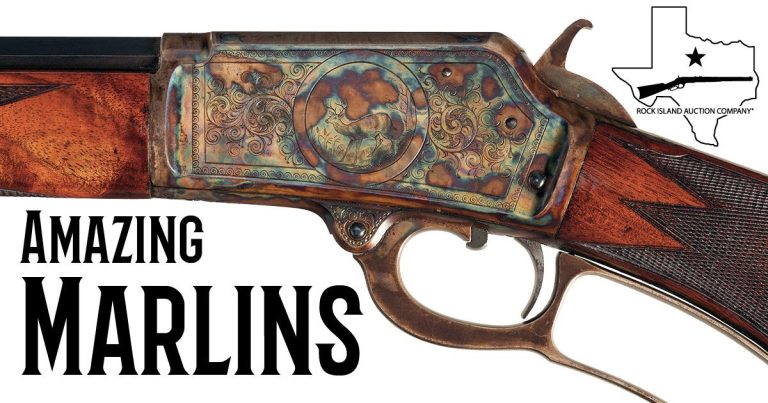
At its Dec. 8-10 Premier Auction in Bedford, Texas, Rock Island Auction Company will offer some of the finest conditioned Marlin long guns bearing bright, dazzling finishes and brilliant engraving and inlays, making them the envy of collectors.
John Marlin and His Guns
Born in 1836, Marlin was apprenticed to a machine shop before moving on to gun making. When Marlin set out on his own, he started with single shot Derringers in a range of calibers and whimsical names like “OK,” “Never Miss,” “Victor,” and “Stonewall.” Following the pocket pistols, he made single action and double action revolvers.
Marlin’s company was tasked with manufacturing and improving the action on the Ballard rifle, what was one of the finest single-shot rifles of the 19th century, making them from 1875 to 1891. During that time he recognized the rise of repeating rifles and came out with the Model 1881 lever action rifle.
The company would follow the 1881 with several other repeaters before branching to pump action and bolt action rifles, and shotguns. Marlin died in 1901 and his sons Mahlon and John Howard took over the company. The company was bought by a New York syndicate in 1915. Marlin became the biggest producer of machine guns in the world during World War 1, making Colt “Potato Diggers” and Browning Automatic Rifles.
A closeup look at the engraving on a Marlin Model 1897. The company had levels of engraving from the least expensive, Level 1, to the most expensive, Level 15. This gun is covered with Level 10 engraving that included a wildlife scene and extensive floral and scroll engraving as well as precious metal inlays.
Marlin Engraving
Conrad Ulrich did most of the engraving for Marlin from 1881 to 1910, establishing the patterns for the factory. He eventually left to work for Winchester. His son, Alden George Ulrich apprenticed at Marlin and worked there until the end of World War 1 when he, too, went to work for Winchester.
Standard engraving patterns were developed starting with the Model 1889. Company catalogs listed that engraving was available for $5 and up but the 1897 catalog listed grades of engraving but without examples. Customers could send for a book that showed engraving, checkering and prices.
According to the price book, the lowest level of engraving, Grade No. 1, cost $5 for scrollwork, borders and a game animal in a circle on the left, while the highest, Grade No. 15, provided for finely detailed game scenes, inlays and engraving on the barrel, hammer and lever, for $66. Gold and platinum inlays were available in Grade 10 on up.
Marlin Model 1881
Marlin’s first repeating rifle used an underhammer and tubular magazine but had issues, so John Marlin went back to the drawing board and with some tweaks the Model 1881 was born. Utilizing several patents, it was a side loading, top ejecting lever action that was chambered for several calibers but was the first repeater sturdy enough to handle the .45-70 big bore cartridge.
This Marlin Model 1881 is inscribed to former mayor of Sacramento, Calif., Clinton L. White, who graduated from Cornell College in Iowa in 1874 before heading west where he taught and practiced law, served in the California legislature, as deputy attorney general, as a colonel in the California National Guard, and a two-year term as Sacramento mayor. The gun has outstanding factory engraving by Conrad Ulrich of plain borders, floral scrollwork and punch dot background. The right side features a leaping stag in a circular panel, while the left has similar scroll engraving with White’s name on it. The rifle is topped by a Malcolm scope and is featured in William Brophy’s “Marlin Firearms.”
The Model 1881 magazine could hold nine cartridges that Marlin touted could be emptied in six to seven seconds. The action was simple but strong with an exposed hammer. About 20,000 were made, and 6,261 were chambered in .40-60 caliber like the rifle above. The gun was well received and used for hunting large game.
This special order Model 1881 Deluxe rifle has rare set triggers. Among the deluxe features are the checkered forearm and straight grip stock, casehardened engraved receiver and double set triggers. The receiver has floral scroll engraving and a punch dot background with a running buffalo in a circular panel on the right and a deer on the left side. A deer head tops the receiver. It is chambered in .45-70.
Early Marlin catalogs offered plenty of extra features that could be special ordered. Rifle butt plates could be ordered in place of standard shotgun butts. Extra-heavy, half-octagon, and different barrel lengths could also be ordered.
This special order factory engraved Model 1881 retains 75 percent of its case colors and nitre blue remains on the loading gate. On the right side of the receiver is a bear encircled by scroll engraving, while the left side features similar scrolling surrounding a running deer.
Marlin submitted the Model 1881 for U.S. military trials in 1881-1882 but the gun failed because of explosions in the magazine tube. The Model 1881 was well-praised but would set the stage for rifles with improved and more reliable mechanisms.
This blued Model 1881 is near mint with a special order barrel length of 28 inches, double set triggers and pistol grip stock that is checkered along with the forend. The gun is inscribed “C.F. Luebben” on the right side. He was a German immigrant who lived as a farmer/laborer in several western states.
Marlin Model 1889
The Model 1881 eventually gave way to the Model 1888, followed quickly by the Model 1889. The 1889 moved the ejection port to the right side of the receiver so that used cases were thrown to the side rather than straight up out of the gun. The solid top and side ejection port – a first for Marlin rifles — were the most obvious change from the Model 1888, but internally, a locking lug and firing pin system was added to prevent accidental discharge until the bolt was locked. The gun also included a cartridge carrier intended to stop jams.
The gun, called the “New Safety Repeating Rifle,” was chambered for pistol calibers of .32-20, .38-40, and .44-40. Well received, more than 55,000 Model 1889 rifles were made from 1889 to 1903.
Manufactured in 1893, this Deluxe Model 1889 has a casehardened receiver embellished with attractive factory floral scrollwork on a punch dot background, borders and a stag in a circular panel on the left side. The rifle is fitted with a highly desirable Freund elevation adjustable “V” notch rear sight. The casehardening pops from the receiver and is at 80 percent of its original finish. The barrel and magazine have 95 percent of their original bluing.
Marlin Model 1893
John Marlin anticipated a change from black powder to smokeless powder and knew his guns would need stronger steel for the barrels. He was awarded a patent for a new locking bolt system and a two-piece firing pin that could handle the stronger smokeless powder and started production of the 1893 with the intent for it to take the newer powder cartridges and longer cartridges. This Deluxe Model 1893 shown below is an outstanding example of turn of the century factory engraved artistry from Marlin.
A 1922 company catalog describes the Model 1893 as the “Ideal rifle for hunting all species of big game found on the North American continent.” Marlin manufactured 73,186 Model 1893 rifles.
Manufactured in 1895, the rifle’s casehardened receiver still shines and the engraving is highlighted by touches of inlaid gold and platinum borders. The floral scrollwork is on a stippled background with bordering. The right side of the receiver offers leaves outlined in gold and platinum while its opposite side is an oval panel depicting the detailed scene of a hunter taking aim at a buck ringed by gold and platinum borders. The scroll engraving and precious metal inlays continue on top of the receiver and barrel as well as the underside and the lever. The forend and wrist of the stock are finely checkered.
Marlin Model 1894
The Model 1894 returned to taking pistol cartridges with a short receiver for the same bullets as the early Models 1888 and 1889. The company stated “This rifle is practically the Model 1893 rifle adapted for shorter cartridges.” The company brought the rifle back in the 1960s to handle .44 Magnum rounds.
This Deluxe Model 1894 in takedown configuration is exceptional with its fine factory floral scrolling and borders on the receiver. The left side has a wildlife scene of two deer inside an oval. The scroll engraving carries over to the top of the receiver and the barrel near the breech. Casehardening is still visible on the trigger guard and hammer and a gold wash can be seen on the screws. The gun’s forend and wrist of the stock are checkered. Model 1894 rifles are rarely found documented as factory engraved.
Marlin Model 1897
John Marlin decided the company needed a .22 caliber takedown rifle, and the Model 1897 was born. The company even offered a canvas case that could be strapped to a bicycle frame. From the catalog: “This is just the gun to take on a summer vacation, or to the woods; it will come in handy for birds, snap shooting, killing time on rainy days, etc. it takes no room; it weighs next to nothing and can be put together and taken apart in less time than it takes to describe it. Just the thing to take on a bicycle trip through the woods and country.”
Manufactured in its first year of production, this Model 1897 has nearly top-tier embellishing. Grape leaves are engraved on a fine punch dot background and the highly detailed game scenes are bordered by gold inlay. The left side of the receiver shows a doe and buck in a forest scene with the oval panel rimmed in gold. The right side depicts a squirrel in a tree inside a round panel outlined in gold. Scrolling also decorates the forend cap and lever. Gold inlays can also be found on the forend cap and the lever. The breech of the barrel is also adorned with light scrollwork and lines of gold and platinum are inlaid. The forend and pistol grip stock have a factory checkering pattern using grape leaves. This rifle is accompanied by two additional barrels.
Marlin Model 20-S
The first of five pump-action takedown rifles Marlin made was the Model 20. Introduced in 1906 in .22 caliber, this rifle was built until 1916. In the company catalog, the Model 20 is described as “…a take-down .22 caliber repeater with the popular trombone action, using in the same rifle without any alteration or adjustment the short, long and long-rifle cartridges, black and smokeless as used in the Models 1892 and 1897.” The Model 20-S had a shorter locking bolt for a stronger receiver.
The Model 20-S is scarce to begin with, but add special order features and they become super scarce. Add monogramed initials “ESB” and it is truly a one of a kind gun. The punch dot background and scrollwork display both the beauty and precision of Alden George Ulrich’s work. A buck and doe are on the left of the receiver and a bloom is engraved on the takedown knob surrounded by engraving on the right side. The right side of the butt stock has a carved duck and floral carving on a stippled background.
Marlin Model 90 Shotgun
Marlin added shotguns to its line in 1898. In 1936, Sears and Roebuck requested Marlin make an over/under shotgun to offer for sale. The company agreed but only if it could also sell the gun to its customers. For Sears it was marked “Ranger” before World War 2 or “J.C. Higgins” after the war. It was first offered in 12 gauge but later also in 16 and 20 gauges.
Marlin wasn’t a company that provided many presentation pieces. We’ve seen the two that were given to Annie Oakley, and now famous actor and “King of the Cowboys” Tom Mix’s Model 90 shotgun. The company presented him the shotgun for his work on Marlin’s gun handling and safety program for American youths as well as promotion of the Marlin Model 100-S “Tom Mix Special” rifle.
This Model 90 shotgun was presented to “King of the Cowboys” Tom Mix. Marlin didn’t have an engraver on staff after Alden George Ulrich left after World War 1, so the work on this shotgun was performed by engravers Charles Preiss and Dan Cavanaugh. It features a gold inlay of Mix’s autograph surrounded by a six-shooter, holster rig, and Mix’s trademark cowboy hat interlaced with floral scrolling and borders on the right side of the action. Scrolling and depictions of Mix, roping, bronco busting, and riding a horse decorate the left side. The forend and pistol grip buttstock are also checkered.
Marvelous Marlins
John Marlin’s rifles often fell to second place behind Winchester, but his guns were amazing firearms that received engraving that matched and at times surpassed those of Winchesters’ engravers thanks to Conrad Ulrich Jr. Rock Island Auction Company’s inaugural Premier Auction at its Bedford, Texas location Dec. 8-10 offers an amazing opportunity for Marlin collectors to get their hands on some of the highest conditioned and fantastically adorned rifles and shotgun available.
Sources:
“Marlin and Ballard Firearms & History,” by Bill West
“Marlin Firearms: A History of the Guns and the Company that Made Them,” by William S. Brophy
Norman R. Blank had a taste for and appreciation of the finer things, whether it was Italian sports cars, fine wine or antiquarian books. That appreciation is made clear through his collection of fine firearms, particularly high art European arms.
Blank’s collection, populated with museum-quality antique firearms, had gone unseen and nearly forgotten for many years despite its fine examples from European craftsmen of the day, like Nicolas-Noël Boutet, Gastinne Renette, Durs Egg, Henry Nock, and Joseph and John Manton.
Rock Island Auction Company is proud to premiere numerous selections from the Norman R. Blank Collection in the company’s inaugural Bedford, Texas Premier Auction, Dec. 8-10. This amazing collection ranges from magnificent double rifles and cased flintlock shotguns to splendid double barrel pistols. Many of these museum-worthy arms feature brilliant embellishments and engraving and some with the provenance of royalty or aristocracy.
Fine Firearms: Gastinne-Renette Exhibition Pistols
Perhaps the pinnacle of the December offerings from the Norman R. Blank Collection is this pair of exhibition percussion dueling pistols with silver and silver gilt mounted, engraved, chiseled, and raised relief embellishments by Gastinne-Renette. These guns were displayed at the Exposition Universelle of 1855, the year they were made.
These pistols are true opulence on display and qualify as high art, from the squirrels and snakes battling on the hammers, to the silver gilt creatures that whimsically adorn it: a curled lizard on the pommel, a gilded monkey that is part of the ornate twigs of the trigger guard, and a beetle on the forend caps.
These sublime pieces were owned by famous marksman, author and Olympian Walter Winans who competed in the 1908 London Olympics and the 1912 Stockholm Olympics, earning gold and silver respectively. He also demonstrated dueling as a sport in 1908 using wax bullets. Winans wrote “The Art of Revolver Shooting,” and shared a Gastinne-Renette gallery in his book, “The Modern Pistol.”
These exhibition Gastinne-Renette pistols were displayed at the Exposition Universelle of 1855 in Paris as well as The Great London Exposition in 1862 and featured on plate six from “Masterpieces of Industrial Art and Sculpture at the International Exhibition, 1862 Vol. 1.” The ebony stocks feature coordinating relief carved vine scrolling that carries over to the three dimensional motif across the silver furniture.
Fine Firearms Made for the Imperial Habsburg Family
This pair of sporting rifles were made by Georg Keiser, one of the most talented gunmakers in Vienna in the 17th and early 18th century and whose many pieces survive in state and imperial collections across Europe.
A rollicking battle scene of horsemen attacking a castle decorates the flat plates while Athena is depicted on the hammer seated with a flag behind her and a shield under her arm. The left side of the rifles bear the golden coat of arms of the Habsburgs, and almost certainly Holy Roman Emperor Charles VI considering that the guns were likely made in the early 18th century. The gilt brass heel plate tang of one rifle has a bust of a woman and the second has a bust of a man in armor.
These rifles feature several parts of gilt brass with engraved scroll patterns, and the stocks features relief carved scroll patterns and border molding. The guns have adjustable double set triggers.
Fine Firearms of King Frederick I of Wurttemberg
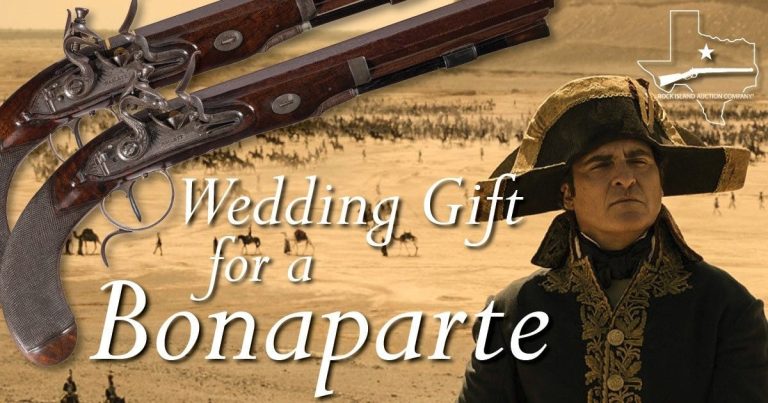
Frederick I rose to power in 1806 after Wurttemberg, located in what is now southwest Germany, broke away from the Holy Roman Empire, elevated from duchy to kingdom. He joined the Confederation of the Rhine a few months later, aligning himself with Napoleon on his ill-fated campaign against the Russians. He later flipped allegiances in 1813, standing alongside Great Britain and Russia.
This silver mounted and engraved flintlock sporting gun was made by Christian Koerber, a court gunmaker to the Prince of Hohenlohe and the Duke of Wurttemberg in the middle to late 18th century. It is engraved with King Frederick’s crowned monogram and his coat of arms is carved in high detail on the left side of the stock. The gun is blued and decorated with silver inlaid scroll and floral patterns while the barrel offers a gold vent liner and silver “spider” base blade front sight. The furniture is also silver and includes pierced scroll pattern accent plates.
This flintlock sporting gun of King Frederick I of Wurttemberg has a fire-blued barrel and gold vent liner with inlays in the stock and butt. The lock is bright burnished steel and has a gold-lined priming pan. The gun is possibly part of a larger garniture for a royal hunting collection.
Fine Firearms from John Manton
A cased pair of engraved and gold inlaid “hair rifled” double barrel flintlock pistols made by John Manton have single triggers for their over/under barrels and a subtle brown finish to the barrels and casehardening on the receivers, making them an opportunity for a collector to leap at guns of such condition.
Words on the upper barrels are in gold along with a band at the breech. A single trigger fires both barrels – first the lower as is Manton’s practice because “the lower barrel disturbs aim less.” The barrels have faint “hair” or “scratch” rifling to fire more accurately.
The casehardened flats are signed “Manton” and have border and floral engraving. These John Manton over/under pistols have blued trigger guards and feature floral and martial themed engraving. The pistols appear in “The Mantons: Gunmakers” on page 79.
A very fine cased engraved John Manton & Sons double barrel flintlock shotgun is a spectacular side-by-side from the late flintlock era that comes from the collection of the Earl of Plymouth. This shotgun, produced about 1835, bears escutcheons on both the stock’s wrist and the case’s lid of a griffin and wreath over the initials RHC for British conservative politician Robert Henry Clive, the younger son of the first Earl of Powis and the Countess of Powis.
Purchased in 1962 from the sale of the Earl of Plymouth’s guns, this flintlock shotgun has browned Damascus barrels, floral engraving that extends onto the patent breeches and their platinum liners. Platinum also lines the touch holes.
This double barrel flintlock shotgun made and engraved by John Manton & Son is accompanied by a mahogany case with a suite of accessories including a leather-bound Hawksley flask, leather flint wallet, flints, spare screws, wad punch, double turnscrew, and small brush.
Fine Firearms for Hunting
Norman R. Blank was a big game hunter and even obtained a professional hunter license at one time, so sporting arms are a significant part of the offerings in his unrivaled collection, like this very rare Henry Nock 4 bore flintlock dangerous game rifle.
Nock was a highly regarded gunmaker in his heyday in London, from 1772 until his death in 1804. His patent breech of 1787 was a considerable advancement in the development of flintlock firearm, and this gun is an early example, from 1790-1800 and the gun’s lower flat is marked “HN/PATENT” in a small gold-lined oval The gun has a browned Damascus barrel with nine groove rifling and has a blued patent breech with a gold-lined touch hole and gold inlaid band. The breech is engraved with floral scrollwork and a small martial trophy. The lock also has a gold-lined rainproof pan and roller.
This Henry Nock 4 bore flintlock dangerous game rifle has a single set trigger and figured stock with a dark horn forend cap, blank wrist escutcheon, a checkered wrist, and cheekpiece.
This very fine engraved Alexander Henry 1882 patent hammerless lever-cocking sidelock double rifle is featured by serial number in the Donald Dallas book “Alexander Henry: Rifle Maker” as a best grade double hammerless rifle in 450/400 made in 1889. Built on Henry’s classic lever-cocking patent, only 241 rifles were built on the patent from its issuance to the end of the 19th century.
Beautifully casehardened, the action has tight scroll engraving and a checkered forend and pistol grip stock that are well-figured with an oval shadowline cheekpiece and rubber recoil pad with black spacer.
The casehardened action of this Alexander Henry 1882 patent hammerless lever-cocking sidelock double rifle has a cocking indicator that has gold inlaid “cocked” markings on both sides and a silver inlaid “safe” on the safety.
Antonio Gomez was one of the most influential Madrid gunmakers in the third quarter of the 18th century. His exceptional Spanish engraved and gold inlaid smoothbore sporting gun has a French-influenced Madrid lock with a gold-lined “crown/ANT./GO/Mez” stamp between the cock and the priming pan with floral scroll engraving on the hammer and action with “Antonio Gomez 1771/Madrid” in a banner under the pan on inlaid gold contrasted by the relief engraving. Sunken gold-lined marking of a cross, three flowers and the “crown/ANT./GO/Mez” appear at the breech and a stamping similar to the one under the firing pan.
The blued barrel of this Madrid 1771 smooth bore sporting gun has gold inlaid scrolling across the top of the barrel along with “EN MADRID/ANTONIO GOMEZ/ANO DE 1771 in gold as well.
Originating from Carlsbad, Bohemia in the early 18th century, this flintlock sporting rifle has superb relief chiseled and carved embellishments. The distinctive two stage barrel has relief chiseled ornamentation along it as well as classical figures and scrollwork along with a spread wing eagle atop the breech ahead of the two-leaf rear sight.
The right side of the receiver offers a traditional Bohemian hunting scene with a rifleman taking aim at a stag among scroll patterns and beveled edges. The left side plate is gilt brass with several patterns swirling about an eagle, a dog and a hunter and a figure of Diana on the heel plate tang and an eagle on the heel plate.
The stock of this traditional Bohemian hunting rifle has relief carved scroll patterns, incised molding and a large cheek rest. The patchbox lid has an engraved scene involving three figures and a dog.
This 17th century wheellock hails from Eastern Europe and shows off the “Tschinke” style of the town of Teschen in Upper Silesia, now known as Cieszyn in modern-day Poland. The swamped barrel is approximately 120 bore with panels of brass inlays of floral and entwining line engraving along the breech. The lock is engraved with floral scrollwork and brass plates offer bird motifs. The lock is uniquely shaped, almost appearing as a mythical creature prepared for action.
Dating from the 17th century in an area that is now part of Poland, this Tschinke-style wheellock has brass inlays along the full-length fruitwood stock with a narrow sliding patchbox cover on the right and a two-headed eagle within a roundel on the left side of the stock. It is also decorated with mother-of-pearl roundels, leaves, diamonds, and dots, some of which is engraved.
The stunningly well-figured wood used for this Pierre Greverath flintlock double barrel shotgun from the Armory of Schloss Dyck is eye-catching but easily surpassed by other aspects of this gun. Greverath was court gunmaker to Count Franz Johann Wilhelm von Salm-Reifferscheidt-Dyck and his heir at the baroque chateau of Schloss Dyck in northwestern Germany.
Made in the Parisian fashion and dating to about 1820, its gold embellishments are singularly amazing and the silver furniture is stunning in its relief Rococo motifs. The gold wrist escutcheon has two addorsed salmon, the crest of Salm-Dyck. The blued round barrels have gold vent liners and a highly detailed gold Rococo-style thunderstorm at the breech.
The furniture of this double barrel flintlock shotgun from the armory of Schloss Dyck is silver with floral designs and hunting motifs. Inlaid silver and gold accents highlight the stock bordering each piece of furniture. The Rococco relief gold thunderstorm at the breech is simply stunning.
This over/under superposed load four-shot single trigger percussion rifle made by Le Page Moutier may be the most interesting firearm on offer this December from the Blank Collection. In a bit of intriguing and ingenious engineering, the gun has four hammers that are nicely engraved to match the engraving on the locks and barrel. The front two front hammers strike the lower nipples and the rear hammers strike the upper nipples, fired by the single trigger configured to drop one hammer at a time.
The rifled barrels are finely patterned Damascus with etched panels of relief floral scrollwork at both the muzzles and breech end. The fine craftsmanship continues with etched floral scrolling covering the locks and the furniture surrounding wildlife depictions of a leaping wolf on the right lock and a deer on the left.
This superposed Le Page Moutier over/under percussion rifle has a number of animal scenes. A wolf and a deer appear on the sidelocks, while a wildcat is featured on the trigger guard bow, a boar’s head adorns the trigger guard tang and an eagle soars on the upper tang and heel plate.
This very fine cased Westley Richards double barrel percussion shotgun manufactured about 1880 has a browned Damascus barrel with a bead front sight, and the locks and furniture have scroll and floral engraving, while the wedge and initial escutcheons are plain nickel-silver.
The case coloring still pops from the locks of this percussion Westley Richards double barrel shotgun. It comes with a mahogany case lined in green baize and a number of accessories as well as a 1966 invoice from Westley Richards & Col Ltd. to Norman Blank.
Fine Firearms: Modern Sporting Gun
As a cartridge gun, this engraved John Rigby & Co. Nitro Express sidelock ejector double rifle is a rarity for the Blank Collection, a firearm built in the 20th century, but not by much. Made in 1913, it was owned by George Horatio Charles Cholmondeley, 5th Marquess of Cholmondeley and Earl of Rocksavage and a veteran of the Second Boer War and World War 1. A gold initial oval on the bottom of the stock has an earl’s coronet over an “R.”
The blued barrels are respectively engraved “SPECIAL .470 BORE BIG GAME RIFLE” and “FOR SPECIAL CORDITE CARTRIDGE BULLET .500 GRS.” They are each engraved with a band of stylized foliage at the breech end. The underside of the barrels offers a warning “CORDITE 75-500 MAX.”
The casehardened grip action has a manual safety with gold inlaid “SAFE” with button release and a blued toplever. The side locks are each signed “Jno. Rigby & Co.” in Gothic script. The furniture includes a casehardened trigger guard, dark horn pistol grip cap, and rubber recoil pad. The raised flat file cut matted rib is signed in Gothic script “John Rigby & Co: 43. Sackville St. London.”
Fine Firearms: French Sporting Arms
Extremely ornate, this Francois Huet of Chambery flintlock sporting gun has relief chiseled and carved adornments. Originally made in the city of Chambery in southwest France in 1675, it was updated later in life with a more modern barrel and stock. Its rounded lock features exceptionally fine decoration and mixes low relief chiseled and engraved ornament involving foliate scrolls inhabited by bestial and animal masks. It is signed by the maker in two places on the right side, the first beneath the priming pan with the signature “HVET/A CHAM/BERY” within a small roundel held by a cherub with a Turk’s head at its feet. The second signature is engraved behind the cock.
The three-stage blued barrel appears to have been replaced about 100 years after the gun was originally made and features tapering round forward stages divided by a turned girdle and a partially fluted octagonal to polygonal breech section with border engraved iron tang. The barrel is retained by pins and a single silver barrel band held in place by a spring clip formed as the tongue of a silver sea serpent set into the right side of the forearm of the stock. The barrel is fitted with elaborately engraved, chiseled and pierced front and rear sights from the original 17th century barrel.
The trigger plate, trigger guard, heel plate and side plate from the original 17th century gun are iron. The back of the trigger is finely pierced and is engraved with a serpent while the finely pierced side plate is engraved with a serpent with scrollwork swirling around masks, a bird, more cherubs and an elven figure. The stock features foliate carving.
Fine Firearms from Versailles
This pair of engraved and relief carved percussion boxlock pocket pistols are from Nicolas-Noel Boutet, gunmaker to King Louis XVI and Napoleon and the Versailles Manufactory in about 1810. They were converted to percussion pistols between 1830-1840. This stunning cased pair have finely detailed engraving that is coordinated between the two but offering varied details. Both feature small animal scenes surrounded by vases flowing with flowers and plants accompanied by garlands and decorative borders.
The dark grips on these pistols from the Versailles Manufactory have beautiful relief carved floral patterns and bead borders. An accompanying ebony veneer case opens to a dark green velvet lining trimmed inside with bullion thread lace trim.
This light flintlock fusil also originates from Boutet’s Versailles Manufactory. Boutet became gunmaker-in-ordinary to King Louis XVI in 1788 and the artistic director of the new Versailles arms factory in 1792 before taking over as head director six years later, working under Napoleon’s direction. The manufactory made French military weapons as well as some of the most magnificent presentation arms ever made.
This delicate flintlock fusil features burnished steel parts with a three quarter length walnut stock that cradles the fire blued barrel. The gun has subtle gilded highlights including a girdle at the barrel’s transition point, around the vent, and “BC,” “NB,” and “LC” maker marks in small ovals atop the barrel.
Fine Firearms: Pistols
This remarkable all-metal flintlock belt pistol hails from the highlands of Scotland, made by famed Leith gunmaker Thomas Murdoch about 1770 to 1780. This is a classic example of a Highland pistol with a distinctive “ram’s horn” butt. The gun is nearly covered with scroll engraving accented by silver.
(pic) Thistle flowers feature prominently on this gun, adorning both the silver-capped button trigger and a silver ball dangled between the distinctive curled ram’s horn butt. A belt hook on the left side also features full engraving.
This pair of silver mounted and engraved double barrel flintlock holster pistols by H.W. Mortimer & Son has smoothbore Damascus barrels and platinum bands of the breech plugs and a starburst pattern on the rib of the breech plugs. The locks each have scroll pattern cocks, frizzen spring rollers, sliding half-cock safeties, border and martial engraving.
The lower tang on these double barrel flintlock holster pistols by H.W. Mortimer & Son has a “Q” denoting the year as 1811, while other marks include a lion, a crowned head, and the initials “MB.”
Highly regarded 18th century London gunmakers of the Griffin family took on that role for the royal family as well. The family is also believed to have been the first makers of double barreled firearms. In 1771, Joseph Griffin took John Tow, who had worked with the Griffins, into partnership, making this pair of double barrel boxlock flintlock pistols among the first made under the Griffin & Tow name. This pair of pistols is featured on page 116 of “British Gunmakers Messrs. Griffin & Tow and W. Bailes, 1740-1790.”
The pistols have slightly swamped round barrels and are engraved with a band of beadwork around the muzzle. The bag-shaped butts are made of figured walnut and have silver wrist escutcheons and pommel caps with relief cased and chased martial and scroll ornamentation, along with floral and scroll engraving of the Rococo style.
Floral engraving and scroll ornamentation are on the breech ends of the barrels and the boxlock actions of this pair of Griffin & Tow double barrel pistols that date to the early 1770s.
This rare Isaac Barber brass double barrel flintlock blunderbuss has a snap bayonet that sits flush between the two barrels on top. It has pineapple finials on the trigger guards that are joined by shell and floral engraving as well as a classic martial motif on the heel of the buttplate.
The iron breech of this Isaac Barber double barrel blunderbuss is adorned with border engraving where it meets the 16 gauge barrels. The barrels have commercial Tower proof marks of a crown over crossed scepters stamped twice.
Fine Firearms: A Spear?
This German hunting spear made in Saxony about 1580 was once in the collection of famed American newspaperman William Randolph Hearst. The spear measures about 79 inches in length with a leaf-shaped blade and an integral hexagonal socket base. The metal is extensively etched with fine scroll decoration over most of the surface and both sides of the blade where a scene of three eagles perch in a tree as a dog chases a wild boar around the base.
Braided multi-color cloth covers the bottom of the socket and top of the shaft with a 9-inch tassel hanging from it. The shaft is about 68 inches long and 1 1/2 inches wide with a tight black leather cover over carved and shaped ribbing, rings and steel tack studs to provide grip.
Fine Firearms of the Norman R. Blank Collection
The beautifully bespoke guns of the Norman R. Blank Collection are phenomenal examples of fine firearms from the royal courts and weapon makers of Europe that serve as museum-worthy pieces from the Baroque and Neoclassic eras that in some cases are high art. These pieces can be seen in all their glory at the Dec. 7 preview day in our new facility in Bedford, Texas, followed by the Premier Auction, Dec. 8-10.
The Girardoni repeating air rifle stands as the most famous type of antique air gun platform thanks to its close association with the Lewis and Clark Expedition. After decades of research, Dr. Robert David Beeman, author, arms collector, and America’s father of modern airgunning, discovered what many historians consider the very gun carried by Captain Meriwether Lewis, a Model 1780 Girardoni air rifle.
An extremely rare 18th century Austrian Military Model 1780 Girardoni air rifle like the kind that was likely carried on the Lewis and Clark Expedition. Available this December.
The scarce few surviving examples of the Girardoni air rifle are highly desirable today, with most being institutionalized. December’s auction includes several unique examples of the Girardoni platform, as well as a multitude of other rare antique air gun models that would make worthy additions to even the most advanced arms collections. Click on the images throughout this article to learn more about each of these fascinating firearms.
Invented in the late 16th century, air guns were a type of firearm that used gas confined under pressure to power their projectiles instead of gunpowder. Though often more complex to produce, air guns were much quieter than their black powder contemporaries and didn’t create obstructing smoke, didn’t foul easily, were less affected by the elements, offered a more reliable “ignition” system, and in almost every case could be reloaded faster than conventional firearms, with some models offering the user the ability to load from a prone or sitting position rather than standing.
An 18th century Bohemian crank handle tip-up barrel air pistol by Georg Lippert of Eger. Available this December.
Antique air guns were constructed in a myriad of configurations and were powered by a number of distinct mechanisms, including bellows, cranks, side levers, and compressed air stored in ball reservoirs. The latter ball reservoir system, a type of pneumatic system, emerged in the late 17th century and would serve as a predecessor for detachable stock systems like the famous Girardoni air rifle.
A documented 18th century, English flintlock style, ball reservoir muzzleloading air rifle by George Wallis of Hull. Available this December.
The Girardoni Air Rifle
Gun designers had been experimenting with ways to achieve multi-shot firearms since the earliest matchlocks and volley-fired systems. The pneumatic reservoir offered an ideal platform for the repeating firearm since a ball, barrel, or stock reservoir could store enough compressed air for numerous charges. Perhaps the most prolific pneumatic system was the Girardoni air rifle.
A relief carved and engraved Girardoni system repeating stock reservoir dual caliber sporting air rifle/shotgun by Stormer of Herzberg. Available this December.
The Girardoni (sometimes spelled “Girandoni”) was a stock reservoir air rifle design introduced around 1778 by Austrian master gunsmith Bartolomeo Girardoni. Like other stock reservoir air guns, the Girardoni air rifle employed a detachable butt reservoir, a metal canister that could be unscrewed from the gun and filled with compressed air through a needle value using a stirrup pump. The air was stored under pressures upwards of 800 psi. Each trigger pull released just enough air from the reservoir to propel a bullet.
The Girardoni air rifle system utilized a gravity-fed magazine tube on the right side of the barrel that could be quickly loaded, and new rounds could be chambered by elevating the muzzle and pressing a spring-loaded slider sideways. The Girardoni air rifle was chambered in fairly large calibers suited for hunting deer, boar, and other medium-sized game, with an effective lethal range of up to 150 yards. According to Dr. Beeman’s research, a large-bore Girardoni air rifle could produce “200 ft lbs. muzzle energy at 750 psi pressure, but that a muzzle energy of up to 150 ft. lbs. would be more typical at conservative pressures.”
The Girardoni air rifle system was widely copied, as illustrated by the example below from London gunmaker Jackson Mortimer that was manufactured sometime between 1811 and 1818. This Mortimer sporting piece shares numerous similarities with the Austrian military pattern 1780 Girardoni air rifle, and its green felt-lined walnut rifle case is stocked with an assortment of accessories typical for the Girardoni platform, including two extra buttstock air reservoirs, a bullet mold, an air pump with a combination wrench/pump handle, an extra trigger, and a canvas bag containing .46 caliber lead balls.
An engraved Girardoni system repeating stock reservoir sporting air rifle by Mortimer of London, with case and accessories. Available this December.
The Austrian Military Model 1780 Girardoni Air Rifle
Though initially designed for the sporting market, a military model of the Girardoni air rifle was produced for the Austrian sharpshooters in 1780. More than 1,300 of these Model 1780 Girardoni air rifles were manufactured in Penzig, Austria, though fewer than 25 are known to exist today according to Dr. Beeman.
The Austrian Military Model 1780 Girardoni air rifle pictured below is chambered in .46 caliber and features an octagon barrel with 12-groove rifling, a dovetail mounted blade front sight and notch rear sight, a 21 shot gravity-fed tubular magazine, a screw-off metal buttstock air reservoir, and a walnut stock with incised border carvings.
The Model 1780 Girardoni air rifle served the Austrian military from 1780 to 1815. These advanced air rifles were arguably the first widely issued repeating martial firearms. Decades before the Colt and Winchester became synonymous with the fast-loading repeater, the Girardoni rifle introduced the concept of rapid-fire to the European battlefield in an era when the standard service weapons were muzzleloadedflintlocks.
This desirable Austrian Military Model 1780 Girardoni air rifle would be a prized centerpiece in any advanced firearms collection. Available this December.
The Model 1780 Girardoni air rifle was capable of 30 to 40 shots on a single charged air tank, although original instructions to Austrian soldiers advised them to only fire one loaded tube of 20 balls before switching to another full air reservoir due to loss of power as the air tank’s pressure dropped.
The Austrian riflemen traveled with assistants who repressurized the stock reservoirs. Refilling Girardoni air rifle tanks with a hand pump took around 30 minutes, and in later years this process was significantly accelerated with more efficient wagon-mounted pumps.
The Girardoni Air Pistol
The versatile Girardoni air gun system could be applied to handgun designs as well, like this superbly crafted presentation-grade embellished Girardoni pistol featured in ‘Blue Book of Airguns, Thirteenth Edition’ by Lisa Beuning, Dennis Adler, Tom Gaylord, Dr. Robert Beeman. The authors note that the pistol is only one of two examples physically signed with Girardoni’s maker’s mark and further state, “Its elegant construction suggests an important, perhaps royal, customer.”
A rare presentation quality, gold plated and silver inlaid, one of two pistols known as signed by Girardoni. Available this December.
Long guns using the Girardoni repeating system were far more common due to a pistol’s more limited air reservoir capacity. Girardoni-style air pistols were expensive to produce and often lavishly embellished like the German example pictured below. Closely modeled after the Girardoni system, this rare air pistol features a round barrel chambered for .34 caliber with fine-groove rifling, a dovetail mounted blade front sight and notch rear sight, walnut stock, and a leather-wrapped metal stock reservoir.
An engraved Girardoni system repeating air pistol by E.A. Stormer of Herzberg. Available this December.
What Air Rifle was used by Lewis and Clark?
According to decades of evidence, the Girardoni air rifle was the famous air gun model carried during the monumental Corp of Discovery expedition led by Meriwether Lewis and William Clark from 1803 to 1806.
In preparation for the dangerous journey to chart the newly purchased Louisiana Territory, Captain Lewis acquired an abundance of supplies and weapons, including 15 flintlock rifles, 176 pounds of gunpowder, and “one long-barreled rifle that fired its bullet with compressed air, rather than by flint, spark and powder.”
This extremely rare Austrian military Girardoni repeating air rifle is of the exact kind believed to have been carried on the Lewis and Clark Expedition. Available this December.
The Lewis and Clark Expedition spanned 8,000 miles in 28 months, and their air rifle proved instrumental in keeping the party safe. Though their air rifle was used to take game during the journey without expending precious gunpowder, it also served as a means to impress the numerous Native American tribes the expedition encountered with its remarkable rate of fire and seemingly mystical properties.
The air rifle is mentioned frequently in Lewis’ Journal, including at least eight separate occasions between August of 1804 and May of 1806 where the weapon was demonstrated to Native Americans. In an account from August 17, 1805, Lewis wrote, “I also shot my airgun which was so perfectly incomprehensible that they immediately denominated it the great medicine.”
An entry about Lewis’ air gun that was recorded prior to the expedition by Thomas Rodney, politician, federal justice, and Revolutionary War veteran, describes a weapon that closely matches the properties of a Girardoni air rifle.
Sept. 8, 1803. “… He showed us his air gun which fired 22 times at one charge. He showed us the mode of charging her and then loaded with 12 balls which he intended to fire one at a time; … but when in perfect order she fires 22 times in a minute. All the balls are put at once into a short side barrel and are then dropped into the chamber of the gun one at a time by moving a spring; and when the trigger is pulled just so much air escapes out of the air bag which forms the breech of the gun as serves for one ball. It is a curious piece of workmanship not easily described and therefore I omit attempting it.”
(Right) Captain Lewis demonstrates his air rifle in a painting by Warren Lee. (Left) Dr. Jeffrey Clarke, Chief Historian of the Army, receiving the Beeman Girardoni air rifle from Dr. Robert D. Beeman and Mrs. Toshiko K. Beeman in 2007.
Dr. Robert Beeman dedicated significant research to the Lewis and Clark air gun. After a five-decade search and an international review of his findings in 2006, Dr. Beeman and the Lewis and Clark Trail Heritage Association announced the apparent discovery of the Lewis air rifle. Dr. Beeman summarizes his findings on page 599 of ‘Blue Book of Airguns, Thirteenth Edition’ as follows:
“There is strong evidence in the Lewis and Clark Expedition journals suggesting that this specimen is the air rifle carried on the Lewis and Clark Expedition. Many arms and historical experts consider the Lewis Airgun, ca. 1790, as the world’s most important and most valuable airgun.”
In 2007, Dr. Beeman donated the Lewis and Clark Girardoni air rifle to the U.S. Army War College, Army Heritage and Educational Center, at Carlisle, Pennsylvania. The Girardoni air rifle for sale at Rock Island Auction Company this December is a close match to the Lewis and Clark gun and was owned and studied by Dr. Robert Beeman during his years of extensive research on the topic.
(Top) The Beeman Lewis and Clark air rifle displayed in the U.S. Army War College Army Heritage and Educational Center. (Bottom) The Austrian Military Model 1780 Girardoni air rifle offered in RIAC’s December Premier Auction.
Girardoni-Inspired Air Guns
The Girardoni air rifle design was copied by numerous gunmakers from continental Europe along with a rare few from England such as the previously discussed Mortimer example. The three air rifles pictured below illustrate the similarities and differences encountered in iron stock reservoir air guns styled on the Girardoni air rifle system.
Many antique pneumatic air guns incorporated features from their flintlock contemporaries. This was usually done to offer users a firearm that felt somewhat familiar, with some flintlock-style air guns employing a hammer to cock the weapon and concealing the reservoir with a traditional wooden stock. A concealed reservoir could only be easily accessed through a trapdoor on the buttplate and couldn’t be quickly swapped out and filled detached from the gun. However, traditional wooden stocks would have made the air guns more comfortable to shoulder and handle, particularly in extreme heat or cold.
Though the Austrian Military Model 1780 Girardoni air rifle offered numerous advantages over conventional arms of the day, it was a costly weapon to produce and upkeep, its air tanks could be relatively fragile in the field, it required specialized training to operate, and rapidly improving conventional rifle technology in the early 19th century was capable of substantially out-ranging the Girardoni.
Stock reservoir air guns like the Girardoni air rifle continued to be produced for the sporting market in meaningful quantities through the 1850s, when repeating firearms like the Colt revolving rifle and fast-loading breechloaders like the Sharps began hitting the scene.
A rare Sharps Model 1849/First Model “Nippes” breechloading sporting rifle, serial number 25. Available this December.
Low-velocity air gun designs like the bellows system continued to find favor in the sport of indoor gallery shooting, more often loaded with wax bullets or reusable darts in place of conventional lead balls. The mid-19th century crank handle tip-up barrel air pistol pictured below follows the wheellock-style aesthetic observed in many Germanic style bellows designs.
A rare 19th century relief carved Germanic bellows crank handle tip-up barrel air pistol. Available this December.
America also saw its fair share of air gun models produced for target shooting. One such style, the lever air gun system, operated by filling a cylinder reservoir each time they were pulled back for cocking, like the three mid-19th century examples below manufactured in the Northeastern United States. Though firing at low velocities, gallery-style air guns offered ample accuracy for indoor target shooting and became a popular form of entertainment.
Finding any Girardoni air rifle for sale is a rare event, but five examples in a single auction is nearly unheard of. The exceptional variety of air guns featured here represents a small sample of the scarcity, history, and condition on display in Rock Island Auction Company’s December 8 – 10 Premier Firearms Auction, a remarkable opportunity for arms collectors of every aspiration.
There are many, many overdone field knife sharpeners on the market but very few that I would consider carrying regularly. That is why I love my USA-made, easy-to-carry Hewlett Two-Sided Diamond Sharpeners with medium (600) and fine (1800) grits. I have had a couple of these knocking around for years now. It might be the most versatile, easiest-to-carry, field sharpener I own.
These diamond plates are the right size – small enough to carry in their included sleeve and large enough to actually work. They are just under 4″ long, 1.25″ wide, and just about 1/16″ thick. They weigh just over 1 ounce.
I rarely use the medium side but it is coarse enough to get some mild reprofiling done in the field should you take some chips out of an edge. The fine side is all I usually need to touch up an edge before finishing with a quick strop.
I have even used mine to strike a ferro rod and scrape tinder like fat wood thanks to the crisp edges on the plate. It isn’t meant for that and I am sure it isn’t good for it… but it works.
The epic journey of Napoleon Bonaparte as he ruled France and attempted to conquer Europe comes to the silver screen this week with Joaquin Phoenix as the French Emperor. “Napoleon,” directed by Ridley Scott, tells of the rise and fall and rise and fall of Napoleon and his wife, Empress Josephine.
Untold amidst Napoleon’s saga, but a yarn worth unraveling is the impetuous love affair of Napoleon’s youngest brother, Jerome, and Elizabeth Patterson, a Baltimore socialite in 1803, and the fallout within the young Bonaparte’s family. It’s a story that is almost worthy of a movie of its own — and actually has been told twice before in the films “Glorious Betsy,” in 1928, and “Hearts Divided,” in 1936.
Jerome, born in 1784 and 15 years younger than Napoleon, was left to his own devices as their mother tried to make ends meet. Napoleon took it upon himself to get his youngest sibling educated and sent him to the Oratorians at Juilly before entering into a naval career.
Part of a naval mission to the Antilles in 1803, he took a side trip to the United States, reportedly to avoid returning to France and facing Napoleon for a mishap during the assignment. While in the United States, he was introduced to Baltimore socialite, Elizabeth Patterson.
Star-crossed lovers Jerome Bonaparte, right, the youngest brother of Napoleon Bonaparte, and Elizabeth Patterson, left, daughter of a wealthy Baltimore trader, married in 1803, only to see the marriage invalidated by Napoleon in 1805 despite having a son together. A pair of dueling pistols made by James Haslett of Baltimore that Elizabeth gave to her new husband as a wedding present is on offer in Rock Island Auction Company’s Dec. 8-10 Premier Auction in Bedford, Texas.
Elizabeth, a year younger than Jerome, was the oldest of 13 children in her family. William Patterson, the patriarch of the family, was one of the wealthiest men in Maryland. His eldest daughter was witty, charming, and fluent in French, independent-minded, dainty, light-complexioned, and known for wearing risqué gowns that displayed her “celebrated bosom.”
Jerome Bonaparte was smitten. In a whirlwind, the couple was married by the end of 1803. He was 19. She was 18. A pair of fine flintlock dueling pistols, made by James Haslett of Baltimore as a wedding gift from Elizabeth to Jerome will be on offer in Rock Island Auction Company’s inaugural Premier Auction at its Bedford, Texas location, Dec. 8-10.
The pistols given to Jerome Bonaparte by his new wife, Elizabeth Patterson have burst and floral engraving patterns, stylized pineapple finials on the trigger guards, martial engraving on the bows and enclose adjustable single set triggers. The forend caps, wedge escutcheons and a wrist escutcheon inscribed “Jerome Bonaparte” are silver.
Napoleon Bonaparte
By 1803, Napoleon had been named First Consul for life and completed what would be known as the Louisiana Purchase to the United States to fund his military ambitions. The film trailer shows Napoleon’s rise to power and his exploits across Europe and Egypt. He crowned himself emperor in 1804. Despite Napoleon’s many military and political machinations at play, he was forced to confront his brother’s folly.
Napoleon hoped to build a dynasty by alliance building through marriage across Europe and Jerome threw a wrench in the plan. However, under French law Jerome was required to ask a parent for permission to marry since he was younger than 20. Thinking his wife’s charms would dissuade his family from invalidating the marriage, the couple sailed for Europe in 1805. Arriving in France, Jerome disembarked from the ship while his pregnant wife was not permitted onto French soil.
Jerome abandoned his wife, wishing to reconcile with Napoleon who was now emperor. Elizabeth sailed to England where she gave birth to their son, Jerome Napoleon Bonaparte in July 1805. The French courts invalidated the marriage, and it is believed she never saw her husband again.
Elizabeth and her son returned to the United States where she was granted a pension from Napoleon which she received until 1814, investing in real estate and other assets and eventually growing quite wealthy. Never remarrying, Elizabeth traveled to Europe on several occasions with Jerome Napoleon who did meet his royal relations on a number of occasions and eventually was allowed to bear the Bonaparte name.
The pistols given by Elizabeth Patterson as a wedding present to her husband Jerome Bonaparte, the youngest brother of Napoleon Bonaparte have finely checkered stocks and were featured in “Arms Makers of Baltimore,” by Daniel D. Hartzler on page 65. In this photo, a sunburst inlay and gold bands at the breeches, and breech plugs with gold vent liners can be seen on the breech while a silver escutcheon on the wrist is inscribed to Jerome Bonaparte. The pair were previously in the Duane Brodersen and Martin Retting collections.
Jerome Bonaparte
Napoleon was able to move forward with his alliance building, marrying off Jerome to Catherine of Wurttemberg, the daughter of Duke Frederick who had just been made king. Napoleon crowned his youngest brother King of Westphalia in July 1807. Jerome was 22 and lived extravagantly and was indifferent early on as a military leader, upsetting Napoleon.
The Emperor wrote to Jerome, “You must be a soldier, and then a soldier, and again a soldier; bivouac with your advance guard, be in the saddle night and day, march with your advance guard to have the latest information, or else stay in your harem. You make war like a satrap. Good God, is it from me that you have learned this? From me who, with an army of 200,000 men, am at the head of my skirmishers?”
Forced out after Napoleon’s Russian campaign, Jerome and Catherine lived in Switzerland. She had refused a bribe from her father to leave the youngest Bonaparte. Jerome returned to Paris when Napoleon slipped free from his exile in Elba. Jerome was a field marshal in the French Army as it marched to its destiny at Waterloo.
Jerome and Catherine lived in Austria after Napoleon’s second defeat and his exile at St. Helena. They adopted the titles of Count and Countess of Montfort. Jerome was allowed to return to France in 1847 after a ban on the Bonapartes was lifted. Catherine had died in 1835 and Jerome had remarried. He died at his home near Paris in 1860 at the age of 75.
This flintlock shotgun made by Christian Koerber was among the armory of King Frederick I of Wurttemberg, the father of Jerome Bonaparte’s second wife Catherine. This fine sporting gun with its silver mounts and gilt highlights is available in Rock Island Auction’s Premier Auction in Bedford, Texas, Dec. 8-10.
Elizabeth Patterson Bonaparte
Elizabeth kept her air of nobility and referred to herself as a Bonaparte. She socialized and shopped in European style. Her son was an American through and through, much to his mother’s dismay, who preferred the ways of European nobility. She carried a bitterness toward her lot in life, writing on one occasion, “I certainly did expect both honor and profit from the marriage and (have) been cruelly disappointed, having obtained neither.”
She lived in a boarding house in a Baltimore neighborhood and was often seen at her properties collecting rent. She died in 1879 at the age of 94, outliving Jerome and her son who died in 1870. A grandson, Charles Bonaparte, served as U.S. Secretary of the Navy and U.S. Attorney General under Theodore Roosevelt and created the Bureau of Investigation, the precursor of the FBI.
This pair of dueling pistols were made by James Haslett of Baltimore, considered one of the finest gunmakers in the early days of the United States. The guns were a wedding gift from Baltimore socialite Elizabeth Patterson, daughter of a wealthy trader, to Jerome Bonaparte, youngest brother of Napoleon Bonaparte. They will be on offer in Rock Island Auction Company’s Dec. 8-10 Premier Auction in Bedford, Texas.
Wedding Gift to Jerome Bonaparte
The pistols Elizabeth Patterson gave to her new husband were made by James Haslett, a Baltimore gunmaker who produced high quality arms and also imported quality pieces from Europe. During the War of 1812, Haslett served as a major in the Maryland militia. He was considered among the finest gunmakers in the nascent country.
Elizabeth’s pistols to Jerome have Damascus barrels, dove-tailed silver blade front sights and “BALTIMORE” inscribed on silver inlaid ribbons. The pistols have gold bands at the breeches along with dual gold banded breech plugs, gold vent liners and gold ray inlays and eagle head proof marks. The pans are gold-lined, and the guns have sliding half-cock safeties. Gold sunbursts top the breech.
These guns are a testament and token of a passionate and ill-fated romance that is as worthy to be on the silver screen as the epic tale of Napoleon, Josephine and the battlefields of Europe.
At its December 2021 Premier Auction, Rock Island Auction Company proudly offered a six-piece garniture presented to Napoleon Bonaparte in 1797 of five exquisitely engraved and relief-carved firearms and a gilt dress sword that realized $2.876 million.