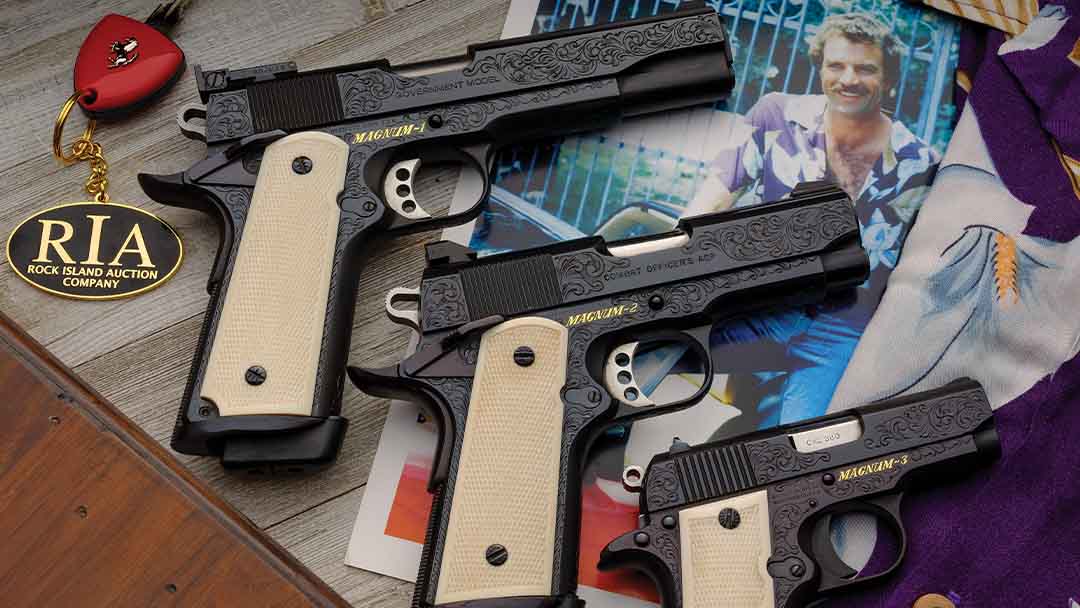
Firearms development is filled with scarcely produced designs, rare prototypes, experimental arms, and an assortment of fascinating curiosa. When it comes to finding the most unique guns in the collecting pursuit, Rock Island Auction Company’s December 8 – 10 Premier Firearms Auction features some of the rarest and most desirable firearms models ever assembled under one roof.
Evolutionary Arms
Often a famous firearm model overshadows its evolutionary predecessors, but in the collecting world these important cornerstones can be as rare as they are valuable. The Jennings repeater, based on Walter Hunt’s Rocket Ball cartridge patent in 1848 and Lewis Jenning’s movable ammunition carrier patent in 1849, is a seldom-seen model today and one of the most unique guns in arms collecting. The Jennings repeater became the first commercially produced lever action long arm in a lineage that would give rise to the Volcanic pistol, the Henry rifle, and the Winchester Repeating rifle family to follow.
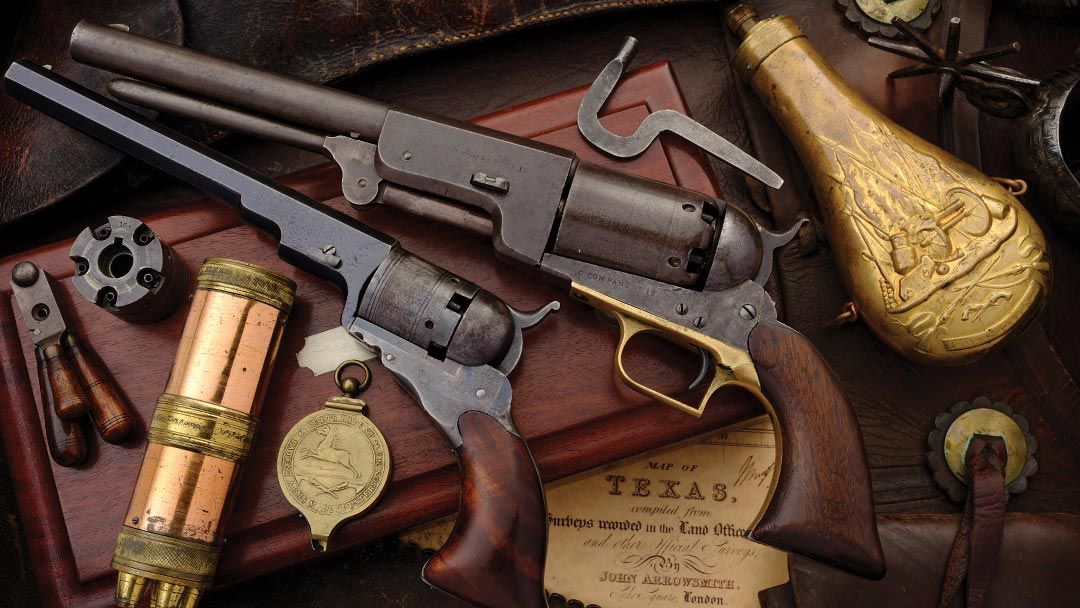
If the Paterson was the gun that put Samuel Colt on the map, the Walker revolver was the model that saved his business and helped launch an American giant. Both the Paterson and Walker are pantheons of fine and historic collecting, and the two headline-worthy examples pictured below represent some of the rarest of the rare when it comes to historic early Colts.
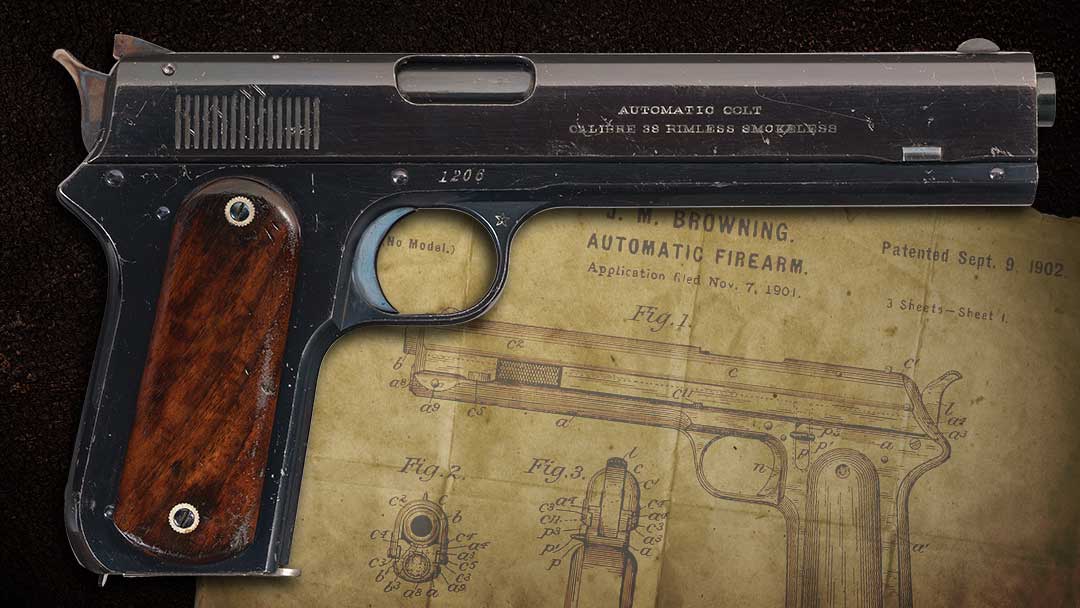
If we’re talking about unique guns that gave rise to an icon in their field, the Colt Sight Safety fits the bill, especially one of the 250 original examples procured by the U.S. Navy. What became known as the first production Colt Model 1900, these historic handguns represented one of John Browning’s earliest attempts to develop a reliable semiautomatic military pistol that could overcome a slew of competing designs. Though the M1911 went on to become the longest-serving sidearm in American military history, it all started with its .38 caliber predecessor, the Model 1900.
Antique Firepower
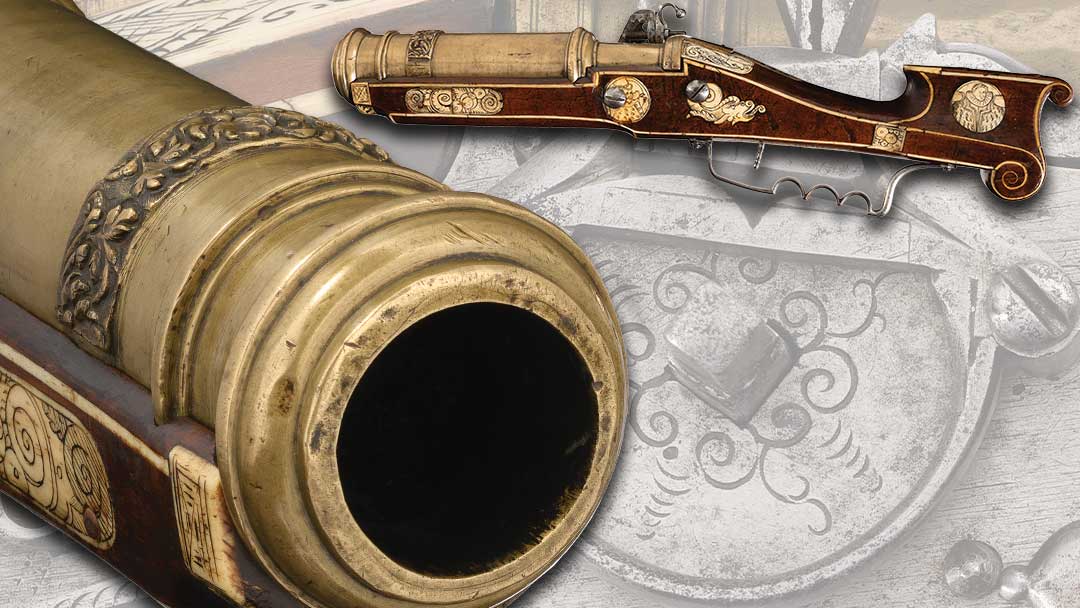
Arms technology has been evolving since the invention of black powder, and one of the most unique guns to come out of the late 16th century was the hand mortar. Capable of launching fused grenades, fireworks, and grappling hooks, the ornamental wheellock hand mortar below represents an especially rare example of this fascinating antique arms genre.
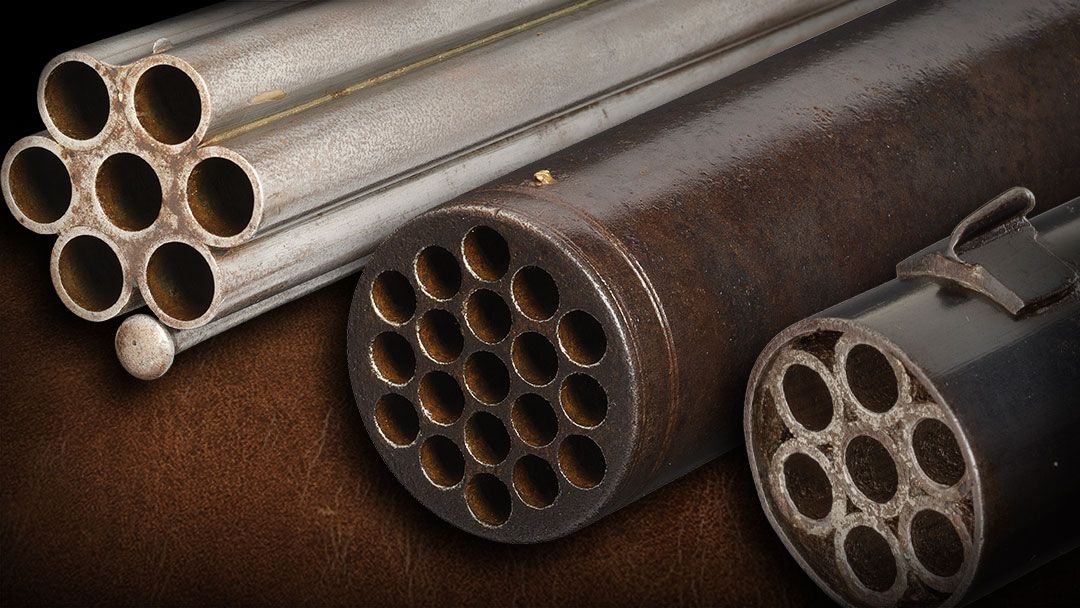
The volley gun, or a weapon with multiple barrels, was one early answer to upping the volume of firepower on the battlefield. Where the duck foot pistol employed splayed barrels, the Nock volley gun used circled clusters of welded barrels. Surviving examples of the Nock volley gun are seldom encountered today on the public market, and its spiritual successors like the Henry Harrington Patent percussion volley gun and the H. Pieper rolling block volley rifle are even more scarce.
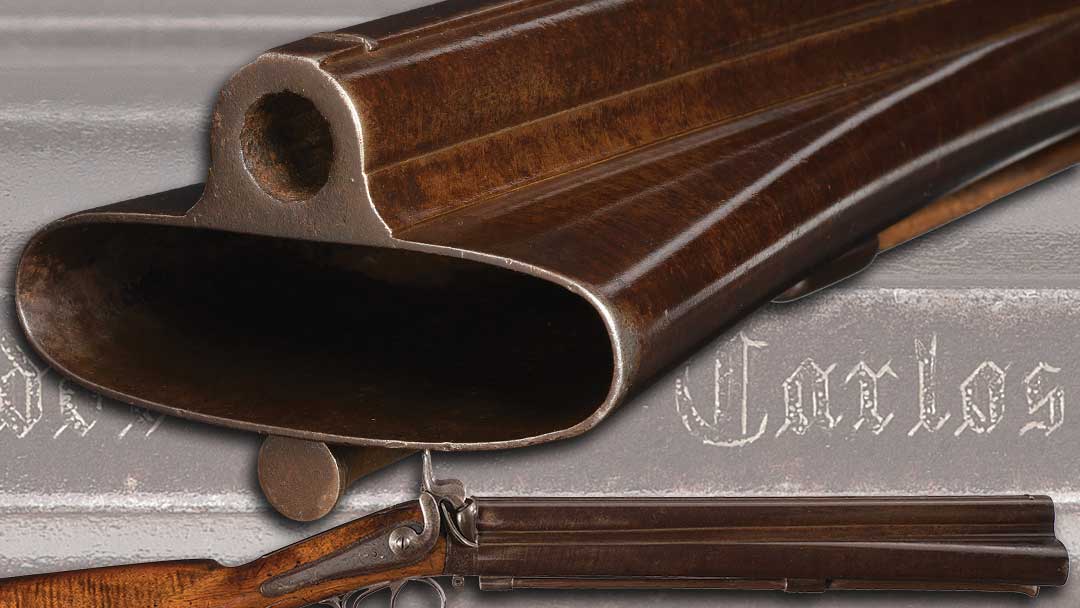
What do you get when you combine a .54 caliber rifle with a 14 gauge “duck bill” shotgun? One exceptionally unique gun that would be the bane of any 19th century highwayman unfortunate enough to find himself in its line of fire. The idea of the combination gun appeared in many forms throughout the centuries and has filled nearly every role imaginable, but this rifle atop a duck bill blunderbuss coach gun might be the most distinctive example of this already intriguing genre.
Fascinating Flintlocks
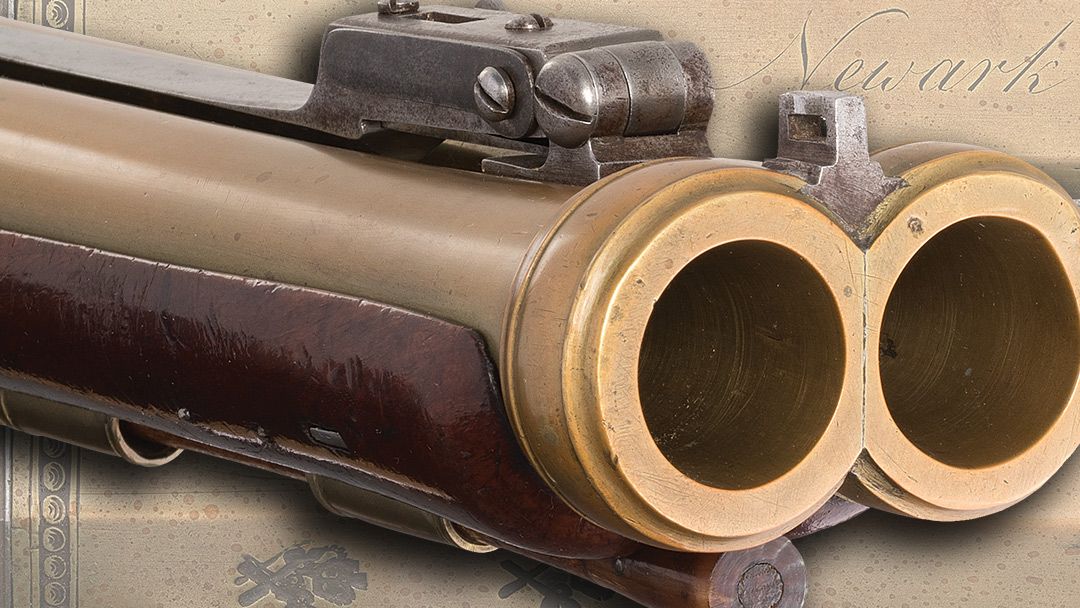
Most firearms fans are familiar with the blunderbuss, a smoothbore short-barreled long gun with a flared muzzle. Drawing its nickname from the Dutch word ‘donderbus’, or thunder pipe, the blunderbuss was ideal for repelling boarding parties, defending carriages, and sometimes even equipped by cavalry. The exceptionally rare double-barreled example below represents a transition of sorts between the blunderbuss and the double-barreled shotgun that would fill many of the same roles during the percussion era.
Inverted flintlocks are scarce, and this next example was sold out of the noted collection of the Grand Dukes of Saxe-Weimar from Schloss Ettersburg. The engraved and silver inlaid straight rifled long barrel sporting gun is pictured in Howard L. Blackmore’s “Guns and Rifles of the World” and is also featured in “Underhammer Guns” by Herschel C. Logan. Logan notes the gun as “One of earliest, if not the first, known arm to employ the unique principle of an underhammer.”
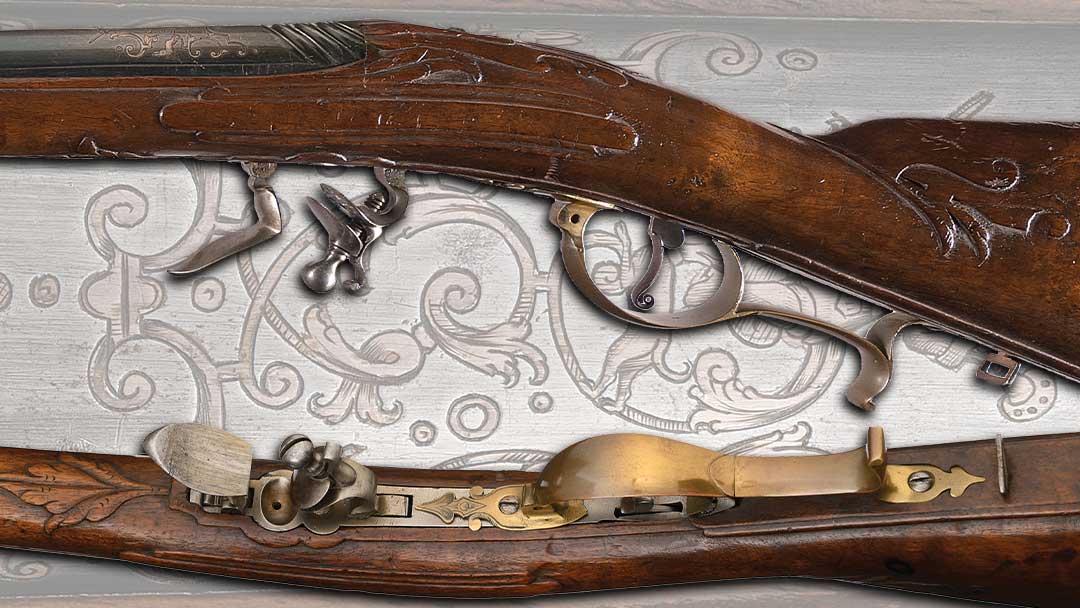
Breechloading flintlocks are some of the most unique guns in antique collecting, especially early 18th century examples like this scarce Chaumette and Ferguson pattern small bore long rifle. Utilizing a system similar to Isaac de la Chaumette’s screw-in breech plug design connected to the trigger guard, the pan on this example is partially grooved into the breechblock and the top of the barrel, and the flash is communicated through a small channel at the edge of the breechblock.
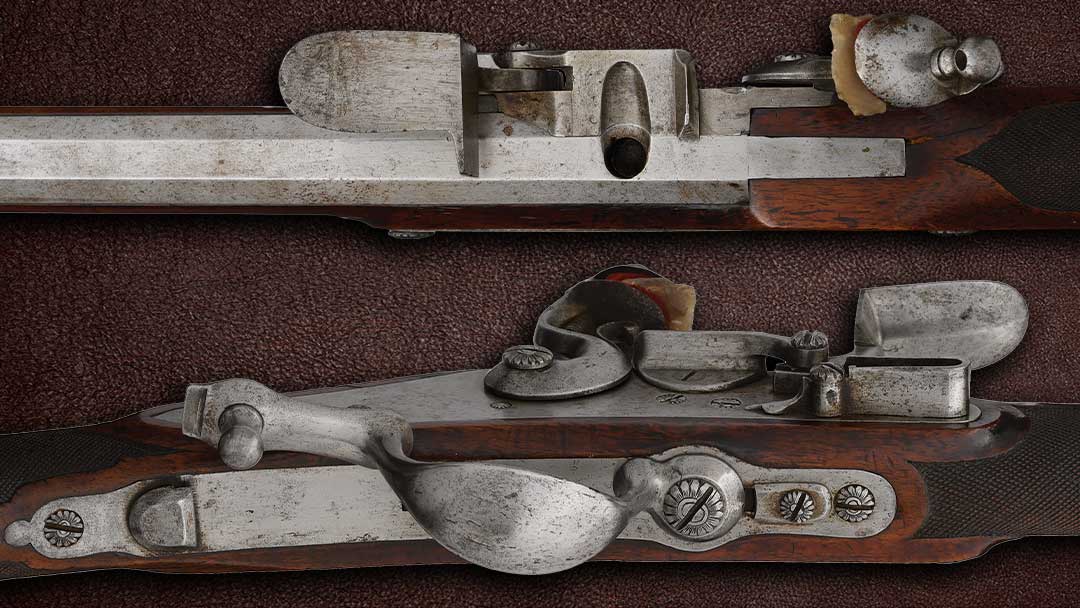
Before Colt, there was Collier. Elisha Haydon Collier operated in London from 1818 to 1827 and sold revolving pistols, rifles, carbines, and shotguns. Fewer than 250 Collier revolvers were produced in total across all models, with seldom-seen examples like the “Third Model” Collier patent revolving shotgun featured below ranking as one of the rarest of an already scarce and desirable line of flintlock revolvers.
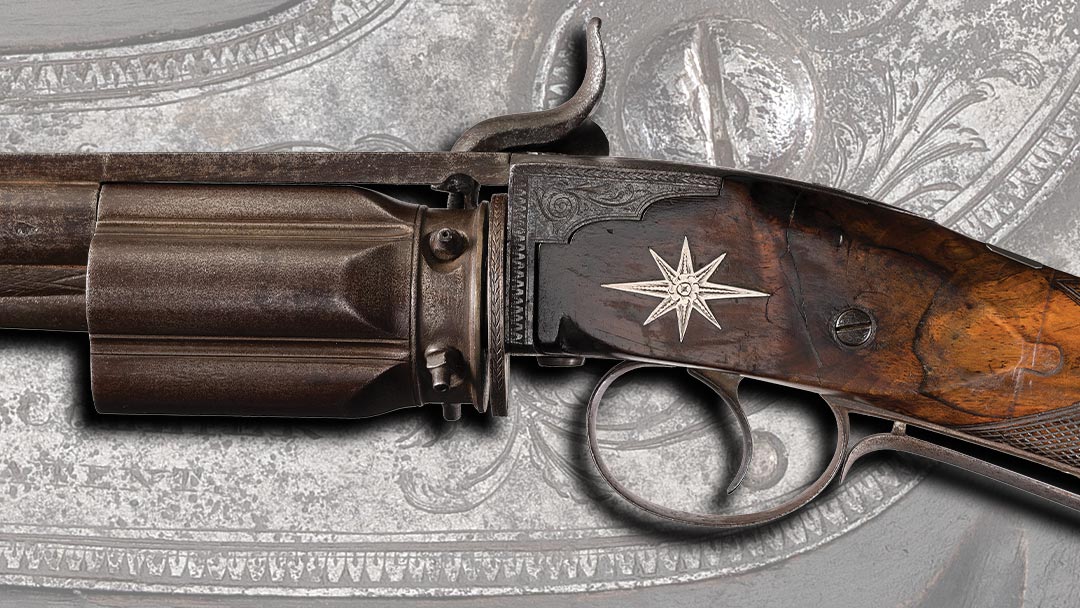
Rare Revolvers
Samuel Colt aggressively defended his revolver patent, and a number of inventors went to great lengths to legally evade Colt’s monopoly. Some of the most unique guns designed to circumvent Colt’s patent were the Cochran and Porter turret revolvers. These fascinating firearms employed horizontally rotating disk-shaped cylinders with outward-facing chambers and fewer than 150 were manufactured in all.
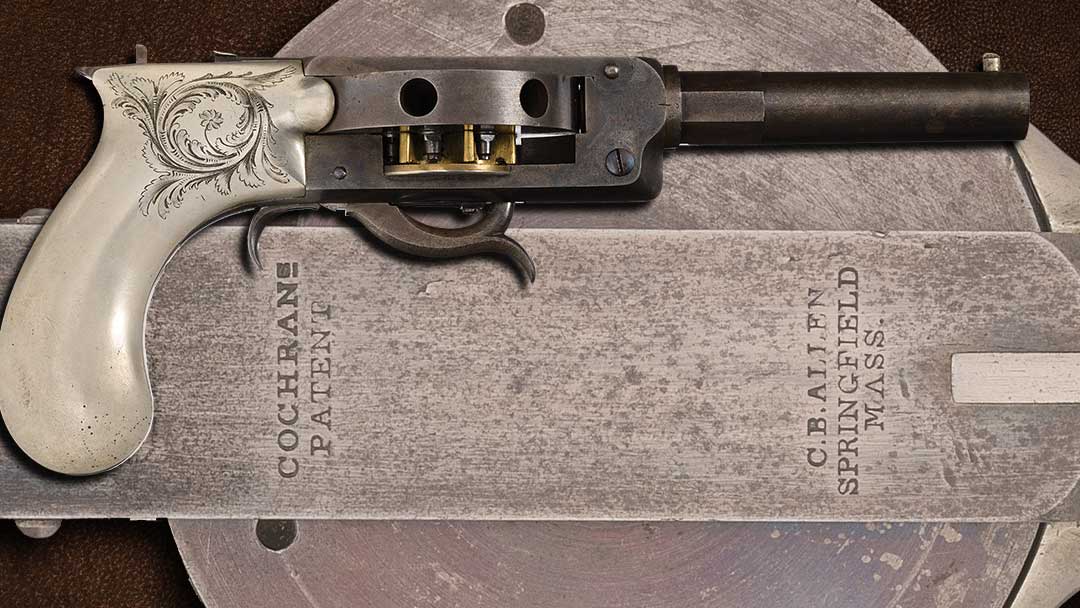
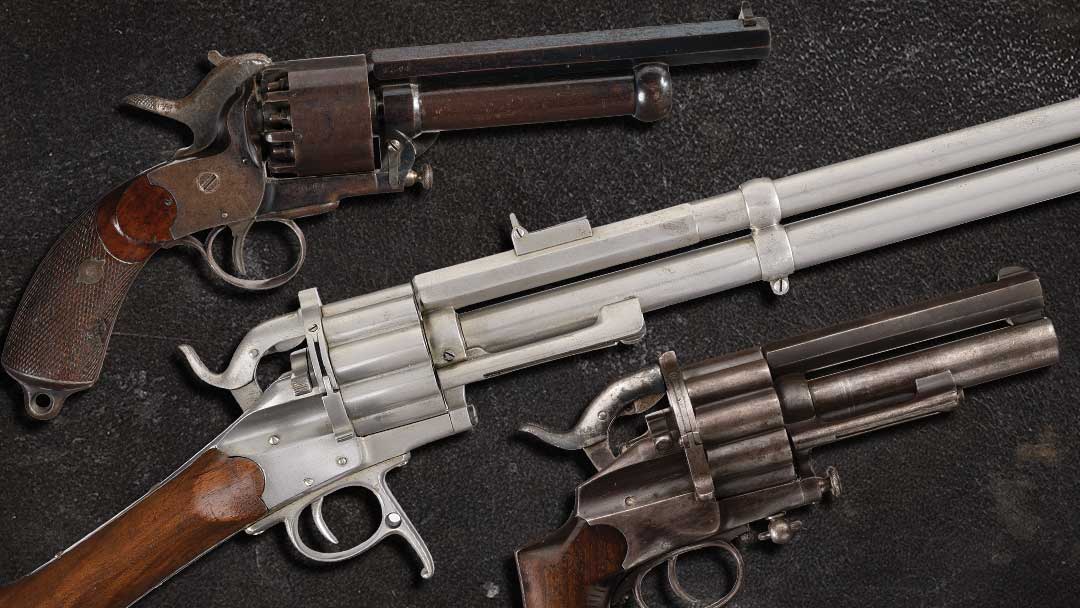
For their rarity, distinctive design, pop culture appeal, and connection to famed Confederate officers like General J.E.B. Stuart, the “LeMat’s Grape Shot Revolver” line is a favorite with arms collectors today. Dr. Alexandre LeMat’s unique combination guns provided its users with a comparatively high-capacity revolver with an additional shotgun barrel that could be devastating at close range. Multiple examples of the scarce LeMat platform can be found in December’s auction.
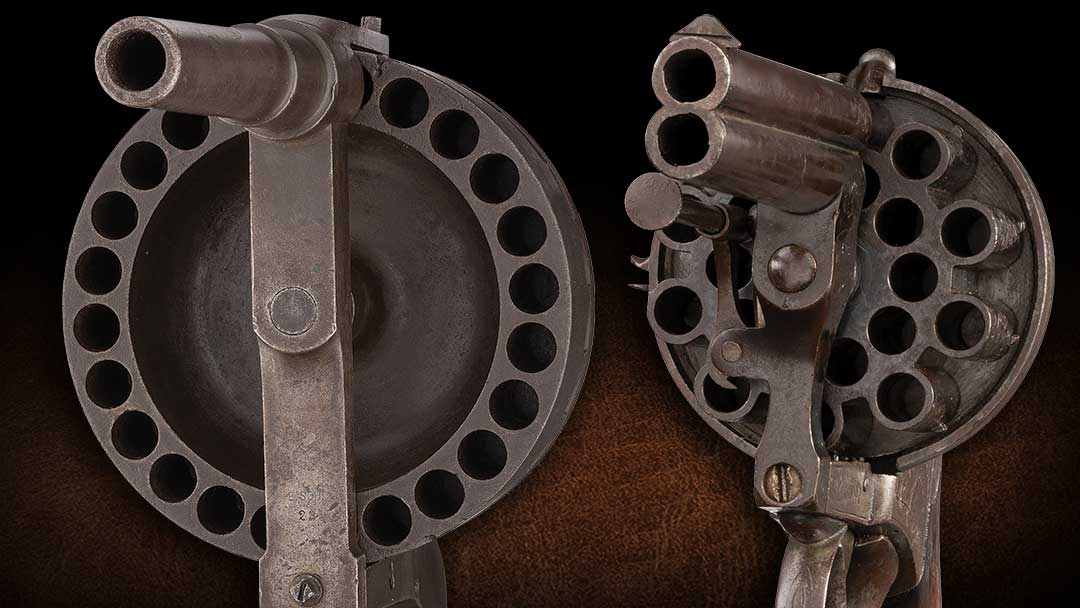
The concept of adding more shots to the revolver mechanism was pushed to the extreme in the mid-19th century. The two examples pictured below, a 24-shot single action boat revolver and a 20-shot double barrel pinfire revolver similar to the Lefaucheux patent design, illustrate the experiments with high-capacity guns both big and small during this extraordinary era of arms development.
Scarce Civil War Carbines
Due to a desperate need for arms thanks to a strangling Union blockade, the Confederate States turned to a variety of local manufacturers to compete with the industrialized North. Scarcity of materials, rapid production, and smaller-scale manufacturing practices resulted in slight mechanical differences found within many Confederate arms models, including cannons, making Confederate-produced weapons some of the most unique guns in Civil War collecting.
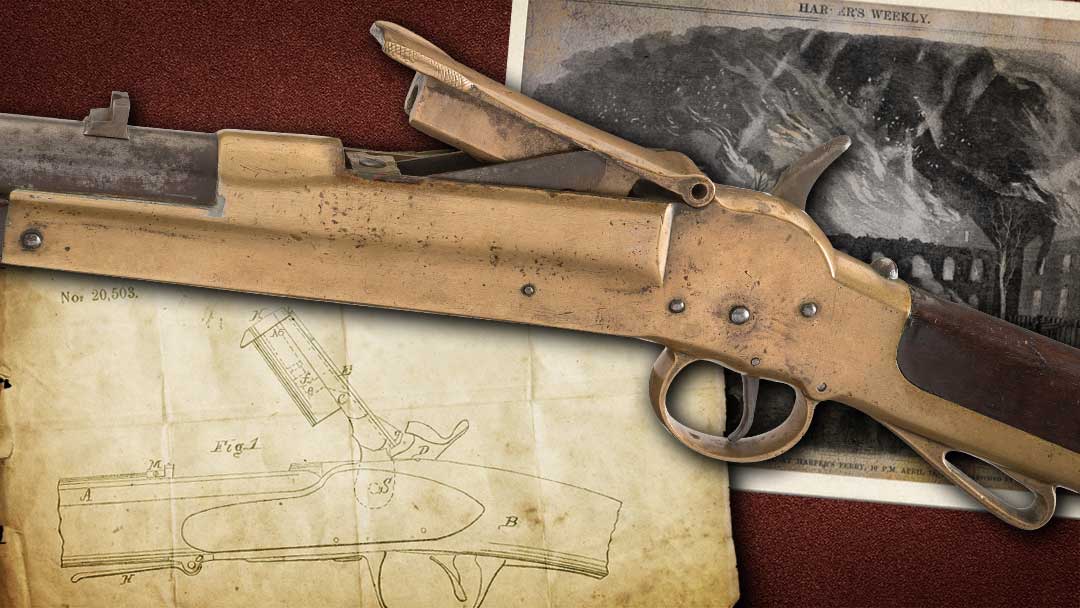
The rare Civil War Confederate Morse First Type carbine below not only features the distinctive brass framed look observed on many southern-produced arms, but is also an example of an advanced early breech-loading system chambered for a cased centerfire cartridge.
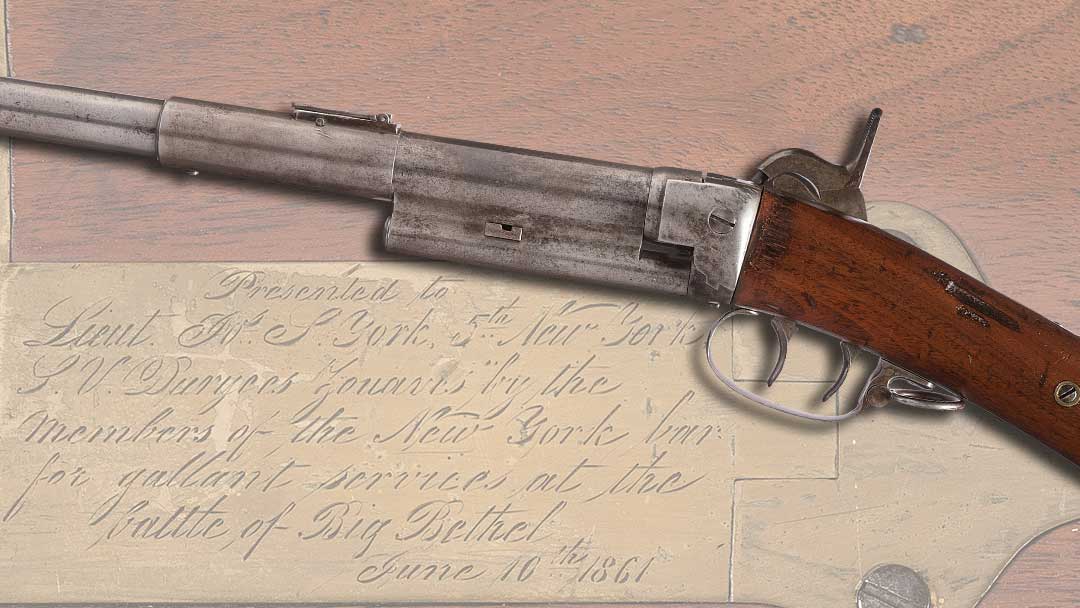
One of the rarest Union long arms to see Civil War service, the U.S. Type Greene Massachusetts breech loading percussion carbine is a prominent collector’s piece on its own. The example below is also a historic presentation piece to Lieutenant Colonel Joseph S. York, 5th New York Infantry, for his gallantry at the Battle of Big Bethel, one of the earliest land battles of the Civil War. The inscription on the patch box reads, “Presented to/Lieut. Jos. S. York, 5th New York,/S.V. Duryees Zouaves by the/members of the New York bar/for gallant services at the/battle of Big Bethel/June 10th 1861.”
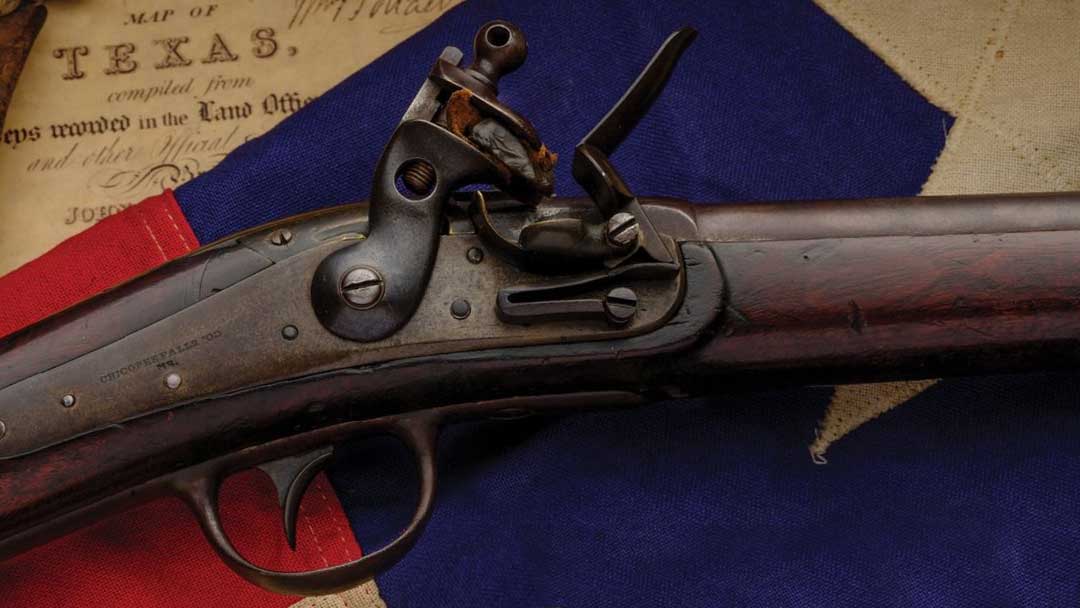
Invented by William Jenks of the Massachusetts-based Chicopee Falls Co., the Jenks musketoon is the only breech loading flintlock besides the famed Hall rifle to be procured by the federal government. Of the 100 U.S. Ordnance musketoons delivered, 25 were sent to the 1st Dragoons for shooting trials, and 25 to the 2nd Dragoons for field trials during the Second Seminole War in Florida where they were exposed to harsh conditions. Only a few surviving examples of these rare guns are known today as a result.
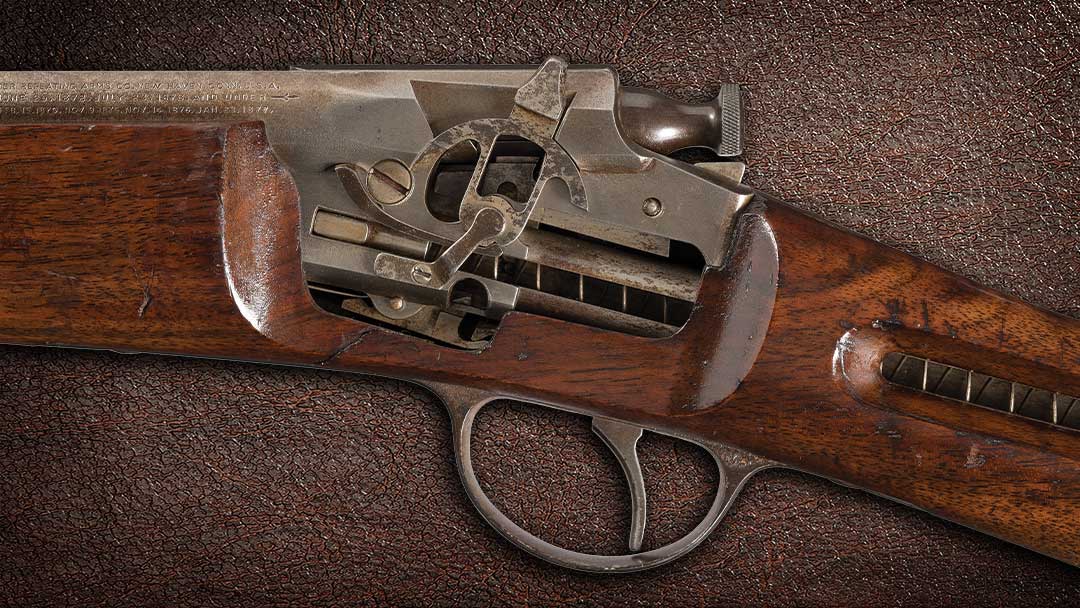
All Winchester cutaway/skeleton rifles are extremely scarce, with the examples used in trials testing even more so. The documented Winchester Model 1881 Hotchkiss “Cutaway” bolt action rifle featured below is an original factory skeleton model with a rare full nickel plated finish and was received in the Winchester warehouse on January 19, 1881.
The rifle became part of the collection of Lieutenant George Emerson Albee, a Civil War veteran and a Medal of Honor recipient for his service during the Indian Wars. Albee worked as a professional exhibition shooter and designer for Winchester and acquired a number of extremely rare and unique guns from the Winchester Repeating Arms Company. Albee was also close friends with Captain Henry Ware Lawton, who played an important role in capturing Geronimo in September of 1886. To honor his friend’s efforts, Albee presented Lawton with Winchester Model 1886, serial number 1, one of the most expensive guns to ever cross the podium at Rock Island Auction Company.
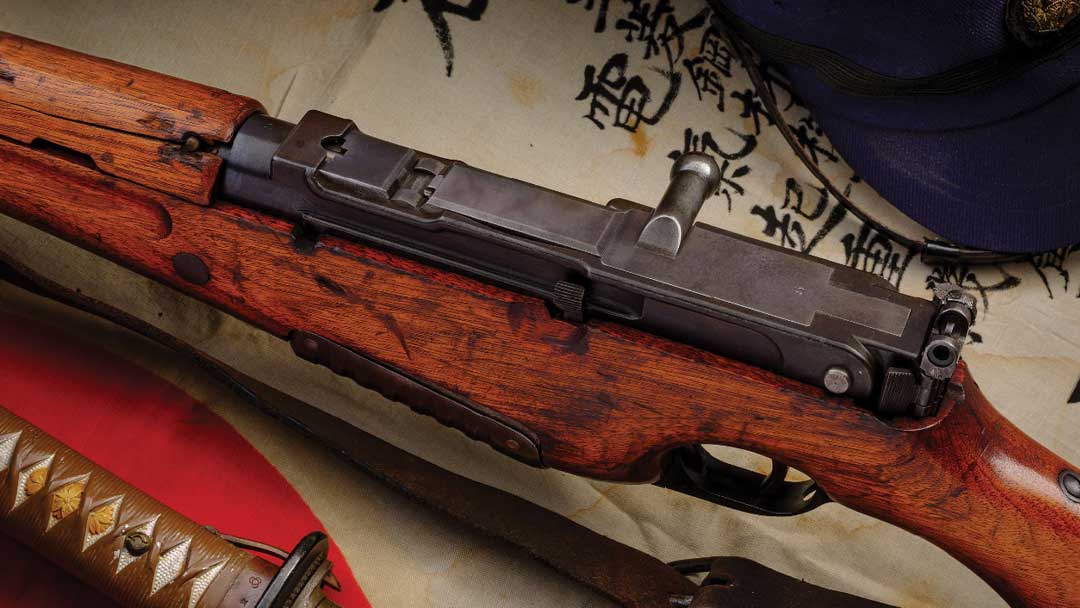
In 1935, 12 Pedersen semi-automatic carbines and 12 rifle variants were manufactured by the Koishikawa Arsenal for the Japanese Test Trials. The carbines and rifles were each numbered in their own separate serial ranges, with the experimental Pedersen Test/Trails rifle example below marked as serial number 5. These rare guns were based on the self-loading rifles J. D. Pedersen had developed in the previous decade to compete with John Garand’s designs in the test trials held by the U.S. Army after WW1 to replace the M1903 rifle.
Incredible Pistol Prototypes
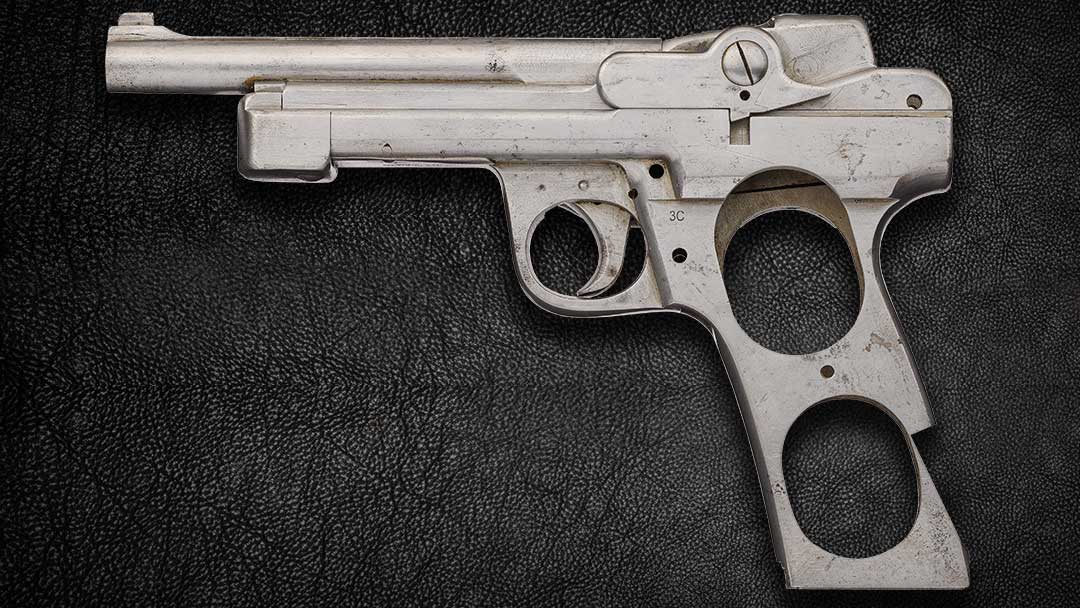
This British Webley Model 1903 semi-automatic striker fired pistol is the definition of a unique gun and likely a one-of-a-kind prototype. Designed by prolific inventor William J. Whiting, this exact pistol is featured in “Webley & Scott Automatic Pistols” by Gordon Bruce, where the author suggests the prototype was manufactured for British army evaluation shortly after the .455 Webley Fosbery automatic revolver had failed to make an impression with military testers.
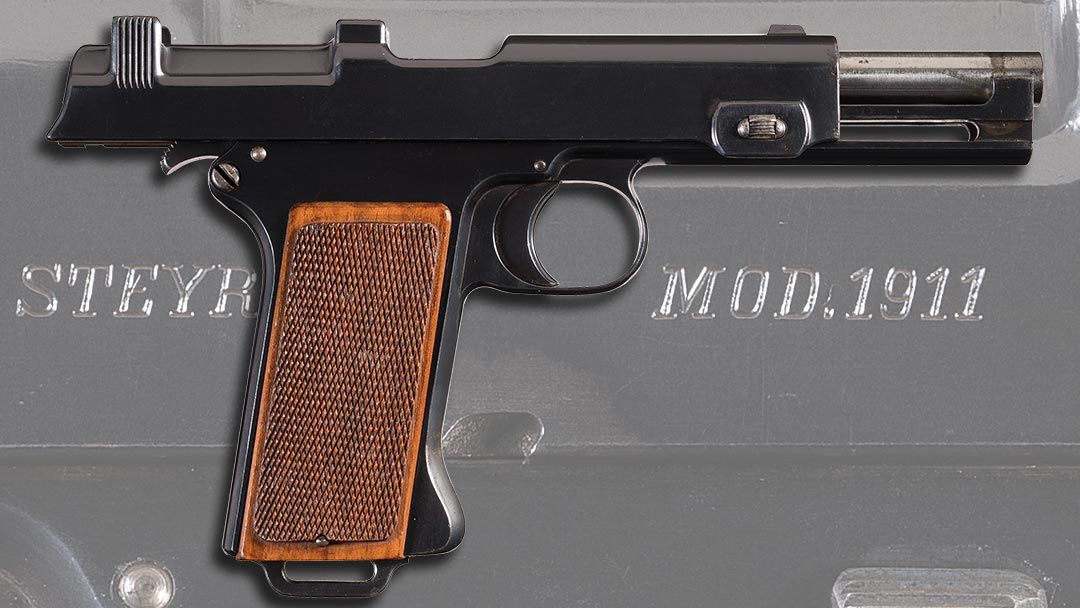
Another early semi-automatic prototype, the serial number 1 Steyr-Hahn Model 1911 pistol pictured below set the stage for a line of unique guns that were adopted by the Austro-Hungarian, Chilean, and Romanian militaries. The blow-back operated pistol design included several standout features for the era such as a rotating barrel and a solid milled frame with an internal non-detachable magazine loaded via stripper clips through the top of the gun.
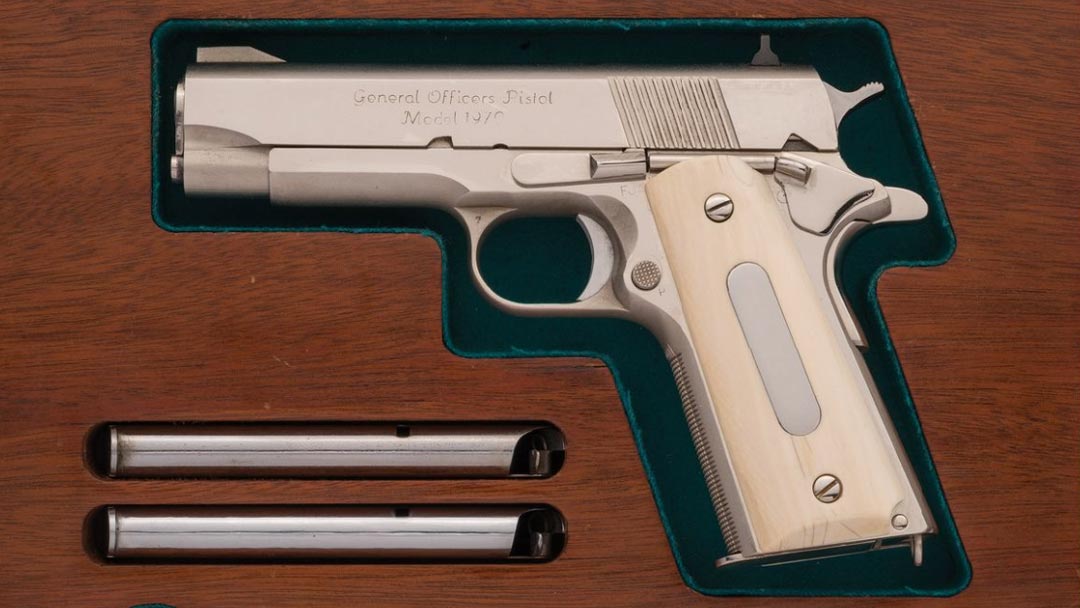
The historic U.S. Rock Island Arsenal/Remington-Rand Model 1970/M15 General Officers semi-automatic pistol below was one of three procured by inventor Dale Hoffman to become the prototypes for the “Model 1970 General Officers Pistol.” Colt had stopped producing the M1903 in 1927 and the M1908 in 1944, and by 1972 the U.S. Army’s stock of general officers sidearms had been growing dangerously thin.
Hoffman’s concept was a shortened 1911A1 pistol that could be produced using the Army’s existing stock of parts and frames, as well as sharing the same ammunition, magazines, and manual of arms as the 1911A1. The total issue from 1972 to 1982 was 1,004.
Unique WW2 Weapons
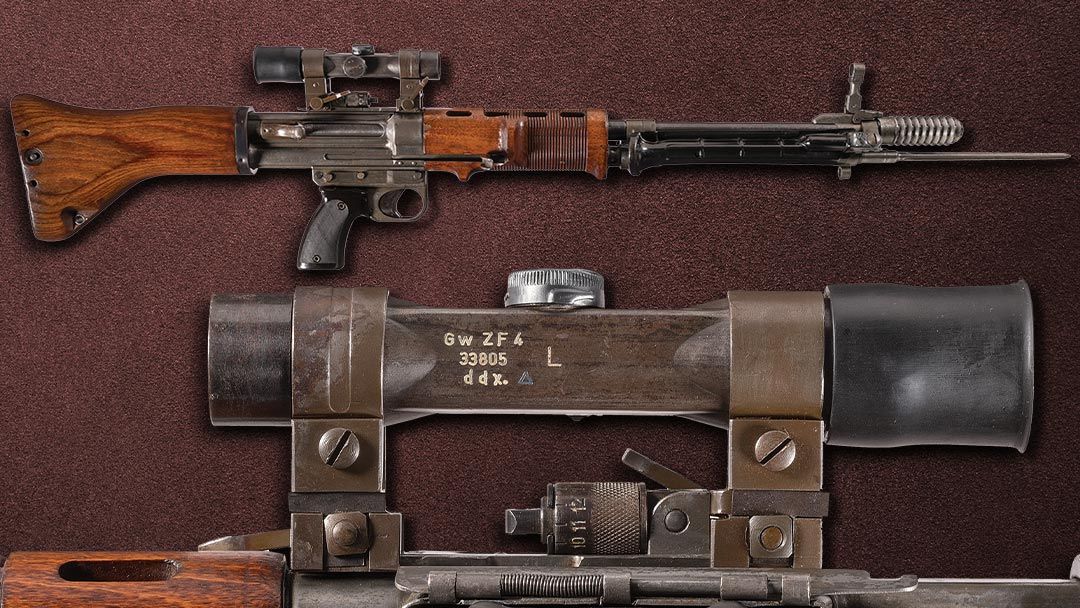
The Second World War was filled with unique guns, with the German FG42 ranking among the most distinctive arms of the era. Designed for the Luftwaffe’s paratrooper division, the Fallschirmjaegergewehr 42 was intended as a “universal weapon” with the range of a rifle, the maneuverability of an SMG, and the full auto firepower of a machine gun. The advanced German rifle would go on to inspire the T44 prototype and the M60 machine gun. Today, surviving FG42 examples rank among the most expensive machine guns in all of collecting.
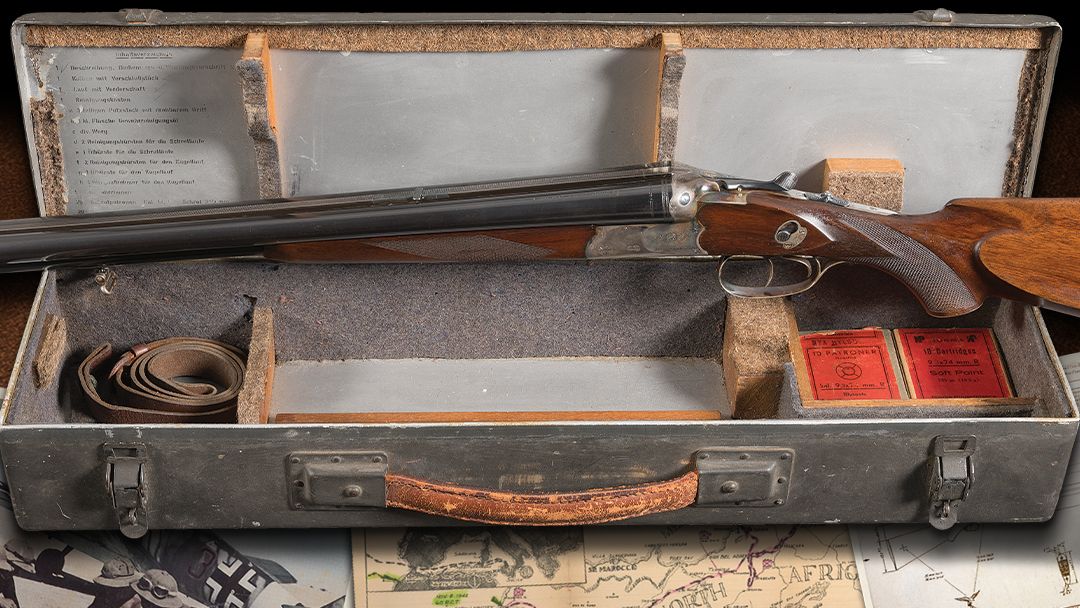
While other countries emphasized austerity and high production rates during the Second World War, Germany often opted for quality and refinement. Nowhere is that philosophy better illustrated than the M30 drilling, an elegant combination gun issued to some of the Luftwaffe’s top aces during the North African Campaign. Though the M30’s practicality as a survival weapon is questionable, there’s no question that these J.P. Sauer-made beauties are one of the most unique and valuable guns to come out of WW2.
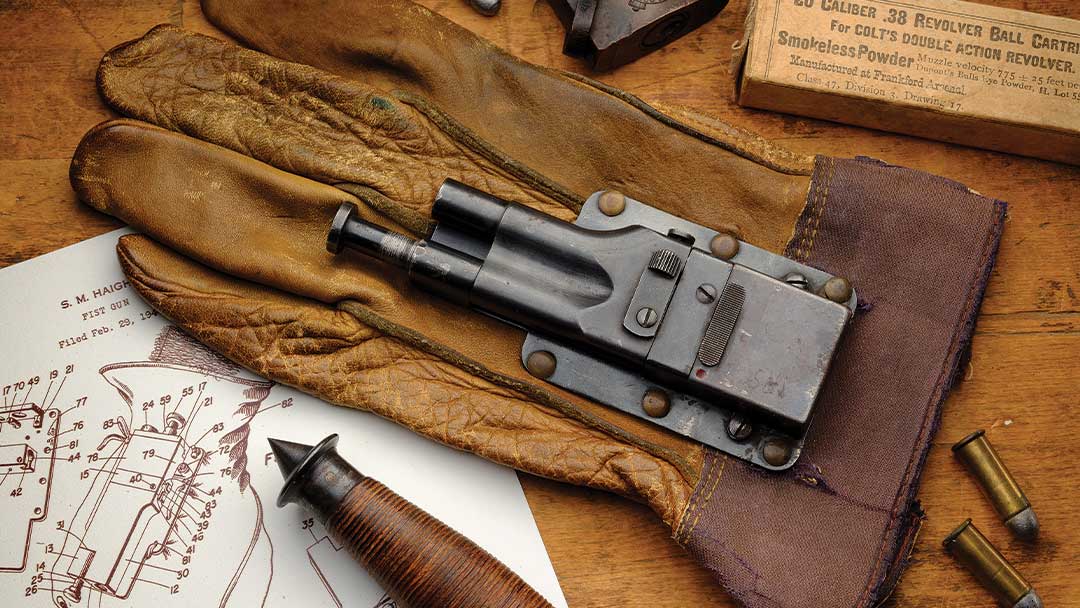
Officially known as the Sedgley Mark Two “Fist Gun” Hand Firing Device with Fitted Glove, these unique guns were developed by Stanley M. Haight in 1944 and produced for the U.S. Navy. Riveted to a leather glove with a plunger-like trigger that extended above the knuckles, the Sedgley Mark Two was fired with a punch and chambered for a single .38 caliber Smith & Wesson cartridge. Only 50 to 200 were manufactured, making these WW2 curiosities an appealing collectible today.
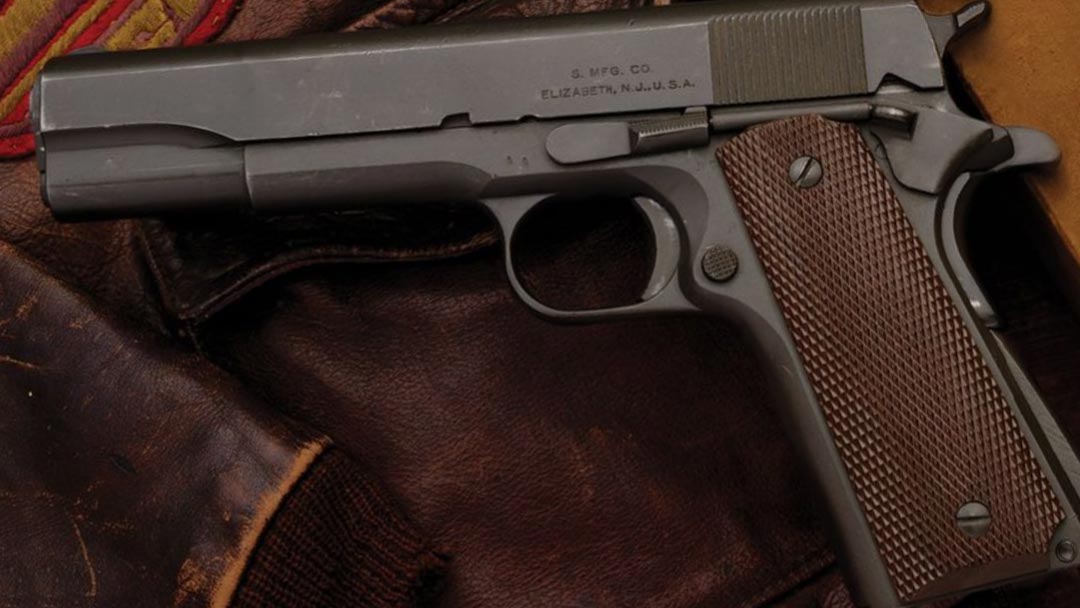
In April of 1940, the Singer Sewing Machine Company produced 500 1911A1 pistols as part of Ordnance Educational Order No. W-ORD-396. Today, the Singer 1911 has become one of the holy grails in arms collecting. December’s auction features a Singer pistol that was parkerized by Augusta Arsenal (with their left sides bearing the correct “AA” mark) very early after WW2.
Ammunition Oddities
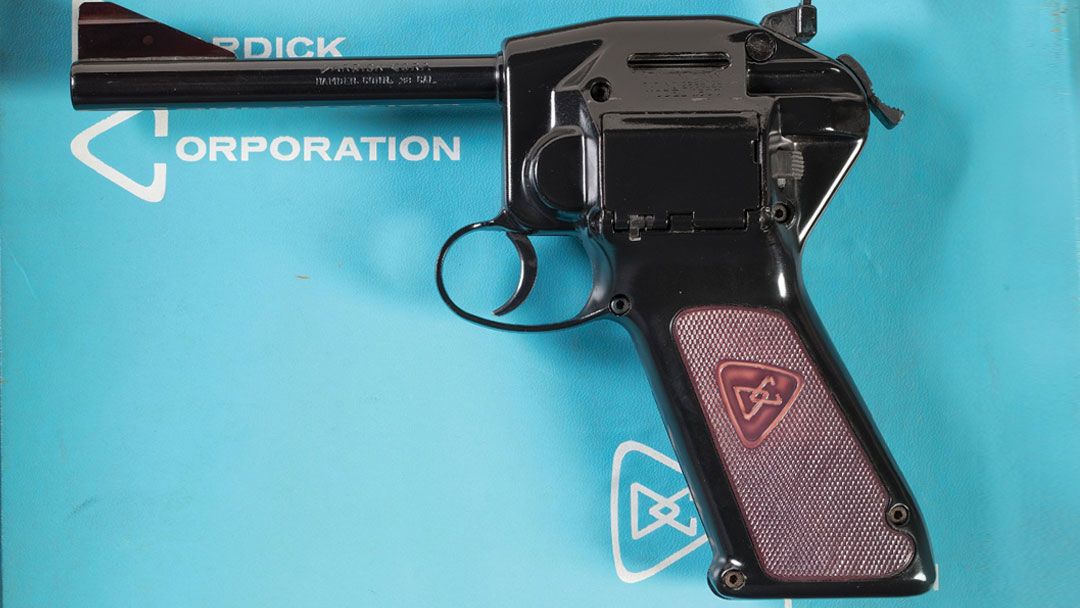
Produced in 1958, the Dardick Model 1500 attempted to bridge the gap between the revolver and semiautomatic pistol and combine the two into one of the most unique guns of its era. Though David Dardick’s design offered some advantageous features such as the ability to rapidly change calibers and quickly convert a pistol into a stocked carbine, the weapon’s unconventional ammunition, the triangle-shaped “tround,” was confusing to the public and had feeding issues. Ultimately, only 50 to 100 of the unusual Dardick revolvers were manufactured.
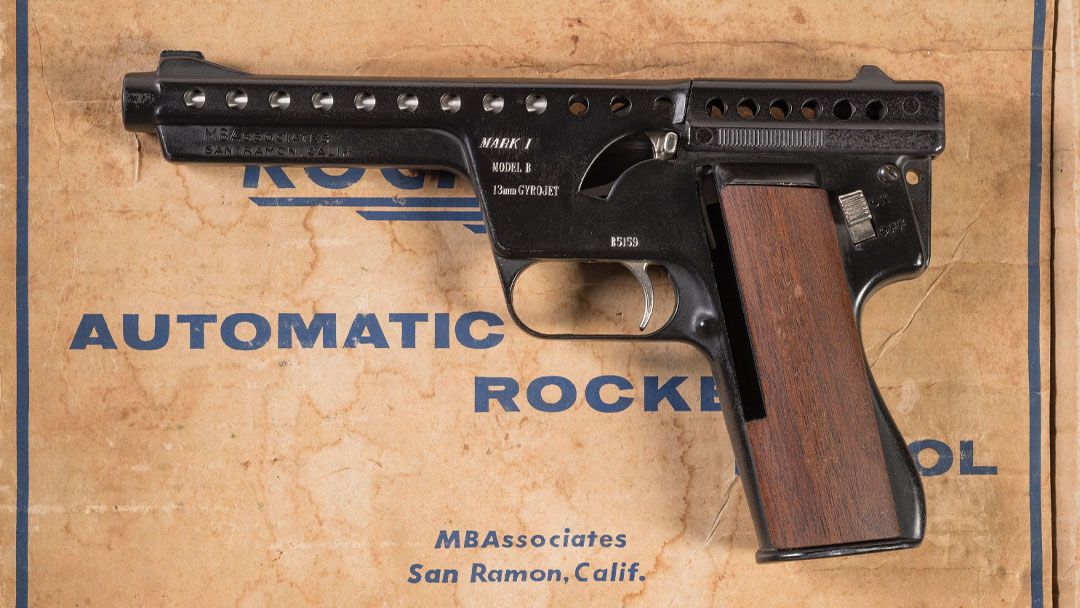
Where the Dardrick was designed around conventional cartridges wrapped in triangular casings, the Gyrojet pistol bullets discarded gunpowder in favor of rocket fuel. Developed by Robert Mainhardt and Art Biehl in the 1960s, the Gyrojet’s self-contained 13mm rocket ammunition allowed the pistol to be lightweight and mechanically simple.
Unfortunately, the Gyrojet’s shortcomings were notable, including a low initial muzzle velocity, unreliable ignition, and ammunition that costs nearly $3.00 per round. While the M.B. Associates company folded in 1969, these unique guns are highly desirable today within the collecting community.
Covert Collectibles
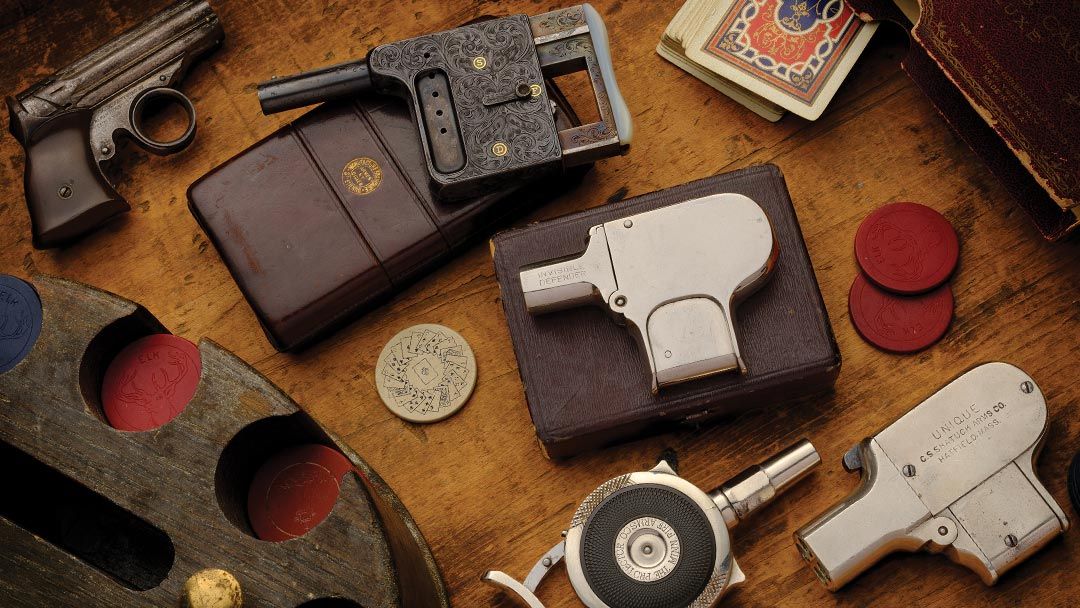
The palm pistols of the late 19th century took the concept of the handgun to its most literal extreme. Intended for concealed self-defense, the Le Protector palm pistol and its successors and competitors were offered in numerous variations, finishes, grips, calibers, and even presentation styles.
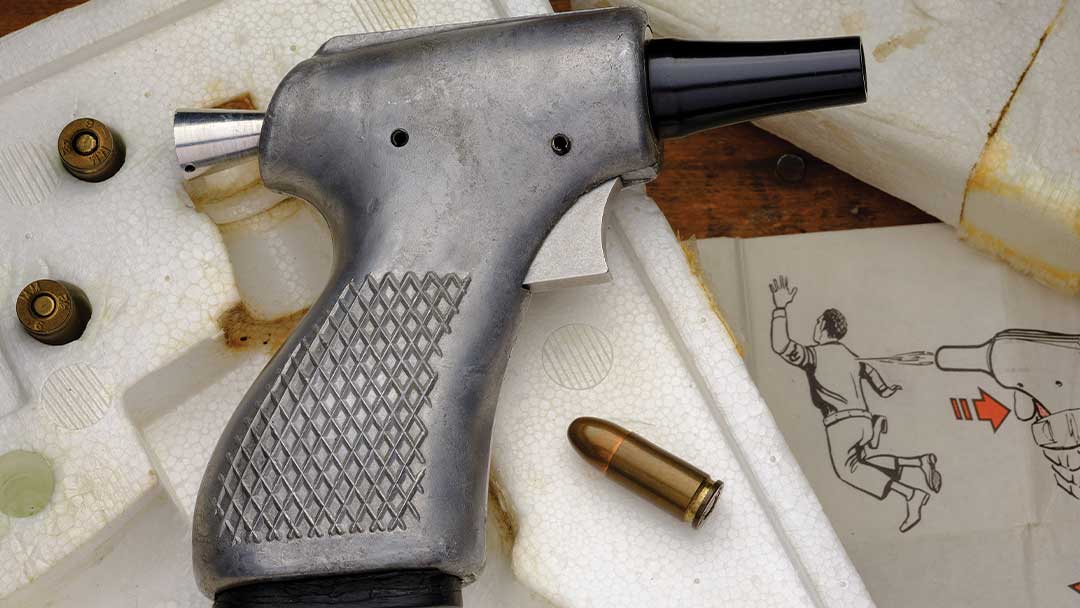
Our next gun is so rare the Central Intelligence Agency doesn’t acknowledge it exists. The 9mm Deer Gun, speculated by some to stand for “DEnied ARea pistol,” was developed in the early 1960s as a clandestine weapon to drop to Cold War allies. This incredibly unique gun took inspiration from the single shot Liberator produced for resistance fighters during WW2 and offers today’s collectors a chance to own a true piece of spycraft technology.
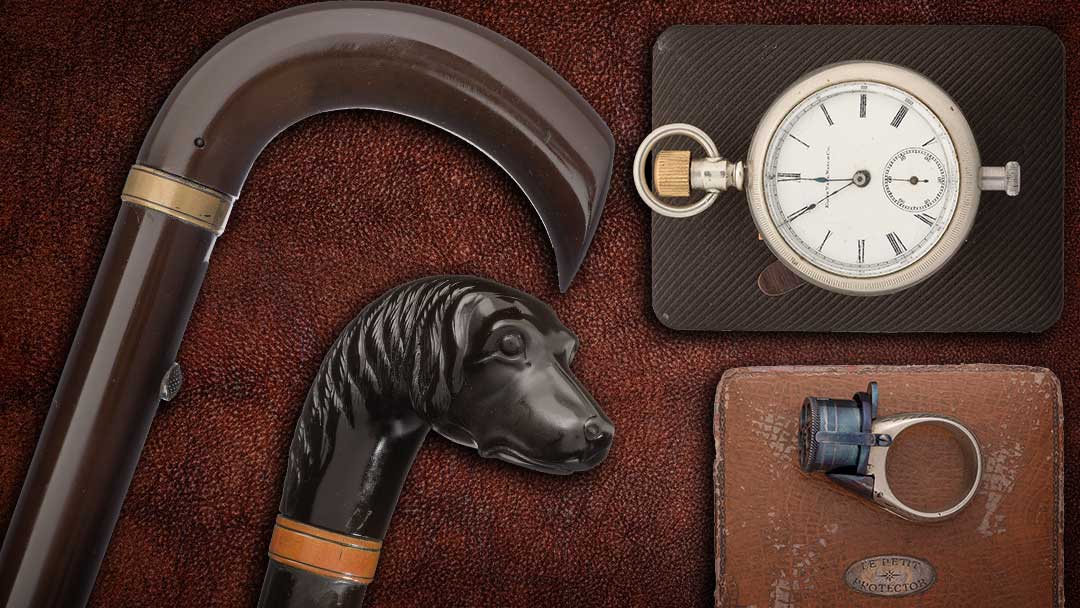
History is filled with examples of unique guns concealed inside everyday objects. The E. Remington & Sons cane guns were marketed to 19th century gentlemen who sought both self-defense and accessorization. The same concept is found in the ring gun and watch gun as well, two weapons that can be hidden in plain sight and deliver a low-caliber surprise to any would-be attacker.
Unique Guns from the Finest Collections
With well over 2,000 of the rarest, desirable, and most unique guns for sale in the Rock Island Auction Company’s December 8 – 10 Premier Firearms Auction catalog, arms enthusiasts of every genre will find no shortage of opportunities to expand their collections. From matchlocks to machine guns, from one-of-a-kind curiosities to the highest-condition examples of celebrated genres, December’s selection features some of the rarest treasures in the collecting field.
Subscribe to the Rock Island Auction Company’s weekly newsletter for gun blogs and gun videos that take a deeper look into some of the most unique guns in history. From pieces on more scarce antiques like the harmonica gun and the Girardoni air rifle, intriguing oddities such as the pen gun and the gun knife, unusual pistols like the Borchardt, the C93 Broomhandle, the Ithaca Auto Burglar pistol, and the Whitney Wolverine, to historic curiosities from the shotgun family like the Street Sweeper, the SPAS 12, the punt gun megafowler, we cover every corner of rare arms design.