
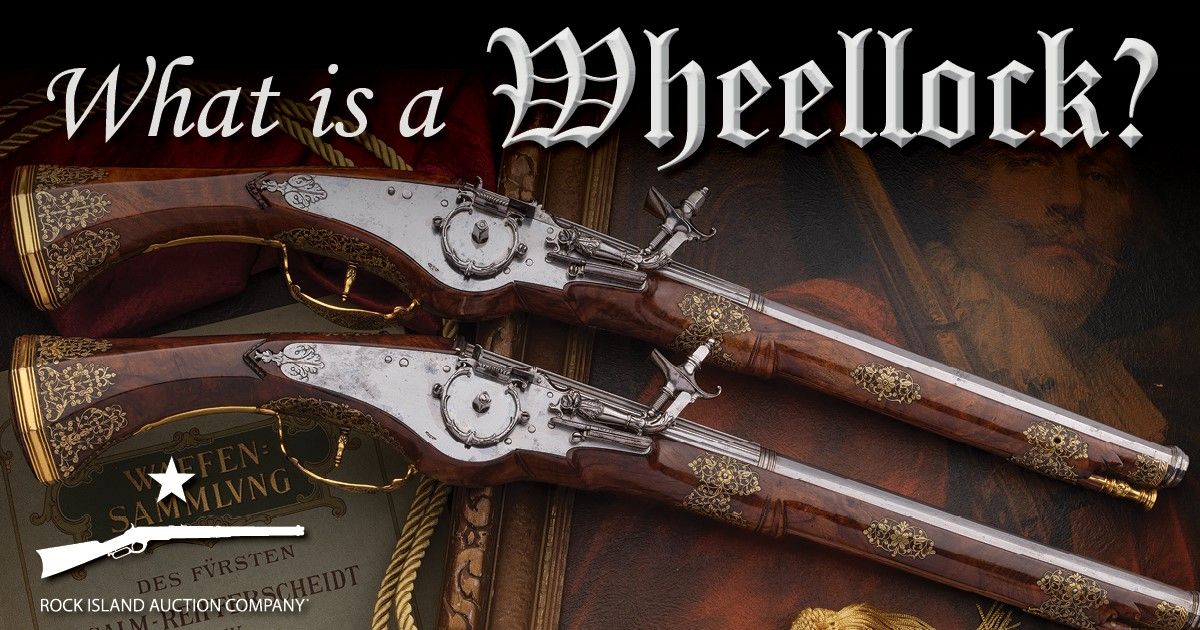
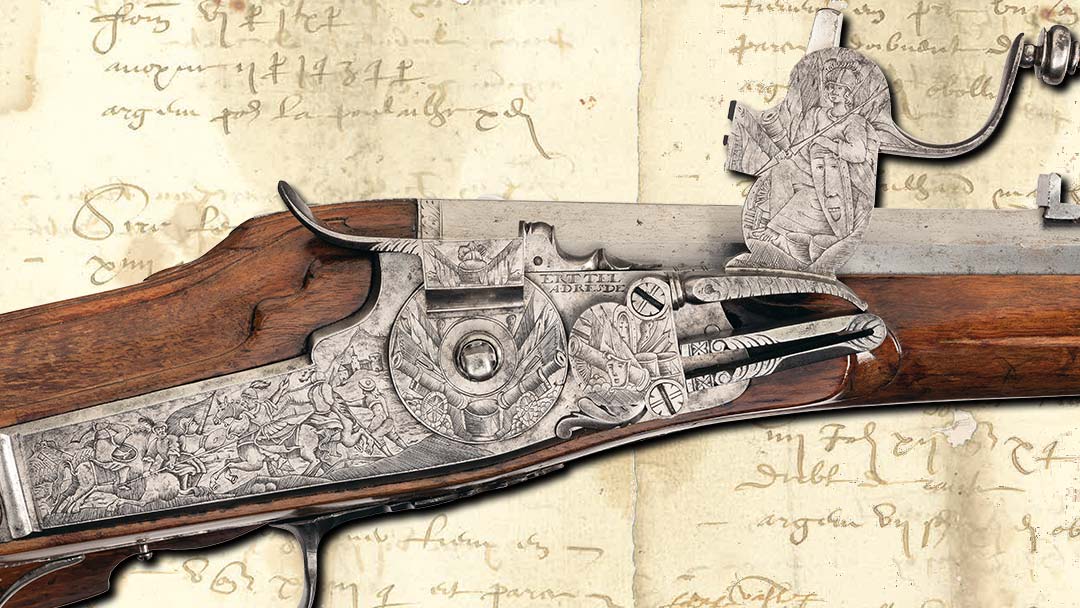
A wheellock is a gunlock that uses a metal wheel under spring tension to generate sparks that ignite gunpowder. As the first self-igniting firearm, the wheellock was a revolution in arms development, and some of the finest historic examples of this fascinating genre can be found in Rock Island Auction Company’s August 23 – 25 Premier Auction in Bedford, Texas.
How does a Wheellock Work?
Most wheellocks are readied for firing by rotating the wheel using a special wrench called a spanner. When the wheel is turned, it is placed under spring tension. On rare versions, the locks are “self-spanning” and wind by moving the dog, which is the arm that holds a piece of pyrite (fool’s gold) or more rarely a piece of flint.
The priming pan is situated by the wheel, and the dog rests on the pan cover when ready to fire. When the trigger is pulled, the wheel spins very rapidly, and the pan cover quickly opens, allowing the pyrite or flint to grind against the wheel creating sparks.
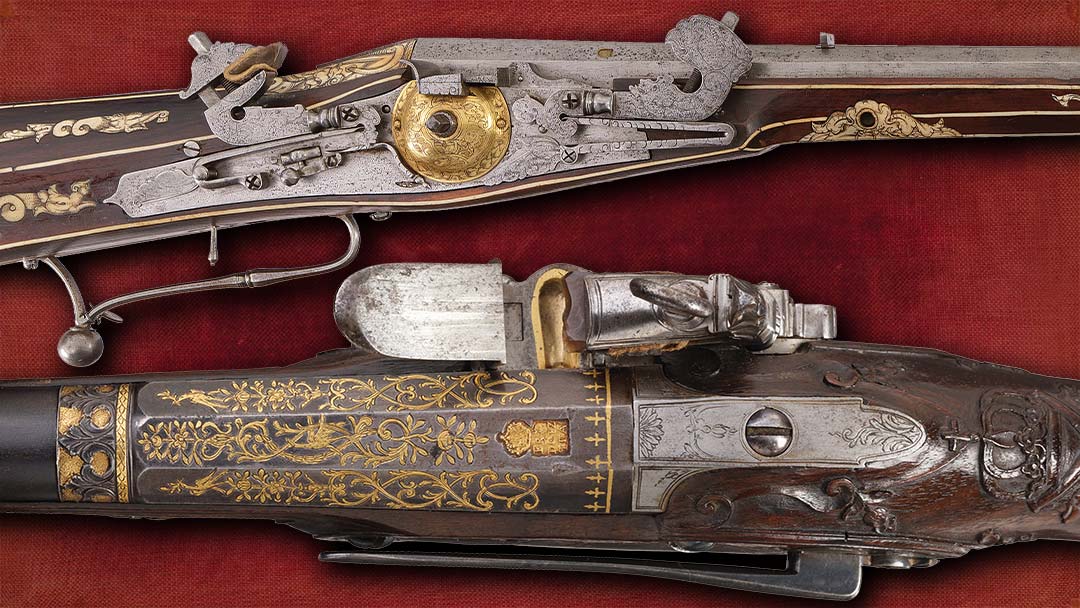
The Wheellock action is often compared to a modern Zippo lighter. The sparks ignite the gunpowder in the pan. The explosion of that powder then ignites the main powder charge through a hole in the barrel by the pan (the vent or touch hole). While there are multiple components in motion during the wheellock ignition sequence, the actual process is nearly instantaneous unless viewed in slow motion.
When was the Wheellock Invented?
Though Leonardo DaVinci is often credited with its invention, the exact origins of the wheellock mechanism is not known, but they are generally believed to have been invented in the early 16th century in Nuremberg.
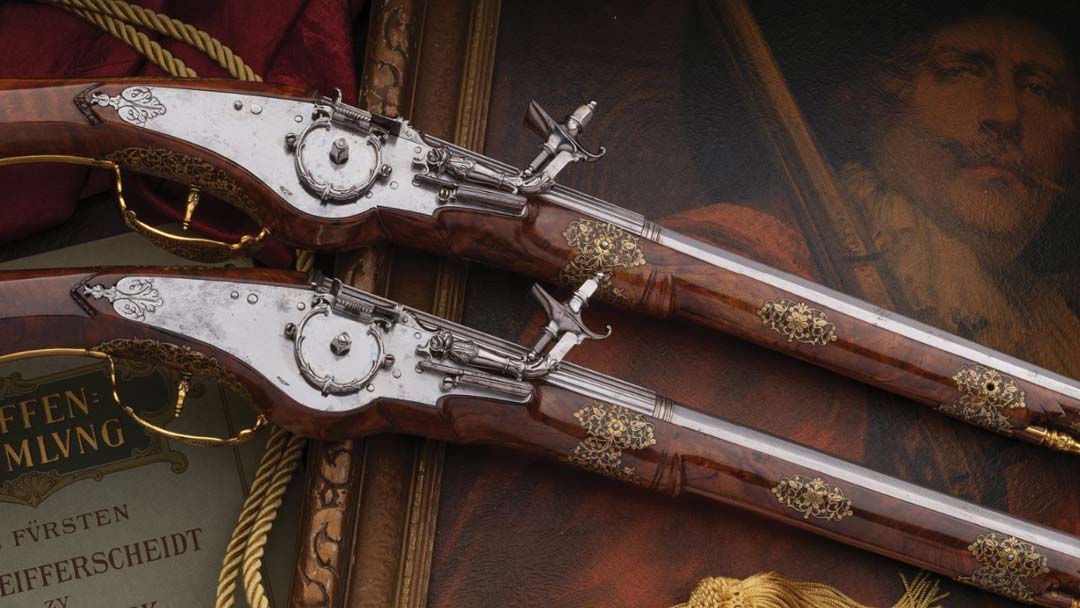
Wheellocks were the first self-igniting gunlocks. Earlier firearms like the primitive hand-cannon had to be manually ignited, and matchlocks relied on a pre-lit slowmatch to ignite the powder, but with a wheellock, a firearm could be loaded and kept ready for immediate use. Wheellock ignition was more reliable than matchlocks since there was no concern about the match getting extinguished. The wheellock could be kept constantly at the ready and quickly brought to action when needed which made them particularly useful for hunters.
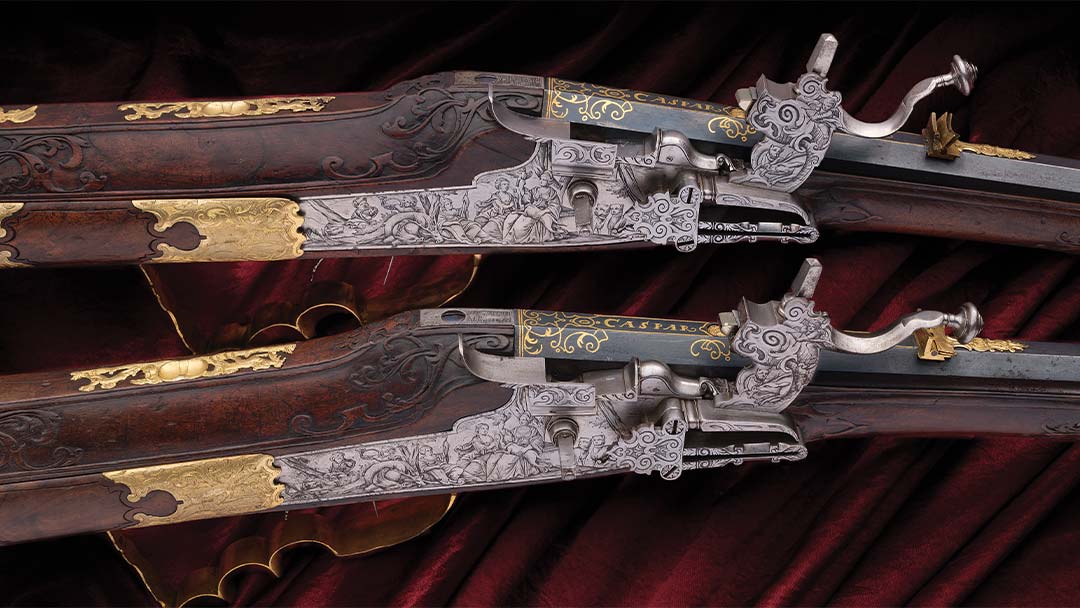
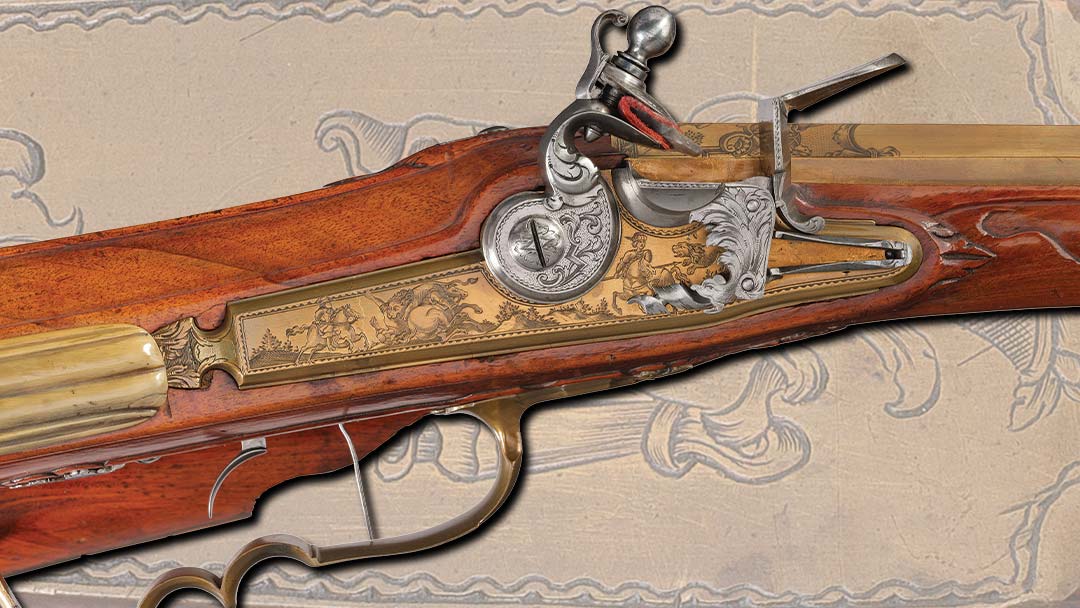
Wheellock ignition time or “lock time” was very fast. In fact, high quality wheellocks can be faster than even many high end flintlocks of later periods which led to wheellocks still being produced and used, particularly in Germanic areas, even after the flintlock became widely adopted.
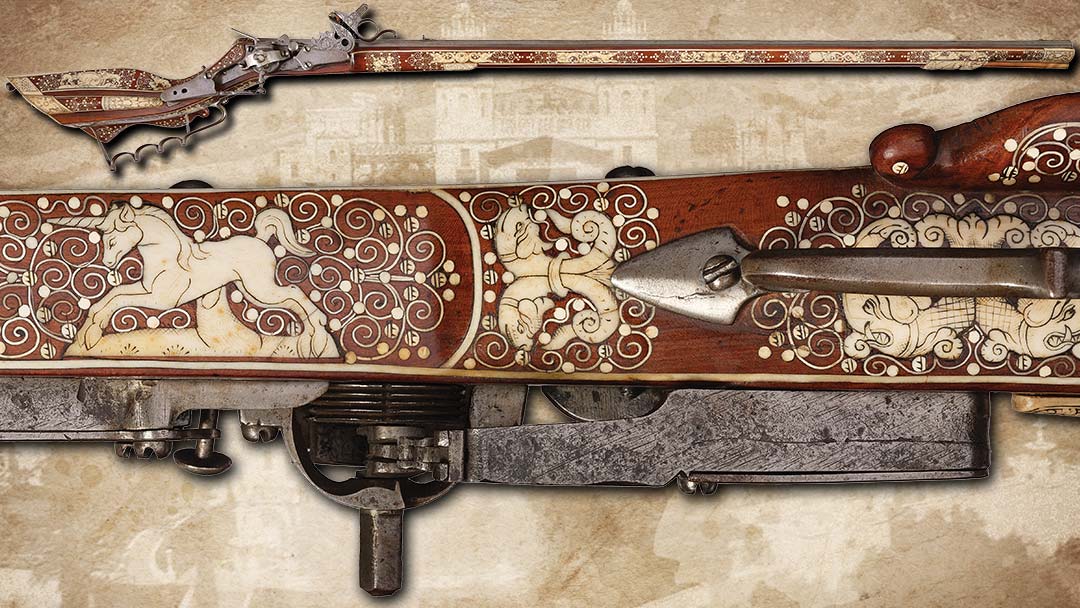
The cost of manufacturing these complicated gunlocks often meant that they were owned by the elite who could afford expensive arms for hunting and warfare while the common soldiers continued to use the much simpler matchlocks. Some wheellocks were used by specialized units in European militaries, particularly by cavalry and royal bodyguards. Because they could be kept loaded and at the ready, wheellocks were also selected by assassins, and this led to their outlaw by regular individuals in some countries.
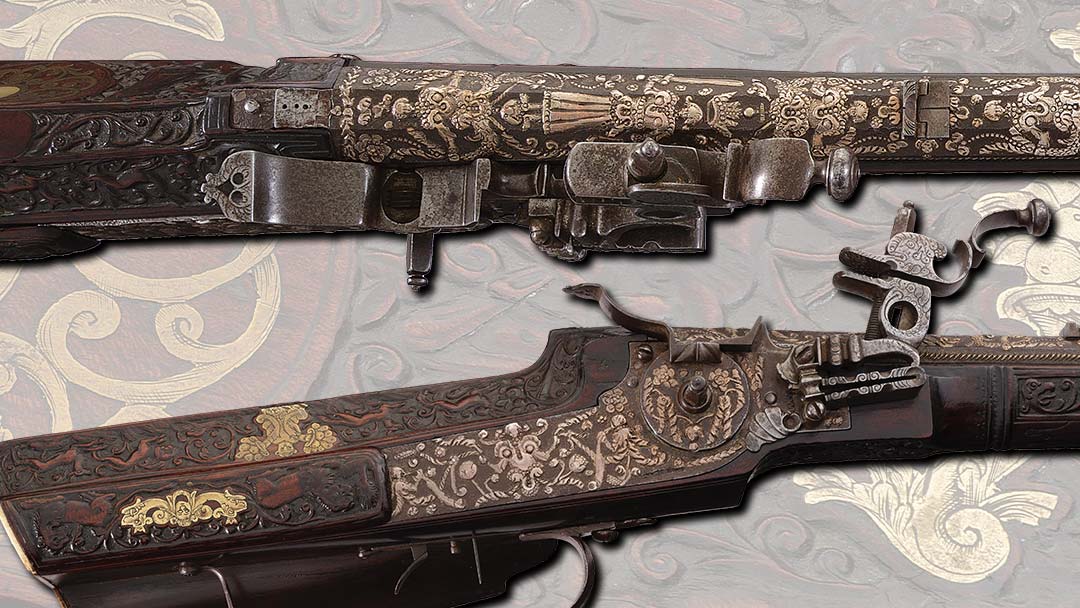
The fact that wheellocks were more expensive than other ignition systems before and after them meant that they were not as widely used compared to other firearm locks, especially outside of Europe. They were never widely used in North America, but a small number may have been used in the colonies.
The Artistry of the Wheellock
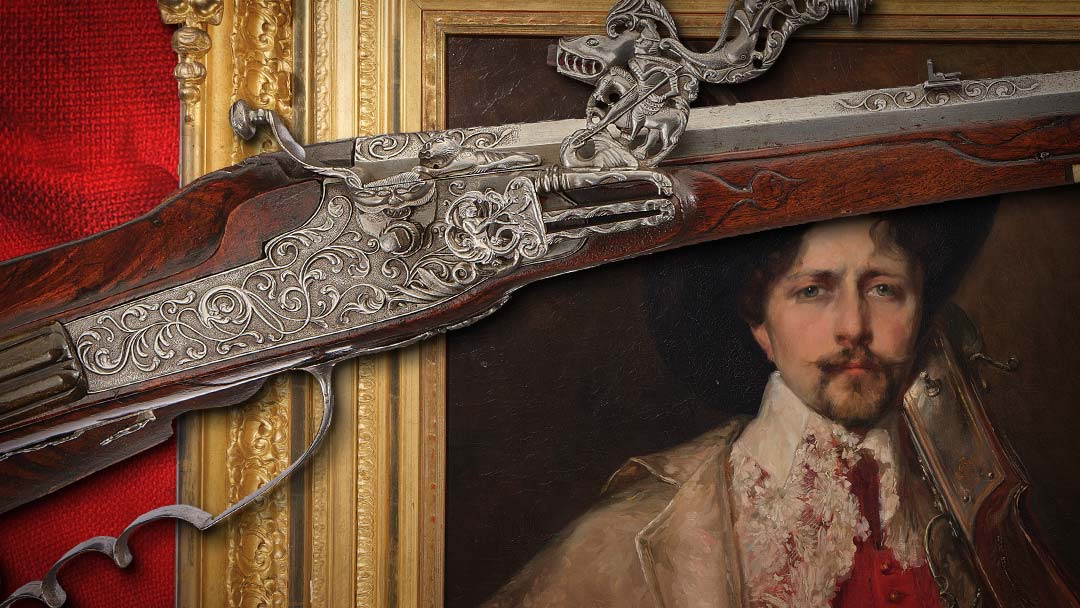
Because they were primarily the arms of the elite, many wheellock firearms are very fine arms and are the work of multiple talented and specialized craftsmen. Their artistry and rarity has also made the wheellock a staple in the arms collections of many art museums around the world like the MET. Wheellock firearms remained in use for over 200 years, and some black powder and historical reenactment enthusiasts still shoot them today.
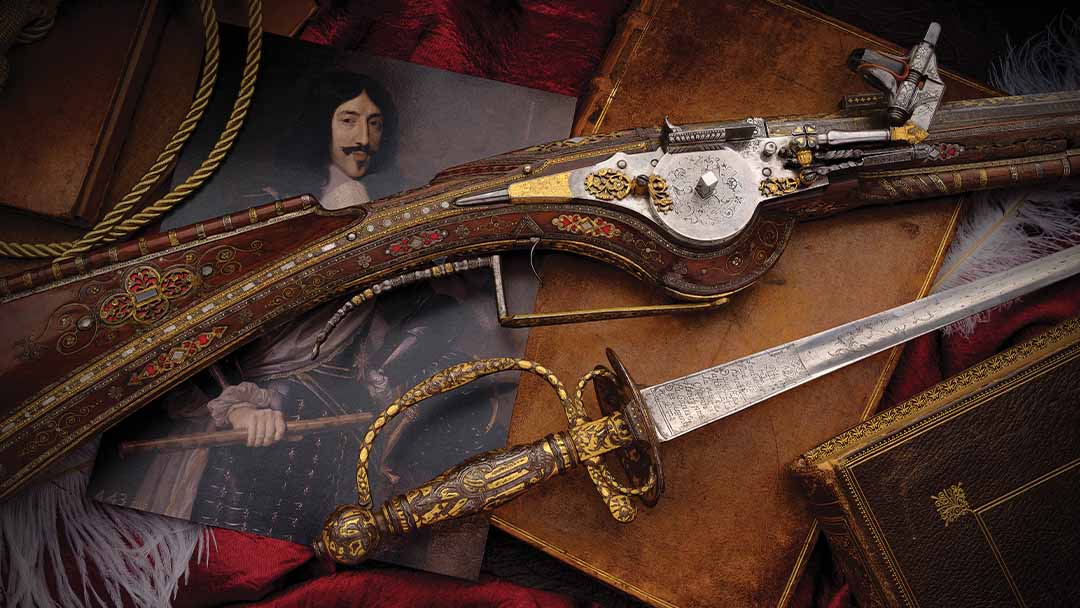
Over four hundred years after it was first received by King Louis XIII of France, a magnificent royal presentation wheellock is available to the collecting public during Rock Island Auction Company’s August 23 – 25 Premier Auction. One of the earliest inclusions in the French monarch’s renowned Cabinet d’Armes, King Louis XIII’s ornamented wheellock is a historic cornerstone of European artistry.
The Wheellock/Matchlock Hybrid
Though the wheellock provided more reliable ignition when properly maintained and functioning, the complex mechanisms could fail with wear from extended use and fouling, and wheellocks could not be easily repaired.
One solution to this found on a group of unusual military muskets manufactured in Suhl and used by the Austrian military in the second half of the 17th century was a lock design that incorporated both a wheellock and matchlock mechanism. This would allow the benefit of having a gun always at the ready when necessary but also allow for use as a matchlock if the wheellock mechanism was out of service or if the user had time to light the match and wanted to keep the wheellock mechanism in reserve.
Antique Wheellocks for Sale
Finding wheellocks for sale can be difficult, but Rock Island Auction Company presents collectors with opportunities that are attainable for all financial aspirations. We regularly feature wheellock and other early and antique firearms in our Premier, Sporting & Collector, and Arms & Accessories Auctions each year. Due to their rarity and value, collectors will primarily find wheellocks in our Premier Firearms Auctions, but examples, particularly ornate Victorian copies, can be found in our Sporting & Collector Firearms Auctions, and occasionally reproduction wheellocks can be found in our Arms & Accessories Day sales.
Subscribe to the Rock Island Auction newsletter to receive new gun blogs and gun videos on early firearms like the wheellock. We cover topics like the development of the percussion lock, the patch box, and the powder horn, and famous muzzleloading models like the Brown Bess, the Kentucky rifle, the Hawken rifle, the history of dueling pistols, and more.
- M. L. Brown, Firearms in Colonial America: The Impact on History and Technology, 1492-1792.
- Merrill Lindsay, One Hundred Great Guns: An Illustrated History of Firearms.
- George D. Moller. American Military Shoulder Arms – Volume I: Colonial and Revolutionary War Arms.