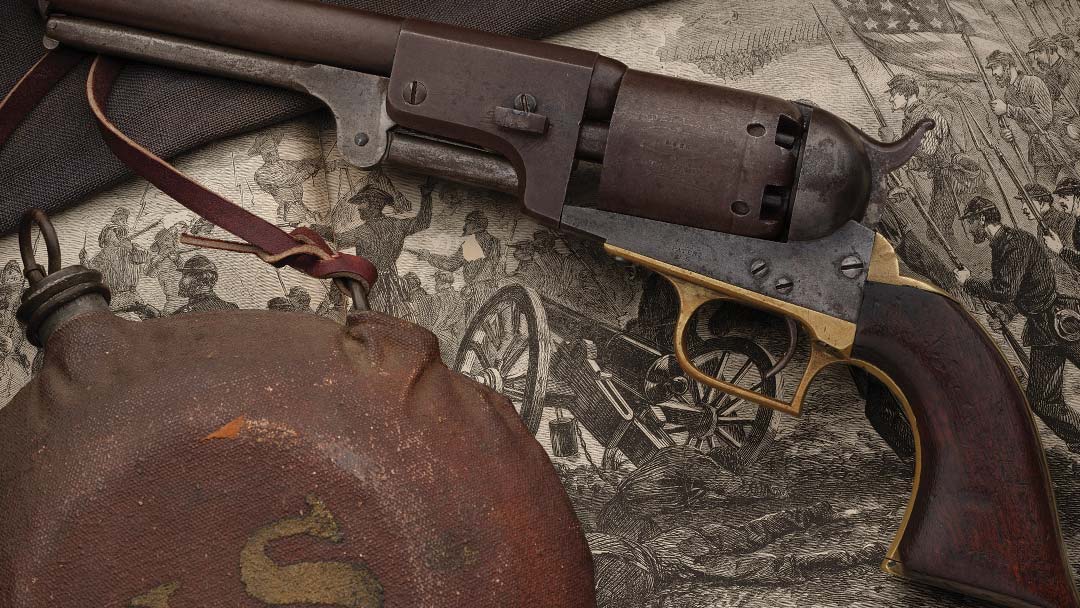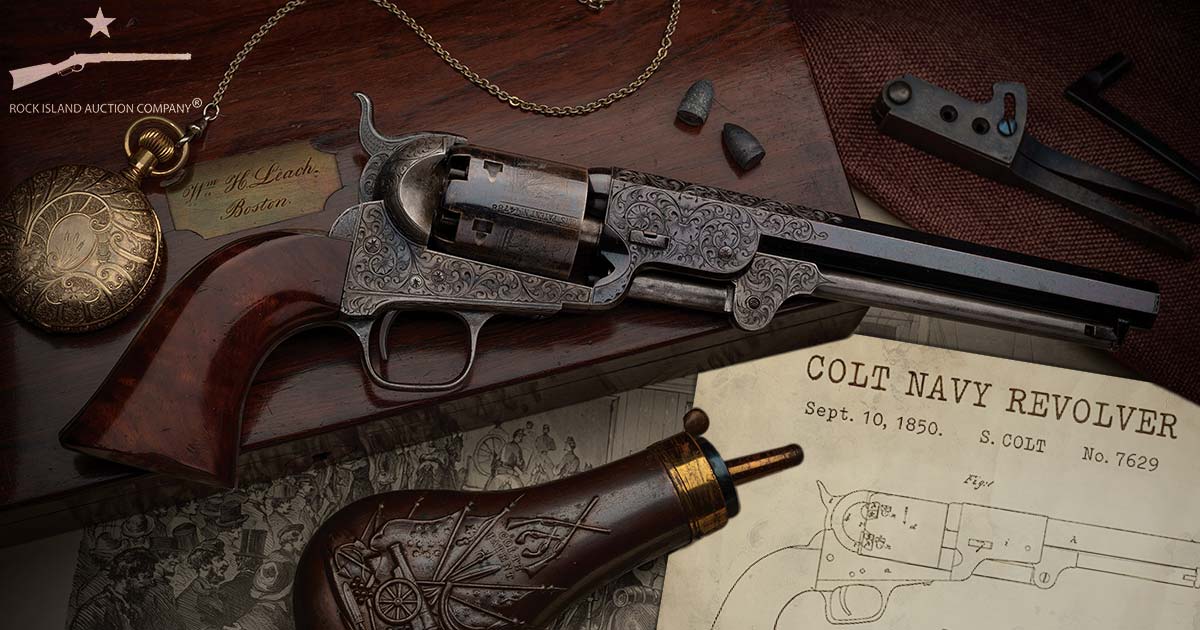
As a Civil War staple and a favorite frontier gun of countless pioneers, outlaws, lawmen, and Texas Rangers, the Colt 1851 Navy revolver made its mark on America and beyond. Combining power and portability, Colt’s “Revolving Belt Pistol” became one of the best-selling guns of the 19th century and helped usher in the age of the gunfighter.
The Colt Paterson and Colt Walker established the general blueprint for every Colt percussion revolver design to follow, including the prolific Colt 1851 Navy. Examples from every chapter in Samuel Colt’s legacy can be found in Rock Island Auction Company’s August 23 – 25 Premier Auction in Bedford, Texas.
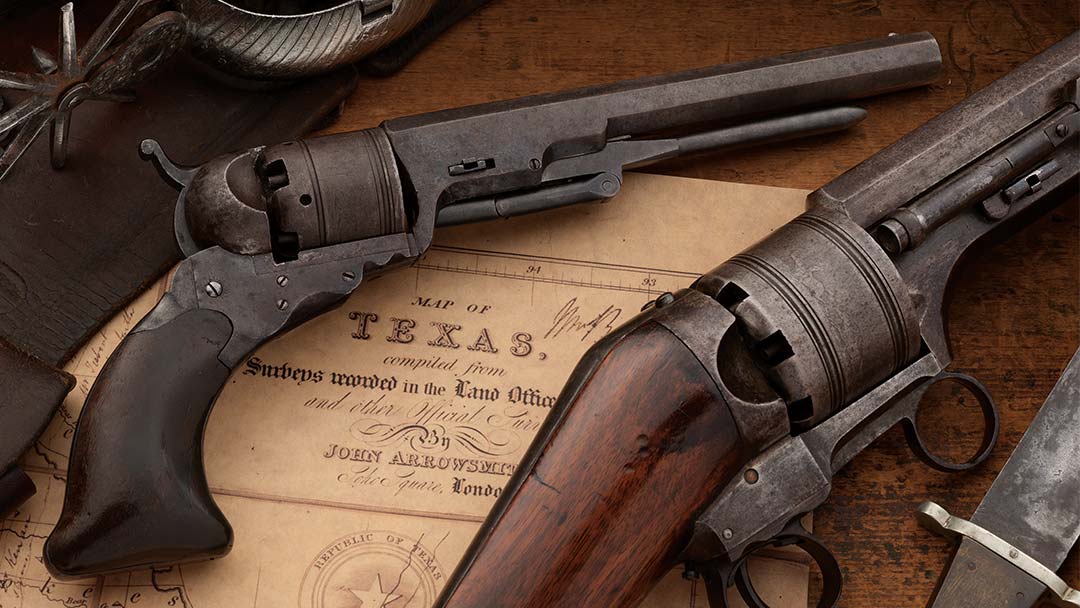
Road to the Colt Navy Revolver
The Colt Dragoon corrected some of the issues with the Walker and helped Colt establish his factory in Hartford, Connecticut in 1848. Where the Dragoon was a six-shot, .44 caliber revolver, a smaller variant was produced that became known as the “Baby” Dragoon. These pocket revolvers reduced the cylinder count to five and the ball to .31 caliber.
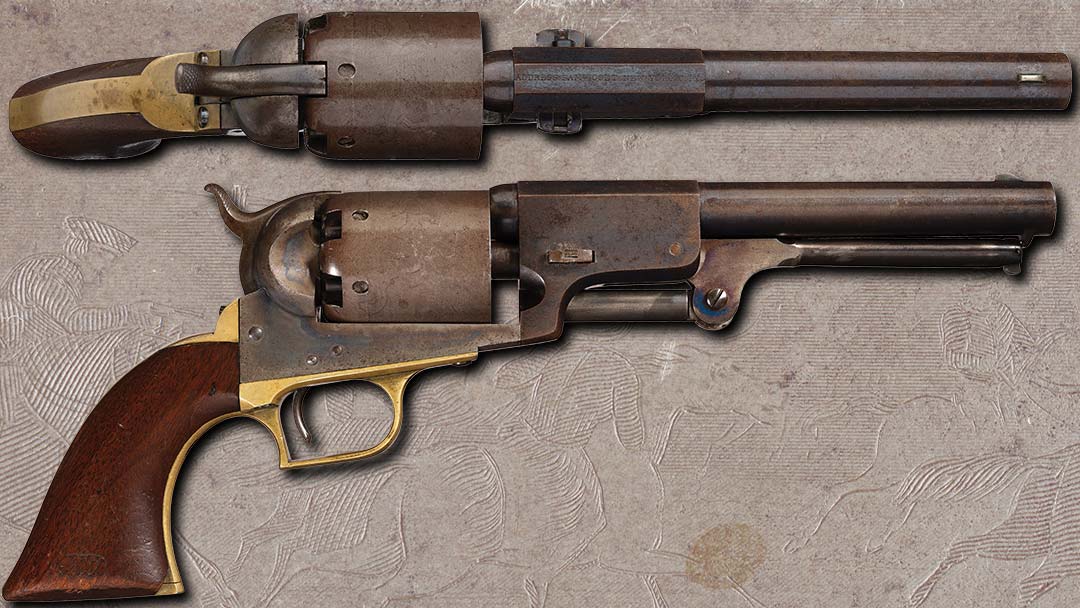
The .31 caliber Colt 1849 Pocket replaced the Baby Dragoon in 1850. Refinements included a round trigger guard and square cylinder stops and pins. The diminutive 1849 Pocket became Colt’s most successful 19th century revolver with sales figures exceeding 340,000. Where the 1849 Pocket brilliantly filled the role of a concealable close-quarters option, its sized-up sibling, the six-round Colt 1851 Navy, offered Samuel Colt a platform to pursue lucrative military contracts.
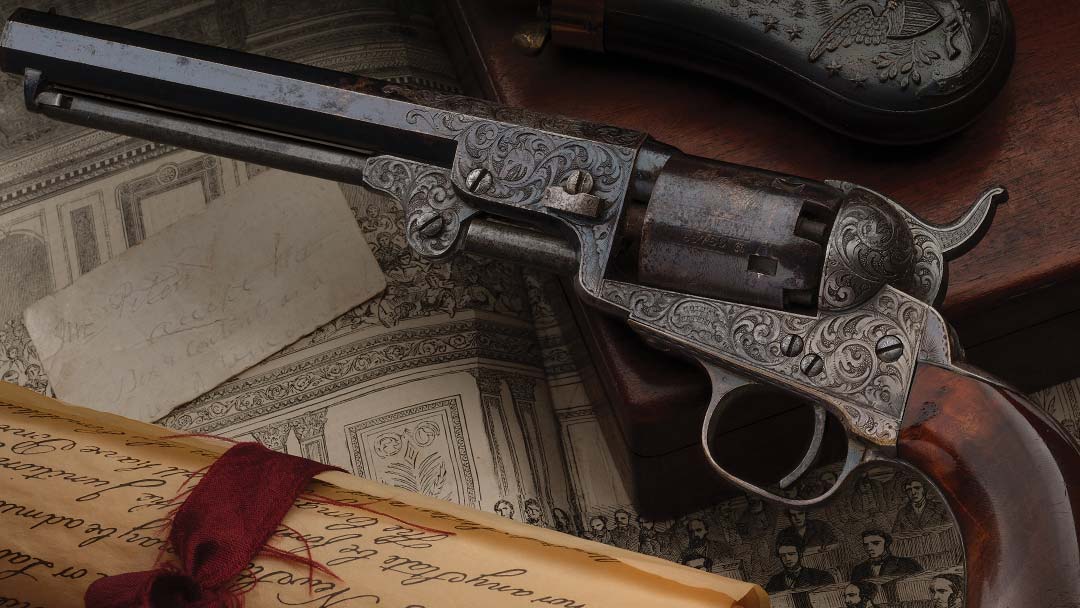
The 1851 Colt Navy Revolving Belt Pistol
Initially referred to as the “Revolving Belt Pistol,” the Colt Model 1851 revolver would quickly adopt a “Navy” designation. The model’s .36 caliber offered a middle-ground between the .31 caliber 1849 Pocket and the mighty .44 caliber Dragoon saddle holster pistol, where a moderately sized “belt pistol” would be a more attractive option to a sailor. The U.S. Navy purchased their first 100 Colt Navy revolvers in June 1852.
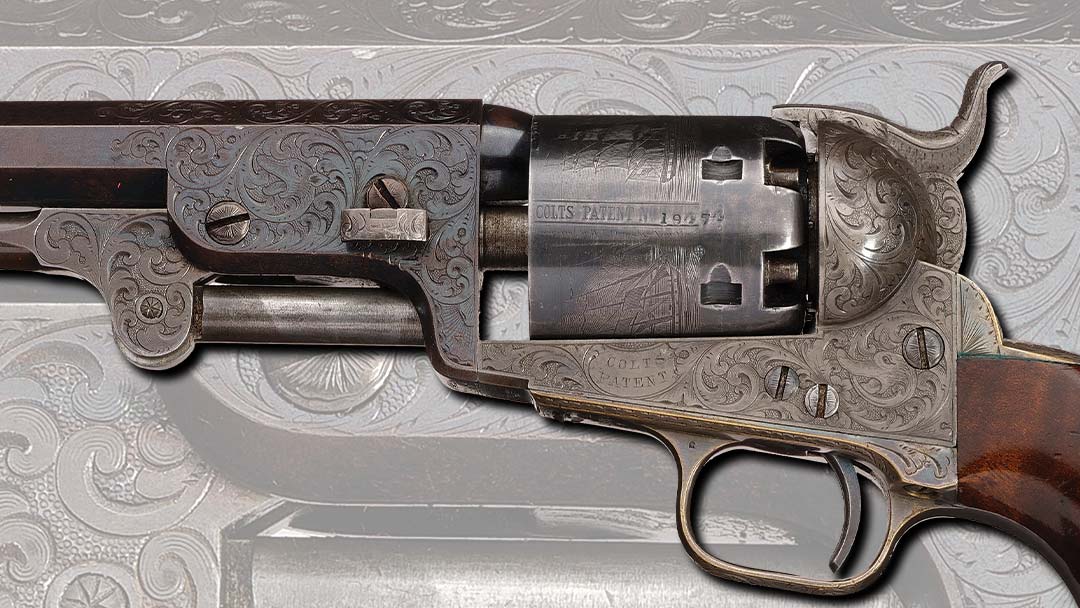
Though comparatively rare, Colt issued numerous 1851 “Navy-Navies,” referencing Model 1851 revolvers inspected by the U.S. Navy. The example pictured below, serial number 90744, is one of the final group of 600 Colt M1851 Navy revolvers delivered to the United States Navy in September 1859 and features a large rounded trigger guard, a recoil shield with no capping channel, and a blued iron trigger guard and back strap.
In ’51 Navies’ by Nathan L. Swayze, the author writes, “Most of the guns in this range were Navy-Navies. The only martial markings in this group were the small “U.S.” stamped on the frame under the Colt Patent stamping, and they did not have the “U.S.N.” stamping, Naval Officer inspector’s initials, or the anchor stamping that were found on the early Navy-Navies in the Late Third Model serial number range 55500/62000.”
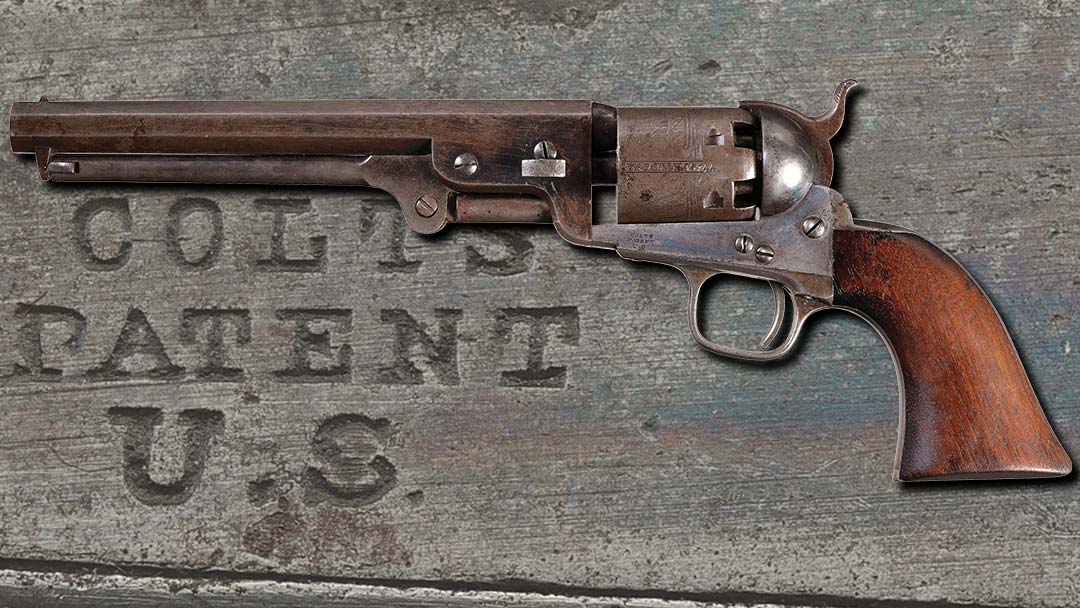
Where the Colt Model 1851 revolvers produced for the U.S. Navy featured iron backstraps and trigger guards, the revolvers purchased by the U.S. Army were manufactured in the standard configuration with brass backstraps and trigger guards. Government-purchased Colt Navy revolvers are stamped “US” on the left frame beneath the Colt Patent markings.
The U.S. Army accepted the Model 1851 Navy revolver in early 1855. Nearly 17,000 were delivered to the Ordnance Department over the next three years, with many fielded by mounted troops during the early Plains Wars. The Colt Navy became a popular sidearm with militia, early police departments, and civilians as well.
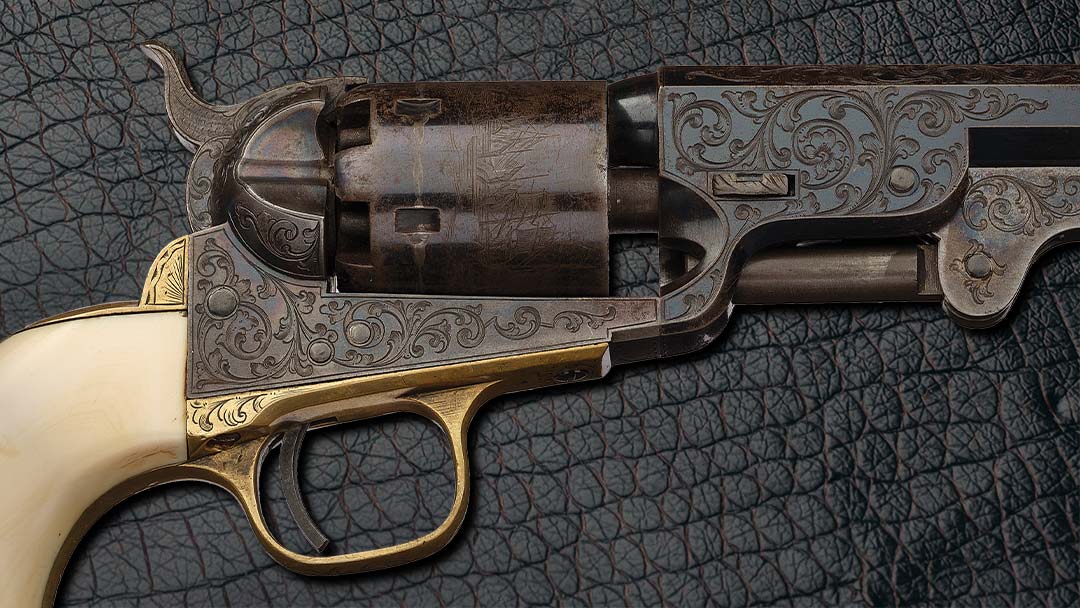
The Colt 1851 Navy flourished throughout the 1850s. During a tour of the American Southwest in 1856, journalist and social critic Frederick Law Olmsted reported “There are probably in Texas about as many [Navy] revolvers as male adults, and I doubt if there are one hundred in the state of any other make.”
As Samuel Colt’s fortunes rose in the domestic market, the tireless entrepreneur also explored opportunities overseas, with a particular eye on the United Kingdom.
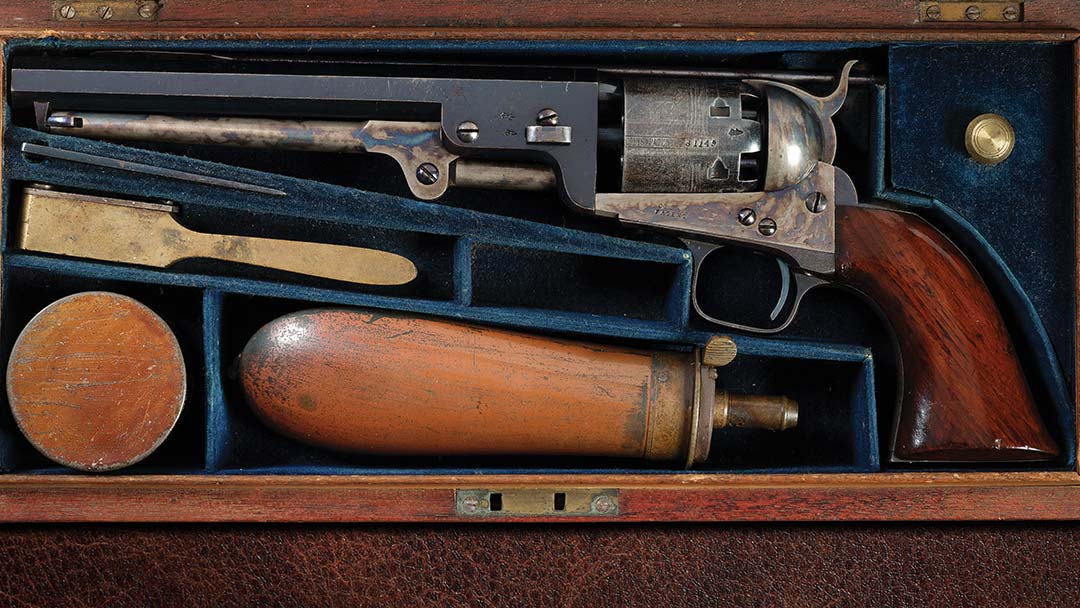
The 1851 Colt Navy Revolver Overseas
Colt displayed his Navy revolver at the Great Exhibition in London in 1851. Interest proved great enough that Samual Colt invested in a London factory and hoped to establish strong markets in England, France, Russia, and beyond.
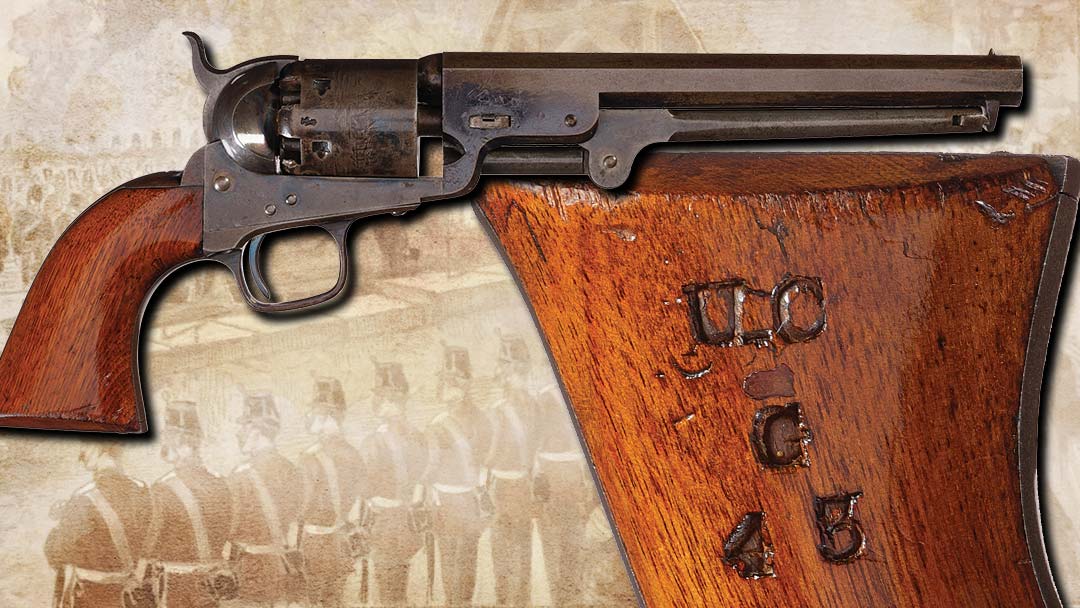
Pictured below is a rare example of a London-produced Colt 1851 Navy revolver that was marked and issued to troops of the Upper Canada Militia. “London-London” refers to a Colt revolver that used parts that were both manufactured and assembled in London. Because Upper Canada 1851 Navies are London-London Models, the usual British proofmarks are found on the left barrel lug and alternately on the shoulders between the nipple recesses of the cylinder. The left side grip is stamped “UC/G/43,” representing Upper Canada, Company G, 43rd Volunteer.
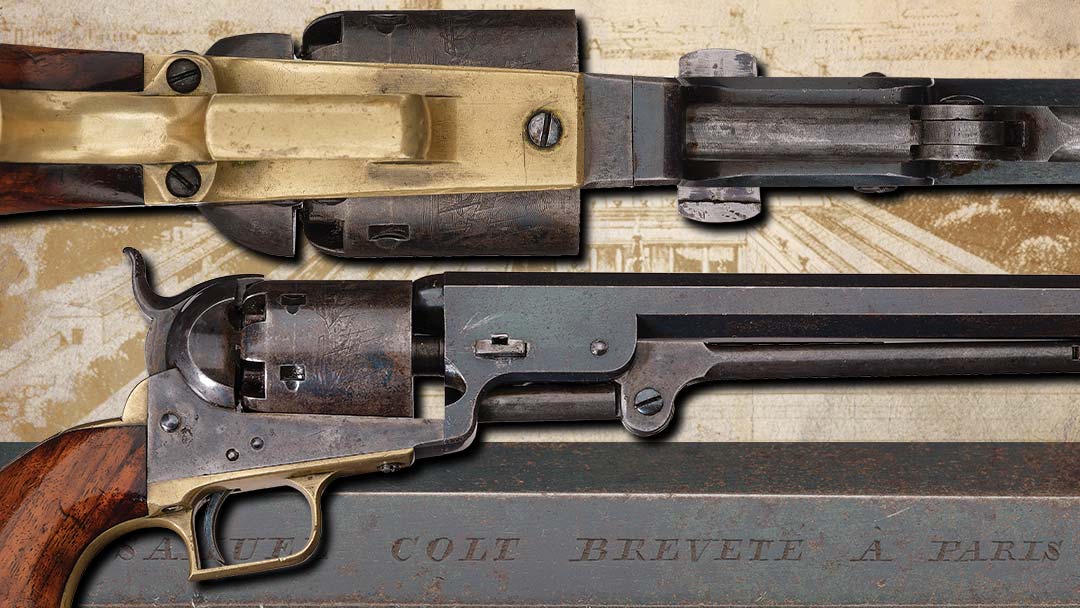
The Colt 1851 Navy pictured below is another example of Colt’s expansionist mindset. Inscribed with “SAMUEL COLT BREVETE A PARIS,” the revolver is a one-of-a-kind rarity. R.L. Wilson wrote that the revolver is believed to have been produced as a “prototype arm…made up for test purposes and showings in France, with a view towards arms sales there, and toward possibly opening a Colt factory in that country.”
Author Herbert G. Houze features this historic Colt Navy on pages 92 and 93 of ‘Samuel Colt: Arms, Art & Invention’ and identifies it as a “Sample Patent Verification Belt Pistol.” Houze writes that “Samuel Colt’s 1861 inventory of his “small office” notably listed “1 Navy Pistol marked in French” suggesting this revolver became part of Colt’s collection.“
Samuel Colt displayed his Model 1851 Navy at the Great Exhibition in London in October of 1851. 14 months later, his London factory was up and running. Despite modest production success, operating expenses and growing competition from European competitors made profit elusive. 1856 would mark the untimely end for Colt’s London factory, with more than 42,000 Navy revolvers produced in total.
Colt’s most significant English competitor during this period was the Adams line of double action percussion revolvers. Patented in 1851, the .44 caliber Adams revolver packed more punch than the 1851 Navy and could be fired more rapidly. Both features made the Adams an attractive option for British officers during the Crimean War and Indian Mutiny. Lieutenant Frederick E. B. Beaumont patented an improvement to the Adams revolver in 1856 that was soon adopted by the British army.
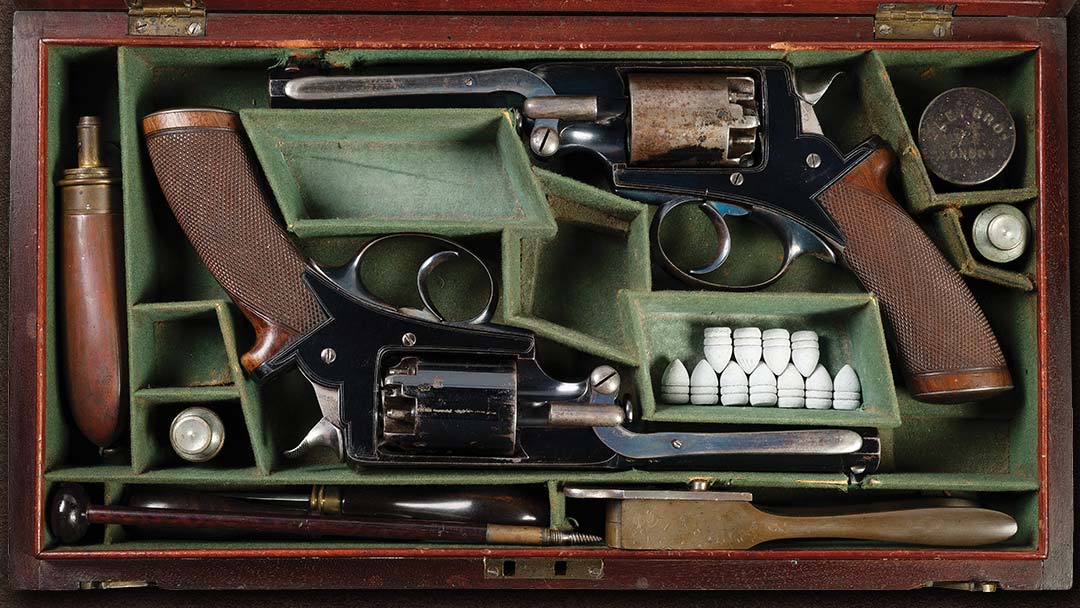
Colt and his associates engaged in frequent legal action to prevent European gunmakers from counterfeiting his design and importing these copies into the United States. Belgium and Russia were among the most prolific manufacturers of Colt Navy clones. During the Civil War, Confederate gunmakers produced several revolvers based on the Colt 1851 Navy, including the Griswold & Gunnison and the Leech & Rigdon.
The Colt Navy in the Civil War
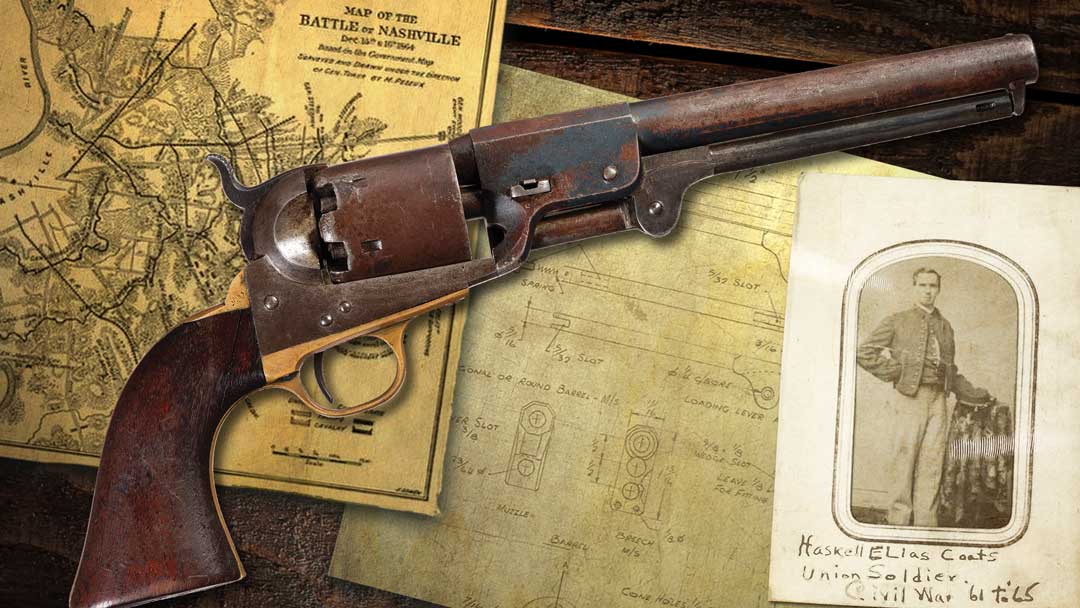
More than 50 Union regiments were issued Colt 1851 Navy revolvers during the Civil War, with about 35,000 purchased by the Union military during the conflict. The 1851 Navy was extremely popular in the South as well, who continued to purchase the reliable revolver in quantity until pressure from the Northern media caused Samuel Colt to end such shipments in April of 1861.
Many officers on both sides of the conflict carried a Colt 1851 Navy, including Robert E. Lee, whose engraved revolver is displayed in the American Civil War Museum in Richmond, Virginia. Engraved or specially inscribed Colt revolvers were often purchased as gifts or presentation pieces for officers, enlisted men, and even volunteers being honored by their community.
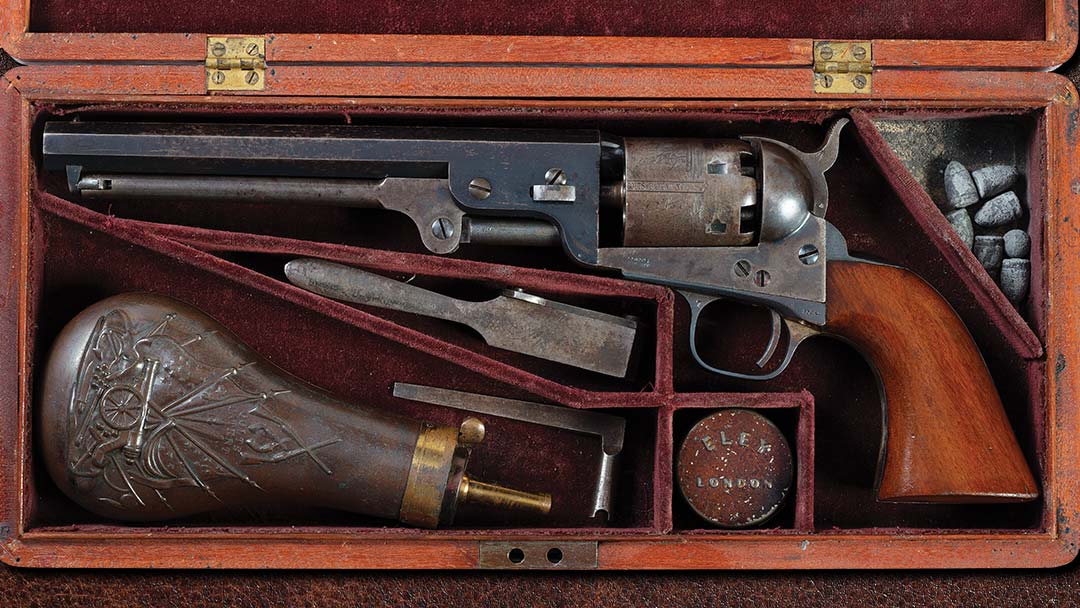
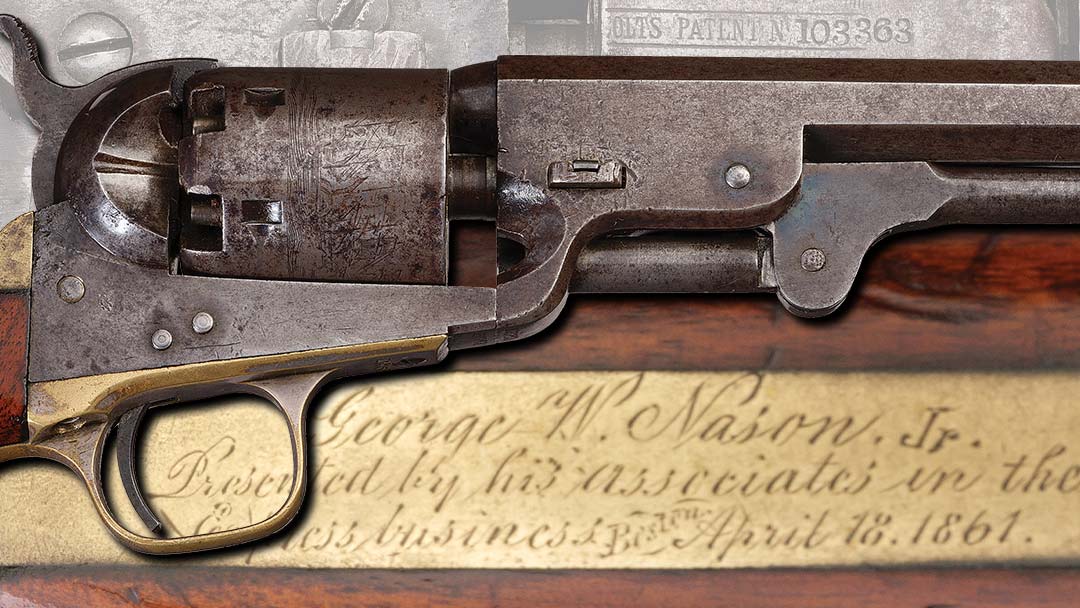
The Colt 1851 Navy example featured below was shipped to Colt’s New York City office on April 15, 1861, three days after the Confederate attack on Fort Sumter and on the same day President Lincoln issued his call for 75,000 state militia troops to suppress the southern rebellion. The revolver’s back strap is inscribed “George W. Nason, Jr./Presented by his associates in the/Express business Boston April 18, 1861”.
The presentation of this historic Colt 1851 Navy is documented in “The Fifth Regiment Massachusetts Volunteer Infantry in Its Three Tours of Duty, 1861, 1862-63, and 1864” by Alfred S. Roe. On page 22, in the section on Company I (Somerville), the book describes in detail how on Saturday, April 20, 1861, “Geo. W. Nason, Jr., a Franklin man, still a member of the company, delivery clerk for the Fiske & Co.’s Express, was presented with a silver-mounted Colts revolver.”
George Warren Nason Jr. was among the “Minute Men of ’61,” the Massachusetts volunteers who heeded Lincoln’s “First Call”, set out for Washington, D.C., and officially mustered into federal service on May 1, 1861. Nason was wounded and captured at the First Battle of Bull Run. He escaped and rejoined his regiment, enlisted on the Union gunboat Huzza, and was wounded again while serving the starboard cannon during the Battle of Roanoke Island in early February, 1862. He was wounded a third time on March 14, 1863, at New Bern, North Carolina. Later in life, Colonel George Warren Nason Jr. would go on to become President of the Association of Minute Men of ’61.
The Colt 1860 Army
While the Colt 1851 Navy served as an efficient medium sized pistol during the Civil War, Colt developed a revolver suited to a .44 caliber conical bullet, the Model 1860 Army. Based on the same frame as its 1851 Navy counterpart, the 1860 Army employs a longer, rebated cylinder, a larger cylinder pin, and a shorter forcing cone on the barrel.
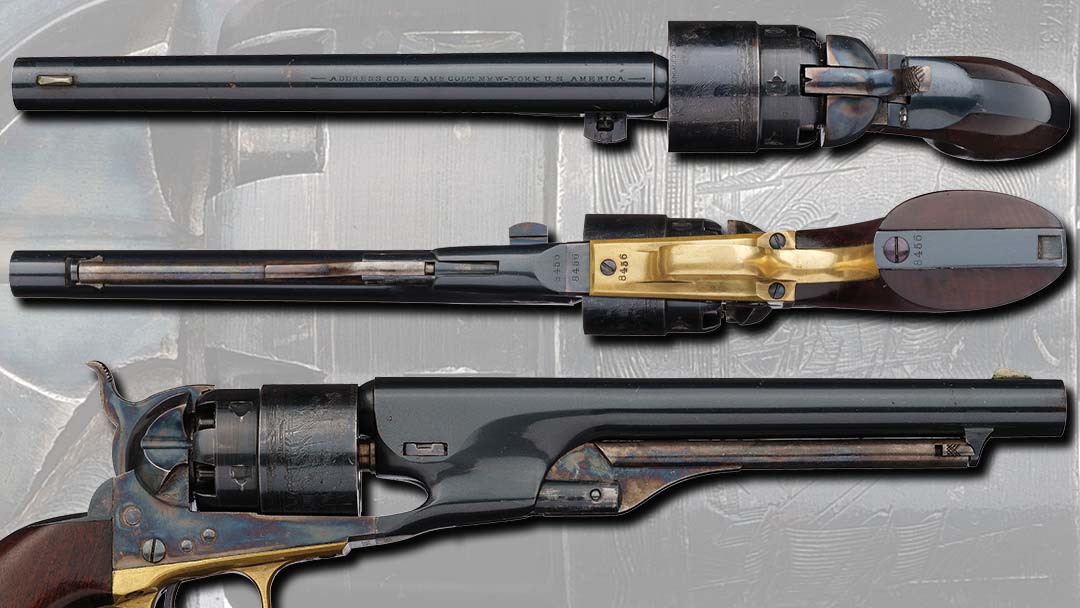
The Colt Model 1860 Army became the primary issued revolver of the Civil War, with nearly 130,000 purchased by the U.S. Ordnance Department before a factory fire in February 1864. More than 200,000 revolvers were manufactured in total between 1860 and 1871.
The Colt 1861 Navy
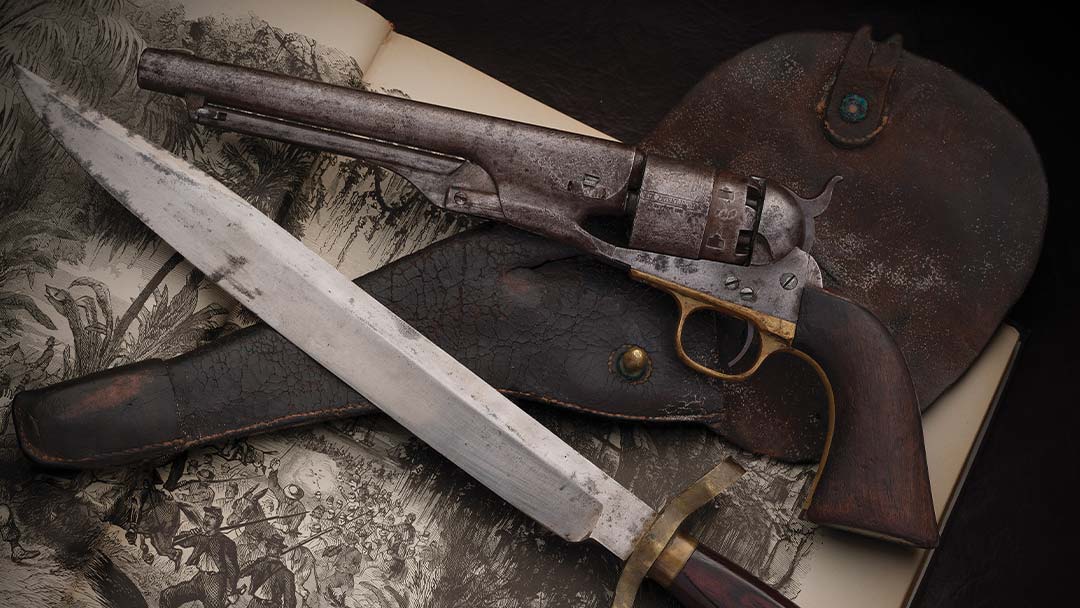
The Colt Model 1861 Navy revolver, officially called the “New Model Navy or Belt pistol,” represented a streamlined version of its 1851 predecessor. Though produced in only a fraction of the number of its Army counterpart, the Colt 1861 Navy was still a prevalent Civil War revolver, with many being privately purchased by troops. Out of the 38,864 Colt 1861 Navy revolvers produced, fewer than 1,300 are estimated to still survive, with high-condition examples being exceedingly scarce.
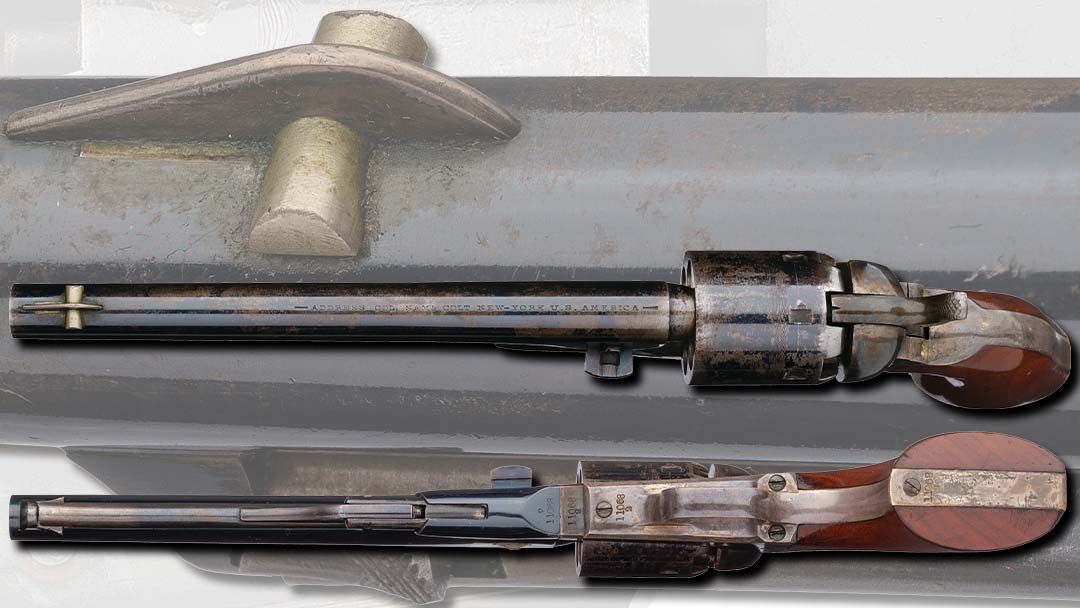
Both the Colt 1860 Army and 1861 Navy feature the Battle of Campeche roll engraving and share many other similarities. Differences include the Army’s large grips, more rounded lines, and its .44 caliber compared to the 1861 Navy’s .36 caliber. The Colt 1861 Navy revolver is slightly heavier at 2.6 pounds compared to the Army’s 2.11 pound weight, and the Army’s barrel is 8 inches as opposed to the Navy’s 7 1/2 inch length.
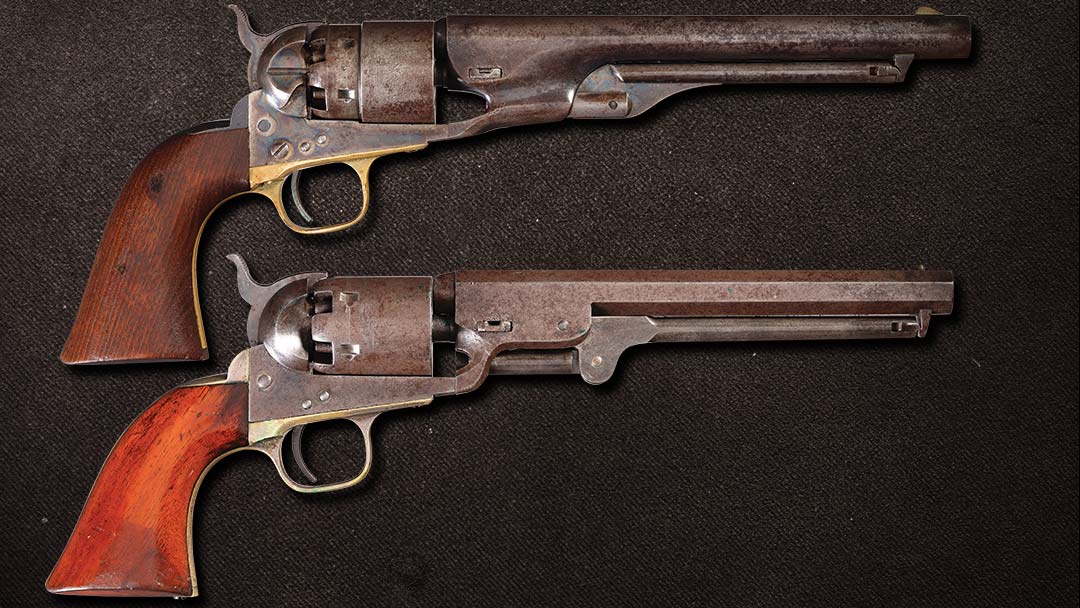
After U.S. Contract Walker Colt revolvers, U.S. Contract 1861 Navy revolvers are the rarest U.S. martial Colt percussion handguns. The exceptional example below was part of a 2,000 gun contract with the U.S. Ordnance Department, signed on April 13, 1861. Although the Ordnance Department subsequently purchased 363 additional Model 1861 Navy revolvers from Colt distributors, the 2,000 pistols purchased under the April 1861 contract were the only Ordnance inspected, military finished Model 1861 Navy revolvers manufactured by Colt during the Civil War.
Legacy of the Colt Navy Revolver
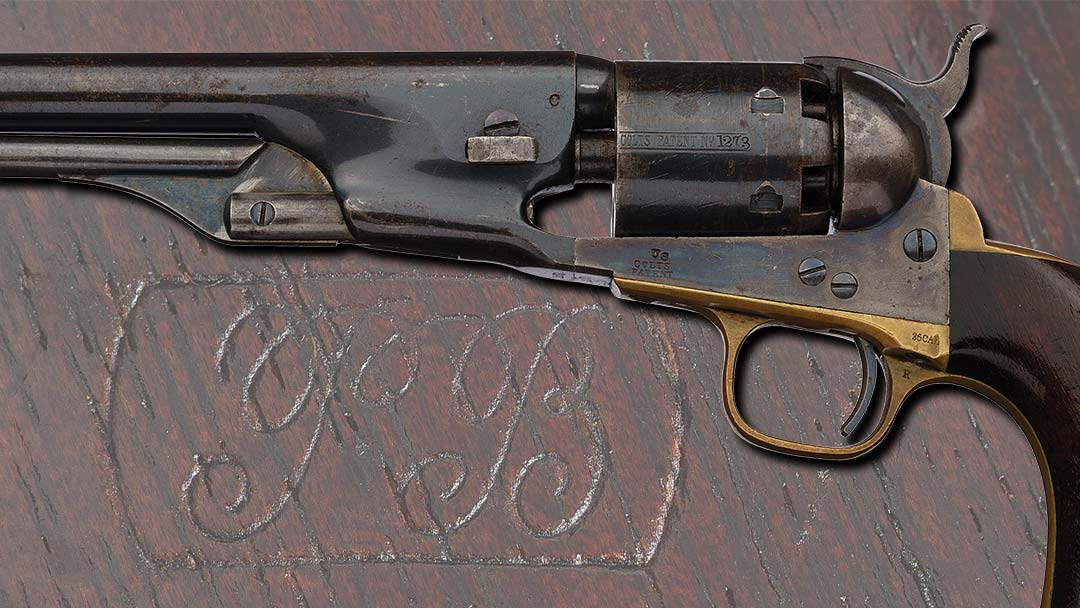
The Colt 1851 Navy remained a popular revolver after the Civil War. Some were used by early police departments, and the Colt Navy saw extensive use out West with outlaws, Texas Rangers, and frontier lawmen like Wild Bill Hickok, who famously carried a pair of engraved Navies with ivory grips.
Production of the Colt 1851 Navy continued until 1873. With more than 215,000 produced in the United States and 42,000 in London, the 1851 Navy became the second most produced Colt percussion revolver. In its final years, sales slowed to a trickle as new revolver models designed for self-contained ammunition and cartridge conversion options were introduced.
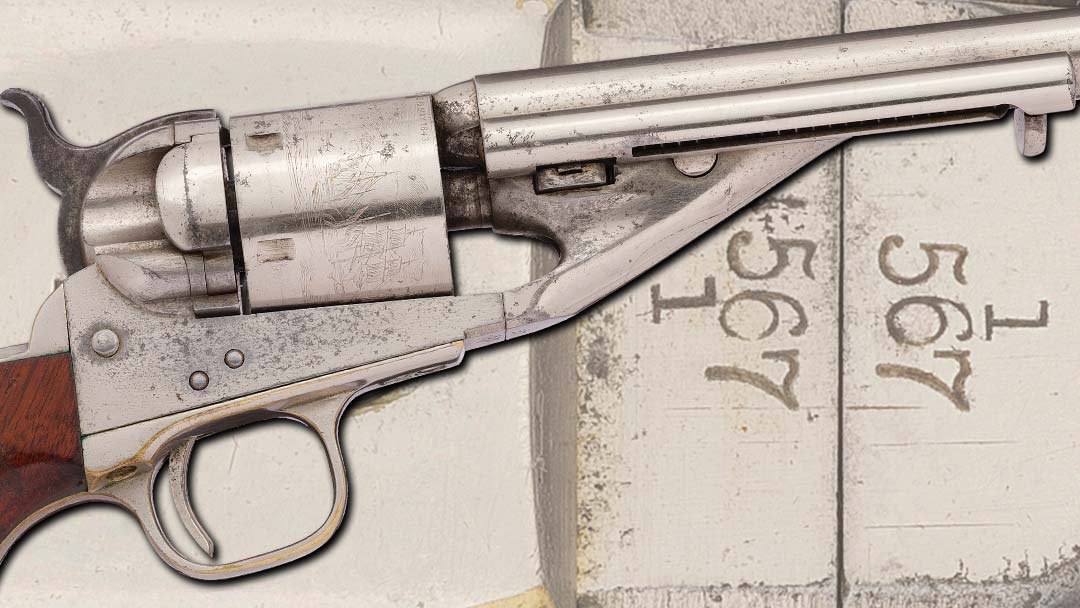
Colt Navy Revolver for Sale
From the Civil War battlefield to the frontier streets of the Old West, the Colt 1851 Navy revolver saw plenty of action throughout its 22-year production run. Owning one of these iconic sixguns is an aspiration of every Colt collector and 19th century arms enthusiast, and some of the rarest and high condition examples can be found at Rock Island Auction Company.
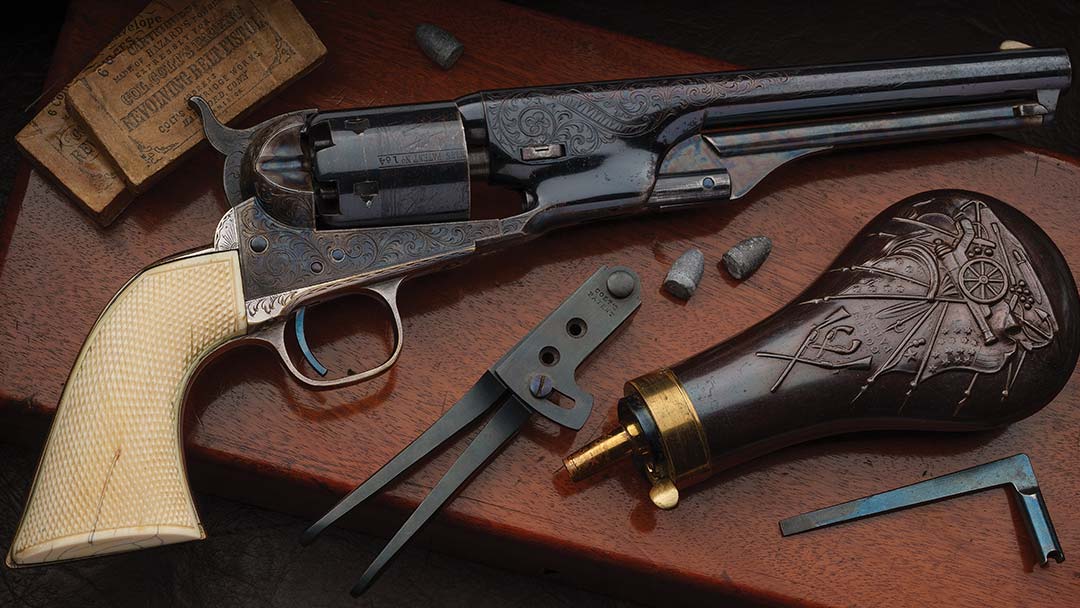
Sign up for the Rock Island Auction Company’s weekly newsletter for new gun videos and gun blogs that cover the full gamut of Civil War and Wild West revolvers. From the Colt 1855 Root revolver, the Colt revolving rifle, the Colt Cloverleaf pistol, the Colt SAA, the Colt Lightning, the LeMat revolver, the Remington 1875, the Merwin Hulbert, the S&W Model No. 3, the S&W Schofield, the S&W Model 320 revolving rifle, we cover classic revolvers in every form.