
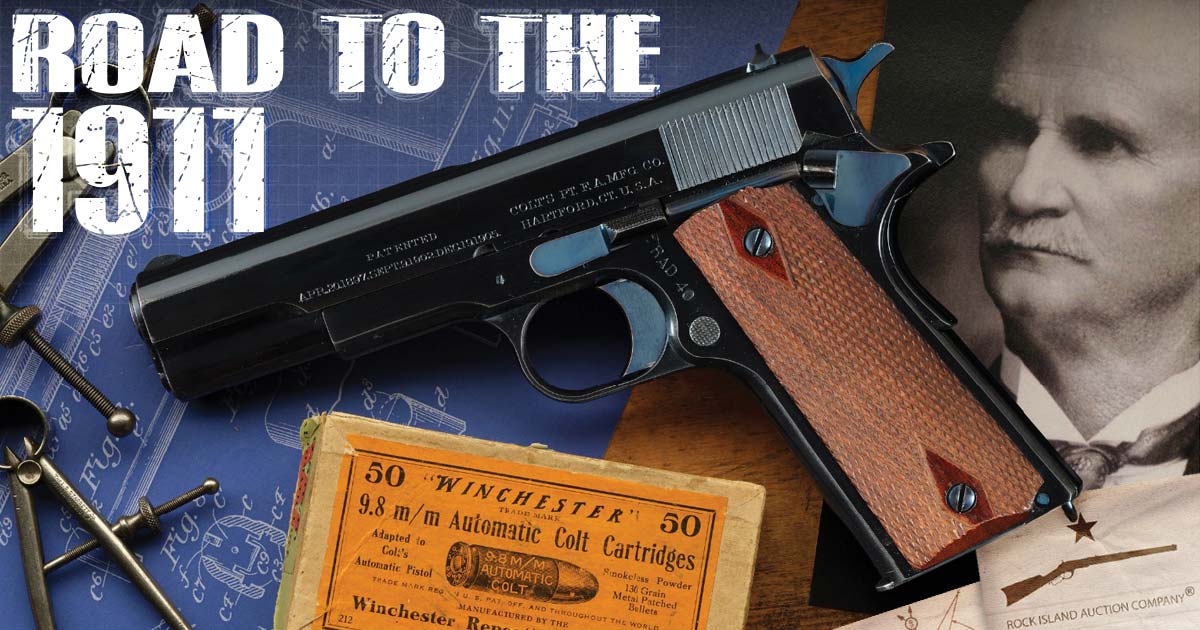
The famous 1911 pistol is one of the most popular handguns of all time. When it comes to factors like balance, comfort, and reliability, John Browning’s 1911 design has no shortage of admirers. The legendary pistol was eventually adopted by the U.S. Army and went on to become the longest-serving sidearm in American military history, but the 1911’s road to success was far from an easy path. The story of the 1911 design involved numerous early models and prototypes as Browning raced to develop a pistol that would stand out against a slew of competitors.
The U.S. Military’s search for a reliable semi-automatic sidearm was a primary driver in the development of John Moses Browning’s .45-caliber pistol. Many of the evolutionary predecessors to the Colt 1911 are rare guns today, with especially scarce examples like the Colt Model 1910 prototype pistol considered gun collecting treasures. The Colt 1910 was a significant milestone in the progression of the 1911 design, but the real story began over a decade earlier.
The First 1911 Predecessors
The 1911 pistol’s military lineage started in 1898 with Browning’s Colt Automatic Pistol, a gun that would become known as the first production Colt Model 1900. Chambered in .38 Auto, this early Browning design was a locked breech, short recoil-operated, hammer fired handgun that was sent to the U.S. Ordnance Department to test the feasibility of an automatic pistol in the hands of army officers.
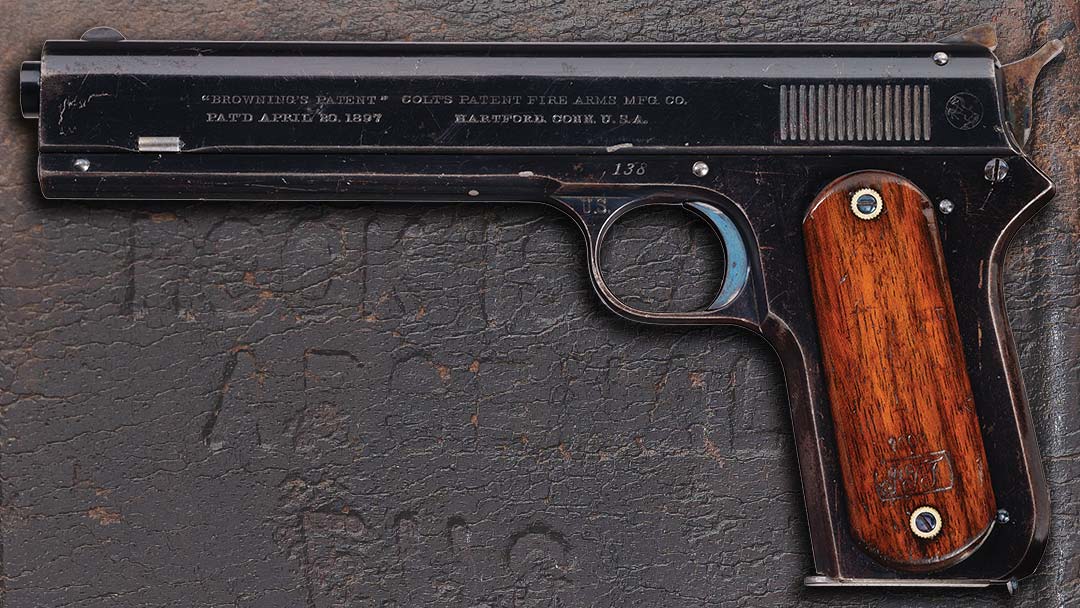
The pistol below, shipped on October 17, 1900, falls in the second shipment of Model 1900 “Sight Safety” pistols sent from Colt to the U.S. government general storekeeper at the Brooklyn Navy Yard. Colt produced only 250 of these scarce pistols under contract for the United States Navy, all of which were shipped in the fall of 1900 to test the potential of the automatic pistol as a seafaring weapon.
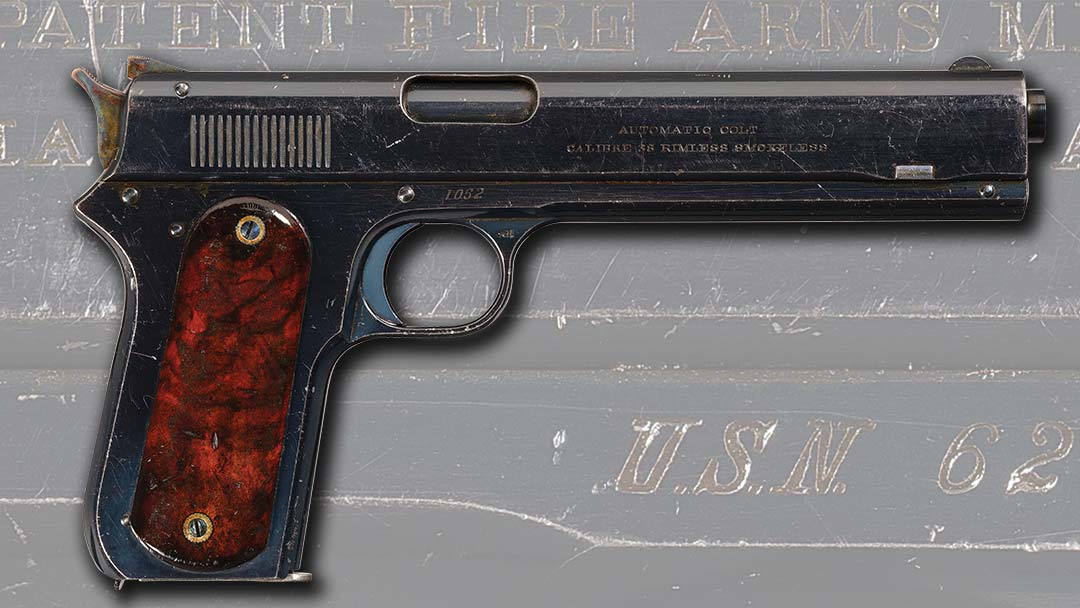
Officers stationed in the Philippines had a high demand for automatic pistols, and after initial field testing the Ordnance Department requested a number of design changes and ordered 200 more Colt Model 1900 pistols. These U.S. Army Second Contract models only incorporated two of the recommended improvements, including checkered, thicker grips, and deeper slide serrations that were moved to the front of the pistol.
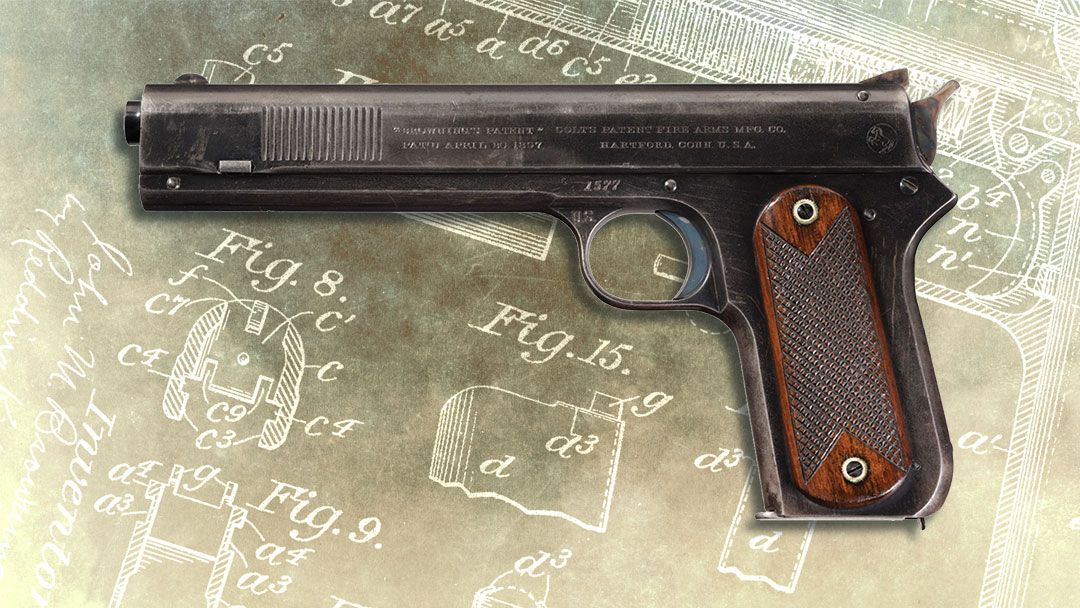
Colt Model 1902 Design
Reports from the field were mixed, and some of those complaints are reflected in how the Model 1900’s frame differs from its famous successor. A shorter, deeper grip, no slide stop, a muzzle heavy design, and one of the early Browning pistol’s most famous features, its rear sight safety. Having a rear sight that doubled as a safety by blocking the firing pin wasn’t popular with the troops, as both the sight and firing pin tended to wear and made the weapon both unsafe and inaccurate.
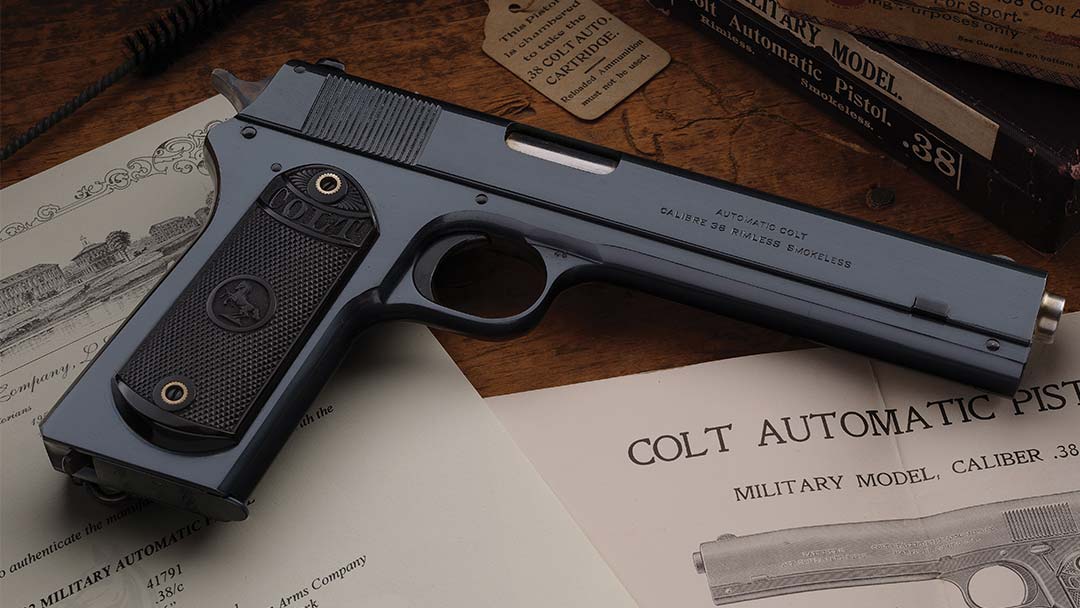
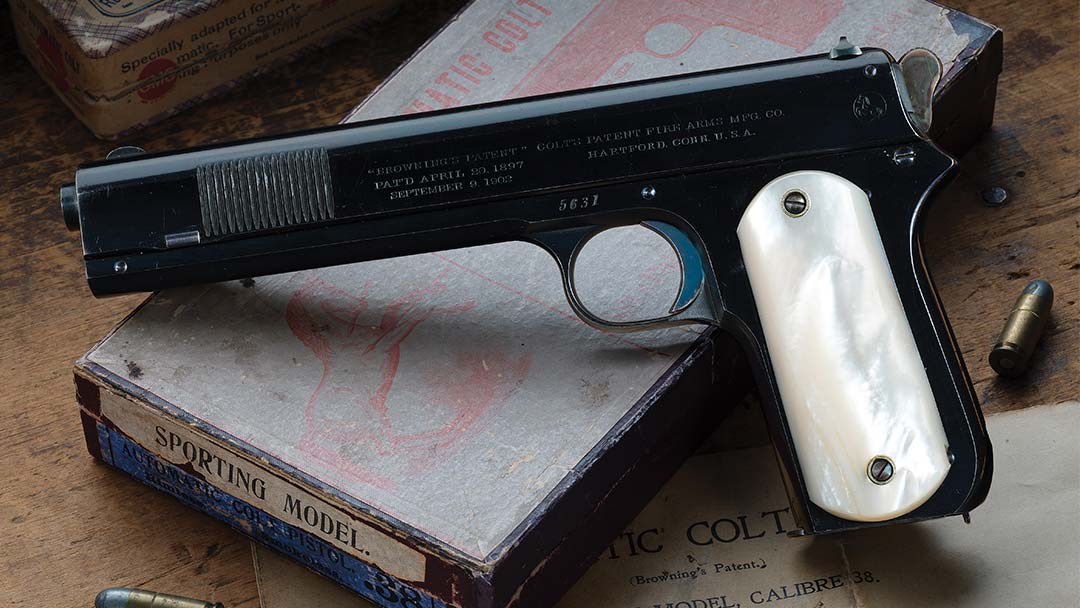
The next historic precursor to the 1911 design, the Colt 1902, addressed a number of military complaints and included a lengthened grip, a slide stop, and an increased magazine capacity from seven to eight, though the pistol was still chambered in .38 ACP (which stands for Automatic Colt Pistol). Again, the feedback from the field trials was mixed, questioning the durability of the pistol compared to well-known and comparatively reliable alternatives like the New Army Colt 1892 revolver.
Developing the .45 ACP Pistol
In 1904, Colt and Browning had been developing a .41 caliber cartridge. In the same year, the Thompson-LaGarde field tests were conducted to determine which caliber the U.S. Military should adopt going forward. The tests were in part initiated by the poor performance of the Army’s .38 caliber revolvers during the Philippine Insurrection, and Colonel John T. Thompson concluded that nothing short of .45-caliber stopping power was suitable for dealing with a determined opponent like the Moro juramentado warriors during the Moro Rebellion.
Browning beefed up his .41 caliber cartridge to create the .45 ACP and modified his pistol design to chamber the larger round in order to accommodate the military’s request. Enter the “Military Model of 1905”.
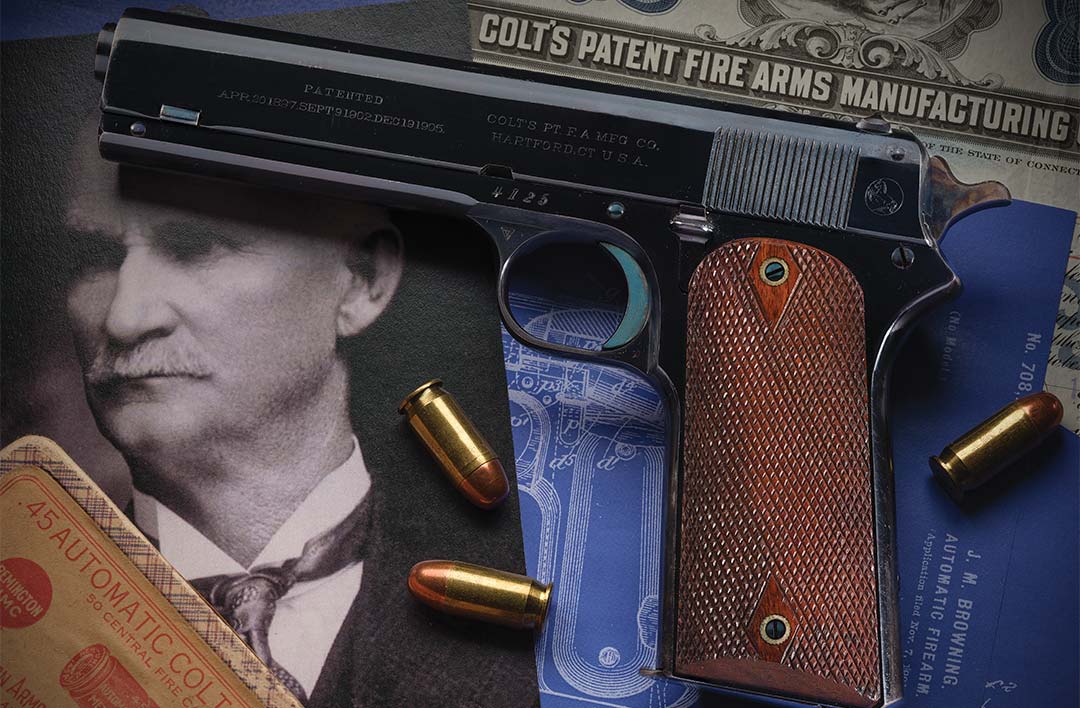
In January 1906, U.S. Army Ordnance Chief B.G. Crozier issued a letter of invitation to the gun manufacturing industry to develop and submit new semi-automatic handguns utilizing Browning’s new .45 ACP rounds. Lured by the promise of a rich military contract, eighteen companies initially responded, though only six were able to produce a test sample pistol. Three of those designs were eliminated early, with Colt, Savage, and DWM remaining as the sole survivors.
During the next testing phase, DWM would voluntarily withdraw its U.S. Trials .45 ACP Luger pistol design due to concerns that the Americans wouldn’t pick a European offering regardless of virtue. The Savage Arms Corporation produced a version of its Model 1907 automatic pistol that was scaled up for .45 ACP and faced off against Colt during the next round of military testing.
The .45 ACP Colt Model 1905
With an external extractor and a larger grip to house the new cartridge, the Colt 1905 was an important evolutionary leap in the development of the 1911 design. Browning had also reduced the number of parts and simplified the internals, a trend toward efficiency that would continue in later iterations of the handgun.
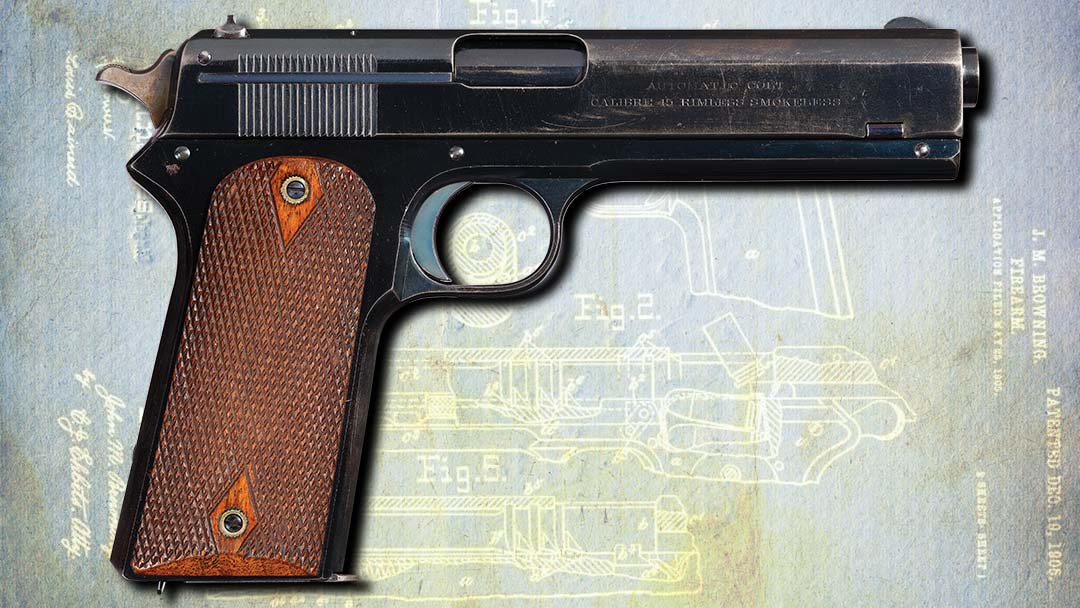
The Model 1905, while a step in the right direction, proved too fragile to stand up to the recoil forces of the .45 ACP rounds and the rigors of military torture testing. So while the Colt 1905 wasn’t the final answer that the military was searching for, it helped set the stage for the sturdier 1907.
The Colt Model 1907
Browning continued to refine his design with the Colt Model 1907, a beefed-up 1905 with a grip safety. The Model 1907 pictured below, serial number 91, is one of only 200 manufactured under the Army Contract of 1907 for field trials, with an additional five made for presentation. The pistol was shipped from Colt to the Springfield Armory on March 17, 1908, and was one of the 64 pistols issued to Troop H, 2nd Cavalry Regiment at Fort Des Moines, Iowa, for actual evaluation.
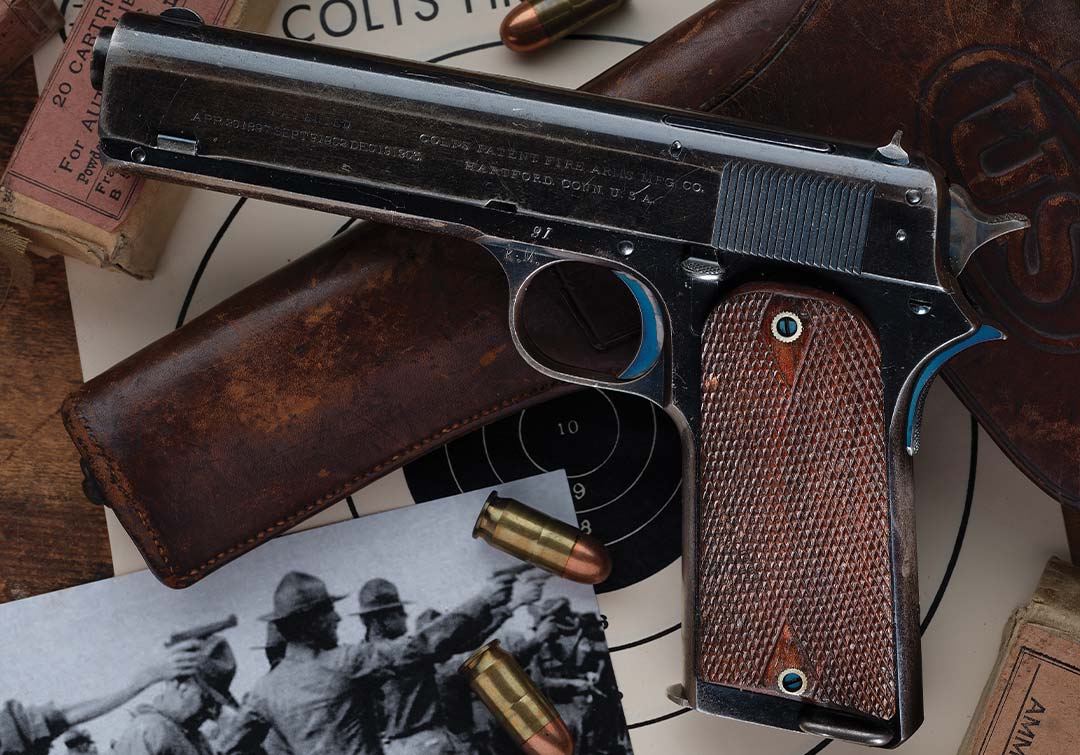
While a notable upgrade, the Colt 1907 still proved unsuitable for the .45 ACP round during rigorous field evaluations. In June 1909, Colt submitted a letter to the Chief of Ordnance requesting to withdraw all of their test samples, agreeing to modify them to correct the design flaws and return them to the Army for further evaluations. While much of the groundwork had been laid for what would become the iconic 1911 design, Browning realized an extensive redesign was needed to accommodate the power of the new military cartridge.
The Colt Model 1909 and 1910
John Browning would continue to refine his pistol with the Colt Model 1909, which replaced the two link barrel lock up design with a single link, tilting barrel system for greater reliability. The 1909 also made improvements to the recently added grip safety, the ejector and ejector port, a new placement for the magazine release, and the weapon’s overall ease of disassembly was also fine-tuned.
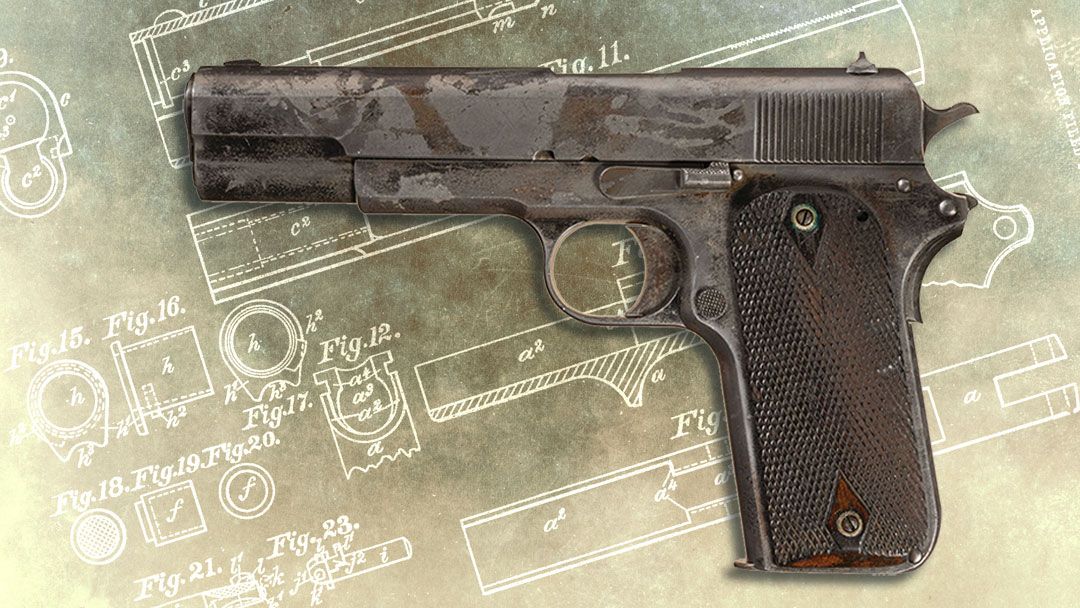
Browning’s pistol was drawing closer to its final form, but the next prototype was perhaps the most important evolutionary piece in the legacy of 1911 design. Originally manufactured in 1910, there were possibly as few as eight Model 1910 prototype pistols ever produced.
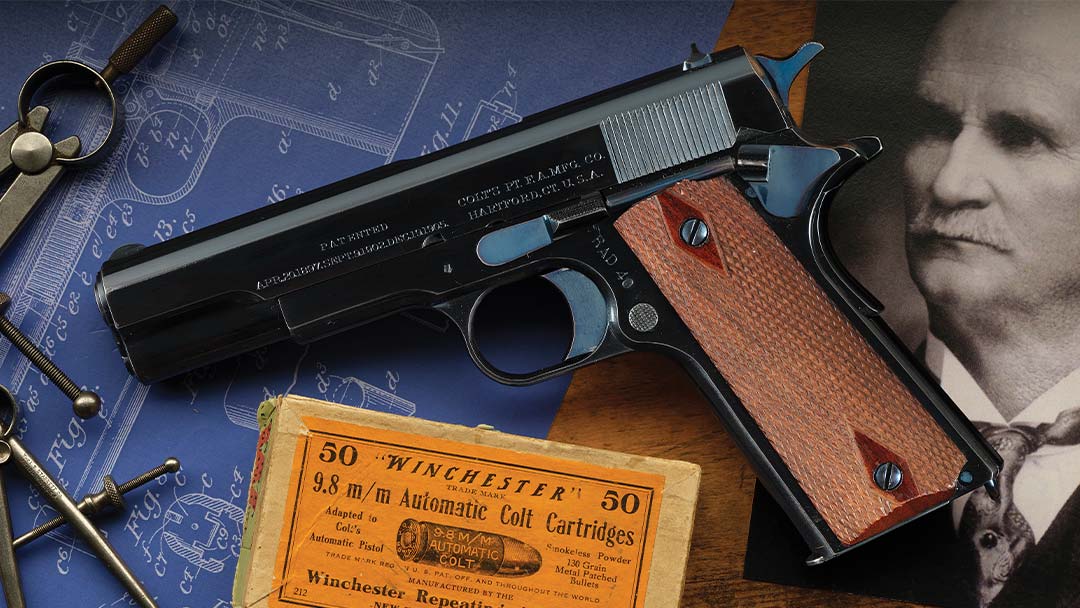
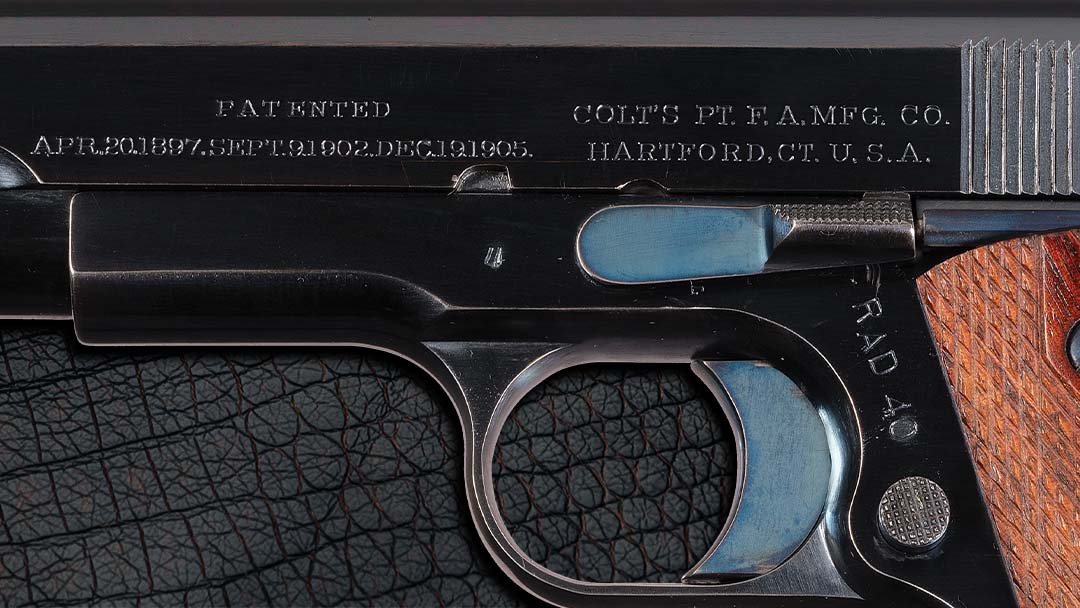
Colt Model 1910 Serial Number 4
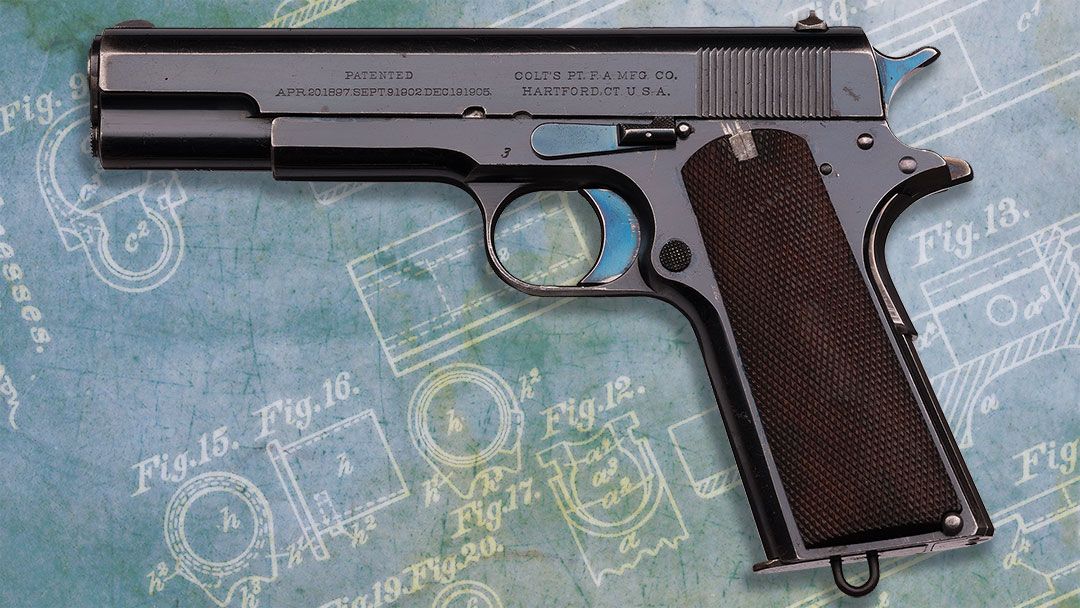
With the Model 1910, Browning made further refinements to the componentry, while other design changes are more outwardly apparent, like the change of grip angle, a square ejector, and most examples included thumb safeties. In most respects, the 1910 represents the blueprint for what would become the 1911 design.
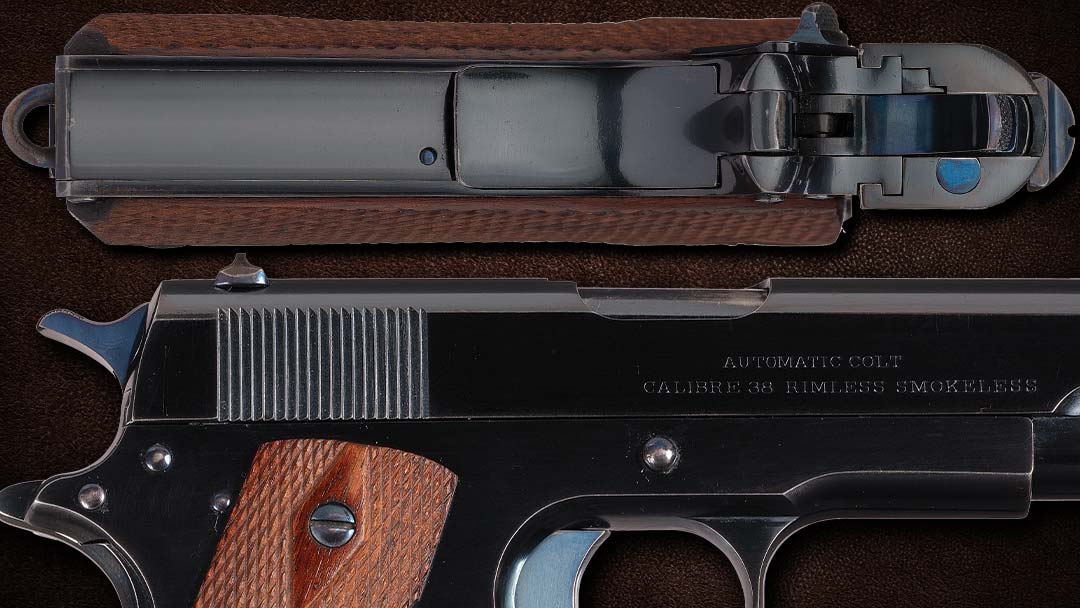
The exceptionally rare 1910 prototype pistol offered this May is one of only five examples that were produced in 9.8 mm and is slightly scaled down in size compared to its Model 1910 .45 ACP counterparts. Colt developed the 9.8 mm prototype as a potential replacement to the Colt Model 1903 Pocket Hammer pistol that could compete with Fabrique Nationale in Eastern Europe. The outbreak of WW1 along with a marketing deal between FN and Colt led to the Model 1910 pistol and its experimental 9.8mm Auto cartridge never making it to full production.
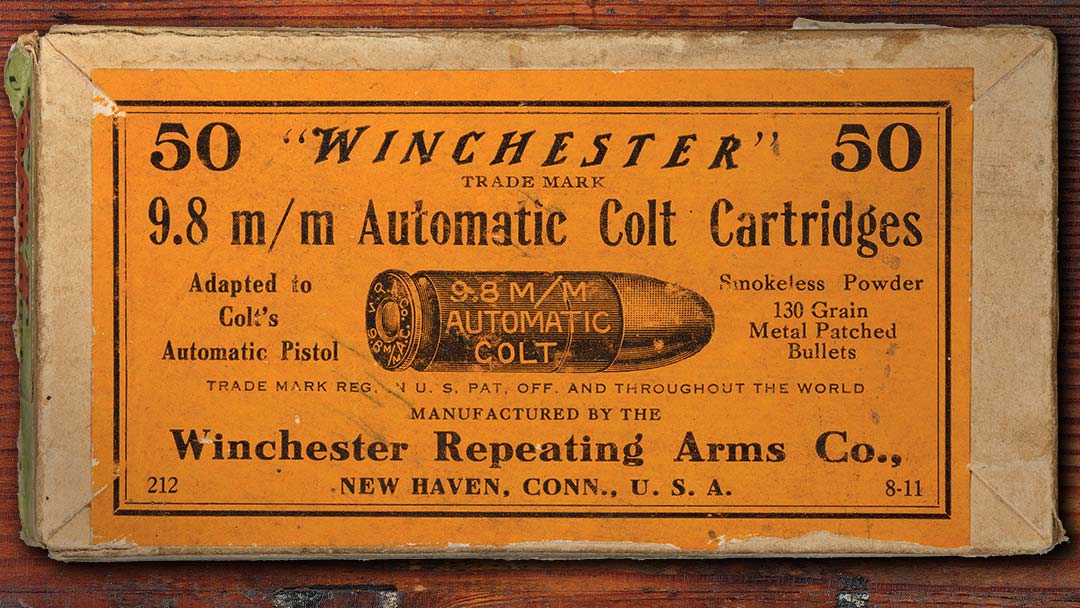
The Model 1910 9.8 mm prototype pistol features a shorter, narrower slide and a 4 1/2 inch barrel with four concentric locking rings. Other unique features include a flat-sided hammer with a checkered spur, a slide with an early rounded rear sight, and a slide stop and safety lock that appear to be Colt Model 1911 Special Army components. The pistol’s magazine is a modified Model 1902 Military magazine with an un-marked floor plate and a full blue finish.
The First 1911 Pistols
In November of 1910, the Ordnance Board met to pit the Colt and Savage .45 ACP pistols against each other for the second to last time. Each gun was fired 6,000 times in a grueling test, and while both pistols had breakage issues, the Colt Model 1910 emerged as the clear favorite.
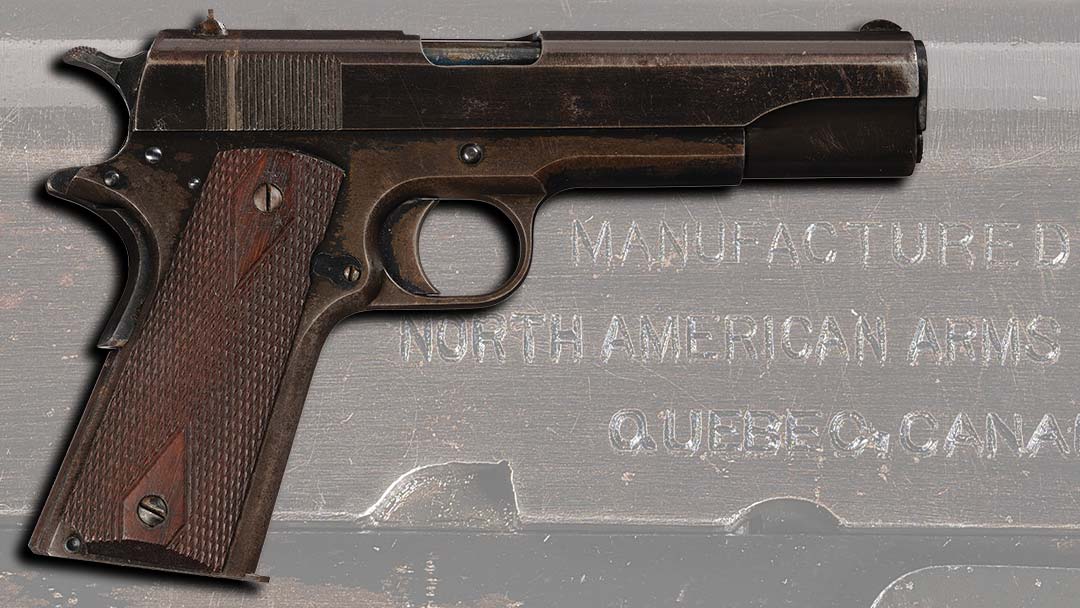
The military pressed for further refinements, and those subsequent modifications lead to the development of the renowned U.S. Army Model 1911, a design approved on March 19, 1911 and officially accepted on May 5th as the “Automatic Pistol, Calibre .45, Model of 1911.”
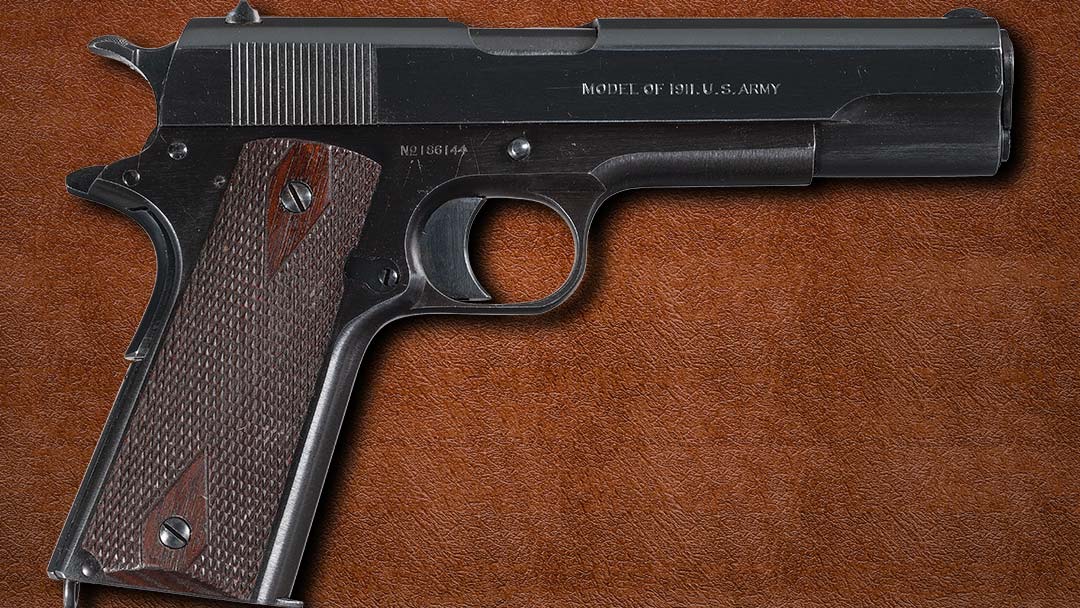
Following its adoption by the Army, the Model 1911 was also selected by the Navy and the Marines. The 1911 design we know today had truly arrived, and the storied pistol would soon go on to serve thousands of GIs in World War I. Browning’s 45-caliber semi-automatic pistol earned a reputation as a rugged, reliable sidearm that was comparatively easy to maintain.
The Military Heritage of the 1911
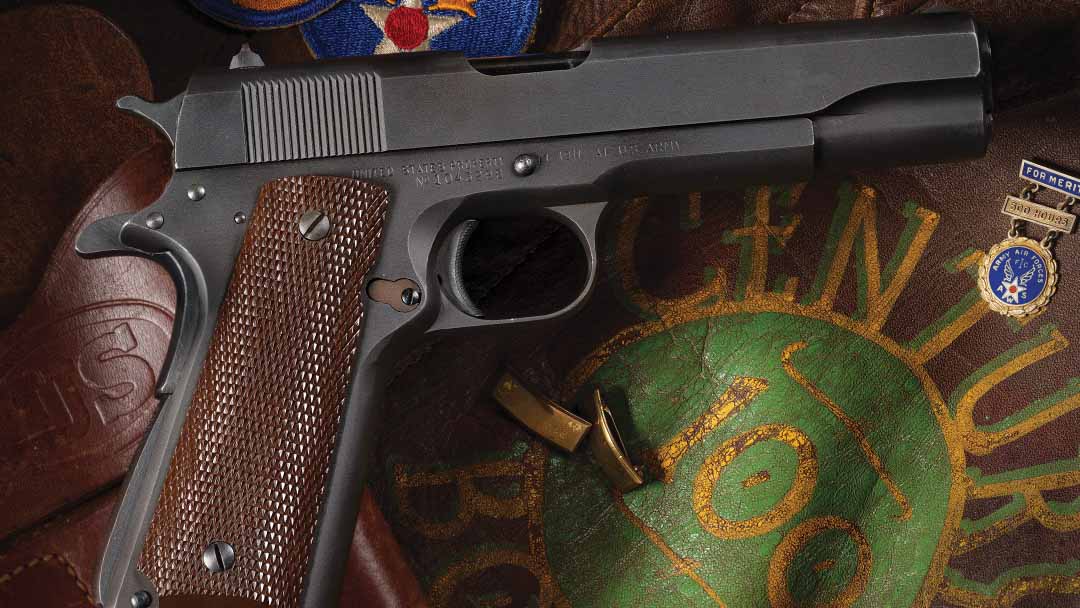
After serving with distinction in WW1, the 1911 design underwent a series of small refinements including a shortened trigger, extended hammer spurs, simplified checkered grips, an arched mainspring housing, a thicker front sight, and angled clearance cutouts. Designated the M1911A1, no major changes were made to the 1911’s internals, testifying to the pistol’s exemplary performance record. “Old Slabside” became an icon of WW2 and saw service in every theater.
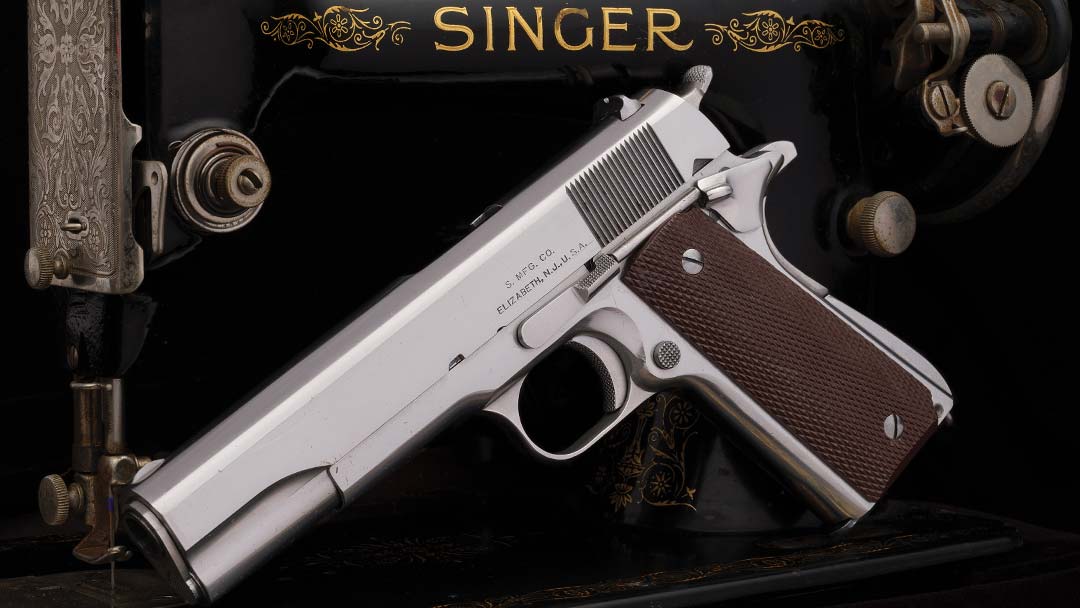
Over 3 million 1911 pistols were produced for the U.S. military during the famed firearm’s more than six-decade reign as America’s official military sidearm, with nearly 2 million of that number manufactured during WW2 alone. Despite its eventual replacement by the Beretta M9, the 1911 pistol is still carried by numerous officers to this day.
1911 Pistols for Sale
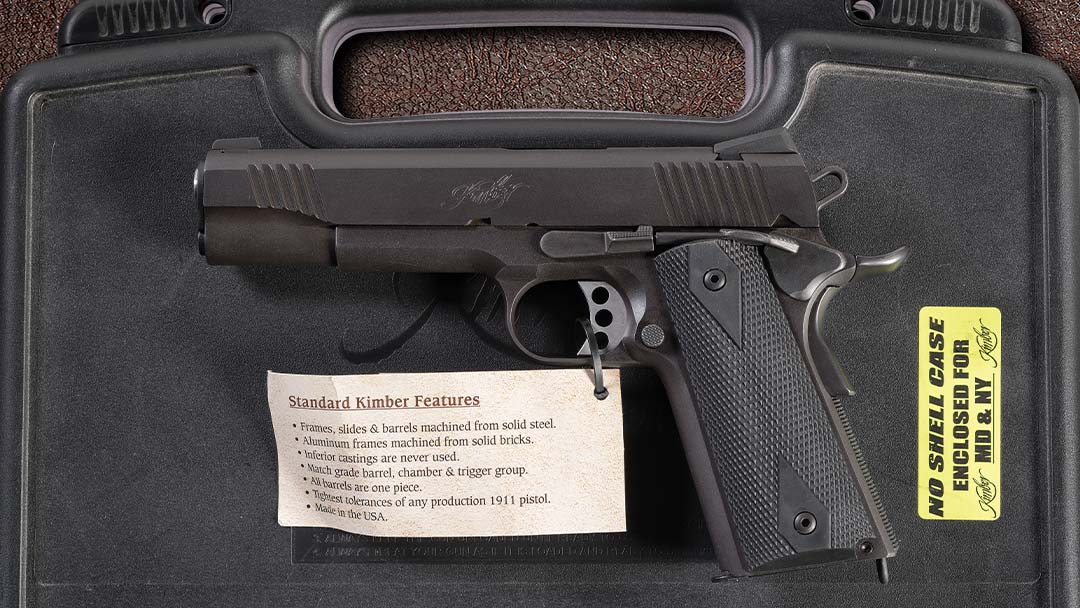
The 1911 genre is more popular than ever today. Browning’s landmark design continues to be produced by dozens of manufacturers across the globe, with pistols like the Kimber 1911, the Sig Sauer 1911, and the Ruger 1911 a consistent hit with shooters and collectors during Rock Island Auction Company’s Arms & Accessories Day auctions. Classic 1911 pistols are prominently featured during Premier and Sporting & Collector auctions, with Rock Island Auction Company’s May 17-19 Premier Firearms Auction in Bedford, Texas offering one of the finest historic assemblages a collector could ask for.
The Rock Island Auction newsletter offers readers new gun blogs and gun videos every week on classic American military sidearms. From the Colt Peacemaker, the 1911’s reign as back to back World War champs, to the Beretta M9 and M17 pistol, we cover every ironic gun in American history.
SOURCES
[Meadows, Edward Scott] U. S. Military Automatic Pistols Volume 1 1894-1920
[Goddard, William H. D.] The Government Models: The Development of the Colt Model of 1911