German machine guns designed during the buildup and during World War 2 made a number of advancements in machine gun technology from the MP35 and MP38 to the MKb42(H).
The German machine gun and a number of iterations faced off against the Thompson submachine gun on the beaches of Normandy and influenced the development of the M60, America’s warhorse in the Vietnam War.
Rock Island Auction Company’s Aug. 23-25 Premier Auction features a variety of rapid fire firearms dating from World War 1 to the present. These offerings bear an international flair, coming from Germany, the United States, United Kingdom, Japan, Italy and more.
German Machine Gun: Machine Pistols
The submachine gun, often called the maschinenpistole in German, dates back to the trench warfare of World War 1 with the Bergmann MP18 that fired pistol rounds and was fairly lightweight.
Heinrich Vollmer’s design from 1930 used a 32-round box magazine that refined the telescoping tube that housed the return spring. This stabilized the action, protected the spring and prevented it from getting distorted, resulting in a firing rate of 350-400 rounds per second.
The machine milled MP35 found its way to the Spanish Civil War, was adopted by Sweden as the M38 and sold to Ethiopia and Denmark. Expensive because of the milled parts, complex bolt assembly and wood stock, about 40,000 were made during their five-year production period. These were mostly issued to Waffen SS troops. The magazine is inserted on the right side of the gun and the cocking system was similar to a bolt action that pulled the cocking handle back and up before returning it to the closed position. It could be set to single or continuous fire.
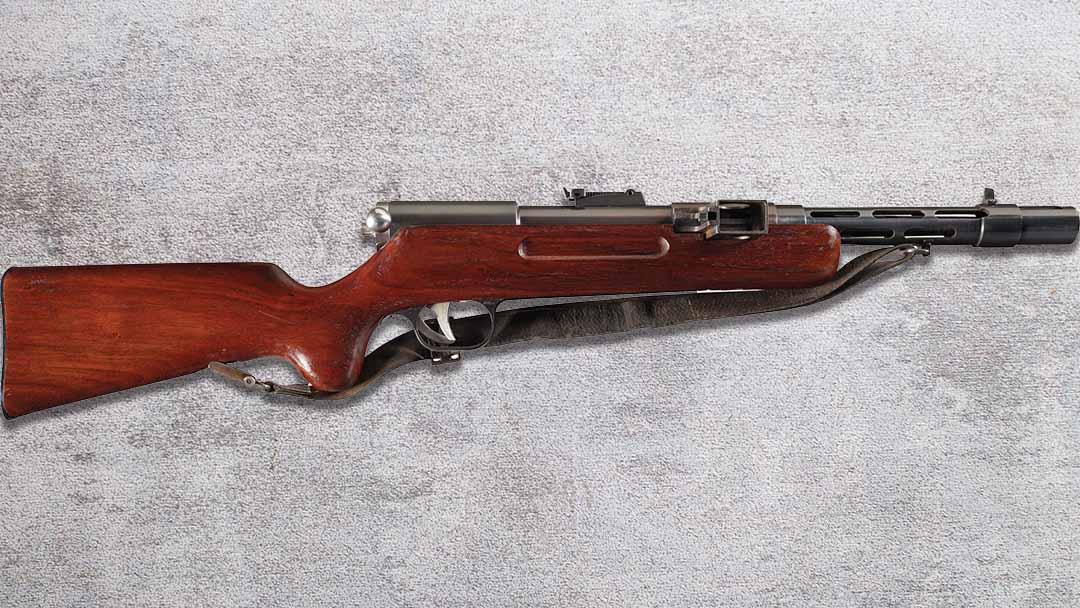
The German High Command started developing a light burst firearm for armored vehicle crews and paratroopers. The Maschinenpistole 38, substituting wood with plastic and a folding shoulder stock, firing from an open bolt, was the forerunner of the MP40.
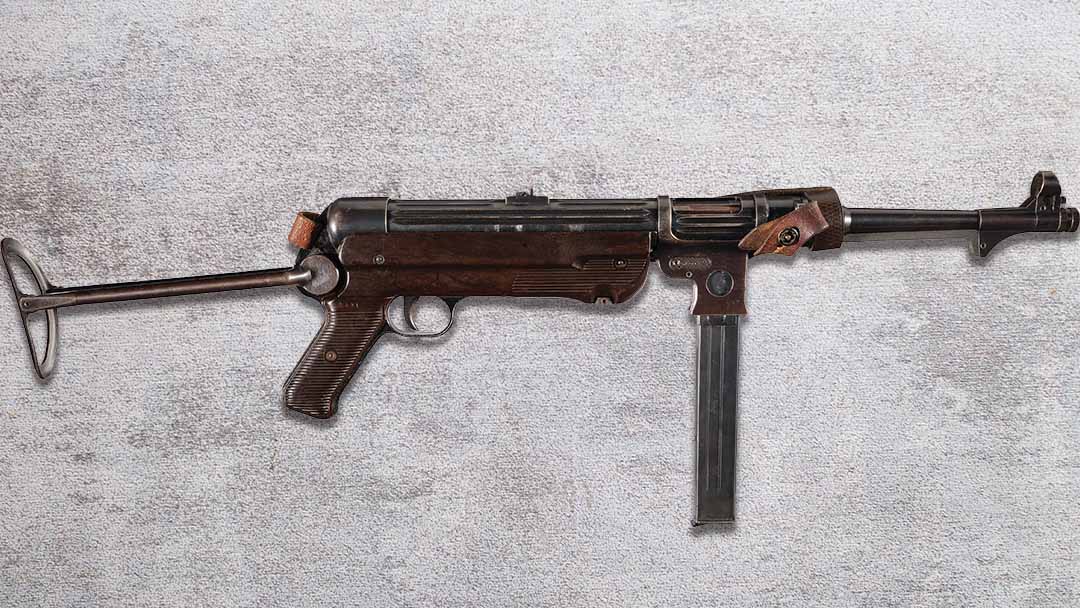
The MP40 simplified the manufacture of the wartime maschinenpistole, utilized stamped carbon steel, brazed and spot-welded with sub-assemblies performed by sub-contractors. While it saved costs in manufacturing, the United States Army tested the gun in 1940-41 and found it to be extremely reliable and very accurate. About 1 million were made.
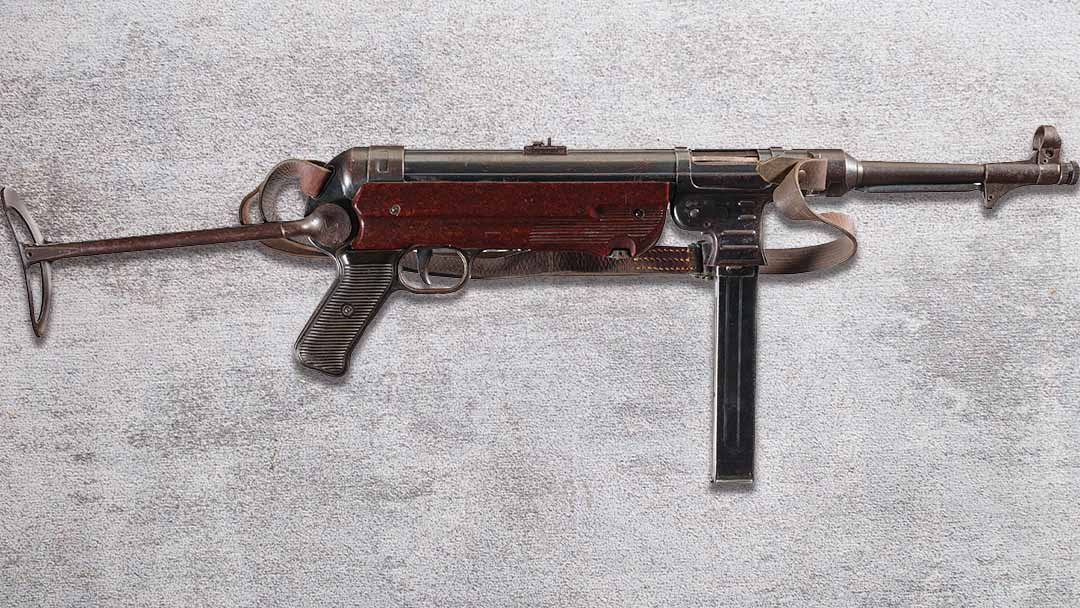
The MP40’s production techniques, embracing stamped metal with welds and rivets would also be utilized in the MP41, directly copying the stamped metal receiver and action but fitted with a hardwood stock. The MP41 also used the fire-selector mechanism from the MP28. The MP41 wasn’t adopted by the German Army and was manufactured in limited numbers for the German state police and Romanian troops.
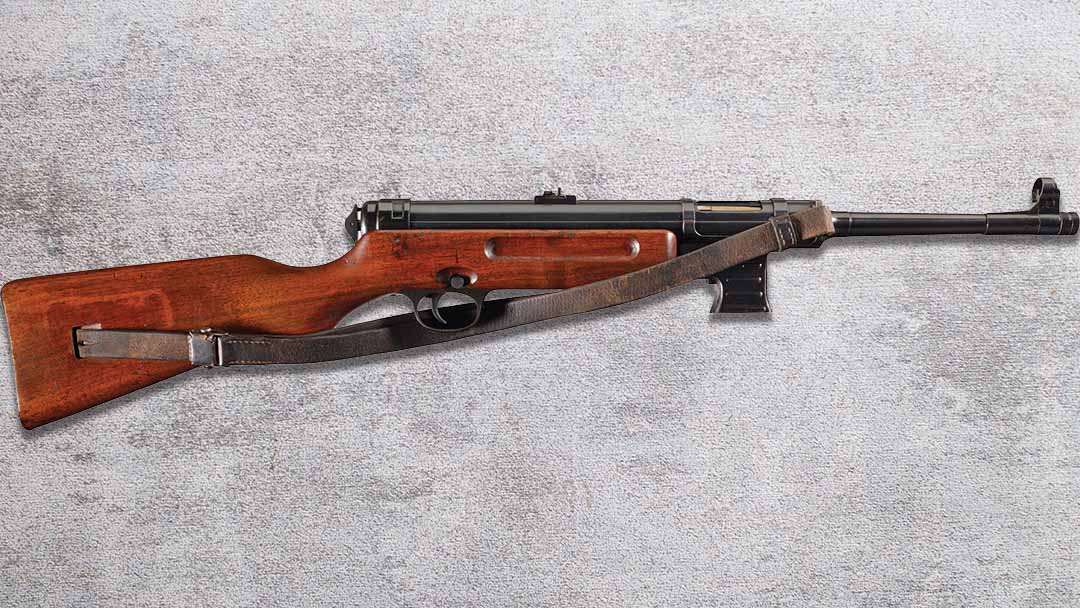
German Machine Gun: MKb42(H)
In the inter-war period, German military officials came to the realization that they needed a weapon with better range and accuracy than a machine pistol but not as unwieldy as a battle rifle. First came the intermediate 7.92mm Kurz cartridge, then came the MKb42. The example on offer here, the grandfather of the modern assault rifle, was made by Haenel, hence the “(H)” designation.
The carbine utilized a short operating rod housed in a full-length gas tube located above the barrel. It was fabricated with stamped metal and a minimum of machined parts. German military leaders tried to convince Dictator Adolph Hitler for the need of a machine carbine but he wouldn’t listen. The Army went ahead with production despite disapproval from the Fuhrer.
The total production number for the MKb42 was 11,833 from November 1942 to September 1943. Most were sent to the Eastern front where few survived.
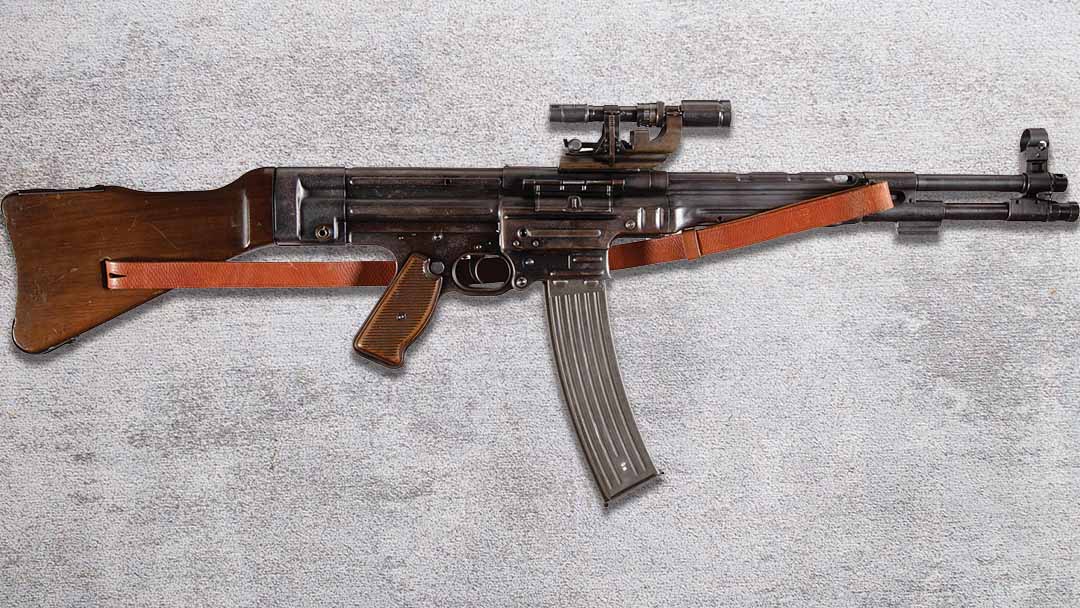
THE German Machine Gun: Hitler’s Buzzsaw
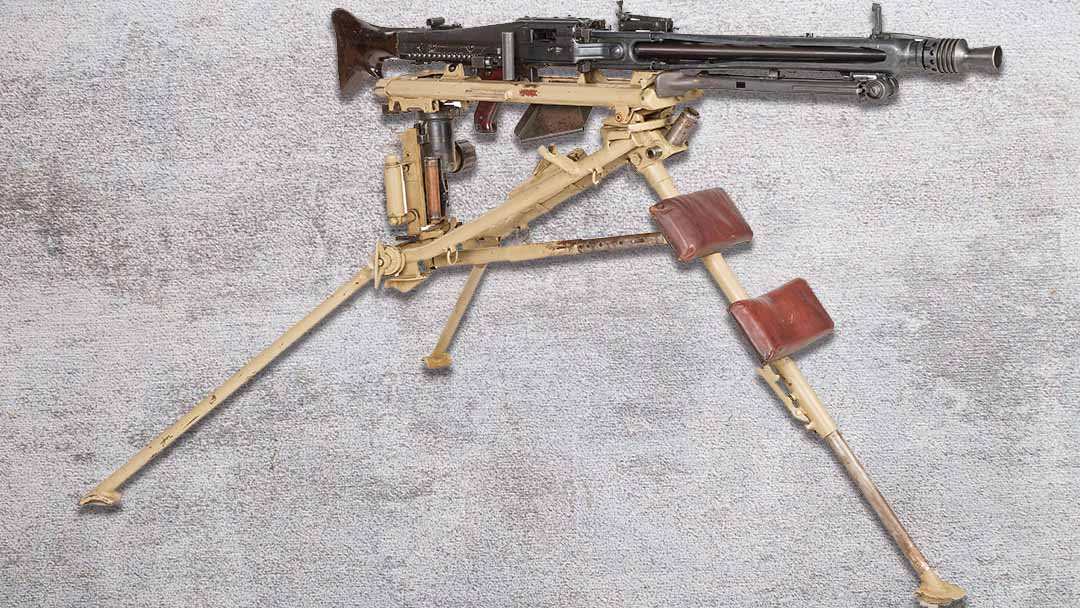
German submachine guns at the time averaged around 500 rounds per minute, but the Maschinengewehr 42, known as “Hitler’s Buzzsaw” to American GIs, more than tripled that rate of fire, slapping out as much as 1,550 rounds per minute. The United States War Department created a training film to combat the gun’s psychological effect on soldiers by downplaying its lethality while calling it inaccurate. When most soldiers heard the gun ripping they took cover and waited for artillery or tank support to take care of the MG42. During the invasion of Italy, the Germans held Monte Cassino for about four months in 1944 using the MG42 defensively to hold off Allied assaults.
Despite its frightening rate of fire, the MG42 had its shortcomings. The barrel tended to heat up quickly and had to be swapped out as often as every 200-250 rounds. Squads carried as many as six spare barrels on hand and trained soldiers could change them out in seconds. Squads of six also carried extra ammunition since the gun spat it out at such a high rate.
Easier to manufacture and cheaper than the machined MG34, the MG42 could serve in a fixed position but also maneuverable enough to be shoulder fired and fired from the hip. It served as the inspiration for the United States’ machine gun, the M60 that was a workhorse for the U.S. military in the Vietnam War.
German Machine Gun Foe: Thompson Submachine Gun
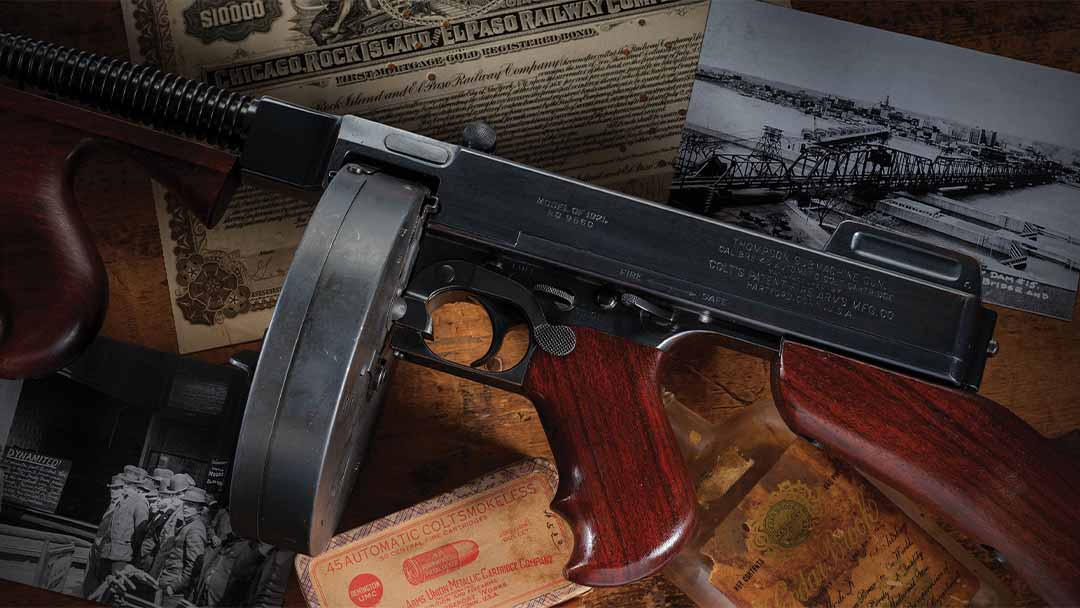
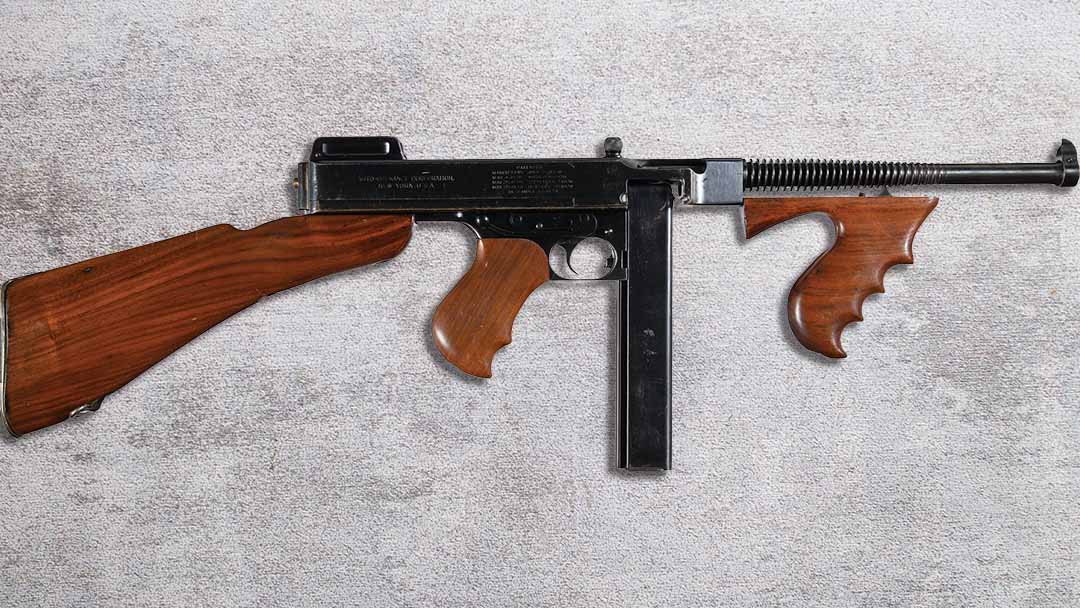
The winning side needs to be represented here, too, and the Aug. 23-25 Premier Auction has a number of fantastic American machine guns on offer including the legendary Thompson submachine gun. John Thompson’s gun, also known as the Tommy Gun, was introduced too late to make a significant impact on World War 1, and his company, Auto-Ordnance had trouble finding a peacetime market until law and disorder discovered the Thompson. Gangsters bought them. Al Capone is known to have purchased three in 1926, and two were used in the St. Valentine’s Day Massacre in 1929. Police departments acquired Tommy Guns to match the gangsters’ firepower.
The U.S. Marines were the first significant buyer of the gun in 1928. France sought to buy 3,750 Tommy Guns in 1939 and as World War 2 started, orders poured in. During World War 2, about 1.75 million Thompsons, that included numerous variants, were made.
German Machine Gun Foe: Johnson 1941
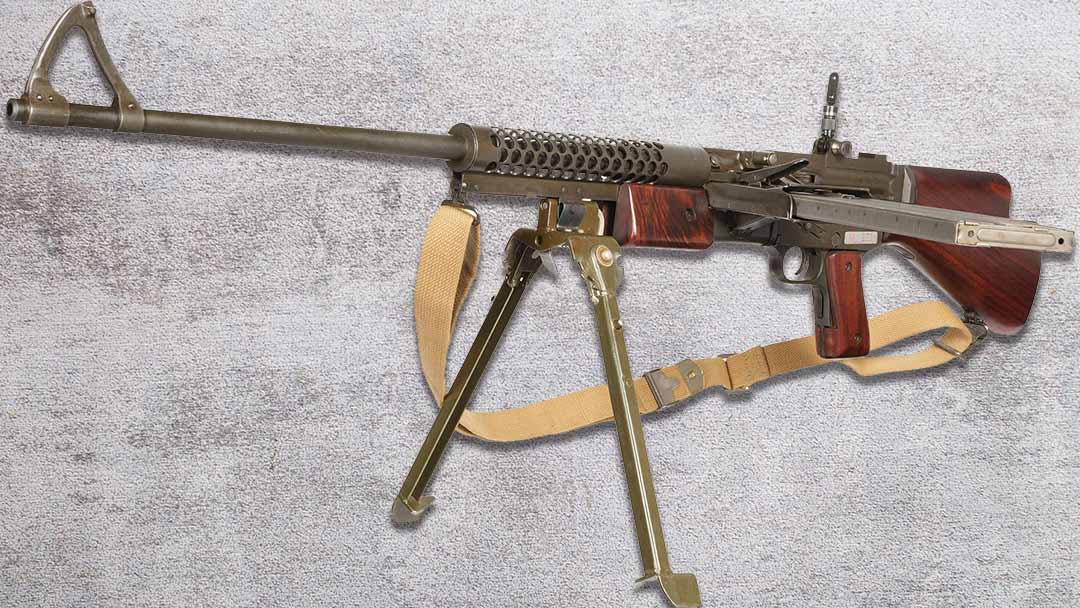
Developed alongside the Johnson semi-automatic rifle as a squad light machine gun it has a short-recoil barrel assembly inside a ventilated heat shield. The semi-automatic action was converted to a dual function mechanism firing from a pure closed bolt semi-auto to open bolt operation in full-auto. The stock and grip assembly were reconfigured to accommodate the new firing mechanism.
The Johnson light machine gun was lightweight, maneuverable, could swap barrels and share ammo but didn’t find large-scale acceptance. Less than 10,000 were made.
German Machine Gun Inspiration: M60
Nicknamed the “pig,” the M60 design melded the MG42’s belt-fed mechanism and the firing action of the FG42 in the early T44 prototype. The gun’s development was stopped to focus on creating the NATO-standard caliber round, the 7.62mm.
The specifications for a machine were to weigh no more than 18 lbs. with a firing rate of 600 rounds per minute and quick-change barrel. When it was adopted, the M60 weighed in at 23 lbs. The MG42 weighed 25 lbs.
The M60 was first issued in 1959 and went into widespread service in Vietnam in 1965. The gun was mounted on helicopters, armored personnel carriers, tanks and gunboats. Grunts carried it into the jungle. Soldiers loved it for its reliability but hated it because of the bulk and the awkward process of changing out the barrel.

German Machine Gun Inspiration: Stoner 63A
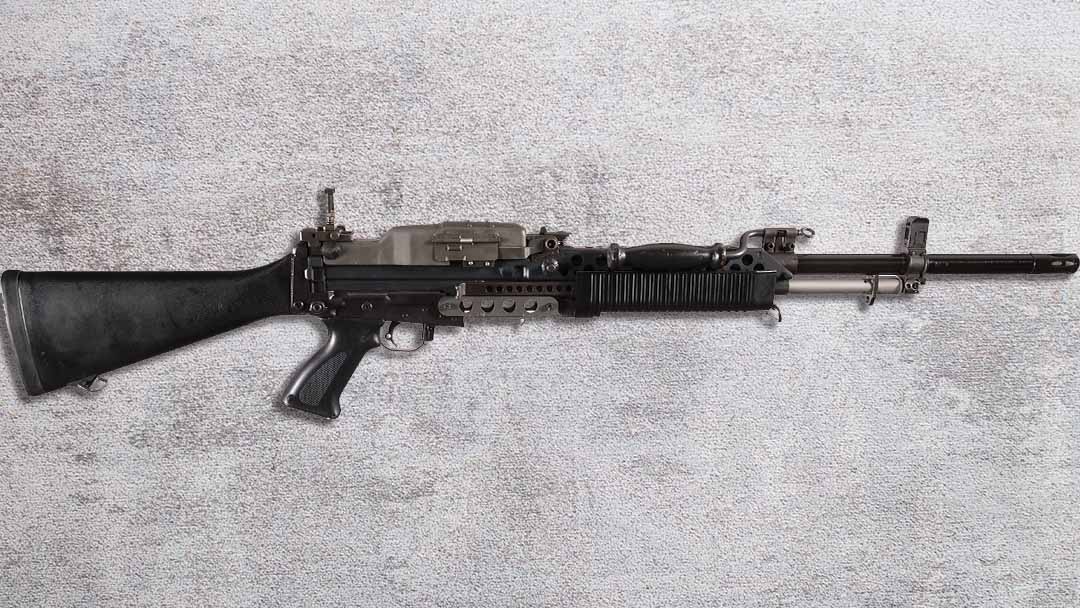
The Stoner 63, designed by Eugene Stoner, designer of the AR-15, was without equal with its modular components that could be customized depending on the mission. Depending on its assembly, the gun’s roles could be fixed machine gun, belt-fed light machine gun belt-fed, magazine-fed light machine gun, medium machine gun, assault rifle and carbine. The platform’s quick change barrel system, feed tray and top cover were similar to the MG42 and later the M60.
The gun served with the Marine Corps briefly in Vietnam and on a wider scale with the Navy SEALs. It was a complex platform and more maintenance-intensive than the M16 and development ended in 1971. About 4,000 were believed to be produced, most of those by Cadillac-Gage. Many were destroyed after the 63A was replaced by the M249 Squad Automatic Weapon.
Machine Guns for Sale
German machine guns from World War 1 to the present are among the Class III offerings in Rock Island Auction Company’s Aug. 23-25 Premier Auction alongside American, British, Chinese, Italian and Japanese full-auto fire power. These historic and modern Class III firearms are among the roster of fantastic pieces from across multiple genres and eras in the upcoming Premier Auction. Get a good look at them on Preview Day, Aug. 22.