Collectible Firearms for Serious Gun Collectors

0

Quite a bit of legend-making was involved in naming Abner Doubleday the inventor of baseball, but there’s no disputing the facts about his leadership as a Union general in the American Civil War and his importance in a key battle.

He found himself in many of the key moments of the American Civil War: Fort Sumter, First Manassas, Antietam, Gettysburg, and the Gettysburg address. In fact, he played a pivotal role on the first day of the Battle of Gettysburg, but his low-key manner often kept him from the military recognition he deserved.

A pair of factory presentation engraved and gilded Moore’s Patent Firearms Co.’s No. 1 derringers inscribed to the Union general and apocryphal inventor of America’s pastime, and his wife, Mary Hewitt Doubleday, will be available in Rock Island Auction Company’s May 19-21 Premier Auction.

A pair of factory presentation engraved and gilded Moore’s Patent Firearms Co. No. 1 derringers inscribed to Union general and apocryphal inventor of baseball Abner Doubleday and his wife, Mary Hewitt Doubleday and the box with the general’s initials.

The Early Life & Times of Abner Doubleday

Abner Doubleday was born in 1819 at Ballston Spa in upstate New York. His grandfather fought at the Battle of Bunker Hill and served as a courier for George Washington during the American Revolution. His father fought in the War of 1812.

He won an appointment to West Point in 1838 where he stayed until his graduation, barely in the top half of his class, in 1842. The dates he was at West Point are important later as the story of Abner Doubleday, inventor of baseball, unfolds.

After West Point, Doubleday was assigned to the 3rd U.S. Artillery and fought in the Mexican-American War at the battles of Monterey and Buena Vista in 1846 and 1847. He married Mary Hewitt in 1852. While in Texas, he fought in early skirmishes with the Apaches in 1854-1855 before heading to Florida where he fought in the Seminole War. In Florida, he participated in mapping the Everglades and areas that would be Miami and Fort Lauderdale.
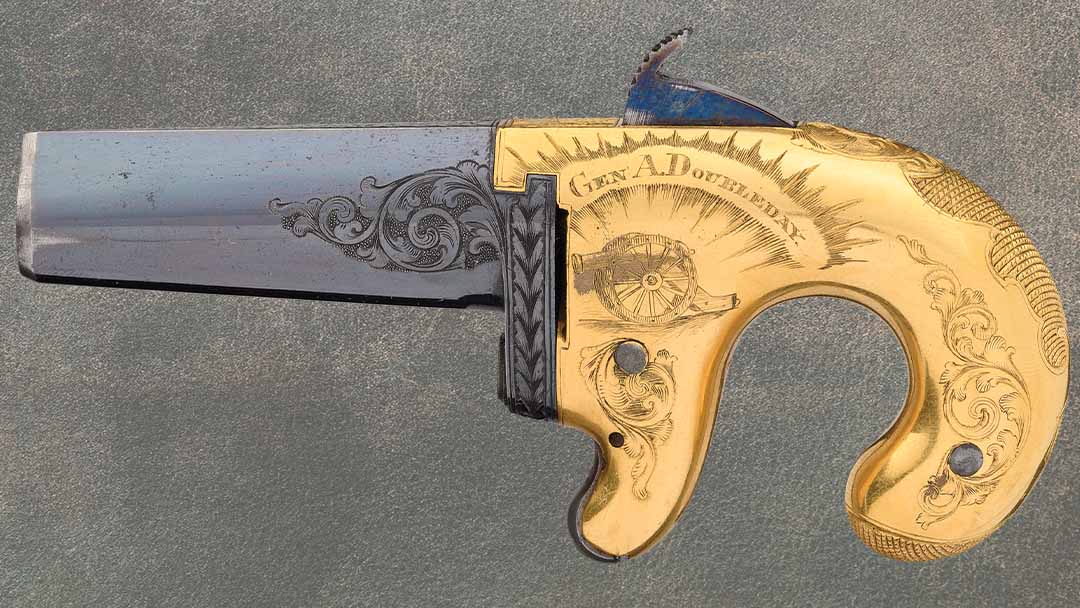
This factory presentation engraved and gilded Moore’s Patent Co. No. 1 derringer inscribed to Union Civil War Union general Abner Doubleday came to light at the 1943 Baseball Writers of America meeting in Philadelphia in 1943. It has flairing around his name and a cannon, denoting his experience as an artillery commander. There is scrolling on the barrel and receiver with some bordered checkering on the grip.

Now a captain, Doubleday found himself and his wife in Charleston, S.C. in 1860 where he was second in command of the garrison for Fort Moultrie and Fort Sumter that protected the harbor. Abner Doubleday, a Republican who voted for Lincoln and a fierce abolitionist, didn’t appreciate the posting, writing later:

(Charleston) “was far from being a pleasant place for a loyal man. Almost every public assemblage was tinctured with treasonable sentiments, and toasts against the flag were always warmly applauded. As early as July there was much talk of secession, accompanied with constant drilling, and threats of taking the forts as soon as a separation should occur.”

Mary Doubleday, who loyally followed her husband from posting to posting and an equally fervent abolitionist, shared her fears about Fort Sumter in a letter to her sister in December, 1860: “I feel too indignant. I can hardly stand the way in which this weak little garrison is treated by the heads of the government. Troops and proper accommodations are positively refused, and yet the Commander has orders to hold and defend the fort. Was ever such a sacrifice (an intentional one) known? The Secretary has sent several officers at different times to inspect here, as if that helped. It is a mere sham, to make believe he will do something. In the meantime a crisis is very near. … When the last man is shot down, I presume they will think of sending troops. The soldiers here deserve great credit – they know what an unequal number is coming to massacre them, yet they are in good spirits and will fight desperately.”

Her letter was published in the `New York Evening Post.’
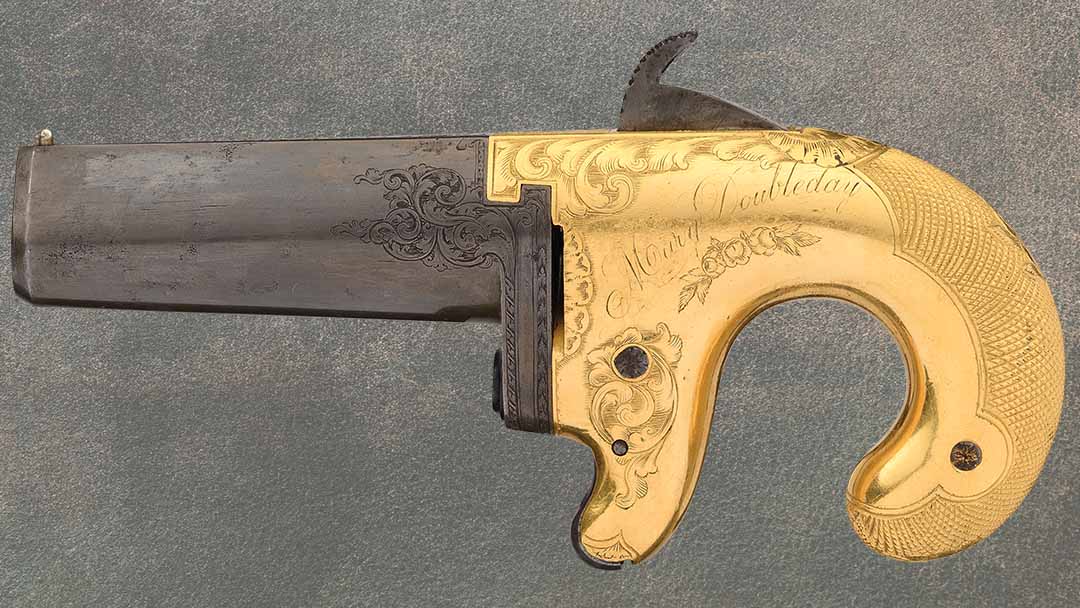
This factory presentation engraved and gilded Moore’s Patent Firearms Co. No. 1 derringer is engraved to Mary Hewitt Doubleday, wife of Union general and apocryphal inventor of baseball, Abner Doubleday. The gun is engraved with her name and has scrolling on the barrel while the receiver has floral engraving and scrolling, a bird in front of the hammer, and checkering on the grip.

Abner Doubleday and the Civil War

In December 1860, the garrison was moved from Fort Moultrie to Fort Sumter for better defense. On April 12, 1861 secessionists fired the opening salvos of the American Civil War. Doubleday aimed and ordered the first shots fired by Union troops in the uprising. Following two days of bombardment, the Union troops surrendered the fort and were allowed to leave.

After a brief posting at Fort Hamilton in New York, Doubleday was assigned to units in Virginia and promoted to brigadier general of U.S. volunteers. He commanded his forces at the Second Battle of Manassas in August 1862 and the Battle of South Mountain a few weeks later. Battle reports show that Doubleday’s men fought well and he was given command of the Army of the Potomac’s I Corps.

At Antietam, his men were involved in heavy fighting in “The Cornfield,” and Doubleday was wounded. His and his unit’s performance earned him a promotion to major general of volunteers in November 1862. Doubleday’s unit saw light action at the Battle of Fredericksburg in December 1862 and was held in reserve at the Battle of Chancellorsville in May 1863.
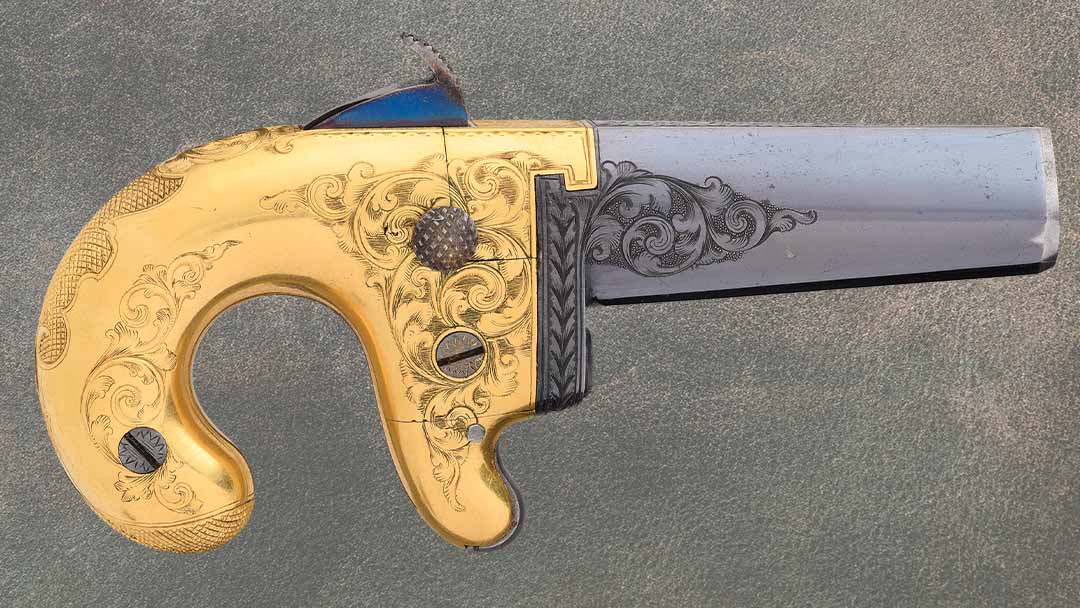
The right side of the factory presentation engraved and gilded Moore’s Patent Firearms Co. No. 1 derringer of Union General Abner Doubleday features scrolling on the barrel and receiver as well as checkering on the back and bottom of the grip.

Doubleday’s I Corps was at the spearhead of the turning point in the Civil War. On the first day of the Battle of Gettysburg, commanding General John Reynolds was killed early in the battle, leaving Doubleday in charge. Outnumbered and facing Confederate forces from two directions, Doubleday’s forces slowed the rebel onslaught before withdrawing through town to set up defenses on Cemetery Hill, part of the high ground south of Gettysburg where they were joined by the rest of the Union army.

Doubleday was reliable but not self-promoting so he didn’t get the attention he deserved, his biographer, Thomas Barthel wrote. “This reputation was not glamorous. But Doubleday was not a man to worry about his appearance; rather, his concern would be his obligations to the men in his command.”

After the first day at Gettysburg he was relieved of command of I Corps when General George Meade, commander of the Army of the Potomac was led to believe Doubleday’s corps collapsed. Doubleday never forgave Meade.

Doubleday’s troops were on Cemetery Ridge on the battle’s third day and helped fend off Pickett’s Charge. Wounded in the attack, he wrote his wife a letter stating, “The most awful battle of the War occurred yesterday. … They then attacked near my position opening with from 100 to 150 pieces of artillery. … I was hit and pitched over my horse’s neck by a piece of shell which struck me in the back of the neck. … Luckily I was hit squarely by the smooth round surface. Had the jagged part struck first it would have killed me.”

He was removed to Washington D.C., where he wrote what was called the Union Army’s longest battle report of the Civil War to try to clear his name. He and his wife attended events with President Abraham Lincoln and his wife, Mary Todd Lincoln. Doubleday traveled with the president to Gettysburg in November 1863 for the dedication of the Soldiers’ National Cemetery where Lincoln gave the Gettysburg Address.
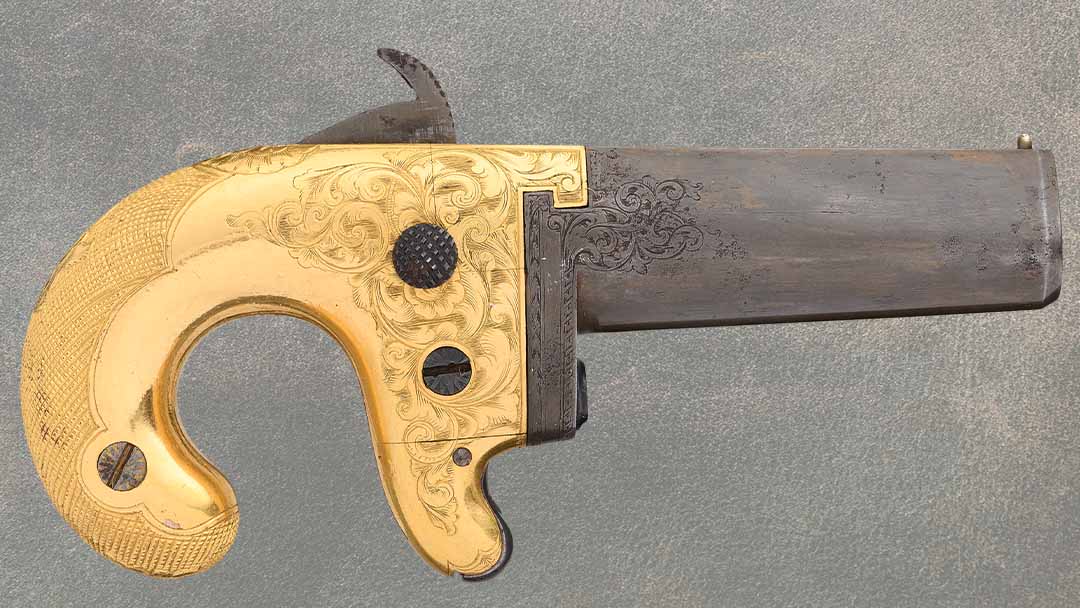
The right side of the factory presentation engraved and gilded Moore’s Patent Firearms Co. No. derringer of Mary Hewitt Doubleday has scrolling on the barrel and receiver and checkering on the grip. The pistol was sold at auction in 2002.

He also testified against Meade along with General Daniel Sickles, at the U.S. Congress Joint Committee on the Conduct of the War, critical of Meade for his conduct at Gettysburg. Doubleday wrote in his 1882 memoir, “Gettysburg and Chancellorsville,” that he didn’t think Meade wanted to fight at the war’s decisive battle but was goaded into it by his generals. Doubleday based this on a council of war he didn’t attend, allegedly quoting Meade stating “Have it your way, gentlemen, but Gettysburg is no place to fight a battle in.”

Abner Doubleday after the Civil War

Following the Civil War, Doubleday remained on active duty and was assigned to San Francisco before being posted to Texas where he commanded an African-American unit, the 24th Infantry Regiment. Here is where he came closest to the game he was later fictitiously said to invent when he wrote to his commanding officers a request to “purchase baseball implements for the amusement of the men.”

Health issues forced him to retire in 1873.  He and Mary Hewitt Doubleday lived in New Jersey and Abner Doubleday became active in veterans reunions and organizing management of Gettysburg National Park. He died in 1893 at the age of 73, while Mary Hewitt Doubleday died in 1908.
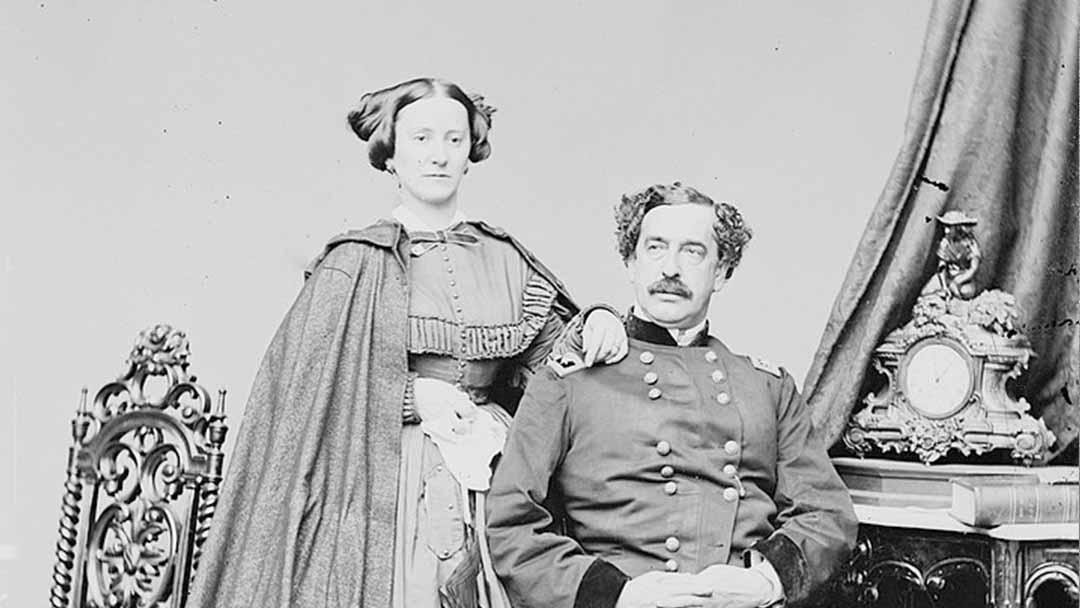
Union general Abner Doubleday and his wife, Mary Hewitt Doubleday. Fifteen years after his death, a commission of baseball officials declared him the apocryphal inventor of baseball in 1839 when he was 20 years old and a plebe at West Point.

Abner Doubleday Becomes the Inventor of Baseball

At the turn of the 20th century, Major League Baseball men like Albert G. Spaulding, a Hall of Fame pitcher, sporting goods tycoon, and part owner of the Chicago White Stockings, wanted to put fans in the seats, convincing them it is a truly American game. He wrote to a Boston sportswriter, “[O]ur good old American game of baseball must have an American Dad.”

A friend of Spaulding’s, Henry Chadwick, a British-born sportswriter, baseball statistician, historian, and eventual Hall of Famer contended that the game was based on the English ball and bat game of rounders. Spaulding had to prove him otherwise.

In 1905, Spaulding created a commission to determine the founding of baseball. He handpicked the members. Abraham G. Mills, who was president of the National League from 1882-1884, led the commission on the founding of baseball. Other members of the commission were Morgan G. Bulkeley, the National League’s first president; Arthur P. Gorman, a former player and president of the Washington Base Ball Club; Nicholas E. Young, president of the National League from 1884 to 1902; Alfred J. Reach, a former Philadelphia Athletics player and the owner of Reach Sporting Goods; George Wright, a former player with the Cincinnati Red Stockings; and James E. Sullivan, president of the Amateur Athletic Union.

The panel based its decision that Abner Doubleday invented baseball on a dubious letter by Abner Graves of Denver, Colo., who claimed he saw Doubleday making drawings on baseball when they attended school together in 1839. Graves was five years old in 1839 when Doubleday was in his second year at West Point. Mentally ill, Graves later killed his wife and ended up in a sanitarium for the rest of his life.

In a bit of legerdemain, the commission released its decision in 1908 stating that Doubleday invented baseball at Cooperstown, New York in 1839, a claim Doubleday never made in his lifetime. Doubleday’s history as a Civil War general helped push the legend of baseball as being an all-American game.
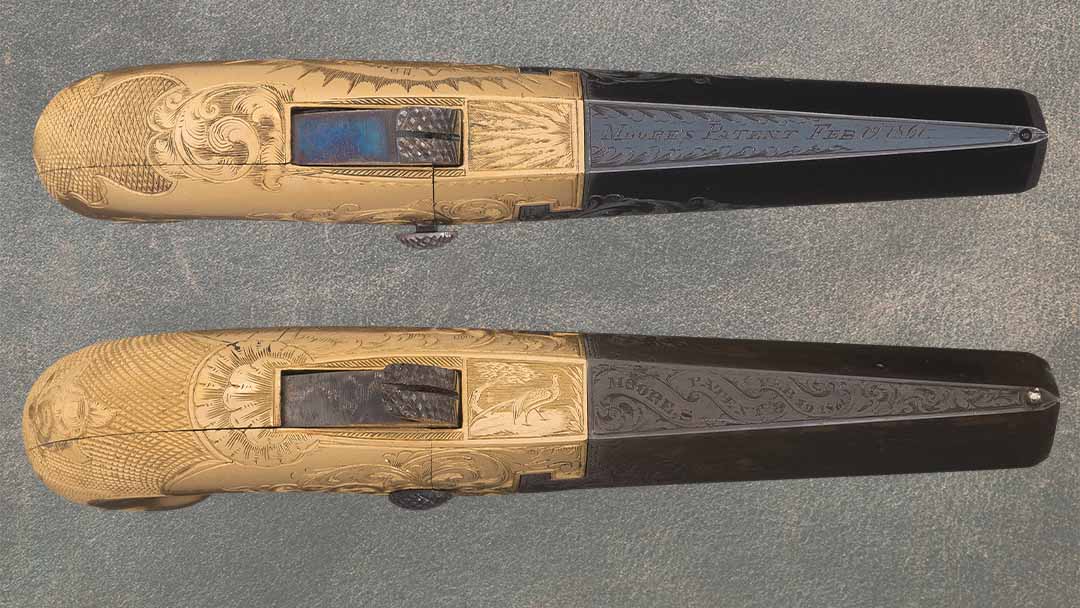
Top views of the factory presentation engraved and gilded Moore’s Patent Firearms No. 1 derringers of Union general and apocryphal inventor of baseball Abner Doubleday and his wife, Mary Hewitt Doubleday. Abner Doubleday’s derringer is at top.

The pair of No. 1 derringers from Moore’s Patent Firearms Co. were manufactured from 1861-1863. One is inscribed “Gen. A. Doubleday” with a cannon, referencing his artillery experience, on the left side of the frame along with decorative scrolls and floral designs, while the second is inscribed “Mary Doubleday” on the left side with floral patterns, detailed interlaced scroll engraving, as well as a bird scene on top of the frame in front of the hammer.

Moore’s derringers were manufactured from 1861 to 1863, and based on the patent markings, the pistols were likely manufactured after 1861.  When the guns were presented to the couple is unknown. The pistol inscribed to Abner Doubleday came to light at a meeting of the Sportswriters of America in Philadelphia in 1943, according to Henry M. Stewart Jr. who penned an article in the 1971 “Monthly Bugle” titled “General Abner Doubleday’s Deringer.” It was accompanied by a small rosewood case with “AD” inscribed on the silver lid escutcheon. The box was not originally used to case the derringers. Mary Doubleday’s derringer wasn’t with the general’s when his sold at a San Francisco auction in 2002, but they’ve thankfully been reunited since.

These gilded pistols are brilliant reminders of a remarkable American and his wife. Abner Doubleday saw action in the Mexican-American War, and fought in the American Civil War, playing a significant role in the Union victory at the Battle of Gettysburg. Being posthumously named the inventor of baseball despite all evidence against it makes a man who lived a plentiful life that much bigger. This pair of gilded Derringers is available in Rock Island Auction Company’s May 19-21 Premier Auction.

Sources:

Society for American Baseball Research

Abner Doubleday, National Park Service

History of American women

Mrs. Doubleday’s Indiscretion, by Adam Goodheart, The New York Times

“`Such Then Is the Decision’: General Meade and the July 2nd Council of War,”by Jennifer Murray, The Blog of Gettysburg National Military Park


Senator J. D. Vance confirms waterways contaminated around East Palestine Train Derailment

0

Since our initial report, Senator JD Vance and other local residents have confirmed with video evidence that the waterways around East Palestine, Ohio and the Ohio River are contaminated with chemicals from the train derailment.

Many are growing impatient, as the Biden administration and Transportation Secretary Pete Buttigieg are still refusing to talk about train derailment, explosion & toxic ecological disaster in East Palestine, Ohio. Instead, Buttigieg took time to complain about too many white people working construction.

Biden admin turns down Ohio’s request for disaster assistance after toxic derailment

Today we learned that the Biden administration turned down a request for federal disaster assistance from Ohio Gov. Mike DeWine. The Federal Emergency Management Agency (FEMA) told Ohio’s state government that it was not eligible for disaster assistance to help the community recover from the toxic spill, Dan Tierney, a spokesperson for DeWine, told Fox News Digital on Thursday.

“The DeWine Administration has been in daily contact with FEMA to discuss the need for federal support, however FEMA continues to tell Governor DeWine that Ohio is not eligible for assistance at this time,” DeWine’s office said in a statement earlier in the day. “Governor DeWine will continue working with FEMA to determine what assistance can be provided.”

This is why you need a bugout plan!

Not only will the government not be able to protect you, but they will actively lie to you about the threat and suppress as much information as they can — these people don’t care about saving lives, they care about covering their own asses!

Here are our top resources for planning and being ready for bugout emergencies:

OFFGRID Survival book

Newsletter

Review: Nitecore TM12K | Jerking the Trigger

0

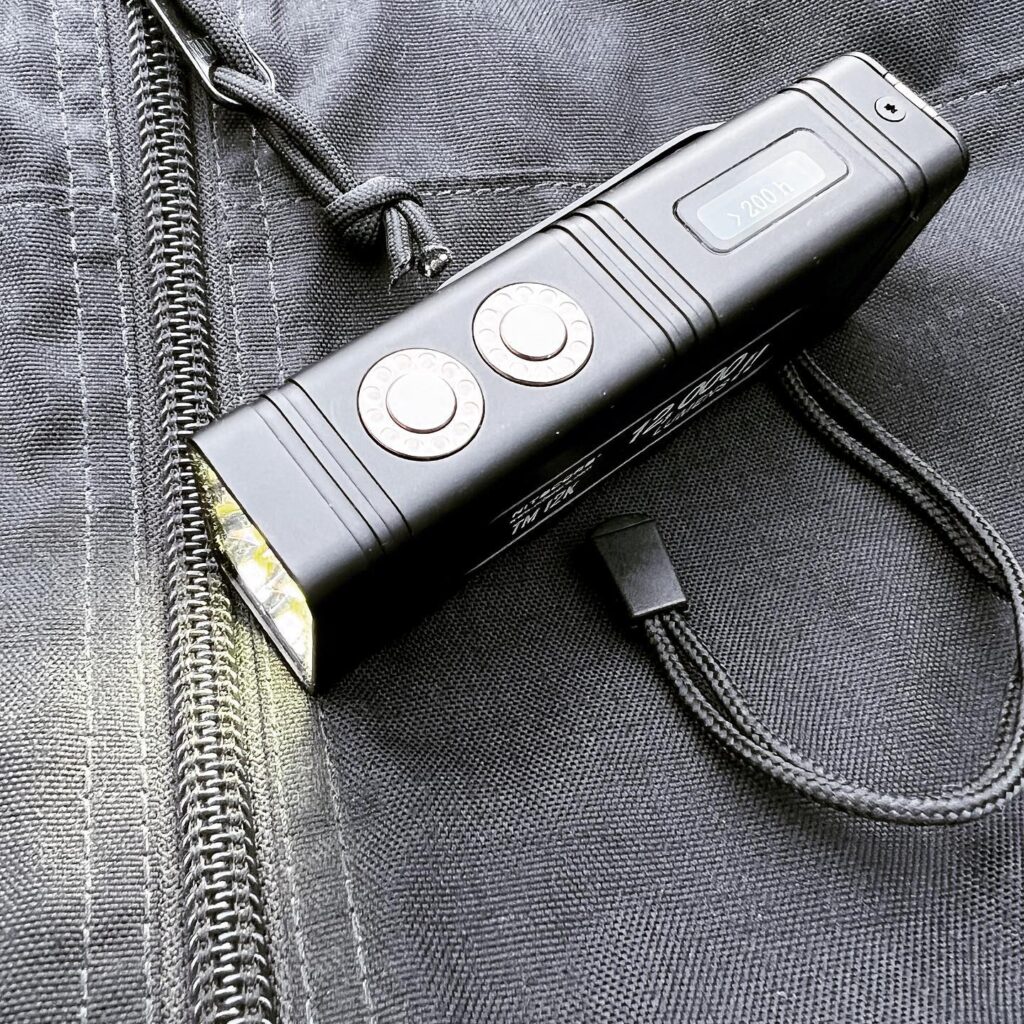
Pretty much any flashlight can be useful and some are more useful than others. Nitecore makes its fair share of those more useful lights but their Tiny Monster series, the TM12K specifically, reminds us that flashlights can be useful AND FUN… like giggle-inducing, retina-burning, show-it-off-to-your-friends fun.

Overview

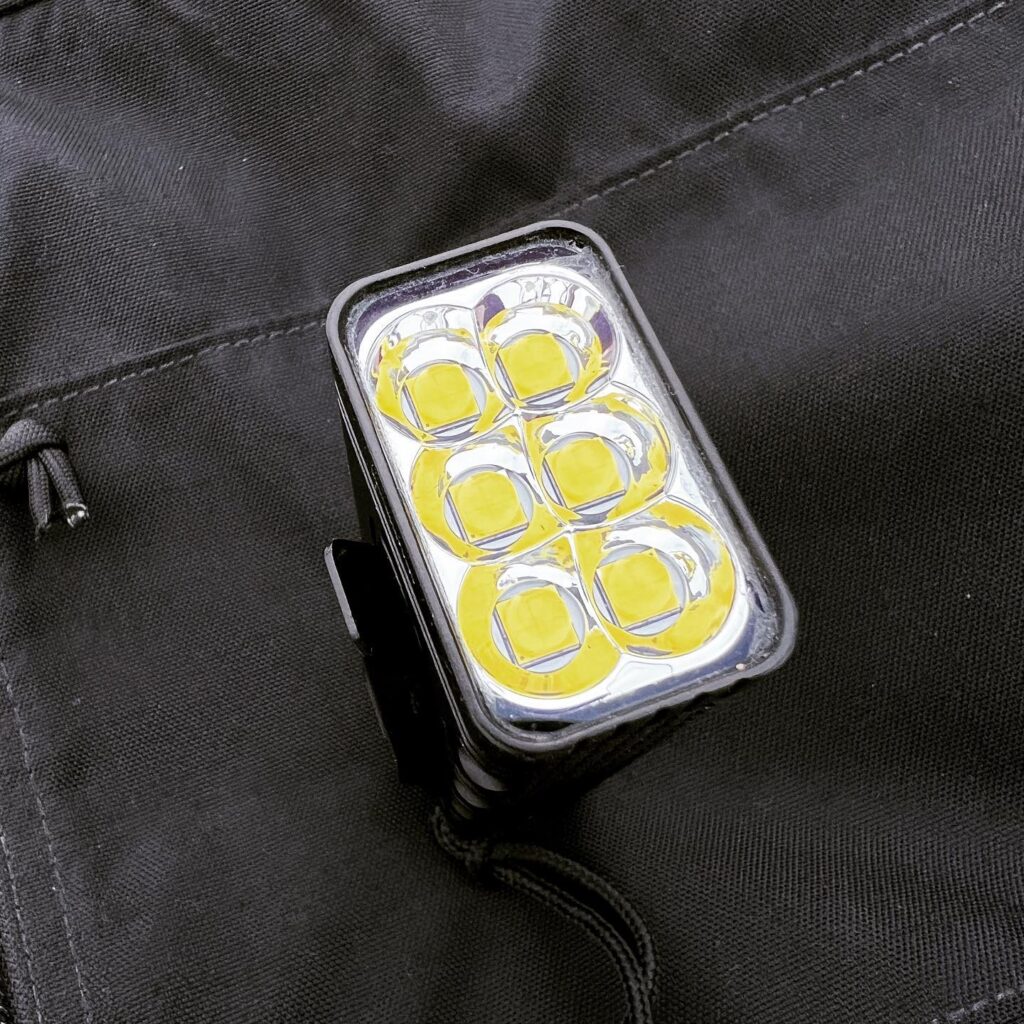
The TM12K is one of the brighter lights in Nitecore’s Tiny Monster series. This USB-C rechargeable Li-ion light boasts up to 12,000 lumens of floody output from its 6 Cree XHP50 LEDs. It has 4 levels of output in addition to it’s Turbo mode (a total of 5). The 4th level is user programmable which is a task that is made very easy by the included OLED display!

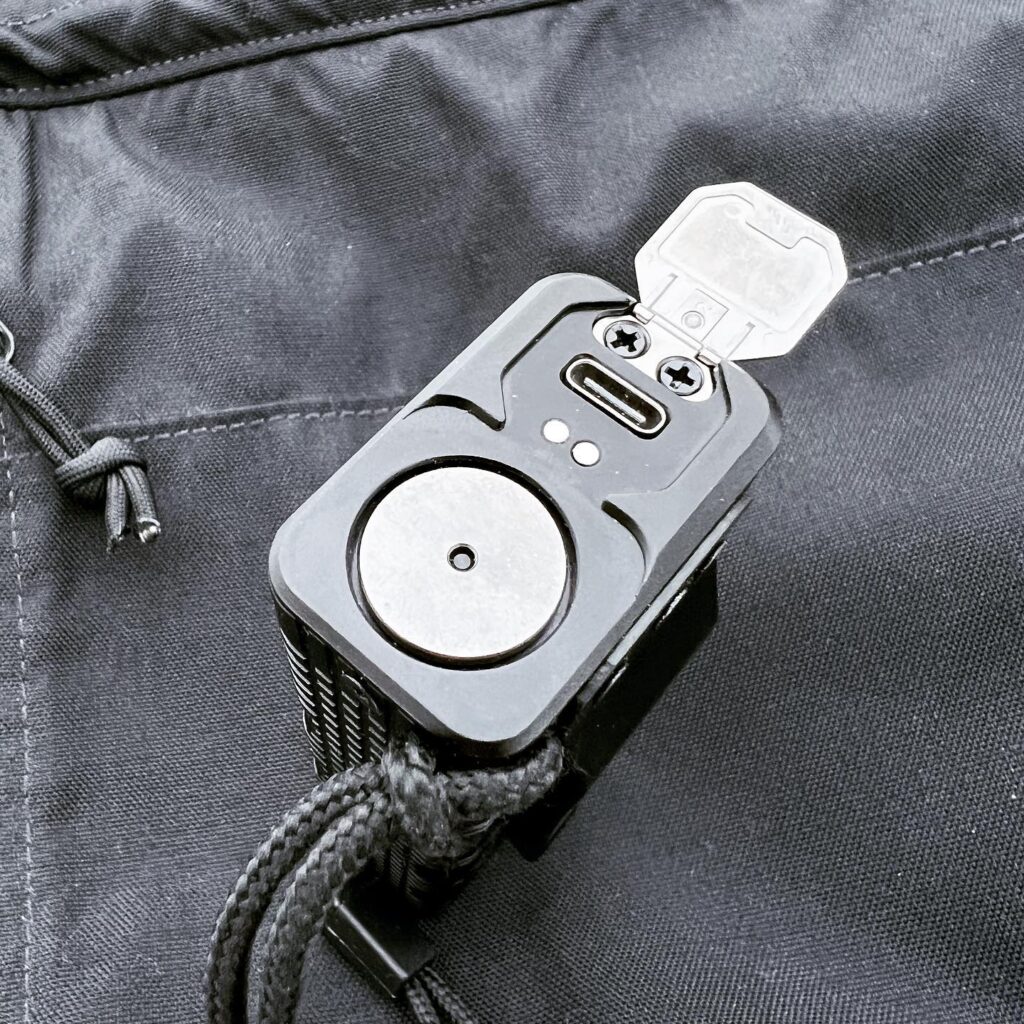
The light has an internal 21700 battery with 4800 mAh capacity for some very impressive runtimes. It can charge at 18W in just 1.5 hours from empty.

You can see details outputs and runtimes in the image below.

Observations from Use

The TM12K feels like a light aimed at flashlight enthusiasts like much of the Tiny Monster line. I think that is where a lot of the fun (and the price) comes in. Most lights don’t need an eye-searing 12,000-lumen wall-of-light output mode that makes the flashlight body so screaming hot that the light has its own LED display with a visible countdown timer and temperature monitoring to prevent the light from melting itself down into an aluminum puddle… but that’s fun.

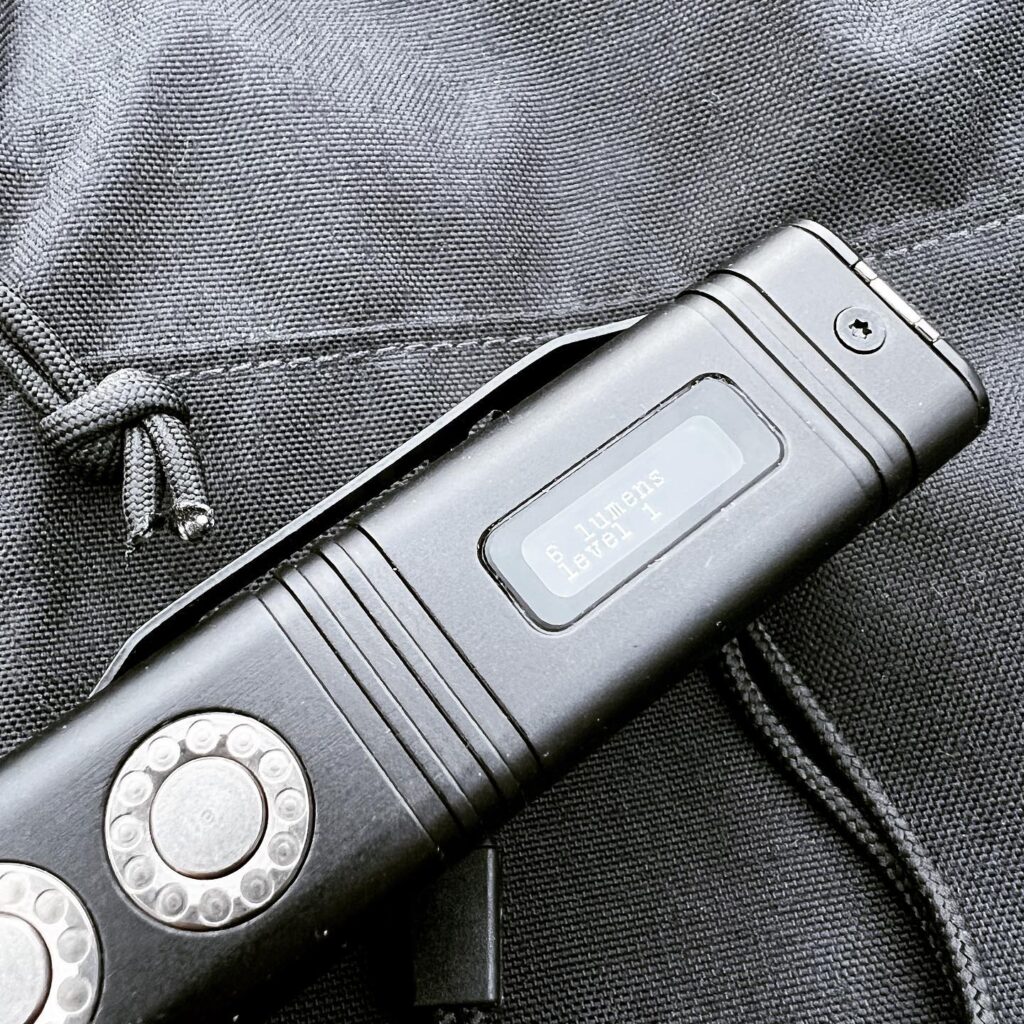
OLED displays and 12,000 lumens available at the touch of a dedicated button are fun… but Nitecore also managed to make this light very useful. When you aren’t using the turbo mode to turn night into day, that OLED display gives useful information like which level you are on currently, voltage, temperature, battery level, and even estimated remaining runtime! The latter two information points are extremely useful and makes me wish every light had an OLED display.

I have found the levels/modes on the TM12K to be very practical. Level 1 is an ultralow 6 lumens that runs for more than 200 hours and is great for power outages. Level 2 and 3 offer 100 and 300 lumens for respectable runtimes and I use these levels a lot when using the TM12K as a sort of work light which it excels at. For instance, level 3 was all the light I needed to change the sheer bolt on a snow plow in the dark breezeway of a barn recently. Level 4 is programmable from 400 to 2000 lumens in 100-lumen steps but it defaults to 1000. Programming this level is very easy and fast thanks to the two-button interface and display.

The form-factor of this light is somewhat unique. It has a very good pocket clip that actually works but, realistically, you won’t carry it in your pocket. It is boxy but not uncomfortable to hold and some thoughtful machining provides plenty of grip. I love the shape of this light for how I use it. I can set it down or tail-stand it to aim light anywhere without fear of it rolling away. This is very useful for a light that I mostly use as a work light or during power outages.
There are a few things I might change if I had my druthers. The lens, over the 6 LEDs and their reflectors, is understandably large. It might be nice to see a more protective aluminum bezel to protect that large lens. Also, this light features two lockout modes which are necessary considering this will be carried in a bag most of the time. The lockouts are so necessary that it would have been nice to have them directly accessible via a physical switch. I also wouldn’t mind seeing a more water-resistant cover for the charging port but I have used this light in damp, snowy conditions without issue.

Wrap Up

The Nitecore TM12K reminds me that useful gear can be fun too. It’s an excellent, floody light with long runtimes that make it suitable for power outages and illuminating work areas. However, it also has “12,000 LUMENS!!”, literally engraved on the side so you know it doesn’t take itself too seriously. This light feels a little like a showcase for what Nitecore can do.
TM12K Product Info: https://flashlight.nitecore.com/product/tm12k

The TM12K can be purchased at Nitecore Store or Amazon

Collectible Firearms for Serious Gun Collectors

0

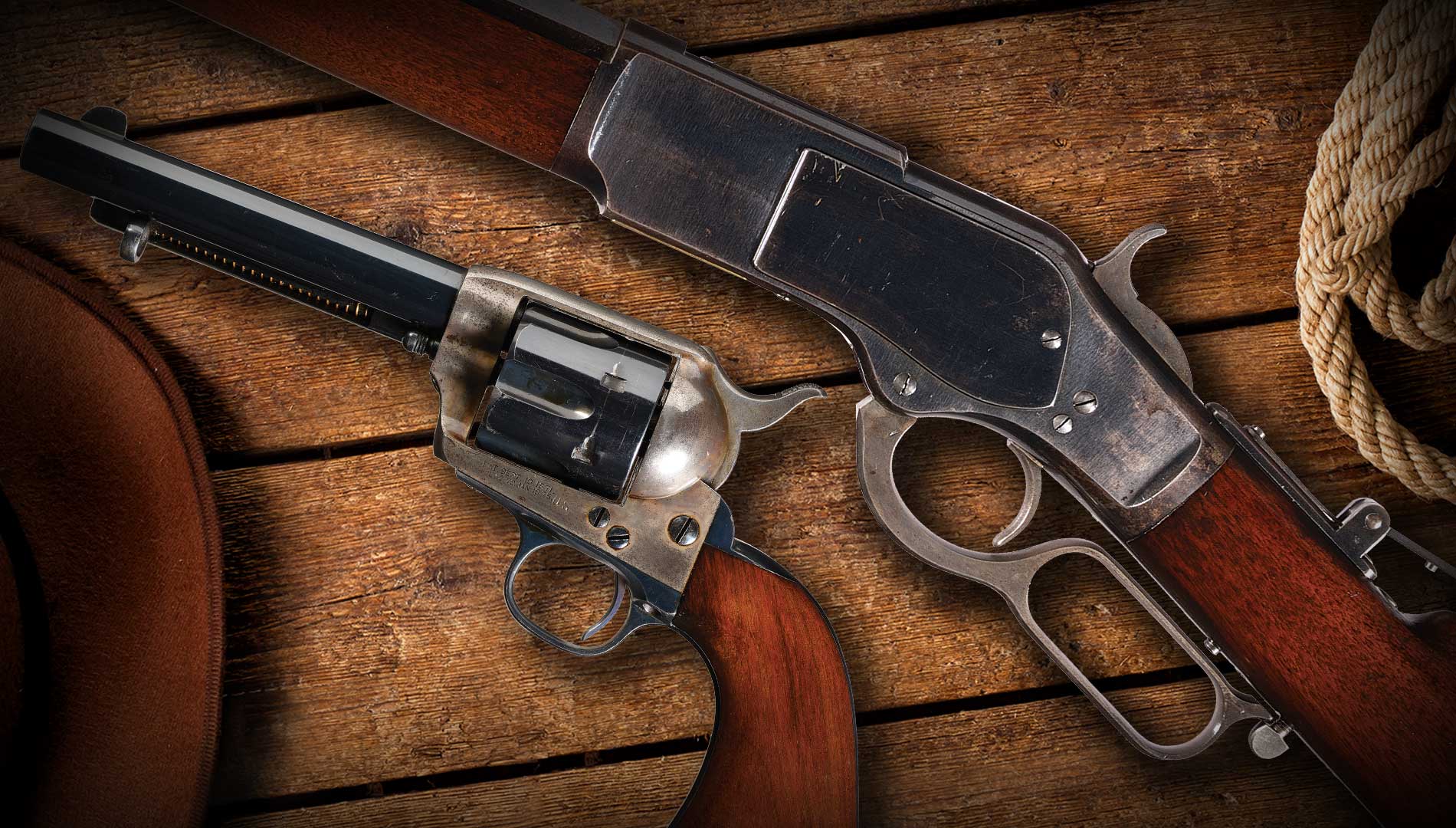
In 1873, two of America’s greatest gunmakers would unveil the defining arms of the era. The Colt Single Action Army revolver and the Winchester Model 1873 rifle went on to be dubbed the guns that won the West, and both firearms have forged a legacy that endures 150 years after their introduction. Rock Island Auction Company will be celebrating the sesquicentennial of these two icons in gun collecting all year long.

Debuting 150 years ago, the Colt Single Action Army and the Winchester Model 1873 are both indisputable icons of the American West.

The 150th Anniversary of the Colt Single Action Army and the Winchester 1873

While the Colt Single Action Army conquered the frontier streets, the Winchester Model 1873 became king of the open range. Both guns hit the market during a wave of American expansion and found favor with the lawmen, cowboys, pioneers, outlaws, and Native Americans who came to define the Old West.

The 150th anniversary of a legend. This documented Winchester One of One Thousand marked Model 1873 smoothbore rifle is one of the rarest variations of the gun that won the West. Available this May.

To commemorate the sesquicentennial of these two totemic guns, we’ll look back at how the Colt Single Action Army revolver and the Winchester Model 1873 rifle rose to prominence in their respected markets and cemented themselves as legends in the world of arms collecting, popular culture, and beyond.

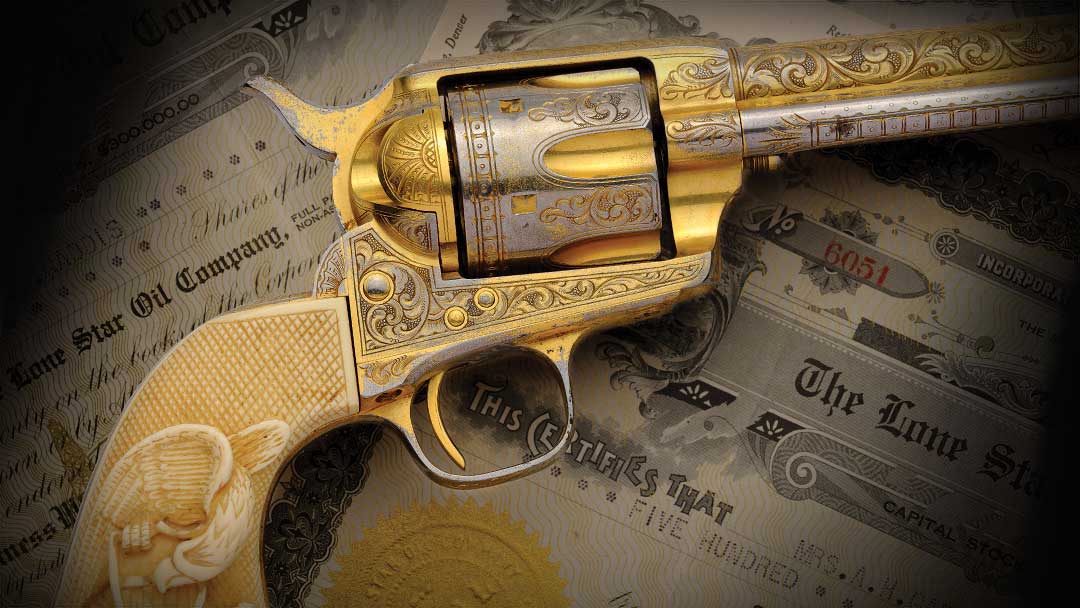
A gold-plated, engraved, early antique black powder frame Colt SAA revolver. Available this May.

When was the Colt Single Action Army Revolver Released?

Originally designated the “New Model Army Metallic Cartridge Revolving Pistol” and the “M1873,” the Colt Single Action Army was the brainchild of William Mason, Colt’s Superintendent of the Armory. Unwilling to pay a royalty to Smith & Wesson, who owned the 1855 Rollin White patent on bored-through revolver cylinders for metallic cartridge use, Colt waited until the patent expired in 1869 to develop their own bored-through cylinder designs.

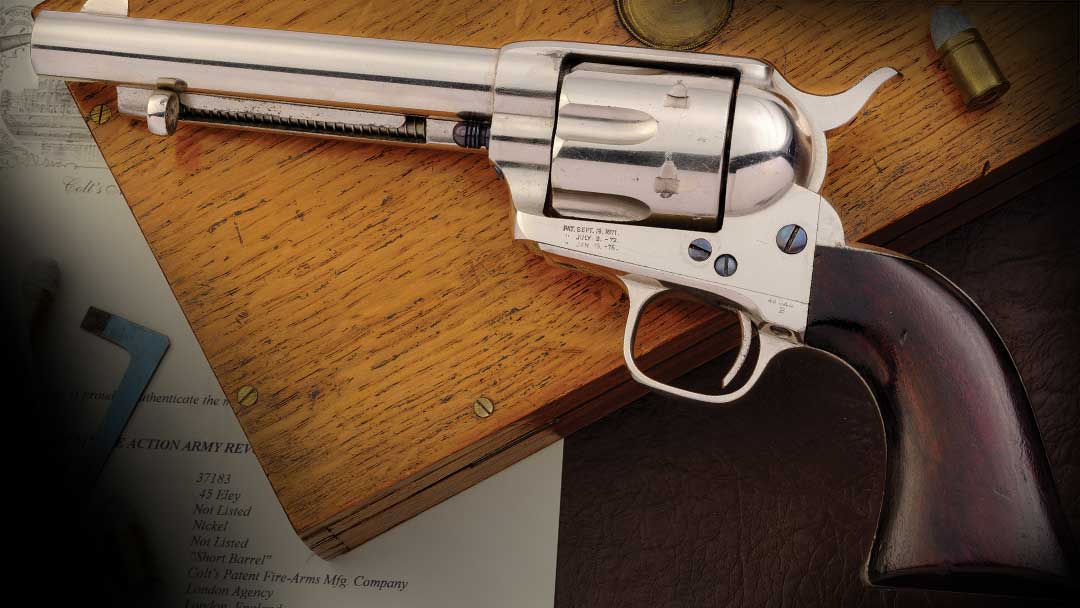
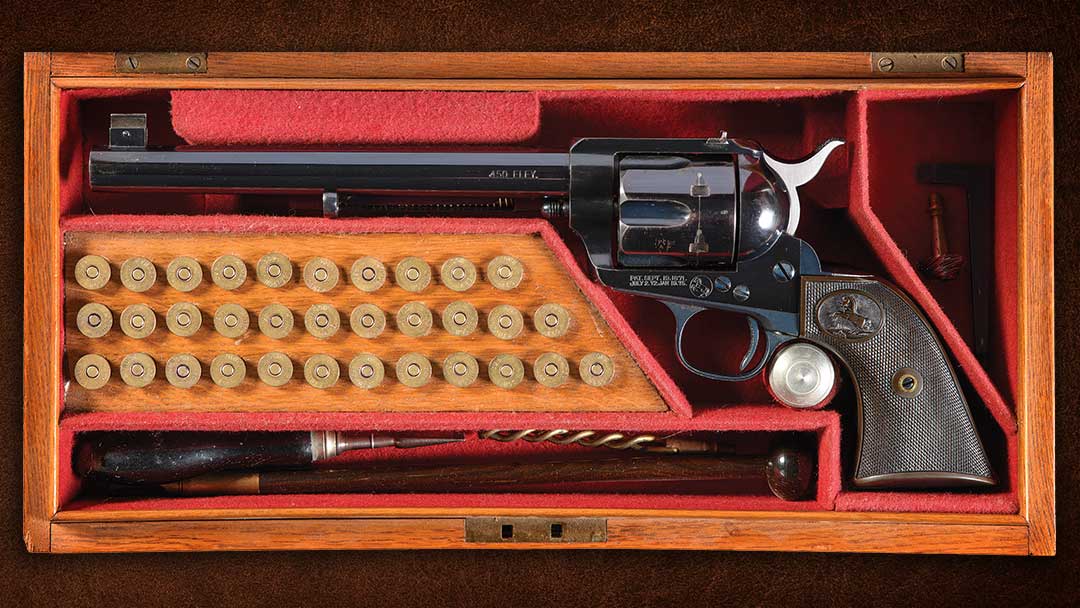
The Colt SAA was offered in countless variations, including rare examples like this cased Colt London Agency Single Action Army revolver in .45 Eley Short. Available this May.

On September 19, 1871, William Mason received the first of three patents for the design that would become the Colt Single Action Army. Manufacturing began a year later. Once the Single Action Army passed Ordnance Department trials at Springfield Armory, the government placed an order for 8,000 Colt revolvers to be issued to the U.S. Cavalry in July of 1873, the first of many.

Colt Model 1873 serial number 2, one of the guns that started it all 150 years ago.

John R. Edie, Captain of Ordnance wrote: “I have no hesitation in declaring the Colt’s revolver superior in most respects, and much better adapted to the wants of the Army than the Smith & Wesson.”

Captain Edie was referring to the Smith & Wesson No. 3 American, which had been adopted in 1870. Colt’s SAA revolver had comparatively fewer parts and was viewed as less prone to black powder fouling, traits which helped Colt win the military contract battle. The Colt Single Action Army thrived in this role and became the most prevalent standard Army sidearm in America for the next two decades. Almost all of the first Colt SAA’s went to the Ordnance Department, with commercial distributors having to wait until 1874 to offer the new revolver in meaningful numbers.

150th Anniversary of the Colt Single Action Army Revolver

Colt shipped 37,060 Single Action Army revolvers to the U.S. government between 1873 and 1891, while nearly 100,000 were shipped to militaries and police abroad and to the civilian market. The Colt Single Action Army revolver’s handling, durability, simple design, and relative affordability made the gun a favorite sidearm in the battle to win the West. The SAA was ideal for belt or saddle carry, and the gun’s .45 Colt cartridge provided impressive firepower.

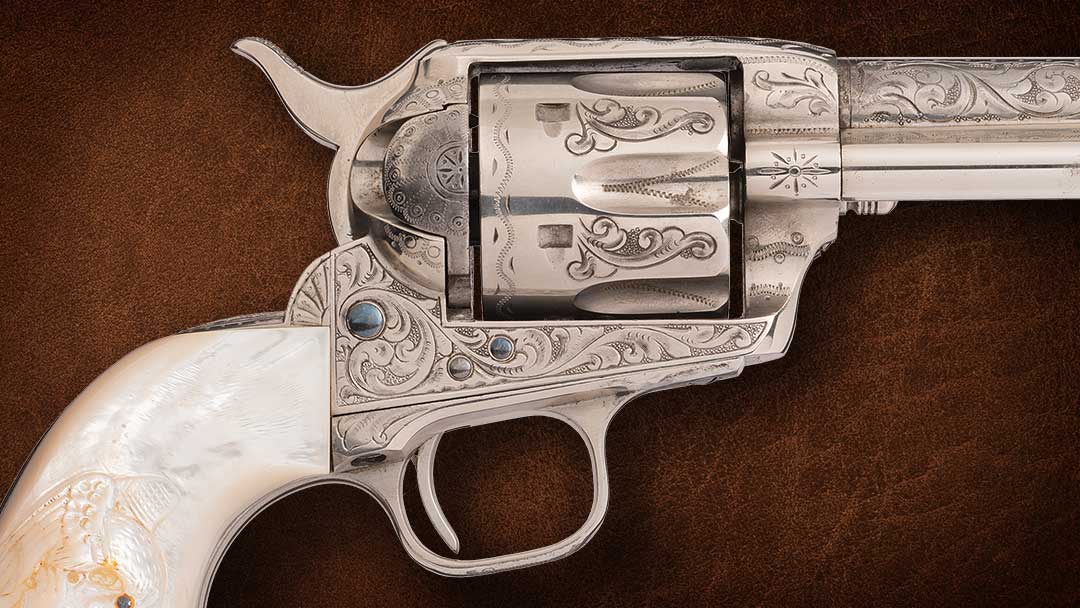
A fine example of the revolver that won the west. This factory engraved, nickel plated Colt SAA revolver with pearl grips was shipped to Wexell and Degress in 1883. Available this May.

The Colt Single Action Army was advertised colloquially as the “Peacemaker” by one of the largest Colt distributors. This nickname caught on with reporters and dime novelists and endures a century and a half later as the revolver marks its sesquicentennial. One would be hard-pressed to find another mid-19th-century firearm still being manufactured by its original maker 150 years after its introduction. With a Colt Single Action Army, you’re holding a piece of history in your hands.

The gun that won the west also found use across the pond, as illustrated by this Colt London Single Action Flat Top Target revolver. Available this May.

When was the Winchester Model 1873 Rifle released?

As William Mason and Charles Richards were refining the Colt Single Action Army design in Harford, Connecticut, Winchester was working on a new firearm of its own just 45 miles away. Winchester Repeating Arms Company had been producing the “Improved Henry” lever action rifle since 1866. Though a successful firearm, the Winchester Model ’66 was chambered in the .44-caliber Henry Flat rimfire cartridges, which employed a weak 28-grain powder charge, a limitation necessitated by the round’s soft copper casing. An upgraded rifle chambered in a stronger cartridge was in order.

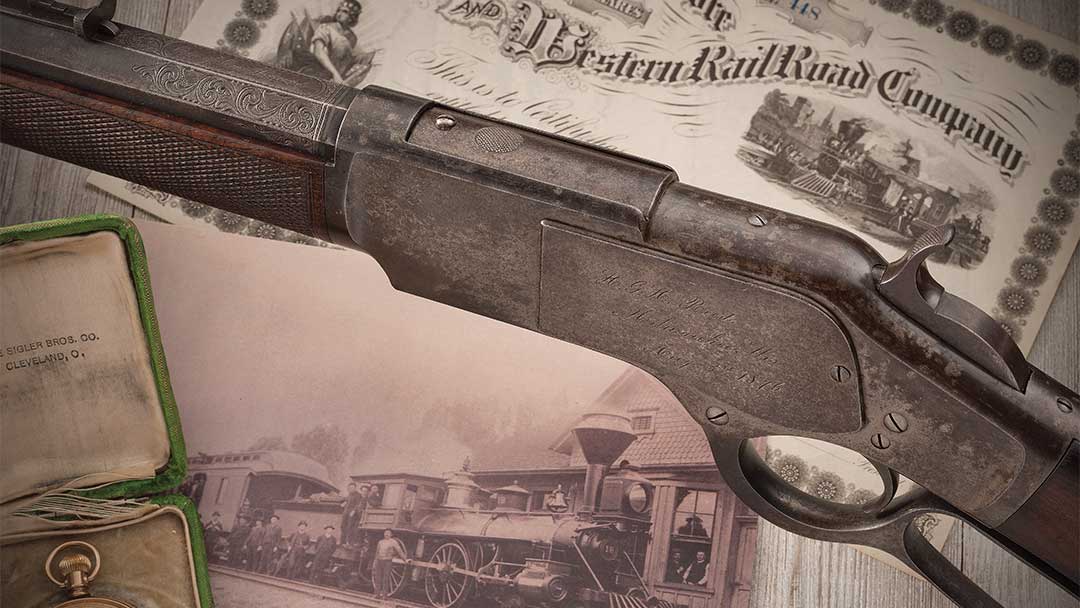
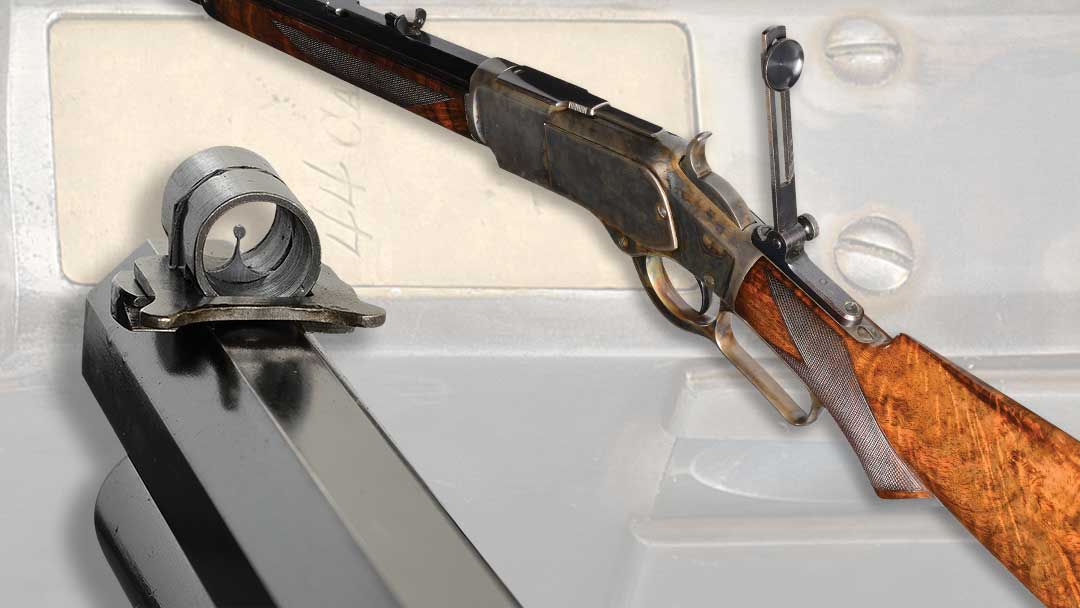
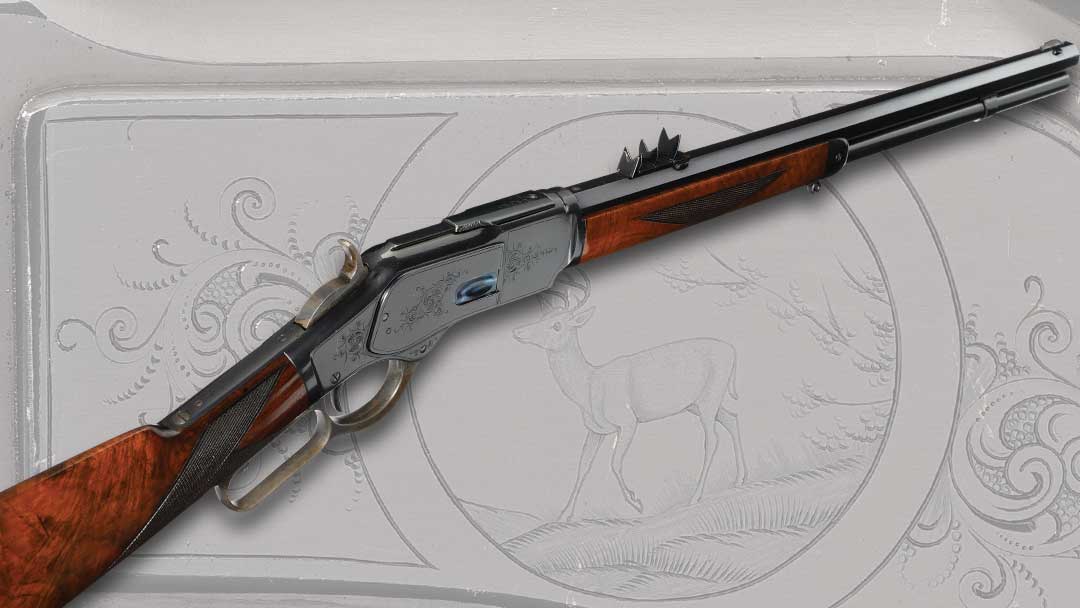
A documented special order Winchester Deluxe Model 1873 rifle with a factory letter. The Winchester Model 1873 would go on to be dubbed the gun that won the west. Available this May.

150 years ago, Oliver Winchester’s “New Model of 1873” arrived on the scene, a rifle designed to fire Winchester’s brass-cased .44-40 centerfire cartridge. The Model 1873 was a distinct improvement over the Model 1866 and the 1860 Henry, with a steel frame in place of gunmetal and a dust cover to shield the ejection port. The rifle’s rollout wasn’t without setbacks, however, and problems with the new centerfire cartridge delayed the Model 1873’s release.

The first production Deluxe Winchester and the first factory-engraved Winchester Model 1873, manufactured in 1874.

Only 18 Winchester Model 1873 rifles left the factory in its first year of production, with a scant 108 rifles shipping in 1874. The following year that figure increased to 3,000 rifles. A marketing campaign that included an elaborate catalog and celebrity endorsements was used to promote the new gun, and the rifle’s popularity skyrocketed.

150th Anniversary of the Winchester Model 1873 Rifle

“For Indian, Bear, or Buffalo hunting, it is unrivaled,” Winchester’s early catalog declared when toting the Model 1873. “The advantage that this Gun possesses over all others for single individuals traveling through a wild country, where there is reason to expect a sudden attack either from robbers or Indians, cannot be over-estimated.”

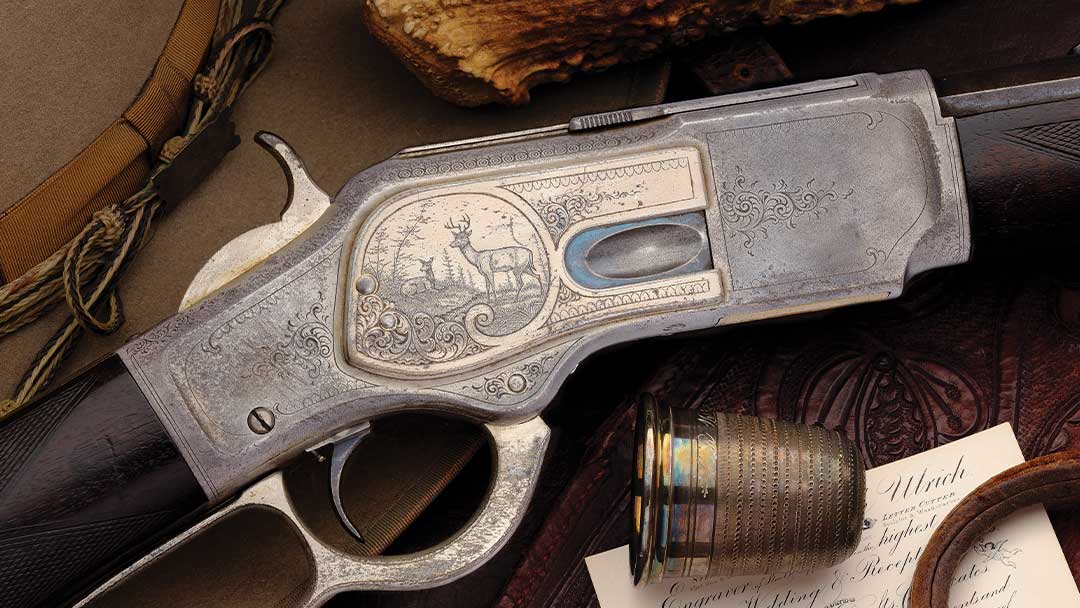
A rare John Ulrich engraved and signed special order Deluxe Winchester Model 1873. Available this May.

The Winchester Model 1873 carried a broad appeal throughout the American West, including with Native Americans looking for superior firepower. Even while the U.S. military continued to carry single-shot Springfields, the Lakota, Northern Cheyenne, and Arapaho warriors at the Battle of Little Bighorn were equipped with at least eight Model 73 rifles. In a letter to Winchester, Montana pioneer Granville Stuart speculated, “If poor Custer’s heroic band had been armed with these rifles, they would have covered the earth with dead Indians for 500 yards around.”

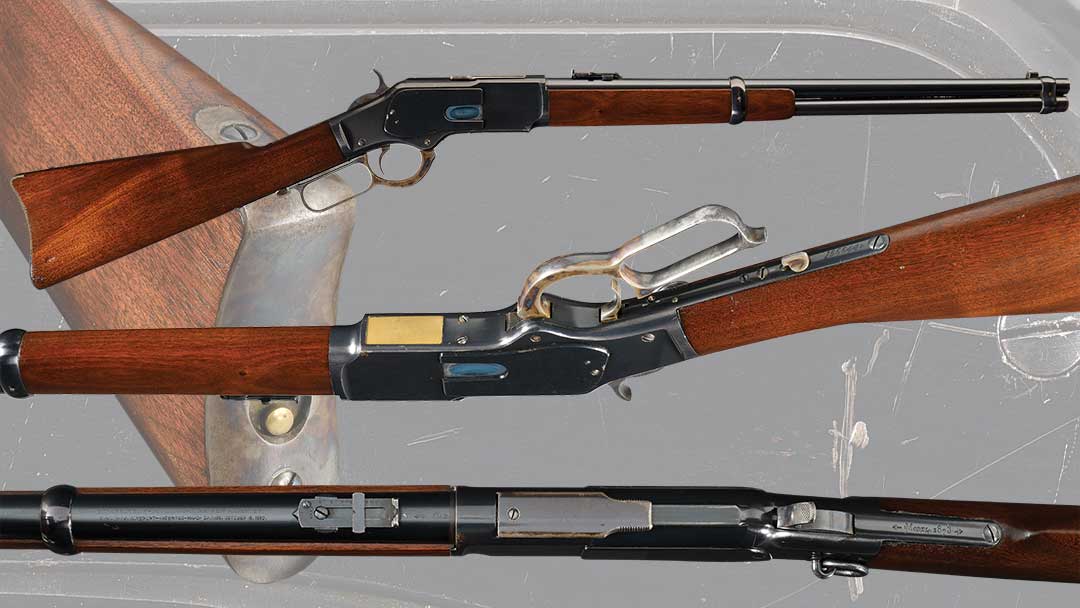
An exceptional antique Winchester Model 1873 carbine. Available this May.

The Colt Frontier Six Shooter

The two great guns that won the West found a complementary pairing in 1877 with the Colt Frontier Six Shooter, which was chambered for the same .44-40 WCF cartridge as the Winchester Model 1873 rifle. Carrying only one type of bullet caliber in the saddlebag and on the gun belt was not just a simple convenience, but could be the difference between life and death when seconds counted.

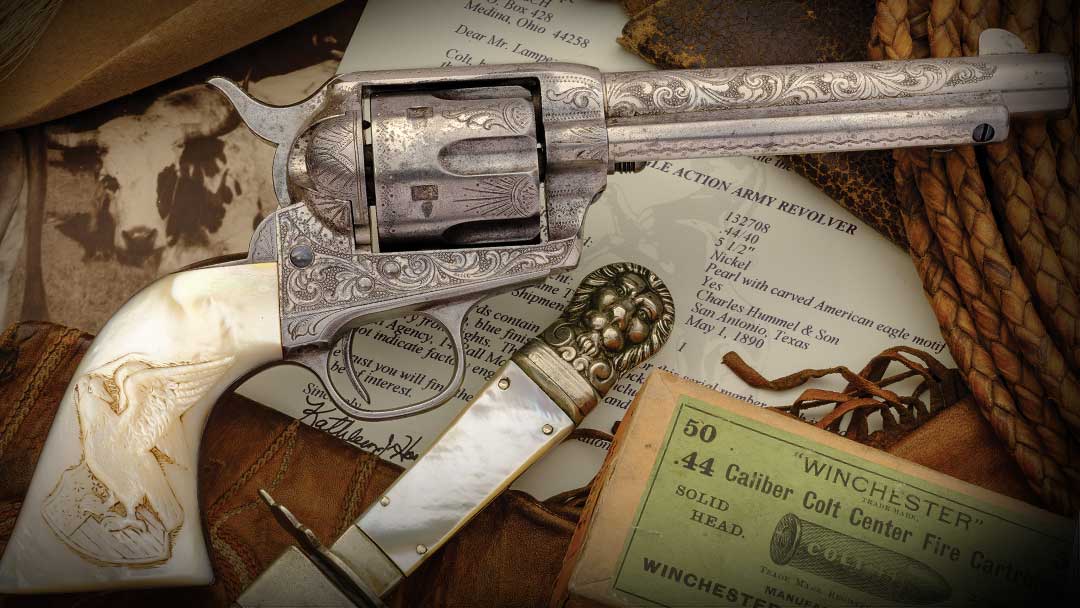
A Texas shipped factory engraved antique Colt Frontier Six Shooter SAA with factory relief carved eagle pearl grips. Available this May.

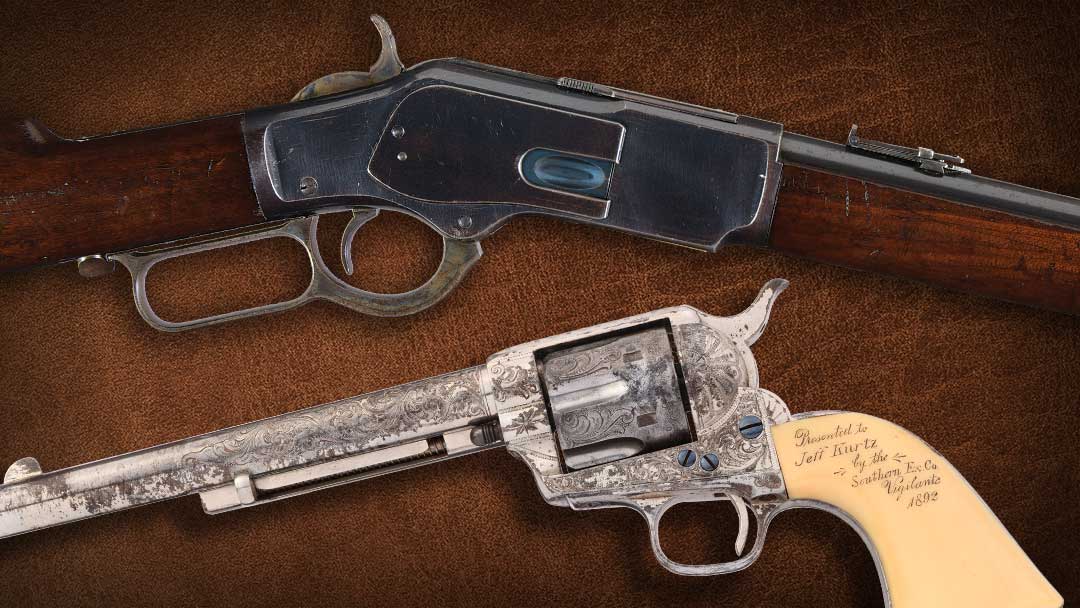
With the Colt Frontier Six Shooter, a cowpoke, lawman, or desperado could take care of business at a distance with their Winchester and draw their Colt for close-quarters trouble. Buffalo Bill Cody purchased a Colt Frontier Six Shooter in 1883, carrying the revolver along with his Winchester lever action rifles during his long-running Wild West Show. Hollywood Westerns seized on this classic pairing, and the image of a well-armed frontiersman carrying a Colt on his hip and a Winchester over his shoulder continues to capture our imaginations more than 150 years after the birth of both legendary gun designs.

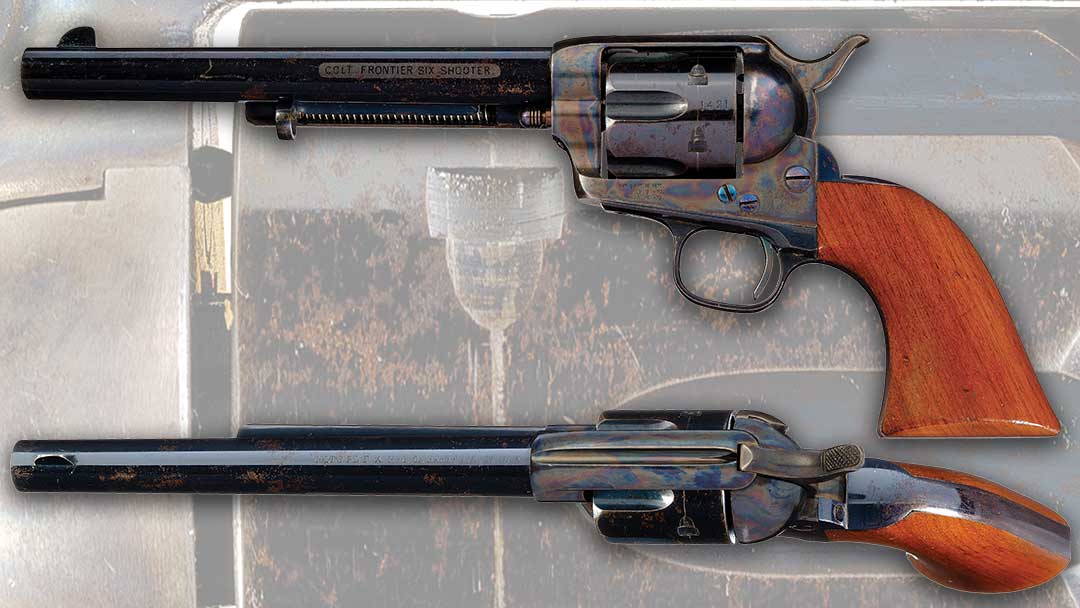
One of the first etched panel Colt black powder Frontier Six Shooter SAA revolvers. The Colt Frontier Six Shooter’s 44-40 WCF chambering brought together the two guns that won the West like never before. Available this May.

What is the Gun that Won the West?

Both the Winchester Model 1873 and the Colt Single Action Army were produced in time to make their mark upon the American frontier. In the 150 years since the debut of these two iconic firearms, both weapons have been dubbed the gun that won the West, but where did the phrase originate?

An extremely rare factory exhibition engraved Winchester Deluxe Model 1873 short rifle that was photographed in the Winchester Engraving Book. Available this May.

The title “Gun that Won the West” wasn’t officially coined until early 20th-century advertising campaigns, a brainchild of Edwin Pugsley, a Winchester engineer who helped produce famous firearms like the Winchester Model 21 shotgun. Today, the Colt SAA is often cited as a contender alongside the Winchester 73, sharing top billing for the title thanks to its fame with historians, gun lovers, and Western buffs.

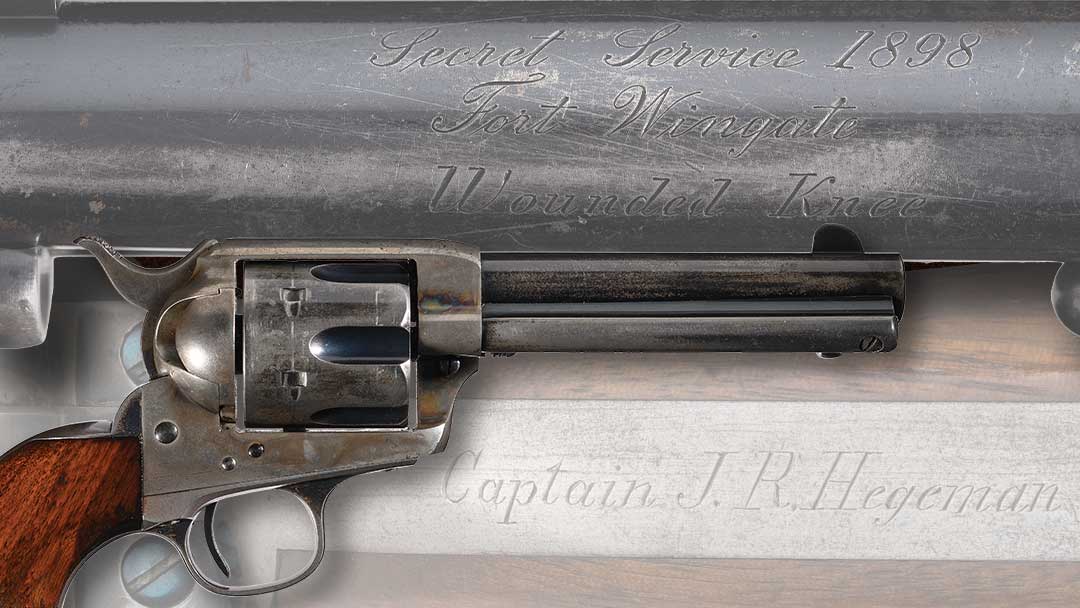
Due to the inscription on the left side of the barrel reading “Secret Service 1898 / Fort Wingate / Wounded Knee” this Colt Single Action Army revolver owned by legendary early Colt collector John R. Hegeman Jr. has been dubbed by collectors as the “first commemorative Colt.” Available this May.

The names Colt and Winchester transcend the world of gun collecting. 150 years of taking center stage in dime novels, radio shows, film, and television, have kept the Winchester Model 1873 rifle and the Colt Single Action Army revolver at the forefront of popular culture. From movie sets to modern-day Cowboy action shooting competitions, both guns have stood the test of time like few other firearms and represent the enduring spirit of the American West.

As we commemorate the 150th anniversary of the guns that won the West, both the Winchester Model 1873 and the Colt Single Action Army are more popular than ever.

The Sesquicentennial of Two Legends

Aside from an interlude from 1940 to 1956, the Colt Single Action Army has remained in continuous production. In ‘A History of the Colt Revolver’ authors Charles T. Haven and Frank A Belden describe the famous sixgun as “Practically unchanged in all major respects, it still holds its popularity wherever a heavy serviceable arm is required for use under trying conditions and away from the possibility of repairs or replacement of broken parts.”

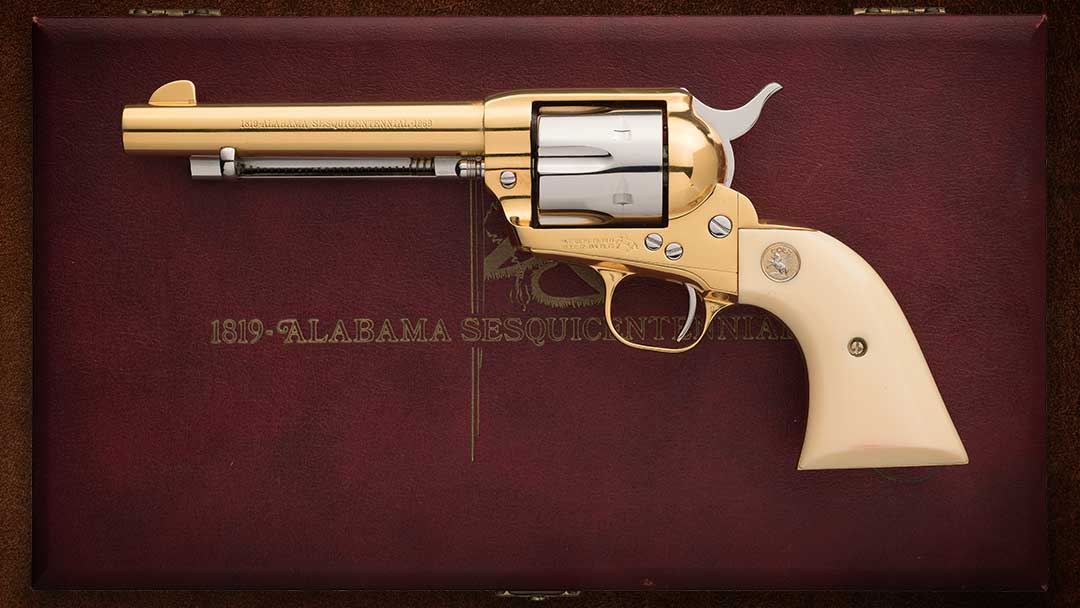
Colt special order, Second Generation, Serial Number 1 Alabama Sesquicentennial .45 LC revolver presented to Governor George Wallace. Available this May.

The legacy of the Winchester 1873 endured long after the last of its model left the factory in 1919. Though the Winchester Model 1873 was replaced by later and stronger designs, mainly the wildly successful Winchester Model 1894, the more than 720,000 Model 1873 rifles produced continued to serve as popular sporting arms. In 1950, Universal’s Winchester 73 movie, centered around a Winchester Model 1873 One of One Thousand rifle, helped spur renewed interest in both the classic Western genre and in the antique gun collecting pursuit.

In recent years, the surge of interest in metallic silhouette and cowboy action shooting has given the Model 1873 new life, and today traditional representations of the original design are produced by Miroku in Japan and sold under the Winchester Repeating Arms name.

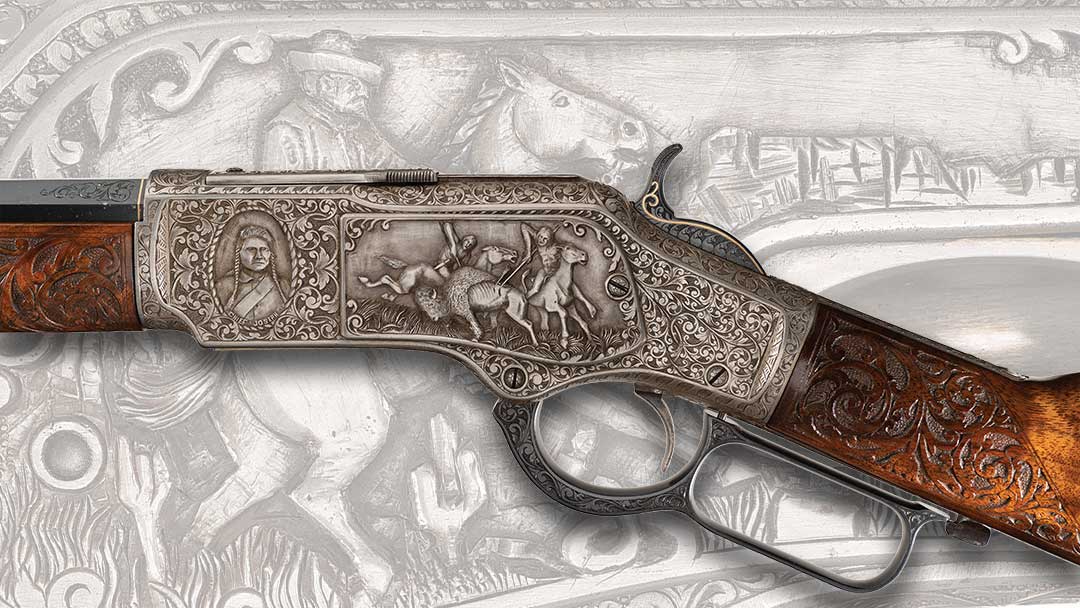
A Richard Roy signed, Wild West panel scene engraved and gold inlaid Winchester Model 1873 lever action rifle. Available this May.

The evolution of firearms has left many models obsolete and near-forgotten, but the Single Action Army and the Winchester 1873 have defied this trend. In the gun collecting community, both firearms continue to thrive at every pricepoint, from engraved deluxe models, high condition rarities, to guns that show the wear and tear of the Old West. Antique Colt SAA revolvers and Winchester 1873 rifles set records, while new examples of the classic designs are manufactured even 150 years onward. Now that’s the definition of an American success story, and Rock Island Auction Company will be celebrating the monumental anniversary of these two legendary guns all year long.

150 years of the guns that won the West, a milestone anniversary in the world of arms collecting.

While the Colt SAA and the Winchester 1873 played a prominent role on the American frontier, a multitude of guns were also instrumental in winning the West. Subscribe to the Rock Island Auction newsletter for new gun blogs and gun videos featuring popular Old West guns like the Sharps rifle, the Smith & Wesson Schofield, the Spencer carbine, the Marlin Model 1881, the double barrel hammer shotgun, and the various Civil War revolvers, surplus muzzleloaders, and breech loading rifles that found their way westward.

Commercial Real Estate Collapse Latest Warning Sign to Prepare for Major Economic Troubles

0

Is Commercial Real Estate the latest canary in the economic coal mine?

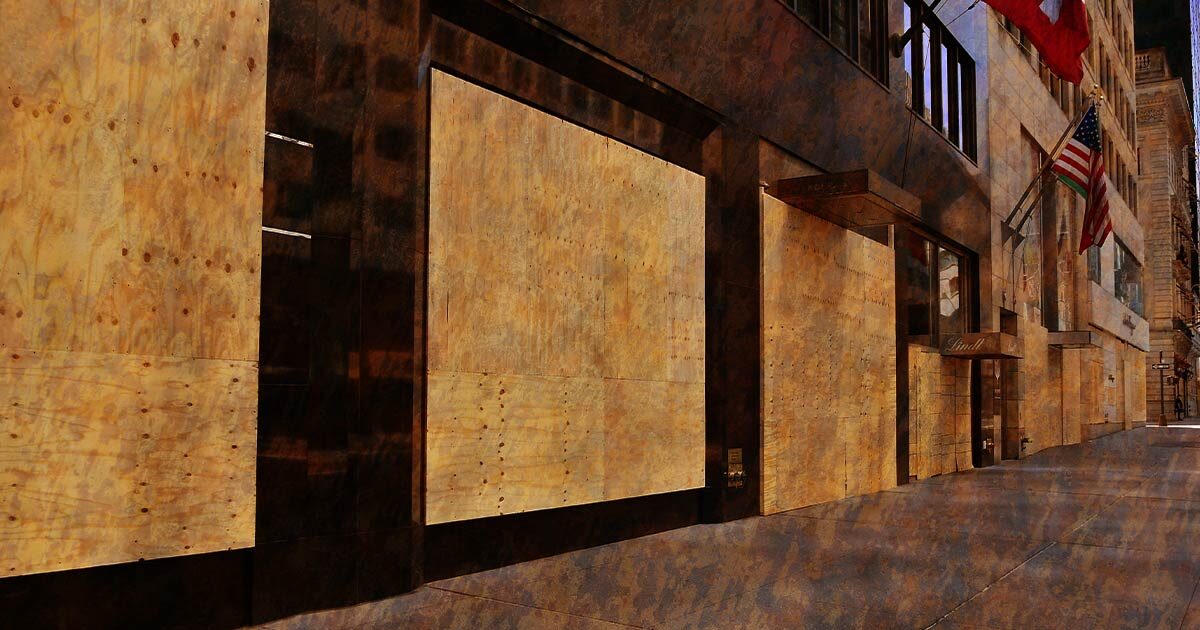
According to recent economic data, sales of commercial mortgage bonds have fallen off a cliff, plummeting about 85% year-over-year as commercial real estate investors are bracing for what looks like a wave of defaults throughout the commercial real estate industry.

According to a recent Bloomberg News report, the collapse of the American mall industry could be right around the corner, and may cause a wave of commercial real estate defaults that extends to office spaces hit by the work-from-home scam.

Last year saw a 10% drop in commercial real estate loans — the underlying debt that typically gets repackaged into commercial mortgage bonds — compared to the year before, to $804 million from $891 million, according to Mortgage Bankers Association data. In addition, the trade group expects a further 15% drop in CRE loans in 2023 to $684 million, again slashing the number of loans that can be securitized and sold.

According to Fox News:

The giant investment manager Brookfield Asset Management recently defaulted on a total of over $750 million in debt for a pair of 52-story towers in Los Angeles, according to a February securities filing. Real-estate firm RXR is in talks with creditors to restructure debt on 61 Broadway, a 34-story tower in Manhattan’s financial district, according to people familiar with the matter. Handing over the building to the lender is among the options under consideration, these people said.

In another sign of distress, a venture of an investment manager affiliated with Related Cos. and BentallGreenOak is in similar debt-restructuring talks over a $150 million warehouse-to-office conversion project in Long Island City, N.Y., that hasn’t filled up as much space as expected, according to people familiar with the matter.

“Default risk has increased and could be more problematic if rates increase and the economy slows,” said Chris Sullivan, chief investment officer at United Nations Federal Credit Union. “So, I think a cautious and especially diligent approach is appropriate.”

So What does this mean for you?

For small business owners, the news is devastating and the trickle effect will eventually make it down to everyone. Thanks in large part to a generation of COVID workers who refuse to go back to work, small brick-and-mortar businesses are in real trouble. In fact, in Manhattan, for example, remote work is costing merchants $12.4 billion a year as workers no longer buy their morning coffees or get their dry-cleaning done in the city.

Are we living in fantasy land?

The United States faces a default sometime this summer or early fall if Congress does not raise or suspend the debt ceiling, a Washington think tank warned on Wednesday. But, as we reported late last year, it’s hard to see how we get out of this disaster unscathed. The federal government is essentially bankrupt and has entered the land of make-believe accounting.

U.S. Debt Number Inforgraphic

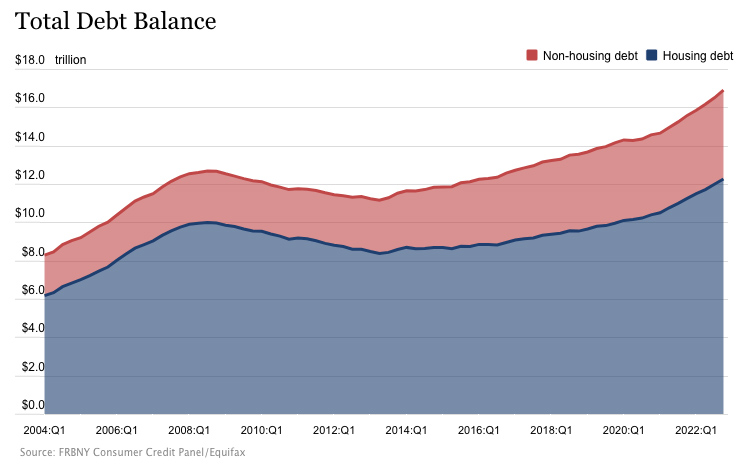
According to CNBC’s latest poll, the average American isn’t doing much better than our government. According to the latest New York Fed Household Debt and Credit report, total household debt rose by $394 billion in the last quarter of 2022. It was the most significant quarter-on-quarter rise in two decades.

Total household debt increased by 8.5% in 2022 and now stands at a record $16.9 trillion. That’s $2.75 trillion higher than it was pre-pandemic.

 Credit card balances increased by another $61 billion in Q4. 

In a recent podcast, Peter Schiff said the surge in credit card debt really evidences the fact that we don’t have a strong labor market.

If the labor market was really so strong, people’s paychecks would be high enough that they wouldn’t need to use credit to buy the things that they needed. They could actually afford to buy stuff without going deeper into debt, especially since interest rates are rising so much. You would think consumers would be reluctant to take on more debt in a rising rate environment. The only reason they’re doing it is because they really have no choice.”

Even more troubling, 64% of Americans say they are living paycheck to paycheck. Can you imagine what is going to happen when people realize there is no way off this sinking ship?

Preparing for an economic collapse

If you’re not prepared, you need to start taking steps to protect yourself and your family from future troubles.

Keep an eye on the markets, and keep an eye on the banks.

Big Banks

Before depositing any money in a bank, you need to research the financial soundness of that bank. Since the so-called end of the financial crisis, when the government spent over 700 billion dollars to “fix the system,” over 511 banks have failed.

With so many banks still going under, you really have to wonder how long the FDIC can continue to pay out on these insured deposits. With banking industry assets sitting at around $22.7 trillion, there is little reason to believe the FDIC can cover these insured deposits during a full-scale collapse.

While many believe the FDIC protects their money, the simple truth is, there’s not enough money to protect everyone. If the system collapses, your FDIC-insured account is anything but certain.

Realize your dollars may become worthless.

Money on Fire

Over the last year, our money has become worth less and less by the month. From gas prices that have more than doubled in the last couple of years to soaring food prices and sky-high interest rates, our dollar is already becoming less valuable.

It would be best if you seriously looked at the possibility of an all-out collapse of the system. If this were to happen, your dollars would quickly become worthless.

You must start to take a balanced approach to being financially prepared for the future. While investing in your financial future is important, the same can be said for investing in your ability to survive future disasters. If you haven’t started preparing for economic troubles, now is the time to seriously consider stocking up to survive future financial problems.

Be Prepared to Defend Yourself

Investing in long-term consumable goods.

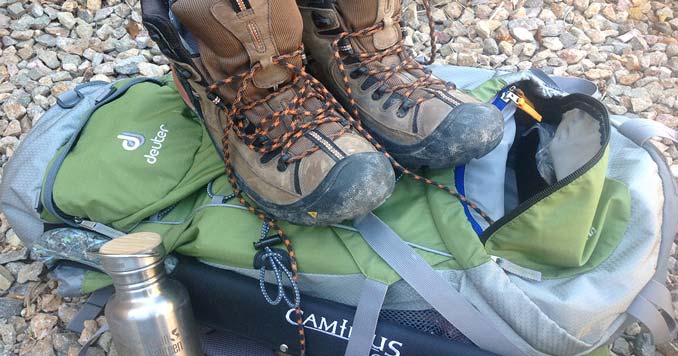
Backpack with Bug out Gear

This means stocking up on items you will need and use in the future or stocking items you can barter with in case the system fails.  By stocking up on food, water, survival gear & supplies, and bartering goods, you will have a nice stockpile of supplies that will help you through almost any disaster.

Another upside to investing in consumable goods is these goods are completely secure from financial market volatility and will continue to hold their value after the collapse. In fact, as we’ve seen over the last year, most consumables will probably skyrocket in value in a post-collapse world.

Be Prepared to Feed Yourself when the Collapse Hits!

Grocery Options that ship right to your Home

Learn to Be Self-sufficient NOW!

To truly be prepared, you need to learn how to be 100% self-sufficient.

You Can Smell Like Kit Badger – Lox and Company Badger Balm

0

You’ve probably spent a fair amount of time wondering what Kit Badger smells like. Well… good news. Now, you not only don’t have to wonder anymore, but you can also smell just like him thanks to Lox and Company Badger Balm.

Seriously though, this stuff smells good and can be used a TON of different ways in the outdoors… or just day-to-day.

https://loxandcompany.com/badger-balm/

Collectible Firearms for Serious Gun Collectors

0

The birth of the legendary Barrett M82 sniper rifle, is a fascinating American tale of inspiration, dedication, and innovation.

It’s the story of a native Tennessean who would dream up the amazing M82 that would change modern warfare, be declared Tennessee’s “official state rifle,” a designation it has held since 2016, and named one of the U.S. Army’s “top 10 greatest inventions,” in 2005.

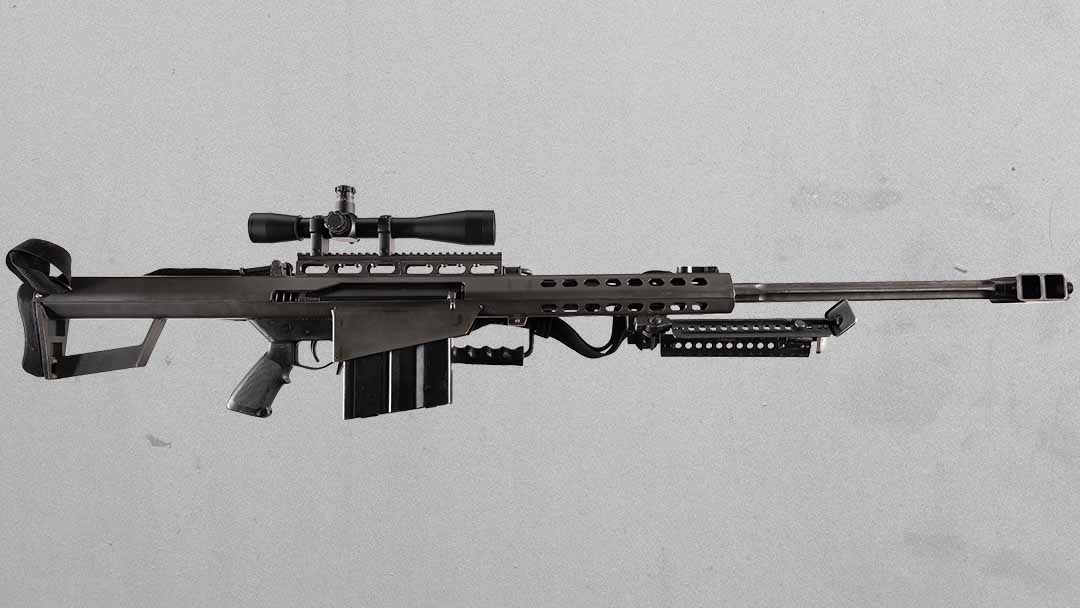
A Barrett M82A1 rifle documented as one of the first 100 shipped to U.S. Marines in the Gulf War theater for Operation Desert Storm is available in Rock Island Auction Company’s upcoming May Premier Auction, May 19-21.

This Barrett M82A1 documented as one of the first 100 shipped to the U.S. Marines in the Persian Gulf theater for Operation Desert Storm will be on offer in Rock Island Auction Company’s May Premier Auction, May 19-21.

Birth of the Barrett M82

Ronnie Barrett was a professional photographer in the early 1980s in his hometown of Murfeesburo, Tenn. He got a call one fateful day from a company wanting photos of its military-style river patrol boat in action. The boat had two mounted .50 caliber machine guns. He snapped an award-winning photo that still hangs on the wall at Barrett Firearms Manufacturing in Murfreesboro, but it also gave him a burst of inspiration — could a shouldered rifle fire a .50 Browning Machine Gun (BMG) round?

He endeavored to find out. Shooters who shot .50 BMG rounds used converted anti-tank rifles like the Boys rifle or re-calibrated barrels of existing guns like bench rest rifles. The recoil could be pretty heavy and even injurious.

Barrett went home and despite having no background in engineering nor machining, he started sketching. He drew up three dimensional sketches and took it to local machinists but no one was interested in achieving Barrett’s dream, save one. Working with that willing machinist, Don Mitchell, Barrett had a prototype in four months. Barrett said the first .50 BMG he ever fired was from one of his own rifles.

Barrett’s gun could handle firing a .50 BMG round, but could a shooter handle firing it? After all, the .50 BMG round was intended to punch holes in buildings, vehicles, and bunkers.

The gun’s size, being five feet long and weighing more than 28 lbs., would help with the recoil, but the design did most of the work. “The M82’s reciprocating barrel and heavy twin return springs play a prominent role in mitigating the .50-caliber’s horrible kick,” wrote Elwood Shelton in the July 2021 Gun Digest. An arrowhead-shaped muzzle brake that vents exhaust gas to the left and right was added later. A thick rubber recoil pad is on the back of the rifle butt, and the result of all these efforts was a recoil some shooters described as firing a 12 gauge shotgun. The gun had an effective range out to 1,800 meters.

Ronnie Barrett was a photographer with no engineering experience or training when he designed the M82, a rifle capable of firing .50 caliber BMG rounds. His namesake rifle, introduced in 1982 was a game-changer in modern warfare, used as an anti-materiel and anti-personnel gun.

Selling the Barrett M82

First, Ronnie Barrett had to perfect the action. The gun would fire a few times but then jam. He settled on a hex steel frame that improved reliability while also reducing bulk and made it the M82A1. He worked to make the manufacturing process more efficient, and by 1983 Barrett started selling the M82 commercially.

Early commercial sales were brisk despite the prohibitively high asking price ($5,895 in 1990) and Barrett quickly sold the first 30 he made but still lost money. Big gun fanciers liked what Barrett offered. Production kept up and Barrett went to the Association of the U.S. Army show in Washington, D.C. He drew interest from several countries, and Sweden put in the first order for 100 rifles in 1989. The Barrett M82A1 was off and running, even with a commercial price in 1990 of $5,895.

The CIA came calling. The agency quietly bought the guns to pass on to Afghan guerillas fighting the Soviets, figuring it gave them a long-range threat against the superior Soviet firepower. The U.S. Air Force wanted the Barrett M82 to clear runways of unexploded ordnance. In 1990, the U.S. Marine Corps placed an order for 125.

Sweden’s military was the first to see the usefulness of the Barrett M82 and ordered 100. The CIA was also an early buyer, sharing them with Afghan militants fighting the Soviets. The U.S. Marines also purchased the Barrett M82A1 like this one — one of the first 100 shipped to the Persian Gulf — for use in Operation Desert Storm.

Then, Operations Desert Shield and Desert Storm happened, with the United States leading a coalition of countries to protect against the aggressions of Iraq and to push Saddam Hussein’s troops out of Kuwait. Coalition troops that used the M82A1 were pleased at its vehicle stopping ability and being able to stop soft targets in the role of anti-materiel and anti-personnel weapon.

Legend of the Barrett M82

The U.S. Army adopted the Barrett M82A1 in 2003 as the M107 with an initial order of 2,142 and an option for 1,100 more. The gun saw plenty of action in Iraq and Afghanistan.

Snipers recorded kills from eye-popping distances, something .50 BMG guns are capable of doing. Marine sniper Carlos Hathcock recorded a kill at 2,460 yards using an modified, scoped M2 during the Vietnam War. Such unconventional weapons were no longer required with the prevalence and accuracy of the Barrett.

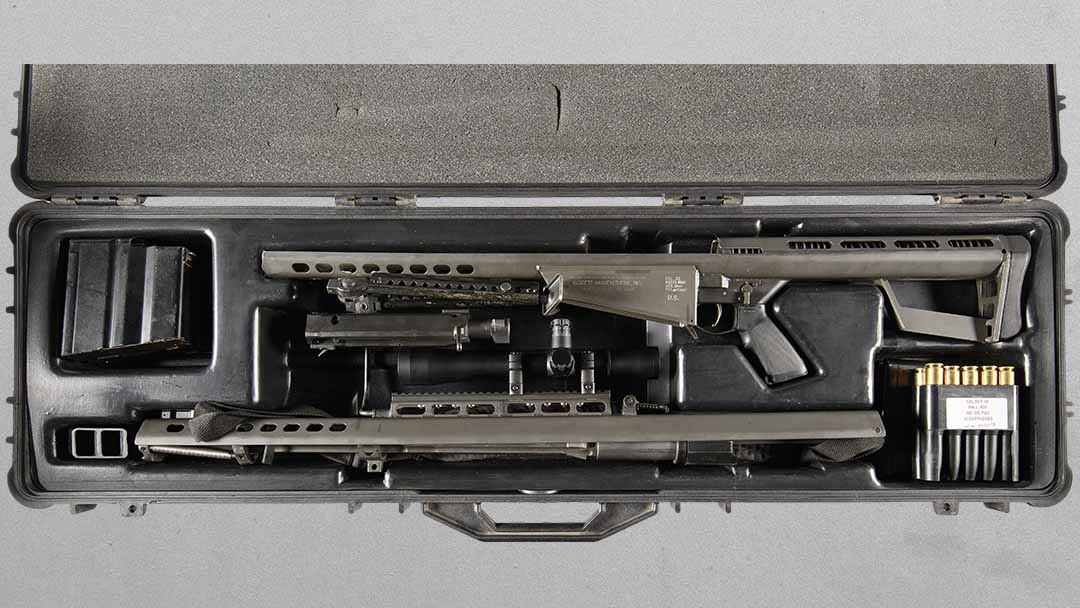
This Desert Storm Barrett M82A1 comes with a case to carry it which is a good thing given that it weighs 28 lbs. It will be available in Rock Island Auction Company’s May 19-21 Premier Auction.

Despite its maximum effective range of 1,800 meters, snipers recorded kills at more than 2,000 meters. Army Specialist Nicholas Randstad eliminated a Taliban fighter from 2,288 yards. A U.S. Marine recorded a kill in Iraq from 1,614 meters in 2004. An Australian soldier using a Barrett M82A1 recorded a kill from 1.5 miles away in Afghanistan in 2012. Snipers using Barrett M82 rifles have recorded five of the 20 longest kills in history.

The Barrett was considered a combat multiplier because it could handle multiple tasks and also provide a psychological edge. Insurgents couldn’t hide from the Barrett M82. Staff Sgt. Steve Reichert took out three Iraqis through a brick wall from a mile away using a Barrett M82 in 2004. An M82 given to Reichert by Barrett Firearms sold at Rock Island Auction in 2013.

According to U.S. Army reports from Operation Iraqi Freedom, the Barrett M82 “May have been the most useful piece of equipment for the urban fight.”

Once in a firefight in Afghanistan, a Barrett M82 misfired. The Marines operating it called Barrett customer service in Tennessee. The man who took the call, a former Marine, could hear gunfire in the background and quickly assessed the problem and provided a solution. The Marines were back in the fight in less than a minute. The story may be part urban legend since no date is every mentioned in the story’s retelling, but the former Marine who took the call, Don Cook, has done on-camera interviews about the incident.

The M82 had a handful of variations. The M82A1M version improved on the A1 with a long picatinny-type rail and a rear grip and monopod socket. The M82A2 bullpup version didn’t find much success, while the M82A3 is the rifle’s U.S. Marine Corps designation. Of course, the official U.S. Army designation, M107 has already been mentioned.

The Barrett M82A1 was mentioned in a lawsuit filed by August 2021 by the Mexican government against 10 gun manufacturers as a favorite of drug cartels because of its hitting power. One was used in an assassination attempt on the Mexico City police chief that killed two bodyguards and a bystander.

“If you have a Barrett, it means that any non-special forces such as the local police and the municipal police cannot fight you,” Romain Le Cour Grandmaison, program director for the Mexico and Central America Office of Noria, a think tank, is quoted as saying in a Reuters article about the lawsuit. “That leaves the military as the only ones able to battle the cartels.”

The Irish Republican Army was also believed to have a couple in its arsenal at the time of the 2005 cease fire, while more than 60 countries list the Barrett M82 in their arsenals, showing how the rifle’s stopping power is respected on all sides.

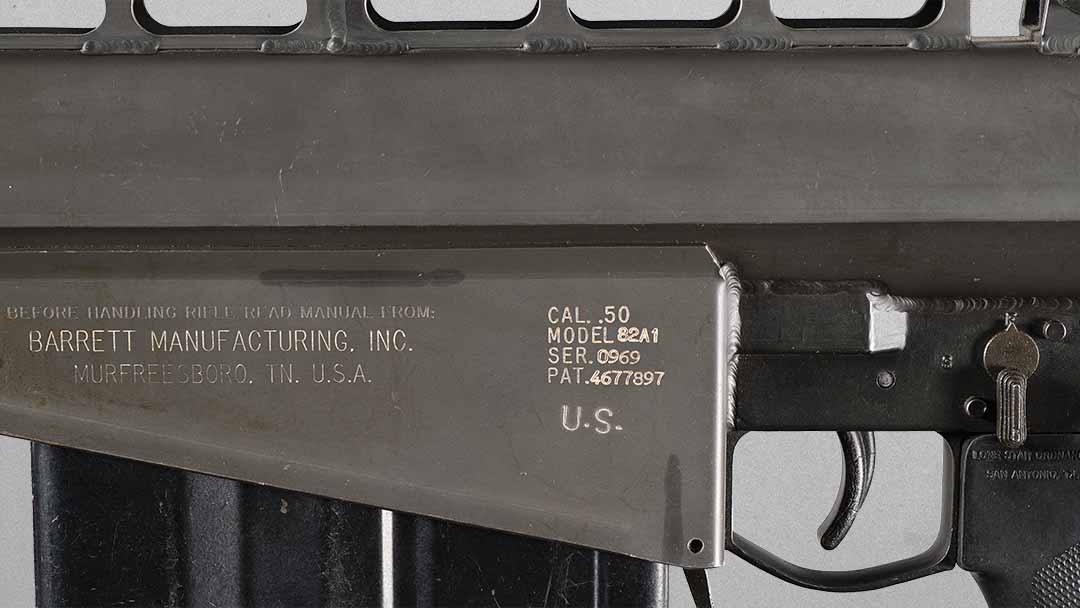
Along with the markings on the left side of the receiver, this closeup shows the welds to the stamped metal of the M82. This Barrett M82A1 was among the first 100 shipped to U.S. Marines in the Persian Gulf for Operation Desert Storm and will be available in Rock Island Auction Company’s May 19-21 Premier Auction.

Barrett M82 for Sale

The Barrett M82A1 on offer is an impressive weapon, from its arrowhead-shaped muzzle brake to its rubber buttstock. The gun is fitted with a “SLAP” (Saboted Light Armor Penetrator) marked fluted barrel with a ventilated steel chasis, folding hooded blade front sight, a carry handle, scope base, and flip-up rear peep sight. The scope rail is a mid-90s military adjustment with a two-piece welded base and a one piece picatinny rail, and is topped with a Leupold Ultra16X-M1A scope. “U.S.” is stamped on the left side of the receiver below the patent number.

The Barrett M82A1 brought a new dimension to modern warfare, by supporting close-in fighting with precision fire that can take out man and machine, and is in the arsenals of more than 60 militaries around the world. This specific example is listed on page 23 in Norman Chandler’s “Death from Afar, Vol. 1” as one of the first 100 M82A1 rifles supplied to the U.S. Marine Corps for Operation Desert Shield in 1990. The original barrel is dated 2/91, so was sent from the factory to Saudi Arabia for distribution to military units and was likely in-theater for the combat phase. Operation Desert Storm started Feb. 24, 1991.

Modern military arms rarely find their way out of Uncle Sam’s hands and into military arms collections. True to form, only about 35 of these rifles are known to be in private collections, placing this USMC-issued Barrett in rarified air. It will be on offer in Rock Island Auction Company’s May 19-21 Premier Auction.

Sources:

The Barrett Model 82A1 Rifle, NRA American Rifleman

Barrett M82: Improbable Legend among Sniper Rifles, by Elwood Shelton, Gun Digest

Barrett M82: More than Sixty Countries Rely on This Sniper Rifle in Battle, by Kyle Mizokami; National Interest

How the Barrett M82 Became the U.S. Military’s Sniper Rifle, by Peter Suciu, 19fortyfive.com

Barrett: 40 Years of .50-Caliber Authority, by John Zent, American Rifleman

`Weapon of War’: The U.S. Rifle Loved by Drug Cartels and Feared by Mexican Police, by Diego Ore and Drazen Jorgic

This Marine Was The `American Sniper’ of the Vietnam War,” by Blake Stillwell, We Are the Mighty

US inflation surges as economy becomes top preparedness threat

0

Today, the Federal Reserve admitted that their preferred inflation gauge rose last month at its fastest pace since June.

Friday’s report from the Commerce Department showed that consumer prices rose 0.6% from December to January, up sharply from a 0.2% increase from November to December. On a year-over-year basis, prices rose 5.4%, up from a 5.3% annual increase in December.

Last week, the government issued a different inflation measure — the consumer price index — which showed that prices surged 0.5% from December to January, much more than the previous month’s 0.1% rise. Measured year over year, consumer prices climbed 6.4% in January — far above the Fed’s 2% inflation target.

Of course, we know these numbers grossly underestimate what’s really going on out there.

The Fed can’t tame inflation without ‘significantly’ more hikes that will cause a recession

“Reaccelerating price pressures, coupled with a still-strong labor market that is restoring incomes and is supporting demand, will keep the Fed on track to hike rates further over coming meetings,” said Rubeela Farooqi, chief U.S. economist at High Frequency Economics.

Former Fed Governor Frederic Mishkin wrote in a white paper warning about the coming crash that despite the sentiments of many current Fed officials that they can manage a “soft landing” while tackling high prices, the paper says that is unlikely to be the case. “We find no instance in which a central-[bank]induced disinflation occurred without a recession,” said the paper, co-authored by economists Stephen Cecchetti, Michael Feroli, Peter Hooper, and Kermit Schoenholtz.

The researchers reviewed 16 episodes since 1950 when a central bank like the Fed raised the cost of borrowing to fight inflation in the United States, Canada, Germany, and the United Kingdom. In each case, a recession resulted.

As we reported yesterday, there is significant concern growing that we are heading towards an economic cliff.

Preparing for an economic collapse

While everyone was distracted by 24/7 COVID hysteria, followed by the media trying to fake an alien balloon invasion, the real threat has been tearing through the American family and devastating hard-working Americans who are just barely holding on. Sorry, but it is going to get worse!

If you’re not prepared, you need to start taking real, immediate steps to protect yourself and your family from what is coming.

Keep an eye on the markets, and keep an eye on the banks.

Big Banks

Before depositing any money in a bank, you need to research the financial soundness of that bank. Since the so-called end of the financial crisis, when the government spent over 700 billion dollars to “fix the system,” over 511 banks have failed.

When the shit hits the fan, how long can the FDIC continue to pay out on these insured deposits. With banking industry assets sitting at around $22.7 trillion, there is little reason to believe the FDIC will ever be able to cover these insured deposits during a full-scale collapse.

While many believe the FDIC protects their money, the truth is, there is not enough money to protect everyone. If the system collapses, your FDIC-insured account is anything but certain.

Realize your dollars may become worthless.

Money on Fire

Since the COVID shutdowns, our money has become even more worthless. From gas prices that have more than doubled to soaring food prices and sky-high interest rates, our dollar is losing value quickly.

You need to seriously look at the possibility of an all-out collapse of the system. If this happens, your dollars will quickly become worthless.

You must start to take a balanced approach to being financially prepared for the future. While investing in your financial future is important, the same can be said for investing in your ability to survive future disasters. If you haven’t started preparing for economic troubles, now is the time to seriously consider stocking up to survive future financial problems.

Investing in long-term consumable goods.

Backpack with Bug out Gear

This means stocking up on items you will need and use in the future or stocking items you can barter with in case the system fails.  By stocking up on food, water, survival gear & supplies, and bartering goods, you will have a nice stockpile of supplies that will help you through almost any disaster.

Another upside to investing in consumable goods is these goods are completely secure from financial market volatility and will continue to hold their value after the collapse. In fact, as we’ve seen over the last year, most consumables will probably skyrocket in value in a post-collapse world.

Be Prepared to Feed Yourself when the Collapse Hits!

Grocery Options that ship right to your Home

Be Prepared to Defend Yourself

Learn to Be Self-sufficient NOW!

To truly be prepared, you need to learn how to be 100% self-sufficient.

Tip to Make DCC Clips Easier to Live With from Gypsy EDC

0

Gypsy EDC, an excellent knife and sheath maker based out of Idaho, recently posted a tip that makes removing DCC clip equipped items like sheaths and holsters from your clothing much easier. This tip makes use of a credit card to shim the clip, allowing it to slide off your clothing almost effortlessly. This may be especially useful for shorter DCC clips or those with limited grip strength.

See the tip in action on the Gypsy EDC Instagram page: GypsyEDC Instagram.

GypsyEDC.com

Collectible Firearms for Serious Gun Collectors

0

Since the 1800s, explorers and dangerous game hunters navigating the African bush have trusted their lives to the double rifle. When facing down a charging beast, especially one of Africa’s “Big Five,” speed, reliability, accuracy, and lethal stopping power is essential, and the classic double rifle delivers on every front.

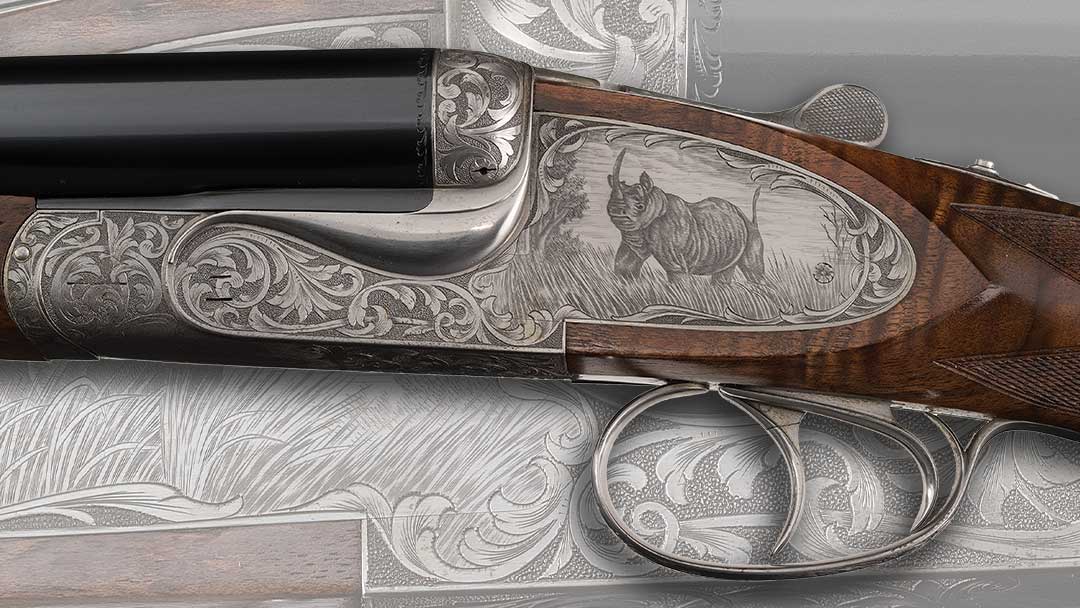
An exceptional, Peter Spode signed, gold inlaid, and dangerous game scene engraved Watson Brothers 4 bore sidelock ejector double rifle with case. The weight is a staggering 25 lbs. 4 oz. Available this May.

The precision craftsmanship and timeless aesthetic of the double rifle evokes the legends and lore of the African safari and the courage of the big game hunter like no other sporting arm. Giants like Teddy Roosevelt, Ernest Hemingway, and Jim Corbett helped immortalize the iconic gun, and today the double rifle remains a treasured possession for collectors, sportsmen, and any firearms enthusiast seeking to connect with the golden age of outdoor adventure.

The double rifle plays a prominent role in popular films like ‘Ghost in the Darkness’ and ‘Out of Africa,’ and has made an impression with TV audiences recently in Taylor Sherian’s 1923 series, a Yellowstone prequel.

What is a Double Rifle?

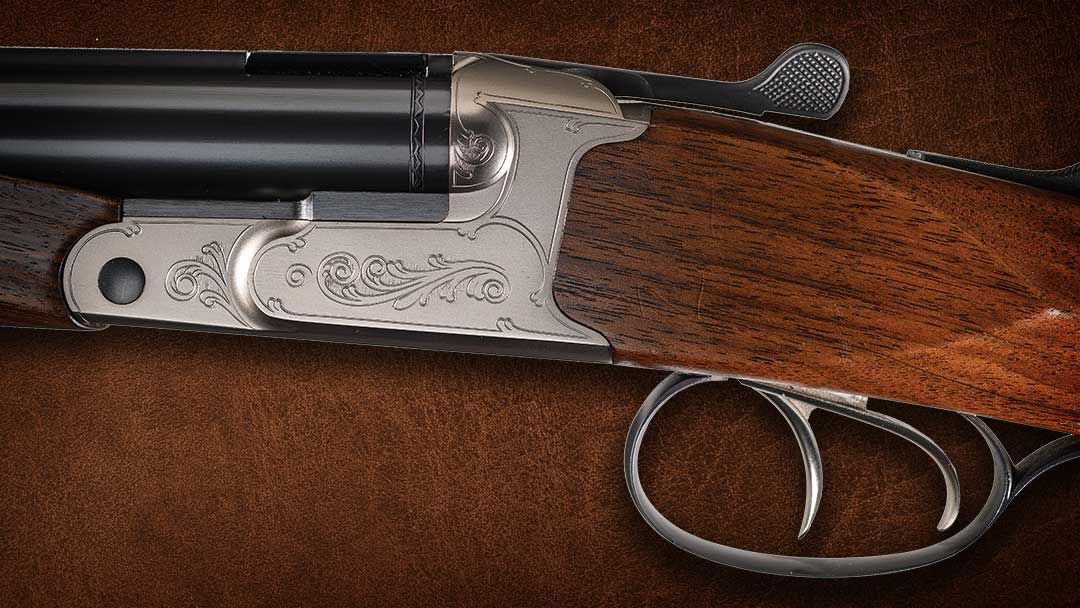
A double rifle is a class of hunting firearm with two barrels, typically side-by-side. Having a second shot at the ready serves as a quick backup in the event the first shot misses the quarry or fails to stop the animal outright. Generally, double rifle designs can be sorted into hammer, boxlock, and sidelock action, with a few exceptions available like the Westley Richards drop lock action. Double rifle models can be found with either separate triggers (double triggers) or a single selective trigger.

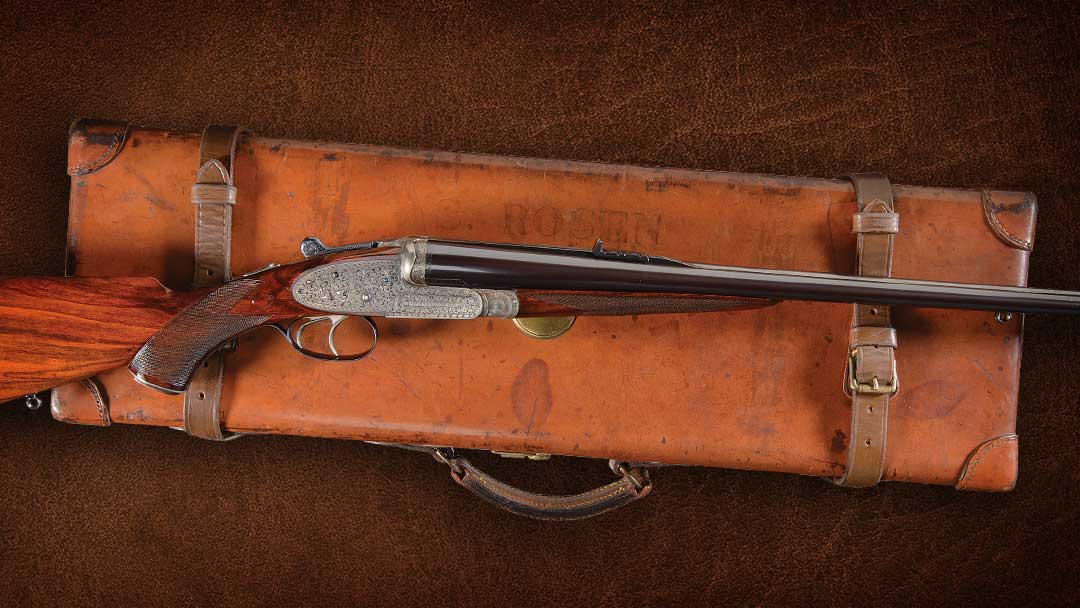
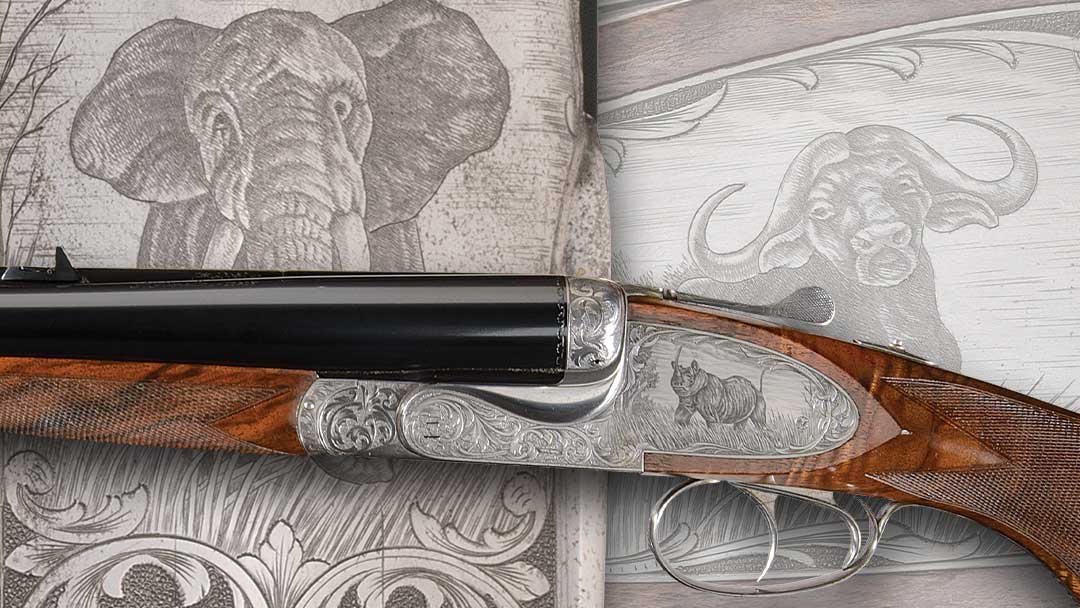
A superb “C. Tomasoni” African “Big Five” game scene Bulino engraved Beretta 455 EELL sidelock double rifle chambered in .470 Nitro Express. Available this May.

Most double rifles are designed to fire powerful cartridges like .375 H&H Magnum, .470 Nitro Express, .500 Nitro Express, and even larger. The meticulous process of regulating both barrels has always required a skilled hand and no shortage of labor, a costly expense that continues to be reflected in the premium price point set by these elegant long guns. Historically, double rifles have been crafted by the finest British manufacturers such as Westley Richards, John Rigby & Co., and perhaps most famously, Holland & Holland.

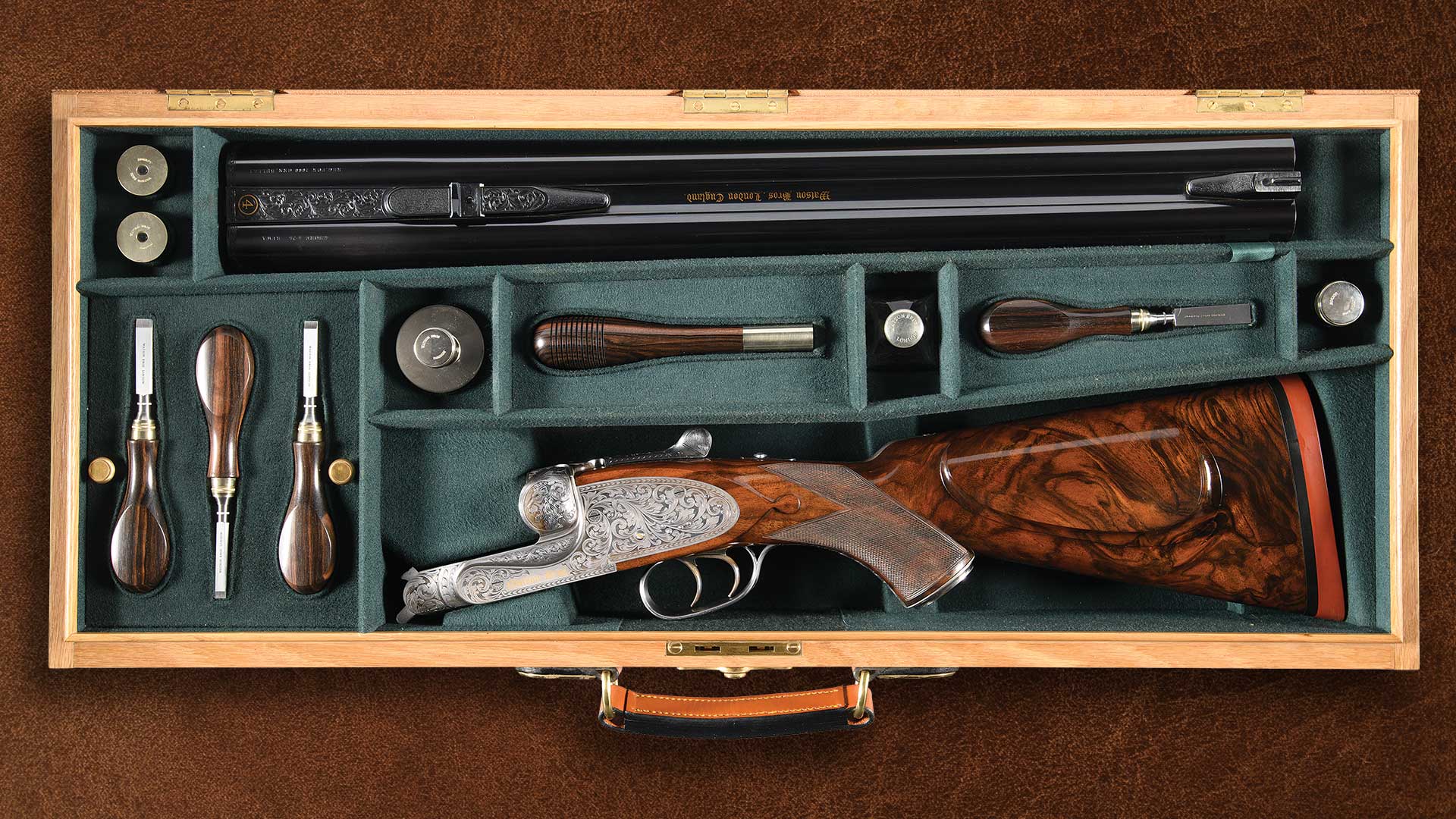
This engraved Watson Brothers 4 bore sidelock ejector double rifle includes an oak and leather Watson Bros. labeled takedown case with a canvas cover, a full set of turn screws, a pair of snap caps, two oilers, and a set of cleaning tools. Available this May.

Birth of the Double Rifle

The concept of a long gun with two or more barrels has existed for centuries, often commissioned as novelty hunting arms for the wealthy elite. The earliest double rifles were muzzleloaders that employed two external mechanisms to cock the weapon, making firing and reloading a cumbersome affair.

The availability of complex gun designs was bound by the limitations of hand craftsmanship until pioneers like John H. Hall and Simeon North demonstrated how standardized, machined parts could greatly accelerate production. British gunsmiths quickly embraced the process, particularly sporting arms manufacturers, just as the cape shores of Africa and its abundance of wildlife started to capture the public’s imagination.

This engraved early 19th century swivel breech or “wender” double rifle is attributed to Abraham Angstadt (1784-1868) of Pennsylvania and was previously featured in the Historical Society of York County Museum’s expo. Both barrels are rifled and have blade and notch sights. Available this May.

Dangerous game hunting in India had driven the development of specialized sporting arms since the 17th century, and the British colonization of Africa in the mid-1800s helped further accelerate innovations in the double rifle. In the era of black powder arms, hunting bigger game required bigger guns, and the double rifle quickly found favor with the flood of explorers, hunters, soldiers, and royalty who sought adventure and riches in this vast new country.

Africa’s “Big Five,” the lion, leopard, cape buffalo, rhino, and elephant, were some of the most commonly encountered quarry, as well as the most dangerous, and the ability to fire two shots in quick succession was often a matter of survival.

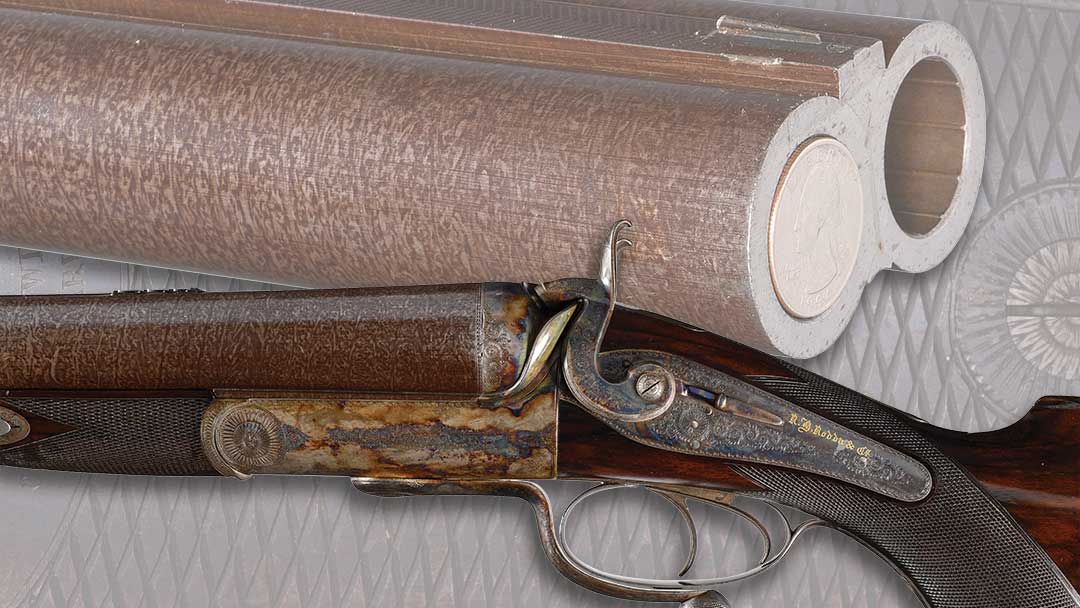
An engraved R.B. Rodda 4 bore double barrel rotary underlever dangerous game hammer rifle with case. Available this May.

A series of innovations in the 1860s and 1870s brought the double rifle closer to the superb dangerous game hunting arm we know today. These advancements included the development of the break open, breech loading action, the invention of the hammerless boxlock and sidelock actions, the adoption of centerfire cartridge technology, and the inclusion of extractors. The most popular double rifle cartridges of the late 19th century were offered in the same caliber as their muzzleloading predecessors, including the .450, .500, and .577 Black Powder Express.

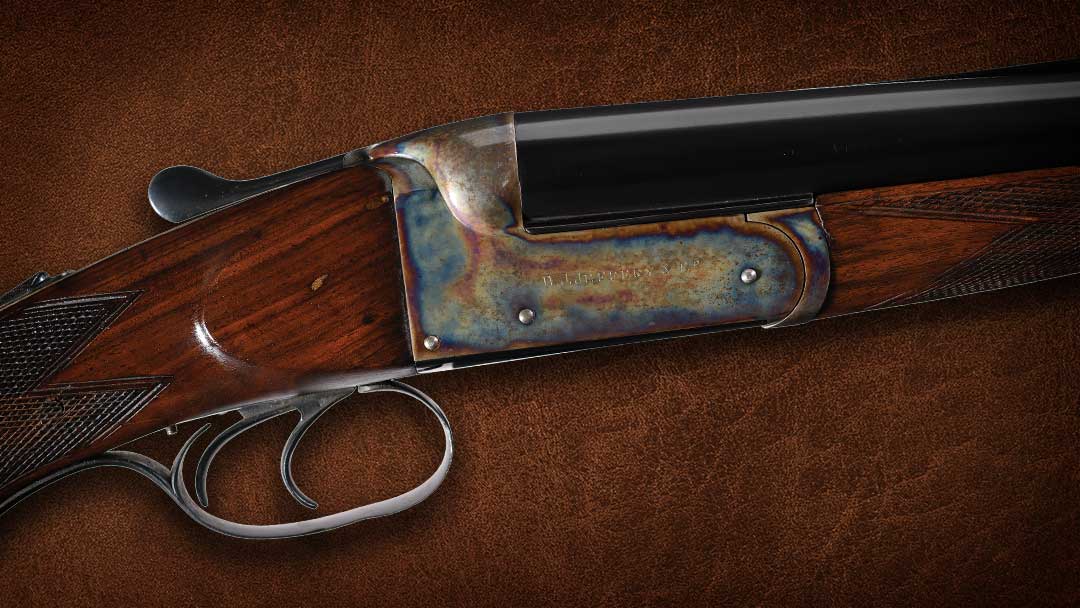
Manufactured in 1903, according to page 118 of Nigel Brown’s ‘British Gunmakers Volume One: London,’ this W. J. Jeffery & Co. boxlock double rifle is chambered in .450/400 Nitro Express. Available this May.

The Golden Age of the Double Rifle

Another breakthrough came for the double rifle in 1898 with the introduction of John Rigby & Company’s smokeless powder cartridge, the .450 Nitro Express 3 1/2 inch. The cartridge was powerful, dependable, and had a comparatively manageable recoil, going on to set the stage for Holland’s .500/450 Nitro Express and numerous variants of the .470 Nitro Express in the years to follow.

Prolific hunter Theodore Roosevelt owned many guns, but the Holland & Holland Royal double rifle chambered in .500/450, nicknamed the ‘Big Stick,’ was one of the president’s favorites.

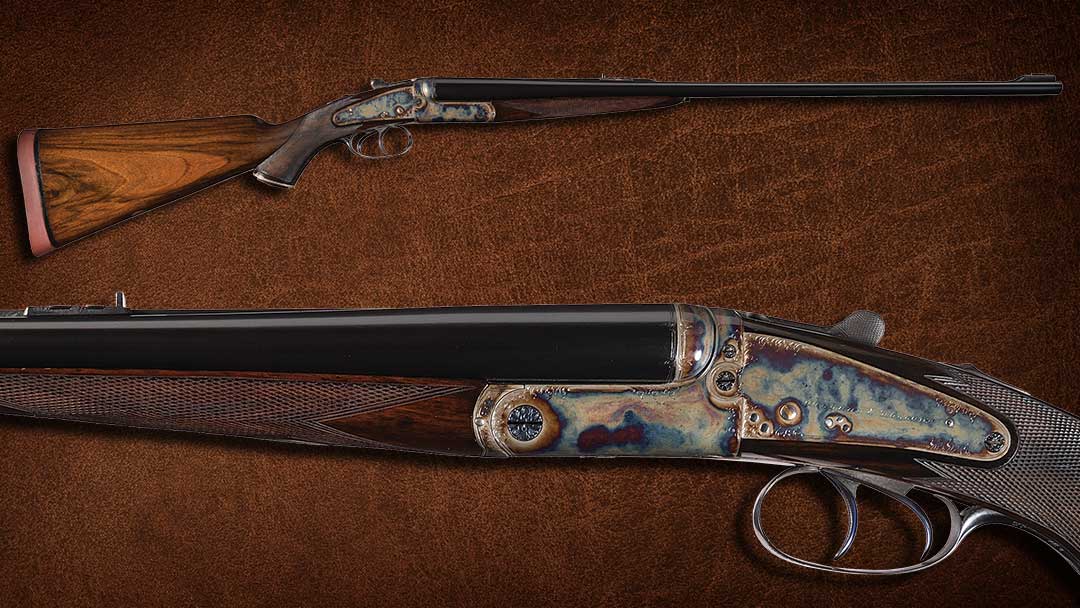
Manufactured between 1929 and 1939, this factory engraved W. J. Jeffery & Co. sidelock ejector double rifle is chambered in .450/400 Nitro Express. Available this May.

“At last, I was able to get a day off and try the double-barreled 450,” Roosevelt wrote in January 1909. “It is a perfect beauty. The workmanship is like that of a watch. Of course, our (American) rifles look coarse and cheap and clumsy beside it. I can not say how delighted I am with it.”

Theodore Roosevelt poses with his prized double rifle. Theodore Roosevelt’s son, Kermit (right) noted that “the recoil of the big gun was so severe that it became a standing joke as to whether we did not fear it more than a charging elephant!”

“For heavy game like rhinoceroses and buffaloes, I found that for me personally, the heavy Holland was unquestionably the proper weapon,” Roosevelt wrote after his 11-month safari in Africa, where his double rifle brought down 13 rhinos and eight elephants.

A factory engraved Holland & Holland sidelock double rifle in .375 H&H Magnum. Available this May.

Roosevelt’s expedition was one of many great hunting campaigns undertaken by European and American parties in the early 20th century. This period was not just a renaissance for dangerous game hunting, but a golden age of adventure as well, where celebrity sportsmen like Denys Finch Hatton, Jim Sutherland, John Alexander Hunter, Deaf Banks, and “Karamojo” Bell forged their legends in Africa. It was an era defined by glory and danger, Strathcona boots and slouch hats, vast herds and wild landscapes, and some of the finest firearms ever produced.

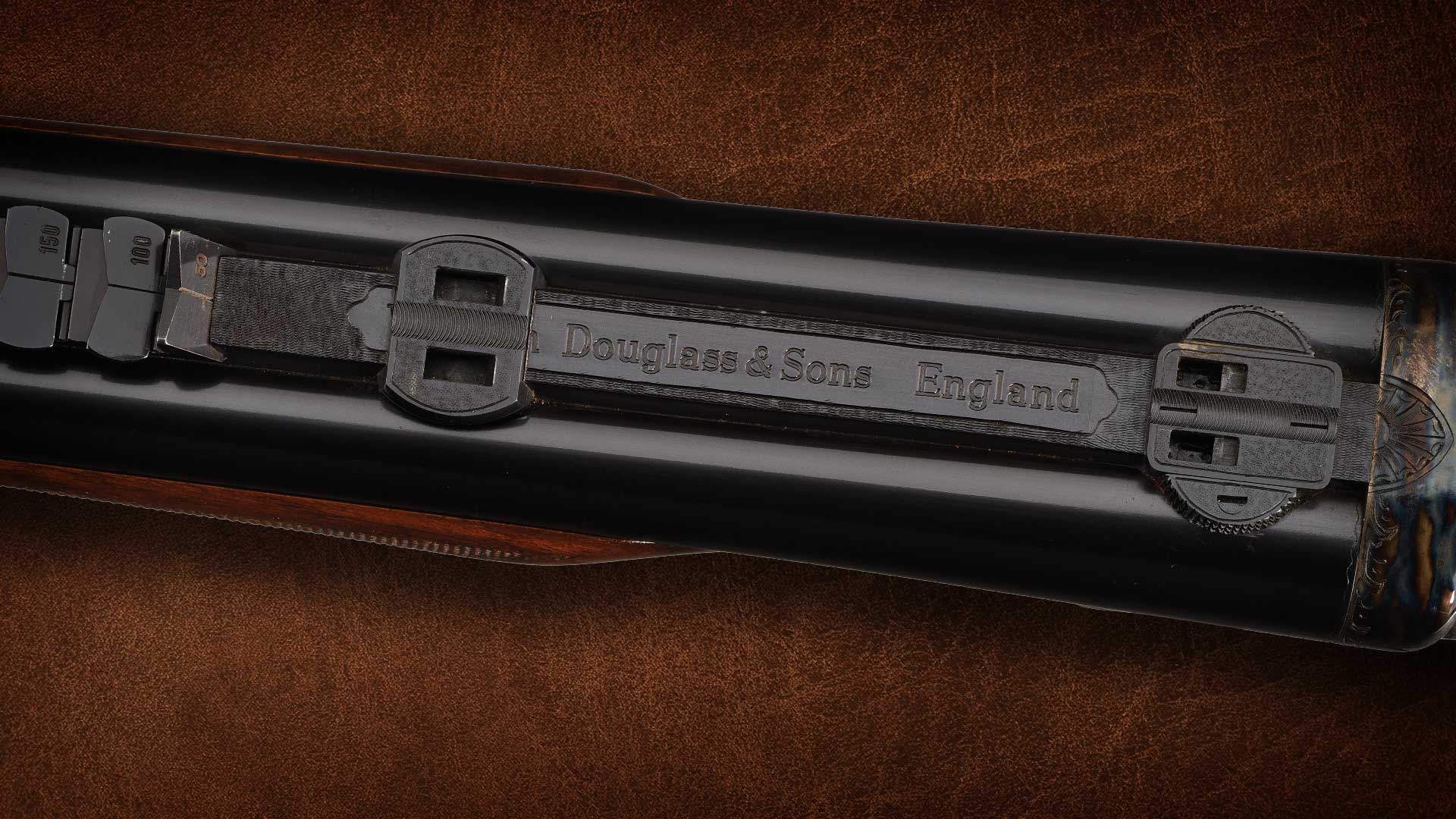
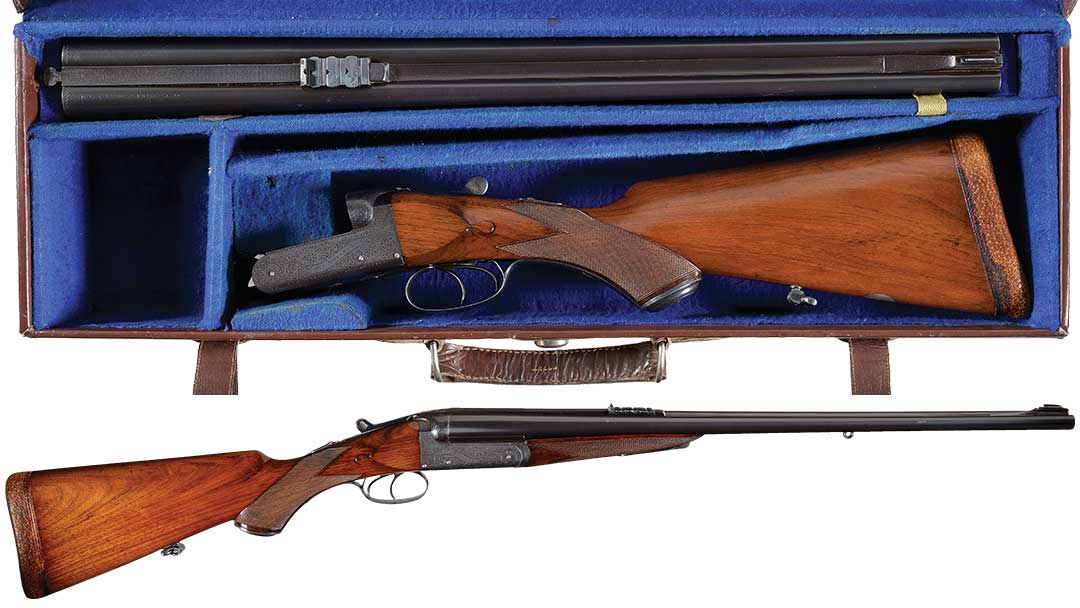
A factory engraved William Douglass & Sons boxlock ejector double rifle. Available this May.

Double Rifle Ammunition

The most common double rifle ammunition is large by nature, ranging from .375 Holland & Holland to the mighty 4 bore. Smaller calibers like the 8×57 JRS offer more manageable recoil and greater versatility, but at the expense of the heavy stopping power needed to reliably down Africa’s biggest game.

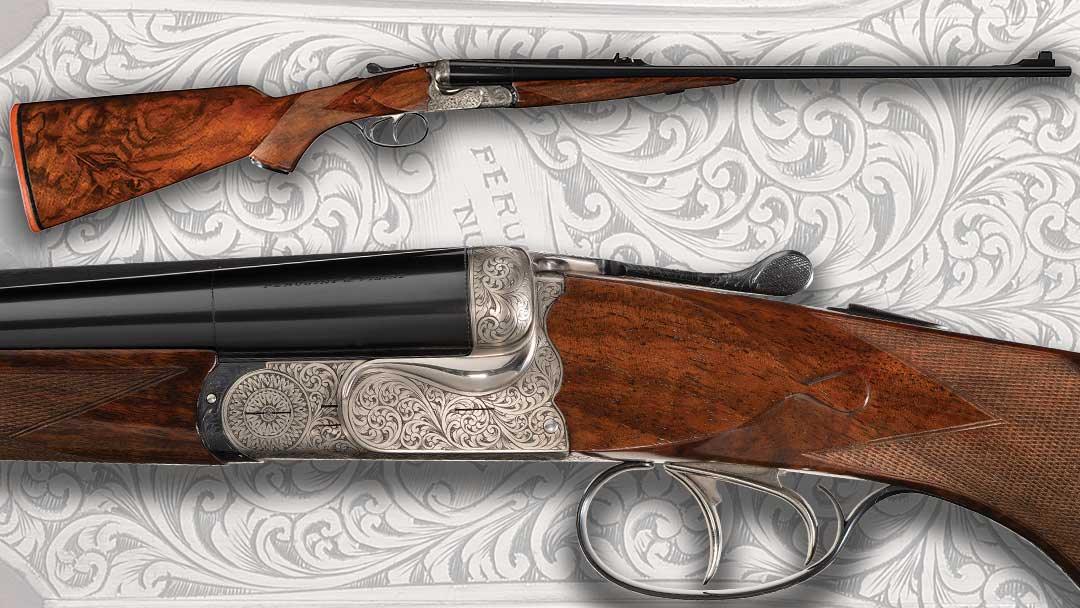
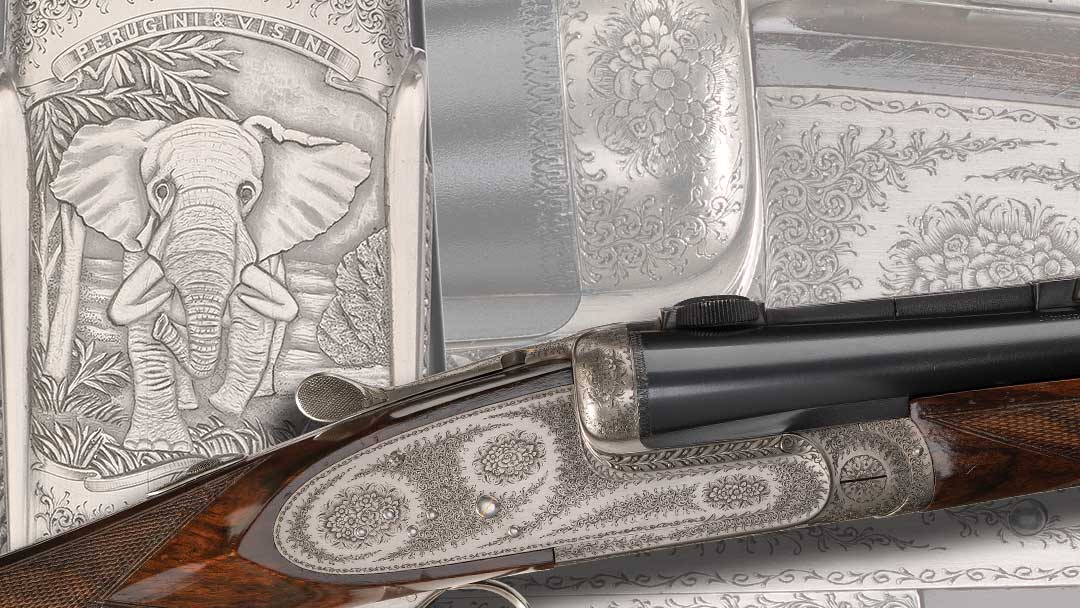
A C. Tomasoni signed and engraved Perguini & Visini boxlock double rifle chambered in 8×57 JRS, a fine all-around hunting cartridge fully capable of taking on most plains game and anything apart from the true heavyweights of Africa. Available this May.

Shortly after the dawn of the smokeless double rifle cartridge, the .450/400 Nitro Express came to fill the niche of the all-around hunting caliber. On the .400 Jeffrey version of this cartridge, English hunter Major Percy Powell-Cotton noted, “The Jeffery .400 ejector express rifle I first carried in my Abyssinian expedition is my favorite weapon for dangerous game. With all nickel-covered bullets it is excellent for head or heart shots at elephant. With the lead just showing at the nose they do good work on rhino and buffalo; whilst with half the lead exposed I do not think you can get a better weapon for lion.”

A factory engraved W. J. Jeffery & Co. boxlock ejector double rifle chambered in .450/400 Nitro Express 3 inch. Available this May.

The .375 Holland & Holland Magnum, introduced in 1912, went on to largely fill the role of a multipurpose game cartridge and quickly earned popularity with hunters around the world. The success of the .375 Holland & Holland has resulted in numerous variations, and today the caliber is viewed as the minimum recommended cartridge for African dangerous game.

A Giuseppe Zacchi game scene engraved Perugini & Visini Selous hand detachable sidelock ejector double rifle in .375 Holland & Holland Magnum, with a scope and case. Available this May.

In the early 1900s, insurgencies in India and the Sudan compelled the British government to ban a number of rifle calibers. This included the popular .500/450 Nitro Express. This restriction prompted British arms makers to develop an array of new game cartridges, many of which remain popular today.

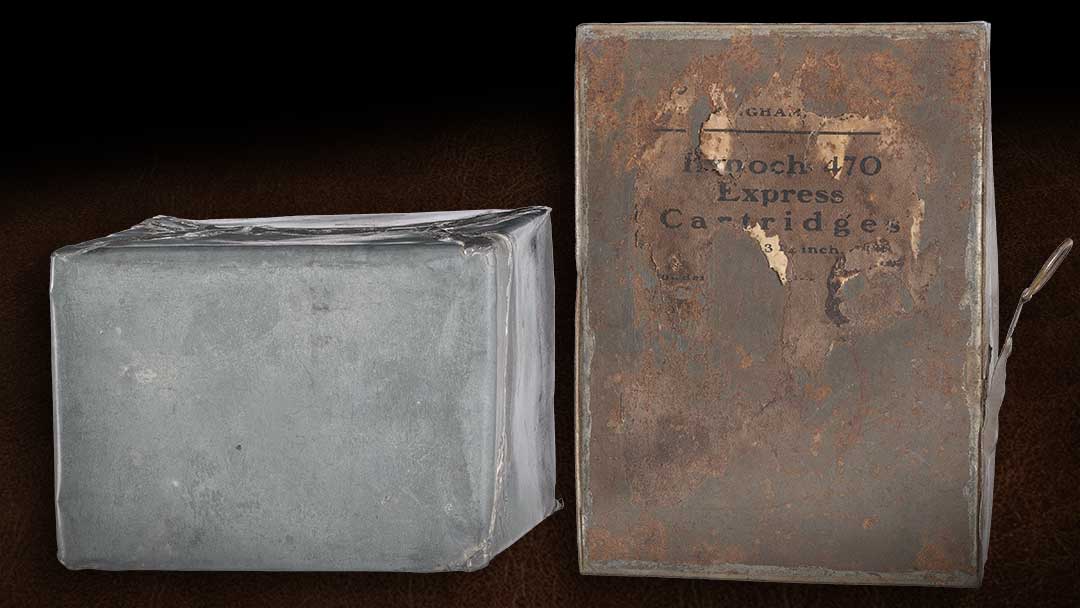
Sealed tin packages of ammunition were popular in the early 20th century for protecting cartridges from the tropical environment, hence the name Tropical Tin. This lot includes two sealed metal boxes containing .470 Nitro Express ammunition, each appearing to contain 10 rounds. Available this May.

The calibers born in this era include the .500/465 Nitro Express .475 Nitro Express, and .476 Westley Richards, all of which share similar velocity, muzzle energy, recoil, and a high success rate against dangerous game. Joseph Lang’s answer to the British ban, the .470 Nitro Express, will be especially familiar to the modern sportsman and has become the most readily available big game round for today’s double rifles.

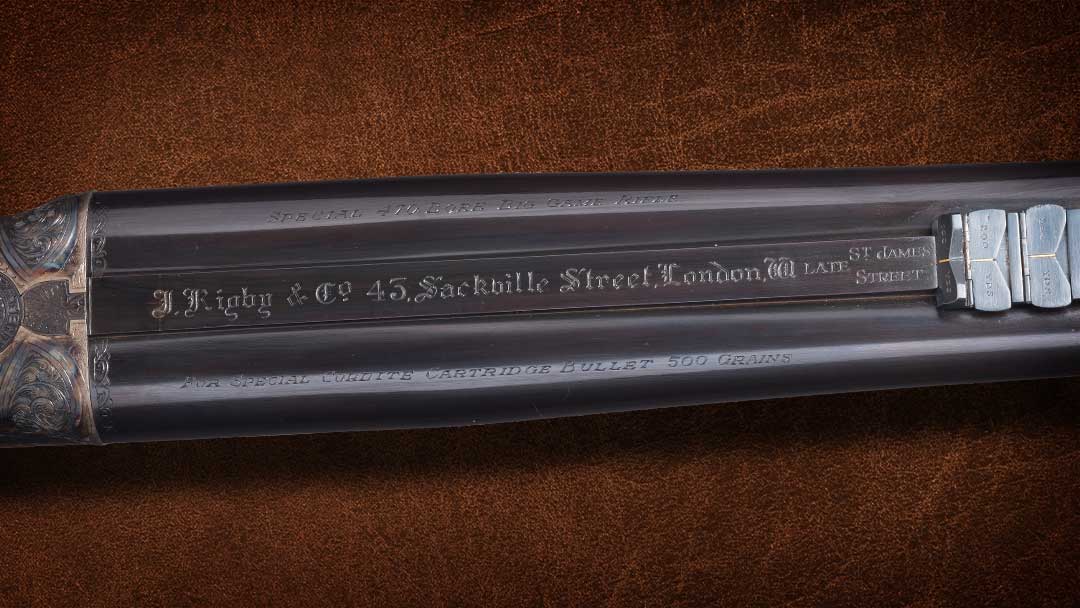
An engraved John Rigby & Co. .470 Nitro Express sidelock ejector double rifle. Available this May.

The .500 Nitro Express has experienced a resurgence of sorts, offering a heavy dose of dangerous game stopping power that can still be managed by a professional hunter. Anything beyond .50 caliber is more than worthy of even the mightiest of Africa’s “Big Five.”

There are few guns in the world that inspire more awe than the 4 bore rifle. Available this May.

Captain James H. Sutherland, for example, used a .577 Nitro Express to take more than 1,300 elephants throughout his career. Another famed British hunter, Frederick Courteney Selous, spent his early years hunting elephants with a black powder 4 bore rifle and claimed his shoulder never fully recovered. Recoil and weight aside, when it comes to raw knockdown power, these monster calibers are in a league of their own.

Rock Island Auction Company fires a .700 Nitro Express double rifle, a 4 bore double rifle, and the .950 JDJ Fat Mac.

The Over/Under Double Rifle

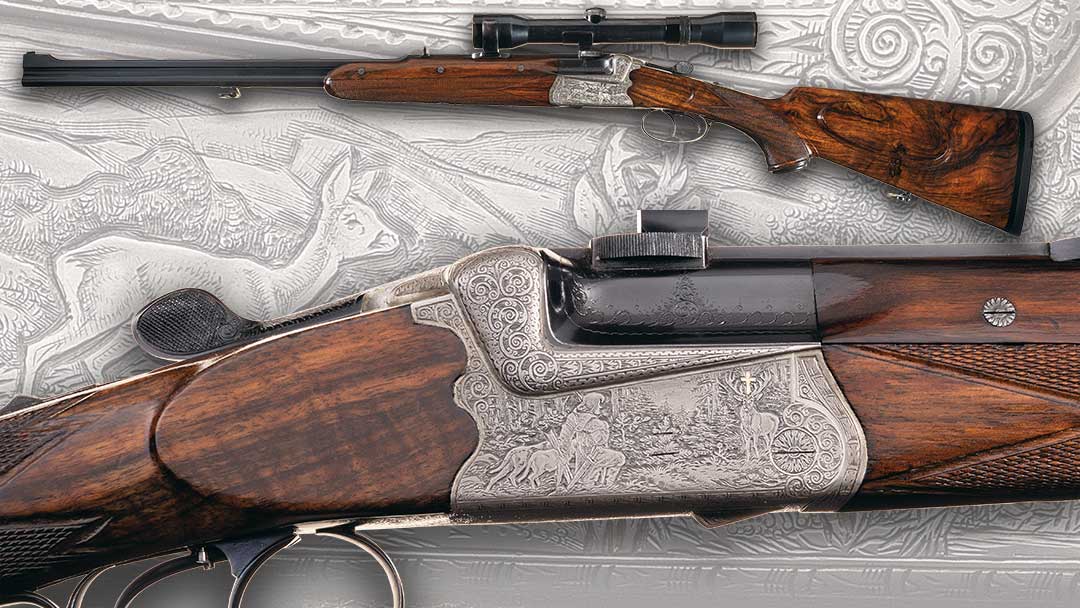
Though the popular image of a hammerless double rifle includes two side-by-side barrels, a number of over/under models are also available. Like the advantages offered by the superposed shotgun over their double barreled siblings, the over/under double rifle provides several notable benefits.

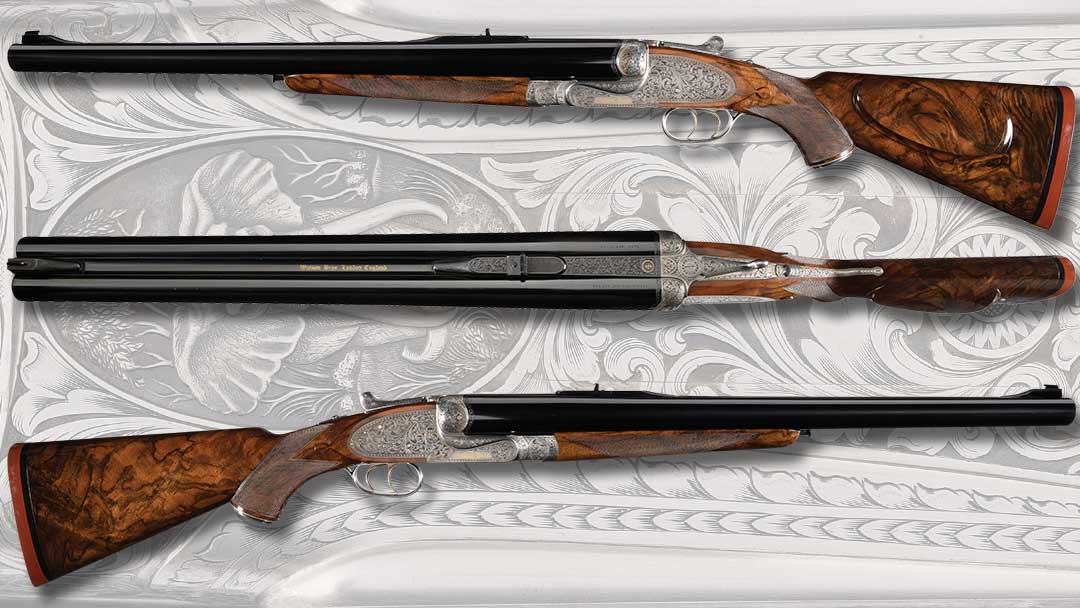
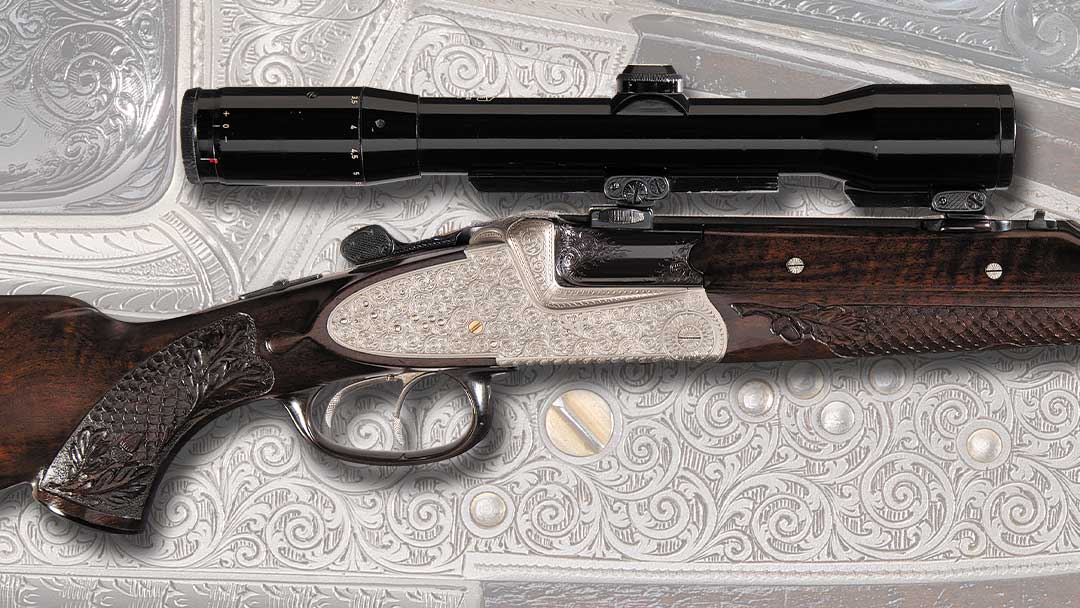
A 1986 dated, F. Bielli Bulino game scene engraved Beretta SSO sidelock over/under double rifle in .375 H&H Magnum. Includes a Zeiss scope and case. 375 H&H magnum. Available this May.

Perhaps most obviously, the stacked barrels of an over/under double rifle eliminates some of the horizontal sight obstruction found in their side-by-side counterparts. And unlike the horizontal force recoil experienced with side-by-side double rifles that can disrupt balance from either side, the vertical orientation of the barrels in an over/under double rifle produces an up-and-backward recoil that’s less jolting to the average shooter.

A 1971 dated, engraved and gold inlaid Johann Fanzoj over/under double rifle with a Zeiss scope and case. Available this May.

In the side-by-side double rifle’s favor, the twin adjacent barrels provide a sense of balance when shooting and tend to lie more naturally in the palm of the shooter’s lead hand. The side-by-side also offers a faster reload as it doesn’t need to swing open as far to expose both chambers. Finally, the over/under double rifles on the modern market tend to be chambered in smaller calibers, where side-by-sides are offered in any cartridge a hunter can imagine.

A factory engraved Krieghoff Classic double rifle in .470 Nitro Express. Available this May.

The Double Rifle Today

In the early 20th century, the double rifle faced competition from more affordable bolt-action rifles chambered in cartridges like .375 Magnum and .416 Rigby. BY the 1940s, decades of aggressive hunting had depleted South Africa’s big game herds, further diminishing demand for specialized sporting arms like the double rifle. Fortunately, conservation efforts throughout the 1970s have led to a steady resurgence in both Africa’s hunting industry, as well as renewed interest in the legendary long gun.

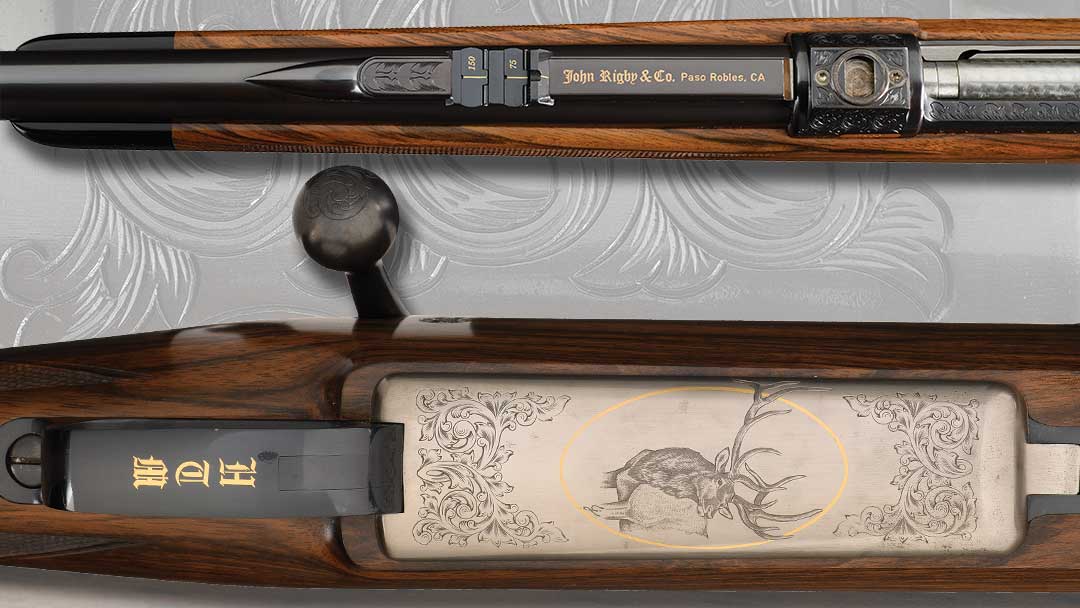
An engraved and gold inlaid John Rigby & Co. Big Game bolt action rifle chambered in .416 Rigby. Includes a Swarovski scope and case. Available this May.

All of the renowned British gunmakers continue to offer modern incarnations of the iconic double rifle. Though the tried-and-true design has stood largely unchanged for more than a century, today’s double rifles combine hand-fitted craftsmanship with 21st century materials and construction methods to achieve a graceful balance between traditional and contemporary sensibilities.

This superb “C. Tomasoni” Bulino engraved Beretta 455 EELL sidelock double rifle displays exceptional game scenes depicting three of Africa’s famous “Big Five.” Includes a factory Beretta takedown case. Available this May.

While the double rifle is an inseparable part of British history and heritage, its resurgence has been largely led by the American hunter, and demand for new and classic double rifles has once again been outpacing supply. Though the initial investment can be steep, a well-cared-for double rifle offers its owner a lifetime of memories wherever the hunt may take them.

An F. Just signed, game scene engraved, Josef Hambrusch of Ferlach over/under double rifle with a Kahless Helia 4 S2 scope. Available this May.

Buying and Selling a Double Rifle

When looking for a used double rifle for sale, it pays to find the best of the best. Rock Island Auction offers a fine range of double rifles from every era, in every style and price point available. To collectors, shooters, arms enthusiasts, and sportsmen who appreciate the history of dangerous game hunting, the double rifle is a fine addition to any collection.

Rock Island Auction Company offers a multitude of classic double rifles for sale, as well as the finest sporting arms of every era. Available this May.

Robert Ruark, one of the 20th century’s great writers and sportsmen, perhaps best summed up the call to adventure carried by classic hunting arms like the double rifle. “There is a simple love of the outdoors and of creatures, as against a hatred for the contrived living of cities, for the claustrophobic connivances of civilization, that drives a man to the vastness of Africa to fulfill some need of basic simplicity in himself.

A factory engraved Raick Erlgis boxlock ejector double rifle in .470 Nitro Express. Available this May.

Subscribe to the Rock Island Auction newsletter for more gun blogs and gun videos on classic sporting arms of every era, including popular brands like Holland & Holland, Winchester, Parker Brothers, Griffin & Howe, and more.