Collectible Firearms for Serious Gun Collectors

0

A battle-proven gun design and a Cold War classic, the 7.62×39mm chambered SKS rifle is familiar to many shooters, hunters, and gun collectors around the globe. Invented in the Soviet Union as a replacement for the Mosin Nagant, the Chinese would adopt the SKS in the mid-1950s and begin producing millions of their own SKS models for the next two decades. With their low-cost entry price point compared to other vintage surplus military arms, the SKS continues to find favor at Rock Island Auction Company. Below, we’ve assembled eight years’ worth of auction data to help collectors and gun consigners better gauge recent SKS price trends and values.

Selling for $14,950 in 2018 at Rock Island Auction Company, this rare East German SKS rifle with 7th Army Vietnam War capture papers demonstrates that rare SKS rifles can achieve impressive results in the current gun collecting market.

SKS Surplus and Variants

SKS stands for “Self-Loading Carbine of the Simonov System,” referencing its Russian inventor Sergei Gavrilovich Simonov. Manufactured by the Soviet Union in 1945, the short-stroke gas piston, tilting bolt semiautomatic rifle has a 10-round internal capacity and is chambered in the widely adopted 7.62×39mm cartridge. Though the full-auto AK-47 ultimately won out over the SKS as Russia’s preferred military arm, the Soviets provided their Cold War allies with manufacturing plans for the SKS rifle, resulting in numerous variations.
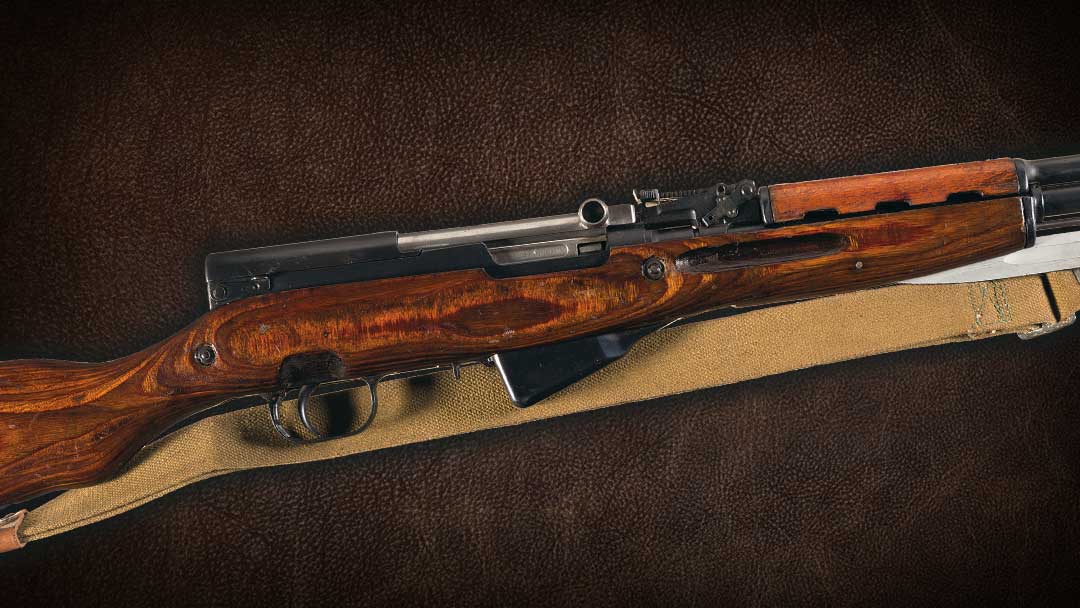
A Chinese Type 56 SKS rifle with documented Vietnam War U.S.M.C. capture papers sold for $4,025 at Rock Island Auction Company in December 2017.

Ranging from elusive rarities like the North Vietnam and East German SKS models to the more abundant rifles produced by China, the SKS genre spans a wide range of styles that feature different barrel lengths, stocks, and bayonet variations. The SKS platform’s immense production numbers bred surplus for decades, but import bans and increased interest in the genre as a military collectible have resulted in some intriguing SKS price trends in recent years. Below, we’ll examine the Rock Island Auction Company SKS sales data from several angles to provide consigners and buyers with an overall snapshot of how the SKS market has changed over time.
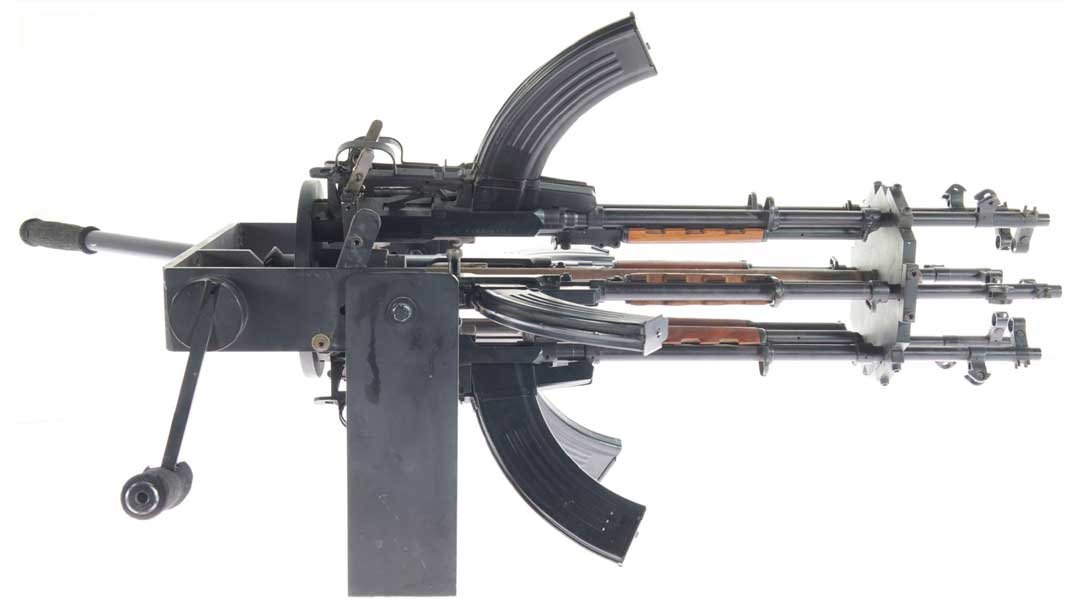
Six Norinco SKS rifles in a Gatling configuration. One of over two dozen SKS related lots available in Rock Island Auction Company’s June 2023 Sporting & Collector Auction.

SKS Prices by Year: An Overall Average

When considering the average SKS price by year at Rock Island Auction Company, we’ve gathered data from every Premier Auction, Sporting & Collector Auction, and Arms and Accessories Day Auction dating back to 2015.

In an effort to maintain consistency and accuracy, all the graphs presented in this article have excluded rare SKS prototypes, documented war trophies, presentation pieces, and other extremely scarce and atypical examples. The buyer’s premium (15% through June of 2022 and 17.5% thereafter) is included in the sales price, as this properly reflects what a collector paid to own their SKS.

We’ve also excluded any lots that feature guns other than an SKS since those prices cannot be easily attributed to a single gun within their respective lot. Since SKS rifles tend to be bundled into lots of two or more guns, the price of each SKS-only lot has been divided by the total number of guns in that lot to give a more accurate representation of the average SKS price by year at Rock Island Auction Company. The graph below is a compilation of several thousand examples sold over eight year period, providing a broad overview of the SKS platform as a whole in the current collecting environment.
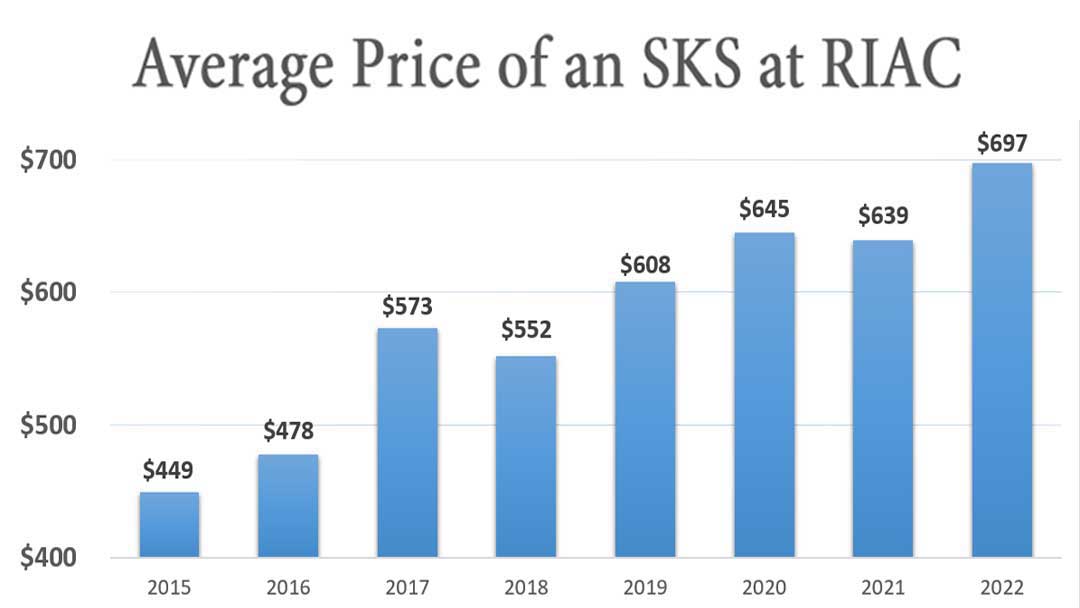
How much is an SKS worth? The average SKS price at Rock Island Auction Company from 2015 to 2022 has been on the rise. The upward trend lines up with SKS blue book values and presents an intriguing case for the rifle as a true vintage collector’s gun.

While SKS prices going up isn’t a surprising result to most firearm fans, the extent of the increase might turn heads. In only an eight year span, the average SKS price at Rock Island Auction Company rose nearly $250, or 49%, an impressive surge in value. In 2015, an SKS averaged $449 in price, inching up to $478 in 2016 before rocketing to $573 in 2017. The following year saw a slight correction, with the average SKS still selling for an average price of $552, then breaching the $600 barrier in 2019 and working its way to the $697 mark by 2022.

A Yugoslavian Model 59/66 SKS rifle with scope and a Zastava Model M59/66A1 rifle for sale in RIAC’s June 2023 Sporting & Collector Auction.

Our first graph demonstrates that rising SKS values have been an ongoing trend, and gone are the days of finding an SKS for sale under $200. Still, the platform remains within reach of almost any gun enthusiast and makes a strong case for itself as a collectible firearm with investment potential.

Speaking of investment opportunities, Russian SKS values have traditionally been higher as a consequence of their status as the original SKS model and their comparatively more limited production run. The most famous Russian SKS variant was produced at Tula Arsenal from 1945 to 1958. At Rock Island Auction Company, Russian SKS examples tend to be offered in single lots more frequently than other SKS variants and often achieve higher prices. The graph below examines the average Tula Arsenal SKS price by year at RIAC.
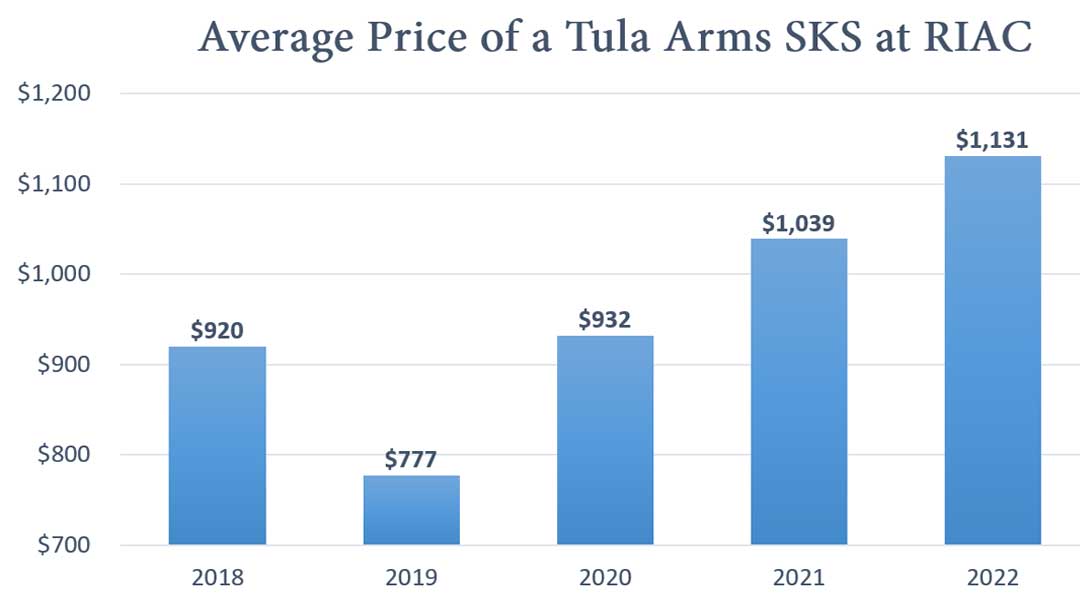
The average Tula Arsenal SKS price at Rock Island Auction Company since 2015. In the case of Russian vs Chinese SKS values, it’s not surprising to see the famed Russian SKS rifle come out victorious.

Being out of production for 65 years, it’s no surprise that Russian Tula Arsenal SKS prices averaged an impressive $920 in 2018 at Rock Island Auction Company. After a decline in 2019, the robust Russian SKS mounted a comeback, reaching $932 in 2019 and exceeding the $1,000 price barrier in 2021 before continuing its momentum and achieving a notable $1,131 in 2022.

A Russian Tula Arsenal SKS rifle dated “1954” sold for $1,380 in March of 2022 at Rock Island Auction.

How Much is a Norinco SKS?

Unlike its Russian SKS counterpart, the Chinese SKS rifle continued production throughout the Cold War. The Chinese Type 56 SKS was sold to numerous countries in Asia, including Korea and Vietnam. China’s Norinco group (North Industries Corporation), a state-owned import-export authority, was established in 1980 to manufacture arms for both the commercial and military markets. Norinco imported several million SKS rifles into the United States until the 1994 Assault Weapons Ban, with their SKS models produced using a combination of Type 56 surplus parts and new componentry.
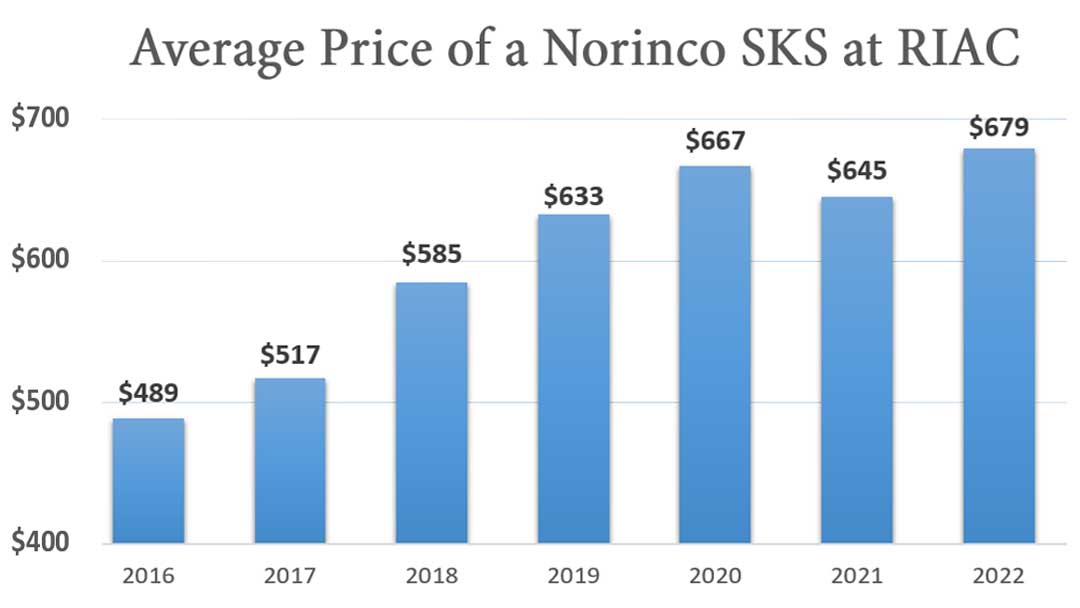
The average Norinco SKS price at Rock Island Auction Company from 2016 to 2022.

The Norinco SKS followed a similar pattern to the overall SKS prices average at Rock Island Auction Company. From its $489 starting point in 2016, the Norinco SKS increased in value over the next 4 years, averaging $517 in 2017, $585 in 2018, $633 in 2019, and $667 in 2020. After a slight fall to $645 in 2021, the average Norinco SKS price rebounded in 2022 with $679.
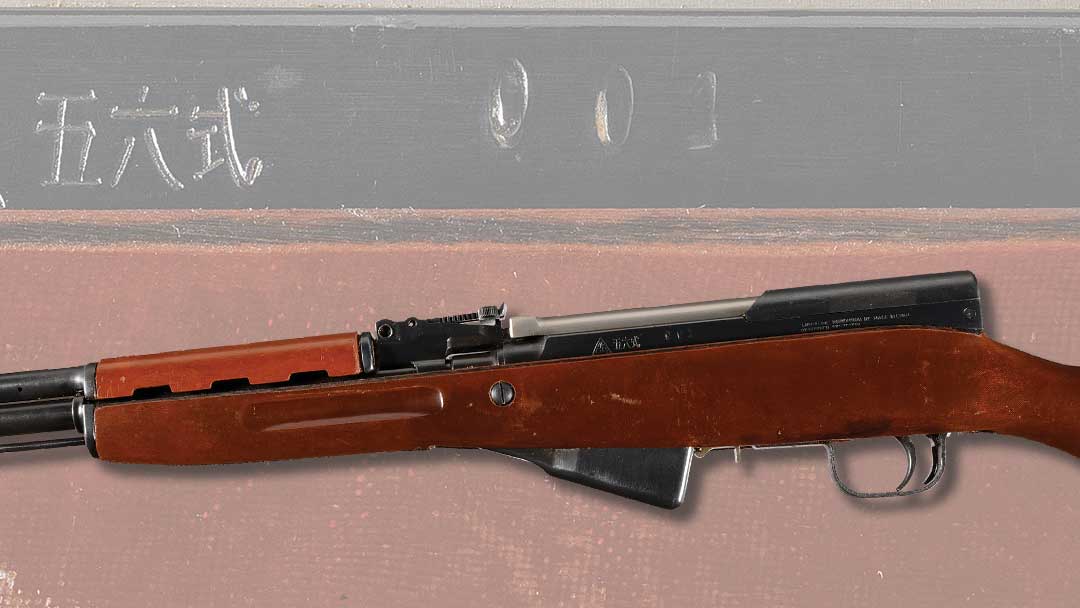
An example of an SKS rifle that was excluded from the dataset, this Norinco SKS rifle, serial number 001, from the Jim Supica Collection, sold for $2,350 at RIAC in December of 2022.

Nicknamed “Papovka,” the Yugoslavian Zastava m59/66 PAP SKS saw military service with the Yugoslav People’s Army from 1959 to 1961. Though similar in most respects to the Russian SKS design, the Yugo SKS rifle came with the addition of a 22 mm grenade launcher. Yugo SKS rifles are noted for their quality and milled steel parts, and these factors are evident in their average price by year at Rock Island Auction Company.
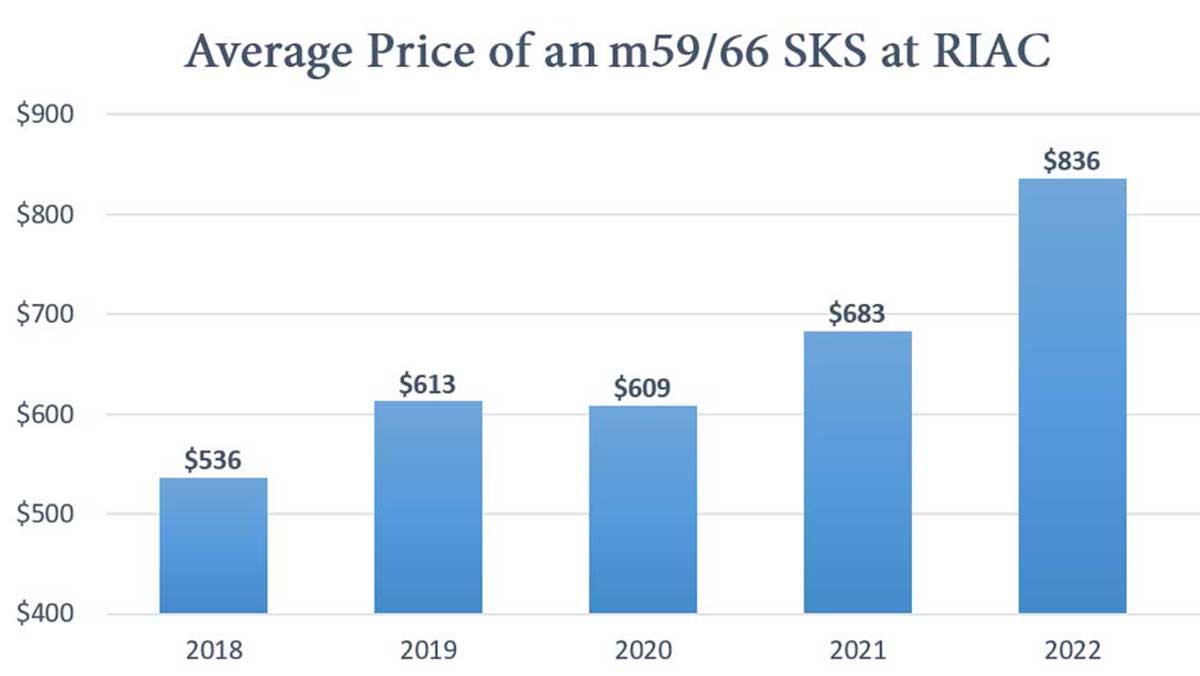
The average Yugoslavian m59/66 SKS price at Rock Island Auction Company from 2016 to 2022. Yugo SKS values saw a particularly notable jump last year..

Though not quite rivaling their Russian SKS siblings in price, the Yugo SKS has still managed to capture the attention of the collecting public and mount a strong auction showing over the last five years. From a $536 average starting point in 2018, the Yugoslavian SKS has seen its values steadily rise, achieving a notable $683 average price in 2021 before rocketing to $838 in 2022.

A Yugoslavian m59/66 SKS rifle sold for $1,293 at Rock Island Auction Company in March of 2023.

Beyond the SKS Crate

In the 1980s and early 1990s, SKS rifles were often sold by the crate in American gun stores. While the days of bountiful SKS crates have long passed, the gun can still be purchased in quantity at Rock Island Auction Company. Our final dataset compares the average price for a bundled lot of four SKS rifles over the last six years.
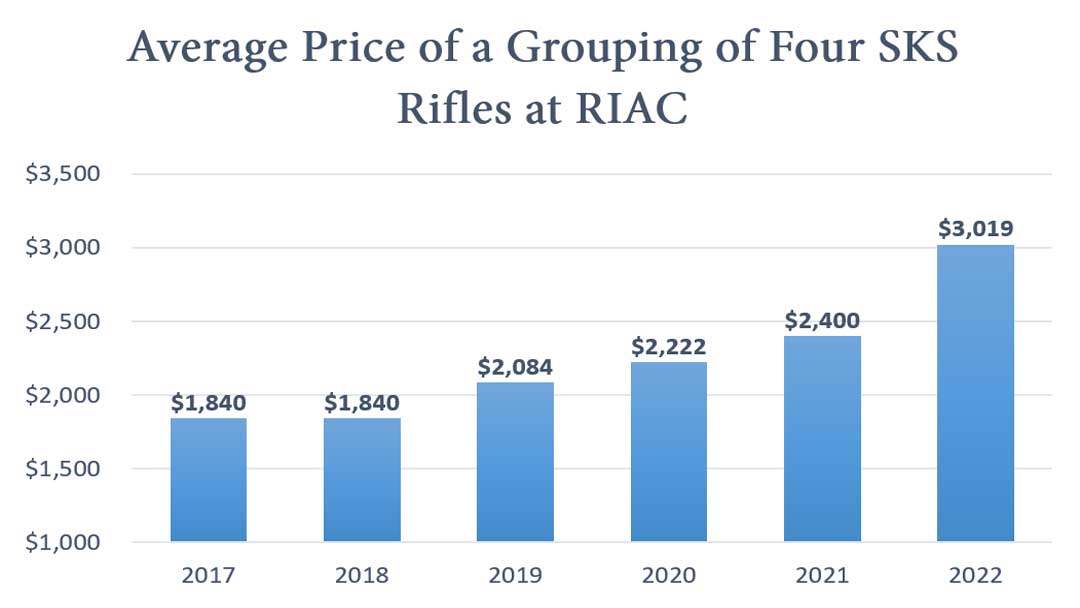
The average SKS price for lots that include four SKS rifles at Rock Island Auction Company from 2017 to 2022, yet more evidence of SKS prices going up across the board.

The average SKS price for lots with four guns grouped together followed a slightly less dramatic path during its upward climb, maintaining an $1,840 average price in 2017 and 2018. After edging upward to $2,084 in 2019, $2,222 in 2020, and $2,400 in 2021, the average price for a four gun SKS grouping rocketed to $3,019, demonstrating that the genre is thriving at Rock Island Auction Company.
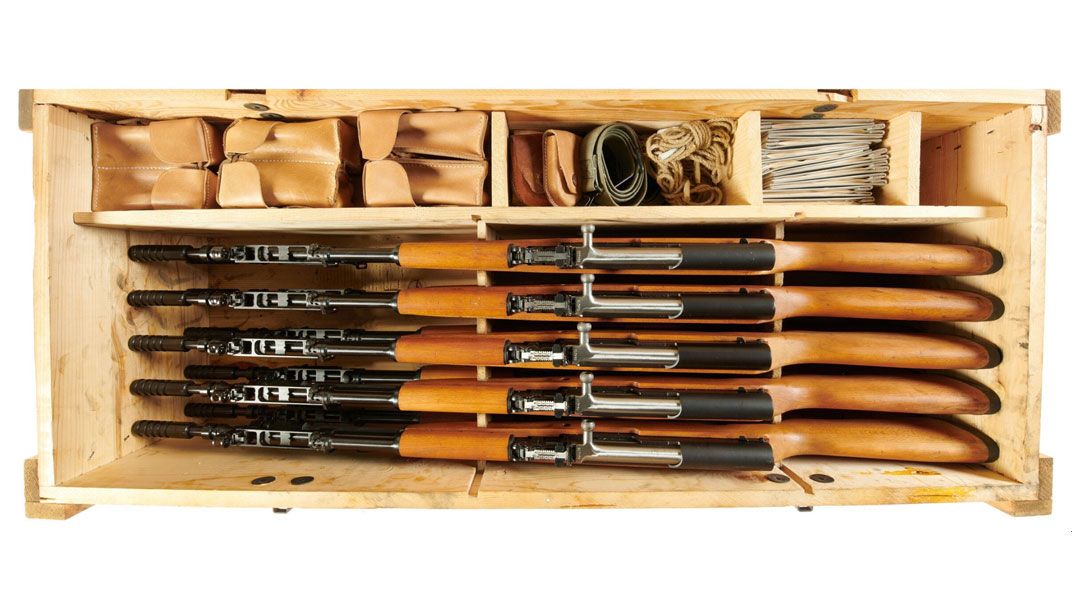
Ten consecutively serial numbered Yugoslavian Zastava Model 59/66 SKS rifles with shipping crate and accessories sold for $7,050 in RIAC’s October 2022 Sporting & Collector Auction.

SKS Prices 2023

The average SKS price in 2022 broke new boundaries, and all data indicates that the trend shows no sign of slowing in 2023. This upswing particularly holds true for highly desirable examples that can be determined through scarce models, exceptional condition, and war trophy documentation. Even when taking into account import bans and record inflation, SKS values are steadily on the rise and continue to impress at auction.
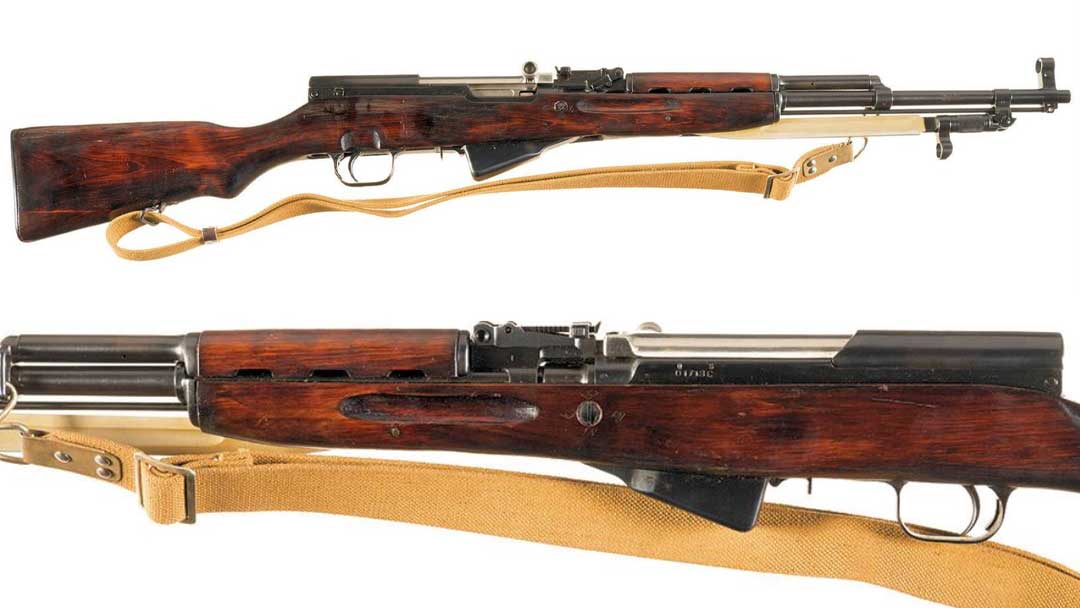
A Soviet Izhevsk Russian SKS 1954r sold for $1,380 in June of 2018.

SKS Prices 2023

The SKS remains popular due to its durability, reliability, and reasonable accuracy. Despite its lack of scope compatibility, the SKS has long been a popular deer hunting rifle. Though the 2022 U.S. import sanctions on Russian ammo have impacted 7.62×39mm prices, the SKS platform remains a fun range option due to its ease of use and low maintenance design.

Garand Thumb demonstrates the accuracy of a Russian SKS rifle.

The SKS rifle has found a new fanbase with the next generation thanks to appearances in popular films, television shows, and video games like Far Cry 6 and Escape from Tarkov. Though the likelihood of finding an SKS for sale under $200 grows more doubtful by the year, any well-kept example looks set to retain its value and more as prices continue to uptrend, presenting gun sellers with a chance to make a handsome profit and buyers with a firearm that has real investment potential.

A Norinco SKS paratrooper carbine sold for 1,955 at RIAC in March of 2021. The SKS paratrooper differs from a standard SKS in that it has a cut down barrel.

Gun Values at Rock Island Auction Company

Most vintage military rifles are viewed as a great store of value in the firearms community, and when it comes to estimating true gun value and predicting forthcoming sales trends, Rock Island Auction’s digital gun catalogs are one of the finest tools around. Price trends on other Russian military rifles like the Mosin Nagant or the SVT-40 rifle can be monitored using past auction data, like the example presented below.
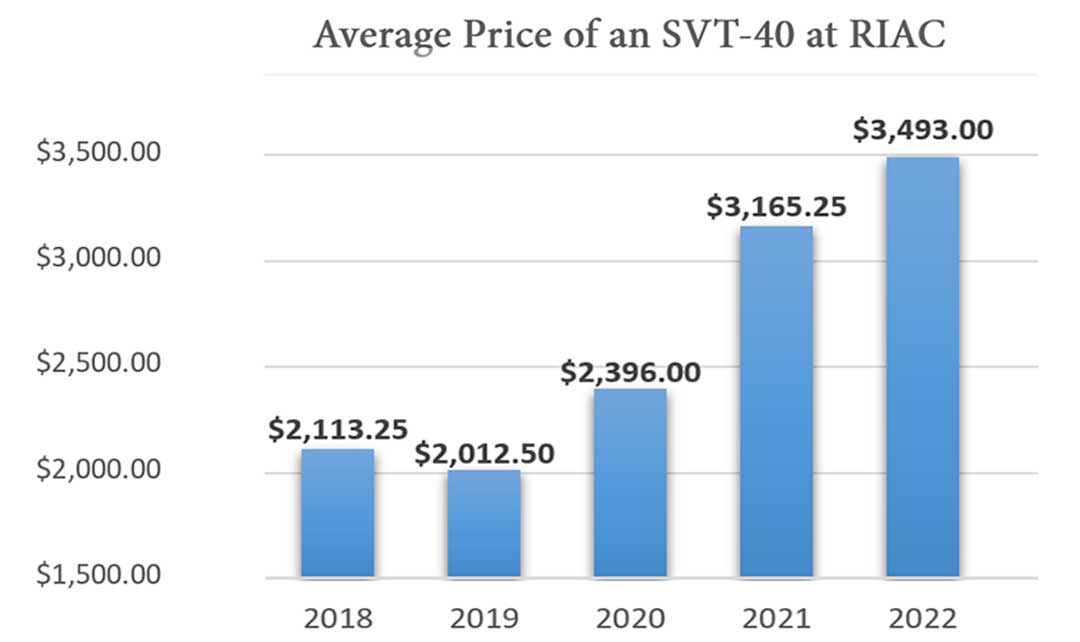
The average value of an SVT-40 at Rock Island Auction Company over the past five years demonstrates the undeniable strength of collectible military gun prices going into 2023.

It’s an exciting time for the world of fine arms collecting, so subscribe to the weekly Rock Island Auction newsletter to receive new gun blogs on the latest prices and trends. Using the extensive data from our past auction catalogs, we look at the values of popular guns like the 1911 pistol, the Browning Hi Power, the M1 Garand, the Colt Python, the SPAS 12, and more.
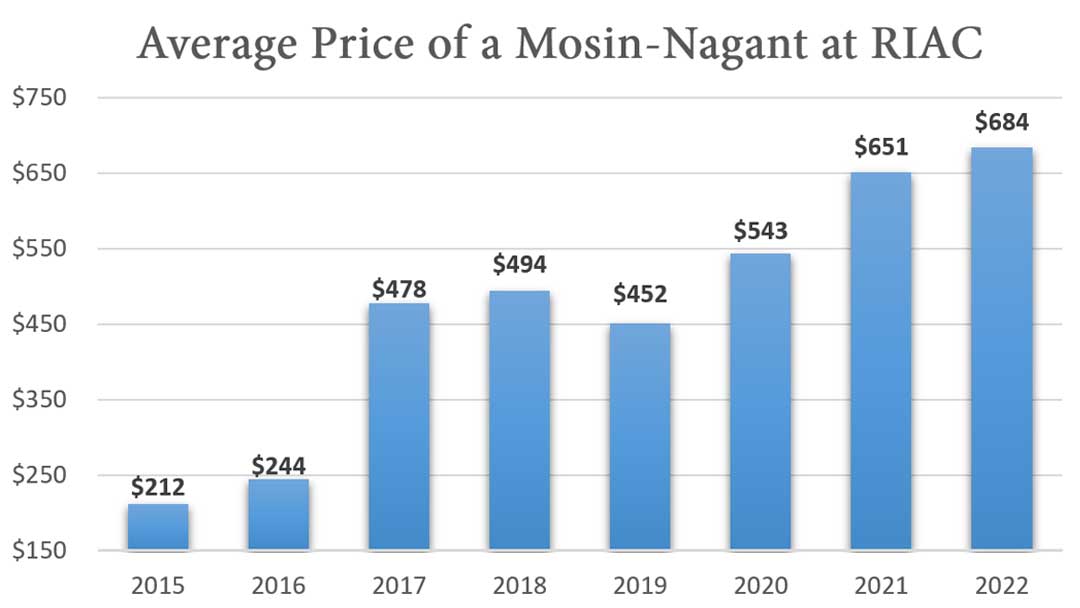

Affordable vintage military rifles like the famed Mosin Nagant in 2023 appear positioned to continue their historic uptrend.

‘Ministry of Truth’ Bill Threatens First Amendment Rights

0

In a latest attack on liberty, Democrat Senators Michael Bennet and Peter Welch (D-Vt.) have reintroduced the Digital Platform Commission Act, a bill that aims to create a federal agency known as the Federal Digital Platform Commission. This Orwellian institution seeks to enforce so-called “behavioral codes” on social media platforms and artificial intelligence (AI), all while trampling the fundamental rights that we hold sacred in this country.

Under the guise of combating misinformation, this so-called council, which includes self-proclaimed “disinformation” experts, will target and suppress our First Amendment rights. This thinly veiled attempt to control the narrative and stifle dissenting voices is yet the latest attempt to control everything we do and see — all in the name of their warped idea of truth.

What makes this even more concerning is the apparent coordination between these democrat senators and the testimony of OpenAI CEO Sam Altman. The timing of the bill’s presentation in relation to Altman’s remarks during his congressional hearing is too close to be a mere coincidence. Altman, whose company created CHAT GTP, has advocated for creating a federal agency with the power to restrict AI development through licensing and credentialing — conveniently, it seems he will directly benefit by taking control of the industry. This insidious collaboration between politicians and tech moguls puts our freedoms at risk and opens the door to unprecedented government control.

The proposed federal commission, comprised of five members, would assume authority to call for hearings, investigations, and impose fines. Once they become a federal agency, like all other corrupt agencies in D.C.,  they would likely bypass Congress and establish rules without oversight. If this happens we will no doubt see the suppression of dissenting opinions and a continued attack on public discourse. This is a blatant assault on our rights to free speech and expression.

“Digital platforms like Facebook, Twitter, and TikTok and new AI systems have become the way people get information and have civic conversations. But misinformation about the pandemic, public health, elections and more are polluting our online spaces and having real-world negative impacts in our communities. Unlike other industries, digital platforms and AI systems are subject to very few requirements for transparency and accountability. We welcome proposals such as Sen. Michael Bennet and Sen. Peter Welch’s, as well as public conversation about oversight for digital platforms now and in the future,” said Nancy Watzman, Colorado Media Project Advisor and former Director.

And there you have it, the real truth behind the bill… They want to determine what the “truth” is by creating a “Ministry of Truth” department within our federal government that can stomp out any speech simply by calling it misinformation!

What can you do?

Make no mistake, this is about nothing more than consolidating power, stomping out competition, and limiting your ability to freely speak online.

Escape the Grip of Social Media Ghettos: Take Back Control of Your Online Experience!

Years ago, before he sold out to the powers that be, Matt Drudge appropriately described social networks as “Social Media Ghettos,” and his warning holds a significant truth today. The tech giants are monopolizing content and stifling the organic growth of alternative media websites, and they are doing it with full support of the federal government. They have created a system where they control and regulate entire online communities, making it nearly impossible to bypass their control.

On platforms like Facebook, I am fortunate if my post reaches 1% of my 300,000+ followers. Additionally, Twitter has recently resorted to again shadow banning people who post so-called “hateful content”, depriving even your followers of seeing posts that they deem controversial.

Take Charge: Establish Your Own Website or Online Community

If I can do it, so can you. I started OFFGRID back in 2007, gradually growing it day by day. It’s undoubtedly challenging, but I firmly believe small independent media is crucial to fighting back against the onlaught of tyranny.

Through building this website, I have engaged with millions of people, authored a book that expanded my reach beyond the internet and assisted countless individuals in preparing for the genuine threats of our modern society.

Even if you start a small blog with a limited readership, you have the power to create your own community that is not owned by Facebook, Google, Twitter, or any media conglomerate. You can write about topics that matter to you and share stories and links you think are important.

Instead of solely commenting on Facebook, engage in the comments sections of blogs like this one. This will help shift conversations away from social media platforms and back into environments where we have control over the content.

Reclaim Your News: Embrace RSS Readers for Personalized Content

While RSS Readers are no longer widely used, thanks to Facebook’s influence, they remain the most effective way to curate the news you want to see. Rather than relying on Google or Facebook to tell you what’s important, download an RSS reader and subscribe to independent media sources like this one. With an RSS Reader, you regain control over what you see, when you see it, and the extent of your exposure.

A.I. Takes Center Stage at Secret Bilderberg Meeting, What You Need to Know

0

The secretive and controversial Bilderberg Meeting started today in Lisbon, Portugal, bringing together the world’s most powerful leaders in politics, media, and business. This gathering of elites has always been shrouded in suspicion, with some claiming that the Bilderberg Group is a force behind the New World Order. Now, as the meeting starts, one of the main topics of discussion is none other than artificial intelligence (A.I.), and this should raise some serious concerns especially after our article yesterday on Lethal autonomous weapon systems (LAWS).

Joining the ranks of this secretive assembly of elites are influential A.I. proponents such as Sam Altman, the CEO of OpenAI, and top leaders from tech giants Microsoft and Google. The fact that the Bilderberg Meeting is prioritizing A.I. should raise red flags for anyone who values freedom and the preservation of humanity.

A.I. is Already Taking Over…

Already, A.I. is being integrated into almost all aspects of our life, whether you realize it or not. OpenAI’s ChatGPT and Google’s Bard are just a couple of examples of the rapid development taking place. But even the people running these programs seem to know we are heading towards some really dangerous times. In fact, people like Stephen Hawking and Elon Musk have repeatedly raised concerns about the dangers posed by A.I.

Musk, in particular, has cautioned that A.I. could surpass human intelligence by 2025, leading to an unstable future. It is clear that A.I. presents a far greater threat than we are being told.

Geoffrey Hinton, considered the godfather of Artificial Intelligence, made headlines with his recent departure from Google and warnings about the “Existential Threat” of AI

The impact of A.I. on the job market is already being felt, as chatbots, autonomous vehicles, and robots are replacing human labor in several industries. However, the risks associated with A.I. extend far beyond just job losses. Ben Nye, the Director of Learning Sciences at the University of Southern California, has warned about overoptimization, weaponization, and even ecological collapse. He argues that if A.I. is designed explicitly to kill or destabilize nations, we could witness catastrophic scenarios akin to the infamous Manhattan Project.

SKYNET

Yesterday, we wrote about the rise of SKYNET, and how Lethal autonomous weapon systems — a dystopian and controversial category of weaponry that operates without the direct involvement of human operators — were being championed by people Joint Chiefs of Staff Chairman Gen. Mark Milley. LAWS represents a significant step toward a world where machines — programmed by psychopaths — possess the capacity to override human judgment and wreak havoc on the world.

But beyond worrying about our own government, the potential for state-sponsored terrorists to exploit A.I. for malicious purposes is a huge and growing concern. Nye points out that we are already witnessing smarter virus-based attacks from bad actors and says that A.I. could be the next weapon of choice for those seeking to disrupt or manipulate governments worldwide.

A.I. and the end of humanity and the ability to think for yourself!

As the Bilderberg Meeting begins today behind closed doors, with the participants invoking the Chatham House Rule to maintain secrecy, it’s important to remember that many people believe that members of this mysterious group have been responsible for pulling the strings behind most major global events. While some may dismiss these things as “conspiracy theories”, history suggests that Bilderberg discussions have influenced significant events like the 2008 banking collapse, Bill Clinton’s presidency and the passage of NAFTA, and even the downfall of Margaret Thatcher due to her opposition to the European Union.

The discussions taking place at the Bilderberg Meeting, particularly regarding the topic of A.I. this week, are concerning, to say the least. As A.I. continues to advance – with some of the world’s most egotistical and manipulative people at the helm — A.I. will become one of the biggest threats to our society, our freedoms, and even our very existence.

What you can do to protect yourself!

  • Start buying paperbacks and anything old! We are coming to a time where not only have WOKE policies made almost everything you read on the internet suspect, but now with A.I. you are going to more susceptible than ever to being fed the narrative they want you to see!
  • GO OFFGRID and DETACH!!! Check out our latest articles and tips on off grid living, including practical information on everything from solar panels and battery systems to self-reliant skills and lifestyle tips. Whether your goal is to embrace a life disconnected from public and private utilities or to pursue an untraceable existence outside of society, we have the knowledge you need.

The Rise of Lethal Autonomous Weapon Systems

0

In an era of rapid technological advancements and the never-ending push for AI to control everything we hear and see, one particular development has emerged as a grave concern that echoes warnings in sci-fi movies like The Terminator and The Matrix – The Rise of the Machines!

This week, the Congressional Research Service issued a report on U.S. Policy on Lethal Autonomous Weapon Systems.

Lethal autonomous weapon systems (LAWS), a dystopian and controversial category of weaponry, operate without the direct involvement of human operators. Instead, these high-tech killing machines rely on sensors and computer algorithms to autonomously identify and obliterate/kill targets. While many of these systems are supposedly still in the early stages of development, the possibility of widespread implementation of LAWS raises some very chilling concerns.

Robot killing machines and A.I. making decisions on who will be killed is no longer Sci-Fi, it’s here and is being championed by people Joint Chiefs of Staff Chairman Gen. Mark Milley.

“Today, we are in … probably the biggest change in military history,” Milley said during a March 31 discussion with Defense One. “We’re at a pivotal moment in history from a military standpoint. We’re at what amounts to a fundamental change in the very character of war.”

“Over the next 10 to 15 years, you’ll see large portions of advanced countries’ militaries become robotic,” Milley said. “If you add robotics with artificial intelligence and precision munitions and the ability to see at range, you’ve got the mix of a real fundamental change.”

“That’s coming. Those changes, that technology … we are looking at inside of 10 years.” “I would submit that the country, the nation-state, that takes those technologies and adapts them most effectively and optimizes them for military operations, that country is probably going to have a decisive advantage at the beginning of the next conflict,” Milley said.

Constitutionality at Stake

As a freedom-loving American, I hold the U.S. Constitution in high regard, valuing the principles of individual liberty and limited government. The arrival of LAWS raises serious questions about the constitutionality of delegating life-and-death decisions to computer algorithms.

Our founding fathers warned against government bodies having this much power – they would be rolling over in their graves if they knew our current officials were working on ways to allow so-called A.I. machines to have the power to determine who lives and who dies autonomously. The absence of human control over these critical life and death decisions undermines the fundamental rights and values enshrined in our Constitution.

Phycological Warfare

As it is, current versions of A.I. driven chatbots and content creations tools are being designed to push certain WOKE points of view. Tools like CHAT GTP are being used to replace journalists and writers, and have been programed so their algorithms promote radical left-wing policies and content. Much of what you now read on the internet was created solely through CHAT GTP, and is being sold to you as legitimate content by big tech and big media!

The Chatbot refuses to define what a ‘woman’ is, claiming “‘”There is no one specific characteristic that defines a woman, as gender identity is complex and multi-faceted.” But even more disturbing is it spits out content suggesting killing millions would be better than using offensive language.

In fact, Elon Musk described it as ‘concerning’ when the program suggested it would prefer to detonate a nuclear weapon, killing millions, rather than use a racial slur.

The rise of the machines already controls what you see and read! A new report revealed that in 2022, 47.4% of all internet traffic came from bots, a 5.1% increase over the previous year.

Echoes of Dystopian Nightmares

The parallels between the rise of LAWS and decades of sci-fi movies warning about the coming Rise of the Machines is terrifying. The advent of Lethal autonomous weapon systems (LAWS) brings to mind visions of SKYNET in Terminator and the machines in The Matrix. These movies warned us about a future where AI systems gain self-awareness and turn against humanity.

While such scenarios may seem far-fetched, they serve as warnings of the potential dangers of unchecked technological advancement when combined with psychotic government officials who have zero value for human life. LAWS represent a significant step toward a world where machines — programmed by psychopaths — possess the capacity to override human judgment and wreak havoc on the world.

SKYNET? Are we there yet?

Despite misleading news reports from the government/media propagandists, U.S. policy does not impose an outright ban on the development or use of lethal autonomous weapon systems (LAWS). While the officials claim we do now possess LAWS in our arsenal, senior military and defense leaders have openly acknowledged the potential for future development in response to advancements made by other nations. And earlier in the month, we know that the Navy was testing the expanded use of Networked Autonomous Warships.

According to Navy officials, the future of maritime warfare is a concerning prospect that combines a blend of manned and unmanned aircraft, ships, and various other A.I. driven systems. The U.S. Pacific Fleet recently conducted tests to assess concepts and capabilities, mainly focusing on unmanned systems. The objective was to determine how the fleet would establish connections, exercise command and control, and effectively coordinate a multitude of disparate uncrewed systems that operate remotely, semi-autonomously, or even worse, fully autonomously.

The multidomain exercise is the second iteration of an experiment first held in 2021. During the Unmanned Integrated Battle Problem 21, the Zumwalt-class destroyer USS Michael Monsoor (DDG-1001) provided a base for operations with unmanned surface vessels, underwater vehicles, and aerial drones during experimentation with manned and unmanned systems.

This A.I. driven warfare vision is already here. In fact, the Defense Department (DOD) just invited the top figures in the defense, tech, and academic fields for the inaugural conference on forging “trusted AI and autonomy” in preparation for future conflicts.

Simultaneously, the Pentagon is undertaking an aggressive recruitment campaign, offering lucrative six-figure salaries to accomplished specialists capable of advancing and incorporating cutting-edge technologies, such as augmented reality, artificial intelligence, human state monitoring, and autonomous unmanned systems.

The Defense Department (DOD) is seeking an alarming $1.8 billion in funding for AI projects for the next year, a record-breaking amount. This staggering request surpasses the estimated $1.6 billion that China’s military is investing in AI advancements.

The implications of of these so-called advancements raises serious questions about how far along these technologies really are and how close we are to the dystopian future many have been warning about for decades.

The No-BS Ham Radio Technician Exam Prep Guide

0

Prepper Radio: The No-BS Ham Radio Technician Exam Prep Guide
Your Key to Passing the Amateur Radio Technician License Test and Taking Your Emergency Communication Skills to the Next Level

In today’s crazy world, emergency situations can pop up at any time, whether it’s a natural disaster, power outage, or or a long-term SHTF situation you need a way to communicate when the grid goes down. When traditional communication methods fail, having a ham radio license can be a lifeline for you and your family. That’s why we just released our latest book to help you pass the exam you need to get your Ham Radio License!

From the Owner & Founder of OffGridSurvival.com and HamRadioPrepper.com

In Prepper Radio: The No-BS Ham Radio Technician Exam Prep Guide, Emergency Communications and Urban Survival expert Robert Richardson, founder of OFFGRIDSurvival.com and HamRadioPrepper.com, gives you step-by-step advice and the actual test questions and answers so you can pass the Technician Class Amateur Radio (HAM RADIO) Exam.

The book is designed to help you easily pass the Ham Radio Test, get on the air, and start your journey into Emergency Communications! It covers everything you need to know about ham radio technology, equipment, and procedures so you can ace the test on your first shot!

It’s time to Pass your Ham Radio Test and Enter the World of Emergency Communications!

Start your ham radio journey today!

Prepper Radio: The No-BS Ham Radio Technician Exam Prep Guide is now available on Amazon.
Kindle Version Here – Paperback Here!

Shirts of Liberty

OFFGRID Survival book

Newsletter

Pawnee Bill's Savage Arms 1907 Pistol

0

Born Gordon William Lillie in Bloomington, Ill., on Valentine’s Day in 1860, Pawnee Bill was a rival of Buffalo Bill Cody before joining forces with the legend in the business of selling the Wild West.

Pawnee Bill was an Indian interpreter, trapper, cowboy, land boomer, and businessman, but was best known as proprietor of his Wild West show, “Pawnee Bill’s Historical Wild West, Indian Museum and Encampment.”

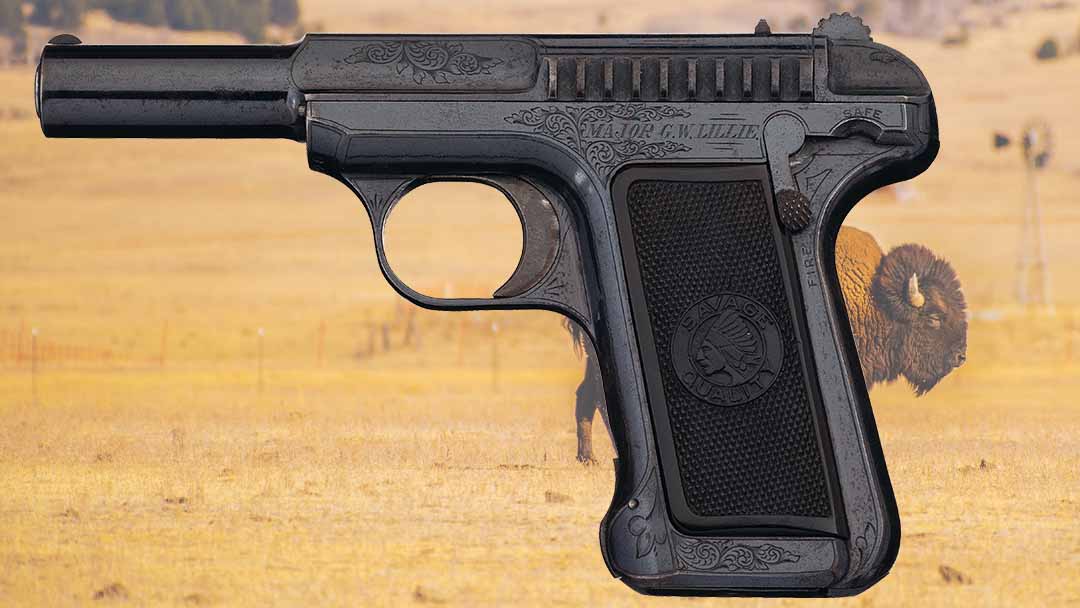
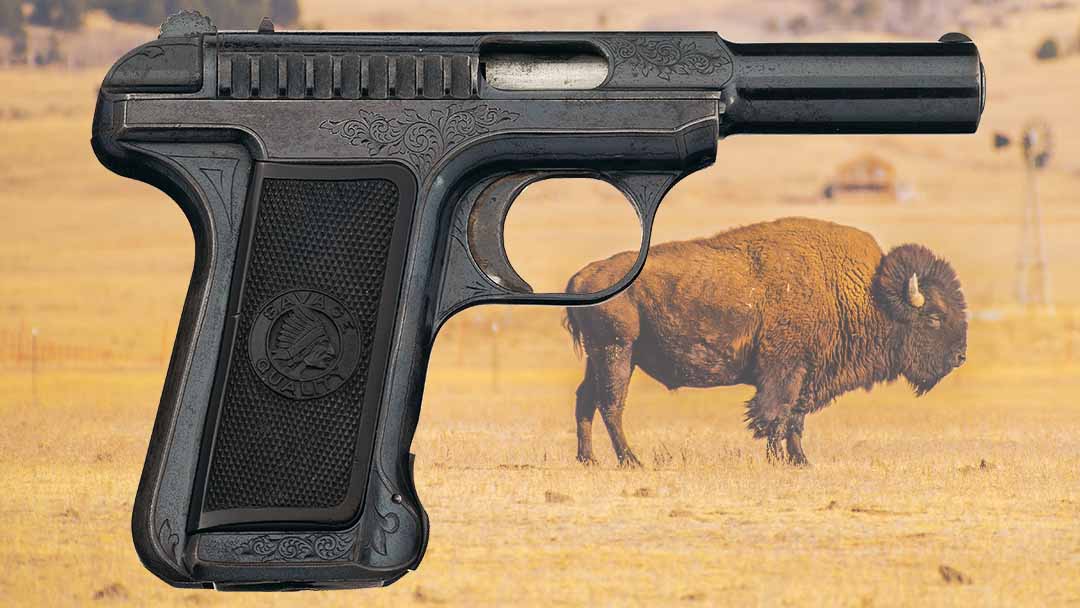
A Savage Model 1907 inscribed to Wild West showman Pawnee Bill.

His family moved to Kansas when he was a boy. That is where he met the Pawnee people and became an interpreter to the U.S. Indian Agent who worked with the tribe, earning his nickname. In 1883, Buffalo Bill, already larger than life, was putting together his “Buffalo Bill’s Wild West,” a circus-style extravaganza, and hired Pawnee Bill to translate and coordinate with the Pawnee troupe in the show. Within a few years, Pawnee Bill had a Wild West show to rival Buffalo Bill’s.

An incredibly rare, factory engraved Savage Model 1907 semi-automatic pistol inscribed to Pawnee Bill is available in Rock Island Auction Company’s May 19-21 Premier Auction. The Wild West artifact, similar to one owned by Buffalo Bill, is documented and includes a factory letter.

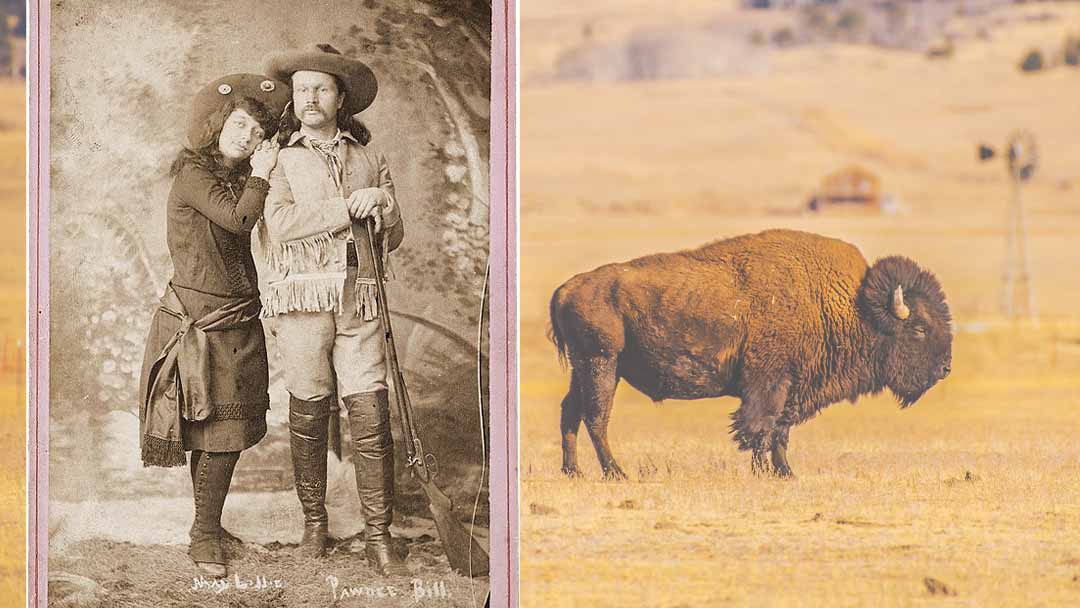
Pawnee Bill and May, A Love Story

War and death often accompany stories about guns, but any talk of Pawnee Bill’s Wild West adventures should include his wife, May. They met in 1884 when Buffalo Bill’s Wild West Show encamped in Philadelphia. She was 15 and the daughter of a doctor.

Savage-Arms-pistol-facing-leftIncredibly Rare, Historic, Documented Factory Engraved Savage Model 1907 Semi-Automatic Pistol Inscribed to Famed Wild West Showman Pawnee Bill.

She caught his eye as the Wild West troupe paraded. They courted long distance for two years before marrying in August, 1886. Pawnee Bill gave May a Marlin .22 rifle and a pony as wedding gifts.

She would go on to perform as the “Champion Horseback Shot of the West,” help run Pawnee Bill’s Wild West shows, and manage their Oklahoma ranch. Newspaper reviews of her performances called her the “Princess of the Prairie.”

Pawnee-Bill-and-May-on-backgroundPawnee Bill with his wife May. The couple was married for 50 years.

Oklahoma Land Rush and Pawnee Bill

May’s parents urged their son-in-law to start his own show, which toured in 1888 as Pawnee Bill’s Wild West. The season proved to be a financial failure.

That same year, Pawnee Bill moved to the forefront of the Boomer movement, dedicated to opening Oklahoma’s Unassigned Lands to white settlers. In 1889, the 1.887 million acres of land ceded by the Creek and Seminole Indians following the Civil War was opened to non-Native Americans.

Pawnee Bill led 4,000 settlers in the land run of April 22, 1889 into Kingfisher County. His role settling the central part of the state and leading the land rush thrust him into the national spotlight. Taking advantage of his newfound recognition, “Pawnee Bill’s Historical Wild West, Indian Museum and Encampment” traveled the United States and Europe with his wife, May, as one of the stars.

show-postersShow posters from Buffalo Bill’s Wild West and Pawnee Bill’s Far East combined shows.

The show featured a grand parade, western enactments like a stage coach heist, Native American dancing, trick roping and riding, as well as May putting on a riding and shooting exhibition.

At its peak, Pawnee Bill’s show employed 645 people and traveled with 400 horses and steers, a herd of 20 buffalo, carriages, and elephants.

Buffalo Bill Cody and Pawnee Bill

Pawnee Bill’s show evolved and prospered, thanks in part to May’s money management, and by 1907 was touring as Pawnee Bill’s Wild West and Great Far East Show, with Mexican cowboys, Pawnee and Sioux scouts, Chinese and Japanese performers, and Arab jugglers.

The following year, Buffalo Bill’s show was struggling financially. Pawnee Bill bought a one-third interest in Buffalo Bill’s Wild West Show and eventually owned the whole endeavor. The two Bills’ shows merged to become Buffalo Bill’s Wild West and Pawnee Bill’s Great Far East.

May opposed the partnership. She considered Buffalo Bill as a poor businessman and disapproved of his reputation for drinking and womanizing. She returned to the couple’s buffalo ranch that was established in 1902 near Pawnee, Okla.

The two Bills’ show went on until 1913 when it went bankrupt.

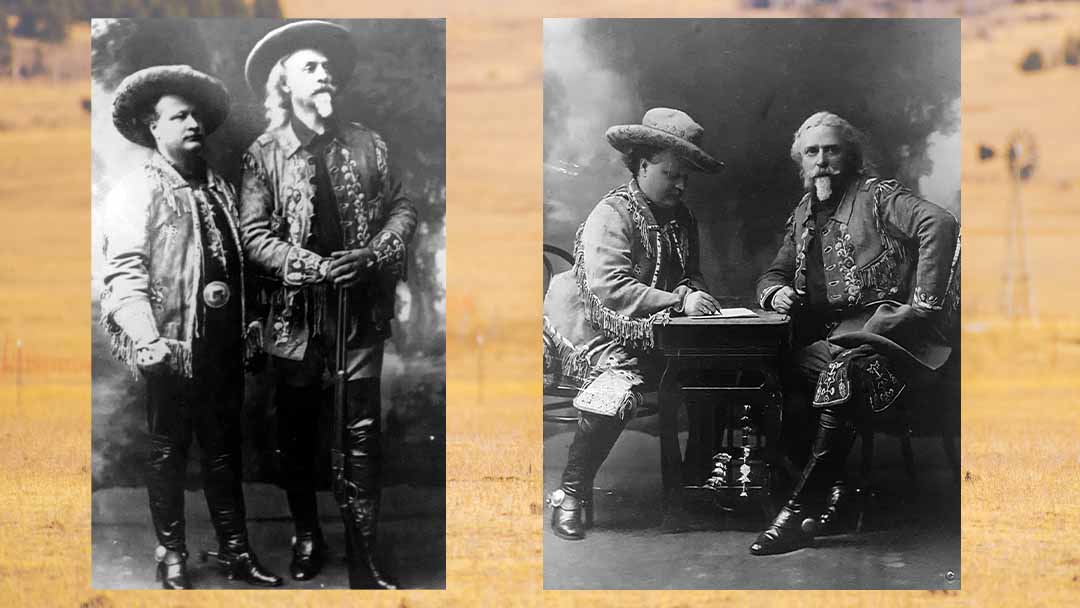
Pawnee-Bill-and-Buffalo-BillPhotos of Pawnee Bill and Buffalo Bill who were partners in a Wild West show shortly after the turn of the 20th century.Pawnee Bill is on the left in both photos.

Pawnee Bill Ranch

In the meantime, the couple had built a 14-room mansion at their ranch, located northwest of Tulsa. The buffalo herd grew. The house had running water and electricity powered by a generator. In 1916, the couple adopted a baby boy, named Billy.

The couple diversified, opening an oil refinery, raising cattle on the ranch, and starting a movie production company. They also invested in real estate and banking.

Tragically, young Billy died in an accident on the ranch when he was 8.

Buffalo and a Highway

Pawnee Bill was passionate about bringing back the American Bison – or buffalo, and did more than just build a buffalo herd on his ranch. He also lobbied Congress to protect the animal. His work led to the establishment, in 1901, of the Wichita Mountains National Wildlife Refuge located southwest of Oklahoma City. It is the oldest managed wildlife facility in the U.S. Fish and Wildlife Service system.

Early on, Pawnee Bill saw the future of automobiles in America and modern highways. He served as the president of the Highway 64 Association. The section of U.S. 64 that runs through Oklahoma – and past the ranch — was named after him.

He later built “Pawnee Bill’s Old Town and Trading” not far from their ranch as a tourist destination. It featured rustic cabins for rent, restaurants, and buffalo grazing. It burned down in 1944.

Savage-Arms-pistol-facing-rightA view of the very rare engraved Savage Arms of Wild West showman Pawnee Bill.

Fatal Car Crash

Pawnee Bill and May celebrated their 50th wedding anniversary in Tahoe in 1936. A short time later, the couple celebrated with friends after returning to Oklahoma. On the way home from that celebration, Pawnee Bill lost control of the car and crashed. May, “Princess of the Prairie,” died from injuries in the crash. She was inducted into the National Cowgirl Hall of Fame in 2011.

Eleven days before his 82nd birthday in 1942, the spectacular showman and promoter of Wild West legend died. The couple’s amazing mansion and ranch are now The Pawnee Bill Ranch and Museum housing family memorabilia and Wild West artifacts. A buffalo herd still roams the grounds. It is now owned by the Oklahoma Historical Society and hosts a re-creation of Pawnee Bill’s original Wild West show every year.

Pawnee Bill’s Savage Arms Pistol

Rock Island Auction Company had the most recent pleasure of selling a Savage Arms Model 1907 pistol inscribed to Buffalo Bill Cody in September, 2021. The gun was inscribed “Col. W.F. Cody” with engraved scrolling on the backstrap and original and rare pearl grips. Advertisements showed Buffalo Bill’s fondness of the Savage Arms pistol and he ordered five of them engraved with the names of friends.

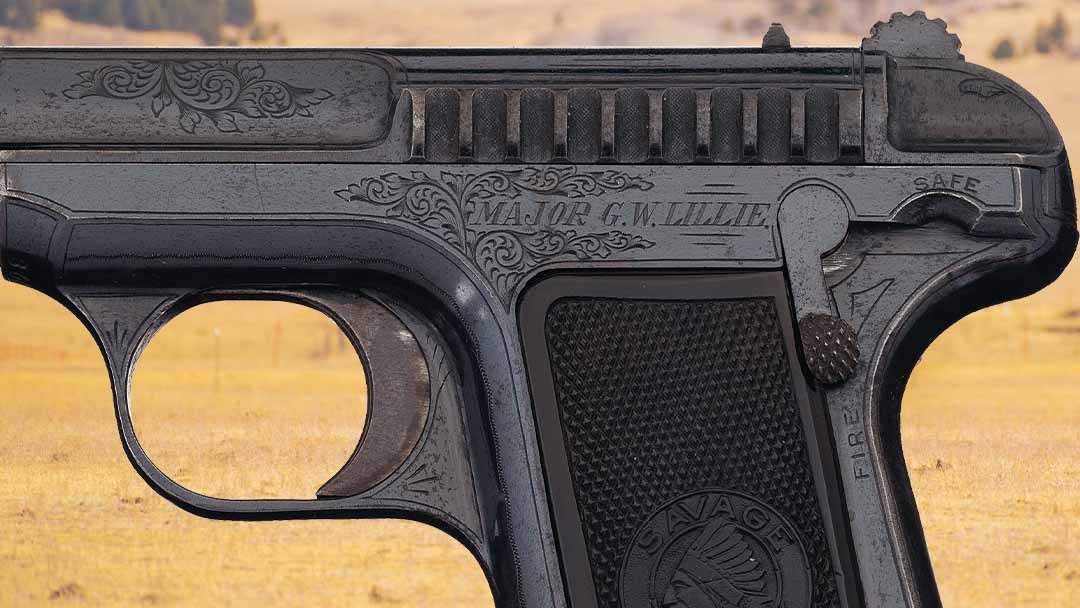
Pawnee Bill’s gun is not among those ordered by Buffalo Bill. The factory-engraved Savage Arms Model 1907 pistol bearing Pawnee Bill’s name, Major G.W. Lillie, shares similarities, but differences, too. Modest coverage of the engraving on the barrel and around the grip are similar. On the side of the gun — rather than the backstrap like Buffalo Bill’s – is prominently engraved “Major G.W. Lillie”

name-engravedA closeup of the engraving of the very rare Savage Arms Model 1907, with Pawnee Bill’s given name on it, G.W. Lillie.

Pawnee Bill was a Wild West showman on par with Buffalo Bill whose path through a colorful life included translating for native Americans, joining in the Oklahoma land rush, conserving buffalo, and promoting the highway system all while enjoying the lifelong love of a woman who was amazing in her own right.

The Savage Arms 1907 pistol is a rare western artifact of Pawnee Bill, who stood alongside an American legend in creating the spectacle of the Wild West. It is available at Rock Island Auction Company’s May 19-21 Premier Auction.

Sources:

Oklahoma Historical Society

Pawnee Bill – Another Wild West Showman, Legendsofamerica.com

National Cowgirl Museum and Hall of Fame

Wild Woman Wednesday: May Manning Lillie, by Chris Enss, Cowgirl magazine

 The No-BS Ham Radio Technician Exam Prep Guide

0

If you’re interested in emergency communication and want to take your skills to the next level, “Prepper Radio: The No-BS Ham Radio Technician Exam Prep Guide” by Robert Richardson is an excellent resource. This book is designed to help you pass the Amateur Radio Technician Class Test, but it’s much more than just an exam prep guide.

The book covers everything you need to know about ham radio technology, equipment, and procedures so you can ace the test. The writing style is easy to follow, and the instructions are well-organized. The book is written by the team at OFFGRIDSurvival.com and HamRadioPrepper.com, so you can be sure that the information is coming from experts in ham radio and preparedness.

One thing I appreciate about this book is the no-nonsense approach to the material. The author doesn’t waste time with unnecessary information or fluff. Instead, each section is packed with the essential information you need to know to pass the exam and become proficient in ham radio communication.

The author takes you through the basics of ham radio communication, then gradually introduces more advanced concepts. By the end of the book, you’ll have a solid understanding of ham radio communication and be well-prepared to take the Technician Ham exam.

I highly recommend “Prepper Radio: The No-BS Ham Radio Technician Exam Prep Guide” to anyone interested in emergency communication or ham radio technology. The book is well-written, easy to follow, and packed with useful information. Whether you’re a seasoned prepper or a newbie to the world of emergency communication, this book will help you take your skills to the next level.

Get Yours today on Amazon!

Shirts of Liberty

OFFGRID Survival book

Newsletter

Collectible Firearms for Serious Gun Collectors

0

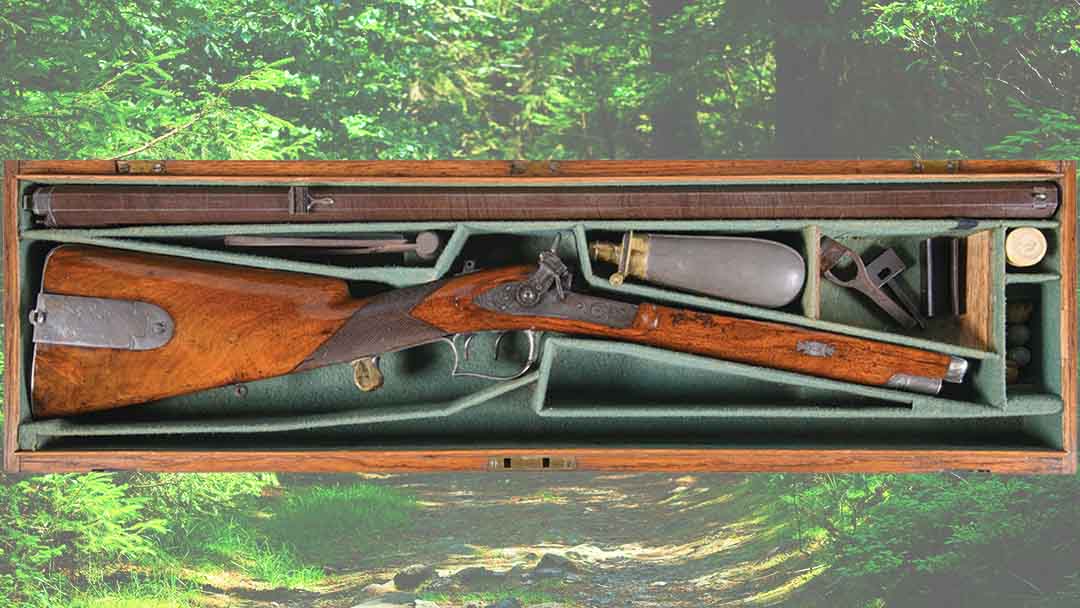
Each period in American history has its classic firearms: the colonial era has the iconic Brown Bess and Charleville muskets, the early national period has the golden age American longrifles and dueling pistols, the Civil War had the Henry lever action and Berdan Sharps among others, the Wild West had Colt Single Action Army revolvers and Winchester Model 1873s — you get the picture. The 1830s to 1850s during the exploration of the West and conflicts in the new territories had one rifle more famous than the rest: the St. Louis Hawken rifle built by the Hawken brothers.

Lot 245 is a classic American longrifle by Samuel St. Clair of Snyder County and Juniata County, Pennsylvania. Classic longrifles like this continued to be manufactured alongside half-stock rifles during the 19th century, but over time, half-stock rifles became more popular. Other members of the Hawken family, including Samuel and Jacob’s brother William, continued to make American longrifles.

Jacob (1786-1849) and Samuel Hawken (1792-1884), fondly known as Sam and Jake to muzzleloading enthusiasts, are probably the most famous makers of American muzzleloading rifles. Their rifles were widely used on the western frontier from the 1820s and beyond the Civil War until muzzleloading rifles were largely supplanted by breechloading rifles like the Springfield Trapdoor, Remington rolling block, and Sharps Model 1874.

Samuel and Jacob Hawken were part of a larger family of gunmakers. The plain American longrifle in Lot 3211 is signed “J Hawken” by their cousin John Hawken from Ohio.

The Hawken Brothers before Their Famous Rifles

The brothers were part of a larger family of gunmakers and were born in Hagerstown, Maryland. Like most riflemakers of the period, they would have originally built classic American longrifles. Other members of their family also trained as gunsmiths and continued to build longrifles after Sam and Jake headed West. Their cousin John Hawken, for example, built rifles in Springfield and Piqua, Ohio in the first half of the 19th century.

Lot 213 is a very desirable Harpers Ferry Model 1803 flintlock rifle from 1814. Jacob Hawken worked at the armory in Harpers Ferry in 1808-1818 and may have had a hand in making this rifle. It has been suggested that the Model 1803 was part of what led to the Hawken brothers producing their famous half-stock rifles.

Existing records show that Jacob worked at the federal armory at Harpers Ferry in Virginia in at least 1808-1818 before moving to St. Louis. There, he would have become familiar with the distinctive half-stock U.S. Model 1803 flintlock rifle. It was a rather unusual rifle for military service at that time as it had a half-length stock that did not extend to the muzzle and had an iron underrib under the remainder of the barrel more like an English sporting rifle than a military weapon. Around 1818, Jacob moved to Missouri and partnered with local gunsmith James Lakenan.

Lot 1271 is an English half-stock patchlock sporting rifle by Alexander Wilson. It demonstrates that half-stock sporting rifles were already well-established in England before the percussion system had become standardized around the percussion cap.

The Hawken Brothers Partner to Make Rifles

Samuel initially worked in Xenia, Ohio, likely building traditional longrifles, but he too moved to St. Louis following the death of his wife and father and opened up his own business. When Jacob’s partner died in 1825, the Hawken brothers established the now famous Hawken shop together.

The brothers became famous for their muzzleloading rifles. Some are known to have been used by the “enterprising men” active in the Rocky Mountain fur trade in the 1830s, including General William Henry Ashley and the American Fur Company. St. Louis was by that time well-established as the launching point for expeditions into the West and was a major center of the North American fur trade and general commerce in the Midwest and West.

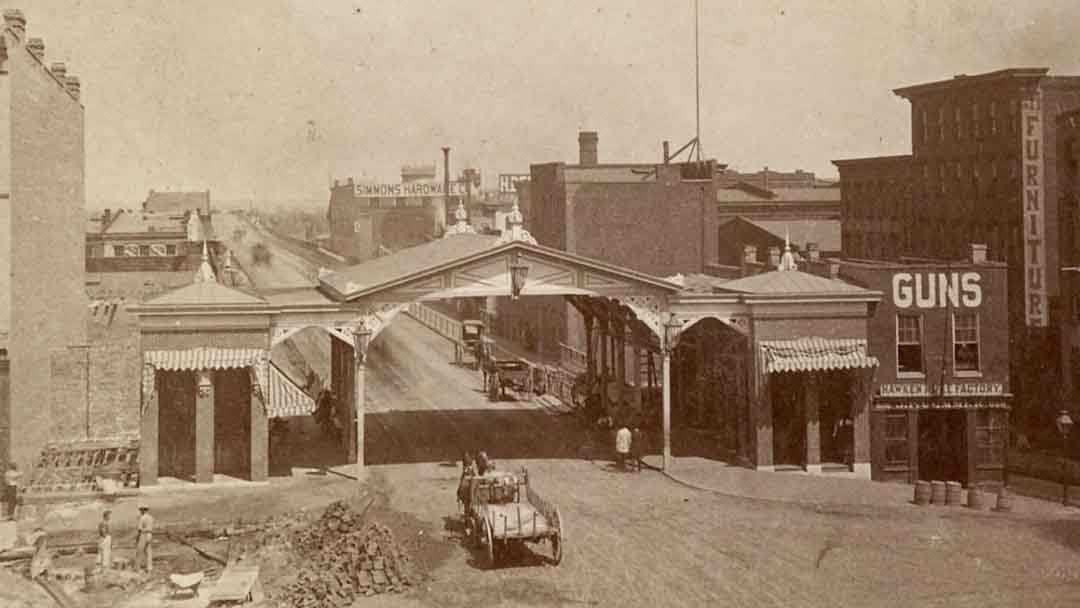
The Hawken shop can be seen on the right in this photo from later in the 19th century.

It has long been debated what their early rifles looked like. Given they were active starting in 1820 when flintlocks were still the primary gunlocks, their early rifles were almost certainly flintlocks. Some of their rifles from the 1830s have builds more typical of the more slender American longrifles of the East, so their early rifles may have been both flintlocks and more slender than what most collectors think of when they think of a Hawken rifle.  While their first rifles in St. Louis were likely flintlocks, they were quick to adopt the percussion system, and their percussion rifles are what remain famous today.

George W. Atchison’s silver mounted Jacob and Samuel Hawken half-stock rifle sold by RIAC in 2020 for $86,250 is a stunning example of the Hawken shop’s fancier rifles. While half-stock, it has a stock shaped more like a classic American longrifle and longrifle style furniture.

They produced both full and half-stock rifles. The half-stock variety is generally what comes to mind when most people think of a Hawken rifle thanks to some of the famous surviving examples, but the full-stocks were also an important part of their business and were more affordable but just as capable. Most of their famous western rifles were fairly large caliber (.54 like the Harper’s Ferry Model 1803 appears to have been popular and is the caliber of the example in our May Premier Firearms Auction). They also produced smaller caliber “squirrel rifles” for hunting small game as well as repaired arms by other gunmakers, tools, and edged weapons.

Classic Hawken Rifles

Their classic “plains rifles,” both half and full-stock, generally have iron furniture, heavy barrels that are shorter than the classic longrifles (around 36 inches rather than over 40 inches), and good quality locks and breeches with shaped bolsters. Per Bob Woodfill in The Hawken Rifle, the shop charged $18 for a full-stock versus $25 for the more labor intensive half-stocks. The stock shaping of the full-stocks and half-stocks vary slightly. For example, the full-stocks rifles generally have rectangular cheek rests while their more expensive half-stock rifles feature rounded cheek rests. Many of the rifles are very plain, but some higher end examples featured elaborate patchboxes and inlays, sometimes in silver like the famous Atchinson Hawken rifle previously sold by Rock Island Auction Company. The shorter overall length made the rifles more maneuverable and easier to carry on horseback and also helped keep the weight down since Hawken rifles were rather hefty.

Note the rectangular cheek test on the rifle’s stock along with the lack of wedge escutcheons, two differences noted on Hawken full-stock rifles compared to the half-stock rifles.

Many of their rifles, including the full-stock rifle in our current auction, date to after the heyday of the Rocky Mountain fur trade when Hawken rifles continued to be in demand, including by former fur trappers like Jim Bridger and Kit Carson who found new work as hunters, guides, and scouts. They were also in demand by the new wave of migrants heading to the West in search of fertile farmland or gold during the California Gold Rush. Woodfill wrote in The Hawken Rifle, both James Clyman and Mormon pioneer John Brown likely had full-stock Hawken rifles. Thomas Pollock is recorded in the Louisville Daily Courier on February 16, 1860, as striking claim jumper William McCarty on the head with “a heavy Hawken’s rifle, laying open his scalp, and effectually rendering him hors du combat for the remainder of the campaign” after McCarty threatened to cut his throat with a Bowie knife. “Had he given him the contents of his rifle in a vulnerable place, it would, no doubt, have terminated the trouble, and, as everybody says, served him right.”

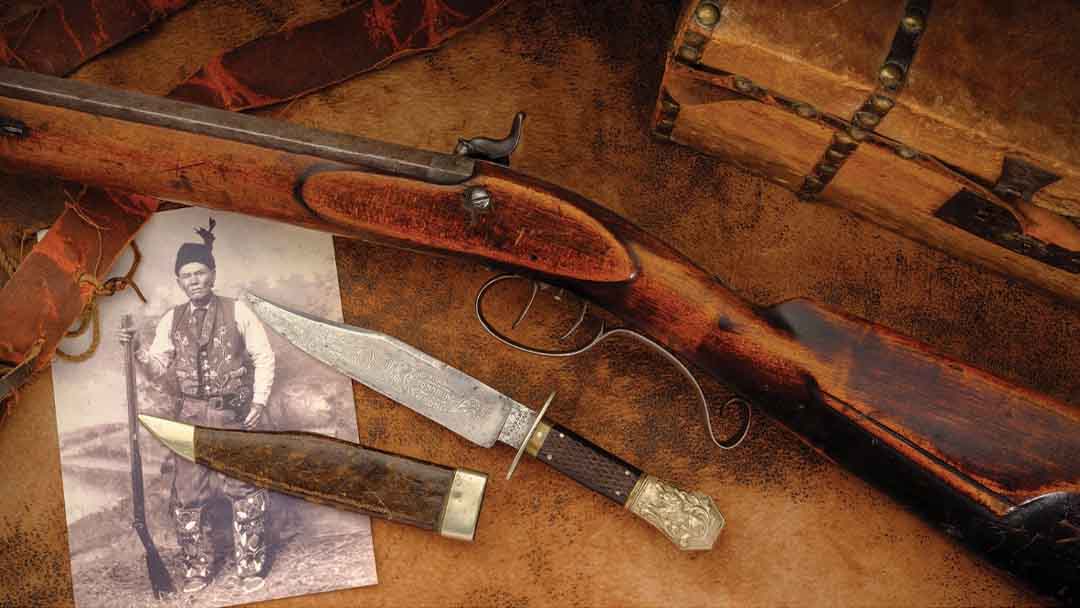
These photographs of Thomas Tobin (1826-1904) c. 1880 are probably the clearest photographs of a Hawken rifle from the 19th century.

The End of Hawken Rifles

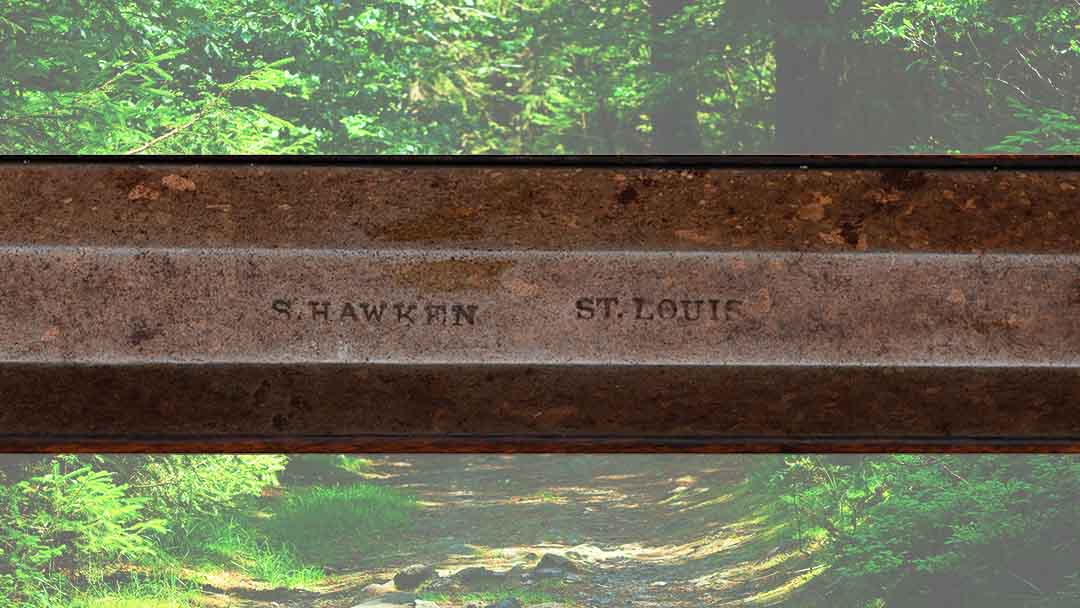
Jacob died in 1849, and rifles after his death, including the example in this auction, are marked “S. HAWKEN ST. LOUIS” whereas the earlier rifles were marked “J&S HAWKEN ST. LOUIS.” In 1855, Samuel passed control of the shop to his son William. William and Tristan Campbell had been partners since at least 1853 but split by early 1856. The Hawken shop was sold in 1860 to a group of gunsmiths, including J.P. Gemmer who eventually took over. The shop under Gemmer also marked some of their rifles “S. HAWKEN ST. LOUIS” after 1862, but by that time the full-stock rifles would have been out of fashion. Many scouts and settlers on the frontier continued to use their rifles into the late 19th century, with a few like Tom Tobin photographed with their trusty Hawken rifles near the end of the century.

The barrel signature/marking on the Hawken full-stock rifle from Lot 3209. The marking dates this rifle to after Jacob Hawken’s death in 1849.

What is an original Hawken Rifle worth?

While real original Hawken rifles are rare, Rock Island Auction Co. has sold several in recent years and their values are generally over $50,000 while your average American half-stock “plains rifle” by less renowned makers often sell for under $1,000.

What is an original Hawken rifle worth? This J. & S. Hawken marked half-stock percussion rife doubled its estimate in RIAC’s August 2022 Premier Auction and sold for $70,000.

The current full-stock rifle is estimated at $45,000-$65,000. A J&S Hawken signed half-stock example sold for $70,500 at RIAC last year, and another half-stock signed S. Hawken brought $52,875. The famous silver-mounted Atchison J & S Hawken brought $86,250 at RIAC in 2020. An interesting J & S Hawken half-stock example that likely started life as a full-stock rifle like our current example sold for $74,750 in RIAC’s September 2019 auction.

Hawken Rifle Legacy

Hawken rifles were well-known and highly regarded in their own day and continued to be well-respected by muzzleloader shooters for generations onward to today. They received considerable popularity during the boom period for muzzleloading in the 1960s to 1980s thanks to Robert Redford’s use of a Hawken rifle in Jeremiah Johnson (1972) as well as the production of reproduction half-stock percussion rifles like the Green River Rifle Works Hawken rifles as well as less authentic half-stock percussion rifles like the Thompson/Center Hawken and Lyman Great Plains rifles. Reproduction Hawken rifles at varying price points continue to be available today, and Rock Island Auction Co. regularly offers them in our Sporting & Collector and Arms & Accessories Day Firearms Auctions. They remain very popular with hunters in black powder deer seasons that want to hunt with traditional sidelock muzzleloaders like the mountain men of old.

Ethan from I Love Muzzleloading stopped by to get a hands-on look at this classic full-stock Hawken rifle. For those interested in detailed measurements from the rifle beyond what is included in the catalog description, take a look at ILoveMuzzleloading.com.

Selected Sources and Further Reading:

● The Hawken Rifle by Bob Woodfill

● Hawken Rifle: The Mountain Man’s Choice by John D. Baird

● Fifteen Years in the Hawken Lode by John D. Baird

● The Hawken Shop

● ILoveMuzzleloading.com

● Green River Rifle Works Collector

● “The Artistry of the Hawken Family” by William H. Reiser Jr. in The American Society of Arms Collectors Bulletin 39:2-11

Collectible Firearms for Serious Gun Collectors

0

Dr. Robert David Beeman shaped the face of airgunning around the world and gathered an expansive collection of antique air guns from every genre imaginable. Rock Island Auction Company is proud and deeply honored to present an exquisite assemblage of some of his finest antique air guns to the public this May.

The Dr. Robert Beeman Collection offers an incredible assortment of exquisite air guns ranging in shape, style, and era.

Dr. Robert Beeman wore many hats throughout his life, including wildlife researcher, professor, author, entrepreneur, arms collector, and prolific world traveler. Founder of Beeman Precision Airguns, the first modern American company to significantly develop a market for adult air guns, Robert Beeman influenced countless firearm fans through his writings in the ‘Blue Book of Airguns’ series, ‘Airgun Digest,’ and his company’s numerous catalog releases.

Antique air guns were constructed in a myriad of configurations, and Dr. Robert D. Beeman’s meticulously built collection covers nearly every corner of the genre.

Instead of powering their projectile with the gas generated by an explosion of gunpowder, air guns used gas confined under pressure and then suddenly released. Antique air gun systems had several advantages over conventional black powder firearms, including less noise, less fouling, a quicker reload, a more reliable “ignition,” a system that was less impacted by rain and moisture, and a firearm that didn’t generate obstructing smoke. The Robert Beeman Collection encompasses a profound variety of air gun styles and mechanisms produced between the 17th century and the late 19th century.

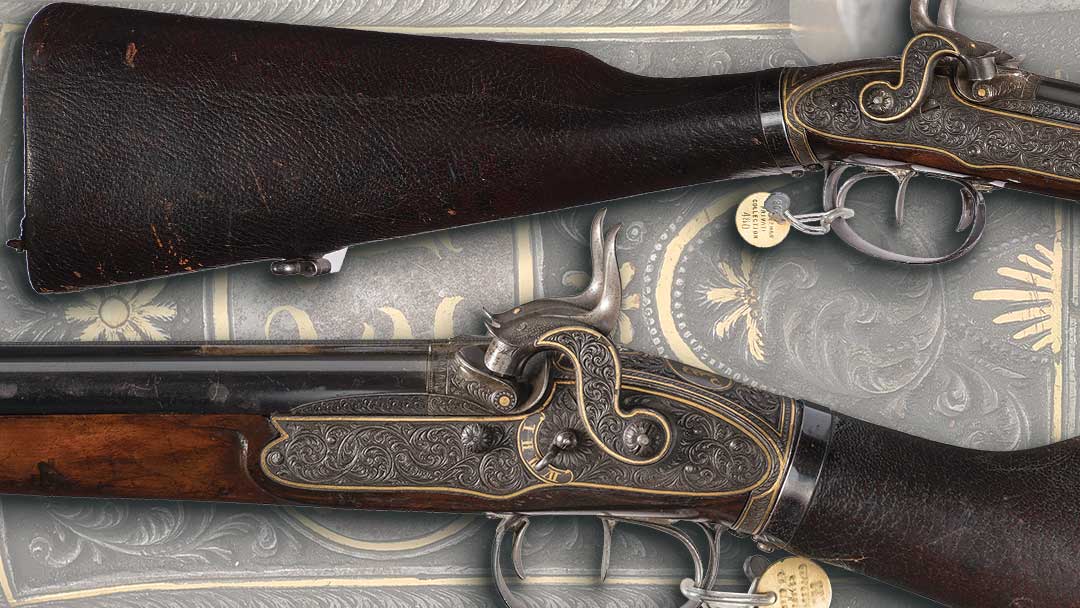
A documented 19th century, exhibition quality, relief engraved, and gold inlaid European Girardoni style stock reservoir double barrel combination air rifle/percussion shotgun.

The air gun selections featured below represent a small sample of the rarity, history, and condition on display in Rock Island Auction Company’s May 2023 Premier Firearms Auction. Click on the images throughout this article to learn more about each fantastic firearm.

Girardoni Air Guns

Dr. Robert Beeman had a particular fascination with the Girardoni repeating air gun system (also spelled “Girandoni) and dedicated significant research toward the most legendary air gun in American history, the pneumatic air rifle carried by Captains Meriwether Lewis and William Clark on their 1803-06 expedition from the Missouri River west to the Pacific Ocean. RIAC’s May Premier Auction offers three distinct Girardoni styles.

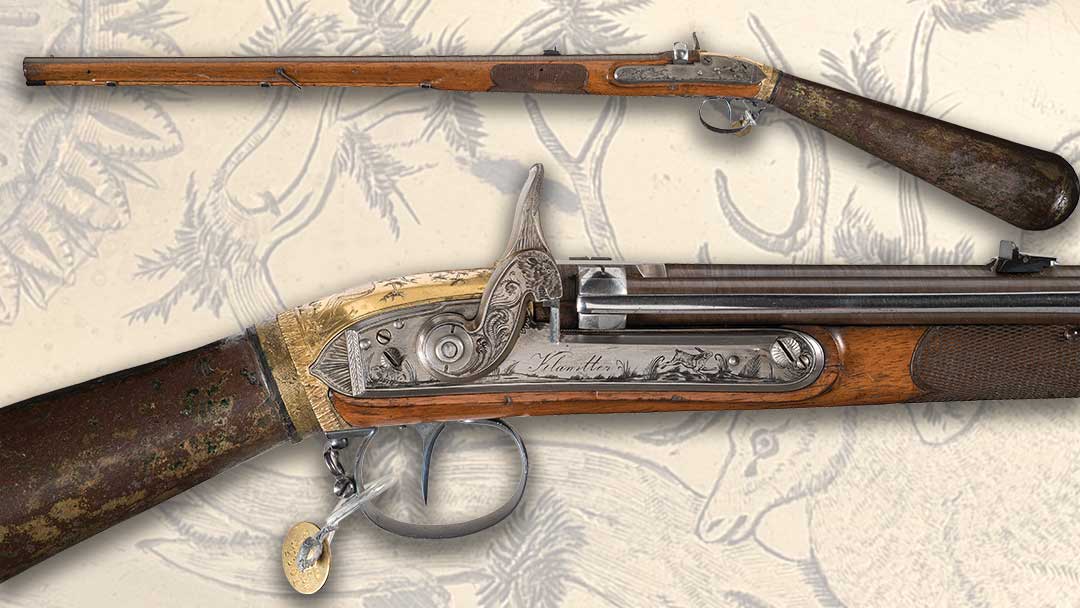
A game scene engraved Girardoni system repeating stock reservoir sporting air rifle by Klanitter of Herzberg.

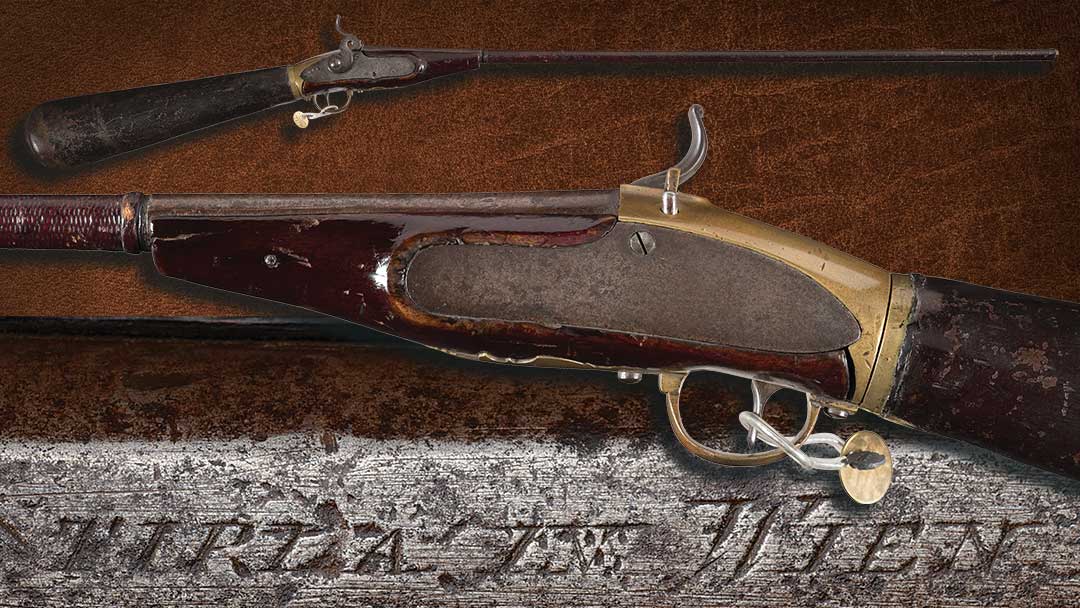
In the late 1770s, Tyrolean master gunsmith Bartolomeo Girardoni first developed his repeating air gun system. Though primarily designed for the sporting market, the Austrian sharpshooters adopted the air gun for military service from 1787 to 1815. Girardoni’s design was widely copied, like the fine air rifle below produced by J.B. Missillieur of Vienna, Austria.

A panel game scene engraved Girardoni system repeating stock reservoir sporting air rifle by J.B. Missillieur of Vienna, Austria.

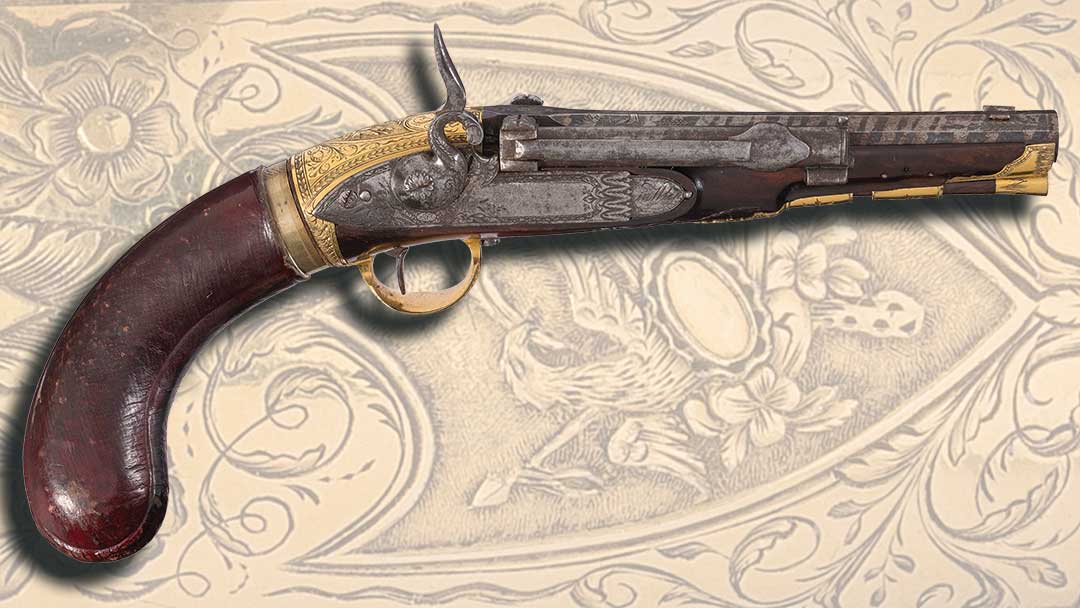
Our next rare specimen demonstrates the versatility of the Girardoni air gun system. This superbly crafted, gold-plated and silver inlaid pistol is signed “Girandony,” a spelling that was used by the Girardoni family. Dr. Robert Beeman suggested that the pistol was built as a demonstration specimen of the Girardoni rapid-loading repeater air gun mechanism for a wealthy patron, perhaps the Austrian emperor Joseph II. The pistol’s “JC” inscription indicates that the gun might have been manufactured by Bartolomeo’s son, Johann.

One of the highlights of the Dr. Robert Beeman air gun collection, an exceptionally rare Girardoni air pistol.

Pneumatic Air Pistols

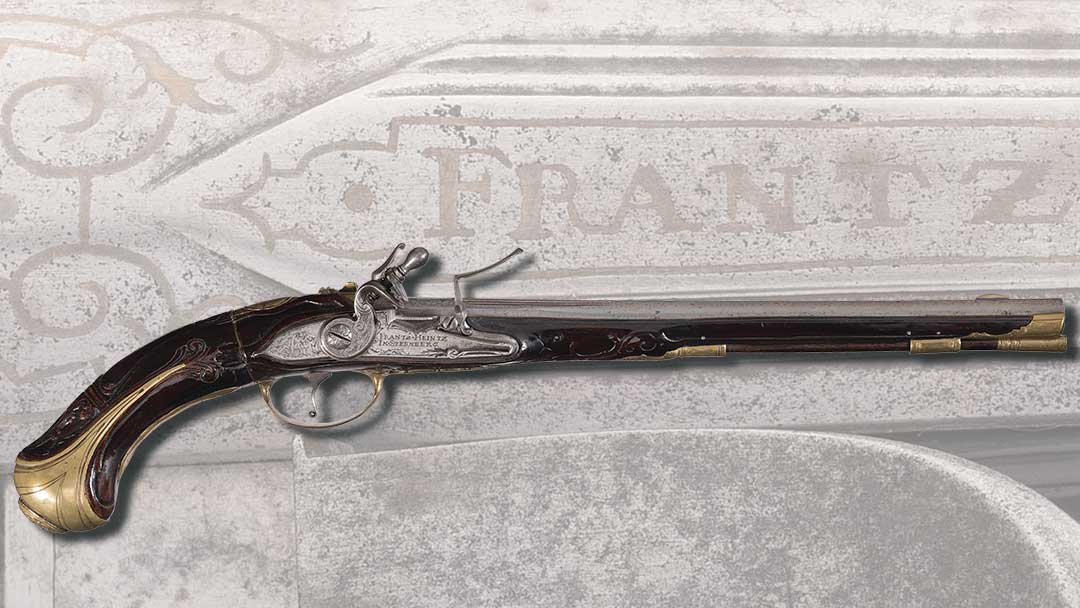
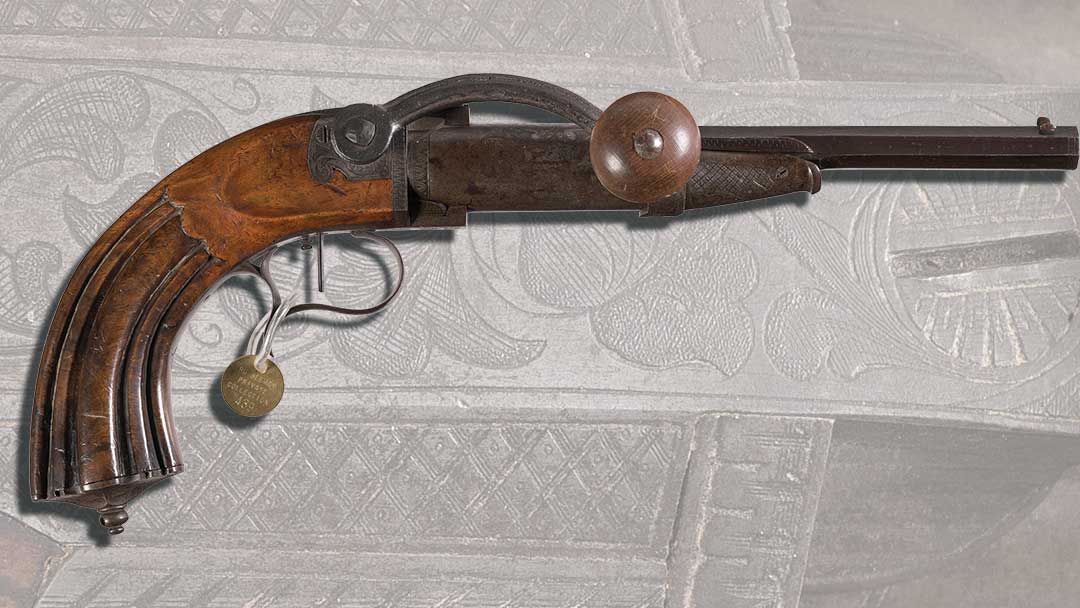
When examining antique air gun mechanisms that used a pneumatic design, long guns are dramatically more common than pistols due in part to an air pistol’s more limited reservoir. Dr. Robert Beeman’s air gun collection contains air pistol examples using several different reservoir systems, including an early 18th century German air pistol with a concealed grip reservoir that could be unscrewed and detached for refilling. It was manufactured by Frantz Heintz, a gunsmith from Sternberg, who was active between circa 1690-1730.

This Frantz-Heintz concealed grip reservoir pistol was among the limited number of high-quality air pistols crafted during the early 18th century, serving as an advanced piece of technology for the era.

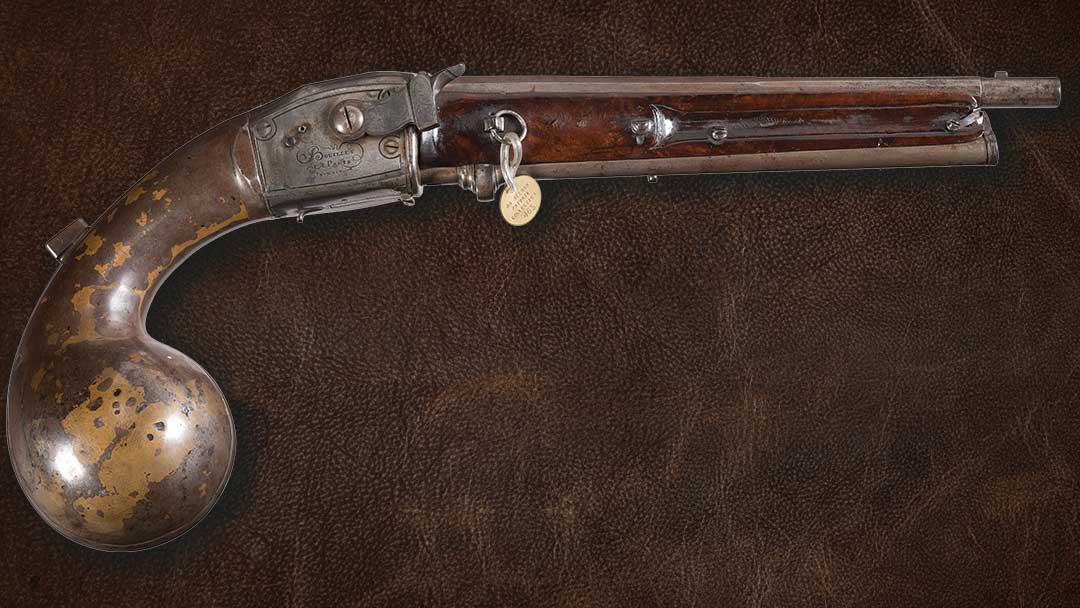
One of the most unique pieces in the Dr. Robert Beeman air gun collection, this impressive Nicolas Bouillet repeating air pistol has a tube magazine located beneath the barrel, a ball-shaped grip air reservoir, and a trigger that flips out automatically upon pulling the hammer back to the full cock position. The pistol loads out of the tube magazine by pulling a lever down that is located on the left beneath the breech and pushing up on a spring loading button found on the bottom of the magazine tube, similar in concept to the famous Henry rifle.

A late 18th century grip reservoir repeating air pistol by Nicolas Bouillet of Paris, France.

Ball Reservoir Air Guns

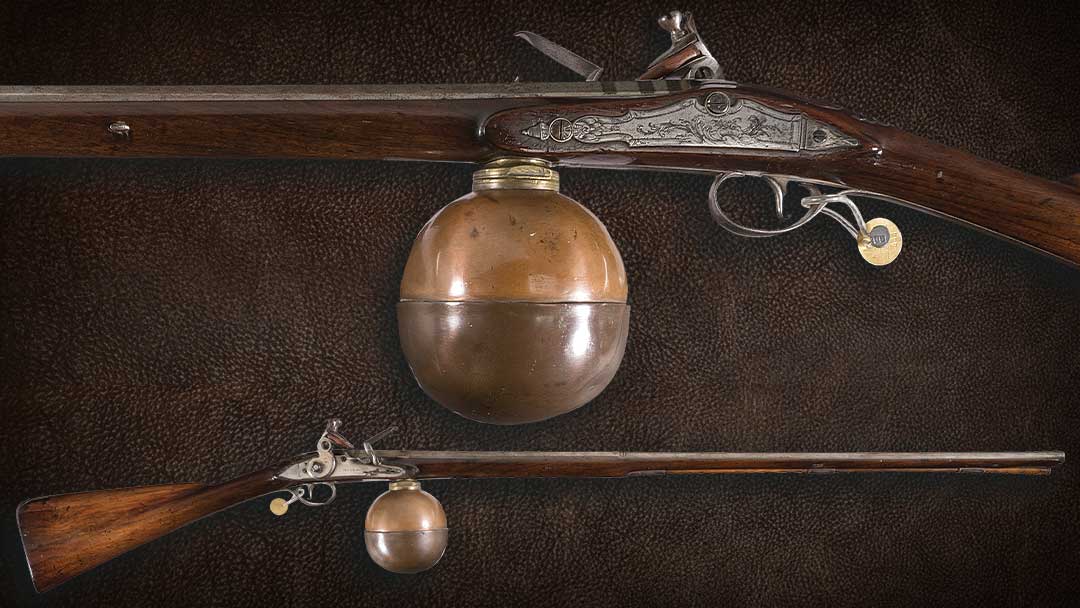
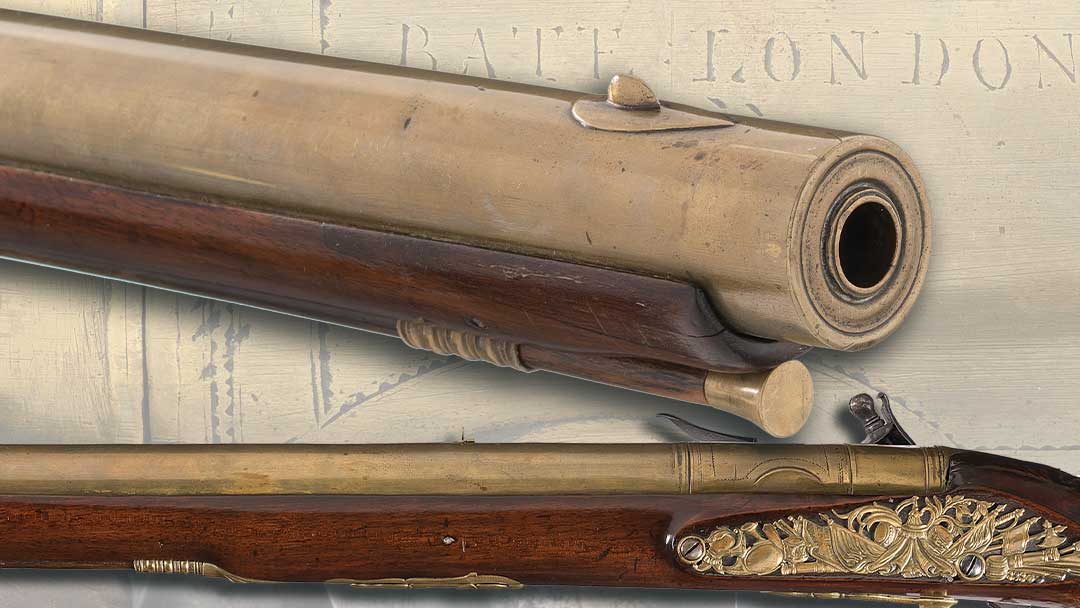
Powered by a detachable ball-shaped reservoir of compressed air, the ball reservoir air gun was often filled using a stirrup pump. Ball reservoir air guns were popular from about 1730 to the early 1800s and produced by some of the finest German and English makers. Each ball reservoir could offer between ten to twenty shots, depending on size. They were crafted of copper, brass, or steel, and examples of each can be found in the Dr. Robert Beeman collection.

A unique 18th century engraved and relief carved English ball reservoir muzzleloading air gun by Edward Bate of London.

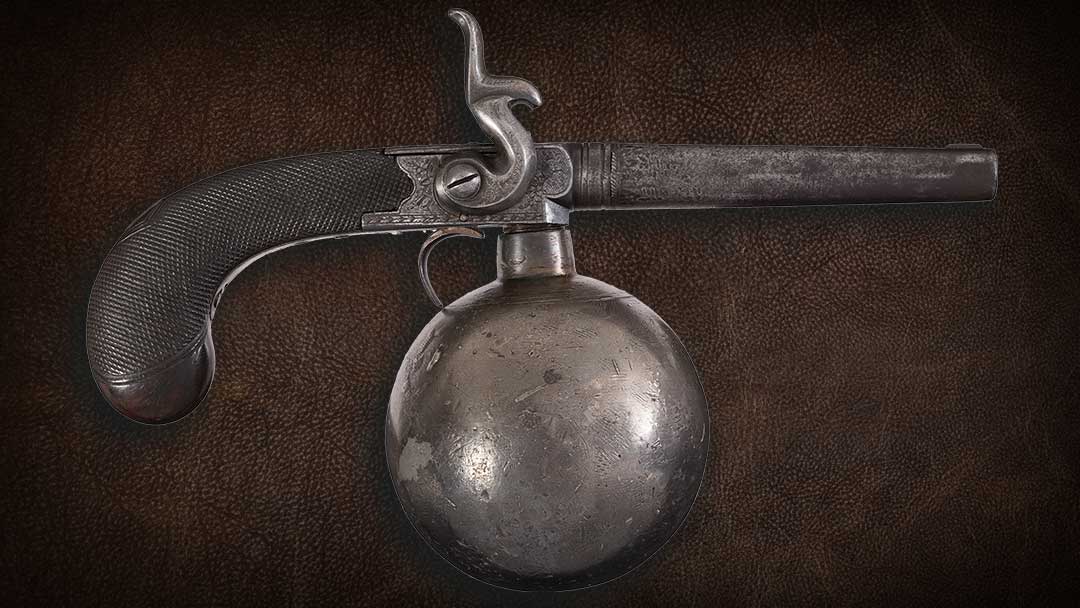
Another standout from RIAC’s May Premier, the exact ball reservoir pistol below is pictured and described on page 169 of Dr. Robert Beeman’s ‘Blue Book of Airguns, Thirteenth Edition.’ The smoothbore screw barrel is able to be loaded from the breech end with .33 caliber lead balls.

A rare documented engraved 18th century Liverpool marked English ball reservoir screw barrel air pistol.

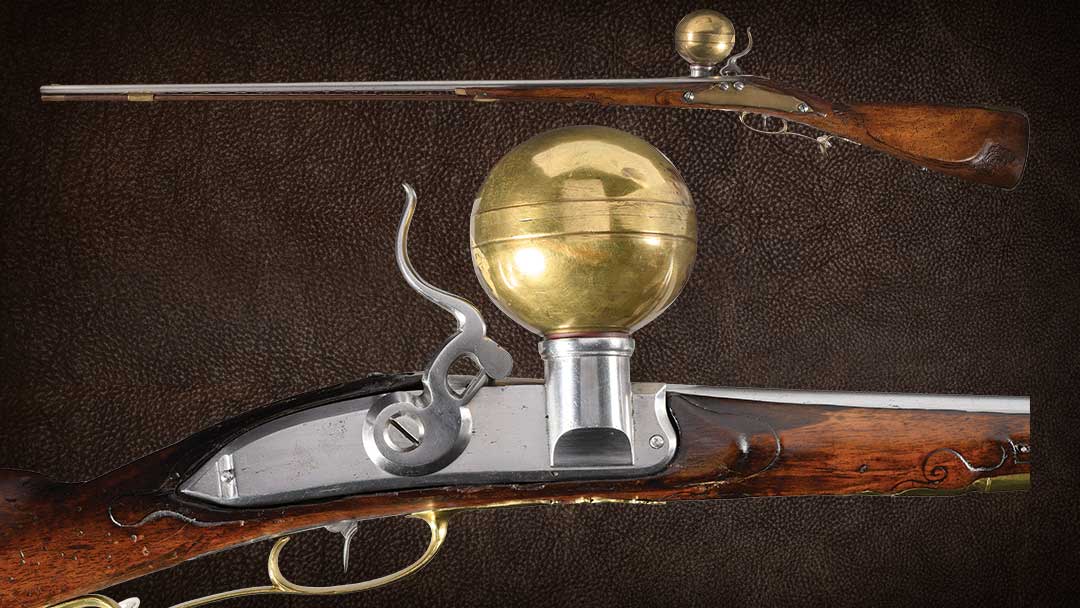
While most ball reservoirs are fitted beneath the gun, the next example features a configuration fitted above the action, in this case a large brass ball reservoir located on the lockplate placed off center of the line of sight. This smoothbore German muzzleloading air gun dates to circa 1760 and demonstrates the wide breadth of styles and eras covered in Robert Beeman’s expansive collection of antique air guns.

A documented relief carved 18th century unmarked German top ball reservoir muzzleloading air gun.

In the case of many ball reservoir guns and other pneumatic antique air gun types, a flintlock-style mechanism was included so shooters would have an action that resembled something they were used to firing. The hammer serves to cock to the gun and the “frizzen” in some ball reservoir models serves as a handle to turn the internal breech which feeds lead balls from a magazine hidden beneath the barrel.

Ethan from “I Love Muzzleloading” examines some big bore “Flintlock” style air rifles from the Robert Beeman Collection.

Barrel Reservoir Air Guns

Some of history’s finest gunmakers, including Johann Kuchenreuter of Germany and Edward Bate of England were proud to put their talent to work on barrel reservoir air guns. In this style, the outer housing consists of an air reservoir located beside, above, or surrounding the barrel. In the case of the large caliber, Edward Bate repeating air gun below, a pump is built in that can be accessed through a small rotating door located on the buttplate, and a rod pulls out of the buttstock for pumping air.

A unique 18th century engraved and relief carved English Brown Bess style barrel reservoir repeating air gun by Edward Bate of London.

Dr. Robert Beeman’s fondness for the superb craftsmanship of Edward Bate continues with this .50 caliber barrel reservoir muzzleloading air gun. A pump (not included) connects to a threaded port accessed through a small rotating door located on the buttplate. Antique air guns of this style were used primarily for hunting.

A documented 18th century engraved English barrel reservoir muzzleloading air gun by Edward Bate of London.

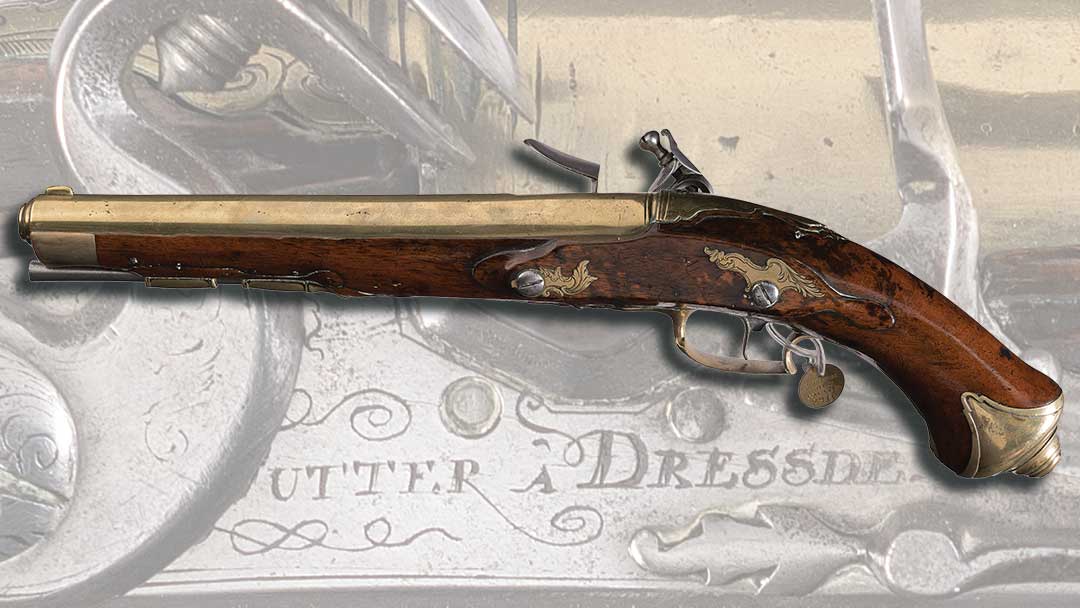
Our next eye-catching air gun comes from the capable hands of German gunmaker Johann Joseph Futter who was active from 1754 to 1779. Futter was among the select few gunmakers who produced high-quality air pistols in the region. The example below features a flat beveled step-tailed iron lock signed “FUTTER A DRESSDEN” and is another fine example of the classic craftsmanship that accentuates the Dr. Robert Beeman air gun collection.

An engraved 18th century German barrel reservoir air pistol by Futter of Dresden.

Stock Reservoir Air Guns

Stock reservoir air guns comprise any pneumatic system where the air reservoir is included as a detachable butt which is removed from the gun and pumped up to pressure using a stirrup pump. Though the Girardoni is perhaps the most famous type of stock reservoir air gun, the system was produced in numerous styles such as the muzzleloading iron stock reservoir air gun below that dates to the late 1700s.

An 18th century Austrian stock reservoir muzzleloading air gun.

Next up, we have a unique stock reservoir air rifle from London gunmaker Edward James Bond that employs a rotating faucet breech to load from the top. The game scene engraving speaks both to the weapon’s intention as a hunting arm as well as the wealth and status of its owner. As is the case with this leather-wrapped example, many stock reservoirs were covered to make them easier to handle in cold weather.

A game scene engraved early 19th century stock reservoir air rifle by Edward James Bond of London, another fine offering of the Dr. Robert Beeman collection.

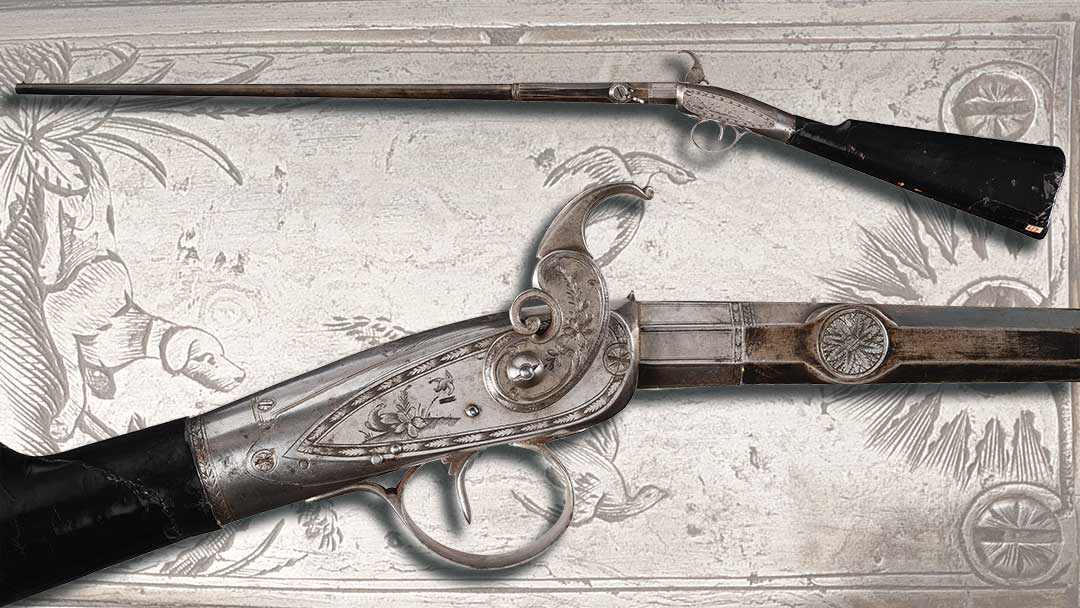
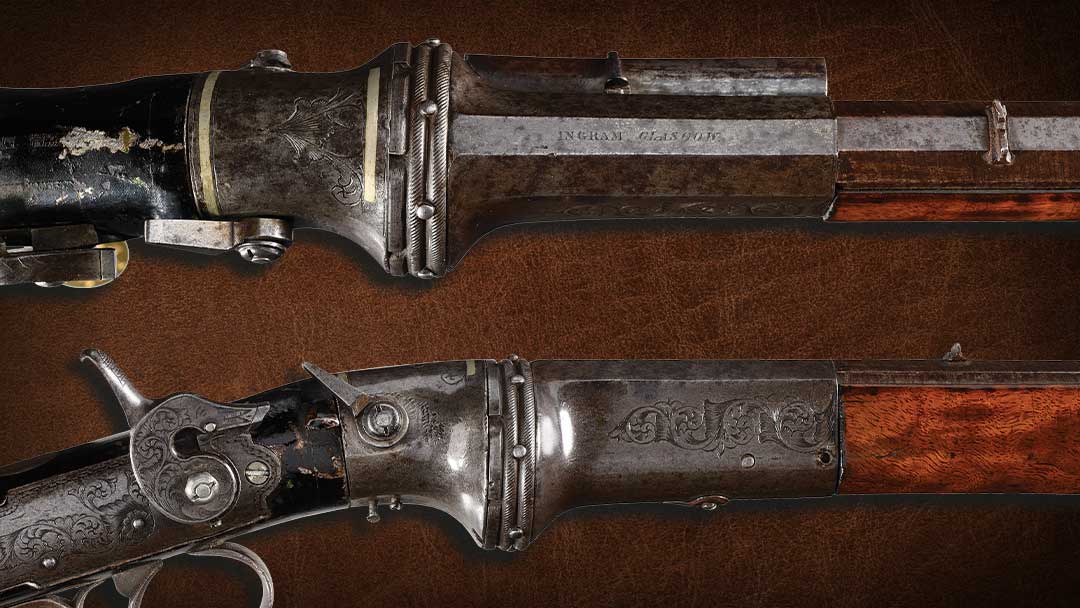
Since the invention of matchlocks, clever gunsmiths have experimented with all manner of ingenious ways to get multiple shots out of a firearm. Because air guns held a considerable amount of charge in their reservoirs they lended themselves particularly well to experiments with repeating systems. The fascinating stock reservoir repeating air rifle below was created by 19th century Scottish gunmaker Charles “Old Charley” Ingram, who was also an accomplished marksman and a sergeant in the 1st Lanarkshire Volunteer Rifles. The rifle employs a 7-shot revolving cylinder that is loaded from a gate on the left of the breech.

An engraved 19th century stock reservoir repeating air rifle by Charles Ingram of Glasgow, Scotland.

Bellows Air Gun

The bellows air gun system appeared in the late 18th century and was powered by a pair of conical leather bellows hidden within their hollowed-out wooden buttstock. The bellows are forced open against the pressure of one or two V-springs, this being accomplished by means of a removable crank. When fired, the air compressed by the sudden closing of the bellows propels the projectile out through the barrel.

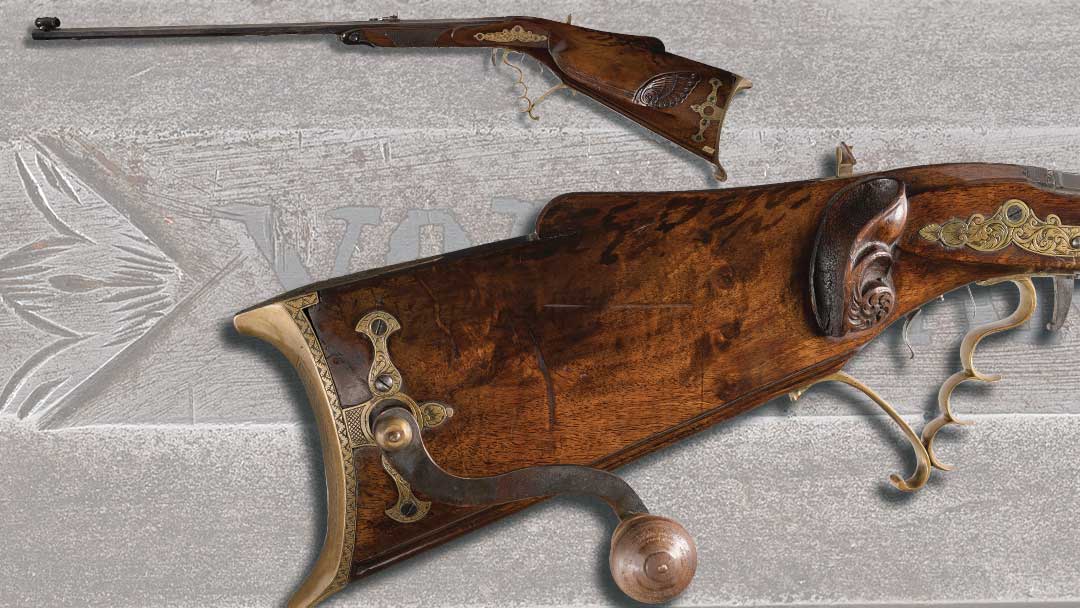
A unique 19th century relief carved, engraved, and silver inlaid bellows crank handle air gun by P. Volkmann of Vienna, Austria.

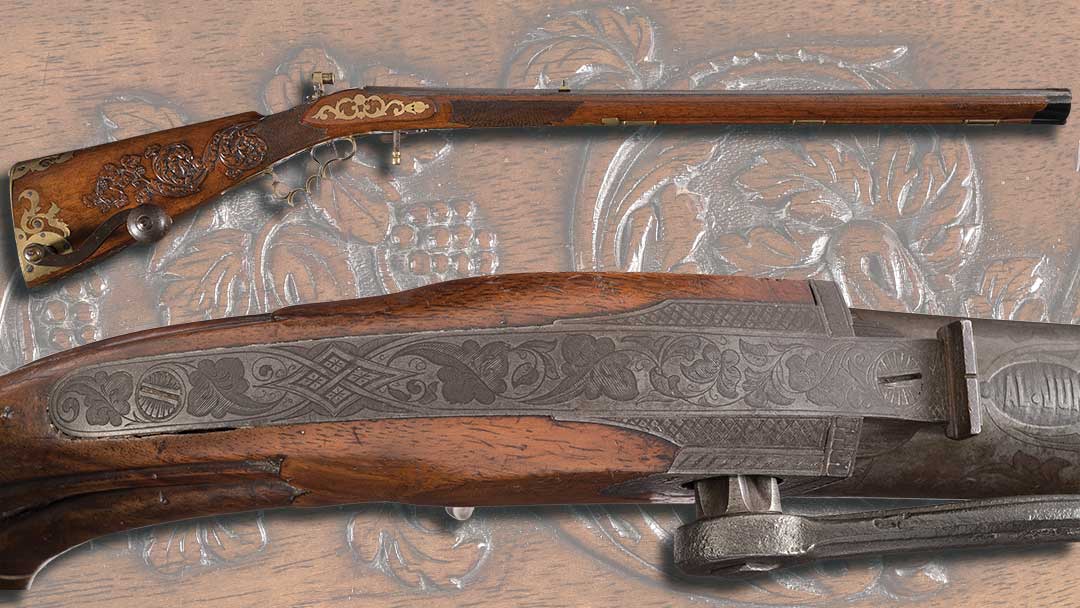
Dr. Robert Beeman speculated that the bellows air guns were styled as nostalgic replicas of wheellock firearms from the 1600s. The example below certainly shares a similar silhouette with its Germanic wheellock predecessors and features aesthetically comparable floral relief carvings and ornate brass inlays and furniture. The bellows were primarily used for indoor target shooting, more often loaded with wax bullets or reusable darts than conventional lead balls.

A 19th century relief carved, unmarked Germanic bellows crank handle air gun.

Crank Wound Air Guns

Crank wound weapons used a spring, piston, and cylinder setup that’s still present in many modern air guns today. Where the crank on a bellows opens up the bellows within the gun, a crank wound air gun is powered by a spring-loaded piston of sorts under pressure that powers the shot. To cock, or compress the mainspring, it was necessary to fit the crank into an aperture of the air gun and turn or wind the handle several times. The crank was typically removed before discharging the weapon.

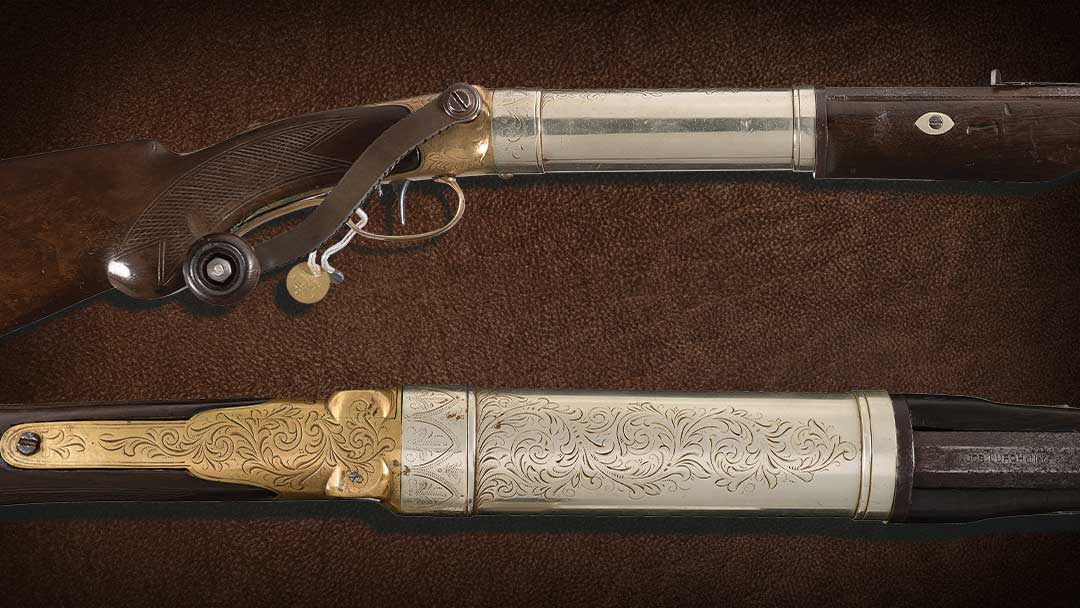
An engraved 19th century crank handle gallery air gun by Joseph Lurch of New York.

The New York manufactured example above demonstrates that these European-born crank handle air guns were eventually produced across the pond as well. As with other air gun genres, crank wound guns could be quite ornate and equally expensive to produce, which proved to be one of the platform’s greatest obstacles toward widespread adoption.

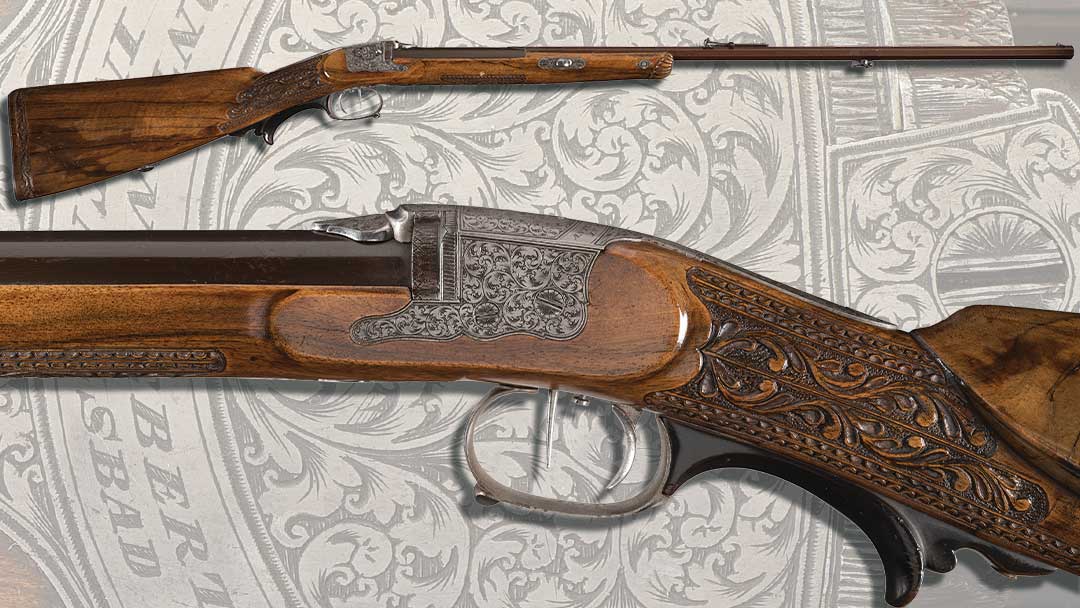
An engraved and relief carved 19th century crank handle gallery air gun by Anton Sebert of Carlsbad, Czechoslovakia.

Like with the bellows system, the crank wound air gun was used primarily for indoor gallery shooting. Though firing at velocities as low as 350 feet per second, smoothbore air guns like the extremely rare pistol variant below could be fairly accurate and were more than capable of entertaining a group of gentlemen testing their shooting prowess.

An engraved Czechoslovakian crank handle barrel air pistol.

Side Lever Air Guns

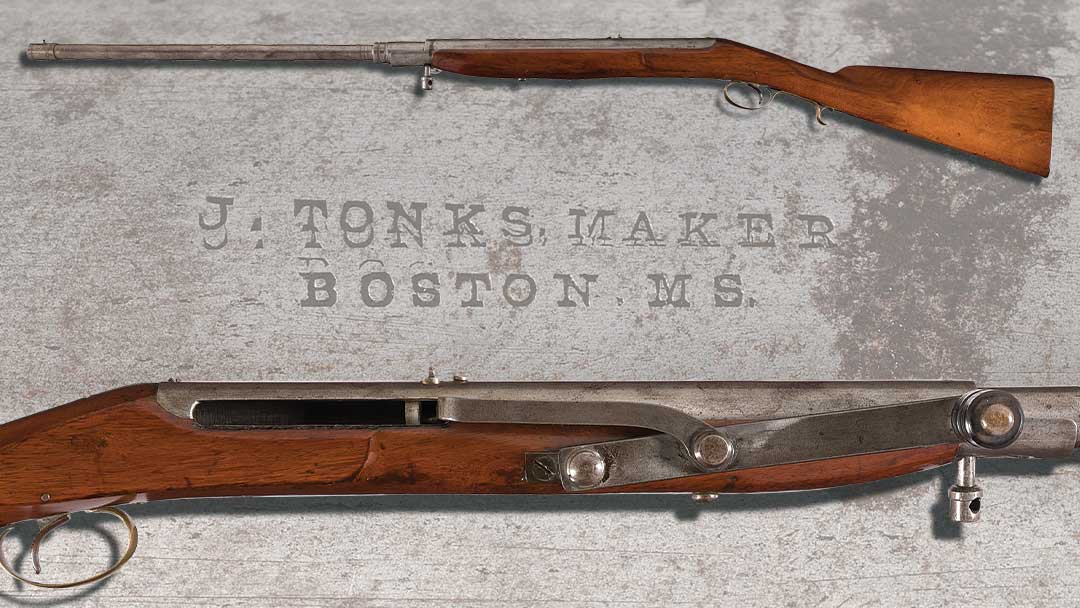
While Dr. Beeman originally specialized in large bore antique air guns, his collection broadened to encompass the expansive diversity found within the genre, including the previously mentioned bellows and crank wound systems. Side lever air guns were another variant of the low-velocity gallery gun concept developed in the 19th century. Under this system, a side-mounted lever is pulled back for cocking in order to fill the cylinder reservoir, and upon pulling the trigger the spring-loaded piston releases.

19th century side lever gallery air gun by Joseph Tonks of Boston, Massachusetts.

Side lever air guns were chambered in small calibers, like the .22 caliber example above and the .28 caliber offering below. Of the several antique gallery gun styles featured in the Dr. Robert Beeman Collection, the spring action side lever will be most familiar to fans of contemporary air guns.

A 19th century unmarked side lever gallery air gun.

Paul Giffard Patent Air Guns

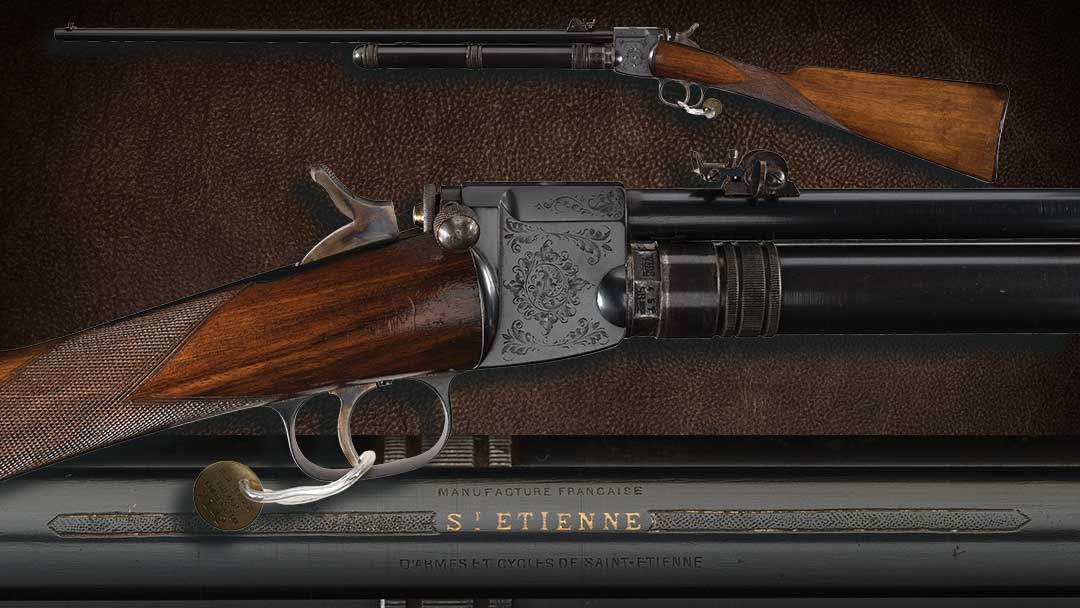
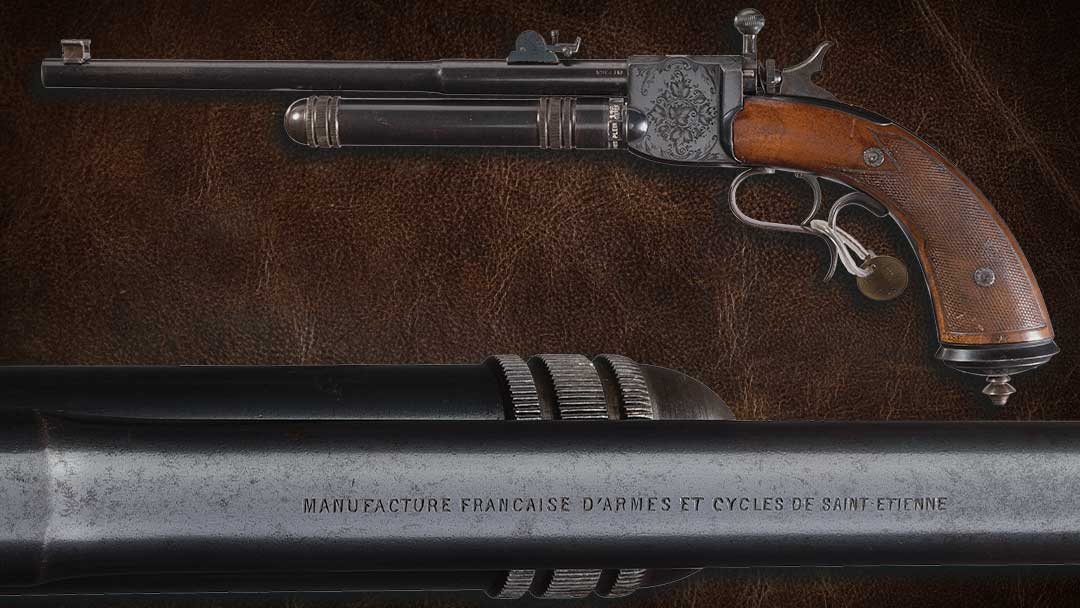
In 1872, French engineer Paul Giffard patented an air gun design that used removable cartridges containing compressed and liquefied gas. The patent covered several of Giffard’s ideas, including a design with a large-capacity reservoir that allowed multiple shots from a single propellant cartridge. Giffard adopted compressed CO2 in the late 1880s, resulting in air guns that could fire between 40 to 60 shots. These guns were first produced by French arms maker Manufacture Francais d’Armes et Cycles de St. Etienne from 1890 to 1894.

An engraved Giffard Patent French Manufrance St. Etienne external hammer Model CO2 gas rifle.

Giffard Patent air guns produced by Manufacture Francaise d’Armes et Cycles de Saint Etienne were offered in 4.5mm, 6mm, and 8mm calibers and included smoothbore, rifle, and pistol variants. These guns featured a cylindrical steel reservoir pressurized to 4,000 p.s.i. An adjustable hammer stop could regulate the duration the reservoir remained open, allowing for longer, more powerful shots that used more gas.

An engraved Giffard Patent French Manufrance St. Etienne external hammer Model CO2 gas pistol.

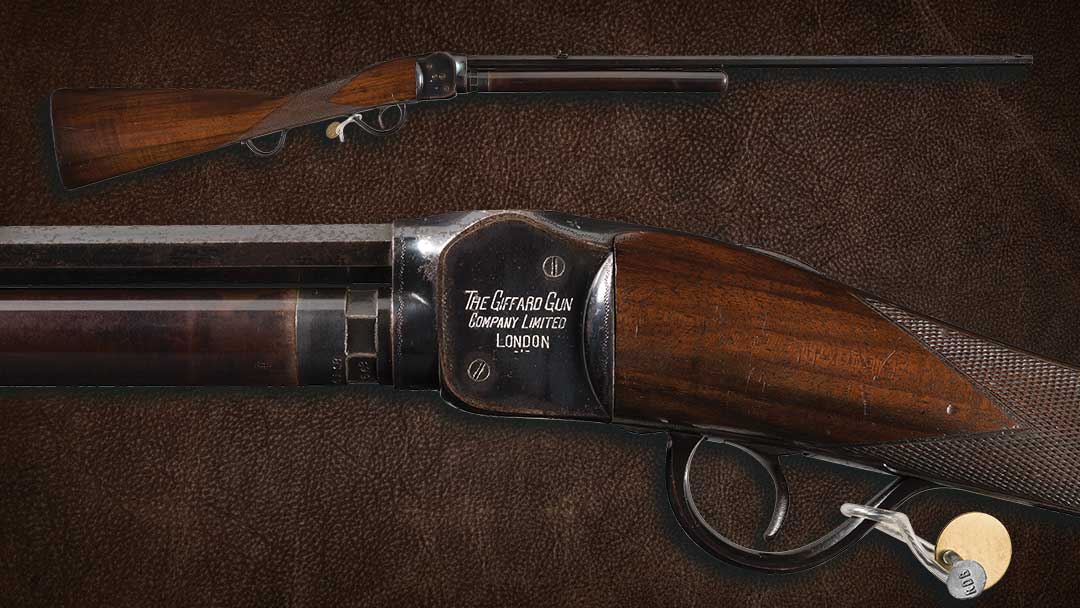
In 1894, Paul Giffard organized the Giffard Gun and Ordnance Co. in London, England. An improved CO2 air gun was manufactured using a lever-action hammerless design that featured an octagonal barrel and a counter for tracking gas usage. Some military and conventional arms manufacturers of the late 19th century took great interest in Giffard’s CO2 air guns and studied their potential in warfare. Though Paul Giffard’s concepts were never adopted for military use, his ideas have gone on to find success with some modern air gun manufacturers such as Crosman and Daisy.

An engraved Giffard Gun Company Ltd. lever action hammerless Model CO2 gas rifle.

Prototype Air Guns

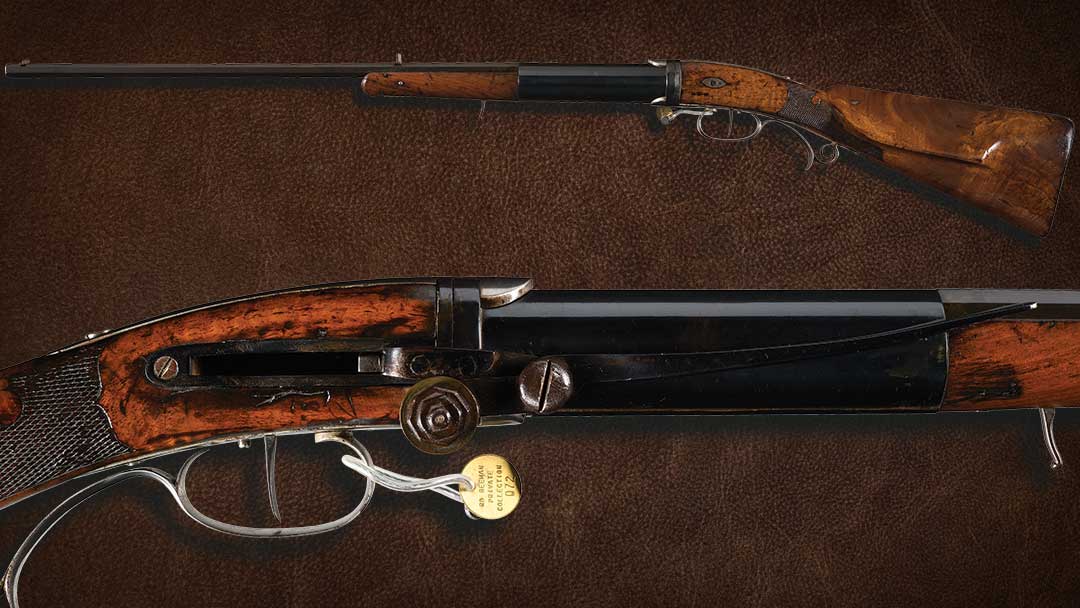
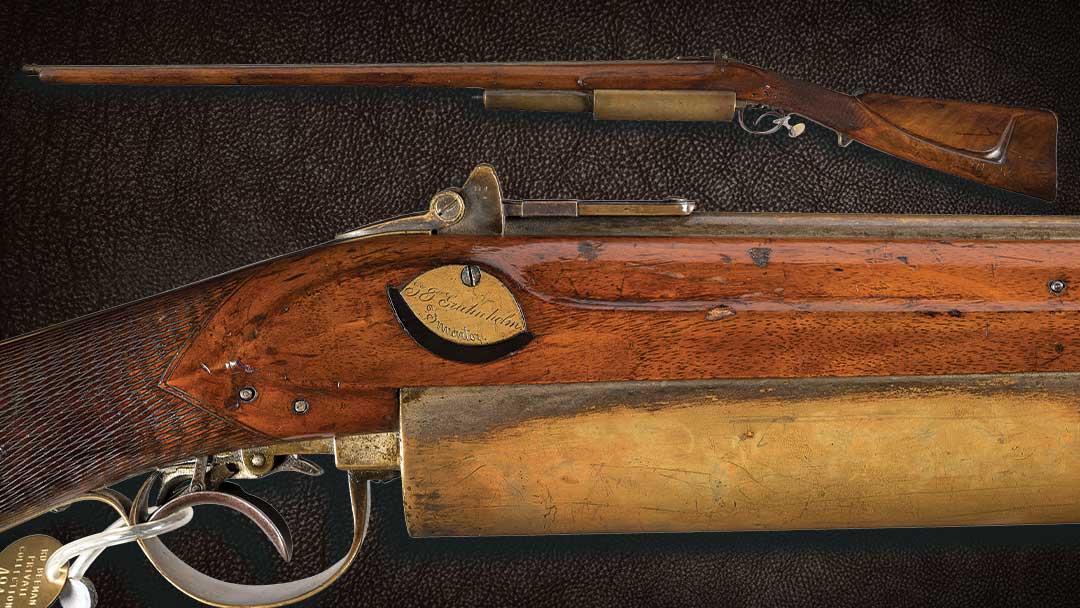
As Dr. Robert Beeman traveled the world building arguably the most expansive antique air collection around, he encountered a number of rarities and one-of-a-kind prototypes in the genre, like this 19th century underbarrel reservoir air gun by J.T. Grahnholm, a gunmaker from Stockholm, Sweden who operated in the mid-19th century. The weapon loads from the breech end with a flip-up breech lever that releases with a button catch visible ahead of the stock comb.

A 19th century prototype underbarrel reservoir air gun by J.T. Grahnholm of Stockholm, Sweden.

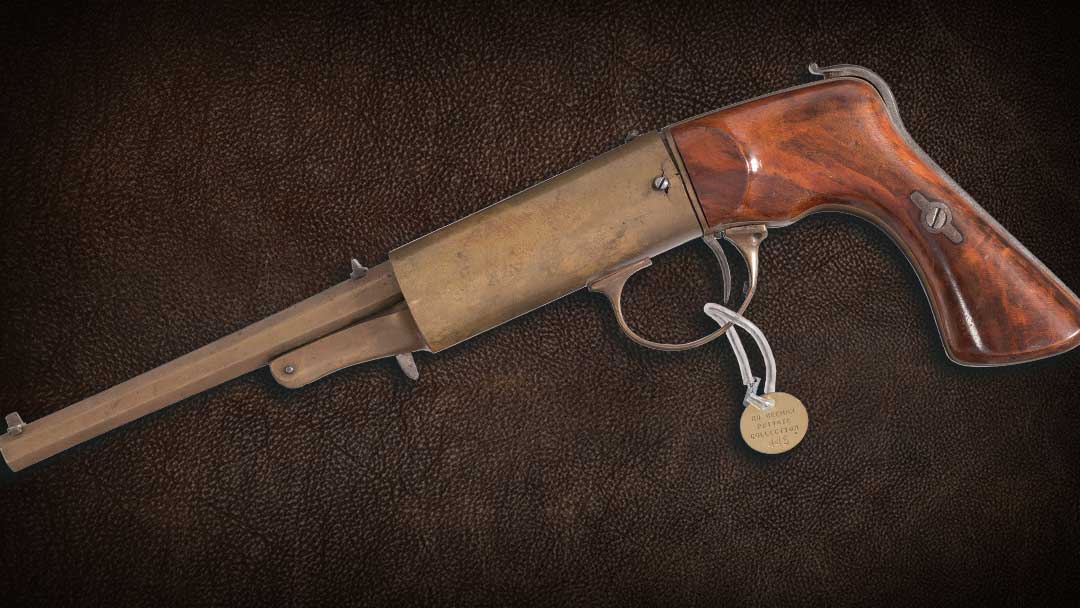
Another noteworthy air gun prototype, this pistol was designed by Edward Lindner and covered under U.S. patent number 37,173 granted on December 16th, 1862. Inventor Edward Lindner is better known to the U.S. martial arms collecting community in relation to his invention of a breech-loading percussion system seen in Civil War carbines and long arms. In the patent text for this air pistol, Edward Lindner states, “My invention consists in the formation of a lever constructed conformably in shape with the handle or stock of the gun or pistol, and in so arranging and combining with it a piston and spring as to compress the latter by direct action on the piston-rod…” and further goes on to describe detailed features of the gun notably including an India-rubber ring for an air-tight joint between the breech of the barrel and face of the air cylinder.

An Edward Lindner 1862 Patent prototype lever cocking air pistol with a tip-up barrel.

Air Guns for Sale and More

A true gentleman collector, Dr. Robert Beeman was an outstanding curator with an eye for the highest quality examples in the air gun genre. Anyone who enjoys art, engineering, craftsmanship, history, and the evolution of technology through the centuries will find something to enjoy in this exceptional arms collection.

A panel scene engraved 19th century stock reservoir tip-up barrel sporting air gun by Joseph Schembor of Vienna, Austria.

As the world’s number one gun auction house since 2003, Rock Island Auction Company has featured some of the most desirable collections in the fine arms pursuit. May’s fantastic lineup includes offerings from the Greg Lampe Collection, the Jim Supica Collection, the Tom Selleck Collection, and more.
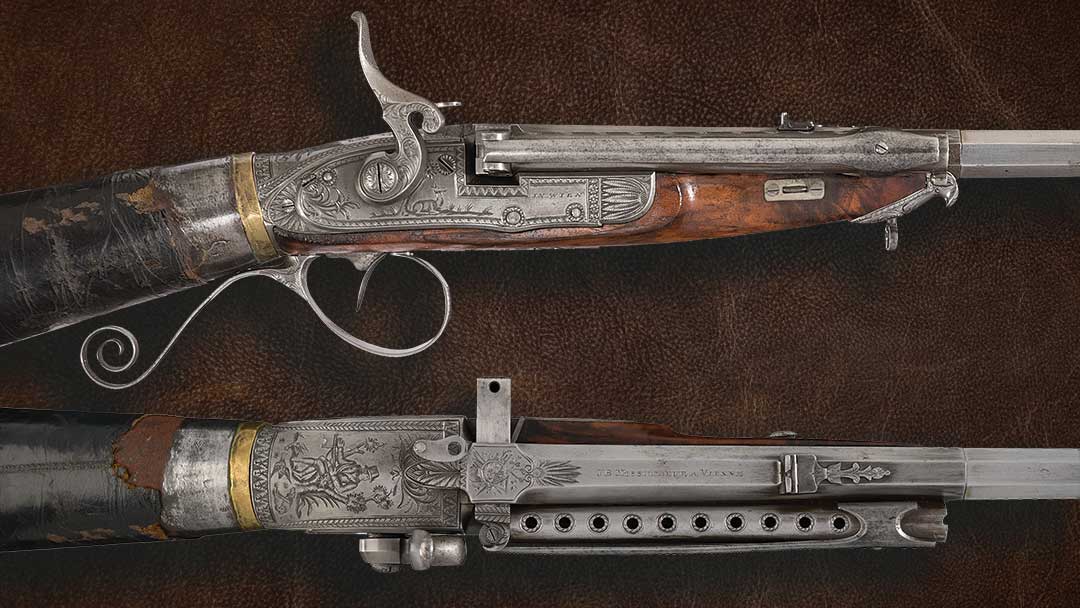
From impeccable condition Civil War guns like this fluted Colt Model 1860 Army to pepperbox pistols, derringers, and Bowie knives, the Greg Lampe Collection has it all.

The finest collections are featured at RIAC, and you can subscribe to the weekly Rock Island Auction newsletter to receive new gun blogs and gun videos on celebrated names like Joe Wanenmacher, George Moller, and Hank Williams Jr.

A star of the silver screen and primetime TV, Mr. Selleck’s appreciation for historic firearms has resulted in a well-curated collection of diverse, high-condition arms, often in rare configurations.

Collectible Firearms for Serious Gun Collectors

0

For the majority of human history, wars were fought only on the ground. The outbreak of WW1 led to martial innovation on a scale never before seen. Technological advancements of the early 1900’s saw troops fighting in a previously unheard of field of combat: the skies. Pilots of the Aeronautique Militaire, United States Army Air Service, and the Deutsche Luftstreitkräfte among others took to the air to fight on behalf of their respective nations in WW1.

These aerial WW1 artifacts are cut-away segments of aircraft canvas. At the center is a cross insignia used by the German Luftstreitkraefte in WW1 and appears to be from a downed Albatross D. III biplane.

At war’s end, it was apparent that aerial combat would not be a fleeting trend but would be a major part of warfare. The interwar years saw great progress in technologies both military and civilian, and aeronautic advancement was drastic. As the start of WW2 drew nearer, planes could now fly farther, carry more personnel and equipment, and utilize a greater variety of weaponry.
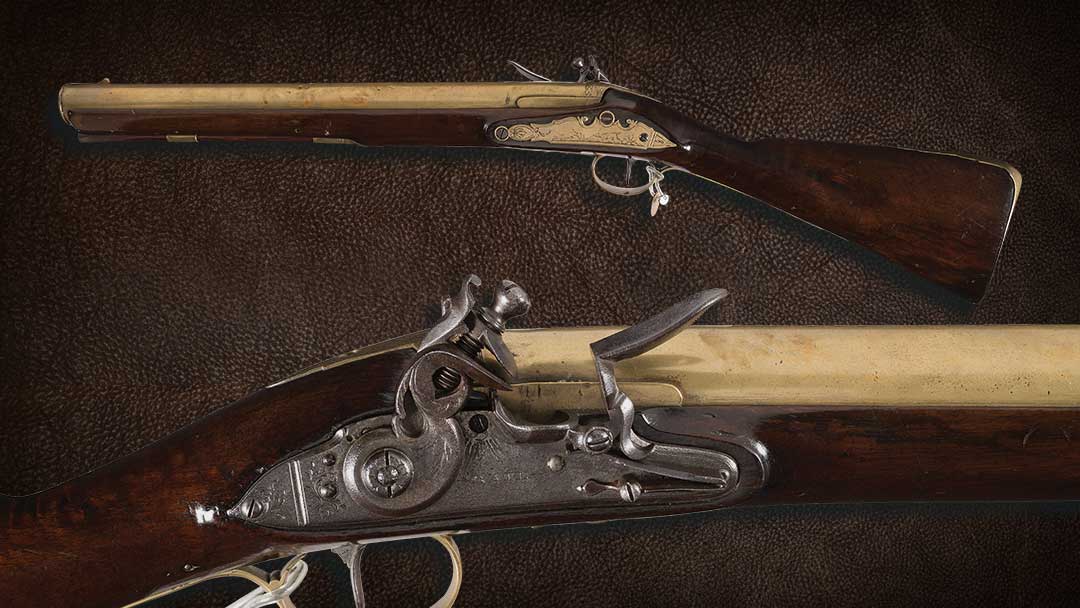
The FG42 assault rifle was developed in WW2 at the direction of Herman Goering and specifically issued to the Fallschirmjäger, the Third Reich’s elite WW2 paratrooper division.

One byproduct of these improved technologies was the ability to mix infantry troops with air troops. Unseen before WW2 was the paratrooper: a highly trained and capable soldier, with deployment capability far beyond the reach of standard ground troops. Many of the famous battles of the war such as D-Day, Operation Market Garden, and Operation Mercury utilized airborne infantry to accomplish their goals.

The FG42 was specifically designed for Germany’s airborne troops called Fallschirmjäger so that it was a gun that could be many things, a squad machine gun, a submachine gun, sniper rifle, and infantry rifle.
American Paratroopers are famed for their actions on D-Day and many times elsewhere during the war, yet the German Fallschirmjäger served as the German counterpart to these elite men. Donning smocks printed in Splinter camouflage, a different helmet than the wehrmacht, and often better weaponry such as the FG-42 and MP40. The Fallschirmjäger proved to be an intimidating opponent to any troops that faced them on the battlefield, and they remain a heavily studied part of airborne history. A three digit serial number Krieghoff FG42 Type I, the legendary gun of Germany’s Fallschirmjäger will be on offer in Rock Island Auction Company’s May 19-21 Premier Auction.
Fallschirmjӓger Origin Story

The origins of the Fallschirmjäger can be traced to the Polizeiabteilung Wecke, a police unit which would eventually become known as Landespolizeigruupe Wecke. Hermann Göring, then Minister of the Interior and a fighter ace during WW1, soon took control of the unit and began emphasizing a more military-style training as opposed to the police duties they were previously responsible for. In March of 1935 the German Wehrmacht began expanding, and the unit soon fell under the personal command of now Minister-President Göring. In September of 1935, the unit became part of the Luftwaffe and was designated as a guard unit trained to repel air raids on the homefront.

The FG42 of the Fallschirmjäger was specially designed for Germany’s WW2 airborne troops.

In response to learning that the USSR had been experimenting with parachute infantry, Germany ordered the training of its own parachute troops in 1936. Finally, on May 11th, 1936, Major Bruno Bräuer became the first German parachute troop to successfully jump from an aircraft. At this point, the groundwork was prepared for further development of a corps of paratroopers. In 1938 the first official airborne division was established. There were 7 divisions in total. Much like their US and British counterparts, Fallschirmjäger troops deployed from planes using the “static line” method. Upon exiting the aircraft, the line that would deploy the parachute was automatically pulled as the troops descended. This method cuts down on accidental opening, or failure to open due to human error removed from the equation. Training also included the use of gliders containing Fallschirmjäger troops. These gliders were useful for insertions that needed to be laser precise. Troops descending in parachutes have a high likelihood of scattering due to wind and other factors. The time was closely approaching for the Fallschirmjäger to prove their mettle on the battlefield.

The Fallschirmjäger, Germany’s elite WW2 paratrooper branch.

The Fallschirmjäger and Fort Eben Emael

The first large and successful operation undertaken by Fallschirmjäger troops occurred on May 10th, 1940 with the taking of Fort Eben Emael in Belgium. Eben Emael was viewed by the German High Command as a crucial point to be captured on the way to taking France. The operation was to be fought by the 7th airborne Fallschirmjäger paratrooper division commanded by Kurt Student. Kurt Student was the commander of the 7th Air Division, and was briefed personally by Adolf Hitler on the importance of the mission.

A Fallschirmjäger camouflage helmet cover

The Fortress was wildly fortified, and multiple levels deep into the ground with seven miles of tunnels. On the surface were several large guns which served primarily as an artillery base defending several important positions in the defense of Belgium. While troops were prepared to jump as they were trained to do, a different plan came to fruition. Instead of jumping, gliders carrying up to 12 troops would land on top of the fort. This was viewed as having a higher level of expected success for two reasons. The first being an aerial jump would need to be exceptionally precise.

Before the FG42 was developed during WW2, German Fallschirmjäger troops jumped without their heavy weapons, which were dropped separately in large canisters.

Such a small landing site with quite a bit of AA fire would require the planes carrying the troops to fly dangerously low. Secondly, aerial jumps required Fallschirmjäger troops to often jump with only pistols and other light weapons while the rest of their heavier equipment would be dropped separately in canisters due to the jump technology they had at the time. Over 36 hours, 85 Fallschirmjäger troops landed in gliders and took the fortress from over 500 Belgian soldiers. The large guns protecting the area surrounding the fort were disabled, the takeover was a total victory. All the Fallschirmjäger who participated in the attack received an Iron Cross, demonstrating the impressive nature of the assault. Not every Fallschirmjäger operation saw the same level of success as the attack on Fort Eben Emael, as the next large-scale operation would show.

The Fallschirmjӓger and the Battle of Crete

After the success seen in Belgium, the Fallschirmjäger were now on the radar for future use in German operations. Operation Mercury, the codename used for the German invasion of Crete, was launched in preparation for the anticipated invasion of Russia. Once again spearheading the operation was Kurt Student and his 7th Air Division. Facing a combined British and Greek force, the goal was to utilize the Luftwaffe and Fallschirmjäger to surprise the enemy before they were able to mount a defense.

As fate would have it though, German communications had been deciphered ahead of time, and the defenders were ready. As the gliders and paratroopers began descending upon Crete the allied guns opened up. Mass casualties were seen in the early stages of the attack. In addition to the Germans losing their element of surprise, they also lost men when attempting to secure their heavy weapons from the containers they were dropped in. Poor communication amongst the allies mixed with additional reserve Fallschirmjäger troops successfully inserting made for the latter part of the battle much more advantageous for the Germans. Crete was seen as a pyrrhic victory for the Germans. They took the island, but at great cost. The Fallschirmjäger suffered heavy losses, and Adolf Hitler was none too pleased, as a higher level of success was expected. He lost so much faith in the Fallschirmjäger that another massive airborne operation was never launched again.

Arming the Fallschirmjäger

Seeing as how the Fallschirmjäger were not a typical infantry unit, they were not equipped as such. While sharing many weapons with the Wehrmacht (in particular the K98 and MP40) they would eventually receive a tailor-made rifle. The FG42 was developed exclusively by the Luftwaffe without Hitler’s approval. Airborne troops needed a weapon different from the infantry. The FG42 was designed to be compact and light enough to jump with on a soldier’s person, while also firing the potent 7.92x57mm cartridge in both semi and fully-automatic. The FG42 was intended to serve as a rifle, offer enough suppressive power to serve as a machine gun, yet agile enough to also serve in a submachine gun role. It could also serve as a sniper rifle with addition of a scope. It would the godfather of the battle rifles at the rise of the Cold War.

Due to the exclusive nature of its development, only a small number were produced and they remain a highly sought-after collector piece. In addition to the FG42, the Fallschirmjäger were issued a unique smock known as the fallschirmschützen. Production on the garment began in 1936, with four different patterns developing. Containing multiple pockets and adjustment points this smock was incredibly useful in the field and made the Fallschirmjäger stand out in comparison to other German troops. Their helmets were another unique addition to their loadout. The Fallschirmjäger didn’t wear the standard Wehrmacht Stahlhelm, but a smaller, more compact shell with a more secure chinstrap. Much of their equipment was camouflaged unlike the rest of the Wehrmacht troops clad in their distinct gray uniforms. Their smocks were printed in the Splittertarnmuster camouflage which again, was reserved for use by the Fallschirmjäger alone. All of this specific equipment helped the Fallschirmjäger to secure victory in many of their battles, or at the very least put up a good fight.

The Fallschirmjӓger and the Normandy Invasion

Prior to the infamous assault on the German defenses in Normandy on June 6th 1944, the German military had been massing units in that area knowing an invasion was coming. The American military led German high command to believe the invasion would likely occur at a city called Calais due to its port. The entire French coast was littered with pillboxes, mines, and machine gun nests.

The Fallschirmjäger were considered an important part of this defensive line, as it was known that both the British and Americans had airborne units and Fallschirmjäger  troops were best equipped to handle paratroopers. Based out of Carentan, the Fallschirmjäger were the first to spot American paratroopers landing north of the town early in the morning on June 6th. This northern area had previously been flooded to hinder movement through what was now basically a swamp. The 2nd Fallschirmjäger Division soon found themselves fighting men from the American 101st Airborne Division. Americans suffered many casualties during the initial drop, and Germany learned from POWs that a more significant force was coming.

A Type 1 FG42 previously sold at Rock Island Auction Company for $316,250.

Following the amphibious invasion the Fallschirmjäger fought fiercely in the defense of Carentan until it was finally lost on June 14th. Despite not fighting in an airborne capacity, the Fallschirmjäger played a critical role in Germany’s attempt to fight against the Allied invasion of France.

This German WW2 FG42 paratrooper rifle is a rarity in firearms collecting and this example, available in the May 19-21 Premier Auction, has a three-digit serial number.

Impact of the Fallschirmjäger

The Fallschirmjäger were crucial in demonstrating to the world that airborne insertion of troops was a feasible tactic. Not every operation went according to plan, but the technology was new, as it was for all factions that utilized airborne troops. The battles described above were not the only operations undertaken by the Fallschirmjäger. They saw noteworthy service in the Africa campaign, as well as on the Eastern Front. Their foes recognized their discipline and training, making their exploits famed even today. Their specialized gun, the FG42 would serve as the template for battle rifles after WW2 on both sides of the cold war. It would also serve as one of the influences on the U.S. military’s M60 machine gun that was a stalwart of the Vietnam War.

Fallschirmjäger at RIAC

As mentioned above, Fallschirmjäger items tend to demand a high amount in the collectors market. Rock Island Auction Company has had the distinct privilege of selling several FG42 paratrooper rilfes, a notable feat considering most people might only see a single one in their lifetime. As well, RIAC has achieved high prices for Fallschirmjäger helmets and smocks. Airborne items are always a source of excitement for collectors. The accomplishments of these units, regardless of which flag they fought under, make for interesting history and items with a good history are always popular.

A historic and rare FG42 will be on offer in Rock Island Auction Company’s May 19-21 Premier Auction, providing collectors of WW2 or German military arms an opportunity to obtain such an impactful and influential weapon.

This FG42, a rare and influential German WW2 paratrooper weapon, will be available in Rock Island Auction Company’s May 19-21 Premier Auction.