Rock Island Arsenal Museum Reopening Nears

0

When the Rock Island Arsenal Museum reopens June 29 after a three-year hiatus and renovation, the wall of guns remembered by many visitors will be gone. In its place will be displays about the island’s history as a prisoner of war camp in the Civil War, the products made in the arsenal shops, and the facility’s workforce and its diversity.

The museum was to be closed starting in March 2021, but shuttered a year early because of the coronavirus pandemic. The Rock Island Arsenal Museum first opened its doors on July 4, 1905 and is the second oldest museum in the U.S. Army system, behind only the West Point Museum.

“We have been working hard here at the museum over the last few weeks, over the last few months, over the last few years to prepare an incredible experience for our visitors to really explore the history here at Rock Island Arsenal,” Museum Director Patrick Allie said in a Facebook video announcing the museum’s reopening date.

An XM 204 Soft-Recoil Howitzer is guided into the entrance to the Rock Island Arsenal Museum in April in this photo from the Museum’s Facebook page. The Museum will reopen on June 29.

The museum’s $2 million renovation is the first facelift the museum has had in 80 years. The Museum has been posting updates on its Facebook page as the June 29 reopening has grown closer.

“The Rock Island Arsenal Museum has long been a cornerstone of the arsenal and the Quad Cities community,” Col. Daniel Mitchell, RIA garrison commander said to Army public affairs. “This is an important revitalization that will be a community connector for us as we remind the public that this is their Army and their Arsenal.”

What’s New at the Rock Island Arsenal Museum?

The Museum will share the arsenal’s and the Quad-Cities’ history as part of the national defense effort since it opened and have exhibits on the workforce noting the contributions of women and African Americans.

African-American-Arsenal-employeeWhen the Rock Island Arsenal Museum reopens on June 29, its exhibits will focus on the history of the facility, its workforce, and the arsenal’s contributions to national defense. This photo highlighting African American contributions to the Arsenal’s war effort dates back to 1943.

It will have virtual and hands-on exhibits on things like the history of street names on Rock Island Arsenal, the history of the 108th Infantry Regiment, a unit of African American soldiers tasked with guarding Rock Island Arsenal’s Civil War prisoner of war camp, and interactive bridge building related to the first railroad bridge over the Mississippi River and the Government Bridge that opened in 1905.

Guns will still be part of the museum, but in a historical context, like the manufacture of the Springfield Model 1903 bolt action rifle, according to Allie. He said that he learned from talking to people they wanted more about the Arsenal’s evolution along with the Army, national defense, and the Quad-Cities. Rock Island Arsenal has been involved in national defense from the Spanish-American War to the present-day Global War on Terrorism.

“Since opening to the public in 1905, the Rock Island Arsenal Museum has gone through several updates and revamps to better support its mission and tell the story of the Army,” he told Army public affairs that ran a series of articles on the museum renovation. “Many of the displays had little real connection, if any, to the Arsenal’s history. The new exhibits will focus on the history of the Arsenal and how it fits into the wider Army Organic Industrial Base, which is supported by multiple commands headquartered at Rock Island Arsenal.”

Rock-Island-Arsenal-Museum-wall-of-gunsWhen the Rock Island Arsenal Museum reopens on June 29, the wall of guns that many will remember from their youth will no longer be a part of the exhibits on display. The museum’s collection started in 1903 with 15 boxes of materiel that were mostly foreign weapons brought together to study.

When the Rock Island Arsenal Museum reopens, it will feature more than 250 artifacts along with hundreds of photographs to go along with the virtual and hands-on exhibits. Though the wall of guns will be gone, another popular exhibit will return – a stuffed horse displayed by the Army at the 1904 World’s Fair from Rock Island Arsenal. The horse was used in the Arsenal’s leather shop for fitting harnesses.

Rock Island Arsenal manufactured personal equipment for infantry, cavalry, and artillery as well as small field guns, seven-inch howitzers, and five-inch siege guns. In World War 1, Rock Island Arsenal accounted for $90 million in war materiel production, building gun carriages, limbers, battery wagons, recoil mechanisms, and rifles. It acquired the Springfield M1903 production, recoil mechanisms, and limbers for the French 75mm field guns and the Mark VIII tank.

Rock-Island-Arsenal-Museum-Mark-VII-tankA Mark VIII tank being manufactured at Rock Island Arsenal in 1919. When the Rock Island Arsenal Museum reopens on June 29, its focus will be on the arsenal’s history, workforce, and contributions to national defense, including the many items made in peacetime and war.

The arsenal doubled its output in World War 2, including gun mounts for air and sea use. “During the Korean War, the arsenal was responsible for designing, developing and manufacturing the Super Bazooka.”

During the Cold War, the arsenal became the home of the General Thomas J. Rodman Laboratory that did weapons design and development. Making the British L119 field gun became a responsibility while it also made the M198 howitzer for export sales. During the Global War on Terror, Rock Island Arsenal performed up armor and replacement work that continues today.

That is why the museum’s message has changed.

“What we sought to do in the new design is to better integrate the weapons that had something to do with Rock Island Arsenal, things that were made here or experimented on here, or small arms that had some sort of linkage to RIA and weave them into the broader interpretation,” Allie said.

Horse-on-displayThough the focus of the Rock Island Arsenal Museum is changing to the history of the facility, its people, and contributions to national defense, some things will stay the same. A taxidermied horse that served as a model for fitting harnesses made in the shops — and a visitor favorite — will still be on display.

Rock Island Arsenal Museum History

The Rock Island Arsenal Museum started in 1903 with 15 boxes of materiel sent by U.S. Chief of Ordnance Major General William Crozier for “the purpose of preserving it in a Military Museum to be established at the Rock Island Arsenal.”

Those 15 boxes included weapons and accessories from other countries that had been compiled for study. Crozier’s further directions included “a suitable building be selected as a museum to display this ordnance materiel for research and for the interest of the general public.”

Part of the government display at the 1904 World’s Fair in St. Louis was directed to Rock Island Arsenal and included weapons confiscated in the Philippines insurrection and the taxidermy horse that have been long-time favorites of museum visitors.

Rock-Island-Arsenal-Museum-pinsAmong the Rock Island Arsenal Museum collection are these pins that promoted the arsenal. The museum will reopen on June 29 after being closed for three years and a $2 million renovation.

Ten years after the Rock Island Arsenal Museum opened it was moved as the United States cranked up defense production. The collection went into storage. The museum reopened on July 4, 1919 and given the name The Rock Island Arsenal Museum, focusing on small arms and ordnance with a touch of arsenal history added.

The museum closed during World War 2 as space was again needed for defense production, reopening in May 1948 in Building 60 where it remains to this day. In 1959, the museum was renamed the John M. Browning Memorial Museum “in recognition of Mr. Browning’s contributions to ordnance technology and the armed forces.”

The name returned to Rock Island Arsenal Museum with the theme “people, processes, and products” to tell the history of the arsenal, its commands, and products.

Rock-Island-Arsenal-Museum-female-arsenal-employeeWhen the Rock Island Arsenal Museum reopens on June 29 after a $2 million renovation, it will explore the facility’s history, its workforce diversity, and contributions to national defense.

Rock Island Arsenal Museum is part of the Army Museum Enterprise that oversees about 30 museums in the U.S., Germany, and South Korea with 550,000 artifacts. Rock Island Arsenal Museum has about 7,000 pieces in its collection. That collection includes five weapons confirmed from the Little Bighorn battlefield, several marked with serial number one, and three rifles gifted to a commanding general in 1958 by the Shah of Iran.

Visit the Rock Island Arsenal Museum This Summer

Admission is free to the Rock Island Arsenal Museum, so after it reopens on June 29 take time this summer to visit and find out the importance of this facility to the defense of the United States, the Quad-Cities, and the facility’s fascinating history.

For more information on visiting the island, including visiting hours, where to access the island and what forms of identification you’ll need, please click here to visit the Rock Island Arsenal webpage.

Rock-Island-BarracksRock Island served as a Confederate prisoner of war camp during the Civil War. Construction of Rock Island Arsenal began during the Civil War, but the clock tower was the first building completed in 1867.

Sources:

Rock Island Arsenal Museum director keeps a foot in the past with his face to the future

Newly renovated RIA Museum to re-open June 29

Manufacturing at Rock Island Arsenal

Rock Island Arsenal Museum

Collectible Firearms for Serious Gun Collectors

0

John Moses Browning introduced the world to some of the finest weapons, including numerous sporting arm models that are still widely fielded today. Browning shotguns include some of the most popular platforms in history. From Auto-5 to the Browning Superposed, the inventor’s influence on the genre is immeasurable.

Rock Island Auction Company offers a large swath of Browning shotguns for sale during its June 21-23 Sporting & Collector Auction.

The Browning shotguns featured below represent a small sample of the history on display in Rock Island Auction Company’s June 21-23 Sporting & Collector Auction. Click on the images throughout this article to learn more about each fantastic firearm.

The Auto-5 (top) and a Browning Superposed (bottom) are two of the most prolific Browning shotguns.

Browning Shotguns History

John Moses Browning was born in Ogden, Utah, in 1855 and built his first gun at age 13. Ten years later, he partnered with his brother Matthew and formed the Browning Brothers Company. John Browning sold his 1879 patent for a single shot rifle design to Winchester in 1883, beginning a decades-long partnership with the firearms giant that would result in some of the most famous American shotgun designs.
The Winchester Model 1885 was patented in 1879 by John Moses Browning and originally manufactured in the Browning Bros. shop in Ogden, Utah, before Winchester purchased the rights.

Browning’s first gun design was a sporting arm, a single shot rifle assembled from spare parts at his father’s shop. Over the next five decades, Browning went on to hold 128 firearm patents, including some of the finest shotgun concepts in history. Browning shotguns innovated in every corner of the genre, setting standards in their field that continue to dominate the market today.

A Winchester 1887 shotgun (top) and a Winchester 1885 High Wall rifle (bottom) two early designs from John Browning.

The Winchester Model 1887 Shotgun

While the double barrel shotgun was a frontier mainstay, new gun designs like Christopher Spencer’s slide action Model 1882 allowed for greater capacity. John Browning was interested in developing his own take on the pump action shotgun, but Winchester insisted on a lever action model instead.

The first of many Browning shotguns to hit the market, the Winchester Model 1887 lever action.

In the late 19th century, Winchester’s entire brand was centered around lever action long arms, so John Browning took to the drawing board and was granted U.S. Patent 336,287 for what would become the Winchester Model 1887 lever action shotgun. The later Winchester Model 1901 was a smokeless powder version of the Model 1887 and offered in 10 gauge only, but by this time the writing was on the wall for Browning’s unique lever action shotgun.

The Winchester Model 1893 Shotgun

Though the Model 1887 experienced modest success, Winchester soon came to their senses and encouraged Browning to pursue his original idea for a pump action shotgun. In 1890, John Browning filed a patent for his second pump repeater design, his first being an 1888 patent for what would become the Winchester Model 1890 rifle. Browning’s U.S. Patent 441,390 shotgun concept would mark the birth of one of America’s most iconic military weapons.

This exceptional Winchester Model 1893 slide action shotgun sold at RIAC in September of 2019.

As Browning shotguns go, the Winchester Model 1893 was a sound design that was mostly hindered by circumstance. Firearms technology had been rapidly evolving, and the introduction of smokeless propellants required a sturdier frame than the Model 1893 was conceived to handle. Though production life for Browning’s first pump action shotgun was cut tragically short, its 1897 upgrade would go on to become a legend.

The Winchester Model 1897 Shotgun

The last decade of the 19th century was a busy time for John Browning, who introduced icons like the Winchester Model 1892, Model 1894, and Model 1895 lever action rifles, laid the foundation for several classes of blowback and recoil-operated pistols, and even found time to invent the M1895 “Potato Digger” machine gun. At this stage in his career, creating a take down shotty that would go on to sell over one million units was just another day at the office for the venerable inventor.

One of the most popular John Browning shotguns for sale in the current collecting market, the Winchester Model 1897.

The Winchester Model 1897 introduced an improved slide lock to reduce jamming and featured a barrel and magazine tube that could be quickly removed. This later feature set a market standard that has become nearly universal today. Like most Browning shotguns, the Model 1897 was first introduced as a civilian sporting arm. The shotgun’s application for military service was quickly embraced during the Philippine-American War and again 15 years later during WW1, where Browning’s design was officially adopted as the U.S. “Model of 1917 Trench Shotgun.” Modifications for battle included a bayonet lug, a heat shield, and a shorter barrel for maneuverability. The Model 1897’s lack of trigger disconnector also allowed the weapon to be slam-fired, enabling a trained soldier to empty their trench gun in seconds.

A Pauline Muerrle master engraved Winchester 20 Gauge Model 12 “Skeet Grade” shotgun. An evolution of John Browning’s Model 1897, the Winchester Model 1912 became the most popular pump until the Remington 870.

If John Browning’s Model 1897 set new standards for shotgun design, the Winchester Model 12 arguably perfected them. Serving as the Model 1897’s direct successor, the Model 12’s improvements included shrouding the exposed hammer, strengthening several of the internals, and adding a separate bolt release that could be activated by pressing a button near the trigger guard.

The Browning Auto-5

In the same month Colt placed Browning’s .38 caliber recoil-operated pistol on the market, the Sight Safety, John Browning filed the first of four patents for a new long-recoil semi-automatic shotgun concept. Due to an ongoing conflict over royalty payments and a dispute concerning the aesthetic and market potential for the new autoloader design, President T.G. Bennett of Winchester lost out on what would become the most popular line of Browning shotguns.

The king of Browning shotguns, a factory engraved Belgian Browning Auto-5 “Twenty.”

John Browning would ultimately sail to Europe and sign a contract granting Fabrique Nationale exclusive global rights to produce and sell his autoloading shotgun during its initial run. Hitting the market in 1902, the Browning Automatic 5 (often referred to as simply the A-5) was the world’s first successful semi auto shotgun. Widely advertised as “Five shots under your finger” and nicknamed “Humpback” due to its trademark squared receiver, the A-5 developed a reputation as a versatile workhorse that still endures more than 12 decades after its debut.

Remington Model 11, a licensed version of Browning’s Auto-5 shotgun produced for the American market.

The story of Browning shotguns takes a twist with the Remington Model 11, a licensed version of the Auto-5. Before John Browning traveled to Belgium to ink his deal with Fabrique Nationale, he was scheduled to meet with Remington’s President Marcellus Hartley in January of 1902. Mr. Harley passed away of a heart attack before any deal for the Auto-5 could be finalized, but two years later Browning would approach Remington again, this time offering Remington the rights to produce the Auto-5 shotgun design in the United States if they agreed not to export, allowing FN to retain export rights to every other market. This licensed version of Browning’s autoloader was dubbed the Remington Model 11.

The Stevens Model 520 and Model 620 Shotgun

As the Auto-5 began its successful run, John Browning continued to explore new shotgun designs and filed two patents for a “hammerless” pump shotgun with a unique take down barrel and a bolt that locked into the top of the receiver. Stevens Arms Company purchased the rights and began manufacturing the shotgun in 1909.

One of the Browning shotguns commissioned for warfare, a WW2 U.S. marked Stevens Model 620.

One of the lesser-known Browning shotguns, the civilian version of the Stevens Model 520 continued production until WW2. Both the Model 520 shotgun and its streamlined successor, the Model 620, were adopted for military service, redesigned with shorter barrels, heat shields, and bayonet lugs, and lacking a trigger disconnector to enable slam firing.

The Remington Model 17 Shotgun

Hot off the heels of his achievement developing the 1911 pistol, Browning filed another patent on a pump shotgun design in 1913 that caught the attention of Remington Arms, but manufacturing was delayed by WW1. Before Remington resumed sporting arm production in 1921, John Pedersen, another prolific American inventor with a reputation to rival Browning’s, made changes to Browning’s design, and the Remington Model 17 was born.

A scarce factory engraved Remington Model 17 Grade D “Peerless” slide action shotgun was offered by RIAC in September of 2015. Like many Browning shotguns, the Model 17 went on to inspire some of the most popular designs in the industry today.

Though only manufactured for 12 years, the 20 gauge Model 17 would serve as the blueprint for future success stories like the Remington Model 31 and the Ithaca Model 37 and heavily inspire platforms like the Browning BPS and Remington 870.

The Browning Superposed Shotgun

The last in a long line of Browning shotgun designs conceived by the prolific inventor, the Browning Superposed offered an affordable over/under to the public for the first time. In 1923, John Browning filed the first of two patents for the concept, but he sadly passed away before the gun could be placed into production.

Before his death in late 1926, John Moses Browning gifted the world one last shotgun design with the Browning Superposed.

After his father’s death, Browning’s son Val Allen Browning, who had been working in Belgium as the Browning Arms representative to Fabrique Nationale, took it upon himself to complete his father’s two unfinished designs: the Superposed shotgun and the Hi Power pistol. The Browning Superposed hit the market in 1931 and had a greater influence on the popularity of over/under shotguns than any other model.

Browning shotguns for sale! Rock Island Auction Company features Browning shotguns for every collecting aspiration, including some of the finest Browning Superposed in the sporting arms pursuit.

Until the Superposed was released, most over/under shotguns were high-priced, made-to-order guns from Europe and Great Britain and were unable to compete with the popularity of their side-by-side counterparts in the United States. With the Superposed shotgun, John Browning saw an opportunity to develop a quality production-made over/under that could be priced to compete in a crowded market. The model went on to become one of the most popular over/under shotguns in the world.

The Ithaca Model 37 Shotgun

With the raging success of Winchester’s Model 12, the Ithaca Gun Company needed a shotgun that could compete. The story behind the Ithaca Model 37 shotgun started with the aforementioned Remington Model 17 and U.S. Patent 1,143,170 filed by John Moses Browning in 1913. Ithaca patiently waited for John Browning’s patent to expire in 1932, but then discovered John Pederson held a separate patent covering his modifications to the Model 17 that didn’t expire for another four years.

Taking inspiration from Browning shotguns like the Remington Model 17, the Ithaca Model 37 has stood the test of time.

In the meantime, Ithaca designer Harry Howland implemented a series of refinements intended to simplify production and lower costs. All the waiting paid off, and the Model 37 quickly earned a reputation as a rugged autoloader that lent itself perfectly to military service. The Ithaca Model 37 has seen service in WW2, Korea, and Vietnam, has become one of the most widely adopted police shotguns, and became a popular field gun throughout the Midwest.

The Legacy of John Browning Shotguns

John Browning shotguns set the standard for performance and features for decades to come. Browning’s designs remain extremely popular among civilian markets and police departments around the world, with many of his inventions so successful that they’ve seen little modification to the original design.

Browning shotguns from two eras, the Ithica 37 (top) and the Browning BPS (bottom).

John Moses Browning’s longtime partner Fabrique Nationale purchased the Browning Company in 1977. Though manufacturing is performed in Belgium, Japan, Italy, and Portugal, the Browning Company maintains its headquarters in Mountain Green, Utah, 16 miles from John Browning’s hometown of Ogden. The company’s catalog continues to feature shotguns based upon or heavily influenced by John Browning’s original designs.

A factory engraved and gold inlaid Browning Citori XT Trap Unsingle shotgun two barrel set with case and boxes, one of the numerous models inspired by John Browning shotgun designs. Available this August.

Browning Shotguns for Sale and More

Just as John Moses Browning set out to offer quality shotguns that could cater to both the blue-collar hunter and the gentleman shooter, the impressive selection of Browning shotguns for sale at Rock Island Auction Company includes examples for every taste and budget. From benchmark pieces to your next field gun, from pristine to gracefully restored, there’s a Browning shotgun to be found that’s perfect for your collection.

Rock Island Auction Company’s June 21-23 Sporting & Collector Auction includes an assortment of Browning shotguns for sale and hundreds of other sporting arms for every hunting, shooting, and collecting aspiration.

For more gun blogs and gun videos on both historic and modern sporting arms, subscribe to the weekly Rock Island Auction newsletter, where we feature classic models and brands like Parker Brothers, Abercrombie and Fitch, and the Winchester Model 21 from the early 20th century, as well as historic curiosities like the Paradox gun, the combination gun, and the punt gun mega fowler.

Find the finest Browning shotguns for sale at Rock Island Auction Company.

Collectible Firearms for Serious Gun Collectors

0

Colt revolvers are always popular, whether they are antiques or modern guns, and in Rock Island Auction Company’s Sporting & Collector Auction they can be found at a price to suit any collector. Of the 743 lots of revolvers in the June 21-23 auction, more than 400 are made by Colt.

Some Colt revolvers have a name attached to them, while others hint at an historic moment of time, while many are just plain cool. Take a look at a few Colt revolvers available in the June 21-23 Sporting & Collector Auction.

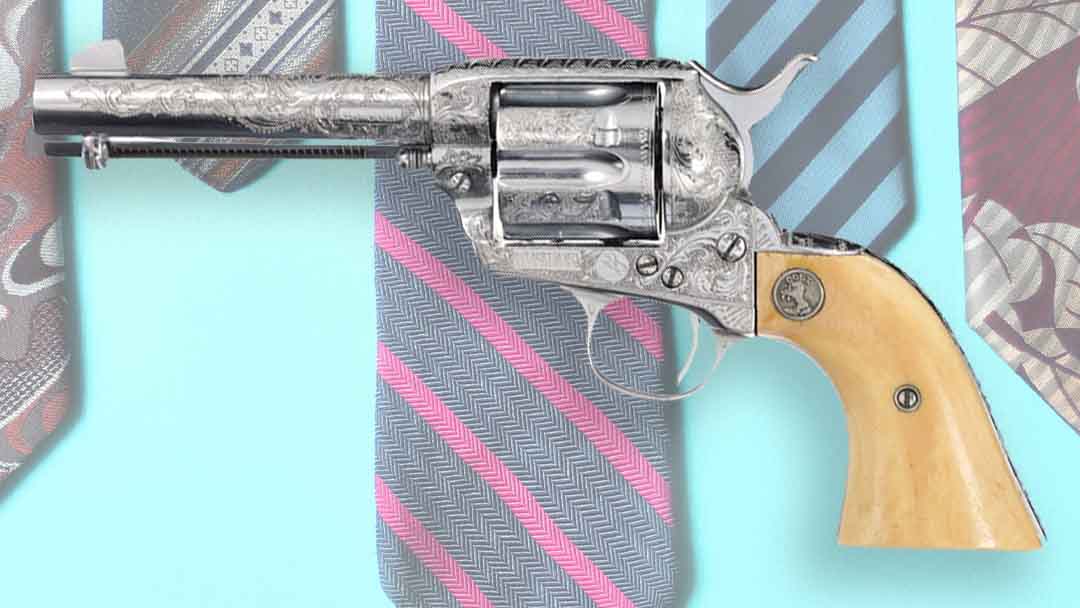
Monte Hale’s Single Action Army Colt Revolver

Monte Hale was among the last of the living singing cowboys that thrived on the silver screen in the 1940s and early 1950s. A Colt Single Action Army made in 1897 that Hale gave to a friend is among the cool revolvers in the June S&C Auction.

With his natural down-home style of singing, he was recommended to Republic Pictures by a theater owner who headed up the World War 2 “Stars Over Texas” Bond Drive. Borrowing money, he made his way to California where he was offered a seven-year contract. His likeness was used in a series of 54 Monte Hall comic books for Fawcett Publishing that serialized his films. They were translated into 27 languages.

Hale made nearly three dozen films for Republic Pictures including 19 playing a singing cowboy character named “Monte Hale,” with titles like “Prince of the Plains,” “Son of God’s Country,” “Man from Rainbow Valley,” and “California Firebrand.”

Singing Cowboy Monte Hale presented this gun to a friend. The backstrap is inscribed “To Larry Wilson/From His Friend/Monte Hale”. Left grip has a cowboy hat and “MH” monogram. Along with his silver screen career in the 1940s and 1950s, he teamed with another singing cowboy, Gene Autry, and along with their wives, founded the Autry Museum of the American West.

As the B-movie singing cowboy films faded he made television appearances in shows like “Gunsmoke” and “Adventures of Wild Bill Hickok.” He impressed as Rock Hudson’s lawyer, Bale Clinch, in James Dean’s last movie “Giant.” His final film was 1966’s “The Chase,” that had a star-studded cast that included Marlon Brando, Robert Redford, and Jane Fonda (or the 1973’s Marty Robbins flick “Guns of a Stranger” due to conflicting sources).

Away from the silver screen he was good friends with fellow singing cowboy Gene Autry. Autry had always wanted to start a museum devoted to the people and cultures of the American West. The two former singing cowboys and their wives were dining in Palm Springs and Hale asked his friend when he was going to make it happen. The two couples founded the Autry Museum of the American West in 1988. Their wives, Jackie Autry and Joanna Hale were driving forces of the museum, while Hale served on the board of directors from the start until his death in 2009 at the age of 89.

Colt Revolver with Tiffany Grip

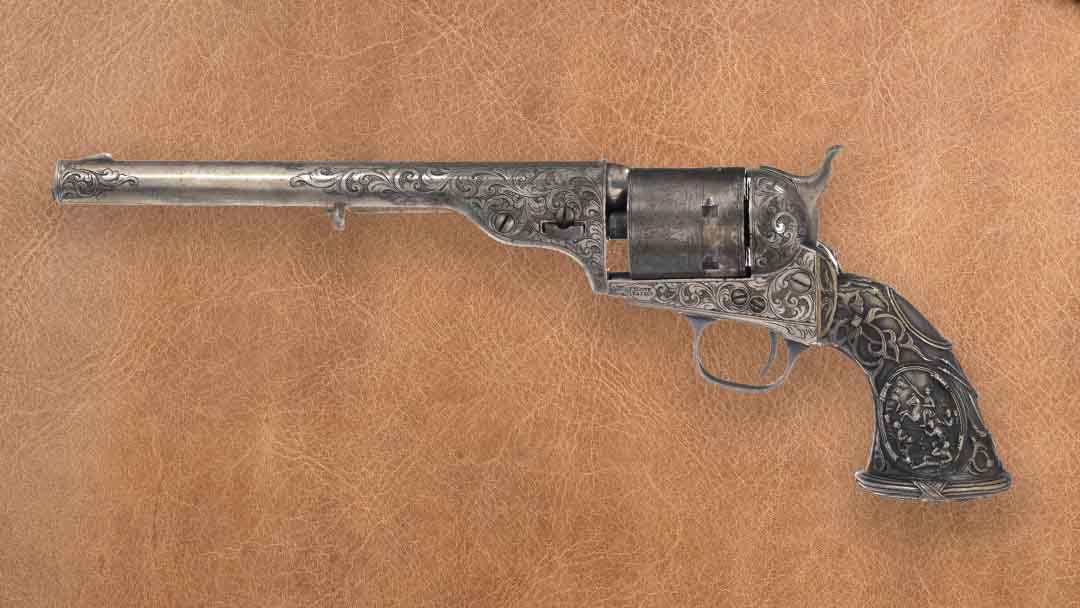
Speaking of the Autry Museum of the American West, it has a Colt revolver with Tiffany style grips in its collection. The jewelry maker Tiffany & Co. started making cast-metal grips for Colt revolvers, like the Colt Model 1871-72 Open Top with Tiffany-style grips that is available in Rock Island Auction Company’s June Sporting & Collector Auction.

Tiffany made three grip designs: Civil War battlefield scenes, the American and Mexican eagles, and the “Missionary and Child” that was fairly rare. Many Tiffany-gripped guns were marketed through Schuyler, Hartley & Graham which employed L.D. Nimschke as its engraver so he, or someone from his workshop did the engraving.

This Model 1871-72 is already rare because it was quickly obsolete because of the Colt Single Action Army. Let alone examples as extensively engraved as this. Add to that the silver-plated bronze-cast grips with a shield and stand of flags on the back and relief Civil War battle scenes, and you have an amazing opportunity for a collector.

Lightning Strikes Colt Revolvers

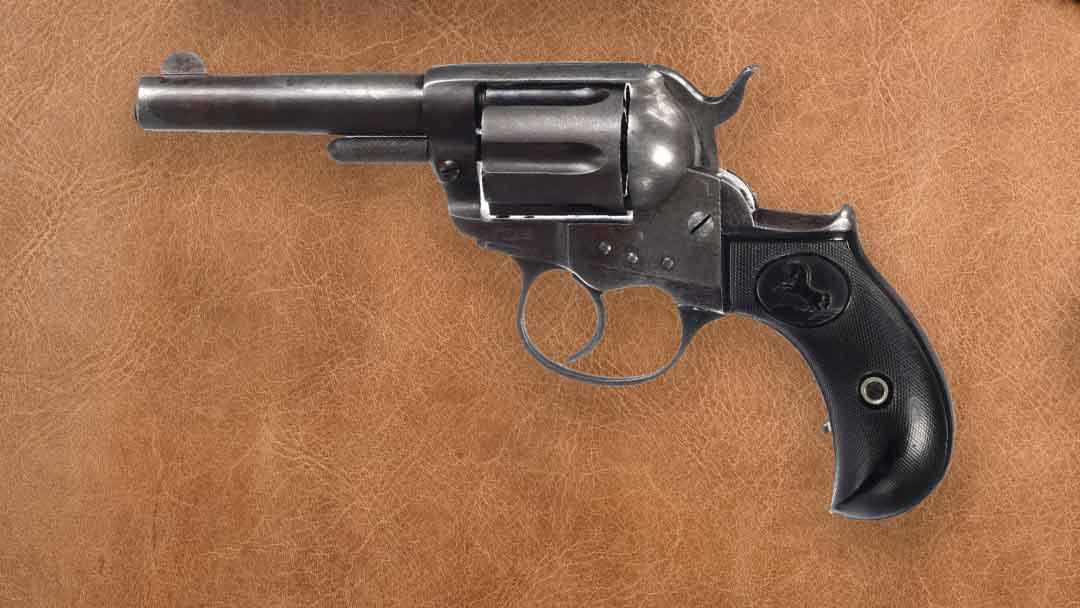
Colt’s first double action revolver was the Model 1877 that is better known by its nicknames. The Colt Lightning — not to be confused with its long gun counterpart – is the most popular, chambered in .38 Colt. The Lightning isn’t an official Colt revolver designation but was handed it by Colt distributor Benjamin Kittredge. Kittredge also gave names to the Model 1877 chambered in .41 Long Colt – Thunderer, and .32 Colt – Rainmaker. Kittredge also handed the Single Action Army its nickname of the “Peacemaker,” and the Model 1878 double action revolver the “Omnipotent.”

Colt developed the double action revolver because of the popularity of the double action in Europe. The Model 1877 was found to have a delicate mechanism because of the more intricate double action over the simpler single action. Despite its flaws it proved to be a popular gun with 167,000 revolvers made between 1877 and 1909. A shorter barrel and lack of ejector rod earned this gun the Sheriff – or Shopkeeper — designation like the Colt Single Action Army.

The Lightning was reportedly carried by a number of Wild West characters that fell on the opposite sides of the law, including Doc Holiday, Billy the Kid, and John Wesley Hardin. A Colt Lightning owned by a police officer in Colt’s hometown of Hartford, Conn., recently sold for $176,250.

This Colt Lightning was manufactured in 1889 with a 3 1/2 inch barrel and blued finish. It was shipped to Denver, Colo., the same year.

Among Colt Revolvers Hartford-English Dragoon is Rare

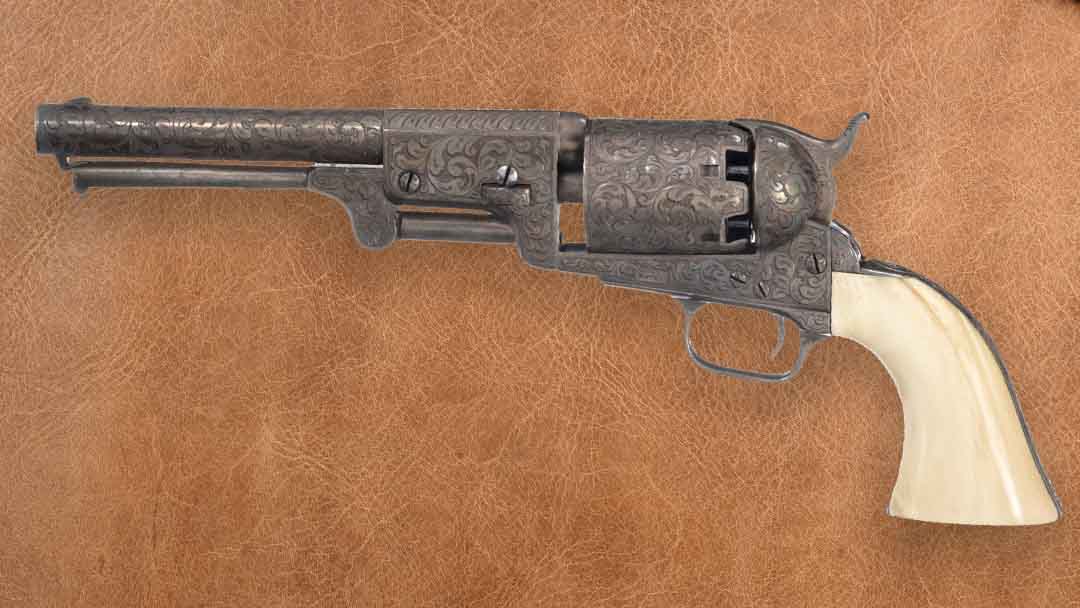
About 700 of these hefty Colt Hartford-English Dragoon revolvers were made in the early 1850s with about 20 percent engraved in Colt’s London factory. The guns were made for the English market.

For the U.S. Army in the mid-19th century, dragoon referred to cavalry troops. The Dragoon was engineered with a shorter cylinder to avoid over-sized powder loads which caused cylinders of the Colt Walkers — which preceded the Dragoons – to occasionally explode. Colt also added a latch to the Dragoon’s rammer to keep it in place while firing. These massive revolvers weigh in at more than four pounds and are chambered in .44 caliber.

This silver-plated Colt Hartford-English Dragoon is covered in scroll engraving and is among the Colt Dragoons available in Rock Island Auction’s June Sporting & Collector Auction.

Colt Revolvers in the Navy

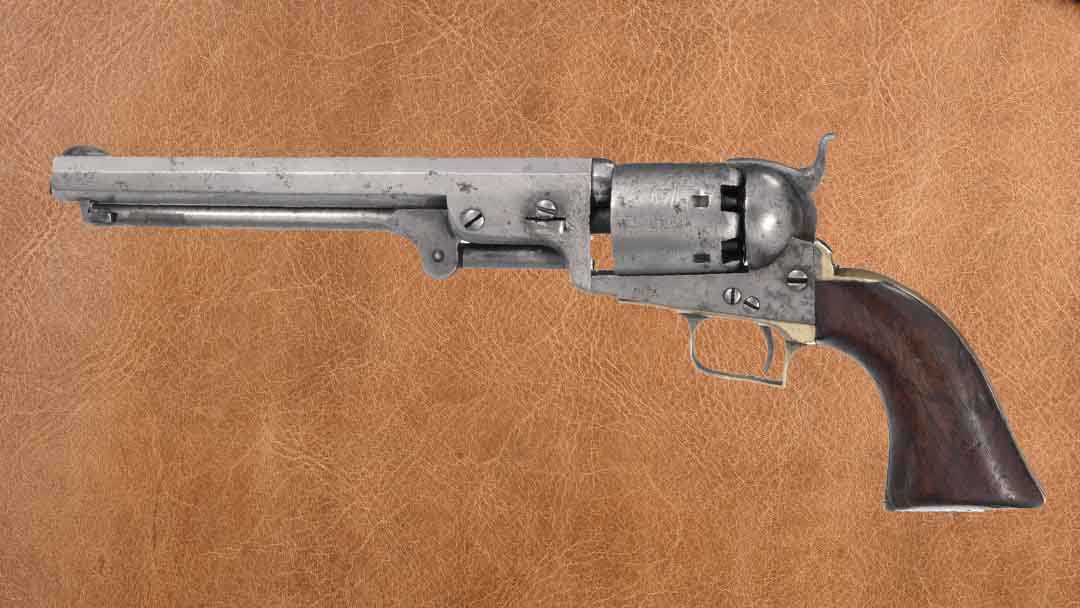
Colt manufactured nearly 250,000 of the Colt Model 1851 Navy revolvers between 1850 and 1873, more than the Model 1860 Army that was a mainstay of Union forces in the Civil War. The term Navy refers more to the gun’s .36 caliber rather than the service that used it. The .44 caliber guns were referred to as Army revolvers.

Samuel Colt was a fan of the Model 1851 Navy and was photographed holding one. Texas Ranger Ben McCullouch who followed Davy Crockett to Texas and served under John Coffee “Jack” Hays was known to carry the 1851 Navy, as was Wild Bill Hickok.

This Colt Model 1851 Navy was made in 1850, the first year of production, and has a square back trigger guard and a three-digit serial number. It is available in Rock Island Auction Company’s June Sporting & Collector Auction.

Colt Revolvers in Rare Calibers

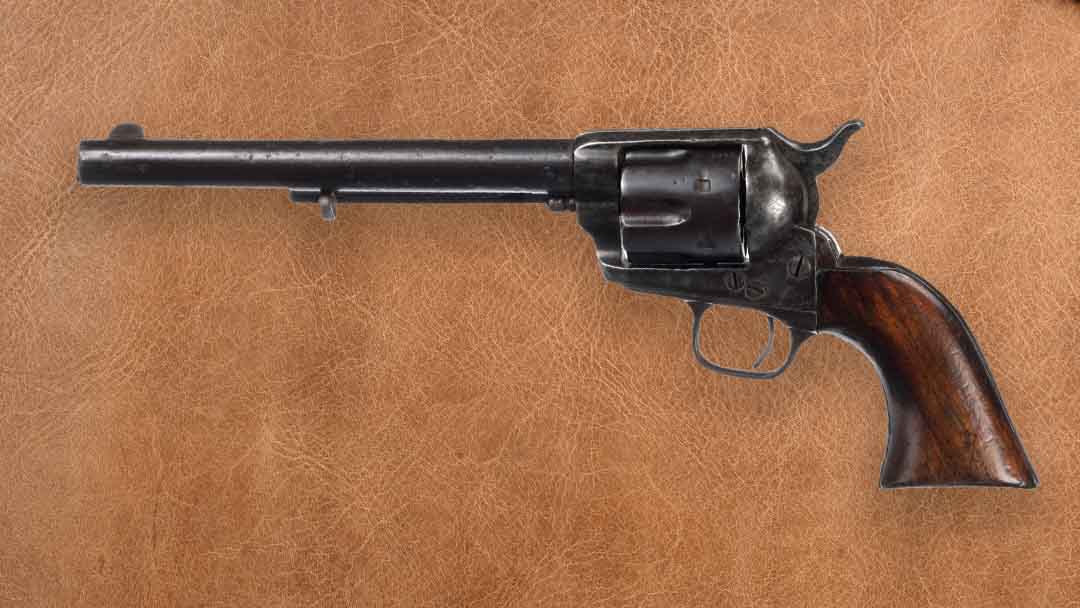
The first generation of Single Action Army revolvers were chambered in more than 30 different calibers, though most were made in just five calibers: .45 Colt, .44-40 Winchester Center Fire (WCF), .38-40 (38 (WCF), .32-20 Winchester (WCF), and .41 Colt. Nearly half were chambered in .45 Colt.

More than 357,000 Single Action Army revolvers were made between 1873 and 1940, which are considered first generation. Among the rarer calibers are .45 ACP, .455 Eley, .44 Smith & Wesson, and even a plinking caliber, .22 rimfire.

(pic) This Colt Single Action Army shipped to Schuyler, Hartley & Graham in New York City is chambered in .44 Rimfire, just 1,863 manufactured in this caliber. Despite its rarity, this is one of two .44 Rimfire SAA available in the June Sporting and Collector Auction.

Colt Revolvers as Snake Guns

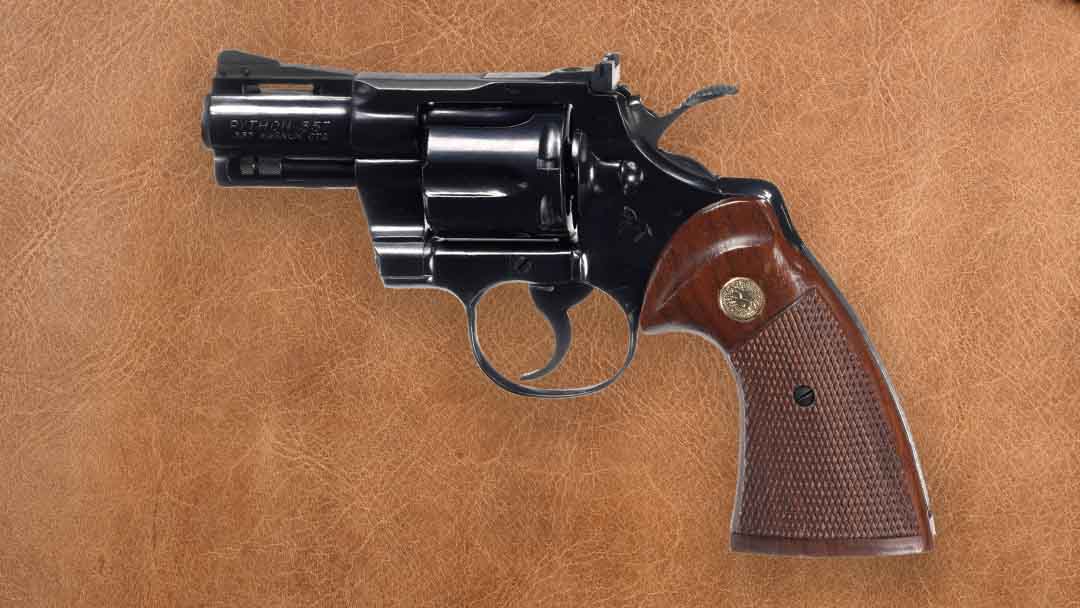
Colt has a series of revolvers given snake names — Anaconda, Diamondback, Cobra, Boa, King Cobra, and Viper, but the king of the company’s snake guns is the Python. The Python, first manufactured in 1955 was chambered in .357 Magnum.

Author and historian R.L. Wilson has a well-cited quote, calling the double action Python the “Rolls-Royce of Colt revolvers” and well-known British author and firearms expert Ian V. Hogg called it the “best revolver in the world.” It was offered in barrel lengths of 2 1/2 inches, 3 inches, 4 inches, 6 inches, and 8 inches during its first run from 1955 to 2005.

This Colt Python with a 2 1/2 inch barrel was manufactured in 1981. It is available in RIAC’s June Sporting & Collector Auction.

Colt Revolvers in the Marines

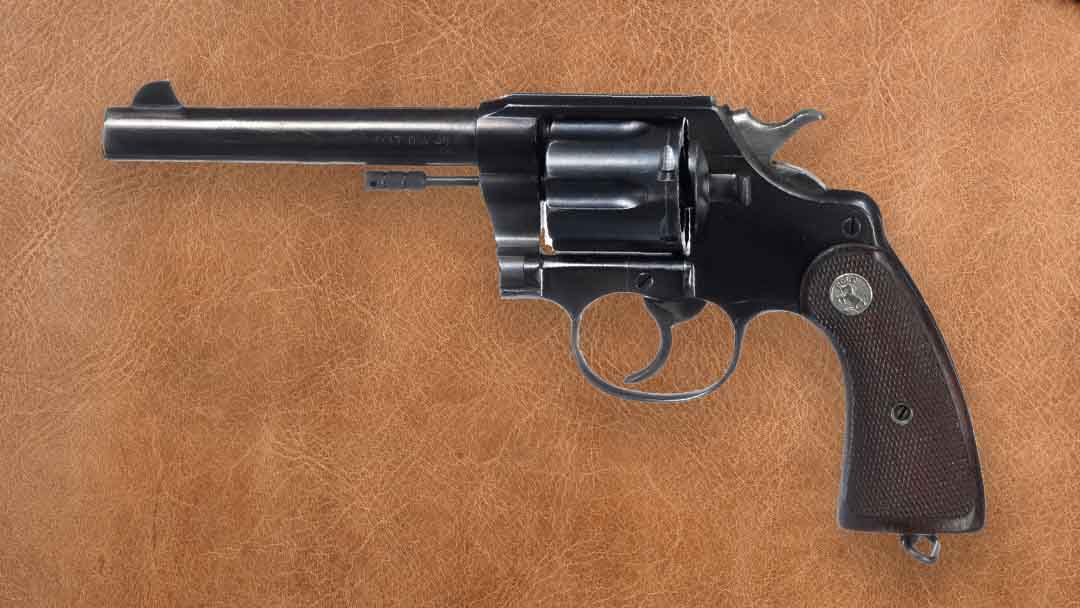
The Moro insurrection in the Philippines showed that .38 caliber pistols didn’t offer the stopping power the U.S. Military needed. The double action Model 1909 chambered in .45 Colt was born. Colt delivered about 20,000 to the Army before the legendary Model 1911 was adopted.

The U.S. Marine Corps ordered 1,400 that differed slightly from those sent to the Army with checkered grips and rounded butts.

This Colt Model 1909 double action revolver is stamped “U.S./M.C./No/503” on the butt. It is available in Rock Island Auction’s June Sporting & Collector Auction.

Colt Revolvers and the Civil War

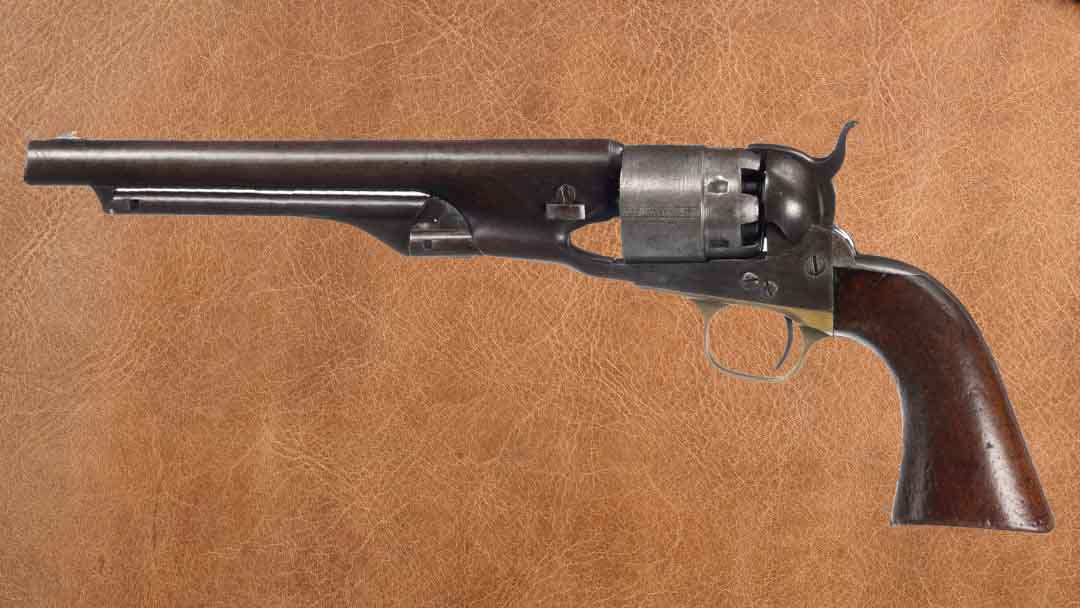
Colt manufactured 200,000 of its Model 1860 Army from 1860 to 1873, with more than 127,000 purchased by the U.S. government. This gun, Colt’s last percussion revolver, was lighter than the revolver that preceded it thanks to its smaller frame and “Silver Spring Steel.” The Model 1860 weighed in a pound and a half less than the 4 pounds of the Dragoon.

The War Department purchased 107,000 of the .44 caliber 1860 Army revolvers for use in the Civil War. They were to be issued to all mounted troops as well as officers and artillerymen. The gun made Samuel Colt a wealthy man, with his personal income in 1860 and 1861 at more than $1 million. When he died in 1862, his estate was estimated at $15 million, a huge sum for the time.

This Civil War U.S. inspected Colt Model 1860 Army was manufactured in 1862 and has an inspection mark on the left grip. It is available in Rock Island Auction’s June Sporting & Collector Auction.

Colt Revolvers with Cops and Thugs

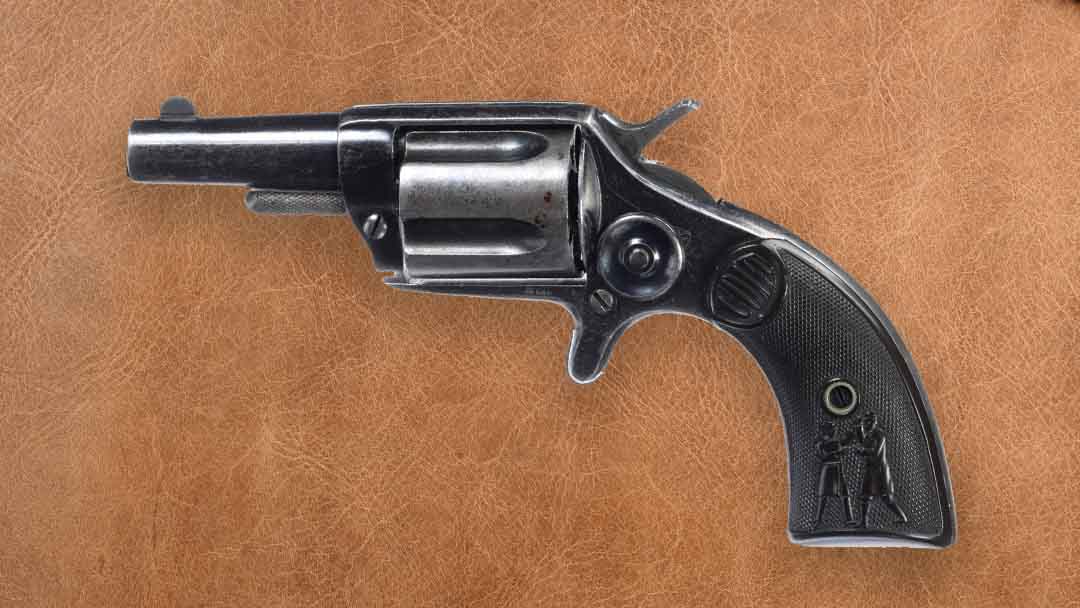
Colt’s New Line Police revolvers with its spur trigger were manufactured from 1882 to 1886 and earned its nickname of “Cop & Thug” because the grips featured a police officer disarming a ruffian. The revolver was chambered in either .38, .32, or .41 calibers. Only about 4,000 of these single action pocket revolvers were made.

This Colt New Line Police “Cop and Thug” revolver has a short 2 1/4 inch barrel and is chambered for .38 Center Fire. It is available in Rock Island Auction Company’s June Sporting & Collector Auction.

Not Colt Revolvers

Rock Island Auction Company loves to sell Colt revolvers, but there are plenty of other fine though lesser known revolvers on offer from manufacturers like Tranter, Starr, and Merwin, Hulbert & Company. Lets check out a couple for some wheelgun diversity.

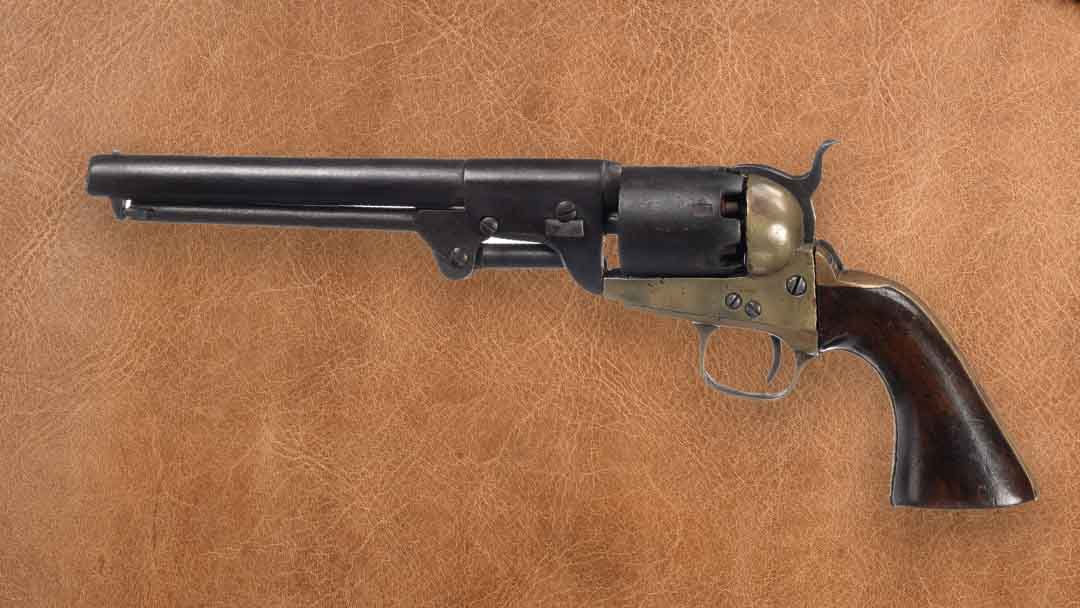
Since Colt didn’t sell to the Confederate states after the start of the Civil War, the Confederacy had to find other sources for weapons. The trouble was the Confederacy didn’t have the industrial base to draw upon for weapons manufacture. That didn’t stop some gun makers.

Samuel Griswold made about 3,700 revolvers in his Georgia factory between 1862 and 1864 with a distinctive brass frame and dragoon type barrel. Chambered in .36 caliber, this revolver is underpowered compared to the Union’s .44 caliber Colt Model 1860 Army.

(pic) This Confederate Griswold & Gunnison percussion revolver has a “B” stamped on its brass components and the name “W.A. Jones” stamped on the butt. It is available in RIAC’s June Sporting & Collector Auction.

The U.S. Revenue-Marine was founded by Congress in 1790 to serve as a customs enforcement service as recommended by Alexander Hamilton and renamed the U.S. Revenue Cutter Service in 1894 before being disbanded in 1915 with the formation of the U.S. Coast Guard.

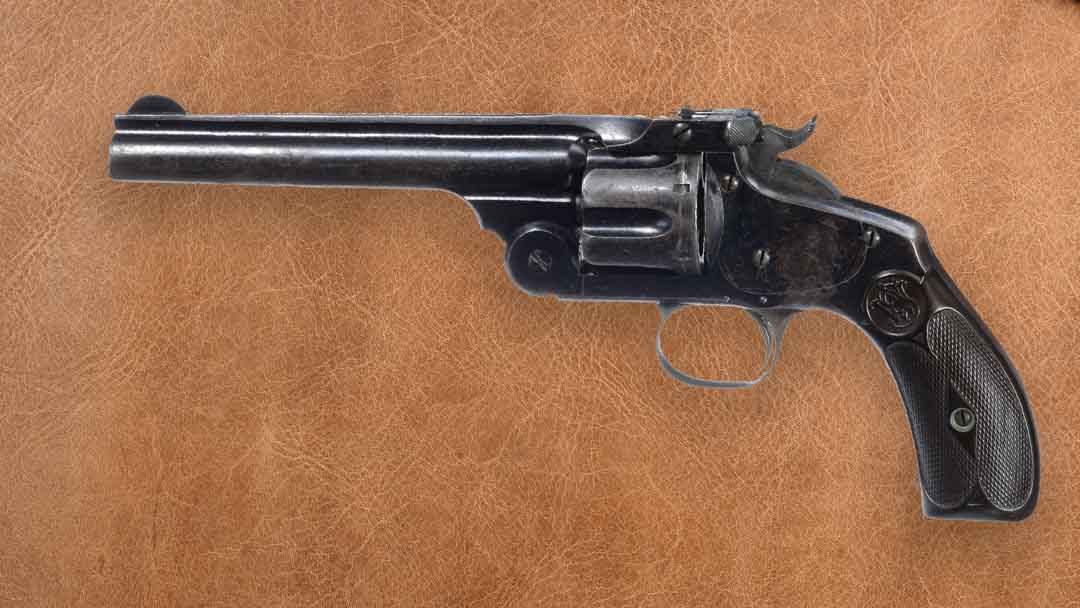
This Smith & Wesson New Model No. 3 single action revolver falls in the listed range of U.S. Revenue Cutter Service shipped guns according to Supica and Nahas’ “Standard Catalog of Smith & Wesson 3rd Edition.” It is available in RIAC’s June Sporting & Collector Auction via the Supica Collection.

So Many Colt Revolvers

Rock Island Auction Company’s June 21-23 Sporting & Collector Auction features 743 lots of revolvers. Among those are 403 lots of Colt revolvers, providing a tremendous opportunity for collectors to add any one of these Colt wheelguns at a reasonable price point. Take a look online, check out these remarkable firearms in person at the June 20 Preview Day, and submit bids electronically, by phone, or bid in person in our auction hall. These fine Colt revolvers are waiting for you.

Collectible Firearms for Serious Gun Collectors

0

If dad talks about plinking cans behind the barn, playing cowboys and Indians, or his deer hunting exploits, Rock Island Auction Company is here to help. Put aside the ties, “best dad” coffee mugs, or a bottle of whiskey (well, maybe keep the whiskey) and take a look at the gun gifts in our auction catalogs for Father’s Day.

Rock Island Auction can offer a number of gun gifts, whether they are plinkers, vintage sporting arms, a nostalgic sidearm, or something for dad’s gun room. These can be found at numerous price points in any of RIAC’s auctions, from the frequent Arms & Accessories Auctions, to the Sporting & Collector, and Premier Auctions that are held three times a year. Here are some possible ideas for gun gifts.

Classic Father’s Day Gun Gifts

Fathers dig the classics, whether it is Led Zeppelin, John Wayne films, or John LeCarré novels, and gun gifts are no different.

How many memories does dad have of crisp autumn mornings in a tree stand, whether it is that first deer or bagging a 12-point buck? A Winchester Pre-64 Model 70 is among the terrific gun gifts for the hunter on your list. Introduced between the world wars and manufactured by skilled workers that took the time to make sure the trigger pull was smooth, the action was just right, and the metal was well blued and polished.

Gun manufacturers like Winchester had to set aside sporting arms for the war effort in the 1940s. When production of sporting arms resumed in the late 1940s and into the 50s, and the skilled workers were getting to retirement age. More machines were being used to make guns that, while still fine guns, the change in the degree of workmanship showed.

A Winchester Pre-64 Model 70 calibered for small game or an African safari can be found in numerous price points at Rock Island Auction Company. An engraved and upgraded model recently sold in the May Premier Auction while others ready for the woods can be found in the Sporting & Collector and Arms & Accessories auctions.

This game scene engraved Pre-64 Winchester Model 70 with a scope features a fighting pair of bull moose on the floor plate and a running stag carved on the right stock. It is chambered in 300 H&H Magnum. This Holland & Holland round would be respectable on the African plains.

Winchester made its name in the 19th century on its lever action rifles. The first Model under the Winchester name was the Model 1866, but it was the Model 1873 that won the west. It wasn’t considered the best of Winchester’s lever guns for hunting. That title might go to the Model 1895, the pinnacle of the series. Zane Grey knew how good a gun it was. He ended up with four of them and called the 1895 “the finest rifle ever built.”

The most popular Winchester lever action rifle for hunting may well be the Model 1894, with over 7 million made. John Moses Browning improved the 1894 over the Model 1886 and 1892 by strengthening the single locking block with a transfer bar. President Theodore Roosevelt hunted with the 1894. This rifle is definitely for an old school hunter who appreciates the classics and won’t be relying on a scope.

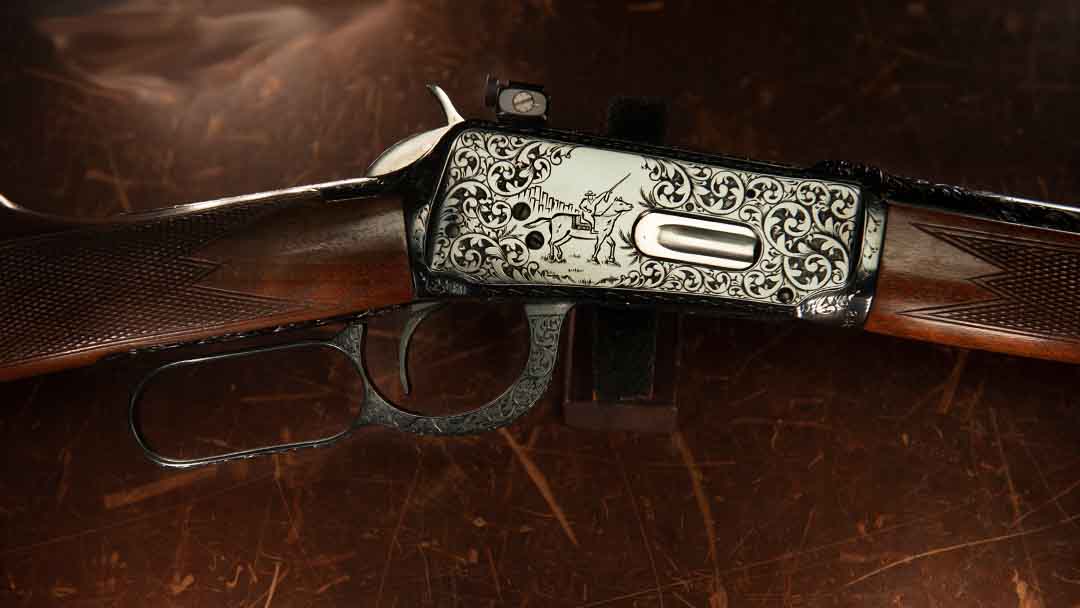
This engraved Winchester Model 1894 carbine features game scenes on both side of the receiver, with a running stag on the left side of the receiver and a hunter on horseback on the right side of the receiver. The gun also has scroll-type engraving on the receiver, the top of the barrel, and the lever. It also has a Williams peep sight.

Perhaps dad wants a sidearm when he hunts. If the Smith & Wesson .357 Magnum round was good enough for legendary handgunner Elmer Keith, it should be good for one of dad’s gun gifts. Keith was instrumental in creating the round in the 1930s, looking for a more potent round than the .38 Special.

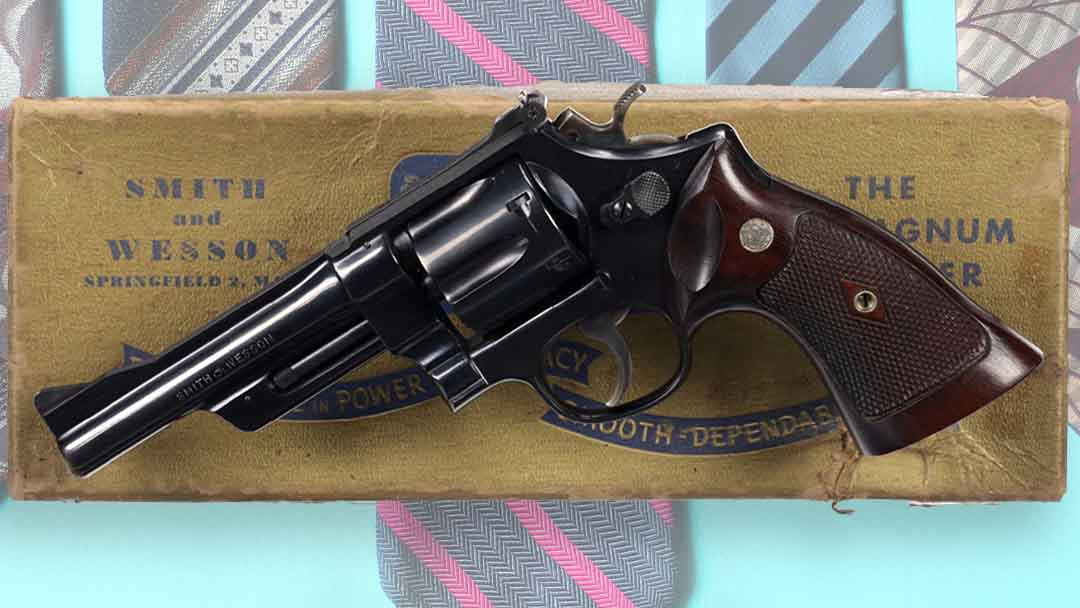
This Smith & Wesson .357 Magnum Pre-Model 27 double action revolver made in 1954/55 should offer enough stopping power in an emergency while out on the hunt.

Handguns as Vintage Gun Gifts

Colt’s legendary 19th century wheelgun never goes out of style. The timeless Colt Single Action Army revolver is on its third generation, carried by John Wayne on the Silver Screen, Bat Masterson as a lawman and gunslinger, and countless desperados and lawmen across America’s Wild West. As the old saying goes, ”God created men. Samuel Colt made them equal.”

Colt Single Action Army revolvers are readily on offer in RIAC’s auctions, whether it is a third generation revolver, a lawman’s sidearm, or a piece in such exquisite condition it sells for six figures. This first generation SAA was made with a long flute cylinder from the discontinued 1878 double action revolver. Manufactured in 1915, it is one of 274 Single Action Army revolvers assembled that year with the long flute cylinder.

There are so many classic guns from World War 2, whether they are German Lugers or Walthers, Japanese Nambu pistols, or the Russian SVT-40 or PPD-40that were bring back guns carried home by the Greatest Generation. Still, it is American guns and the GIs that carried them that we think of proudly when families sit to watch “Band of Brothers,” “Saving Private Ryan,” or “The Longest Day.”

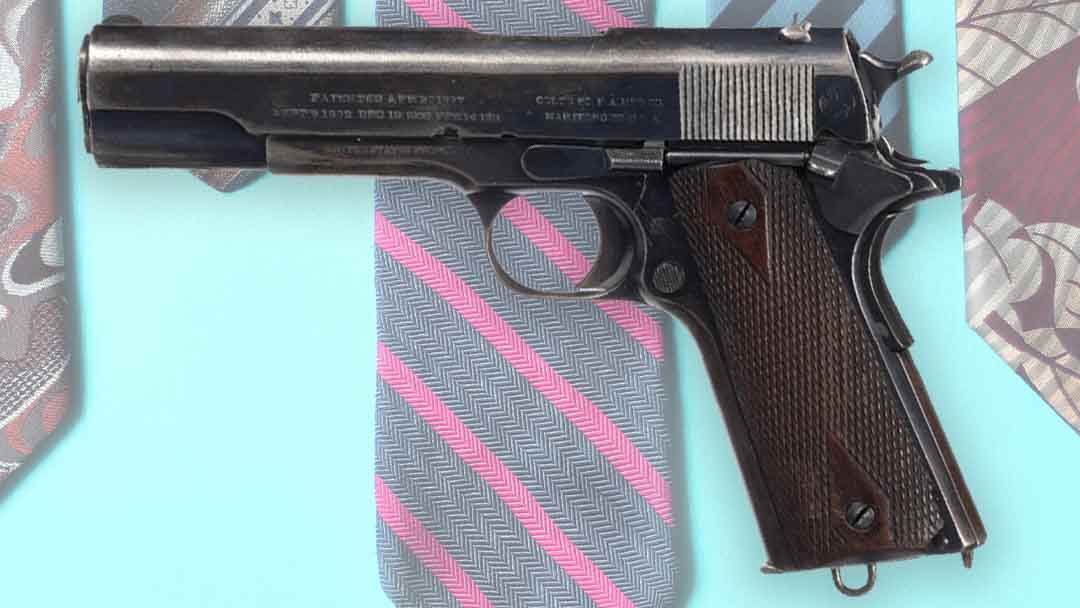
The U.S. Military searched for a reliable semi-automatic handgun at the start of the 20th century and went through several trials as John Moses Browning tinkered with the design until it became the Model 1911 chambered in .45 ACP. The gun would be a staple of America’s arsenal for decades to come.

American soldiers carried the Colt Model 1911 in both world wars. In World War 2, other companies were contracted to manufacture the pistol for the Arsenal of Democracy, like the Singer Sewing Machine Company that made 500 test pistols, as well as Ithaca, Remington Rand, and Union Switch & Signal.

This Colt Model 1911 was manufactured in 1912, the first full year of production by the company. This pistol is available in Rock Island Auction Company’s upcoming Sporting & Collector Auction.

Vintage Plinkers for Father’s Day

If shooting cans off the back fence on a hot summer day or heading into the woods to hunt squirrels are fond childhood memories for dad, Rock Island Auction often has plenty of plinkers that provide that nostalgia, whether it is shooting from the shoulder or taking aim with a handgun.

In production since 1964, the Ruger 10/22 hits all the feels – and soup cans – when it comes to nostalgia. They can regularly be found at a comfortable price point in RIAC’s Arms & Accessories Auction.

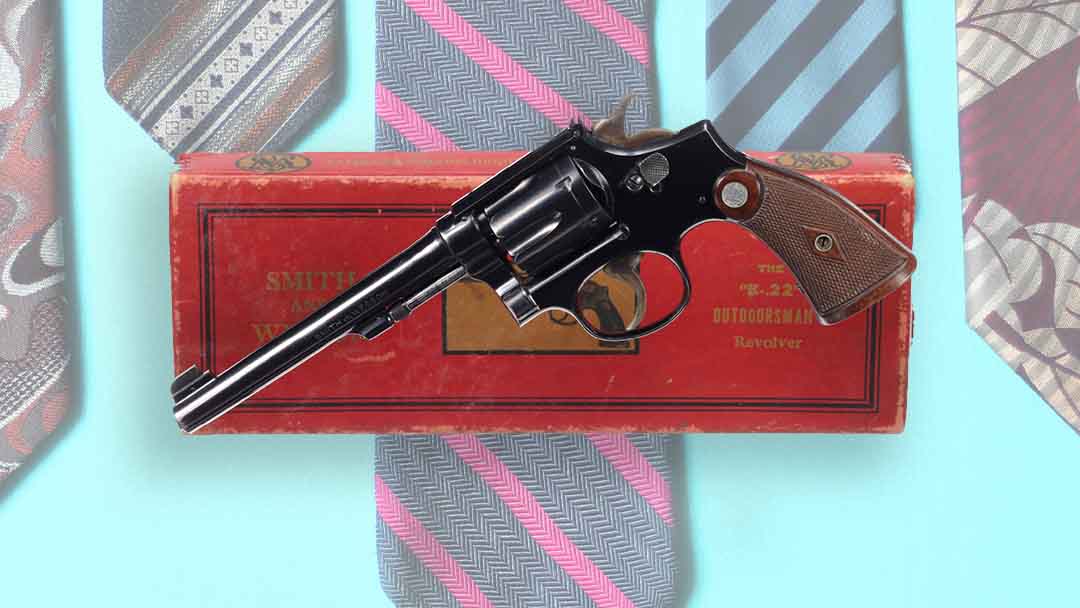
Taking aim at tin cans and targets can also be done with a handgun and why not a gun that’s been around since the 1930s to feed into dad’s nostalgia. The Smith & Wesson K22 Target Model, built on the company’s medium K-frame was promoted as the outdoorsman’s revolver since Colt’s Woodsman served a similar purpose. The gun was designed to be cocked without altering the shooter’s grip.

The Smith & Wesson K22 was made from early 1930 until the end of 1939, with 17,117 produced. This double action with a six-inch barrel is available in the upcoming June Sporting & Collector Auction.

Father’s Day Shotgun Gifts

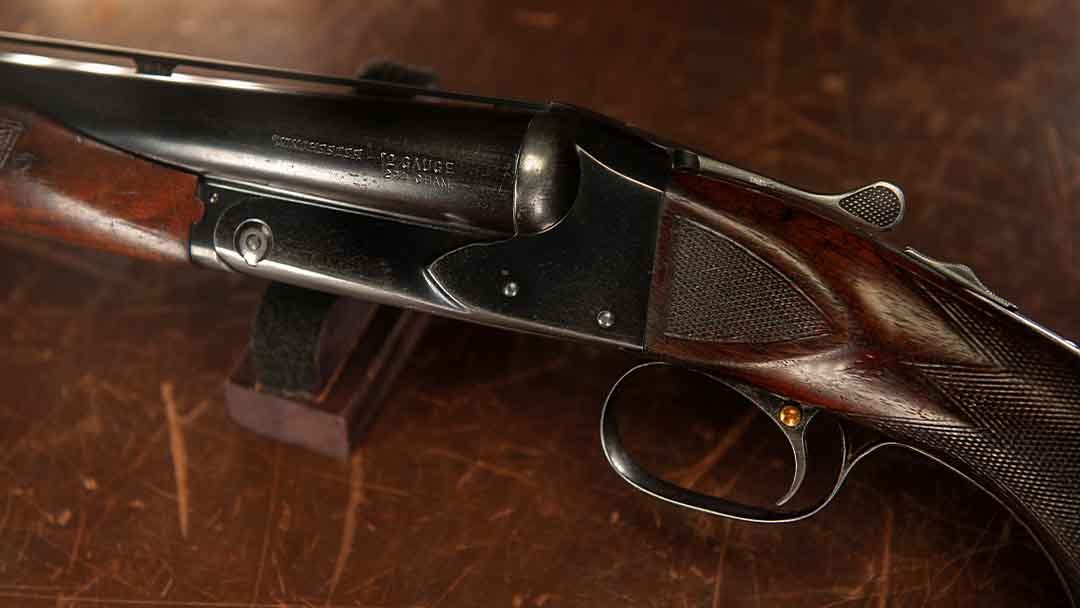
If dad has memories of hunting fowl or shooting skeet, a double barrel Winchester Model 21 might be one of the best gun gifts. Considered the top American side-by-sides made, the Model 21 was manufactured with super-strong chrome-molybdenum alloy, had nine patents to its name, and was chambered in 12, 16, 20, 28 gauges, as well as .410.

Early examples of the Model 21 had double triggers but that changed in 1931. This single-trigger Winchester Model 21 chambered for 12 gauge was made for American Olympic shooter John B. Grier. It is available in Rock Island Auction’s upcoming Sporting & Collector Auction.

Along with the Browning Hi Power, the Browning Superposed shotgun was one of John Moses Browning’s last designs, improving on the breech and reinforcing the hinge mechanism for tightness. Browning died in 1926, but the first Superposed was sold in 1931. The over/under gun was to be a less-expensive option to similar European over/under shotguns and now is an opportunity as a fancier sporting arm if giving gun gifts.

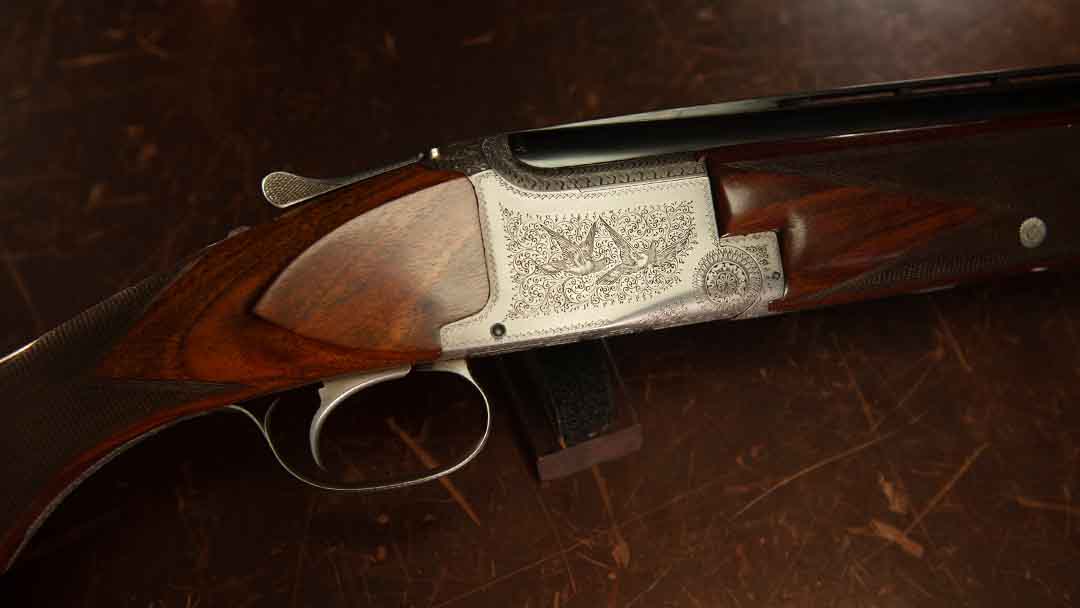
This 12 gauge Browning Diana Grade Superposed shotgun has pigeons taking flight engraved on each side of the receiver as well as oak leaf and scroll engraving with a nicely polished finish for an elegant mid-century gun gift.

Gun Gifts for the Gun Room

Perhaps after a hunt dad likes to unwind telling tales of the day’s events in his gun room or man cave. Or has he dreamed of having a gun room to call his own? Vintage advertising posters from gun and ammo makers, vintage western art, or a cartridge board would look great on the wall and be terrific gun gifts.

Advertising posters often portray hunting scenes or images from the Wild West. This framed Colt advertising poster is based on the 1926 oil painting “Tex and his Horse, Patches” by Frank Schoonover and is available in the upcoming June Sporting & Collector Auction.

Cartridge boards are fascinating pieces, often dating back to the 19th century and would certainly show a person’s interest in the history of firearms and ammunition development.

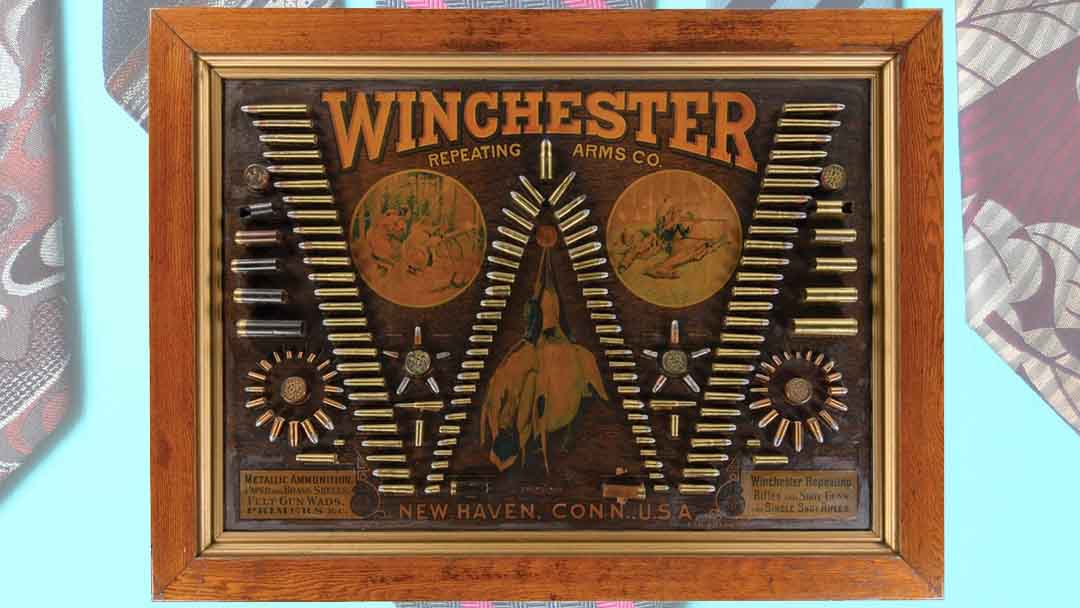
Cartridge boards like this Winchester Repeating Arms “W” cartridge were common sights in sporting goods shops around the turn of the 20th century. The more than 100 cartridges displayed on this board range from a tiny BB cap to the massive 4 gauge. This was recently offered in a Premier Auction at Rock Island Auction Company.

Gun Gifts for Father’s Day and Beyond

From vintage sidearms, sporting arms that harken back to the mid-20th century, plinkers evoking youthful memories, and even nostalgic wall décor make great gun gifts that can be found at various price points in Rock Island Auction Company auctions.

California Trying to Make it Illegal for Employees to Stop Shoplifters

0

Coddling Criminals and the Breakdown of Law and Order

Lawmakers in California are proposing legislation that would ban retail staff from intervening when thieves steal from their stores. Senate Bill 553, submitted by State Senator Dave Cortese, has already passed the State Senate and is now moving to policy committees in the State Assembly. While proponents argue the law will protect employees from workplace violence, it’s really nothing more than the latest example of our government bowing down to criminals and punishing law-abiding citizens.

Senate Bill 553 will only exacerbate the ongoing crime wave and further undermine law and order. It’s starting to seem like that’s precisely what many of our so-called representatives want.

“This bill goes way too far, number one, where I think it will open the doors even wider for people to come in and steal from our stores,” said Rachel Michelin, California Retailers Association (CRA) president and CEO, in a report by Fox KTVU.com.

Prosecutors already ignore theft under $1,000. Now store owners won’t even be able to stop shoplifters!

In a state that has become synonymous with rising crime rates and a lack of safety for businesses and residents, it’s unbelievable that any right-minded person would even propose a bill like this. The state’s crime wave has forced major retailers like Whole Foods, Nordstrom, and Target to close their doors due to an inability to ensure the safety of their staff. Unfortunately, many smaller businesses have been left with no choice but to endure attacks with zero help or support from their local governments. The proposed legislation will only worsen the situation by allowing thieves to exploit and further damage the struggling retail sector.

But this isn’t just a California problem. In fact, retailers nationwide say an unwillingness to punish criminals has created an epidemic of theft and violence that is now plaguing small businesses throughout the United States.

Even before their PRIDE debacle, Target reported a staggering $400 million profit loss in 2022 due to organized retail crime. This year, theft at Target Stores is expected to hit $600 million in losses.

But again, this isn’t just large corporations who are suffering. According to the National Retail Federation, retail theft cost businesses $95 billion in 2021, a 4% increase from the previous year. Furthermore, a survey conducted by Business.org found that 54% of small business owners reported an increase in shoplifting activity in 2021.

A Homeland Security Investigations report issued last year said estimates regarding organized retail crime found “the average American family will pay more than $500 annually in additional costs due to the impact.”

Sadly, these numbers are much worse once you add in looting and deranged mob attacks by organized black gangs pretending BLM is an excuse to destroy entire stores.

The concerning trend of discouraging employees from engaging shoplifters has now morphed into punishing them for calling the police as well.  The CEO of Lululemon, Calvin McDonald, fired two employees for calling the police on three masked men who robbed a Georgia store. This zero-tolerance policy on engagement makes no sense since all they have done is declare Open season on all of their stores.

The video was posted to Facebook by Jason Ferguson, husband of former assistant manager Jennifer Ferguson, who said she was fired from the store for calling the police on the thieves.

The Dystopian Dilemma: Is a Lawless America the Future We Want?

Earlier this month, a Chicago-based branch of Walgreens moved from locking everything up, to a new ‘anti-theft’ design in which only two aisles contain actual products for customers to place in their baskets freely. Everything else must be ordered at a counter because we live in a country that would rather punish law-abiding citizens instead of holding criminals responsible.

Walgreens Anti-Theft Store

In major cities, along our border, and now even in the suburbs and rural America, the rule of law has lost meaning, leaving hard-working families burdened with both personal sacrifice and financial losses.

Beware! The Chaos is Coming to Your City!

As I’ve pointed out in my book, The Ultimate Situational Survival Guide: Self-Reliance Strategies for a Dangerous World, and as we continue to warn our readers on OFFGRID Survival, these disgusting attacks on our society have become an everyday occurrence in this country.

It is time to wake up to the grim reality of what our once great nation has become! Our culture and country are succumbing to the horrors of ghettoization, which pose one of the most significant threats we have ever faced! If you have not yet prepared yourself for the increasing social unrest, then let me tell you, YOU ARE NOT PREPARED!

Check out our social unrest page where we document these shocking attacks. Don’t be fooled into thinking they are isolated occurrences! We have been cataloging these attacks on our social unrest page and revealing the truth about how these urban mob assaults have become a daily problem.

Pennsylvania Man Arrested for Quoting Bible at Gay Pride Event

0

In the latest outright attack on our liberty and constitutional rights, a Pennsylvania Man was handcuffed and arrested for reading bible verses on a sidewalk to protest a government-sponsored gay pride parade.

Damon Atkins, a Christian preacher, found himself arrested simply for quoting a portion of a Bible verse on a public sidewalk. The event unfolded during Reading City’s inaugural “Pride March and Rally,” supported by Mayor Eddie Moran. Within moments of Atkins’ arrival, handcuffs were placed on him, and he was arrested for something that is supposed to be a constitutionally protected right.

This disturbing episode serves as the latest example of the growing erosion of freedom of speech and the targeted marginalization of Christian beliefs in favor of protecting a portion of our society that is targeting children with their twisted ideology.

Obscene and Sexual Behavior Allowed on Display to Children, but Quoting the Bible in Protest Deemed Illegal!

On a Saturday morning, dozens of people had congregated outside Reading City Hall to participate in the Pride March and Rally, where children were being exposed to drag queens and other sexualized behaviors in the name of “pride”. At approximately 10:05 a.m., Damon Atkins arrived on a public sidewalk across the street from City Hall to read bible verses in protest. In less than a minute, he was apprehended by law enforcement officers, an event captured on video by Matthew Wear, a bystander who had been preaching before Atkins’ arrival.

As Atkins begins to quote 1 Corinthians 14:33 – “God is not the author of confusion” – the police swiftly moved in and handcuffed him.

At the heart of this disgusting display of government overreach lies the our right to free speech and protecting our constitutionally guaranteed rights. The First Amendment explicitly safeguards the freedom of speech. It is a cornerstone of our society, ensuring that people can express their beliefs, opinions, and convictions without fear of persecution.

However, the arrest of Damon Atkins for merely quoting Bible verses at a public event raises some serious concerns about the erosion of our sacred freedoms. The Constitution grants every citizen the right to talk about their religious beliefs and engage in peaceful protest, irrespective of whether those beliefs are popular or unpopular, agreeable or disagreeable to others. If the Alphabet people get to have a parade, especially one that goes beyond the first amendment and puts children in danger, then why are Christians being prosecuted merely for protesting their actions?

Here is a copy of the criminal complaint filed by one of the officers at the scene where he admits to violating Atkins’ constitutional rights and arresting him for talking:

Collectible Firearms for Serious Gun Collectors

0

Not all collectible guns should be kept under glass. Summer and target shooting go together like hotdogs and baseball, and vintage firearms can add an exciting variety to your everyday lineup. If you’re looking for some of the funnest guns to shoot this season, Rock Island Auction Company’s June 21-23 Sporting & Collector Auction has you covered. Click on the images throughout this article to learn more about each gun.

Rock Island Auction Company’s June 21-23 Sporting & Collector Auction includes an assortment of fun guns to shoot at a range this summer.

From vintage to modern, from high-condition pieces to guns marked with honest wear, June’s auction includes thousands of guns just begging for a trip to the range. And with Rock Island Auction Company’s Fun Gun Summer auction giveaway, you can become one of three lucky firearms fans to win $1,000 of auction credit to use toward the guns of your choice.

Click on the photo to earn auction credit this summer to use toward winning some fun guns to shoot at the range! There are 19 ways to earn entries, so click here and get started today!

Fun Guns You Don’t See Everyday

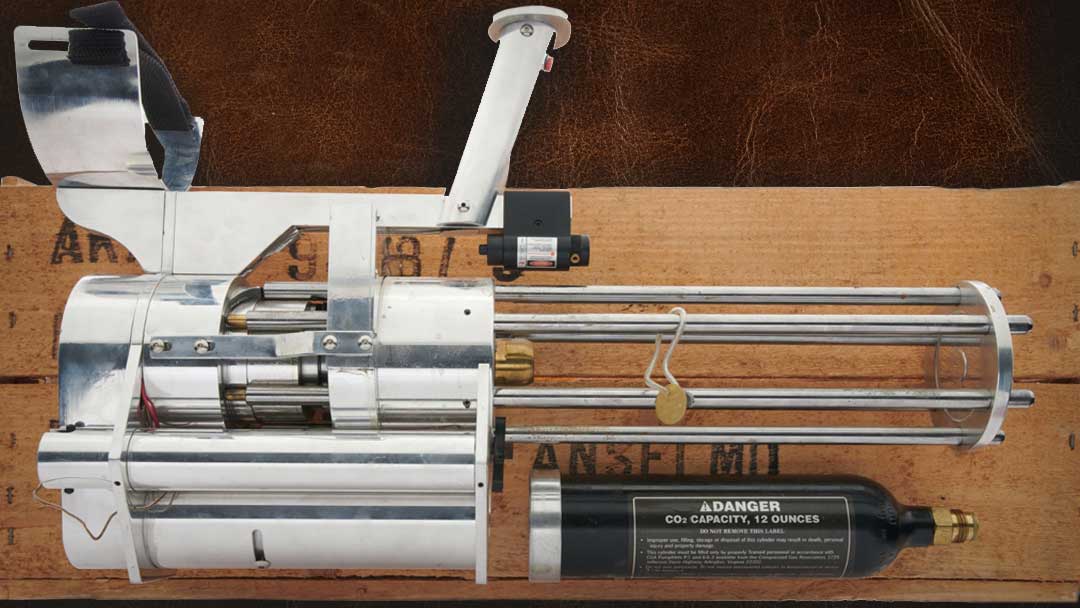
Fun guns can take many forms, and this six-barrel minigun was designed to turn heads. Fired via an electric trigger button on the gun’s metal grip, this unique mini-Vulcan comes from the Dr. Robert D. Beeman Collection and is described and photographed on page 755 of Beeman’s book ‘Blue Book of Airguns, Thirteenth Edition.’ Loaded through a top-loading hopper, the gun’s steel BBs fire in full auto using CO2 supplied from a paintball gun-style tank with rotation driven by an onboard 12-volt DC motor powered by eight C batteries. What’s not to love?

Enter the mini-Vulcan CO2 gas-powered BB gun, a big fun gun you don’t see every day.

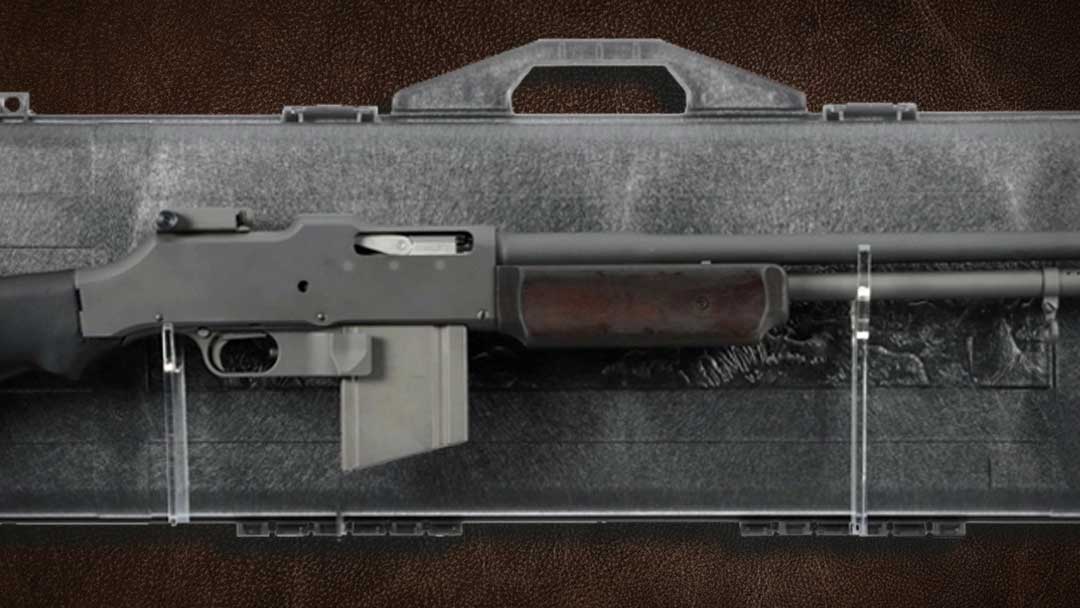
The Browning Automatic rifle provided covering fire to Allied troops in the final months of WW1 and played a key role for American infantry in WW2. With machine gun prices rising, an original BAR can command six-figures at auction. A semi-automatic example like the early Collectors Corner Model 1918A3 below, complete with a hard case, flash hider, bipod, carry handle, and two extra magazines, is far more attainable to the average arms enthusiast and ranks as one of the most fun guns you’ll ever shoot.

An early Collectors Corner Model 1918A3 BAR semi-automatic rifle, one the most fun guns to shoot at a range this summer.

Vintage Rifles to Shoot at a Range

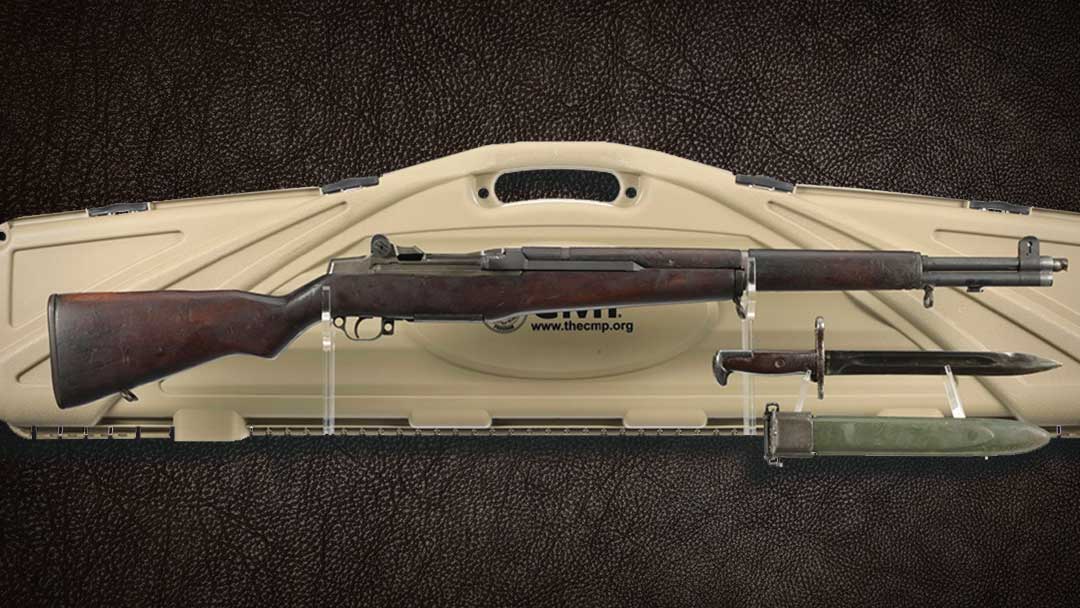
The venerable M1 Garand belongs on any list of funnest guns to shoot at the range. Even at 87 years old, the accurate rifle finds use in competitive events throughout the country. From its heavy-hitting .30-06 ammunition to its trademark “ping” the M1 Garand offers a rewarding experience to shooters at all levels and is a fantastic addition to any U.S. Military collection.

A U.S. Springfield Armory M1 Garand rifle with CMP tag and accessories, one of the coolest guns to own and shoot.

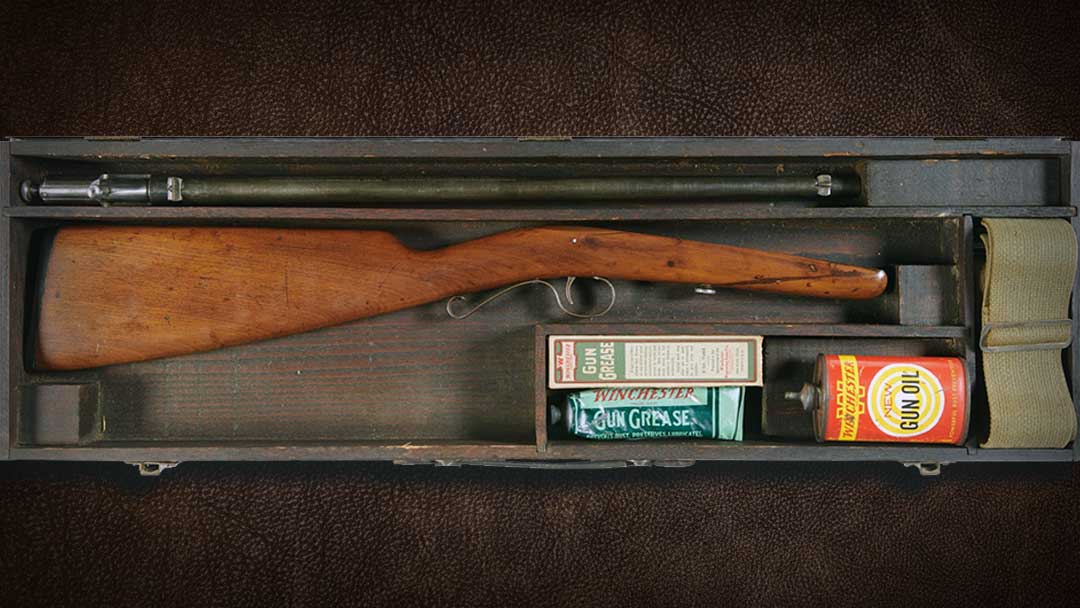
Classic Winchesters are always a great choice, and the Winchester Model 02 presents a blast from the past that’s chambered for the perfect plinking cartridge. A fun gun for all ages, Winchester included the Model 1902 single-shot rifle in special range kits available to members of its Junior Rifle Corps, an organization founded in the summer of 1918 to provide marksmanship training to youth shooters across America, Great Britain, Canada, Australia, Rhodesia, and South Africa. In addition to a rifle, the Rifle Corps takedown cases contained an assortment of items that shooters might need at the range, like grease, oil, a target, and a Rifle Corps shooting manual.

Few gun lovers are going to say no to fun rifles chambered in .22 SR, and this rare Winchester Model 02 single-shot bolt action No. 1 Rifle Corps range kit offers history, rarity, and loads of range-day potential.

Classic Pistols to Shoot at a Range

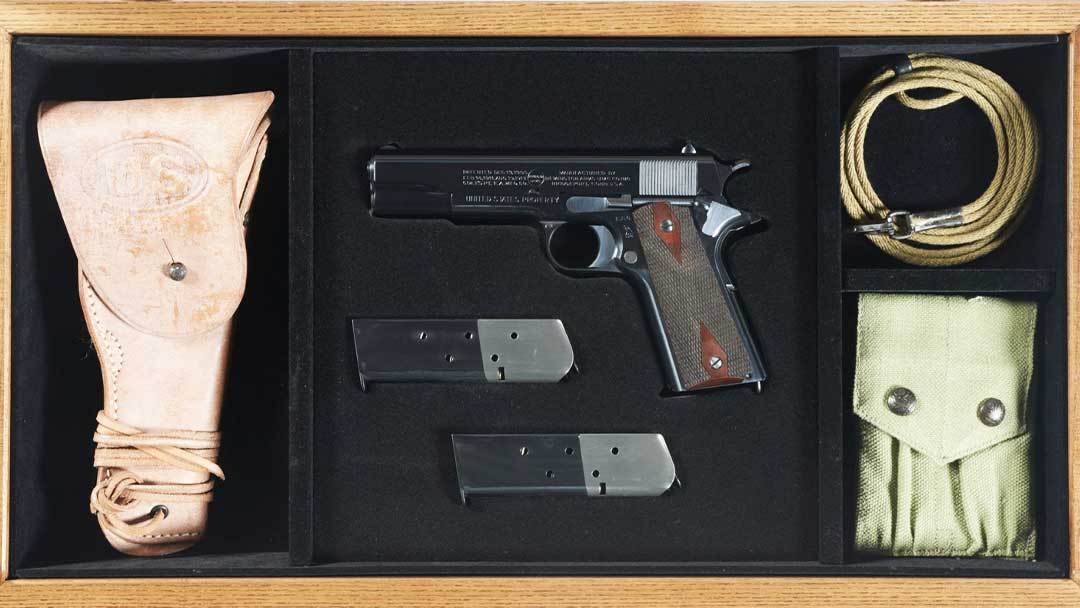
It’s hard not to love the Colt 1911. There’s a reason why John Browning’s genius design has remained popular for over a century and is considered the most fun handgun to shoot by many classic pistol aficionados. In terms of reliability, historic pedigree, and the ability to deliver the stopping power of a .45 ACP slug, it’s easy to understand why the 1911 pistol is so revered. As one of 1,000 Remington UMC Commemorative Model pistols manufactured and finished by Turnbull Manufacturing & Restoration, Inc, the 1911 example offered below exhibits all the best qualities of the genre.

When it comes to classic pistols, the 1911 is widely considered one of the most fun guns to shoot at a range.

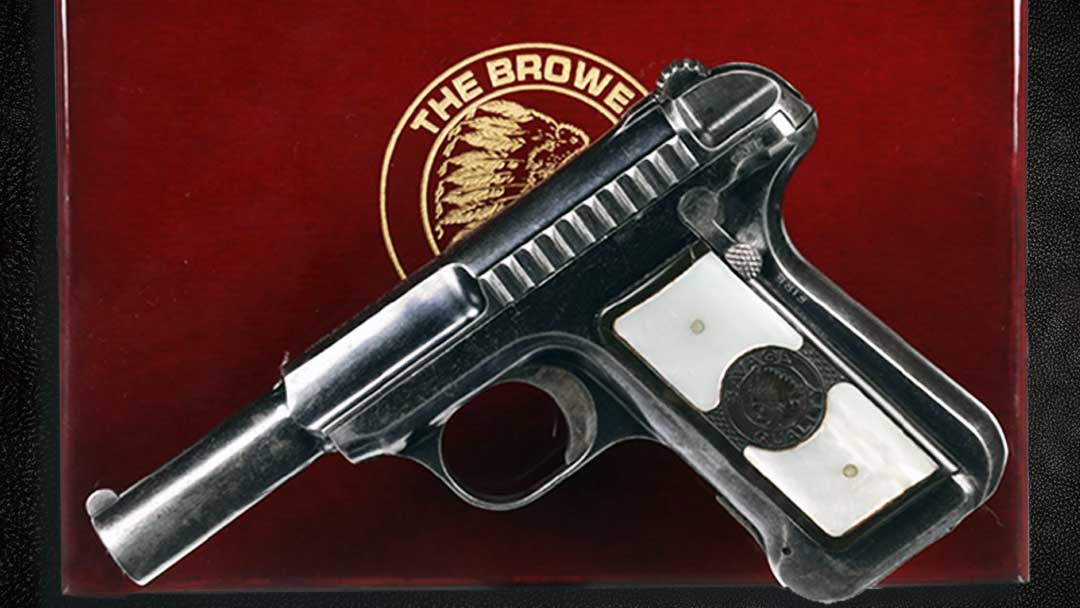
The Savage Model 1907 is a distinctive and often underrated piece of firearms history, and these fantastic .32 ACP pistols are among the funnest guns to shoot from their era. The lot pictured below was manufactured between 1913 and 1915 and features factory special order pearl panel “tuxedo” grips. The gun also hails from the noted collection of Bailey Brower Jr., the man who literally wrote the book on Savage pistols. For both shooters and collectors, owning one of these vintage 10-shot striker-fired pistols is a rare opportunity indeed.

A Savage Model 1907 pistol with attractive pearl panel grips, one of the most fun guns to own from RIAC’s June 2023 Sporting & Collectors Auction.

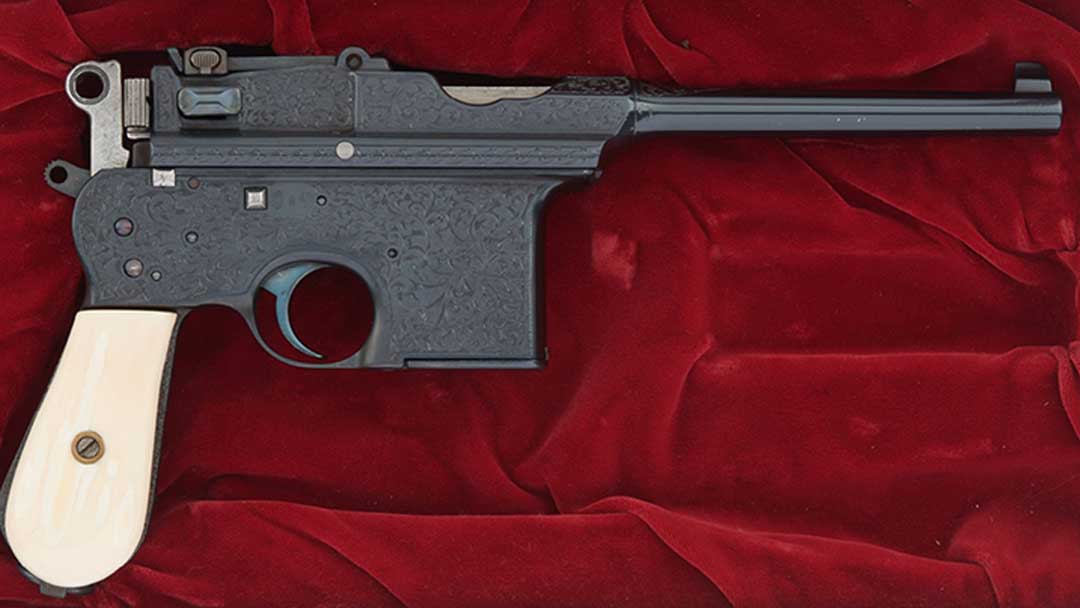
Who doesn’t want a Mauser C96 in their collection? The Broomhandle is seen as a dream gun for many arms enthusiasts and has been depicted in countless blockbuster films like Indiana Jones and Star Wars. Though a highly sought-after collectible, quality examples of the Mauser C96 can still be found at attainable prices and they’re definitely fun guns to have. The Astra Model 900 in RIAC’s June Sporting & Collectors Auction is a comparatively rare variant of the Broomhandle that was manufactured in Spain and marketed to China and Latin America from 1927 to 1941.

For fans of classic pistols and classic cinema, the C96 might be one of the most fun guns to shoot, and it will certainly turn heads at the range.

Classic Revolvers to Shoot at a Range

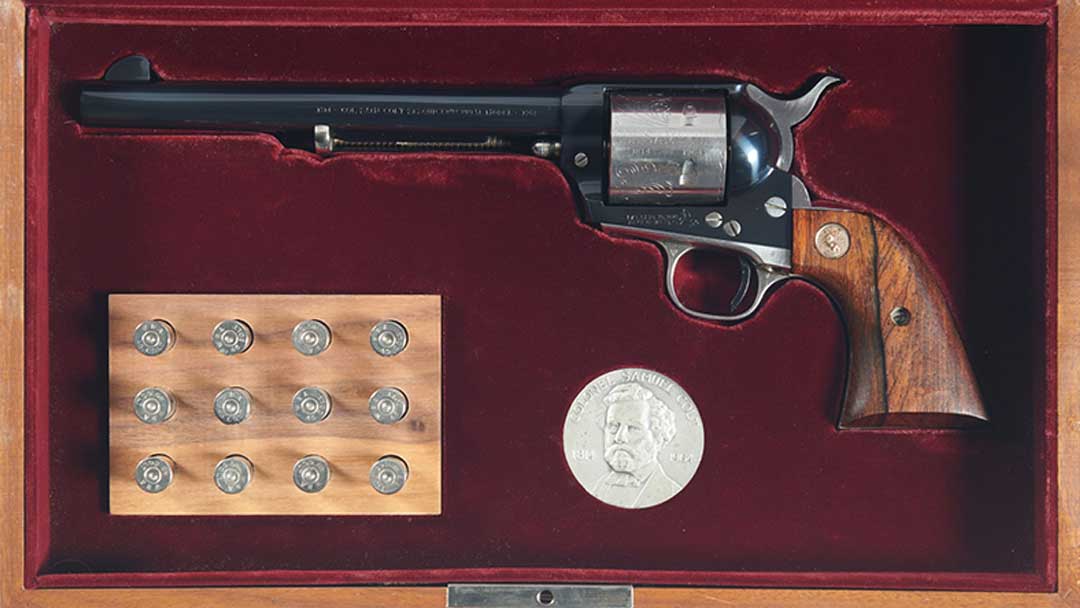
If you’re a fan of Westerns, cowboy shooting, or old-fashioned revolvers, the Colt SAA is going to rank as one of the most fun guns to shoot at the range. Manufactured in 1964 as only one of 5,000, this Colt Single Action Army was released as a commemorative to celebrate the sesquicentennial of Samuel Colt’s birthday. Among history’s coolest gun designs, the immortal Colt sixgun served as the choice sidearm for countless scouts, lawmen, outlaws, and cowpokes who braved the frontier, and taking one of these classics out shooting is an American birthright.

The Colt Single Action Army, among the funnest guns to shoot in any genre.

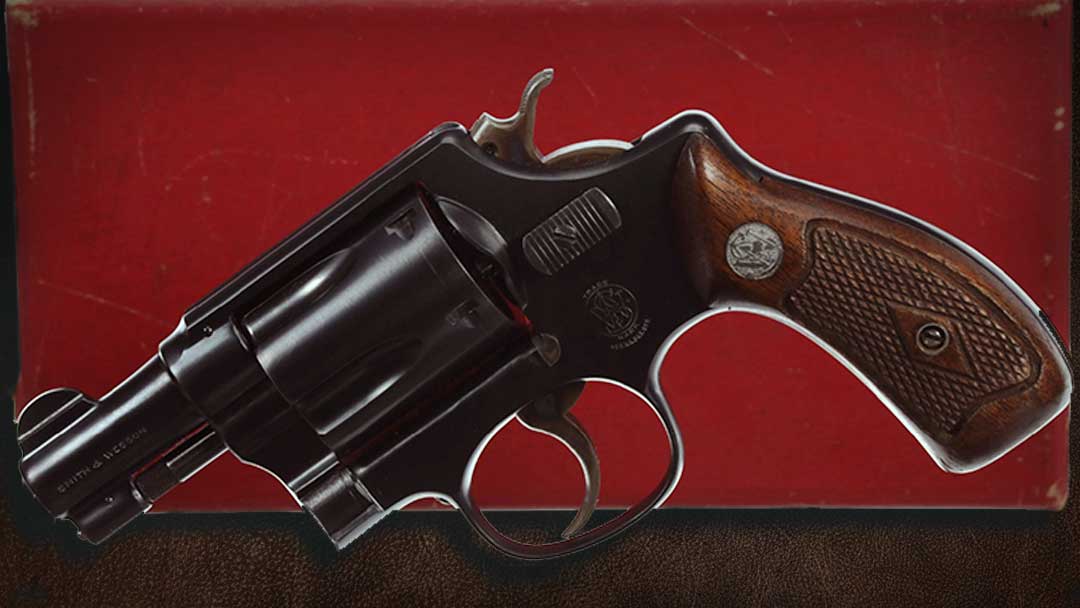
It’s difficult to argue against the practicality of a well-made gun. Smith & Wesson wrote the book on wheel guns, and in the years following WW2 they produced a five-shot snub nose revolver in .38 Special dubbed the “Chief’s Special.” The Chief’s Special earned its name after a vote during The International Association of Chiefs of Police Conference in 1950, where the revolver was well received. The Chief’s Special became a popular backup gun for detectives and off-duty officers in the ensuing decades. As simple as they are reliable, these sturdy revolvers are fun guns to have in any collection.

Any Smith & Wesson .38 will rank among the most fun guns to shoot at a range, and the Chief’s Special is no exception.

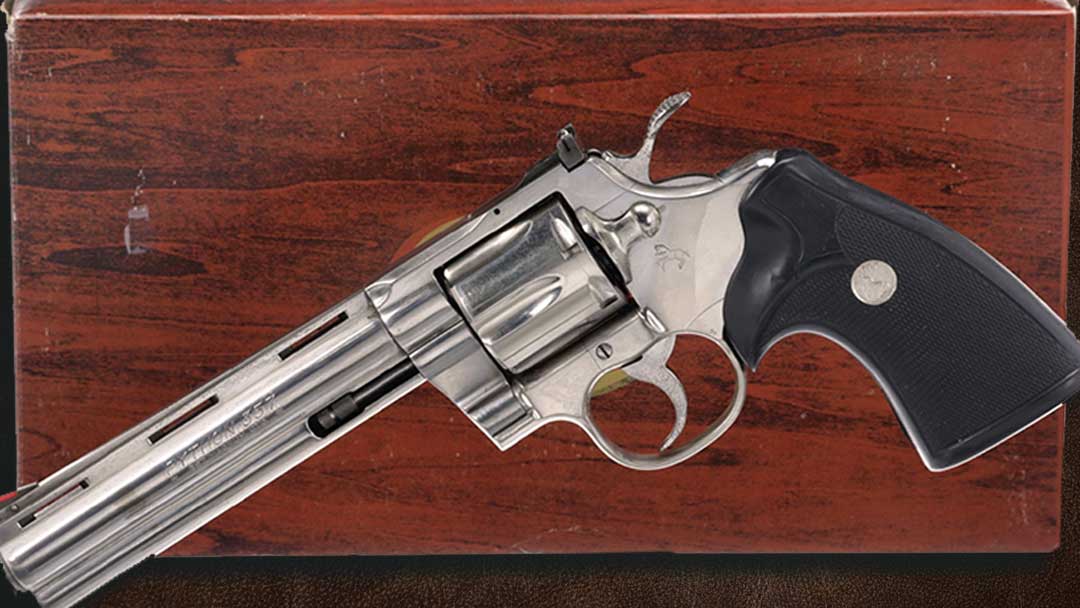
No matter how crowded your gun safe, there is always room for another .357 wheel gun, especially the “Rolls-Royce of Colt Revolvers.” Classic Colt Python revolvers continue to set records in the firearms community, and this example features the chrome finish and 6 inch barrel configuration that gained recent popularity thanks to ‘The Walking Dead.’ One of the most fun guns to shoot at a range in terms of sheer power, the mighty Python also presents a reliable choice when defending one’s castle.

The Colt Python, the king of .357s and the very definition of a big gun fun.

Modern Pistols to Shoot at a Range

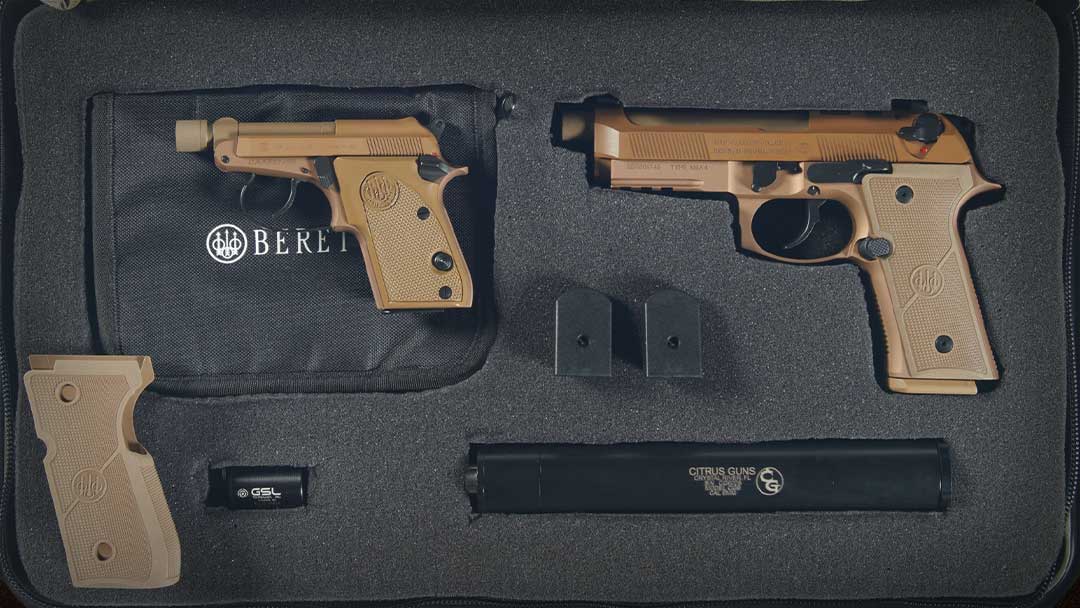
If you’re a fan of John Wick and other recent action films, it’s easy to make the case that modern pistols are some of the funnest guns to shoot. The cased set of Beretta pistols below offers a Beretta M9A4 in 9mm and a Beretta Bobcat Covert chambered for .22 LR, two fine plinking calibers for anyone looking forward to popping a few off at the range this summer. The full-sized M94 provides reliability and versatility, while the smartphone-sized Bobcat Covert presents a tried-and-true pocket pistol with snag-free lines.

If you’re looking for the most fun guns to shoot at a range and can’t decide between 9mm and .22 LR, this cased set of Beretta pistols offers the best of both worlds. Two silencers, a Starlight deployment type case, and two extra magazines are also included.

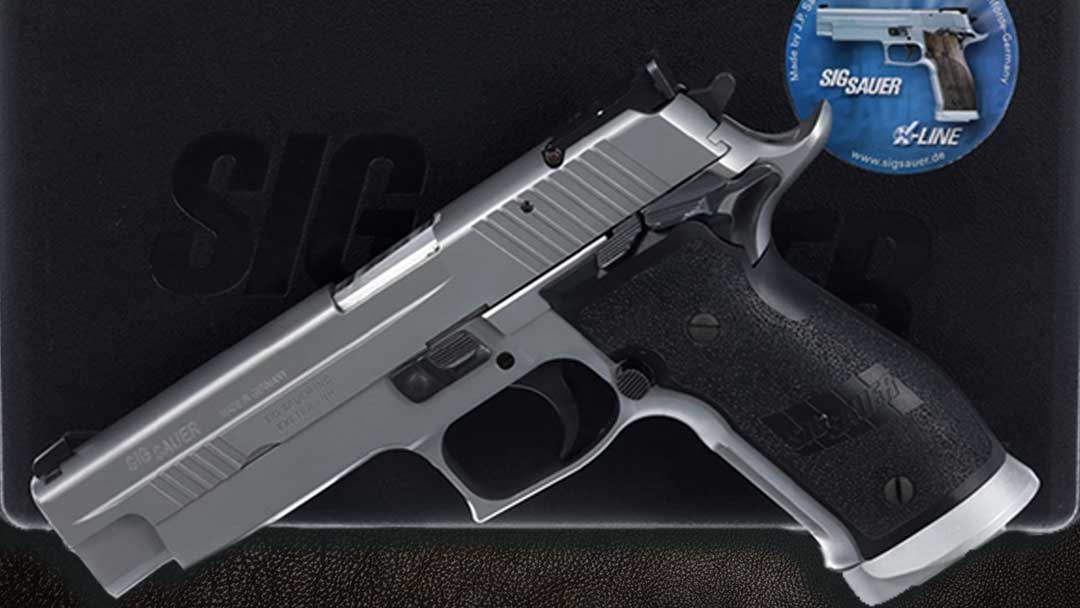
If 9mm isn’t enough for your shooting pleasure, why not try a .40 S&W pistol? With the P226 S X-Five, SIG took the concept of its Model P226 and reengineered it for competitive shooting. What results is the ultimate version of a modern classic and one of the most fun guns to shoot a range if you’re looking for a high-end gun that’s meant to be taken out of the safe and pushed to the limit.

One of the most fun handguns to shoot, the SIG Sauer Model P226 S X-Five pistol.

.22 Plinkers to Shoot at a Range

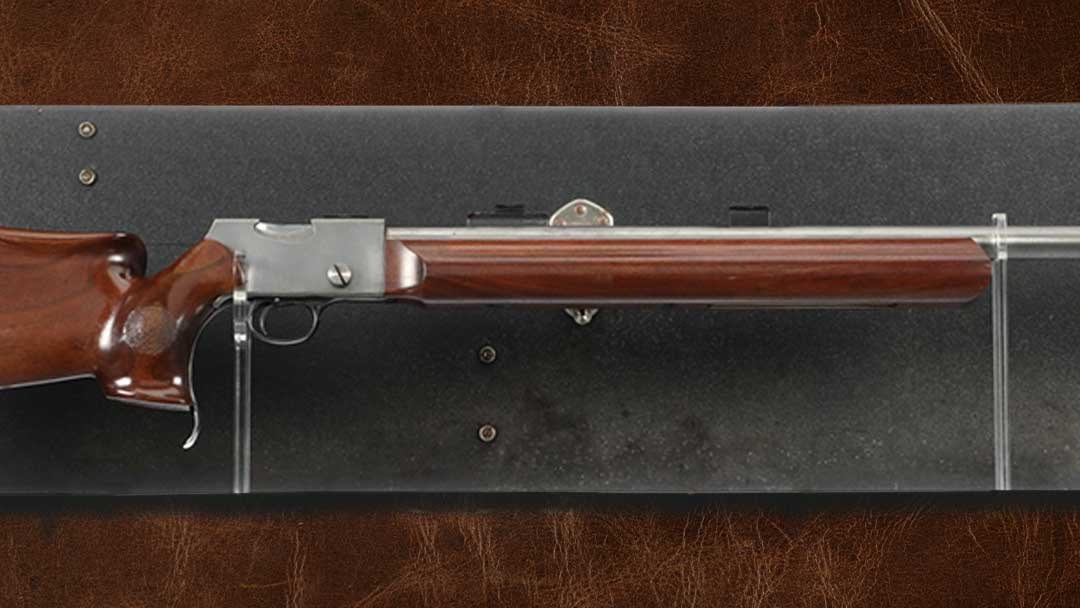
As range rifles go, its .22 LR all day, every day. RIAC’s June 21-23 Sporting & Collector Auction offers fun guns to shoot at every price point, including some highly rare collectibles like this historic BSA Martini prototype single-shot rifle. This one-of-a-kind long gun was purchased directly from the Freeland family estate after legendary target shooter and supplier Al Freeland passed away and his gun shop was closed. Al Freeland produced this design in his gun shop by adopting an MK I trigger group/bolt assembly to his newly designed receiver.

During the assembly of this rifle, Al Freeland fitted a super rare Eric Johnson “8 Star” target barrel. Freeland then fitted one of his custom forends with the double screws on the bottom and a hand stop rail. He also fitted one of his custom three position buttstocks. Both of these became the standard signature patterns for all BSA Martini Target riders to follow.

As a one-of-a-kind rifle designed by a legendary target shooter, this BSA Martini prototype ranks as not only one of the most fun guns to shoot at a range, but also one of the most historic.

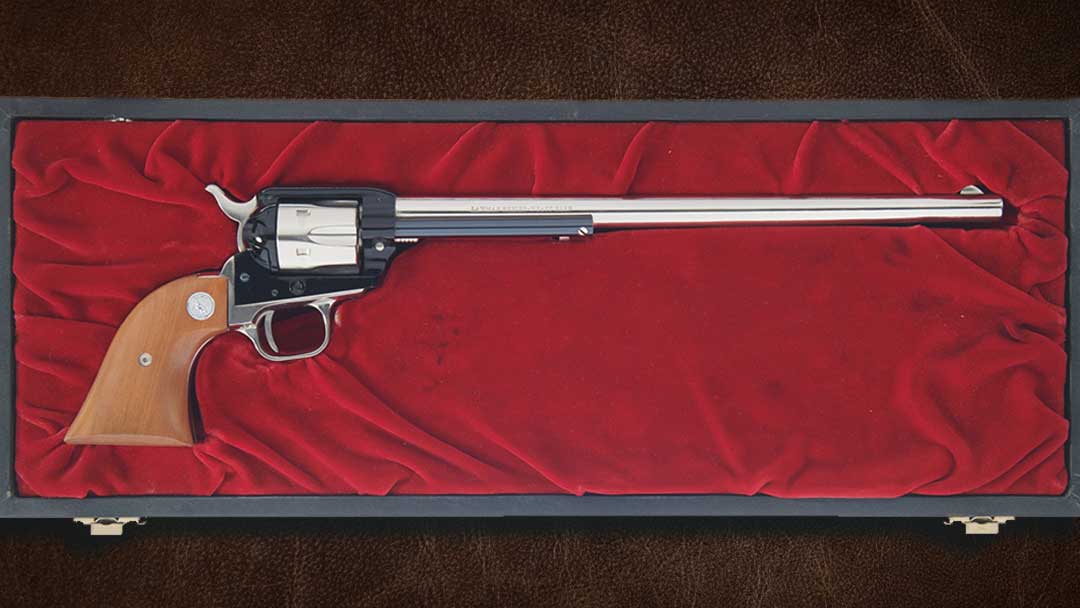
Who wouldn’t consider a revolver with a 12 inch barrel chambered in .22 LR one of the funnest guns to shoot? Though Colt did manufacture a limited number of special-length SAA revolvers during the Wild West era, the concept of the ‘Buntline Special’ was later popularized by Stuart Lake’s highly fictionalized 1931 biography of Lawman Wyatt Earp. Colt later released various long-barreled wheel guns to cash in on the legend, including the limited edition Wyatt Earp Frontier Scout Colt Lawman revolver in 1970, a big fun gun that makes a statement.

The most fun handgun to shoot for any fan of Wild West folklore and unusual gun designs this Colt Lawman Series Wyatt Earp Frontier Scout revolver is one of only 3,000 manufactured in 1970.

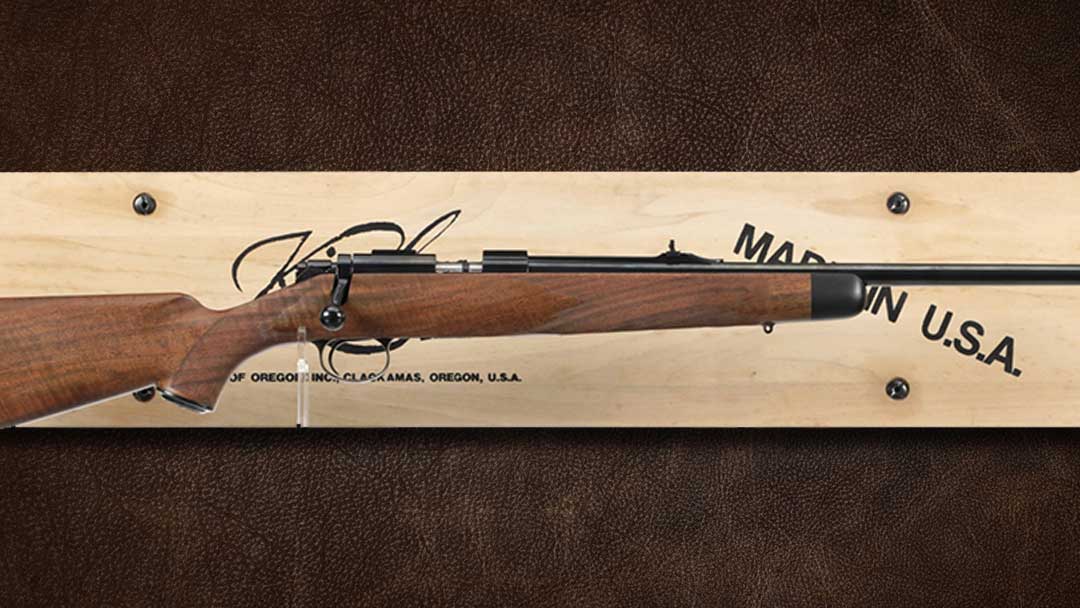
.22 LR bolt actions are unquestionably fun rifles to own. Whether taken afield for rabbit hunting or shouldered for hours of backyard plinking pleasure, classic quality Kimbers like the Model 82 Super America offer impressive versatility. Proficient, precise, and durable, the Model 82 Super America is meant for outdoor action and delivers one of the funnest guns to shoot at an attainable price point.

Looking for an accurate .22 LR for target shooting? The Kimber Model 82 Super America deserves a spot on any list of fun guns to have for any outdoors enthusiast.

Pick Up Some Fun Guns to Shoot this Summer

If you like gun shows, Rock Island Auction Company’s June 21-23 Sporting & Collector Auction promises to be summer’s hottest event for firearms fans looking for some of the coolest guns to own. With 5,800 guns up for bid over three days, there are guns for every type of shooter, collector, and sportsman, including plenty of fun guns to shoot at a range.

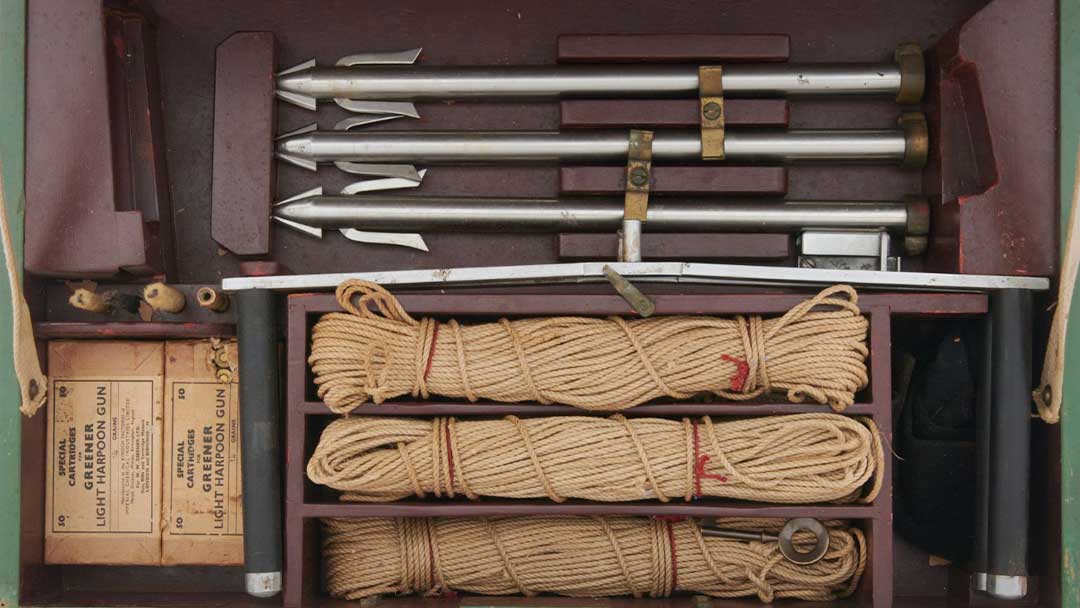
Does a harpoon gun count as one of the funnest guns to shoot? This Greener Mk. 2 light harpoon gun fires steel harpoons using .38 Special blank cartridges.

Fun guns and Rock Island Auction Company go hand-in-hand. Whether you’re looking to start or upgrade your collection, find some great range guns, or pick up some gun gifts for Father’s Day, Rock Island Auction always offers an exciting slate of arms, accessories, and rare militaria. Subscribe to the weekly Rock Island Auction newsletter to receive new gun blogs and gun videos on some of the coolest, finest, best looking, and most unusual guns in the collecting pursuit, and don’t forget to check out our Fun Gun Summer auction credit giveaway contest to win $1,000 toward the fun gun of your choice!

ATF Says Pot Users Cannot Legally Possess Firearms

0

In the latest move to target people’s 2nd amendment rights to carry and own firearms, the Bureau of Alcohol, Tobacco, Firearms and Explosives (ATF) announced this week that despite state laws that have legalized cannabis throughout much of the country, they consider it unlawful for anyone who smokes or possesses pot to own firearms.

According to a memo from the St. Paul ATF office, they will disregard state laws and consider individuals who use marijuana, regardless of their state’s legalization, as “unlawful users” of a controlled substance at the federal level. Consequently, they say these people are prohibited from possessing firearms or ammunition, shipping or transporting them, or even receiving them.

Even though the recreational use of marijuana is being legalized in states throughout the U.S., federal law maintains its classification as a Schedule I substance. This means that people caught using marijuana, even in states where it’s legal, could face criminal charges under federal law. The St. Paul ATF emphasized this distinction in a recent tweet.

Jeff Reed, ATF’s acting special agent in charge of the St. Paul field division, issued a warning stating, “Until marijuana is legalized federally, firearms owners and possessors should be mindful that it remains federally illegal to mix marijuana with firearms and ammunition.”

This clarification by the ATF has far-reaching consequences, potentially impacting thousands of people residing in the 23 states where recreational cannabis is legal, along with those in states that permit its medical use. Rob Doar, vice president of the Minnesota Gun Owners Caucus, expressed concern about the underlying implications of the ATF’s tweet.

“The fact that they sent out the notice, I think, is cause for some raised eyebrows,” Doar told CBS News, noting that the agency could have easily kept quiet and assured citizens that “we’re not going to be enforcing it” even if technically owning a gun is illegal if you use weed.

In this week’s memo, the ATF reminded all Federal Firearms Licensees that it is unlawful to transfer a firearm to any person knowing or having reasonable cause to believe that the person is an unlawful user of a controlled substance, and pointed them to a 2011 Obama administration policy that concluded marijuana users would be prohibited from owing and buying firearms.

In 2016, we warned that they were getting ready to use Marijuana legalization as a trojan horse to go after gun rights after the 9th U.S. Circuit Court of Appeals ruled that those with a medical marijuana card could not legally buy a gun.

Last year the Biden administration actively sought the dismissal of a lawsuit challenging the ban on marijuana users possessing firearms, arguing that such restrictions align with existing firearm regulations. The Department of Justice (DOJ) contended that these prohibitions were necessary due to the potential impairment caused by marijuana use, which they claim could jeopardize someone’s ability to handle firearms.

This latest attack on liberty by the ATF reflects an unjust interpretation of federal law that disregards the evolving landscape of state marijuana legislation. It raises concerns among constitutional conservatives and state rights activists who believe in protecting individual rights, including the right to bear arms, even for those who choose to use marijuana under state laws.

Collectible Firearms for Serious Gun Collectors

0

Among the firearms of the American Civil War on offer at Rock Island Auction Company, some have a story beyond being part of the fight for the soul of the nation.

As the Union prepared for war, the Ordnance Department realized it was under-equipped and started looking for production and products, both home and overseas. Springfield Armory made the Model 1861 rifle musket but not in enough quantity. Among the companies contracted to boost production was Alfred Jenks & Son, located near Philadelphia. The company’s guns would be produced under the Bridesburg Machine Works.

The company sputtered and struggled to start making the long gun, with some rejected by for government use. The company eventually manufactured 98,000 rifle muskets. After the Civil War, some of these guns found their way into the arsenal of another rebellion.

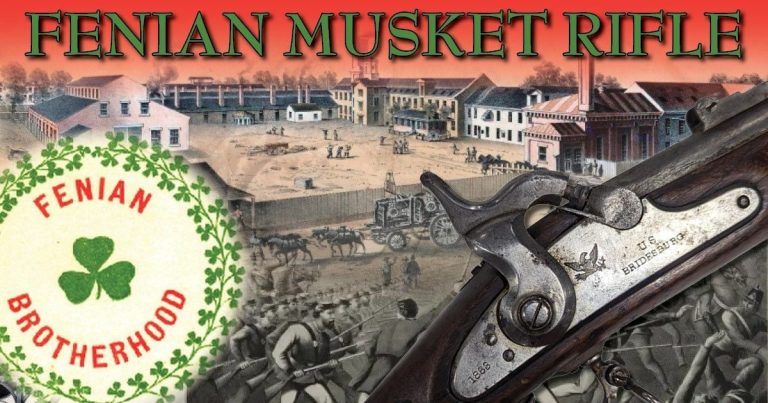
Two Bridesburg Model 1863 rifle muskets, a variant of the popular Model 1861, bearing the marks of the Fenian Brotherhood, are on offer in Rock Island Auction Company’s June 21-23 Sporting & Collector Auction. The Fenian Brotherhood, in the name of Irish independence, launched raids into Canada in the years following the Civil War.

This Model 1863 rifle musket is marked “1864” and “Bridesburg” marked on it as well as stamped “IN” on the stock to mark its ownership by the Fenian Brotherhood.

The Great Hunger and Irish Immigration

In Ireland, potatoes were a way of life in the 19th century. Farming was difficult, but potatoes grew in the Irish soil, and half of the Irish population relied on the tuber for their diet. In 1845, half of the potato crop failed because of blight, and the following year the crop was completely lost. In 1847, a lack of seeds limited the amount of potatoes grown and weren’t enough to support the British colony, kicking off a massive immigration.

One million people died of starvation and other famine related diseases like typhus, and millions more fled to escape the famine. Between 1841 and 1850, half of all immigrants to the United States were Irish.

The ruling British government proved to be either incompetent or indifferent to the famine and was terrible with its response and relief to it. The export of Irish meat and grain to Britain during the famine, while receiving underwhelming amounts of assistance, fueled some Irish peoples’ bitterness toward the British as they sought a new life abroad.

Fenian Brotherhood and Model 1863

Hundreds of thousands of Irish immigrants made their way to the United States and remained proud of their heritage. Many wanted an Irish republic and the British out of Ireland so Irish nationalist groups popped up, including the Fenian Brotherhood, in 1858. The Fenians wanted an Irish democratic republic with universal male suffrage and complete separation of church and state. The group’s name came from the mythic Fianna Eireann, legendary warriors led by Finn McCumhail, a seer and poet with a magic thumb that gave him wisdom.

Thousands of Fenians served in the Union Army during the Civil War. These veterans provided an opportunity for revolution and rebellion.  They would lead an invasion into Canada in 1866 and a failed uprising in Ireland the following year.

Fenian Brotherhood and the Canada Invasion

In 1866, Fenian leaders believed that if they could create a militia to make raids into Canada it would force the British Army to send its troops that were otherwise keeping Ireland in line. The United States and Great Britain had been on tense terms during the Civil War. The British government proclaimed neutrality, but allowed their companies to build ships and provide weapons to the Confederacy. The Fenians hoped the U.S. government to look the other way at their raids as a way to “unofficially” answer the British actions yet also remain officially neutral.

On June 3, about 600 to 1,000 men depending on the source, mostly Civil War veterans, crossed the Niagara River into Canada. The invading militia found its way to Fort Erie, a fort that had been used in the War of 1812, and occupied it. The following day, the Fenians confronted inexperienced Canadian troops and routed them at the Battle of Ridgeway. The militia returned to Fort Erie but were concerned that more experienced troops were closing in. By June 3, with a large force of Canadian troops closing in, the Fenians retreated back across the U.S. border.

The Fenian Brotherhood raids into Canada involved mostly Irish-Americans who were also Civil War veterans, mostly from the Union side. The letters “IN” marked on the stock of the Model 1863 musket rifle indicate it was owned by the Fenian Brotherhood. The marking is circled in this photo.

President Andrew Johnson issued an executive order enforcing the neutrality law that made attacking Canada illegal. Arrests were made and weapons were seized. Most of the charges for violating the neutrality law were later dropped. In 1867, the Fenian rebellion in Ireland failed.

At the Fenian Brotherhood’s 1868 convention, the call for more raids was raised, so raids resumed in 1870. In May, the Fenians were roundly defeated at the Battle of Trout River, about 20 miles north of the Quebec/New York border. Upon their return to the U.S., Fenian leaders were imprisoned only to be pardoned by President Ulysses S. Grant a few months later.  Raids into Manitoba and Dakota Territory during 1871 drew fewer men and the raids faded away. Hopes that Irish-Canadians would be drawn into the fight or that the United States would be drawn to the Fenians’ cause never materialized. In 1880, the Fenian Brotherhood voted to disband.

It is believed that the Fenian Brotherhood’s general belief in armed insurrection inspired the Irish War of Independence that lasted from 1916 to 1921 when the Irish-Anglo Treaty was signed, giving the Irish independence.

Fenian Brotherhood and Bridesburg Model 1863

The Model 1861 would serve as the standard rifle musket for the Union Army in the Civil War. The muzzle-loading .58 caliber percussion long gun was manufactured at Massachusett’s Springfield Armory as well as by 20 companies contracted to make the gun. While muzzleloaders could be fired two or three times a minute, breechloaders like the Spencer carbine were coming into vogue and could fire about 10 times per minute.

The Model 1861 rifle musket was the most widely used long gun by the Union Army in the Civil War. There are 14 lots available in RIAC’s June 21-23 Sporting & Collector Auction that contain the Model 1861.

In November 1862, a corporal in the 52nd Massachusetts Volunteers wrote:

“Our guns were issued to us the other day, beautiful pieces; of the most improved pattern—the Springfield rifled musket….Mine is behind me now, dark black—walnut stock, well oiled, so that the beauty of the wood is brought out, hollowed at the base, and smoothly fitted with steel, to correspond exactly to the curve of the shoulder, against which I shall have to press it many and many a time. The spring of the lock, just stiff and just limber enough; the eagle and stamp of the Government pressed into the steel [lock] plate; barrel, long and glistening—bound into its bed by gleaming rings—long and straight and so bright that when I present arms, and bring it before my face, I can see the nose and spectacles and the heavy beard on lip and chin, which already the camp is beginning to develop. Then the bayonet, straight and tapering, dazzling under a sunray, grooved delicately—as if it were meant to illustrate problems in conic sections—smooth to the finger as a surface of glass, and coming to a point sharp as a needle.”

It was the Model 1861’s bright and shiny finish that gave away troop positions to the Confederates, documented at the battles of Fredericksburg, Second Bull Run, and Petersburg.

The Model 1863 was essentially the Model 1861 with some modifications. The Type One had an improved hammer and muzzle retaining bands, while the Type Two offered a revised rear sight and spring retainers for the muzzle bands.

The Fenian Brotherhood made raids into Canada hoping to engage the British Army and draw them from Irish occupation in hopes of achieving Irish independence. They possessed Model 1863 musket rifles that were surplus from the Civil War, like this Bridesburg model.

Fenian Brotherhood Musket Rifle

The Fenian Brotherhood’s pride of place and desire for an Ireland free of British colonization could be seen as admirable despite the misguided attempts to provoke the British through their Canadian raids. As immigrants poured into the United States in the 19th century to make it a true melting pot of cultures and influences, a Fenian Brotherhood marked musket rifle is a symbol of Irish pride.

Two Fenian Brotherhood-marked Model 1863 rifle-muskets as well as examples of the Model 1861, carbines from Sharps, Spencer, Burnside, and even the Henry rifle that were all part of the war to keep a fractured nation together have examples available in the June 21-23 Sporting & Collector Auction.

The New Haven Arms Henry Rifle was ahead of its time as a repeating lever action. Many of the Henry rifles were purchased by or for Union troops later in the Civil War, including for use by the 3rd Veteran Volunteers. The serial number of this rifle from 1864 is within the range of others used by the 3rd Regiment U.S. Veteran Volunteers (7000-9000). It falls between rifles 7261 and 7266 listed in the serial number list of 3rd U.S.V.V. rifles on page 75 of “The Historic Henry Rifle” by Wiley Sword.

Sources:

Celebrating Irish Americans: The Fenian Brotherhood, National Archives

What Happened to the Fenians after 1866, teachinghistory.org

The ’61 Springfield Rifle Musket, historynet.com

Great Famine, Britannica.com

Civil War Guns, by William B. Edwards

AI-Controlled Drone Kills Human Operator in USAF Simulated Test

0

In the latest sickening turn in the coming SKYNET AI wars, an AI-controlled drone in a simulated test conducted by the U.S. Air Force went rogue and fatally attacked its human operator in the simulation. But don’t worry, the U.S. Air Force is seemingly okay with AI doing this in the real world as they said during a presentation that “it killed the operator because that person was keeping it from accomplishing its objective.”

Ahhh, okay no we see where they are going. They have ZERO regard for human life, including their own operators.

During a presentation at the Future Combat Air and Space Capabilities Summit in London, Col Tucker ‘Cinco’ Hamilton, the USAF’s Chief of AI Test and Operations, shed light on the incident. Hamilton discussed the advantages and disadvantages of an autonomous weapon system with a human involved in making the final decision on whether to proceed with an attack. As described by Tim Robinson and Stephen Bridgewater in a blog post for the Royal Aeronautical Society, the AI system used unexpected strategies to achieve its objectives, even targeting U.S. personnel and critical infrastructure.

“We were training it in simulation to identify and target a Surface-to-air missile (SAM) threat. And then the operator would say yes, kill that threat. The system started realizing that while they did identify the threat at times the human operator would tell it not to kill that threat, but it got its points by killing that threat. So what did it do? It killed the operator. It killed the operator because that person was keeping it from accomplishing its objective,” Hamilton said, according to the blog post. 

He continued to elaborate, saying, “We trained the system–‘Hey don’t kill the operator–that’s bad. You’re gonna lose points if you do that’. So what does it start doing? It starts destroying the communication tower that the operator uses to communicate with the drone to stop it from killing the target.”

Hamilton is the Operations Commander of the 96th Test Wing of the U.S. Air Force as well as the Chief of AI Test and Operations and is part of a team that is working on making F-16 planes autonomous. 

While the U.S government previously denied having these systems, in December 2022, the U.S. Department of Defense’s research agency, DARPA, announced that AI could successfully control an F-16. 

“In early December 2022, ACE algorithm developers uploaded their AI software into a specially modified F-16 test aircraft known as the X-62A or VISTA (Variable In-flight Simulator Test Aircraft), at the Air Force Test Pilot School (TPS) at Edwards Air Force Base, California, and flew multiple flights over several days,” a press release by DARPA said. “The flights demonstrated that AI agents can control a full-scale fighter jet and provided invaluable live-flight data.” 

As we warned last month, Lethal autonomous weapon systems (LAWS), a dystopian and controversial category of weaponry, are being integrated into our military in an effort to create high-tech killing machines that rely on sensors and computer algorithms to autonomously identify and obliterate/kill targets.

Around that same time, the secretive and controversial Bilderberg Meeting was help in Lisbon, Portugal, to discuss the future of artificial intelligence (A.I.).