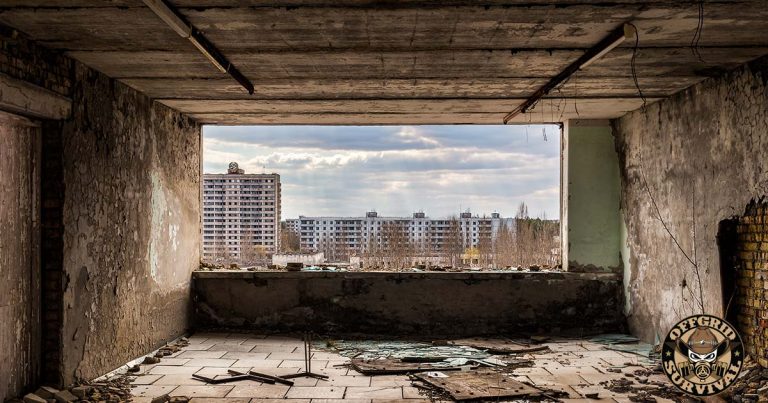
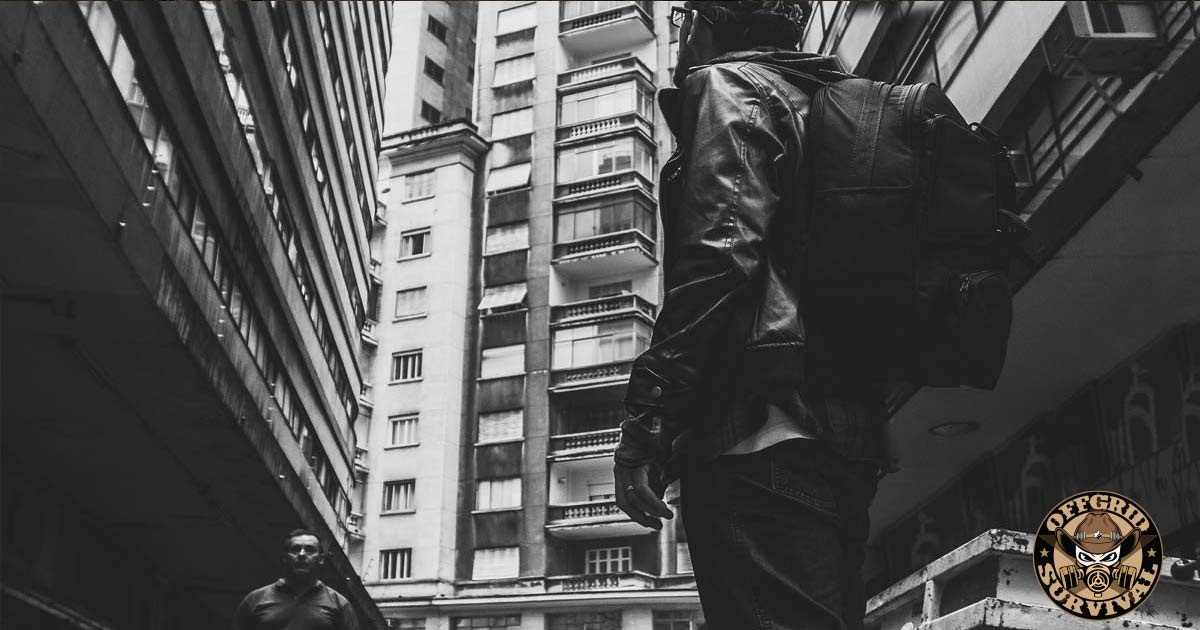
The allure of city life is undeniable—cultural richness, career opportunities, and vibrant communities make urban living a dream for many. However, cities also harbor unique preparedness challenges and potential threats that can put your survival skills to the test. From natural disasters to civil unrest, urban environments demand a distinct approach to preparedness.
Assessing Urban Threats
As we’ve talked about in the past, no matter what your situation may be, in order to be prepared for the very real dangers this world can throw at you, you need to understand what threats are out there and do a thoughtful and thorough assessment of how you stack up against those threats and what you need to do to prepare further. For more information on threat assessments and understanding how your level of preparedness stacks up against reality, check out our article on performing a survival threat assessment.
Understanding the Unique Challenges of Living in a City during a Survival Situation or Disaster
During the good times, cities can be great hubs of activity, but there is a considerable downside should things go wrong. Two of the biggest threats you will face are population density and limited access to essential resources. These factors create a set of unique challenges for people trying to survive a disaster or long-term survival situation in an urban setting.
Population Density: Urban areas are teeming with people, which can lead to increased competition for resources in times of crisis. Even now, most urban cities are overrun with crime, chaos, and daily assaults and murders. When everyone rushes for the same supplies, having a well-thought-out plan becomes crucial. What do you think will happen when these chaotic cities become even more chaotic?
The following article goes into much deeper detail on the subject; we recommend taking a few minutes to check them out.
Limited Access to Resources: Unlike rural areas, cities often lack direct access to natural resources like water and food. Urban survival means finding innovative ways to secure these necessities.
Identifying Common Urban Threats
Crime is obviously a big one, but urban areas are susceptible to a range of threats that urban preppers must be prepared for:
Natural Disasters: Earthquakes, hurricanes, floods, and extreme weather events can wreak havoc in urban environments. The dense infrastructure of cities makes them vulnerable to the effects of these disasters, and poor planning and response from government officials often worsen these situations.
Civil Unrest and Protests: Political or social unrest can lead to protests, demonstrations, and potential violence. In such situations, knowing how to stay safe and navigate your way to security is essential.
Power Outages: Grid failures can disrupt essential services, including electricity. From everyday natural disasters to terror attacks by hackers or even the degradation of our aging infrastructure, having backup plans is crucial when the lights go out in a city,
Public Transportation Disruptions: In many large urban areas, much of the population doesn’t drive and depends on public transportation. During a disaster, cities relying heavily on public transportation systems will be in trouble. When these systems break down due to emergencies, mobility becomes a significant challenge for urban residents, and bugging out during an evacuation becomes impossible, leaving you vulnerable to government orders and evacuation camps.
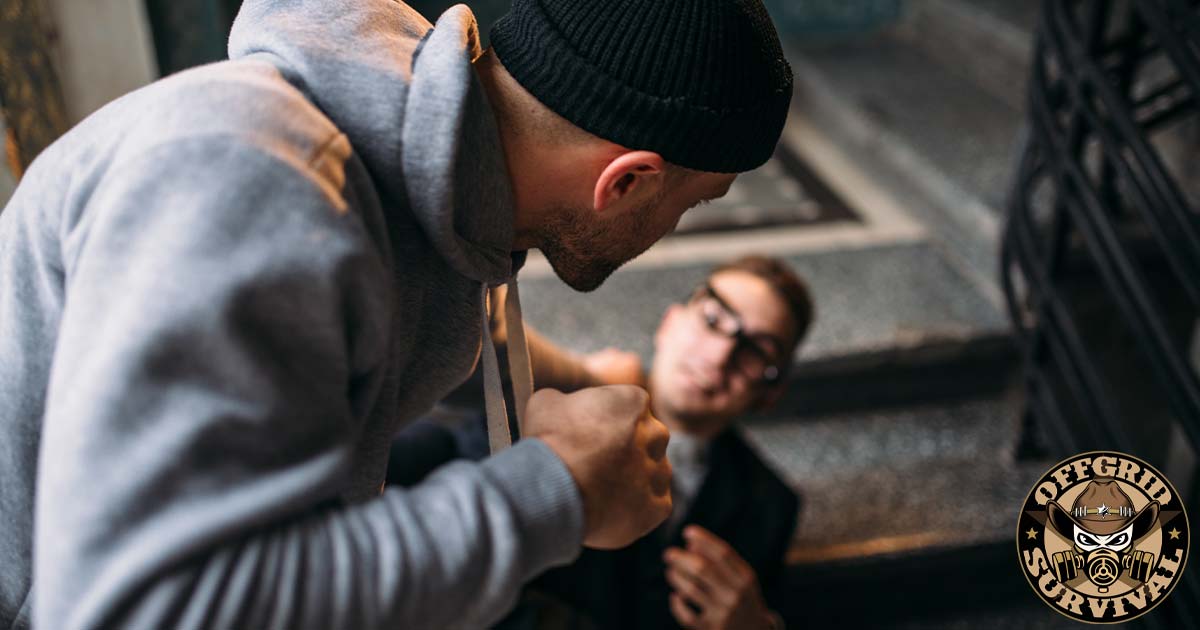
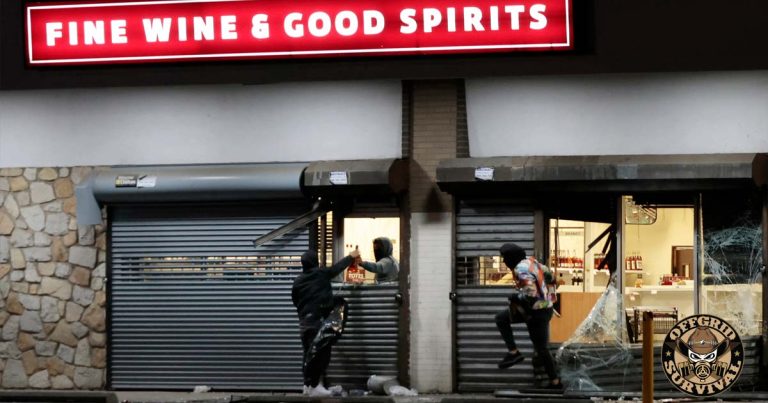
Crime and Violence: Urban areas WILL experience increased crime during emergencies. Time and time again, we see criminal scumbags using natural disasters as an excuse to loot, rob and assault innocent people. Being prepared for personal security is essential in such scenarios.
Creating an Urban Survival Plan
Surviving in an urban environment during a crisis requires careful planning and preparation. Here’s how to create an effective urban survival plan:
Emergency Communication
Communication is the cornerstone of any successful emergency plan, especially if you live in a big city and your family is often separated. During a disaster, it is essential to ensure you have the means to stay connected:
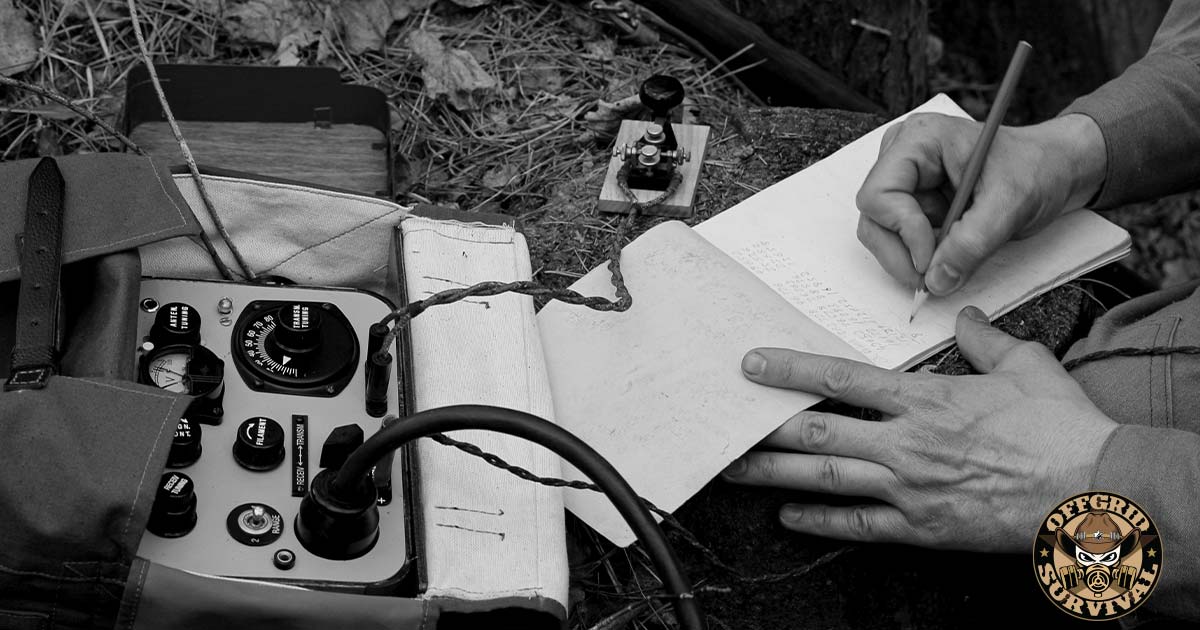
Established a Reliable Communication Network: Have a detailed plan to reach family members and loved ones during a crisis. Consider alternative communication methods, like ham radio, in case traditional channels fail.
Designated an Out-of-Town Contact: Select a contact outside the city who can serve as a central point for information exchange. This person can help relay messages if local communication is disrupted.
Communications Monitoring: The Importance of Radio Monitoring and Intelligence Gathering During Crisis Situations CANNOT be understated! Check our HamRadio Preppers article on Radio monitoring and Intelligence gathering during a crisis.
Bugout Locations
Identifying safe locations for evacuation is a crucial aspect of urban survival. The last thing you want is to be stuck in a big city when shit starts turning south!
Identify Safe Evacuation Points: You need to plan before things go wrong and where you can go if you need to leave your home quickly. Consider friends or family’s houses outside the city, hotels, or emergency shelters as potential options. If you have the means, you should also invest in a bugout trailer or a bugout property.
Make Sure Your Vehicle is Ready To Go: You have a bugout bag, your home is ready for disasters, and you have planned for the worst-case scenario, but what about your vehicle? When seconds count, your bug-out vehicle needs to be ready and able to go at a moment’s notice. Here is what you should be doing to prep it for bugging out.
Essential Supplies To Stockpile
Stocking up on essential supplies is critical to surviving urban emergencies. When disaster strikes, most stores only have a couple of days worth of supplies on hand, and if the disaster stops incoming shipments and supply chains, chaos will quickly break loose.
Build a City-Focused Bugout Bag: Prepare a backpack with essential items, including non-perishable food, water, first aid supplies, tools, and important documents. Customize it to suit urban survival needs.
Stockpile Non-Perishable Food and Water: Create a stockpile of canned goods, dried foods, and bottled water that can sustain you and your family for an extended period. Check expiration dates regularly and replace items as needed.
First Aid and Medical Supplies: Assemble a comprehensive first aid kit with medications, bandages, medical equipment, and any necessary prescription medicines. Ensure you’re prepared to handle minor injuries and medical issues.
Self-Defense and Security Concerns
There is no way to sugarcoat the reality of the situation; most big cities are already a mess, and during a long-term crisis or disaster, they will be hell on earth. When civil unrest occurs, safety should be your top priority.
Personal Safety Strategies: Practice situational awareness, which means being mindful of your surroundings and potential threats. Avoid risky areas, especially during chaotic times. Use caution when interacting with strangers, and trust your instincts.
Home Security Measures: Reinforce your home’s security with robust locks, alarms, and security systems. Ensure that all entry points are secure, including doors and windows. Consider installing motion-activated lights and surveillance cameras.
Reinforcing Doors and Windows: Strengthen entry points by installing sturdy locks, reinforced doors, and shatterproof window film.
Maintaining a Low Profile: During civil unrest, it may be best to keep a low profile. Avoid drawing attention to your residence.
Staying Informed: Stay informed about ongoing events by monitoring news sources and social media. I would also look into ham radio and short-wave radio to monitor police, military, and locals who may be talking about the situation.
Knowing Your Neighbors: Get to know the people in your neighborhood. Building relationships with your neighbors can foster trust and cooperation during difficult times.
Situational Intel: Knowledge is Power during a Crisis: One of the best ways to protect yourself and your family during any crisis or disaster is to stay aware of what’s happening around you. That means knowing where to find real-time, unfiltered information.
When collectors think of Rock Island Auction Company, they think of the world-class pieces sold with close ties to some of history’s most famous figures: Theodore Roosevelt, Alexander Hamilton, Napoleon, Ulysses S. Grant, and others. These are a select few sold in recent years alongside thousands and thousands of other antique and collectible firearms.
In this proud vein, and to put an exclamation point on 30 years in business, RIAC is privileged to announce the offering of an exciting historic firearm with ties to the American Southwest during its December 8 – 10 Premier Firearms Auction, the inaugural event for the company’s new state-of-the-art facility at 3600 Harwood Rd., Bedford, Texas. There’s no better way to celebrate both occasions than with the stunning gold Colt Single Action Army revolver inscribed to Mexican bandit turned revolutionary general, Francisco “Pancho” Villa.
This Colt is everything collectors of fine arms seek. It is factory documented as gold plated, factory engraved, and shipped to a small arms dealer in El Paso, Texas, with known connections to Villa. Best of all, the revolver is inscribed, not once, but twice to Pancho Villa, the most famous figure of the Mexican Revolution. His decade-long fight made him famous far beyond Mexico’s borders.
With 2023 marking the centenary of his assassination, it’s a perfect and appropriate time to reflect on his legacy and influence in Mexico, Texas, and the American Southwest.
By the time of his death in a hail of gunfire, Villa and the Division del Norte (Division of the North) had made their mark on the histories of Mexico and the American Southwest, toppling Mexican presidents Porfirio Diaz and Victoriano Huerta.
Pancho Villa’s Colt Single Action Army will be on offer in Rock Island Auction’s December Premier Auction in Bedford, Texas. In this undated photo, the Mexican revolutionary, just right of center, stands with some of his men.
In addition to his victories on the battlefield, Villa remains one of the most famous and popular figures in Mexican history as a Robin Hood-like folk hero remembered widely as a supporter of the common people against the rich and powerful. However, like most historic figures, things are seldom so simple. He and the Division of the North are well-known for their ruthlessness, leaving bodies in their wake on both sides of the Rio Grande, garnering international headlines and retribution from both American and Mexican armies, both of whom failed to capture Villa.
For some families in the Southwest, Villa’s activities along the border were far more personal. Some supplied him, some feared him, and some did both. That is the case for the family involved in this fascinating and exceedingly rare Colt Single Action Army.
Factory letters confirm this revolver was in .45 caliber with a 5 ½ inch barrel, gold plating, and style 2 factory engraving when the revolver was sold to Shapleigh Hardware Co. of St. Louis and shipped to City Loan & Jewelry Co. on April 18, 1917.[i] City Loan & Jewelry Co. was a pawnshop in the rough and tumble border town of El Paso, an area swarming with both U.S. government agents and Villa’s allies. The factory records did not list the grips nor the inscriptions on the back strap which read: “Al General Francisco Villa/de/su Division del Norte” in fine script along the back and “FRANCISCO VILLA” in bold letters on the butt. The inscriptions are period, and R.L. Wilson in his analysis stated that the inscription on the butt was likely factory and that the other was inscribed at City Loan & Jewelry Co., but also indicated both may have been done at City Loan & Jewelry Co.[ii]
Shelton-Payne Arms Co. was the primary option for shipping Colts to El Paso, and this is the only Colt recorded as shipped to City Loan & Jewelry Co., a pawn shop.[iii] Joseph B. Ravel (1884-1957) was the proprietor and ran it initially with his nephew Sam Ravel before the latter established himself in Columbus, New Mexico. The shop was just one of several businesses owned by the Ravel family in the area. Joseph Ravel’s brother Max owned the similarly named Chicago Loan & Jewelry Co. located nearby, and another brother, Erman, operated the East El Paso Fuel Co. The Ravels were Jewish immigrants from Lithuania escaping from all too frequent anti-Semitic pogroms. The brothers were part of the first generation of their family to settle in El Paso.[iv]
The backstrap of Pancho Villa’s Colt Single Action Army reads “Al General Francisco Villa/de/su Division del Norte.” The gold-plated revolver will be on offer in Rock Island Auction’s December Premier Auction to be held in Bedford, Texas.
Joseph Ravel is known to have sold arms to Pancho Villa through City Loan & Jewelry Co., purchasing firearms and ammunition. One time, while conducting a sale, a crowd gathered outside and Joseph Ravel went to investigate before returning to finish the sale. After Villa left, U.S. Secret Service agents came in the shop and asked Ravel if he knew who is customer was. Ravel admitted that he didn’t and was told by the agents that it was Pancho Villa.” It wasn’t the last time Ravel had business with Villa as recorded through the federal authorities.[v]
A view of Sam Ravel & Bros. store in Columbus, New Mexico. Pancho Villa’s men raided the town on March 9, 1916 and is believed to have been looking for Sam Ravel who he though crossed him.
Sam Ravel and Pancho Villa’s Colt
Sam Ravel (1884/85-1937) immigrated to Texas in 1905 and originally lived in El Paso and worked at City Loan & Jewelry Co. before moving in 1910 to Columbus, a small town about 70 miles west of El Paso. Columbus was isolated and just a few miles from the Mexican border. There he owned the Commercial Hotel and Columbus Mercantile Company.[i] He renamed the latter Sam Ravel & Brothers when his brothers Arthur and Louis joined him. Sam Ravel was doing cross-border business with Mexican revolutionaries as early as 1914, when he was arrested in Mexico and briefly detained for supplying the Roque Gomez gang with firearms and ammunition. Family lore suggested Pancho Villa would occasionally participate in backroom poker games in the Ravel store where he was a customer. Arthur Ravel later denied that Sam Ravel had any business relationship with Villa, but said they did business with “every revolutionary concern, bandit, or general…With the exception of Pancho Villa.”[ii]
Pancho Villa’s Colt Single Action Army is gold plated, has pearl grips, is inscribed to him, and will be on offer in Rock Island Auction Company’s December Premier Auction in Bedford, Texas.
Pancho Villa Pays Columbus and the Ravels a “Visit”
Two years before the revolver shipped to El Paso, Pancho Villa and the Division del Norte were one of the most powerful forces in Mexico, especially in Mexico’s northern states. Villa received support from the United States as well as Germany. Germany sought to cause turmoil in Mexico to keep the United States out of World War I. German agents funneled money through New York to the Mississippi Valley Trust Co. in St. Louis. Also in St. Louis was Felix A. Sommerfeld, a Jewish immigrant from the German Empire who worked as an agent for both the German government and multiple Mexican leaders. Sommerfeld used $390,000 from the German government to purchase firearms and ammunition from the Western Cartridge Co. across the river from St. Louis in East Alton, Illinois. These munitions were shipped to Hipolito Villa, Pancho Villa’s brother, in El Paso through another of Villa’s agents whose shop was mere yards away from City Loan & Jewelry Co. Sommerfeld also shipped arms through Shelton-Payne Arms Co. in El Paso. Whether or not Sommerfeld or the German government were involved in the purchase and shipment of the gold-plated Colt is not clear, but it is certainly possible this revolver was meant as a gift to Villa via German agents.[i]
Villa’s men were defeated at the Battle of Celaya in April 1915 by Alvaro Obregon’s Constitutional Forces. The Division del Norte suffered an estimated 6,000 men killed, another 6,500 captured, and 5,000 wounded out of his estimated force of 22,000 men over the course of more than a week of fighting. Additional losses essentially ended the Division del Norte’s power and forced Villa to return to guerilla fighting. By the end of 1915, Villa, once one of the most powerful men in all of Mexico, had lost much of his power, including support from the United States government which now recognized his rival President Venustiano Carranza and even aided in his fight against Villa.
Villa and the remaining men of the Division del Norte continued to fight on, but needed supplies. In March 1916, one year before this revolver shipped, Villa and the Division del Norte crossed the border and headed to Columbus, New Mexico. The exact reason has never been confirmed, but a combination of motives is likely. The Ravel family and others believed Sam Ravel was the target of the raid, possibly over an arms deal gone wrong. Historian Thomas Boghardt suggested the raid had multiple purposes such as revenge against President Wilson and the American government for recognizing and supporting President Carranza and demonstrating Villa’s own will and his men’s willingness to keep up the fight.
Boghardt also writes, “Moreover, Villa appeared to have had a very personal motive for choosing his target: the city of Columbus was home to an arms dealer, Sam Ravel, who, Villa felt, had betrayed him in a transaction. And sure enough, the raiders torched Ravel’s business on 9 March.”[ii]A Villista, Juan Munoz, was quoted as saying, “We did not go to Columbus to kill women and children as it has been said. We went to Columbus to take Sam Ravel and burn his properties for the robbery and treason he committed. That’s the truth.”[iii] The problem was, Sam Ravel wasn’t there. He was in El Paso that day.
This is a closeup of Pancho Villa’s Colt Single Action Army that will be available in Rock Island Auction Company’s December Premier Auction in Bedford, Texas.
On March 10, 1916, The El Paso Times, under the headline “Boy of Fourteen Saves Brother’s Life During Raid on Columbus, N.M.” reported that when Villa’s men came looking for his brother, Arthur Ravel was in the store and tricked Villa’s men to protect their other brother Louis who was hiding. He denied knowing the combination to the safe even as the raiders executed men.
Luckily for Arthur Ravel, the 13th U.S. Cavalry were stationed in Columbus, and there were far more troopers than the Villistas expected; the troopers reportedly shot Arthur’s captors allowing him to flee to safety. That was not the case for many others. 10 died in the raid. Several homes and businesses were burned. Arthur Ravel took a bullet through the ear. The 13th Cavalry suffered eight dead and five wounded.
An American soldier stands guard among the remains of Columbus, New Mexico following the March 9, 1916 raid by Pancho Villa and his men. Pancho Villa’s gold-plated Colt Single Action Army will be on offer in Rock Island Auction Company’s December Premier Auction at Bedford, Texas.
Some have suggested Sommerfeld, the German agent, persuaded Villa to attack Columbus on instructions from the German government to stoke tensions between the U.S. and Mexico. Prior to acting as a double agent for Villa and Germany, Sommerfeld was an arms purchasing agent for President Madero and threatened other arms dealers for supplying Madero’s rivals.[i] If Ravel refused to sell arms to Villa but sold to his adversaries, Sommerfeld may have indeed suggested the attack as a good excuse to get Villa to cross the border or out of principle.
Villa was no fool and certainly may have come to the same conclusion on his own. Villa may have chosen Columbus because of its isolation, had plentiful supplies, as punishment for President Wilson and the American government, and believing it was relatively unguarded. His intelligence proved faulty leading to significantly more resistance than he expected. The exact numbers on Villa’s side are more varied from source to source than for the Americans, but he suffered several dozen men killed along with others captured or wounded out of a fighting force of about 500. Despite their losses, they succeeded in capturing mules, horses, rifles, and other supplies as well as provoking a U.S. response.
Pancho Villa’s attack on Columbus, New Mexico, combined with the killing of U.S. citizens in Mexico infuriated many within the United States and provoked an expedition of thousands of U.S. troops into Mexico in an attempt to bring Villa to justice. Many of the troops were stationed in the smoldering remains of Columbus. Among the troops was George Patton who also famously carried an engraved Colt Single Action Army revolver.
The Punitive Expedition, War, and Pancho Villa’s Golden Colt
Shortly after the Columbus Raid, U.S. troops flooded the region. Brigadier General John J. Pershing was tasked with tracking down Villa and bringing him to justice. Thousands of American soldiers crossed the border on March 15, 1916, without the permission of the Mexican government creating tensions between the U.S. government and President Carranza, perhaps exactly what Villa hoped for. Villa remained on the run and broke his force into smaller groups to elude his pursuers. U.S. troops were engaged in skirmishes and small battles with both Villa’s men and Mexican government troops – nearly bringing the two countries to war. To avert war, the last of Pershing’s men returned to the U.S. on February 5, 1917.
News of the infamous Zimmerman Telegram broke on March 1, 1917, revealing to the American public that the German government had been plotting to bring Mexico into the Great War against the United States with the promise of returning territory lost in the Mexican-American War. The telegram combined with German submarine warfare and other actions led to the United States declaring war on Germany on April 6, 1917. Had the timing played out differently, the U.S. very well could have found itself at war with both Germany and Mexico.
Pancho Villa’s Colt Single Action Army has his full name, “Francisco Villa” inscribed on the gold-plated butt. The revolver will be available in Rock Island Auction Company’s December Premier Auction at Bedford, Texas.
Instead, the American military turned its attention to Europe and defeating Germany while also keeping a close eye on the Southern border.
Twelve days after the declaration of war, the golden Colt Single Action Army left the Colt factory en route to El Paso. Unfortunately, we do not know who ordered it or when. Many questions remain: did German agents pay for the revolver after news of the Zimmerman telegram came out in order to urge Villa to launch another attack? Was it ordered before or after the Zimmerman Telegram was made public knowledge? Was it ordered before the declaration of war? And finally, what did Pancho Villa make of it?
This is the underside of Pancho Villa’s Colt Single Action Army revolver that is gold plated and engraved with his name on the butt and backstrap. It will be available in Rock Island Auction Company’s December Premier Auction slated to be held at Bedford, Texas.
The Death of Pancho Villa
In April 1917, Pancho Villa was on the run but had followers in Northern Mexico. His power was severely diminished by a series of defeats and pursuit by both American and Mexican forces. Newspapers reported Pancho Villa’s links to the German government (both real and imagined) and his escape from a trap set by General Francisco Murguia and 4,000 Mexican troops. While Villa remained a threat, he lacked the men and supplies to carry out successful campaigns against the government, but he continued to fight on nonetheless. Villa attacked both Juarez and Durango but was beaten back both times. After the chaos of the election of 1920 and the ouster of Carranza, Villa agreed to retire to his hacienda at Canutillo near Parral in Chihuahua and was pardoned.
On July 20, 1923, Villa was assassinated while riding in his car in Parral. The vehicle was hit by over forty shots. In addition to Villa, his chauffeur, personal secretary, and one of his bodyguards were killed. A second bodyguard was wounded but survived. Jesus Salas Barrazza claimed responsibility for the assassination and claimed to have killed Villa for profit. Despite admitting to murder, Barrazza only served three months of a 20 year sentence and went on to become a general. It is generally believed that President Alvaro Obregon ordered Villa’s death, possibly to prevent him from re-entering politics.
The top of Pancho Villa’s Colt Single Action Army that will be available in Rock Island Auction Company’s December Premier Auction that will be held in Bedford, Texas.
What his adversaries could not kill was Pancho Villa’s fame and legacy. While the citizens of the American Southwest remember Villa and his men for their ruthlessness, he is generally remembered favorably in Mexico. He had risen from an obscure orphan to one of the most powerful men in Mexico, especially in the early years of the Mexican Revolution, and earned a reputation as a fearless and talented military commander and as a Robin Hood-esque figure fighting for the Mexican people against tyrannical leaders. His body was initially buried in the Pantheon de los Dolores in Parral. His remains were later re-interred in the Monument to the Revolution in Mexico City.
Pancho Villa is best remembered for his role in the early years of the Mexican Revolution when he led his men to victory and helped topple Mexican President Porforio Diaz in 1911, but he continued on fighting against a series of Mexican leaders.
Pancho Villa’s Colt and RIAC Come to Texas
Pancho Villa’s golden Colt Single Action, from his final years as a defiant rebel gunslinger will now mark the exciting beginning of RIAC’s new second location in Bedford, Texas. The marquee piece will be a fitting offering for what promises to be the new must-visit destination for gun collectors of every level.
Pancho Villa’s Colt Single Action Army has pearl grips with the carved head of a golden eagle in raised relief with a contrasting opal eye inlay. This revolver will be available in Rock Island Auction Company’s December Premier Auction at Bedford, Texas.
The new venue in the Dallas-Fort Worth metroplex will extend the same excellent service and award winning catalogs for which the company is known, but with a new, state of the art showroom and world class auction hall both housed in a luxurious facility sure to appeal to gun collectors.
This will be the largest firearms auction in Texas history, and RIAC is giving it our famous attention to presentation. We’re creating the finest brick-and-mortar auction venue in America, it’s going to require the largest catalog we’ve ever created, and its remarkable items are going to go toe-to-toe with the finest auctions we’ve ever held.
RIAC President Kevin Hogan is known to say, “We offer a service for our consignors and an experience for our buyers.” Pancho Villa’s gun will be the first of many memorable experiences at this new epicenter for fine and historic arms.
[i] Factory letters referenced are from R.H. Wagner on July 2, 1958, M.S. Huber on January 21, 1976, Kathleen J. Hoyt on August 30, 1991, and Beverly Jean Haynes on October 25, 2011. The wording of how it was sold/shipped varies slightly with the earlier letters listing it as sold to Shapleigh Hardware Co. and shipped to City Loan and Jewelry Co. and the more recent letters listing it as shipped to Shapleigh Hardware Co. for “City Loan and Jewel Co.” or “City Loan and Jewl. Company.” The revolver was later replated.
[ii] R.L. Wilson’s research letter on the revolver. They could have been executed by other jewelers or engravers down along the border as well. Similar inscriptions can be seen on the Irindo y Guisosola revolver presented to Villa by President Francisco Madero that is at the National Museum of Anthropology in Mexico City and a Colt Single Action Army revolver presented to Villa by Abraham Gonzales in the Pancho Villa Museum in Columbus, New Mexico.
[iii] R.L. Wilson’s research letter on the revolver. Wilson also noted one other record for “City Loan Company.”
[iv] John F. Worley Directory Company, Worley’s 1917 Directory of El Paso, p. 602 and 804.
[v] Interview with Vincent Ravel, M.D. by Archives Staff, University Library, 1968, “Interview no. 14,” Institute of Oral History, University of Texas at El Paso.
[vi] The case was reported in local papers. See for example the front page of The El Paso Herald on August 25, 1920.
[ix] Michael C. Meyer, “Felix Sommerfeld and the Columbus Raid of 1916.” Arizona and the West 25, no. 3 (1983): 213–28. http://www.jstor.org/stable/40169228.
R.L. Wilson in his letter theorized the revolver was paid for by German sympathizers or the German government and that the Ravel family may have been involved due to pro-German/anti-Russian leanings.
[x] Thomas Boghardt, “Chasing Ghosts in Mexico: The Columbus Raid of 1916 and the Politicization of U.S. Intelligence during World War I.” Army History, (Fall 2013), 7-22.
[xi] Eileen Welsome, The General and the Jaguar: Pershing’s Hunt for Pancho Villa, a True Story of Revolution and Revenge. (Lincoln: University of Nebraska Press, 2007) 116.
[xii] Michael C. Meyer, “Felix Sommerfeld and the Columbus Raid of 1916.” Arizona and the West 25, no. 3 (1983): 213-228. http://www.jstor.org/stable/40169228.
I purchased a SOG Tellus FLK a while back because I couldn’t resist what appeared to be a very good deal for a large folding knife. I was also intrigued by its surprisingly lightweight given its size and the way SOG executed the frame-lock (more on this later).
SOG states that the Tellus FLK is an “outdoor workhorse,” which is certainly the vibe I get from this knife. The blade shape, size, and overall feel in the hand remind me a lot of past Zero Tolerance/Rick Hinderer collaboration knives and that is a complement. The knife feels like it is ready to work thanks to SOG’s design choices.
The first thing I noticed about the Tellus FLK is its weight. Now, I am not saying this is a lightweight knife but it one of those knives that messes with your head a bit. When you pick this up, you expect it to feel much heavier than it does. It feels very light for its size. This is thanks to SOG’s choice to mill out very large voids in the liners and likely the use of polymer for several parts of the knife including the scales, backspacer, and even the thumb studs.
Those polymer thumb studs are actually very comfortable to use and the blade deploys easily when using them. In fact, I greatly prefer them to the flipper tab that this knife also includes.
The scales have diagonal, grooved texture that offers a ton of grip without being aggressive or hard on your pockets. They are relatively thick and well-contoured. The polymer scales are affixed to the steel liners via internal, nested screws. SOG also chose to affix a small section of scale to liner-turned-frame-lock which improves the comfort in this area. This is the kind of innovative thing that can and should be done with polymer handles!
The 440C used in the Tellus FLK’s broad, drop point blade is easy to resharpen and seems relatively tough. The height of the blade, coupled with a nearly full-height flat grind allows the blade to really thin out behind the edge. This knife cuts better than a lot of knives with even thinner stock thanks to this cutting geometry. It is impressive in this regard.
The pocket clip is reversible and offers a ton of clearance for pockets with chunkier fabrics. The position is somewhat low on the knife which, for me at least, allows it to fall in a comfortable part of my grip rather than being way out toward the edge of my hand.
The blade locks up solidly though there is some slight side-to-side play which is typical for larger bladed folders with ball-bearing pivots.
All of that sounds pretty good (and it is) but there are a few design choices that leave me scratching my head. First, I am little confused by the use of a ball-bearing pivot given the “outdoor workhorse” intentions of the Tellus FLK. Boring old PB washers would like stand up to fouling more readily and might have even been cheaper. Second, the pivot screws on this knife are fairly large but they went with a T6 driver… and that fits kind of loose. Be careful when adjusting the pivot on this knife. Again, different hardware might have made more sense for this design.
Wrap Up
This knife offers a combination of features that make it very attractive at the price: standout ergonomics, tough stainless steel, great cutting geometry, and multiple deployment methods. It is also significantly larger than a lot of knives in this price range and that is worth something if you need a larger knife for your application.
I like the Tellus FLK so much that I could see choosing this over other classic, low-cost work knives like the RAT 1 just based on just how much knife you get for the money. I’m impressed.
I purchased the SOG Tellus FLK with my own money, from Amazon: SOG Tellus FLK
With alarming reports showing inflation skyrocketing – and that is even with the BS numbers they are admitting to — and a significant drop in income for US households, it’s becoming increasingly clear: we’re teetering on the edge of an economic collapse. For years, we have warned about this looming disaster, telling our readers to prepare for the real economic threat. As the evidence mounts, it’s not just about being ready—it’s about bracing for the coming chaos.
The signs of impending economic chaos are hard to ignore:
Mortgage Meltdown: Mortgage rates are racing toward an unprecedented 8%. Homes that were once within reach for many Americans are now unaffordable in 99 percent of US counties. Homeownership, once a pillar of the American Dream, now seems like a far-off fantasy for many.
Tumultuous Bond Market: With soaring US government bond yields, September saw a shock wave through global markets. Some long-dated Treasury securities are trading below 50 cents on the dollar, a crisis level not seen since the 2008 financial meltdown. The mounting fear? More banks might collapse, reminiscent of Silicon Valley Bank and Signature Bank’s downfall last March.
Credit Card Crisis: Credit card companies are experiencing losses at a pace not seen in three decades. Since the beginning of 2022, the rate of losses has been soaring, rivaled only by the 2008 recession’s downturn.
Bankruptcy Boom: Americans filed more than 39,000 bankruptcy cases in August 2023, an 18% increase from last year. This grim statistic marks a year-long trend of rising bankruptcy filings, clearly indicating the devastating impact of the current administration’s economic policies.
Runaway Prices: American Households Spending $709 More for Same Goods as Two Years Ago. In fact, even CNN had to admit that even small comforts aren’t immune to the crunch. For instance, a box of Girl Scout cookies is now priced at a staggering six dollars. These gigantic spikes in everyday items indicate that our standard of living is deteriorating rapidly.
Despite these glaring red flags, the mainstream narrative largely dismisses concerns. But for those paying attention, the warning signs have been flashing for a while.
Breaking Down America’s Financial Disarray: By The Numbers
Unbridled Borrowing: An astonishing average of $5.2 billion being borrowed every day for the upcoming decade!
Sky-High Interest Payments: We’re poised to dish out an astounding $1 trillion on interest alone in a single year.
Tax Revenue Decline: A concerning drop of about 8% in tax revenue over the recent 12 tumultuous months.
Mounting National Debt: An alarming increase of $8 trillion to our national debt in a mere 3 years.
The Aftermath of the Debt Ceiling “Crisis”: Since this crisis, the debt has surged by $1.5 trillion, and the climb shows no signs of stopping.
Runaway Government Spending: Expenditures in 2023 have soared by 40% compared to 2019 figures, raising questions about fiscal responsibility.
Dodging Default… But At What Expense?: We narrowly escaped default by uncapping the debt ceiling until 2025. Yet, this is just a temporary band-aid.
A Looming Debt Disaster: Projections show our Debt-to-GDP ratio catapulting to a mind-boggling 225% by 2050. This ticking financial time bomb is a catastrophe waiting to happen!
The catastrophic reality playing out across the American economy is not an accident. It’s a direct result of the COVID-era nightmare and reckless decision-making of the Biden administration. Coupled with that with the latest push to use climate change as the next excuse for lockdowns and economic killing policies, and you have a disaster that is only getting started.
Are you Prepared for an Economic Collapse and the Social Unrest and Chaos that will Follow?
We are living through some incredibly turbulent times, and sadly, we believe things are just getting started.
Crime and violence surges in our cities, further indicating societal unrest and instability are becoming a significant threat to how we live. Democratic-run cities are witnessing a horrifying surge in criminal activities—from carjackings, lootings, and serial shoplifting to gang-related crimes. Philadelphia, for instance, is under siege from looters and thugs, tearing the fabric of community life to shreds.
And what’s even more concerning is that this crime wave isn’t restricted to impoverished neighborhoods; it’s widespread, now affecting every American, irrespective of their socio-economic status. Stories of citizens becoming victims in their towns are heartbreaking. In the Bay Area, a homeless serial shoplifter escalated his crime spree by setting a store clerk on fire.
Surveillance footage captures homeless shoplifter with a violent record set a store clerk on fire in the Bay Area.
We are living through some incredibly turbulent times, from carjackings, lootings, and serial shoplifting to gang-related crimes, things are just getting started. pic.twitter.com/Tt19gqZbLx
Meanwhile, residents in the San Francisco Bay are grappling with “pirates.” Yes, you heard that right; they now have pirates who are raiding their homes, homes, and boats on the bay, causing chaos and fear for local residents.
Houseboat and yacht residents in the San Francisco Bay have sounded off about incidents of piracy skyrocketing by marauders pillaging and plundering from their watercraft — and even stealing entire boats as The Golden City faces a crime crisis.
“The open shoreline of the [Oakland-Alameda] Estuary is littered with sunken wrecks and derelict, end-of-life vessels, and crime has risen to truly intolerable levels,” former harbormaster Brock de Lappe said during a San Francisco Bay Conservation and Development Commission enforcement meeting, according to a Monday Fox News Digital report.
“Multiple vessels have been stolen and ransacked. Victims have had to confront the criminals personally to recover their property without the benefit of police support. Is this appropriate activity for a 79-year-old senior?”
In addition to these localized crimes, we’re also grappling with the broader issue of illegal immigration, which is bolstering the rapid growth of criminal gangs. Chinese nationals illegally crossing our Southern border is up 920%, with millions of fighting-age men streaming into the USA from around the world.
Sadly, our borders remain porous under the Biden administration, allowing an unchecked influx of criminals and people we cannot afford to be here. And as we’ve seen time and again, this only serves to amplify the problems we’re facing.
We have been sounding the alarm for years, urging fellow Americans to prepare for the worst. With the convergence of economic downturns and rising crime, we’re not just looking at a bleak future—we’re staring down the barrel of an economic shotgun.
Our communities, homes, and way of life are threatened. As the economic storm clouds gather, it’s time for every American to ask themselves: Are you prepared for what’s coming?
Are you Prepared for an Economic Collapse?
In many ways it is already here, and millions of American families are already living the nightmare. This economic crisis is not to be taken lightly, it is one of the biggest threats we face. Don’t wait for the mainstream media to tell you how bad it is, take action now to protect yourself and your loved ones.
We advise reading our article on Preparing for an Economic Collapse. We talk about the history of economic collapses, list the steps you need to take, and talk about what will most likely happen when the banking system goes down. You can read the article here.
We are living in some crazy times, from never-ending economic turmoil to manufactured disasters and governments attempting to restrict our freedoms and ability to live as we choose; there is a growing feeling that we are heading for some pretty rough times ahead. In an earlier article, we talked about the need to become self-sufficient and break free from counting on the government or other entities to ensure your survival and success. While we think everyone needs to be more self-reliant, there are times when a strong community or support network becomes essential.
So, in this article, we will go beyond the world of prepping and explore why building a support network of like-minded people is not just a choice but a necessity in a world going increasingly downhill. We’ll look at the benefits of building prepper communities, how to find or form one, and the essential elements of trust, security, and collaboration within these groups.
The Benefits of Prepper Communities or Building a Survival Network
The benefits of having a trusted network of people that you can rely on when things go wrong are probably pretty apparent, but having a survival network takes that a step further. It helps guarantee you will not only be able to survive a crisis, but thrive in the aftermath of the disaster.
But if you’re still not convinced, let’s take a look at a couple of reasons you should consider building your own survival network or preparedness community.
Sharing of Resources: Now, we aren’t talking about having a bunch of leeches or people who have been raised to depend on handouts and government assistance – NO, those are not the kind of people you want around when the shit hits the fan. However, having a good network of like-minded, independent, and resourceful people in your community can give everyone the ability to pool essential resources. That way, when supply chains crumble, your network becomes its own supply chain. In the wake of disasters, a good survival network or community can set up trade networks or even share food, water, and medical supplies, ensuring that no one goes hungry or without medical care.
Collective Defense: Let’s face it, even in the best of times, the world seems to be getting progressively more violent, with crime skyrocketing throughout the country. United, a prepper community, can help fight back, deter threats, and protect against outsiders looking to loot or steal your resources when things go bad. There are times when community defense strategies have made a significant difference in ensuring safety, especially when looters and opportunistic dirtbags sought to take advantage of chaos – one example of that can be seen in the rooftop Koreans who came together to defend their local small businesses during the LA Riots. When law enforcement failed to protect them and their businesses, they armed up, grouped together, and saved themselves!
Skill Diversification: There is no way one man can do everything – even if some of us don’t want to admit that we can’t. One of the core strengths of building a well-run prepper community or network lies in having a wide range of people with diverse skill sets, which is essential for survival when things go wrong.
Homeschool Co-ops: If you have kids, this is another great advantage of building a network of liked-minded people. For families that prefer an off the grid lifestyle, being able to provide a customized education is very appealing, and building your own prepper network with a homeschool co-op component can be a huge way to break free from the grid and government indoctrination.
Skill Diversification: Building a Network to Survive!
We want to dig into this a little deeper, because we believe it is one of the top reasons to put together a network of people who can count on each other when things go wrong. Having a diverse group of people skilled in different professions and skills is one of the best ways to ensure you survive and thrive in the face of crisis – especially during a long-term survival situation where access to the essentials in life is cut off and supply chains shut down.
Here are a couple of things that you need to keep in mind when considering the diversity of skills inside your network:
Identifying Community Skill Sets: Each member of your group should bring with them unique skills and expertise to the table, whether it’s medical knowledge, marksmanship, trade skills, or wilderness survival. By identifying and leveraging these skills, you can build a community that can overcome challenges that would be impossible for individuals.
Learning from Each Other: The great thing about building a network is that you are also building your own skill sets simultaneously. Continuous learning within the community enhances individual and group preparedness. Depending on how in-depth you want to take things, you could also organize workshops and training sessions, enabling members to acquire new skills or improve existing ones. Cross-training ensures that everyone can contribute effectively when things go bad.
Okay, we aren’t going soft on you, but mental preparedness and mindset are some of the most overlooked aspects of survival, so we want to take a minute and talk about that and how your network can help combat mental health issues that can develop during times of crisis.
A Good Survival Network Can Provide Emotional Support
Never underestimate the power of the mind in a survival situation. Coping with stress, anxiety, and uncertainty is an inevitable part of surviving a crisis; you need to be able to deal with it so it doesn’t break you when things start to get tough. Prepper communities can help provide emotional support, making preparing for or surviving a crisis seem less overwhelming than going at it alone.
Building a Sense of Security: Knowing you’re not alone in times of crisis fosters a feeling of security and confidence. Community members often find solace in knowing they have a group of people who share their values and are committed to mutual support.
Okay, so this is where the metal meets the road. It’s time to start putting together your network. The foundation of a strong prepper community begins with a clear sense of purpose and direction. Building a prepper community isn’t just about finding people; it’s about finding the right people. Compatibility in terms of values, commitment, and skills is crucial.
Identifying your survival priorities is the first step in assessing your needs. Whether it’s safeguarding your family, securing your property, or preparing for specific threats, your goals will help shape your community’s mission.
So how the heck do you go about finding people? Well, let’s look at a couple of options. First, let’s look at existing communities.
Joining Existing Communities
While I would be somewhat cautious of joining some random group of people, if you don’t have a trusted group of people of people already in mind, then your path to building a prepper community might just mean joining an established group. Here are some places to start looking:
Online Forums and Social Media Groups: The digital age has given rise to a number of virtual prepper communities. Online forums, comment sections like on this site, and social media groups provide a platform for preppers to connect, share knowledge, and even arrange local meetups.
Local Meetups and Preparedness Events: Local meetups and preparedness events are a goldmine for those looking to meet potential community members face-to-face. These gatherings allow like-minded people to network and form connections with preppers in their area. Now, here is our big caveat: these groups can also attract weirdos and sometimes even government officials and law enforcement, so be mindful of who you are talking to and never let your guard down around people who you don’t know.
Starting Your Own Community
In my opinion, starting and forming your own community is probably the best way to go, since it allows you to define exactly what you want and pick only the people who mesh the best with your unique lifestyle and goals.
Outreach and Recruitment: Building a community from scratch requires outreach and recruitment. Hopefully, you already have a good network of people who you trust that you can start pulling into your survival network. If not, you will have to start doing some outreach.
Setting Clear Expectations and Rules: While it may not seem important now, during a stressful survival situation, every community requires structure and guidelines. At the very least, everyone should know their role, should understand how to communicate during an emergency, and what the protocols of your group look like when a crisis strikes.
Effective communication is the bedrock of any prepper community:
When the shit hits the fan, things tend to go bad quickly without a plan. That’s why it is vital to have a plan, and have a set guide for how you communicate and kick your survival network into action during a disaster or crisis.
In times of crisis, effective communication can mean the difference between life and death. Now is the time to set up your communication plan and communication network so that when disaster hits, you can quickly coordinate actions, share critical information, and ensure the safety of your members.
Establishing clear communication protocols is a vital component of preparedness.
Establish a communication plan: this means figuring out how you will contact people when things go bad. Things like a group text message and of course a radio network frequency that you can all use if the cell towers are down are all things you should figure out ahead of time.
Information Sharing: Critical information, such as weather updates, news about the crisis, and potential threats, must be disseminated quickly and accurately within the group.
Decision-Making: In rapidly evolving situations, the ability to make informed decisions is important. Having a good Coms system in place will help you get the necessary imformation for group leaders to make the best choices.
Maintaining Morale: Regular communication helps boost the morale of group members. Hearing from fellow survivors and leaders can provide comfort and a sense of peace.
Creating a communication plan for your survival network is a multi-faceted process. Here are the key steps:
Define Communication Objectives: Start by identifying the primary goals of your communication plan. What types of information need to be conveyed, and to whom? Consider factors such as security, privacy, and the urgency of messages.
Choose Communication Methods: Determine the communication methods that best suit your needs. Options include two-way radios, ham radios, CB Radios, satellite phones, messaging apps, and even handwritten notes. A mix of methods can provide redundancy.
Assign Roles and Responsibilities: Designate individuals within the network as communication officers or leaders. These individuals should be responsible for transmitting and receiving messages, maintaining equipment, and ensuring that protocols are followed.
Establish Communication Frequencies: Allocate specific frequencies or channels for different types of communication. For example, you might have one channel for emergency alerts, another for routine updates, and a secure channel for sensitive information.
Develop Codes and Signals: Create a set of codes and signals to send information discreetly and efficiently. This can include codes for different threat levels, medical emergencies, and location markers.
Drills and Training: Don’t wait for shit to go bad! It is vital to your success to practice using your chosen communication methods. Conduct drills that simulate various crisis scenarios to ensure that all members are familiar with the protocols.
Activating the Network
So, once you have your group in place, you’ve setup your communication protocols, and you feel pretty confident that when disaster strikes you’ll be ready to roll, let’s talk about activating your network. Because this is what it’s all about, and you need to have some clear plans in place for how and when you activate your community.
By no means do you have to be as strict as some groups, but you should have a plan. So feel free to take the following as advice that you can tweak for your own unique needs.
Assess the Situation: Quickly assess the nature and scope of the disaster. Determine whether it warrants activating the network.
Activate the Chain of Command: If needed, activate the leadership chain, starting with the designated leader or coordinator. They will initiate communication with other leaders and members.
Relay Emergency Alerts: Use the designated emergency channel or frequency to relay urgent alerts to all network members. Provide clear instructions on the nature of the emergency and any immediate actions required.
Share Critical Information: Disseminate critical information such as the location of safe zones, available resources, and medical facilities. Ensure that messages are concise and actionable.
Maintain Regular Updates: Establish a schedule for regular updates to keep members informed about the evolving situation. Include information on any changes in the threat level, resource availability, or safety guidelines.
Monitor for Feedback: Encourage members to provide feedback and report their status. Act on any distress signals or emergency requests promptly.
Conduct Check-Ins: Schedule periodic check-ins to confirm the well-being of all network members. Ensure that no one is left unaccounted for.
In a disaster, effective communication can be a lifeline for your survival network. By establishing clear protocols, practicing regularly, and being adaptable, your group can navigate crises more effectively and increase the chances of survival. Connecting and coordinating with fellow preppers can be a powerful asset when facing the unknown.
The global political elites are once again pushing us to the brink of World War 3 as threats and rumors of war swirl. This time, it’s Dmitry Medvedev, Vladimir Putin’s top confidant, casting a shadow over world peace.
Putin’s aide, Dmitry Medvedev, has been warning that the world is on the brink of a Third World War. But let’s put things into perspective. Medvedev, who many believe is nothing more than Putin’s puppet, warns of a nuclear showdown if the UK sends troops into Ukraine. While this plays out on the international stage, it’s hard to overlook how conveniently this narrative serves the interests of the Biden regime and other warmongers, who may be attempting to distract the public before the elections.
As the UK supposedly contemplates deploying troops to train Ukrainian soldiers, Medvedev took to social media, threatening a Third World War. He was clear in his message: any British soldiers stepping foot on Ukrainian soil would be deemed legitimate targets for Russian forces and “ruthlessly destroyed.”
The number of idiots in power in NATO countries is growing.
One newly minted moron, the British Secretary of State for Defence, decided to move the UK military training of Ukrainian soldiers into Ukraine. That is, to turn the British military instructors into our Armed Forces’…
His threats come on the heels of British Defense Secretary Grant Shapps, hinting at a possibility of the UK’s involvement in Ukraine, an act which Medvedev believes is pushing the world to the brink of nuclear catastrophe.
The Russian leader’s warning didn’t stop at the British forces. He also highlighted potential targets in Germany, especially those manufacturing Taurus missiles. Russia’s concerns? These missiles might target Russian territories, obstructing supply lines to their army.
In an attempt to ease tension, Rishi Sunak, Prime Minister of the United Kingdom, said that the UK isn’t planning an immediate deployment in the conflict-stricken Ukraine.
“What the defense secretary was saying was that it might well be possible one day in the future for us to do some of that training in Ukraine,” Sunak told reporters at the start of the governing Conservative Party’s annual conference in Manchester. “But that’s something for the long term, not the here and now. There are no British soldiers that will be sent to fight in the current conflict.”
But Medvedev’s fury, it seems, had already reached its peak.
The Politics of Fear: Are WW3 Warnings Pre-Election Nonsense or a Real Threat?
Are these warnings genuine, or is there a bigger political game at play here? With the Biden administration at the helm, one can’t help but be skeptical. Is it a mere coincidence that all these alarm bells are being rung so close to the elections? And more importantly, are the elites trying to pull America into a war to divert attention from domestic issues or perhaps to play a hero before the public?
The threats from Russia aren’t just limited to military onslaught. Medvedev, in the past, has resorted to psychological warfare too. On the anniversary of the tragic September 11 attacks, he painted a grim picture of a potential nuclear or biological attack by terrorists.
While many of his statements might seem hyperbolic, they underscore a rising tension in international politics. The moves and counter-moves between significant powers are reminiscent of a high-stakes chess game with consequences that could impact millions.
As tensions rise, many governments are ramping up preparations for nuclear emergencies. The World Health Organization recently urged countries to stockpile medicines for radiological emergencies. As we reported last October, the Biden administration has already started stockpiling these medications, bringing in $290 Million Worth of Drugs for Radiation Sickness in Case of a Nuclear attack from Russia. At the time we uncovered a dystopian plan where people at NASA and other U.S. government agencies were actually theorizing that a small-scale nuclear war would be a great way to combat global warming — yes these people are really that sick and twisted!
What Would a Nuclear War or Nuclear EMP Attack Look Like?
Back in December 2018, the Department of Homeland Security, in an unprecedented move, warned the public that our electric grid is a “prime target” and warned that Americans needed to be prepared for up to six months without electricity, transportation, fuel, money, and healthcare. The CDC, around the same time, started prepping the public for potential nuclear strikes on American soil.
Back in 2019, Russian State T.V. broadcasted a list of U.S. military facilities that Moscow would target in the event of a nuclear strike and is claimed a hyper-sonic missile they were developing could hit anywhere in the United States in less than five minutes. Potential targets include the Pentagon, Fort Richie, Jim Creek, McClellan, and the presidential retreat in Camp David, Maryland.
The military’s report about the consequences of an Nuclear EMP-style attack paints a dystopian picture.
In that report, from the Air Force’s Air University, the military warned an EMP-style attack could wipe out the United States, democracy, and the world order. They also warned that:
99 nuclear reactors would likely melt down without electricity to cool them.
4.1 million would be displaced from areas around the nuclear plants as the radioactive cloud spread.
Military and commercial jets, such as those built by Airbus, could be degraded. “Alarmingly, aircraft designed to carry large numbers of people and sizable cargo are allowed to operate without certainty about their level of resilience.”
Bases would be cut off, making defense and counter-attacks impossible.
Civil unrest would start in “hours.”
Power and GPS could go dark. “An EMP would cause instantaneous and simultaneous loss of many technologies reliant on electrical power and computer circuit boards, such as cell phones and GPS devices.”
“Failures may include long-term loss of electrical power (due to loss of emergency generators), sewage, freshwater, banking, landlines, cellular service, vehicles.”
Eighteen months or more are required to replace key elements of the electric grid that would be damaged or knocked out.
The scenario isn’t just a reflection of strained Russia-UK or Russia-US relations. It’s indicative of a larger, more concerning trend: the increased normalization of war rhetoric in politics. While leaders play their games, the regular people, far removed from the seats of power, stand to lose the most.
Surviving a Nuclear Blast
While the thought of a nuclear attack is undoubtedly terrifying, as long as you are not at ground zero, you can survive if you take the right steps. If it’s a lone single blast, those outside the epicenter have a pretty good chance of survival. I advise heading over to our main article on surviving a nuclear explosion and then making sure you and your family are prepared to survive a long-term crisis.
It is becoming all too evident: our great nation is under threat, steadily inching towards anarchy, especially in the cities governed by Democrats. As social unrest snowballs, we’re reminded of the necessity of the 2nd Amendment and preparing for social unrest. An alarming example was the mayhem that unfolded in Philadelphia this week.
Already struggling with the pandemic’s after-effects, Philadelphia’s businesses became a criminal playground for inner-city black gangs. The brazen thugs openly planned their rampage of destruction and theft acts social media platforms for everyone to witness. The tragedy is that even with this public display being promoted on social media and then streamed live while it was happening, they successfully wreaked havoc, leaving livelihoods in ruins.
In the background, the ever-present BLM extremists hijacked so-called “peaceful protests”, manipulating them into opportunities for theft, violence, and destruction, all under the banner of ‘racial justice.’
On Tuesday night, the city’s streets bore witness to organized chaos. Social media, notably Instagram and TikTok, became channels of live broadcasts of this pandemonium. At the heart of it? A 21-year-old influencer from North Philly, “Meatball.”
By Friday morning, the arrest tally was a mere 61 individuals – a drop in the ocean compared to the devastation. This chaos resulted from yet another BLM protest, this time associated with a protest for Eddie Irizarry, killed by a Philadelphia police officer in August. While officials claim the protest and the looting were two separate incidents, how many BLM protests have to descend into months of looting before they admit they are intimately connected?
Among the detained was the infamous “Meatball.” Identified as Dayjia Blackwell, she not only live-streamed the madness but also played a pivotal role in inciting the anarchy according to Mayor Jim Kenney. Upon release on bail, the influencer faced the media, unapologetic.
BLM is mad at the police for arresting Dayjia Blackwell, aka known as “Meatball,” She posted livestream videos inciting #BLM rioting and looting in Philadelphia.
She was laughing while inciting a riot and now she’s crying in jail!
For Philadelphia, two nights of terror weren’t enough. Looting resumed on Wednesday night, piercing the silence post-midnight. No business was safe, from shoe stores in Tacony to pharmacies in Strawberry Mansion.
In a desperate bid for security, businesses turned to private firms to protect their properties. The presence of police outside vulnerable establishments, like drug stores, was a small reassurance to a city on edge.
The chaos mimicked hundreds of previous so-called “peaceful BLM protests” that then turned into absolute chaos since the 2020 George Floyd riots. Blackwell’s “Where are we going next?” shouts echoed the same sentiments as they jumped from the Apple Store to Lululemon. Yet, Blackwell’s mid-livestream arrest, amidst 52 others, is no consolation. Charged with multiple felonies, including burglary and conspiracy, her actions remind us of a deeper problem.
Philadelphia is just one example. How many more cities will become chaotic before our leaders realize their soft stance on crime is a disservice to the people they vowed to serve and protect? It’s a question every American citizen should be asking. But we all know the answer… YOU ARE YOUR OWN FIRST RESPONDER, and you must start preparing for the lawless American wasteland that is moving from one Democrat-run city to the next.
It is time to wake up to the grim reality of what our once great nation has become! Our culture and country are succumbing to the horrors of ghettoization, which pose one of the most significant threats we have ever faced! If you have not yet prepared yourself for the increasing social unrest, then let me tell you, YOU ARE NOT PREPARED!
Protecting yourself from these types of thugs and mob attacks:
It starts with Situational Awareness: Being able to protect yourself begins with having a good sense of what’s going on around you. That means putting down the phone and paying attention to your environment. As I suggested in a previous article, about protecting yourself during a flash mob situation, being keenly aware your environment is one of the most important safety precautions you can take in any situation.
Realize these attacks can happen anywhere, even at places that you’ve visited thousands of times in the past. These type of criminals like to attacks malls and large events so you must stay aware of your surroundings at all times, even in areas where you routinely visit.
Put down the cell phone and pay attention to your environment. It’s hard to know what’s going on around you if you have your head buried in an electronic device.
Trust your instincts: If something doesn’t seem right, pay attention to your gut feelings and get out.
Watch out for large groups. If you notice an abnormal increase in the number of people in your area, this is probably the first sign that something is about to happen.
Consider carrying a firearm: These types of violent crimes highlight the very real need to carry and know how to use a firearm. When you have a whole generation of people not only entertaining themselves by watching these videos online, but also taking part in the attacks so they can gain some sort of internet fame, we have a problem that’s not going to get better anytime soon.
In a time of never-ending surveillance, Big Brother mandates, and non-stop government efforts to squelch our founding values and freedoms, staying off the government’s radar and breaking free from the grid has never been more critical – that is especially true during times of crisis or disasters. While many in this country still sadly place their faith and life in the government’s hands, relying on them to help them with every part of their lives – even during the good times – these choices are going to come back to bite a great many people in the ass when things go wrong!
For those who fail to prepare, believing government agencies like FEMA (Federal Emergency Management Agency) are going to come riding to the rescue, let me remind you of a stark reality – the government’s track record in disaster response leaves is not only bad but in many cases it can be deadly. Instead of providing effective aid, their involvement often ushers in waves of bureaucratic red tape, overzealous emergency managers, and wannabe tyrants who despise our freedoms – usually making a bad situation even worse.
On top of that, the financial strains faced by FEMA cast a shadow over their ability to meet the needs of the people during times of crisis. As preppers, we understand the need to be self-reliant rather than placing our trust in government handouts that may never materialize.
If you are serious about preparedness and self-reliance, we believe it is critical to remain invisible to government agencies during disasters, mainly focusing on FEMA and law enforcement. While this may sound counterintuitive for some, we live in a time where government officials, political appointees, and activists are becoming a growing threat to how we live.
In an age where personal freedoms are increasingly threatened, staying off the government’s radar is not just prudent; it’s a survival skill everyone must start considering. So, let’s look at some essential strategies to ensure you and your family can navigate the turbulent waters during disasters and long-term crisis situations, without drawing the government’s watchful eye.
The Government’s Track Record in Disasters
To understand some of our concerns and why we believe it is wise to stay off the government’s radar during disasters, we must first examine the historical performance of federal agencies in response to crises. Unfortunately, we find a disheartening pattern of mismanagement, red tape, questionable decisions – and even worse, the loss of personal freedoms and death at the hands of incompetent government officials. Think that’s hyperbole? Well, then look at what just happened in Maui during the wildfiresv, then tell me the government isn’t a threat to your safety during a disaster.
A Checkered Past We Must Consider!
FEMA, the agency entrusted with responding to natural disasters, often falls short of expectations. Instead of efficiently aiding those in need, their involvement tends to introduce layers of bureaucratic nonsense. Time and again, we witness FEMA struggling to provide timely assistance, leaving disaster survivors frustrated and often times in a worse place than where they started.
Furthermore, depleted budgets, exhausted resources, and overwhelming demand have rendered FEMA ill-prepared to handle even smaller-scale disasters effectively. While many rely on FEMA as their safety net, it’s important to recognize that their limitations could mean the difference between life and death in a crisis.
Government Overreach and the Erosion of Liberties: A Growing Concern
Unfortunately, history is filled with examples of government overreach, where the institutions that are meant to protect citizens’ rights instead have become the architects of their oppression. This concerning trend of eroding liberties becomes particularly pronounced in times of crisis, as governments justify their drastic actions in the name of public safety.
The Thin Line Between Safety and Tyranny
Governments worldwide have long grappled with the challenge of balancing individual freedoms with the ability to maintain order and security. While the necessity of certain limitations on personal liberties in the face of genuine threats can be argued, what we’ve witnessed over the last couple of decades is a growing threat where this thin line is crossed time and time again, paving the way for authoritarianism and the erosion of more of our freedoms. Let’s look at a few recent historical examples.
The USA PATRIOT Act
In the aftermath of the tragic 9/11 attacks, the United States found itself at a crossroads between national security and civil liberties. The response was the USA PATRIOT Act, hastily enacted to supposedly bolster counterterrorism efforts. While it did facilitate critical intelligence-sharing and surveillance measures, it also opened the door to significant abuses of power. Warrantless wiretapping, data collection on American citizens, and the erosion of privacy rights became a reality. What began as a response to a crisis had lasting implications for personal freedoms.
Hurricane Katrina
In the wake of Hurricane Katrina, New Orleans was plunged into a state of emergency. Floodwaters engulfed neighborhoods, leaving residents stranded and desperate for assistance. With law enforcement overwhelmed and resources stretched thin, the city descended into chaos.
Amid the unfolding disaster, a troubling directive emerged. New Orleans city officials, including then-Mayor Ray Nagin, made the controversial decision to order firearms confiscation. In an attempt to disarm law-abiding citizens, New Orleans police and National Guard troops were deployed to seize privately owned firearms, supposedly to maintain order and curb potential looting.
The COVID-19 Pandemic
The global response to the COVID-19 pandemic witnessed a myriad of government intrusions into every aspect of our lives. Lockdowns, travel restrictions, vaccines passports, and mask mandates were among the measures adopted, with the government claiming it would stop the virus’s spread. However, the line between safeguarding public health and infringing on individual rights became blurred. In some cases, authorities used the crisis as a pretext to stifle dissent, restrict movement, and curb free speech.
These disasters and their aftermath stand as a cautionary tale, illustrating the very real dangers of government overreach when individual rights are cast aside in the name of crisis management.
But make no mistake, this trend isn’t new, and it should serve as a stark reminder that in times of crisis, governments may seize greater control over our lives. These actions can extend beyond health concerns, potentially infringing on our rights under the First and Second Amendments.
Understanding Martial Law & Emergency Orders
Martial law is a term that strikes fear into the hearts of most freedom-loving people. It represents a state of affairs in which military forces assume control over civilian authorities, suspending normal legal processes and civil liberties. Emergency orders, while less extreme than martial law, can also threaten individual freedoms – as seen throughout the three years of continuous COVID panic. Government officials typically issue these orders during crises and grant expanded powers to address the emergency— but there is a fine line between necessary intervention and governmental overreach.
From a preparedness standpoint, the use of martial law and emergency orders must be carefully scrutinized. The preservation of individual liberties, including the right to bear arms, freedom of speech, and protection from unwarranted searches and seizures, are all things that the government will try to suspend during times of crisis. Let’s look at the most likely threats:
Resource Confiscation: FEMA possess the power to confiscate essential supplies for distribution. It’s crucial to understand that your own stockpiles of food, water, and resources could be subject to seizure.
Rationing and Price Controls: During times of scarcity caused by disasters, governments often implement rationing and price controls, which limit the freedom of commerce.
Utilization of Government Camps: FEMA has access to numerous government facilities, some of which could be converted into refugee camps or relocation centers. These facilities may serve as places of refuge or control during crises.
Restrictions on Movement: Border closures or internal travel restrictions are often applied during pandemics, natural disasters, or other crises.
Internet and Communication Blackouts: In certain circumstances, governments around the world have shut down internet access or other forms of communication. This is often justified as a means to control the spread of disinformation or quell social unrest.
Suspension of the 2nd Amendment: One of the most contentious aspects of martial law is its impact on the Second Amendment. History has shown that under martial law, authorities may attempt to disarm citizens in the name of public safety.
Unclear Plans and Hidden Agendas: One of the prevailing concerns about FEMA is the lack of transparency regarding their emergency plans. The government’s propensity to leverage disasters for power consolidation fuels conspiracy theories and distrust among citizens.
Navigating the Path to Invisibility During Times of Crisis
Maintaining invisibility during disasters becomes one of your top concerns in a world where government overreach is a real threat. Here are strategies to ensure you stay off the government’s radar and safeguard your freedom:
1. Bug Out Early
The best defense is often a strategic retreat. If you anticipate FEMA’s involvement in your area, consider bugging out before their arrival. Catastrophic events that warrant FEMA’s intervention usually signal the need to evacuate anyway. Their presence should reinforce your decision to leave, not deter it.
Bug out Resources:
2. Don’t Seek Help or Handouts
Government agencies, including FEMA, offer aid primarily to those who haven’t prepared adequately. As a prepper, your resources and skills should surpass what the government can provide. Accepting government assistance requires revealing personal information and residency proof, undermining your invisibility.
We recommend staying away from anything you must put your name on or register for during times of disaster and crisis. Instead of counting on the government, put together a local network that you can rely on — networks of like-minded individuals. These communities can band together in times of crisis, sharing resources, knowledge, and support.
3. Observe OPSEC (Operational Security)
OPSEC doesn’t end when disaster strikes; it intensifies. Avoid drawing attention to yourself by concealing signs of affluence, such as cooking smells, burning garbage, or excessive lighting. Stay hidden and blend in with your surroundings to remain unnoticed.
4. Stay Away from Government Installations
Avoid all government facilities, including municipal and federal structures. Local authorities might more likely recognize and scrutinize residents, particularly in small communities. Steer clear to minimize the risk of unnecessary attention.
5. Practice the Art of Alibi
If all else fails, be prepared to employ an alibi. Develop a backstory and rehearse it thoroughly. Conceal your prepping activities under the guise of a legitimate hobby or interest. An effective alibi can help maintain your privacy and freedom during critical times. A clerk at the store asks you about all those bottles of water you are buying… “Oh, I coach high school football; it’s for our game this weekend!
In the United States, the declaration of martial law is a troubling possibility that everyone should be aware of, especially given the current climate of uncertainty and government encroachment into all aspects of life.
The Path Forward: Self-Reliance and Vigilance
In a world where government intervention is a double-edged sword, self-reliance and vigilance are our greatest allies. While we may hope for FEMA’s assistance in times of crisis, we must never put ourselves in a position where we must rely on their aid. Instead, we must prepare to take care of ourselves and our families on our own.
Remember the lessons of history and the importance of safeguarding your personal liberties. Invisibility to government agencies during disasters isn’t an act of paranoia; it’s an assertion of your rights and a commitment to preparedness and self-reliance. As responsible citizens and preppers, we must adapt, prepare, and remain vigilant to protect our way of life in an ever-changing world.
For many American shooters, the name Browning Citori is synonymous with the O/U shotgun. Over the last 50 years, the Citori has served shooters in every shotgunning niche, winning countless trap and skeet matches and bringing many a bird to bag, and the gun’s sheer number of variations make it a fun sporting arm to collect.
Find a Browning Citori for any hunting, shooting, or collecting aspiration in RIAC’s October 4-6 S&C Auction.
The Browning Citori’s adaptability, durability, and attainable price point have allowed the iconic shotgun to maintain a strong footing in the sporting arms market since its inception. We’ll take a deeper look into the Browning Citori’s history, progression, and innovation, and you can click on the images throughout this article to learn more about each shotgun variant.
A signed factory engraved Browning Grade V Citori for sale this October.
Rock Island Auction Company’s October 4 – 6 Sporting & Collector Auction features over two dozen examples of the Browning Citori shotgun, and all of them can be examined firsthand on October 3rd’s Preview Day. It’s a gun show unlike any other, a museum you can touch, and gun enthusiasts from across the country are invited to stop in and handle any of the nearly 5,400 collectible firearms being displayed.
From vintage to modern, from pristine to gracefully restored, RIAC’s October auction includes a wide range of sporting arms ready for the field this fall.
The Browning Superposed
Legendary gun inventorJohn Moses Browning designed some of the most famous firearms in history. Browning’s influence on the shotgun market was profound, with models like the Auto-5 revolutionizing the industry and the Model 93 serving as a blueprint for Winchester’s popular Model 97 and Model 12. The story of the Browning Citori shotgun starts in 1923 when John Moses Browning filed the first of two patents for the Superposed O/U shotgun.
From the Auto-5 to the Browning Superposed, John Moses Browning’s influence on sporting arms development was immeasurable.
John Browning envisioned the Browning Superposed as a quality production-made over/under shotgun that could be priced to compete with the costly made-to-order O/Us from Europe and Great Britain. Browning passed away before the Superposed could be placed into production, but his son, Val Allen Browning, forged ahead and completed the design. The Belgian Browning Superposed, produced by longtime Browning partner Fabrique Nationale, hit the market in 1931 and set a new design standard that would be widely emulated.
An engraved Belgian Browning Superposed .410 bore skeet shotgun with box. Available this October.
The Browning Superposed started to gain notable traction after WW2. With success came competition, and by the 1960s more affordable alternatives began flooding the market. Advancements in machining were reducing labor costs throughout the arms industry, an advantage that didn’t apply to the handmade Superposed design. The Browning Arms Company sought to add a more affordable O/U shotgun model to their catalog, and the concept of the Browning Citori was born.
The Browning Superposed and its Citori successor. (Top) A Browning 410 bore Grade I Skeet Superposed shotgun. (Bottom) A factory engraved and gold inlaid Browning Citori 425 Golden Clays shotgun. Both guns are availaible this October.
The Browning Citori is Born
John Val Browning,John Browning’s grandson, traveled to Japan in 1965 to meet with the Miroku Corporation. Miroku had been building a strong reputation with its own O/U shotguns, which the company had developed by borrowing liberally from the Browning B25 design. Instead of a lawsuit, Browning Firearms offered Miroku a partnership that endures to this day.
A factory ‘M. Ikezawa’ signed and engraved Browning Citori Hunting Grade I shotgun.
Before Browning’s new O/U shotgun went into production in 1973, the model needed a name to help differentiate it from its predecessors. During an evening meeting on the topic, Harmon G. Williams, then-president of the Browning Arms Company, proposed the name “Citori.” When asked what it meant, Williams replied, “I don’t know. The name just popped into my head.”
No one objected, and the name Citori became official.
A factory engraved Browning Citori Grade I Hunter shotgun, an iteration on the model that started it all. Available this October.
The Browning Citori was initially intended to complement its more expensive Superposed sibling rather than outright replace it. Some shotgunners were initially skeptical about the new gun’s Japanese manufacturer but the Citori’s craftsmanship, performance, and quality fit and finish soon put critics to rest, and the Browning Citori would go on to dominate the American market.
Today, Miroku Corporation is the largest of Japan’s nonmilitary gunmakers. The early origins of the company date back to gunsmith Karaji Miroku in the late 19th century, who crafted handmade hunting arms for the region. His son Bukichi gradually expanded the business and in 1951 the B.C. Miroku Company was officially incorporated.
(Bottom) Bukichi Miroku and the Miroku’s picturesque campus on the outskirts of Kochi City. (Top) A gold inlaid Browning 410 Bore Citori Special Skeet Edition shotgun produced by Miroku, available this October.
Bukichi Miroku developed his first O/U shotgun design in 1960 and partnered with manufacturer Charles Daly to distribute the model in the United States. The design also found success in Europe, where Miroku continues to flourish today. Miroku’s collaboration with Charles Daly ended in 1974, just as the Japanese company’s partnership with Browning was ramping up.
An engraved and gold inlaid Browning Model 42 High Grade slide action shotgun with box manufactured by Miroku in 1991. Available this October.
Today, the Miroku Corporation is staffed by over 1,000 employees and produces firearms for both Browning and Winchester, as well as manufacturing O/U shotguns under their own brand. In addition to producing the Browning Citori, Miroku manufactures the Browning BLR, BPS,BT99, and Cynergy lines.
Two Winchester Model 1886 extra light lever action rifles manufactured by Miroku. Available this October.
Browning Citori Innovation
Based on the form and function of the Superposed, the Browning Citori inherited numerous traits from its predecessor, including a single-selective trigger and a manual safety. While not handmade, most of the internal parts in each Browning Citori shotgun are individually hand-fitted, including the locking bolt, hinge pin, hammer ejectors, and the recoil surfaces within the receiver. According to Browning and Miroku, each Citori can take up to four months or more to produce.
A factory engraved and gold Inlaid Browning Citori 425 Golden Clays shotgun.
The Browning Citori is a break action, boxlock shotgun with a forged steel receiver and a robust locking system that stands up to hard use, as demonstrated by the millions of shells fired by competitive shooters over the decades. Chrome-plated chambers help reduce wear and corrosion, giving the Citori a reputation for reliability and a shelf life that extends beyond the years of the owner if maintained.
An ‘M. Shimomura’ signed factory engraved 28 Gauge Browning Grade V Citori O/U shotgun.
The Citori surpasses its Superposed sibling in certain departments, including an improved ignition system, coil mainspring hammers, and standard hammer-fired selective ejectors. Though Browning has continued to upgrade the Citori over the years with features like the durable Invector choke tubes and the improved Invector Plus screw-in chokes, classic Browning Citori models are more than capable of holding their own on the skeet range and in the game field.
A factory engraved and gold Inlaid Browning 20 gauge Citori.
Browning Citori Variations
The Browning Citori debuted in 1973 with the Hunting Model, initially limited to three barrel lengths and 12 gauge only. By 1979 the Trap and Skeet Model had joined the lineup, with the Sporter shortly following. The shotgun’s widespread popularity led to an extensive array of variations, with well over 110 models and sub-models offered to date.
Two Browning Citori shotguns for sale, a 12 gauge (top) and 28 gauge (bottom). Available this October.
Developed in 1986, the Browning Citori Lightning line offers a slightly lighter variant of the famous O/U shotgun that’s favored for its adaptability and shoulder speed and has resulted in at least 17 unique model iterations. Another popular Citori line is the Golden Clays, a full-featured premium shotgun with 10 model variants. Examples of both models can be found in October’s auction.
A factory engraved Browning Citori Grade I Lightning shotgun with barrel inserts.
Citori barrel lengths range from 24 to 32 inches, depending on the model. All gauges are represented save for the highly specialized 10 gauge, which Browning instead covers with its Gold Light 10 Gauge Field Model. Each Browning Citori features a distinct gold-plated trigger.
A Browning Citori Grade VI Lightning shotgun.
With the Browning Citori, seven grades of quality are represented through Roman numerals. A higher grade number can equate to a fancier finish, more detailed receiver engraving and the addition of gold inlays, tighter checkering, special features, and typically a higher quality of wood used in the walnut stock and forearm.
Browning Citori Price
John Moses Browning set out to offer quality O/U shotguns that could cater to both the blue-collar hunter and the gentleman shooter with his Superposed design, but the gun’s Citori successor was the model that truly realized that wish. The Browning Citori retailed for $325 when it came to market in 1973, or about $2,270 in 2023 dollars. The Superposed, by contrast, started at a hefty $750 in 1973, more than twice the price of the Citori.
A factory engraved and gold inlaid Browning 20 Gauge Citori shotgun with box. Available this October.
Miroku’s skilled workforce and efficient manufacturing process have kept the Citori’s cost competitive over the years. Though far from a budget shotgun, the Browning Citori certainly offers high value at an attainable price point. Whether a sportsman is in the market for an affordable field gun or a factory engraved, pinnacle example of the platform, most Browning Citori models fall well within reach of the committed collector or shotgunner.
If the Browning Superposed popularized the O/U shotgun in America, the Browning Citori cemented it. The Citori has faced numerous competitors over the decades, including the Winchester 101, produced by Olin-Kodensha/Nikko, another prominent Japanese gunmaker.
A factory engraved Winchester 20 Gauge Model 101 Field Grade shotgun with box. Available this October.
Other competitors today that fall into similar price ranges include Beretta production O/U models like the 680 series and the Fausti Caledon. A number of Browning Citori competitors have been discontinued over the years, such as the Ruger Red Label and the Remington Model 3200, but they can still be found in October’s auction.
Two 12 gauge Beretta O/U shotguns, a Beretta Model 686 Onyx and a Beretta Model S55 shotgun. Available this October.
Find the Browning Citori for Sale and More this October
Whether wing shooting or targeting clays, there’s a Citori shotgun for every taste. For 50 years, the Browning Citori has exemplified beauty and performance at a cost that won’t break the bank for the average sportsman, a combination of qualities that have made the model the most successful O/U shotgun in American history.
Factory engraved Browning 28 Gauge Citori Grade VI Skeet shotgun.
With so many Browning Citori models to choose from, Rock Island Auction Company’s October 4 – 6 Sporting & Collector Auction provides an excellent opportunity to examine the differences in the various grades, models, and styles of these quintessential shotguns. A vast selection of rifles, hunting pistols, and side-by-side shotguns are also offered this October, as well as Civil War guns, Wild West arms, and every other genre a firearms fan could ask for. With nearly 5,400 guns and virtually no reserves, there will be ample opportunities to score some great deals, and attending in person is well worth the trip for every aspiring collector.
Rock Island Auction Company’s Sporting & Collector events are the best gun shows you’ve never been to, and October’s 4 – 6 S&C Auction promises to be the finest firearms event of the fall.
October’s S&C isn’t just the season’s biggest gun auction, it’s one of the best gun shows of 2023. Rock Island Auction Company offers an assortment of Browning Citori shotguns for sale and hundreds of other sporting arms for every hunting, shooting, and collecting aspiration.
In a world where modern conveniences can quickly disappear in the blink of an eye, the ability to adapt and rely on your survival skills is becoming more apparent by the day. One such skill, often overlooked in favor of firearms, is archery. In a total all-out collapse situation, archery is a skill that can help you survive no matter how harsh conditions may become.
Picture a world plunged into chaos – a world where the comforts of modern civilization are mere memories. In this new landscape, food is scarce, threats lurk everywhere, and the ability to protect oneself and secure food becomes the ultimate currency.
It’s not a dystopian fantasy; it’s a scenario rooted in history and one that could be the future we are heading towards, thanks to the elites who wish to crash everything into the ground in some great reset fantasy. From natural disasters to societal collapse, numerous events could lead to a world where survival skills mean the difference between life and death.
But why should you learn to shoot a bow and arrow when firearms are readily available? Hey, no one is saying to give up your guns, but we like having options and having as many backups as possible. So here are five compelling survival-related reasons why mastering archery is worth your effort.
1. It helps Provide a Food Source
In times of crisis, securing food may become a challenging task. A bow is an invaluable tool for hunting game, including everything from deer to smaller prey like rabbits and birds – you can even retrofit your bow for fishing as well. Its stealth factor and ability to reclaim and use your arrows are what sets it apart from firearms. The quiet operation of a bow allows for stealthy hunting, increasing your chances of success without giving away your position.
The ability to hunt game silently could be a game-changer. Additionally, as we pointed out above, bows can be used for bow fishing, a versatile hunting method to catch fish silently.
2. Portability
Survival scenarios often demand mobility and adaptability. Traditional bows, mainly takedown bows, excel at this task. Takedown bows can be disassembled into compact pieces, making them easy to transport even when you need to travel light. A takedown bow can be your trusted survival companion when space and weight are at a premium.
3. Low Cost
In these turbulent times, budget-conscious choices are essential. You can acquire a reliable takedown bow or compound bow without breaking the bank. The affordability extends to ammunition – arrows are cost-effective and, with practice, reusable. Unlike firearms, where ammunition can be scarce, archers can even craft their arrows using readily available materials.
4. Less Paperwork and Less Strict Laws
Owning a firearm often comes with a maze of regulations and paperwork. Archery, in contrast, involves fewer legal hurdles. While there are some rules to follow, they are generally less restrictive than those governing firearms. Archery offers a more straightforward path to self-reliance.
5. Improved Fitness Levels
Survival situations demand physical fitness. Archery can contribute to your overall fitness by enhancing your upper body strength through drawing the bowstring and burning calories as you retrieve arrows. It’s a practical way to stay in shape while honing a crucial survival skill.
Types of Bows and Which Is Best for Survival
What bow you choose will ultimately come down to you. From being able to comfortably use it to portability and cost factors, everyone will have different reasons for deciding what type of bow they ultimately choose. So let’s let’s explore the common types of bows available and their respective strengths and weaknesses.
1. Longbow
The longbow, often associated with medieval times, is a straightforward design – a single piece of wood with a string attached from end to end. Longbows offer impressive speed and power but require considerable strength to draw. Due to their size, they are less portable.
2. Recurve
Recurve bows, resembling longbows with curved limbs, are known for their energy efficiency, delivering both power and speed. Many recurve bows are takedowns, allowing for easier transport. They are also far easier to find, and come with a number of different options since they are often used in competition. Like a longbow, if you are using this for hunting where you need a lot of power for a kill, they demand substantial upper body strength.
3. Compound
Compound bows feature a modern, mechanical design with cams and pulley systems. They offer power and accuracy, but their complexity can be a disadvantage in survival scenarios. They are not takedowns, making transport more challenging, and mechanical parts can break. For us, we favor the compound, but if you go this route you are going to need to spend sometime understanding what will be needed to keep it up and running in a survival situation.
4. Crossbow
Crossbows are hybrids, combining elements of bows and firearms. They provide power and ease of aiming but come with complex mechanisms that can malfunction. Loading some crossbows can be physically demanding.
The Recommended Choices for Survival: Recurve and Compound Bows
I want to reiterate, that when it comes to choosing the right bow, there really is no right or wring answer. It really comes down to one thing — the best weapon is the one that you are proficient with. And on that note, whatever you choose, you are going to need to practice. You cannot pick up a bow and expect to kill anything without extreme luck. When it comes to selecting a bow for survival, for us, two options stand out: the recurve bow and the compound bow. Each has its unique advantages, making them valuable additions to our survival toolkit.
Recurve Bows:
The recurve bow offers simplicity, reliability, and portability, making it an excellent choice for survivalists. Many recurve bows are takedowns, allowing for easy transport in challenging scenarios. While they demand some upper body strength, their straightforward design means fewer mechanical parts that can break. The recurve bow strikes a balance between power and portability, making it an ideal choice for those who prioritize adaptability and mobility in survival situations.
Compound Bows:
On the other hand, compound bows offer a modern twist to archery and are what most hunters use in the real world. They boast exceptional power and accuracy, thanks to their advanced cam and pulley systems. While they are not takedowns and can be less portable, compound bows compensate with their ease of use and enhanced aiming capabilities. The “let off” feature reduces the holding weight, allowing for extended aiming, which can be advantageous in self-defense scenarios. Compound bows are an excellent choice for those who value precision and reliability in their survival equipment.
A great all around Compound Bow is the Bear Archery Cruzer G2. It’s highly adjustable so it not only akes a great bow for those getting started, but a good all around bow for a group or a family.
Survival Archery Gear and Maintenance:
Having the right gear and tools to maintain your equipment will become an important lifeline in the world of survival archery. Here’s a rundown of essential items and maintenance tips to keep you at the top of your game:
Bows: Whether you choose a recurve or compound bow, you need to maintain it and ensure it is ready to go when needed. Strings, limbs, and cams must be regularly inspected and maintained. Learn string replacement and tuning techniques – knowledge is your ammunition.
Arrows: Crafted from quality materials, equipped with broadheads, and fletched for accuracy, they are your lifeline. Keep an ample supply, and practice crafting your own in case the shit hits the fan.
Accessories: Bow sights, quivers, and arrow rests can enhance your accuracy and help while out on the hunt. Familiarize yourself with these tools, but remember – the true skill lies within you, not your gear.
Field Repair Kit: The ability to fix your equipment in the field is important. Pack extra strings, nocks, and tools in a compact repair kit.
Hunting and Food Procurement with Survival Archery
Mastering the art of hunting and food procurement through archery can be a vital skill, one that might just save your ass during a long-term collapse scenario. Whether you find yourself in a wilderness survival situation, navigating a post-apocalyptic world, or simply seeking an alternative means of putting food on the table, archery is a versatile and effective preparedness skill.
Hunting Strategies and Techniques:
Survival archery begins with understanding effective hunting strategies and techniques. Unlike firearms, bows provide the advantage of silent hunting, allowing you to get closer to your prey without giving away your position. That being said, stalking a skill and not something you can just go out there and do without proper training and practice.
Here are some key strategies to consider:
Stalking: Moving like a survival ninja through the terrain while keeping a low profile is essential for closing the distance between you and your prey. Camouflaged clothing and a good understanding of animal behavior are valuable assets.
Wait & Ambush: Setting up ambush points near known game trails or feeding areas increases your chances of a successful hunt. Use natural features for concealment and wait patiently for the right opportunity. Slow and deliberate movement through the wilderness, combined with keen observation, can lead to better success finding game.
Bowfishing: In aquatic environments, bowfishing combines archery with fishing. It allows you to target fish and other aquatic creatures using specialized fishing arrows. This skill can provide an additional source of food.
Game Animals and Their Behavior:
It is important to understand the behavior of the game animals you’re targeting. Different animals have distinct habits, habitats, and vulnerabilities. Here are some common game animals and key insights into their behavior:
Deer: Deer are often the primary target for bowhunters due to their prevalence and relatively large size. They are most active during dawn and dusk.
Small Game: Animals like rabbits, squirrels, and birds are ideal for survival hunting because they are plentiful and easier to track. Learn their feeding and nesting patterns.
Fish: Bowfishing targets fish such as carp, catfish, and gar. Understanding underwater habitats, water clarity, and fish movements is essential for success.
In uncertain times, mastering archery with either a recurve or compound bow can be the key to securing food, defending against threats, and adapting to the challenges ahead. While both have their merits, your choice ultimately depends on your specific survival needs and preferences. Whether you opt for the simplicity and portability of the recurve bow or the precision and power of the compound bow, archery remains a valuable skill that can enhance your self-reliance in a world where survival is paramount.