
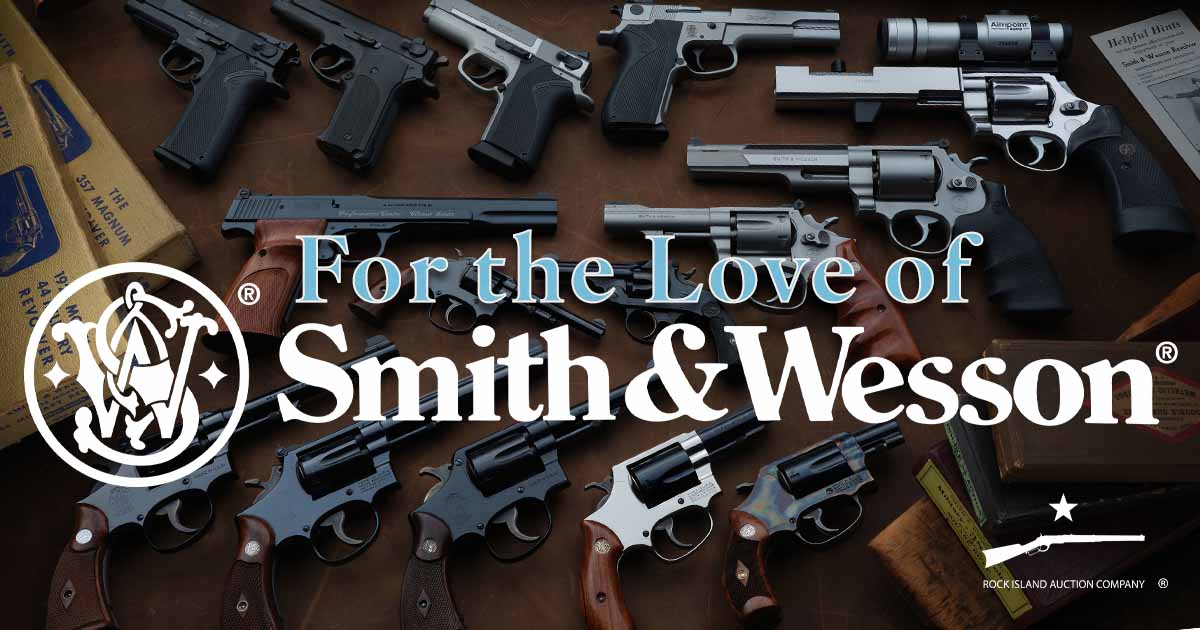
Rock Island Auction Company will be aglow with Smith & Wesson handguns ̶ rarities and classics ̶ dedicating its entire May 1 Collectors Spotlight auction slate to only firearms from the legendary American company.
More than half of the Smith & Wesson handguns in the 300-lot auction are from the collection of long-time collector Jon M. Maxwell. Maxwell was a 40-year member of the Smith & Wesson Collector Association and devoted himself to the pursuit of assembling a group of experimental, early production, one-off and rare collectable Smith & Wesson handguns, even influencing some of their prototypes. The Smith & Wesson Collectors Association started in 1964 by six collectors at a gun show in Tulsa, Okla., then elected its first slate of officers at the 1970 Las Vegas Gun Show.
Here is a sampling of some of the Smith & Wesson handguns in the Collectors Spotlight Auction.
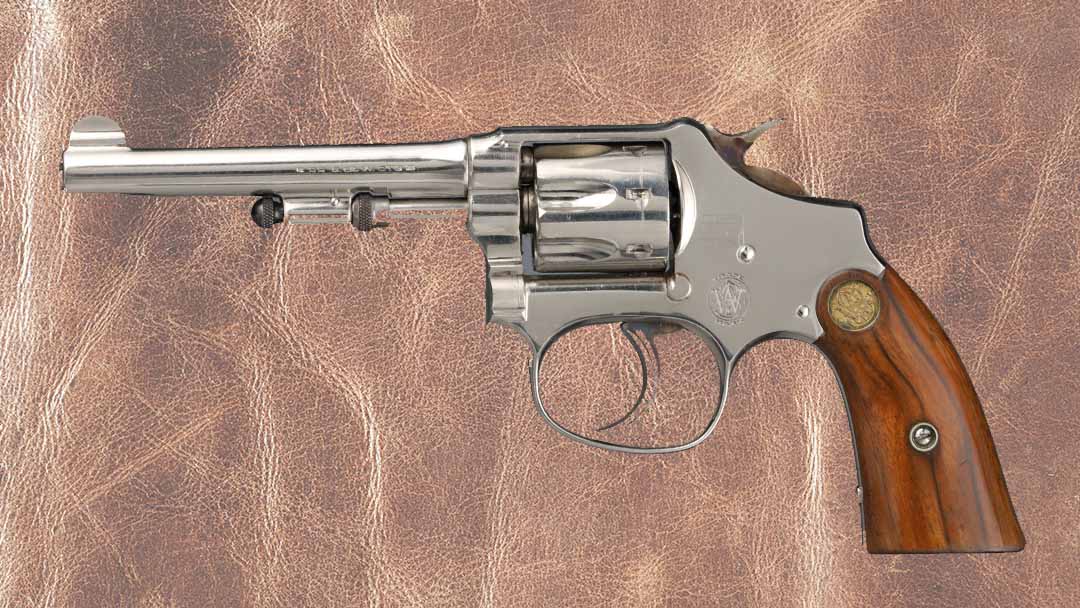
Third Model Ladysmith Revolver
The smallest hand-ejectors made on the Smith & Wesson M frame fire seven shots. A tall tale about the Ladysmith involves Daniel Wesson learning it was the gun of choice for prostitutes. Shocked by the salacious story and given his puritanical New England upbringing, he ordered production ceased. The trouble with the story is Wesson died in 1906 but production continued until 1921.
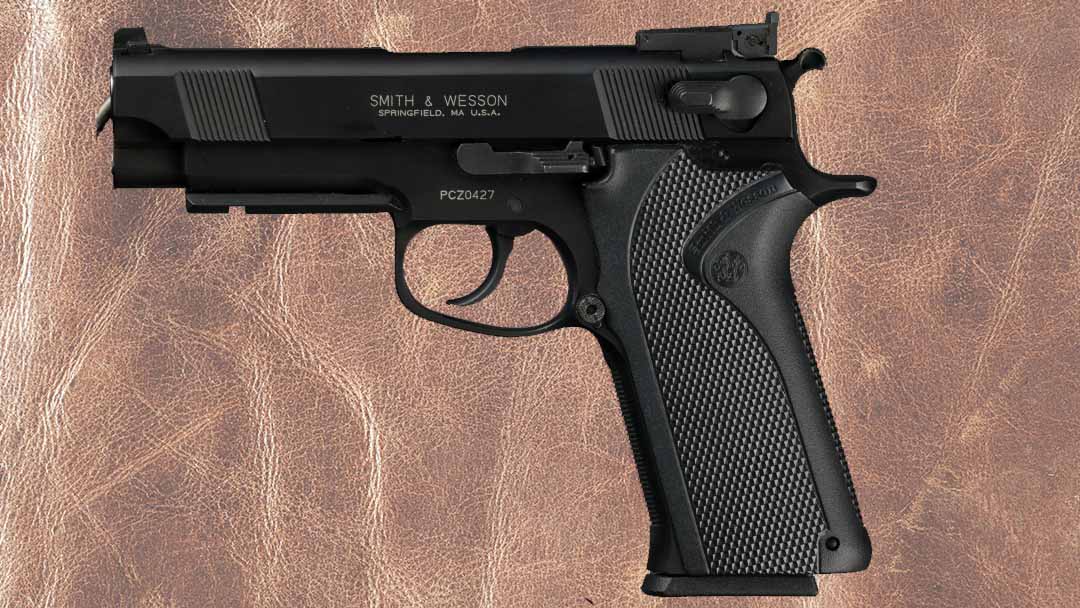
Wiley Clapp Tested Smith & Wesson Performance Center 4566 Pistol
When Smith & Wesson started turning out semi-automatic pistols in the 1950s they were given two-digit designations until 1982. The second generation went by three digits during production from 1979 to 1988 while the third generation series adopted four-digit model numbers that used codes for calibers, frame size and finish.
This Performance Center Model 4566 is a mid-sized double action/single action chambered for .45 ACP. This gun was tested by Wiley Clapp whose article “New S&W PC 4566 .45ACP” in “Combat Handguns” magazine. Clapp was a U.S. Marine and police officer before becoming a writer and consultant, mostly on handguns.
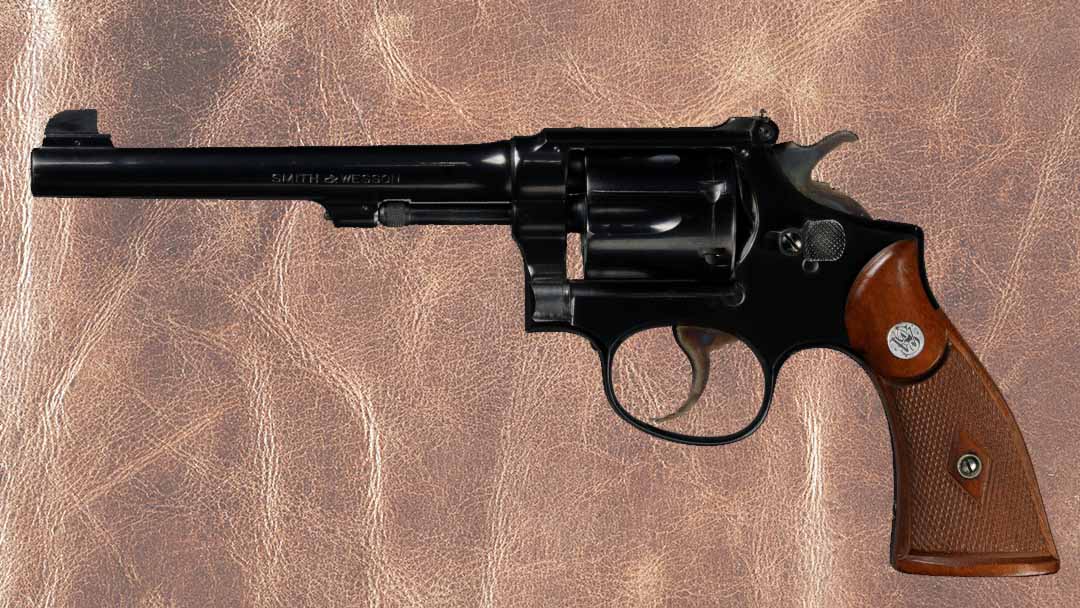
Pre-War K-22 Masterpiece Second Model Revolver
Designed in the 1890s, the medium-sized K frame served as the platform for a .38 caliber service model. The gun eventually led to Elmer Keith and other handloaders advocating for the .357 Magnum round.
The K-22, re-christened the Model 17 when Smith & Wesson started using model numbers in the 1950s, is a good small game and plinking gun, and given that it fires .22 long rifle, the larger frame makes for a smooth shooting revolver.
Venezuelan Police-Marked Model 469
This semi-automatic pistol has a 3 1/2-inch barrel, reportedly earning the nickname “the Mini Gun” and was an early model in Smith & Wesson’s development of a compact-sized semi-automatic pistol small enough for concealed carry but offering enough firepower to work as a service weapon.
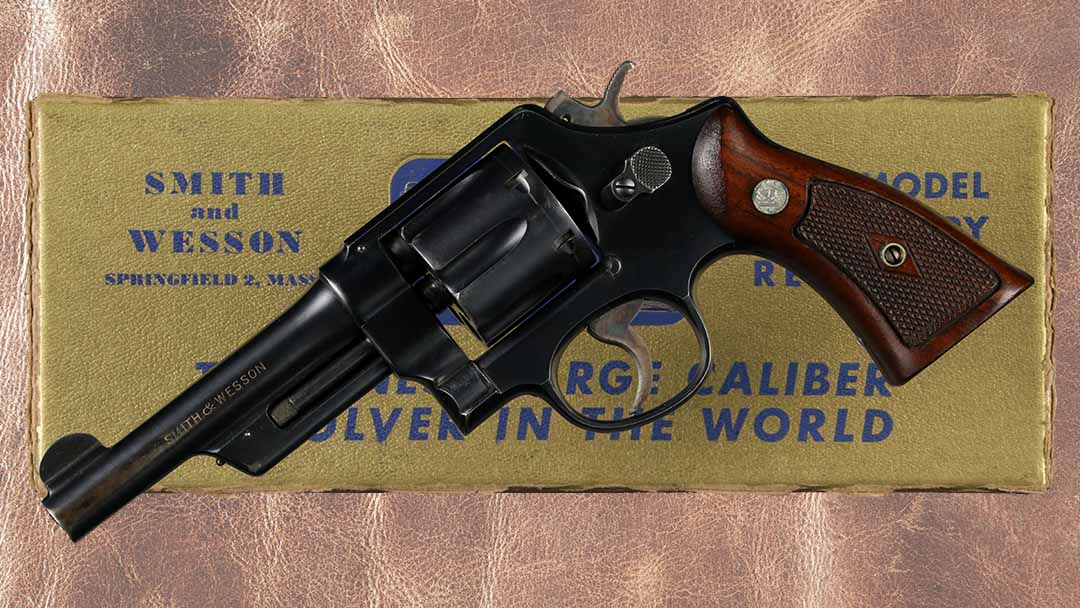
.44 Hand Ejector Model of 1950 Military Revolver
Hand Ejectors are revolver royalty. The First Model .44 caliber Hand Ejector introduced in the early 20th century is better known by another name – the Triple-Lock. When production re-started after World War 2, the revolver received some design changes, most significantly a full rib on the top of the barrel. Company documents from the 1950s state that 90 percent of production of this double action was chambered for .44 Special.
Made from 1950 to 1966, this wheelgun was re-designated the Model 21 in 1957.
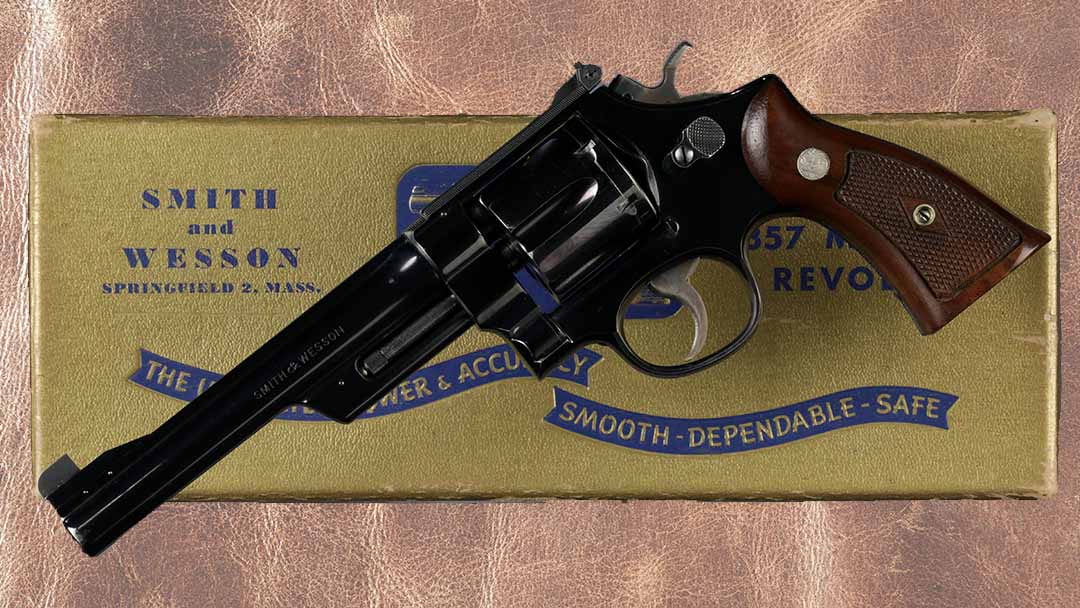
.357 Magnum (Pre-Model 27) Revolver
In the 1930s, Smith & Wesson worked with Phil Sharpe and Elmer Keith, among other handloaders wanting a more powerful cartridge, to design the .357 Magnum cartridge. The company developed its Registered Magnum program that provided a number of options including 23 barrel lengths, six main sight choices, blue, nickel and engraved finishes, two types of grips along with other options before ending it in 1939.
When the Registered Magnum program ended, fewer options were available. The barrel lengths for unregistered .357 Magnum revolvers were whittled down to just five. After World War 2, the gun was modernized with a short-throw hammer with either blue or nickel finishes. It became the Model 27 in 1957.
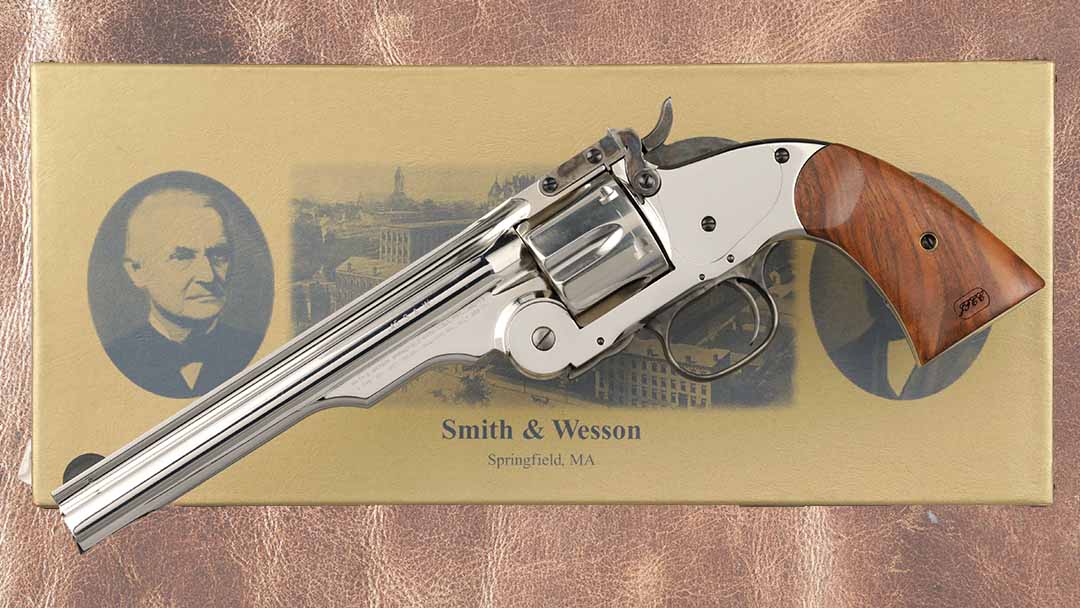
Performance Center Schofield Model of 2000
The Schofield dates back to the revolver trials that brought the world the Colt Single Action Army and Smith & Wesson’s No. 3 revolver. It also drew the attention of George Schofield, a Civil War veteran who attained the rank of brevet brigadier general and remained in the U.S. Army after the war at the rank of major. Schofield’s version has a square butt frame with no knuckle on the backstrap, the latch mounted on the frame and chambered in .45 caliber. The U.S. Army bought 8,000 Schofields, but the gun found interest from the U.S. Marshal Service and Wells Fargo employees.
The Performance Center update around 2000 added a modern hammer block safety and used a carbon and steel frame. Still chambered for its original .45 S&W caliber, this is a great way to obtain a classic revolver that is safe to shoot.
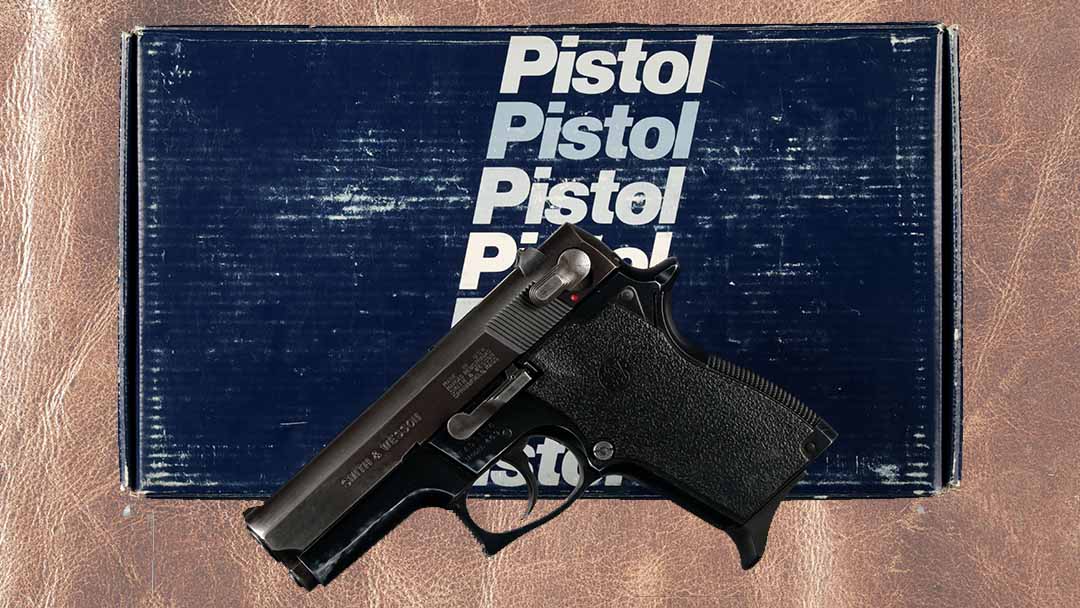
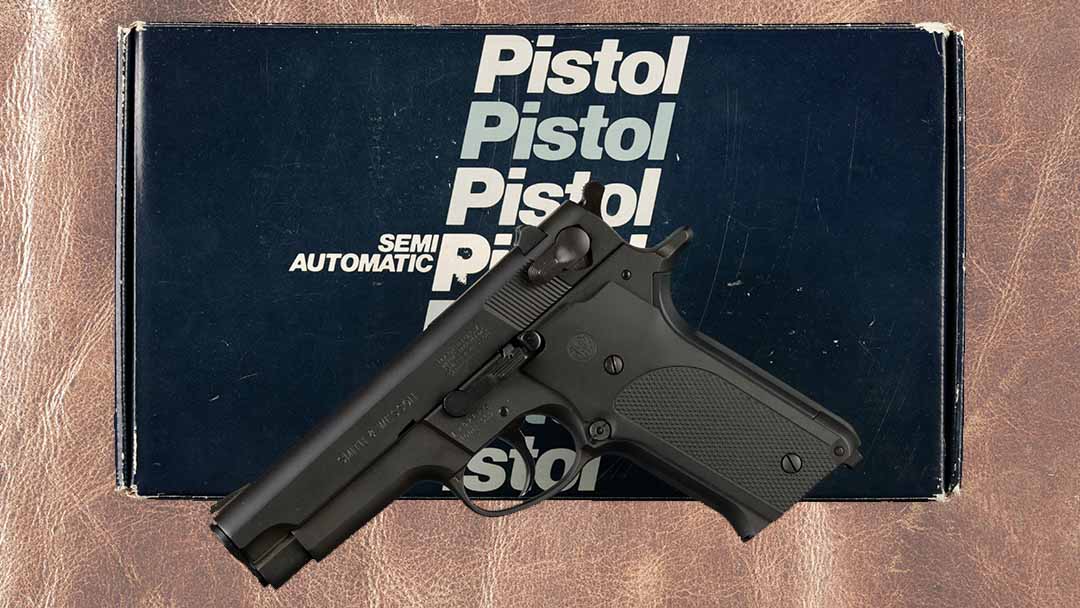
Smith & Wesson Model 559
Originally based on the large-capacity Model 59 that is considered one of the original “wonder-nine” double action pistols. The Model 559 uses a double column magazine similar to the Browning High Power. This second generation semi-automatic pistol went from the 59’s alloy frame to a steel frame and steel slide. Manufactured from 1980 to 1983 there are only two known to have a chrome finish, and this is one of only 15 with a rare matte gray finish.
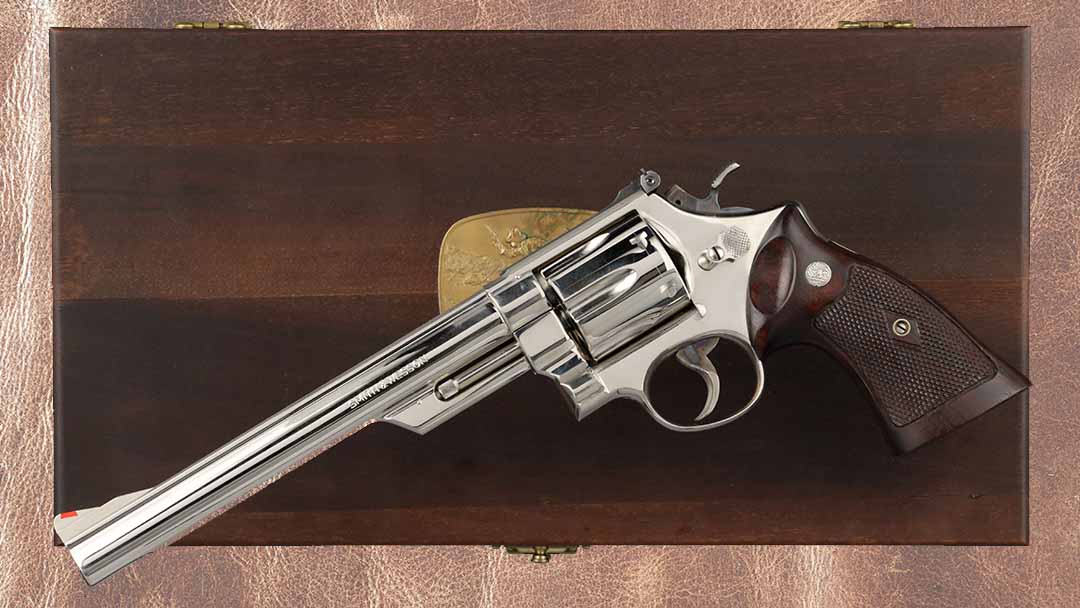
Model 29 Revolver
The gun that made Dirty Harry Callahan snarl the question, “I know what you’re thinking – `Did he fire six shots or only five?’ Well, to tell you the truth, in all this excitement, I’ve kinda lost track myself. But, being as this is a .44 Magnum, the most powerful handgun in the world and would blow your head clean off, you’ve got to ask yourself one question: `Do I feel lucky?’ Well, do you, punk?”
Elmer Keith and other hand loaders had already lobbied for the .357 Magnum cartridge in the 1930s and now wanted something more potent than the .44 Special. By the mid-1950s, the .44 Magnum cartridge was born and the Model 29 double action revolver was introduced in late 1955. This revolutionary revolver, made to handle the spicy round, came in one of three barrel lengths, including the 8 3/8-inch version that was introduced in 1958. It was a difficult gun for buyers to find after Clint Eastwood’s “Dirty Harry” was released in 1971. Discontinued in January 1999, this revolver is still made occasionally in small quantities.
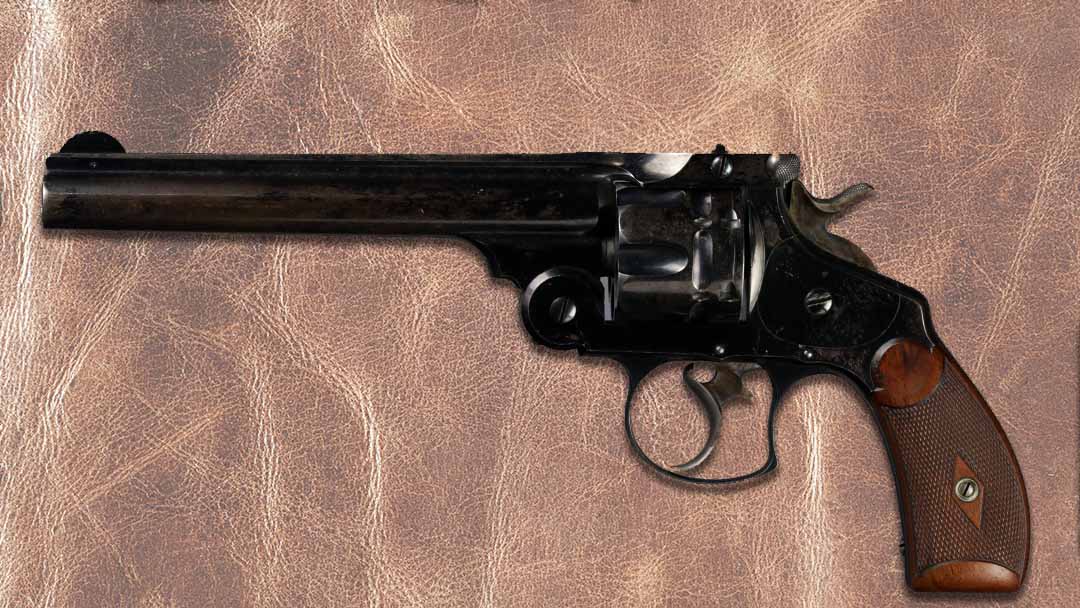
First Model .44 Double Action Revolver
Made from 1881-1913, these double action revolvers followed the New Model No. 3. All the frames for this wheelgun were made before 1899 making them antiques. About 54,000 were made.
One of only two antique Smith & Wesson handguns in the auction, the .44 double action revolver is joined by a .38 caliber single action Second Model revolver.
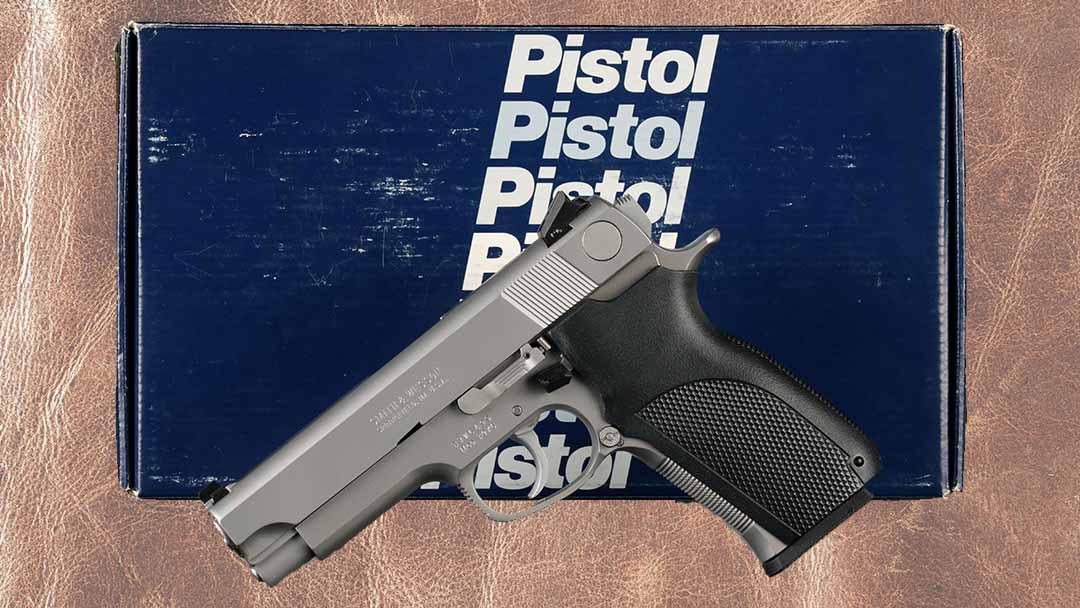
FBI-Purchased Model 1076
Following on the heels of the Bren Ten and the FBI’s realization that it needed more firepower after the notorious 1986 Miami shootout that killed two of its agents, Smith & Wesson created the Model 1006 and the law enforcement Model 1076 in 10mm. The FBI ordered 10,000 of these semi-automatic pistols and 2,400 were delivered.
This gun doesn’t get nearly the attention as its others 10mm breathren, the aforementioned Bren Ten nor the Colt Delta Elite, so collectors shouldn’t sleep on this opportunity to get an FBI-purchased 10mm pistol.
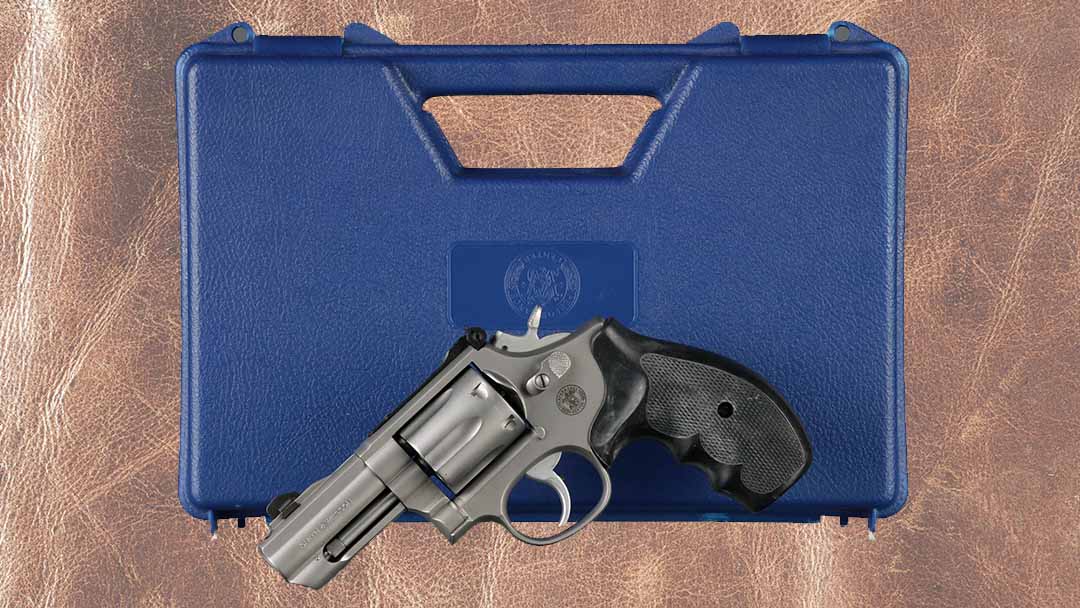
Performance Center Model 66-3 Carry Comp Revolver
This stainless steel double action revolver that began life as the Combat Magnum is made to conceal carry on the company’s K target frame. The 66 has adjustable sights and a ramped front blade. It received a new yoke retention system/radius stud package/hammer nose bushing/floating hand in 1986 to earn the Model 66-3 designation.
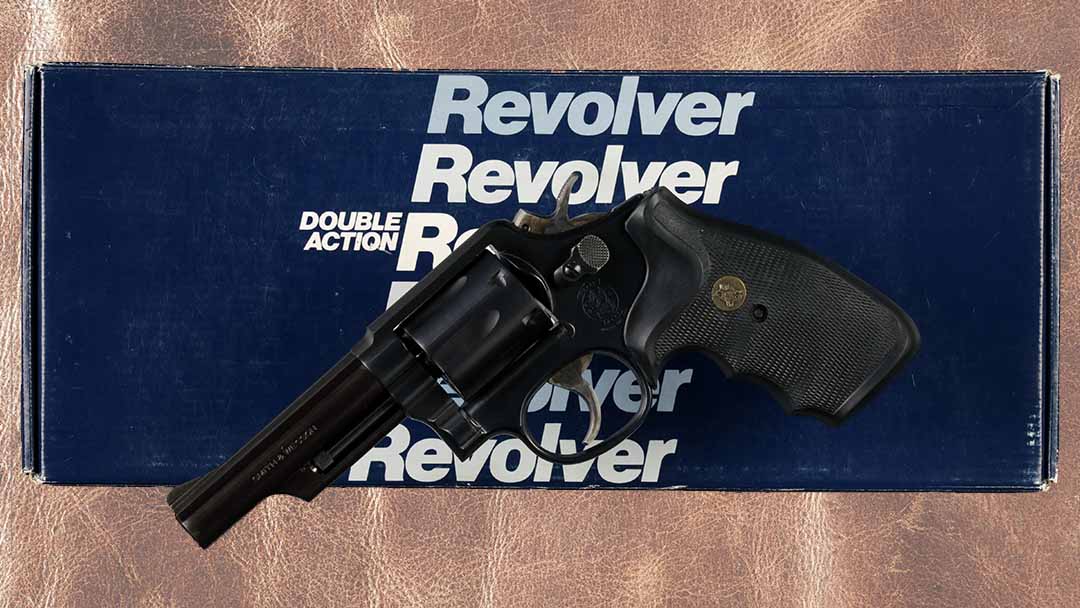
Model 19-P Double Action Revolver
Smith & Wesson President Carl Hellstrom asked retired Assistant Chief U.S. Border Patrol Inspector Bill Jordan, a noted shooting skills writer, about the ideal firearm. Jordan replied it would be built on S&W’s K frame and have a four-inch barrel and shrouded extractor rod. Also, it should be able to handle both .38 Special and .357 Magnum cartridges. The gun, unveiled in 1955, was named the Combat Magnum and the first one was given to Jordan. Later it became the Model 19. This revolver has a fixed sight that was built for export to Peru in limited quantities, making the Model 19-P scarce.
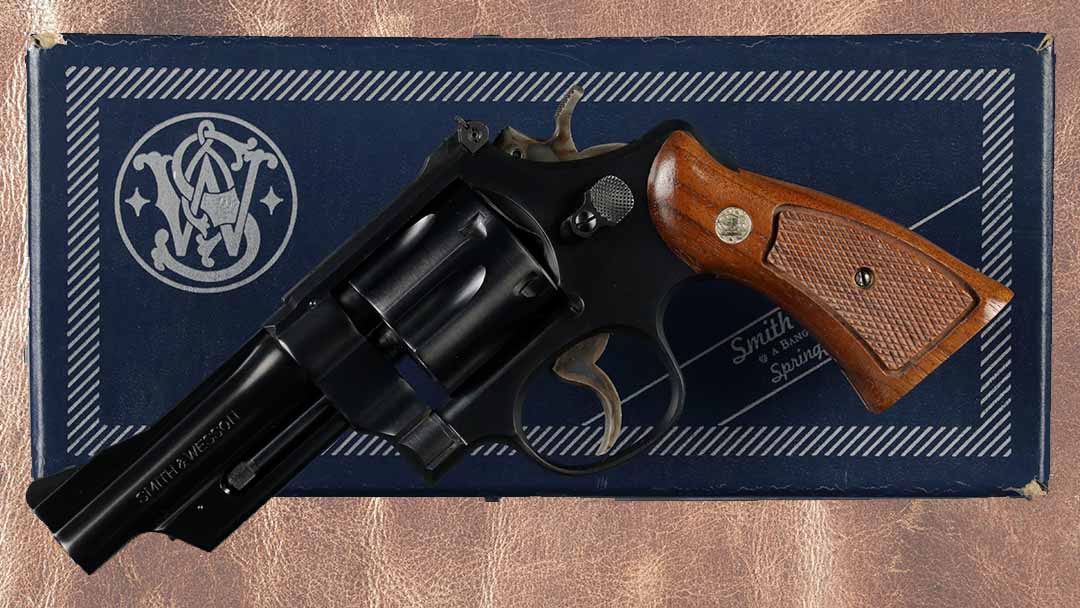
Model 28-2 Highway Patrolman Revolver
Introduced in 1954 to meet the no frill needs of police, this revolver chambered in .357 Magnum is described as a utilitarian Model 27 offered in 4-inch or 6-inch barrels. The original test production was marked Patrolman but changed to Highway Patrolman on the suggestion of Florence Van Orden of The Evaluators Ltd. to Hellstrom. The Highway Patrolman was produced from 1954 to 1986. In the second model, the cylinder stop was changed and the trigger guard screw was eliminated in 1961.
Smith & Wesson Handguns for Sale
Jon Maxwell’s legacy as a collector of Smith & Wesson handguns is long and influential, bringing together classics like the Model 29 and .357 Magnum and rarities like the matte gray-finished Model 559 and Wiley Clapp-tested Model 4566. All of the firearms among the 300 lots of the Smith & Wesson Spotlight Auction offer fantastic opportunities for collectors of this legendary firearms company to pluck something from their wish list.