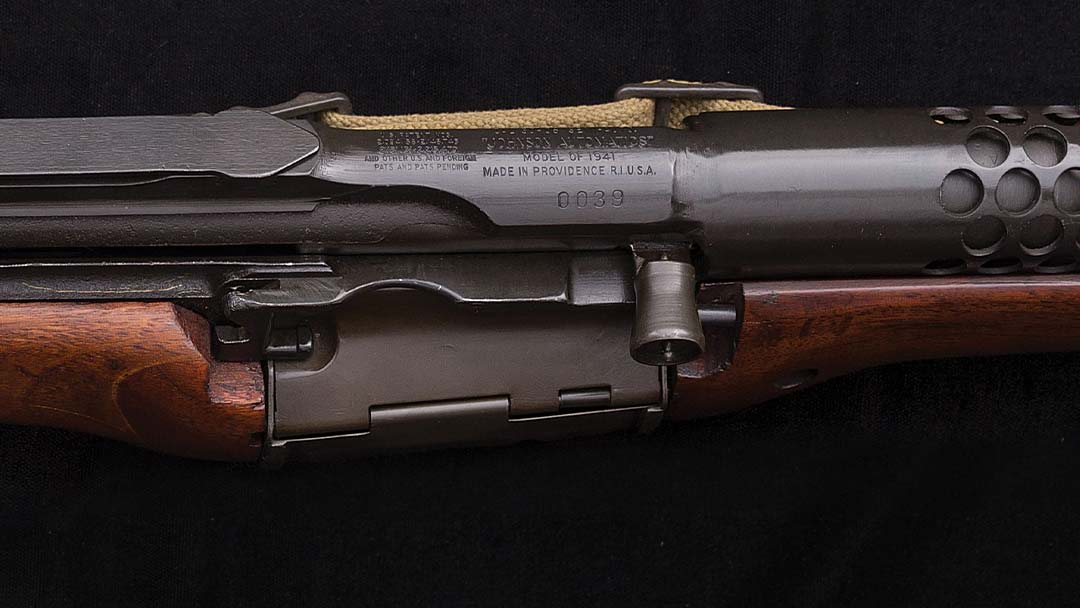
How did a prototype rifle designed by a lawyer with a gun hobby become a serious contender against the mighty M1 Garand? The M1941 Johnson carries a story as colorful as its talented inventor, and these scarce WW2 semi-automatic rifles have become some of the most sought-after firearms in today’s collecting landscape.
Rock Island Auction Company’s June 21-23 Sporting & Collectors Auction in Bedford, Texas features four M1941 Johnson rifles for sale, as well as hundreds of additional rare and desirable military arms for enthusiasts looking to expand their collections.
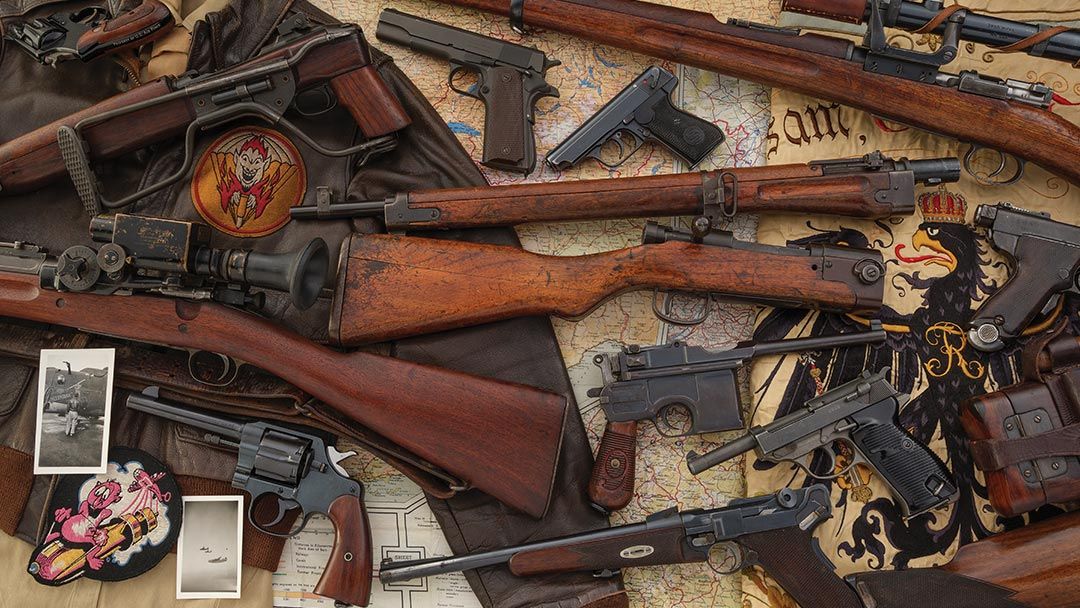
Melvin Johnson’s Rifle
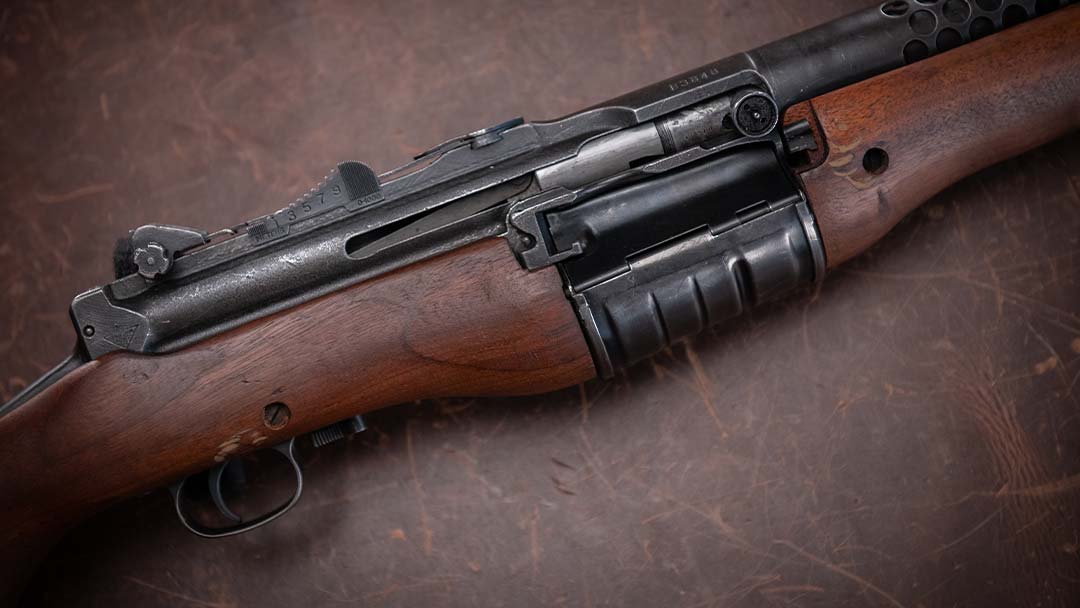
Boston attorney and law professor Melvin Maynard Johnson, Jr. had an interest in firearms from an early age. After being commissioned into the Marine Corps Reserve in 1933, Johnson was posted at Springfield Armory as an observer and tasked with reporting on the two semiautomatic rifles being tested by the Service Rifle Selection Board, the T1 Pedersen and the T3 Garand.
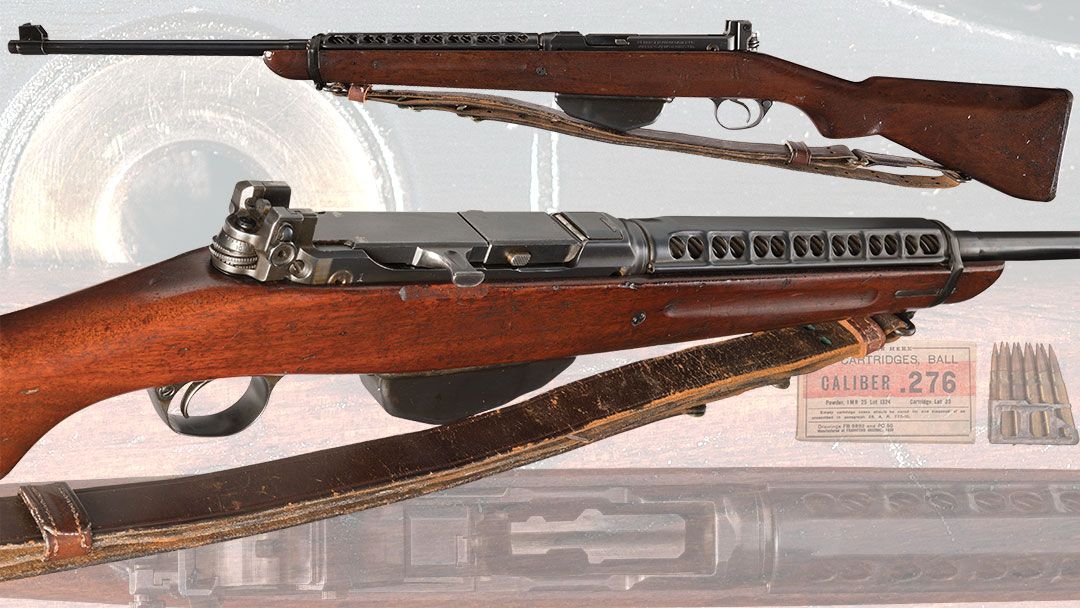
Johnson found both designs lacking, particularly John Garand’s gas-operated system, which he thought would be too reliant on ammunition consistency that might be lacking during a wartime scenario where multiple factories scrambled to meet production quotas. In 1935, Johnson began developing a recoil-operated system with a rotating bolt. He filed his first U.S. patent in April 1936 and produced a prototype by August.
Johnson Rifle Testing
Melvin Johnson established Johnson Automatics Trust in Boston, which would later become Johnson Automatics Inc. In 1938, Johnson partnered with Marlin Firearms to manufacture prototypes of his semiautomatic rifle for the Army Ordnance Board. Evaluations took place that August at the Aberdeen Proving Grounds.
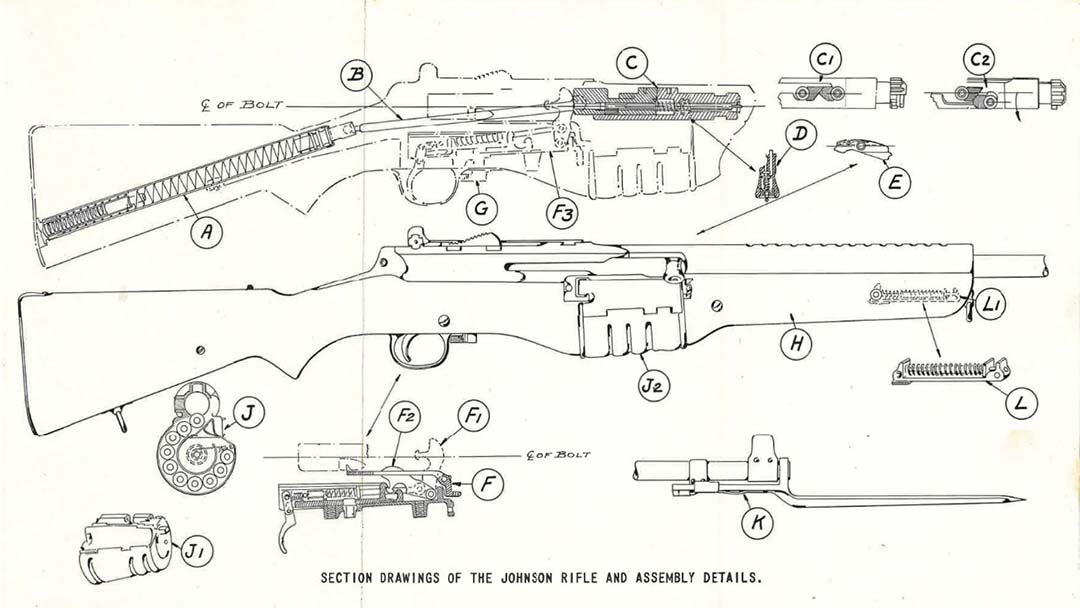
Trials were promising, though several flaws were noted, including the rifle’s poorly performing vertical box magazine, which were based on modified BAR magazines. Johnson updated his design with a modified bolt and extraction system, an improved cocking handle, and a new rotary magazine inspired by the Krag rifle was introduced that could be topped off at any time. Johnson also incorporated some of these concepts into a light machine gun design.
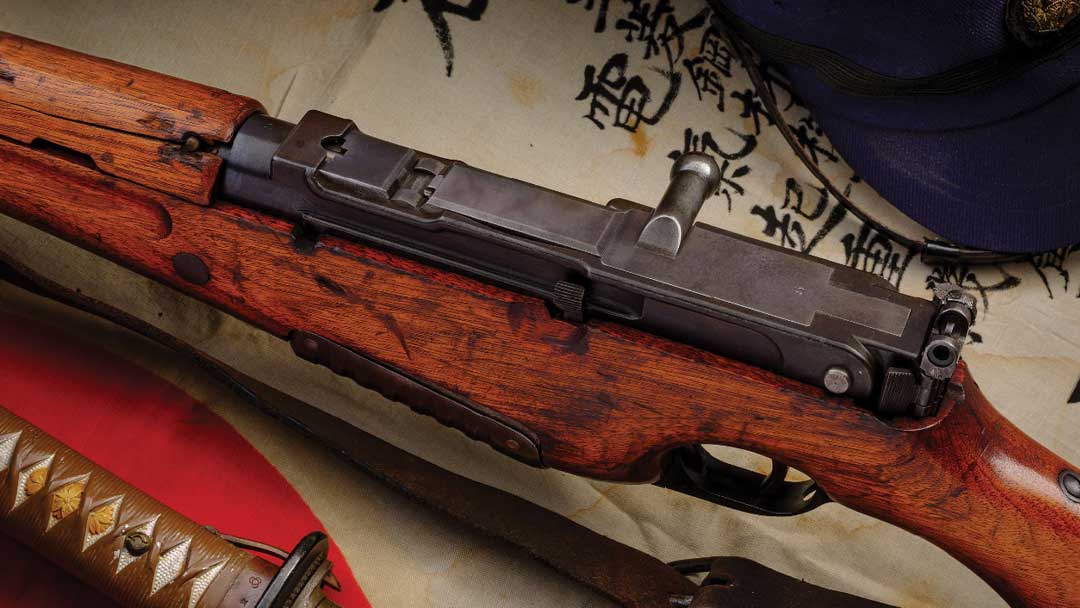
Johnson partnered with the Taft-Peirce Company of Woonsocket, Rhode Island to produce his updated rifle for the next round of U.S. Army trials in December 1939. Though the Ordnance Board applauded the Johnson rifle’s workmanship, they were concerned about its length, weight, and inability to fit a conventional bayonet. These weaknesses resulted in another rejection.
The M1941 Johnson
Undeterred, Melvin Johnson drew on his family’s political connections to persuade the U.S. Congress to hold hearings on the merits of his rifle design. In May 1940, he took his gun to the Marine Corps for evaluation, where the Johnson rifle earned an 81.2% accuracy rating versus the M1 Garand’s score of 71.3%.
In addition to the rifle’s accuracy, the Marines were impressed by the Johnson’s easy-to-remove barrel, an advantageous quality for parachute drops. In his summary opinion, Captain George Van Orden stated, “The Johnson Semi-Automatic Rifle, Rotary Magazine Type, is materially superior to the U.S. Rifle, cal. 30, M1 in accuracy and potential combat efficiency.”
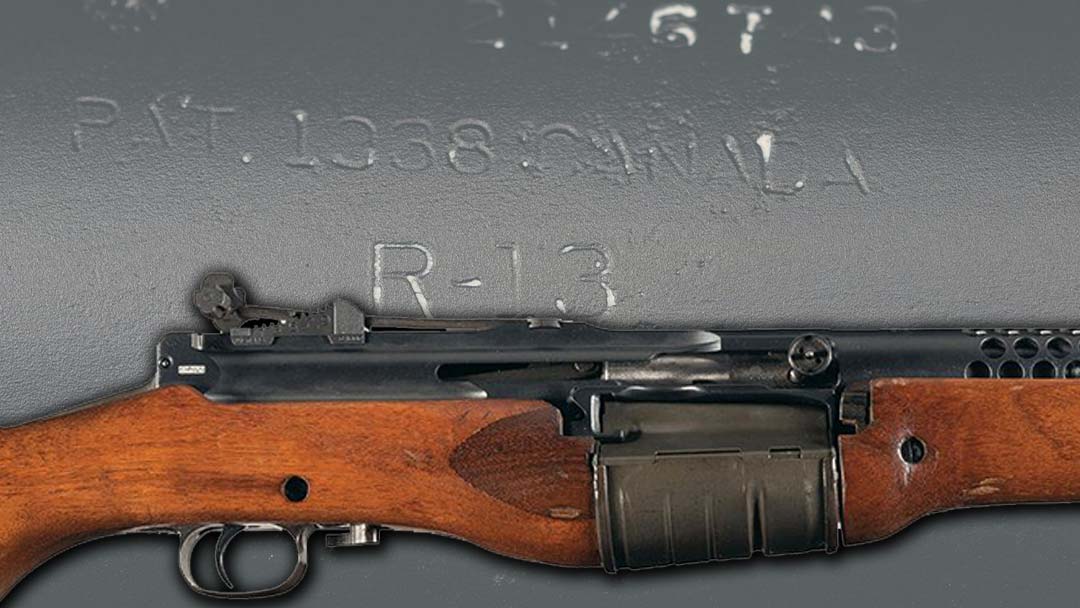
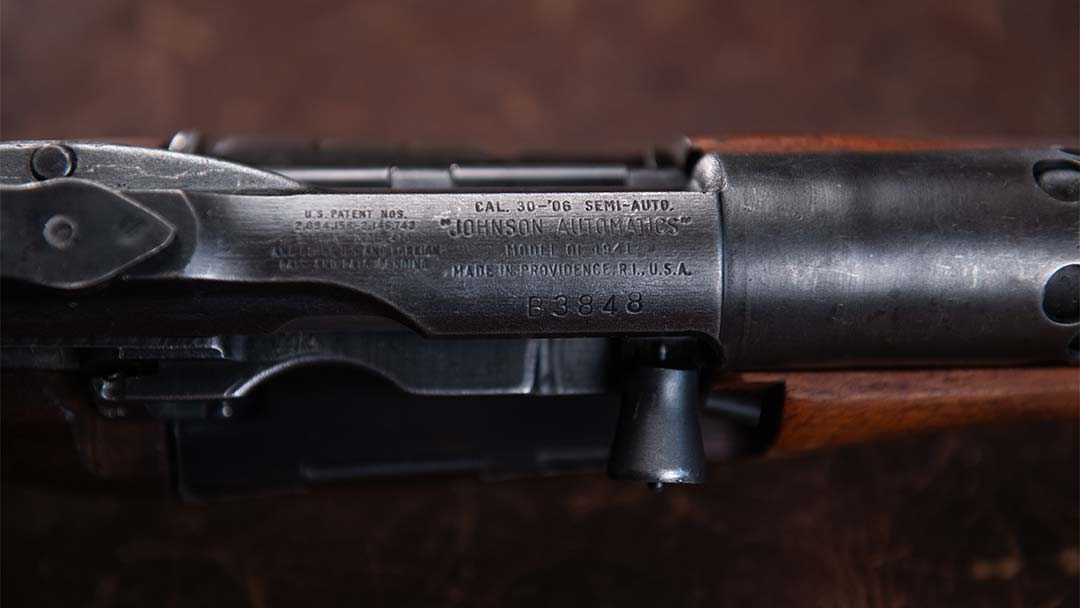
The example pictured above, sold by Rock Island Auction Company in August 2022 for $16,450, is one of only 7 rotary magazine Johnson prototype rifles made for military testing with a ten-round internal rotary magazine and one of the three rifles used during the U.S. Marine Corps trials at Quantico in May 1940.
Additional tests in November saw the Garand slightly edge out the Johnson rifle. Given the indecisive results, combined with the fact that the M1 Garand was now in full production and far more available, the Marines declined to adopt the Johnson rifle.
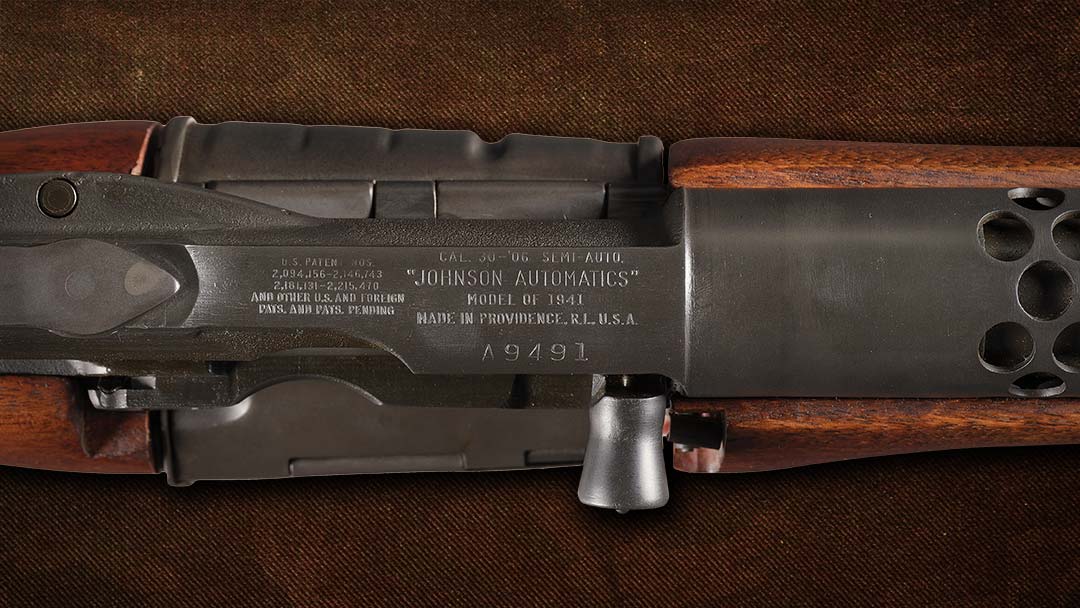
Though his prospects with the American military seemed all but lost, Johnson had been shopping his rifle to other nations as well. The Dutch government-in-exile showed particular interest, and with his first big contract on the horizon, Melvin Johnson assigned his rifle the more military-friendly designation “Model of 1941,” or “M1941.”
The M1941 Johnson Rifle and Johnson Light Machine Gun
Melvin Johnson had been in contact with the Netherlands Purchasing Commission since 1940, who were determined to upgrade the antiquated arsenal employed by their troops in the Dutch East Indies. In August 1940, the Dutch ordered an initial 10,200 M1941 Johnson rifles and 515 Johnson light machine guns. Another order of 10,200 rifles soon followed.
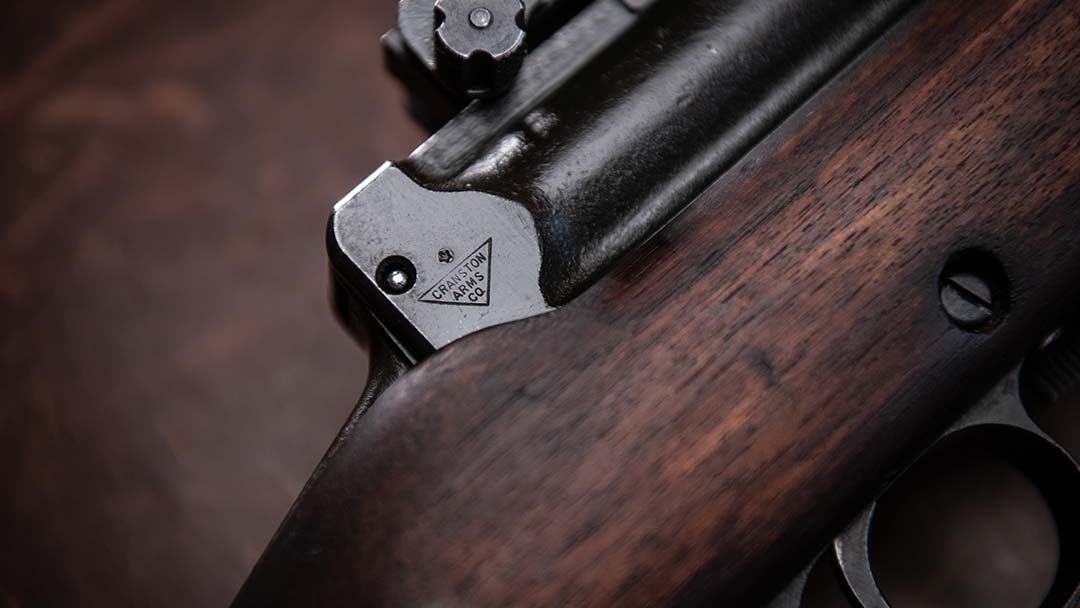
To meet this lucrative contract, Johnson Automatics leased part of a factory in Cranston, Rhode Island, called Universal Windings. In only five months, Johnson was able to staff the factory and start production during a period where skilled labor, tooling, and raw materials were extremely scarce. The M1941 Johnson rifle and light machine gun were subsequently manufactured under the name “Cranston Arms Company Inc.”
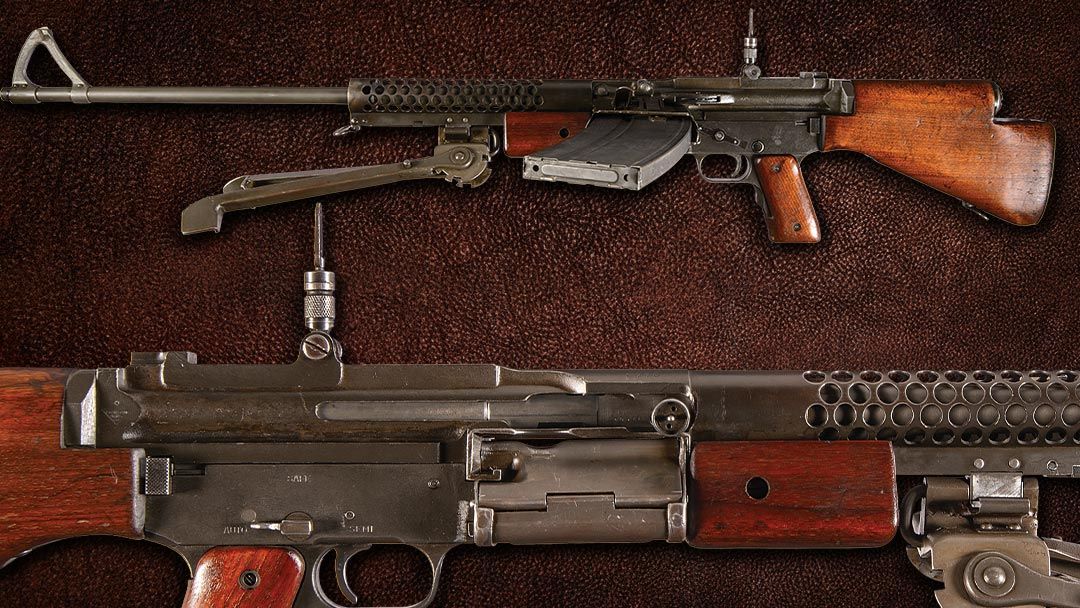
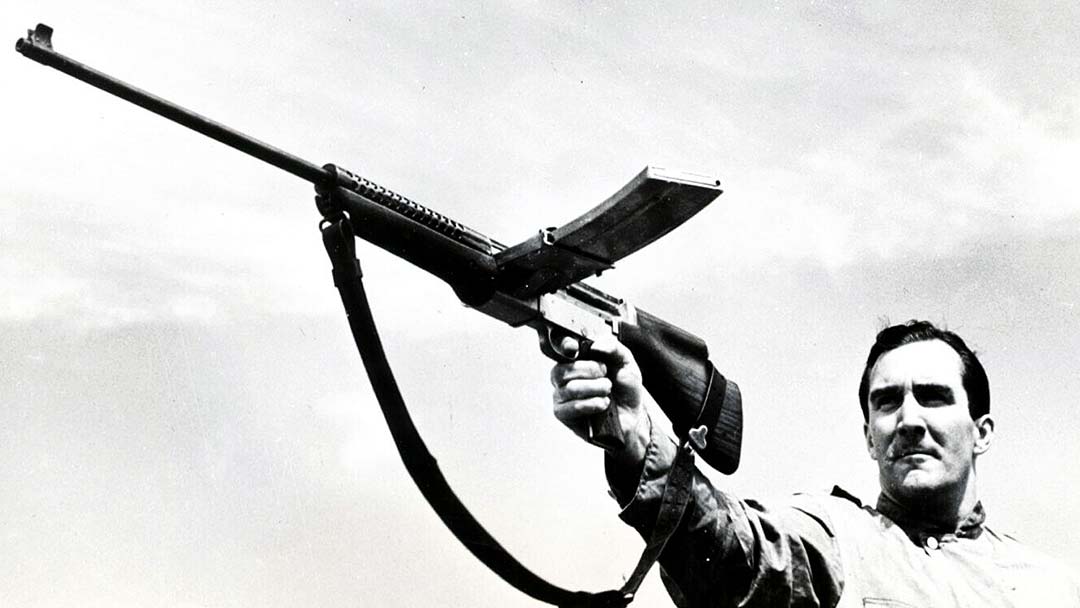
While the Johnson rifle was pitched as a semiautomatic infantry option, the M1941 Johnson LMG was designed as a squad automatic rifle that could serve in numerous battlefield roles, including being fired from the shoulder when necessary like the German FG42. Both the M1941 Johnson rifle and Johnson LMG were chambered in .30-06.
Like the FG42, the Johnson LMG employed a front-mounted bipod and a side-mounted horizontal box magazine, used an open-bolt system when set to automatic and a closed-bolt when switched to semi-automatic mode, and employed a full-power rifle cartridge. The Johnson LMG was tested by the U.S. Marines in September 1941 and later adopted as a substitute weapon due to shortages of the BAR in the early days of WW2.
The M1941 Johnson Rifle Goes to War
Few M1941 Johnson rifles or light machine guns reached the Dutch East Indies before the Japanese invasion in early 1942. The remaining inventory stayed in the United States under embargo.
With the outbreak of war and M1 Garand production scrambling to meet demand, Melvin Johnson sensed another opportunity with the U.S. Marines. Johnson Automatics “unofficially donated” 23 rifles to the Marine parachute regiment training at New River, North Carolina for evaluation. These rifles arrived on March 26th, 1942.
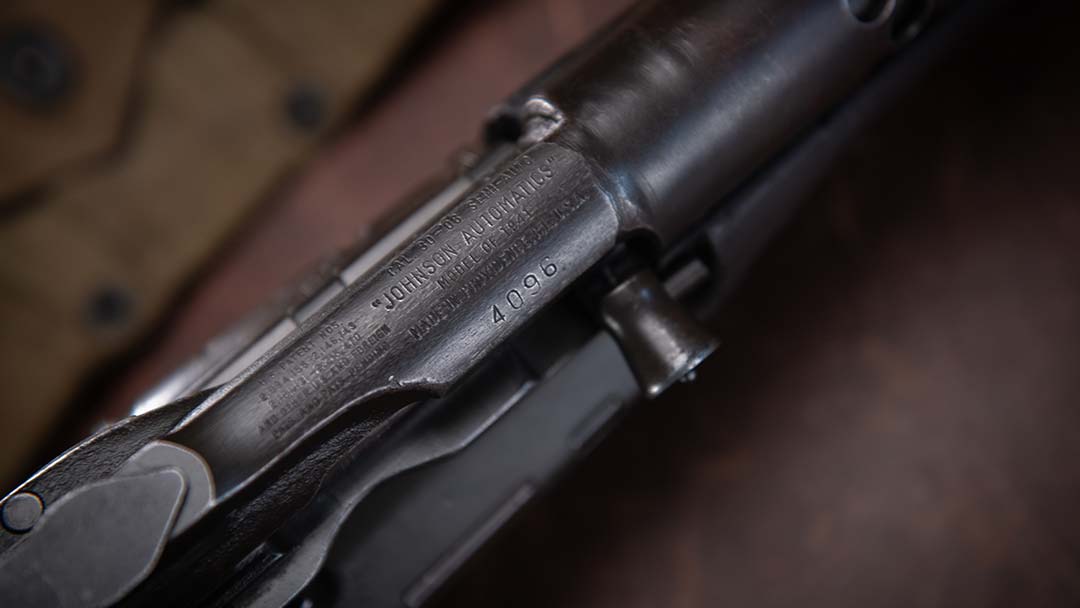
As Melvin Johnson later explained, the 23 rifles were meant as “more or less lend-lease which developed into a gift.” One of these historic and unfathomably rare Johnson rifles is pictured below and offered this August by Rock Island Auction Company.
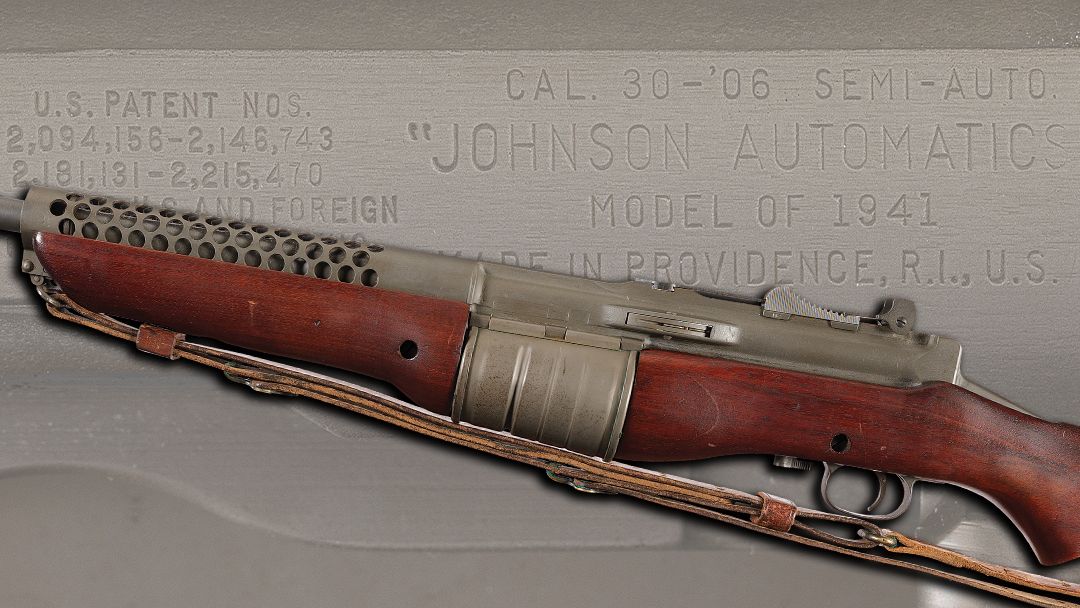
Table #3 on page 249 of Bruce Canfield’s book, “Johnson’s Rifles and Machine Guns” lists the rifle pictured above, 7246, by serial number as part of the first U.S. Marine Corps acquisition of 23 rifles, based on Johnson factory transfer ledgers. Canfield also lists another 16 M1941 Johnson rifles subsequently acquired by the Marines. As Canfield states, “These twenty-three rifles were undoubtedly used by the Marine paratroopers in the initial Solomons campaign (Guadalcanal/Gavutu).”
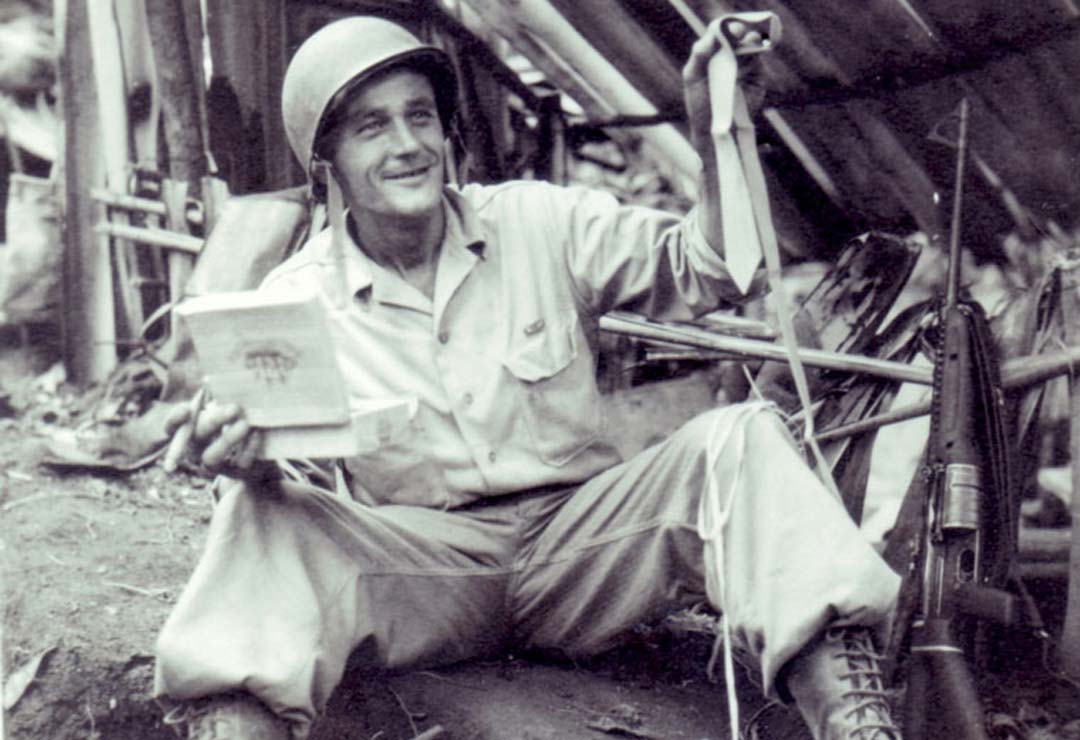
The exploits of the M1941 Johnson in combat were impressive. During the Battle of Tulagi and Gavutu–Tanambogo, Platoon Sgt. Harry M. Tully killed 42 Japanese soldiers with his Johnson rifle, shooting from distances up to 800 yards, earning himself the Silver Star.
1st Parachute Battalion executive officer Capt. Harry Torgerson, who played a key role in acquiring both the M1941 Johnson rifle and the Johnson LMG for his battalion, confirmed the reach of the mighty rifle, noting that they were used by “select scout-snipers” during the Guadalcanal campaign.
The Johnson Rifle Holds its Own
The success of the M1941 Johnson rifle spurred calls for additional supply from the Marine Corps 2nd Parachute Battalion. After an agreement was made with the Netherlands Purchasing Commission, 650 M1941 Johnson rifles were delivered to the United States Fleet Marine Force in San Diego on Oct. 7, 1942.
The M1941 Johnson rifle pictured below, serial number 1729, is from the first of three separate production blocks. The latter two production blocks were noted with an “A” and a “B” prefix.
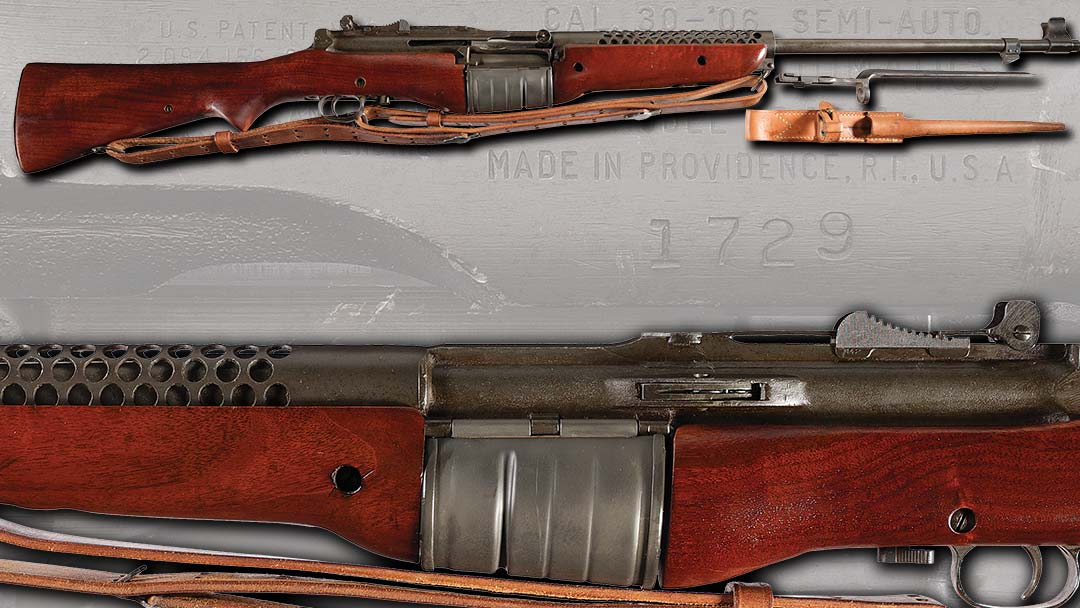
Most, if not all, of the Marine-issued Johnson rifles would have seen hard use in the Pacific Theater, lending to their extremely low survival rate today. In addition to Tulagi and Guadalcanal, the M1941 Johnson saw action in the Bougainville campaign, the Tasimboko Raid, the Battle of Edson’s Ridge, and other grueling battles across the South Pacific.
After the Raid on Choiseul during the Bougainville campaign, Lt. Col. Victor Krulak reported to the commandant of the Marine Corps on the weapons used. Krulak noted: “Johnson Rifle, caliber .30. Performed similarly with the M-1. Found little difference between the two.”
M1941 Johnson vs M1 Garand
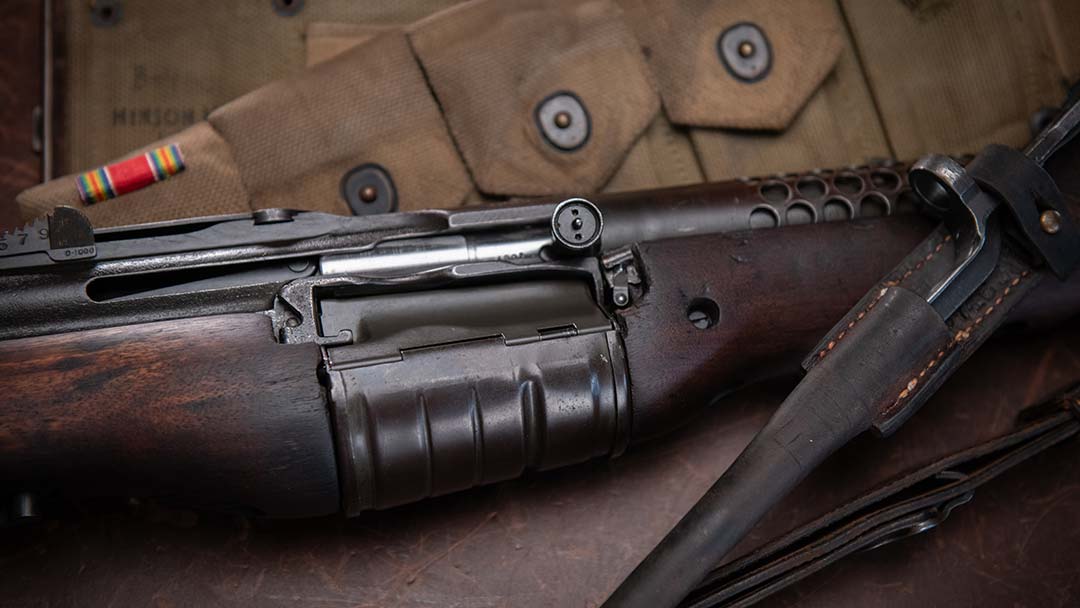
Many Marine paratroopers expressed favorable opinions of the M1941 Johnson rifle. Compared to the M1 Garand, the Johnson offered about a third less recoil. The Johnson’s takedown barrel could be easily stored and swapped. The ability to top off a Johnson magazine with either single rounds or five-round stripper clips was viewed as an advantage over the M1 and its proprietary en-bloc clip, and the M1941 Johnson offered a 10-shot capacity.
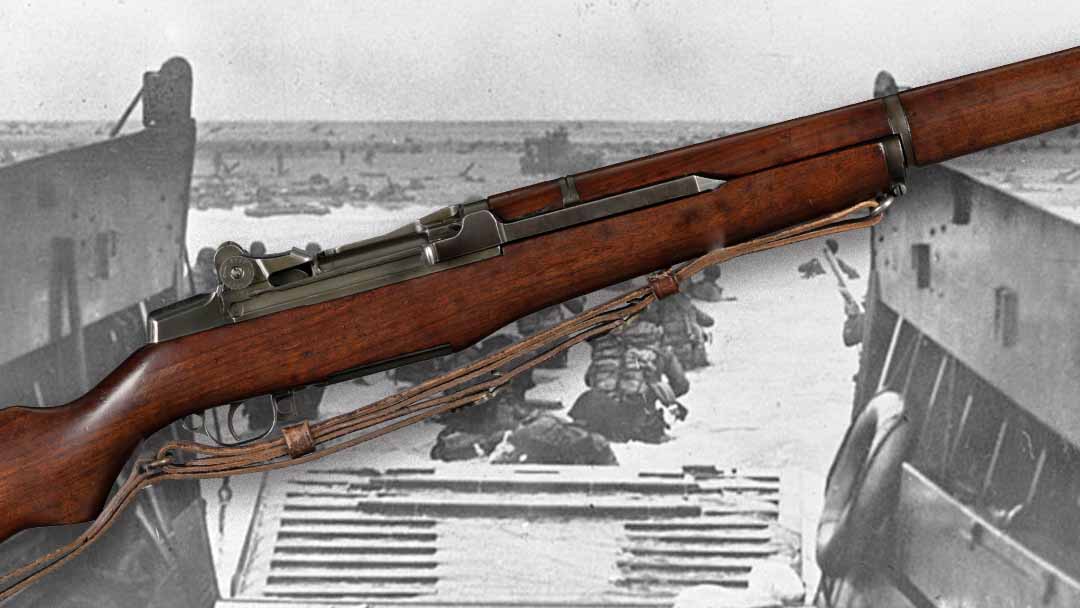
In the Garand’s favor, the M1 could be loaded and reloaded faster than the Johnson. The two rifles were of equal weight, though the Garand was more than four inches shorter. The Garand was also viewed as more durable against the harsh conditions of the South Pacific, with spare parts being far easier to obtain thanks to the rifle’s abundance. And unlike the Garand, the Johnson rifle’s recoil-operated firing system was hindered by the weight of a standard bayonet. The Johnson’s lighter triangular-spike bayonet was widely viewed as an inferior substitute.
Fate of the M1941 Johnson
In the end, the M1’s five year head start proved too great to overcome. With production of John Garand’s rifle in full swing, and the M1 Carbine pouring off the assembly lines, no further Johnson rifles were officially acquired by the Marines or any other branch of the U.S. Military.
When the 1st Parachute Regiment was disbanded, surviving Johnson rifles were ordered to be destroyed or sent back to the Marine Corps Quartermaster Depot in San Diego, California, where they were returned to the Netherlands Purchasing Commission. The Dutch Army and Navy employed both the M1941 Johnson rifle and Johnson LMG for years to come.
In 1953, Winfield Arms Co. purchased a large quantity of M1941 Johnson rifles from the Dutch, eventually importing these rifles to the United States and selling them in various refurbished, upgraded, and sporting models.
Melvin Johnson’s Legacy
Melvin Johnson continued to work in the arms industry in various roles. Johnson published eight books and more than 80 magazine articles on arms and ammunition. In 1951, he was appointed as a weapons consultant to the Secretary of Defense. A few years later, Johnson convinced Winchester’s Chairman John Olin to purchase his company and Johnson himself briefly worked for Winchester as a designer.
Among his many other accomplishments, Johnson designed the “Indoor Target Gun” in the late 1940s, a catapult BB gun for youth target practice, and he developed the .22 Spitfire cartridge, a necked-down variant of the .30 Carbine round. This helped inspire the U.S. Army to test the .22 Remington and develop 5.56mm for the AR-15. Finally, ArmaLite drew on the M1941 Johnson rifle’s bolt design when developing the AR-10 and AR-15 and hired Melvin Johnson as a consultant.
M1941 Johnson Rifle for Sale
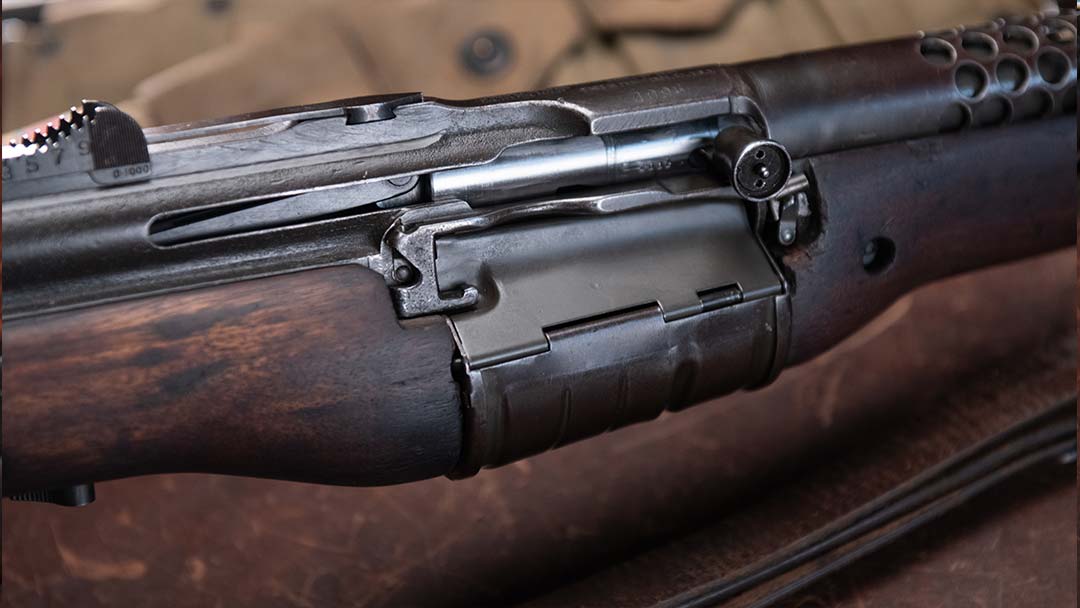
Few of the 21,500 M1941 Johnson rifles produced remain in unaltered condition today. Some were lost in combat. Thousands were altered or sporterized after the war. For collectors, shooters, and WW2 enthusiasts, high-condition Johnson rifles are a rare find, and Rock Island Auction offers multiple examples its upcoming June S&C Auction and August Premier Auction.
Subscribe to the Rock Island Auction weekly newsletter for more gun blogs and gun videos on 20th century military arms. We cover everything from early semiautomatic pistols like the 1911, Luger, and C96, bolt action icons like the M1903, Mosin Nagant, and Winchester Model 70, semi automatic WW2 workhorses like the SKS and SVT 40, and the full auto glory of weapons like the MP40, the PPSh 41, and Stoner 63.