
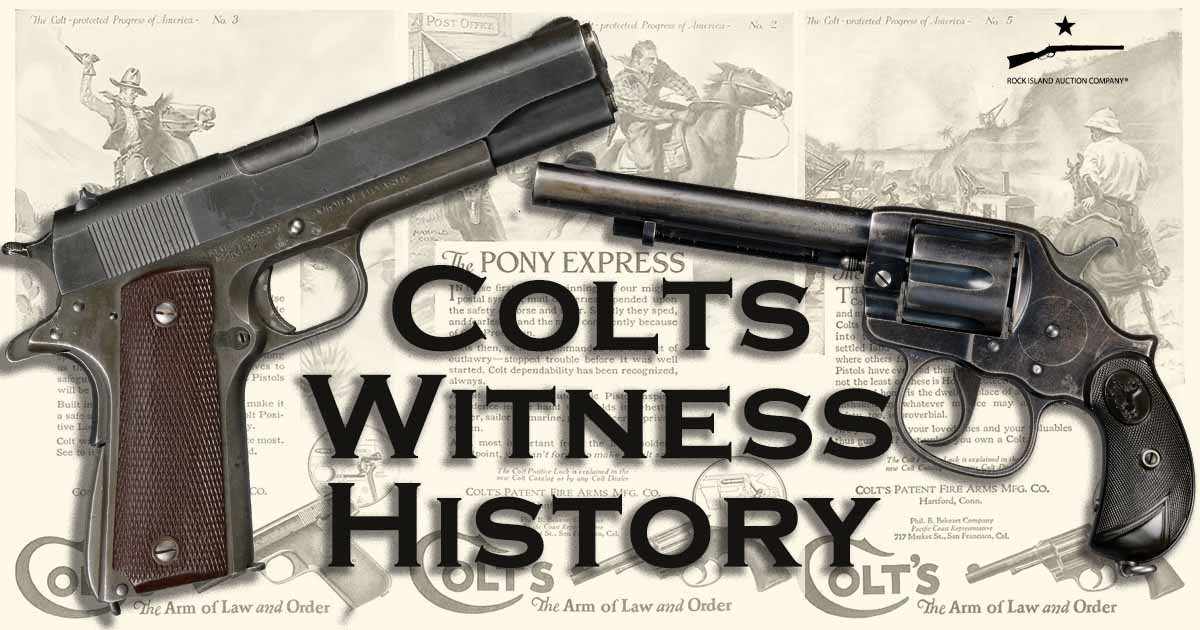
Samuel Colt’s firearms are interwoven into American history, from the Walker percussion revolver of the Mexican-American War to the Model 1911A1 of World War 2, worn on the hip as witnesses to major events.
The legendary Colt Single Action Army became part of the fabric of the American West, but lesser-known revolvers like the Model 1902 and Commando played a role in continuing the American way of life. This is a sampling of Colt handguns that stood at the edge of history, all available in Rock Island Auction Company’s Oct. 4-6 Sporting & Collection Auction.
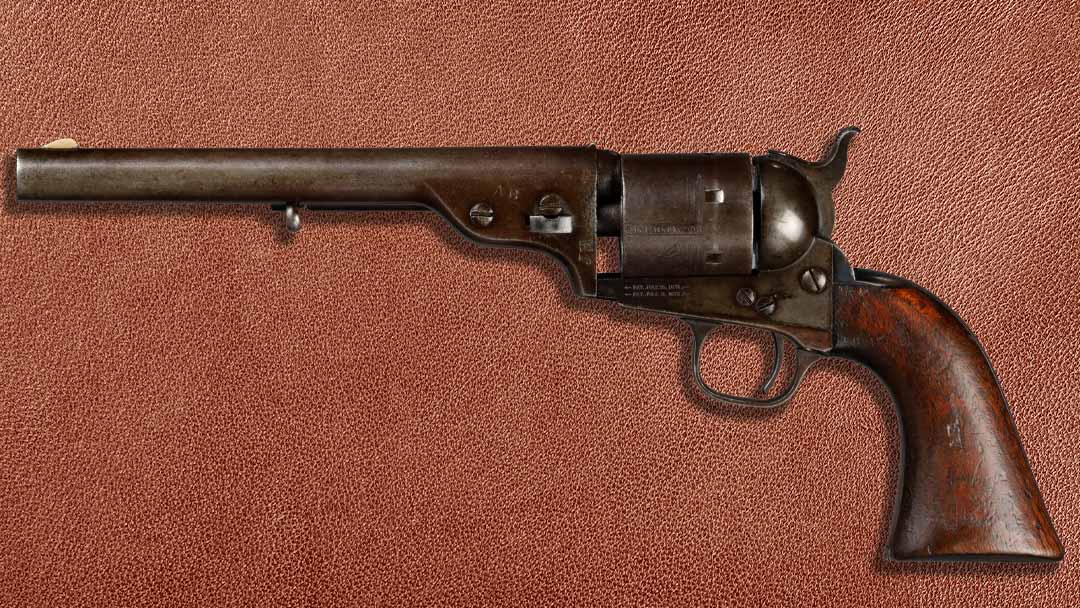
Colt Fluted Cylinder Model 1860 Army Revolver
Ohio Gov. William Dennison was a strong supporter of Abraham Lincoln’s war plans and his call to arms at the outset of the Civil War mobilized more than 100,000 troops. He also ordered telegram and railroad lines seized for the Union cause. He refused demands by Kentucky and Virginia authorities to return fugitive slaves or punish residents who violated the Fugitive Slave Act.
Dennison sent troops to Wheeling to provide protection where a convention was underway to discuss creating the state of West Virginia from Virginia. Lincoln asked him to fire Gen. George McClellan as general of the Union Army and demoted back to the Army of the Potomac, but the general refused to meet with Dennison and he learned of his demotion through the newspapers.
This Colt fluted cylinder Model 1860 Army was one of 200 shipped to Dennison in Columbus, Ohio on June 14, 1861. A second shipment, this one of 300 1860 Army revolvers, also shipped the same day to Dennison. Not renominated for governor, Lincoln appointed Dennison U.S. Postmaster in 1864.
Colt Model 1871-1872 Open Top Single Action Revolver
The Colt Open Top is to the Colt Single Action Army what Wally Pipp was to Lou Gehrig, a footnote that gave way to legend. The Open Top was among the first Colt revolvers manufactured to fire metallic cartridges, chambered in .44-23-200. The Army didn’t like that it lacked a top strap, a carryover from percussion cap and ball revolvers. Also, the Army wanted a .45 caliber handgun. Colt engineers returned to the drawing board and came back with the New Model Army Metallic Cartridge Revolving Pistol – and the Single Action Army was born.
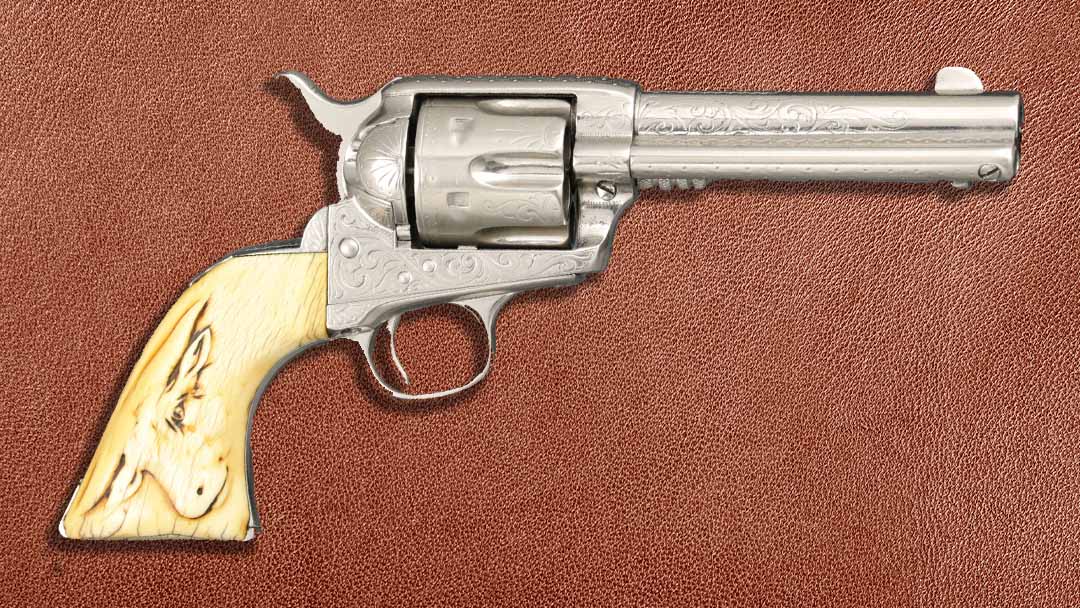
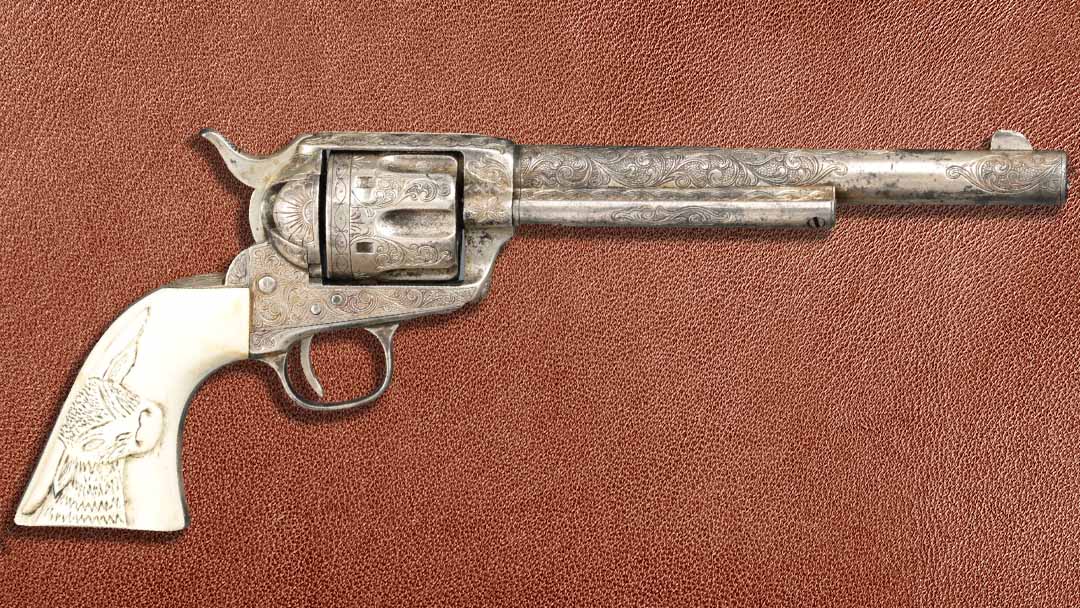
Colt Single Action Army
The Colt Single Action Army, SAA, Peacemaker, The Great Equalizer and “Judge Colt and his Jury of Six,” are among the name and nicknames handed down to this legendary sidearm over three generations. Single Action Army production began in 1874 and ended as Colt turned its focus to government orders during World War 2.
With the rise of the western in movies and on television, manufacture of the second generation Single Action Army resumed in 1956 and ran until 1974. The increase in cowboy action shooting revived interest in the SAA yet again, and production returned in 1976 and continues today. More than 450,000 Single Action Army have been made.
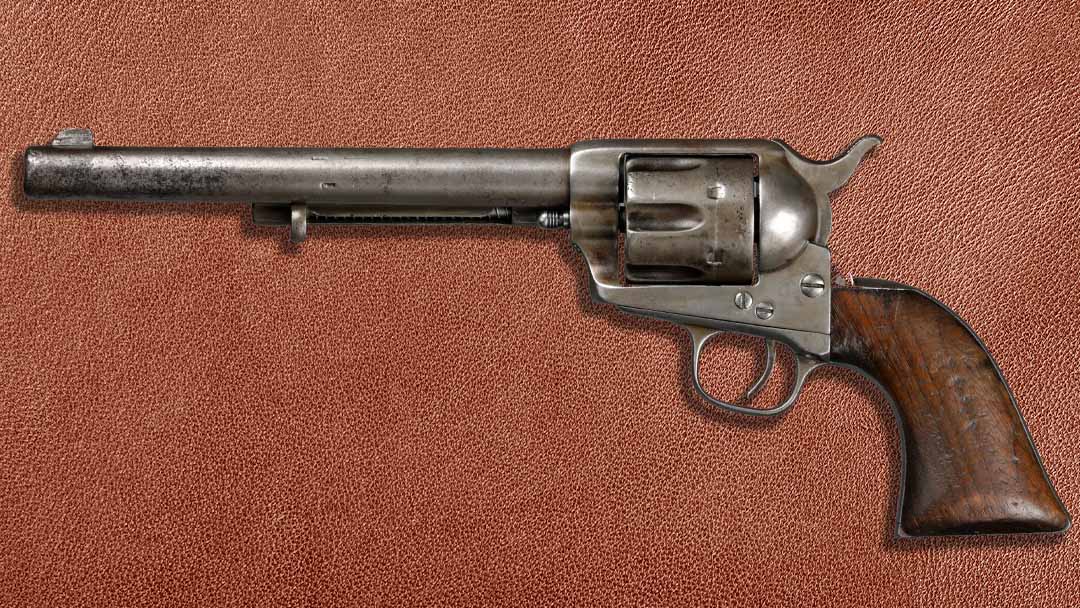
George Armstrong Custer and the Battle of Little Big Horn have been inexorably tied to the Single Action Army as an important cavalry sidearm and its use in the Indian Wars that followed the Civil War. It was as one of the commanders of the 7th Cavalry that Custer led the men on the Yellowstone Expedition to survey a Northern Pacific Railroad line and the Black Hills Expedition that confirmed the presence of gold there and unleashed white settlers on Native American land.
Another American historical figure tied to the Colt Single Action Army was Theodore Roosevelt. The president was an enthusiastic outdoorsman and hunter who loved the American West. A Colt Single Action Army he owned was sold by Rock Island Auction in 2020 for $1.466 million.
George Thompson, one of Roosevelt’s soldiers in the 1st Volunteer Cavalry – better known as the Rough Riders, was issued a Colt Single Action Army on June 20, 1898. The Rough Riders are the best-known U.S. military unit from the brief Spanish-American War. The Rough Riders fought their way up Kettle Hill during the Battle of San Juan Hill, the most widely known action of the conflict.
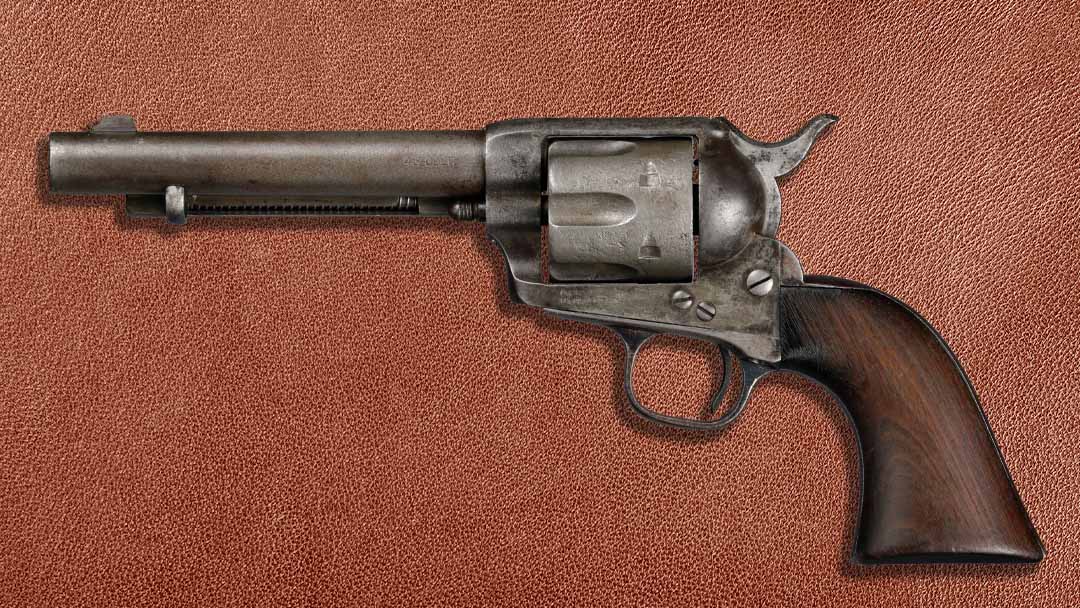
The Colt Single Action Army was carried by lawmen and outlaws alike as people embraced Manifest Destiny and went west, but by the end of the 19th century, the west was nearly settled but still had plenty of lawlessness. For example, Fleming Parker, an Arizona outlaw robbed a train in February 1897 near Peach Springs and was on the run for about a week before he was arrested. He escaped and committed a murder during his time on the lam. Captured again, he was tried for the murder and hanged.
As the Wild West was tamed, dime novels and news reports about cowboys and Indians, desperados and lawmen created interest in the way of life, and shows by Buffalo Bill Cody, Pawnee Bill and the 101 Ranch brought rootin’ tootin’ fun, trick shooting, gun fights and wild animals to parts of the country yearning to see this part of America brought to life.
The 101 Ranch was a sprawling outfit spread across four Oklahoma counties in the early 20th century that raised cattle, grew crops and offered a popular Wild West Show both at home and on tour. The ranch even had a film company that brought the cowboy life to early Hollywood. Photos of the time show Apache warrior Geronimo featured at one show as well as American Bison, trick riding, a turtle race and elephant rides.
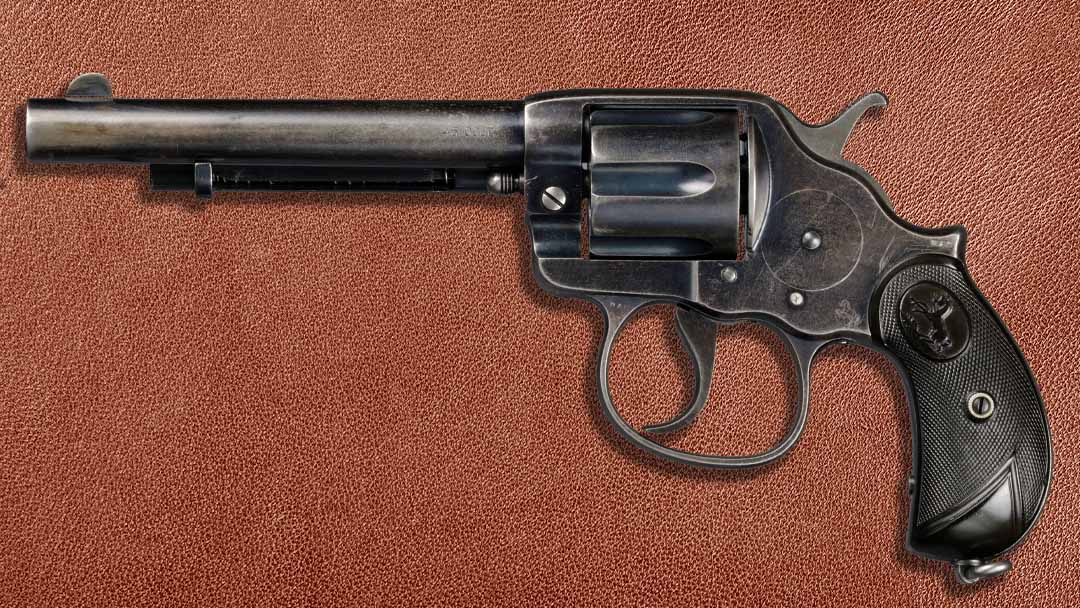
U.S. Colt Model 1878/1902 Philippine/Alaskan Revolver
The U.S. Army found itself embroiled in the Philippines after the Spanish-American War left the United States with a colony in the Pacific Ocean. Facing guerilla tactics and fierce Moro fighters, soldiers and officers learned their .38 caliber revolvers didn’t have the stopping power needed. Many soldiers reached for their Colt Single Action Army revolvers, while the military contracted with Colt for a double action, .45 caliber revolver.
Revisiting the double action Model 1878 that became the 1878/1902, the military wanted a sturdier gun. The 1878/1902 received a stronger trigger spring that, in turn, made for a heavier trigger pull. To make the pull easier, the trigger was extended, requiring a much larger trigger guard. The gun’s Alaska designation is a misnomer that came about with the claim that it could be fired while wearing gloves because of the larger trigger guard.
The United States finally defeated the insurgents at the battle of Bud Bagsak on June 15, 1913, after wiping out nearly all of the Moro fighters.
Colt Model 1911
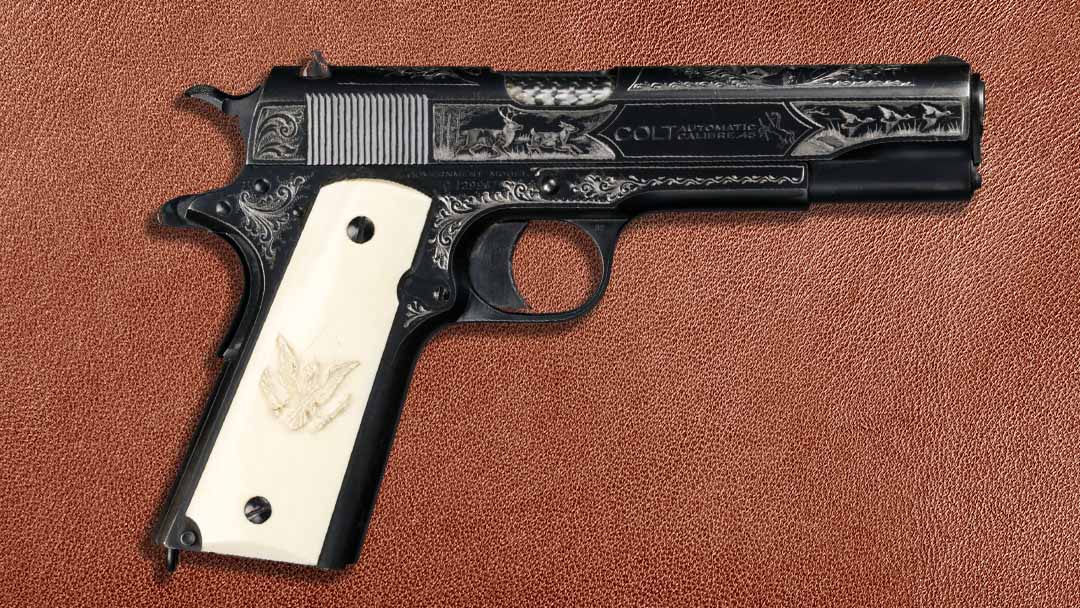
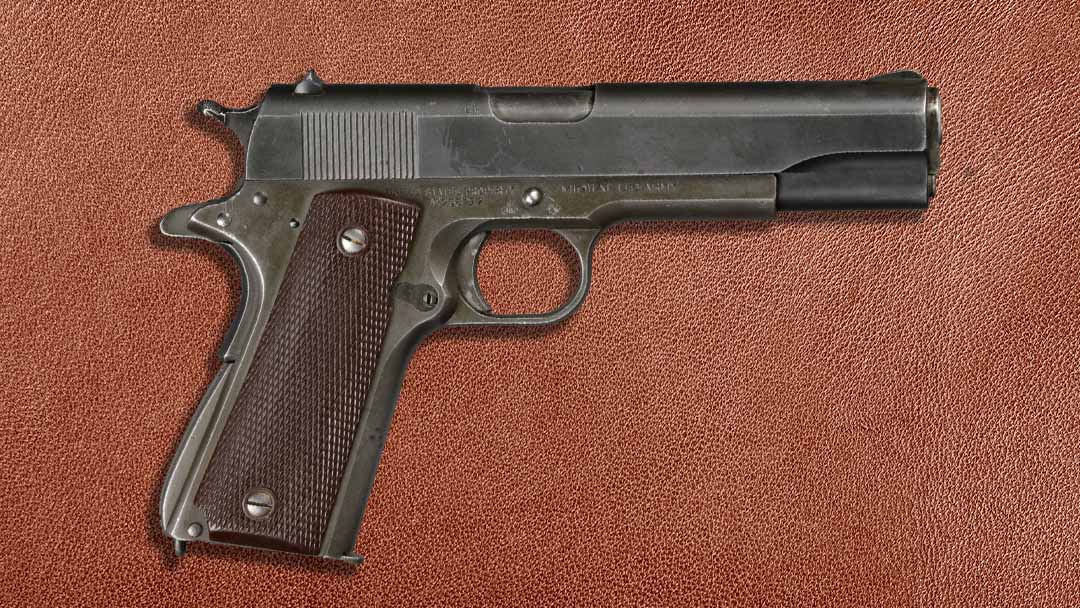
The Colt Model 1911, undefeated in two world wars, is John Moses Browning’s workhorse design. While most American gunmakers disregarded the rise of automatic pistol designs in Europe, Colt saw that a reliable automatic pistol could rival the revolver.
During the testing process, Browning’s design went through several iterations before reaching the legendary pistol adopted in 1911. The recoil operated gun was designed to take .45 ACP ammunition. The 1911 has had the longest production run of any automatic pistol. Slight external changes were made to the 1911 after World War 1 to make it easier to shoot by soldiers with small hands, designating it the M1911A1, as well as the commercially available Government Model.
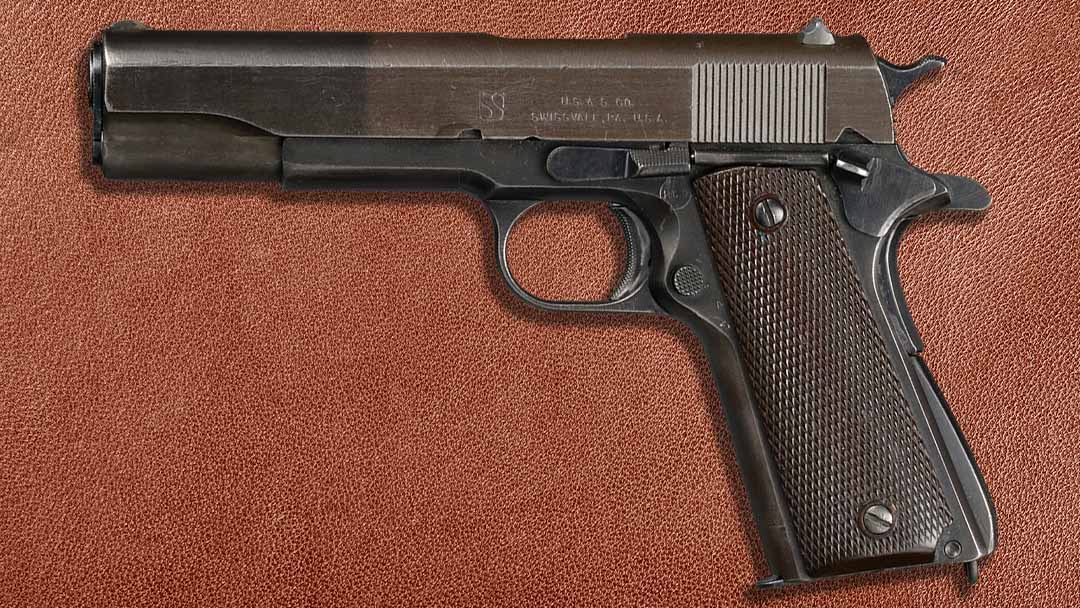
Colt was the only maker of the 1911A1 until World War 2 in 1941, producing about 7,600 during the interwar years. Difficulties in production volume proved to be a problem during World War 1, and the fear was it would occur again. Singer Sewing Machine received what was called an educational contract to determine if it could tool up for mass production of 100 pistols per hour. The company made 500 but never achieved the production goal. Instead, Singer machined precision parts for aircraft navigation and bombsights as part of the war effort, making its pistols very rare and highly collectable.
During World War 2, the 1911A1 wasn’t just used by U.S. soldiers but many Allied forces starting through the Lend-Lease Act. Singer’s tooling went to Remington Rand which was one of the companies contracted to manufacture the 1911. Remington Rand made 1.03 million, while Colt turned out 480,000, Ithaca made 370,000 and Union Switch and Signal produced 55,000.
By 1944, the United States was producing 60 percent of all munitions used by the Allies. The British issued about 40,000 1911A1 pistols to its military, primarily to commando and parachute units. In four years, American industrial production doubled.
“It is not enough to turn out just a few more planes, a few more tanks, a few more guns, a few more ships than can be turned out by our enemies,” he said. “We must out-produce them overwhelmingly, so that there can be no question of our ability to provide a crushing superiority of equipment in any theatre of the world war,” President Franklin D. Roosevelt said not long after Pearl Harbor.
Colt Commando Double Action Revolver
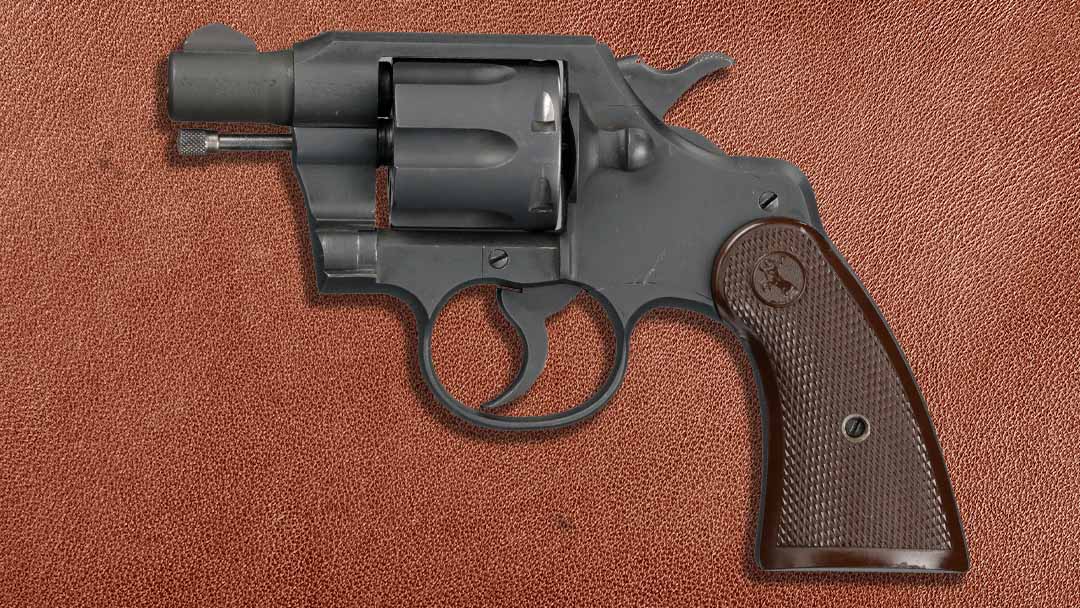
The U.S. government hustled to feed, outfit and arm a military that would grow to more than 12 million personnel by the time the war ended, but couldn’t ignore the homefront, either. Police, factory guards and security guards needed to be armed, too. Colt started producing the Commando model with the four-inch barrel for civilian use in these roles, delivering more than 50,000 during the war. Of those, about 3,450 had two-inch barrels and are often referred to as the Junior Commando.
Colt New Frontier Revolver
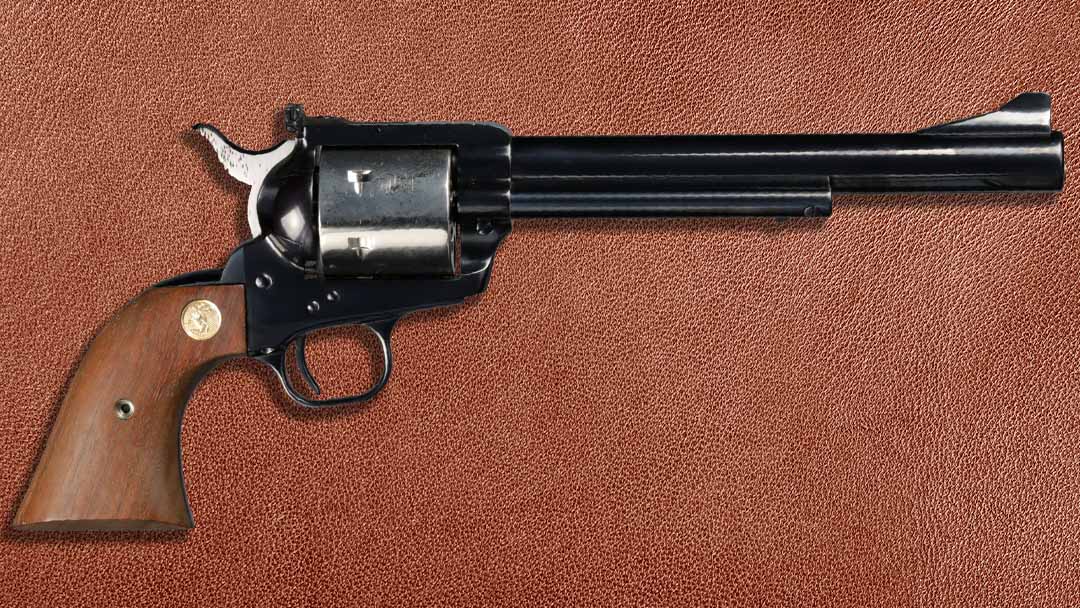
John F. Kennedy’s presidential campaign slogan was “We stand at the edge of a New Frontier,” and Colt claimed the name for its second generation Colt Single Action Army target pistol. Made with a flat top frame with adjustable sights and a wider hammer and trigger, about 4,200 were manufactured in chamberings of .38 Special, .357 Magnum, .44 Special and .45 Colt.
Colts for Sale
Colt knows history and its conflicts, from the Mexican American War, to the Civil War, to the Indian Wars, to the War to End All Wars, and World War 2, through the Colt Walker, 1860 Army, the Single Action Army, and Model 1911 and other less well-known models. These handguns were there to help shape American history and they are available in Rock Island Auction Company’s Oct. 4-6 Sporting & Collector Auction.