Russia, defeated by France and the Ottomans in the Crimean War in 1856, was a broken and weakened military. Its officials knew modernization was necessary. The Imperial Russian Army needed a new handgun. It looked to the United States.
In World War 1, when Russia sent troops into battle unarmed it again looked to the United States. Both times the United States and its gunmakers responded, pleased to enjoy the money of a foreign government contract.
In the 19th century, fledgling gun companies sought government contracts that could potentially make them financially stable. Samuel Colt did that, beating the bushes and handing out presentation revolvers to whoever could possibly order large numbers of guns. He finally found financial security with a contract for 1,000 Colt Walker revolvers. The Russians would come calling to Colt many years later.
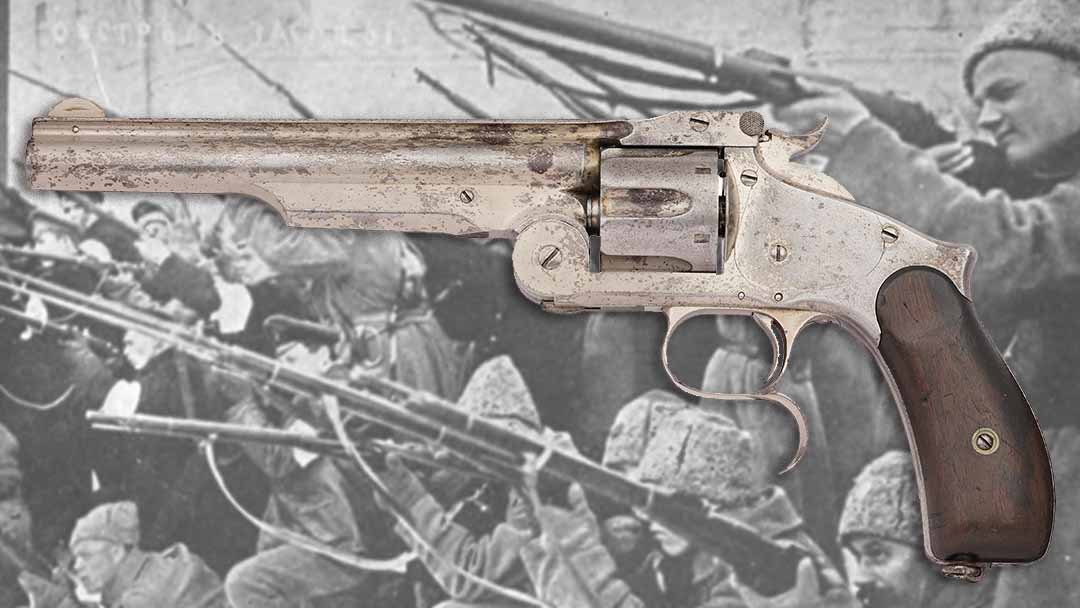
Smith & Wesson sold the very first large bore metallic cartridge revolver to the U.S. government, with an order of 1,000 New Model .44 caliber revolvers. However, it was a massive sale of its No. 3 revolver to Russia that made Smith & Wesson truly solvent.
American firearms like the Smith & Wesson No. 3, the Colt Government Model and the Winchester Model 1895 were sold to the Russian government from the late 19th century to the early 20th century. Caught up in the mayhem of the Russian Revolution, the Russian Civil War and World War 1, these Russian pistols and rifles are scarce and often well used, however, Rock Island Auction Company will offer several superb examples of these rare military guns in its May 17-19 Premier Auction.
Russian Pistols: Smith & Wesson No. 3
The U.S. government wasn’t satisfied by Smith & Wesson’s No. 3 metallic cartridge revolver and didn’t order any more beyond the initial 1,000. Russia, also looking for a revolver that was reliable, could offer a rate of fire and lethality, looked at the No. 3 and too found it wanting.
However, the Russians didn’t give up on the Smith & Wesson and demanded some changes to the cartridge which would become .44 Smith & Wesson Russian. A request made by Russian ordnance officer Kasavery Ordinetz at the Smith & Wesson factory ordered the second model to have a knuckle added to the backstrap and a spur to the trigger guard. The Russians had the barrel shortened to seven inches.
Russia initially contracted for 20,000 No. 3 First Model revolvers in May 1871, before eventually buying a total of 131,000 No. 3 revolvers from 1871 to 1878. Smith & Wesson also sold the No. 3 Second Model to the Turkish and Japanese governments.
“The Russian Model completely changed the Smith & Wesson position in the world, for it established the factory as a world-famous arms manufacturer, helped the company to establish financial stability, and also precipitated orders from other nations,” Smith & Wesson historian Roy G. Jinks stated. “[F]rom the first Russian contract stemmed the growth and success of Smith & Wesson.”
In an unrelated episode, Russian military officials also ordered Gatling Guns with specific Russian modifications including chambering them in .42 caliber and increasing the number of barrels from six to ten for a rate of fire of 200 rounds per minute. Russia bought 400 of the Colt Gatling Guns and a manufacturing license.
Russian Pistols: Colt Government Model
In August 1914, France stood on the brink of disaster as the Germans approached Paris. The Allies needed a miracle and they got one, thanks to the Russians. On the Eastern front, theRussians attacked German forces at Tannenburg in what is now Poland. Despite severe losses by the Russians, it wasn’t a decisive victory for Germany. The Germans had to reinforce troops in the east and the war settled into a stalemate.
During the Russian attack, nearly half of the Russian Imperial Army was unarmed as the second and third waves were to advance, picking up the guns of their fallen comrades. In 1915, Russian Minister of War Alexei Polivanov estimated that 1 million Russian soldiers were unarmed, reflecting “Rifles were more precious than gold.”
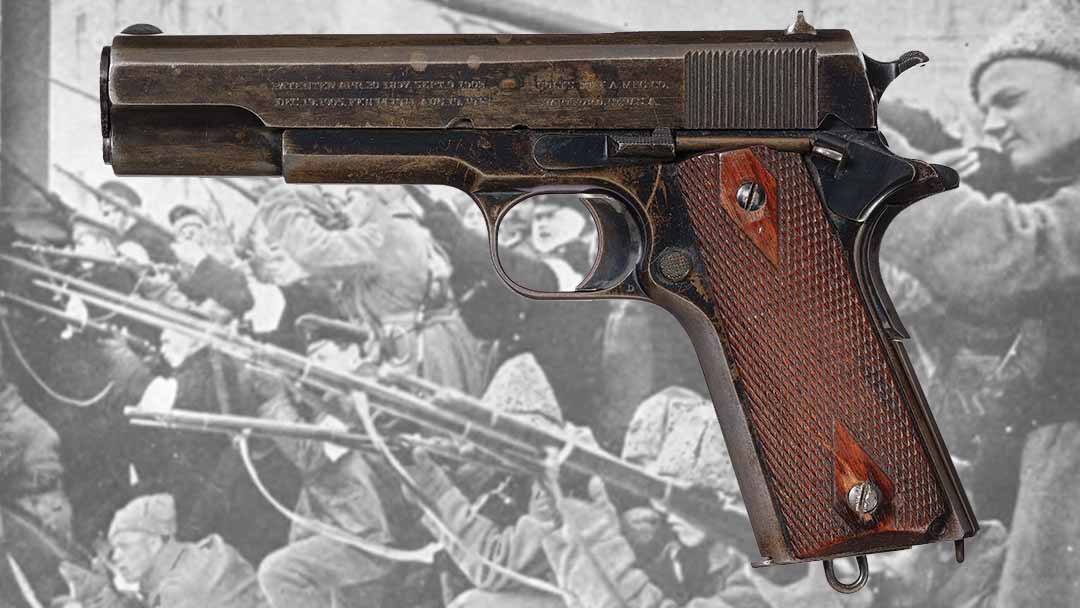
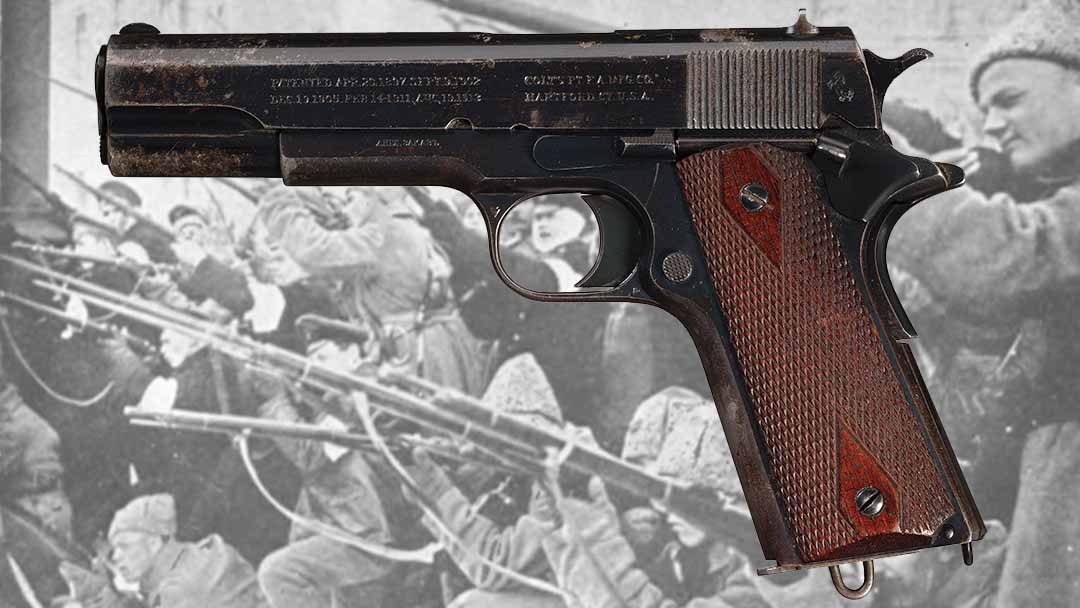
Russia needed guns. Among its purchases were 51,000 Colt Government Model pistols with the first order of 2,600 coming through England. After Czar Nicholas II abdicated in March 1917, Russia descended into chaos. War supplies, including the Colts, sat in warehouses. U.S. Ordnance Gen. William Crozier recommended no longer sending guns to Russia.
A pair of M1911 pistols were among the firearms used in the assassination of Czar Nicholas II and his family in July 1918 and in fact one was reportedly carried by the ringleader. German soldiers were known to take M1911 pistols off soldiers in the Eastern Front in World War 2 where some were received through the Lend-Lease program.
Russian Rifles: Winchester 1895
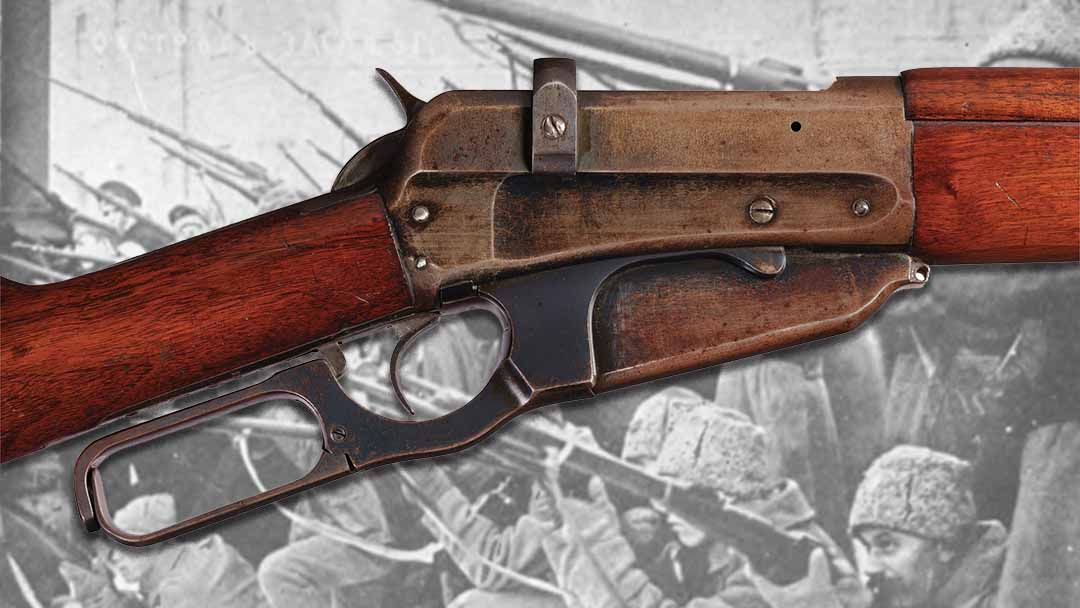
Due to its lack of preparedness at the start of World War 1, Russian rifles were needed along with Russian pistols. Winchester immediately received a contract for 300,000 rifles based on the Model 1895. Known as the Russian musket with an extended barrel and forend, 70 percent of all Model 1895 sales were for this variant.
U.S. troops had tried the Model 1895 in the Philippines and soldiers reported it too difficult to load. When Russia came looking for guns they were immediately offered the Model 1895, chambered in the Russian service caliber, 7.62x54R. These guns had stripper clip guides mounted on the receiver for fast reloading, solving the problem U.S. soldiers complained about. Winchester delivered 294,000 of the 300,000 Russian rifles contracted from 1915 through 1916.
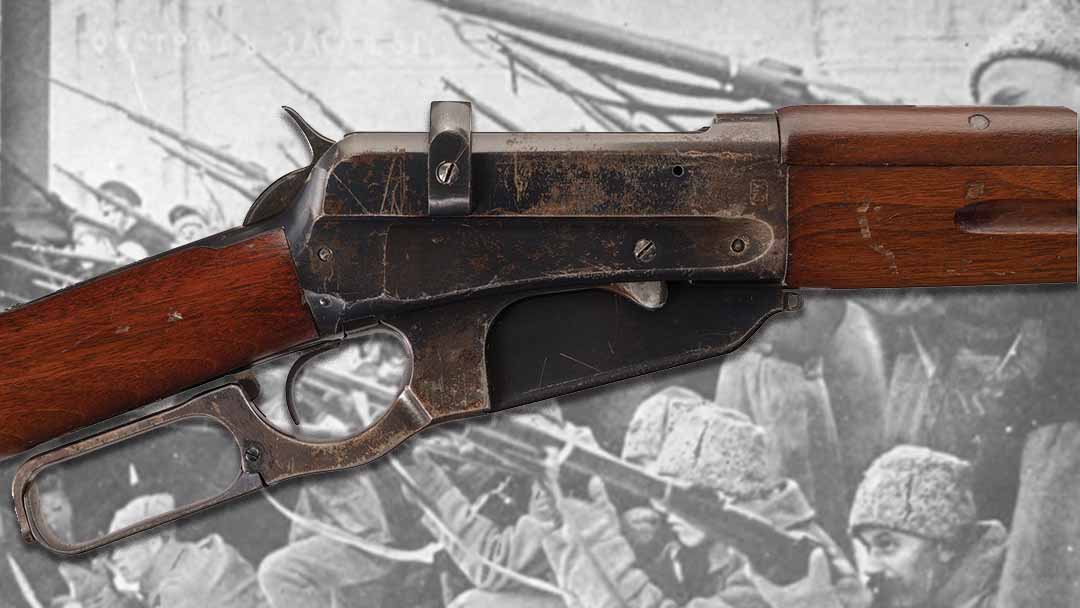
Russian Model 1895 rifles also turned up in Republican Spain during the Spanish Civil War. Several were imported by Interarms and sold for $34.95 according to ads in firearms magazines of the early 1960s.
Russian Rifles: American-Made Mosin-Nagants
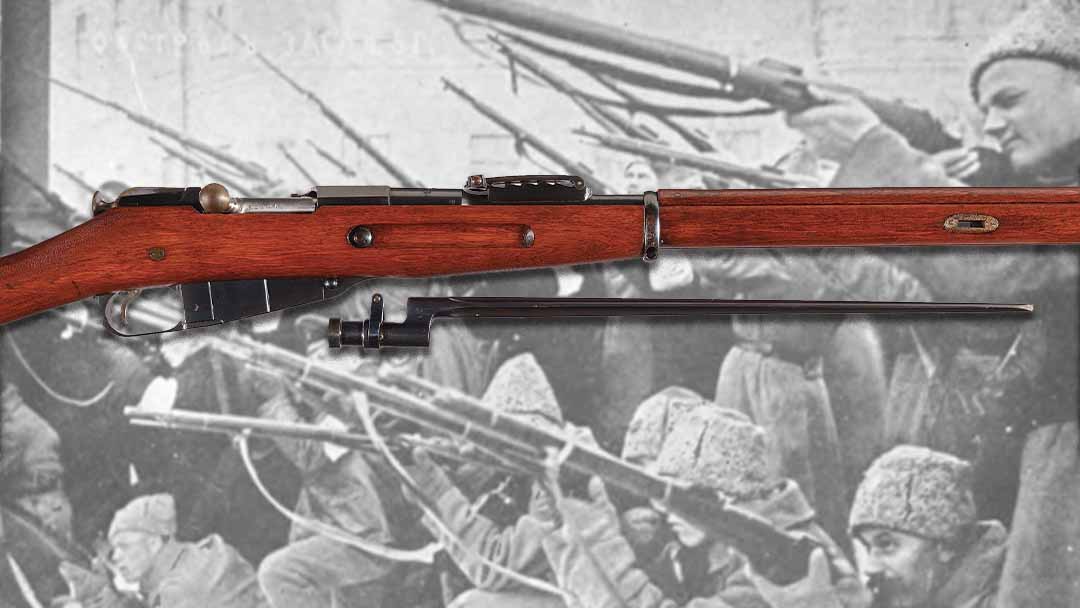
The Russians also contracted with Westinghouse and Remington to make Mosin-Nagant rifles. After the collapse of the Russian monarchy the contracts were terminated and the remaining rifles were purchased by the U.S. Ordnance Department.
These rifles would be used by the American Expeditionary Force in the Allied intervention in North Russia as a way to use the ammunition that was stockpiled. The goals of the intervention was to prevent Allied war materials stockpiled in Arkhangelsk and also rescue the Czechoslovak Legion that was stranded along the Trans-Siberian Railroad.
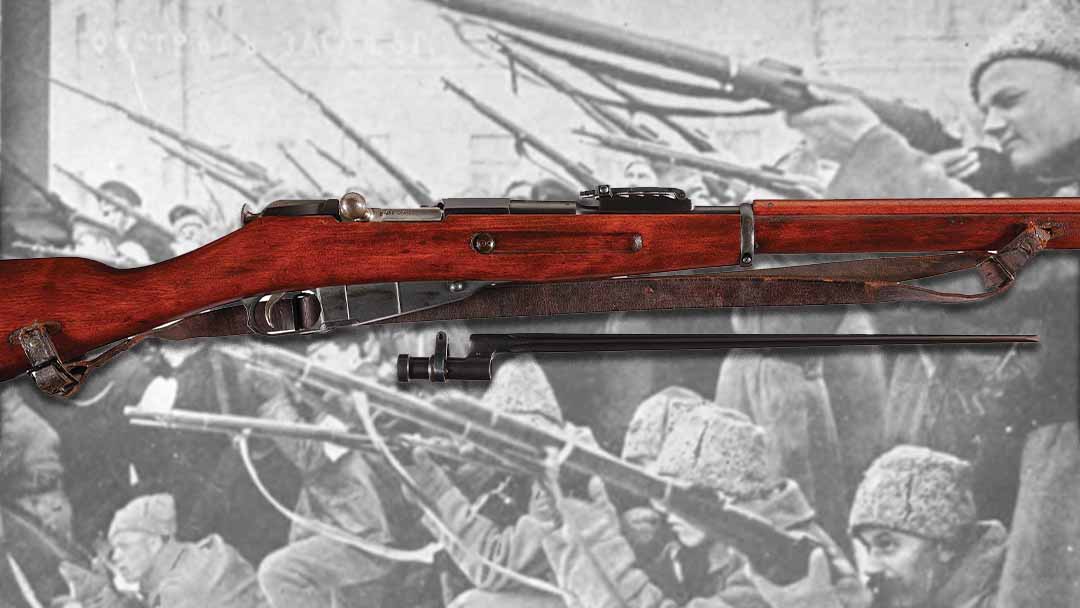
More than 37 million Mosin-Nagant rifles have been made. Remington was contracted to make 1.5 million and Westinghouse was to manufacture 1.8 million from 1915 to 1917. Sources vary on the exact number of rifles produced and shipped, but it is estimated that Remington made 750,000 to 840,000, while Westinghouse manufactured 770,000 Mosins, according to author Bruce N. Canfield.
It is estimated that 131,400 to 469,951 Remington-produced Mosins and about 225,000 Westinghouse-made Mosins reached Russia by the time the monarchy verged on collapse in January 1917 and the contracts were cancelled. The U.S. Army distributed the guns to the American Expeditionary Force, as well as to National Guard units and other state militias.
Overseas, the United States provided guns to the fledgling country of Czechoslovakia as well as to Finland, Spain and Mexico. Some were sold to surplus companies that converted them to .30-06.
Russian Pistols: DWM 1906 Luger
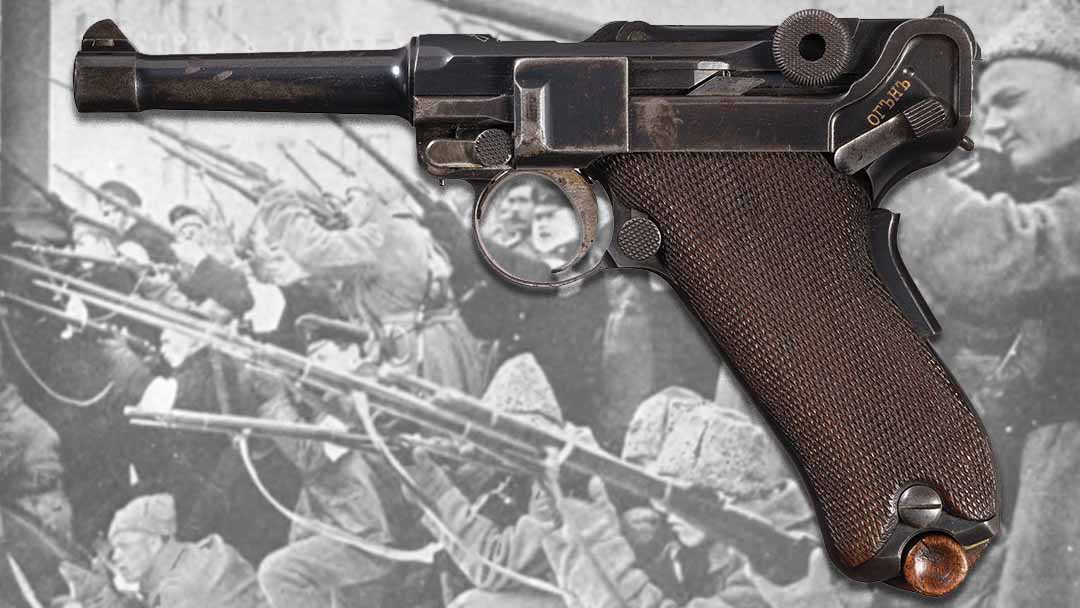
Only about 1,000 of these DWM 1906 Lugers were produced for imperial Russia ahead of World War 1. Some historians believe these were destined for local police rather than military use, or even for the secret police or the Czar’s bodyguards. Few have made their way to the United States.
Russian Pistols and Russian Rifles for Sale
United States gunmakers manufactured these particular Colts, Winchesters, Smith & Wesson and even Mosin-Nagants when czarist Russia needed weapons. Caught up in the chaos of the Russian Revolution, Bolshevik Uprising and World War 2, they firearms tend to have been hard used, but the examples on offer in Rock Island Auction’s May 17-19 Premier Auction are superb specimens from an interesting period of Russian military history.