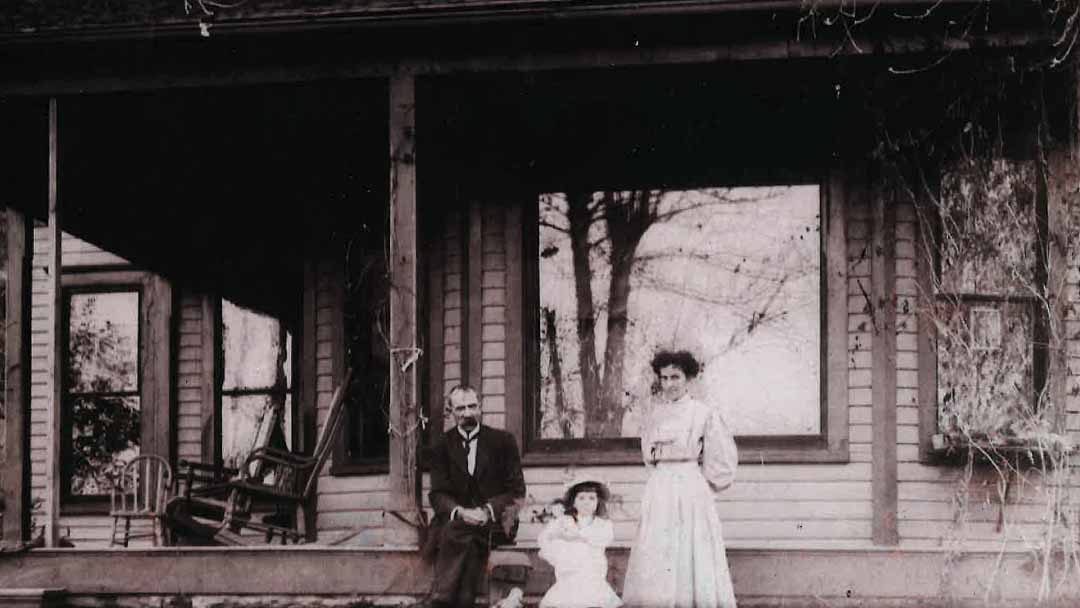
George Armstrong Custer and Wild Bill Hickok were dead when John H. Burns arrived in Deadwood, Dakota Territory in 1877 with a letter of recommendation in his pocket from a well-known Chicago Circuit Court judge.
Custer’s expedition into the Black Hills in 1874 sparked the gold rush. A year later in the fall of 1875, gold was discovered in “Deadwood Gulch” and a mining camp sprang up the following spring. Hickok arrived in the summer of 1876 as part of a wagon train to the gold rush but was only in town for a few weeks before he was shot dead at a card table holding aces and eights.
Into this rough and tumble mining town stepped Burns. Born in 1850 in Indiana and a practicing attorney from Chicago, he first visited the Deadwood area in the summer of 1876 when the Black Hills region’s population was booming. Hearing about the Little Big Horn Massacre, he rode out to the battlefield, serving as the first reporter at the scene of the slaughter. He picked up a war club and other items that were eventually handed down to his granddaughter.
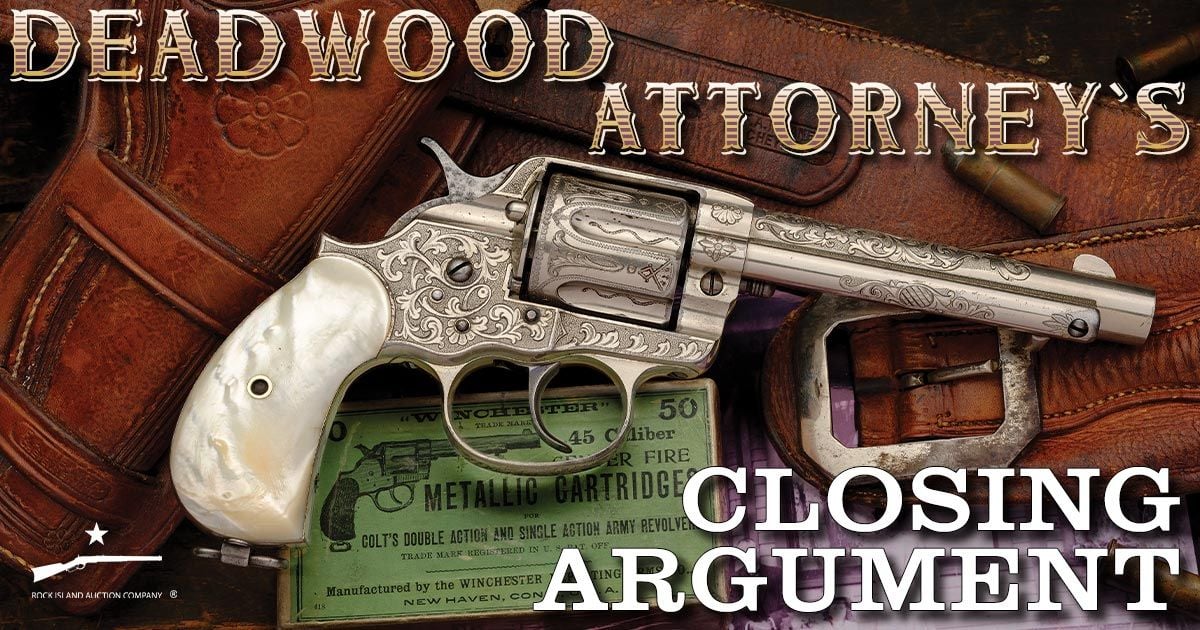
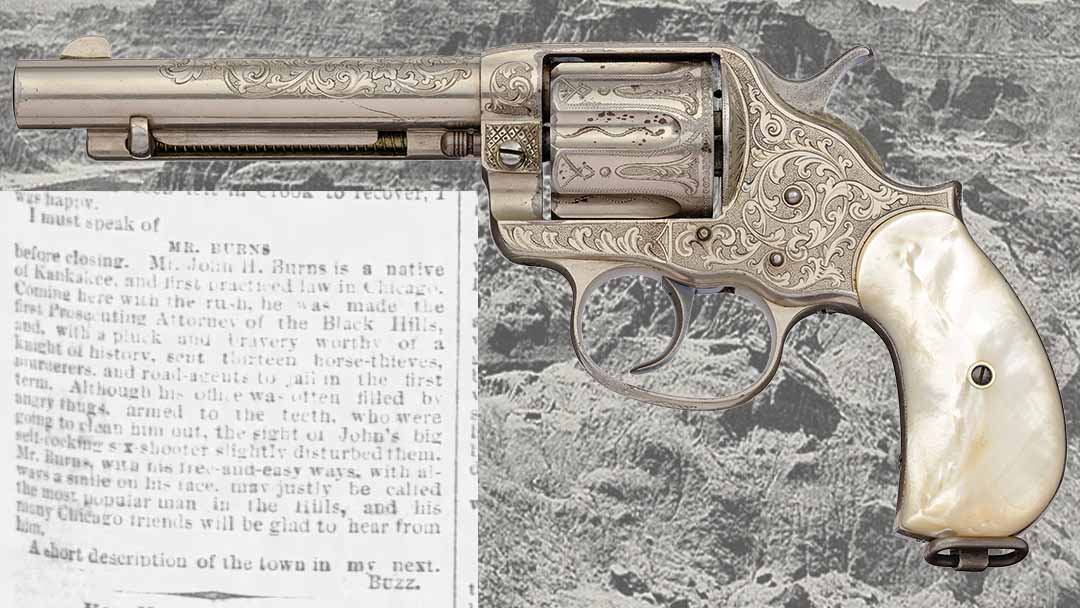
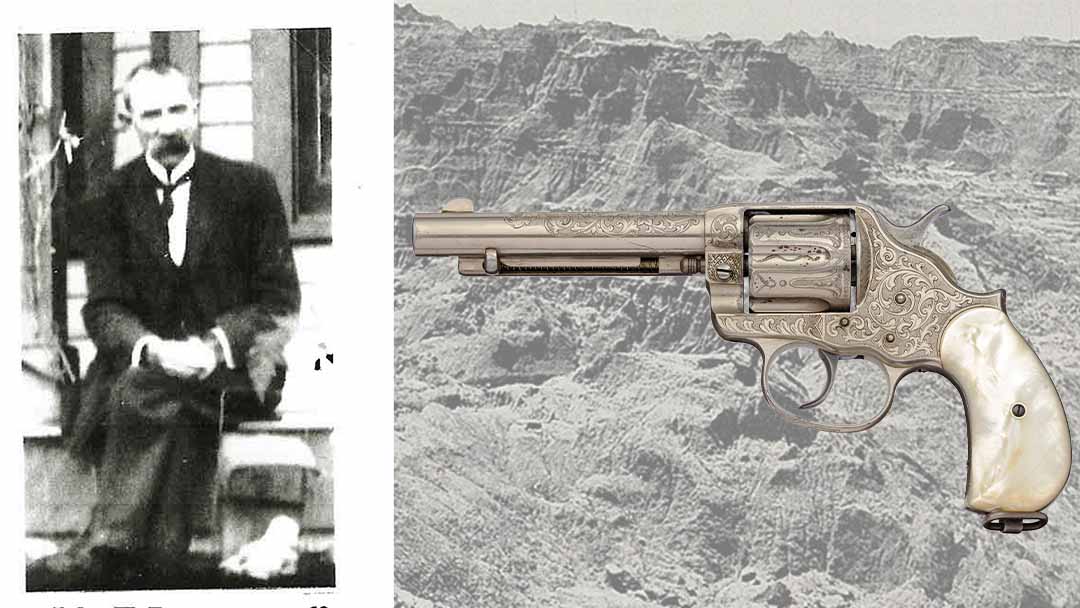
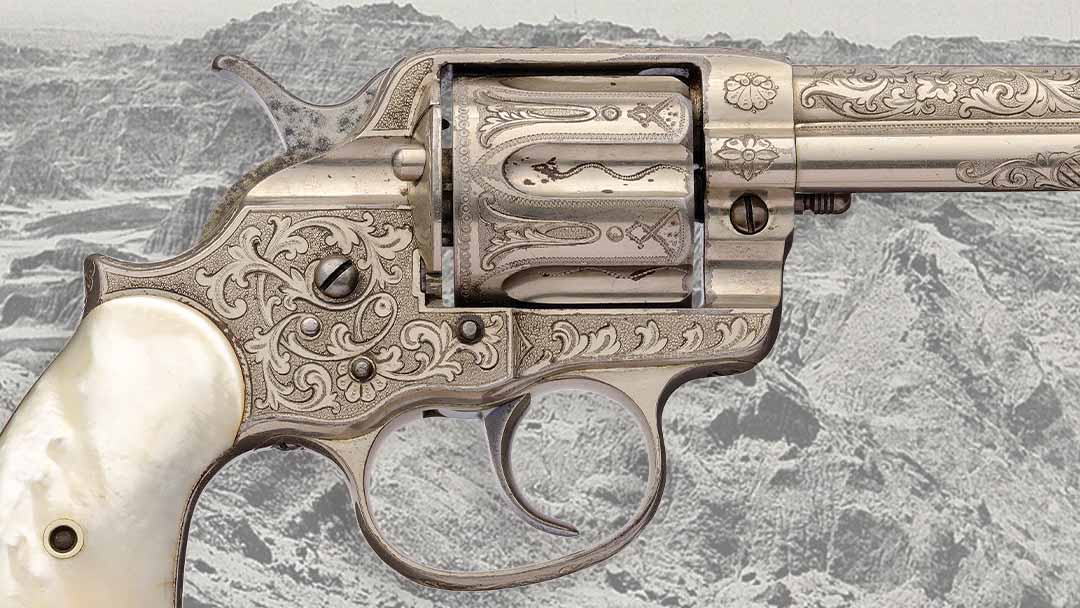
A year later, he returned to Deadwood – its population soaring to 5,000 — and hung up his shingle, practicing law out of the building that served as Custer’s headquarters in 1874. A documented factory engraved Colt Model 1878 Frontier double action revolver attributed to Burns, a deadwood attorney, judge, rancher and author will be on offer in Rock Island Auction Company’s May 17-19 Premier Auction.
Black Hills Gold Rush
Burns practiced law, wrote for the Deadwood newspapers as well as the Chicago Tribune. He learned the Sioux language and wrote a Sioux to English dictionary. As a hunter he was credited for taking the most antelope in the area and considered the man you wanted with you on a bear hunt because of his shooting prowess. Fearless, he would occasionally venture into the wilderness alone.
One tale about Burns showed him to be a cool customer in front of a mob. As an attorney in Deadwood in 1877, he was quickly recruited as a prosecutor and ran afoul of townspeople angered by a murder prosecution. As the story goes, Burns was eating dinner in a restaurant when a deputy came to warn him about a group gathered outside for him and asked if he had a sidearm. Told no, the deputy loaned Burns a revolver. Coolly finishing his meal, he got up and after borrowing a second revolver, cocked them both and waded his way through the crowd and back to the courthouse, according to the Black Hill Daily Times in 1884.
As a prosecutor in Deadwood he “sent thirteen horse-thieves, murders, and road-agents to jail in the first term.” A double action revolver in his office kept the angry thugs who visited him slightly uneasy despite his “free-and-easy ways, with always a smile on his face,” it was reported.
Over time, which in a boomtown can be just a few short years, he became involved in Republican politics and local affairs. By the following year, his parents had followed him to Deadwood from Indiana and farmed 160 acres about seven miles outside of town.
Black Hills Gold Rush Practicalities
Photographs of Deadwood in the late 1870s show a town built on a hillside with dirt streets and boardwalks. Infrastructure and public safety were slow to arrive, but in just a short time Burns became involved in municipal affairs. He served on the commission that formed Deadwood’s fire department in May 1878. Though Seth Bullock was appointed sheriff in March 1877, Deadwood didn’t appoint night watchmen until the following year. Burns chaired the board that hired the first four night watchmen, also in 1878.
In a bit of irony, a year after the fire department’s founding most of Deadwood’s business district burned down in 1879. One person died in the conflagration and more than 300 buildings burned to rubble. Burns rebuilt and reopened his law office though the town shed thousands of residents who’d lost everything in the flames.
Black Hills Gold Rush and the Sioux
The Sioux were eventually pushed onto reservations after their defeat in the Indian Wars and found only desperation there. As a result, the Ghost Dance movement arose, preaching that peaceful coexistence and a strong work ethic would make white people disappear from the earth while Native Americans would return from the dead and American bison would again be plentiful.
The U.S. Army and the government saw the Ghost Dance as a threat. Trying to dispel it, the Army asked Sitting Bull, who defeated Custer at the Little Big Horn, to help tamp down the movement in December 1889. Sitting Bull hated the federal government and refused. After an arrest warrant was issued, Indian Agency police officers went to arrest him. They were met by followers of the Sioux leader and a shootout ensued that killed Sitting Bull and several others. That sent Sioux fleeing from the nearby Pine Ridge reservation.
Burns, who was South Dakota Governor Arthur C. Mellette’s aide-de-camp, rode with the U.S. Army as they tried to return the Sioux to the reservation. During an encounter with the Sioux near the White River on Jan. 1, 1891, two days after the Wounded Knee massacre that killed 150-200 Sioux, the horse-mounted soldiers faced off with 300 Sioux and managed to fight them off. In an after-action report, Capt. John Brown Kerr wrote that Burns “accompanied the command and showed himself to be an efficient aid. He rendered valuable service with his rifle.” Kerr was awarded the Medal of Honor for his leadership in the attack.
After the Black Hills Gold Rush
Burns, who moved in and out of the area for a time, settled down in Deadwood and got married in 1897. The couple had one daughter, and he wrote “Memoirs of a Cow Pony as Told by Himself,” that was published in 1906. At some time between 1910 and 1920 the family moved to Tampa, Fla., where he operated an automobile and limousine service. In 1923, the family moved to Inglewood, Calif. Burns worked in real estate and as an attorney. He retired in 1930 and died the following September at the age of 81.
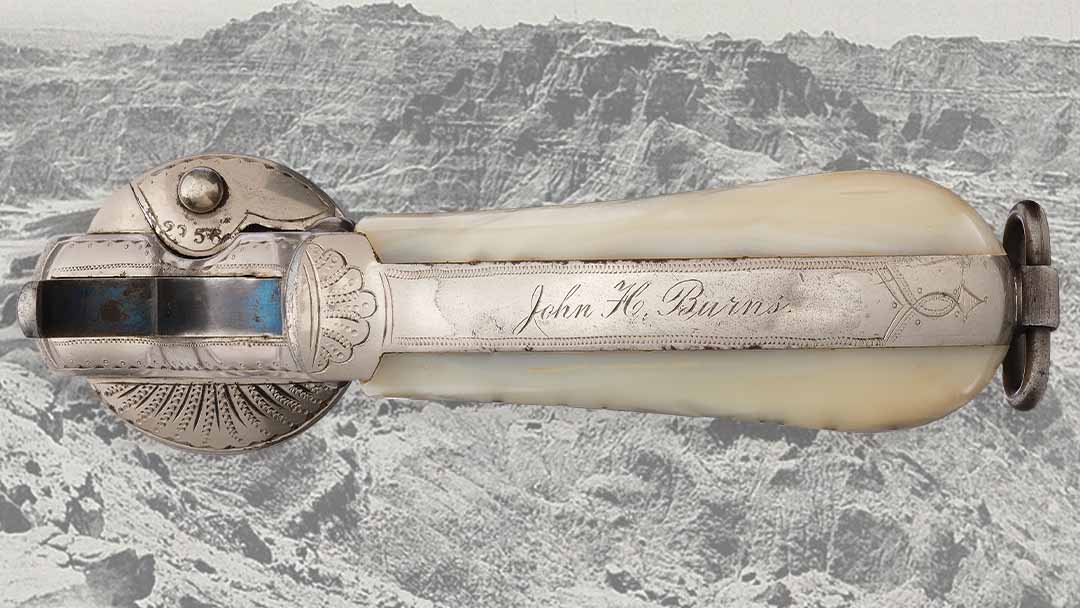
Colt Model 1878 Double Action Revolver of a Deadwood Attorney
This well-researched and high-conditioned Colt Model 1878 from the Greg Lampe Collection is a piece from the height of Deadwood’s boomtown history. The town and region were lawless and dangerous when attorney John Burns arrived from Chicago and helped shape the course of the town over a few short years. A fascinating, high-conditioned revolver full of Wild West and gold rush lore, this Colt revolver is available in Rock Island Auction’s May 17-19 Premier Auction.