Of the many notable products from the mind of famed American arms designer Eugene Stoner, the Stoner 63 was arguably his most ambitious. This unique modular machine gun platform saw combat for a brief period in Vietnam with the Marine Corps and on a wider scale with the Navy SEALs. Today, the Stoner 63 is one of the most sought-after machine guns available for public sale and an absolute cornerstone of collecting.
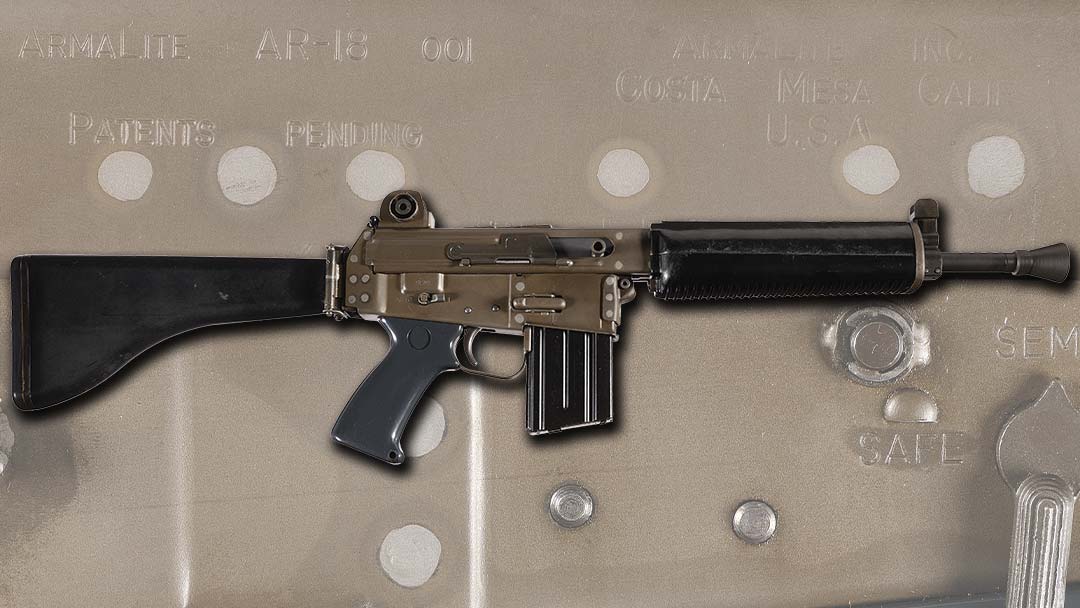
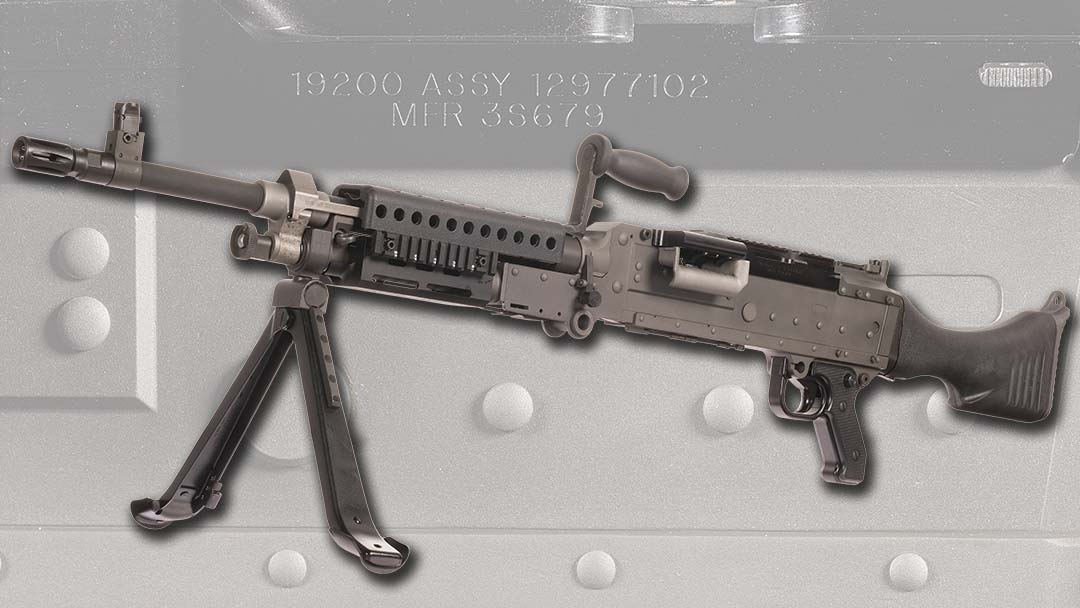
Rock Island Auction Company frequently features some of the rarest machine guns available to the collecting public, and the company’s May 17-19 Premier Firearms Auction in Bedford, Texas is no exception. In addition to the Stoner 63, pinnacle pieces like the M240, the SACO M60E3, and several rare examples of the Armalite AR-18 platform will be up for bid, along with dozens of other fully transferable heavy hitters to add to your collection.
The Genius of Eugene Stoner
World War 2 U.S. Marine veteran Eugene Morrison Stoner was a natural engineer from an early age. Stoner took a position with the ArmaLite Division of the Fairchild Engine and Airplane Corporation in 1954 and developed several firearm prototypes, including the groundbreaking AR-10.

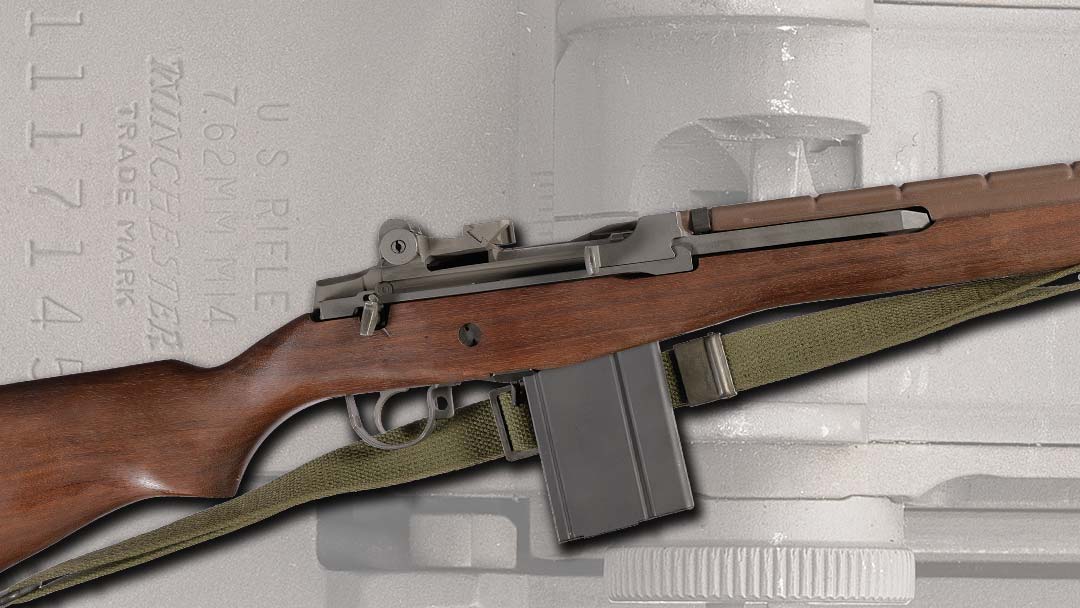
The US Military sought to replace the venerable M1 Garand and Armalite submitted Stoner’s design. The AR-10 was constructed with fiberglass and lightweight aluminum alloys and employed an 8-lug rotary bolt concept and a type of gas operation system that Stoner described as “a true expanding gas system instead of the conventional impinging gas system.”
The AR-10 underperformed during 1956 endurance tests, and the military instead chose the M14 as their new battle rifle.
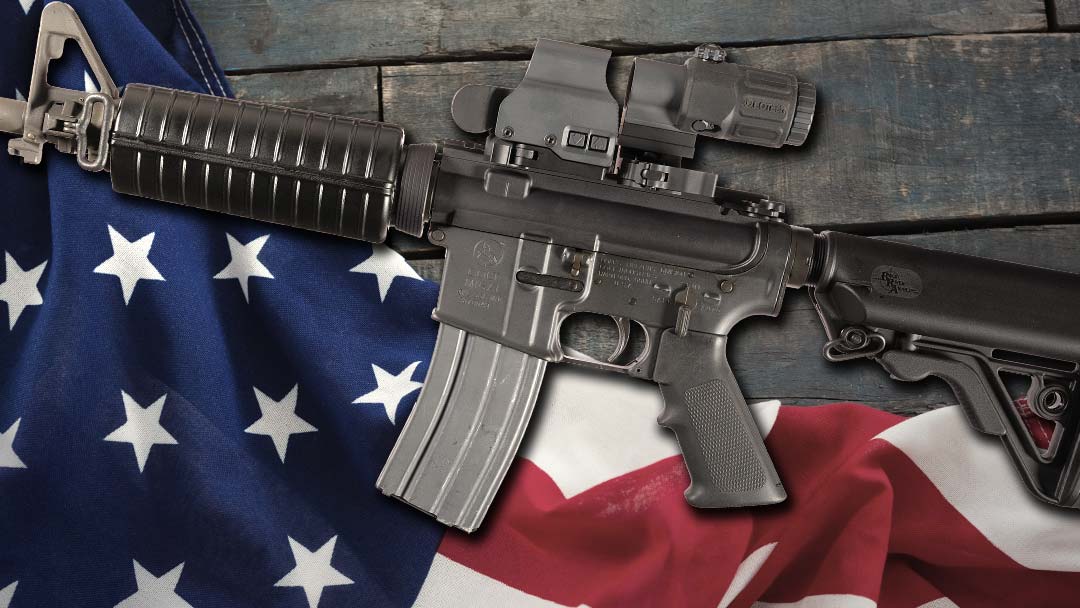
ArmaLite addressed the AR-10’s performance issues and began developing the AR-15, a new .22 caliber rifle that also utilized Stoner’s operating system and similar lightweight materials. Both weapons caught the attention of Colt’s Manufacturing Company, which purchased production rights to the AR-10 and the AR-15 in 1960. Eugene Stoner would briefly become a consultant for Colt in 1961. Two years later, the AR-15 would receive its official M16 military designation.
Cadillac Gauge and the Stoner 63
During his time with Colt, Eugene Stoner developed an idea for a modular weapon system consisting of a common receiver group that could be rapidly reconfigured into multiple subassemblies based on the needs of the mission. Stoner took his concept to U.S. military contractor Cadillac Gage and brought on Jim Sullivan and Bob Fremont, who’d both helped Stoner develop the AR-15.

According to Jim Sullivan, “In 1962, Bob and I joined Stoner again at Cadillac Gage where he was designing the 7.62 mm Stoner 62 rifle and machine gun. The owners of Cad Gage wanted a 5.56 mm model so Bob and I designed the Stoner 63.”
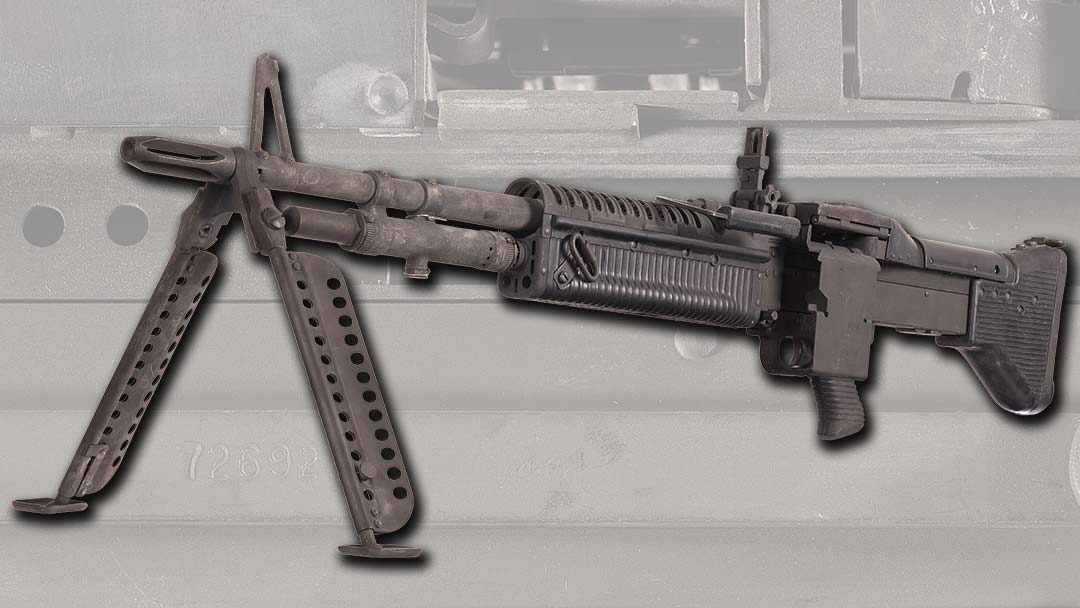
The Stoner 63 was one of the first post-WW2 light machine guns to use a stamped sheet metal receiver, designed so that the core of each weapon could be affordably produced in large quantities. The platform’s quick change barrel system, feed tray, and top cover were similar to the MG42 and later M60 machine guns, but the Stoner 63 took the idea of customization much further.
The Stoner 63, a Jack of All Trades
Like a Swiss Army knife, the Stoner 63 attempted to fill every role in a rifle platoon. Advertised as a “complete small arms weapons system” the Stoner 63 could be reconfigured at the user or the armorer level and allowed one man to repair and maintain six separate guns.
According to the Stoner 63’s original sales brochure, “The system comprises six separate arms, all built from one common Basic Component Group: 1) Fixed Machine Gun; 2) Light Machine Gun, Belt-Fed; 3) Light Machine Gun, Magazine Fed; 4) Medium Machine Gun; 5) Assault Rifle; and 6) Carbine.”
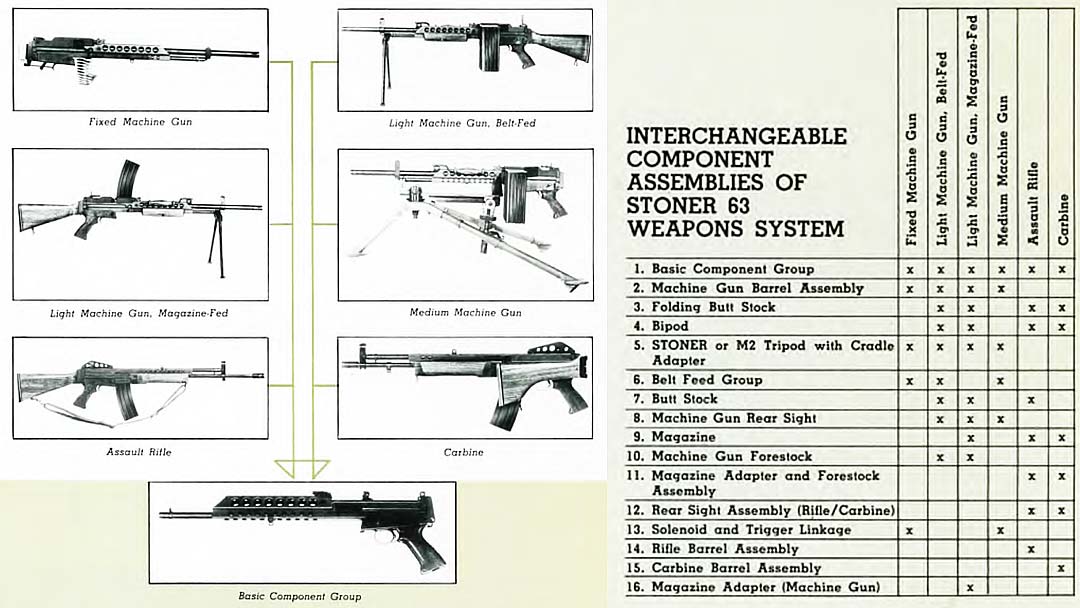
The weapon’s 16 interchangeable components included the basic component group, machine gun barrel assembly, folding buttstock, bipod, tripod with cardle adapter, belt feed group, buttstock, machine gun rear sight, magazine, machine gun forestock, magazine adapter and forestock assembly, rear sight assembly (rifle/carbine), solenoid and trigger linkage, rifle barrel assembly, carbine barrel assembly, and magazine adapter (machine gun.) Nine of the 16 components were common to three or more weapon configurations.
The barrel, forestock, buttstock, rear sight base, and trigger housing could all be removed without dedicated tools. Any Stoner 63 could be quickly repaired by stripping parts from a weapon not currently in use.
The Stoner 63 Put to the Test
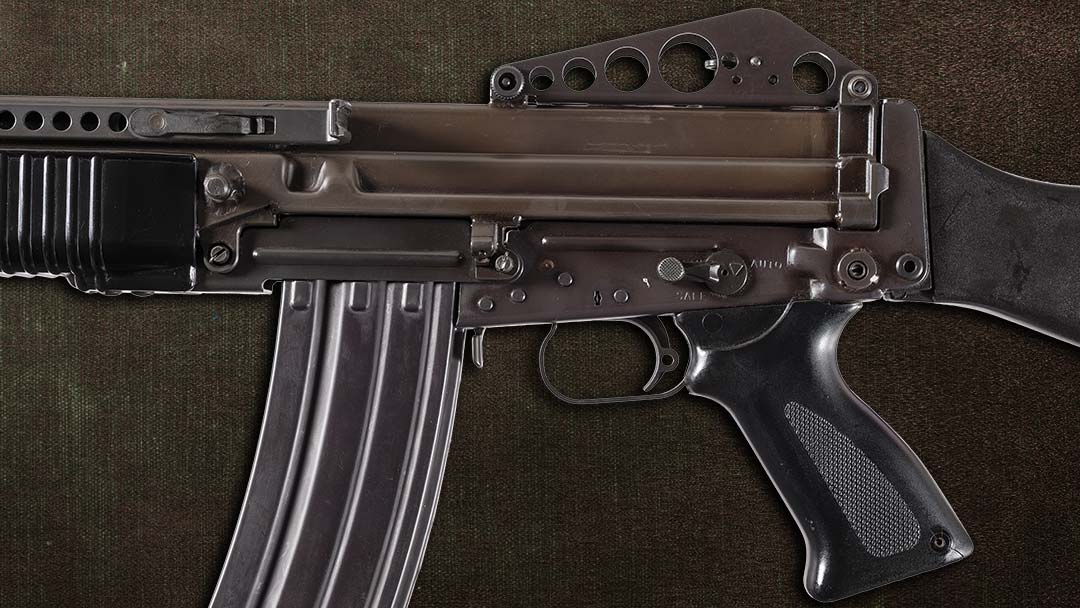
Developed with an eye for military sales, the Stoner 63 earned early interest from the Defense Advanced Research Projects Agency, then known as ARPA, in March of 1963. In August, the weapon was demonstrated at the Marine Corps Landing Force Development Center at Quantico, Virginia. Prototypes were ordered by both agencies.
The following year, the Marine Corps published the report ‘Stoner 63 Weapons System.’ Despite noting several flaws, the Stoner 63 was received favorably during testing and the report concluded an improved version of the platform could offer a suitable replacement for the M14, M3A1, and M60. An Army report from September of 1964 was more harsh, criticizing the platform’s limited barrel life, weak belt pull, stock breakage while launching grenades, and casting doubt on the Stoner 63’s extended durability in harsh conditions.

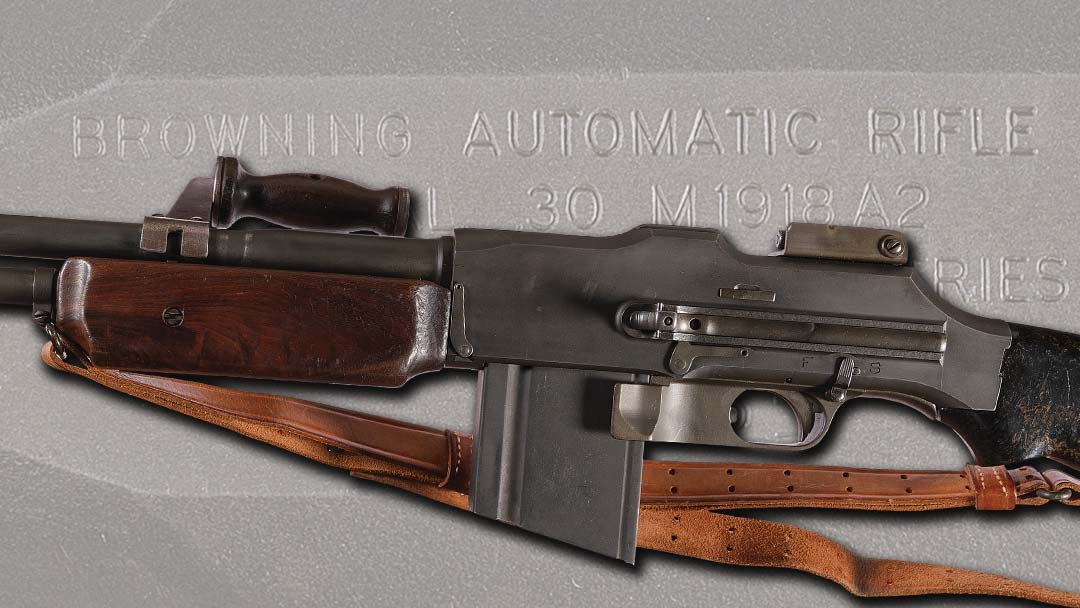
In ‘Report on the Stoner 63: A New Small Arms System,’ a story in the March 1964 issue of Marine Corps Gazette, noted author and military historian Jac Weller was impressed with the platform, commenting, “The Stoner (63) magazine-fed AR and belt-fed LMG can deliver bursts which are even more accurate than those from a BAR. The lightness of CAL .223 ammo would mean a lot more fire in most tactical situations.”
The Stoner 63 in the Field
Cadillac Gauge only produced around 2,000 Stoner 63 rifles before upgrading the design in March of 1966. The Stoner 63A included a host of improvements such as a stainless steel gas tube to reduce corrosion, a stronger polycarbonate stock and forearm, a redesigned cocking handle for the rifle and carbine subassemblies that was easier to operate, a more durable feed cover, feed tray, dust covers, plus a spring-loaded cover placed over the ejection ports to better protect the rifle’s internals.
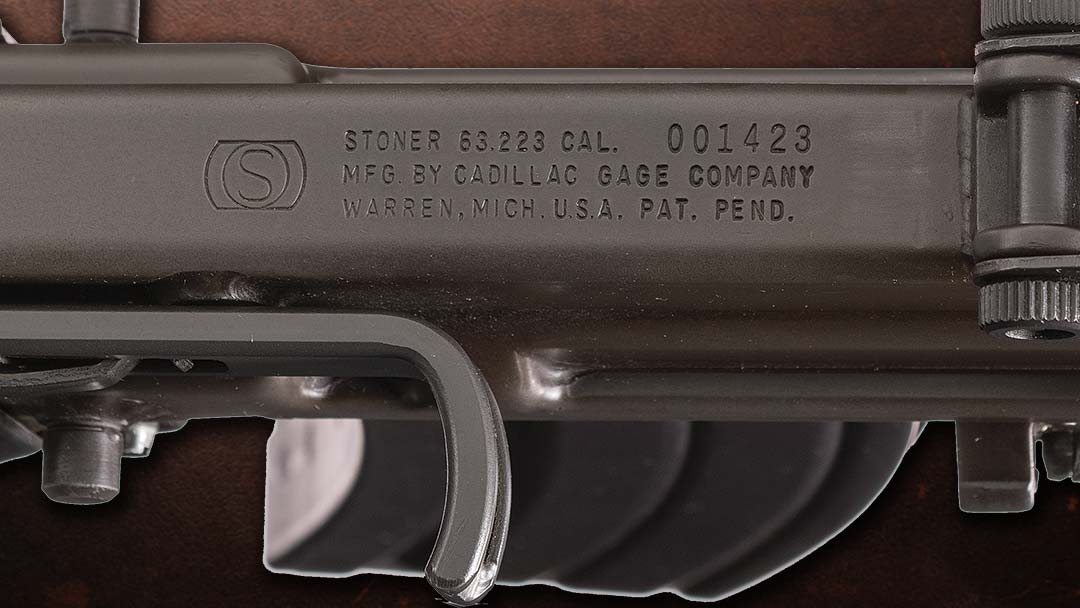
In October of 1966, the Marine Corps ordered Cadillac Gage to modify 286 Stoner 63 weapons into the new 63A standard, where they would endure combat testing in Vietnam with Lima Company, 3rd Battalion, 1st Marine Regiment the following February. The Navy SEALs began conducting field testing of their own, with an overall positive response that resulted in Cadillac Gage introducing an additional Stoner 63 subassembly in the Commando configuration, a carbine length derivative of the LMG variant.

The Stoner 63 worked well for the short-term missions conducted by the Navy SEALs, but the platform was viewed as a liability for extended assignments. Even after the myriad of improvements the system received with the Stoner 63A upgrade, the Army feared the weapon’s numerous parts and fine tolerances wouldn’t withstand the rugged elements endured by the average infantryman in Vietnam.
Stoner 63 vs M16
According to Jim Sullivan, the Stoner’s lack of wide scale acceptance may have also been political. As Sullivan recalls, “I left to join Ruger in 1965 after the Marines had tested the Stoner 63, ordered 300,000 and been shot down by the senate funding committee which decided that the Marines should use what the Army uses (in other words, the AR-15 which by then had been adopted and officially designated the M16).”
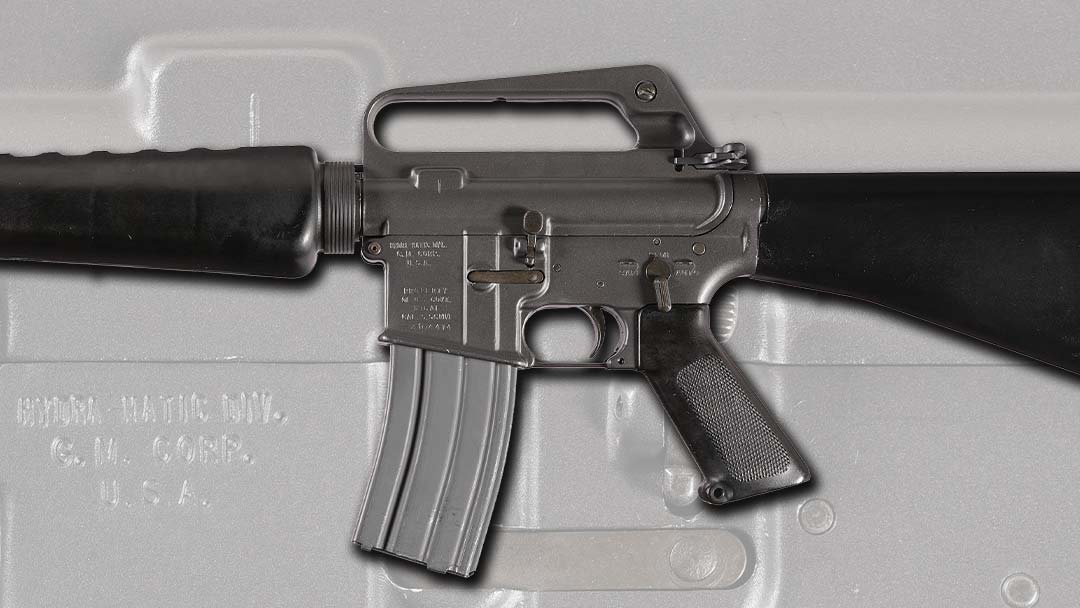
Another concern from various trial reports was that the Stoner 63 would require far more training and maintenance compared to simpler platforms like the M16. The Stoner 63 proved better suited as a niche platform, providing the SEALs with a belt-fed LMG at a significantly lower weight than the standard M60 machine gun, which meshed well with highly mobile small unit tactics.
Though the Stoner 63 would ultimately not find widespread adoption, the SEALs continued to field the weapon throughout the Vietnam War and during the United States invasion of Grenada in 1983.
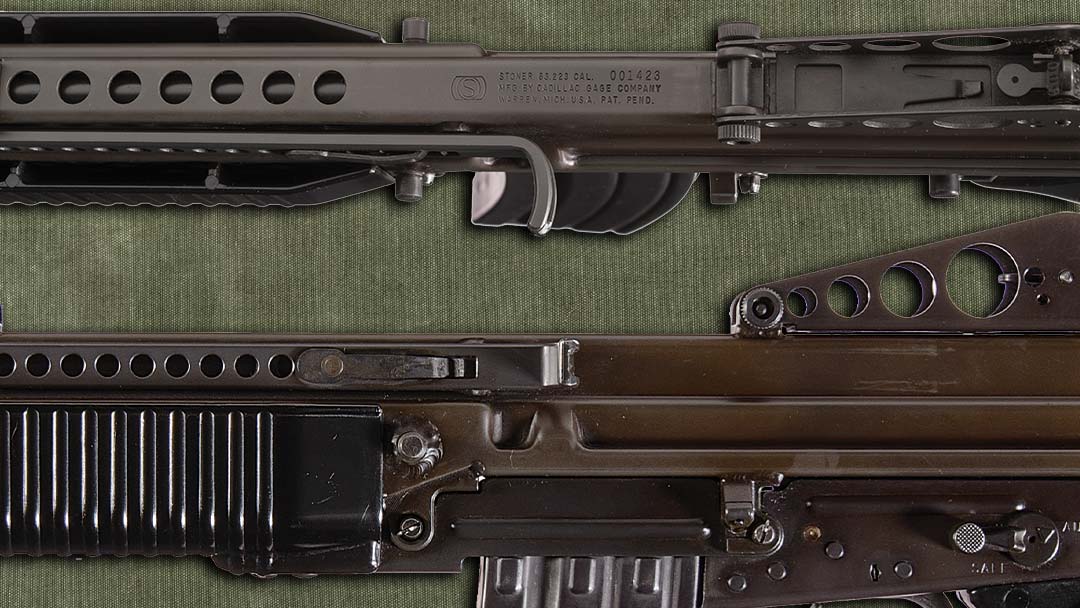
Knight’s Armament Company and the Stoner 63
While Cadillac Gage ceased development on the Stoner 63 in 1971, Knight’s Armament Company of Titusville, Florida was able to purchase a supply of original Stoner 63 parts and assemblies and resume production of the platform in extremely limited quantity. Of the 4,000 Stoner 63 examples manufactured in total, fewer than 100 were assembled by Knight’s Armament.
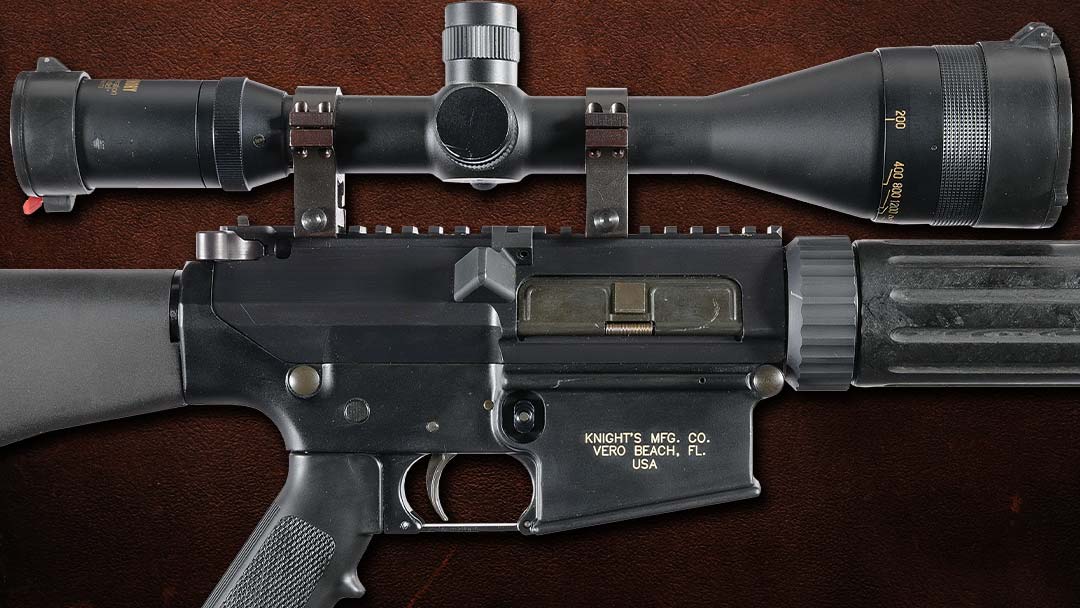
Knight’s Armament Company CEO Charles Reed Knight Jr. partnered with Eugene Stoner and developed the SR-25 platform, which served the Navy SEALs for 17 years as Mk 11 Mod 0 sniper rifle. Stoner would go on to develop the Stoner 86 LMG, a descendant of the Stoner 63, which led to the platform’s most recent iteration in the Knight’s Armament Company Light Assault Machine Gun (LAMG).
Stoner 63 Price
Many of the Stoner 63 examples that served with the US Navy and US Marine Corps in Vietnam were eventually destroyed, further decreasing the supply of an already limited production run for the model. It’s no surprise to arms collectors that machine gun prices have skyrocketed in recent years, and the price of a Stoner 63 has experienced a particularly strong uptrend over the last decade.
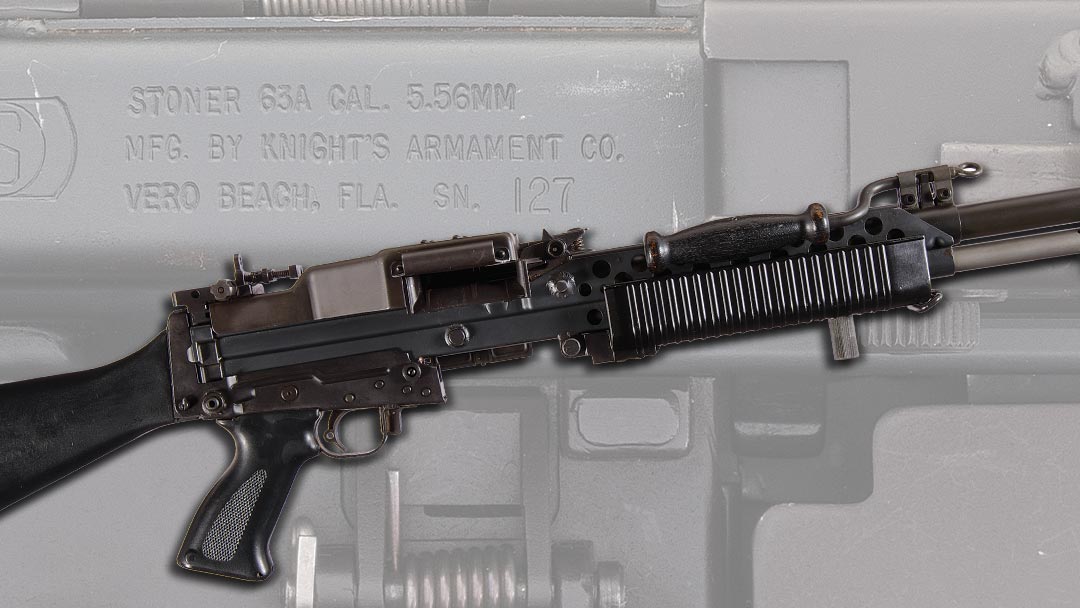
Looking at the three fully transferable Stoner 63 examples sold at Rock Island Auction Company since 2013, we find the price of the platform has nearly doubled. In April of 2013, a Knight’s Armament Co. Stoner Model 63A sold for $69,000. A Cadillac Gage Co. Model 63A broke the six-figure barrier and reached the impressive price of $103,500 in June of 2020. Another example of the platform from Knight’s Armament Co. tipped the scales at an impressive $141,000 in RIAC’s December 2023 Premier Auction, a testament to the scarcity, desirability, and investment potential enjoyed by this classic Eugene Stoner design.
Stoner 63 Legacy
Over the decades, a few different infantry rifles have been developed that offered users a “standard” flavor in addition to a short carbine variant and a heavier configuration that could act as a mag-fed SAW. Examples include the Steyr AUG, the FN FAL/FALO, and the Israeli Galil, but in terms of an “everything for everyone” modular infantry weapon, the Stoner 63 truly was ahead of its time.
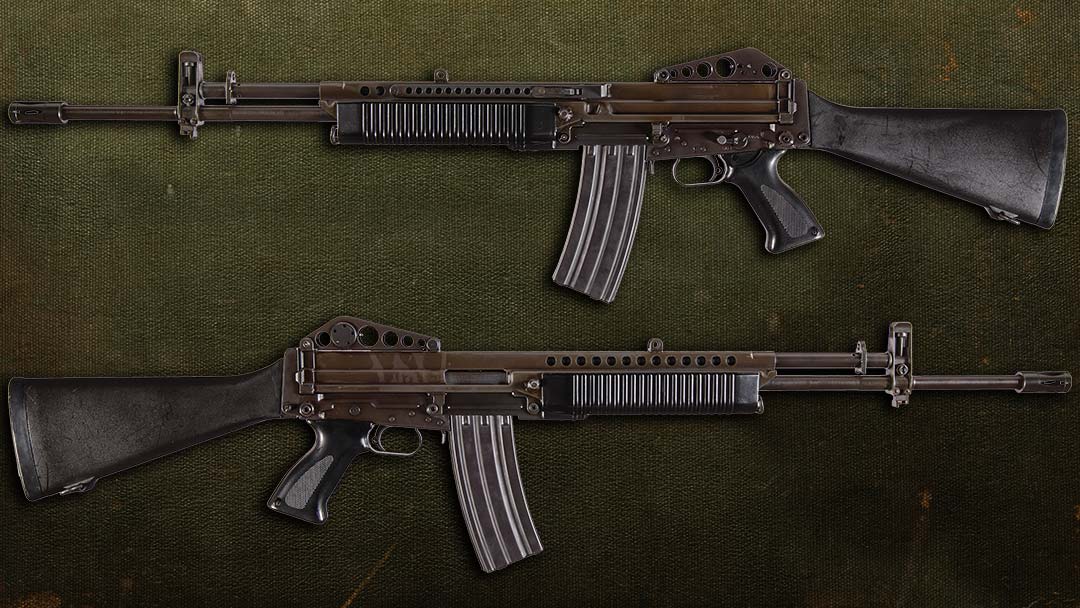
While the AR15/M16 is far and away the most famous Stoner platform in terms of pop culture impact, the Stoner 63 is a familiar name to fans of Metal Gear Solid 3 and numerous Call of Duty games. And anyone who played with the classic green army men miniatures growing up might be surprised to learn that the machine gun figure with the bipod is equipped with a Stoner 63.

Stoner 63 for Sale
For arms collectors, military historians, investors, and any fan of rapid-fire range action, it doesn’t get much better than the Stoner 63. In a May auction filled with the rarest arms from every era, this example of Eugene Stoner’s most ambitious design is a can’t-miss opportunity for any determined firearms fan.
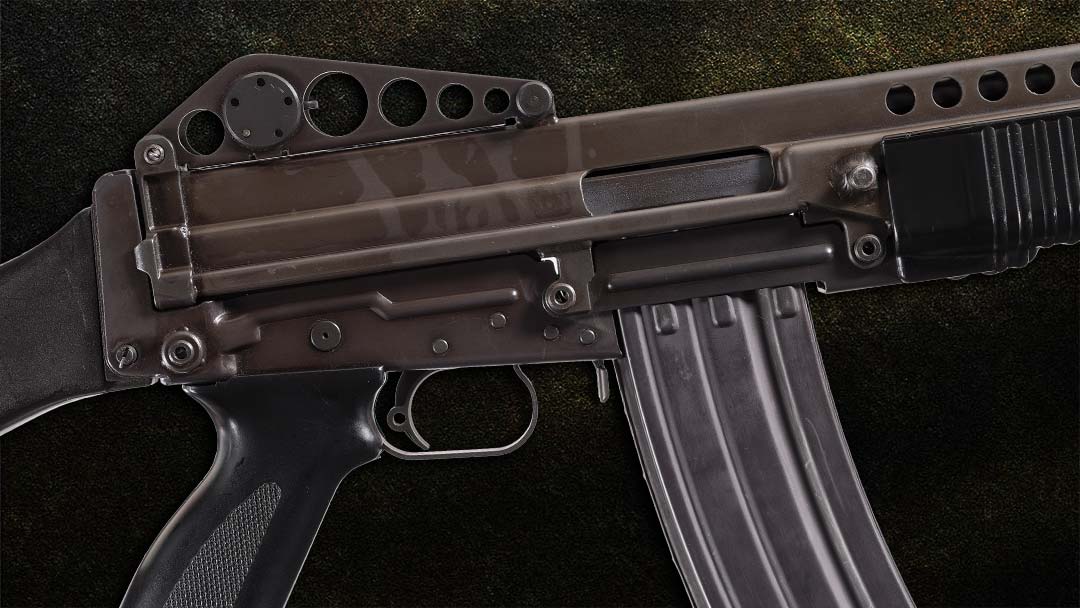
For more gun blogs and gun videos on 20th century military arms, subscribe to the Rock Island Auction weekly newsletter, where we cover topics ranging from early semiautomatic pistols like the 1911, Luger, and C96, bolt action icons like the M1903, Mosin Nagant, and Winchester Model 70, semi automatic WW2 workhorses like the Garand, SKS, and SVT 40, heavy hitters like the Winchester 1897 trench gun and the M82, and the full auto glory of weapons like the MP40, the PPSh 41, and the FG42 Fallschirmjager paratrooper rifle.