
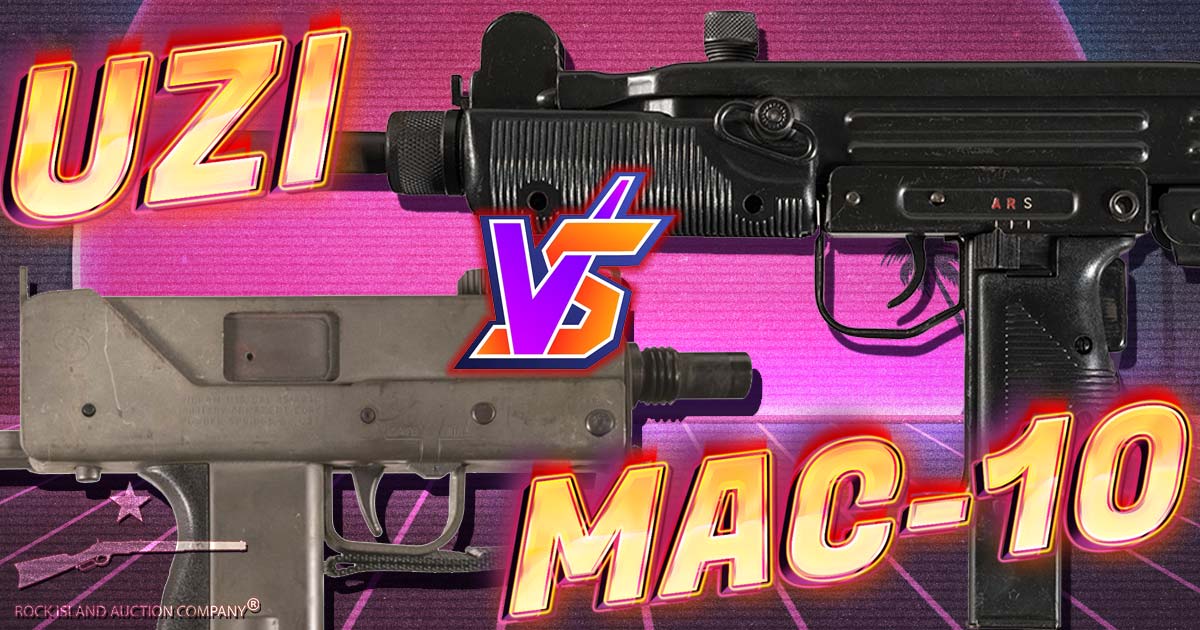
For arms collectors, military historians, and any fan of hard-hitting heavy metal, it doesn’t get much better than the machine gun. The MAC-10 vs Uzi debate is a popular topic in the firearms community, pitting two of the most famous 20th century submachine guns head to head. We’ll compare and contrast both of these lead-slinging legends and examine the evolution of each platform.
Rock Island Auction Company’s Feb. 16-18 Sporting and Collector Firearms Auction features numerous examples of the MAC-10 and Uzi families. Like their other machine gun siblings, both platforms are worthy collectible investments due to their limited quantity and provide some memorable range action. Click on the images throughout this article to learn more about each gun variant.
MAC 10 vs Uzi
In the final stages of WW1, the German MP18 made an impression on the battlefield. This early SMG served as the blueprint for numerous next-generation SMG designs. By WW2, every major power had developed its own submachine gun, and these firearms laid the groundwork for a more advanced generation of SMGs after the war like the Czech SA 23 and its spiritual sibling, the Uzi.
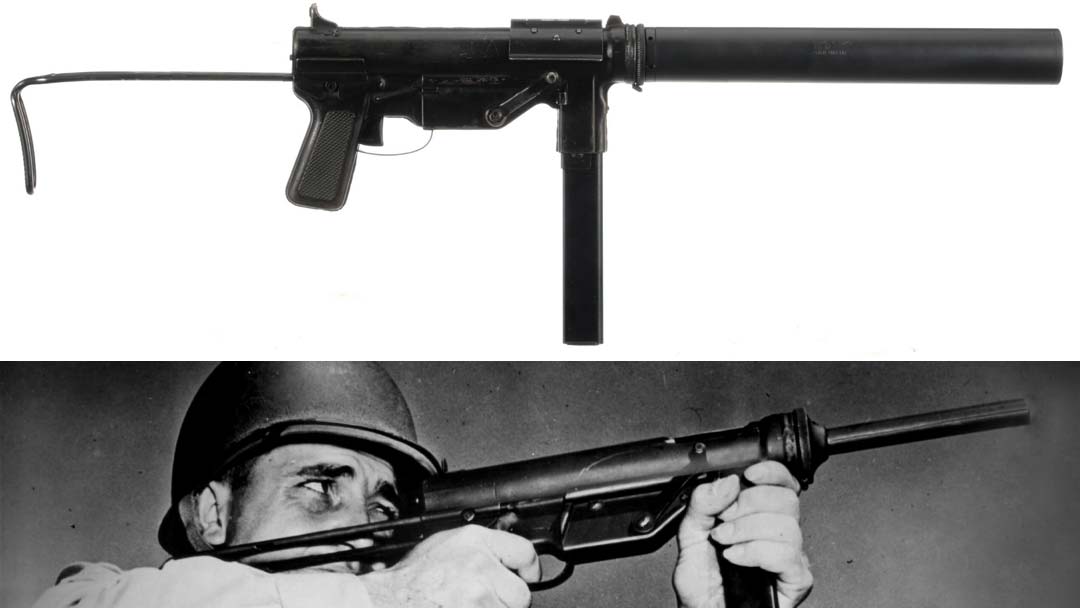
Designed in the 1950s by Israeli inventor Uziel Gal, the Uzi SMG became a standard for IDF paratroopers, armored crews, and special forces involved in close-quarters combat. The Uzi’s SA 23 inspiration can be seen in the weapon’s telescoping bolt and grip-mounted magazine. A reliable and easy-to-use design, the Uzi quickly gained traction around the world.

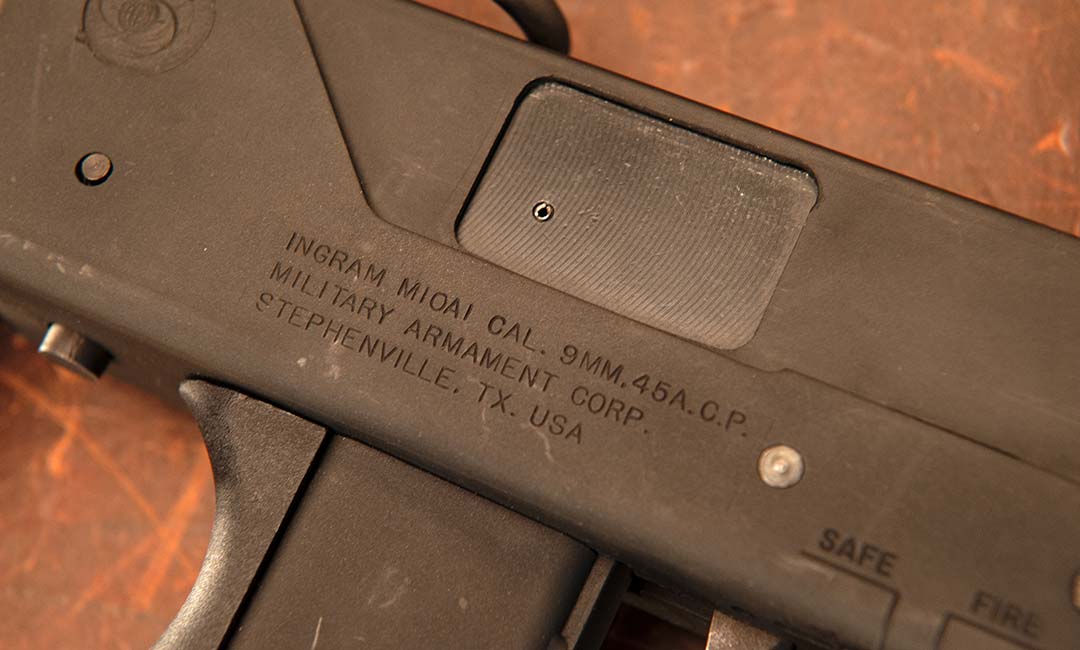
Two decades and an ocean removed from the Israeli Uzi, the MAC-10 was invented by American Gordon Ingram and produced in 1970 by Military Armament Corporation. The company had high hopes for its boxy, stamp-steel welded submachine pistol and hoped the model’s low price point would give it an edge in the market for military contracts.
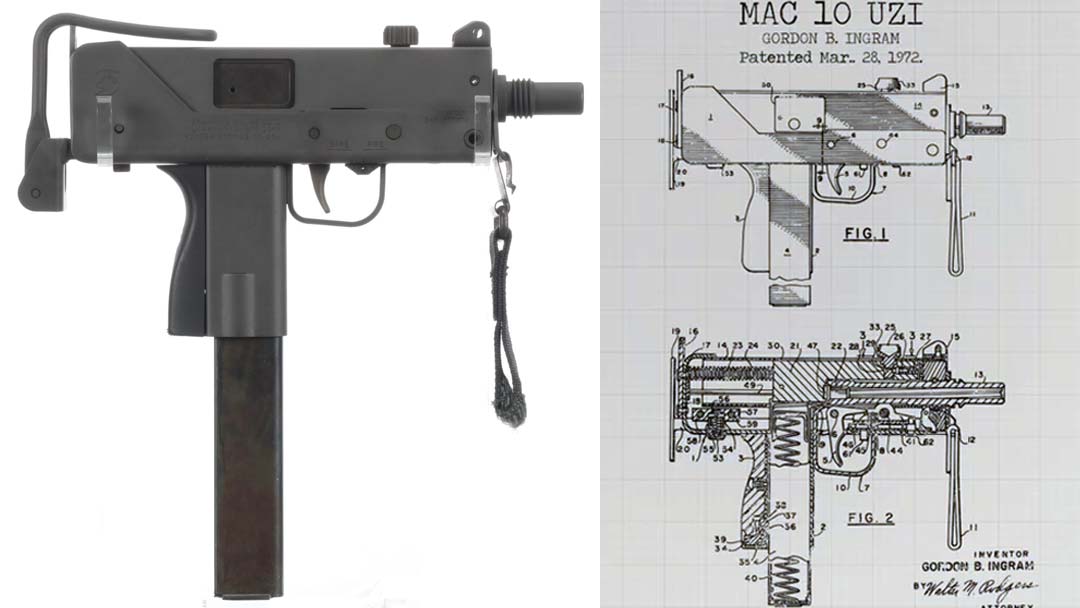
The MAC-10 vs Uzi debate has raged since the 1970s, gaining traction over the decades as each platform appeared in a slate of action films and video games. At a glance, both guns share some vague similarities. Each weapon offers a comparatively affordable, magazine fed, open bolt submachine gun chambered for pistol caliber rounds. Both the MAC-10 and the Uzi are blowback operated designs with retractable stocks and a stamped metal construction.
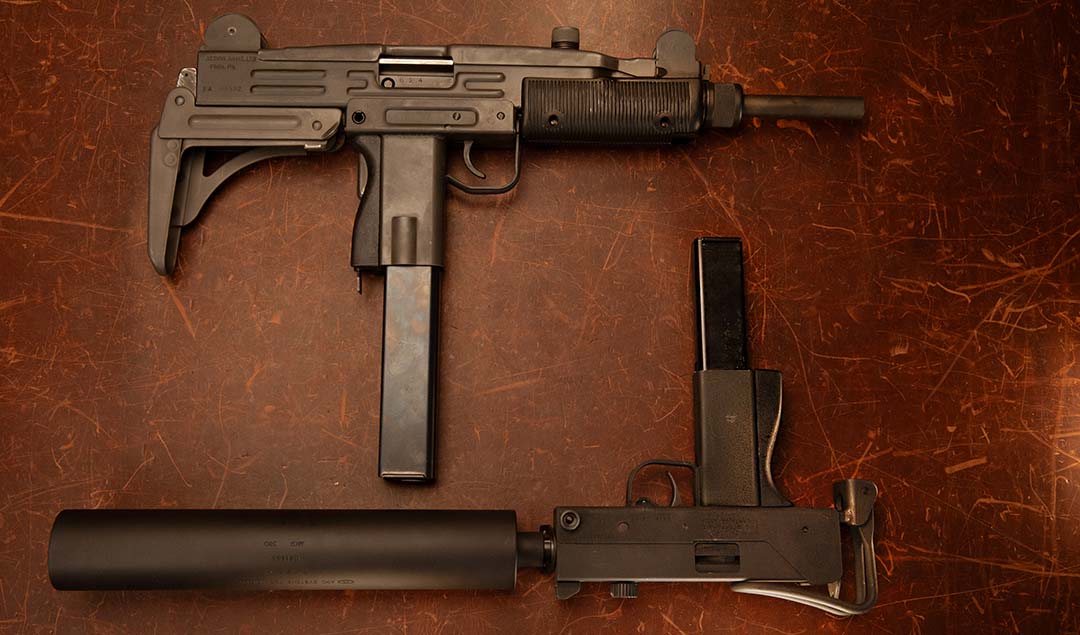
Despite these cosmetic similarities, the MAC-10 and Uzi are entirely distinct firearms, with personalities as divergent as the men who made them. Let’s look at them head to head.
MAC-10 vs Uzi Accuracy and Rate of Fire
When comparing the MAC-10 vs Uzi, one of the most significant differentiators is the firing rate. While the Uzi runs at about 600 rounds per minute, its MAC-10 competitor more than doubles that cyclic rate with a blistering 1,250 rounds per minute with 9mm ammunition.
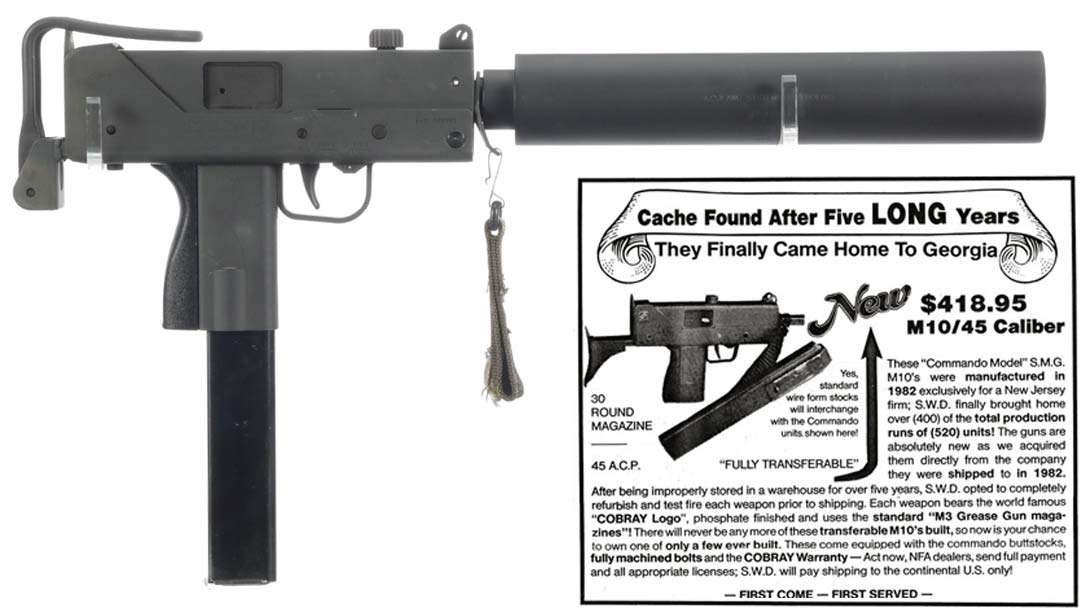
The Uzi beats the MAC-10 in the accuracy department not only for its more modest firing rate, but also for its longer barrel, ample forend grip, lesser recoil, and greater bulk. The MAC-10’s effective range drops off beyond 50 meters, while the Uzi offers useful distance out to 100 meters or more. In terms of accuracy, one law enforcement official commented that the MAC-10 was, “fit only for combat in a phone booth.”
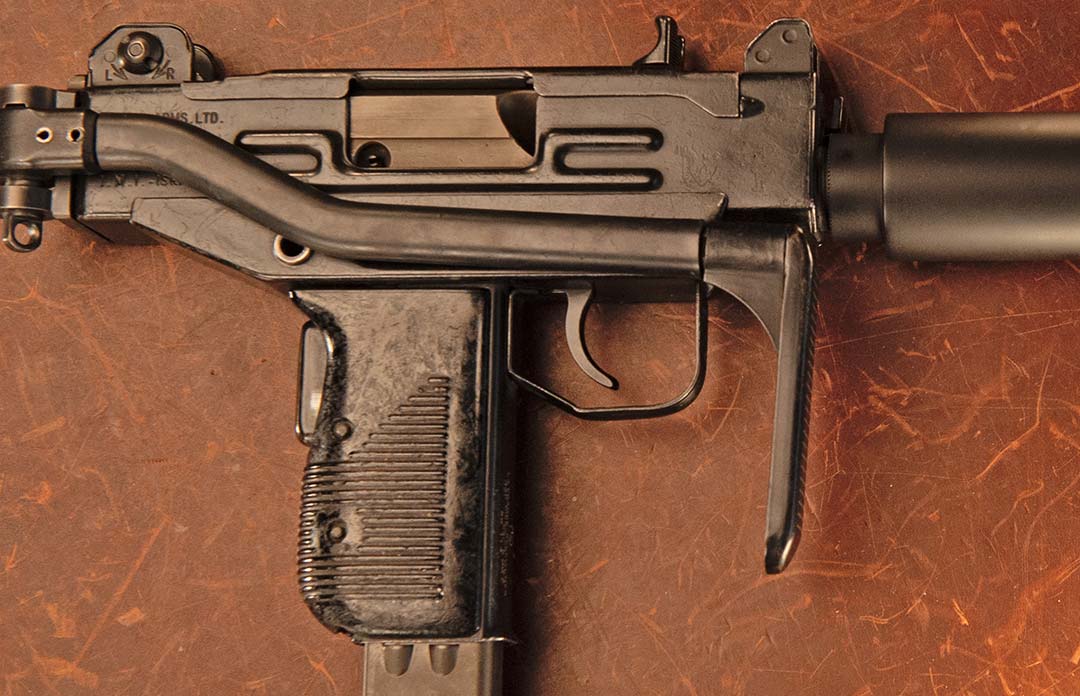
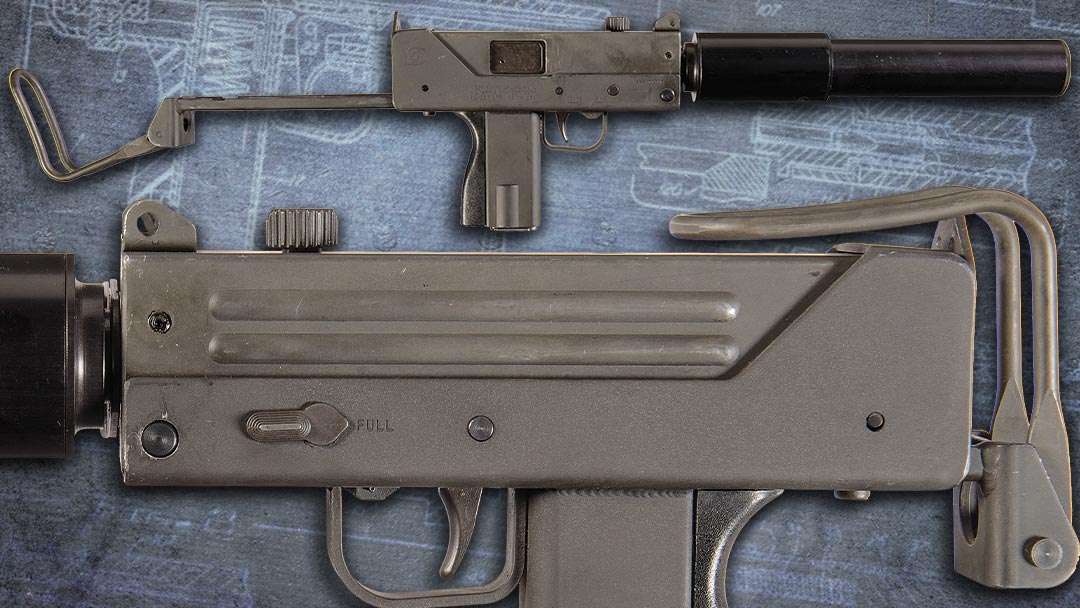
The MAC-10 has been dubbed a bullet hose due to its speed, which comes at a clear cost. The weapon is notably lighter and more compact than its Uzi counterpart and thus more challenging to control. With an attached muzzle suppressor and a strap front grip, the MAC-10 becomes easier to handle. MAC-10 models chambered in .45 ACP cycle about 15% slower than their 9mm siblings and offer more manageability in turn.

MAC-10 vs Uzi Cost and Marketing
A New York Times article from 1982 stated that the Uzi sold for “an average $350 on the export market.” During the same timeframe, the Mac 10 and Mac 11 could be purchased for less than $200. The UZI’s higher price point didn’t hinder its sales, however, and I.M.I. alone sold over 1 million Uzis in their first 30 years of production.
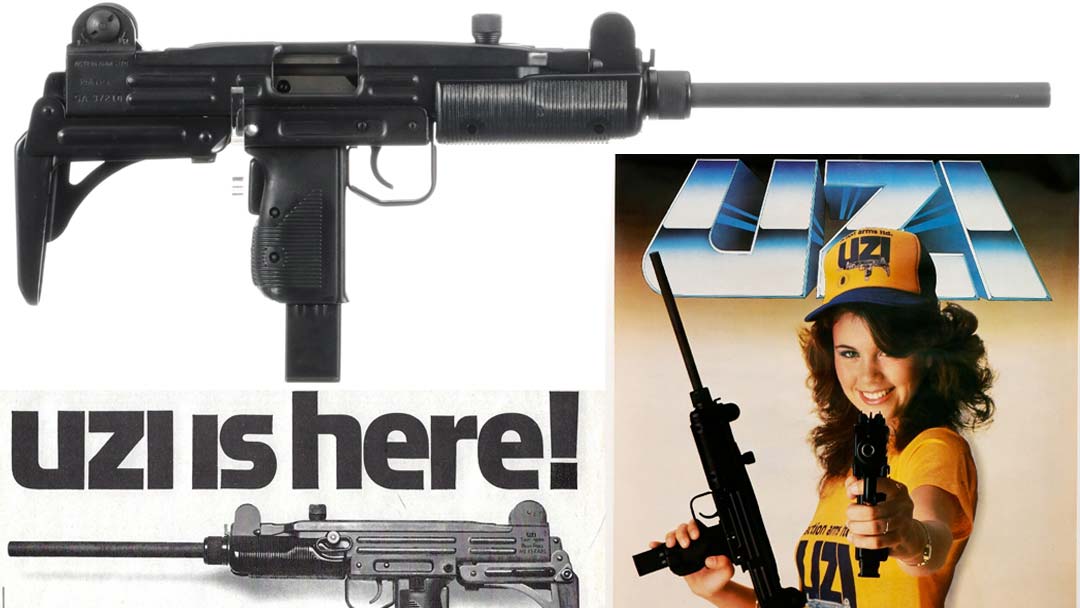
Despite designing the MAC-10 with a military market in mind, the gun had little success on that front. Limited use with US Special Forces and the British Air Service failed to lead to large contracts, and a prohibition on exporting suppressors limited the viability of foreign sales, so the MAC-10 was instead advertised to American civilians. This wasn’t enough to support Military Armament Corporation, which folded in 1976.
MAC-10 vs Uzi Variants
Both the Uzi and the MAC-10 platforms have seen numerous variants over the decades. The compact Mini Uzi, introduced in 1980, offered a lighter weapon with a higher rate of fire. Six years later, the closed bolt Micro Uzi reduced the platform’s size further still.
Starting in 1980, a semi-automatic Uzi variant was produced by IMI and targeted the civilian market. These closed bolt models were produced with 16 inch barrels to comply with ATF laws regarding short barreled rifles. Some included fixed wooden stocks for carbine use.
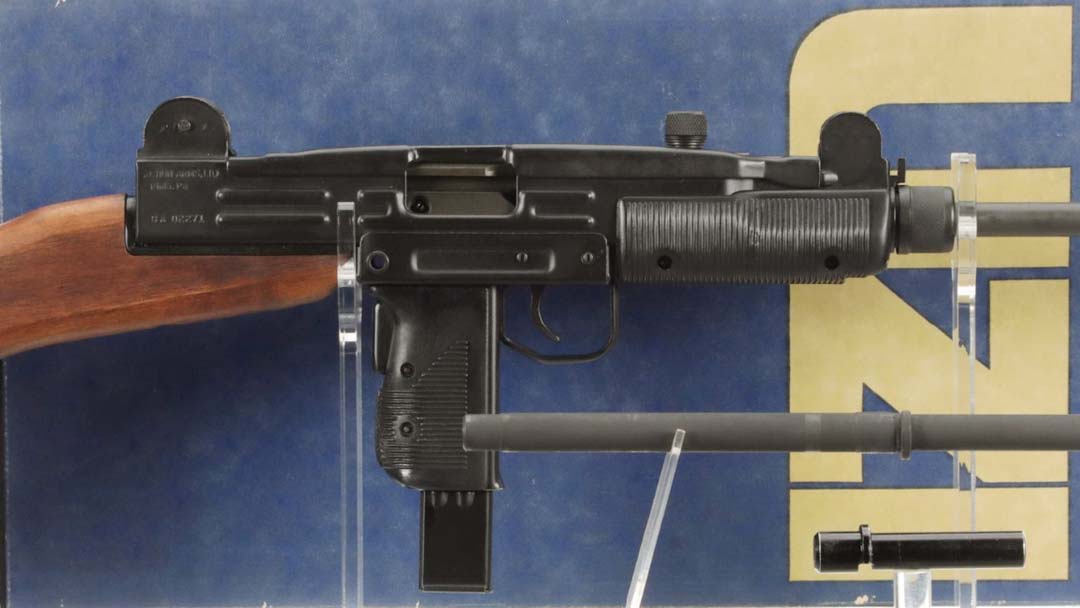
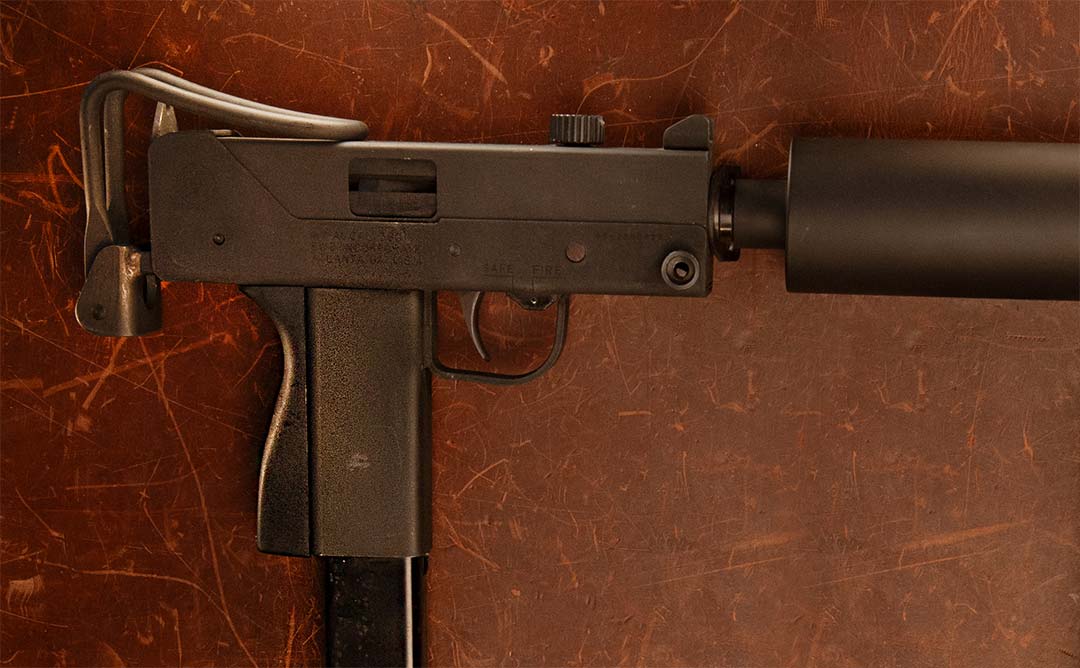
The MAC-10 has also seen its share of evolution over the years. In 1972, the sized-down MAC-11 made an already compact weapon even more maneuverable and offered a higher firing rate in its .380 ACP chambering. The M11/Nine included a slightly longer receiver than the MAC-11 to accommodate a caliber upgrade to 9mm and allow for a longer range of bolt travel to dampen felt recoil.
These variants of the platform were developed by RPB Industries and later SWD, Inc. after Military Armament Corporation went bankrupt. SWD and Cobray also produced a semi-automatic version of the platform with the M12 pistol in .380 ACP.
MAC-10 vs Uzi Around the World
In the MAC-10 vs Uzi debate, the production numbers don’t lie. The Uzi has been purchased by governments, law enforcement, and security agencies in over 100 countries, becoming the world’s most popular SMG from the 1960s through the 1980s. The platform remains in production today.

Both the MAC-10 and Uzi platforms faced a host of competitors in the rapidly evolving SMG market, including the German Heckler & Koch MP5 and the Austrian Steyr MPi 69. But while the MAC-10 struggled to stay relevant, the Uzi continued to thrive.

The MAC-10 became infamous in 1979 when it was used to assassinate a Miami drug kingpin, earning the nickname “Miami chopper.” The weapon was mired by controversy again when it was employed by a neo-Nazi in 1984 to murder Denver radio talk show host Alan Berg. Advertisements tried to capitalize on the MAC-10’s notorious reputation, dubbing the weapon “the gun that made the 80s roar.”

MAC-10 vs Uzi in Pop Culture
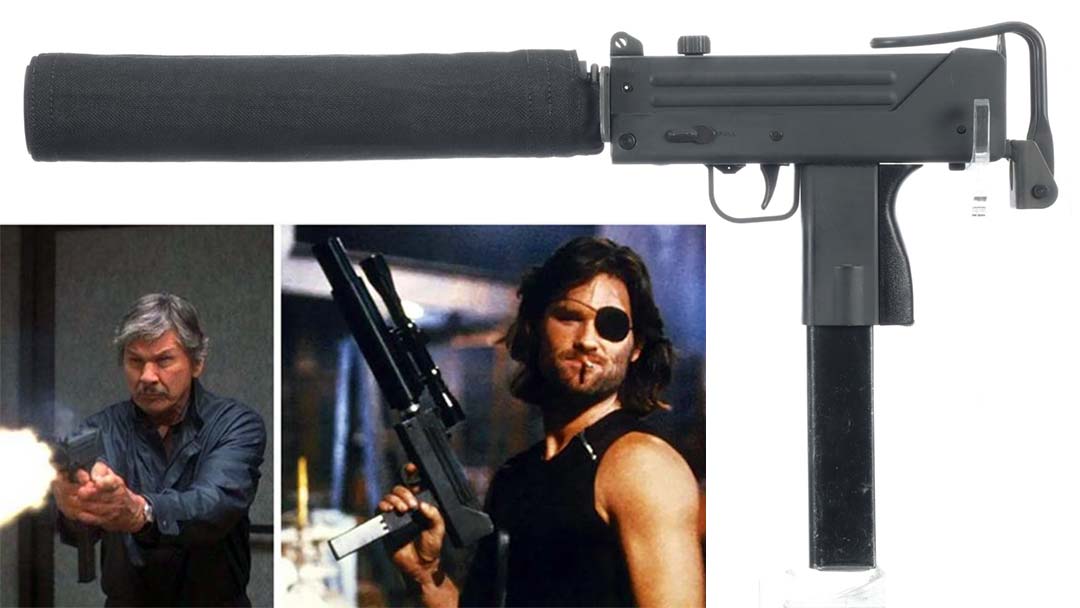
One area where the MAC-10 excelled was on the silver screen. The gun appeared in 15 films in the 1970s and saw an even more prominent presence during the golden age of 1980s action films. Some of the weapon’s most notable appearances include in John Wayne’s 1974 film ‘McQ,’ 1981’s ‘Escape from New York, where the MAC-10 served as Kurt Russell’s primary firearm, and the weapon made a recent splash in AMC’s ‘The Walking Dead’ series when Negan totes the famous lead slinger.
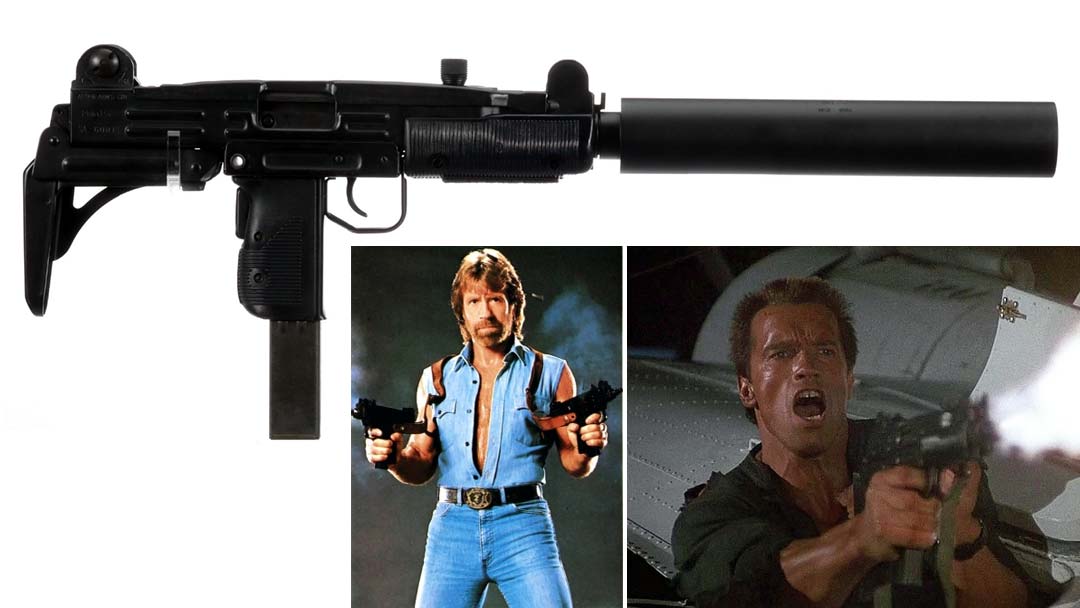
The Uzi, of course, is no stranger to the big screen either. From Chuck Norris to Arnold Schwarzenegger, the Uzi is an absolute staple of 80s action fare, and its design became known far beyond the bounds of Hollywood. From toy guns to video game appearances, the Uzi has garnered widespread recognition few gun models have achieved and its silhouette is instantly recognizable the world over.
MAC-10 vs Uzi Value Today
Today, both the Uzi and the MAC-10 have climbed in value and can demand a price in the low five-figure range. Machine gun prices have spiked across the board thanks to a fixed supply and increasing demand from collectors, investors, and shooters looking for a heavy-hitting range experience.
The rise of firearms-focused social media influencers like Demolition Ranch and Garand Thumb have also contributed to the rapid uptrend in machine gun values, as arms enthusiasts around the world are able to watch the Uzi and MAC-10 being fired in the field and are inspired to get in on the action themselves.
In 1975, a MAC-10 could be purchased for $125. The example below sold at Rock Island Auction Company for $14,100 in 2023, a staggering 11,180% increase in value. Though nearly every collectible firearm genre has experienced a notable uptick in recent years, submachine guns like the MAC-10 and Uzi are shattering records and show no signs of losing steam.
Machine Guns for Sale and More This February
Rock Island Auction is always ready to help build machine gun collections, and February’s 16-18 Sporting and Collector Firearms Auction features a range of Uzi models, MAC 10 variants, and many more examples of the genre. In the end, both the Uzi and the MAC-10 are worthy additions to any arms collection and offer fun investment options in the process.

Subscribe to the Rock Island Auction newsletter to receive new gun blogs and gun videos every week on some of the earliest machine gun predecessors such as the Gatling gun, the Hotchkiss revolving cannon, the Maltruse volley gun, the Nordenfelt volley gun, the Chambers swivel gun, as well as modern heavy hitters like the Japanese Type 99, the PPD-40, the Smith & Wesson Model 76, and more.
