
Cool rifles want to be in on the action whether it is lever, bolt or pump.
From an antique wheellock to a modern Heckler & Koch to a crate chocked full of Mosin-Nagants and everything in between, Rock Island Auction Company’s Feb. 16-18 Sporting & Collector Auction has plenty of terrific long guns. This blog won’t include the massive JDJ nor any Class III offerings but take a look at this selection of cool rifles that will be available.
Cool Rifles: U.S. Johnson Model 1941 Semi-Auto
Melvin Maynard Johnson Jr. shot on a rifle shooting team at Harvard, served at its coach, graduated Harvard Law School and earned a U.S. Marine Corps commission, but he couldn’t convince the U.S. Army to give up on the M1 Garand.
John Garand’s design was the leading candidate for the U.S. service rifle in 1935. Johnson considered the Garand to be obsolete, based on the gas blowback action similar to the Lewis light machine gun. Johnson’s design for a semi-auto service rifle used a short recoil system. His insistence on the Army considering his gun ground on U.S. Ordnance officials and Johnson couldn’t get a significant stateside contract.
Johnson’s company got a contract from the Netherlands to arm the Royal Netherlands East Indies Army, but production wasn’t able to completely fill the rifle order before the East Indies fell to Japan. Guns were sold to Chile and the U.S. government took over the Dutch contract and issued some of the M1941 to the Marines and offered them to the Free French government.
U.S. Marine Capt. Robert Hugo Dunlap of Monmouth, Ill., hometown of Wyatt Earp, earned the Congressional Medal of Honor for his actions on Iwo Jima while armed with a M1941.
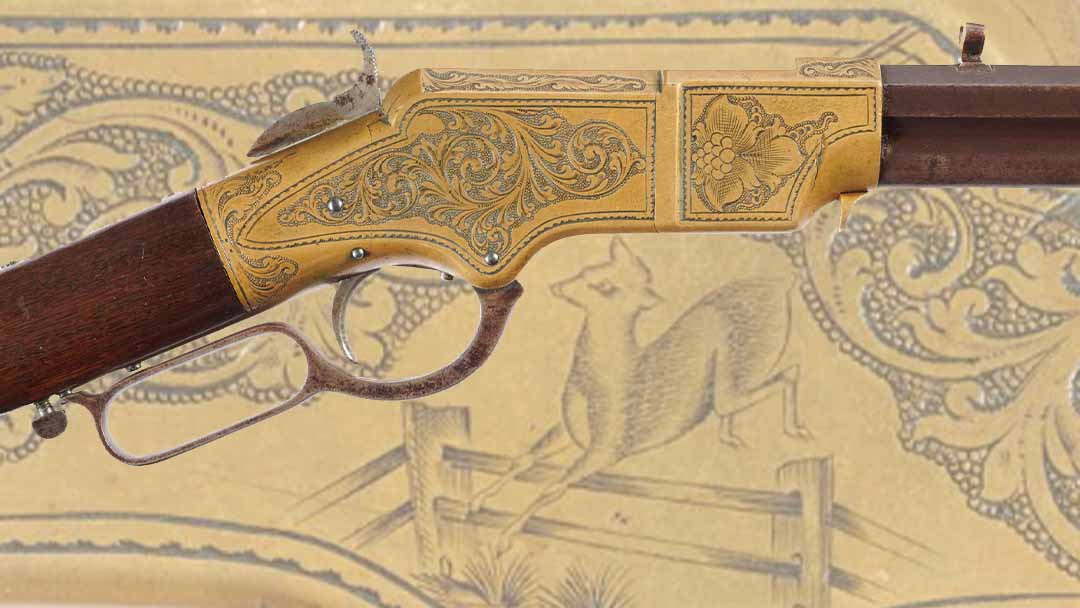
Cool Rifles: Factory Engraved New Haven Arms Henry Rifle
First came the .44 Henry rimfire cartridge developed by Benjamin Tyler Henry. What followed is the lever action rifle that set the stage for the legendary lever guns of Winchester. Henry received a patent for his rifle in October 1860. This Henry has received attention from gun writers, landing it in two books, which is cool.
Despite getting the reputation as “That damned Yankee rifle that can be loaded on Sunday and fired all week,” the federal government only purchased 1,731 Henry rifles during the Civil War for $37 each. Private sales to cavalry and infantry officers and soldiers boosted the number of rifles sold considerably. The federal government purchased 4.61 million rounds of Henry ammunition during the war for a cost of $107,500. More than 10,100 Henry Rifles were sold during the Civil War, mostly through private sales.
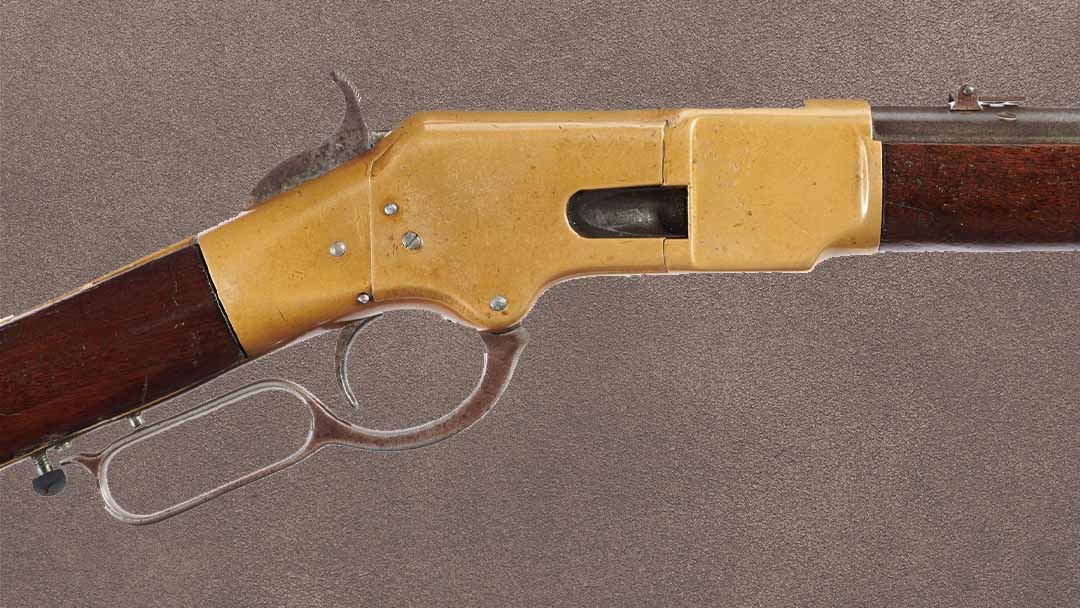
Cool Rifles: Winchester Model 1866 Saddle Ring Carbine with Henry Patent Barrel Marking
The Henry Rifle stabilized the financially troubled New Haven Repeating Arms Company. Years later, Oliver Winchester had reorganized the company Winchester Repeating Arms Company and wanted to build on the success of the Henry. He directed Nelson King to make improvements to the Henry, including an improved extraction spring, an enclosed magazine and new method of loading.
The Model 1866 was born. With its brass receiver it earned the nickname “Yellow Boy.” Winchester believed in producing obsolete models until all the parts were used so Henry Rifle parts lived on. What makes this gun cool is that both Henry’s and King’s patents are listed on the gun. That was done on the Model 1866 to approximately serial number 23,000. Winchester produced the Model 1866 until 1899.
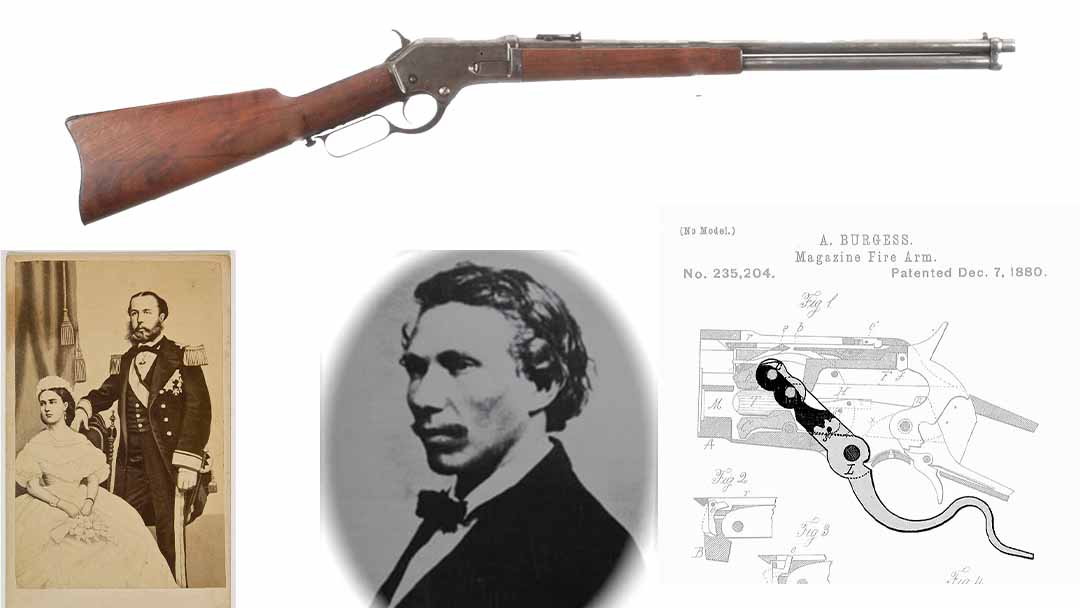
Cool Rifles: Colt Burgess Saddle Ring Carbine
Andrew Burgess worked for famed Civil War photographer Mathew Brady and is credited with taking some of the most famous photos of Abraham Lincoln that are credited to Brady. He developed a breechloading patent and also basic lever action patents by 1873.
At the Philadelphia Exposition of 1876, Burgess displayed his firearms and met Eli Whitney. He went to Marlin and contributed to the design of the Model 1881, and then went to Colt where the Colt-Burgess rifle was made. Colt manufactured the rifle for 16 months starting in 1883 and produced 6,403 rifles.
Apocryphally, Burgess’s rifle led to the gentlemen’s agreement where Colt would keep to revolvers and Winchester would stick to long guns. That’s pretty cool.
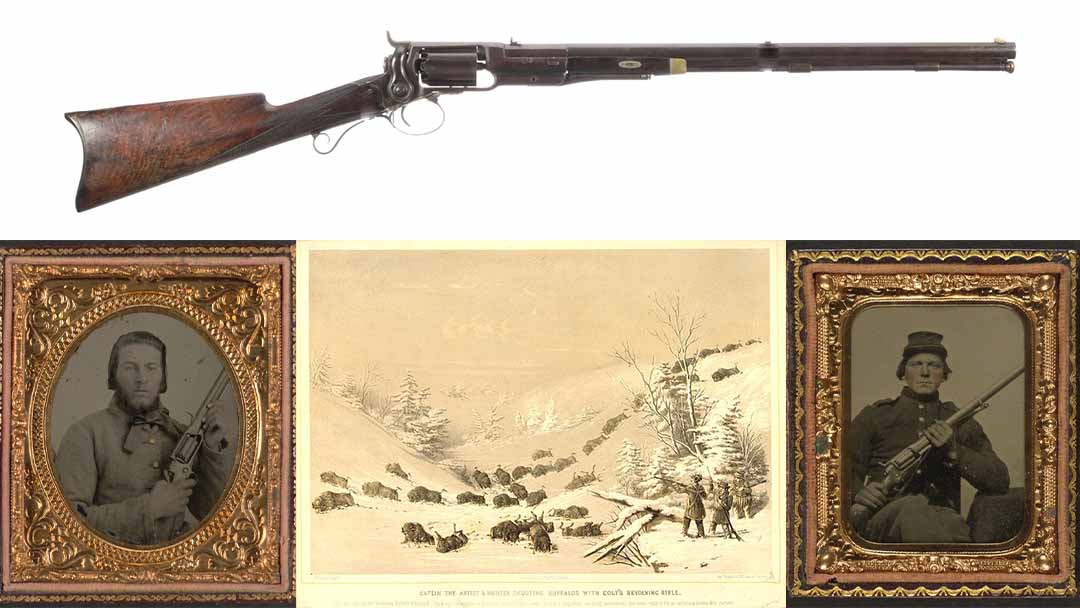
Cool Rifles: Colt Model 1855 Revolving Rifle
Among the weapons in the U.S. arsenal on the eve of the Civil war was the Colt revolving rifle, utilizing a side hammer. As the Civil War began, the guns were first issued to the 8th Massachusetts Infantry as it served in the defense of Washington, D.C., early in the war. In early 1862, the Union received 1,000 and issued them to the Berdan Sharpshooters that nearly rioted angrily over these guns they didn’t want. Six months later the Sharpshooters gladly swapped their Colts for Sharps rifles. Still, the Colt revolving rifles, chambered in .56 caliber for military models, found plenty of action in the Civil War, issued to both infantry and cavalry, especially in the western theatre.
Something cool about the Colt revolving rifle was that it was loaded from the front of the cylinder, making it a muzzleloader but could still be loaded faster than a musket.
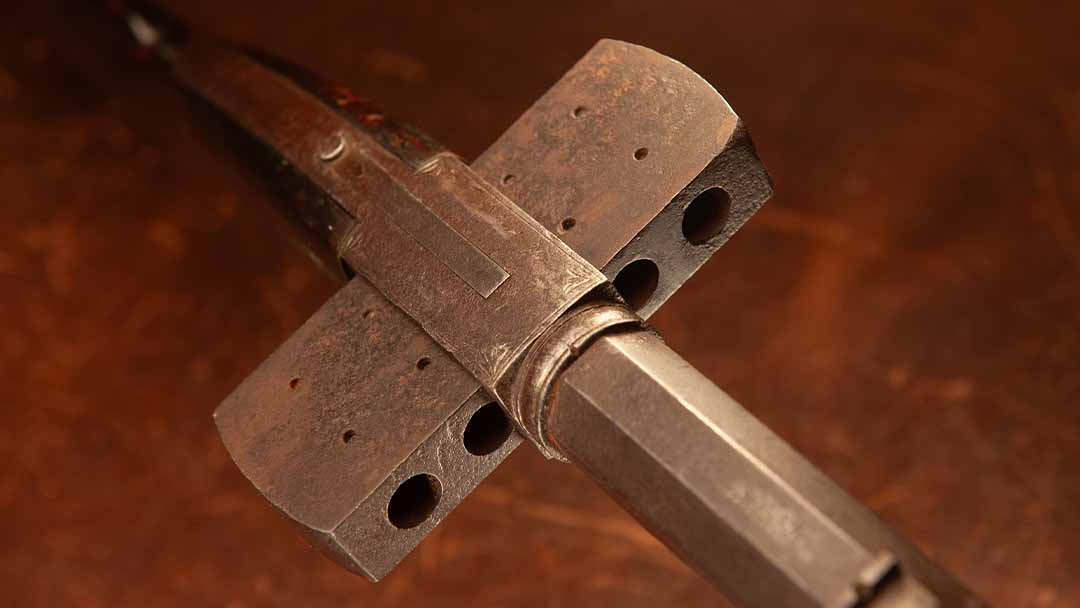
Cool Rifles: Nicanor Kendall Five-Shot Harmonica Rifle
Nicanor Kendall was born in Vermont in 1807, the son of a blacksmith. He served an apprenticeship under a gunsmith before earning a patent for an underhammer percussion lock that was safer and more reliable than other locking systems. His firearms, like the harmonica gun, tended to be simple designs making them easier to produce as well as use interchangeable parts.
He partnered with two other men, Richard Smith Lawrence and Samuel E. Robbins, to land a federal contract to manufacture 10,000 rifles. After Kendall sold his interest in the company and moved west, Lawrence and Robbins worked with Christian Sharps, as well as Horace Smith and Daniel Wesson. These gunmakers helped usher in the “American system of manufacturing” with interchangeable parts and mechanized production, and that’s pretty cool.
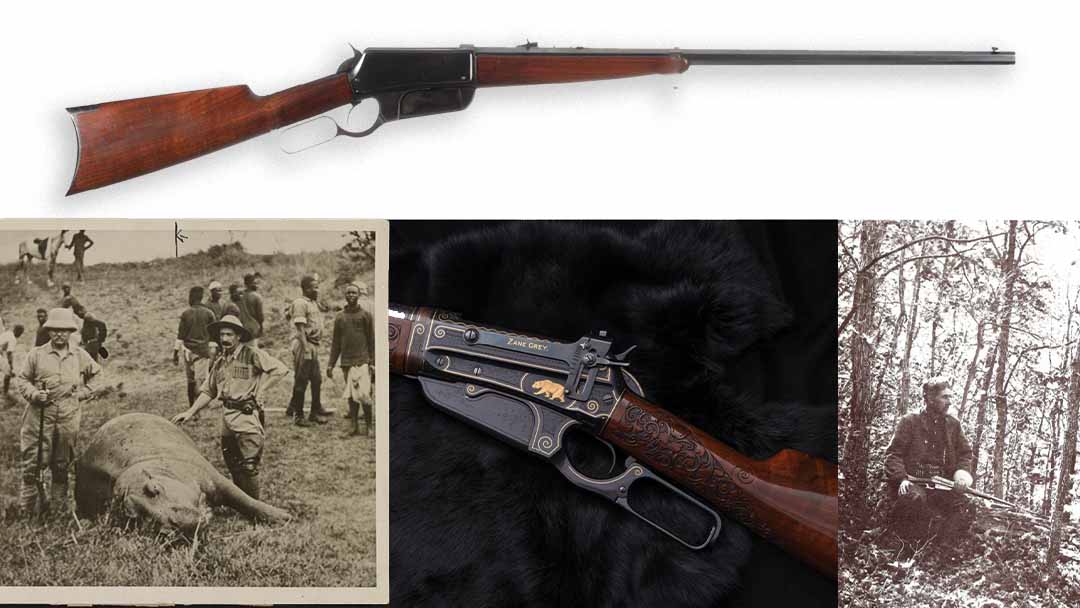
Cool Rifles: Winchester Flat Side Model 1895
John Moses Browning’s design of the Winchester Model 1895 was made to handle the higher pressures of the new smokeless cartridges. Its fixed single column box magazine also allowed the 1895 to take the pointed Spitzer bullets to make it attractive to European buyers where they were enjoying popularity. Early models, like this one with a three-digit serial number has flat sides, a real cool rarity.
The 1895 was popular with outdoorsmen like Theodore Roosevelt and author Zane Grey. Grey praised the Winchester 1895 as “the finest rifle ever built.” Despite its popularity with sportsmen, the Model 1895 also found its way into military arsenals and fights at the end of the 19th century, chambered in 7.62 Russian, .30-06 and British .303 among others. Russia commissioned Winchester to make 294,000 of them.
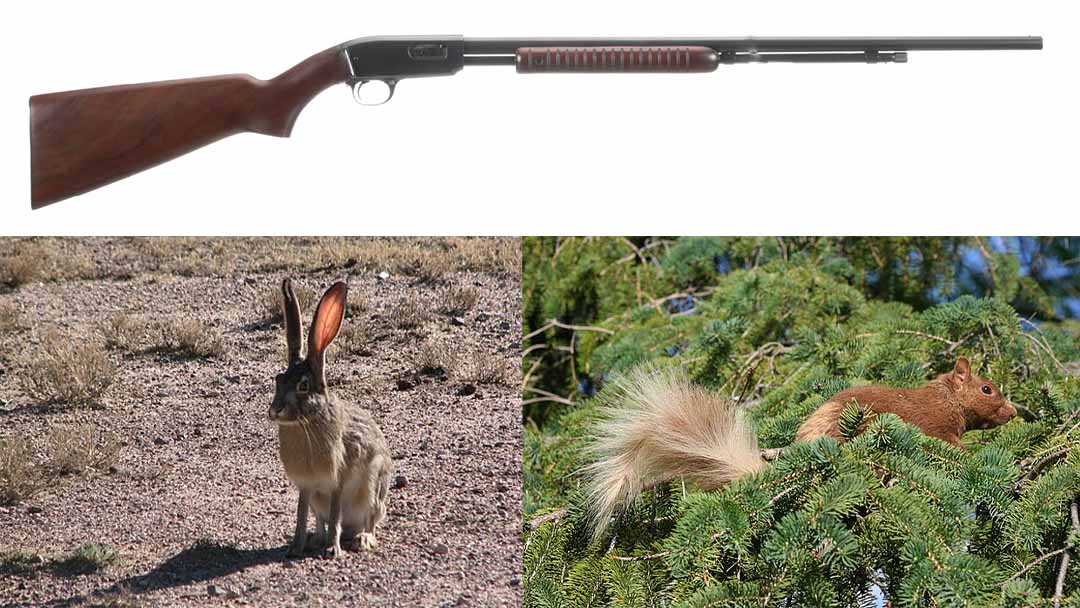
Cool Rifles: Pre-World War 2 Winchester Model 61 Rifle in .22 LR Shot
The Winchester Model 61 was meant to be the plinker for every need, whether it was gallery shooting, target shooting or varmint hunting. Cartridges for .22 Short, .22 Long and .22 Long Rifle could be used in the Model 61 with round barrels. The barrels were marked “22 S. L. OR LR.” Model 61s equipped with octagon barrels, were chambered for specific cartridges. Rifles chambered for .22 Long Rifle shot like this one had smooth bores making them a rarity.
The beloved and popular Model 61, with its hammerless action, could hold 14 Long Rifle cartridges, 20 of the .22 Short and 16 of the .22 Long. Introduced in 1932, it was manufactured until 1942 when the war effort took resources. Production resumed in 1947 and ran until 1963. By that time 363,000 of the Model 61 were made.
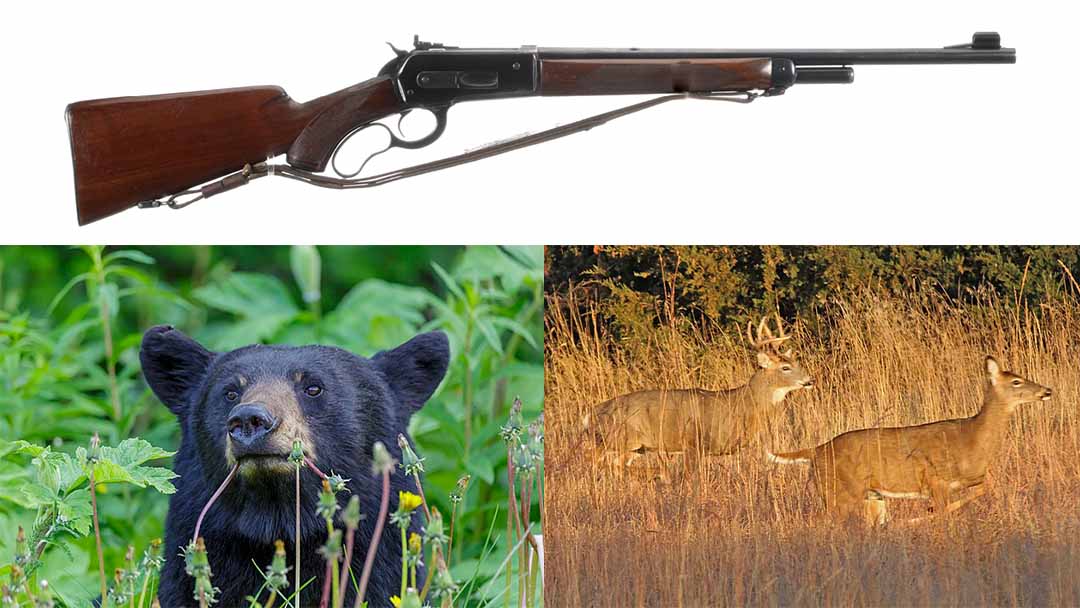
Cool Rifles: Winchester Model 71 Type 4 Special Rifle
The Model 71 replaced the Model 1886 in its 50th anniversary year, produced starting in 1836, serving as a rifle for North American big game hunters. Despite being mechanically similar to the Model 1886, few parts were interchangeable. One gun writer described the Model 71 as “the smoothest lever action ever built.”
The rifle was only chambered for .348 caliber, but could take 150, 200 or 250 grain bullets. Its tubular magazine could hold four shots and one in the chamber. The gun was expensive to make and about 38,000 were produced between 1936 and 1958 when it was discontinued. Production did stop during World War 2 and resumed in 1947.
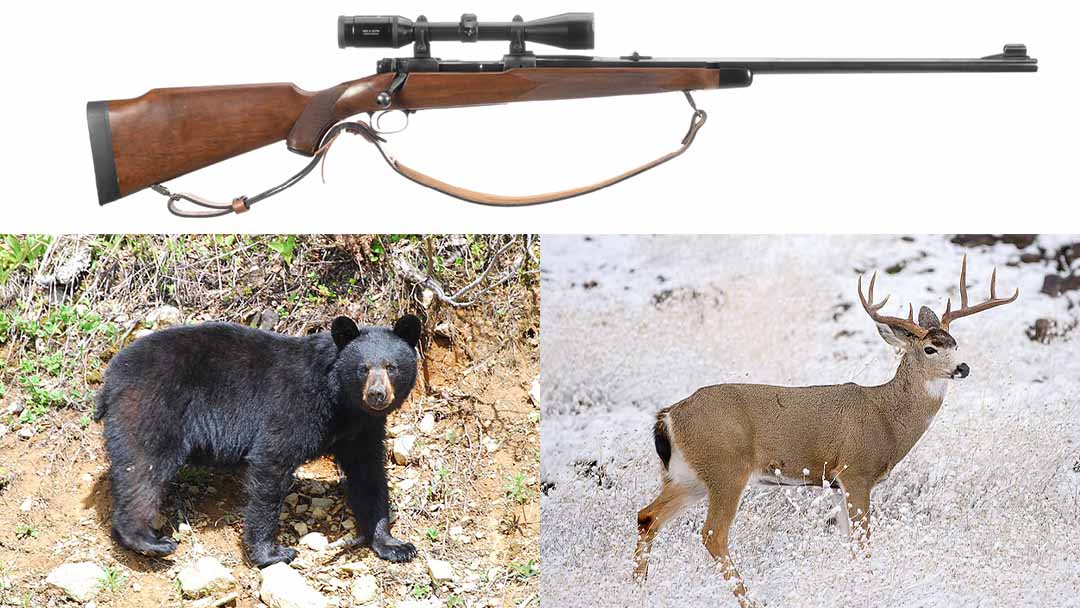
Cool Rifles: Pre-64 Winchester Model 70 Rifle
Winchester’s bolt action Model 70was introduced in 1936 as an improvement of the Model 54 as part of Winchester’s modernization plan. The bolt lock and safety were new and the trigger. Chamberings in new calibers .375 Holland & Holland and .300 Magnum were added to those already used with the Model 54, including .270 WCF and .30-06, making the Model 70 Winchester’s first high-power bolt action rifle. Chambering in the .375 H&H required modification to a longer travel action that makes this cool.
The pre-64, manufactured from the 30s to 1963 except during World War 2, was known for the beauty of the wood stocks and the hand-fitted parts that showed an amazing degree of craftsmanship. As the 1960s dawned, many of the craftsmen were starting to retire and more machines were brought into the manufacturing process making Pre-64 models like this particularly desirable.
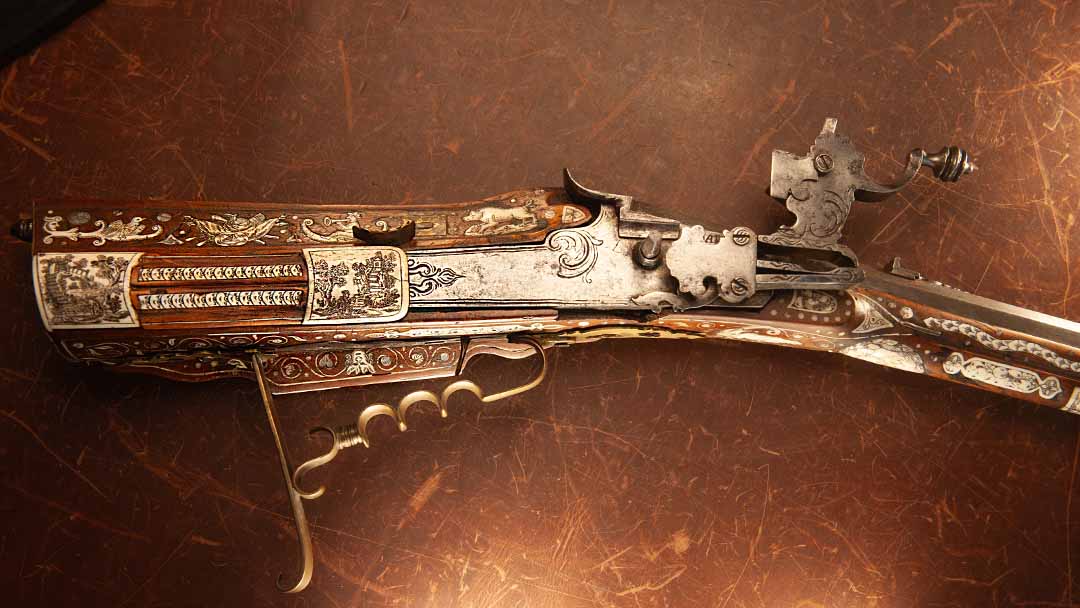
Cool Rifles: Ornate Engraved Wheellock Rifle with Inlaid Scrimshaw
A wheellock uses a metal wheel under spring tension to generate sparks that in turn ignite gunpowder. This small combustion lights the powder in the pan and that explosion ignites the main powder charge the touch hole in the barrel. Despite its description, this process happens nearly instantaneously. This firearm mechanism likely originated in the early 16th century in Nuremberg, Germany. Firearm technology dating back 500 years is pretty cool.
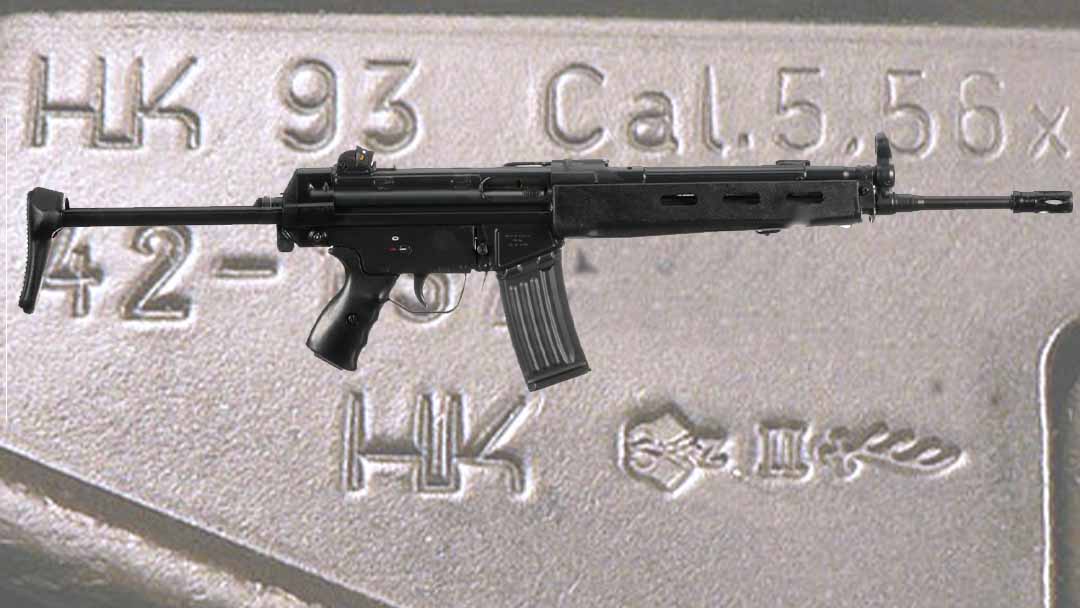
Cool Rifles: Heckler & Koch Model 93
The most modern firearm on the list is this civilian semi-auto version of the H&K 33. The rifle was imported from Germany starting in 1974 as a variant of the HK43 but with a different barrel length. It was prohibited from importation by the 1989 assault rifle ban. The HK93 has seen screen time in action and horror movies, including “First Blood.”
Cool Rifles: Mosin-Nagant
Russia needed a repeating rifle after soldiers of the Ottoman Empire armed with Winchester Model 1866 rifles inflicted heavy casualties during the Russo-Turkish War. It took time, but by 1891, the Russian Imperial Army selected the design of Capt. Sergei Ivanovich Mosin over two others. The gun also shares aspects from the Belgian inventor Leon Nagant who lent his name to the rifle.
The bolt action rifle’ a magazine spring, clips for loading into the magazine and an interrupter to avoid double feeding of cartridges were modified in 1930. The rifle was standard issue for the Red Army at the start of World War 2. About 37 million are estimated to have been produced from 1891 to 1973.
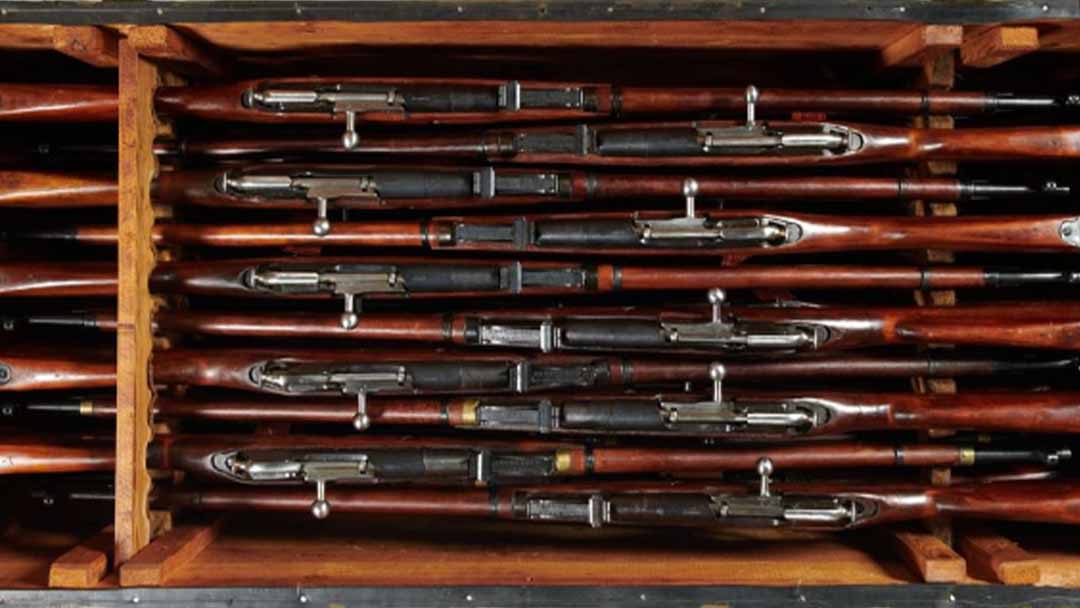
Plenty of Cool Rifles
This is just a sampling of the cool rifles that will be on offer in Rock Island Auction Company’s Feb. 16-18 Sporting & Collector Auction. A collector can find history, innovation, high condition among the rifles available as well as modern shooters, so visit us in Bedford.