
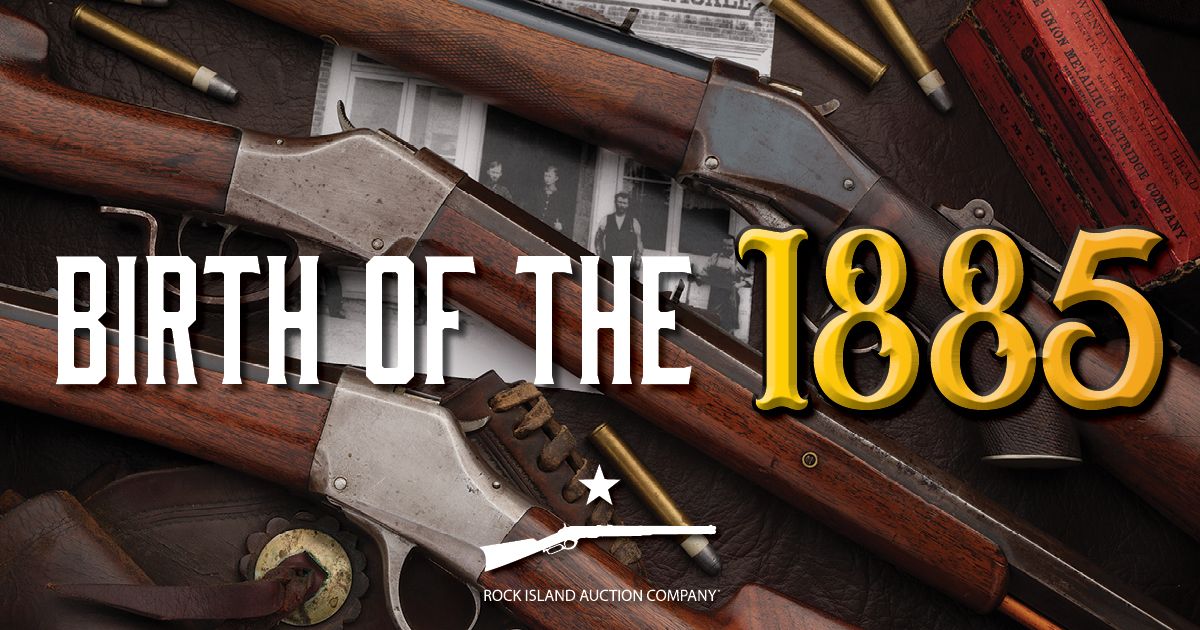
The Winchester Model 1885 remains among the most iconic single shot rifles. Designed by the legendary firearms innovator John Moses Browning, these classic rifles mark the beginning of his rise to become one of the most influential firearms designers in history. Manufactured by Winchester from September 1885 to June of 1920, nearly 140,000 of the versatile single shot Model 1885 were produced, offered in a wide variety of calibers and configurations making the model a rich field for dedicated collectors, competitive marksmen, and hunters alike. Browning’s classic single shot is still popular to this day.
Though known as the Winchester 1885, the design for Winchester’s single shot rifle originated in the late 1870s over 2,000 miles from the Winchester factory in New Haven, Conn., in a small frontier gun shop in the Utah Territory. A young John Moses Browning submitted his “improvement in breech-loading fire-arms” on May 12, 1879, and was granted U.S. Patent No. 220,271 on October 7, 1879. Browning’s design used a breechblock sliding vertically within a metal frame operated by a lever similar to the Sharps rifles. Outwardly, Browning’s rifle is fairly similar to Charles H. Ballard’s rifle design patented in November 1861 and used during the American Civil War alongside the Sharps. The Browning design features a centrally mounted hammer like Ballard’s, but differed in other aspects, particularly that the trigger group is stationary in the lower tang.
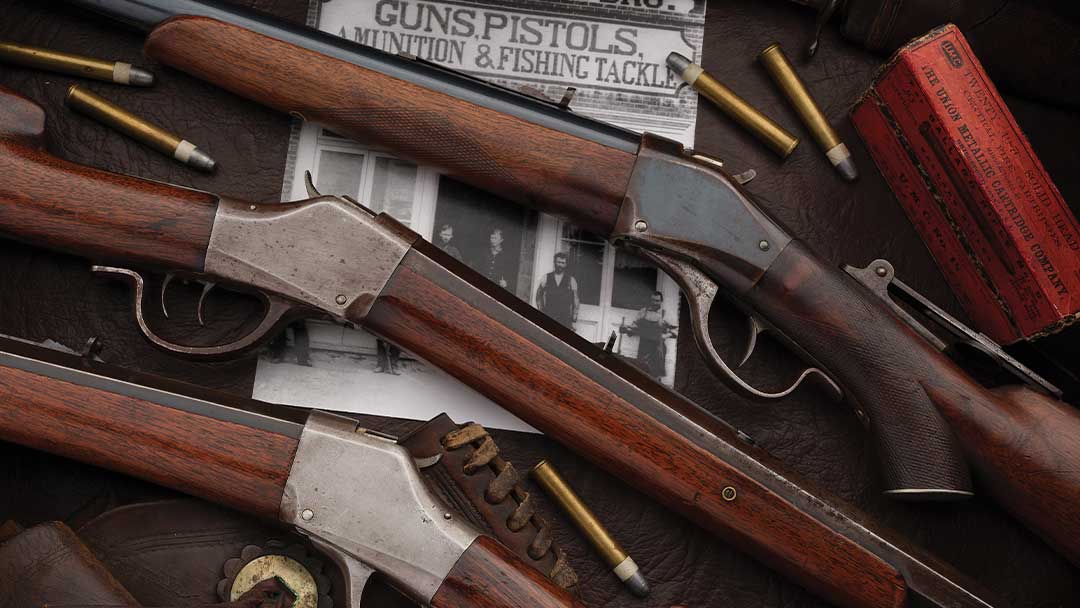
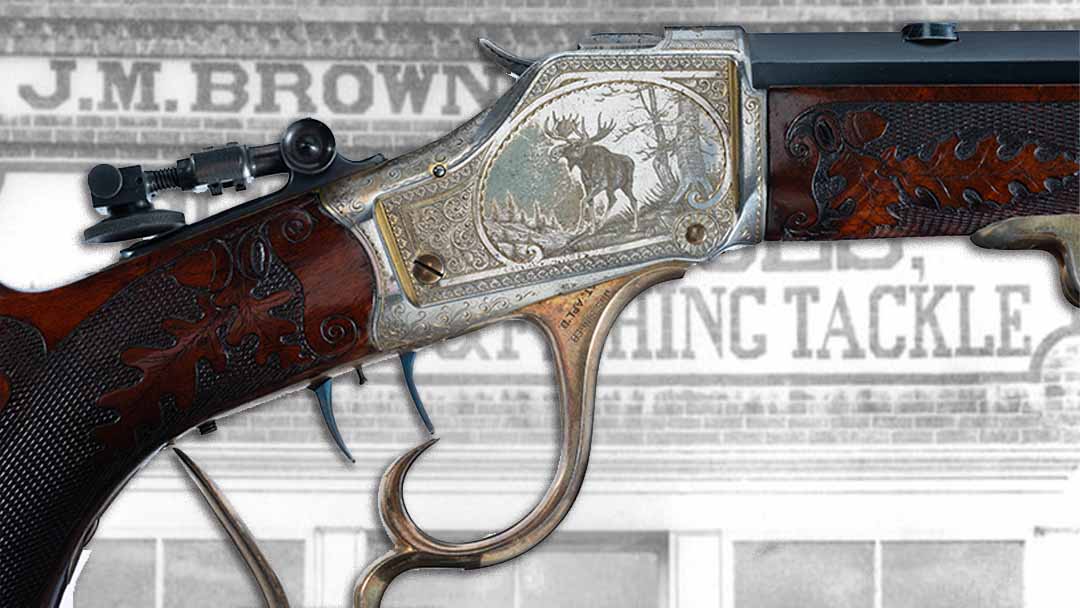
The Model 1885 and its single shot predecessor drew Winchester’s interest and launched John Moses Browning onto a legendary career as a gun designer. Three Browning Brothers 1879 single shot rifles and a spectacularly engraved Winchester 1885 High Wall Scheutzen rifle will be available in Rock Island Auction Company’s Dec. 6-8 Premier Auction.
John Moses Browning’s Single Shot Rifle Design
This is the tale of the gun’s design and Winchester Repeating Arms Company purchase of the rights to the gun’s design. In June of 1879, while he was waiting for his patent to be approved, Browning’s father, Jonathan Browning, died. His father had been an innovative gunsmith in his own right and is particularly known for his harmonica rifle designed in his early shop in Quincy, Illinois. His father had been one of the Mormon pioneers who made the perilous trek across the West to settle in Utah to escape persecution. He established his gun shop in Ogden in 1852. John Moses Browning learned the art of gunsmithing in that shop and began working on the designs that became the Winchester Model 1885.
Browning and his brother Matthew established the partnership John Moses and Matthew Sandefur Browning Company. Mainly known as J.M. Browning & Bro., it evolved into Browning Brothers by the early 1880s, and also employed many of their half-siblings. On December 30, 1882, The Ogden Standard Examiner featured an article about the Browning Brothers noting John and Matthew Browning had a “knack” for gunmaking and “have for their life-time been devoting all intellectual ingenuity and muscular strength to the production of a breech-loading rifle which will answer all the purposes which can be expected of such an arm: ease, durability, etc.” Their brick shop on Ogden’s Main Street was 20 by 50 feet with the front half constituting the retail shop and the rear the gunsmithing shop for making and repairing firearms. Their total monthly revenue was listed at $5,000 at the time.

Together, they produced Browning’s distinctive single shot rifles from 1878 prior to applying for the patent until selling the rights in 1883. Only around 600 of these handmade single shot rifles were made. As handmade rifles, there were variations in design and caliber from the very beginning, including what formed the basis for the later “high wall” and “low wall” frames. A hundred or less of these Browning Brothers produced single shot rifles are believed to still exist and Rock Island Auction Company’s Dec. 6-8 Premier Auction will have three examples available.
Winchester Repeating Arms Co. Comes A-Knocking
By the early 1880s, the Winchester Repeating Arms Co. stood as one of the primary sporting arms manufacturers in the country. From the very beginning, their primary products were repeating rifles, but many hunters and target shooters in the late 19th century continued to demand powerful long range single shot rifles that offered more range and stopping power than Winchester’s lever actions could provide. They needed a rugged single shot rifle design that could handle powerful cartridges like the .45-70 Government and long range cartridges like those used in the Sharps Model 1874 and Remington rolling block rifles for long range competitive target shooting.
In 1883, Winchester Vice President Thomas Bennett traveled to Ogden to visit the Browning Bros. shop to see their rifles and how they were made. During the visit he also admonished them to stop making a reloading tool covered by a Winchester patent. Bennett secured the rights to produce rifles based on Browning’s 1879 patent for $8,000, marking the start of a relationship between Browning and Winchester that lasted until 1902. In 1883, Browning was already designing what would be the Winchester Model 1886, followed by the Model 1892, the Model 1894 and the Model 1895. Browning also designed slide action long guns starting with the Model 1890 rifle and Model 1893 shotgun.
In the early 20th century, the relationship between Browning and Winchester fell apart over pay for Browning’s designs. Rather than a one-time fee as had been the case since 1883, Browning sought royalties. Winchester declined. Instead, Browning designs were manufactured by Fabrique Nationale, Colt, Ithaca, Remington, and Savage. Browning’s Model 1911 semi-automatic pistol and his machine gun designs, especially the M2, remain among the most popular firearms today and are still in use by the U.S. military and numerous other countries to this day.
Winchester 1885
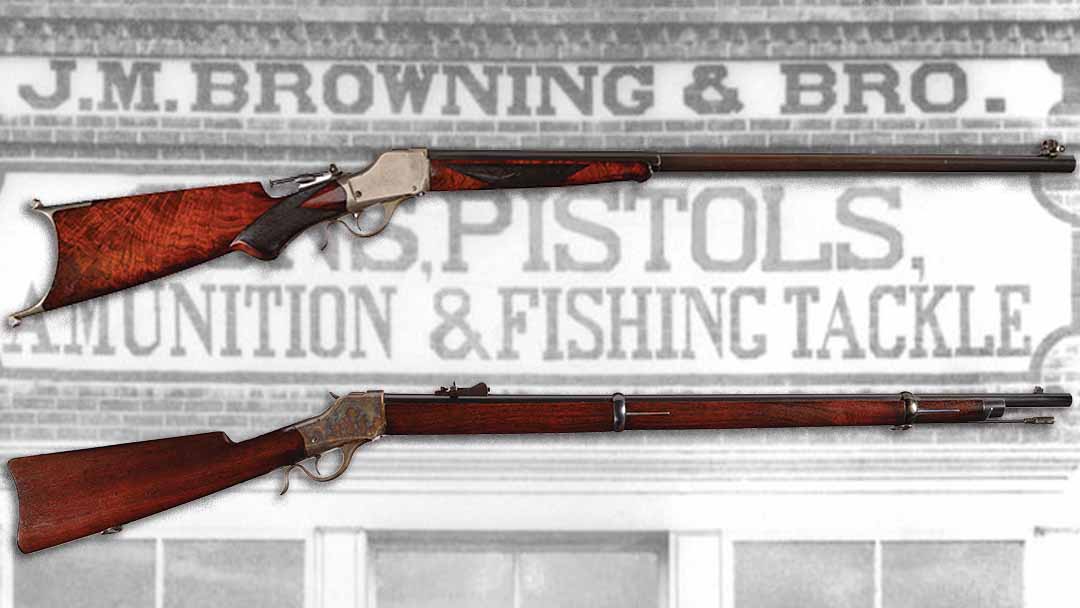
Though Winchester purchased the rights to Browning’s single shot rifle design in 1883, it did not enter into full production until 1885 after being refined for mass production. Winchester offered the “high wall” frame which covered the sides of the breechblock and hammer as well as a “low wall” frame which had shorter frame walls which left much of the breechblock exposed. The “high wall” was also available with a thicker “flat side” frame or a lighter and thinner “thin wall” frame. Beyond these basic variations, there were also changes to the receiver ring from octagonal to round and numerous variations in terms of calibers, barrels, sights, forearms, stocks, embellishments, deluxe features and various mounts and accessories to serve just about any shooting style or need.
Given the wide variety of options, collectors will find opportunities to acquire examples of the Model 1885 in a shockingly wide variety of configurations and condition. Some are plain and saw hard use in the American West in the late 19th century while others are highly refined rifles designed for serious target shooting competitions and remain in incredibly high condition. The latter rifles were used in rifle matches across the country in the late 19th century and early 20th century at the height of single shot rifle match competition.
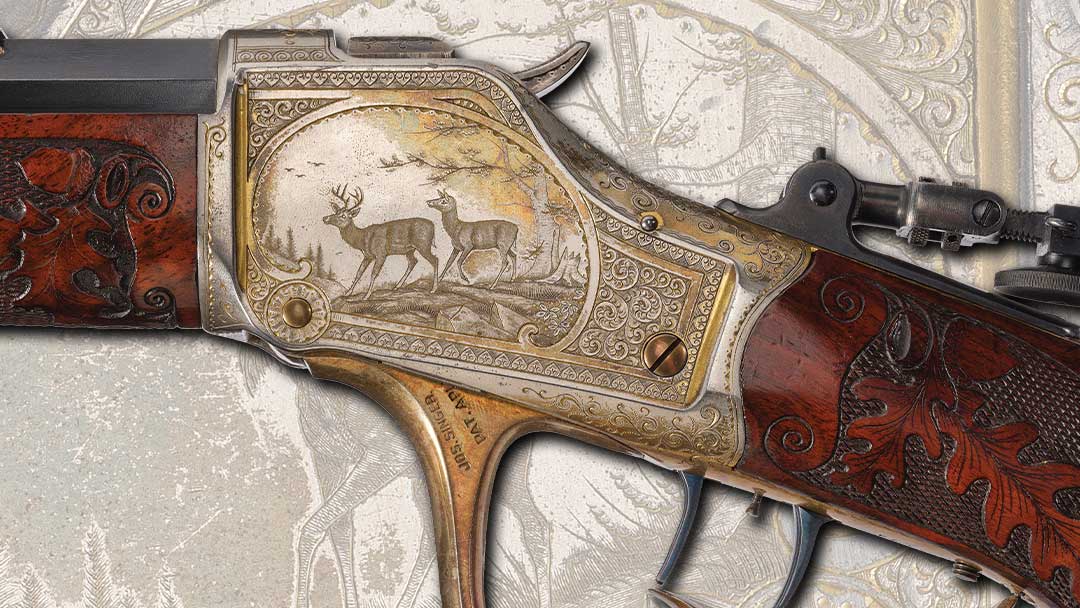
While customers could special order just about any combination they wanted, Winchester also offered several stock variations of the Winchester 1885 over the years. Including:
● Plain sporting rifle: open sights, plain Schnabel tip forearm and rifle buttstock with crescent buttplate or shotgun buttplate.
● Special sporting rifle: a sporting rifle but with upgraded wood.
● Special single shot rifle: a special target rifle version designed for off-hand matches with a part-octagon barrel, wind gauge front sight, tang mounted mid-range Vernier peep sight, fancy grade walnut checkered pistol grip stock with Swiss cheek piece and buttplate.
● Schuetzen rifle: In addition to the features of the special single shot rifle, this variation featured a palm rest, modified spurred lever, double set triggers, and higher comb stock with more pronounced hooks on the buttplate. Some of these rifles are incredibly ornate.
● Lightweight single shot carbine aka “baby” carbine: This variation was built on the low wall frame with a saddle ring on the left, a short 15-inch round barrel in .44, .32, or .38 W.C.F.; plain trigger, plain forearm and straight grip stock with a carbine buttplate.
● Musket: The musket was offered in a few different variations over the years as a military training rifle primarily in .22 caliber rimfire with a long forend, military style sights, and plain buttstock with military buttplate. This variation was purchased by the U.S. military and is chambered for more powerful calibers such as .45-70 Government making it particularly rare.
The design was so versatile that it could be set up for everything from short range target practice with .22 Short up to some of the most powerful cartridges of the day for big game hunting. In addition, t he platform was so simple and rugged that Winchester continued to use Model 1885 actions to test cartridges even after newer designs were introduced.
Winchester 1885 Today
Discontinued by Winchester in 1920, the Model 1885 design has remained among the most popular single shot rifles in America. It was reintroduced and continues to be an excellent choice for hunters looking for a simple, strong, and reliable single shot rifle. Browning offered the 1885 as the B-78 from 1973 to 1982, as the Model 1885 starting in 1985 and the Browning Black Powder Cartridge Rifle (BPCR). They have been offered under the Winchester brand and remain available today.
Other companies such as Uberti and Pedersoli in Italy as well as multiple American companies such as C. Sharps Firearms in Montana and Wyoming Armory also produce copies of the Model 1885 in various configurations. The 1885 in .45-70 remains a popular choice for black powder cartridge shooters, and Browning’s classic single shot, offered in a variety of calibers, certainly remains an excellent option for deer hunters in states that only allow single shot rifles.
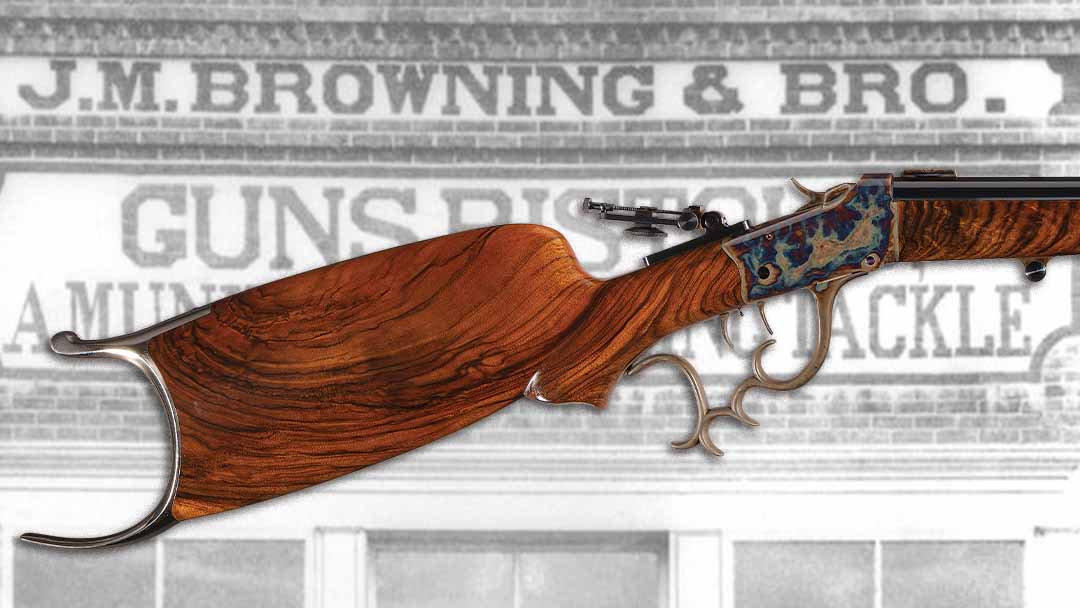
Winchester 1885 and Other Browning Designs
You will not find a single sale at Rock Island Auction Company that does not demonstrate the long lasting influence of John Moses Browning. From his simple but rugged and reliable Winchester 1885 single shot rifle to several of Winchester’s most popular lever action designs including the Model 1894 to semi-automatic pistols like the Colt Model 1911 and machine guns like the BAR and M2.
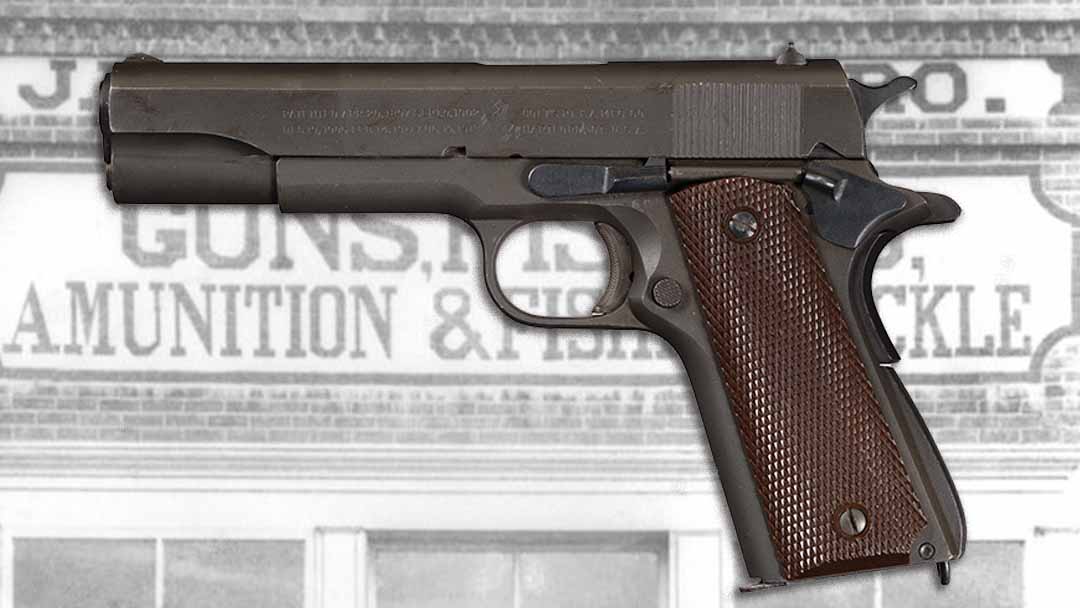
There are literally thousands of Browning-based firearms to choose from every year available at price points for collectors of all levels, from the best historic examples to affordable handguns and rifles for shooters.