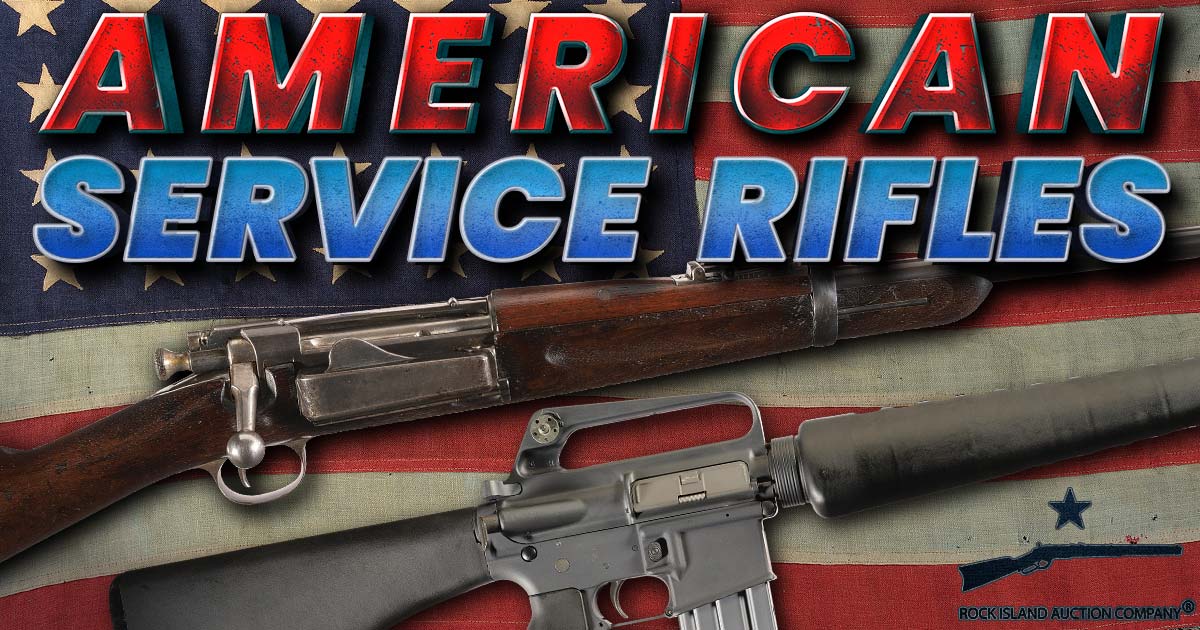
Next year, the U.S. Army celebrates its 250th anniversary. In those two and a half centuries, the American infantry rifle has evolved countless times. From the slopes of Bunker Hill to the streets of Fallujah, we’ll look at some of the U.S. Army’s most historically significant service rifle models.
Most of the examples featured here are available in Rock Island Auction Company’s August 23 – 25 Premier Auction in Bedford, Texas, along with hundreds of other collectible military arms. While dozens of American infantry rifle models were briefly considered, tested, fielded in more specialized roles, or manufactured in limited numbers, like the Remington Rolling Block conversion rifle-musket pictured above, our final selections were chosen for their longevity, production numbers, or for achieving important milestones in military arms innovation.
The Brown Bess and Charleville Muskets
On 14 June 1775, the Continental Congress authorized “six companies of expert riflemen, be immediately raised in Pennsylvania, two in Maryland, and two in Virginia…that each company, as soon as completed, shall march and join the Army near Boston, to be there employed as light infantry, under the command of the chief Officer in that army.”
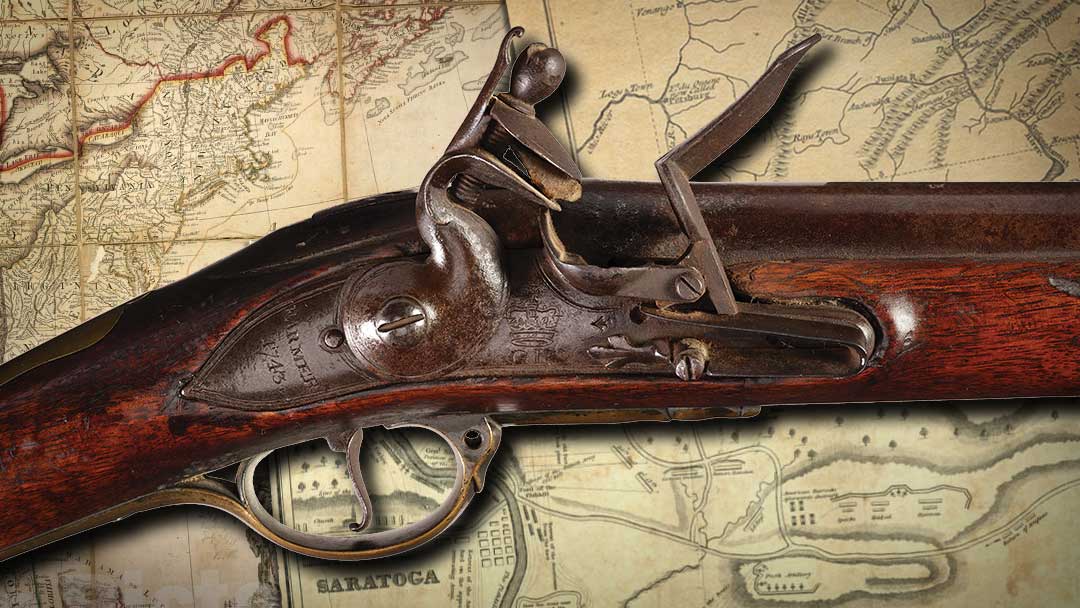
During the Revolutionary War, the French Charleville and British Brown Bess smoothbore musket models served as the primary American infantry arms, with small groups of specialized marksmen armed with Kentucky rifles deployed to harass the British from outside effective musket range.
This 1743 dated British Long Land Pattern Brown Bess musket pictured below was owned by Revolutionary War soldier Beriah Holcomb, who served in the 2nd New York Regiment.
Springfield Model 1795
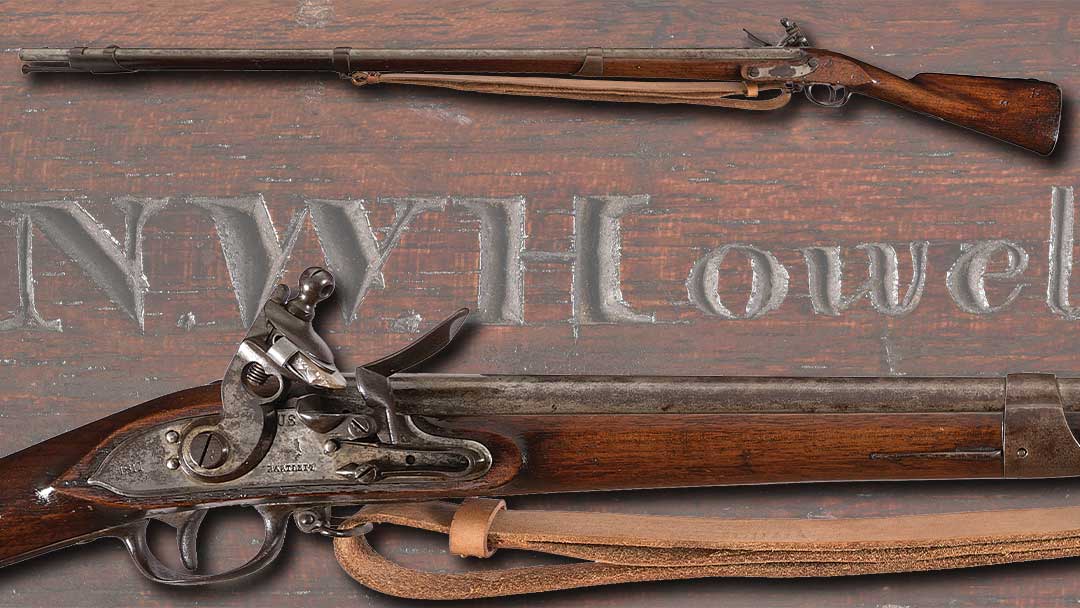
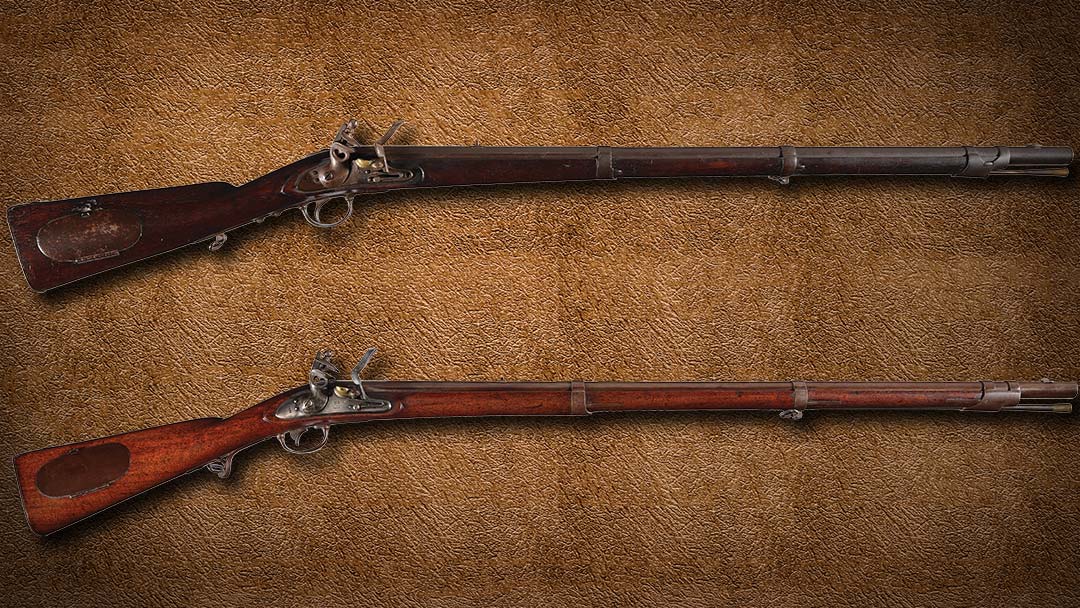
Numerous smoothbore musket models, including the Model 1795, Model 1816, Model 1840, and Model 1842 served as America’s primary infantry weapons into the mid-19th century. The Model 1795 Musket represents many firsts in U.S. martial arms including the first standardized and official model of musket manufactured for the United States Military.
Based on the French Charleville Model 1766, this model saw heavy use during the War of 1812. The “Model 1808” musket pictured below is patterned on the Springfield Model 1795 and exhibits several “US” and State of New York contract markings.
Harpers Ferry Model 1803
The U.S. Model 1803 was the first true infantry rifle issued by the U.S. government and was fielded during the War of 1812. Prior American service rifles were primarily civilian purchases, but the Model 1803 was designed and manufactured at the Harpers Ferry Arsenal. The Model 1803 is also distinct from American infantry rifles that followed thanks to its half-stock configuration and under-rib on the barrel.
Model 1814/1817 “Common Rifle”
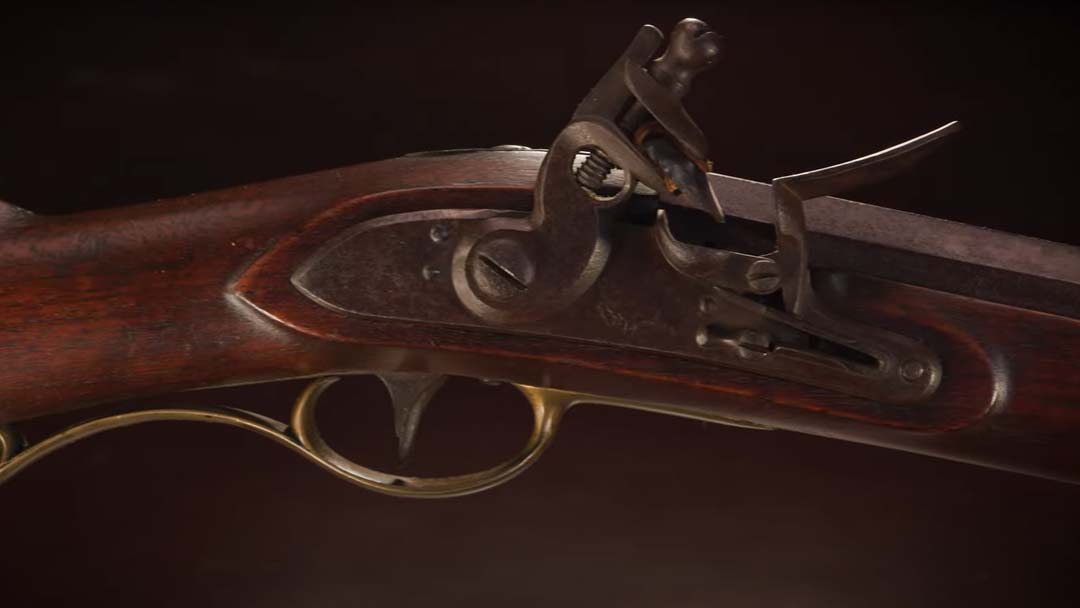
Henry Deringer of Philadelphia and Robert Johnson of Middletown, CT were each commissioned to produce 2,000 Model 1814 flintlock rifles for the U.S. military. The success of the design led to a much larger production run of the highly similar Model 1817, which saw a total of 38,200 rifles manufactured across multiple contractors through the early 1840s. Successors to the 1803, the Model 1814 and 1817 are among the earliest standardized U.S. service rifles and saw use in the Seminole Wars, Mexican-American War, and Civil War.
Despite their “common rifle” moniker, these service rifles were still rare compared to their smoothbore cousins. The common rifle term came to differentiate regular muzzleloading rifles from the various experimental technologies emerging during this period in arms development, including swivel breech rifles, revolving rifles, and breechloaders such as the Model 1819 Hall rifle.
Model 1819 Hall Breechloader
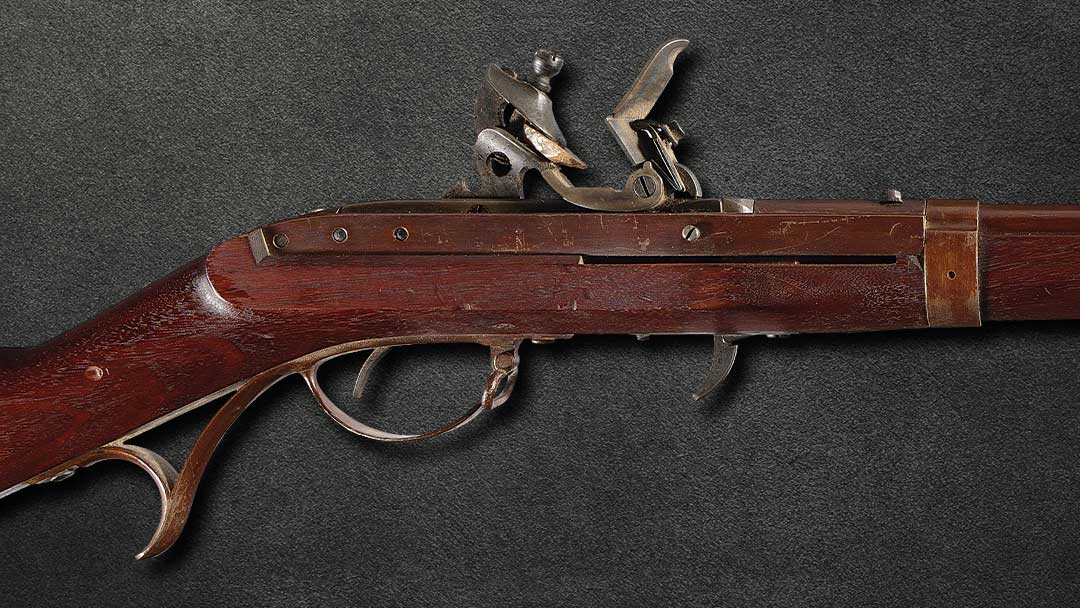
Maine gunsmith John Hancock Hall’s Model 1819 rifle achieved several U.S. military milestones, including becoming the first nationally adopted breechloading service rifle. Breechloading rifles offered a higher rate of fire as well as the ability to load while advancing and while taking cover in the prone position, all important attributes for an infantry rifle.
To achieve higher production numbers, Hall employed the “uniformity principle,” a reliance on machinery to produce interchangeable parts that would become known as the American system of manufacturing. Approximately 19,680 Model 1819 Hall rifles were produced between 1819 and 1840, including the example below manufactured in 1837.
Model 1841 “Mississippi Rifle”
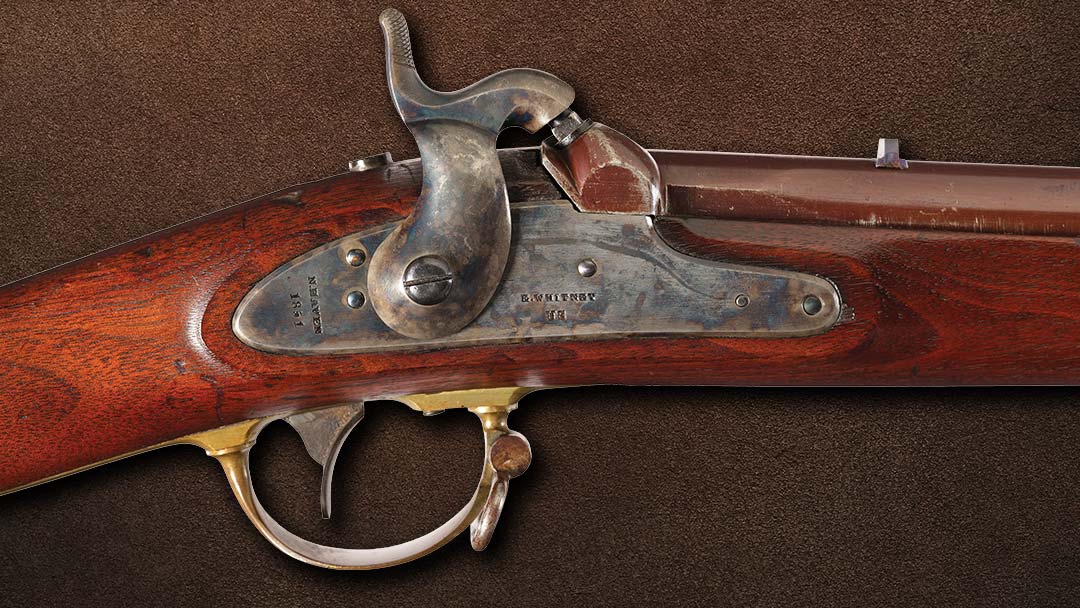
The Model 1841 was the first official percussion rifle adopted by the U.S. Military. Harpers Ferry Armory manufactured 25,296 examples of this impressive service rifle between 1846 and 1855. Considered one of the best military rifle models of its era, the Model 1841 was initially issued to light infantry and the Mississippi Regiment of Mounted Rifles, where the weapon played a key role in U.S. victories at Buena Vista and Monterrey during the Mexican-American War.
Both the Union and Confederate armies fielded the Model 1841 rifle during the Civil War, where many were rebarreled for .58 caliber, altered to accept saber bayonets, and often fitted with experimental long-range sights. Unaltered Model 1841 rifles in their original configuration are scarce, like the exceptional 1852 manufactured example pictured below.
Springfield Model 1855 and 1861
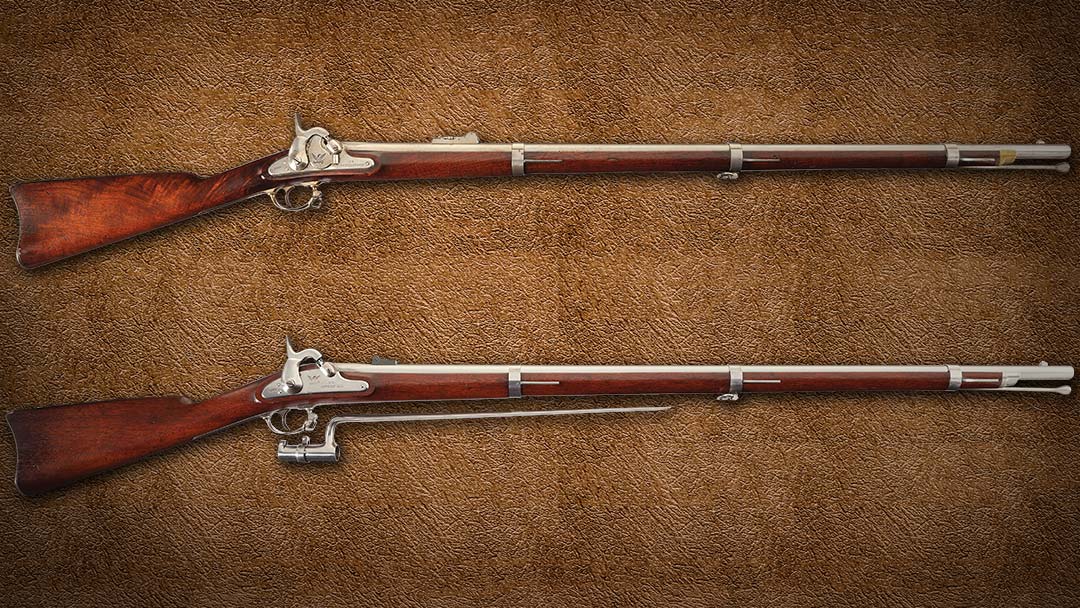
In 1855, the United States Army adopted the minié ball, which offered a notable increase in range and accuracy. Thousands of smoothbore muskets and prior infantry rifle models like the Mississippi rifle were rebarreled for the new .58 caliber cartridge, and the Springfield Model 1855 became the first U.S. service rifle designed specifically for the minié ball. The rifle first saw action with the U.S. Army during the Coeur d’Alene War in 1858.
Between 1857-1861, 47,115 Model 1855 rifle-muskets were manufactured at Springfield Armory, while another 12,158 were manufactured at Harpers Ferry. Though a fine platform, the Model 1855 employed the expensive and somewhat unreliable Maynard primer. This feature was omitted from the rifle’s next iteration, the Springfield Model 1861. Countless musket, rifle, and carbine models were fielded during the Civil War, but the dependable Model 1861 effectively became the Union’s standard issue infantry rifle and saw heavy use in virtually every major battle.
Sharps Rifle
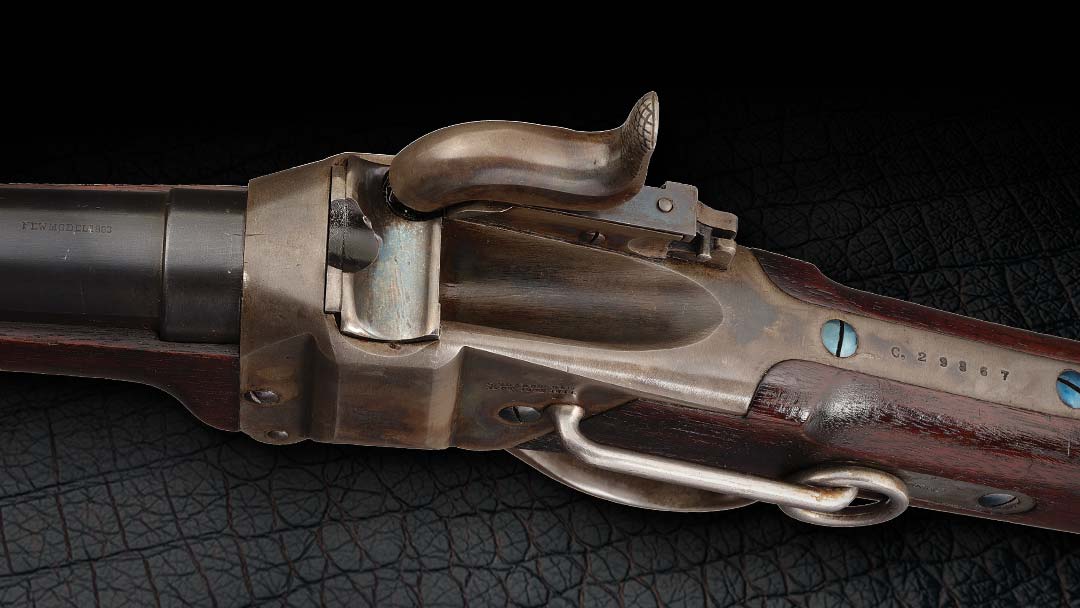
According to the National Park Service, nearly 2.7 million soldiers enlisted with the Union Army during the Civil War, and the U.S. Ordnance Department scrambled to arm them however they could. The breechloading Sharps carbine was issued to 80 cavalry regiments, with the U.S. Sharps New Model 1863 carbine the most widely fielded variant.
Though the Sharps rifle was only issued in a fraction of the quantity of its carbine sibling, the platform proved its battlefield worth with the U.S. Sharpshooter Regiments led by Hiram Berdan, who considered the Sharps the most accurate service rifle of its age. The Berdan Sharpshooters and their New Model 1859 Sharps left a lasting legacy on U.S. Army small unit tactics, employing their rifles from a distance to test an enemy’s strength, slow advances, pick off officers, and harass retreating foes.
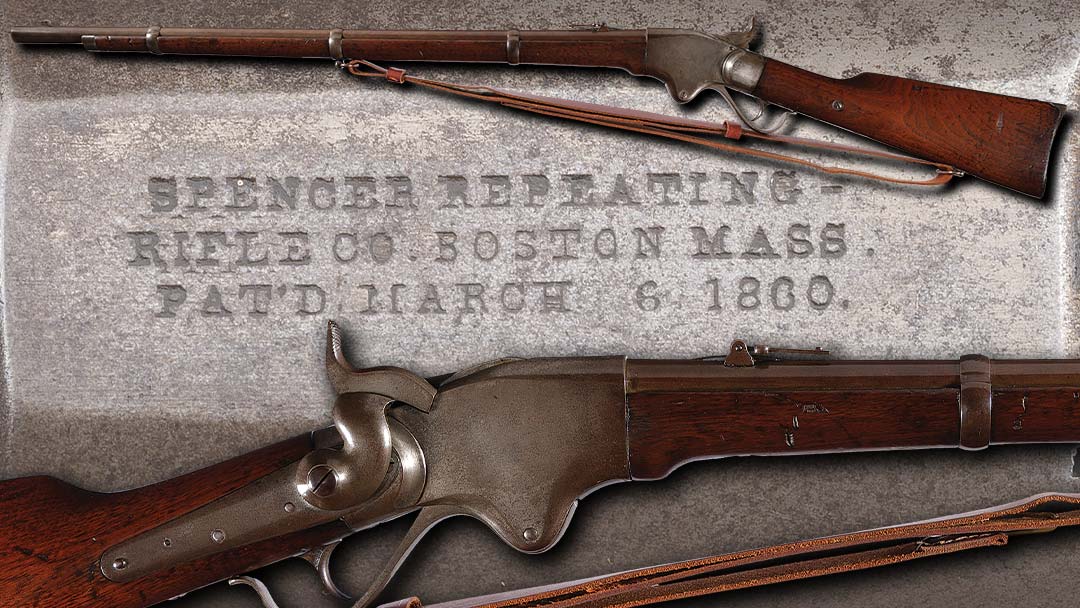
Spencer Rifle
The Spencer repeating rifle gained fame in 1863 in the hands of Union volunteer units like the 5th Cavalry Regiment of Michigan “Wolverines” and Colonel John T. Wilder’s “Lightning Brigade.” Wilder considered the Spencer the best military rifle of the war, stating the weapons gave his men immense confidence and “fully quadruples the effectiveness of my command.”
After inventor Christopher Spencer impressed President Lincoln with a personal demonstration of his repeater, Lincoln pressured the U.S. War Department to adopt the rifle. The Spencer became the first military-issued metallic cartridge repeating service rifle, edging out the famous Henry by nearly two years. During the Civil War, the Ordnance Department ordered 11,470 Spencer Model 1860 Army rifles and 1,000 Navy rifles. The military embraced the Spencer carbine variant even more due to its lesser price point, with 94,196 produced by the end of the conflict.
Springfield Trapdoor
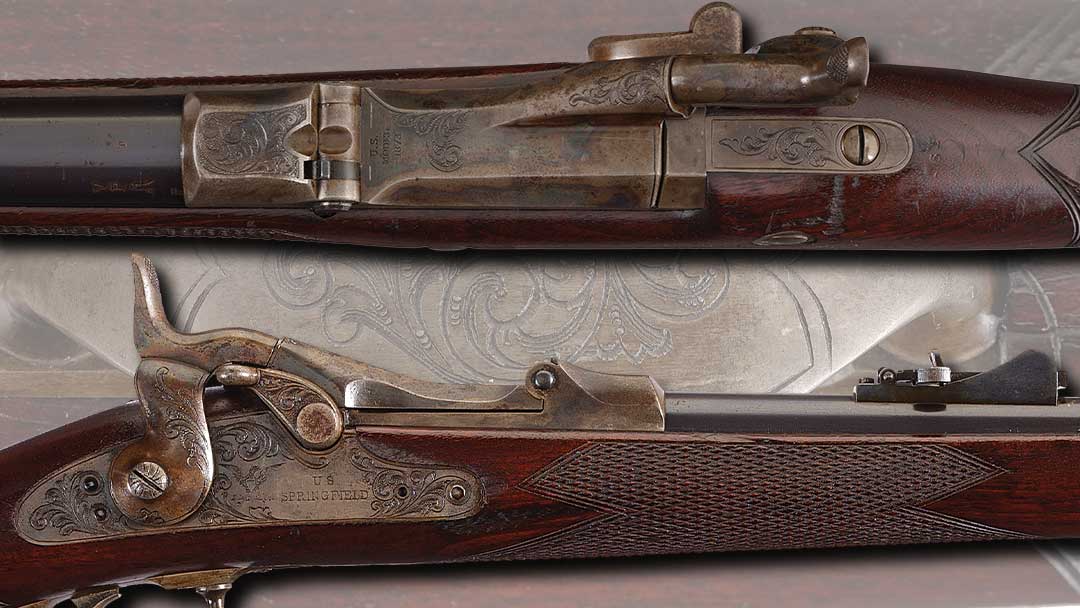
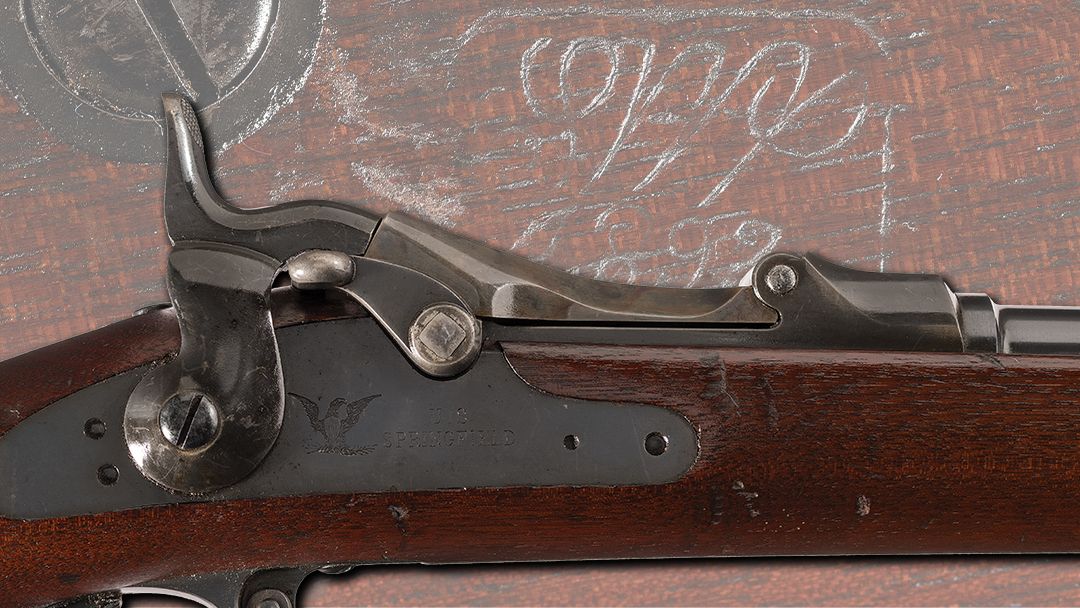
Noting the clear advantages of metallic cartridges and breechloading firearms, the U.S. War Department searched for a standard issue rifle platform that incorporated both technologies. The Civil War had left the military with hundreds of thousands of surplus muzzleloaders. Springfield Master Armorer Erskine S. Allin developed a cost-efficient method of converting these firearms to breechloaders by replacing a portion of the barrel with a hinged breech block, or “trap door.”
The Springfield Trapdoor provided an infantry rifle with power, range, accuracy, and a firing rate of up to 15 rounds per minute for experienced soldiers. The platform served as the primary U.S. infantry rifle for over two decades and experienced a steady series of modifications and improvements. The extremely rare U.S. Springfield .30 caliber Trapdoor rifle pictured below illustrates one of the final variants of the platform manufactured by Springfield Armory, created to experiment with various smokeless powders, test velocities, study ballistics, and perform pressure tests in the development of a new .30 caliber (.30 Army) smokeless powder cartridge.
Krag-Jorgensen
Military bolt action rifles had become a common sight in Europe by the late 19th century. While the U.S. Army began testing bolt action designs in the 1870s and 1880s, the first American bolt action infantry rifle wasn’t adopted until 1892 in the form of the Norwegan-designed Krag-Jorgensen. The Krag, or “Model 1892,” was also the first American standard issue rifle chambered for a smokeless cartridge, the .30 Army, or .30-40 Krag.
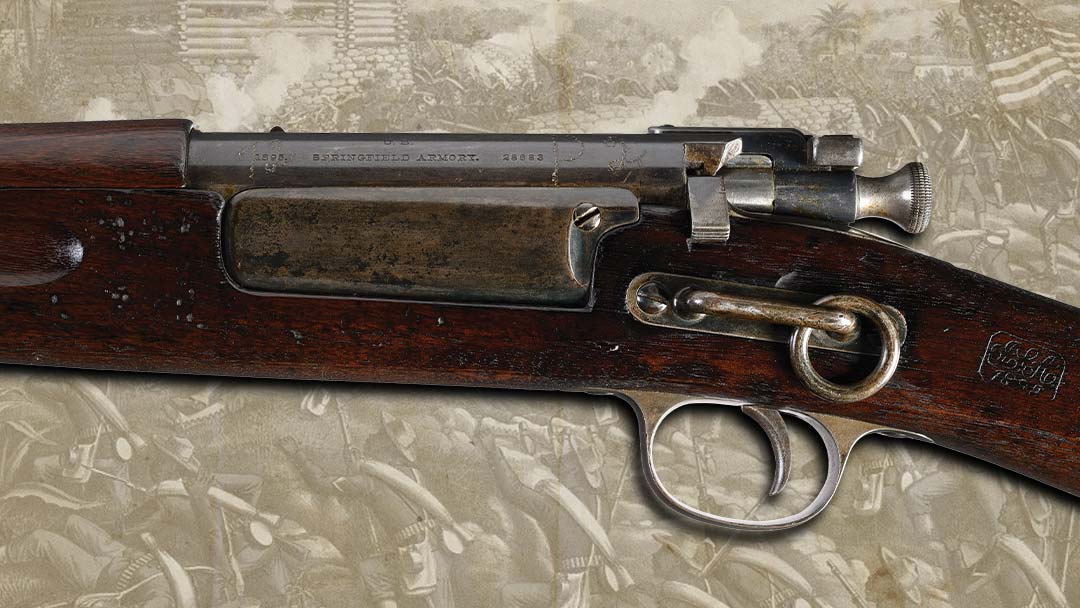
Krag production started in 1894, and over 477,000 rifles and carbines were manufactured by Springfield Armory over the next decade. The Krag was the U.S. Army’s primary service rifle during the Spanish-American War, with rifles and carbines fielded during the conflict considered valuable collector items today.
The U.S. Springfield Model 1895/96 Krag-Jorgensen saddle ring carbine pictured below is identified by serial number as issued to the 9th Cavalry Regiment, who famously charged the hill during the Battle of San Juan Hill in Cuba on July 1st, 1898 alongside future President Theodore Roosevelt’s 1st Volunteer Cavalry “Rough Riders.”
M1903
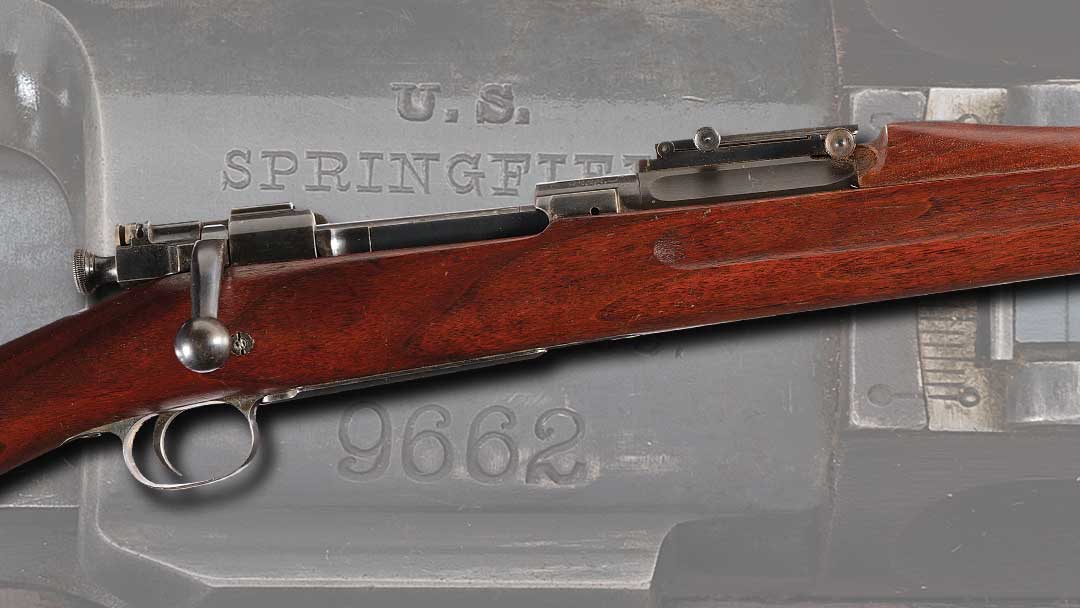
The Springfield Model 1903 earns a clear nod in any discussion of America’s best military rifle platforms. Serving as a U.S. Army standard issue infantry rifle for over three decades, the Model 1903 emerged from a Mauser-based bolt action design. The Model 1903 was originally developed to chamber the .30-03 Springfield, the American military’s first rimless centerfire smokeless cartridge, which evolved into the superior .30-06.
The Model 1903 excelled as a service rifle and filled numerous specialized roles as well, including offering an effective sharpshooting platform. The Model 1903A1 USMC sniper rifles replaced the original straight stock with a more accuracy-friendly pistol grip stock, and during WW2, the M1903A4 variant produced by Remington excluded iron sights in favor of a Redfield scope mount and scope.
M1917 Enfield
With the outbreak of WW1, the American military faced a weapons shortfall in nearly every arena, including their stock of service rifles. A solution presented itself in the British P-14, a bolt action British Enfield that was able to be rechambered for the .30-06 round. Adopted as the M1917, the Enfield served alongside the M1903 and became the most common infantry rifle carried by the American Expeditionary Forces throughout the Great War.

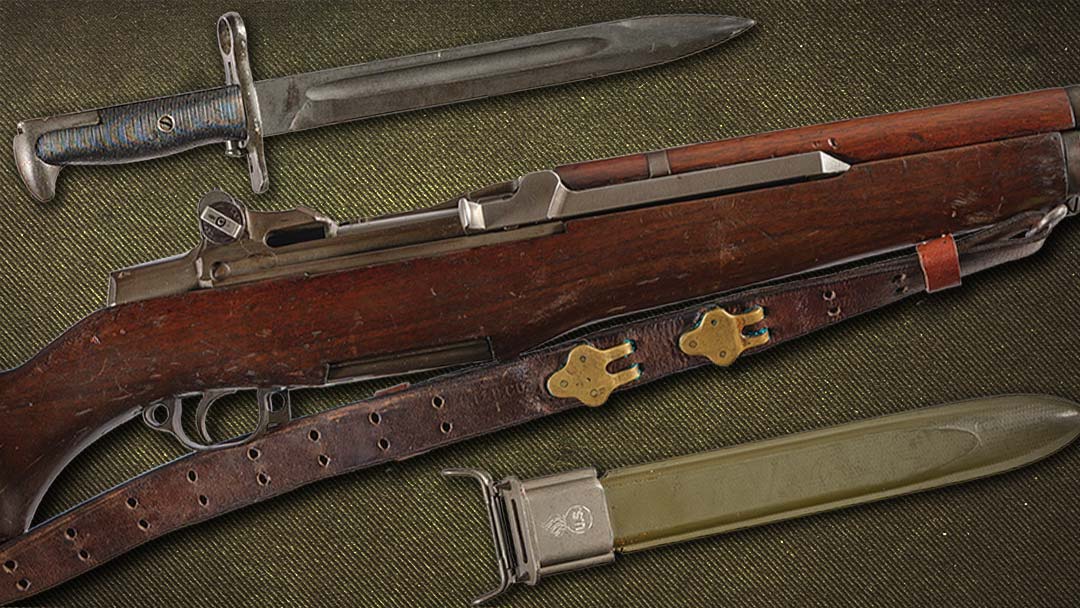
M1 Garand
General George S. Patton not only considered the M1 Garand to be the best military rifle of WW2, but praised the weapon as “the greatest battle implement ever devised.” America’s quest to develop a semi-automatic infantry rifle saw numerous contenders, including designs from John Pederson, John Thompson, and Melvin Johnson. But John Cantius Garand’s rifle would ultimately prevail.
The M1 Garand became the first semi-automatic service rifle widely adopted by a major military. With its 8-round capacity, the M1 provided American troops with a significant firepower advantage over their bolt-action adversaries and helped pave the way for Allied victory across Europe and the South Pacific. Fielded by millions of American GIs, the M1 Garand served as America’s standard issue rifle from 1936 to 1957 and it continued to see use as late as the Vietnam War.
M14
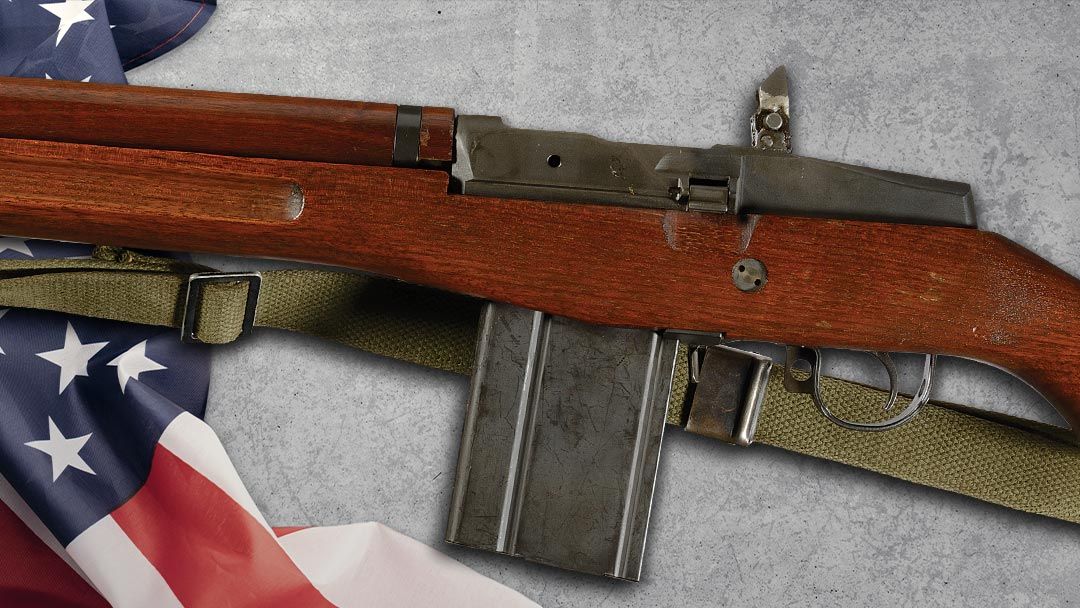
The M14 was conceived as a successor to the M1 Garand and became the U.S. Army’s first standard issue rifle with select-fire capability. Chambered in 7.62mm, the M14 was an attempt by the U.S. Army to produce an infantry rifle that could also offer the support fire of the BAR and fill the role of an SMG for close-quarters fighting.
While a fine battle rifle, the M14 was pulled in too many directions at once, being too bulky to act as an SMG or carbine in tight areas, but too light to serve as a proper squad automatic weapon. Production would end in the 1960s in favor of the M16, but the M14 continued to serve America in specialized roles, including finding an audience with special forces units and snipers, as well as being adopted by the Border Patrol and National Park Service.
M16
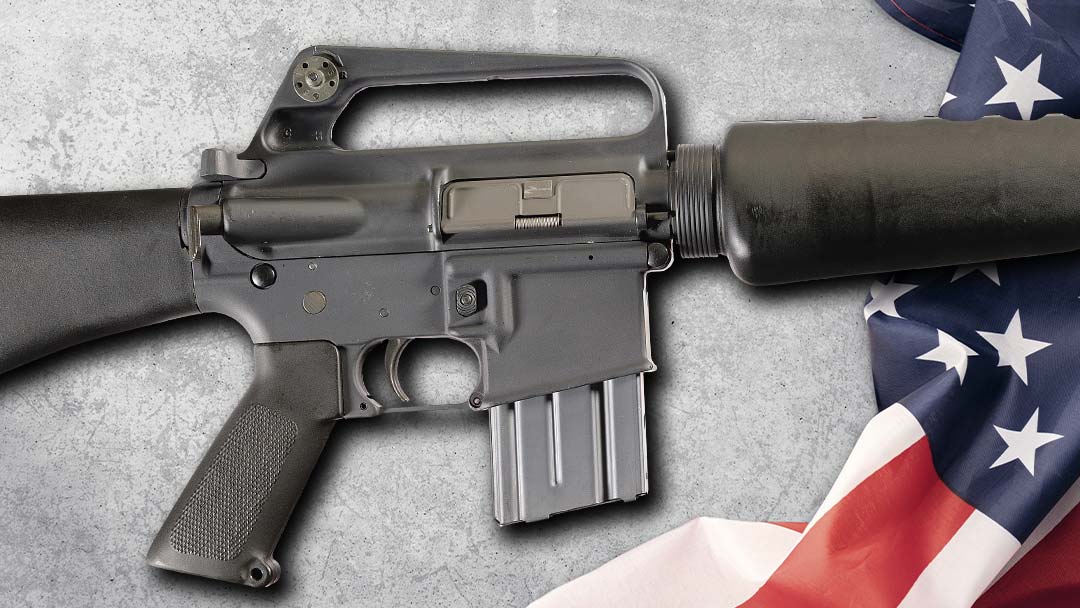
One of the best military rifle platforms in terms of versatility, the M16 had a rocky start upon its adoption in 1963. Initial ammunition issues and a lack of cleaning kits and chrome-lined barrels resulted in malfunctions, but these problems were largely addressed with the M16A1 in 1967, during the height of the Vietnam War. The M16’s 5.56mm chambering meant a soldier could carry more ammunition, and the model’s steel-aluminum receiver and polymer stock resulted in a lighter service rifle than its M14 predecessor.
Finally, the U.S. Army had its multi-purpose infantry rifle. The M16A2, introduced in the mid-1980s, featured an updated handguard, a case deflector, adjustable rear sights, and a heavier barrel. The M16A3 and A4 introduced more modularity, bringing the platform into the modern age and contributing to M16’s status as the longest-serving standard issue rifle in U.S. military history.
M4 Carbine
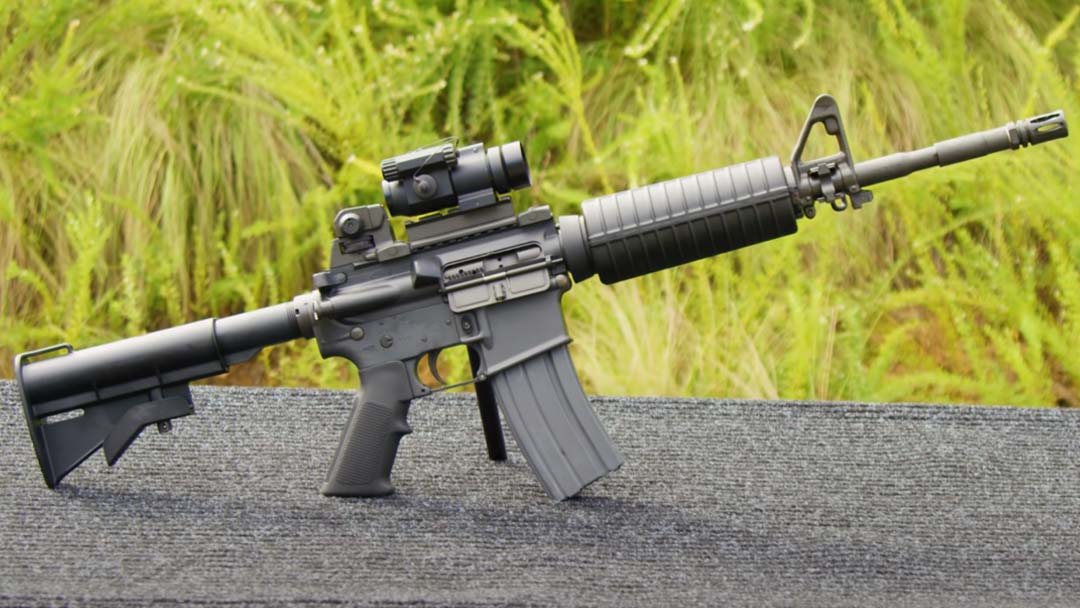
The M4 borrowed heavily from the design theory of the Vietnam-war era Colt CAR-15 carbine. Where the CAR-15 barrel lengths were 10 and 11.5 inches, U.S. Army testing found that 14.5 inches resulted in improved reliability, and updates to the M16’s gas system improved effectiveness further still. The M4 carbine was conceived for use by Special Forces, but by 2005 had become a U.S. Army infantry standard. The Marines followed ten years later.
XM7
On March 28, 2024, soldiers from the 101st Airborne Division at Fort Campbell, Kentucky became the first U.S. Army unit equipped with the SIG Sauer XM7. The XM7 had been tested as part of the Army’s Next Generation Squad Weapon program designed to replace the M4 carbine and the M249 SAW light machine gun. SIG Sauer was awarded a 10-year contract in 2022, and time will tell if the 6.8mm chambered XM7 will become America’s next great infantry rifle.
250 Years of the American Infantry Rifle
From the Revolutionary War muzzleloaders to the mighty M16, the infantry rifle has served as the backbone of America’s Army for 250 years. For collectors, shooters, and military enthusiasts, there’s nothing like owning a genuine service rifle from your favorite era of American history, and Rock Island Auction Company’s August Premier Auction offers examples that cover every chapter in U.S. military arms development.
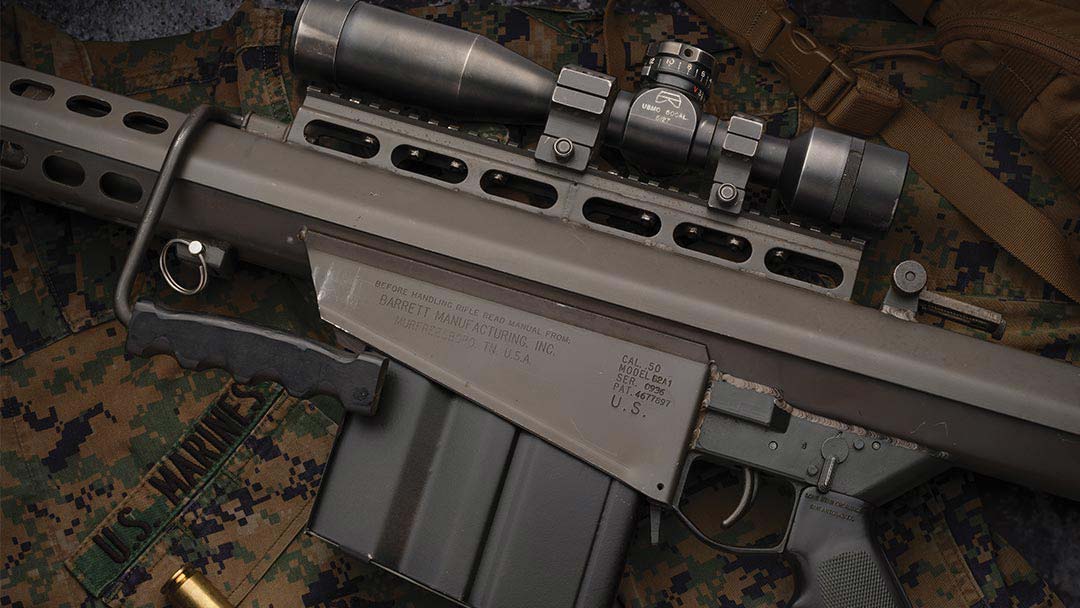
Subscribe to the Rock Island Auction weekly newsletter for more gun blogs and gun videos on U.S. Military weapons from across the centuries. From famous service rifles like the M1941 Johnson, Winchester Model 70, and Barrett M82, to a host of U.S. Military weapons in other genres like the M1 carbine, the Tommy gun, the M1911 pistol, the M1897 shotgun, the Colt SAA revolver, the Bowie knife, the Gatling gun, and more, we cover American military arms from every category.