
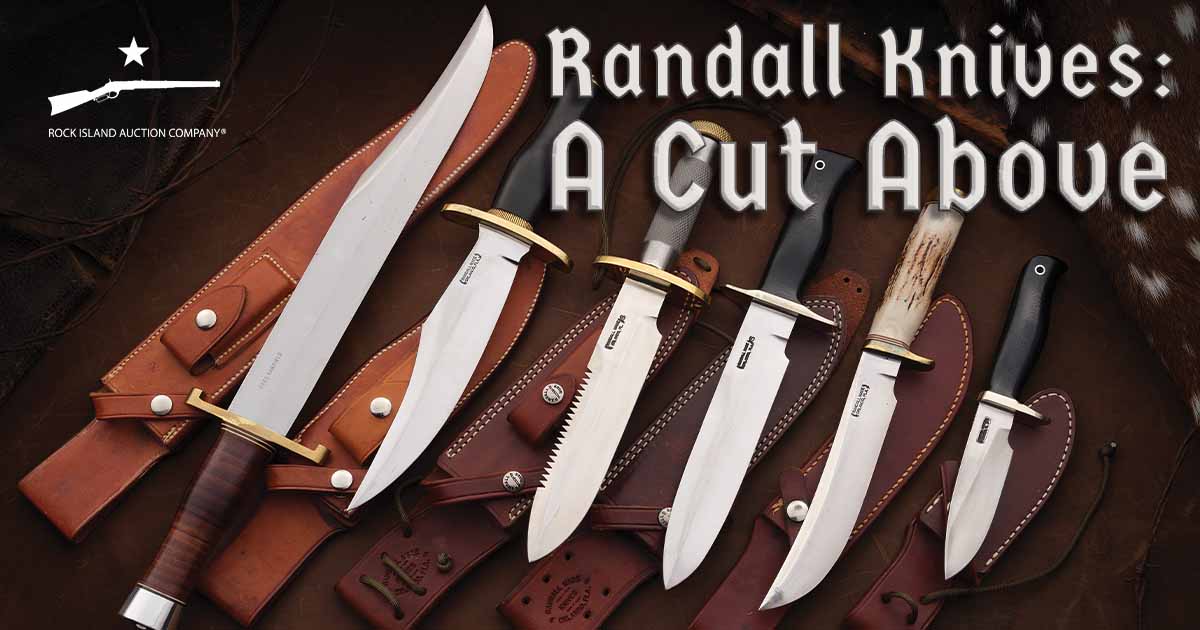
As the story goes – and it’s posted on the Randall Made Knives’ website – W.D. “Bo” Randall was walking along the shore of Michigan’s Walloon Lake in 1936 when he encountered a man who was scraping the hull of a boat with what turned out to be a handmade knife, an indelicate task for such an instrument. Randall, unimpressed with how the man was using it but impressed with the knife’s toughness, offered to buy it from the man.
That knife, by Michigan knife maker Bill Scagel, inspired Randall to try his hand at making one. A successful citrus grower and cattleman in Florida at the time, he considered the exercise as simply a hobby. However, Randall founded his eponymous knife-making company, Randall Made Knives, in 1938.
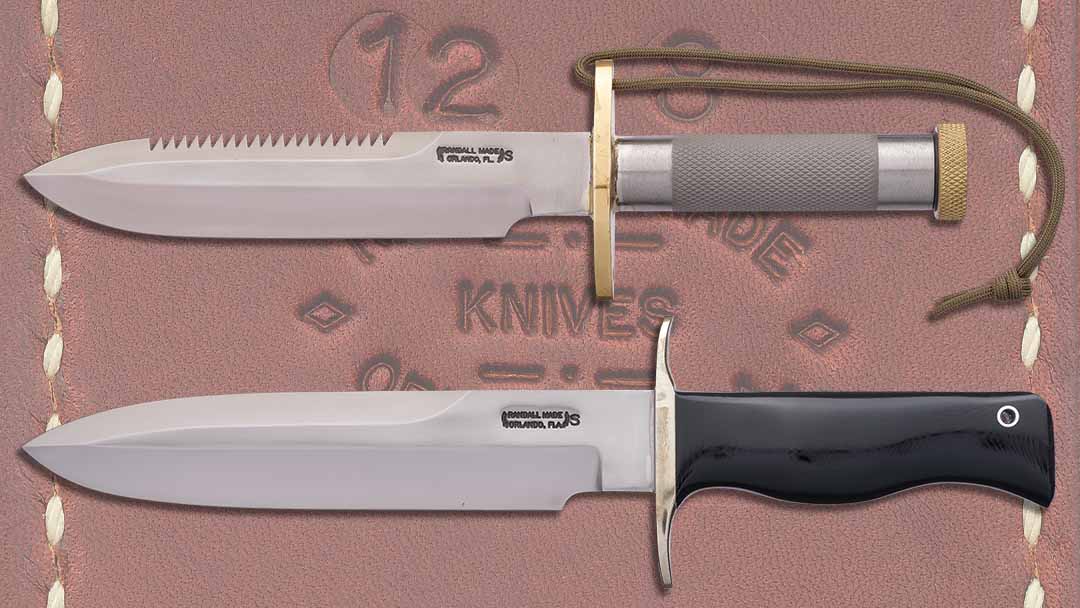
For those wanting a Randall knife but faced with the company’s six-year backlog on new orders, Rock Island Auction has an opportunity for knife collectors, offering a dozen of the fine, American-made blades in the upcoming Aug. 23-25 Premier Auction.
Randall Knives, American Knives
The story of American knives starts on a sandbar north of Natchez, Miss. in 1827.
Jim Bowie, then a planter and not yet a Texas hero, was on hand for a duel that turned into a brawl. Bowie, shot once in the hip and bludgeoned, managed to stab another man to death with his large knife that he would eventually become synonymous with, the Bowie knife.
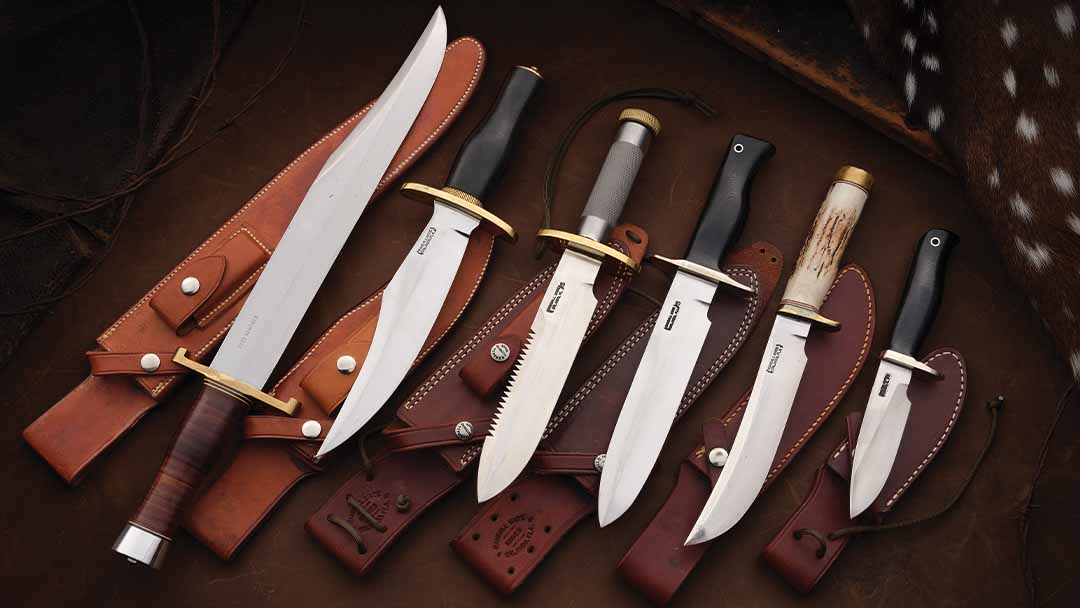
Randall offers a variety of Bowie knives among its products. The Raymond Thorpe Bowie Knife’s 13-inch blade is the longest in the Randall catalog while the Bear Bowie Knife has an 8-inch blade. Randall also offers models with blade lengths that fall in between. Thorpe is author of “The Bowie Knife” and an expert on 19th century Bowie knives.
Randall Knives Go to War
Randall started selling his knives out of his father-in-law’s clothing store in Orlando, Fla., priced at $16.50 for a simple and functional design. They quickly sold out. At the start of World War 2, a sailor asked him to make him a knife for hand-to-hand combat. Once the sailor’s friends saw the knife they wanted Randall Made Knives, too.
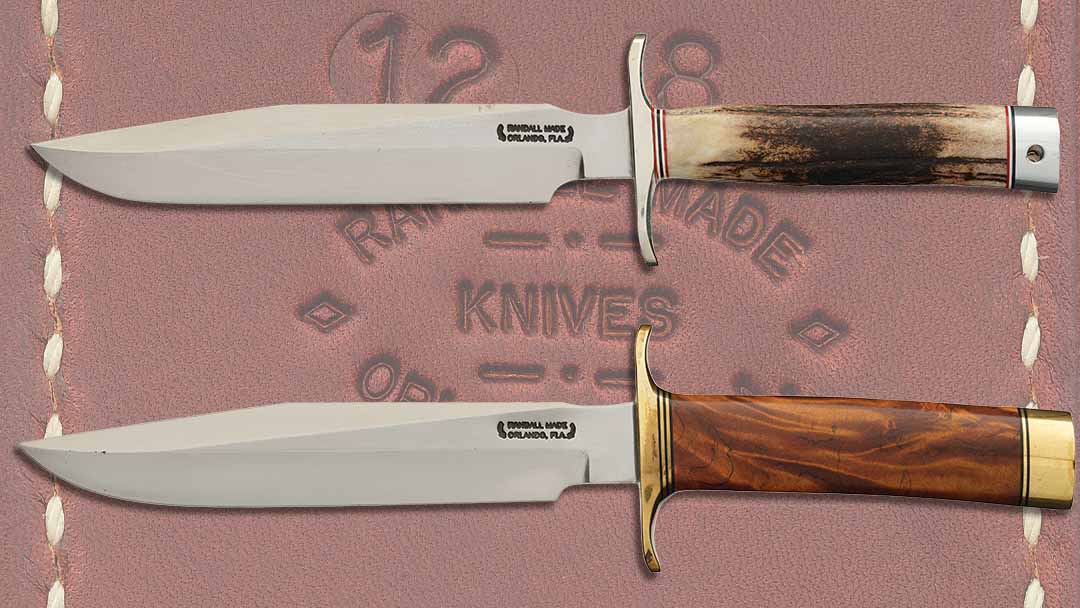
A reporter wrote an article about Randall’s knives and their popularity soared. He offered the Model 1 as an “All Purpose Fighter,” the Model 2 billed as a “Fighting Stiletto” and a Model 3 “Hunter.” Randall would receive order letters from GIs simply addressed to “Knife Man, Orlando.” Randall estimated that with a couple of assistants he made about 1,000 knives for servicemen during the war.
One customer wrote:
“It was a terrible thing at close range. (Your knife) would cut a man’s head nearly off with a quick swing… I also used that knife to open cans, cut wood, dress water buffalo… and it stayed sharp. I was offered all kinds of trades, but I wouldn’t part with it.”
The Randall Knife was briefly considered as a replacement for the U.S. Marine Corps’ Ka-Bar knife in the 1950s but was rejected over the fears of how long the manufacturing process took, as well as the costs.
Randall Made Knives Business Booms
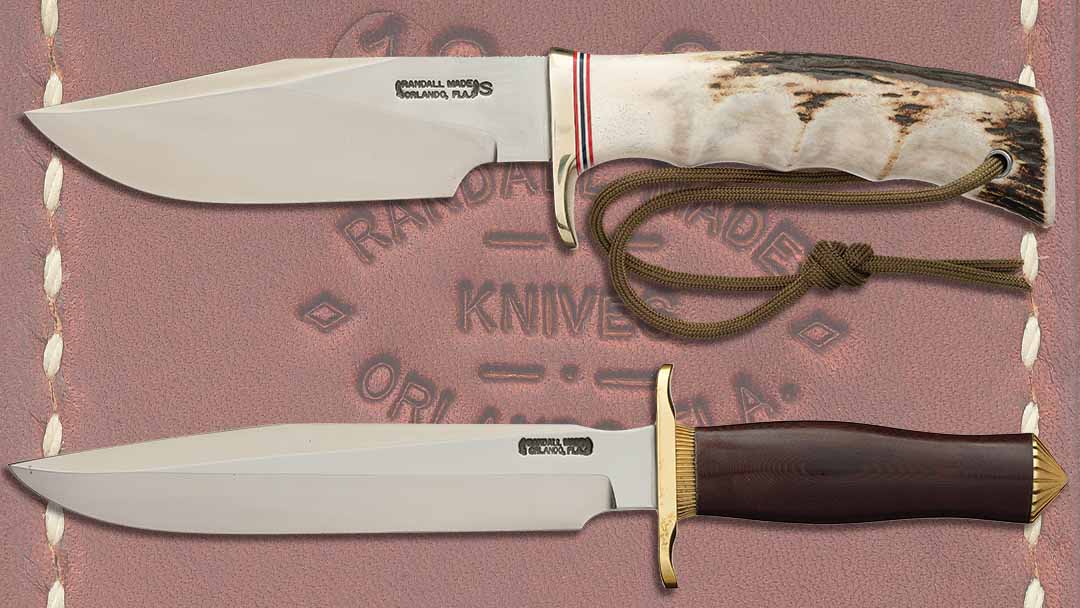
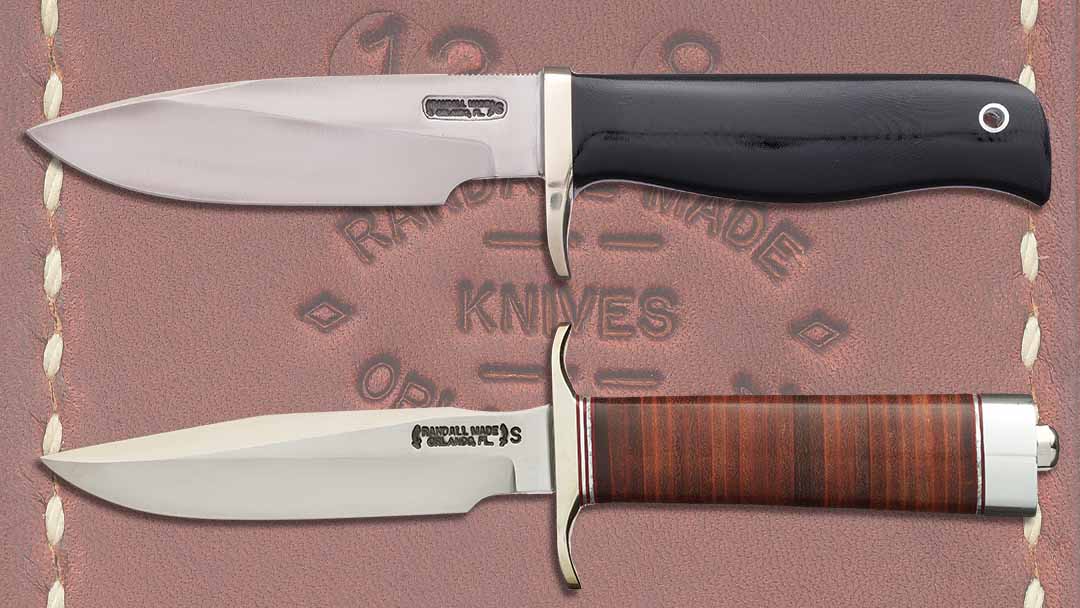
Shortly before the end of World War 2, Randall hired a full-time employee who served as shop manager for the next 35 years. As orders from the war wound down, Randall Made Knives started offering new designs for outdoorsmen, with names like “Big Game and Skinner,” “Camper,” “Fisherman,” “Trout and Bird Knife” and “Salt Fisherman.”
In 1953, following a feature on Randall’s company in “True” magazine, orders exploded and the company’s backlog began. The company’s website states that demand is such that an order will likely take six years to fulfill.
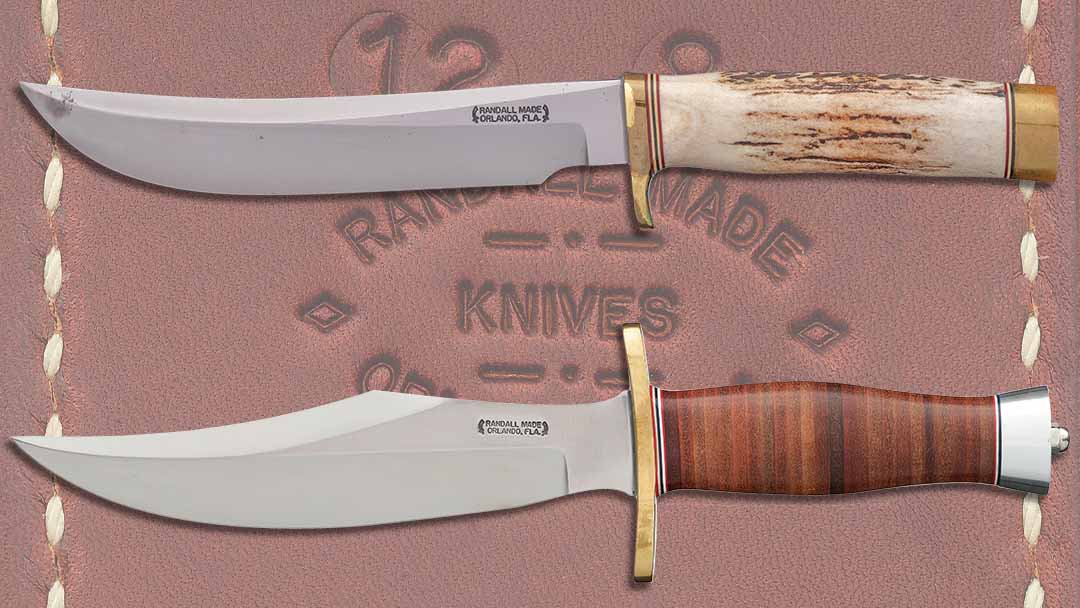
The release of the film “The Iron Mistress,” starring Alan Ladd as Jim Bowie and Virginia Mayo as his love interest boosted the profile of the Bowie knife. Randall started offering the “Arkansas Toothpick,” a 12-inch stiletto-style dagger. The company also offers a small Arkansas Toothpick with a 6-inch blade among the nine Bowie knife-styled blades.
In the early 1960s, NASA reached out to Randall about making survival knives. Bo Randall worked closely with Gordon Cooper, one of the Mercury Seven astronauts. On its website, Randall Made Knives offers the Model 17 Astro and the Model 18 Attack Survival knives. The Astro was specifically designed for the Mercury astronauts and has a blade designed for cutting through spacesuit material and a large guard to use while wearing gloves. An example of the Astro Model is in the Smithsonian Institution collection while an Attack Survival Knife is part of the Modern Museum of Art.
Astronaut survival knives were aboard every Mercury Mission, including Gus Grissom’s Liberty Bell 7 when it sank in the Atlantic Ocean, nearly taking him with it. When the Mercury astronaut’s capsule was recovered in 1999, Grissom’s knife was still inside and was serviceable after a good cleaning.
Randall Knives Return to War
Orders for Randall Made Knives increased in the 1960s because of the Vietnam War, and the Survival model was added as well as the “Bushmaster,” “Bear Bowie” and “Little Game” models. Gen. William Westmoreland, commander of U.S. forces in Vietnam, carried a Randall knife, as did Gary Powers, whose Trout and Bird knife was taken off him after his U-2 was shot down over the Soviet Union.
Randall often talked and corresponded with customers. When speaking with reporter and author Carl Hiaasen for Florida Today in December, 1975, he shared a letter dated Feb. 11, 1944 from an Army Air Force captain named Ronald Reagan who praised his Randall knife, writing “P.S. Hope you don’t mind my showing off your handiwork, but it really attracts an audience.”
Making a Randall knife
The time-consuming process of making Randall knives involves 17 steps that include heating the blade to 1,950 degrees to shape and harden it and then the more intricate work of refining the blade, shaping the contours, smoothing it, making and fitting the handle, multiple polishings and sharpenings and fitting it with a sheath.
Randall Made Knives produces about 8,000 each year. The company has a museum at its production facility with more than 7,000 knives and other edged weapons. Bo Randall died in 1989, a year after the company celebrated its 50th anniversary.
In that 1975 interview, Randall said of his company’s knives, “I’m glad we make a lot of knives and don’t try to make that one best knife in the world. I’m glad there are that many in the hands of people who use them and appreciate them.”
Bowie Knives Precede the Randall Knife
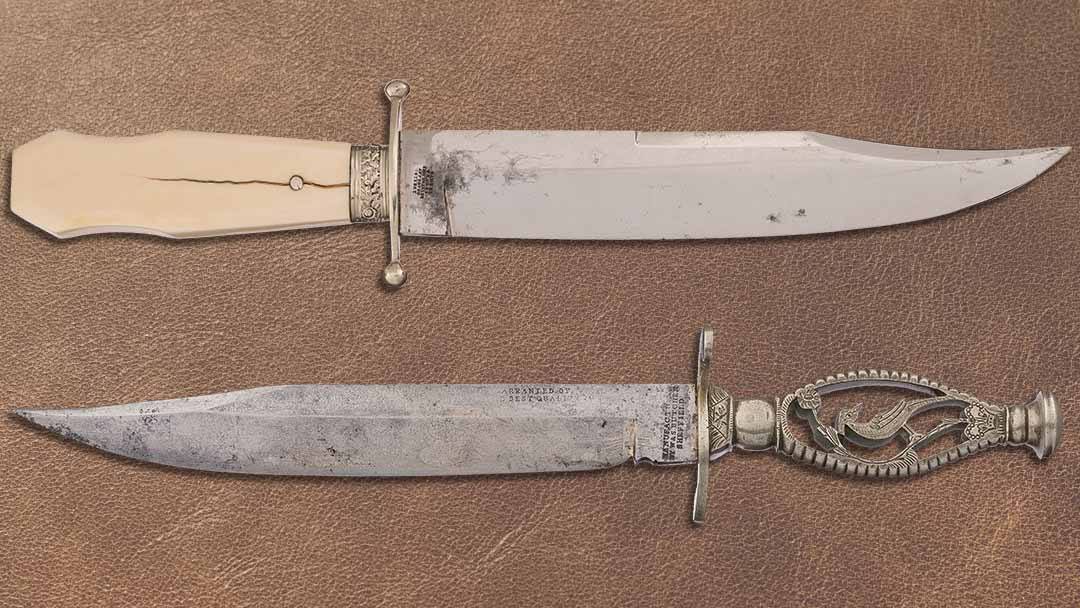
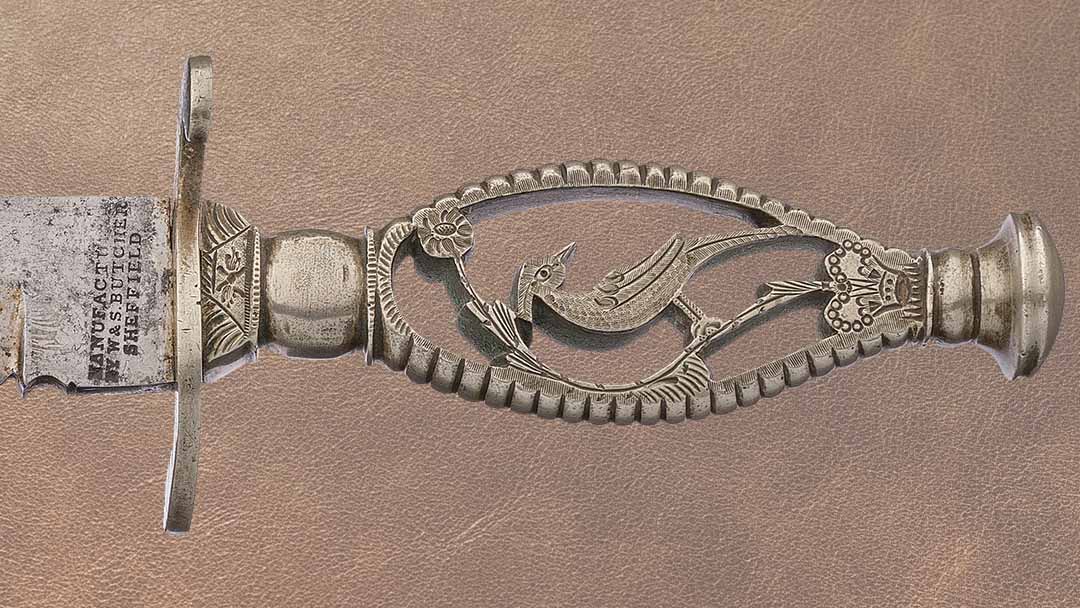
Despite its very American origin story, English cutlery makers dominated the market for Bowie knives in the 19th century. Sheffield’s top knife manufacturers often had representatives in the United States since American industrial capacity was still rising up to that of the British. Also, the English cutlery companies paid their craftsmen low wages so they could offer their knives at less expensive prices.
Randall Knives for Sale
Randall Made Knives are handmade in a variety of models with numerous ways to upgrade them so they are truly one of a kind. Always wanted a Randall knife but don’t want to wait several years to get it? Rock Island Auction Company has 12 opportunities to acquire one in the Aug. 23-25 Premier Auction in Bedford Texas.
Sources:
“Randall Military Models,” by Robert E. Hunt
“The Bowie Knife, Unsheathing an American Legend,” by Norm Flayderman
“It’s More Than a Knife,” by Carl Hiaasen, Florida Today
“Handmade-Knife Company Keeps Tradition Sharp,” by Jay Hamburg, The Orlando Sentinel